
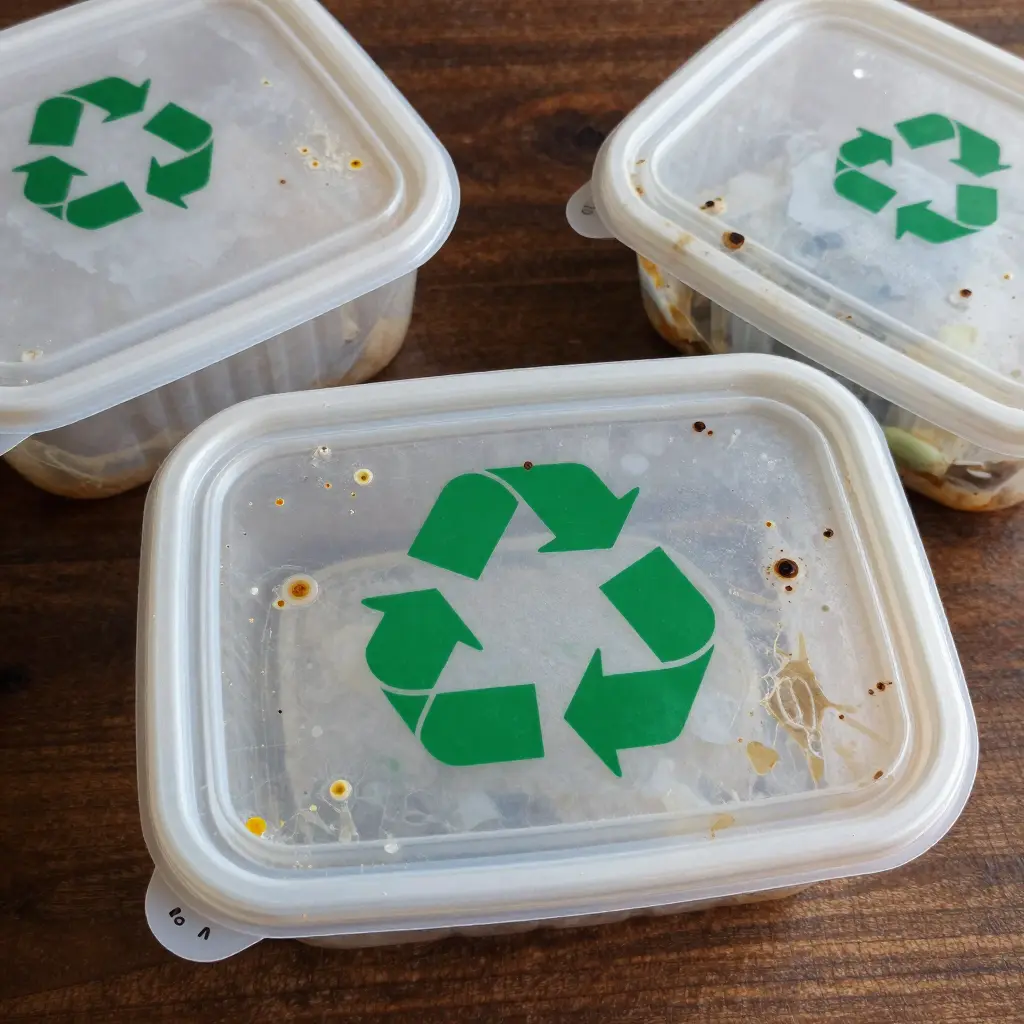
Recyclability Is a Property. Recycling Is an Outcome.
Plenty of tubs are recyclable on paper and still end up in landfill. What separates the two outcomes is rarely the polymer and usually what is left inside the container: the residue that turns a recyclable tub into a handling problem at the sorting line.
If you run a bubble tea shop, a restaurant, a food truck, a catering kitchen or an events and procurement team, you already see this in your waste bill. Every cup of milk tea with pearls, every bento with sauce, every grease-soaked tray costs someone downstream handling time, and that time gets billed back to the business that produced the waste.
The sections below follow that cost from your counter to the sorting line, then look at which packaging decisions reduce it without slowing service.
The useful way to start is to treat residue as a design and workflow question rather than a staff discipline problem. Containers and portion formats that empty cleanly, such as well-fitted sauce portion cups, remove most of the problem before a tub ever reaches a bin.
Clean vs. contaminated: where the line actually sits
Many people assume a container has to be spotless before it can be recycled. Sorting facilities work to a practical threshold instead: what the buyer’s specification allows and what the line can still handle at speed.
What still counts as acceptable
A thin dry film, a few crumbs, light staining, or a tub that has been scraped out (and rinsed, if your hauler asks for it) usually passes. If the container does not smear onto the items around it, it is clean enough for the line.
Where it tips into problematic
Pooled liquids, hardened fats, sticky syrup, thick sauce and rancid dairy films are the classic triggers of container contamination. So are sealed liquids still sloshing inside a cup.
Oils and sugar syrups do the most damage. They soak into fiber and coat plastic surfaces, then migrate onto everything sharing the same bag. One leaking tub can pull a whole batch out of grade.
Dairy films and dried sauces look harmless, but they stain paper-based packaging and slow manual sorting. Sealed liquids add a safety problem: a full cup punctures, spills and soaks its neighbors.
The working rule is to empty and scrape, and dry where the material is paper-based. Keep clean items apart from wet ones, use dedicated portion cups for sauces so less residue reaches the main container, and hold every shift to the same standard.
Facilities draw the line in slightly different places, but which residues cause trouble, and in what order, is fairly consistent.
Residue Risk Tiers: What Your Tub Looks Like to the Sorting Line
Residue is not only a hygiene question. It decides whether a facility can sell your container or has to pay to deal with it, and each step up the ladder below adds time, water and labor.
- Dry and empty: light, easy to bale, and flagged as high-value feedstock. Staff barely look at it.
- Crumbs and dry smears: one shake clears it. Sorters treat it as low risk because nothing is added downstream.
- Greasy film: faint oil downgrades a bale, and workers slow down to inspect, which raises cost per ton.
- Wet food scraps clinging: rice and garnish stick to the walls and throw off weight readings, so staff pull the item out.
- Syrup or sauce pooled: sticky pools jam screens and optical sensors, and a crew can divert a whole load over them.
- Liquid sealed under a closed lid: trapped liquid bursts on the belt. Operators treat it as the worst case and pull it by hand.
Two of those tiers are worth checking against your own counter: how much sauce is pooled in the base of a finished meal, and how often a cup leaves with liquid still sealed inside. Both are decided by packaging and portioning rather than by how carefully staff scrape, and portion cups that empty cleanly keep most pooled sauce out of the bin in the first place.
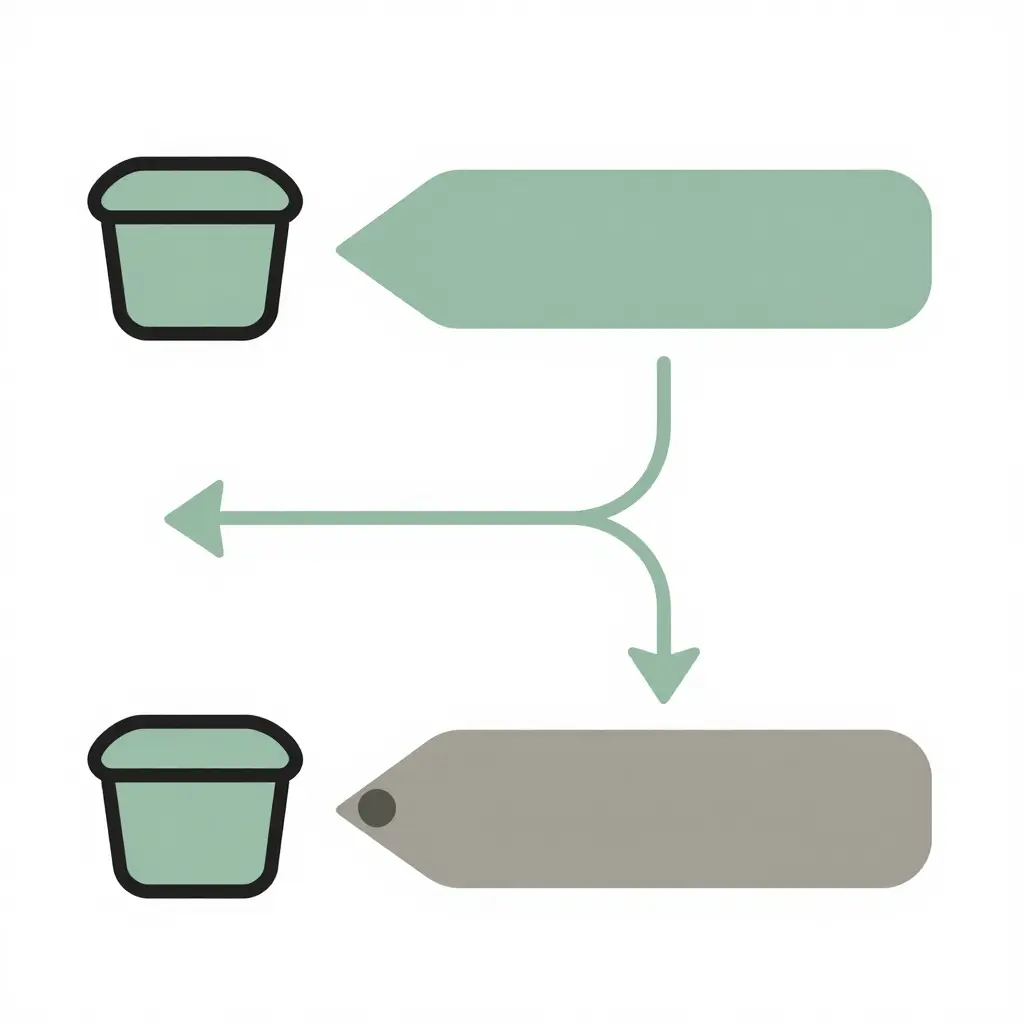
What this diagram shows: one container shape, one sorting line, two exits. Collection comes first, then the line, and the machines sort on shape and surface; residue decides which exit the shape takes. The same tub can travel either the accepted route or the rejected route depending on what is inside it. If you want menus built around formats that leave less behind, takeaway boxes designed for cleaner emptying are the place to start, before the waste ever leaves your kitchen.
How Sorting Lines React to Residue
A materials recovery facility (MRF, the plant where mixed recyclables get sorted) runs on speed. Every container gets a fraction of a second to prove what it is, and the equipment judges shape, surface and weight. A clean tub passes. The same tub holding dried tapioca pearls, curry sauce or a finger of iced tea reads as contamination instead, and even a small amount changes how each step downstream behaves.
Optical Sorters, Air Jets, and Density Separation
Optical sorters shine near-infrared light at each item and identify the material from the light that bounces back, like a scanner reading a barcode made of plastic. Residue smears that reading. A sauce-smeared lid can come back as “no match”, the air jet fires, and a perfectly good plastic food container is knocked into the residue chute. Air jets are also sized for ordinary container weights, so a cup still holding drink may not move far enough and ends up in the wrong lane. Density separation, which floats lighter plastics away from heavier ones in air or water baths, is more weight-sensitive still: pooled liquid tips a tub into the wrong fraction. Manual quality checks at the end of the line catch what the machines miss, but pickers can only pull so much per hour before the belt outruns them. Packaging that empties cleanly, such as well-shaped plastic cups for cold drinks, gives every container a fairer start.
Why Sticky Films Jam Screens, Liquids Add Weight, and Bales Lose Value
Screens are the workhorses: spinning discs and stars spaced so small debris drops through while flat items ride across the top. A sticky film, whether a wet straw wrapper or a label lifted by syrup, wraps around the shafts and blinds the gaps, and clearing it means stopping the line. Liquid is quieter and just as expensive. An “empty” cup with 50 ml of milk tea still adds weight and moisture, and bales are sold against moisture specifications, so water you ship is weight you are not paid for, plus a mold risk in storage. A bale that fails a buyer’s specification is downgraded, or rejected outright. The gap between what the load should be worth and what it actually fetches is the sorting cost problem in one sentence.
Most of that is settled before the container leaves your counter: dump the leftover pearls, tip out the ice. A sorting line cannot undo what arrives sealed inside a cup.
Each row below pairs a container type with the residue it usually holds, what that residue does on the line, and who absorbs the cost.
| Container Type | Typical Residue | Sorting Outcome | Cost Effect on the Operator |
|---|---|---|---|
| Cold-drink cups with lids | Syrup film, ice melt, straw left inside | Cups and lids often split apart | Downgraded bale |
| Sauce and portion cups | Dressing, ketchup or oil in the base | Small cups slip past sorting screens | Residual waste fee |
| Takeaway meal containers | Grease, rice grains, pooled sauce in corners | Fiber rejected as contaminated | Downgraded bale |
| Trays and plates | Loose food scraps, light oil sheen | Light residue usually passes; heavy grease does not | Accepted stream unless heavily soiled |
| Cutlery and stirrers | Dried drink powder, food coating | Light plastics missed or screened out | Residual waste fee |
If you would rather cut the residue before it reaches the bin, compare wooden disposable cutlery against the plastic versions you use now.
When a Recyclable Tub Becomes a Sorting Cost Problem
A recyclable tub is recyclable in theory. Once it reaches a sorting line with syrup, pearls, cream or sauce clinging to the walls, it stops behaving like a material and starts behaving like a handling problem, and the cost of that problem travels through the chain until someone pays it. Knowing where it travels is the first step to pricing packaging honestly.
Labor comes first. Residue slows manual pre-sort, blinds optical readers, smears screens, and forces staff to pull or re-route loads that no longer meet specification. A line is built to move material quickly, so every sticky, half-empty container adds handling time, and handling time is where a recovery facility’s costs concentrate.
Moisture and weight come next. Liquid left in cups and tubs travels as freight rather than as product, so haulers bill for water nobody can sell. Wet fiber and contaminated film also pull a bale’s grade down.
That leads to rejected loads. A bale that fails a buyer’s specification gets diverted, landfilled or returned, and the disposal fee attached to a rejected bale is frequently larger than the value the material ever carried.
Then there is the rebate you no longer receive. Revenue-sharing arrangements are usually tied to the quality of what arrives, so contamination erodes the credit a generator or hauler would otherwise earn. Many waste contracts also include contamination surcharges, which pass the penalty back to the business that produced the waste rather than leaving it inside the facility.
Why small effects compound
The useful number here is cost per unit of packaging. A single tub with a spoonful of residue inside costs almost nothing to deal with. Multiply a few cents of added labor, a fraction of extra freight weight, a share of a rejected load and a slice of a surcharge by the volume a beverage chain or catering operation moves in a month, and the total stops being trivial.
| Cost point | What triggers it | Where it lands first |
|---|---|---|
| Line labor | Sticky residue, liquid, loose straws and film | Sorting and recovery operators |
| Moisture and weight | Liquid and food left inside containers | Haulers and processors |
| Rejected bales | Failure against buyer specification | Facilities, then the generator |
| Lost rebate | Lower incoming material quality | Whoever shares in resale revenue |
| Contamination surcharge | Contractual quality thresholds | The business producing the waste |
None of this argues that recyclable tubs are a bad choice. It argues that the economics only work when a container arrives empty enough to be handled, which makes emptying and scraping a cost-control habit rather than a courtesy. If you are reviewing your packaging mix, compare formats that release food easily against your current tubs, and sketch the cost per unit before the next volume increase rather than after.
How Hard Does Residue Hit Each Packaging Type?
Container types do not carry the same risk. The ranking below reflects how often each format tends to fail sorting once residue is present, using cold cups with lids as the reference point.
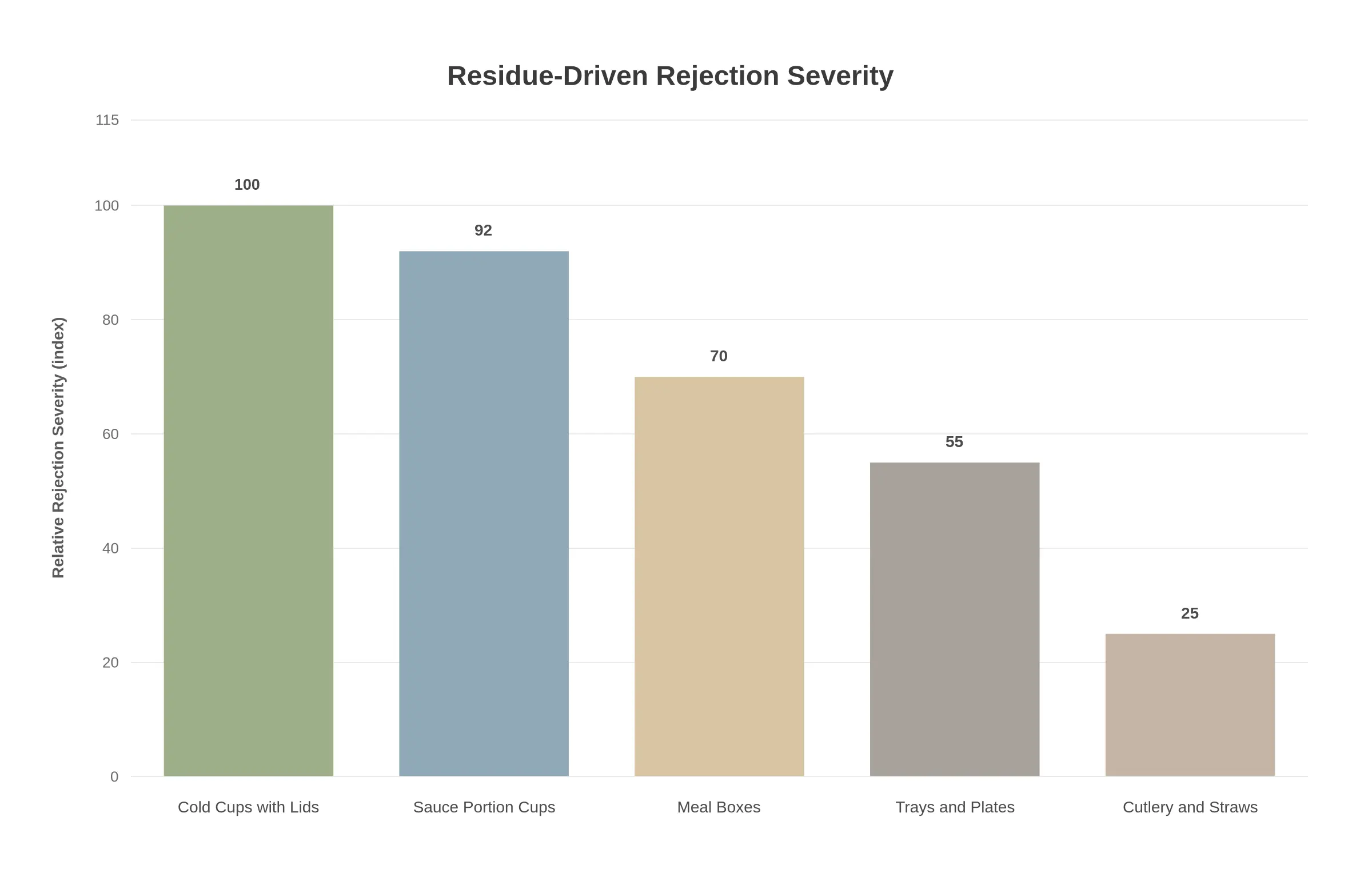
Relative rejection severity by packaging category. The values are an illustrative index, not a measured rejection rate: cold cups with lids are set at 100, and each other category is placed by how often contamination tends to push it from recyclable to rejected.
Reading the Ranking
Cold cups with lids and sauce portion cups top the index because both trap liquid in awkward places. A lidded cup holds melted ice and syrup against the base, while a portion cup keeps a sticky film in a vessel too small for any sorting line to rinse. Meal boxes land in the middle: grease stains the corners, but the container stays open and easy to inspect. Trays and plates sit lower because residue tends to be spread thin and visible at a glance. Cutlery and straws are the least troublesome per item, and also the easiest to lose entirely into the wrong stream.
Severity is not volume. A high index on a low-volume item may cost less than a moderate index on something you hand out by the thousand, so read the ranking as a priority order rather than a verdict.
Packaging Choices That Lower Residue Risk
Residue-related cost is easier to cut at the material level than at the bin. Greasy food is the usual culprit: a plastic tub holding sauce-soaked noodles or curry is rarely scraped clean enough to pass a recycler’s quality check, so it drops out of the recovery stream and becomes a disposal cost instead. Fiber and molded pulp containers, including bamboo pulp tableware options, deal with grease differently: the fiber absorbs it rather than letting it smear across a plastic surface, which is why those formats only make sense where a composting or fiber recovery stream accepts them. Used that way, they go out with the food scraps instead of being fenced off. Putting fiber in charge of the messiest items on your menu keeps more dirty containers away from the sorting line.
Format matters as much as material. Wider-mouth cups are easier for customers to finish and for staff to tip out at close, so less drink stays in the base overnight. Portion cups with lids keep sauce in one small, contained package instead of smeared across a meal, and meal boxes with separate compartments apply the same logic to rice, mains and sides: the main container stays comparatively clean because the wet components are already isolated. A food plate with a raised rim helps too, holding grease in place instead of letting it run onto trays and into carry bags.
Matching accessories to the container keeps the stream simple. Lids and straws made from the same material family as the cup can follow one collection route rather than being picked apart, and your team does not have to memorize a separate disposal rule for every component. Ecocup’s range covers disposable tableware, packaging paper and boxes, so a residue-friendly service set can be assembled in one place.
Where Contamination Costs Actually Land
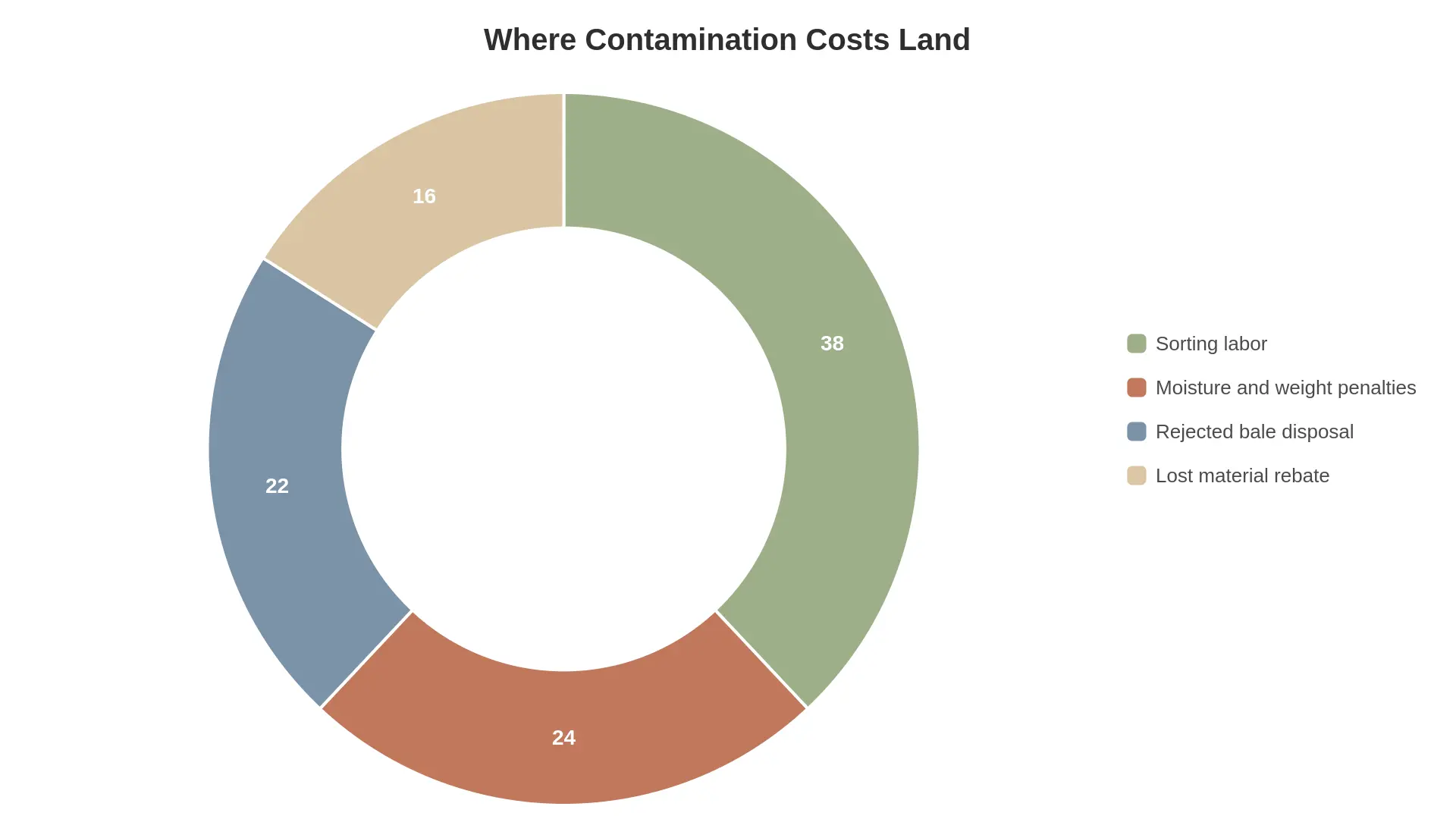
A cup that seals cleanly, a tray with a liner, or a portion cup sized to the sauce it holds all reduce the residue that turns a recyclable tub into a line item on someone else’s budget. The breakdown below shows where those contamination costs typically land once a load reaches a recycling facility.
Reading the Slices
- Sorting labor (38%) is the largest slice, and almost invisible to the food business that created it. Every sticky cup or grease-coated lid that has to be pulled by hand slows the line, and that hand time is the single biggest driver of contamination cost.
- Moisture and weight penalties (24%) come from liquid that should never have been in the bale: drink residue, condensation, unemptied ice. You pay twice, once for shipping water and again when the load is downgraded.
- Rejected bale disposal (22%) is the worst case. One badly contaminated batch can send an entire pressed bale to landfill, along with the fuel and handling already invested in it.
- Lost material rebate (16%) is the chronic loss, the rebate you never collect because the recovered material graded lower than it should have.
Why Design Decisions Move the Numbers
For bubble tea shops, restaurants, food trucks and event caterers, on these figures roughly six in ten dollars of contamination cost sits in handling and moisture, and both start with how food and drink are packaged and served. A wide-mouth cup that empties fully, a tray that does not trap pooling oil, or well-fitted sauce portion cups keep residue in the customer’s meal rather than in the recycling stream.
The specs that matter are unglamorous ones: rim width, lid fit, coating, compartment depth. They decide whether the container leaving your counter stays a resource or becomes a sorting problem.
A Simple Operational Checklist for Your Team
The cheapest fix is a short, repeatable routine anyone on shift can follow, applied to every container that leaves the counter.
- Empty each tub completely before it goes anywhere near the waste bin.
- Scrape leftover pearls, rice and sauce into the bin so nothing pools in the base.
- Keep lids snapped onto their matching containers, unless your hauler asks for them separate.
- Separate sauces into dedicated portion cups for sauces rather than pouring them over the food.
- Rinse when your local facility asks for it. A quick cold swill is enough; washing every tub wastes water and time without changing the outcome.
- Brief every shift at handover on the disposal routine, with a one-page poster by the bins.
- Audit one bin each week and record what still arrives dirty, so retraining follows the actual failures.
Why This Routine Pays Off
None of the steps takes more than a few seconds, and together they change what your waste contractor sees: cleaner loads, fewer rejected bales, fewer containers pulled off the line by hand. Assign one team lead per location to own the audit, print the checklist in the language your crew reads, and review the results monthly.
Tip: walk new hires through the disposal steps during onboarding, so they learn the routine once rather than piecing it together from the poster.
Frequently Asked Questions
Can dirty plastic food containers be recycled at all?
Often, yes. Polypropylene tubs and cups are recyclable in principle, and the polymer is rarely the deciding factor. Condition decides more: heavy residue, sauces or food left inside can get a whole bale rejected, and a dirty tub more often ends up as trash. Whether your local program accepts the material at all is a separate check worth making.
Is rinsing required before disposal?
Not everywhere, and not to a scrub-clean standard. Scraping food into the bin is the baseline. A quick cold rinse helps where the hauler asks for it or where residue is greasy, and it keeps the bin area cleaner. Hot water and detergent are unnecessary.
Does paper and fiber packaging avoid the residue problem entirely?
No. Grease and sauce soak into fiber, and a stained paper box or molded pulp tray can be harder to separate than a plastic tub. Contamination still happens, it just looks different. Fiber packaging reduces some sorting cost, but only when food scraps are emptied out first and the local stream actually accepts the material.
How can packaging procurement reduce contamination-related cost?
Buy shapes that empty cleanly. Wide-mouth tubs, flat trays and straight-sided sauce portion cups release food with one scrape, so staff need no extra steps. Standardizing containers helps too: fewer material mixes means faster sorting, fewer contaminated loads and fewer rejected deliveries.
The Takeaway: Clean Enough to Sort
Whether dirty plastic food containers can be recycled depends less on the resin printed on the base than on what happens between the counter and the bin. A polypropylene tub scraped clean and stacked with its lid behaves very differently from the same tub arriving full of milk tea and tapioca pearls, and that difference is what a sorting facility pays for.
That makes contamination a cost you can control rather than bad luck. Draining liquids before disposal, scraping food into the bin, following your hauler’s rule on lids, marking bin zones clearly, and choosing containers that empty easily, such as a sauce and portion cup range sized to the portion it holds, all reduce sorting cost and keep more material in the recycling stream. Ecocup manufactures and supplies disposable tableware, packaging paper and boxes, with responsive support when you need it; the packaging categories are listed at ecocupbowl.com.