
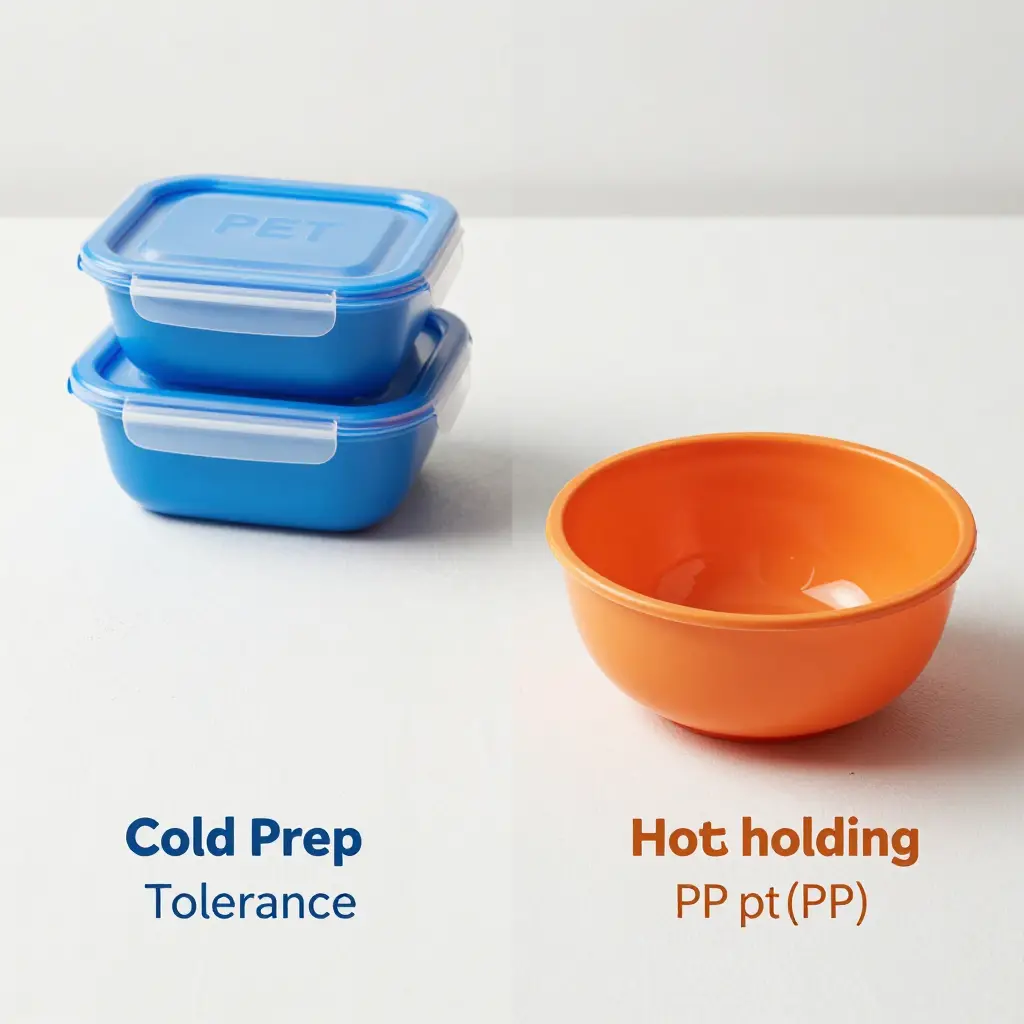
PET vs PP: Choosing Wholesale Food Storage Containers in Utah for Cold Prep and Hot Holding
The choice between PET and PP comes down to how hot the food will be. PET handles cold prep: cut fruit, boba toppings, iced tea bases, chilled sauces, and grab-and-go items that never leave the cooler. PP handles hot holding: soups, rice, braised toppings, and catering trays that have to stay hot without warping, sagging, or leaking.
Get the match wrong and the cost leaves the price sheet and lands in the shift: warped lids, split seams, labels sweating off, leaked delivery bags, orders remade. None of that shows up on a quote. All of it shows up in the weekly margin.
Bubble tea shops and beverage chains feel it in drink consistency, restaurants in prep yield, food trucks and caterers when a bag arrives leaking, and event or procurement teams in per-head budget and service speed. Temperature tolerance is the lever behind stable output and lower shrink, and it is easy to overlook when you are comparing quotes.
So when you spec wholesale food storage containers in Utah, match each piece of disposable packaging to the process it actually runs through. Our round PP bowls for hot holding are built for hot lines; PET stays where it belongs, on cold.
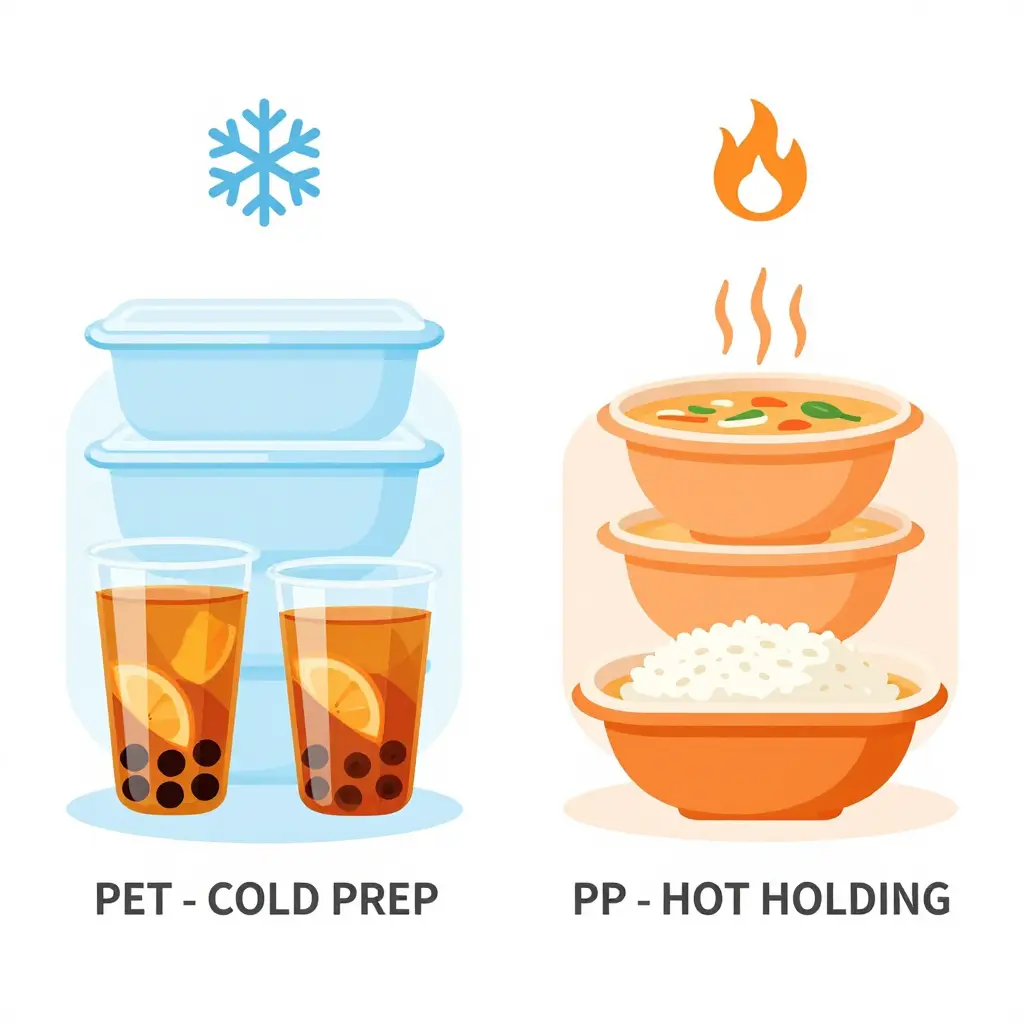
The Trade-Off in One Picture
Before the cold prep lines and hot-holding wells, four numbers are enough to shortlist a material: heat ceiling, cold brittleness, clarity, and unit cost. Lid fit, feel, and recyclability all follow from those four.
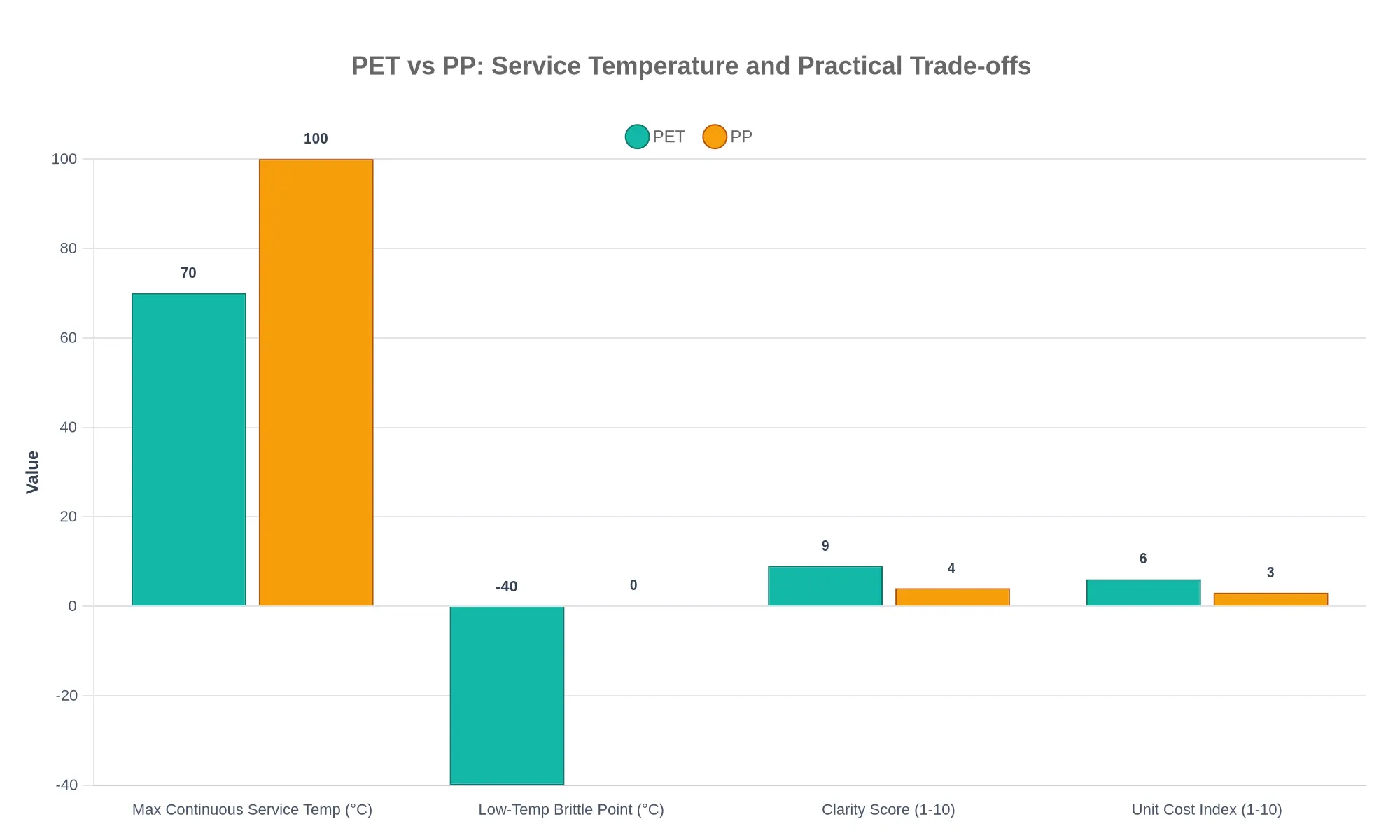
Figure 1: PET and PP compared on the four attributes that drive most Utah purchasing decisions. Values are illustrative comparisons of industry reference ranges, not absolute specifications – use them to shortlist materials, then confirm exact figures against your supplier’s data sheets for your wholesale food storage containers order.
What the four numbers mean
- Max continuous service temp – PP holds about 100°C continuously, and some grades tolerate short contact up to roughly 120°C, so it stands up to steam tables. PET is rated to about 70°C and begins to deform before it gets there; ladle hot soup into it and the walls give.
- Low-temp brittle point – PET stays tough down to about -40°C, which is why it survives freezer-to-fridge cycling in cold prep; PP turns brittle close to 0°C.
- Clarity score – PET is glass-clear, a real advantage when customers should see the product; PP is translucent at best.
- Unit cost index – PP is the cheaper per-unit option, and the gap widens at volume.
A practical line sits at about 60°C: below it, PET gives you the selling appeal; above it, PP gives you a container that keeps its shape. Most multi-menu operations in Utah end up running both.
PET for Cold Prep and Iced Beverage Programs
PET earns its place in cold programs for two reasons that show up on the line. Its high clarity lets staff confirm layered drinks and cold food presentations at a glance, so every order leaves the counter looking as intended. It also keeps its stiffness in chilled settings instead of softening or bowing, which matters when crates and trays come out of the chiller and stack in the freezer.
Tight Seals, Batch Prep, and Quick Pickup
Lids press on with an even fit and hold through handling and delivery, so carriers get loaded without second-guessing. Cold programs run on repetition, and PET cold drink cups nest and stack predictably, so prep teams can portion in batches and hold ahead of peak while front-of-house staff pull and serve in seconds. Pair them with matching cup straws for a consistent handoff. Clear walls also make fill levels easy to check, which keeps portions even across the menu. Bubble tea shops, beverage chains, and caterers default to PET for those reasons.
The PET-versus-PP question really comes down to where a container sits on the temperature line:
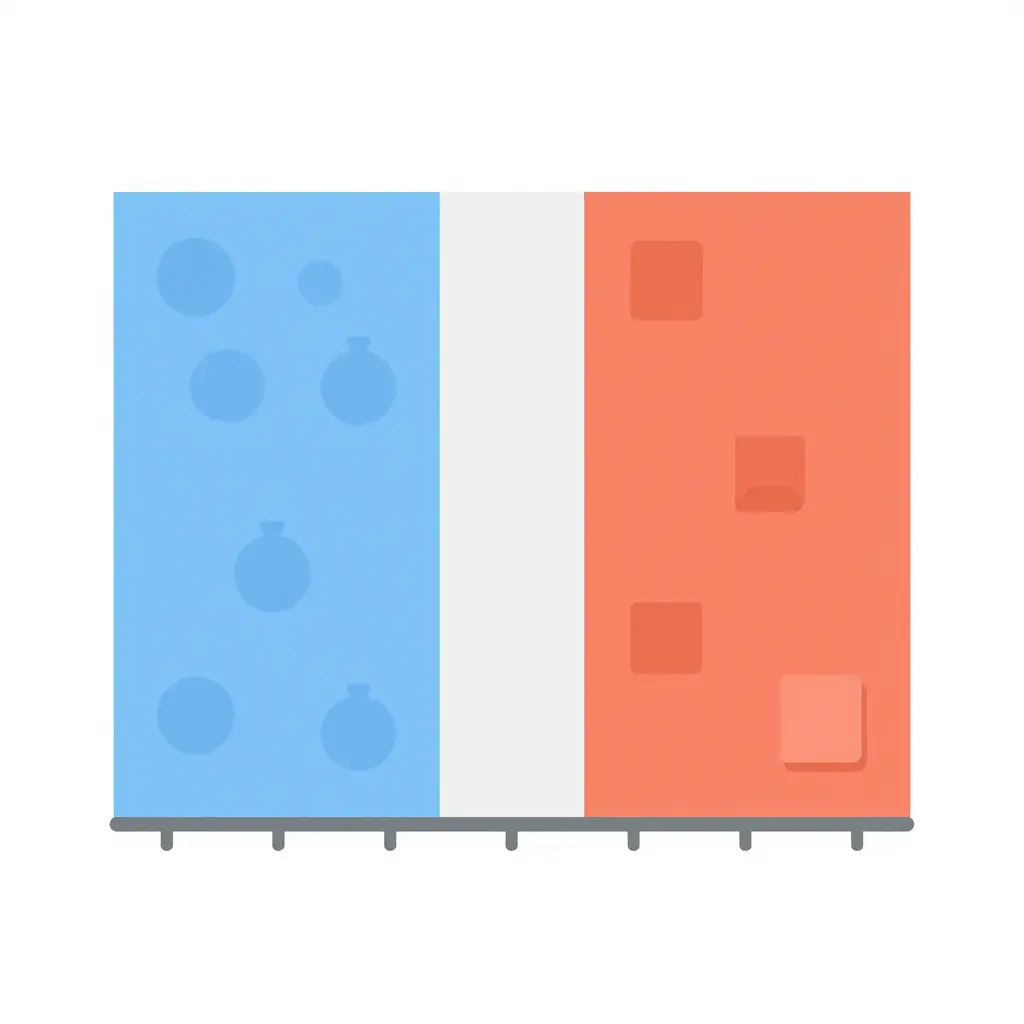
Figure: Circles hold cold on the left, squares go hot on the right – one axis, two separate jobs, which is why PET cold-drink cups and PP hot-holding pans rarely swap places.
Why PP Belongs on Hot Holding and Heated Service Lines
Polypropylene (PP) is rated to about 100°C continuous service, and some grades tolerate short contact up to roughly 120°C. That covers steam tables, warming cabinets, and sauces held at 90°C, temperatures that would soften or warp PET within minutes. The margin is what lets a kitchen hold hot food without watching the clock.
Stability also matters after the food leaves the pass. PP resists warping, cracking, and hazing as it cools, and snap-fit lids stay seated against constant steam pressure during transit, which is where most leak complaints originate.
It is a natural fit for hot soups in round bowls, hot rice and mains in meal bento boxes, and hot sauces portioned into sauce portion cups. For restaurants, food trucks, and caterers, standardizing on PP removes guesswork, cuts leak complaints, and keeps one lid inventory across the line.
Two habits keep results consistent: leave 1-2 cm of headspace so expanding liquids and steam have room to move, and avoid holding PP near its heat ceiling for hours. Moderate temperatures, shorter dwell times, and steady rotation keep containers rigid shift after shift. If your menu runs hot, PP is the standard configuration, not an upgrade.
Run this checklist before signing off on wholesale food storage containers for your Utah operation, whether the menu leans cold prep or hot holding.
- Service mode: is the container filled cold, or must it survive hot holding?
- Peak load: confirm the highest fill temperature and how long contents stay inside.
- Visibility: must guests see the contents, or is opaque packaging fine?
- Lid and accessory fit: check that lids, straws, and sleeves lock together cleanly.
- Stacking and transit: test how full containers behave when stacked and bounced in delivery.
- Daily volume: estimate units per day so pricing tiers and lead times line up.
- Storage and turnover: measure shelf space and confirm how quickly stock rotates.
- End-of-life: match the material to local recycling rules and your sustainability policy.
Answer all eight and the PET-versus-PP call usually makes itself; compare our plastic cups for cold drinks side by side.
PET vs PP at a Glance
The grid below covers the attributes that decide most restock orders.
| Attribute | PET | PP | What It Means for Your Operation |
|---|---|---|---|
| Recommended temperature range | -20°C to 70°C, no hot fill | Up to 100°C+, hot-fill and microwave safe | PET chills, PP heats |
| Clarity and product visibility | Glass-clear | Translucent to milky | PET sells the look, PP hides the mess |
| Rigidity under load | Stiff; cracks under stress | Flexes; survives drops | PP takes stacking and bumps |
| Lid and seal compatibility | Flat and snap lids, tight seal | Screw, snap and hinged lids | Match the lid to the material |
| Typical cost tier | Mid | Low to mid | PP usually wins on volume |
| Recycling code | #1 | #5 | Confirm your local Utah stream |
| Best-fit menu items | Boba, fruit cups, salads, desserts | Soups, rice bowls, sauces, catering trays | Split the menu, not the supplier |
| Recommended for cold prep or hot holding | Cold prep | Hot holding | Two jobs, two materials |
The two materials are complementary, not substitutes: one protects the chill and the display, the other absorbs heat and handling abuse. Most Utah operations stock both and pair PET with the right cold-drink cups rather than pushing a single material into every job.
Lids, Seals, and Accessory Compatibility
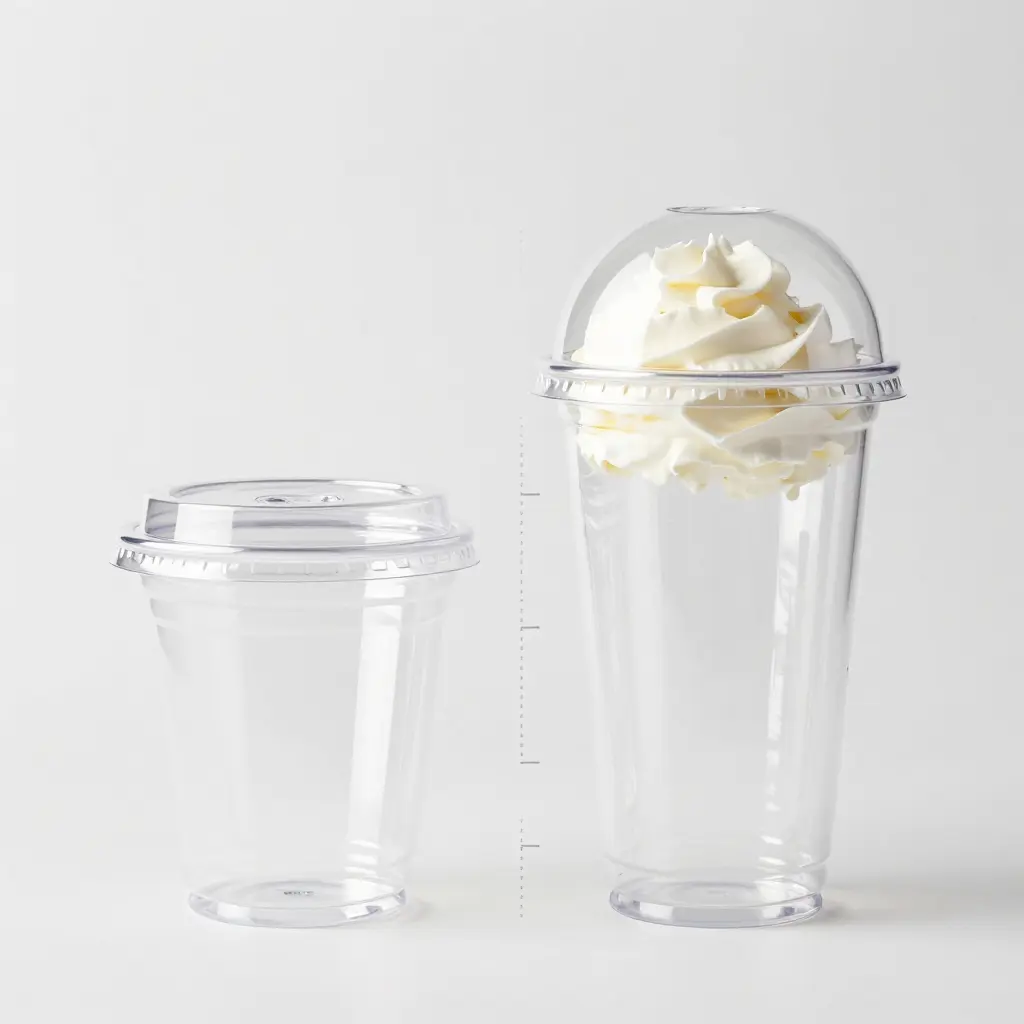
Lid choice decides stack height and, often, whether the container leaks. Flat lids keep stack heights low and suit cold prep, while dome lids add headroom for whipped cream, boba, or loaded toppings, but they also change how cases stack. Factor both into your shelf and delivery planning before you commit.
Hot lines and cold lines need different lids. Hot beverages want vented sip lids with a secure rim that holds against steam pressure; cold drinks lean on sealed flat lids, straw slots, and the right straw diameter. Most leaks, loose lids, and soggy carriers start with a mismatched pairing.
Accessories finish the system. Insulating cup sleeves for hot lines protect hands and take print, cup carriers and holders keep multi-drink orders upright in transit, and wooden cutlery lets a guest eat a takeaway meal the moment the bag opens.
That is why containers, lids, and accessories are best ordered as one matched set. Mixed batches from different sources invite seal failures, partial refunds, and repacking labor, small costs that accumulate over a month.
Where the Two Curves Cross: The 55°C Divide
The table gives the endpoints; the chart below traces rigidity retention from 0°C to 100°C, which is roughly the full span of a Utah operation day – from a walk-in cooler full of prepped fruit in the morning to a heated holding cabinet at lunch rush.
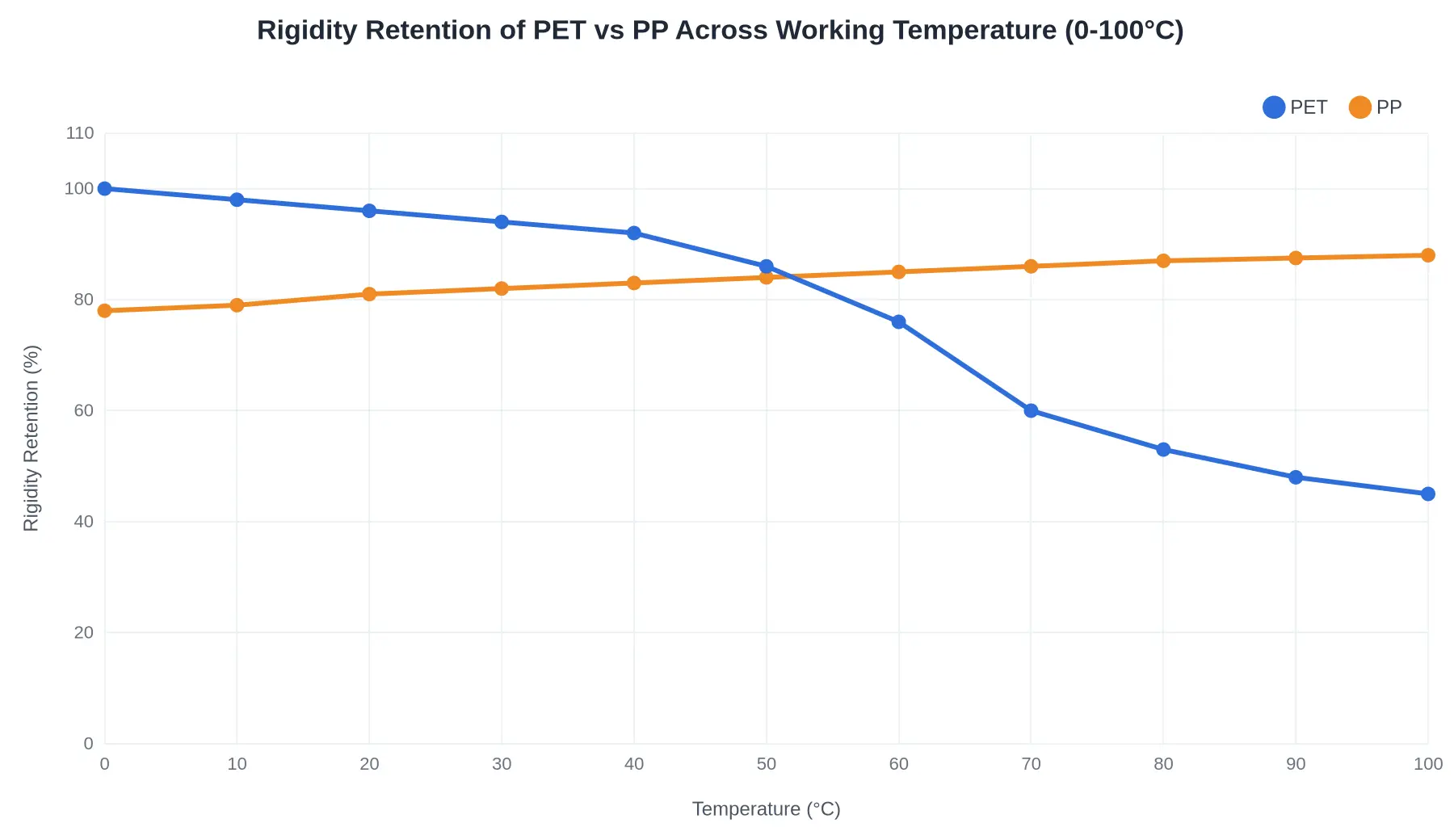
Figure: Rigidity retention of PET vs. PP across the working temperature range (0-100°C). Curves are illustrative reference data, not lab-certified test results.
The crossover near 55°C is where the two materials trade places. Left of it, PET stays crisp and holds its shape, which is why it suits cold prep, boba toppings, cut fruit, and chilled portion cups; right of it, PP keeps its walls from sagging under heat, which is why it earns a place in hot holding and reheating. Many kitchens split their stock at that line – PET for the cold side, PP for the hot-holding bento and meal boxes that go straight from the warmer to the customer.
In practice PET does its best work between 0°C and 45°C, while PP performs comfortably from about 0°C up to 100°C, with a softer, more flexible feel at the cold end. Choose against your coldest and hottest touchpoint, not your average one – the extremes are where lids pop and seams give out.
Utah Wholesale Sourcing and Stocking: Buy Smart, Never Run Short
Start with sales data rather than guesses. Pull a few weeks from each store, add the peak weekends from your event calendar, then hold a safety stock of roughly two to three weeks on your top-moving containers. Routine SKUs are easiest to cover from ready-to-ship in-stock boxes that replenish weekly without long lead times.
Full-case minimums deserve a straightforward cost check: they lower your unit price, but every extra pallet is Utah warehouse space you pay for. Mix high-volume items at deeper case quantities with slower movers ordered leaner.
Lock in seasonal and event supply early – spring festival rushes, wedding season, and corporate catering peaks fill production calendars fast, so confirm volumes and delivery windows weeks ahead. Ask suppliers for batch consistency, meaning the same lid fit and wall thickness order after order, plus support you can reach when a location needs a rush restock. Local warehousing and dependable lead times matter as much to a growing chain as to an event planner, and paper food trays and bamboo pulp tableware belong on the same reorder rhythm.
FAQ: PET vs PP for Cold Prep and Hot Holding
Can I use PET containers for warm food?
Not for hot food. PET is rated to about 70°C and thin walls deform before that, so a hot fill will warp, crack, or leak. Keep PET for cold prep, boba, and iced drinks under 40°C. When a menu item is served warm, switch that line to PP instead.
What temperature range suits PP containers best?
PP performs from -20°C to 120°C (-4°F to 248°F), making it the reliable pick for hot holding at 65-95°C and for freezer storage. It also tolerates microwave reheating, so your kitchen, delivery bags, and customer kitchens all stay within one safe range.
How do I choose between PET and PP for a mixed menu?
Sort every item by serving temperature first: cold prep and drinks go into clear PET, anything above 60°C goes into PP. Then size lids, colors, and pack counts so staff can tell them apart at a glance, and split your order roughly 70/30.
What should a Utah wholesale order include to cover both cold prep and hot holding?
Build one order that covers both jobs: clear PET cups and trays for cold prep, plus PP bowls and hot-holding meal bento boxes for warm entrees. Add matching lids, carriers, and cutlery so your wholesale food storage containers in Utah arrive ready for every service window.
The Buying Decision, Made Simple
One rule covers most of it: default to PET for cold prep, PP for hot holding, and route mixed menus by temperature instead of asking one material to do both jobs. Build each setup as a complete system, ordering in-stock boxes with their matching lids, inserts, and accessories so stacks stay stable and service stays fast. Supply matters after the purchase, too: steady wholesale availability and support you can reach keep shifts predictable, and that is what protects portion consistency and the quality your guests taste. The right materials plus a dependable partner make storage one less thing to manage. We are always glad to help you shape a container program that fits your menu.