
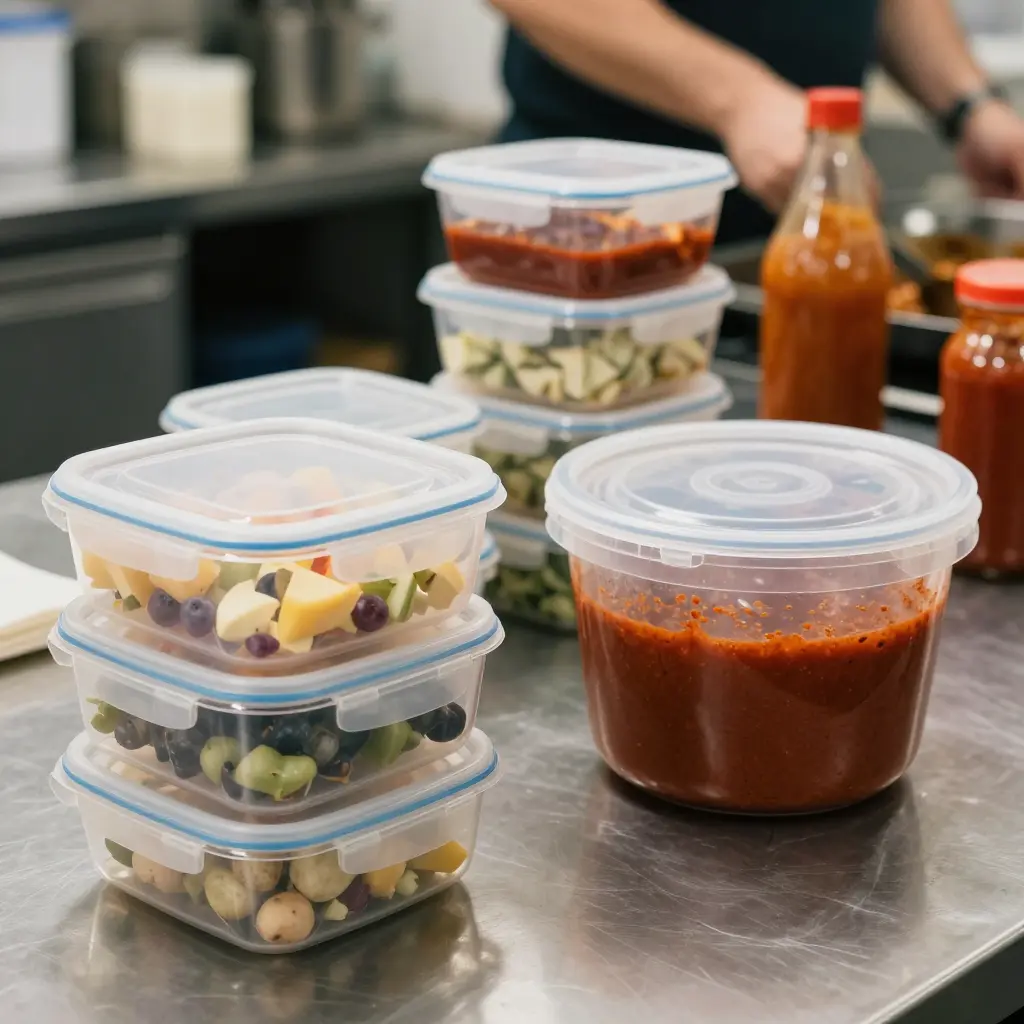
Container format is an operations decision, not a packaging preference. In a busy takeaway kitchen, the choice between a Ziploc plastic food storage container set clear pack of 2 and a single large tub decides how often a sauce batch gets handled, how much bench area each litre of sauce claims, and how quickly a cook gets from prep to service. The pack of 2 keeps two sauces in separate vessels, or one sauce with a sealed spare on the shelf. The single large tub puts more litres behind one footprint during a high-volume run.
That distinction matters most to teams with short bench runs and tight service windows: bubble tea shops and beverage chains portioning syrups, fruit bases and cream mixes; restaurants running several sauces in parallel; food trucks where every centimetre is contested; caterers staging batches across satellite stations; and procurement teams standardising packaging across sites.
This comparison stays on sauce prep and bench space, and runs both formats through five lenses: labour, footprint, portioning, storage and what procurement actually pays. If sauce also leaves the kitchen in small serves, the container has to work with your sauce portion cups as well, or the counter ends up running two workflows where one would do.
Match the format to your batch rhythm: the clear pack of 2 for parallel, separated sauces, and the single large tub for continuous, high-volume pours.
How Container Format Reshapes the Sauce Prep Workflow
Every sauce run follows the same chain: intake from the walk-in or dry store, mixing or dilution to the target consistency, a check on viscosity and taste, portioning into sauce portion cups, labelling with flavour and date, chilling down to temperature, restocking to the prep line. Seven stages, either way. What changes with the container is the distance inside each stage, the weight of each lift and the number of repetitions.
A clear pack of 2 splits the batch into two working units at intake. One travels to the portioning station while the other stays sealed and chilled in reserve. Each trip from store to bench carries less weight, and each lid is opened and closed once rather than reopened every time the batch is touched. A mid-service top-up becomes a swap instead of a re-measure.
A single large tub inverts those trade-offs. Fewer containers get opened across a shift, so decanting happens less often, but every lift is heavier and the same lid keeps cycling through the whole batch. The work concentrates in one spot, in one posture, for as long as the batch lasts.
Format also sets the bench footprint. Small units can be staged in a narrow lane beside the cups; a large tub claims a fixed area plus somewhere to park its lid. On labour the two are closer than they look: the pack of 2 removes refill interruptions at peak, and pays for that with more lifting and more lid handling per batch.
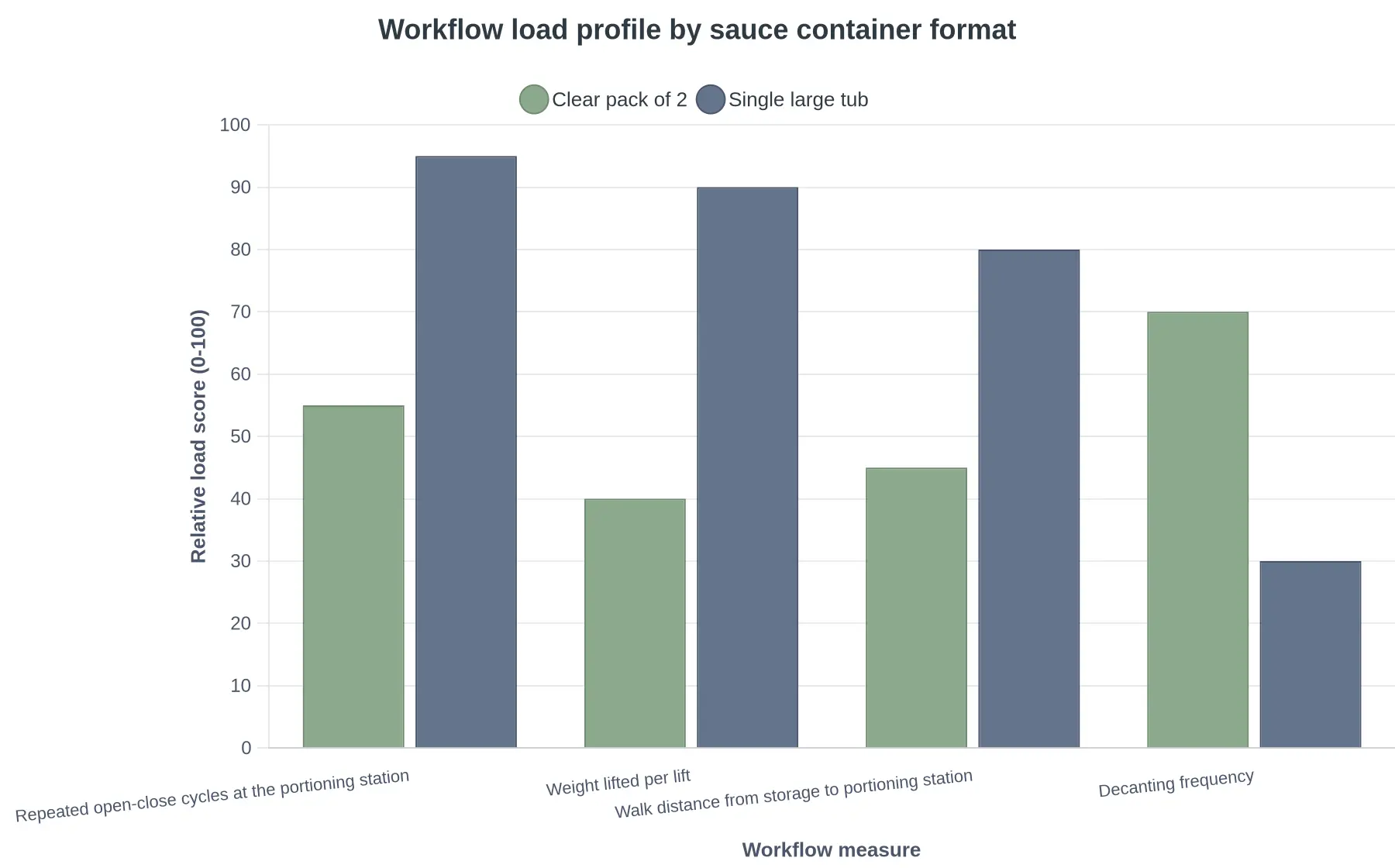
The chart makes the structural trade-off visible: the pack of 2 spreads the same work across more moves, each a light one; the tub compresses the moves and makes each of them heavier.
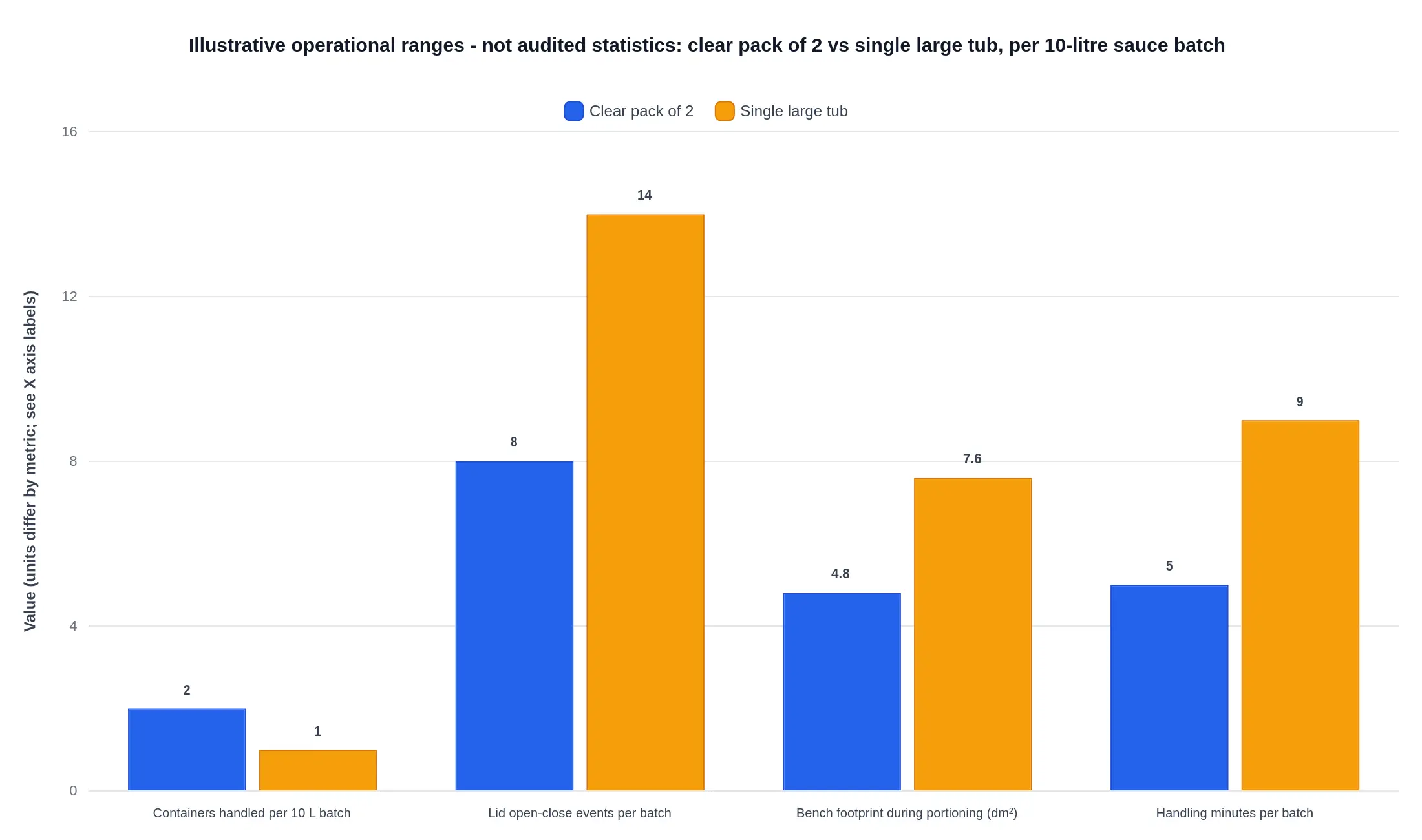
Counting per 10 litres of sauce is the only fair basis here. A pack of 2 holds 2 to 3 litres and a large tub holds 10 to 20, so per-container counts flatter whichever format you prefer. The figures below are illustrative ranges, not audited timings.
Where the Labour Actually Goes in Sauce Prep
Sauce prep rarely slows down because of the sauce. It slows down on handling: a chain of small physical steps, a few seconds each, repeated for every pack, every batch and every shift. What the sauce arrives in decides how many of those steps exist and how much effort each one takes.
Counted per litre, the two formats put the same work in different places.
- Unsealing – two seals instead of one, though each seal is broken only when that half is needed, so opened sauce sits waiting for less time.
- Decanting – a smaller pack pours in a shorter, more controlled stream, while a large tub has to be tipped and steadied at an awkward angle.
- Resealing – a small pack closes in one motion with less headspace to manage; a wide tub takes more handling to close and to reopen later.
- Wiping rims – a narrow rim takes a pass or two, while a wide tub rim needs several passes and more attention once it is part empty.
- Labelling – two small labels take slightly more time upfront, but each one stays accurate because the packs are opened independently.
- Portioning into sauce portion cups – scooping from a small pack keeps the working container close to the cups, while a large tub sits further back and invites longer reaches or an extra transfer.
- Returning to chilled storage – two smaller packs fit into whatever gaps cold space offers, while a large tub needs a dedicated slot and a full lift every time.
- Restocking the prep line – carrying one small pack at a time is lighter work; a large tub reduces trips but adds heavier lifts throughout service.
The pack-of-2 format pays a modest increase in container count for fewer mid-batch interventions and lower repeated lifting. Two lids instead of one is a small, predictable cost; reopening a partly used tub several times per batch is a recurring one. Over a shift, that difference shows up as steadier pacing rather than a dramatic saving.
Two criteria decide most of these calls: bench area, and cost per litre. If portioning consistency is the sticking point, pair either vessel with dedicated sauce portion cups at the pass.
| Criterion | Ziploc clear container set (pack of 2) | Single large tub |
|---|---|---|
| Usable volume per unit | About 1 to 1.5 L each; 2 to 3 L total | 10 to 20 L in one vessel |
| Bench footprint while open | Two small lids; more area per litre | One deep square; least area per litre |
| Handling steps per batch | Split, seal twice, label twice | Single fill, seal once, label once |
| Lid open-close frequency | Open one tub per flavour only | Same lid reopened for every flavour |
| Batch separation and cross-contamination control | One tub per sauce; no shared headspace | Sequential fills risk carryover between sauces |
| Portioning accuracy | Small batches keep scoop depth even | Deep tub makes scooping uneven near the end |
| Stacking and stock-rotation behaviour | Stacks in pairs; FIFO easy on shelves | Tall unit blocks shelves; older stock hides |
| Freezer and transport suitability | Freezes in small blocks; fits into chill bags | Heavy when full; needs a trolley or two hands |
| Indicative cost per litre of sauce stored | Higher per litre; roughly 1.2 to 1.5 times | Lower per litre; bulk pricing wins |
Read down the rows: the pair wins on separation, exposure time and weight per lift; the tub wins on steps per litre, bench area per litre and cost per litre.
Portioning Accuracy and Contamination Control
Format also affects how consistent each scoop turns out. A smaller open volume keeps the sauce shallow relative to the walls, so a scoop fills and levels predictably instead of sinking into a deep reservoir. Staff stop judging depth by eye, and the gap between a light scoop and a heavy one narrows – which compounds across a shift. Matching the scoop to a clear sauce portion cups range keeps the measure at the tub and the measure at the counter the same.
Smaller working volumes also empty faster. A tub that runs out in twenty minutes gets swapped for a sealed spare, rather than sitting open through hours of portioning while dust, ambient air and nearby prep drift over the surface. One unit sealed while the other is in use makes the swap a matter of seconds: no decanting, no mid-service refill from a bulk bucket, no stretch where the station runs on an open, half-empty container.
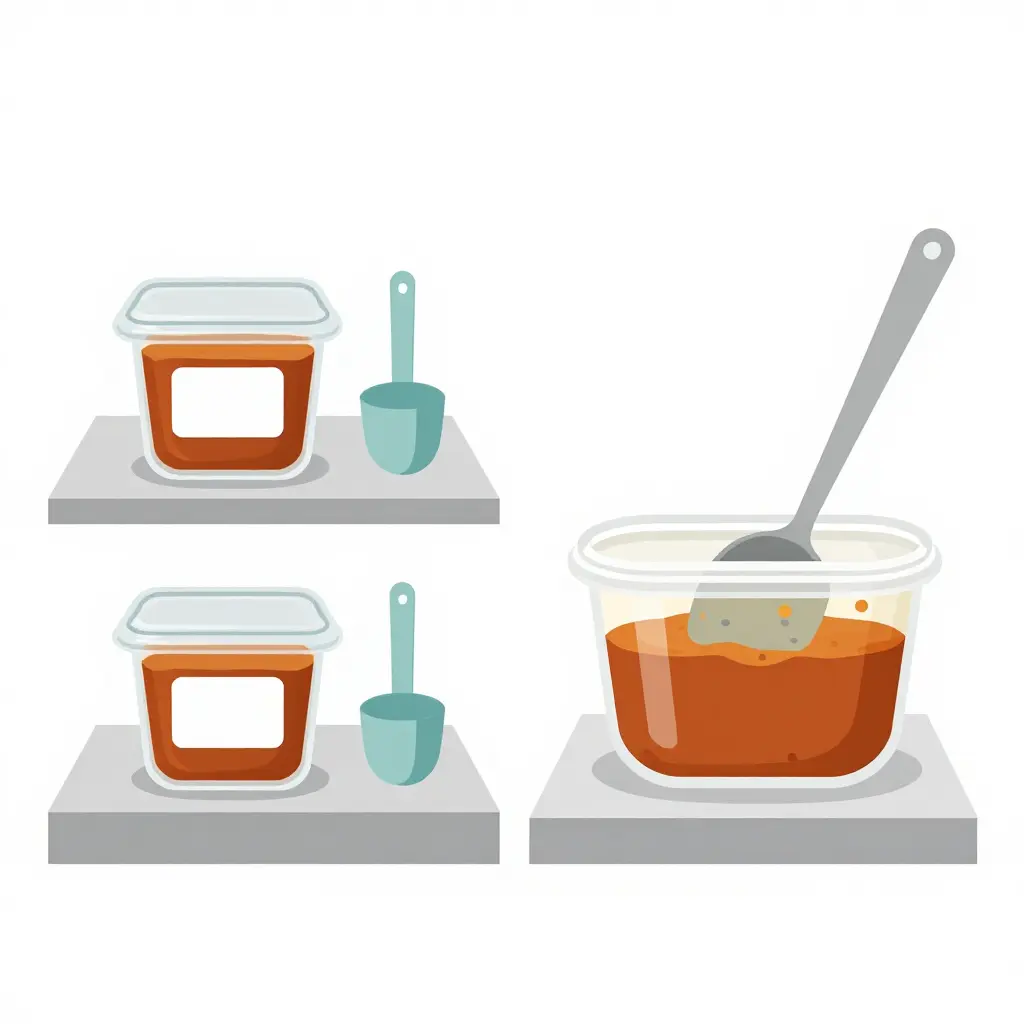
Takeaway: smaller, sealed-and-rotated containers tighten portions and shorten exposure – the format itself does part of the food-safety work for you.
When two units hold the same sauce, the labelling has to carry the difference: sauce name, batch or prep time and date opened on every unit, oldest used first, never topped up with fresh sauce. Clean scoops, no double-dipping, lids on during downtime – none of that holds if staff cannot see at a glance which container is which and how long it has been open.
A single large tub brings friction of a different kind. Every lid cycle exposes the surface and leaves residue on the rim, which then travels to scoops, hands and the next lid. Condensation gathers under the lid and drips back into the sauce, and a scoop resting in or leaning against a deep tub touches the rim and the handle-side wall on its way out. Multiply that by a shift and the hygiene margin shrinks.
For small-batch variety menus with several sauces in modest volumes, the clear two-pack is the better fit: portion a working unit, keep the spare sealed, rotate and label. For single-sauce high-volume menus, one large tub run with a strict lid-and-scoop routine still earns its place.
Bench Footprint at a Glance
Bench space in a takeaway kitchen is never the problem you plan for. It is the problem you find at 11:30am, mid-lunch rush, with three sauce batches open at once and nowhere left to put a lid down. Past that point what matters is the shape each layout claims, not the litres it holds: two compact containers side by side, or one generous tub.
The schematic is deliberately plain – shapes and claimed bench area, no styling.
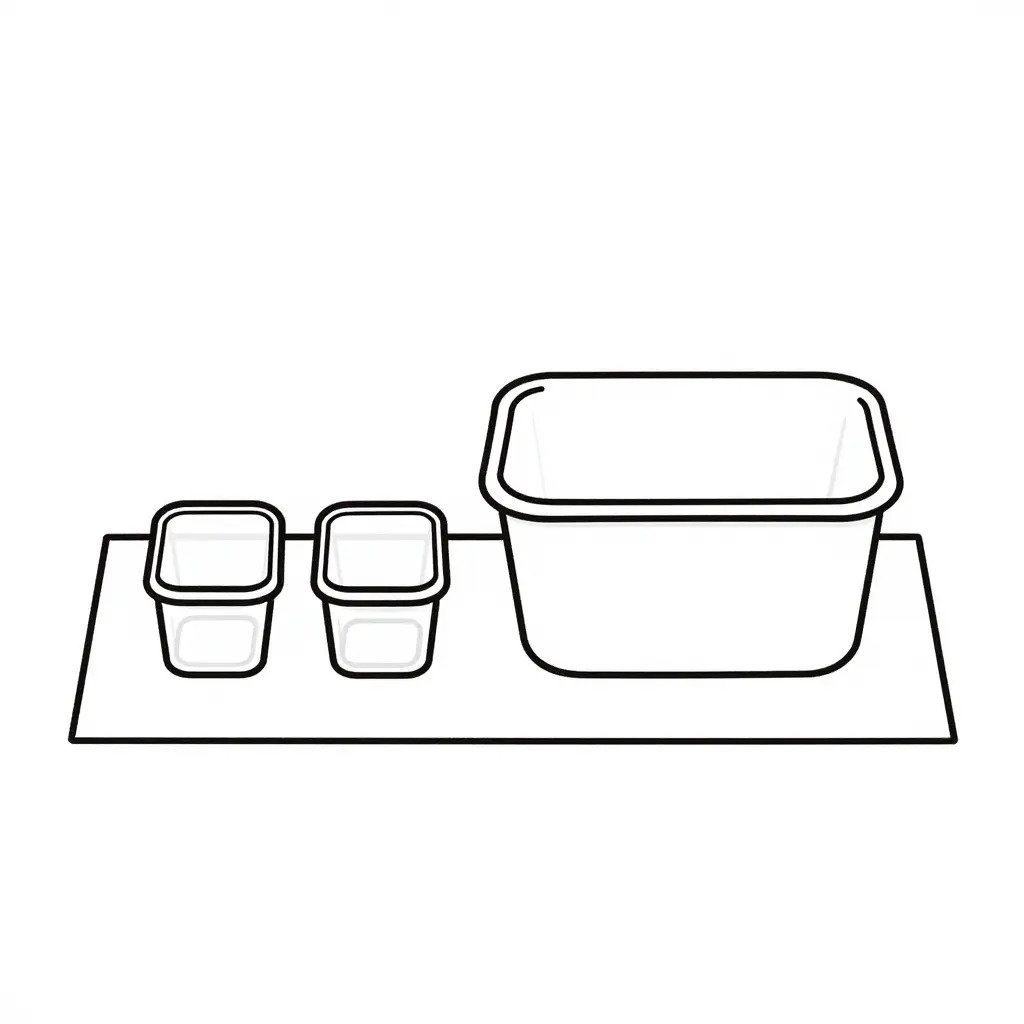
How to read it: the paired small containers sit in a longer, shallower block – more edge length, less depth, which suits a narrow prep strip. The single large tub pulls its footprint into one deeper square, which frees up linear counter run but eats into whatever sits behind it.
| Consideration | Two small containers, side by side | One large tub |
|---|---|---|
| Bench shape used | Long and shallow | Compact and deep |
| Access during a rush | Two people can scoop at once | One scooping point |
| Moving between stations | Split the pair, one travels | Stays put |
| Best fit | Narrow prep strips, split-station sauce work | Wide counters, single-batch sauces |
What this means in practice
If your sauce prep is split – one person portioning sweet chilli, another handling garlic mayo – the two-container layout keeps both hands working without elbows colliding. If you run one big batch of a house sauce that gets ladled all shift, a single tub such as our rectangular sauce tubs keeps the bench cleaner and the workflow simpler.
Either way, sketch your counter before you buy. Two minutes with a tape measure beats a season of shuffling containers around.
Storage, Stacking and Stock Rotation
A sauce format has to earn its shelf space twice: in the chiller, and again on the back-of-house rack during a busy shift. Once the lids go on, the two setups behave very differently.
Stacking stability
Clear rectangular containers stack like bricks. Their straight walls and flat lids sit flush against each other, so a column of four or five holds its shape even when someone drags the stack forward to reach the bottom unit. A single deep tub does the opposite. It is stable but heavy, and once it is half empty the remaining sauce shifts as you carry it, so it tends to live on the chiller floor or the lowest shelf.
Rectangular containers also line up side by side without gaps, so you can read the whole sauce station at a glance. A deep tub always ends up with something else parked on top of it.
Reading sauce levels without lifting a lid
During service, nobody has time to open a lid, look, and reseal it. Clear bodies solve that: a quick glance tells you whether a container is full, half, or scraping empty, and you decide from there whether to swap it out before the queue builds. With an opaque or very deep tub you are guessing, and guessing usually means opening it anyway.
FIFO when two units share one batch
Splitting a batch across two containers is normal, but it breaks the usual labelling habit. Both units carry the same produced-on date, so the tie-breaker has to be written, not remembered. Put a simple sequence on the lid: date, batch code and a unit number (1 of 2, 2 of 2). Unit 1 sits at the front and always goes out first. When it is empty, unit 2 moves forward and the label stays with the product it belongs to.
Three habits keep this working:
- Write the label before you fill, not after.
- Keep both units of a batch on the same shelf, front to back.
- Mark the empty unit’s lid as spent so it never gets refilled and re-dated by mistake.
Unit weight and shelf loading
Weight is where the two formats separate most sharply. An 18 L tub of sauce lands at roughly 19 kg, resting on one small patch of shelf. That is a lot of load on one bracket, and a real strain for anyone lifting it to shoulder height. The same 18 litres in 2 L clear containers spreads across nine separate units, so no single bracket takes the full load.
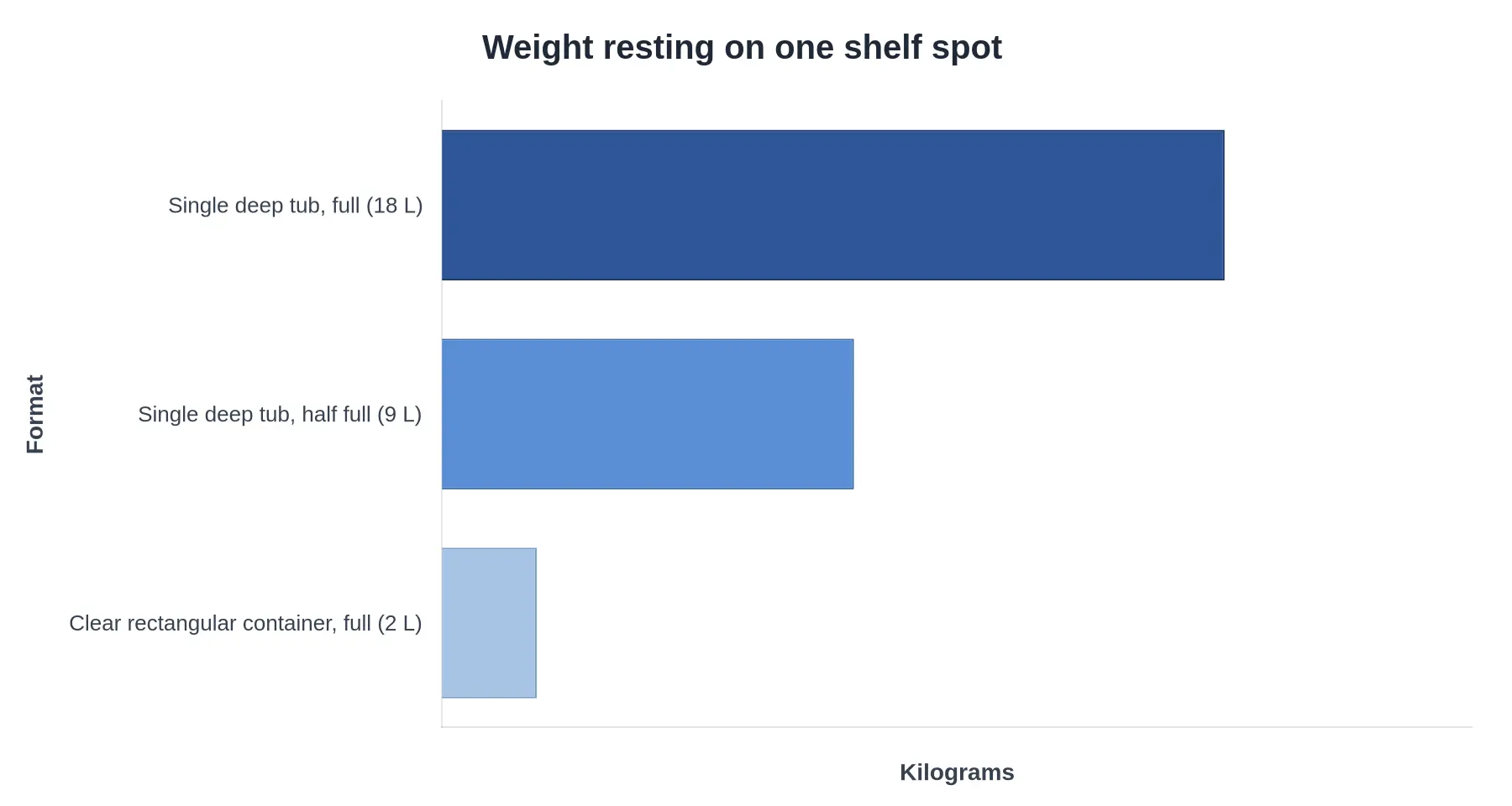
| Format | Weight per unit | Where it sits |
|---|---|---|
| Single deep tub, full (18 L) | approx. 19 kg | Chiller floor or bottom shelf |
| Single deep tub, half full (9 L) | approx. 10 kg | Bottom shelf, hard to lift out |
| Clear rectangular container, full (2 L) | approx. 2.3 kg | Mid or eye-level shelf |
If your racking is rated for it, lighter units higher up are the practical choice. Staff reach them faster and lift less.
Why the layout decides your bench space
This is where the layout turns into labour cost. Every retrieval is a round trip: turn, reach, carry, open, return. A 19 kg tub rarely travels to the bench – it stays put while someone decants from it, which ties up a stable piece of bench for as long as the decanting takes. Two lighter containers travel instead of the batch, so the bench clears in seconds.
Position matters too. Keep the sauce shelf within arm’s reach of the assembly point, at roughly waist to chest height, so a container goes out and comes back in one movement. The same logic applies to the rest of the service line: prepared sauces sit alongside trays and plates that go out with the order, and if the two live on different shelves you add steps to every ticket. Stack sauces on one shelf, serviceware on the next, and build orders straight from the pass.
One more detail that pays off: line up your sauce containers with the bowls and rectangular bowls range so lids and bodies share a footprint. Matching shapes nest neatly, stack squarely, and make the whole sauce wall read as one system instead of a collection of odd containers.
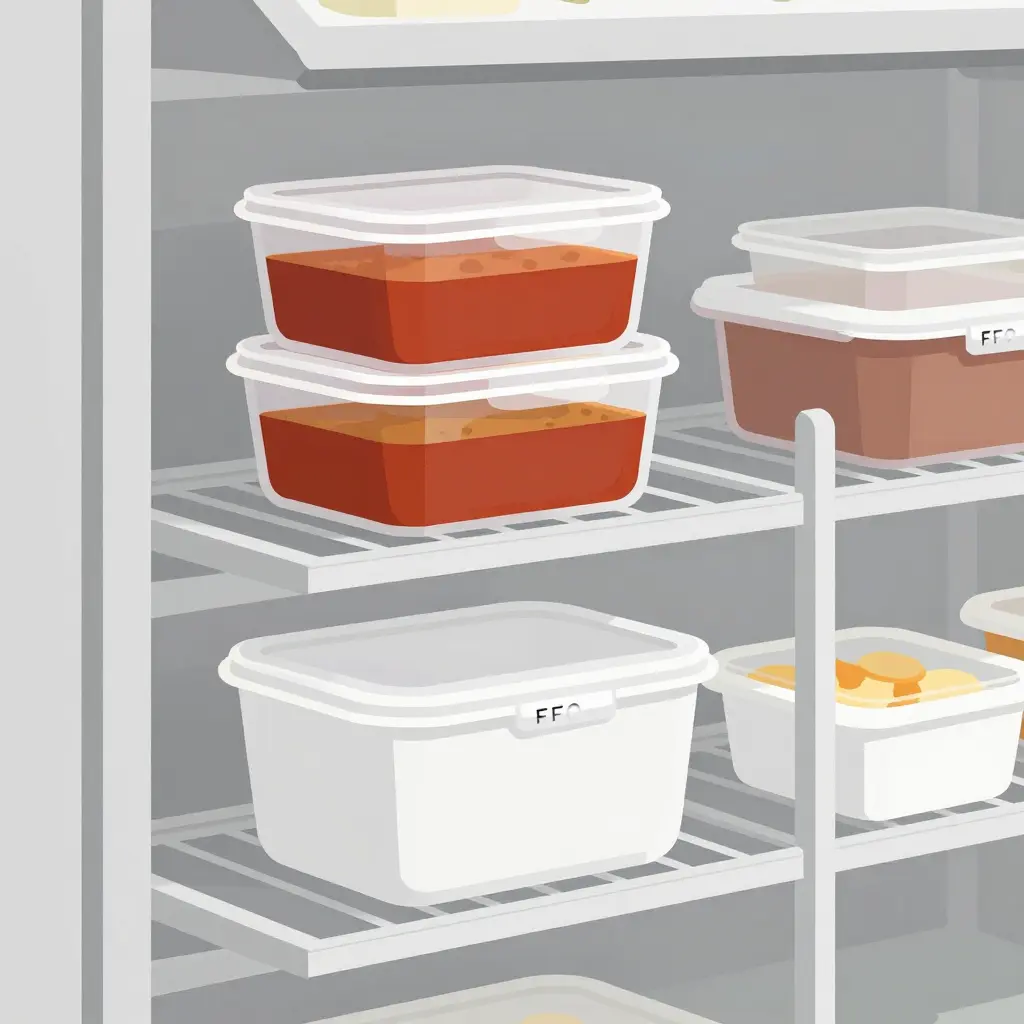
The big tub wins on batch volume per square metre of chiller. The clear rectangular set wins on stacking, visibility, labelling clarity and shelf load. Most takeaway kitchens end up using both, with the tub for bulk holding and the smaller units for the shelf that service actually reaches for.
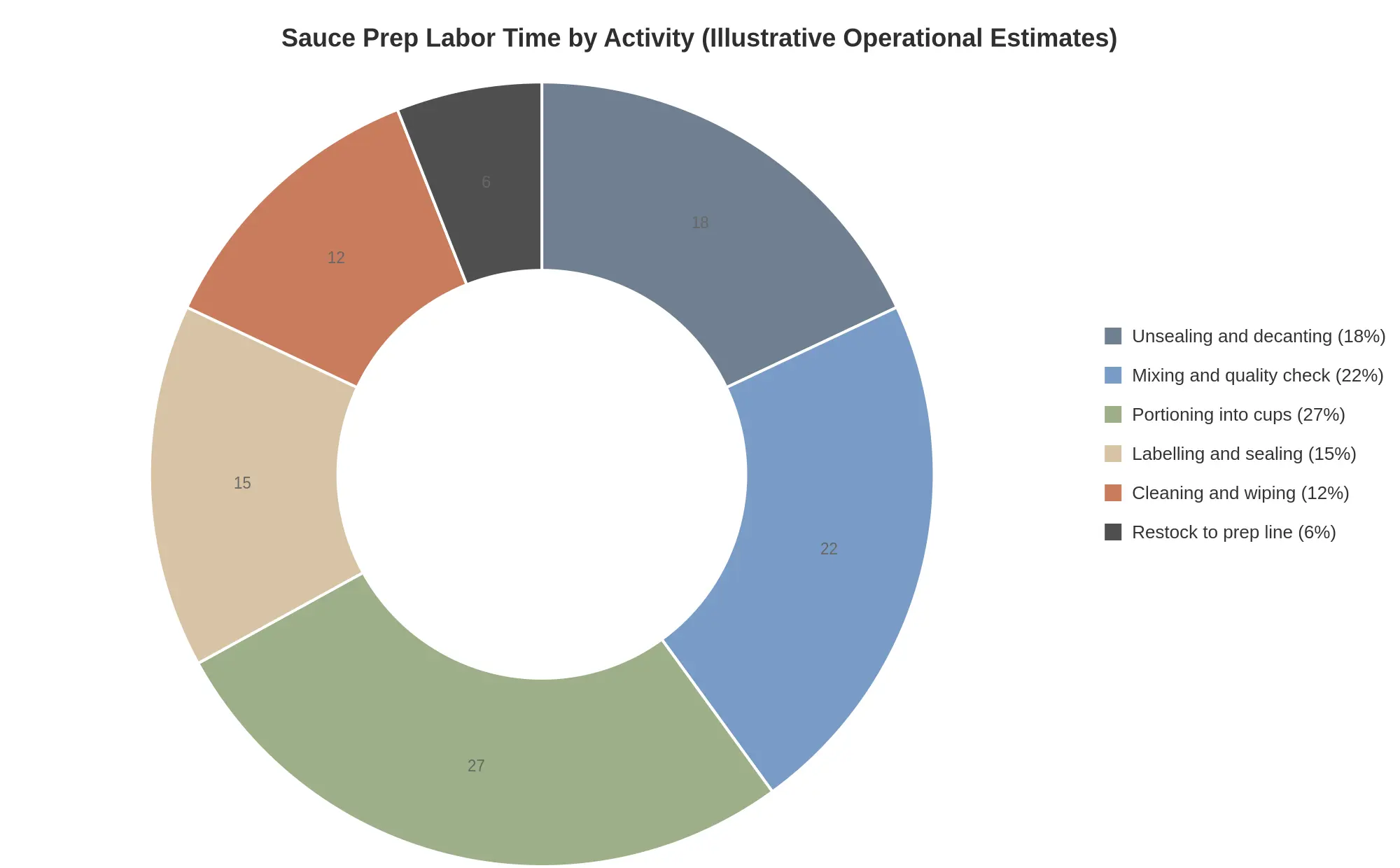
Once those containers leave the storage shelf, the prep clock splits roughly like this across a typical shift:
Procurement and Cost: How Chains and Catering Teams Should Run the Numbers
Buying sauce storage by the pallet rather than the piece moves the question away from the container and onto dollars, litres and warehouse shelves. The useful metric is cost per litre of stored sauce, not the price on the carton. On that metric the single large tub usually wins, because you pay for one lid, one moulding and one set of walls per litre. The pack of two costs more per litre but lets you buy only what you fill, which keeps waste small on slow-moving sauces. Part-filled tubs are the quiet budget leak in most multi-site kitchens, so ask your supplier for the fill line and count every litre you pay for.
The trade-offs worth writing into your spec sheet
| Consideration | Pack of 2 | Single large tub |
|---|---|---|
| Cost per litre | Higher per litre; roughly 1.2 to 1.5 times | Lower per litre; bulk pricing wins |
| Storage volume per litre | A little higher – two lids, two walls | Lower, more sauce per shelf slot |
| Order multiples | Case counts double quickly, more SKUs to count | Fewer lines, but each carton is heavier |
| Damaged or split unit | You lose half the order, not all of it | One crack takes out the whole batch |
| Distribution to sites | Easy to split between outlets | Better for a single high-volume kitchen |
Two rows in that table carry more weight than the rest. First, order multiples matter as much as unit price: pack-of-2 formats inflate case counts and eat warehouse depth, while a single large tub compresses the same litres into fewer, taller units that need stable stacking and a trolley rather than a hand carry. Second, resilience is a cost line. A cracked tub during delivery is a write-off either way, but a pack of two leaves you with usable sauce and one damaged line item to claim, whereas one large tub leaves you with nothing on a Friday night. Match the format to your risk tolerance, not just your spreadsheet.
One format, many locations
For franchise groups and corporate procurement teams, the strongest argument is consistency. A single, clearly labelled format – same SKU, same fill volume, same lid – means a store manager in one city orders exactly what a store manager in another city orders, and head office can forecast on litres instead of guessing. Mixed formats across sites make reordering slow, stocktakes messy, and forecasting unreliable.
Where Ecocupbowl fits
We manufacture and supply disposable tableware, packaging paper and boxes, and we build our range around three things buyers ask for repeatedly – safety, durability and eco-friendly practice. Production is checked for food-contact safety, board and moulded fibre are specified for real-world stacking and heat, and our materials lean toward recyclable and fibre-based options rather than plastic-heavy shortcuts. Support is part of the product too: quotes, samples and reorders are handled by people who understand that a catering contract does not wait a week for a reply, and pricing is structured to work at volume without gimmicks.
Most of our trade customers consolidate sauce storage with adjacent lines in the same purchase order, which cuts freight stops and invoice admin. Our in-stock boxes range covers everyday cartons that ship from ready stock, while the meal bento boxes collection suits operators plating set meals or bento-style lunch lines. Ordering them with your sauce tubs keeps one delivery window, one document trail and one predictable monthly spend.
One Sauce Prep, Two Very Different Handoff Shapes
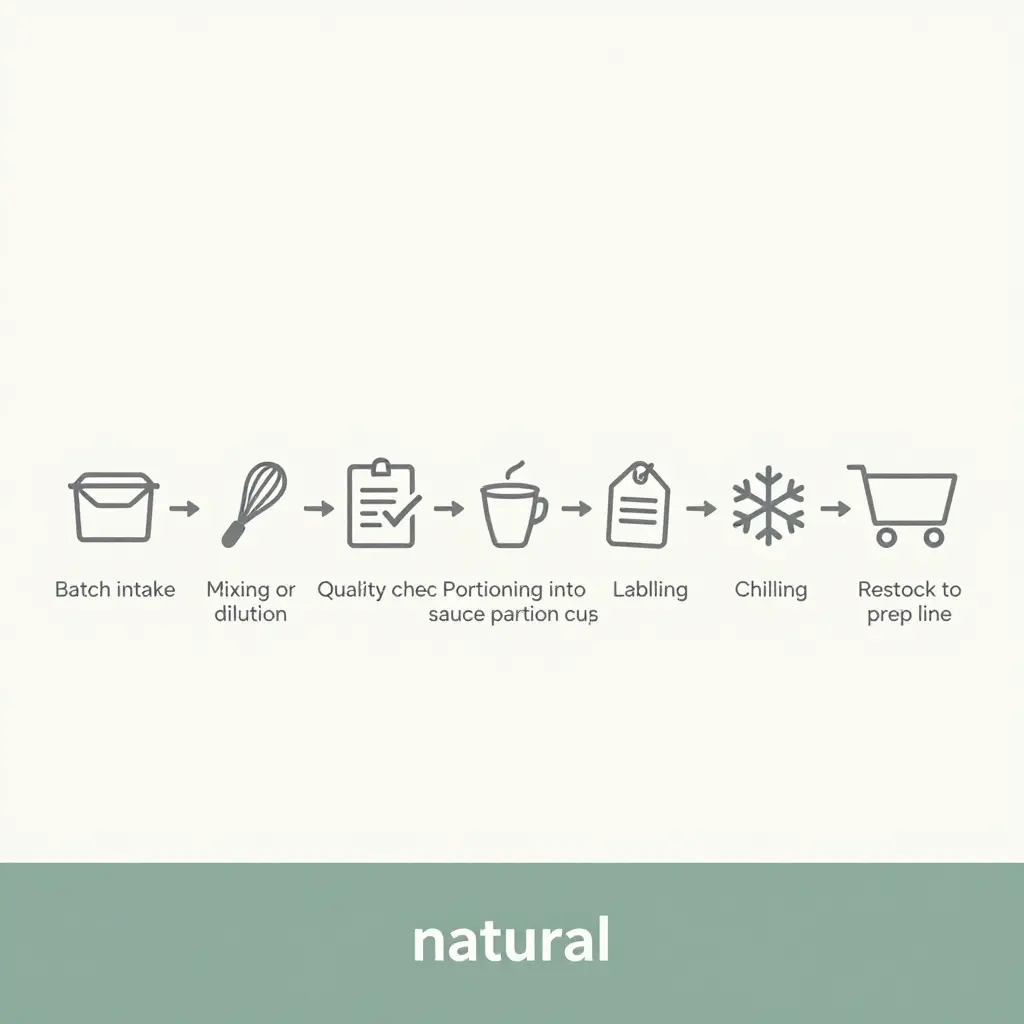
Before the decision rules, the flow is worth a look. The diagram is an abstract two-dimensional drawing of the sauce prep handoff sequence: batch intake, mixing, quality check, portioning, labelling, chilling, then restock. The top path splits into two parallel branches, which is what the doubled working units of the pack-of-2 look like; the lower path stays one continuous line for the single large tub.
There is no text in it, and no props. The shapes and arrows alone show the structural difference: more nodes and more handoffs on one side, one unbroken thread on the other.
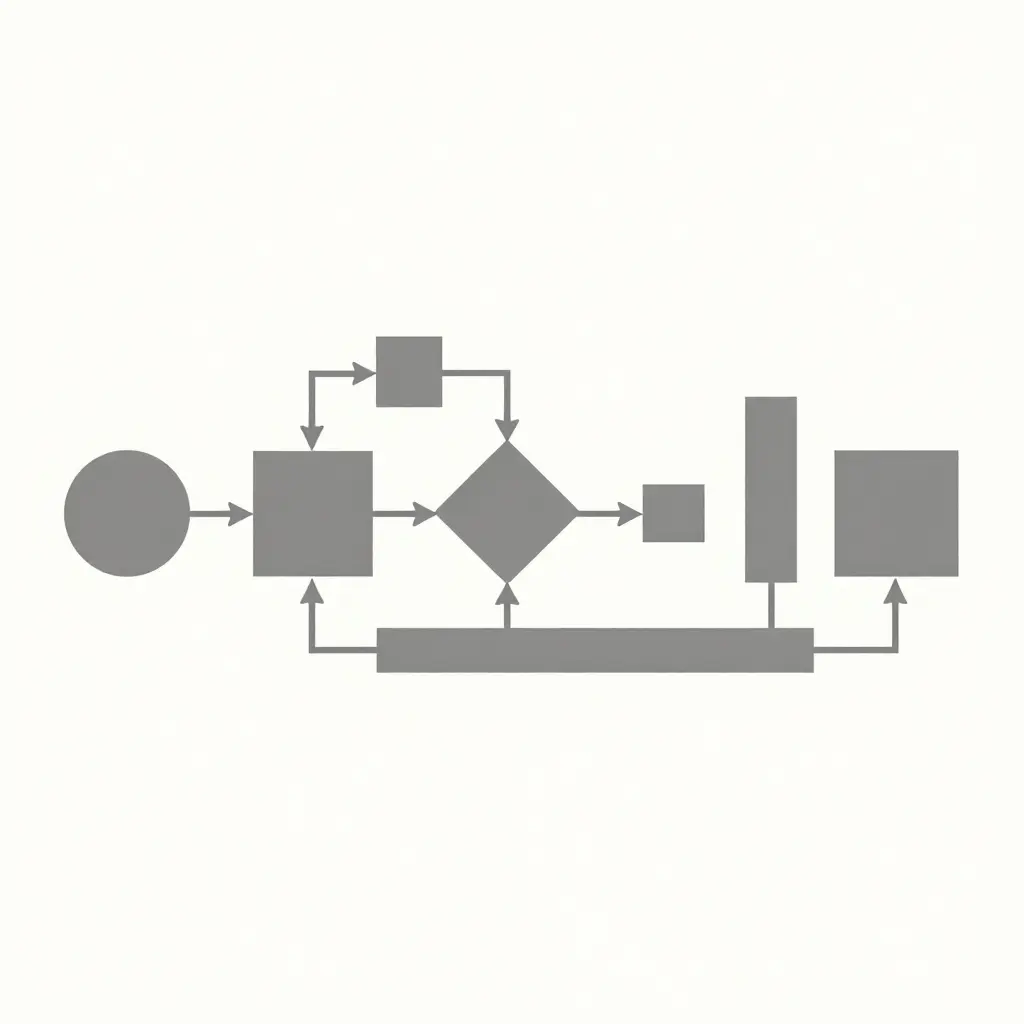
Read it as a labour map. Every extra arrow is a point where someone picks something up, sets it down, waits, or re-checks it. The split branch runs portioning and labelling in two smaller units at once – handy during a rush, but it doubles the containers to fill, seal, mark and stack. The continuous path keeps the chain short, lets one person own the run end to end, and claims one bench shape instead of two; the price is that you cannot portion two sauces at the same time. If your kitchen is tiny and your labels need to stay legible, pairing either route with the right sauce portion cups keeps the final handoff neat and easy to trace.
How to Choose Between the Clear Pack of 2 and the Single Large Tub
No format wins outright. The right one depends on how many sauces you run, how fast your counter moves, and how much space you actually have. Work the checks in order; most kitchens have their answer by the third or fourth.
If you already decant into sauce portion cups during service, keep that routine in mind as you go. It shapes how often you handle the main container.
-
Count distinct sauces per day. Four or more sauces running at once? Go with the pack of 2, so each unit holds a different sauce. One or two sauces only? The single large tub is enough.
-
Estimate peak hourly portioning volume. If lunch rush pulls sauce faster than you can refill, use the single large tub as your back-of-counter reservoir. If volume spreads evenly across the day, the pack of 2 keeps portions fresher.
-
Measure available bench footprint. A narrow prep line with vertical space favours the pack of 2, because two small units fit a shallow strip and can be moved separately. A wide, open station can carry the single large tub without crowding your garnish trays.
-
Assess lifting limits and staff rotation. A full large tub gets heavy. If one person lifts and carries it all shift, the pack of 2 splits that load. With a fixed prep role and a trolley nearby, the single tub is fine.
-
Check chilled storage depth. Shallow under-counter fridges suit the pack of 2 because the units stack low. Deep upright chillers leave room for the single large tub.
-
Confirm labelling requirements. Multiple allergens and date codes per sauce point to the pack of 2, since each unit gets its own lid and label face. A single-house sauce needs one label, so the large tub works.
-
Align with the packaging range already ordered. If your current setup assumes small-batch decanting, the pack of 2 matches that rhythm. If you fill large squeeze bottles once per shift, the single tub cuts handling steps.
Many takeaway kitchens and beverage chains run the two formats side by side. The large tub holds base sauces that move all day, while the smaller units handle seasonal, limited-run or low-volume sauces. That split keeps labour low and labels clean without overbuying either format.
Handling, Hygiene and Environmental Responsibility
Getting sauce into a container is only half the job. What happens before the lid goes on decides whether the tub arrives clean or turns a delivery bag into a sticky mess. A two-second wipe of the rim is the cheapest leak-prevention step in any kitchen: sauce trapped in the thread or under the lid either runs down the side of the tub or glues two containers together. The habit that works is short: fill to the shoulder, wipe the rim, press or screw the lid until you feel resistance, and stack only when the lids sit flat.
Where clear plastic containers are reused for in-house prep, treat them as equipment rather than packaging:
- Wash, rinse and sanitise after every cycle, then air-dry upside down so water does not pool in the corners.
- Inspect for scratches, cloudiness or a lid that no longer clicks, and retire the tub – worn plastic holds residue and odour.
Raw and ready-to-eat sauces should never share a scoop. Dedicated, colour-coded utensils and separate bench zones keep allergens and bacteria where they belong, and it costs almost nothing to set up once.
Format choice shapes material use as well. A single large tub uses noticeably less plastic per litre of sauce than two smaller ones, because wall and lid area grow more slowly than volume does – so high-volume batches are leaner in packaging per litre, while smaller packs win on portioning speed and on keeping two sauces apart. Our eco-friendly focus sits behind that trade-off: we favour formats and materials that reduce material use where it is practical, without overstating what any single container can do.
For takeaway service, complementary disposables keep the same standard. Our bamboo pulp takeaway range covers lidded bowls and plates that pair neatly with sauce tubs, and the disposable cutlery range means every order leaves with the same clean, consistent kit – no last-minute hunt for forks.
Frequently Asked Questions
Is a clear pack of 2 worth it when our menu only uses one or two sauces?
It can be, when the lifts are heavy or the bench is short: one unit stays sealed while the other is in use, and you can pull one out of service for cleaning mid-shift without stopping the station. On a menu with a single sauce running all day at volume, though, the tub gets there in fewer steps per litre, so the pair is not the default answer.
How well does each format keep sauces sealed during transport?
Both hold up when the lids are pressed down fully. The single large tub is the firmer option for bulk drops, since a wide rim resists flexing and the weight keeps it planted – though it needs a trolley or two hands. The smaller pair suits shorter runs where you carry two sauces at once and want each one sealed on its own.
Which format frees more bench space in a takeaway kitchen?
Per litre, the tub: one deep square claims less total area than a spread of small units. Per shape, it depends on the counter. Two small units fit a narrow strip beside the fryer and let two people scoop at once; the tub needs one clear run of bench. On a tight pass-through counter the pair usually wins on flexibility rather than on area.
How do the two formats compare on cost per litre?
A single large tub almost always lands lower per litre, because you pay for one lid, one label and one moulding. The pair costs more per litre, but you buy only what you fill, so waste on slow-moving sauces stays small.
Do smaller units suit bubble tea and beverage chains with high syrup and sauce turnover?
They do. High turnover rewards small batches, and the pair lets staff decant fresh syrup every shift instead of scooping from a half-empty drum. It also keeps fruit purees and pudding toppings rotated, which matters when several drinks share one sauce station.
How do both formats pair with disposable sauce portion cups and takeaway packaging ranges?
Both sit naturally beside your front-of-house disposables. Pre-portion sauces from either container into disposable sauce portion cups for delivery orders, then pack them with takeaway boxes and cup carriers so each bag arrives tidy and leak-free.
Bringing the Comparison Together
So where does that leave your sauce prep station? The clear pack of 2 earns its place on separation and exposure: two sauces kept apart, a sealed spare on the shelf, lighter lifts, and the freedom to move one unit while the other stays put. The single large tub answers a different need, packing more volume into less bench and chiller space, cutting the number of lids cycled per litre, and landing lower on cost per litre. Neither is the “better” one in isolation. The right pick follows how many sauce varieties you run, how much you portion in a given hour, and how much bench space you can give up during service.
Packaging decisions rarely stay settled for long, which is fine. As your menu breadth grows, from one signature sauce to a rotating lineup, it is worth reviewing your formats on a schedule so containers keep pace with the work rather than fighting it. Treat that review as one consolidated exercise, folding in the wider range of paper food trays alongside your sauce containers, so the whole pass and prep flow is assessed together instead of piece by piece. Locking the check into your seasonal planning keeps the station running smoothly as your offering evolves.
Before your next menu update, put both formats on the bench for a week and count the steps yourself. The ranges here are a starting point; your own counter settles the rest.