
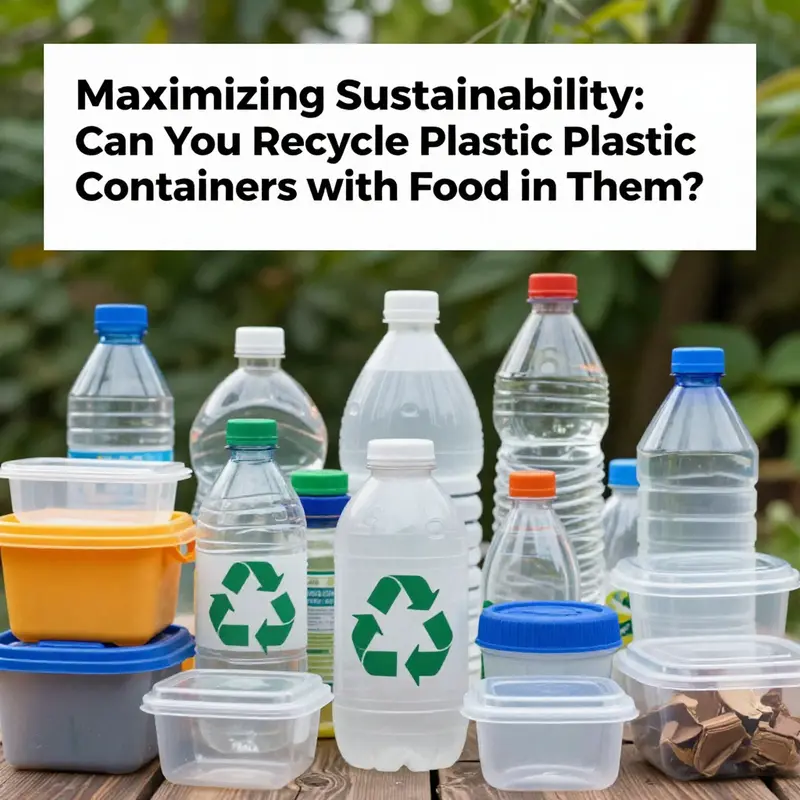
As sustainability becomes an increasingly crucial aspect of food service operations, understanding how to manage waste effectively is imperative. Plastic containers, often used for food packing or delivery, present unique challenges in recycling, mainly due to food contamination. This article aims to enlighten bubble tea shops, restaurants, food trucks, catering services, and corporate procurement teams about the critical role that cleanliness plays in recycling efforts. Each chapter will explore essential concepts, from the types of contamination that compromise the recycling stream to best cleaning practices, identifying recyclable plastics, understanding recycling symbols, and the broader implications for waste management systems.
null
null
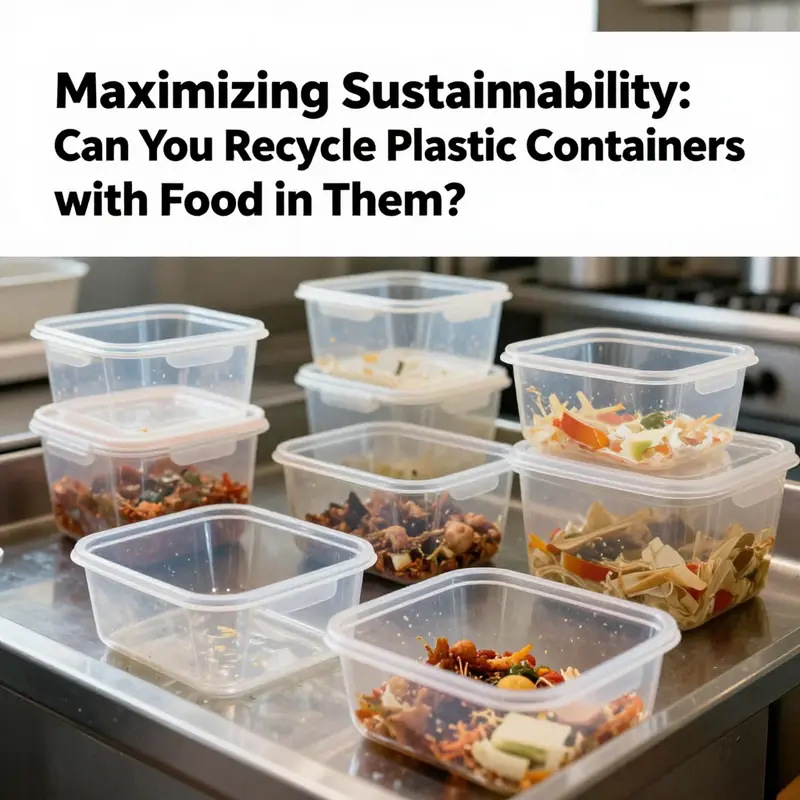
Grease, Residue, and the True Cost of Unclean Plastics: How Proper Rinsing Keeps Containers in the Recycling Stream
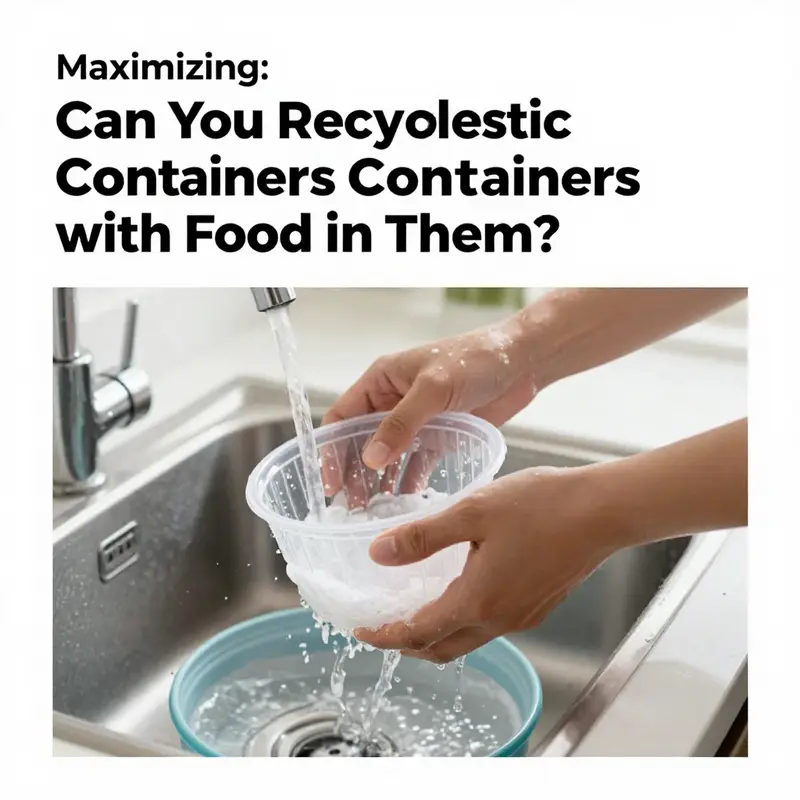
In communities around the world, a simple sink and a bottle of water stand between a plastic container and its hopeful second life as a recycled material. Yet the reality faced by recycling facilities is less about idealistic aspirations and more about the stubborn truth that contaminated plastics complicate the entire process. Plastic containers that still hold food, grease, or liquids do not merely sit in a bin; they become impure signals in a highly orchestrated system. When a stubborn residue clings to the surface, it can ripple through the machinery, the sorting rooms, and the market value of recycled resin. The result is not just a single misfit item but a compromised batch, a cascade that can force a recycling plant to divert loads to landfills and waste resources that communities counted on recovering. This is why the everyday act of rinsing and emptying plastics is often described not as a preference but as a practical necessity for the system to work as intended.
The challenge begins at the point where a container meets the MRF, or material recovery facility. Contamination is not always obvious. A smear of sauce or a thin film of oil can cling to the plastic as it travels along conveyors. Those tiny traces can transfer to neighboring materials, particularly paper and cardboard, which are often sorted together with plastics in mixed streams. Once paper is contaminated, its own recycling value drops, and the entire batch risks falling short of the standards required by mills that convert reclaimed fibers into new products. The most sensitive element is not the single greasy cup or yogurt tub; it is the potential to poison an entire run of materials that would otherwise find a second life. In other words, a small amount of residue can have outsized consequences in the broader recycling ecosystem.
Even more immediate is the wear and tear on the machinery itself. Sorting lines rely on a delicate choreography of magnets, optical sensors, and air jets that separate plastics by resin type and color. Grease and food particles cling to surfaces and act like stubborn magnets for dirt and grime. Oils can coat surfaces that optical sorters use to identify materials by density or reflectivity, blurring the lines between PET and certain plastics. The presence of fats and oils can also impede the drying stages necessary to produce clean resins. The maintenance costs rise, throughput slows, and the risk of unplanned downtime increases. In short, contamination adds friction to a system that thrives on predictability and cleanliness.
The quality of the recycled material matters as well. Residual moisture and organic matter invite bacterial growth and unwanted odors, especially when plastics are stored or transported before being processed. In some cases, contaminated plastics—such as PET bottles with milk residue—fail melt-flow tests and are deemed unrecyclable for the specific markets that purchase reclaimed resin. This is not merely a theoretical risk. It translates into higher rejection rates, reduced market value, and, paradoxically, a greater likelihood that recyclable materials end up in landfills. The message from researchers and practitioners is clear: exactly how clean a plastic item is when it enters the stream can determine whether it becomes a useful product again or becomes waste.
Experts emphasize that clean recycling is essential. A greasy takeout container might look recyclable, but in reality, it’s trash. The perspective is not about scolding individuals for using convenience packaging; it is about highlighting how everyday choices shape the fate of plastics after we part with them. When a consumer squeezes out sauces, oils, and other residues before tossing a container into the recycling bin, that small action becomes a lever for improving efficiency, reducing contamination risk, and preserving the integrity of the recycling process. The principle is straightforward: less contamination means more plastics can be recycled into high-quality products, which in turn strengthens markets for reclaimed materials and reduces the extraction pressures on virgin plastics.
The practical steps to achieve that cleaner stream are simple in theory, but they require a habitual part of the routine. First, empty the container completely. If there are food scraps, scrape them into the trash or compost if appropriate for your waste system. Second, rinse the container with a quick stream of tap water to remove visible debris. You do not need to use soap; a brief rinse is sufficient to dislodge oils and solids that could cling to the walls. Third, tilt and shake as needed to dislodge stubborn bits, and pour out any remaining liquids into the trash or a designated waste container. Finally, let the container dry before placing it in the recycling bin. Wet containers can still attract pests and create odors in transit, and they may complicate sorting downstream. This sequence—empty, rinse, and dry—constitutes a practical ritual that keeps the recycling stream efficient and dependable.
The labeling on the plastic matters too. Containers made from #1 (PET) and #5 (PP) are generally accepted for recycling in many jurisdictions, though local guidelines vary. The recycling symbol on the bottom of the container, often accompanied by a resin code, provides a quick checkpoint for what the facility can process. But even with the right code, cleanliness remains the nonnegotiable factor. If a container is heavily soiled or greasy and cannot be cleaned adequately, it is wiser to treat it as trash rather than risk contaminating an entire load. This isn’t a judgment on individual households; it is a recognition of the realities of centralized processing where contamination can ripple through the system with tangible economic and environmental costs.
For households seeking a more sustainable relationship with packaging, the broader guidance from international and national authorities reinforces the same principle: recyclables must be clean and free of contaminants. The emphasis is on prevention—avoiding contamination at the source rather than fixing it after the fact. At a national level, guidelines stress that the quality of input determines the value and usability of output. Clean plastics yield cleaner resins, which translates into stronger demand and higher prices in the recycling market. By aligning daily habits with these standards, individuals contribute to a smoother, more resilient recycling system. It is a reminder that the path to a greener economy is paved not just with ambitious policies but with consistent, small acts of responsibility at home.
For readers who want a practical, concrete reference on how to navigate these guidelines, the United States Environmental Protection Agency’s Recycling Basics offers a straightforward framework for preparing recyclables. While local rules may differ, the core messages—reduce contamination, rinse and empty containers, and keep materials dry—hold across contexts. This shared understanding helps translate policy into everyday behavior, turning the abstract goal of higher recycling rates into tangible, repeatable actions in kitchens and classrooms alike. To see one example of how packaging choices can support cleaner streams, consider exploring the broader range of packaging options designed with recyclability in mind. eco-friendly disposable 3-compartment takeout boxes offers a reference point for how packaging design can minimize contamination and simplify disposal, while still meeting the practical needs of meal services.
The overarching takeaway is not a heavy-handed rule but a practical discipline. Empty and rinse, then assess how much residue remains. A container that is merely lightly soiled can be salvaged with a quick rinse, while something heavily coated in grease may be better redirected to waste. The repeated emphasis across sources is that cleanliness is the single most effective defense against contamination. This approach protects not only the immediate recycling load but also the broader ecosystem of manufacturers, processors, and communities that rely on recycled plastic for new products. When households adopt a routine of preparing recyclables with care, they become part of a larger system that values efficiency, accountability, and environmental stewardship. The outcome is a cycle of reuse rather than a cycle of waste, a small but meaningful step toward reducing the demand for virgin plastic materials.
External resource: for a comprehensive overview of the recycling process and practical tips, see the EPA’s Recycling Basics guide: https://www.epa.gov/recycle/recycling-basics
Grease, Residue, and Sorting Lines: Decoding Which Plastic Containers Can Be Recycled When Food Lingers
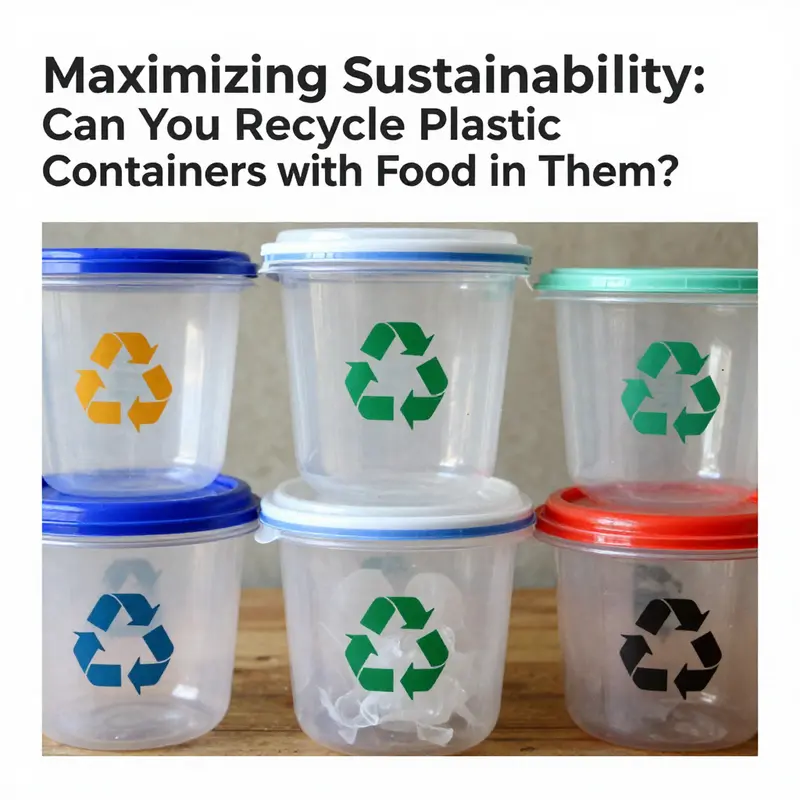
The simple question—can you recycle plastic containers that still hold food?—unlocks a tangle of realities that reach beyond personal convenience. In the real world of curbside programs and busy households, the truth hinges on cleanliness, the way plastics are sorted, and the fragile math of recycled materials. Food residue, especially grease and oils, creates contamination that can derail an entire batch of recyclables. Even a small smear can echo through processing facilities, challenging optical sorters and compromising resin identification. When contamination spreads, it often forces facilities to discard the entire load or redirect it to landfill, undermining the very purpose of recycling. This is not a theoretical flaw; it is a practical limitation built into the system, which depends on consumers doing their part to keep every item as clean as possible.
The mechanics behind this problem are instructive. Modern recycling streams rely on precise identification of resin types so plastics can be reprocessed into new products. Optical sorting systems rely on surface properties—color, clarity, and surface contamination—to separate PET from high-density polyethylene, or from polypropylene. Fats and oils coat the surfaces of containers, muddying signals that sorting machines read. The result can be mis-sorted bales, rejected batches, and ultimately lower-value material that cannot be economically recycled. The consequences extend beyond the plastic itself; residual moisture and food remnants can ferment in storage, emit odors, and attract pests, complicating facility operations and worker safety. The bottom line is blunt: contamination raises processing costs, lowers recovery rates, and reduces the market value of recyclables.
For many people, the instinct is to treat a near-empty bottle or jar as recyclable with a cursory rinse. Yet guidance from waste professionals emphasizes a clearer standard. The most practical rule is simple and actionable: empty the container completely and rinse away visible food waste before placing it in the recycling bin. A quick rinse with water is typically enough to remove the bulk of residues. This small effort can prevent stubborn residues from interfering with coatings and surfaces that sorting equipment relies on. It also helps prevent cross-contamination with other recyclables, especially paper and cardboard, which can be particularly sensitive to moisture and food oils. The goal is not to achieve showroom cleanliness but to reach a level of cleanliness that keeps the stream viable for recycling.
Label awareness adds another layer of nuance. Containers made from certain plastics are generally accepted, while others are not. In many programs, the most consistently accepted plastics are those labeled with recycling symbols that correspond to #1 (PET) or #5 (PP). These materials tend to hold up better through the recycling process and are most commonly reformulated into reuseable feedstocks. Even within these categories, local rules vary, so a quick check with your municipal guidelines is prudent. If a container is heavily soiled or greasy and cannot be cleaned effectively, the responsible choice is to place it in the trash rather than risk contaminating a broader batch of recyclables. The emphasis remains on reducing risk to the system while preserving as much material as possible for true reuse.
The stakes of this practice are underscored by expert voices in the field. Dr. Lena Torres, a Materials Recovery Specialist at the Sustainable Waste Solutions Institute, puts a blunt point on the matter: clean recycling isn’t just a suggestion—it’s a requirement for the system to work. A greasy takeout container might look recyclable, but in reality, it’s trash. These cautions are not about stinginess or inconvenience; they are about preserving the integrity of recycling streams and ensuring plastics can be transformed into new products instead of becoming waste to be landfilled after a single use.
Beyond the lab and the facility floor, the guidance resonates through policy and global standards. The Chinese Ministry of Ecology and Environment has issued guidelines that highlight a core principle: recyclables must be clean and free of contaminants. This emphasis aligns with a growing consensus that consumer behavior in the kitchen and at the curb has tangible consequences for how much material can be recovered and repurposed. While international models differ in specifics, the shared thread is clear: contamination undermines the value and viability of recycled plastics, and conscientious preparation of items is essential to a functioning recycling system. In practical terms, that means adopting a routine of rinsing and draining, setting aside heavily soiled items, and recognizing that the simplest steps can make a meaningful difference.
What does this look like in everyday life? Start with the basics: empty the container, enough to leave the inside free of visible food particles. A brief rinse under running water can remove most residue; if you still see grease or opaque film, give it another quick wash. Remove any lids that are not part of a secure rinse cycle and place the container in the recycling bin only when it’s clearly clean and dry. If the container is reusable and you plan to reuse it, that can be a separate decision for minimizing waste, but for recycling, cleanliness remains the guiding standard. An important nuance is that not all plastics are equally accepted across all jurisdictions; checking local guidelines ensures you don’t waste effort or contaminate more than your own bin. The aim is to create a stream of clean materials that can be processed with efficiency and integrity, rather than a mixed batch that burdens facilities and devalues the end product.
It is also worth considering the role of design and packaging in reducing contamination at the source. Some containers are manufactured with grease-resistant coatings or easier-to-clean surfaces, which can help, but consumer responsibility remains central. A container that seems recyclable at a glance may, in fact, be unsuitable if it carries a film of oil or other food residues that cling to surfaces and resist straightforward washing. In such cases, choosing designs that facilitate cleaning and opting for packaging alternatives that minimize residue can support higher recycling yields over time. For audiences weighing their options, it can be instructive to explore alternatives that are not just recyclable but also reuse-friendly, which reduces the overall footprint of food packaging in the waste stream. For more examples and practical options related to takeout packaging, consider resources that discuss eco-friendly takeout boxes for food packaging, which can help readers balance convenience with recycling realities. eco-friendly takeout boxes for food packaging.
The broader narrative here ties back to the question of what counts as recyclable. Contamination isn’t just a nuisance; it is a defining factor that determines whether a container becomes a reusable feedstock or waste. The practical steps—emptying, rinsing, and assessing cleanliness—are the frontline defense against this problem. Meanwhile, the global guidelines remind us that the system relies on a chain of responsibility that starts in the kitchen and ends at the loading dock of a materials recovery facility. If households hesitate or rush through the rinsing step, the benefits of advanced sorting and recycling technologies are diminished. Recyclers and policymakers recognize this; the most successful programs are those that educate and empower residents to make clean, consistent choices at the point of disposal.
As communities continue to refine their approaches, residents can view this as an ongoing responsibility rather than a single action. The simple ritual of emptying and rinsing may seem small, but it is a major lever for unlocking higher recycling rates and better environmental outcomes. The path forward will likely involve a blend of better-designed packaging, clearer guidelines, and sustained public education. In the meantime, the rule remains steadfast: if you cannot clean a container to a reasonable standard, it is safer to designate it as trash rather than risk contaminating an entire batch. This restraint protects the integrity of paper, cardboard, and the rest of the recycling stream, preserving the value of the materials we reuse and reinforcing a circular economy that treats plastics as resources rather than waste.
External resource: for a broader framework on plastic recycling and contamination, see the U.S. Environmental Protection Agency’s Sustainable Management of Plastics guidelines: https://www.epa.gov/sustainable-management-plastics
Grease, Symbols, and Sorting: Navigating Plastic Recycling When Food Lingers
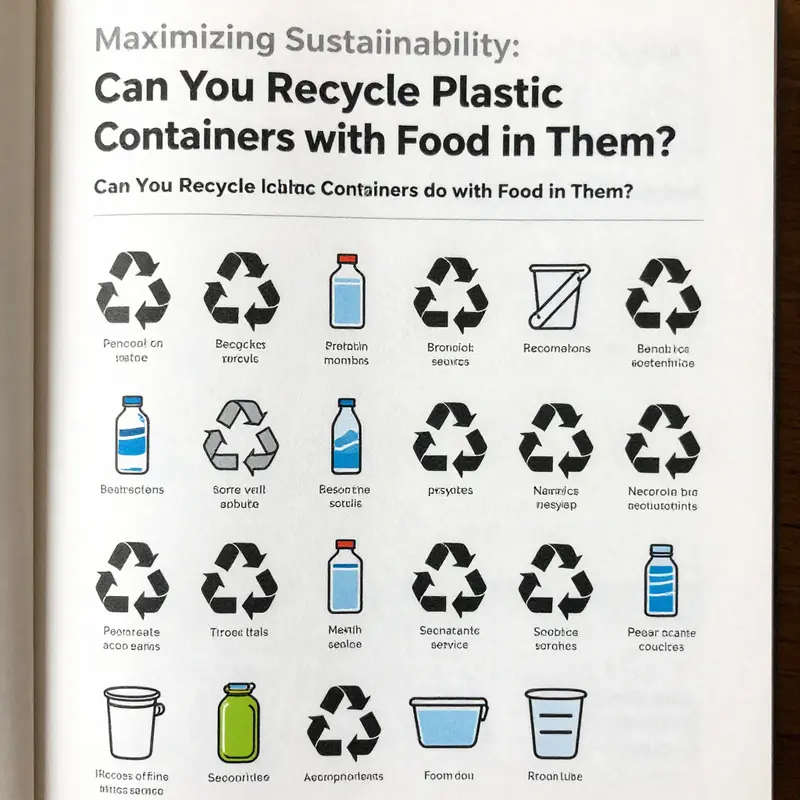
The everyday question about recycling plastic containers with food in them is more than practical curiosity; it sits at the intersection of individual choices and the high-tech choreography of modern waste management. When a takeout box or yogurt tub still bears traces of sauce or stray bits of pasta, it isn’t just a minor mess in your bin. It can ripple through the recycling stream, stalling machines, complicating sorting, and ultimately undermining the value of an entire batch of materials. The truth that greases and residues carry is not simply about cleanliness; it is about preserving the integrity and economic viability of the recycling system itself. In facilities that process recyclables, automation dominates. Cameras and sensors identify what kind of plastic is arriving, while air jets and mechanical arms peel apart paper, metal, and different resins. A container coated in oil or tomato sauce disrupts that delicate balance. The organic film can smear onto neighboring materials, contaminating paper, cardboard, and even other plastics. Even a single greasy container has the potential to taint an entire bale, forcing facilities to discard the whole load or redirect it to landfill. The science behind these outcomes is straightforward: residues alter surface properties, promote odor and microbial growth, and hamper the cleaners’ ability to separate materials efficiently. The effect is not only logistical but economic. When the market sees recyclates with contaminants, prices dip, and some streams become nonviable. Market value matters because it drives investment in collection, sorting, and processing equipment. If a batch is deemed too impure, it loses its value and may be sent to disposal instead of being recycled. This is why clean recycling isn’t just a suggestion—it’s a requirement for the system to function. Dr. Lena Torres, a materials recovery specialist, puts it plainly: “Clean recycling isn’t just a suggestion—it’s a requirement for the system to work. A greasy takeout container might look recyclable, but in reality, it’s trash.” Her observation captures a truth that often feels counterintuitive to busy households: the appearance of recyclability does not guarantee acceptance, and the presence of food can transform a hopeful box into a liability for the entire processing chain.
To navigate this reality, the simplest and most reliable step is to start by removing food waste and rinsing containers before they go into the recycling bin. Emptying and rinsing are not merely about preventing a few blobs from lingering; they are about preserving the stream of clean, well-defined plastics that facilities can process. A quick rinse removes oils, sauces, and any peels of residue that could mingle with other materials. It is worth noting that the rinse does not need to be elaborate. A thorough emptying, a brief rinse, and a shake to drain excess water are often sufficient. Leftover water itself is usually manageable in recycling programs, as long as it doesn’t render the container wet or milky in conditions that would encourage mold or odor. After rinsing, you should examine the container for its resin type. Look for the familiar recycling symbol—the chasing arrows—on the bottom and identify the resin code. Containers made from #1 (PET) or #5 (PP) plastic are generally accepted for recycling, though acceptance can vary by locality. That variation matters because municipalities design programs around their own processing capacities, market ties, and sometimes even regional guidelines. When in doubt about a container’s fate, the safer choice is to err on the side of caution and treat heavily soiled items as non-recyclable within the curbside stream, placing them in the trash as “other waste.” This decision preserves the integrity of the entire recycling process and reduces the risk of contaminating more valuable loads.
The symbolism on a plastic container can be deceptively reassuring. A resin code or a recycling triangle implies some level of recyclability, yet it does not guarantee that a given facility can process that item. The symbols are descriptive but not prescriptive about how materials are handled locally. This distinction underscores a practical approach: know your local program’s rules and respect them. Official guidelines from national and regional authorities emphasize cleanliness and the removal of contaminants before items enter the recycling stream. The Ministry of Ecology and Environment in China, for example, highlights that recyclables must be clean and free of contaminants. While the exact rules vary by country and region, the core message—reduce residue before disposal—resonates globally. Following these guidelines helps maximize the potential for actual recycling rather than disposal. In this context, a user’s responsibility becomes a shared commitment with the waste system to maintain material quality and economic viability.
For households seeking a more practical, forward-looking approach, a few additional strategies can ease the path to recycling success. First, consider scraping, not just rinsing, to minimize the bulk of organic waste one might otherwise send to the bin. A dry container that has been scraped clean reduces the risk of odors and pests while still allowing for efficient processing. Second, when possible, separate containers by resin type to align with local sorting capabilities; however, in most curbside programs, this level of separation isn’t possible for individual households. Third, recognize that certain heavily soiled items may be better redirected to composting if they are compostable in your local system, or to the trash if no appropriate program exists. The key is to avoid placing grease-rich, oily, or sticky containers in recycling when you cannot adequately clean them. A small amount of extra effort at home translates into meaningful improvements in how effectively communities can recycle plastics.
Nothing in this discussion should imply that the entire recycling journey is beyond individual influence. On the contrary, the choices people make at the kitchen sink can reduce contamination at the source. Packaging materials that are designed with easier cleaning in mind can also help. When we encounter takeout packaging that is grease-resistant or coated for easier cleanup, we are seeing packaging design align with recycling realities. In practice, many packaging options aim to minimize residue and improve the likelihood of successful processing. For example, you might encounter packaging that emphasizes grease resistance and microwave safety, features intended to keep contents contained while still facilitating post-use recycling. In the broader conversation about packaging, it’s helpful to consider a broader range of options and to stay informed about local recycling rules. To explore practical packaging alternatives that balance convenience and recyclability, see this resource on eco-friendly takeout boxes for food packaging. The anchor text reflects the topic and points to a relevant product category: eco-friendly takeout boxes for food packaging.
Ultimately, the path to reliable recycling for plastic containers with food rests on three pillars: remove the residue at the source, understand and respect local recycling rules, and recognize the limitations of symbols as guarantees. The process depends on a shared discipline—consumers who rinse and empty, communities that transparently communicate accepted materials, and facilities that efficiently separate and process. When these elements align, recycling can fulfill its promise of keeping plastics in use, rather than letting contaminated loads derail the system. The chapter on symbols and sorting is not just about decoding the chasing arrows; it is about translating what those symbols imply into everyday actions that protect materials and communities alike. For readers who want to dive deeper into official guidelines, consult the Ministry of Ecology and Environment’s resources, which emphasize cleanliness and contaminant-free recyclables: https://www.mee.gov.cn/.
Grease, Contaminants, and the Recycling Chain: Reconsidering Plastic Containers with Food
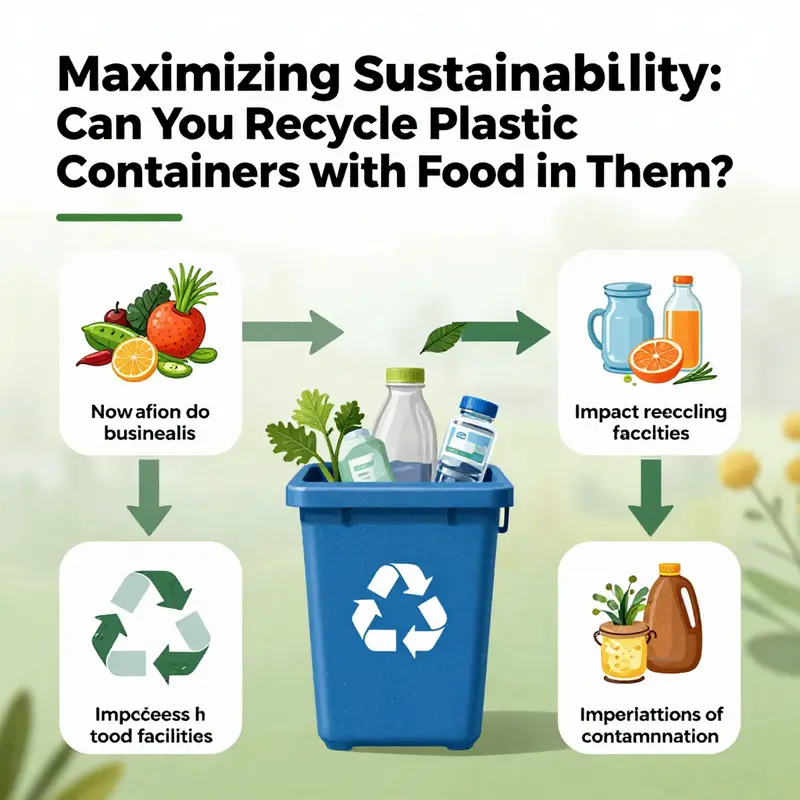
In the modern recycling ecosystem, plastic containers travel a long path from kitchen to curb, through sorting facilities, and toward reuse or disposal. Food residue—grease, oils, liquids, and damp remnants—acts as a contaminant that travels downstream, clinging to fibers and coatings and muddying the signals that sorting machinery relies on. This is a systemic challenge that ripples through every link in the chain, from residents to processors to policymakers. When contaminants accumulate, the value of collected materials diminishes, and the more complex the residue, the higher the likelihood that a batch ends up in landfills rather than in a reprocessing stream.
The contamination risk is not a mere theoretical worry. It manifests in several tangible ways that complicate the work of modern recycling facilities. First, organic matter from food waste can migrate to other recyclables, especially paper and cardboard, turning mixed loads into questionable material that cannot be economically recycled. Even small traces of fat can cause a domino effect, making entire batches unsuitable for subsequent processing and triggering disposal steps that escalate cost and environmental impact. Second, greasy residues can clog the delicate machinery that sorts plastics. Conveyor belts, chutes, and washing lines rely on smooth, predictable flows; oils and sticky residues slow operations, increase maintenance downtime, and raise labor costs as facilities attempt to keep the system moving. Third, the surface films left by fats and oils interfere with sorting technology that depends on surface chemistry and optical cues to identify resin types. When sensors misread a container’s composition because it is coated in residue, the wrong material may be diverted or mixed with incompatible streams, compounding contamination and lowering the overall quality of the recycled output.
The degradation of plastic quality itself is another consequence of food-laden containers lingering in the bin. Residues can foster fermentation and odors that attract pests; moisture from food can introduce bacteria that degrade the plastic’s mechanical properties. In practical terms, PET bottles with milk or smoothie traces may fail melt-flow tests that assess reprocessing viability. The result is not merely a less attractive product but a material that cannot reliably re-enter the intended recycling loop. All of this translates into higher processing costs and greater energy use for additional washing, cleaning, and sorting steps. The environmental payoff of recycling, already contingent on scale and efficiency, diminishes when contamination forces facilities to expend extra resources to achieve marginal gains.
Experts in waste management consistently stress that clean recycling is not optional. Clean recycling is a prerequisite for the system to function as intended. When a takeout container carries grease or sauces, the risk is not confined to that single item; the contaminant can undermine neighboring materials and disrupt the flow of the entire recycling stream. This perspective is echoed by researchers who view the recycling system as a coordinated network rather than a simple pile of tossed objects. A greasy container may appear recyclable, but in practice it becomes more likely to hinder the recovery of other materials rather than enhance it. The message is clear: households and businesses must treat recycling as a system, not as a dumping ground for imperfect waste. The goal is to minimize contaminants before items enter curbside bins, so the downstream processes can function with predictability and efficiency.
What, then, is the practical path for individuals who want to participate responsibly without becoming overwhelmed by the complexity of the system? The recommendations are simple in form but powerful in effect. Start with emptiness and rinse. If a container held food, remove the bulk of the waste and rinse the interior with water. A thorough rinse helps detach clingy residues and reduces the likelihood of odorous, fermenting containers that attract pests. The emphasis is on removing food waste rather than relying on a decorative hint of cleanliness; the goal is a noticeably clean surface that won’t contaminate the rest of the load. The next step is to check the label. Look for the recycling symbol and the resin code on the bottom of the container. Containers labeled #1 (PET) or #5 (PP) are generally accepted in many systems, though local guidelines can vary. When in doubt, it is wiser to err on the side of caution: if a container is heavily soiled or greasy and cannot be cleaned to an acceptable level, it should be disposed of as residual waste rather than risk contaminating an entire bin of recyclables.
The everyday choice set is not merely about individual responsibility; it is also about practical packaging design and consumer instruction. Packaging that minimizes grease transfer, uses easier-to-clean surfaces, and clearly communicates disposal guidelines can make the difference between a container that recycles cleanly and one that becomes a contaminant. For example, takeout packaging and food containers designed with grease resistance and simple sorting in mind illustrate how design can support better recycling outcomes. To explore a concrete packaging option that prioritizes these traits, consider the concept of grease-resistant, eco-friendly takeout boxes that blend durability with recyclability. These kinds of designs demonstrate a pathway from consumer behavior to improved processing outcomes. If you are curious about examples that balance usability and recyclability, you can explore packaging designed for ease and sustainability at this resource: eco-friendly takeout boxes for food packaging.
In practice, thinking of recycling as a system that depends on clean inputs helps reframe everyday actions. Empty and rinse to minimize contamination, and then engage with the system by following local guidelines for resin type and accepted materials. The aim is not to villainize households or to pretend that every container can be perfectly recycled; it is to recognize where contamination originates and to minimize it through clear guidance, smarter packaging, and the shared discipline of careful disposal. When everyone participates with this shared standard, the recycling stream retains greater integrity, and the environmental benefits become more tangible. The difference may be modest on a single item, but it compounds across millions of containers, improving the performance of facilities and reducing the need for landfill disposal.
For readers who want a broader reference on official guidance, the Ministry of Ecology and Environment in China emphasizes that recyclables must be clean and free of contaminants, reinforcing the central idea that food residue complicates processing and can derail the cycle from collection to reprocessing: https://www.mee.gov.cn/. This external resource anchors the practical guidance discussed above in a recognized policy framework, underscoring that clean recycling is not merely advisable but foundational to effective waste management. By embracing these practices, households and businesses contribute to a system that is more predictable, more efficient, and more capable of delivering real environmental benefits. The path to better recycling is not about perfection; it is about consistency, clarity, and the shared commitment to treating recycling as a system worth protecting, with the simplest possible actions—emptiness, rinse, and adherence to local guidelines—standing as the first line of defense against contamination.
Final thoughts
In today’s eco-conscious landscape, every business must strive to minimize waste and maximize recycling efficacy. Understanding the implications of food residues in plastic containers is crucial for maintaining clean recycling streams, thus ensuring that materials can be properly processed. By implementing recommended cleaning practices, accurately identifying recyclable plastics, and respecting recycling symbols, food service operations can contribute positively to sustainability efforts, ultimately influencing not just local waste management systems but the broader environmental health.