
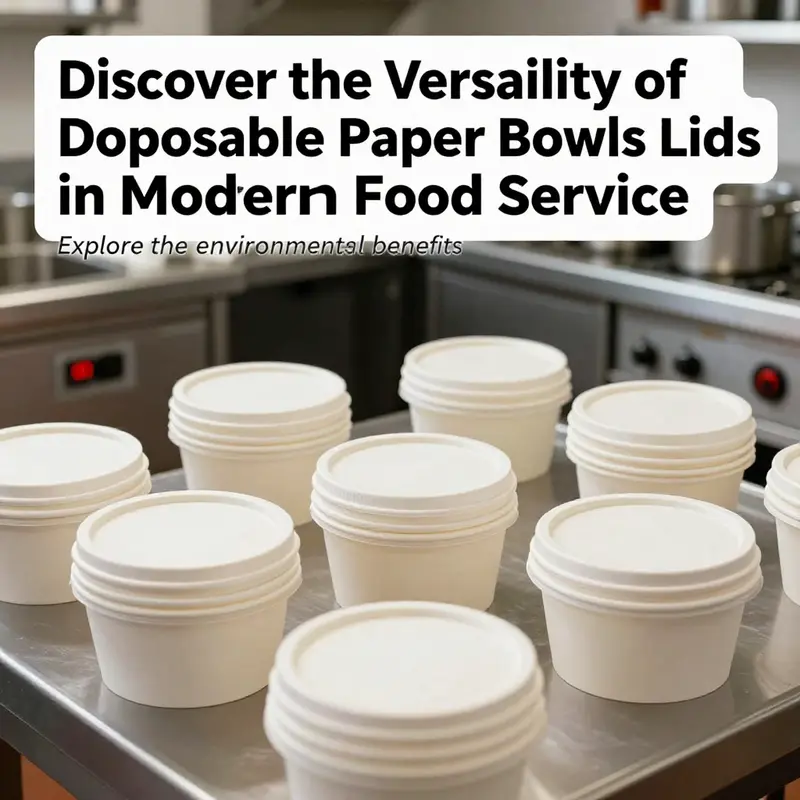
Disposable paper bowls with lids are increasingly becoming a go-to choice for a variety of food service needs across bubble tea shops, restaurants, food trucks, catering services, and corporate events. As consumers become more eco-conscious, the demand for sustainable packaging solutions is on the rise, making disposable paper bowls lids a relevant topic for any business in the food industry. This article will delve into the environmental impact of these lids, analyze market trends and costs, explore technological innovations, and examine consumer preferences that are shaping their usage. Through a comprehensive exploration, readers will gain valuable insights into how integrating disposable paper bowls lids can enhance their operational efficiency and appeal to environmentally-aware customers.
null
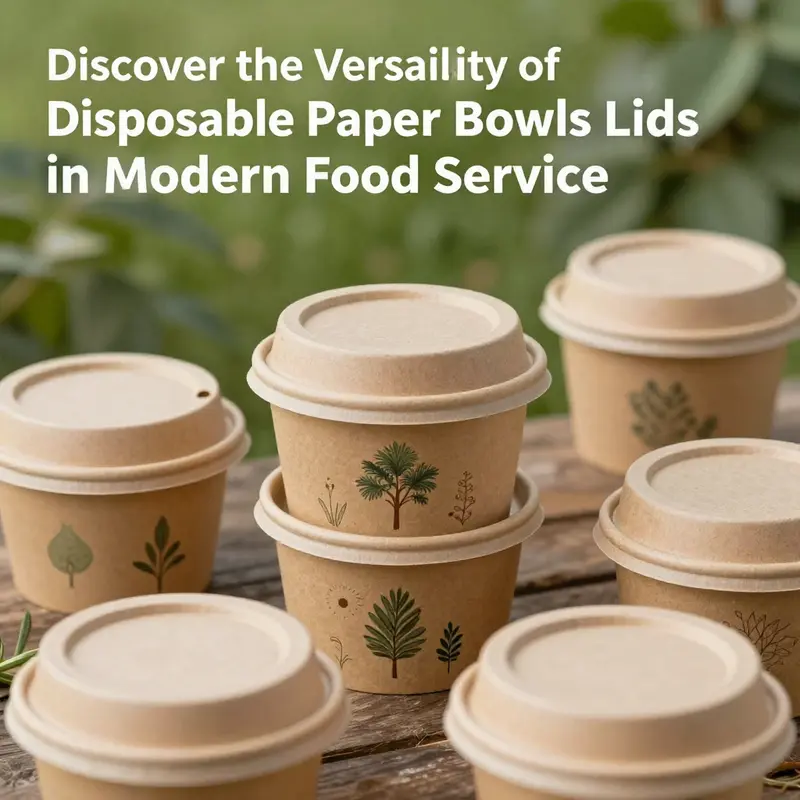
null
Cost Signals in a Growing Market: Pricing, Production, and Trends for Disposable Paper Bowls with Lids
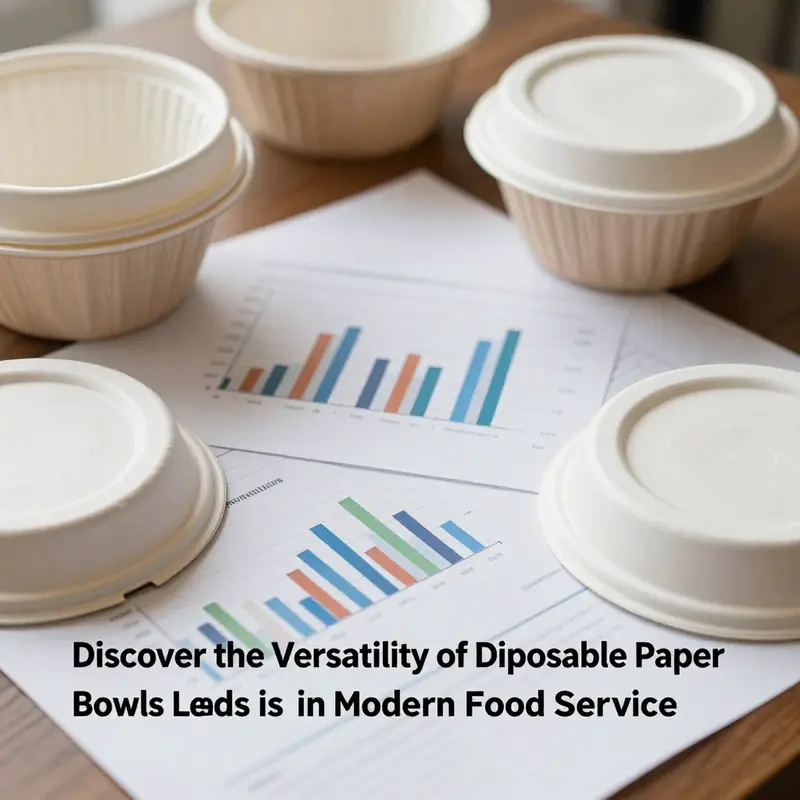
In the world of food service and seasonal events, packaging costs often dictate the feasibility of menu concepts as much as the price of ingredients. The economics of disposable paper bowls with lids sit at a nuanced intersection of mass manufacturing efficiency, material science, and evolving consumer expectations for sustainability. This convergence creates a market where price signals are as fluid as they are informative, guiding decisions for operators who must balance cost, performance, and brand values. The result is not merely a tale of cheap containers but a narrative about scalable design, sourcing discipline, and the future of how we store, heat, and transport meals in a world increasingly attentive to waste, heat retention, and hygiene.
A foundational driver of cost in this sector is volume. The economics of scale are real: fixed costs such as machinery, printing plates, and quality control are spread over tens or hundreds of thousands of units, producing per-piece pricing that looks astonishingly low when orders reach the 10,000-unit threshold and beyond. Recent data from major procurement platforms show a baseline starting point of roughly $0.01 per piece for orders of 10,000 units or more, with a standard minimum order quantity (MOQ) of 10,000 pieces. That kind of pricing is specific to bulk channels and reflects the efficiency of automated production lines, including the runs needed for multi-size, multi-color customization. For smaller operators or promotional bursts, the mathematics shifts quickly as setup fees, and smaller batch handling increase unit costs, but the bulk scenario remains the most cost-effective path to scale. In this context, the decision to buy at scale is not simply about discounting; it is about aligning supply with demand cycles, storage capacity, and the cadence of events that require reliable packaging across weeks or months.
Material choice then becomes the second axis of cost consideration, and it clearly influences the value proposition of these lids and bowls. Suppliers commonly offer a trio of material options: kraft paper, white paper, and PLA (polylactic acid)-based coatings or coatings. Kraft paper is the workhorse—robust, economical, and compostable in many settings. White paper variants can offer a cleaner surface for branding and printing, which is a meaningful consideration for businesses aiming to maximize shelf presence and perceived quality. PLA-coated options, while more expensive, present a stronger case for environmental branding because PLA is plant-based and designed to enhance biodegradability in appropriate facilities. Each material choice carries not only a price delta but also implications for heat resistance, moisture barrier, and end-of-life outcomes. For example, PLA-coated or PLA-lined configurations can improve compostability in specialized facilities, a feature increasingly valued by operators seeking to align packaging with green marketing efforts.
Customization is a third, potent lever in the cost-and-value equation. Logo printing, color matching, and even tailored lid designs can be offered at varying levels of complexity. Samples are often provided free of charge to prospective buyers, enabling brand teams to validate appearance and compatibility before committing to a full run. However, once the order moves into production, customization costs may include setup fees and additional charges tied to unusual lid geometries, color cards, or multi-panel packaging formats. The sourcing journey becomes more intricate when buyers require not just a logo but also a consistent dieline across sizes, which sometimes demands additional proofing cycles and print plates. The practical takeaway is straightforward: for brands seeking maximum customization impact, budgeting for initial setup costs is essential, even if unit prices look favorable on the surface.
From a procurement perspective, the interface between price and delivery terms matters as much as the rate card itself. Shipping costs, payment terms, and risk protections are negotiated at the supplier level and can hinge on a customer’s credibility, order maturity, and geographic location. Many platforms transact in USD and provide secure payment options and order-protection guarantees, which reduce the risk of mis-shipment or non-shipment. In the context of bulk purchases, secured terms, phased delivery, and consolidated freight can further optimize total landed cost, especially for operations that require steady replenishment without inflating carrying costs. Within this framework, it becomes clear that the true cost of these bowls with lids is not simply the sticker price per unit; it is the sum of production efficiency, material choice, customization complexity, and the subtleties of logistics.
Beyond unit economics, the market landscape for disposable paper bowls with lids is being reshaped by a robust push toward sustainability and traceability. The global market value for disposable paper cups and lids—an umbrella category that includes bowls of various formats—was reported at about $11.81 billion in 2025 and is projected to grow at a compound annual growth rate of around 14.22% from 2026 to 2033. This trajectory reflects shifting consumer preferences toward eco-friendly, non-toxic, and biodegradable packaging. Buyers increasingly seek products marketed as “Eco Friendly,” “Harmless,” and “Sanitary”—qualifications that resonate deeply in food service, pharmaceutical packaging, and gift presentations. The emphasis on sustainability translates into material choices, processing methods, and end-of-life considerations that can influence price and demand. As a result, enterprises that align their sourcing with green narratives not only meet regulatory and consumer expectations but also engage in price-to-value conversations with customers who are willing to pay for perceived and real environmental performance.
The expanding application footprint of these bowls with lids also adds to the demand dynamics. Once primarily a takeaway and quick-service feature, these containers now permeate party catering, prepared-meals programs, and even niche packaging for gifts or promotional campaigns. As the line between food packaging and branding blurs, the ability to print logos and messages directly onto the containers becomes a strategic asset. This is not just about aesthetics; it is about building a consistent brand experience from counter to consumer’s home. In practical terms, the broader use cases elevate order volumes and broaden the cycles of procurement, enabling more predictable demand patterns for suppliers and creating opportunities for operators to negotiate better terms through longer-term commitments.
From the supply-chain angle, producers are leveraging raw-material traceability and advanced conversion technologies to ensure consistency and accountability. Offset printing is increasingly common for high-visibility branding, while protective coatings—such as PE for heat resistance or PLA coatings for enhanced compostability—are deployed to optimize performance under typical serving conditions, whether hot soups or cold salads. The emphasis on traceability is not only about quality control; it is a strategic posture to address consumer and regulator demands for transparency in sourcing. In turn, this transparency can translate into cost differentials, with traceable supply chains sometimes commanding modest premiums but delivering long-term savings by reducing waste, returns, and brand risk.
For buyers evaluating options, the decision framework often hinges on a few core criteria: cost per unit at the desired volume, material compatibility with the intended serving temperature, branding opportunities, and end-of-life considerations. A practical tip for those prioritizing affordability without sacrificing ecological credentials is to consider the tradeoffs between PLA and PE coatings. PLA-based options may command higher upfront costs but can strengthen a sustainability narrative and, in some markets, unlock access to composting programs that improve waste management outcomes. In contrast, kraft paper bowls with standard PE coatings may deliver lower price points and robust performance for hot foods but offer fewer compostability pathways. The choice is rarely binary; it is a strategic balancing act aligned with the business’s environmental commitments, customer expectations, and supply-chain capabilities.
As this market evolves, the role of customization and branding will likely intensify. Enterprises that want to differentiate their takeaway experience increasingly view packaging as a marketing surface and a product-quality signal. Custom logos, color schemes, and even lid shapes can become a competitive differentiator in crowded food-service environments. The cost implications of such differentiation reinforce the need for early supplier engagement and a clear test-and-scale plan. A practical approach is to pilot with a controlled mix of standard and branded options, measure lift in recognition and perceived value, and then scale the most successful configurations. This approach aligns cost management with brand-building, turning packaging into a strategic lever rather than a mere expense line.
For readers seeking a concrete sense of the market’s pace, consider the notion that the wholesale model for these containers thrives precisely because it couples low unit costs with high demand velocity. In bulk scenarios, the per-piece price can approach a few tenths of a cent when neck-strain on capacity is managed and logistics are optimized. Yet the real leverage comes from the ability to offer reliable solutions in lockstep with event calendars, restaurant rollouts, and promotional campaigns. The stability of supply chains—underpinned by transparent sourcing, efficient production, and dependable delivery—becomes a competitive advantage in a sector where consumer choices are quick and packaging dynamics can influence repeat business.
For practitioners eyeing the long view, the broader market outlook offers both reassurance and challenge. The growth trajectory indicates ample opportunity, particularly for operators and manufacturers that marshal capital to scale, invest in sustainable materials, and integrate branding into the packaging workflow. At the same time, tightening environmental regulations and shifting consumer expectations create a backdrop that rewards those who plan for end-of-life outcomes and source responsibility. The net effect is a market that remains cost-competitive at scale while offering meaningful avenues to elevate sustainability profiles and brand equity. This dual emphasis—economic efficiency and ecological accountability—defines the central dynamic shaping the next phase of disposable paper bowls with lids.
In practical terms, buyers should evaluate supplier propositions with a structured mindset. Compare raw-material costs and predicted performance under typical service conditions. Factor in the cost of customization and the potential for free samples to de-risk the branding effort. Assess shipping terms and supplier protections to minimize risk—especially when ordering at the scale where unit prices are lowest. And above all, frame the decision within a sustainability narrative that resonates with customers who care about packaging life cycles as much as the meals inside.
The bulk-quantity path, with its low unit costs and scalable branding options, remains a cornerstone of value creation in this market. Yet it is not a solitary ticket to success. The richest opportunities lie at the intersection of material science, design thinking, and supply-chain discipline—the point where a low-cost container is transformed into a trusted, branded, environmentally considerate package that helps a business grow and a planet endure.
For readers who want a broader market context beyond the micro-economics of a single SKU, a related industry analysis provides a useful lens on this trajectory. External market research highlights the same upward momentum, with ongoing emphasis on eco-friendly attributes, improved heat resistance, and more sophisticated packaging technologies that keep foods fresh and safe while reducing waste. This framework reinforces the notion that the cost of these lids and bowls is best understood as a living balance sheet—one that captures procurement efficiency, material choice, branding investment, and end-of-life stewardship as interlocking components of a sustainable business model.
A practical takeaway travels with this reasoning: when planning a procurement strategy for disposable paper bowls with lids, think in terms of value streams rather than static price points. Align your material preference with your sustainability goals, negotiate for favorable setup costs when you commit to longer runs, and leverage the branding potential of customization to drive consumer recognition at the point of sale. In doing so, you align cost management with the broader ambitions of a green, visible, and resilient packaging program that stands up to regulatory scrutiny and consumer expectations alike.
Internal link: For those exploring bulk options that optimize both price and branding, consider examining bulk kraft paper bowls with lids for takeaway. This category often provides a balanced combination of cost efficiency, performance, and branding flexibility, making it a practical starting point for restaurants, caterers, and event planners looking to standardize packaging across multiple channels. It’s a smart way to simplify supplier negotiations and ensure a consistent consumer experience across dine-in, takeout, and delivery formats.
External resource: For a broader market perspective on disposable paper cups and lids, see Grand View Research’s market outlook, which outlines the growth trajectory, sustainability drivers, and technology trends shaping this space: https://www.grandviewresearch.com/industry-analysis/disposable-paper-cups-and-lids-market
Innovations in Disposable Paper Bowls Lids Technology
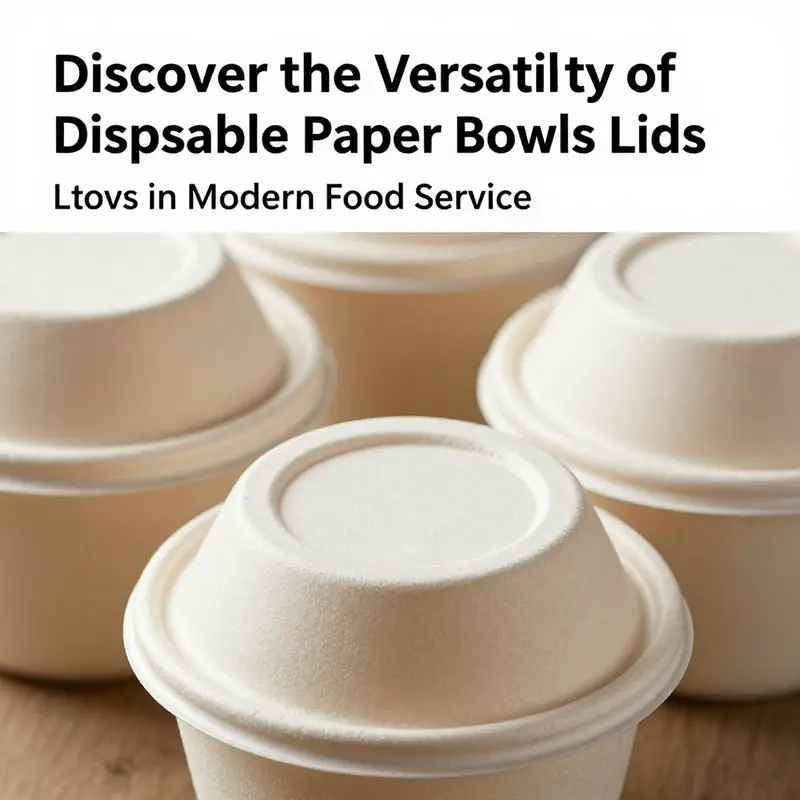
In the food service ecosystem, disposable paper bowls with lids sit at the intersection of convenience, hygiene, and sustainability. These containers are not just vessels for holding meals; they shape how easily foods travel from kitchen to customer, how safely meals are stored during transit, and how brands communicate care for the environment. The latest developments in lid technology are broadening what these seemingly simple accessories can do, turning a basic takeout item into a sophisticated system that preserves heat, prevents leaks, and supports responsible consumption. The arc of these innovations moves along a single current: to make every bite as dependable as it is mindful of the planet, without sacrificing speed, cost, or user experience.
At the core of modern lid design is enhanced functionality. Sealing mechanisms have evolved beyond a simple snap to a tightly engineered interface that prioritizes freshness and transport integrity. A well-sealed lid keeps steam inside during a drive across town and reduces the risk of messy accidents on busy delivery routes. The best systems feature a snap-fit that creates a secure, almost audible, closure, signaling to the user that the container is ready for the next leg of its journey. Some designs incorporate venting options or micro-grooves that channel condensation away from the lid’s edge, minimizing splashback when the container is opened, and preserving the appearance and texture of delicate contents such as soups or dressings. Such refinements are especially valuable for events and catering, where a lapse in containment can derail service and leave a negative impression on guests.
Sustainability remains a driving force behind lid evolution. Eco-conscious packaging now leans on coatings that degrade more readily in composting streams and on materials that minimize the carbon footprint of production. Biodegradable coatings and compostable substrates are becoming common choices, with sugarcane fiber and recycled paper appearing as viable alternatives to traditional virgin paper. These materials are paired with coatings that balance barrier properties with end-of-life outcomes, so a lid can perform reliably under heat and moisture while still aligning with composting or recycling streams where available. In some markets, plant-based coatings contribute to a reduced environmental impact without compromising the lid’s rigidity or heat resistance. The conversation is not only about ending up in a compost bin but about enabling a circular approach where the container is recognized as a resource rather than waste.
Microwave compatibility has moved from a niche benefit to a practical expectation. Lids designed for microwave use allow customers to reheat meals in their own containers. This capability saves time and reduces the risk of transferring food to different receptacles, which can introduce contamination or diminish flavor. The challenge is to maintain safety and performance when a lid is exposed to microwave energy, so innovators are refining materials and constructions that tolerate brief heating cycles, resist warping, and maintain a secure seal after reheating. The result is a more flexible consumer experience, especially for single-serve meals and ready-to-heat items, where the ability to reheat and serve in the same vessel enhances convenience and reduces waste from secondary packaging.
Customization and branding have grown alongside material and performance improvements. Lids are no longer generic afterthoughts; they are canvases for logos, colors, and messaging that reinforce a brand’s identity and values. The capacity to customize extends to shapes and closures that improve grip and ease of use, which in turn supports a smoother customer experience. For many businesses, branded lids are part of a broader sustainability story, signaling commitment to responsible packaging while providing a practical touchpoint for customers. The trend toward customization is supported by scalable production methods that can accommodate both small runs for local businesses and high-volume orders for larger catering operations. This balance is essential in a market where speed to market and brand recognition matter as much as price.
A notable thread in lid design is the emergence of snap-fit systems that combine a tight seal with effortless usability. A well-executed snap-fit lid gates the content securely yet remains easy to open and close, even with gloved hands or during fast-paced service. These lids can accommodate a range of contents, from hot soups to cool salads, without compromising the integrity of the seal. The goal is to reduce spillage during handling and to maintain heat retention so customers enjoy a consistent dining experience from first bite to last. The physical act of opening the lid becomes a smoother interaction, which translates into fewer complaints and more repeat customers who trust the packaging to perform under real-world conditions.
Material innovation continues to push the envelope. Renewable resources, including sugarcane fiber and recycled paper, are increasingly used in lid production. These choices support environmental goals without sacrificing performance. The adoption of renewable inputs aligns with broader shifts in the supply chain toward responsible sourcing and reduced reliance on virgin plastics. In some cases, lid systems use a combination approach — a rigid base that locks firmly onto the bowl, paired with a thin, compostable coating or a renewable fiber layer that provides barrier properties and a crisp, clean finish. The end result is a lid that is not only functional but also aligned with a culture of sustainability that many consumers now expect from brands.
The scale of production plays a pivotal role in shaping these innovations. Advances in manufacturing technology have made it possible to produce sophisticated lid configurations at high volumes, which is essential for meeting demand from restaurants, catering outfits, and events. Efficient processes translate into competitive pricing and reliable supply chains, enabling small businesses to access premium packaging and large venues to standardize their service across dozens of locations. The adoption of automated assembly lines, quality control systems, and integrated sourcing networks has reduced lead times and improved consistency, ensuring that every lid that reaches a customer performs to the same high standard.
The broader market context also informs how these innovations unfold. Platforms that connect buyers with manufacturers reveal a landscape rich with options, from bulk runs to customizable, design-forward lids. Suppliers highlight the compatibility of their lids with a variety of bowl shapes and sizes, which matters in a world where portions range from compact meals to family-sized servings. The ability to tailor lid dimensions to bowl profiles reduces waste and ensures a snug fit, which is essential for both heat retention and spill prevention. For businesses exploring new packaging configurations, the decision often hinges on a careful balance of performance, environmental impact, and total cost of ownership. As lids become more versatile, they enable a more resilient takeout economy where customers expect reliability, convenience, and a package that can travel well without compromising the integrity of the food inside.
Consider the practical implications for day-to-day operation. A stackable design, for instance, can reclaim significant storage space in kitchens and during delivery handoffs. When lids are designed to nest neatly atop bowls, operators can maximize storage density and reduce the logistical burden of handling, especially in high-volume environments. A well-thought-out lid system also supports inventory management, letting kitchens track and rotate stock with greater precision. In busy catering settings, the speed and simplicity of securing a lid influence how quickly meals move from kitchen to table, contributing to smoother service and better time management. The reliability of the seal under a variety of handling conditions — from chilled transport to hot plated meals — strengthens overall food safety and customer satisfaction.
To ground this discussion in the marketplace, the sourcing ecosystem plays a central role. A variety of suppliers, including those based in regions with mature paper and packaging industries, offer a range of options from simple coatings to advanced, microwave-ready solutions. The conversation around sourcing also touches on trade assurances, payment security, and delivery speed, all of which influence procurement decisions for restaurants and event organizers alike. The trend toward transparent, traceable supply chains dovetails with consumer expectations for responsible manufacturing. When a lid is part of a broader packaging strategy that emphasizes recyclability or compostability, it contributes to a more sustainable lifecycle for the meal and aligns with consumer attitudes that favor eco-conscious brands.
As this field continues to evolve, so do the opportunities for brand differentiation. Custom lids that echo a company’s color palette, logo, and messaging can become a recognizable element of the customer experience. In addition, the opportunity to design lids with ergonomic features, such as molded ridges for grip or built-in venting channels, adds a layer of practicality that can differentiate a product line in a crowded market. The most successful innovations balance form and function: lids that fit securely, perform under heat and moisture, and carry a sustainability narrative that resonates with today’s buyers.
For readers who want a concrete sense of the supply landscape, a representative bulk offering demonstrates how these advances translate into real-world options. This example highlights the capacity to deliver large quantities of kraft paper bowls with lids that meet varied size requirements, while maintaining the ability to tailor branding and packaging to specific campaigns. The availability of such options underscores how the packaging ecosystem now supports both small businesses and large-scale operators, enabling rapid deployment of new packaging paradigms without sacrificing performance or environmental responsibility. The result is a more resilient and responsive takeout economy, where the lid is not merely a closing component but a strategic touchpoint that enhances safety, usability, and brand value.
Internal link to a practical supplier option can be explored here, illustrating how the bulk provisioning of disposable kraft paper bowls with lids is framed for diverse business needs. disposable kraft paper bowls with lids bulk
In sum, the innovations in disposable paper bowl lids reflect a broader commitment to smarter packaging that honors the integrity of food, respects the planet, and supports a fast-paced service culture. The arc of development—stronger seals, greener materials, microwave compatibility, and smarter form factors—points toward a packaging paradigm where every lid reinforces a positive dining experience. The collaboration of materials science, manufacturing capability, and design thinking makes it possible to deliver lids that not only close a container but also reinforce safety, convenience, and sustainability wherever a meal travels.
External reference: https://www.alibaba.com/product-detail/Factory-Supply-Microwaveable-Disposable-Customised_1600584297349.html
Sealed Convenience and Sustainable Style: Tracing Consumer Preference for Lidded Disposable Paper Bowls
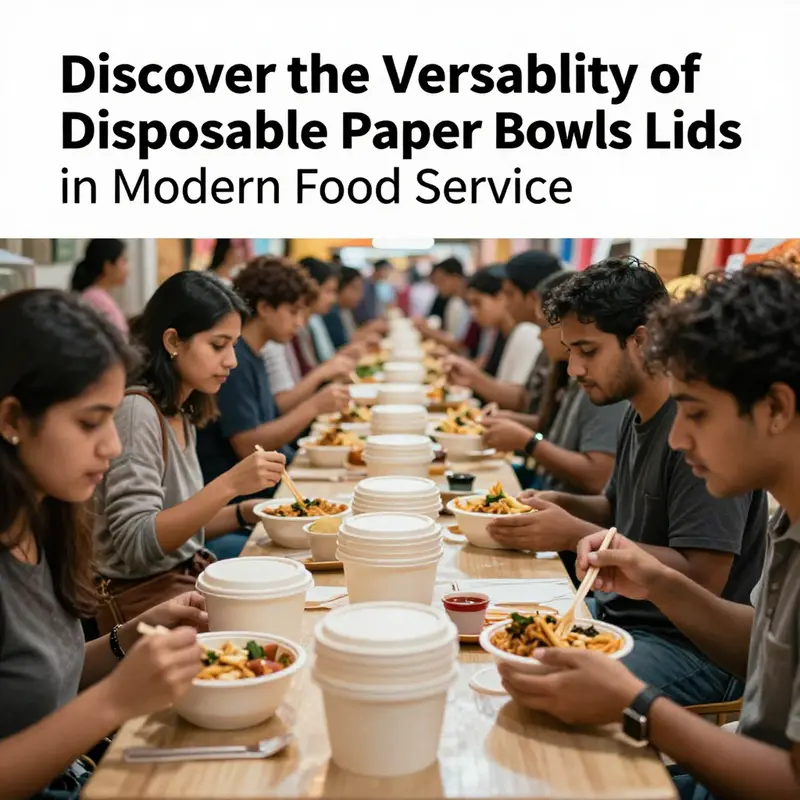
Sealed convenience has become a defining trait of modern food service, and nowhere is that more evident than in the rise of lidded disposable paper bowls. These humble containers have shifted from a simple, disposable receptacle to a versatile platform for hygiene, heat retention, branding, and sustainable choice. As vendors and venues chase efficiency, the pairing of a snug-fitting lid with a sturdy, eco-friendly bowl has become a practical guarantee: meals stay hot, salads stay fresh, and the risk of spills or cross-contamination stays low. Yet the appeal runs deeper than convenience. Consumers are increasingly mindful of packaging life cycles, seeking materials that align with a greener lifestyle. Kraft and recycled papers, supplemented by plant-based coatings such as PLA, offer pathways to balance usability with environmental responsibility. In many markets, these choices are not mere afterthoughts but essential signals of a brand’s values and a consumer’s trust that a single container can do more with less waste.
The materials at the heart of these bowls—kraft paper, white paper, and increasingly PLA-coated options—frame the environmental conversation without sacrificing performance. Kraft remains popular for its natural look and strong structural integrity, while recycled papers extend the life cycle of resources already in circulation. PLA, a plant-based bioplastic derived from renewable resources like corn starch, adds a further dimension, enabling biodegradability while preserving leak resistance and durability. The environmental benefits are often highlighted in supplier communications and trade platforms, where claims such as “20% more eco-friendly than traditional plastic containers” appear as a compelling benchmark. For buyers, those numbers translate into a tangible narrative: higher recyclability, reduced plastic pollution, and a crisp alignment with green living standards that customers can recognize and appreciate.
Design prudence is central to the user experience. Lids must snap securely onto bowls, creating a tight seal that minimizes leaks when carried or stored. The best designs prevent cross-contamination, preserve heat for longer periods, and guard against the chilling or drying effects of transport. A well-engineered lid also contributes to sanitation, since it reduces opportunities for dust or handling to affect the food inside. The aesthetics matter too; many brands opt for clean, minimal branding on the lid and bowl surface, turning the container into a portable billboard that speaks to quality and responsibility. In practice, this means a single container can support a brand’s identity—from takeaway dinners and catering events to school programs and community gatherings—without sacrificing performance.
In terms of capacity, the market accommodates a broad spectrum of portions. Common sizes range from roughly 300 milliliters to 1400 milliliters, balancing individual servings with family-sized or shared portions. This breadth is intentional: soups, broths, and hot stews benefit from heat retention, while salads, fruits, and desserts gain from a sturdy, spill-resistant base that travels well. A container that is microwave-safe and refrigerator-safe is a practical bonus, enabling customers to rehear or safely refrigerate leftovers without transferring contents to another dish. The convenience is especially pronounced for takeout and delivery services, where customers may reheat at home or store components for later meals. Yet it’s important to note that not all combinations of bowls and lids are universally microwave-safe, so clear guidance on reheating practices often accompanies product labeling.
From households to large events, the context in which these bowls are used shapes consumer perception. Outdoor picnics, festivals, and farmers’ markets benefit from robust, stackable designs that save space in storage and during transport. The ability to stack bowls while keeping their lids securely closed translates into meaningful logistical advantages for busy kitchens and event teams. Storage efficiency—reportedly up to about 30% more compact than non-stackable alternatives—reduces warehouse footprint and simplifies inventory management. The lid’s role remains pivotal here: a secure seal supports stacking by minimizing shifting and tipping, while also keeping the contents aligned with the customer’s expectations about freshness and portion integrity.
Branding and customization have evolved from a novelty to a standard expectation in many segments of the food service industry. Suppliers increasingly offer printing options, color choices, and logos on both the bowl and lid, enabling businesses to extend their branding into packaging that travels with the customer. This trend is particularly valuable for small and medium-sized operators who want to project a cohesive brand image without incurring prohibitive MOQs. Flexible packaging options, from low MOQs to scalable production runs, help new ventures establish a distinct presence. When a customer sees a logo on a takeout container, it reinforces recognition and loyalty, reinforcing the broader message that sustainability and quality can coexist with thoughtful design. For buyers seeking practical bulk options, consider disposable Kraft paper bowls with lids (bulk 500ml–1000ml) as a concrete example of how branding can be embedded in everyday packaging without compromising environmental promises.
The global supply landscape for lidded disposable paper bowls reflects the interconnected nature of modern manufacturing. Trade platforms frequently feature suppliers from regions with dense manufacturing ecosystems, where scale economies can drive down costs and shorten lead times. Buyers commonly encounter options to source in bulk at competitive prices, with additional services such as trade assurance and reliable payment methods that reduce risk in cross-border transactions. The market conversation often highlights the economics of scale—prices that might be as low as a few hundredths of a dollar per piece when orders reach tens of millions of units—while also acknowledging the importance of quality control, consistent material sourcing, and accurate labeling. These realities make it possible for a small café or a large event coordinator to standardize a packaging system across dozens of locations, harmonizing sustainability commitments with practical needs for speed and reliability.
The preference landscape for these products is shaped by an evolving blend of functional performance and ethical consideration. Consumer demand for recyclable or biodegradable packaging has become a mainstream driver, not a niche concern. Kraft and white paper, when paired with PLA coatings, offer tangible pathways to meet these expectations without compromising the user experience. A growing segment of customers is willing to reward brands that demonstrate environmental responsibility with repeat purchases, social sharing, and word-of-mouth advocacy. In many regions, this preference is reinforced by regulatory environments that encourage compostable or recyclable packaging and by retailers who recognize the value of clear, honest labeling about materials and end-of-life options.
Looking ahead, the market is likely to continue prioritizing three intertwined themes: environmental sustainability, functional performance, and personalization. On the sustainability front, continued advances in coatings and barrier technology will improve moisture resistance while maintaining compostability. Functionality will be enhanced through even tighter lid-seal engineering, better heat retention, and more versatile size configurations that cover a broader range of menu items. Personalization will become more accessible as printing technologies and shorter MOQs allow brands to experiment with seasonal designs, color palettes, and messages that resonate with diverse audiences. This trajectory aligns with the broader consumer shift toward packaging that is not only convenient but also meaningful—packaging that tells a story about how a product is made and how it is intended to be disposed of. Market observers note that inquiries and orders for lidded paper bowls have risen steadily across North American, European, and Southeast Asian markets since 2025, signaling a global appetite for high-quality, sustainable containers that align with contemporary dining habits.
In the broader context of reference points and practical knowledge, a representative example of market breadth can be found in the custom-printed, lidded disposable paper bowls available across supplier catalogs. These bowls commonly support capacities from roughly 500 milliliters to 1500 milliliters and offer variations in lid design, color options, and logo printing. The adaptability of these products makes them suitable for a range of uses—from seasonal promotions to daily takeout service—while also enabling businesses to preserve the integrity of their branding in a functionally sustainable package. This convergence of form, function, and fidelity to environmental commitments is what makes lidded disposable paper bowls a enduring feature in modern food packaging ecosystems.
For readers seeking direct avenues to explore these options, a practical pathway includes engaging with bulk kraft-paper bowls that come with lids and are designed for takeaway use. The internal link above invites a closer look at a product line that embodies the balance of durability, cost efficiency, and brand personalization that many operators seek when redesigning their packaging suite. The link provides a concrete example of how a practical, everyday container can carry with it a larger sustainability story and a clearer consumer proposition.
External resource: when interpreting the business dynamics and global sourcing behind these packaging solutions, cross-checking supplier data and product specifications on external platforms can offer additional perspectives on material choices, certifications, and lifecycle analyses. An industry reference that captures these dimensions is available here: https://www.alibaba.com/product-detail/Custom-Printed-Disposable-Paper-Bowl-8oz-32oz-with_1600749454483.html
Final thoughts
In merging quality and sustainability, disposable paper bowls with lids are transforming the landscape of food service packaging. They offer practical solutions while responding to a growing demand for environmentally friendly options. From their eco-conscious materials to advancements in design technology, these bowls not only cater to diverse culinary needs but also align with consumer values centered on sustainability. As food service businesses evolve, embracing these innovations and understanding market trends will position them favorably in an increasingly competitive arena. By prioritizing disposable paper bowls lids, businesses can enhance their brand image, delight customers, and contribute to a healthier planet.