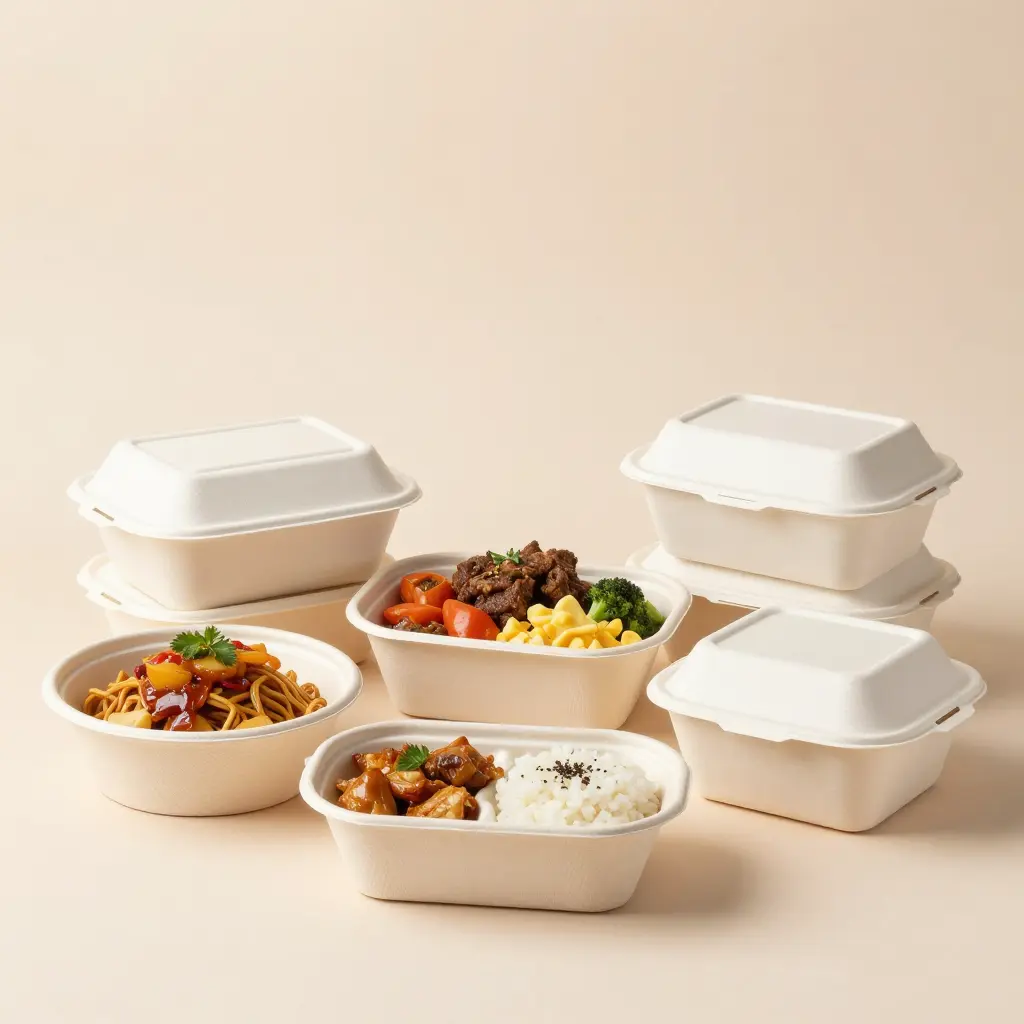
In the evolving landscape of food service, the emphasis on sustainable, functional, and attractive packaging has never been greater. Hamburger box takeaway food packaging epitomizes this evolution, catering to the demands of various food businesses, from bubble tea shops to catering services. In our exploration of this topic, we will highlight the importance of sustainable materials, delve into innovative performance enhancements, uncover extensive branding opportunities, discuss compliance with global sustainability standards, and examine the economic insights that come with bulk ordering. Each chapter will reveal how thoughtful packaging can enhance customer experience while embodying a commitment to environmental responsibility.
Material Choices That Elevate Hamburger Takeaway Boxes: Practical, Sustainable, and Brand-Driven Solutions

Material Choices That Elevate Hamburger Takeaway Boxes: Practical, Sustainable, and Brand-Driven Solutions
Designing hamburger takeaway boxes today is no longer only about containment. Material selection now defines environmental impact, food performance, user experience, and brand perception. A well-chosen substrate can make a box sturdier, lighter, leak-resistant, and compostable. It can protect a hot burger and fries, present a logo clearly, and align a restaurant with sustainability goals. This chapter explores the materials shaping modern hamburger box packaging, how they perform in real use, and what to consider when specifying boxes for takeaway and delivery.
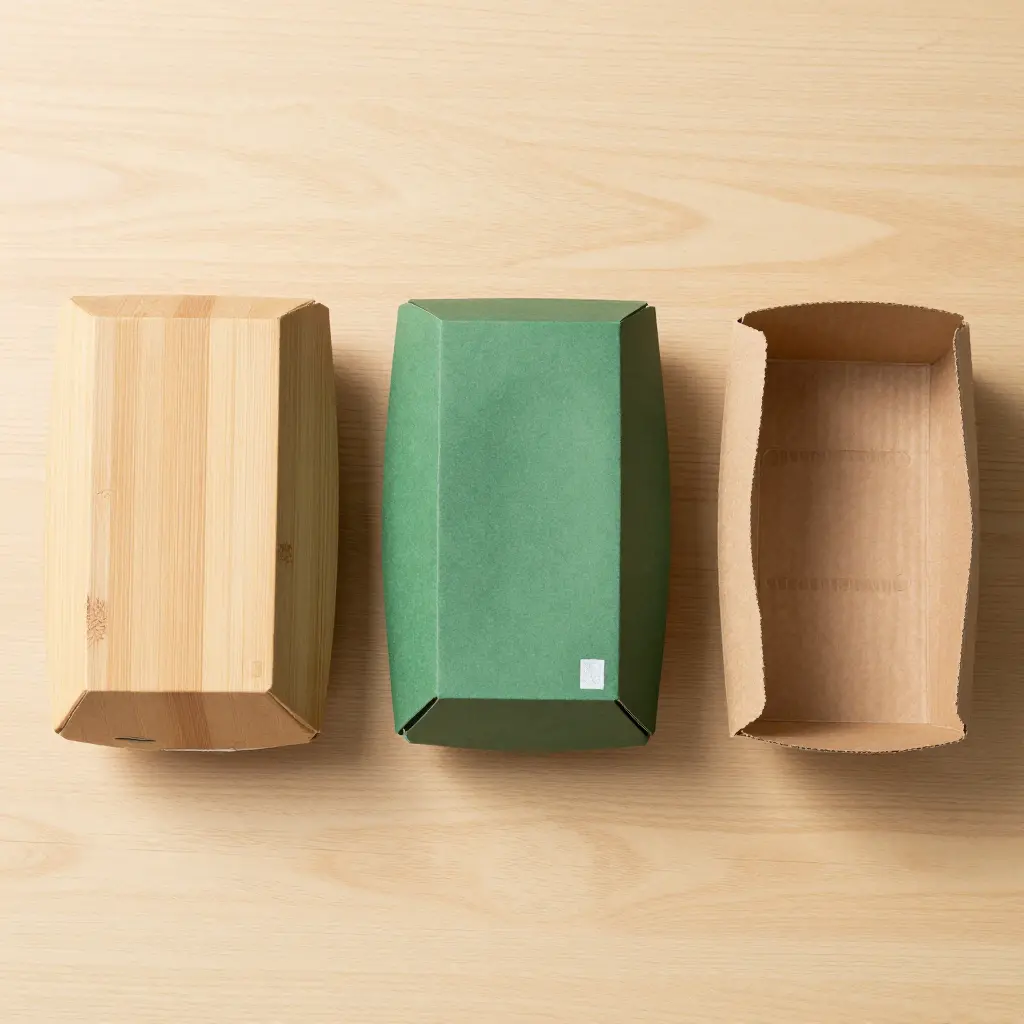
Natural fibers sit at the center of sustainable packaging. Bagasse, the fibrous residue from sugarcane processing, has become a widely adopted choice because it transforms an agricultural byproduct into a durable, compostable container. Bagasse boxes resist grease and heat without heavy coatings, and their rigid structure holds a burger and sides securely. They break down fast in industrial composting environments, leaving minimal residues and avoiding microplastic contamination. Similarly, paperboard made from responsibly managed forests—certified by recognized stewardship standards—provides a renewable option with consistent print quality and mechanical strength. These paperboards often serve as the base for elegant, foldable hamburger boxes that fold flat for storage and pop into shape for service.
Biobased films and linings complement fiber substrates when moisture or oil resistance is necessary. PLA, a compostable bioplastic derived from fermented plant sugars, is frequently applied as a thin lining to paperboard to provide a moisture barrier. When properly disposed of in a composting facility, PLA-lined containers can degrade alongside food waste. That said, PLA requires industrial composting conditions to break down efficiently, so its environmental benefit depends on local waste infrastructure. Compared to petroleum-based polyethylene linings, PLA offers a lower carbon footprint over its lifecycle when composted correctly. For grease-heavy applications, emerging seaweed-derived materials present an intriguing option. Seaweed-based films can offer biodegradability with lower land-use impact than terrestrial crops, and they avoid microplastic risks when disposed of appropriately.
Recycled content plays an important role in reducing demand for virgin fibers. Recycled paperboard can be blended with virgin fibers to maintain strength and food safety while lowering overall environmental impact. Recycled substrates must be validated for food contact and often require an inner barrier to prevent migration of contaminants. Where recycling streams are strong, fully recyclable corrugated or solidboard hamburger boxes make sense: they combine structural integrity with widely accessible end-of-life options. The trade-offs between recycled content and print fidelity must be considered; higher recycled content can lead to a more textured surface that absorbs inks differently, which affects vibrant brand artwork.
Performance touches every material choice. Heat insulation, grease resistance, and leak prevention are essential. Uncoated fiberboards may be breathable and lighter, but they can fail in the presence of sauces and oils. Coatings such as varnishes, UV coatings, or light laminates extend shelf life and reduce spillage. These finishes also enhance aesthetics—satin or gloss varnishes make logos pop and protect against scuffs during delivery. However, finishes should be selected with recyclability or compostability in mind. Water-based varnishes and biodegradable coatings are preferable to solvent-based laminates that complicate recycling.
Structural design and material thickness must work together. A 16–18pt food-grade board can be both lightweight and stiff enough to support a loaded burger without bending. Lighter boards reduce transportation emissions and material use while still offering rigidity when engineered correctly. Foldable designs minimize storage footprint at point-of-sale and speed service. Compartmentalization—adding a small divider or a separate compartment for fries—improves presentation and reduces steam buildup, which keeps textures crisper on arrival. These design features multiply the functional benefits of the chosen materials and enhance the customer experience.
Branding considerations are rarely secondary. Materials determine the print processes that will produce the best results. Uncoated boards soak up inks differently than coated boards, so printers often use offset or flexo methods optimized for each surface. CMYK full-color printing, spot colors, embossing, and metallic foils remain viable even on sustainable substrates, enabling restaurants to preserve premium branding while choosing eco-friendly materials. High-quality finishing increases perceived value and can justify slight price premiums, particularly for brands positioning themselves on quality or sustainability.
Composting and recycling realities must guide specification. Not all labeled compostable materials will decompose in backyard compost heaps. Industrial composting facilities provide the heat and microbial action necessary to break down many biobased plastics and some coated fibers within 90 to 180 days. When specifying PLA linings or bagasse, confirm that local collection systems and end-of-life infrastructure can handle these materials. Where municipal composting is unavailable, recyclable uncoated paperboard may be the most environmentally sound option because it enters existing paper recycling streams with high diversion rates.
Supply chain and price dynamics influence decisions in real operations. Sustainable substrates can be cost-competitive at scale, particularly when suppliers bundle customization and OEM services. Bulk pricing can drive down unit costs and make higher-spec materials feasible for fast-casual brands and food trucks alike. Manufacturers often offer minimum order quantities with customization options such as die-cut shapes, window inserts, or perforations for vents. Small-format operators may prefer stock designs that maintain many sustainability features without the burden of high minimums.
Regulatory pressure and consumer expectations will continue to accelerate material adoption. Policies that limit single-use plastics encourage the shift to fiber-based containers and compostable alternatives. Consumers increasingly expect transparency about sourcing, recyclability, and compostability. Clear on-pack messaging about disposal—simple icons and short instructions—boosts correct end-of-life handling. Pairing recyclable boxes with clear labeling or including a short note like “Compost where accepted” can significantly increase the likelihood that customers dispose of packaging properly.
Operational realities deserve equal attention. Microwave and freezer safety, stackability during transport, and grease resistance during delivery shape daily use. Many sustainable fiber-based boxes now offer microwave-safe performance without metalized films, and they can tolerate short freezer storage. Greaseproof liners and internal embossing patterns reduce contact and wick oil away from surfaces, helping to maintain a neater appearance and preventing customer complaints.
Finally, lifecycle thinking ties all choices together. The most responsible material is not necessarily the most novel; it is the one that balances sourcing impacts, customer use patterns, and available waste infrastructure. Selecting materials requires a simple framework: evaluate raw material renewability, confirm food safety and performance, align with local end-of-life options, and ensure brand requirements are met. When these factors align, hamburger takeaway boxes become a visible extension of a restaurant’s values—functional on delivery, considerate to the planet, and an effective canvas for branding.
For practical examples of sustainably designed takeaway options that pair functional compartmentalization with compostable materials, review this resource on takeaway food packaging boxes. For more on certified sustainable burger packaging and compostable options, see the industry resource linked here: https://www.duni.com/en/sustainable-burger-boxes
From Heat to Halo: Performance Innovations Elevating Hamburger Takeaway Boxes with Precision, Protection, and Purpose

The modern hamburger box is no longer just a receptacle for a hot patty and its toppings. It has evolved into a performance-driven piece of packaging that must withstand heat, moisture, and rough handling, while still presenting a compelling brand story. In the rise of takeout and delivery, these boxes function as brief ambassadors for quality, reliability, and responsibility. The challenge is to balance multiple, sometimes competing, demands: insulation that prevents the bun from collapsing under heat; grease resistance that keeps the exterior clean; leak containment that prevents a sauce from turning a meal into a soggy, pretzel-like experience; and a surface that can be harmonized with branding without sacrificing performance. When done well, the result is not just a box, but a controlled micro-environment that preserves flavor, aroma, and presentation from kitchen to doorstep.
At the core of this evolution is the material choice. Modern designs favor kraft paper lined with either polyethylene (PE) or polylactic acid (PLA). These liners serve a dual purpose: they reinforce the structural integrity of the box while providing a barrier that resists moisture and grease. The durability of such constructions allows a hot burger to travel without the risk of deformation or collapse, which previously plagued simpler, uncoated cartons. Importantly, the balance between durability and environmental stewardship is better than ever. The same materials can be engineered to be compostable in municipal or industrial facilities, or designed for recycling streams that are increasingly standardized across regions. In practice, this means boxes that can safely contain the heat and oils of a burger without overtly compromising the planet’s long-term trajectory. The result is a packaging ecosystem that respects both the eater’s experience and the wider ecological context, a balance reflected in the growing adoption of compostable and recyclable alternatives across manufacturers.
From a performance standpoint, the exterior finish has moved well beyond simple print and gloss. Surface finishes now include gloss and matte varnishes, lamination for moisture resistance, and specialized coatings that resist oil seepage. Embossing and spot UV coatings offer tactile and visual accents that elevate brand perception without sacrificing functionality. The interplay of inks, coatings, and textures can help a box communicate premium positioning or playful personality while still delivering the practical attributes that delivery teams rely on. The tangible impact of these finishes is measurable: reinforced surfaces and tight seals can reduce spillage by a meaningful margin, improving customer satisfaction and lowering the costs associated with refunds or replacements. In a competitive market, such refinements translate into repeat business and stronger word-of-mouth referrals.
A crucial, often underappreciated feature is the secure, customized lid. By designing lids that fit snugly and seal effectively, manufacturers reduce the likelihood of leaks during transit, even when multiple items share a single carrier. This is particularly important for meals that pair a heavy, sauce-laden burger with sides like fries or wings. The integration of a lid that is robust enough to resist punctures yet thin enough to keep packaging lean contributes to lower waste and easier handling by riders. Where the lid is sold separately as an accessory, it allows operators to tailor their packaging solutions to specific menu configurations, supporting a modular approach that can adapt to changing promotions or seasonal offerings without requiring a full packaging redesign.
Safety and compliance remain foundational to the design process. Boxes intended for direct contact with food must meet stringent standards that span global markets. In practice, this means adherence to regulatory frameworks such as FDA guidelines for food-contact materials, EU and CE certifications, LFGB for the German market, and CIQ for certain international trade contexts. These certifications are more than bureaucratic hurdles; they provide a dependable signal that the packaging has been vetted for safety in real-world conditions, including potential interactions with hot, greasy foods and the rigors of transport. For operators, this assurance reduces risk and opens doors to distribution in a wider set of regions, supporting growth opportunities that align with sustainability and brand trust.
On the production side, the capacity to scale is a practical determinant of a packaging program’s viability. Contemporary manufacturers can produce millions of pieces annually, a necessity for large chains, regional brands, and distributors serving multiple outlets. The emphasis on scalable, sustainable production brings additional considerations, such as process optimization, waste reduction, and quality control that maintains consistent performance across batches. A well-executed manufacturing approach ensures that boxes arrive with uniform thickness, consistent coating, and identical lid tolerances. This consistency is essential for a reliable user experience—from the moment a rider picks up a meal to the moment the box is opened by a hungry customer.
In practice, what these innovations look like across the supply landscape is a spectrum of configurations designed to meet different operational realities. Some operators favor a lean, single-wall construction that prioritizes weight savings and quick service, suitable for casual takeout where menus change frequently. Others opt for multi-compartment designs that preserve the arrangement of a meal, keeping buns crisp and toppings distinct, thereby maintaining visual appeal during the journey. The compartmental approach can also accelerate service in kitchens by facilitating better meal organization, allowing staff to assemble orders with fewer steps and less room for error. When combined with secure lids and grease-resistant linings, these designs support both speed and quality during peak hours.
For readers seeking concrete examples and practical references, it is illuminating to examine the range of configurations that suppliers now offer for burgers and related fare. These options illustrate how features such as foldable components, modular compartments, and smart lid systems translate into tangible performance gains. A widely cited takeaway is that such configurations can deliver measurable improvements in containment and presentation, while still offering the flexibility required to accommodate different menu items and portion sizes. The capacity to customize—whether through CMYK printing, Pantone color matching, or embossing—enables brands to preserve identity and reinforce trust without compromising the box’s primary duties. The visual language of packaging becomes part of the dining experience, shaping expectations and influencing perceived quality as the consumer handles the container from kitchen to door.
From a sustainability perspective, the conversation is moving beyond end-of-life claims to encompass the entire lifecycle of the packaging. The best designs are engineered with compostability in mind, aligning with municipal or industrial facilities that can actually process the material after use. This means choosing substrates that biodegrade in a timeframe comparable to yard trimmings and food scraps, a benchmark that resonates with consumers who increasingly prioritize environmental responsibility in their buying decisions. Beyond the material itself, suppliers are coordinating with standards bodies and certification programs to ensure that their products meet broad sustainability criteria, making it easier for brands to demonstrate accountability in annual reporting or marketing disclosures. In a marketplace where green credentials are a competitive differentiator, the ability to verify a product’s environmental performance becomes a practical asset as well as a marketing advantage.
The cost dimension is never far from view. Bulk economies of scale, MOQs, and customization options shape the financial calculus for a hamburger brand contemplating an upgrade to its packaging. Modern suppliers frequently offer competitive unit pricing while delivering customization and OEM services, enabling operators to align packaging choices with budgetary realities without sacrificing performance. The economics of packaging—balanced against the expected gains in spillage reduction, brand perception, and operating efficiency—often justify a capital investment because the return is realized through improved customer experience and higher throughput in busy service environments.
These developments do not exist in a vacuum. They interact with broader trends in the food-service industry, including heightened expectations for safety, traceability, and consistent quality across a growing portfolio of delivery partners. The design language of hamburger boxes now communicates more than appetite; it signals reliability and responsibility. Consumers interpret packaging as a signal of what happens inside the box. When the exterior conveys a careful balance of durability, clean lines, and subtle branding, it primes diners to expect meticulous preparation and careful handling. That expectation can reinforce a positive feedback loop: a box that protects the meal reinforces trust, which in turn supports future orders and brand loyalty. The cumulative effect is a packaging ecosystem that treats the container not as a disposable afterthought but as an integral element of the dining experience.
For practitioners and researchers alike, the challenge remains to quantify the benefits of these innovations in a way that guides decision-making. Benchmarks such as reduced spillage, improved insulation, and faster service in kitchens provide practical metrics. But the true value lies in a holistic assessment that accounts for lifecycle impacts, consumer perception, and the ability to scale across multiple locations and delivery networks. In this sense, performance is not a singular attribute but a composite of durability, containment, presentation, safety, and sustainability. As the industry continues to refine materials science, coating technologies, and manufacturing processes, the hamburger box will keep evolving as a dynamic interface between hot food and human experience.
For further exploration of the practical configurations shaping modern hamburger packaging, consider this resource that highlights a range of take-away packaging options suited for burgers and related items: take-away food packaging boxes for burgers and more. This collection demonstrates how modular design, secure lids, and tailored finishes translate into reliable performance across diverse menu formats. The ongoing development in this space also reflects a broader industry push toward materials that support compostability and recyclability without compromising safety or user experience.
As a closing note, the push toward high-performance hamburger packaging is as much about operational efficiency as it is about consumer delight. The best solutions emerge from a thoughtful synthesis of material science, engineering practicality, and brand storytelling. They help kitchens keep pace with demand, protect the integrity of the food during transit, and present a consistent, attractive image that reinforces trust at every touchpoint. The journey from raw material to doorstep involves a carefully choreographed sequence of choices—liner materials, coating finishes, lid-fit, compartment design, and regulatory compliance—that together determine the box’s ultimate success. When operators invest in this integrated approach, the packaging ceases to be a mere carrier and becomes a strategic asset that supports quality, speed, and sustainability in equal measure. For readers seeking additional context on broader sustainable packaging trends and credible industry benchmarks, an external resource provides further perspective on how materials choices align with market expectations and regulatory developments. https://www.ecoproducts.com
Branding Beyond the Bag: Customizable Hamburger Boxes as Mobile Marketing and Sustainability Ambassadors

Every hamburger box is more than a container; it is a doorway to a brand’s personality, a touchpoint that travels with the customer from the restaurant to the street, to home, and into their daily conversations. In a market where meals compete for attention as much as taste, customization turns a utilitarian box into a multi-sensory vehicle for recognition, trust, and loyalty. The modern hamburger takeaway box thus becomes a strategic canvas where design, material choices, and practical features converge to reinforce identity. When a restaurant can project its colors, typography, and mood directly onto the packaging, the box ceases to be mere packaging and becomes a portable advertisement, a subtle yet persistent reminder of what the brand promises. This transformation is not accidental; it stems from advances in materials science, printing techniques, and supply-chain flexibility that let brands control every inch of the experience. The result is a packaging ecosystem where aesthetic value and functional performance reinforce one another, elevating the perceived quality of the meal and the relationship between consumer and business. In this light, branding is not an add-on but an integrated strategy embedded in the box design itself, shaping expectations before the first bite and coloring memories long after the last crumb.
The materials selected for hamburger boxes are not incidental choices but deliberate signals about a brand’s values. Eco-friendly options—ranging from FSC-certified paperboard to recyclable ivory board and even biodegradable composites like bagasse or seaweed-based materials—offer a tangible way to communicate commitment to the environment. A case in point lies in the practical advantages of using a sturdy, lightweight, food-grade board. An 18-point ivory board, for example, can provide robust structure while remaining lighter than conventional cardboard, reducing the environmental footprint of packing and delivery without compromising performance. This balance between sustainability and strength is essential when foods travel hot and greasy; the packaging must resist moisture, contain sauces, and preserve presentation during transit. When a box design incorporates a grease-resistant liner or a gloss or embossed finish, it supports these functional demands while also letting a brand signal quality and care through tactile cues. These materials are not just green labels on a box; they are strategic signals about who the brand is and what it stands for, helping to align the packaging with consumer values in a crowded marketplace.
Functionality and form reinforce one another in ways that elevate branding beyond mere color and logo. Packaging that offers glossy lamination, UV coating, or selective embossing can dramatically improve durability and leakage resistance, which in turn preserves the brand’s image at critical moments of the delivery journey. In practical terms, reinforced designs have been shown to reduce spillage by as much as forty percent compared with standard, uncoated containers. That statistic is more than a technical note; it translates to happier customers, fewer complaints, and a more professional impression that endures beyond the meal’s consumption. It also supports operational efficiency. Foldable, compartmentalized configurations help keep meals intact and visually appealing, maintaining the intended presentation from kitchen to doorstep. For restaurants, that means faster service in the kitchen—up to fifty percent quicker in some workflows—because the packaging system is organized for rapid assembly and tight packing discipline. A fast-casual kitchen that can deliver a neatly organized box, where compartments separate toppings or sides, communicates efficiency and care in the most everyday way: through the unboxing moment. The packaging becomes a silent salesperson, quietly reinforcing the brand promise through reliability as much as through aesthetics.
If the surface design is the voice, the structure is the stage upon which a brand speaks. Modern customization goes far beyond color matching. Printing- and texture-grade options such as CMYK branding, UV spot gloss, and embossing provide five times more design flexibility than traditional boxes, allowing restaurateurs to showcase logos, seasonal promotions, or limited-edition artwork with precision. This depth of customization enables a consistent, immersive experience across all touchpoints. When a customer sees the same color scheme, typography, and graphic motifs on the box as they do in the restaurant’s digital presence, the resonance between on-site visuals and carry-through branding strengthens recognition and trust. The box thus becomes a portable billboard that travels with the consumer and multiplies the brand’s exposure without additional advertising spend. In practice, this means the ability to align packaging with campaigns—whether a seasonal menu, a loyalty program, or a philanthropic initiative—so that every order becomes a catalyst for engagement. The synergy between packaging, branding, and promotion makes the box a living extension of the restaurant’s identity, rather than a disposable afterthought.
Sustainability, when integrated thoughtfully into design, doubles as a branding strategy rather than a compliance checkbox. Consumers increasingly expect packaging to reflect values as strongly as the food itself. Boxes made from recyclable Kraft paper or compostable bamboo pulp not only reduce environmental impact but also offer a premium tactile experience that suggests purity, simplicity, and responsibility. A 100% compostable option, for example, can be paired with earthy tones, natural textures, and honest messaging such as Eco-Friendly Packaging or 100% Compostable. Such cues reinforce a narrative of sustainability that resonates with green-minded customers, building trust and loyalty over repeat visits. When sustainability is treated as branding, it signals consistency: materials, messaging, and functionality align with the brand’s stated beliefs. The visual language—natural browns, soft textures, and uncoated finishes—can be deliberately chosen to evoke authenticity and care. This approach does more than please a specific audience; it broadens appeal to conscientious consumers who value responsible choices across their meals and their purchases.
Packaging design also offers a unique channel for customer engagement that goes beyond the box’s outer surface. Modern takeaway packaging can host QR codes linking to digital menus, loyalty programs, or social media pages. Some brands experiment with fun facts about ingredients or interactive elements like puzzles or games that encourage longer dwell times and sharing experiences online. These features transform the packaging into an engagement tool, extending the life of the brand’s message beyond the dining experience and into customers’ everyday routines. The right mix of utility and whimsy—coupled with consistent branding—helps cultivate a relationship with customers that feels personal rather than transactional. In this way, the packaging becomes a touchpoint that invites customers to participate in the brand story, whether by collecting points through a loyalty program, exploring nutritional information, or simply appreciating the design’s aesthetic. The goal is not just to hand over a meal but to deliver an experience that starts with the box and continues through every subsequent interaction the customer has with the brand.
The path to effective branding through hamburger box packaging is also a story of collaboration and supply-chain flexibility. Manufacturers and brands increasingly rely on OEM and ODM services that integrate design from concept to mass production. Platforms that provide end-to-end solutions—from design consultation and prototype creation to large-scale production—help brands realize complex ideas without prohibitive upfront investment. Suppliers routinely note that customization and OEM are available, with minimum order quantities often starting at ten thousand pieces. While such thresholds might seem daunting, they are balanced by the ability to request samples and iterate designs at relatively low costs. This is a crucial equalizer for small and mid-size brands seeking to test concepts before committing to full-scale rollout. The ability to tailor packaging dimensions, printing techniques, and even shapes means brands can move quickly from a brilliant idea to a tested, market-ready packaging system that faithfully communicates their identity. The agility embedded in modern packaging procurement supports both creativity and consistency, allowing a brand to maintain its story as it scales.
A concrete, practical example of this opportunity can be seen in take-away packaging boxes that pair bold, responsive design with functional sophistication. Consider a packaging approach that combines a strong, adaptable color palette with a clean typographic system and a durable, grease-resistant surface. In addition to the visual cues, such a box can incorporate thoughtful details—like a dedicated panel for a seasonal promotion, or a small, reusable incentive card that customers might save for future orders. The packaging thus becomes a portable advertisement that travels with the customer, while also delivering a credible promise of quality. For brands evaluating this path, a straightforward route is to explore a single, cohesive packaging system that covers the core menu items and scales with marketing campaigns, rather than piecemealing different boxes for different products. This continuity reinforces recognition and reduces cognitive load for customers, strengthening the brand’s presence in a busy takeaway environment.
To illustrate how these principles translate into accessible opportunities, brands can examine contemporary options for takeaway packaging that support both aesthetic and operational goals. A representative approach combines sustainable materials, practical leakage resistance, and customization capabilities—allowing brands to express identity while delivering reliable performance. The packaging system can be designed to accommodate multiple meal configurations and sizes through modular, foldable compartments, ensuring freshness and presentation remain intact from kitchen to doorstep. By embracing this integrated approach, brands can convert every order into a small, portable billboard, reinforcing brand narratives at each point of contact and encouraging repeat engagement. For readers seeking a practical starting point, a useful reference is the concept of take-away packaging boxes designed specifically for hamburgers, fries, popcorn, chicken nuggets, and fried chicken, illustrating how a single container can adapt to diverse menu items while maintaining a strong brand voice. Take-away food packaging boxes for hamburgers, fries, and more embodies this integrated approach, showing how design, material choice, and functional features can align with branding goals in a cohesive package.
Beyond design and materials, the business and procurement side of packaging should not be overlooked. The marketplace now features suppliers that specialize in customization and OEM services, offering end-to-end capabilities for brands that want to scale quickly while maintaining design integrity. The economics of bulk packaging are favorable, with cost-per-piece often decreasing as volumes increase, and with the added benefit of consistent branding across all outlets or channels. This is especially important for mid-size and growing concepts that operate multiple locations or food trucks, where uniform packaging supports a strong, recognizable identity. When brands align packaging procurement with their marketing calendar, they unlock synchronized campaigns that extend beyond the dining moment and into social posts, driver tips, rewards, and curbside pickups. The packaging thus becomes a strategic asset in the broader branding toolkit, enabling the restaurant to communicate its values, mood, and promises through every square inch of its presentation.
External resources can provide further context about the broader ecosystem of printed, customizable, and sustainable packaging. For readers who want to explore product-level examples and supplier capabilities, a widely cited listing highlights the availability of disposable, customized burger boxes with OEM services and direct customization options. External resources of this type can help teams compare options, estimate MOQs, and understand the scope of printing and finishing techniques available for branding-focused packaging. External resource: https://www.alibaba.com/product-detail/Disposable-Custom-Printed-Hamburger-Burger-Fast_1600438876489.html
Greening the Go: Global Sustainability Standards and Eco-Certification in Hamburger Takeaway Packaging

The hamburger takeaway box sits at the intersection of appetite and accountability. It is a tiny stage in the broader theater of how modern foodservice communicates values to a time-pressed audience that wants both convenience and conscience. As brands strive to balance hot, saucy realities with a growing demand for eco-responsibility, packaging standards have evolved from mere containment into a measurable pledge of sustainability. The global landscape now emphasizes eco-certification compliance as a practical framework. Certifications like FSC for paperboard and recognized compostability standards for industrial or home environments provide a language that brands can use to demonstrate responsible sourcing, safe disposal, and transparent environmental performance. Those standards do more than certify materials; they shape design decisions, supply chains, and consumer perceptions alike. When a box bears the right stamp, it signals not only compliance but a commitment to reduced environmental impact across the product’s lifecycle.
Materials chosen for hamburger boxes play a central role in this narrative. Traditional paperboard remains a staple for its recyclability and printability, especially when sourced from forests managed under FSC principles. Yet real progress exists beyond conventional board. Natural bagasse, derived from sugarcane fibers, offers a renewable alternative with a distinctly different fiber structure that can enhance stiffness without adding heavy plastics. Seaweed-based composites present another frontier, combining renewables with unique barrier properties that can reduce grease penetration and moisture transfer. The appeal of these materials lies not only in their plant-based origins but in their alignment with circular economy goals: they are designed with end-of-life in mind, from compostability to recyclability, depending on the processing stream available in a given market. In practice, this means packaging that can travel through existing systems with minimal friction while still performing under heat and sauce exposure.
Design features are the practical bridge between sustainability ideals and the realities of takeaway service. Hamburger boxes must contain heat and grease, preserve the integrity of stacks of burgers and sides, and present branding in a way that remains legible and attractive upon arrival. To achieve this, manufacturers employ a spectrum of barrier technologies. Glossy laminations and UV coatings can boost moisture resistance and durability, helping to prevent leaks that would otherwise necessitate liner inserts or extra packaging. Embossing adds tactile resonance and brand differentiation without compromising recyclability when paired with compatible substrates. Yet there is a balancing act: coatings and laminations must not undermine the recycling stream or create contamination risks in composting facilities. Industry researchers and packaging designers continually test combinations to optimize spill resistance—cited tests show that reinforced coatings can reduce leakage incidents by a meaningful margin compared with uncoated paper containers—while still maintaining a viable route for material recovery.
This tension between barrier performance and end-of-life options has pushed some manufacturers to pursue more transparent declarations about material composition and disposal pathways. Eco-certification programs insist on traceability and verifiable performance, which means that the raw materials, manufacturing processes, and the post-consumer fate of a hamburger box are subject to audit. For instance, a paper-based option might claim FSC-certified wood pulp as its backbone and a compostability claim that is only valid if the product reaches the correct industrial composting stream. In places where home composting is common, certifications such as OK Compost HOME provide a separate, compatible standard, ensuring that consumers who dispose of packaging in household composters can do so with confidence. The net effect is a packaging ecosystem where brands can communicate not just a one-time promise but an ongoing track record of responsible sourcing, production efficiency, and end-of-life stewardship.
Beyond the materials themselves, the supply chain architecture matters. Eco-certification does not exist in a vacuum; it relies on traceable forestry, responsible chemical use, and energy-efficient manufacturing. Audits verify that water usage, emissions, and waste generation meet established benchmarks. In practice, this translates to suppliers who can disclose the origin of raw inputs, show evidence of reduced environmental footprints, and provide documentation that their processes minimize ecological impact. For consumers, this translates into greater trust: a box that carries credible certification is more than a protective shell for a burger; it is a badge of dialogue with the customer about environmental responsibility. For restaurants and takeout operators, that credibility can become a differentiator in crowded markets where taste and price alone no longer define loyalty. The best packaging now tells a story that resonates with an increasingly sustainability-conscious customer base.
The move toward innovative, certified materials does not imply a rejection of traditional cardboard altogether. Rather, it invites a careful pairing of material choice with processing realities. Bagasse, for example, can offer strength and heat resistance while enabling a composting pathway where industrial facilities are present. In regions where such facilities are scarce, FSC-certified paperboard remains a robust option when paired with barrier systems designed to be recyclable. The debate between compostability and recyclability is nuanced and context-dependent. Some markets may favor compostable options because composting infrastructure is mature there; others may prioritize recyclability because the local stream is strong and well-supported. The underlying principle is clear: the packaging must align with the local waste management ecosystem to ensure that sustainability claims translate into tangible environmental benefits.
For businesses evaluating options, the landscape is both rich and pragmatic. Suppliers are actively developing portfolios that reflect global sustainability standards while offering practical benefits in daily operations. The ability to provide bagasse, FSC-certified board, or seaweed-based solutions demonstrates a responsiveness to consumer expectations and regulatory trends across different regions. This is complemented by packaging designs that optimize operational efficiency in busy kitchens. Foldable, compartmentalized configurations can preserve meal freshness and presentation during transit, reducing the likelihood of returns or complaints. In some cases, these designs enable faster service in commercial kitchens, as meal components are better organized and pre-portioned, leading to smoother workflows and less time spent on assembly during peak periods. The combination of better product quality, enhanced brand presentation, and operational gains makes sustainable packaging a strategic lever rather than a cost center.
Branding remains an essential trust signal in this ecosystem. Customizable CMYK printing, UV spot gloss, and embossing options give boxes a visual presence that can distinguish a brand in a crowded field. The environmental story can be integrated with branding in ways that are compelling yet accurate—through transparent disclosures of material origin, lifecycle performance, and end-of-life pathways. When customers encounter packaging that clearly communicates both aesthetics and responsibility, they are more likely to connect with the brand on multiple levels: appreciation for design, confidence in product integrity, and alignment with personal values. In a marketplace where packaging often serves as the first point of contact, the ability to convey quality and sustainability in a single glance can translate into stronger perceived value and repeat visits.
Economic viability remains an essential consideration alongside environmental performance. Bulk procurement dynamics often shape the feasibility of adopting certified materials at scale. Prices for large-volume orders can be competitive, with the potential for favorable terms when coupled with customization and OEM services. The business case for sustainable burger boxes hinges on a balance of material costs, production efficiency, and waste reduction benefits. When a packaging solution reduces spillage, waste, or returns, the savings can offset premium material costs over time. Moreover, suppliers that offer scalable production, rapid prototyping, and consistent quality across batches help ensure that sustainability ambitions translate into reliable, repeatable packaging outcomes for both small, independent outlets and larger chains. This alignment between environmental goals and operational realities is what makes eco-certified packaging more than a trend; it is a practical framework for sustainable growth in the fast-food and quick-service sectors.
For practitioners and researchers, the integration of global standards into hamburger box packaging is an invitation to continuous improvement. Standards bodies, manufacturers, and retailers collaborate to refine material formulations, improve barrier properties, and expand end-of-life options. The ongoing evolution includes exploring hybrid materials that combine renewables with traceable, low-impact fibers; advancing coatings that maintain grease resistance while preserving recyclability; and expanding compostability criteria to cover a wider range of packaging formats. Each advancement brings us closer to a future where takeaway packaging not only protects a hot, saucy burger but also upholds ecological integrity from production line to final disposal. The promise is clear: packaging that satisfies hungry customers and honors planetary boundaries at the same time.
As evidence of how these concepts translate into real-world practice, consider how eco-certification programs guide material selection and supplier behavior. A rigorous framework ensures that the materials meet environmental performance benchmarks while suppliers remain accountable for transparent reporting. This transparency supports marketer and consumer confidence and enables retailers to communicate a credible sustainability narrative. For those seeking concrete examples of the packaging options discussed here, one can explore practical ranges of burger boxes that highlight bagasse, FSC-certified board, and seaweed-based alternatives while maintaining compatibility with standard takeout workflows. Such options—when paired with precise labeling about compostability or recyclability—provide a credible, verifiable route to greener takeaway packaging without compromising the quality and speed that customers expect. Finally, the broader implications extend beyond single-box decisions. By aligning packaging with global standards, brands contribute to a more resilient supply chain, reduce environmental impact across the hospitality ecosystem, and set a visible benchmark for competitors and peers alike. The result is a marketplace where sustainability is not an afterthought but an integral pillar of product design, customer experience, and corporate responsibility. As consumer awareness grows and regulatory expectations tighten, the imperative to adopt certified, materials-forward hamburger boxes will only intensify, shaping a future where every takeaway is a small, practical act of stewardship.
Economies in Motion: Bulk Hamburger Box Packaging as a Strategic Lever for Cost, Sustainability, and Speed

The hamburger box that protects a hot, greasy, crave-worthy meal is more than a simple vessel; it is a strategic instrument that can shape a restaurant’s economics, brand perception, and delivery performance. In an era when consumers demand both sustainability and speed, packaging must perform on multiple fronts at once. Bulk ordering emerges as a practical, data-driven pathway to align cost efficiency, material stewardship, and marketing power without sacrificing the quality or the experience that customers expect from a well-branded takeaway. The logic is not just about buying more; it is about buying smarter—leveraging economies of scale to secure reliable supply chains while choosing materials and designs that minimize waste, maximize flavor retention, and elevate the brand narrative with every box that leaves the kitchen.
At the core of the cost argument is the arithmetic of scale. When a business commits to large-volume orders, per-unit costs shrink as fixed production costs are spread across more units. A practical example from a major packaging supplier illustrates the potential. For orders around 10,000 units, the per-piece price can be as low as six cents. As volumes climb into the millions, the price point can approach the lower end of a tenth of a dollar per unit. The reality of bulk pricing, however, is nuanced: discounts often hinge on long-term commitments, production capacity, and the specific combination of materials, coatings, and customization. In many cases, very large volumes—tens of millions of units per year—can unlock deeper concessions, even as the base price appears higher in some catalog scenarios. The takeaway is simple: bulk purchases generally deliver meaningful unit-cost reductions, but the precise economics depend on volume, lead time, and the supplier’s manufacturing footprint.
For operators with high-volume takeout or delivery needs, this calculus is crucial. A fast-growing segment of the market relies on hamburger boxes that can withstand repeated handling, grease exposure, and the rigors of transit, all while contributing to a restaurant’s sustainability commitments. Economies of scale can finance the transition to more durable, eco-friendly materials that perform under heat and moisture without compromising branding opportunities. Materials such as FSC-certified paperboard, recyclable ivory board, or biodegradable composites like bagasse (sugarcane fiber) and seaweed-based blends are increasingly feasible at scale. These materials often come with treated surfaces that resist grease and leaks, while lamination and UV coatings can further enhance barrier properties. The broader implication is that bulk purchasing not only lowers unit costs but also makes it financially viable to upgrade packaging to materials that reduce environmental impact and operational waste.
Durability and functional performance are central to the total cost of ownership of takeout packaging. In practice, reinforced designs—featuring gloss coatings, UV spot gloss, or embossing—contribute to higher initial costs per unit but yield tangible downstream savings. A reinforced hamburger box can significantly reduce spillage during transport; testing data in the field indicate spillage reductions of up to 40 percent compared with standard uncoated containers. This is not merely a cleanliness issue. Fewer leaks mean less product loss, fewer customer complaints, reduced cleaning and return-to-kitchen time, and better presentation upon arrival. For franchised operations or delivery-heavy venues, these improvements translate into measurable savings in labor, waste disposal, and customer satisfaction metrics, all of which influence repeat business and perceived value.
The design language of a bulk-ordered box also shapes a kitchen’s throughput. Compartments and foldable, modular configurations help preserve the integrity of a meal from the moment it leaves the fryer to the moment it reaches the customer’s doorstep. When meals stay arranged, sauces stay contained, and heat is preserved more consistently, staff can assemble orders more predictably and complete batches faster. In practical terms, such designs support faster service in commercial kitchens—claims of up to 50 percent faster throughput are not atypical when meal components are organized into efficient, spill-resistant packages. This speed translates into more orders fulfilled per hour, which is especially valuable for venues that scale during lunch rushes, late-night shifts, or weekend events.
The branding dimension of bulk hamburger box packaging is not incidental. In a market where packaging is a first point of visual contact, the ability to customize without compromising cost is a compelling proposition. Modern suppliers offer a suite of branding options, from CMYK litho printing and Pantone color matching to foil stamping and embossing. The result is a packaging system with five times more design flexibility than traditional options, allowing a restaurant to showcase logo art, promotional messages, or seasonal artwork directly on the carton. The effect on customer perception can be substantial: a cohesive, high-quality packaging experience signals professionalism and care, reinforcing trust and fostering loyalty. When a customer feels that the entire brand experience—from the food to the packaging—reflects a consistent standard, the likelihood of return visits and positive word-of-mouth increases correspondingly.
Bundling sustainability with branding strengthens the value proposition for both operators and consumers. Many packaging producers now align their products with global sustainability standards, offering materials such as bagasse, FSC-certified paperboard, or seaweed-based composites. These materials are not only durable and grease-resistant but are also designed to fit municipal or industrial composting pathways and recyclable streams. For businesses that want to demonstrate environmental responsibility, bulk ordering can provide the scale needed to justify switching to greener materials, even if initial procurement costs appear higher. In the long term, the reduced waste disposal costs, potential eligibility for environmental incentives, and enhanced brand reputation can translate into meaningful bottom-line benefits. The strategic alignment of cost, sustainability, and brand power creates a compelling case for bulk adoption rather than piecemeal, low-volume purchases.
From an OEM and customization perspective, bulk orders are often supported by suppliers with substantial production capacities—commonly well over five million pieces annually. Lead times in the mid- to high-teens of days—typically 15 to 25 days—are paired with a robust ability to scale, ensuring that demand fluctuations do not trigger shortages or rushed, costly express orders. This reliability is essential for multi-unit operators and distributors who rely on consistent supply to maintain menu offerings and service standards across dozens or hundreds of locations. When combined with the option to customize through CMYK printing, embossing, and surface finishes, bulk packaging becomes a strategic asset rather than a commodity, enabling a brand to seat itself firmly in the consumer’s psyche through tangible, high-quality packaging cues.
The decision to pursue bulk ordering intersects with broader material choices and waste management considerations. The shift toward compostable, biodegradable, and recyclable paper-based containers is economically viable thanks to manufacturing advancements and growing consumer demand for responsible packaging. Materials often feature liners made from PLA or PE that maintain insulation and leak resistance while staying compatible with composting facilities. The economic argument here extends beyond the purchase price: cities and municipalities increasingly enforce or incentivize greener packaging solutions, and brands that adopt these materials ahead of regulation can realize lower long-term waste management costs and smoother compliance. In addition, consumer awareness has grown to view sustainable packaging as a proxy for corporate responsibility, which can improve customer retention and justify premium pricing scenarios in certain markets.
To connect these strands—cost, performance, and branding—consider a practical reference point for those evaluating options: a widely used category of takeout packaging that emphasizes durability and leak resistance without sacrificing environmental goals. For operators seeking concrete examples of how bulk packaging can integrate with a burger-focused takeout workflow, this reference highlights how a single packaging system can handle the burger, fries, and dipping sauces in a cohesive, efficient package. The packaging is designed to withstand hot contents, prevent grease seepage, and maintain the product’s appearance from kitchen to customer. It also supports branding elements that reinforce a restaurant’s identity during every delivery, from the moment the order leaves the window to the moment the customer bites into the first layer of crisp bun.
Within this ecosystem, one practical link offers a concrete glimpse into the breadth of take-away packaging options available for burgers and related items. See the range of takeaway packaging boxes for burgers, fries, popcorn chicken, and other fried items at this supplier’s catalog: take-away packaging boxes for burgers and fried items. The catalog demonstrates how a single design language can be adapted to different food formats while preserving the core benefits of bulk ordering: cost efficiency, consistent performance, and brand coherence across a diversified product line. However a company chooses to structure its procurement, the principle remains steady: bulk quantities unlock the best opportunities for better pricing, more sustainable material choices, and a tighter alignment between a restaurant’s operational realities and its branding narrative.
Ultimately, the conversation around bulk hamburger box packaging in a modern takeout ecosystem centers on the interplay of three drivers: per-unit economics, material science, and brand storytelling. The economic case rests on scale—where the marginal cost of each additional box decreases as volume increases—while the sustainability argument rests on material choices and end-of-life pathways that support circular economy aims. The branding argument rests on customization options that turn packaging into a messenger of trust and quality. When these threads are woven together through careful supplier selection, transparent cost modeling, and a strategic focus on long-term value rather than short-term price breaks, bulk ordering becomes more than a cost-cutting tactic. It becomes a deliberate, future-facing approach to packaging that supports flavor preservation, operational efficiency, and responsible consumer engagement. As the market continues to evolve toward greener materials, faster service, and stronger brand differentiation, bulk hamburger box packaging stands out as a holistic solution—one that quietly drives savings, sustains performance, and communicates care with every delivered meal.
External context can further illuminate this landscape. For a broader view of eco-friendly hamburger box products and related packaging solutions, see the external resource linked here: https://www.made-in-china.com/products?kw=eco+friendly+burger+box
Final thoughts
The journey through the multi-faceted world of hamburger box takeaway food packaging illustrates the convergence of sustainability, functionality, and branding. Each aspect of the packaging not only serves a practical purpose but also aligns with the growing consumer demand for eco-friendly practices. As your food business looks to both enhance customer experience and reduce environmental impact, embracing innovative packaging solutions can set you apart in a competitive market. Remember, every little detail matters, from the materials you choose to how your brand is represented, shaping both customer perception and business success.