
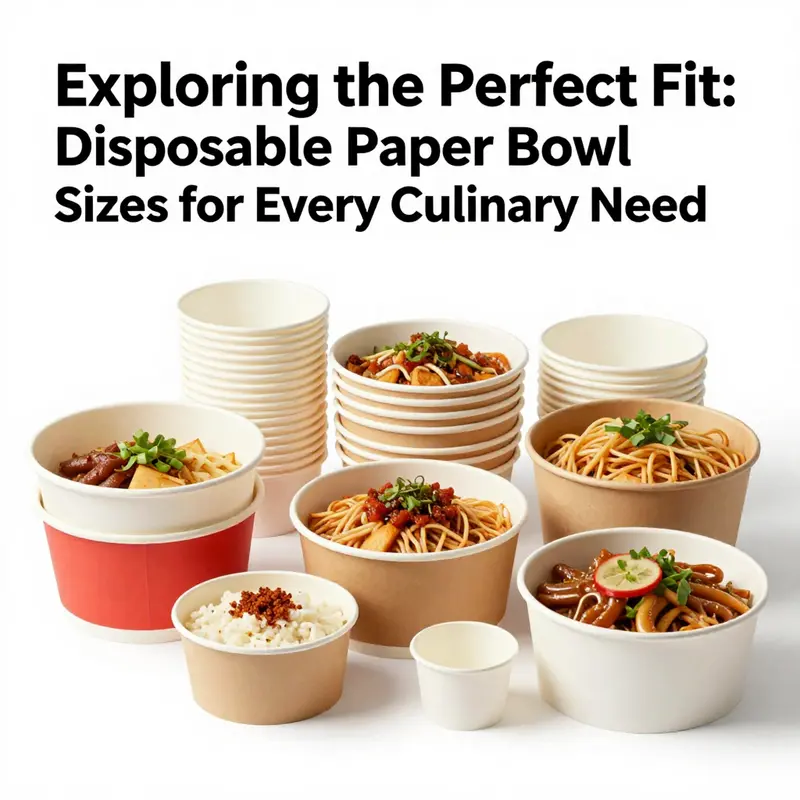
Understanding the variety and significance of disposable paper bowl sizes is essential for businesses in food service industries like bubble tea shops, restaurants, food trucks, catering services, and event planning. With a diverse range of available sizes, from petite 12 oz bowls well-suited for snacks to large 1300 ml options for grand events, selecting the proper bowl can enhance both presentation and functionality. This article delves into standard measurements, application insights, market trends related to customization and sustainability, and offers guidance on selecting the right sizes for catering and events—enabling your business to serve food with efficiency and style.
Sizing the Serve: The Hidden Logic of Disposable Paper Bowl Sizes and Their Everyday Uses
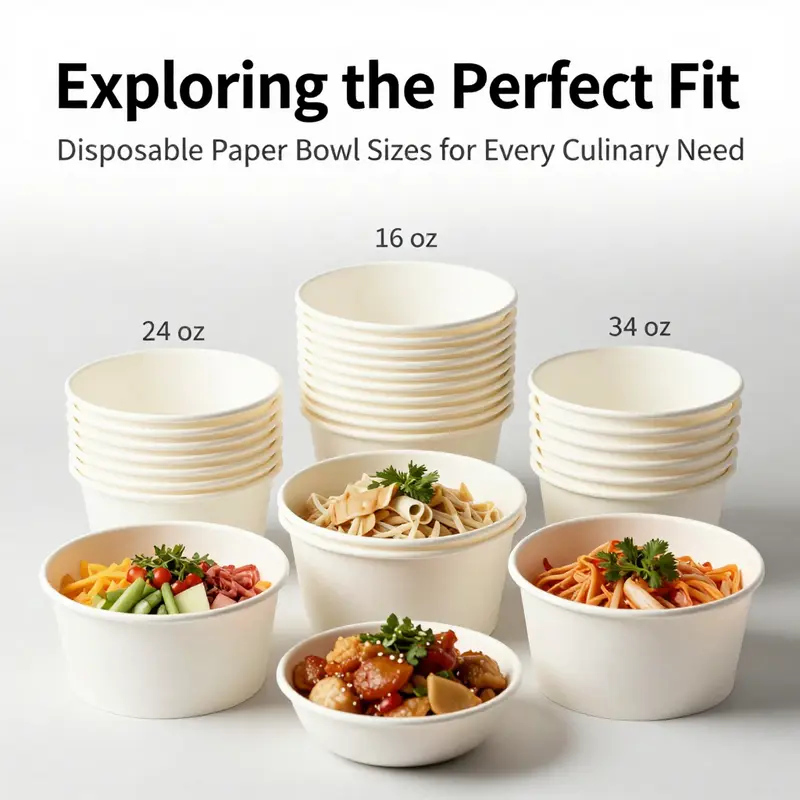
Bowl sizes do more than hold food. They shape portion control, menu design, efficiency on the line, and even the footprint a business leaves on the environment. When a kitchen staff member selects a bowl, they are making a small but consequential design decision about how a dish is perceived, how long it stays warm, how easy it is to transport, and how much waste will be generated after a meal. The range of disposable paper bowl sizes, from compact 12 oz portions to substantial 1300 ml servings, reflects a careful balance among practicality, consumer expectations, and the realities of foodservice operations. The measurements behind these bowls—volume, diameter, height—are not arbitrary; they are calibrated to harmonize with the way foods are prepared, plated, and served in any given setting. Understanding this sizing logic helps operators optimize menus, streamline service, and reduce waste while maintaining a reliable customer experience.
At the core, the standard sizes cover a spectrum of common needs. Small portions, quick-service appetizers, and dessert cups often rely on the 12 to 16 oz range, approximately 350 to 470 milliliters. These bowls are designed for efficiency and predictability: a portion of soup that buyers expect to finish in one sitting, a side salad, or a careful tasting portion that allows guests to sample a few different items without feeling overwhelmed. For catering teams and event coordinators, such sizes become a mental shorthand for portion control, ensuring that each plate or bowl handed to a guest aligns with a defined expectation. The habit of using a consistent size across events helps kitchens standardize inventory, streamline training, and reduce the risk of over- or under-portioning, which in turn lowers waste and improves cost control. The practical upside is not just the operator’s convenience; it is also the guest’s experience of consistency and reliability, a quiet reassurance that they will receive a familiar amount of sustenance in a given context.
As needs grow, so does the size range. Mid-sized bowls—roughly 24 oz, about 710 milliliters, and 32 oz, around 946 milliliters—emerge as workhorses for heartier meals. These capacities are frequently chosen for soups with a more robust portion, for noodle bowls, or for salads and sides that run beyond a standard lunch portion. They are common in buffet lines, fast-casual setups, and family-style meals where guests anticipate a more generous serving. The advantage of these larger bowls goes beyond size. They often maintain a balance between ample capacity and manageability: they hold enough food to satisfy a larger appetite while remaining light enough for quick handoffs, easy stacking for storage, and efficient transport in takeout bundles. In many operations, such mid-sized bowls become the default for a broad swath of menu items, reducing the need to switch between multiple vessel styles and keeping the service flow smooth during peak periods.
For occasions that demand truly substantial servings, the 500 ml to 1000 ml range (roughly 17 to 44 ounces) and even up to 1300 ml provide the capacity needed for main courses, generous salads, or one-bowl meals designed for takeaway or multi-guest servings. A 1-liter bowl is a familiar sight in buffet lines and fast-service formats where guests expect to fill their bowls with a complete meal rather than a starter or side. In catering and large events, these larger formats are valued for their ability to accommodate higher volumes with less frequent replenishment. Yet their advantages extend beyond sheer volume. The larger bowls often enable a more relaxed dining experience by allowing a single vessel to hold a generous portion while keeping the food well within reach for guests. This can translate into a smoother service rhythm, fewer trips to the kitchen for refills, and reduced waste from partially consumed plates that arrive back at the station with leftover portions.
Alongside the volume, diameter variations play a critical role in how a bowl behaves in real-world settings. A typical range from 4 inches to 14 inches in diameter frames three practical use cases. Smaller bowls, 4 to 6 inches across, are excellent for appetizers, small sides, or individual portions of soup where the emphasis is on bite-sized, easy-to-hold experiences. They are especially effective in catering, events, or counter-service formats where quick-bite portions help manage crowd flow without sacrificing the guest’s ability to sample an assortment of items. Mid-sized bowls, about 8 to 10 inches in diameter, are well suited for main courses. They provide enough surface area to present a complete dish attractively while keeping the vessel compact enough to stack, transport, and store efficiently. Larger bowls, spanning 12 to 14 inches, are often associated with communal servings, family-style meals, or party settings where a centerpiece-style presentation or a large portion is desired. From a practical standpoint, diameter influences not only the amount of food but also the ease with which guests can scoop, the stability of the bowl when held or passed along a line, and the ability to nest and stack for efficient warewashing and storage.
Beyond the raw numbers, there is a dynamic of customization that matters to brands and to the logistics teams that support them. Suppliers frequently offer customizable dimensions to meet specific requirements, a feature that can be especially valuable for businesses with unique menus or service formats. The trade-off, as often explained in production briefs, is that customization typically comes with minimum order quantities—MOQs—that reflect the costs associated with specialized tooling, printing, and production runs. MOQs starting at the tens of thousands may be a practical threshold for brands planning large-scale takeout programs, theme events, or sustained seasonal offerings. The upside, however, is significant: customized dimensions can yield a packaging solution that reinforces brand identity, aligns with a particular service model, and enhances operational efficiency by providing a perfect fit for a given menu. When a bowl is sized and designed to integrate with specific lids, trays, and packaging formats, the result is a smoother handoff from kitchen to guest and a more coherent takeout experience overall.
All of these considerations are not merely about aesthetics or convenience. They intersect with the environmental and economic dimensions of foodservice. For many operators, the appeal of a well-chosen size lies partly in its contribution to portion control and waste reduction. A bowl that carries the right amount of food for a given dish is less likely to be wasted, and it reduces the likelihood of over-purchasing ingredients to accommodate oversized portions. In addition, the fact that these bowls are designed to be leak-resistant and compostable supports sustainability goals without forcing concessions on practicality. The ability to serve hot and cold foods in the same class of bowl further adds to a restaurant’s versatility, allowing a single packaging platform to accommodate diverse menu items—from steaming noodle bowls to chilled dessert cups—without compromising performance or safety.
From the perspective of a menu designer or operations manager, knowledge of standard sizes becomes a compass for planning. When a chef designs a dish, the expected portion serves as a baseline that informs not only the recipe but also the chosen vessel. A hearty soup might call for a 24 oz bowl to accommodate both the broth and the add-ins, while a delicate starter could be better suited to a 12 oz cup to preserve portion perception and appetite pacing. The diameter choice supports the same alignment: a noodle bowl benefits from a wider mouth to enhance aroma and ease of scooping, whereas a soup cup prioritizes a tall, narrow silhouette to reduce the chance of spillage during transit. In the shift from kitchen to service area, this alignment reduces the cognitive load on staff and minimizes the risk of mismatches between dish and container.
The practical side of choosing a bowl also touches on how the packaging integrates with branding and customer experience. For brands aiming to personalize their packaging, options exist to imprint logos, color schemes, or themed graphics onto the bowl or its lids and sleeves. A cohesive packaging system—bowl, lid, and wrap—creates a familiar, recognizable experience for guests, helping them navigate menu options more confidently. It is here that the internal link to customizable takeaway packaging might offer inspiration for operators exploring how to extend their branding into the packaging itself. For brands seeking tailored packaging experiences, a resource on custom takeaway packaging supplies and disposable tableware for theme party can be a useful starting point: custom takeaway packaging supplies for theme party. This kind of exploration can unlock practical ideas for aligning size, shape, and design with a brand narrative, event concept, or seasonal promotion, while preserving the functionality that makes each size practical for its intended use.
In practice, the choice of bowl size is rarely a single decision. It sits at the intersection of menu architecture, service choreography, and the physical constraints of storage, transport, and warewashing. A kitchen that serves a rotating menu of soups, salads, noodle bowls, and hearty entrees benefits from a modular approach: a limited set of standard sizes that cover most needs, complemented by a smaller number of larger or smaller options to fill gaps in peak hours or special events. This approach simplifies inventory while still accommodating the variety of dishes a customer might order. It also helps with forecasting and procurement, since orders can be based on stable baselines rather than niche, one-off sizes. Even when a brand moves toward customization, it often does so in a way that respects the balance between specialized needs and the efficiency of mass production. The result is packaging that is both adaptable and economical, supporting a reliable customer experience without driving up costs or waste.
As the field evolves, new materials and designs continue to influence size decisions. Advances in leak resistance, temperature retention, and structural rigidity enable bowls to hold hotter foods longer without compromising safety or comfort in handling. The relationship between size and performance remains dynamic; a bowl that feels sturdy at a crowded event may still need to be light enough for easy handling in a busy takeaway counter. These trade-offs are navigated through a combination of empirical experience, supplier guidance, and a clear understanding of the day-to-day realities of service environments. The result is a sizing framework that supports both the kitchen’s demands and the guest’s expectations, turning a simple vessel into a reliable tool for delivering consistent, satisfying meals.
In sum, disposable paper bowl sizes are more than capacity numbers. They are a practical language that service teams use to design menus, pace service, and manage the flow of food from kitchen to guest. The range from small 12 oz portions to large 1300 ml servings, the diameter spectrum from compact to spacious, and the possibility of customization all contribute to a cohesive packaging strategy. When operators choose wisely, they gain a versatile platform for delivering quality, reducing waste, and building brand coherence across dine-in, takeout, and event settings. The right bowl size helps a dish present itself with clarity, travels securely to its destination, and arrives in a form that is easy to enjoy. In the end, size truly matters—not as a mere specification, but as a facilitator of better meals, better service, and a more sustainable approach to packaging.
An external reference with a comprehensive chart detailing standard dimensions, capacities, and recommended uses for various disposable paper bowl sizes can be found here: https://www.disposablepaperbowls.com/bowlsizes/.
Sizing for Service: How Disposable Paper Bowl Capacities Shape Portions, Perception, and Performance
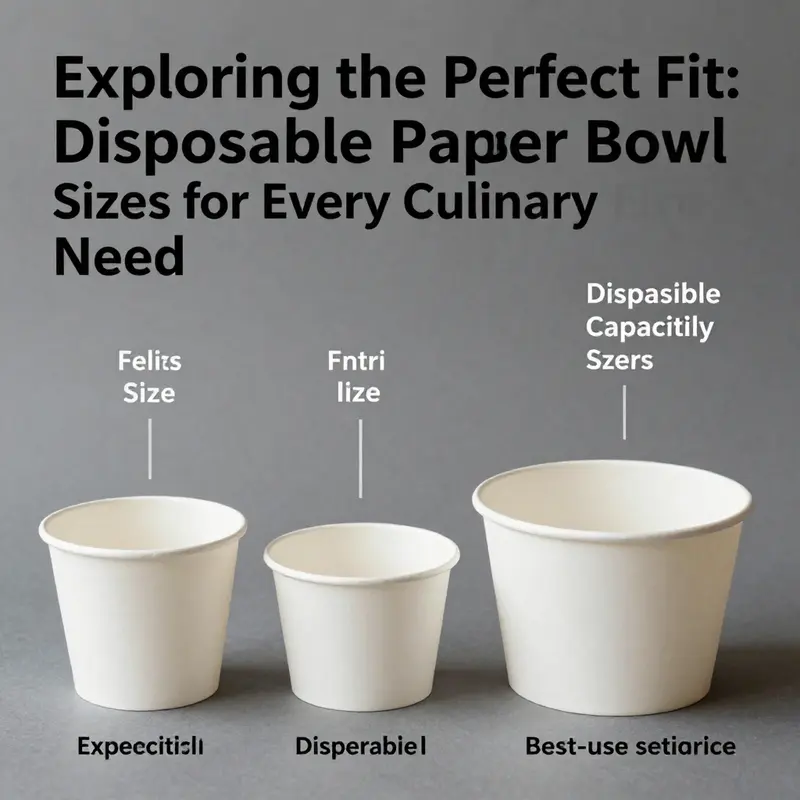
Capacity is more than a number on a label; it is a decision that threads together portion control, customer perception, and the operational tempo of a food service operation. In the world of disposable paper bowls, the available sizes act as the silent infrastructure of a menu. They determine not only how much food a guest receives, but how easily staff can portion, how reliably meals travel, and how waste is managed at the end of service. Managers who think in terms of size are thinking about flow: how a queue moves, how a kitchen staggers orders, and how a catering crew can scale from a few dozen to several hundred meals without compromising quality or cleanliness. The most common capacities—roughly 500 milliliters, 750 milliliters, and 1000 milliliters—cover a broad spectrum of dining scenarios, from a tidy sampling bite to a hearty main course. Each size serves a distinct purpose, and together they form a discrete ladder of capability that adjusts to the needs of the moment.
A 500-milliliter bowl occupies a special niche. It is the go-to for small portions, snacks, and light meals where the aim is to offer a taste without inviting waste. In buffet settings, these bowls can station guests with samples that spur appetite without encouraging overindulgence. In a trade show or conference setting, a 500 ml container functions like a practical wardrobe: it looks balanced in hand, stacks neatly for storage, and minimizes the risk that a guest will leave with more than they can reasonably consume. The compact form also translates into more efficient table turnover; servers or attendants can refill quickly or swap a bowl without disrupting the line. For food sampling and tasting menus, the 500 ml size is exceptionally forgiving, allowing guests to sample a range of items in a single visit while keeping each portion intimate and easy to manage. The appeal is clear: small portions encourage exploration, reduce waste, and create a sense of variety that can be scaled across dozens of stations or courses.
Moving up, the 750 ml bowl represents a balanced middle ground. This capacity handles standard servings of soup, sizable salads, or a hearty main‑course component in takeout packaging. Food trucks, casual eateries, and quick-service restaurants frequently adopt this size because it supports hot soups and stews without becoming unwieldy for handling or transport. A 750 ml bowl can accommodate a substantial portion of noodles or rice bowls, providing enough space for ingredients to mingle without crowding the vessel’s rim. It also tends to fit comfortably within common delivery containers, a practical attribute for operations that rely on third‑party logistics or on‑site catering. Outdoors and at family gatherings, a 750 ml bowl offers a practical volume for a satisfying serving that remains easy to carry and share. In daily operations, this size often becomes the workhorse: large enough to satisfy a hungry customer, small enough to keep costs predictable, and versatile enough to cover a wide variety of dishes—from potted pastas to creamy chowders.
The 1000 ml bowl is where significant meals and robust combinations come into their own. Large servings, pasta bowls, or generous salads find their natural home in this format. The size is especially advantageous for catering and events, where stability and resistance to leakage are as important as capacity. The design challenge shifts from merely holding more to ensuring that the container remains manageable, even when filled with hot liquids. The 1000 ml format typically features a wider top diameter, often around 18 to 20 centimeters, with a height in the neighborhood of 8 to 10 centimeters. This geometry helps prevent spillage during transport while still presenting an appetizing, restaurant‑like portion in a takeout setting. For meals delivered to a crowd or served family-style at a gathering, the 1000 ml bowl reduces the need for multiple trips between kitchen and service area, streamlining service and improving the guest experience. It also provides a reliable vessel for heavier foods—such as thick sauces, grain bowls, or layered ingredients—where stronger structural integrity minimizes the risk of collapse or leakage during movement.
Beyond the three core sizes, suppliers occasionally offer a broader spectrum, including 500 ml, 750 ml, and 1000 ml in various coatings and formats, with some manufacturers allowing customizable dimensions to meet exact requirements. This flexibility can be essential for institutions with standardized portion guidelines or events that demand a uniform look across dozens of stations. The practical implications of such customization extend to the diameter and height, which in turn influence how bowls stack for storage, how they fit into transport systems, and how guests perceive portion equality across a service line. In this ecosystem, even slight adjustments to height or rim diameter can ripple through the operation, affecting lid compatibility, heat retention, and ease of handling.
Material choices reinforce the size story. Most disposable paper bowls employ food‑grade kraft paper, treated with a polymer coating such as PE or PLA to provide leak resistance and to support hot or cold foods. The coating choice matters because it affects not only performance but also sustainability profiles. Coatings that are compostable align with the growing demand for environmentally responsible packaging, while the base kraft construction contributes to a sturdy, recyclable or compostable end-of-life outcome depending on local facilities. The size itself interacts with these material properties: a larger bowl must retain its shape under heavier loads and resist heat transfer that could soften the coating or warp the wall. A smaller bowl still has to resist tearing along the rim and maintain stacking integrity for efficient storage. In practice, this means that manufacturers design thickness, wall strength, and coating strategies with the target capacity in mind, creating a family of products that share a common performance philosophy while offering tailored volumes for different service models.
Operationally, the choice of size feeds directly into portion control and standardization. A restaurant that trains staff to fill bowls to a consistent level with a measured ladle or scoop can achieve uniform plating across dozens of dishes, whether the service is dine‑in, takeout, or catering. For salads, soups, and garnished bowls, this consistency translates into predictable presentation and a steadier inventory experience. When teams scale up for large events, the capacity becomes a lever for balancing demand with waste reduction. Catering planners can pre‑allocate bowls by size to menu segments, ensuring that guests receive appropriate portions for the course sequence while minimizing leftovers. The approach also affects the customer’s perception of value. A generously filled 1000 ml bowl is not just about volume; it signals abundance and care, while a modest 500 ml serving may emphasize precision and variety, inviting guests to sample multiple offerings rather than committing to a single larger portion.
For businesses exploring the full potential of these sizes, it can be helpful to view bowls as modular components of a broader packaging system. The compatibility of bowls with lids, sleeves, and compatible delivery containers matters as much as the capacity itself. Where a hot soup demands a snug, leak‑proof lid, a dry salad may rely on a secure-fit seal to prevent moisture migration. In planning conversations, operators should consider how many bowls of each size will be needed for typical service days, how many guests are expected at peak times, and how the bowls will be transported between kitchen, service area, and external delivery partners. The answer rarely resides in a single size alone; instead, it rests in a deliberate mix that aligns with the menu, the anticipated guest flow, and the environmental goals of the operation.
Within this balancing act, a practical note emerges: size is not merely about capacity but about the entire guest journey. A guest receives a bowl that can be easily carried, kept stable on a tray, and opened without drama. The same bowl must survive the rigors of travel, remain leak‑proof with hot liquids, and fit comfortably into the customer’s hand. When size decisions are made with an eye toward durability and ease of use, the end result is a smoother service experience, fewer breakages, and less waste. It is a reminder that the physics of a bowl—its diameter, its height, the strength of its walls—are quietly translating the kitchen’s routines into a tangible, often unspoken, customer experience.
For readers seeking a consolidated reference on practical bulk options, the broader takeaway is that tiered sizes support a flexible, scalable approach to portioning and service. In many operations, the 500 ml size serves as a precise starter, the 750 ml size accommodates everyday demand, and the 1000 ml size handles the heavier, crowd‑scale needs. The careful curation of these capacities—along with compatible lids, coatings, and coating choices—creates a resilient framework for food service that can adapt to menus, seasons, and events without sacrificing quality or sustainability. As menus evolve and guest expectations shift toward customization and responsible packaging, the capacity language of disposable bowls remains a robust tool for translating culinary intent into consistent, reliable service.
For additional context and a deeper look at bulk takeaway options that align with the sizes discussed here, you can explore a practical example of bulk takeaway bowls designed for efficient handling and transport: bulk 500ml to 1000ml takeaway bowls. This reference highlights how size, shape, and coating work together to deliver a predictable, scalable solution for diverse food-service environments. In the broader landscape of disposables, the interplay between capacity, design, and sustainability continues to shape how bowls support both the guest experience and the operational realities of modern food service. While the exact configurations may vary by manufacturer, the principle remains consistent: selecting the right size is a fundamental decision that reverberates through every plate, footprint, and mouthful of the service day.
External resource: https://www.alibaba.com/product-detail/OEM-BOWL06-Disposable-Round-Takeaway1600608293327.html?spm=a2700.productlist.0.0.4a8e6b4fGxKJtZ&from=product_detail
Sizing for Impact: How Customization and Sustainability Shape the Future of Disposable Paper Bowls
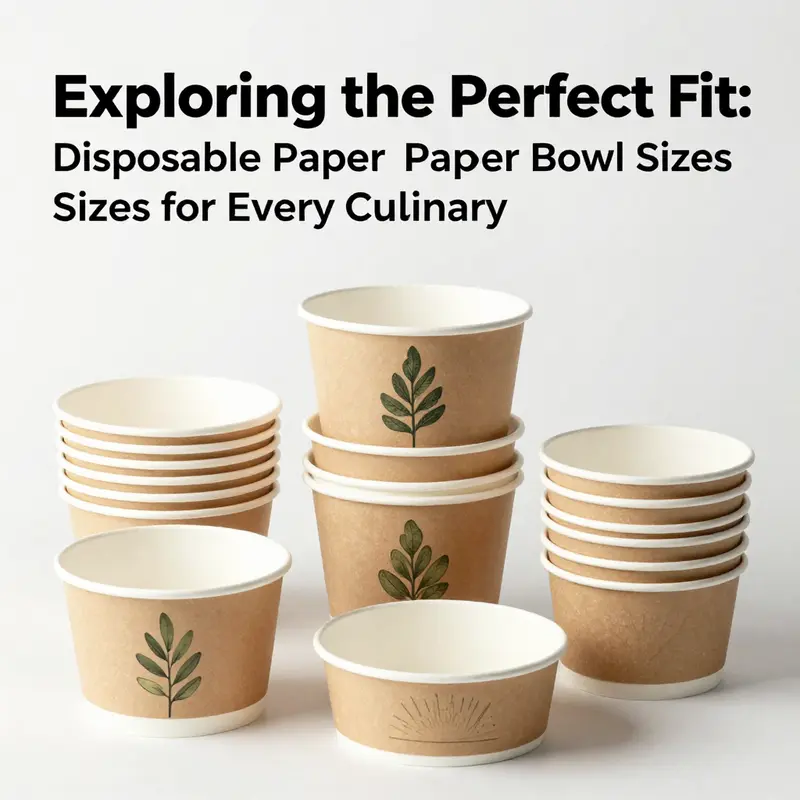
The shapes and capacities of disposable paper bowls have become a quiet language for the modern food service landscape. In the shifting world of takeout, catering, and event service, the size of a bowl communicates more than portion control. It signals the performance of a brand’s packaging system, the efficiency of a kitchen’s workflow, and the responsibility a venue bears for the environment. The most notable trend in this chapter is not a single new material or a dazzling new lid, but a paired movement: the demand for customization paired with a growing commitment to sustainability. Consumers want packaging that tells a story—one of branding, reliability, and low environmental impact—all at the same time. This confluence is reshaping the conversation around what a disposable paper bowl can and should be, and it is driving manufacturers to rethink the entire equation of size, shape, and supply chain.
A first essential observation is the remarkable expansion of size variability. The market today supports an expansive spectrum of capacities, allowing operators to match bowls to precise applications. At the small end, bowls around 120cc meet the needs of appetizer portions or tasting samples, where precision matters more than volume. Moving up the scale, 500ml, 650ml, and 750ml options are especially common for salads, side dishes, and generous portions of pasta or rice. Larger servings find a natural home in 1000ml and 1200ml bowls, which are widely used in catering, family meals, or events where efficiency during service and transport is paramount. This variability is not just a convenience; it is a functional imperative. Food service professionals must balance portion accuracy, temperature retention, and ease of handling, all while ensuring that the container performs across a range of hot and cold foods. The result is a diverse portfolio of round or rounded-square shapes, designed to maximize stackability, minimize waste, and reduce spill risk when lids are engaged.
The practical implications of size diversity extend into production planning as well. Manufacturers need scalable processes that can accommodate a wide range of molds, pallet configurations, and downstream packaging. The availability of multiple sizes also translates into more flexible supply chains, enabling buyers to standardize on a family of bowls without sacrificing the ability to tailor servings for specific menus or event scales. In practice, this means facilities invest in modular production lines, rigorous quality control to maintain consistent wall thickness and heat resistance across sizes, and streamlined logistics that keep inventory lean while supporting fast turnaround times for both small cafes and large catering outfits.
Customization sits alongside size as a fundamental driver of market evolution. Branding has moved from the perimeter of the packaging to the core of the experience. Logos, color schemes, and branding motifs can be imprinted or printed on the bowls, often using CMYK processes that preserve legibility on curved surfaces. This is more than cosmetic; it transforms packaging into a marketing channel. A well-executed imprint aligns with the brand’s color story, communicates a sustainability message, and reinforces customer recall as diners sort and dispose of containers in a busy event or busy street scene. Even with a wide range of sizes, the ability to tailor bowls with logos, slogans, or QR codes adds a measurable dimension to the packaging strategy. It creates a tactile and visual extension of the brand, from the moment a customer picks up the bowl to the moment it is recycled or composted.
Lid systems have become a crucial companion to size and branding. Lids are not mere afterthoughts; they are integral to transport safety, temperature management, and user convenience. For many operators, the combination of a reliable leak-resistant bowl with a secure lid reduces the risk of spoilage, mess, and customer dissatisfaction during delivery or takeout. The pairing also enables customers to enjoy soups, stews, and noodle dishes on the go without compromising texture or heat. In markets where patrons expect spill-proof packaging for outdoor events or long commutes, the synergy between bowl size and lid design becomes a competitive differentiator. The rise of handy, snap-on lids that fit tightly across multiple bowl sizes further reinforces the efficiency of a standardized tray or bag system.
Amid these operational advantages, sustainability remains the defining constraint and opportunity. Consumers are increasingly mindful of packaging life cycles, seeking options that are biodegradable, compostable, or recyclable. The shift toward eco-friendly materials has accelerated in tandem with the demand for customization. Branding and environmental responsibility can reinforce one another when companies choose materials that accept prints well, break down predictably in composting streams, and comply with regional recycling standards. Kraft paper bowls, for example, have gained traction as a material that communicates a natural, eco-conscious narrative while delivering on performance. They can be manufactured to withstand hot foods, hold up under carry, and accept branding without compromising legibility. Yet sustainability is not a blanket claim; it requires certification, traceability, and clear user guidance. Consumers increasingly expect packaging to be labeled with compostability or recyclability statements that align with local waste streams. This creates a market where materials must be not only green but also verifiably green in an often complex municipal system.
The tangible outcomes of these material choices ripple through procurement and supplier relationships. Buyers increasingly demand raw-material traceability, know-your-supply-chain assurances, and rapid delivery schedules. In response, manufacturers emphasize transparency, from forest stewardship or pulp sources to adhesive chemistries and end-of-life performance. The emphasis on traceability is not merely regulatory compliance; it is a competitive asset. When a brand can demonstrate that its bowls originate from responsibly managed fibers and that its inks are low-emission, it earns trust that translates into customer preference, repeat orders, and longer-term contracts. In this environment, a supplier that can scale production while maintaining consistent quality across all sizes becomes a strategic partner rather than a simple vendor.
From the perspective of operator decision-making, the interplay between size, customization, and sustainability reshapes cost structures and operating practices. Smaller bowls reduce material use per serving but may require more handling or more frequent restocking of items. Larger bowls deliver efficiency in portioning for catered events but demand stronger liners and more robust lids to prevent leaks during transport. Custom branding introduces initial costs for artwork setup and higher material compatibility requirements, but it can yield incremental revenue through premium packaging, differentiated experiences, or more effective marketing at the point of disposal. Sustainability does not always align perfectly with price; however, the current market demonstrates that consumers are willing to support brands whose packaging aligns with environmental values. As a result, the total cost of ownership must account for end-of-life performance, disposal costs, and potential savings from reduced waste or improved customer satisfaction.
In this evolving context, the market is not just growing; it is becoming more sophisticated. The globe’s disposable tableware ecosystem—driven by a combination of lunchboxes, bowls, and corresponding lids—has moved toward a more integrated approach. This means that suppliers are not simply selling a product; they are enabling a packaging system. A bowl in isolation is a small part of a broader logistics and branding strategy. There is increasing emphasis on packaging ecosystems where bowls, lids, and related containers are designed to be compatible across a portfolio of sizes and applications. Such compatibility reduces confusion for operators, lowers inventory complexity, and provides a more predictable customer experience. When a brand knows that a particular lid model can seal a 500ml or a 750ml bowl with the same reliability, it simplifies procurement decisions, speeds up service lines, and minimizes waste from mismatched components.
The strategic tilt toward customization and sustainability is reinforced by macro-market projections that place the disposable tableware sector on a steady growth trajectory. Industry analyses estimate that the global disposable tableware market is sizeable and growing, with a compound annual growth rate in the mid-single digits that is sufficient to motivate continued investment in new materials, new printing capabilities, and new production techniques. In practical terms, this means more options for customers who value both a strong brand presence and responsible packaging practices. It also implies that suppliers will continue to seek scale and efficiency through automation, refined supply chains, and better material traceability.
For brands seeking a tangible reference to the evolving landscape, one practical pathway is to explore options that balance branding and environmental stewardship within the available size spectrum. The packaging system that best serves a modern menu often requires a careful pairing of bowl capacity, lid compatibility, and branding potential. An operator might decide to standardize on a family of bowls in several key sizes, while offering optional lids in corresponding dimensions that can be customized with logo prints and color-coded for different product lines or event themes. This strategy provides a coherent customer experience while supporting sustainability goals through consistent, recyclable or compostable material choices and clear disposal guidance. A compact, branded, compostable bowl family cansupport a wide array of offerings—from a hot soup or noodle bowl to a salad or dessert—without forcing customers to use multiple, mismatched packaging options. The end result is a smoother assembly process in the kitchen, a more reliable pickup and delivery experience for customers, and a packaging narrative that resonates with eco-conscious values.
As the market continues to mature, the conversation around disposable bowls will center on how well brands can fuse performance with purpose. Size does not merely reflect capacity; it embodies the balance between user convenience, brand storytelling, and environmental responsibility. Those who master this balance will be better positioned to capture loyalty in a crowded field, to command premium pricing where appropriate, and to contribute to packaging systems that are designed for reuse, recycling, and responsible disposal. This is not a mere trend but a structural shift toward packaging as an expression of identity and responsibility. The future of disposable paper bowls lies in the ability to deliver the right size, with the right branding, on the right waste stream—creating a coherent, customer-centered experience that respects the planet as part of the value proposition.
For readers looking to explore practical avenues in this space, the landscape offers concrete opportunities to align purchase decisions with strategic goals. Operators can start by mapping menus to a scalable set of bowl sizes, then layering on branding that can be printed across sizes without sacrificing material integrity. They can pursue partnerships with suppliers who offer transparent sustainability certifications and robust customization options that do not compromise leak resistance or heat retention. And they can leverage the power of packaging as a marketing channel, crafting campaigns that highlight both the quality of food served and the environmental stewardship of the packaging chosen. In short, the future of disposable paper bowls is being written not only in the lab or the factory, but at the counter, on the catering truck, and in the hands of a consumer who expects clarity, consistency, and care.
Internal link for further exploration of eco-friendly takeout packaging options: disposable kraft paper bowls with lids for takeaway. This resource illustrates how a single set of sizes can be paired with lids and branding to create a cohesive takeaway solution that aligns with sustainability goals while maintaining practical performance.
External resource: Industry analysis of the broader disposable tableware market provides a macro view of the growth trajectory, consumer demand, and regulatory considerations shaping this space. See https://www.grandviewresearch.com/industry-analysis/disposable-tableware-market for a detailed market outlook and projections that underpin the trends discussed here.
Sizing the Serve: Mastering Disposable Paper Bowl Sizes for Catering and Events
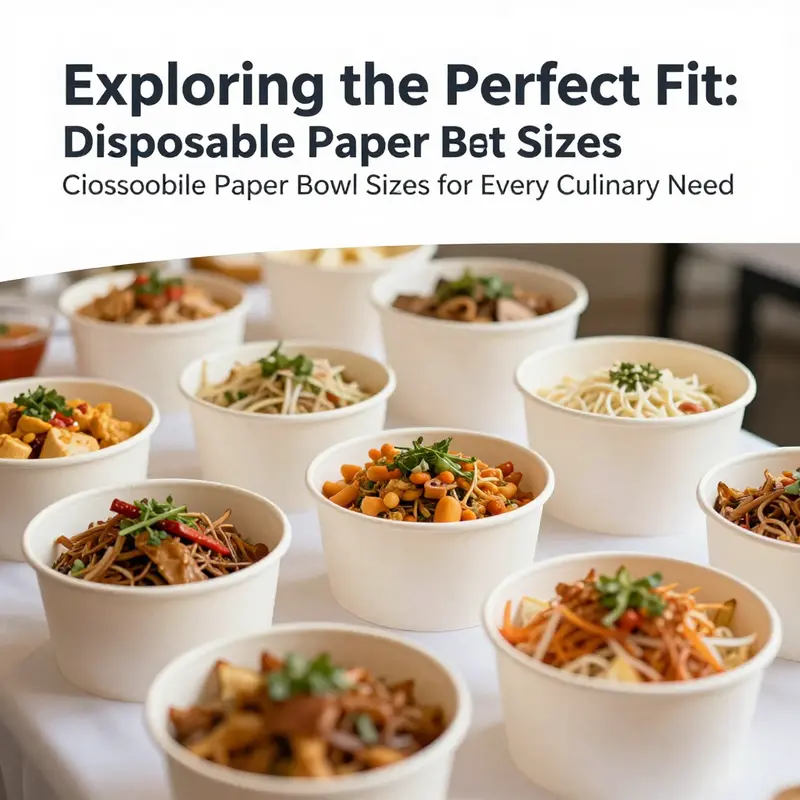
Every event needs a careful balance between practicality and presentation, and one of the most persistent touches of that balance is the humble disposable paper bowl. The size you choose shapes not only how guests experience the food, but how smoothly service runs, how waste is managed, and how reliably the operation scales from a small gathering to a major affair. When planners consider bowls, they are weighing how a serving looks on the plate, how easily guests carry a takeout container, and how efficiently staff can portion and replenish. The range of sizes available—from compact portions to generous mains—exists for a reason: different foods, different service styles, and different venue constraints demand distinct capacities. The goal is to align size with appetite, with the menu, and with the rhythm of the event itself, so every serving feels appropriate, not excessive, and always in reach of the guest’s expectations.
For starters, the spectrum includes smaller bowls, where restraint can be as important as speed. In many menus, six to eight ounces proves ideal for appetizers, bite-sized desserts, or compact snacks that guests sample while moving between stations. This size often acts as a visual cue that a course will be light and refined, with portions designed to be tasted rather than finished in one swallow. Yet as soon as the appetite grows or the setting calls for a more substantial bite before a main course, the medium range—around ten to twelve ounces—steps in. These bowls strike a useful balance: large enough to hold a substantial scoop of salad, a portion of pasta, or a bowl of soup, yet not so large that a guest feels overwhelmed or that staff must constantly refill between courses. In many catering operations, this middle tier becomes the default for a wide variety of dishes because it preserves the food’s integrity, supports elegant presentation, and keeps lines moving efficiently.
Beyond the everyday, larger bowls—sixteen ounces and up—serve a distinct role in buffet lines, family-style service, and catered meals aimed at substantial portions or shared experiences. A generous 16-ounce bowl can cradle a hearty portion of pasta, a robust noodle soup, or a substantial grain bowl, all while maintaining a reasonable footprint on a crowded buffet table. For family-style service or plated-but-tifted menus, even larger options are common. These sizes lend themselves to main courses or larger salads and can help keep guests from running back to the serving station as they fill their plates. In practice, the decision often hinges on the expected appetite of the guest mix, the pace of service, and the event’s overall flow. The same dish served in a 12-ounce bowl may feel perfectly balanced for a formal tasting, while the same dish in a 16-ounce bowl could read as a full entrée for a casual lunch.
The event type and setting further shape how size choices translate into a successful outcome. Outdoor events, particularly those in variable weather or with long lines, demand durability and leak resistance as a baseline. In such environments, bowls with snug lids or reliable wall strength offer a measure of protection against wind, heat, and accidental tipping. Indoor events often privilege aesthetics, where the clarity of the bowl matters as much as its capacity. A clear or translucent design can showcase the food’s color and texture, elevating the visual appeal of salads, desserts, or gelatos. The setting also informs stacking and transport. Lightweight, stackable designs maximize space efficiency in vans and on prep tables, enabling teams to move quickly through a service window without sacrificing stability in transit. A well-chosen size interacts with these practicalities to smooth the entire operation—guests receive their bowls promptly, food presents well, and staff can maintain momentum rather than chase refills.
Equally important are considerations around environmental impact and safety. The growing emphasis on sustainability nudges operators toward FDA-approved, biodegradable or compostable options, with clear disposal instructions for guests and staff. A bowl’s life cycle becomes part of the event’s message, especially when guests value eco-conscious choices. Yet even the most responsible materials must be used correctly. For instance, heat exposure can compromise structure; placing hot foods in a bowl not designed for prolonged high temperatures can lead to softening, leaks, or burns. Thus, service design should pair appropriate size with the right food temperature, ensuring that hot soups or steaming noodle bowls retain their form and integrity from serving station to guest.
A practical thread through all size decisions is the relationship between portion control and presentation. Portion control matters because it helps manage cost, reduce waste, and ensure consistency across hundreds of guests. A predictable 6–8 oz portion for desserts and appetizers makes lines smoother and plates visually coherent. A 10–12 oz bowl for salads and soups keeps the serving generous without appearing excessive, preserving the guest’s sense of value. When mains require more heft, 16 oz bowls become the anchor, offering lengthier sustenance without overpowering the plate’s overall composition. The visual balance matters because bowls are part of the plate’s frame. The color, translucence, and texture of the bowl interact with the food’s color and arrangement, guiding guests’ perception of portion size and quality. A well-chosen bowl size enhances the dish’s lines, supports garnishes and sauces, and makes the presentation coherent from first glance to final bite.
From a workflow perspective, the bowl’s dimensions influence how teams stack, transport, and replenish. The height and diameter determine how many bowls fit in a standard bin, on a catering cart, or within a refrigerated rack. A bowl that is too tall can crowd a storage shelf or obstruct a stacked lineup, while a bowl with a top diameter that is significantly larger than the available serving vessel may misalign with lids and inserts. Understanding the typical top diameter and height helps planners anticipate what can be carried in a single trip and how easily bowls can be nested for efficient transport. In practice, event planners often build a kit that pairs several sizes with corresponding serving spoons, lids, and display trays. This modular approach reduces last-minute substitutions and keeps the service line steady even as the guest count climbs.
Another layer of consideration comes with menu type—buffet versus single-service or plated service. Buffet lines benefit from a mix of sizes that accommodate a range of dishes without forcing guests to choose a different vessel for every course. A station that offers a lighter starter in smaller bowls and heartier mains in larger bowls supports a natural progression through the meal. Plated or assisted-service formats may lean toward uniform bowls to maintain a clean, cohesive presentation across tables. The decision also hinges on the service tempo; fast-moving events demand bowls that are quick to fill and easy to handle, while more leisurely affairs can justify a broader assortment of shapes and sizes to emphasize variety and texture.
From the supplier side, the conversation often turns to customization. Some manufacturers offer adjustable dimensions or tailored diameters and heights to meet particular service needs. For instance, an event with sprawling buffet tables and a high guest turnover might benefit from slightly shallower bowls with a generous top diameter to ease ladling and improve flow. Conversely, a compact venue may require higher bowls with narrower openings to contain sauces and prevent spills during transport. The ability to tailor the bowl’s profile supports better heat retention, stackability, and compatibility with other takeout or catering packaging elements. When designers map the menu and service plan, a thoughtful mix of sizes—backed by flexible dimensional options—helps ensure that every dish reads correctly on the plate and in the hand of the guest.
To translate these principles into concrete choices, many event planners rely on a practical rule of thumb: match the bowl to the dish’s core texture and portion expectation, then layer in a secondary size for variability. For example, a light starter or dessert might consistently use a smaller bowl, while a staple could be allocated to the medium range. A strong main course, particularly when served in a buffet line or family-style, benefits from a larger bowl that accommodates generous servings without crowding. The key is to avoid forcing a dish into an ill-fitting vessel or permitting a guest to feel that a portion has been undersold or oversized. A well-judged combination not only clarifies portion control but also supports the event’s pacing, enabling guests to move through courses with ease and satisfaction.
For planners seeking a practical starting point, the literature and practice converge on a few reliable benchmarks. Smaller bowls in the six to eight-ounce range excel for appetizers, dips, and garnished bites that invite sampling without commitment. Medium bowls in the ten to twelve-ounce range cover most salads, pastas, and soups, striking a balance between generosity and manageability. Larger bowls in the sixteen-ounce range and above support mains, hot-serving stations, and buffet portions where guests expect a robust offering. These guidelines, of course, must be adjusted for the specific guest demographic, the event’s duration, and the chosen service model. The overarching aim remains simple: choose a size that preserves the dish’s integrity, streamlines service, and minimizes waste while aligning with the event’s mood and pacing.
When considering practical resources and bulk options, it helps to visualize a spectrum of capacities alongside the food’s performance at temperature, texture, and moisture. Food that releases a lot of liquid or sauce benefits from a wider mouth and a sturdier wall, while dry, compact items can ride well in a tighter, lighter bowl. The diameter-to-height ratio matters as well: too wide a top can cause saucy entrees to spill, while too tall a bowl can trap heat and hinder quick scooping. A well-balanced set of sizes also supports the event’s sustainability goals, ensuring that guests do not receive oversized portions that generate unnecessary waste. In this light, the labors of choosing the right bowl size become part of a broader discipline—one that couples culinary vision with operational discipline, and translates a meal into a well-paced, repeatable guest experience.
For teams that want a concrete path forward, a widely applicable approach is to curate a small library of bowls that span the spectrum. Use the smallest for amuse-bouche or dessert, the middle range for salads and soups, and the largest for main courses or family-style servings. Coordinate these choices with a complementary set of lids, inserts, and display trays to maintain stability and aesthetics across the service line. The right combination reduces the need for mid-service substitutions and keeps a catering operation agile, even when guest numbers surge. The bowls become less a disposable afterthought and more a deliberate component of the event’s design, reinforcing both function and experience.
In closing, the act of selecting disposable paper bowl sizes is not simply a matter of picking a capacity. It is an exercise in choreography—how guests move through a meal, how teams execute service, and how the event communicates its attention to detail through every plate and bowl passed across the line. The sizes you choose become part of the meal’s rhythm, guiding portions, shaping presentation, and enabling efficient, scalable operations. As menus grow more diverse and guest expectations evolve, the sweet spot often rests in a thoughtful mix: a compact option for bite-sized courses, a reliable middle size for everyday items, and a strong, larger bowl for mains and shared servings. When these pieces align, the flow of the event becomes smoother, guests feel well cared for, and the bowl—this humble vessel—fulfills its quiet promise: to hold, present, and carry the experience forward with ease.
For practical, bulk options aligned with these considerations, explore the disposable kraft paper bowls with lids bulk 500ml to 1000ml. disposable kraft paper bowls with lids bulk 500ml to 1000ml. This range supports the kind of scalable, mid- to large-size needs that often define catering events, while remaining compatible with standard service workflows. And for a broader understanding of standards and certifications that undergird these materials, external guidance can be found at the FDA-approved biodegradables resource: https://www.disposablepaperbowlworld.com/fda-approved-biodegradable-paper-bowls/.
Final thoughts
The thoughtful selection of disposable paper bowl sizes is indispensable for enhancing operational efficiency and customer satisfaction in the food service sector. As you navigate through diverse options, remember the impact that the right bowl size can have on portion control, food presentation, and customer experience. By aligning your choices with contemporary market trends—like customization and sustainability—you not only cater to your clientele’s needs but also contribute to an eco-friendly future. Let each meal served in your bowls reflect care and quality.