
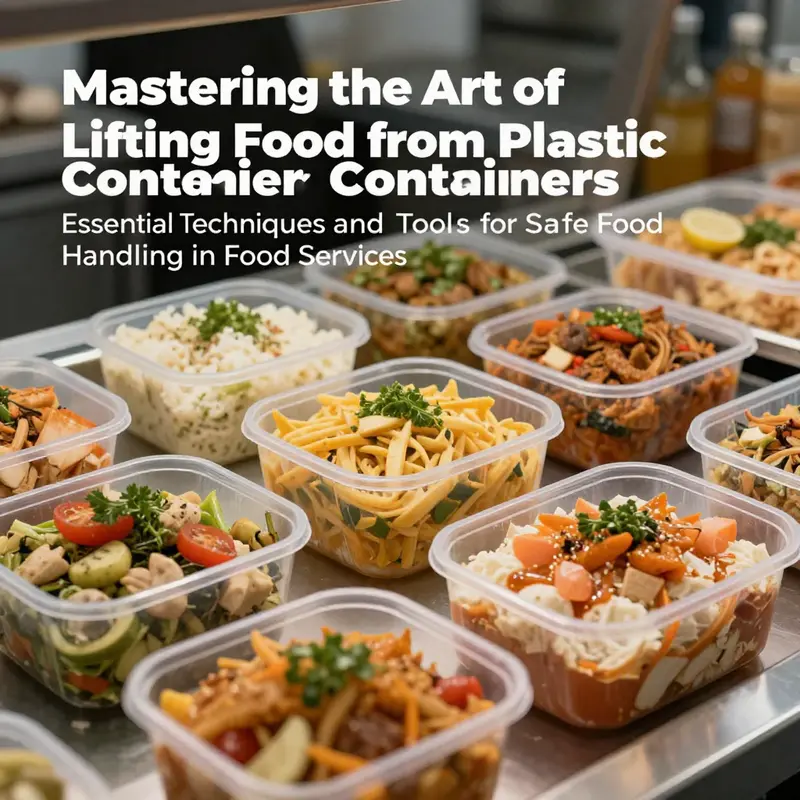
Efficiently lifting food from plastic containers is a vital skill in any food service environment, from bubble tea shops to catering services. This article outlines effective techniques for safely removing food, highlights the importance of using proper tools, and presents best practices to prevent contamination. Whether you handle sealed containers or strive to maintain hygiene, these insights will optimize your operations and enhance service quality.
Lifting Food from Plastic Containers: A Safe, Fluid Approach to Preserve Flavor and Minimize Risk
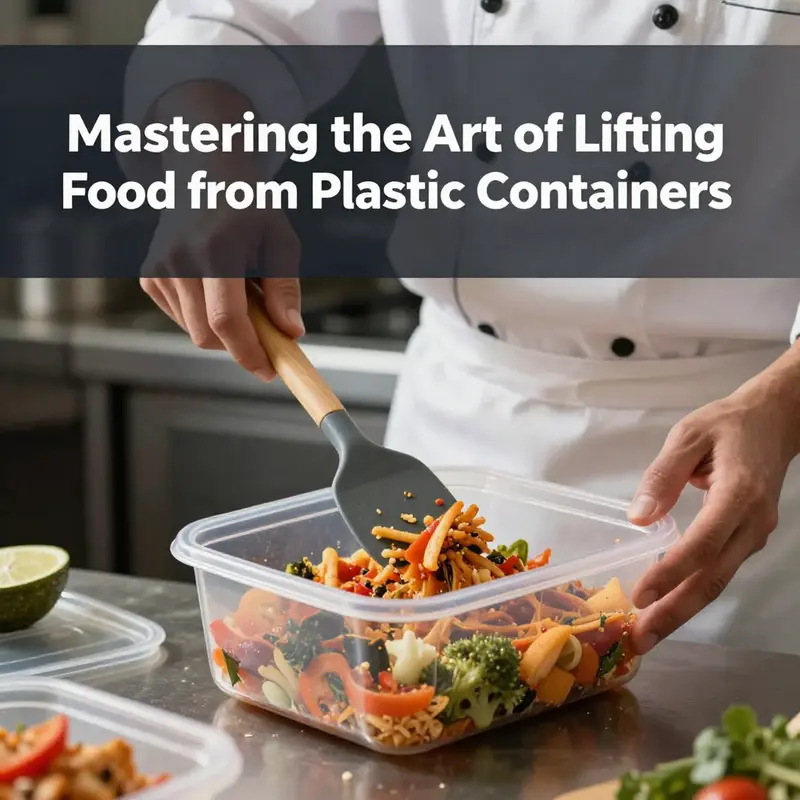
Lifting food from a plastic container is a routine gesture that can carry hidden risks if done carelessly. The image of steam rising from a sealed lid can invite a practical mindset: grab, twist, lift, and enjoy. Yet research and food-safety guidance remind us that the simplest actions often matter most for both safety and flavor. This chapter weaves together practical techniques with a cautious eye toward microplastics, chemical leaching, and the everyday realities of keeping meals tasty and safe. The core idea is straightforward: minimize contact with potentially degrading plastic, choose the right tools, and respect the physics of temperature and pressure. In doing so, you protect not just your immediate meal, but your long-term health and your kitchen’s habit of handling food safely. What follows doesn’t rely on flashy gadgets or luck; it rests on measured steps that align with how containers are built and how our bodies interact with what we store inside them. It is a narrative of deliberate, gentle motion rather than forceful force, a seam between practical kitchen technique and careful science. As you read, you’ll notice that each suggestion builds toward fewer chances of contamination, less wear on containers, and meals that retain their texture and taste after retrieval rather than after a frantic tug at a stubborn lid.
The first principle is simplicity itself: use the right tool for the job. A non-metallic spatula, silicone spoon, wooden utensil, or a plastic tool designed for food handling is your friend here. The goal is to slide the edge under the food with ease, lifting without scratching the container or contributing extra particles to the surface where bacteria might cling. When you’re dealing with a loose crumbly sauce, a flexible spatula helps you cradle the food rather than break it apart. This is not merely about convenience; it reduces the chance that tiny grooves will form on the container’s interior where bacteria can settle after you’ve already opened the lid. The same principle applies to larger leftovers: a gentle levering motion with a broad edge distributes contact across a wider area and minimizes shear stress on the container walls. In short, the goal is to preserve both the integrity of the mis en place and the container’s surface.
A more nuanced moment arises when the lid is not just sticky but practically fused to the rim by a vacuum seal. Here the science of air pressure can guide a safe adjustment without resorting to brute force. The classic “press and release” method—places hands on the lid’s center, presses down firmly, then releases—can momentarily disrupt the vacuum, loosening the seal just enough to enable a safer lift. It’s a small, precise action that leverages the physics at work: plastic expands and contracts with temperature and pressure, and a quick shift in pressure can break the seal without twisting or prying. If you’re applying this technique, keep your movements controlled. The aim is to create a gap that reduces the force needed to turn or lift the lid, not to damage the lid or deform the container in the process. It’s a reminder that sometimes the gentlest approach yields the clearest path back to ready-to-eat food without scarring the container’s inner surface.
Another facet of safe handling concerns heat. Temperature is a double-edged sword: it keeps food pleasant while also influencing the behavior of plastic. A lid that clings because of recent heating or cooling can sometimes respond to a brief, targeted warm-up. A hairdryer set to a low or cool setting, applied sparingly around the lid edges for 5 to 10 seconds, may cause slight expansion sufficient to ease the grip. The guidance here is explicit: avoid high heat. Excessive heat can warp the plastic and, in the worst cases, promote microplastic shedding or chemical leaching. The takeaway is not to bake the lid into looseness but to nudge it gently toward a safe, stable state where lifting is straightforward rather than forced. This is the kind of practical restraint that keeps your food intact and your container in service for longer while protecting your kitchen from unintended chemical exposure.
When grip feels slippery or the lid stubborn, a simple, reliable trick is to improve your grip with a rubber surface. A rubber band, a non-slip mat, or a dry towel placed over the lid can dramatically improve traction. The act of twisting or pulling becomes more controlled, reducing the risk of slippage that could lead to spills or chips in the container’s lip. It’s a small accessory in the kitchen, but it represents a broader theme: use the environment to your advantage, creating safe, repeatable steps rather than wrestling with a stubborn lid with bare hands. In the same spirit, avoid metal tools for prying plastic containers. Knives, forks, or other metal implements can scratch the interior, producing micro-grooves that harbor bacteria and make future cleanups more challenging. The philosophy here is not about avoiding risk altogether but about selecting tools that minimize it while preserving the container’s integrity.
As you consider how to lift, you’ll likely think about future prevention as well. The best defense against a lid that won’t budge is to reduce the likelihood of a vacuum forming in the first place. Limiting the application of hot foods directly into plastic containers is a practical habit that can yield dividends. Let the food cool somewhat before sealing, so the temperature change doesn’t create a tight seal as the contents release steam and contract as needed. This approach respects the container’s design and reduces the mechanical stress on the seal. If you routinely reheat leftovers, consider transferring to glass or stainless steel containers for longer-term storage and reheating. The benefit is twofold: glass and metal containers can tolerate temperature changes more predictably, and they avoid the chemical interactions that can occur when plastics heat and then cool repeatedly.
A thread that runs through these suggestions is an acknowledgment of material safety in plastic containers. When plastic is involved, it’s wise to pay attention to labeling codes and to the best practices that experts promote. If you must use plastic, aim for BPA-free options and containers approved for food storage and heating. Codes #1, #2, #4, or #5 are generally considered more compatible with food use than others, while codes #3 (PVC) and #7 (other plastics) carry higher concerns about chemical leaching. These guidelines are not a guarantee of absolute safety, but they offer a practical framework for choosing containers that are less likely to shed unwanted substances into your meals. The emphasis is on reducing exposure while preserving the function of the container for everyday use. In practice, it means reading labels, storing a modest supply of containers that meet these criteria, and rotating them to avoid long-term wear that can alter their integrity.
Even with careful material selection, the habit of transferring food from a plastic container to a different vessel for storage or reheating remains one of the most effective safeguards. For longer storage or for reheating, glass or ceramic containers are typically safer options because they are inert to heat and do not degrade in the same way plastics do. This is not about abandoning plastic altogether but about using it judiciously. When your goal is to preserve texture and flavor, and to minimize microplastic presence in your meals, transferring to a safer container before reheating is a prudent step. It also makes cleanup simpler because glass and ceramic don’t absorb odors or stains in the same way some plastics can, especially after repeated use.
A further dimension of safe handling concerns cleanliness and odor control. After any meal, proper cleaning of plastic containers matters. Warm, soapy water is a reliable baseline, but a quick rinse with a mild vinegar solution can help remove odors and residues that might attract bacteria. A practical ratio is a few capfuls of white vinegar in a couple of liters of warm water. This step is not about flavor masking but about maintaining a neutral environment inside the container so that it remains easy to clean and less likely to harbor lingering smells that could transfer to future meals. Clean containers are easier to lift from and less prone to sticking issues caused by residual film on the rim or lid.
It’s worth recognizing that practical kitchen safety is rarely a single maneuver but a collection of small habits that reinforce one another. The simple act of choosing non-plastic utensils for retrieval, employing measured pressure to release a lid, warming edges gently when needed, and using grip-enhancing aids all contribute to a smoother, safer process. Each decision reduces exposure risk and preserves the container’s integrity. It also aligns with a broader approach to safe food handling, one that considers how we store, reheat, and clean in a way that minimizes the chance of contamination while maximizing flavor and texture. In this sense, lifting food from a plastic container becomes less a test of force and more a test of restraint, awareness, and practical know-how. When you combine these elements—appropriate tools, mindful pressure, temperature-aware handling, and careful material choices—you create a routine that serves both everyday meals and longer-term pantry health.
The practical takeaway extends beyond the kitchen bench. It invites you to consider packaging choices in the first place, including the option to use safer, more inert materials for storage and serving. If your household or workplace emphasizes sustainability and safety, a line of packaging solutions such as eco-friendly takeout boxes for food packaging offers a coherent example of a system designed with user safety in mind. By selecting containers that align with food-safety guidelines and rethinking how we access meals on the move, we can reduce unnecessary contact with plastics and minimize the risk of leaching or shedding. For easy reference and a sense of concrete alternatives, you might explore the broader context of safe packaging that favors non-plastic or inert materials in everyday use, while still acknowledging the convenience that well-designed plastic options can offer in certain scenarios. This broader context reinforces the idea that safe food handling is not about dogmatic rules but about informed choices that fit your needs and your kitchen routine. If you want to see a practical example of safer packaging options, consider exploring this resource: eco-friendly takeout boxes for food packaging.
Finally, it’s important to anchor these practices in credible guidance from public health sources. While the specifics of container design and material safety evolve with new research, the underlying principle remains stable: heat, time, and mechanical stress influence how plastic interacts with our food. The broader message is to transfer hot foods to safer vessels for reheating, to use non-plastic utensils when lifting, and to adopt a cautious approach to seals and lids. In this way, you maintain the quality and safety of your meals without sacrificing convenience. For readers seeking a comprehensive overview of safe handling, consult authoritative guidance from health authorities and established science outlets on the topic of safe food handling and minimizing exposure to microplastics.
For those who want to dig deeper into the science and the practical implications of safe food handling, the following external resource provides a thorough reference point: https://www.cdc.gov/healthyschools/food-and-nutrition/safe-food-handling.htm
The Right Tools for Lifting Food from Plastic Containers: Precision, Safety, and Microplastic Awareness
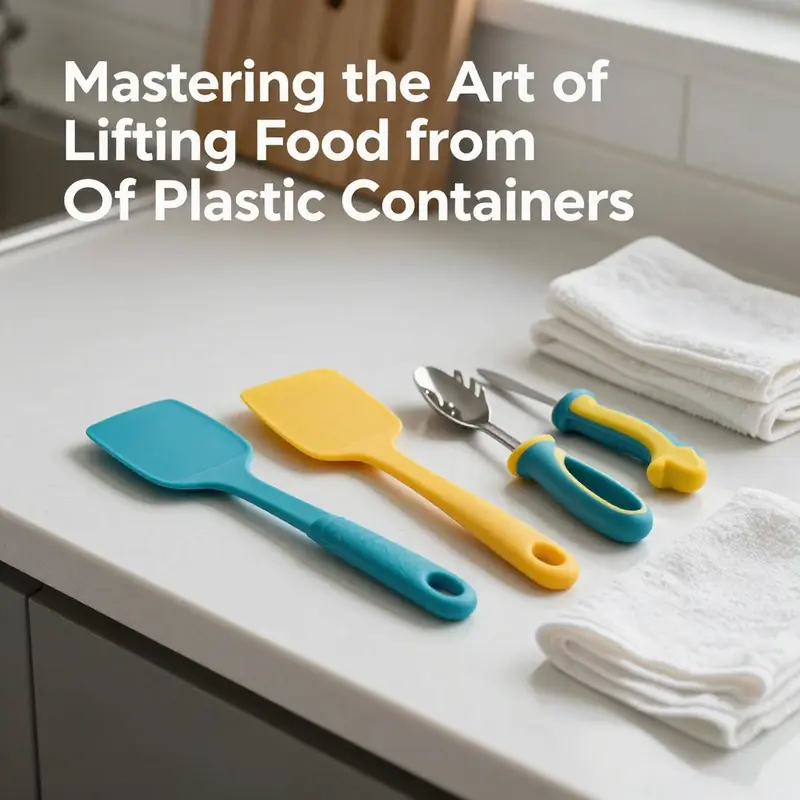
Struggling to lift food from a plastic container is a familiar kitchen moment. The lid sticks, the edges feel tacky, and the urge to wrench the scoop upward can be strong. Yet the most reliable, least damaging way to extract your meal starts with the simplest idea: use the right tool for the task. The choice of utensil matters as much as the technique you apply. A non-metallic, food-grade implement can steady your grip, protect the container’s surface, and minimize any transfer of plastic fragments into the food. The basic rule is straightforward: use tools designed for food contact, avoid metal probes that can mar plastic, and select materials that won’t shed microplastics with a careful scrape. This approach aligns with long-standing food-safety principles that prioritize gentleness, hygiene, and material compatibility. When you consider the common situations—sticky sauces that cling to the sides, a container whose lid seems fused by temperature shifts, or a vacuum seal that resists even a firm grip—the practical wisdom becomes clear: the tool you pick should be soft enough to glide, sturdy enough to pry gently, and safe enough to remain in contact with your food without introducing new hazards.
A silicone spatula stands out for most lifting tasks. Its edge can slide under a pat of rice, a layer of sauce, or a stubborn chunk of leftovers without scratching the container’s walls. A plastic spoon or a wooden spoon can also perform well, especially when the food is more fragile or the container’s geometry makes a flat edge impractical. The key is to keep the motion slow and deliberate. Instead of a quick scrape that can gouge the plastic or loosen its integrity, tilt the utensil slightly, ease the edge beneath the food, and lift with a steady, gentle pressure. In practice, this means you’re less likely to nick the container’s interior, less likely to introduce micro-scratches where bacteria can harbor, and less likely to end up with torn edges that compromise the container’s seal someday. The elegance of this approach lies in its simplicity: the right tool does a precise job without carving a path that will haunt you in future uses.
This emphasis on the tool extends beyond scraping. The type of plastic matters too, particularly when you’re dealing with heated or acidic foods. A utensil built for food contact—not just any old kitchen implement—minimizes the chance of chemical migration or material shedding during the lift. A non-abrasive surface, a smooth edge, and a design that avoids unnecessary friction help preserve the container’s integrity over repeated uses. The science behind this is about more than convenience; it’s about reducing the potential for microplastic shedding during scraping or lifting. Modern guidance from health and safety sources stresses that the physical wear on plastics can contribute to microplastic concerns, especially when combined with heat and aggressive handling. In practice, that means you should look for silicone, BPA-free plastic, or wood—materials that tend to resist wear and do not readily shed particles into your food.
But the tools alone cannot solve every sticking scenario. Some containers are sealed so tightly that a hand alone cannot maneuver them. In these cases, a careful, pressure-based approach can help. The concept of manipulating a vacuum seal is not to force the lid off with brute strength but to introduce a controlled change in pressure that eases the lid away from the seal. A practical method is the press-and-release technique: place both hands on the lid, press firmly toward the center to momentarily ease the seal, and then release with a clean twist or lift. The sensation is a brief, almost inaudible shift as the vacuum breaks enough to create a small gap. It’s important to avoid sharp metal tools for this task. A small, flat plastic lid opener or a blunt edge can help you lever at the lid’s edge without compromising the container’s surface. The lid’s snugness is not a sign of failure; it’s a sign that the container is performing its job. Your job is to reset the pressure safely and then proceed with the lift.
When the lid resists due to temperature changes rather than a vacuum, a little warmth can loosen the seal without risking damage. A hairdryer on a low heat setting can be used to warm the lid’s outer edge for a brief five to ten seconds. The aim is to encourage a tiny amount of expansion at the interface, not to soften the plastic to a point of warping. It’s critical to emphasize caution here: do not apply high heat or prolonged exposure. Excessive heat can warp plastic, potentially release absorbed chemicals, and create grooves where microplastics may accumulate. The goal is a measured, conservative warming that invites a safer twist or lift. After warming, dry the edge with a towel to improve your grip and proceed with the lid operation using a non-metallic tool.
A simple grip aid—such as a rubber band, a dry towel, or a non-slip mat placed over the lid—can make a stubborn lid suddenly cooperative. The grip transfer is practical: the added friction reduces the risk of slipping, which can damage the lid’s surface or the container’s rim. The moment you feel the lid turning, pause, recheck your hold, and ensure your tool remains in good condition. A compromised grip can lead to accidental gouges or micro-scratches that later become micro-havens for bacteria and microplastics. The core message is not to force a lid beyond its limit but to enhance your hold through simple, safe means that keep each component within its designed tolerances. For people who frequently store meals or reheated leftovers, this technique becomes a crucial habit—one that protects both food quality and container longevity.
The instinct to reach for metal tools is tempting in a hurry. Yet the guidance circles back to safety: metal utensils can scratch the plastic, creating grooves where bacteria can hide and microplastic fragments can detach over time. A scratch is more than cosmetic damage; it is a potential pathway for contaminants and a weak point in a container’s long-term performance. The insistence on non-metallic options is not about avoiding risk in theory; it’s about maintaining practical integrity during daily food handling. If you’re tempted to use a knife or fork to pry a lid, pause. Instead, try a soft-bristled brush or a flexible plastic tool that can maneuver around the rim without scratching the surface. A subtle habit shift here protects both the container and the food and aligns with broader food-safety practices that minimize exposure to degraded plastics.
Another piece of the puzzle is understanding why sticking happens in the first place. Temperature shifts are a primary driver. Hot foods quickly introduced into plastic containers can create a temporary vacuum as air cools and contracts. Over time, this vacuum becomes a stubborn seal that resists straightforward lifting. The simplest long-term remedy is preventive: avoid placing hot foods directly into plastic containers whenever possible. Allow foods to cool to a safer, more moderate temperature before sealing, and consider transferring hot meals to glass or stainless steel containers for storage and reheating. This approach does more than ease the daily task of lifting; it minimizes repeated thermal cycling that can degrade plastic and potentially release small particles.
A broader safety frame also comes into play. The topic of microplastics and chemical migration from heated plastics has been discussed in multiple outlets as a cautionary note. The core takeaway is practical and prudent: if you plan to reheat, reheat in a non-plastic vessel when possible. For microwaving, transfer the food to a glass or metal container before heating. The idea is not to sensationalize but to respect the data that warns about microplastic leakage under certain conditions. The advice is consistent with responsible kitchen practice: choosing containers made from safer materials, being mindful of heat exposure, and selecting tools that support a gentler, more precise lift.
Material choice matters beyond the act of lifting. The research results emphasize that non-abrasive, food-safe utensils—silicone, wood, or BPA-free plastic—are preferable for daily lifting tasks. These materials present fewer risks of abrasion and chemical interaction with both the food and the container. For containers that feature strong vacuum seals or that rely on precise craftsmanship to hold contents, the combination of appropriate tools and careful technique becomes essential. A small flat tool can assist in edge lifting without compromising the rim’s integrity, and it should be used with a gentle touch rather than brute force. Importantly, the goal is to preserve the container’s lifespan so that it can be reused with confidence, maintaining the seal’s efficiency and minimizing the nuisance of future sticking.
In this context, choosing safer plastics becomes a practical decision with clear benefits. Containers labeled with polypropylene (PP5) are generally more stable under typical household conditions, particularly when combined with compliant, non-scratching utensils. The avoidance of heat exposure in microwaves or dishwashers for lower-grade plastics reduces the risk of degradation that can accompany repeated cycles. When lifting, you are not just moving food from point A to point B; you are supporting the container’s continued performance, protecting the food from contamination, and supporting safer storage habits that extend beyond a single meal. This integrated approach—tool choice, careful technique, preventive storage practices, and mindful heating—creates a routine that sustains both safety and convenience.
To widen the practical view, consider how this approach fits into broader kitchen practices. The selection of tools and the handling method you adopt can echo into other tasks such as mixing, scooping, and serving. A silicone spatula used to lift leftovers from a plastic container can often double as a gentle scraper for sauces on nonstick surfaces, a small brush for cleaning, and a means of transferring food with minimal waste. By aligning your toolkit with the food’s characteristics—sticky or saucy, dense or liquid, hot or cold—you build a flexible system that supports clean, efficient, and safe cooking and storage. The idea is not to reinvent the wheel with every meal but to apply consistent, thoughtful choices that preserve both food quality and container integrity over time.
In sum, lifting food out of a plastic container is not simply a mechanical maneuver. It is a small performance that blends material science with kitchen craft. The right tools—non-metallic, food-safe, gentle in edge and edge-work—make the exercise smooth rather than stressful. The vacuum or heat-driven seals can be navigated with care rather than force, and even when a stubborn lid resists, a combination of controlled pressure, warm edges, and improved grips can yield a clean separation without damage. By prioritizing preventive storage choices and heating practices that minimize plastic degradation, you protect yourself from potential microplastic exposure and help ensure your meals remain safe and tasty from fridge to table. If you’re exploring packaging options beyond plastic, you can turn to eco-friendly takeout boxes for food packaging as a broader reference point for safer, sustainable alternatives. See more about those options here: eco-friendly takeout boxes for food packaging.
For researchers and curious readers, it’s worth noting the external guardrails on this topic. Reputable sources emphasize minimizing plastic exposure during heating and handling, a principle that resonates with practical daily practice. The guidance is straightforward: transfer hot foods to glass or metal containers before heating, and avoid aggressive mechanical prying that can compromise plastic integrity. The overarching aim is to keep the process safe, hygienic, and waste-minimizing, with a focus on long-term container performance and consumer health. As you integrate these ideas into your routine, you’ll find lifting food from plastic containers becomes less a struggle and more a practiced skill—one that respects both the material and the meal.
External reference: https://www.foodsafety.gov/
Gentle Lifts: Safe, Contamination-Proof Techniques for Removing Food from Plastic Containers

Removing food from a plastic container is a common task that many people perform quickly and with little forethought. This chapter presents a practical, contamination-aware approach to transferring food safely and efficiently, focusing on clean utensils, minimizing contact with the container interior, proper handling of seals, careful cleaning, and thoughtful storage. The goal is to establish repeatable habits that reduce risk without complicating your routine. Key practices include using dedicated utensils for transfer, preventing cross-contamination by separating raw and ready-to-eat foods, lifting from the top edge rather than scraping the interior, inspecting containers for wear and replacing damaged items, washing promptly and thoroughly, avoiding heating in non-microwave-safe plastic and transferring hot foods to glass or metal when possible, handling lids with care to maintain a good seal, and storing leftovers in clean containers designed for the purpose. Adopting these steps can improve kitchen hygiene and simplify future meal prep.
Final thoughts
Lifting food out of plastic containers may seem straightforward, but employing the right techniques and tools can significantly improve food service operations. By understanding safe methods and preventing contamination, businesses like bubble tea shops, catering services, and food trucks can ensure efficiency and uphold hygiene standards. With these practices, not only will you enhance safety, but also improve customer satisfaction.