
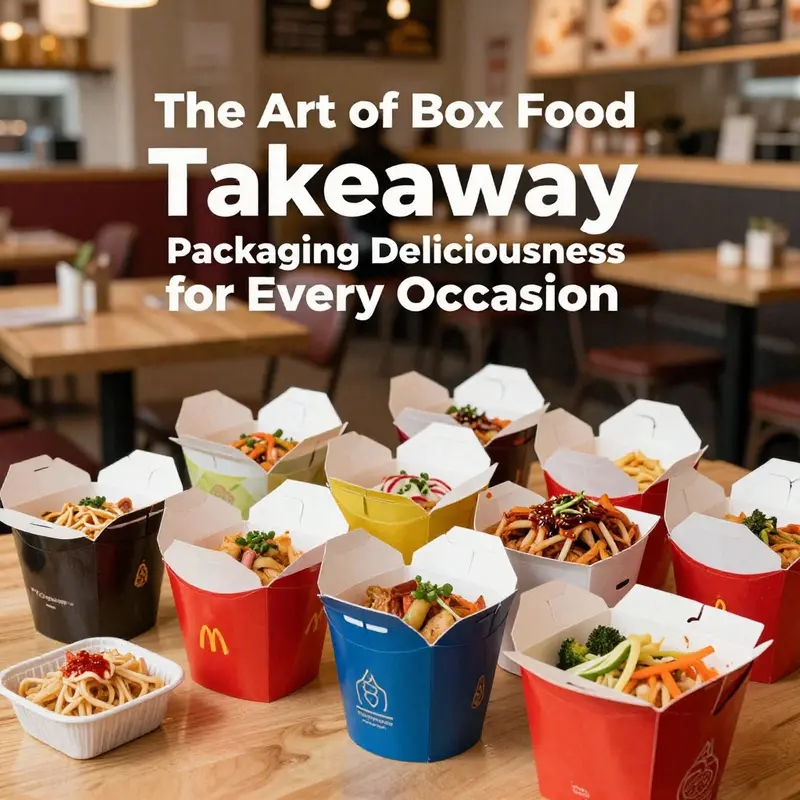
In today’s dining landscape, the concept of ‘box food takeaway’ is not just a trend, but a necessity for restaurants, catering services, and food vendors. This guide delves into the key terminologies, cultural distinctions between American and British expressions, and best practices for ordering and packing leftovers effectively. Understanding these nuances will empower businesses to adapt and thrive in diverse culinary environments, ensuring they meet customer expectations and streamline operations. Throughout this article, we’ll explore the terminology surrounding takeaway, the cultural variances that influence ordering behaviors, practical tips for effective takeaway service, the etiquette of packing leftovers, and the economic impacts box food takeaway has on the restaurant industry.
Boxed Language: The Living Lexicon of Takeaway in English-Speaking Food Cultures

Language around food to go is more than a set of words; it is a window into how people experience convenience, service, and the social rituals of sharing meals on the move. In English-speaking contexts, phrases like to go, takeout, takeaway, and box structure everyday interactions at the counter, on menus, and in packaging decisions. This chapter surveys how these terms travel across regions and times, and how staff and customers use them to signal preferences, constraints, and care for food. The simplest expression is to go, used in phrases such as I’d like a chicken sandwich to go, please. It signals portability and a dining style that invites transport rather than a dine-in meal. Takeout and takeaway mark similar ideas with subtle regional differences: takeout tends to be common in American English, takeaway in British English, with overlap in informal speech. Box is a practical term that bridges language and material reality, referring to the container and the act of packing food for transport. Leftovers are often wrapped up with a courteous phrase like wrap it up, please, which communicates the desire to preserve remaining portions while keeping service tone respectful. The language of packaging—grease resistance, recyclable boxes, and compostable options—also reflects evolving values around sustainability and efficiency. In everyday life, these words do more than label how food travels; they encode expectations about portions, timing, and care. For staff, mastery of this vocabulary reduces miscommunication and speeds exchange. For customers, precise requests help ensure the meal arrives as intended, with the right containers and condiments. This chapter invites readers to listen for the cues that connect language to service, design, and the practical realities of transporting food from kitchen to door.
Boxed Language, Shared Meals: Exploring American and British Takeaway Terminology in the Boxed Food Era
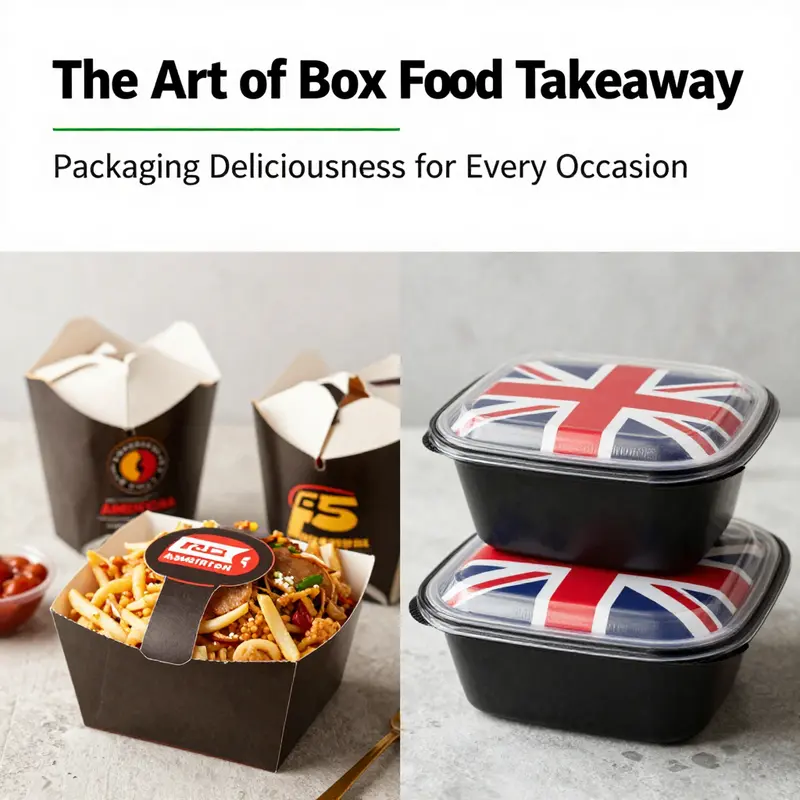
Language around food to-go is more than a set of words; it is a map of culture, service conventions, and how people imagine the moment of picking up a meal. In the study of box food takeaway, researchers watch not just what customers order, but how they describe the act of taking food away, how packaging messages are framed, and how a simple phrase can set expectations about timing, containment, and reuse. The core concept that surfaces across English-speaking contexts is the idea of food meant to be eaten elsewhere, and within that core lie subtle shifts in vocabulary that reveal regional tastes and business practices. The most widely recognized umbrella term in many places is the American expression takeout. It works as a noun and as a descriptor in phrases that signal the meal is collected and consumed off premises. Across the United States, a typical utterance such as I’ll have this to go captures a compact, efficient moment of decision, a moment that is more than convenience—it is a boundary between dining and solo consumption elsewhere. This boundary is reinforced by what follows the phrase: the container, the label, and the implied speed with which a server must wrap and hand over the meal. At its core, takeout is not only a word but a service model that assumes a standardized, often grease-proof, leak-resistant box that carries the meal beyond the table to a waiting home, car, or park bench. In bathroom mirrors and kitchen shelves, the box becomes a familiar ritual object, a portable room for one’s dinner and a reminder that the dining experience can be unfolded in a different setting.
In the United Kingdom, the language takes a different route. The equivalent concept is takeaway, a term that functions as a noun to denote both the meals themselves and the restaurant type that specializes in off-site service. The distinction goes beyond vocabulary; it tracks a slightly different approach to how meals are packaged and sold. When British customers speak about their orders, they often use takeaway with the same confidence that Americans reserve for takeout. Yet the phrase to go continues to appear in everyday conversations, bridging the two worlds. For instance, a customer might say, Can I get this to go? while a staff member may respond with a procedural warmth that mirrors the local dining culture. This shared phrase keeps the moment practical, translating across borders even as the preferred noun marks a cultural signature. The nuance is not merely lexical; it perdures in the way the menu, the counter, and the packaging itself frame the experience of leaving the restaurant with a meal that still feels fresh and intentional.
A crucial subtlety lies in how different communities attach modifiers and adjectives to describe the act. In American usage, to go functions as an adjective in phrases like to-go, a compact form that annotates the meal’s intended destination outside the premises. The hyphenated form often appears on signage and in ordering apps, signaling a standardized expectation about packaging and timing. In contrast, British speakers frequently pair takeaway with phrases that emphasize the off-site consumption as a distinct service category—one that may include its own branding, restaurant layout, and collection window. The result is a linguistic landscape where the same practical goal—eating elsewhere—unfolds through different linguistic frames, each reinforcing local norms about courtesy, efficiency, and the etiquette of asking for leftovers.
This is where the physical box comes into view as more than a container. The word box—when used as a noun or verb—occupies a liminal space between language and material culture. In American service language, staff may reference to-go boxes or takeout containers, terms that reflect a standardized supply chain of packaging. The verb form box up or box this up appears in care-filled interactions where a server or cashier ensures the food remains intact for travel. In the British setting, the corresponding vocabulary often centers on takeaway boxes or takeaway containers, with a similar practical purpose but a slightly different cadence of care and naming. The act of wrapping leftovers—Wrap it up, please in some American contexts, or Could you wrap that up for me in others—shows how the same goal can be expressed with different tonalities. The nuance matters, because tone can influence perceptions of politeness, efficiency, and respect for the customer’s time. These micro-shifts accumulate to form a broader pattern: language mirrors the operational tempo of a busy restaurant, and in turn, the boxes and containers shape how that tempo feels to the person carrying the meal home.
The chapter of packaging and language would be incomplete without acknowledging the growing awareness of sustainability and design within box food takeaway. The physical container accompanies a conversation about materials, recyclability, and microwave safety. In practice, many kitchens and takeaways now offer a spectrum of options—from kraft paper boxes with windows to more robust, leak-resistant takeout boxes designed for fried foods or sticky sauces. The choice of container carries with it an implied commitment to the customer’s experience, signaling whether the meal will travel well, whether it will reheat cleanly, and whether the packaging will minimize waste. For readers who care about the tactile feel and the aesthetics of packaging, a contemporary takeaway experience often involves more than a simple utility box; it becomes a design moment where color, texture, and even the footprint of the box communicate a brand’s values. Online and in-store discussions about packaging often reference terms like leak resistance, microwave compatibility, and grease-proof layers, and these product considerations inevitably color the language used by staff and customers alike. In this sense, vocabulary and packaging are inseparable surfaces of a shared practice: how a meal is framed, carried, and enjoyed after leaving the table.
In reflecting on cross-cultural communication, it is essential to consider how these terms guide expectations in busy, diverse dining environments. A multilingual staff, a mixed-heritage customer base, and a fast-paced service model all converge at the moment of ordering to create a moment that is as much about conversation as it is about food. Knowing that Americans typically call the service takeout and Americans and Britons alike sometimes say to go intensifies mutual understanding, while recognizing that Britons may favor takeaway helps avoid awkward insistence on a term that sounds foreign in context. The practical takeaways for anyone navigating this space are simple but meaningful: learn the core options, listen for local cues, and be mindful of how you request packaging—whether you are asking for leftovers to be boxed, wrapped, or boxed up for later enjoyment. In a world where boxed food takeaway is increasingly normalized, language becomes a shared tool that reduces friction, improves accuracy in orders, and honors the person across the counter who is trying to do the best for both customer and kitchen.
From a design perspective, the journey from menu to box to bite is one continuous thread. The packaging choices—whether a windowed cake box, a sturdy unit for fried foods, or a sleek, compostable lunch box—reframe the idea of takeaway as a portable meal rather than a static moment in a restaurant. In the chorus of terms, the box becomes a character: a reliable companion for the ride from restaurant to home, a physical memory that lingers after the last bite, and a practical reminder of the care that goes into preparing and preserving food. As long as people seek the convenience of meals outside the dining room, the conversation around takeaway and takeout will continue to evolve, drawing on the economies of packaging, the ethics of waste, and the small rituals of asking for the box to be closed and handed over with a smile. This is not merely a lexicon exercise; it is a study of how people make space for communal meals in busy lives, one box at a time.
External resource: Cambridge Dictionary. For further exploration of these linguistic distinctions in everyday usage, see the Cambridge Dictionary resource on takeout, takeaway, and to go terms.
Internal link for packaging examples: eco-friendly takeout boxes for food packaging
Boxed Delights on the Move: Best Practices for Ordering and Packaging Takeaway Food
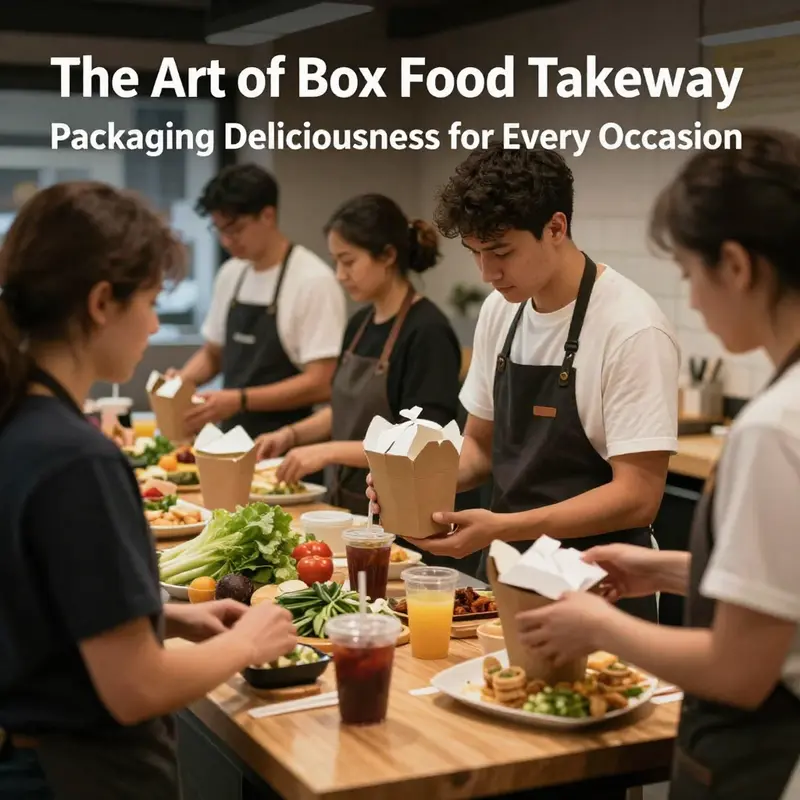
Boxed meals have become more than a convenience; they are a portable extension of a kitchen. The act of ordering food to be eaten elsewhere carries its own language, a mix of practical phrases and cultural etiquette that shapes how customers communicate with staff and how kitchens prepare for mobility. In many English-speaking contexts, the simplest way to express the core idea is with the phrase “to go” or its equivalents in other varieties of English. In American usage, “to go” and “take out” often walk hand in hand with a casual restaurant experience, while in British circles “takeaway” remains the preferred term for both the food and the dining model. Within a single order, the choice of words can influence how staff approach packing, how much attention the customer pays to packaging, and even how the meal travels through traffic and temperature changes. The research surrounding these terms underscores a subtle but real difference in expectations: clarity in instruction, whether for a quick bite or a gourmet transfer, reduces the chance of miscommunication and downstream waste. In practice, the ordering experience benefits when staff respond with concise confirmations or polite prompts, such as “Would you like that boxed for takeaway?” or a simple, “Wrap it up, please,” when leftovers are requested. The language is not merely etiquette; it is a signal of efficiency and respect for the customer’s time and the kitchen’s workflow. As takeaway culture becomes more embedded in daily life, the packaging story becomes inseparable from the ordering story. The materials chosen, the design of the container, and the way a box closes all mirror the conversation that started at the counter. Customers and restaurateurs alike learn to value a packaging system that preserves temperature, protects hygiene, and communicates a brand’s identity without sacrificing convenience. In this sense, the chapter you’re reading pays close attention to how the right box shapes the entire dining arc—from first impression to final bite, and beyond into reuse, disposal, and memory of taste.
Food packaging is not merely a vessel; it is an active participant in the meal’s journey. When discussing box types, the material matters as much as the method of closure. For many dry or semi-dry dishes—think of rice bowls, curries with thick sauces, pasta, and stir-fries—a paper takeaway box made from recycled or sustainably sourced paperboard offers an ideal balance. These boxes are light, often compostable or recyclable when uncoated, and designed with compartments to prevent flavor mixing. They support a practical, cost-effective operation while keeping sauces and steam contained enough to maintain appeal. For hotter, longer trips—especially for gourmet or restaurant-grade fare—insulated options such as fast-delivery boxes composed of a rigid foam alternative or polymerized insulation provide greater thermal retention and durability. While these options may be heavier and pricier, they help the food arrive in a condition closer to its dining-room standard, a factor that can influence repeat orders and the perceived care behind a brand’s takeout offering. The takeaway packaging decision, then, is a deliberate balance between function, form, and sustainability.
Hygiene and safety are non-negotiable in any setting that handles food for takeout. Packaging must meet Good Hygiene Practices standards, using materials that are food-safe and free from harmful chemicals. Proper sealing minimizes contamination and reduces the risk of leaks during transit. High-volume operations, in particular, benefit from designs that minimize contact points and simplify handling for staff, courier partners, and customers alike. The clean handoff between the staff member and the courier should feel seamless, a small moment of trust that the product will be transported safely. Beyond containment, hygiene extends to the packaging’s edge—the seal, the coating, and the materials’ ability to resist moisture. When done well, the packaging becomes a protective barrier that does not burden the consumer with a messy or leaky experience. A well-considered packaging system supports a culture of safety throughout the chain, from kitchen sanitation to delivery practices.
The customer experience is shaped as much by what the box reveals as by what it hides. Transparent-window containers, such as flap-top boxes with clear viewing panels, enable diners to preview the food without opening the package. This simple feature enhances visual appeal, builds trust, and reduces the need for unpacking during inspection. Bakeries, sandwich shops, dessert specialists, and other takeout formats often rely on this design to showcase the artistry inside while preserving temperature and texture. Yet there is a balance to strike. Windows can fog when steam escapes and may carry environmental drawbacks if the material is not recyclable. The choice to use a window thus reflects a broader strategy: it should align with the brand’s aesthetics, the food’s character, and the logistical realities of transit. In addition to visibility, the ease of opening and re-sealing the container contributes to the overall experience. A box that is straightforward to close without spillage, yet sturdy enough to withstand a few bumps in transit, becomes part of the meal’s story, a silent endorsement of quality.
Branding and sustainability increasingly travel hand in hand in takeaway packaging. Consumers today expect packaging to be recyclable, compostable, or biodegradable, and they also want packaging that can be customized with logos and design elements. Customizable paper boxes offer space for branding, messaging, and even care instructions, reinforcing identity while signaling environmental responsibility. The packaging choice is a tangible statement about a business’s values, and it can influence a customer’s willingness to order again. The design should consider not only the appearance but also practicality: the box should resist moisture enough to protect less sauces than a heavy-duty seal would, and it should carry weight without warping. In practice, a sustainable approach might emphasize materials sourced from responsibly managed forests, minimal use of coatings that hinder recyclability, and the option for customers to recycle or compost the box after use. The thriving consumer interest in responsible packaging nudges operators toward packaging ecosystems that reduce waste without compromising performance. The result is a cohesive package that mirrors a restaurant’s culinary standards as much as its environmental commitments.
Despite the ideal scenarios, performance limitations deserve attention. Paper boxes, for instance, may absorb moisture and become soggy if the dish is very wet or saucy. In such cases, designers turn to double-walled or sealed options that better resist leaks, though these can be more expensive and heavier. Flap-top models are cost-effective and easy to assemble but may offer less leak resistance than sealed designs. The takeaway is not to chase a single perfect solution but to tailor the packaging approach to the dish, the distance, and the expected handling. For businesses aiming to scale, investing in appropriate manufacturing equipment is crucial. Streamlined production of consistent, reliable boxes supports a reliable takeaway operation and helps ensure that customers receive the same experience with every order. This alignment between packaging capabilities and dining expectations is central to a brand’s ability to deliver on its promises.
In this context, a practical takeaway is the broad, flexible rule: match packaging to the food type, uphold safety and sustainability, and design for a positive customer experience. Visual appeal should not come at the expense of practicality or hygiene, and branding should reinforce a commitment to the environment. When these elements converge, the act of ordering and receiving boxed food becomes a smooth, trusted ritual rather than a clumsy afterthought. For restaurateurs and delivery teams, the chapter’s insights translate into actionable decisions: select eco-conscious, suitable materials; ensure robust seals and appropriate insulation; and invest in reliable production and packaging workflows that scale with demand. To readers navigating this landscape, the takeaway is clear: the right box is not merely a container; it is a promise of quality, a cue of care, and a driver of loyalty that travels with every bite. For further guidance, consult the FDA’s authoritative standards on safe and effective food packaging. FDA guidance on food packaging
Internal resource for practitioners seeking inspiration on packaging aesthetics and functionality can be found here: eco-friendly takeout boxes for food packaging. This link provides a snapshot of how sustainability and design can coexist in a practical box that protects flavor while reflecting a brand’s values.
Packing Leftovers with Precision: Etiquette and Expression in Box Food Takeaway
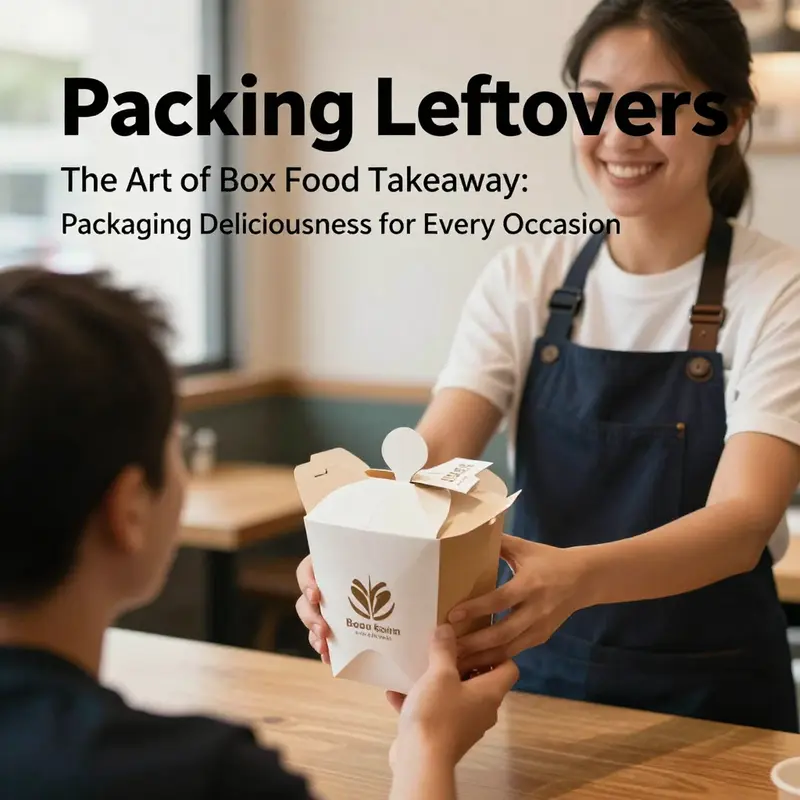
Packing leftovers and taking food home is more than a routine. It is a small practice that reveals how a culture negotiates service, waste, and care for both the cook and the environment. In many English speaking contexts, the act of asking for a container or a box is a moment where language meets manners, practicality, and everyday life. The conversation around takeaway is never only about flavor or speed; it also encodes how people navigate boundaries between dining in and leaving the premises with a meal that will be enjoyed later. This chapter explores the core terms, common ways they surface in real conversations, and the nuanced etiquette that makes packing leftovers feel effortless rather than awkward. It connects linguistic cues to practical choices, including how to handle the packaging itself, what to say, and how to say it in different settings. The topic intertwines with the broader study of box food takeaway; the goal is to illuminate how language shapes how we treat food, people, and space in a takeout world that travels beyond the table and into the home. A single phrase can carry tone, politeness, and cultural awareness all at once, turning a simple request into a courteous exchange that honors the service and the meal, long after the last bite is taken. The most universal cue in this landscape is the to go directive. In many countries, telling the staff to prepare a meal to go signals an off site consumption that preserves the meal’s original integrity while acknowledging the shift from dine-in expectations to takeout practicality. In practice, staff often respond by asking clarifying questions about box size, container type, and whether sauces should travel separately. The underlying idea is straightforward: the meal is prepared with the intention of arriving home ready to heat or eat, and the language around it stresses convenience and efficiency. A typical ordering moment might involve identifying the item, confirming the quantity, and then confirming to go. The clarity gained from this phrase reduces miscommunication and helps both customers and servers anticipate the kind of packaging that will travel with the order. The result is a smoother transaction and less need for follow up. A sentence such as I would like a cheeseburger and a shake to go, please, conveys a direct wish that translates into a neat process for the kitchen and the front of house. The phrase to go has become a cornerstone of takeaway culture because it spans casual dining and fast food alike, offering a shared linguistic anchor across generations and regions. In Britain, a parallel but distinct term often appears: takeaway. This word carries not only the act of taking food away from the premises but also a sense of the establishment itself as a place that gives customers options for taking food home. The British usage emphasizes the package as a product in its own right, sometimes accompanied by a brief discussion about packaging preferences or container types. Its American counterpart tends to be takeout, a term that foregrounds the same end state—food consumed elsewhere—but with a different phonetic and cultural cadence. When people notice these subtleties, they begin to sense the cultural texture of the exchange: the same basic action refracted through regional language. In casual conversation, you might hear phrases that imply the same outcome but with a different flavor, such as I’ll have this to take away or We’ll take it out, depending on the setting and the speaker’s region. Leftovers, however, introduce a separate, equally common set of expressions. The informal doggy bag remains a widely recognized option, though language preferences may vary according to formality and age. The request signals both practicality and familiarity, often accompanied by a tone that is respectful and light. For a cleaner, more formal alternative, many people opt for Could I have a box for the leftovers, please, or Would you mind wrapping up the rest, please. These variations show how a single intention to pack the leftovers can be conveyed with different degrees of formality. Alongside doggy bag, wrap it up, please emerges as a direct instruction at the table when a person wants the remaining portions to be packaged after finishing the main course. It is a crisp, unambiguous directive that works well in social dining contexts and in more casual venues. Staff generally respond quickly to such requests, ensuring the leftovers are transferred to an appropriate container without compromising the meal’s quality. The emphasis here is not on a dramatic change in language but on choosing terminology that matches the setting and the relationship between customer and server. The container itself becomes part of the conversation when you consider the verbs and nouns that describe the act of packaging. Box can be used both as a noun and as a verb, and it is understood in many contexts as a standard method of packing. People say box this up or can you box this up for me, and the staff will typically provide a box that suits the portion size. In some cases, the words take out and take away may be used interchangeably with to go, but they refer to the same end state from different English traditions rather than to the packaging act itself. The linguistic distinction matters because it helps travelers or learners communicate more naturally in different restaurants, avoid awkward phrasing, and align with local expectations. Take away is primarily British, while takeout carries American resonance; both imply off premises consumption but are less relevant when the conversation centers specifically on packaging leftovers after a meal. A guiding principle in this etiquette is to choose phrases that match the context rather than the formality of the venue. In fast casual settings, a concise request such as Could I get a box for this, please, or Box this up, please, is usually sufficient and well received. In a more formal restaurant, you might opt for a gentler approach, such as Would you mind packing the rest for me, please? Those choices reflect sensitivity to the staff’s workflow and time, particularly during busy periods. Also important is acknowledging the packaging’s impact. If you have specific needs—extra napkins, a separate sauce container, or a container that’s microwave safe—stating them clearly helps avoid confusion and ensures the leftovers travel as you intend. This small attention to detail reinforces a cooperative relationship between guest and staff, one built on mutual respect for the labor involved in preparing and packaging meals. The act itself becomes a shared responsibility rather than a one-sided request. Beyond etiquette, the topic invites consideration of packaging as part of the dining experience. Takeaway boxes come in many forms, from simple paper cartons to more elaborate window boxes that showcase desserts and pastries. The choice of container can influence how well the food travels and how pleasant the unboxing is at home. For those who care about sustainability, eco friendly options have gained prominence, offering grease resistance, microwave safety, and recyclable or compostable materials. The language of takeaway often aligns with these practical concerns; customers may ask not only for a box but for an eco friendly takeout box, reflecting a shift in values and expectations about waste. The packaging conversation also intersects with design, brand, and the overall customer experience, since a good box can protect the contents and reduce spill or mess during transit, while a poorly chosen container can undermine even the best cooking. The link between words and objects to go, takeaway, box this up, wrap it up becomes a tactile chain from hands to hands, table to kitchen, and kitchen to home. If you want to explore the packaging side more deeply, you can see a range of container ideas in foldable cake boxes with window, a design that illustrates how form and function come together in a single product. For further exploration of how these expressions sound in spoken practice, the BBC Learning English resource on takeaway food and doggy bags provides useful listening material and cultural notes.
null

null
Final thoughts
Understanding the phenomenon of box food takeaway is vital for any business within the food service industry. By grasping the terminology specific to your culture, recognizing the subtle differences in the way takeaway is perceived and executed across regions, and implementing best practices for ordering and packing, businesses can improve customer satisfaction and operational efficiency. The etiquette surrounding leftovers further enriches the dining experience, fostering a connection between the customer and the establishment. In doing so, the economic benefits are clear, as users increasingly opt for takeaway options in their busy lives. Through thoughtful application of these insights, businesses can enhance their adaptability and thrive in this vibrant marketplace.