

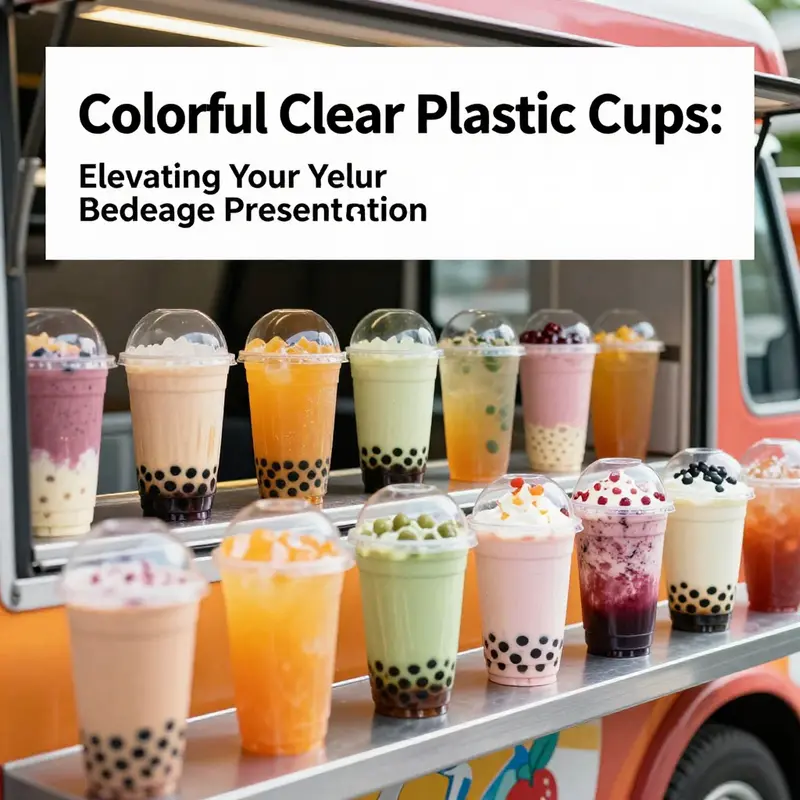
Colorful clear plastic cups represent the ideal blend of visibility and vibrancy, making them an excellent choice for businesses in the beverage and food sectors. Whether you run a bustling bubble tea shop, a beverage chain, or a food truck, these cups can elevate your service and branding strategies. This article delves into the essential elements that make these cups appealing, their applications across various markets, the manufacturing processes that create them, and their environmental impact. Each chapter serves to provide insight into how integrating colorful clear plastic cups can not only beautify your presentation but can also meet modern consumer demands and environmental standards.
null

null
null
null
Crystal Color, Clear Form: The Engineering Behind Colorful Clear Plastic Cups

Colorful clear plastic cups occupy a curious niche in modern beverage presentation. The paradox of “clear” and “colorful” is resolved not by abandoning one trait but by orchestrating a sequence of design choices that preserve optical clarity while inviting color to play a supporting role. In practical terms, a transparent cup becomes a stage for light, with color arriving through the base or handle, through a printed pattern on the surface, or through a subtle gradient that shifts as the cup is filled. This is not mere ornamentation. It is a deliberate fusion of material science, precision manufacturing, and branding strategy that makes a seemingly simple object—an everyday cup—part of a visual experience. At its core, the effort rests on two intertwined pillars: the choice of base polymer and the controlled introduction of color, whether inside the resin or on the surface, so that the cup remains clear where the beverage is meant to be visible while carrying vivid color where attention is meant to land.\n\nThe journey begins with materials. Transparent thermoplastics such as PET (polyethylene terephthalate), PS (polystyrene), and PMMA (acrylic) are the usual starting point for these cups. Each brings different optical properties, stiffness, heat tolerance, and environmental footprint. PET is prized for its high clarity, strong barrier properties, and recyclability, which makes it a natural choice for cold beverages and branded servingware. Polystyrene offers glasslike rigidity and a relatively low cost, but can be more prone to surface scuffing and environmental concerns if not carefully formulated. PMMA, known for superb optical transparency and brilliance, demands rigorous moisture control and processing discipline to prevent cloudiness and internal stress that would betray the very clarity that the design aims to preserve. The common thread across all these polymers is that, while the body of the cup remains transparent, color must be introduced in a way that does not dull or dull the beverage’s appearance through haze or yellowing. This is accomplished by carefully selecting colorants and by controlling their dispersion within the resin blend. Pigments or colorants are blended into the transparent resin at precisely calibrated concentrations so that the hue is vivid yet the resin’s inherent clarity is not compromised. In high-end transparent products, manufacturers prefer high-purity resins and low-impact colorants. The goal is to achieve uniform dispersion so that neither streaks nor mottling mar the surface, which would be especially evident through the cup walls when light penetrates the beverage. When color is introduced at the resin stage, it becomes an intrinsic part of the cup’s structure rather than a later decoration, and that integration is critical for long-term colorfastness and structural integrity.\n\nFrom this foundation, manufacturing processes translate formulation decisions into real-world objects. The most common production route is injection molding, a process that blends efficiency with precision to produce parts with tight tolerances and smooth surfaces that invite the eye to linger on the liquid, not on the cup’s texture. In the standard workflow, colorized resin pellets are dried to remove moisture that could otherwise cause bubbles or haziness during melting. Drying is not a mere preliminary step; it is a vital quality control measure. Materials like PMMA are particularly hygroscopic, and residual moisture can create micro-bubbles that appear as cloudy specks once the cup is filled. Proper pre-drying temperatures and durations are essential. In many PMMA-focused processes, drying occurs around 80 to 90 degrees Celsius for several hours, depending on resin grade and pellet moisture content. If the drying step is rushed or incomplete, the risk of cloudiness increases after molding, undermining the very clarity the product promises.\n\nOnce dry, the resin is fed into the injection molding machine. The melt temperatures vary with material, but for PMMA the melt window can span a broad 210 to 270 degrees Celsius, with the caveat that the material should not be held at the upper end for extended periods to avoid thermal degradation. This constraint translates into careful control of residence time within the barrel and precise cycle timing. The mold design then plays a decisive role in determining surface quality and wall thickness uniformity. Transparent cups reveal every surface irregularity; even minor flow marks, surface bubbles, or residual stresses become visible to the naked eye when light passes through the walls. To combat these defects, mold engineers design with excellent venting to let trapped air escape and with attention to uniform cooling. Independent cavities and robust, consistent ejector systems help avoid parting-line flash that could mar the cup’s rim. The goal is a surface that is smooth, free of visible defects, and capable of withstanding the rigors of handling, washing, and repeated beverage contact.\n\nFor larger capacities or more complex geometries, a variant of the injection process known as stretch blow molding may be employed. This method starts with a preform created by injection molding. The preform is then reheated and blown into the final cup shape. The stretch and blow action help ensure wall-thickness uniformity, reduce internal stresses, and improve dimensional stability—qualities that are particularly important for cups intended to hold cold beverages for extended periods or to serve as platforms for branded, color-infused designs on the interior or exterior.\n\nColor, however, is not confined to the resin phase. The second major pathway to the “colorful” look relies on surface decoration. A clear cup can carry vibrant patterns, texts, or branding through UV printing or silk screen printing. Printing on a transparent substrate is a delicate art. Inks and coatings must be compatible with the resin and cured without compromising clarity. UV-curable inks are common for their rapid cure and strong adhesion, but the pigment selection must ensure no bleed or diffusion into the polymer during use. Screen printing offers another route for robust, opaque color blocks or precise line work. The printing process can be designed to leave the cup visually “colorful” without saturating the entire body with pigment. In practice, many designs use a clear body with color accents applied to the base, stem, or rim, creating a visual anchor that shifts with the beverage’s color and the light environment. Patterns can be layered or combined with subtle gradients to avoid overpowering the drink’s appearance while still providing distinctive branding. In some designs, a gradient or iridescent coating across the outer surface can create a rainbow-like shimmer as the light and the cup interact, producing a premium effect that draws consumer attention without sacrificing transparency.\n\nThe resulting cup may feature a transparent body with a colored base or handle, a pattern printed on the exterior, or a combination of both. The design logic is straightforward: color is used to attract attention and communicate a brand message, while the cup remains clear enough to showcase the beverage and its natural hues. When executed well, the color appears deep and even, with no graininess or clouding, and the color fastness endures through repeated use, washing, and exposure to cold beverages or ice.\n\nQuality control in this space is a continuous, integrated effort. The brightest risk in a transparent product is a defect that becomes visible precisely because light can travel through the material. Flow marks, bubbles, cloudiness, and residual stress lines are not mere aesthetics; they indicate processing conditions that could compromise strength or appearance under real-world conditions. Drying, melt temperatures, residence times, mold venting, and cooling rates must be calibrated to align with the resin’s properties and the intended end-use. The process window is tight: too little drying invites bubbles; too much heat or extended residence time invites degradation; inconsistent molding can create surface anomalies that ruin the perceived clarity. Operators monitor temperatures in the barrel and mold, control injection speed to minimize shear-induced stresses, and ensure ejection is clean to avoid nicking the rim, which could affect usability and aesthetics. For white or colored bases and handles, pigment migration into the main wall is a potential risk if material compatibility is not carefully managed. The dispersion of pigments and the interfaces between dyed and clear zones demand precise formulation and robust test protocols to ensure that every cup meets the same standards of clarity and color uniformity.\n\nBeyond the technicalities, the strategy behind colorful clear cups is increasingly tied to consumer perception and brand storytelling. A cup that remains visually transparent invites the beverage to take center stage, while color provides a cue about the product’s mood, season, or company identity. The color accents can signal flavor profiles to memory, cueing expectations about what is inside without obstructing the view of the liquid. In celebration settings, branded patterns on clear cups can complement the theme, while the clarity of the cup communicates cleanliness and quality. The balance between color and clarity is delicate; the goal is to harmonize visual intrigue with practical function. A well-executed design does not overwhelm the drink or the table setting but rather elevates the overall presentation, leaving room for the beverage’s color to play with the light and for the user to see the liquid’s true color in different lighting conditions.\n\nFrom a materials and process perspective, the choice of color strategy often depends on the intended use. For cold drinks, PET cups with color accents or printed graphics are well suited due to PET’s clarity and resilience to the cooling and condensation typical of iced beverages. For hot beverages, PS or certain PMMA formulations might be preferred for higher heat tolerance, but colorants and coatings must be chosen with care to avoid brittleness or haziness under temperature cycling. Environmental considerations increasingly influence decisions as well. Recyclability and end-of-life handling remain important; the compatibility of pigments and coatings with recycling streams is a factor in material selection. Designers and manufacturers continuously seek colorants with low environmental impact that do not interfere with downstream processing or the clarity of the final product.\n\nThe practical example of a color-infused clear cup in use resonates in the world of event catering and hospitality, where a single cup can carry a message as effectively as a menu. When the color is integrated into the resin, the effect is lasting and cohesive, but when the color is applied as a surface print, it offers flexibility to refresh branding with seasonal campaigns without changing the core cup design. The choice between these approaches is not merely aesthetic; it can define production costs, lead times, and the ease with which a cup can be produced at scale while maintaining a consistent appearance across millions of units. For readers who want a concrete sense of how these design principles translate to real-world choices, consider the kind of clear cup that is often used for desserts and pastries in social and celebration settings. For an example of that form, with a focus on clear visibility and an emphasis on the edible contents, see clear cake cups for desserts. The link below points to a shape and presentation that echo the same underlying principles discussed here: https://ecocupbowl.com/product/clear-cake-cups-transparent-cupcake-muffin-packaging-dessert-slice-container-for-weddings-birthdays-parties-bakery-dessert-bowl-for-fruit-pastries/.\n\nIn summary, the manufacturing of colorful clear plastic cups is not just about adding pigment to a resin. It is a careful orchestration of material science, processing discipline, and decorative technique designed to preserve crystal clarity while inviting the power of color to enhance perception, branding, and consumer delight. The interplay between resin color, surface decoration, and structural design yields a product that can be both visually striking and practically reliable. The industry continues to refine methods—whether through advances in pigment dispersion, more consistent molding cycles, or smarter surface treatments—that push the boundaries of what a transparent cup can communicate. It is a subtle but influential arena where aesthetics meet engineering, and where a seemingly simple object carries an entire narrative inside its clear walls. The future holds even more nuanced control of color optics, with coatings and digital printing evolving to deliver sharper patterns, more durable inks, and even more precise control of how color interacts with light and beverage, all while preserving the essential clarity that defines the cup’s purpose.\n\nFor readers seeking deeper technical grounding on one of the core processing steps—specifically, the injection molding conditions for transparent resins and the handling of colorants in a high-volume regime—the broader literature on PMMA processing provides an essential foundation. A detailed technical reference on PMMA injection molding can be found at the following external resource: https://www.plasticstech.com/technical-resources/technical-guides/pmma-injection-molding-guide/. This resource expands on drying, melt behavior, mold design considerations, and the nuanced ways in which processing parameters influence clarity and color uniformity, complementing the practical overview presented here and offering a pathway to even more precise control in production environments.
Bright Yet Burdened: The Environmental Footprint of Colorful Clear Plastic Cups and the Road to Sustainable Refreshment

Colorful clear plastic cups captivate the eye with a clarity that preserves the appearance of the beverage while adding a flash of color through bases, handles, or printed designs. This juxtaposition—transparency paired with vivid coloration—drives consumer appeal in many beverage settings. Yet behind the visual appeal lies a web of environmental considerations that challenge sustainability goals. The chapter that follows moves through the lifecycle of these cups, tracing how the choice to enjoy a visually striking, clear container can ripple through ecosystems, waste streams, and markets. It does so not as a call to halt color or clarity, but as an invitation to understand tradeoffs, appreciate design opportunities, and imagine pathways that reconcile aesthetic value with planetary limits. The narrative unfolds with a focus on the most common materials and processes, then broadens to the broader system of packaging, recycling infrastructure, and consumer behavior that ultimately determines the cups’ ecological footprint.
Colorful clear plastic cups are frequently made from polyesters and polystyrene, materials derived from fossil fuels that demand energy-intensive manufacturing. The production phase consumes significant electricity and heat, and it is tied to greenhouse gas emissions that contribute to climate change, as well as to potential releases of pollutants if effluents are not properly treated. The ecological cost of the raw materials starts well before the first cup is formed; it is embedded in the extraction, refinement, and polymerization steps that create the resin backbones. In many facilities, the energy mix includes fossil-derived energy, which tightens the link between consumption patterns and emissions. The environmental accounting becomes more nuanced when considering water, air, and soil impacts linked to manufacturing. Wastewater can pose risks to aquatic ecosystems if not adequately treated, and the presence of microplastics in effluents has drawn attention to downstream environmental contamination. Even when processes strive for high standards, the sheer scale of production for disposable cups magnifies environmental exposures across plant boundaries, river basins, and regional air quality.
Beyond the factory gates, the life of colorful clear cups is defined by their commonly single-use design. The convenience that makes them attractive for events, takeout, and on-the-go consumption also means a rapid turnover of cups in consumer spaces. This single-use orientation compounds waste generation and littering in urban and natural environments alike. The residue left after consumption can complicate end-of-life management, especially in places where waste streams are fragmented or under-resourced. Food residues can hinder recycling efficiency, triggering a cycle of contamination that reduces the quality and value of collected plastics. When cups are attempted to be recycled, the color additives, surface treatments, and any printed graphics can affect the recyclability of the base resin. The result is often downcycling, where the collected material yields products of lower quality and diminished performance, rather than being reintroduced into the same high-value stream. Downcycling, in effect, truncates circularity and increases the environmental footprint per use.
Recycling challenges are intensified by the very visibility that makes colorful prints appealing. The addition of colors, logos, or patterns through printing technologies can complicate separation and sorting at recycling facilities. While some streams are equipped to manage a range of colors and finishes, others struggle to maintain material integrity after multiple cycles of washing, collecting, and processing. The presence of coatings or inks can introduce contaminants or reduce the mechanical properties of recycled resin. In practice, these variables mean that the apparent recyclability label does not always translate into robust, end-to-end recovery in real-world systems. The lifecycle assessment for disposable cups often shows a disproportionate climate-change impact and resource depletion when compared with more sustainable packaging alternatives.
What does this mean for a consumer who desires both vibrant presentation and responsible stewardship? It suggests a need to rethink design choices, not to abandon color or clarity, but to layer them with strategies that improve end-of-life outcomes. One path is to pursue printing methods that minimize environmental tradeoffs. For instance, silicon-based or UV inks can create durable, vivid surfaces on transparent bodies while allowing for easier separation during recycling, provided the process aligns with local facilities. Another approach is to optimize the base material and incorporate post-consumer recycled content where feasible, increasing the proportion of recycled resin in new cups. The design challenge then becomes balancing print fidelity, clarity, and color stability with recyclability. Coatings or barrier layers that prevent seepage without compromising the ability to recycle are continually evolving areas of research and practice. The ultimate aim is to preserve the beverage’s visibility while ensuring the container can rejoin a circular economy rather than a linear waste stream.
A broader systems view highlights additional levers for improvement. Biodegradable or compostable alternatives—such as plant-based polymers or cellulose-based materials—offer potential reductions in long-term persistence in the environment. However, these options are not universal remedies; they require industrial-scale composting facilities to perform as intended. In many regions, such facilities are scarce or unevenly distributed, rendering some “bio-based” cups ineffective at achieving true environmental benefits. Even when compostable cups are disposed of properly, improper handling or local conditions can negate expected advantages. This underscores a central theme: sustainability is not a property of a single material or product, but of the entire chain—from feedstock and manufacturing to distribution, use, and end-of-life infrastructure.
In the near term, the industry can pursue several interlocking strategies to alleviate environmental burdens without discarding the visual appeal that consumers expect. First, there is the option to enhance recyclability through material engineering and process integration. By selecting polymers that are more amenable to mechanical recycling and by designing cups to minimize color variability across batches, manufacturers can reduce downcycling risk and improve the value of recycled resin. Second, better end-of-life infrastructure remains essential. Public investment in curbside and on-site recycling collection, coupled with standardized labeling and clear consumer guidance, helps ensure that a higher fraction of cups are diverted from landfills. Third, consumer education matters. When people understand how to dispose of cups properly—whether through recycling streams or through composting channels that exist in their region—they can contribute to higher recovery rates. The behavioral shift is as critical as the technological one, because a well-designed recycling system can only realize its potential if people know how to participate.
The search for improvements must also acknowledge the broader environmental footprint associated with color and clarity. The visual trick of color can be pursued in a way that reduces material usage or enhances reuse. For instance, using printed patterns that require less substrate ink or selecting inks and finishes with lower toxicity and easier separation in sorting streams can mitigate some negative effects. In systems where reuse is feasible, designers might explore durable, reusable glass or high-quality polycarbonate alternatives for special events, thereby reducing single-use plastic demand. Still, the reality remains that many contexts rely on disposables for safety and convenience, especially in food service. The question then becomes how to reconcile the practicality of disposables with the community’s long-term stewardship goals.
From the guidance perspective, industry stakeholders and policymakers can play a crucial role in shaping a more sustainable trajectory. Extended producer responsibility schemes, mandatory reporting on environmental metrics, and accessible recycling data can empower brands to make informed decisions. Local and regional authorities can drive investment in recycling facilities that are capable of handling mixed plastic streams and color-rich prints. Such infrastructure upgrades would reduce contamination and improve the quality of recycled material, enabling higher-value reuse. The interplay between policy, industry, and consumer behavior is not a one-time fix but a dynamic process that requires continuous monitoring, feedback, and adjustment. In this context, the aesthetic value of colorful clear cups becomes a catalyst for systemic improvements rather than a mere consumer preference.
It is also worth considering the role of life cycle thinking in consumer choices. A useful mental model is to compare the environmental cost of a single-use cup with the alternatives—whether that means reusing a beverage container multiple times, switching to a recyclable or compostable option, or selecting packaging with a lower overall footprint. The calculations extend beyond the cup itself to the beverage, the service model, the energy consumed during preparation and delivery, and the post-consumer outcomes in the local waste system. When such holistic thinking guides product development and procurement, the colorful clarity that makes a cup attractive can coexist with responsible waste management. The goal is not to dampen creativity but to channel it toward designs that facilitate recovery, reuse, and responsible disposal.
Alongside this, the practical details of any given market influence outcomes. In places with well-established recycling streams and robust consumer education, colorful clear cups can be integrated with relative efficiency. In other regions, color, coatings, and prints may complicate separation strategies, leading to higher rates of material loss and downcycling. The divergent realities across geographies call for adaptable solutions. Industry players, researchers, and city program managers need to collaborate to tailor approaches to local capabilities, rather than prescribing a one-size-fits-all model. In all cases, transparency about material composition, end-of-life options, and performance in real-world recycling scenarios is essential to building trust and enabling informed decisions.
To bridge the gap between aesthetic priorities and environmental responsibility, several practical steps can be undertaken by designers and specifiers. First, prioritize high-recovery materials and maximize recycled content without compromising safety and taste. Second, explore graphic techniques that maintain color appeal while reducing material incompatibilities with recycling streams. Third, design for modularity and reuse where feasible, offering attractive but resilient options for venues that host repeated events. Fourth, champion better labeling and consumer guidance, clarifying how to recycle or compost cups within a given system. Each of these steps contributes to a more coherent lifecycle that aligns with broader sustainability aspirations.
In this sense, the chapter on environmental impact and sustainability of colorful clear plastic cups is not a closing argument but a call to action for a shared, iterative process. Brands can explore smarter printing and material choices that preserve visibility and vibrancy while easing recovery. Municipalities can invest in sorting technologies and standardized streams that accommodate color and coatings. Consumers can participate through mindful disposal and, where possible, through reuse models. The combination of design, policy, and behavior—each informed by data and ongoing assessment—holds the promise of transforming a visually striking cup from a symbol of convenience into a participant in a more circular economic system.
For readers seeking deeper context beyond this chapter, a practical overview of the lifecycle implications and comparative considerations of disposable cups offers additional insight into how color, clarity, and sustainability intersect in everyday packaging. External research on environmental and littering impacts provides a broader, validated frame for understanding where cups fit within global waste and resource-use patterns. External resource: https://www.researchgate.net/publication/395872106Environmentalandlitteringimpactsofdisposable_cups
Internal linking note: industry discussions and case studies often point toward packaging platforms that emphasize eco-friendliness and reusable or recyclable design. A representative resource that outlines the potential for greener packaging configurations—while staying focused on practical, scalable options—can be found in this packaging-focused example: eco-friendly-disposable-3-compartment-food-grade-packaging-box-for-fast-food-high-quality-takeout-boxes-for-fried-chicken-french-fries-packaging. This reference underscores how color and clarity can be integrated with sustainable design choices that support higher recovery and reuse in real-world settings.
The chapter ultimately argues that the appeal of colorful clear cups can be harmonized with environmental stewardship, but only when the design is paired with robust end-of-life systems, responsible material choices, and informed consumer participation. It invites readers to view these cups not merely as decorative vessels but as part of a broader packaging ecosystem whose health depends on collaboration, transparency, and continuous improvement. As markets evolve and infrastructures adapt, the goal remains to preserve the visual promise that makes beverages inviting while reducing the ecological footprint associated with their containers. The path forward rests on shared accountability among manufacturers, retailers, regulators, and consumers, each contributing to a cleaner future that still enjoys the bright, clear, and colorfully designed experiences that define modern beverage service.
Final thoughts
Colorful clear plastic cups encompass a unique blend of functionality and aesthetic appeal, making them a valuable asset for any business in the food and beverage industry. Their vibrant designs can enhance customer engagement, while their versatile applications cater to various events and daily operations. By understanding the design, market demand, manufacturing processes, and sustainability factors associated with these cups, businesses can make informed decisions that not only elevate their brand but also resonate with environmentally conscious consumers. Embracing this innovative packaging solution may just be the colorful touch your service needs.