
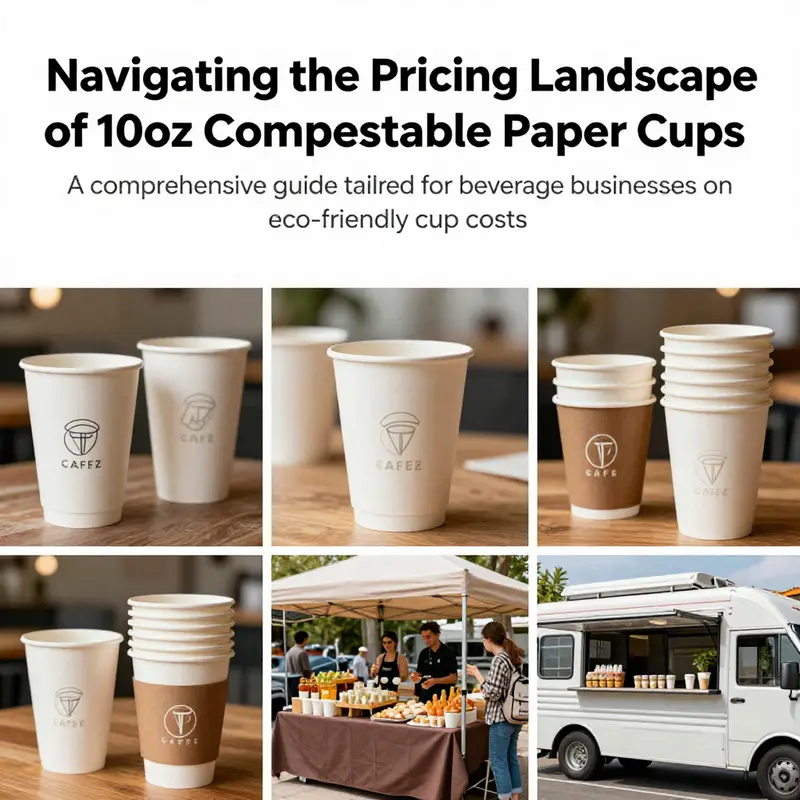
As environmental consciousness rises, beverage businesses, including bubble tea shops and catering services, are seeking sustainable options for their customers. One such option is the 10oz compostable paper cup. Understanding the pricing landscape for these cups is crucial to budget planning and operational efficiency. This article delves into the wholesale and retail pricing structures while highlighting the environmental and economic factors influencing these costs. Each chapter offers valuable insights to help you make informed purchasing decisions that align with your business goals and sustainability commitments.
Pricing Cascades in 10oz Compostable Cups: From Trial Packs to Bulk Sustainability
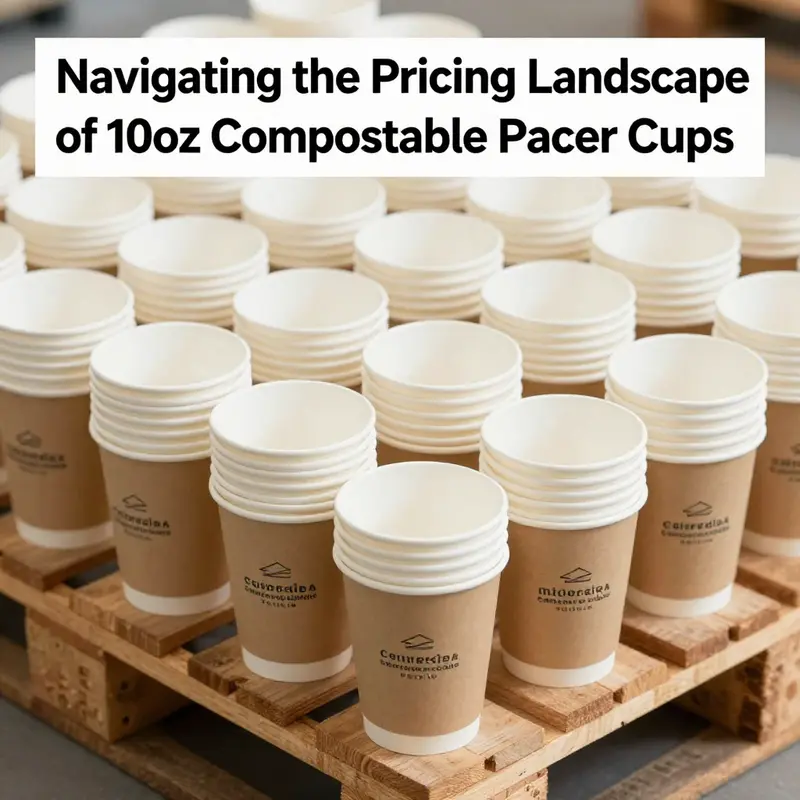
Price in the market for 10oz compostable paper cups is not a fixed number, but a moving target that shifts with order size, material specifications, certifications, and logistics. For anyone planning to serve hot or cold drinks in environmentally friendly packaging, understanding these price dynamics is essential to budgeting, forecasting, and negotiating with suppliers. The landscape presents a spectrum of benchmarks that illustrate how economies of scale, coating technologies, and certification standards intersect to shape the bottom line of a simple, everyday cup. On one end of the spectrum are wholesale quotes that reward high volumes, while on the other end are trial-oriented or small-batch options designed for pilots, fundraising events, or market testing. Reading these numbers correctly means translating per-unit costs into meaningful project budgets, whether you’re outfitting a café for a grand opening, a corporate event, or a pop-up that emphasizes sustainability.
In the late 2020s, several widely cited benchmarks have persisted in illustrating the price ladder. Wholesale pricing, typically tied to very large orders, has historically hovered around the mid-cent range for basic 10oz compostable cups when produced en masse. Reports from late 2025 show that large-quantity orders—50,000 units or more—could be quoted around two cents per cup for certain aqueous biodegradable references. This kind of price level demonstrates the leverage that mass production and streamlined supply chains can deliver to buyers who commit to substantial quantities over extended periods. Yet, this bulk relief comes with trade-offs: longer lead times, minimums that can strain cash flow, and the need to forecast demand months in advance. For organizations evaluating their annual beverage program, the wholesale tier can translate into meaningful savings, but only if the purchase aligns with predictable consumption and storage capacity.
Moving to mid-volume needs, quantities in the 10,000 to 99,999 range typically command higher unit costs. In this tier, prices around seven cents per cup have been observed for cups with a Kraft-paper base and a PLA coating. This combination—bio-based paper with a compostable coating—often positions the cups as genuinely biodegradable in appropriate industrial settings, while still offering reliable leak resistance for hot beverages. The seven-cent figure is more than a number; it signals the added value of a more sophisticated coating system and the associated processing that ensures leak resistance and heat performance, which a café cannot compromise if it promises a premium drink experience. For many businesses, mid-volume orders strike a balance between cost efficiency and flexibility, enabling campaigns that require consistent supply for several weeks or a month while avoiding the risk of oversupply or stockouts associated with larger prices and longer lead times.
For smaller pilots, trials, or retail-bulk purchases, the market presents a different price reality. A common example shows packs of 1,000 cups priced near $109.99, or roughly 11 cents per cup. This tier often reflects standard, no-frills configurations designed for short-run trials, menu pilots, or small events where the objective is to validate consumer response, color, and branding ambitions without committing to a larger production run. The small-batch approach is not merely a budgetary convenience; it also serves as a risk-control mechanism. Brands that want to test a new beverage, wrapper color, or lid system can evaluate performance in real-world conditions without tying up capital in a bulk order that could become obsolete if demand changes or if the campaign is curtailed.
Beyond these tiered references lies a crucial reality: the actual price you pay for 10oz compostable cups can swing within a single supplier’s catalog. Some suppliers further reduce basic unit costs by offering samples at extremely low prices, sometimes as low as a penny per cup, which can be a smart way to test printability, surface finish, and overall fit with your chosen lids and sleeves. These small sampling opportunities are not substitutes for a formal quote, but they enable a practical via negativa—an opportunity to verify dimensions, stiffness, leak resistance, and compostability claims before committing to a larger spend. In practice, this means that any procurement plan should build in a testing phase to avoid misalignment between expected performance and real-world results.
The numbers above provide a useful framework, yet a newer data point emerged in early 2026 that deserves particular attention. A detailed supplier listing published on January 19, 2026 reported a wholesale-like price of about 4.5 cents per cup for a 10oz double-wall, biodegradable cup. This figure sits between the mid-volume and the lower bulk tier, suggesting that the most recent market conditions reward certain product configurations—specifically, double-wall construction and biodegradability features—while still recognizing the value of scale. The source also emphasizes customization and versatility: the cups can be adapted for hot drinks, cold drinks, tea, or other beverages, with the same materials maintaining food-contact safety and compostability credentials. This snapshot highlights an important dynamic: product specifications can push prices up or down, but the ability to customize often adds long-term business value by supporting branding, customer experience, and category differentiation.
The juxtaposition of these price signals—bulk discounts, mid-volume stability, small-batch testing, and the 2026-ish price for specialized double-wall cups—paints a nuanced picture. It is not enough to simply compare per-unit costs across suppliers. Buyers must align the cup’s technical specifications with anticipated usage, branding goals, and sustainability commitments. For example, a café chain seeking a premium experience might justify a higher unit price if the cups carry full-color, heat-resistant branding and superior insulation. In contrast, a community event with a short duration and a need for budget predictability may prioritize lower unit costs and a straightforward, no-frills cup that still meets compostability standards.
These considerations extend beyond the cup itself. The materials and processes used in making compostable cups—paper stock, the nature of the inner coating, adhesives, and the compostability certification—contribute to the price. Aqueous biodegradability, Kraft-based substrates, and PLA coatings represent different performance and environmental trade-offs. Each option has implications for consumer perception, disposal infrastructure, and regulatory compliance. For operators who must communicate sustainability to customers, these differences matter as much as the price. If a cup’s certification aligns with a local municipal composting program, for instance, the value proposition strengthens, potentially offsetting a higher per-unit cost via a clearer end-of-life pathway and enhanced brand integrity.
As with any packaging choice, the decision calculus for 10oz compostable cups benefits from a practical, scenario-based approach. Consider a small café planning a two-week promotional period featuring a signature beverage served in compostable cups. If the café orders 2,000 cups for the promotion, the price could range from roughly two cents to around ten cents per cup depending on the chosen configuration and supplier incentives. If the same café scales to 50,000 cups for a seasonal push, it could secure a more aggressive price point near or below five cents per cup, given favorable terms and the absence of rush fees. In between, a mid-sized order of 20,000 to 30,000 cups might sit in the seven-to-nine-cent range, delivering a balance between cost control and the flexibility to adapt to demand variations.
To illuminate the impact of these numbers in real terms, imagine a practical budgeting exercise for a mid-market venue that expects to serve 25,000 beverages over a month-long campaign. If the cups are procured at seven cents per unit, the base cost would be $1,750. If the venue requires double-wall insulation, adding approximately two to three cents per cup in some configurations, the total could push toward around $2,000 to $2,200. If customization and branding are added, the price could rise further, but this investment would be channeled into customer experience and brand recall, potentially translating into higher sales or loyalty returns that offset the higher packaging cost over time. Conversely, a bulk purchase of 50,000 cups at two to three cents per cup—depending on the supplier and the exact specification—could drop the pre-tax spend to a range of $1,000 to $1,500. Such a shift can dramatically alter cash flow planning, promotional ROI, and inventory management. In other words, the price per cup matters, but the total cost of ownership—considering branding, disposal, and consumer response—often tells the more meaningful story for a business.
Another angle worth considering is the supplier’s ability to deliver quickly and reliably. With compostable cups, lead times can be longer than for conventional cups, especially for customized runs where branding or special coatings are requested. A prudent procurement plan will factor in not only the per-unit price but also the logistics. Shipping costs, import duties, and transit times can tilt the cost-benefit analysis, especially for businesses with tight event windows or seasonal campaigns. In some cases, a smaller quantity with a shorter lead time might be preferable to a larger order that would arrive late or require expensive expedited shipping. The lesson is clear: price transparency should be paired with clarity on specifications, lead times, and post-purchase support.
To support the practical decision-making process, it is wise to test a few variants before committing to a large rollout. Some suppliers offer samples priced at very low rates, sometimes down to a penny per unit, enabling buyers to verify sizing, insulation, print quality, and compatibility with lids and sleeves. A well-structured testing phase helps ensure that the chosen cup meets both performance and sustainability expectations, reducing the risk of costly repricing, supply interruptions, or brand mismatch during a critical campaign. For businesses testing waters, anchors like mid-volume pricing can serve as a starting point, guided by real-world feedback from customers and partners who interact with the brand in-store or at events.
For those who want to explore supplier diversity while keeping a steady focus on sustainability, one practical step is to examine the broader packaging ecosystem. The decision to use compostable cups often intertwines with the broader supply chain of takeaway packaging, including sleeves, lids, and secondary packaging. A cohesive approach can yield synergies in color, texture, and messaging, which ultimately reinforces the sustainability narrative and can justify a slightly higher unit cost through improved brand storytelling and waste reduction in customers’ hands. As a result, procurement leaders might pursue a modular strategy: secure bulk prices for core events, reserve mid-volume terms for seasonal promotions, and engage with suppliers that offer dependable sample programs to validate fit with lids, sleeves, and branding elements. The overarching goal is to harmonize price, performance, and sustainability into a coherent packaging strategy that strengthens the brand’s value proposition.
Across these dimensions, one practical takeaway remains constant: the price of a 10oz compostable cup is a function of more than size. It depends on the product’s architecture, from the base paper stock to the inner coating, from printability options to compostability certifications, and from production scale to shipping logistics. For entrepreneurs and operators, this means building a pricing model that recognizes both the qualitative benefits of compostable packaging and the financial realities of supply and demand. It also means maintaining a healthy skepticism toward a single number that claims to be the definitive price. Instead, cultivate a range of quotes, insist on clear specification details, and request sample runs to confirm that performance aligns with expectations. In the end, the most successful pricing strategy aligns with a business model that uses sustainable cups not just as a cost, but as a differentiator that can attract customers who value responsible packaging and a consistent brand experience.
For readers who want to explore supplier options more directly as they plan their next project, a practical starting point is to explore supplier catalogs that emphasize compostable cup offerings and customization options. This can help illuminate the available non-negotiables—such as leak resistance, heat tolerance, and compostability certifications—while also highlighting the potential for color, texture, and logo integration that can elevate a campaign. And for those who wish to examine a concrete example of the supplier landscape, consider looking at one widely cited catalog that lists 10oz cups with a broad range of biodegradability and customization features. This resource provides a window into the kinds of specifications that buyers typically specify and the corresponding price bands that emerge from those choices. For additional context, you can consult a sample product page that demonstrates how a supplier positions 10oz compostable cups across different capacity tiers and coating options, showing how price curves shift with quantity and material composition. It is also valuable to see real-world instances where a business uses these cups to tell a sustainability story through branding and customer experience. The combination of price awareness, product knowledge, and a measured testing approach can help any organization navigate the complexities of the 10oz compostable cup market with confidence.
As a practical nod to the broader ecosystem, this chapter also points readers toward a relevant supplier resource that demonstrates the kind of product pages and tiered pricing that can help buyers compare options without sacrificing critical details. The linked resource illustrates how a supplier positions a 10oz cup within a family of biodegradable options, how customization is framed, and how the product’s compostability credentials are communicated. By examining such pages, buyers can sharpen their ability to read between the lines of a price quote, discerning which features truly matter for their use case and which are marketing extras. This kind of diligence is essential when price quotes vary not only by quantity but by the specific design and processing choices that distinguish one cup from another.
To connect the discussion back to practical procurement, consider the following point of reference for supplier exploration: disposable-paper-cups-kraft-paper-cups-coffee-milk-cup-paper-cup-for-hot-drinking-party-supplies-8-10-12-16oz-cups. This internal link serves as a gateway to a catalog that showcases the types of cups commonly used for hot beverages, including variations in stock, coating, and branding readiness. It is not a substitute for a formal procurement process, but it can help teams visualize practical configurations and start conversations with suppliers about the trade-offs that matter for their project.
External resource: https://www.alibaba.com/product-detail/Custom-Biodegradable-8oz-10oz-12oz-16oz_1600573184532.html?spm=a2700.140903.0.0.7e3f1c7bZKvDQw
From Pennies to Premiums: Navigating the Price Landscape of 10oz Compostable Paper Cups in a Sustainability-Driven Coffee Era
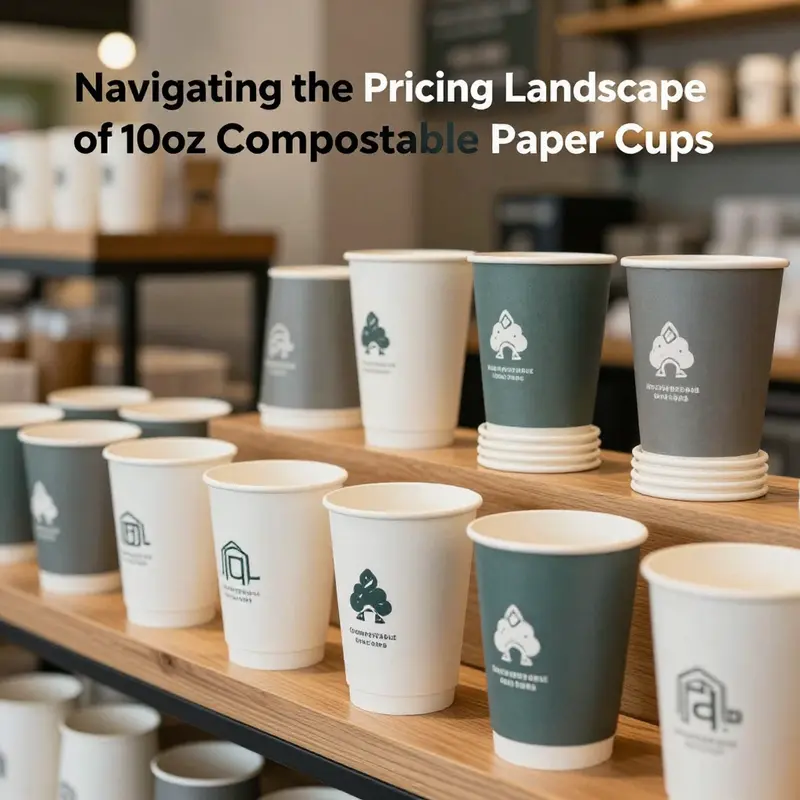
The price tag on a 10oz compostable paper cup is more than a financial figure; it is a narrative about materials, manufacturing decisions, and the growing expectation that packaging should be as responsible as the product it holds. In a market where cafes chase efficiency and sustainability panels emphasize circularity, the per-cup price becomes a proxy for a complex web of choices. This chapter examines how retail pricing for 10oz compostable cups takes shape, weaving together wholesale references, volume thresholds, and the nuanced premium that accompanies features like printing, insulation, and eco-friendly coatings. It is a story not of a single number, but of a ladder of costs that bend with volume, design, and the logistical choreography required to bring a compostable cup from factory floor to customer hand.
At the base of the pricing spectrum sits the bulk equation. For plain cups with aqueous biodegradable coatings, the price often lands around $0.02 per unit when orders reach 50,000 pieces or more. This base rate is a function of scale: a standardized substrate, widely available coatings, and the efficiencies that come from running thousands of cups through the same lines. The low price point reflects the industry’s ability to squeeze procurement risks and material variability into a uniform, high-volume flow. It also presumes that the cups are unprinted, with no extra features or embellishments. In other words, the bare-bones version of a compostable cup can be valued primarily for functional performance and reliable supply rather than for branding or premium feel. For buyers, this tier is the starting line—an option for those who want to test sustainability credentials without committing to costly customization or higher-end formats.
As the order quantity shifts into the mid-range, the economics begin to tilt. When a buyer is purchasing in the bracket of 10,000 to 99,999 units, the per-unit price typically sits around $0.07. This tier often corresponds to cups with a more robust coating, frequently a PLA variant, designed to balance compostability with barrier protection and leak resistance. The coating choice matters beyond the compostability label; it shapes handling, shelf life in the product stream, and performance under heat. The jump from the ultra-bulk tier to this middle tier is not simply about more units; it is about supporting a more demanding specification set. The economics acknowledge that adding a coating—especially one designed to pair with biodegradable end-of-life outcomes—entails material costs, process controls, and testing to ensure performance is consistent across thousands of pieces. In practical terms, this tier suits mid-sized cafes, regional chains, and event planners who seek a reliable, environmentally friendlier option without entering the high-volume premium end.
For smaller operators, testing, or early-stage trials, the price landscape offers a different route. A typical pack of 1,000 units might be priced around $0.109 per cup, or roughly $110 for a thousand cups. This level of packaging is aimed at pilots, pop-ups, or seasonal campaigns where the buyer wants tangible experience with minimal risk. It allows decision-makers to simulate real service conditions, gauge consumer reaction to compostable serviceware, and measure compatibility with existing cup sleeves, lids, or drink formats. The smaller batch price is more forgiving in terms of capital expenditure but comes with trade-offs in unit cost, which is a natural consequence of not leveraging the same scale. In some cases, suppliers also offer sample cups priced as low as $0.01 per unit—a tempting option for testers who need to verify printing outcomes, leakage resistance, or heat retention on a limited budget. The practical implication is clear: the journey from trial to mainstream adoption is often paved through a sequence of price steps that gradually unlock higher-performance features.
If a brand chooses customization, the price scenery shifts again, and this is where the economics become highly strategic. Logo printing, achieved via offset or flexo printing, brings its own set of costs. Offset printing typically requires a minimum order quantity of 50,000 cups, while flexo printing can demand 100,000 units. The exact price impact of printing can vary with design complexity, color coverage, and print fidelity. In many cases, a premium of roughly $0.01 to $0.05 per cup is added to cover plate setup, color matching, and production discipline that guarantees consistent print across thousands of pieces. The result is a tiered pricing ladder: plain, unprinted cups sit at the bottom and drawn-in branding lifts the per-unit cost, sometimes with a non-linear step if multi-color or multi-panel branding is involved. For many beverage operators, this differentiation is justified by brand visibility and the ability to create a uniform customer experience that reinforces sustainability messaging. It is not merely about adorning a cup; it is about aligning the customer touchpoint with a company’s broader environmental commitments.
Beyond the branding story lies the physical architecture of the cup itself. A double-wall construction, which features an inner and outer wall separated by an insulating gap, is a notable upgrade from single-wall designs. The double-wall configuration improves insulation, reduces heat transfer to the hand, and conveys a perception of premium quality. The material weight in this configuration—often described in terms of combined thickness around 260gsm for the inner wall and 250gsm for the outer layer—reflects additional material usage and manufacturing precision. The price impact of this structural enhancement is a deliberate premium. Operators in busy coffee shops or quick-service restaurants may justify the extra cost because the improved insulation can translate into more comfortable consumption experiences, extended drink enjoyment, and a lower likelihood of leaks during delivery or casual handling. End customers, influenced by the felt quality of a presentation cup and the sense of reliability it conveys, may be prepared to pay a little more for a cup that signals durability and sustainability in equal measure. The premium, in short, is not only about insulation but also about the image of a brand that prioritizes thoughtful packaging design and user experience.
Material choices and coatings are also major price levers. Aqueous biodegradable coatings are popular for their compatibility with composting streams and ease of processing. However, some buyers require additional barrier properties or grease resistance, which can nudge prices upward. The alternative coatings—such as PLA or PBS variants—carry their own price implications. While they align with compostability goals, they also entail higher material costs and sometimes more rigorous end-of-life testing. The trade-offs between a simple Kraft-based cup and a coated, high-performance design crystallize a broader tension in the market: the desire to balance accessibility with accountability. As more buyers demand verifiably compostable services, suppliers invest in certifications, testing regimes, and traceability to demonstrate that the cup can perform in real-world settings while meeting sustainability standards. The cost implications are not merely about the coating but about the entire life cycle narrative that consumers associate with the product.
Geography and supply chain dynamics further shape price and reliability. Guangdong-based manufacturers illustrate how dense manufacturing ecosystems can support competitive pricing and rapid iteration. A well-developed supplier network reduces lead times and lowers unit costs at high volumes. Yet global variables—currency fluctuations, freight rates, port congestion, and energy costs—play a significant role in pricing volatility. Buyers must anticipate these factors when negotiating terms or planning procurement, especially in a market where raw material costs can swing with feedstock markets and environmental regulations. The optimal procurement strategy often includes multi-sourcing, early supplier engagement, and the creation of buffer stock for peak periods. This approach helps stabilize total landed cost and ensures continuity of supply, which is particularly important for coffee programs that depend on consistent cup performance during seasonal spikes.
The pricing narrative also intersects with how buyers interpret value. A lower per-unit price is appealing, but not if it accompanies supply risk, inconsistent coating quality, or inadequate performance under heat and grease exposure. A higher price can, in practice, reflect a more robust supply chain, stronger environmental credentials, and tighter quality controls that deliver reliable performance across batches. Many buyers adopt bundling strategies—combining cups with lids, sleeves, or custom packaging—to improve perceived value and operational efficiency at the point of sale. When fixed costs are distributed across multiple components, the effective price per usable unit might look more favorable, while the total value proposition remains compelling. In this dynamic, sustainability becomes a strategic asset rather than a mere compliance checkbox. The most successful buyers are those who can articulate environmental benefits, demonstrate consistent performance, and offer predictable delivery windows. They secure longer-term arrangements at terms that reflect both price and reliability, rather than chasing the lowest unit cost alone.
For readers seeking a concrete pointer into double-layer designs, a dedicated product page illustrates how these cups are positioned in the market and how they compare with single-wall variants. See the double-layer paper cups page for a focused view of the options and configurations that suppliers typically offer. https://ecocupbowl.com/product/double-layer-paper-cups-8-24pcs-disposable-paper-cups-for-home-office-party-weddings-coffee-shops-supplies-milk-tea-cups/. This internal reference helps contextualize the price differentials discussed above and demonstrates how design choices translate into tangible differences in performance and perceived value.
Finally, for broader market context and listings that capture the diversity of coatings, materials, and production scales across regions, an external resource provides a consolidated view of options and price ranges. The listing highlights how suppliers categorize biodegradability, double-wall performance, and customization capabilities across markets. For deeper market listings and specifications, see the external resource: https://www.made-in-china.com/products-search/hot-products/CustomBiodegradable8oz10oz12oz16oz20ozDoubleWallPaperCoffee_Cups.html
null
null
Final thoughts
Understanding the pricing for 10oz compostable paper cups plays a pivotal role in making informed choices that not only ensure compliance with sustainability goals but also contribute positively to your brand image. Whether you are buying in bulk or ordering smaller quantities, being aware of the different pricing structures and their underlying factors will empower your beverage business to excel in an increasingly eco-conscious market. Taking advantage of sustainable options is not only about cost; it’s about making a statement towards a greener future.