

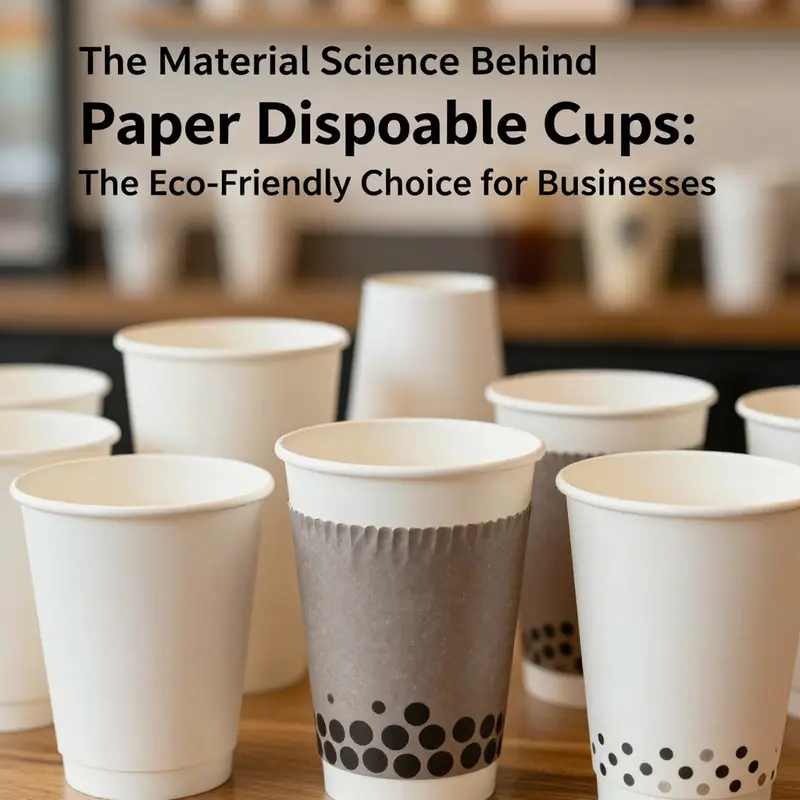
In today’s environmentally conscious society, the choice of packaging materials is more significant than ever, particularly in industries such as food and beverage, where convenience meets responsibility. This comprehensive look at paper disposable cups—a staple in bubble tea shops, restaurants, food trucks, and event planning—will delve into the material science, environmental implications, economic considerations, and the cups’ pivotal role in contemporary gatherings. Each chapter will inform stakeholders about making responsible choices while maintaining high service standards, ultimately guiding them to embrace a sustainable future in their operations.
null
null
Beyond the Brew: Tracing the Real Environmental Footprint of Paper Disposable Cups
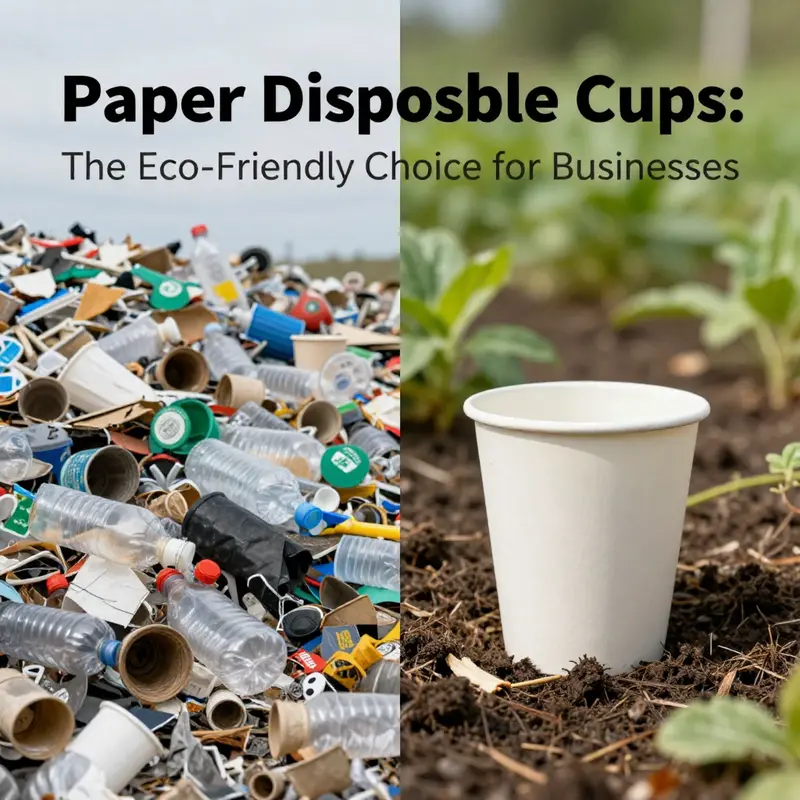
Every day, millions of paper disposable cups accompany coffee breaks, office meetings, and casual gatherings. They sit on kitchen counters, at conference tables, and in event spaces, invisible to most except for the waste bin they eventually inhabit. At first glance, a paper cup seems a modest improvement over plastic alternatives: a plant-derived material that, in theory, can decompose. Yet when we look beyond the surface, the environmental story of these cups unfolds as a lifecycle narrative—one that binds together forest management, water use, energy consumption, chemical treatments, and waste management systems. Understanding this lifecycle is essential if we want to gauge whether convenience can ever sit comfortably with planetary limits. It is not merely about what the cup is made of, but about how it is produced, used, discarded, and how society recovers or fails to recover it at the end of its brief life.
The journey begins with raw materials. Paper cups rely on fiber from trees, a resource that must be managed with care to avoid accelerating deforestation and biodiversity loss. The pulping process itself is resource-intensive, demanding water, energy, and chemical inputs in addition to the land area required to grow or harvest the fiber. Even in regions where forests are certified or responsibly managed, the aggregate impact of turnover from forests to factory floors adds up. Water use is a particularly salient dimension; it is not simply about the water that ends up in the cup, but about the water that is consumed upstream in pulp processing, bleaching, coating, and finishing. The cups also require a thin plastic lining to prevent liquid seepage and to preserve heat. This lining is typically polyethylene, a material that complicates the end-of-life story. The coating improves performance during use but makes recycling a complex proposition, because the paper and plastic layers resist easy separation and yield contaminated streams in many recycling streams.
Even before the cup meets a consumer, the production line is a cascade of decisions that shape its environmental profile. The capillary chain from wood to finished cup includes the energy mix powering factories, the transportation miles accumulated to move raw materials to mills and finished products to distributors, and the fuel choices used by processing equipment and printing operations. The result is a product that, while small in size, embodies a surprisingly large share of resource use. A growing body of evidence emphasizes that the environmental footprint of disposable cups is not merely the sum of their materials; it is the product of the entire system that enabled their production and distribution. Quantitative studies in the United Kingdom illustrate the scale vividly: the country reportedly uses well over 2.5 billion disposable coffee cups annually, underscoring the magnitude of daily consumption and the challenge of achieving meaningful reductions without changing behavior at scale. The environmental stakes extend beyond greenhouse gases to include land-use pressures and the potential for pollution through production and waste handling.
Recycling and end-of-life present perhaps the most persistent tensions in this story. The very feature that makes a cup usable—its moisture barrier and rigidity—also makes it harder to recycle. The polyethylene lining that prevents leakage remains a barrier to straightforward separation of paper from plastic at recycling facilities. In practice, this means that a large share of cups ends up in general waste streams or landfills rather than being reborn as new products. In the United Kingdom, for example, only a small fraction of disposable coffee cups are recycled. Contamination from food and beverage residues, coupled with the composite structure of the cup, hampers the efficiency of recycling streams and undermines the potential for materials recovery. These barriers persist even as local systems attempt to improve sorting, composting where feasible, and consumer education about disposal. The end-of-life story thus becomes a collective challenge: it depends on how households, workplaces, and waste managers coordinate to separate streams, clean contaminants, and invest in processing infrastructure capable of handling mixed-material items.
Beyond recycling, the fate of these cups in landfills raises further concerns. The plastic lining acts like a cloak that slows or even blocks biodegradation, extending the cup’s persistence for hundreds of years. This persistence is not a neutral fact; it translates into long-term accumulation of waste in spaces designed for disposal rather than for recovery. There is also a growing, if contested, concern about chemical leaching from coatings or inks into hot beverages. While many cups are designed for safe food contact, evolving scientific findings urge caution about the potential for trace elements or residual chemicals to migrate from packaging into drinks heated to high temperatures. A study by M. Mohery in 2025 highlights the presence of potentially toxic elements and even radiological hazards in some single-use paper cups, inviting a more nuanced debate about safety and sustainability that extends beyond recyclability alone. Even when incinerated, the emissions from burning discarded cups can include pollutants that may affect air quality, depending on local incineration technology and emission controls. Taken together, these pieces paint a more complex picture of “eco-friendliness” that rests on how the waste system handles the material after use, not merely on the material’s inherent properties.
The comparison with reusable options remains central to any honest assessment. Reusable cups—especially those constructed from durable metals or ceramics—bear a heavier upfront footprint in manufacturing, but their environmental advantages accrue over repeated use. A stainless steel tumbler, for instance, can show a carbon footprint of several kilograms of CO2, but the break-even point in terms of emissions often arrives after a modest number of uses. Once that threshold is reached, the cumulative impact of reusables can fall well below that of single-use disposables, even when accounting for washing energy and water. This insight reframes the everyday choice not as a single event of disposal but as a continuing cycle of use, cleaning, and reuse. It also begs consideration of how households and businesses structure cleaning and storage practices to maximize the lifespan of reusable options while minimizing energy and water footprints. In practice, the environmental advantage of reusables is most pronounced when they are integrated into routines that minimize single-use impulses, particularly in high-frequency settings like offices, cafés, and events where cups would otherwise be used and discarded rapidly.
The UK study and related research also underscore the broader environmental and socio-economic aspects tied to disposable cups. The scale of consumption has implications for deforestation, resource allocation, and greenhouse gas emissions that ripple through supply chains. As with many packaging questions, there is no one-size-fits-all answer. But the message that emerges from this body of work is clear: reducing the environmental burden of daily coffee and beverages requires a shift in how we design, use, and recover packaging, paired with deliberate changes in consumer behavior. Design for recyclability and for increased recovery becomes a shared responsibility among manufacturers, waste managers, policymakers, and users. The design choices embedded in cups—their materials, coatings, and labeling—can either complicate or facilitate end-of-life processing. A more circular approach would prioritize materials that can be efficiently separated and reused, while minimizing contaminants that hinder recycling or composting streams. In practice, that means continuing to explore alternative coatings or barrier technologies that maintain performance without obstructing recycling, while also expanding the infrastructure and incentives necessary for effective material recovery. In parallel, cultivating a culture that values reusables can reduce demand for single-use cups over the long term, especially in institutions and venues where beverage service is routine and predictable.
To illustrate how the packaging ecosystem currently treats disposables and to hint at potential pathways toward improvement, consider a related avenue of product design within the broader category of takeaway packaging. While the internal landscape is diverse, one can observe how concepts such as insulation and barrier properties interact with end-of-life viability. The following internal reference, while focusing on a distinct product family, echoes the same tension between usability and recyclability: disposable corrugated coffee paper cups insulated double-layered cup hot tea milk beverage cup. This example highlights how consumers and designers pursue better performance while contending with waste management realities. It also underscores the value of linking practical design choices to the realities of recycling infrastructure and consumer separation practices. disposable-corrugated-coffee-paper-cups-insulated-double-layered-cup-hot-tea-milk-beverage-cup
Ultimately, the environmental conversation around paper disposable cups is not about labeling the cup as “good” or “bad” in isolation. It is about recognizing the interdependencies among forest stewardship, manufacturing efficiency, packaging design, waste separation, and consumer choice. The lifecycle perspective calls for nuanced policies that encourage responsible sourcing and efficient recovery, as well as behavioral changes that reduce unnecessary use. For individuals, that can mean choosing reusable options when feasible, bringing a personal mug to work or events, and supporting institutions that invest in robust cleaning and refill programs. For organizations, the path forward includes rethinking service models, investing in durable, washable alternatives for high-traffic settings, and collaborating with waste management partners to optimize collection and processing of used packaging. The broader takeaway is not a single silver bullet but a spectrum of adjustments—technological, logistical, and behavioral—that collectively move the system closer to a circular model where less material becomes waste and more becomes value.
For readers seeking a broader empirical grounding on these dynamics, the UK study cited here provides a foundation for understanding usage scales, recycling rates, and environmental impact within a real-world context. It points to the gaps between perception and practice and invites ongoing research into how policy, industry design, and consumer behavior can converge to reduce the footprint of daily beverages. Further details and data can be found in the University of Southampton study: https://www.southampton.ac.uk/news/2021/04/disposable-coffee-cups-study.page
Balancing Cost, Craft, and Convenience: The Economic Landscape of Paper Disposable Cups
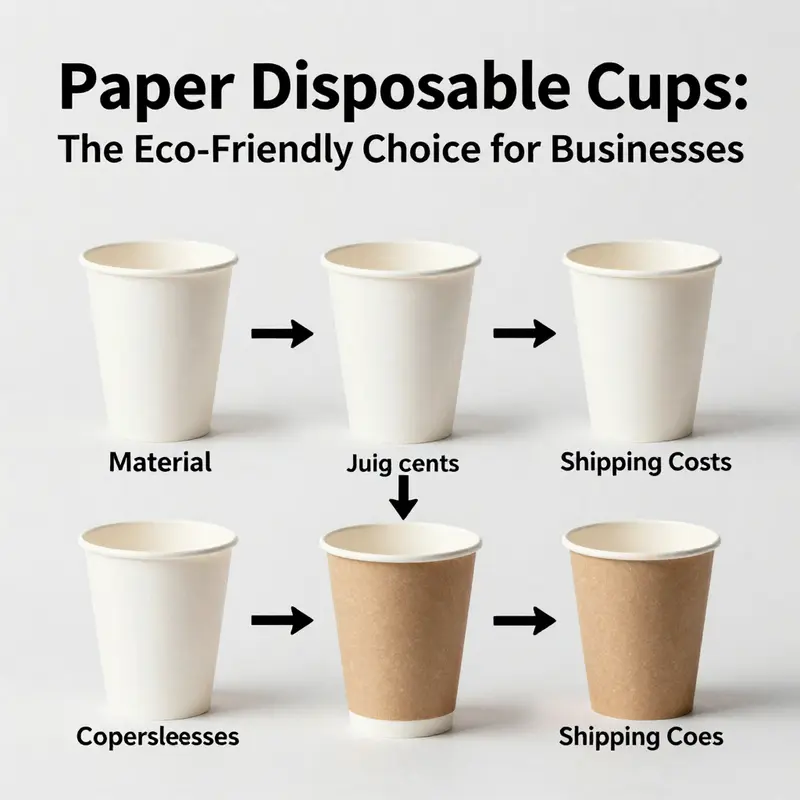
The economic story of the paper disposable cup unfolds in a quiet, persistent rhythm that mirrors the everyday grind of the businesses that rely on it. It is a story not merely of price tags and margins but of a chain of decisions that begins with raw materials and ends with a simple, everyday act: handing a cup to a customer. At its core, the economics hinge on a triad of material costs, production efficiency, and market demand, each echoing through the workflow from pulp mill to point of sale. Raw material costs form the first and most visible influence. The base stock is a graded, food-grade paper chosen for strength, absorbency, and printability. Inside, a moisture barrier—commonly a thin plastic coating—stitches together the cup’s practical performance with its cost profile. When that barrier is polyethylene, it locks in leak resistance and maintains integrity under heat, but it also adds material and processing steps that push up the price per piece. The economics tilt differently when the coating is reduced or replaced, trading liquid containment for lower material input. Yet such a shift often comes at the expense of durability and user experience, especially for hot beverages where comfort, spill prevention, and warmth preservation are paramount. In practical terms, this means the choice between an all-paper, uncoated design and a coated cup is a decision about reliability as much as it is about cost. For many operators, the need for leak resistance, warmth retention, and a clean, crisp edge for drinking translates into a preference for coated cups, even when that choice pinches margins slightly. Across the industry, the coating step is a key cost driver, and the precise balance between coating thickness, barrier performance, and recyclability becomes a central negotiation point with suppliers, designers, and buyers. Production costs then extend beyond the paper and coating to the means of turning raw stock into a finished product. Labor, energy, and maintenance of the machinery that forms, seals, and prints the cups all contribute to the per-unit price. In high-volume environments, automated, continuous-flow lines maximize throughput and reduce unit costs, a dynamic that underscores the appeal of large-scale manufacturing. When a factory scales up from tens of thousands to hundreds of thousands of cups, the economies of scale unlock a steep decline in per-unit costs. A typical yardstick cited in supplier communications is that bulk orders can push prices down to levels around a few cents per cup under favorable conditions, with figures such as US$0.03 per piece for orders in the tens of millions illustrating the steep drop in unit cost as volume climbs. The exact cost, of course, depends on the mix of hot and cold cups, the intricacies of the coating, and the efficiency of the plant. Hot cups generally cost more to produce than cold cups because they require stronger insulation and more robust barrier properties to protect against heat and moisture transfer. The design demands a more protective geometry, and the coating scheme may be optimized for performance at elevated temperatures, which translates into higher material and processing costs. For buyers, this means a straightforward but potent truth: the same price pressure that makes a cup financially attractive also narrows the margin for special features. Yet even with these higher costs, disposable paper cups remain a cost-effective means to provide hygiene, convenience, and on-the-go service, particularly in fast-food outlets, convenience stores, and outdoor events. The economics of consumer-facing service depend not only on the price of the cup, but also on how that price translates into speed, reliability, and perceived value. An operator that can serve a hot drink quickly with minimal spill risk reduces labor time at the point of sale and decreases the likelihood of waste from spills or customer dissatisfaction. That efficiency is a form of economic value—the ability to serve more customers without expanding staff or shifting schedules. Beyond the base materials and production line, customization adds another layer to the price structure. Branding and design can enhance perceived value and align the product with a vendor’s image, but customization adds costs that must be absorbed or offset by higher volumes or higher price points. Some manufacturers now offer economical custom options that balance branding with price, enabling firms to preserve a degree of visual differentiation without pushing unit costs into an unaffordable range. The decision to customize is thus a strategic one, weighing the incremental revenue from brand value against the incremental cost of color, print complexity, and minimum order quantities. In this sense, the economic calculus for paper cups extends into marketing strategy. For example, if a café wants its cups to convey a premium experience, the added cost of printing and color work might be justified by increased sales or stronger customer loyalty. Conversely, a campus or event organizer seeking mass distribution may prioritize standardization and speed over bespoke branding. The marketplace itself adds another dimension to the cost equation: demand volatility, supply chain stability, and regulatory considerations all bear on price. Paper cups are not insulated from volatility in pulp prices, resin costs, and energy prices. A surge in global demand for packaging materials during peak shopping seasons can lift raw material costs, which then propagate through the supply chain to retailers and operators. The supply chain’s resilience matters as well. Delays in coating resin supply, printer ink, or edge trimming equipment can disrupt production schedules, forcing last-minute sourcing or premium freight that inflates unit costs—factors that operators internalize in their pricing models or operational budgets. The end-of-life story for these cups also shapes the economic equation, especially when environmental considerations become part of procurement decisions. PE-coated cups resist moisture and maintain performance, but their recyclability and compostability are more complex. In some jurisdictions, coated cups complicate recycling streams, while others promote composting or specialized take-back schemes. The cost of compliant disposal, or of investing in recyclable or compostable alternatives, feeds back into total lifecycle costs. For forecasters and planners, this is not a future worry but a present consideration. As consumer expectations evolve toward sustainability, buyers must assess not only the immediate price but the downstream costs of waste management, regulatory compliance, and potential tax or incentive structures designed to reward or penalize certain packaging choices. The economics, therefore, require a holistic view that appreciates the interplay of input costs, production efficiency, and the downstream costs of disposal and reputation. It is this layered perspective that helps explain why even in a world saturated with disposable products, the paper cup remains a practical option. The attractiveness lies not in a single, fixed advantage but in the balance a buyer can strike between function, cost, and perceived value. A crucial part of that balance is the scale of procurement. Large buyers push toward negotiating power as well as standardized specifications that streamline manufacturing and shipping. A typical bulk scenario—such as orders in the tens of thousands or hundreds of thousands—can secure significant price reductions, enabling operators to maintain margins while offering affordable beverages to customers. For instance, volume-driven pricing can bring per-piece costs into a range that makes cup-based service viable in highly price-sensitive settings, where margins depend on speed and throughput as much as on the cup’s price tag itself. It is also worth noting that the economics of customization and branding can have a compounding effect. A small investment in a durable, visually consistent cup can enhance brand recognition and customer recall, translating into repeat business and higher lifetime value per customer. This virtuous cycle may justify higher upfront costs in exchange for longer-term revenue streams. Yet, the opposite is equally true. If branding adds significant complexity or requires specialized runs with high minimums, a business may opt for a more economical approach, leveraging standard designs and bulk orders to keep prices predictable and service levels consistent. In the end, the economics of paper disposable cups reflect the real-world needs of diverse players—foodservice chains, event organizers, and hospitality outfits alike. They must balance performance, cost, and sustainability while navigating a marketplace that rewards efficiency and reliability as much as it values innovation in design. For readers exploring the practical realities of this balance, the approximate cost benchmarks are helpful guides. As highlighted in industry perspectives, bulk pricing demonstrates how volume can dramatically reshape affordability, with large-scale orders achieving per-piece costs that would be unattainable at smaller scales. At the same time, the price floor is shaped by the material and process choices that secure the cup’s essential function under heat and in busy service contexts. The resulting dance between price and performance is neither purely mechanical nor purely sentimental. It is an ongoing negotiation among materials science, manufacturing capability, consumer expectations, and environmental responsibility. This confluence, more than any single factor, explains why the disposable paper cup remains a staple of modern commerce: a product engineered for mass use, priced to fit within a wide spectrum of budgets, and adaptable enough to respond to shifting consumer and regulatory landscapes without losing its core convenience. To see how scale translates into real-world options, consider the bulk offerings that many buyers reference when budgeting for large events or chain operations. For instance, a common consideration is a range of volumes such as tens of thousands to hundreds of thousands of cups, where the per-unit cost tends to tighten substantially as order quantity climbs. This pricing dynamic makes a convincing case for centralized procurement, standardized specifications, and long-term supplier relationships that reduce risk and ensure steadier supply. When a business integrates these cups into a broader packaging strategy, the economics extend beyond the cup itself. The choice of cup interacts with the entire takeout ecosystem—lid compatibility, sleeve options, and even ancillary items like napkins and carriers. A cohesive approach to packaging can unlock further savings through bundled purchasing, shared logistics, and uniform branding across products. It can also reinforce consistency in the customer experience, helping to justify the investment in a higher-quality cup or a more elaborate branding design. In pursuing this integrated view, buyers may discover opportunities to optimize costs through procurement strategies that emphasize predictability and efficiency. The practical takeaway is to treat the paper cup as a component in a larger economy of scale, one where decisions about materials, coatings, and customization reverberate through labor costs, energy use, and environmental considerations. As markets evolve, the demand for reliable, cost-conscious, and responsibly managed packaging will continue to shape how operators choose between hot and cold formats, between coated and uncoated stock, and between generic designs and branded experiences. For those who want to explore a concrete example of the breadth of options without sacrificing efficiency, there are bulk offerings such as 20-50-200pcs disposable paper cups—kraft paper cups for hot drinking. This link illustrates how scalable packaging choices are presented to buyers who need predictable performance, consistent quality, and a straightforward path from order to service. The economics of the cup thus become a practical study in balancing liabilities and opportunities across a supplier network, a production floor, and a busy service counter. For readers seeking more detailed benchmarks or case-specific figures, industry datasets and supplier catalogs provide granular data on material weights, coating thickness, yield rates, and energy consumption per batch. The larger narrative remains clear: the disposable paper cup is not just a commodity; it is a networked asset whose value rests on the careful alignment of material science, manufacturing discipline, and consumer-centered economics. External resource for further context: https://www.alibaba.com/product-detail/Chinese-Wholesale-Professional-Custom-Economical_1600879465732.html
Paper Cups as Canvases: How Disposable Cups Shape Hygiene, Convenience, and Celebration in Modern Gatherings
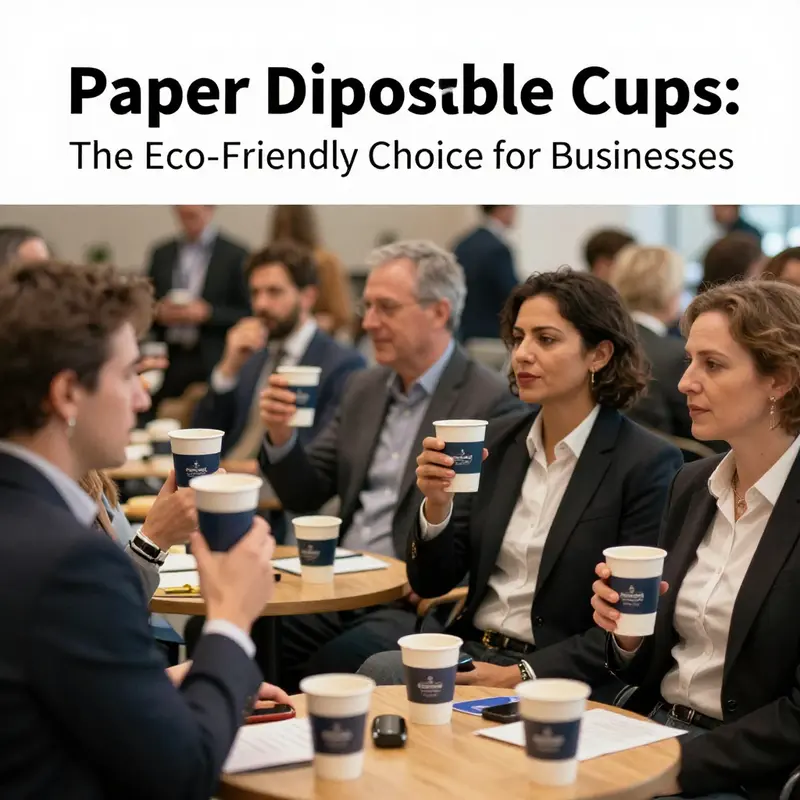
A single, unassuming sheet of paper folded into a cup carries more than a beverage. In today’s gatherings, a paper disposable cup has become a distal instrument of hygiene, a facilitator of smooth service, and a small but meaningful canvas for mood and memory. The path from a simple drinking vessel to a facilitative design element is not accidental. It is the product of practical necessity, advances in materials, and a shift in how people experience shared spaces. The cup’s inner lining, its wall thickness, and the way it feels when held all contribute to a moment that can set the tone for a meeting, a meal, or a celebration. In this sense, the paper cup acts as a silent hum that underpins the cadence of social life, while also carrying the potential to delight through color, motif, and craft.
The most immediate role of these cups remains practical. They enable quick beverage service in settings as diverse as coffee lines in offices, ad hoc refreshment stations at conferences, and festival booths under open skies. A robust structure helps maintain shape as drinks are carried from one point to another, while a rolled rim adds comfort for sipping and reduces the chance of spills. For hot beverages, the insulation provided by a thicker wall becomes a small but valued safety feature, guarding against burns and enabling guests to savor warmth a little longer without discomfort. For cold drinks, the same design helps minimize condensation on surfaces, easing the experience of mingling, sampling, and socializing. In busy environments, the reliance on a single-use cup also reduces the need for extensive cleaning, allowing organizers to reinvest effort toward interaction, program flow, and guest engagement rather than focused maintenance.
Beyond function, cups have become vehicles for theme and atmosphere. In recent years, event designers have learned how a cup’s appearance can reinforce a brand or a cultural moment without shouting. The 2026 Lunar New Year celebrations, for instance, saw themed disposable cups that carried symbolic motifs in colors that resonate with the occasion. The design paired festive aesthetics with reliable performance: thickened walls for durability, heat insulation to prevent accidental burns, and leak-proof construction to keep conversations flowing during long receptions. In this light, the cup transitions from a disposable tool to a participant in the celebration itself. It becomes a micro-message carrier—its exterior and interior surfaces contributing to the narrative of the event in a way that guests notice only subconsciously yet remember when they recall the gathering later.
Material choices and printing technologies have expanded what these cups can convey. Eco-friendly materials and high-definition color printing allow for vibrant patterns, intricate textures, and refined color palettes. It is now common to see cups that feature luminous reds, gilded interior accents, or subtle textures that catch the eye when held up to light. Such design choices do more than decorate; they influence perception. A guest who feels the warmth of a well-crafted cup may also perceive the event as thoughtful and well organized. The single-use nature of the cup is still central to the logistics of large crowds, yet this same feature—clean, immediate disposal—turns into a design advantage when paired with simple, elegant aesthetics. The result is a drink presentation that feels more premium, more aligned with the occasion, and less like a routine service item.
The social value of disposable cups is inseparable from concerns about safety and quality. Reputable manufacturers emphasize food-grade, non-toxic materials to protect consumers in settings ranging from intimate weddings to corporate meetings. The potential for chemical leaching, long a concern for lower-cost options, has driven improvements in coatings, barrier technologies, and production controls. A guest’s sense of security often translates into a more relaxed attitude toward mingling, which in turn supports the success of the event. In environments where beverages are shared, such as networking sessions or reception lines, this assurance matters as much as color and form. When guests know the cup they hold is designed with food safety in mind, they can focus on conversation, connection, and the occasion itself rather than worry about containment or cleanliness.
Design and capability converge most clearly when a cup is used as part of a broader event palette. The language of color, texture, and typography on the cup can echo the invitation, the branding, or the ceremonial tone without dominating the scene. This approach transforms cups into a flexible, repeatable element of the decor, and it does not demand elaborate setup or dedicated props. Instead, it leverages the moment when a guest reaches for a drink to reinforce atmosphere and theme in a way that feels natural rather than scripted. The subtle reinforcement of mood—whether it is warmth, festivity, or understated elegance—emerges from the way the cup fits into the environment, the way it holds the drink, and the way it interacts with light, movement, and sound as people gather and move through space. In other words, a cup becomes a small stage on which hospitality is performed.
A practical dimension often accompanies this aesthetic evolution. For hosts and venues, disposable cups reduce post-event burden, which can reshape expectations around logistics and guest experience. The ability to serve quickly, with predictable portion control, and then clear away with minimal fuss, supports a dynamic of interaction that can be harder to achieve with more permanent serveware. In the era of rapid socializing and flexible programming, that simplification translates into more time for conversation, networking, or live activity. The trade-off for convenience—a one-time-use item—has been balanced by improvements in recyclable materials, compostable coatings, and clearer guidance on disposal. While the conversation around sustainability continues to evolve, the trajectory is clear: the cup remains a practical enabler of social exchange, not merely a disposable afterthought.
In shaping guest experiences, the visual and tactile properties of the cup deserve attention as well. The messaging on cups, whether through color blocks, culturally resonant motifs, or brand-neutral elegance, plays a role in how attendees perceive the event’s care and intentionality. The interplay between appearance and function—how a cup not only holds a drink but also carries a sense of place—can elevate ordinary moments into meaningful memories. This is particularly true in settings where interaction is central: coffee breaks at conferences, reception stations at weddings, or casual tea moments at family reunions. A well-considered cup can invite conversation, facilitate movement through a space, and create a shared ritual that attendees carry with them as a trace of the occasion.
The connection between the cup and the event’s broader design is reinforced by accessible design choices. The outer surface can align with the venue’s color scheme, the interior can feature a gentle accent that surprises and pleases, and the cup’s shape can be optimized for easy stacking and rapid service. Even the decision to offer a single-use cup instead of a reusable option may be part of a broader plan for speed, hygiene, and guest comfort in environments with fluctuating attendee counts. In such contexts, the cup becomes not a mere vessel but a reliable partner in delivering a welcoming impression, a smooth service arc, and a sense that the event is well cared for from start to finish.
One practical note for organizers who wish to weave a cup into their design without sacrificing sustainability is to consider how the cup will be disposed of after use. Local guidelines for recycling or composting influence the ultimate end-of-life story of each cup. While paper cups are built from materials that can degrade, the presence of a plastic lining can affect the rate and manner of decomposition in real-world waste streams. Transparency about disposal options, clearly marked bins, and simple instructions for guests can help align the environmental outcome with the event’s intent. In this way, the cup supports a circular approach to waste rather than becoming a final, inert piece of the event’s footprint.
For those seeking practical inspiration beyond aesthetics, consider a cup as a flexible medium for storytelling. The choice of color stories, motifs, and even the texture of the cup’s surface can reflect the narrative of the gathering—from cultural celebrations to corporate milestones. The lesson here is not to overburden the cup with information, but to let it participate in the event’s language in a way that is understated yet meaningful. In the end, a cup that performs, protects, and pleases becomes a quiet ambassador for hospitality, a compact tool that enables connection, sustenance, and shared experience with minimal friction. The result is a scene where guests are able to focus on conversations, networking, or celebration, while the cup quietly handles the essentials of delivery, containment, and care.
As events continue to evolve, the role of paper disposable cups is likely to deepen in ways that balance practicality with creativity. The cups may carry more nuanced messaging, more sophisticated aesthetic cues, and more advanced barrier technologies, all while maintaining the simplicity that makes them indispensable in fast-paced environments. The ongoing dialogue about sustainability will steer this evolution, encouraging innovations in materials, coatings, and disposal practices that honor both convenience and responsibility. In that balance lies the ongoing relevance of the disposable cup: a small, everyday object that, when designed with care, supports big moments of connection, hospitality, and shared memory. For researchers, designers, and organizers alike, the cup remains a familiar yet evolving instrument of event experience, capable of signaling welcome, facilitating service, and enriching the atmosphere with minimal disruption to the flow of the gathering.
For readers seeking a practical resource on safety and standards beyond the design and experience, authoritative guidance from public health and food-safety authorities remains essential. These sources outline baseline expectations for materials, coatings, and hygiene practices that support consumer confidence in every cup served at events. See the official guidance at https://www.foodsafety.gov for more details on safety considerations that inform responsible use of disposable paper cups in public settings.
Internal link reference for further design inspiration can be found in a collection of disposable paper cup offerings that emphasize hot-drink compatibility and color-rich presentation. This resource illustrates how the practical needs of hot beverages align with aesthetic possibilities, providing real-world examples of cups designed for comfort, safety, and visual appeal. disposable paper cups for hot drinking.
Beyond the Sip: Designing Tomorrow’s Paper Cups with Eco-Intelligence, Smart Materials, and Transparent Craft
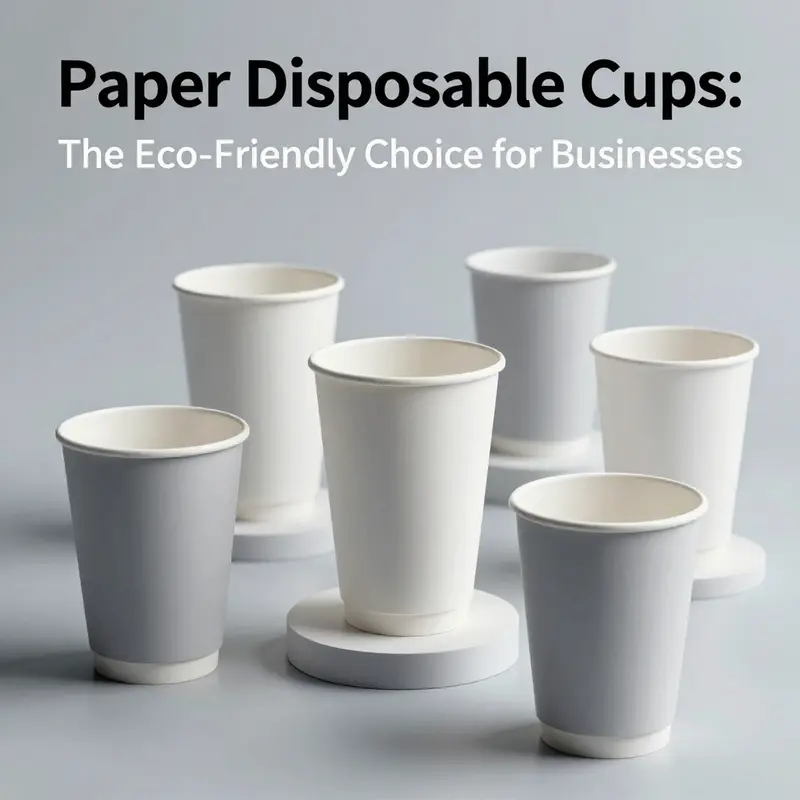
The future of the paper disposable cup unfolds at the intersection of environmental responsibility, technical ingenuity, and evolving consumer expectations. What began as a simple vessel for hot coffee or cold juice is becoming a platform for material science, digital capability, and supply-chain visibility. In this quiet evolution, the cup redefines itself not merely as a container but as a node in a circular, data-informed economy. The narrative moves beyond convenience and hygiene toward a design ethos that treats every sip as a data point, a footprint, and a choice about how we live with plastics, paper, and water use. As regulations tighten and public awareness grows, the industry is steering toward solutions that balance performance with planet-friendly outcomes, without sacrificing the everyday ease that users expect.
A central strand of progress lies in the broader adoption of advanced biodegradable materials. Polylactic acid, or PLA, sourced from renewable feedstocks such as corn starch, has emerged as a leading option for cups intended to break down more readily under appropriate conditions. Industry outlooks point to rapid growth in PLA cups, aided by policy shifts aimed at reducing single-use plastic. In regions pursuing plastic bans, the demand for plant-based alternatives is accelerating, with forecasts suggesting significant market scale increases in the near term. Yet this trajectory is not a simple substitution; it is a nuanced balancing act. Biobased polymers must meet safety standards, demonstrate compatible performance at typical beverage temperatures, and align with waste-management capabilities. Other plant-derived materials—such as bamboo fibers and sugarcane pulp—offer compelling advantages. They can endow cups with improved strength, heat resistance, or moisture management while reducing the overall environmental footprint compared with conventional virgin or recycled paper alone. The promise here is not just a greener raw material but an integrated system where sourcing, processing, and end-of-life handling work in concert with local waste streams and recycling infrastructures. In practice, this means cups that resist collapse when hot liquids are poured, yet still decompose within a realistic time frame in composting environments where such programs exist. The regulatory and cultural landscape matters as well. When communities embrace curbside composting or industrial compost facilities, the incentive to shift toward compostable coatings and bio-based linings increases. The practical outcome is a cup that can survive a reasonable sampling of real-world handling while remaining faithful to its compostable promise where appropriate facilities exist. The path forward thus hinges on alignment among material science, policy, and consumer behavior, ensuring that the cup’s environmental impact is minimized across its life cycle.
The second pillar of advancements centers on smart and functional integration. The quest for a cup that simply holds liquid is evolving into a design that adds value through information, adaptability, and better customer experiences. Integrated sensors are no longer the stuff of sci-fi prototypes; they are edging into feasibility studies that explore temperature monitoring and hydration data, with information potentially syncing to smartphones to support personal health reminders and beverage choices. The coating challenge remains central to this evolution. A truly eco-friendly cup demands coatings that are both waterproof and fully compostable, avoiding the protective but problematic plastics that have hindered full life-cycle sustainability in the past. Early demonstrations show promising coatings that protect the cup’s integrity while still aligning with composting streams when conditions permit. Beyond coatings, modular designs promise to extend the cup’s usefulness. Interchangeable components—such as temperature-insulating sleeves, or inserts that adapt the cup for different beverages—could transform a single cup into a small, adaptable system. In effect, the cup becomes a reuse-leaning, modular device that supports customized beverage experiences in a way that remains faithful to hygienic and convenience expectations.
These functional gains dovetail with a broader trend toward intelligent manufacturing and digitalization. The production line for paper cups is becoming a networked ecosystem that blends automation, robotics, and real-time data. AI-driven systems optimize everything from raw-material handling to the final assembly, cutting waste and reducing energy use. Digital printing technologies enable small-batch, highly personalized cup designs. Brands can test colorways, messages, or event-themed graphics without the overhead of large minimum orders, making customization accessible to more businesses and even smaller-scale events. Crucially, the move toward digitalization also strengthens transparency. Blockchain-enabled traceability and IoT-enabled process monitoring can verify the origin of sustainable materials and quantify the carbon footprint of each batch. Consumers increasingly expect transparency, and brands that can demonstrate a responsible supply chain will earn trust in a marketplace that prizes authenticity as much as aesthetics. The integration of these technologies is not a luxury; it is a practical response to demand for accountability and reduction of environmental impact across procurement, production, and post-consumer stages.
Yet the future cup must be more than a clever material or a digital feature. It must fit into a broader system of waste management and circular thinking. The design imperative is to reduce the energy and water needed to produce cups, optimize the use of renewable or low-impact materials, and ensure compatibility with existing recycling and composting streams. This requires thoughtful choices about thickness, fiber origin, coatings, and end-of-life options. In a mature system, a cup might be designed with disassembly in mind, so that fibers, coatings, and additives can be separated and processed efficiently. In practice, this could translate to a cup that performs robustly in a café setting, is easy to dispose of, and leaves a minimal environmental footprint when processed correctly. The balance among rigidity, barrier properties, and compostability is delicate, and designers are learning to harmonize these attributes through iterative testing, lifecycle analysis, and close collaboration with waste-management partners. A cup’s environmental success is no longer judged solely by its raw materials but by its performance across the entire value chain—from sourcing to end-of-life recovery.
The consumer remains a crucial driver of this evolution. People want convenience, cleanliness, and a positive brand encounter, but they increasingly demand clarity about environmental impact. The cup becomes a vehicle for brand storytelling and behavior shaping, not merely a disposable product. Digital printing and on-demand customization play into this, enabling event-specific branding, celebratory designs, or wayfinding cues at gatherings where beverages are served. This capacity feeds into broader marketing and engagement strategies because the cup becomes a micro-experience that reinforces a company’s commitment to sustainability and quality. For businesses pursuing such opportunities, collaborations with packaging and event-supply partners become essential. The landscape is increasingly ecosystem-oriented, with manufacturers, suppliers, and service providers aligning to offer cohesive solutions that cover design, production, and end-of-life management. In that sense, the cup is less an isolated item and more a node in a network of responsible consumption.
Within this evolving ecosystem, a subtle but significant shift is underway: the rise of on-demand, customized cup solutions that maintain low inventories and enable rapid, localized responses. The capacity to print or apply branding in small batches reduces stockpiling and waste while increasing relevance for specific audiences and occasions. This capability ties back to the broader trend of modular, adaptable packaging systems that can respond to changing consumer preferences and event requirements without sacrificing efficiency. In the same breath, organizations are reassessing their packaging portfolios to emphasize materials that are renewable or recyclable, and to minimize reliance on coatings that hinder end-of-life options. The result is a cup that performs well in the moment and remains a responsible choice in a future where waste pathways matter as much as performance.
For readers seeking a concrete thread to follow through the evolving landscape, consider how these shifts translate into practical, everyday decisions in food-service settings. The move toward bio-based materials must be matched by clear labeling, accessible waste streams, and consumer education about what can be recycled or composted in given regions. The push for water-resistant, compostable coatings requires collaboration between coating developers, Pulp and Paper industries, and waste facilities to ensure that the coating does not undermine recycling streams. When these align, the cup can achieve a higher level of environmental credibility while still delivering the reliability needed for daily usage. This is not a theoretical exercise; it is a practical, integrated approach to design that respects both the user and the planet.
In this light, the chapter moves toward a practical reflection: the future cup is a design and technology platform that embraces ecological intelligence, smart functionality, and transparent manufacturing. It is a product born from collaboration across material science, processing, waste-management infrastructure, and consumer education. The cup becomes a tangible symbol of a broader shift toward sustainable convenience—an artifact that embodies a careful balance between performance, responsibility, and experience. And as this balance tightens, it will influence how brands communicate value, how cities manage waste, and how individuals decide what to accept as part of a sustainable lifestyle. The next steps involve tests at scale, continued investment in bio-based coatings and barrier technologies, and ongoing dialogue with policymakers and communities about what constitutes responsible disposal and recovery. The cup’s future is not merely about keeping liquids contained; it is about presenting a well-considered choice that people can make repeatedly, with confidence and ease.
In sum, the future of paper disposable cups rests on three converging streams: sustainable materials that meet safety and performance needs; smart, modular features that enrich user interaction without compromising hygienic standards; and a digitally enabled supply chain that makes provenance, production, and end-of-life outcomes visible and verifiable. When these streams converge, a cup can deliver more than a drink. It can embody a mindful approach to consumption, a commitment to local waste-management realities, and a capability to adapt to different cultural and environmental contexts. This is the underlying promise of the coming era: a simple, familiar object transformed into a responsible, intelligent part of daily life. For designers, manufacturers, and policy-makers, the challenge is to shape these developments into an accessible, scalable, and affordable reality that can be embraced by communities around the world. And for consumers, it means choosing a cup that aligns with values without sacrificing convenience, taste, or cleanliness. The best cups will balance these demands with grace, becoming enduring elements of everyday rituals that feel natural, trustworthy, and timely.
Internal link reference: As the ecosystem evolves, opportunities arise for customized, theme-based packaging solutions that pair with sturdy, eco-conscious cups. See the offerings at custom-takeaway-packaging-supplies-disposable-tableware-for-theme-party for a sense of how on-demand design can translate into cohesive event experiences without creating waste. This kind of alignment between cup, lid, sleeve, and tableware helps brands tell a consistent story while keeping waste streams manageable.
External reading: For a broader perspective on material transitions and the future of plastics in a circular economy, see the New Plastics Economy Global Assessment report, which examines strategies for redesigning, reusing, and recycling plastics in a global context. https://www.ellenmacarthurfoundation.org/assets/downloads/publications/New-Plastics-Economy-Global-Assessment.pdf
Final thoughts
As consumer preferences evolve and the spotlight is cast on sustainability, paper disposable cups emerge as a practical and responsible choice for businesses in the food and beverage industry. Their material composition, environmental advantages, and economic viability make them indispensable for everything from casual coffee shops to corporate events. By staying informed about the latest trends and impacts, businesses can align their practices with the growing demand for eco-friendly options and continue to serve their customers responsibly.