
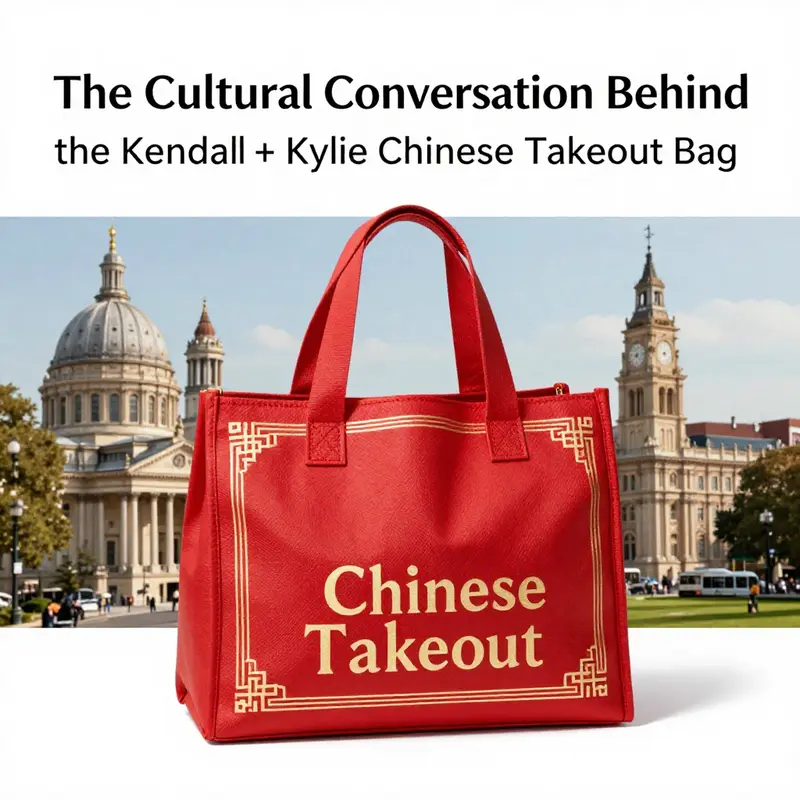
The Kendall + Kylie ‘Chinese Takeout’ bag, also known as the Lee Leather Clutch, has ignited discussions in fashion and culture since its 2017 release. At the crossroads of celebrity branding and cultural representation, this bag mirrors a traditional Chinese takeaway container, which led to significant backlash over issues of cultural appropriation. As we explore its impact on fashion trends and the economic consequences of its rarity, we’ll also gain insight into how celebrity influence shapes the perceptions and demand for such items. Each section will delve deeper into the multifaceted narrative of this iconic bag, appealing to businesses in the culinary world looking to understand its broader implications.
The Takeout Aesthetic in Fashion Controversy: How a Celebrity-Backed Clutch Reshaped Cultural Dialogue and Collectibility
A single accessory became a fault line for the collision of celebrity branding, cultural symbolism, and modern fashion discourse. The takeout-inspired clutch—an object that borrowed a familiar, everyday visual language and elevated it into luxury status—was less about utility and more about signaling taste, trend, and social code. Its ascent and the conversations it sparked reveal how fashion can mirror broader cultural anxieties while simultaneously catalyzing shifts in consumer expectations. What began as a high-gloss product release soon folded into a broader inquiry about authenticity, representation, and the power of celebrity-driven branding to shape, for better or worse, what counts as stylish or respectful in a global market.
The design language of the piece rested on a paradox. It drew from an ordinary object—an iconic, compact takeout container—yet it reframed that everyday symbol as an object of desire, worth a luxury price and a collector’s fanfare. The visual cues were deliberate: bold typography, bright, saturated color cues, and a front-facing emblem that signaled a narrative of dynamism and speed. The juxtaposition invited immediate recognition and, in equal measure, instant critique. When fashion houses, editors, and online communities encounter a design that sits at the intersection of convenience culture and couture, the conversation quickly expands beyond aesthetics into questions of meaning, context, and intention. In this case, critics argued that fashion, in embracing and repackaging a symbol tied to a specific cultural shorthand, risked flattening a complex cultural landscape into a single, marketable motif.
To understand the pulse of the moment, it helps to acknowledge the broader ecosystem that accompanied the item’s release. The piece arrived during a period when influencer-driven fashion was recalibrating how authenticity and origin facts mattered to consumers. Celebrity-branded pieces no longer existed in a vacuum; they traveled fast across social platforms, editorials, and resale markets. The conversations that followed were not simply about whether the accessory was well-made or visually striking. They were about whether a brand could responsibly navigate symbolism, heritage, and representation in a landscape where visibility is a signal, and signals travel at the speed of a tweet, a reel, or a viral post. In this sense, the controversy acted as an accelerant for a more nuanced, reasoned conversation within fashion about cultural sensitivity and the responsibilities that accompany celebrity influence.
What emerged from the online response went beyond the immediate outrage or defense. It pointed to a growing consumer demand for transparency and accountability in branding. Critics asked for more than clever visuals; they asked for awareness of how designs engage with real communities, histories, and identities. Fashion houses and media commentators began to weigh the cost of leaning into provocative aesthetics without context. This shift did not erase the lure of novelty or the hunger for limited-edition pieces. Rather, it reframed the calculus: collectibility could coexist with accountability, and scarcity could exist alongside a clarified narrative about origin and intent. In this tension, the fashion industry started to test a new operating mode—one in which the story behind a piece mattered almost as much as its silhouette or its material quality.
The afterlife of the accessory demonstrates another enduring truth about fashion today: notoriety can convert a design into a coveted object. The more controversy surrounding a piece, the more it tends to be sought out by collectors, institutions, and fans who want to own a tangible reminder of a cultural moment. Rarity is often a function of perception as much as production; when a product becomes a symbol within a larger debate, its value shifts from merely being a thing to being a cultural artifact. In the resale market, this mechanism can create a feedback loop where the initial backlash, once tempered by curiosity and nostalgia, becomes a badge of distinction for those who own it. The effect illustrates how the economics of fashion have grown inseparable from the sociology of taste—how people use objects to signal alignments, identities, and awareness in public spaces.
The controversy also underscored a critical inflection point in how fashion brands calibrate their cultural literacy. The episodes around celebrity-branded pieces have become case studies for what responsible branding looks like in practice. The industry moved toward greater sensitivity—not as a veto on creativity, but as a demand for context, dialogue, and collaborative engagement with communities whose symbols are being borrowed or reinterpreted. This is not merely about avoiding missteps; it is about cultivating a framework where designers and marketers think through implications before they present a concept to the world. The public conversation around this piece did not disappear with the passage of time; it evolved into a more lasting expectation that fashion should strive for inclusivity, accuracy, and respect, even in the embrace of bold, boundary-pushing aesthetics.
From a design-history perspective, the episode sits at an intersection where everyday life, branding culture, and global markets converge. The takeout-inspired motif pulls from a shared daily ritual—the quick, convenient, recognizable act of dining out. Translating that ritual into luxury form is a telling example of how fashion often borrows from ordinary life to craft aspirational narratives. Yet the controversy reminds us that borrowing is not neutral. It requires sensitivity to the contexts from which symbols emerge and the people who live with those symbols beyond the glamour of the runway. When the public sphere voices concern about representation, brands must decide how to respond: acknowledge, revise, or reinterpret the symbol with empowerment and collaboration at the center. The best movements in fashion’s ongoing dialogue about culture tend to be those that move from defense to learning, and from spectacle to stewardship.
This ongoing discourse has tangible implications for how new products enter the ecosystem. Retailers and media increasingly assess not only the product’s form and function but also its cultural firmware—the stories, histories, and communities it engages. A design that might once have sailed on novelty alone now must pass a test of cultural citizenship. The question becomes not only whether a piece is beautiful or clever, but whether it contributes to a marketplace that respects and reflects a plurality of perspectives. In this waking of brand ethics, the fashion landscape is learning to weigh the risks and rewards of provocative concepts with a more careful, collaborative approach to storytelling. The result is a more deliberate tempo in which designers may pursue audacious ideas while also inviting critique, dialogue, and shared ownership of meaning.
Within this evolving framework, it is instructive to consider how the design language of popular culture often bleeds into consumer perception of what is “in.” A takeout motif can become a shorthand for speed, convenience, and cosmopolitan living, attributes that many contemporary brands want to associate with. Yet the same motif may also carry memories, stereotypes, and real-world implications for communities who recognize those symbols as more than stylish cues. The paradox is not easily resolved, and the path forward is rarely linear. Some designers will continue to push the envelope, while others will opt for partnerships, educational campaigns, or consultative processes to ensure that their explorations are anchored in consideration and consent. The ambition remains the same: to create pieces that feel timely and resonant, while cultivating a climate in which conversations about representation accompany every launch rather than trailing behind it.
An element of this discussion that deserves attention is the way digital culture amplifies both admiration and critique. Social media’s speed compresses the arc of reception: a design can ignite conversation in hours and become a reference point for months or years. The same channels that propel a piece to global visibility also invite persistent examination of its cultural footprint. Brands increasingly recognize that online discourse cannot be compartmentalized as marketing noise; it is a repository of public values that can elevate or erode trust. The challenge, then, is not merely to avoid controversy but to participate in it in a constructive, transparent manner. This means clarifying intent, acknowledging limitations, and showing a willingness to adapt when communities ask for changes or context. In such a climate, a controversial design can become a catalyst for learning and improvement rather than a divisive incident that fades away without lasting impact.
Within the broader field of fashion history, this moment can be read as part of a longer arc in which the industry shifts from spectacle alone toward a more nuanced understanding of cultural symbolism. The interplay between celebrity influence, design innovation, and social accountability is shaping a new baseline for what counts as responsible creativity. The pieces that endure are not only those that resist time’s changes in trend but those that demonstrate a commitment to awareness and respect alongside their aesthetic ambition. The result is an industry that values bold ideas but weighs them against a responsibility to audiences around the world who see themselves reflected in the clothes they wear.
To ground this discussion in a concrete reference point about how such symbolism travels and translates into consumer behavior, consider how the design vocabulary borrowed from everyday packaging can illuminate broader patterns in fashion today. The material culture surrounding food delivery and takeout has become a global language of immediacy, convenience, and cross-cultural exchange. Designers and marketers can learn from this language—how to evoke familiarity without erasing context, how to balance lighthearted novelty with cultural mindfulness, and how to position objects at the intersection of art, commerce, and responsibility. For readers who want to explore a tangential yet relevant angle on how packaging aesthetics influence consumer perception, a related exploration of takeout packaging design and its sustainability considerations can be found at the following resource: eco-friendly takeout packaging.
As this chapter moves forward within the larger article, it remains essential to keep in view the thread that ties all these threads together: fashion is a social practice that mediates how people relate to culture, identity, and one another. The rise and reception of a takeout-inspired clutch serve as a microcosm of how fashion navigates modern values. The moment invites designers to think deeply about the symbolism they borrow, the communities they engage, and the kinds of conversations they invite. It also invites consumers to participate with discernment, curiosity, and an awareness that style is inseparable from context. In the end, the most enduring designs will be those that manage to be audacious in form, responsible in narrative, and inclusive in effect.
External reading for further context on the controversy surrounding this aesthetic and its implications for celebrity branding can be found here: https://www.vogue.com/article/kylie-jenner-lee-leather-clutch-controversy
When a Takeout Box Becomes a Signal: The Contested Design and Cultural Reckoning of a Celebrity-Brand Clutch
A white leather clutch that echoes the shape and silhouette of a familiar Chinese takeout container became more than a fashion accessory; it became a flashpoint in a broader conversation about representation, power, and the ethics of branding in the modern luxury market. The piece in question—released by a high-profile, sibling-founded label—was instantly recognizable to many as a clever, tongue-in-cheek riff on everyday urban life. To others, it felt provocative, careless, and emblematic of a pattern in which cultural symbols are pressed into service as mere visual punctuation for status rather than as signs of lived experience. This tension did not exist in a vacuum. It sat at the crossroads of celebrity influence, consumer appetite for exclusive, collectible fashion, and a longer historical struggle over how cultural motifs travel, transform, and sometimes disappear in stigma or stereotype when they pass through the gloss of luxury retail. The ongoing debate, then, is not only about whether a particular object crossed a line. It is about what a line means in an industry that increasingly asks brands to be accountable for the cultural freight they carry and for the communities that might be affected by the misread, misappropriated, or monetized imagery of their daily lives.
From the outset, the design read as a wink to urban dining rituals—the box-shaped clutch with bold lettering and a striking emblem—yet the wink quickly sharpened into a glare for many observers. The text placed on the front, accompanied by a vivid tiger motif, drew a map of meaning that many argued was insufficiently nuanced. In a culture where cuisine, language, and visual cues from marginalized groups have long been flattened into stylized symbols, such imagery triggers a reaction that goes beyond aesthetics. Critics framed the piece as a case study in cultural appropriation: a glossy, commodified reference to a specific ethnic cuisine that, for many, carries layers of history, labor, and experience far beyond its flavor profile. The object thus became more than a fashion artifact; it became a catalyst for examining who gets to own cultural symbols, who benefits when they circulate as collectibles, and who bears the risk of misinterpretation when those symbols are stripped of their context.
The debate did not merely unfold in glossy magazines or digital comment sections. It spilled into the marketplace, with conversations on social media about intention, impact, and responsibility. Supporters argued that fashion thrives on remix and dialogue, and that pop culture often blurs boundaries in ways that feel edgy or clever. Detractors countered that the casual blurring of cultures—especially when filtered through the power of celebrity branding and luxury distribution—can erase the labor and history behind everyday cultural forms. What becomes clear in these discussions is that the value of a piece in the public eye is inseparable from the social and historical narratives that surround it. A design might be clever or provocative in intent, but its impact depends on how communities interpret it, who feels seen or misrepresented, and whether the garment industry moves beyond lip service to inclusive practices that acknowledge cultural nuance rather than offering it as a one-note prop.
Moreover, the controversy illuminated a wider industry dynamic: the appetite for exclusive, talked-about items often outpaces substantive engagement with the cultures that inspire them. The initial release did not come with a formal, public apology or a withdrawal from sale, a decision that fed the perception that luxury fashion can weather or absorb backlash as a mere temporary inconvenience. For many observers, this absence signaled a deeper tension between creative bravado and social responsibility. It raised questions about the thresholds brands should observe when borrowing visual cues that carry communal memories and resentments. If a piece can generate both an intense critical response and fervent collector demand, what does that say about the relationship between cultural sensitivity, market economics, and the cult-like appeal of celebrity-endorsed commodities? The answer, in practice, lies less in a single verdict than in a shifting standard: a standard that expects brands to foreground dialogue with communities, to recognize the power of representation, and to recognize that admiration for clever design cannot substitute for respect for the contexts those designs touch.
The design itself—clean, modern, and instantly legible—undoubtedly contributed to its viral reach. A white leather surface courted by a silhouette borrowed from everyday life created a paradox that many found compelling: an everyday object elevated into luxury, an object that carries a story of cultural exchange as well as miscommunication. The tiger emblem, bold and stylized, functioned as a visual angle that drew the eye and anchored the piece in a set of associations that feel both exotic and familiar. The lettering, presented in a brisk, legible script, evoked a sense of place and movement—the idea of a quick trip, a fast meal, a world where dining and fashion intersect at the speed of modern city life. Yet for critics, this same combination sounded a cautionary note: when a symbol that resonates with a specific community travels into the rarefied air of high fashion, it can flatten complexity into desirability, turning cultural cues into a consumable commodity rather than a lived tradition.
In the years since the controversy, the discourse around the piece has evolved into a broader conversation about inclusive design. Fashion scholars and critics have argued for a process that centers cultural literacy, collaboration, and consent. They point to the value of engaging with communities long before a product hits the runway or the shelves, of hearing concerns in real time, and of thinking through how an object will travel once it leaves the studio. This perspective does not condemn bold creativity; it reorients bold creativity toward responsible storytelling. It invites designers to consider not only how a product will look on a glossy magazine spread, but how it will feel to someone who recognizes their own culture reflected, however distantly, in a luxury object. The ethical calculus extends beyond apologies or withdrawal. It invites brands to rethink the rituals of launch, the channels of feedback, and the channels through which cultural symbols are allowed to enter the mainstream. In this sense, the controversy becomes less a definitive verdict and more a prompt for deeper engagement with the communities that give cultural imagery its meaning.
The afterlife of the piece in auction rooms and resale markets underscores another facet of its cultural arc. Items that generate controversy can acquire a new kind of currency: rarity, mystique, and a story that collectors seek to own as a kind of social artifact. The interplay between notoriety and desirability creates a paradox. The more a design is criticized, the more it can be sought after by those who want to own a piece of fashion history, the narrative of which is inseparable from the dialogue it triggered. In this way, the object becomes a case study in how celebrity-driven fashion can seed not only trends but conversations that outlast the initial release itself. It compels observers to ask what kinds of conversations brands want to be part of and what kind of legacy they wish to leave when their designs touch issues of culture and identity rather than merely aesthetics.
Within this evolving discourse, one can observe a shift toward more deliberate design practices. Some brands have begun outlining guidelines that emphasize respectful representations, co-creation with communities, and transparent storytelling about the sources of inspiration. These efforts are not about erasing provocative ideas but about ensuring that provocative ideas do not obscure the human elements behind them. The discussion invites a multiplicity of voices—from designers and critics to cultural scholars and communities—so that creativity can flourish without diminishing the experiences of those who live at the intersection of culture, labor, and representation. In this light, the piece serves less as a standalone artifact and more as a touchstone for examining the responsibilities that come with power in design and distribution. It prompts the fashion world to balance the appetite for novelty with the obligation to honor complexity, to value context as much as cleverness, and to recognize that cultural symbols travel through many hands before they arrive on a luxury shelf.
For readers who want to explore the material dimensions of how everyday objects influence luxury packaging and branding in ways that echo the takeout-inspired aesthetics discussed here, consider examining examples of packaging design that reinterpret familiar forms for modern contexts. A relevant resource on that topic can be found at this internal link, which highlights how square, windowed, and transparent packaging options can recast the perception of a product while nodding to everyday use: paper-sandwich-box-square-food-box-with-transparent-lid-square-white-bread-box-cookie-paper-boxes-cake-roll-packaging.
Yet, even as some celebrate the audacity and cachet that such items accrue, the core tension remains: how to celebrate creativity without reducing culture to a trend, how to honor communities while inviting broad audiences into a shared conversation about style? The controversy provides a framework for asking these questions not as quick judgments but as ongoing inquiries. It reminds designers that every gesture—no matter how small or clever—resonates beyond the moment of exposure. It invites retailers to consider who they recruit into the storytelling process, who benefits from the visibility of certain symbols, and who bears the burden when that visibility leads to misinterpretation or harm. And it invites critics and scholars to examine the etiquette of critique itself—how to challenge insensitivity without stifling imagination, how to reward responsible risk-taking, and how to chart a path forward where fashion remains a liberating form of expression rather than a mechanism of cultural flattening.
Ultimately, the saga of this particular piece—discussed across forums, magazines, and academic debates—functions as a microcosm of a larger cultural negotiation. It is a narrative about how the glamour of celebrity brands intersects with complex histories of representation. It is a reminder that fashion does not exist in a vacuum but in a cultural ecosystem where ethics, aesthetics, and economic forces constantly collide. The object in question may fade from the limelight as new silhouettes rise, but the questions it sparked—about consent, context, and consequence—will continue to inform how designers approach culturally resonant motifs. In this sense, the debate is less about a single bag and more about how fashion can evolve into a space that honors heritage while inviting innovate expression, without letting spectacle erase the stories that truly matter.
External reference for broader context on the controversy and its reception can be found here: https://www.huffingtonpost.com/entry/kendall-kylie-jenner-chinese-takeout-bagn59b8c4e6e4b038f33a1f7d0a
Controversy as Currency: The Resale Economics of a Takeout-Inspired Fashion Item
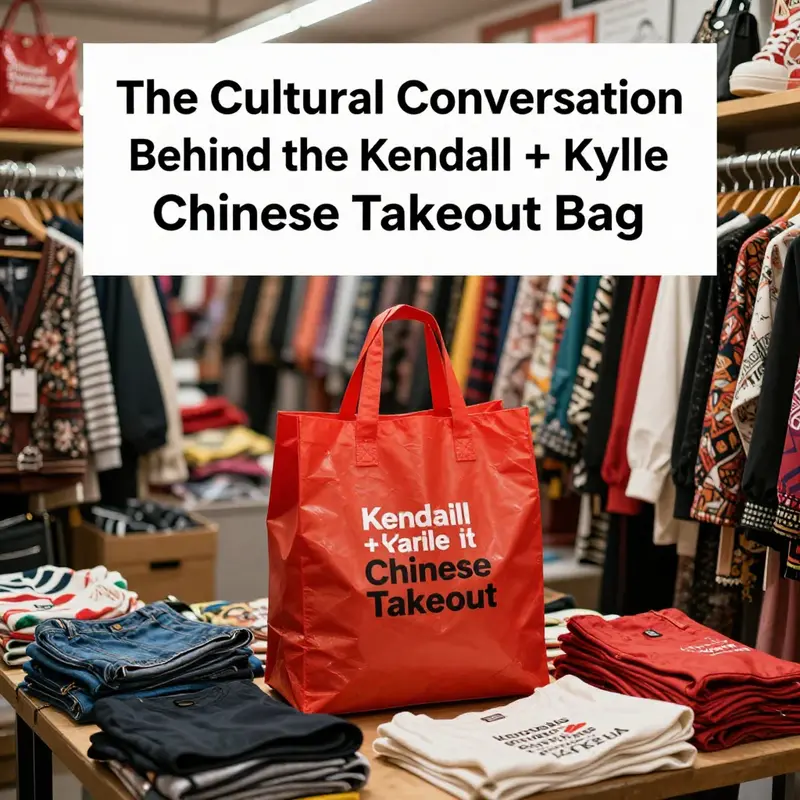
The so-called takeout-inspired clutch lives at the intersection of spectacle, scarcity, and celebrity influence. Its design—bright red lettering, a bold logo, and a tiger emblem on a compact silhouette—invited immediate comparison to a familiar, carry-out container. Yet the object is not simply a novelty. In fashion markets, controversy can operate as a form of marketing that both magnifies attention and complicates the economics of value. This chapter examines how the controversy around a celebrity-backed, takeout-tinged bag reverberated through resale dynamics, transforming a limited-release artifact into a coveted but ethically charged collectible. What begins as a moment of social media uproar can metastasize into an enduring market phenomenon, where desirability is tethered as much to narrative as to leather, stitching, or provenance. The broader implication is clear: in contemporary fashion economies, stigma and allure negotiate a delicate balance, and the price of a piece on the secondary market is often a reflection of social sentiment as much as material craftsmanship.
To understand why such a bag achieves a resale premium, one must first recognize how supply and demand knit together with discourse. Unlike mass-produced items, a limited-release bag reduces its numerical availability almost by design. As copies disappear from shelves, the market for used examples expands in a parallel track: buyers seek not merely a functional container but a tangible artifact that encodes a specific moment in time. The scarcity effect is amplified when the item carries a high-profile backstory—the creator’s platform, the celebrity’s cultural reach, and the dialogue surrounding cultural representation at the time of release. In this constellation, price becomes a symbolic measure as much as a monetary one. A potential buyer is not just purchasing leather and hardware; they are staking a claim in a narrative that has threaded through online forums, fashion blogs, and social feeds. The more provocative the narrative, the stronger the pull toward remembrance and possession.
But scarcity alone does not guarantee a lucrative resale. Controversy introduces a volatile risk element. The piece can become a proxy for broader debates about cultural sensitivity and appropriation. When public conversations skew toward critique, future buyers may hesitate, fearing reputational risk or social backlash. In some cases, this hesitation reduces the intensity of demand, compressing resale values or delaying liquidity. In others, the same controversy intensifies the piece’s mystique, positioning it as a relic of a culture-war moment and thus eligible for a premium exacted by collectors who want to own a piece of fashion history, warts and all. The market for such relics is not static; it moves with the tempo of cultural conversations, influencer endorsements, and the platforms that facilitate resale. The result is a price path that can be as unpredictable as fashion’s long-term memory. A valuation that spikes during periods of renewed interest can be followed by a plateau or even a dip as the discourse shifts focus to newer, similarly provocative items.
From a macro perspective, the economics of this item illuminate several recurring patterns in celebrity-driven, culturally controversial fashion pieces. First, the brand halo created by celebrity founders acts as an amplifier for scarcity. Even a modestly produced accessory—one with careful materials and craftsmanship—can command outsized attention because the story is as much about who wore or released it as about what it is. The second pattern is the longevity of the item’s narrative. Some fashion artifacts remain relevant not because they are technically perfect, but because they symbolize a clash between glamour and critique, a fusion of spectacle and education. The third pattern concerns authenticity and provenance. In resale markets, the ability to verify a piece’s origin, edition size, and condition becomes a gatekeeper of value. Collectors will pay a premium for clear documentation that authenticates a release window, a limited quantity, and a verified chain of custody. When these breadcrumbs are missing or contested, the price can become slippery, reflecting not only the tangible object but the trust the buyer must invest in the seller.
The specific mechanics of how a takeout-inspired bag travels through resale channels also deserve attention. The initial sale, when the piece drops, often sells out quickly, prompting secondary-market activity within days or weeks. Early buyers may attempt to lock in returns by flipping the item soon after purchase, testing the market’s appetite for a piece associated with both novelty and controversy. Others wait, hoping the public discourse will intensify, driving up perceived value even if the actual practical utility of the bag remains modest. In many cases, price discovery occurs not on traditional retail floors but on peer-to-peer networks and niche resale platforms where collectors congregate and where narratives carry roughly equal weight with condition and packaging. The result is a dynamic that looks less like a traditional supply-demand curve and more like a social curve: price elasticity that expands or contracts with the mood of the internet.
The buyer’s decision calculus tends to weave together multiple strands. There is the rational assessment of rarity and potential appreciation, tempered by a subjective read on how outcry and admiration co-exist. Some buyers are drawn to the piece as a bold statement about fashion’s relationship to consumer culture—an artifact illustrating how branding, media attention, and cultural dialogue intersect in a single object. Others approach the item as a risk-managed bet: if the narrative around cultural representation evolves toward more progressive scrutiny, some collectors may bid cautiously, while others may hedge by seeking versions with more robust provenance or limited signs of wear. And there is the ethical dimension: owning a controversial object can force a buyer into an ongoing engagement with debates about representation, memory, and accountability. The resale price soon becomes a proxy for the owner’s willingness to engage in that conversation publicly, or at least to carry the history with a certain degree of transparency.
One practical consequence of this economics framework is how it reshapes the market’s liquidity and the way buyers approach authentication and condition reporting. In many cases, the premium for a pristine, well-documented specimen grows when scarcity is gleefully paired with controversy. A seller who can point to original packaging, mint condition, and verifiable release details may unlock additional bidders who value certainty as much as rarity. Conversely, a piece with ambiguous provenance or visible wear can trigger a discount, even if the item remains highly recognizable and stylish. This tension—between the desire for a legendary story and the need for trust in the seller—drives an emerging market behavior: buyers increasingly demand more rigorous documentation, and sellers who can provide it may realize stronger, quicker returns.
The cultural conversation surrounding the object also feeds into its financial trajectory. When public critiques crystallize around a call for greater cultural sensitivity, fashion markets respond with a mixed signal. Some buyers interpret the critique as a cautionary tale about future purchases, while others see an opportunity to own a piece of history that encapsulates a moment when culture, commerce, and celebrity collided in the most visible way. This bifurcation can generate a price plateau where the asset neither soars nor collapses, but maintains a stubborn, niche appeal. The problem for some buyers and sellers is that the asset’s narrative is inherently unstable. The same item might be celebrated as a bold example of daring branding at one moment and condemned as a symbol of insensitivity the next. The price path, then, is not a straight line but a zigzag shaped by the tempo of public sentiment and the cadence of new conversations about representation, power, and responsibility in fashion.
From a design and materials standpoint, the object embodies a paradox many collectors understand: high concept can coexist with practical limitations. A compact bag with a bold motif may not offer vast storage or longevity in the way a more traditional luxury clutch might. Yet its value as a collectible hinges less on utility and more on the aura surrounding it. In this sense, craftsmanship matters, but it is the storytelling and brand association that ultimately determine resale ceilings. The leather, hardware, and finishing all contribute to the perceived quality, yet the price ceiling is often dictated by the item’s place in the broader cultural archive. The more widely discussed or debated the piece is within fashion discourse, the likelier it is to attract buyers who seek to own a shard of the conversation itself.
In the end, the economics of this controversial takeout-inspired accessory illuminate broader truths about fashion’s modern marketplace. Celebrity-led launches can create a fuse that merges media buzz with consumer desire, producing a limited-scale phenomenon that travels quickly into the resale ecosystem. The piece becomes a case study in how value is shaped by narrative gravity as much as by form and function. Buyers become curators of memory, and sellers become caretakers of a contested history—each transaction contributing to a living archive of how fashion, media, and culture collide. And as this dynamic continues to unfold, it invites a broader reflection on responsible branding and the ethics of representation in a market that thrives on storytelling as much as on seams and leather.
For readers who want to explore tangential themes through a practical lens, the discourse around packaging aesthetics and branding can provide a useful frame. The way a product is presented, its packaging, and the story constructed around it all influence perceived value, even when the item itself is relatively modest in size. In today’s marketplace, an object’s aura matters as much as its anatomy. A tactile, visually striking package can become a carrier of meaning, and in some cases, a signal of taste and intention. To connect this to a broader context of consumer culture, consider how takeout branding and packaging design have evolved to convey identity and values in a way that echoes through the adoption and adaptation of other cultural codes. In practice, this means that even a small accessory can carry not only a design statement but a social one, with implications for how future generations evaluate authenticity, style, and the ethics of collecting.
A practical note for readers intrigued by the economics of such pieces is to consider not only the price but the ecosystem in which price discovery occurs. The secondary market thrives when there is a community of collectors who share high expectations for provenance, a willingness to engage in dialogue about representation, and access to reliable channels for authentication. Buyers who understand these dimensions often approach purchases as both investment and artifact, balancing financial risk with the desire to participate in a cultural conversation that transcends the item’s physical dimensions. And for those who want to tangibly connect with the broader ecosystem of takeout-inspired branding and design, there is value in looking at how packaging and presentation influence consumer perception. See for instance the range of packaging options that reflect current trends in eco-friendly takeout design, which demonstrates how aesthetic choices can signal taste, ethics, and memory. eco-friendly takeout packaging options.
Ultimately, the resale story of a controversial celebrity-backed bag is a reminder that fashion markets are living forums. They absorb social feedback, reframe reputations, and translate memory into price. The item’s journey from a headline piece to a collectible on the secondary stage reveals the power of narrative as a driver of value. It also underscores the tension between cultural critique and consumer desire, a tension that will persist as fashion continues to iterate on what it means to own a piece of culture, moment, and celebrity. For scholars and enthusiasts alike, the tale offers a compact lens into how value is negotiated in a media-saturated world, where a single accessory can court glamour while inviting scrutiny, and where the act of purchase becomes, sometimes, an act of participation in a broader conversation about representation, memory, and the evolving economics of style.
External reading on the dynamics of cultural conversation and fashion economics can deepen understanding of these patterns. Cultural critique, branding strategy, and market response all intersect in ways that illuminate how controversial objects move through time, sometimes accruing value even as they provoke debate. To broaden the context beyond a single piece, see a general overview of cultural appropriation in fashion and the economics of brand storytelling as a starting point for analyzing similar cases across the industry. https://www.britannica.com/topic/cultural-appropriation
Celebrity Power, Cultural Commentary, and the Kendall & Kylie Chinese Takeout Bag
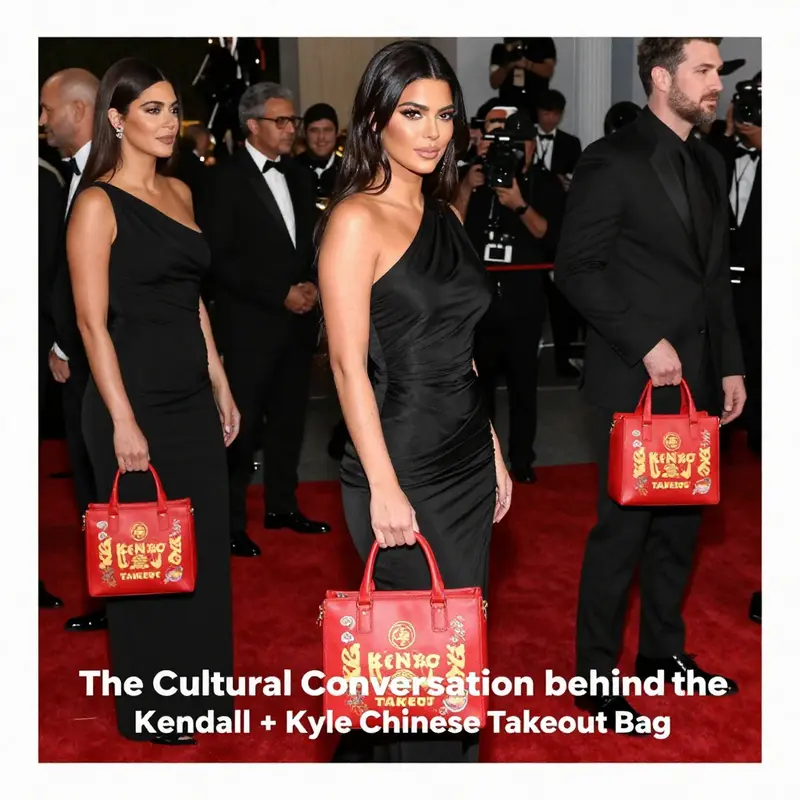
When the Kendall + Kylie Chinese Takeout Bag, officially the Lee Leather Clutch, appeared in 2017, it ignited a broad discussion that extended beyond fashion. The bag’s silhouette echoed a familiar takeout container, with a tiger motif and branding that felt plausibly authentic. To some observers the design was playful and subversive; to others it read as a misstep that trivialized a culture. The controversy framed a larger question about who gets to reinterpret cultural signs and how those interpretations travel in a social media powered world. What followed was a case study in the power and responsibility of celebrity branded merchandise, especially when cultural references are at stake and subject to rapid online verdicts.
The bag’s design resembled a quintessential urban ritual: the takeout moment. Its red typography and crisp geometry elevated a utilitarian object into a fashion object, yet anchoring the piece in that particular aesthetic along with a surname like Lee and a tiger motif invited scrutiny about stereotypes and representation. Critics argued that turning a cultural symbol into a glossy prop risks flattening a heritage into mere spectacle; supporters argued it could be read as homage or satire. The ensuing conversation moved beyond the bag itself to questions of intent, context, and accountability, and to whether such designs uplift or undermine communities associated with the symbols.
Kendall and Kylie’s global reach amplified by social media meant the item circulated quickly and shaped opinions about taste, status, and belonging. Some fans celebrated the piece as bold and humorous; others perceived it as provocative branding that commodifies cultural cues. The speed of online reaction underscored a central point: celebrity influence is a double edged sword, capable of sparking dialogue while also imposing pressure on brands to justify their choices in real time.
In the years since its release, the Lee Leather Clutch has lived on in fashion commentary as a symbol of controversy, consumer interest, and the market’s appetite for conversations as much as for products. Its resale rarities and enduring memory reflect a moment when aesthetics, celebrity power, and ethical questions collided and lingered. This durability points to a broader pattern: controversial artifacts can persist in cultural memory because they catalyze discussions about representation, power, and responsibility within the industry.
For designers and brands, the episode offers a cautionary tale about the speed and reach of celebrity driven narratives. It invites ongoing reflection on intent, context, and the social stakes of visual shorthand. The Lee Leather Clutch thus sits at the crossroads of spectacle and accountability, a case that continues to inform debates about how fashion travels globally with respect, curiosity, and responsibility. As commentators revisit the episode, the central question remains: how can fashion balance audacious design with inclusive storytelling that respects the cultures it borrows from?
Final thoughts
The Kendall + Kylie Chinese Takeout bag serves as a fascinating study of intersecting worlds: fashion, culture, and economics. While the bag’s design reflects a playful interpretation of cultural symbols, it also presents a complex narrative about respect and representation. As this collector’s item continues to grow in value and significance, businesses—especially in the food and beverage sectors—have the opportunity to learn from its impact on consumer perceptions and cultural discussions. To navigate this landscape, awareness and sensitivity are paramount, ensuring that the fusion of culture and commerce is approached thoughtfully and respectfully.