
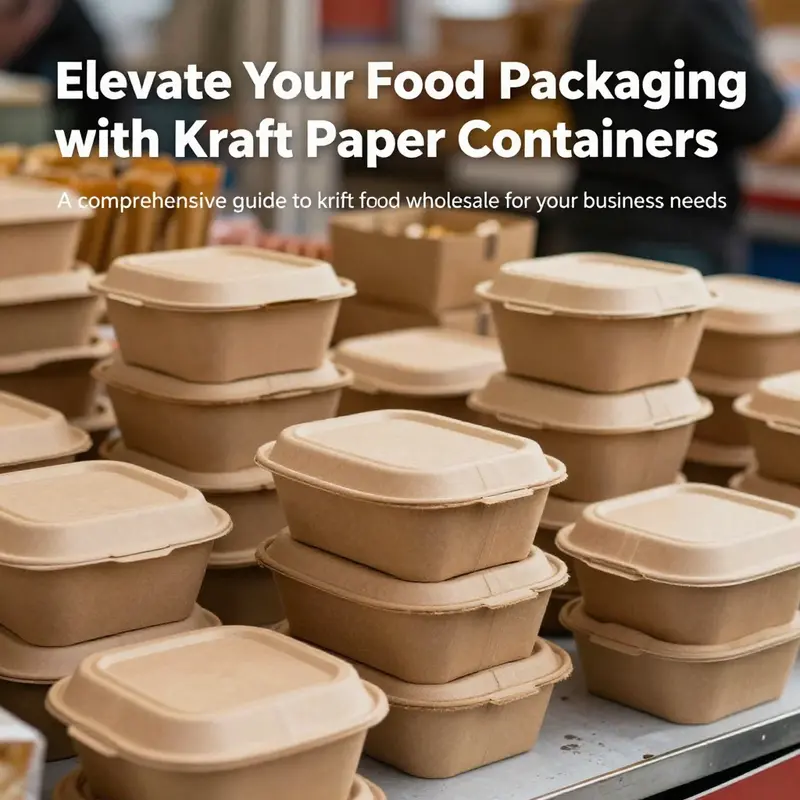
In the competitive food service landscape, choosing the right packaging solutions is crucial for brands. Kraft paper food containers not only provide practicality but also align with sustainability goals, appealing to environmentally conscious consumers. This article delves into the essential features of kraft paper food containers, discusses market trends, explores pricing structures, highlights key suppliers, and gives practical advice on sample procurement. Each chapter will uncover valuable insights that cater specifically to bubble tea shops, restaurants, catering services, and corporate teams seeking reliable, eco-friendly packaging options.
Sustainable Scale: Core Features, Customization, and Market Dynamics of Kraft Paper Food Container Wholesale
The wholesale arena for kraft paper food containers sits at the intersection of ecological responsibility and practical logistics. Manufacturers and distributors alike are navigating a landscape where environmental values no longer sit on the periphery of decision-making; they shape supply chains, influence equipment investments, and dictate the pace at which brands can refresh their packaging. At the heart of this dynamic are the core product features that define what makes these containers not just suitable for today’s dining needs but viable for tomorrow’s sustainability standards. The base material—100% virgin kraft paper—carries a narrative of renewability and end-of-life simplicity. Virgin kraft, sourced from responsibly managed wood fibers, avoids the chemical intensity of some bleaching processes and leans on natural strength to support heavy contents. When combined with a food-grade inner coating, these containers become credible options for items that once required plastic or laminated barriers. The coating, often a thin layer derived from renewable resources such as PLA from corn starch, provides essential resistance to moisture and oil. This pairing preserves the integrity of foods ranging from salads to hot meals while still allowing for recycling streams in many jurisdictions. In practice, this means a container that can perform under the heat of a hot noodle dish yet still participate in a circular economy discussion, depending on regional infrastructure and accepted disposal methods. The practical upshot is straightforward: the material combination offers a balance of mechanical strength and environmental compatibility that appeals to restaurateurs and caterers who must balance performance with responsibility.
Beyond composition, the physical design of kraft paper containers has evolved to meet real-world usage scenarios. The sheer variety of capacities—spanning roughly from 500 ml to 2000 ml—addresses a wide spectrum of serving needs, from compact takeaway snacks to larger family meals or multi-item bundles. The structural design emphasizes integrity under load and resistance to leakage, a critical factor when liquids, oils, and emulsions are involved. Strength is achieved through reinforced seams, precise folding, and the careful selection of food-grade adhesives or mechanical joining approaches that minimize weak points. This attention to construction translates into reliable performance during stacking, transportation, and even microwaving in models deemed microwave-safe by the coating and material combination. While not all containers are intended for microwave use, a growing subset is engineered to tolerate brief reheating, giving operators flexibility in delivery windows and on-site heat retention. These functional attributes—durability, leak resistance, and heat tolerance—form the backbone of wholesale sales, where purchasers require consistent quality across thousands or even millions of units.
A key differentiator in the wholesale market is the extent of customization available to buyers. The containers can be tailored along several axes: dimensions, color, surface finish, and brand imprinting. Dimensions can be adjusted to snugly fit specific menu items, reducing filler material and preserving the presentation of the food. Colors and finishes—ranging from matte to glossy, including options for embossing or foil accents—enable brands to extend their visual identity onto a practical packaging surface. Printing technologies used in customization—such as flexographic or lithographic processes—allow logos, taglines, and artwork to be applied with high fidelity. The ability to print in Pantone colors expands the possibilities for precise brand color reproduction, ensuring that a restaurant’s color identity translates cleanly from screen to sleeve or lid. The interior surface is not neglected in this design philosophy; many manufacturers offer coatings that balance grease resistance with dialogue about recyclability, a concern increasingly voiced by sustainability-minded customers. Some variants also provide tamper-evident features or stackable configurations, which can improve shelf presence and logistics efficiency for wholesalers seeking to optimize cold-chain and delivery routes. A notable aspect of customization is the breadth of branding options offered to clients who want more than a container; they want a calibrated marketing surface that harmonizes with their product photography, in-store signage, and social media narratives. This trend reflects a broader shift in packaging practice where the container becomes a conduit for brand storytelling, a micro-media asset that can prompt unboxing content, shareable moments, and repeat purchase signals. To illustrate how far customization has progressed, imagine a portfolio that includes flexographic prints with subtle textures, matte lamination for premium feel, and even foil-stamped accents that catch the eye in a crowded takeaway lineup. For buyers, the takeaway is clear: the wholesale channel can align packaging with brand strategy in a way that was once cost-prohibitive or logistically complex.
Sound packaging practice in wholesale markets also hinges on safety and compliance. The chain of custody for food contact materials is well mapped in many markets, with certifications and standards that reassure buyers and end-consumers alike. The kraft containers commonly bear certifications that attest to food safety and suitability for contact with a variety of foods. FDA clearance, CE/EU compatibility, LFGB in several European markets, and CIQ checks in other regions are frequently cited benchmarks. Third-party testing and verification—often conducted by SGS or equivalent bodies—serve as independent confirmation that the product adheres to safety thresholds. Such certifications matter in wholesale negotiations because they reduce scrutiny at the point of sale and simplify logistics when crossing borders. Buyers in fast-moving foodservice segments are especially attuned to the assurance these standards provide, because the cost of a mishap—whether related to contamination risk, absorbent failure, or leaking—can cascade into brand damage and supplier liability.
Market dynamics in the kraft paper container space reflect larger shifts in consumer behavior and supply chain design. The rise of the so-called “green economy” has elevated environmental attributes from optional to essential in many procurement decisions. Restaurants, catering services, and delivery platforms increasingly prefer packaging that can be marketed as a sustainable choice, aligning with consumer expectations and regulatory trends in several jurisdictions. This demand for sustainability goes hand in hand with the second trend: heightened emphasis on customization as a value driver. In a crowded market, brands increasingly treat packaging as a tangible extension of their identity. The container becomes a canvas for storytelling and a platform for product differentiation, a function that translates into higher willingness to pay for tailored finishes and branded graphics. The third trend centers on process innovations. The industry experiments with coatings derived from renewable resources—notably PLA-based formulations—that provide oil and water barriers while preserving compostability in appropriate systems. The challenge, of course, is compatibility with local waste streams; some regions can accommodate compostable or recyclable packaging, while others may rely on mixed waste streams, demanding clear labeling and end-of-life guidance. This creates a nuanced calculus for wholesalers who must balance performance with discardability, a calculus that becomes more sophisticated as municipalities expand their recycling and composting programs.
Scaling along with these trends requires attention to cost trajectories and procurement arrangements. Large-volume suppliers—especially those with substantial manufacturing footprints in Asia and Europe—often offer meaningful price breaks as order quantities rise. A typical minimum order quantity can be substantial, frequently around tens of thousands of units, with discounts tied to annual or project-based commitments. The economics of scale means that per-unit costs can drop sharply as orders approach the hundreds of thousands or millions, enabling businesses, including smaller operators, to access high-quality, environmentally friendly packaging that would have been financially prohibitive in the past. This dynamic also accelerates market penetration: when a restaurant chain or a regional delivery service can standardize on one durable, customizable container across dozens of locations, the logistical advantages compound, reducing supply chain complexity while boosting brand coherence. And because the wholesale ecosystem is trained to provide design support, sample testing, and accelerated lead times, the barrier to adoption remains manageable for a wide range of operators who want to embrace sustainability without surrendering service level or aesthetic appeal.
As buyers navigate this landscape, practical diligence becomes part of the competitive equation. The process often starts with a request for samples to verify material behavior, print fidelity, and coating performance under real-world use. Buyers typically scrutinize the available certifications and ensure the coating does not compromise recyclability or contaminate the recycling stream. They also evaluate the wall thickness, seam integrity, and closure mechanisms to ensure the container performs during transit and handling. The lead time for large orders must align with program calendars, seasonal demand, and restocking cycles. Within this context, the role of customization is twofold: it supports brand differentiation and sustains procurement efficiency by reducing the need for additional packaging components or separate branding runs. Importantly, buyers often leverage a single supplier for both packaging and co-packaging needs to realize integrated packaging solutions. A well-managed wholesale relationship can deliver consistent quality, standardized color profiles, and predictable delivery schedules, which are crucial for operations that must plan weeks or months in advance.
For readers seeking practical touchpoints, a useful example of customization capability can be found in online portfolios that showcase themed packaging options. These examples demonstrate how a simple container can serve as a versatile platform for seasonal campaigns, promotional partnerships, and cross-channel marketing. The key takeaway is that wholesale access to kraft paper containers offers not only materials and functions but a strategic toolkit. It enables brands to weave sustainability, design, and logistics into a coherent packaging strategy that supports customer experience and corporate values. The future of kraft paper food containers rests on an ongoing dialogue between material science, consumer expectations, and the evolving rules of waste management. Expect refinements in barrier coatings that maintain compostability, smarter printing methods that reduce waste, and digital design workflows that accelerate customization without sacrificing quality. In other words, the wholesale channel is becoming not just a supplier of containers but a partner in building responsible, compelling, and scalable food-service packaging.
As with any strategic sourcing decision, buyers should approach the market with a clear set of requirements, a robust testing plan, and a willingness to iterate. A starting checklist might include confirming the exact material composition and coating type, verifying the container’s compatibility with target foods and reheating practices, reviewing all applicable certifications, and aligning lead times with product calendars. It may also entail examining the supplier’s capacity for large-scale production, the variability of color and finish options, and the availability of design support and proofs prior to mass production. When these elements are aligned, a wholesale program for kraft paper food containers yields a packaging solution that is not only functional and attractive but aligned with broader sustainability commitments, brand narrative, and supply chain resilience. In this way, the wholesale market becomes a means by which businesses translate environmental goals into everyday dining experiences, translating a simple container into a durable platform for responsible consumption.
External reference for further context and sourcing dynamics: https://www.alibaba.com/product-detail/Wholesale-Customized-Carton-Pizza-Salad_1601967852024.html?spm=a2700.1.0.0.6a7e1d2cL2fWzN
Scale, Style, and Supply: Decoding Price, MOQ, and Customization in Kraft Paper Food Container Wholesale
The wholesale landscape for kraft paper food containers sits at a critical intersection of volume efficiency, material integrity, and brand presentation. Buyers are not merely sourcing a simple box; they are securing a logistics instrument that can influence food safety, shelf life, and consumer perception. The core material—100% virgin kraft paper—stands out for its environmental credentials: it is recyclable, biodegradable, and favored by retailers striving to reduce their ecological footprint. Yet its value in the market is not defined by raw material alone. The interior coating, the ability to withstand grease and moisture, and the compatibility with heating methods like microwaving or refrigeration all contribute to a product’s overall viability. In practice, suppliers emphasize an integrated package: standard performance conjoined with robust customization options that align packaging with brand identity while maintaining cost discipline at scale. This is where price structure and procurement thresholds become decisive levers for buyers negotiating with producers that operate across mass production and bespoke runs.
Price in this sector follows what many manufacturers describe as a clear scale effect. The most economical units appear when the order crosses the upper thresholds of demand, and the unit price falls as volume climbs. For a customized kraft paper meal box, a wholesale price can drop to as low as 0.0031 US dollars per piece when orders exceed one million units. This figure represents the apex of bulk efficiency, reflecting not only the lower marginal cost of production but also the amortization of die-cutting, printing, and coating across a very large run. In the next tier down, orders ranging from 100,000 to 999,999 pieces typically fetch a unit price of about 0.0032 dollars. While this still benefits from substantial economies of scale, it is noticeably higher than the ultra-high-volume tier, mirroring the cost controls and capacity management that occur when production lines must accommodate larger but not maximal output. The tier below—10,000 to 99,999 pieces—settles around 0.0035 dollars per unit. The difference may seem small in absolute terms, but when multiplied by tens or hundreds of thousands of boxes, it represents a meaningful delta in total spend, especially for retailers who operate tight margins or who run multiple SKUs that compete for the same production window.
For smaller pilots, seasonal campaigns, or early market tests, suppliers still offer access to the product family at a higher per-unit cost. A typical small-batch or sample order—about 1,000 pieces—can be priced at roughly 0.065 dollars per unit. This higher price is not arbitrary; it reflects the higher fixed costs per unit when tooling, setup, and minimum-quantity production decisions are not yet optimized for bulk. For procurement teams, that small-batch pricing is a necessary bridge to larger commitments, providing a concrete basis for validating performance, coatings, printing, and user experience before committing to a full-scale roll-out.
Underlying these price tiers is a straightforward but crucial economic concept often summarized in industry conversations as “the more you buy, the less you pay per item.” The mathematics behind this is simple, yet its implications are large: if a retailer moves from 100,000 to 1,000,000 units, the incremental cost per unit drops by a factor that makes a dramatic difference when budgeting for promotions, seasonal spikes, or multi-store rollouts. The same logic drives discussions around the minimum order quantity, or MOQ. Many suppliers set a clearly defined MOQ that aligns with their production economics. A common baseline is around 20,000 units, which helps ensure that the fixed costs of mold setup, color matching, and line readiness are recovered efficiently. For some specialized or high-precision containers—such as those that require premium surface finishes, graphic branding, or multi-color printing—the MOQ can be higher, sometimes 50,000 units or more. The consequence for buyers is twofold: first, there is a heightened incentive to consolidate packaging needs across multiple SKUs or stores to achieve the necessary scale; second, the procurement strategy must anticipate longer lead times and more intricate quality assurance steps to avoid spin-off orders that disrupt the main production line.
Cost considerations in this market extend beyond the sticker price per unit. They include the options buyers select—size, interior coatings, color, and branding fidelity—and the type of surface finishing that best balances aesthetics with functionality. For instance, an interior food-grade coating chosen to enhance oil resistance and moisture barrier performance can add to the cost if it requires food-safety certifications, specific resin systems, or compatibility with frozen-thaw cycles. Yet these coatings can also preserve the integrity of the product and the food it encases, reducing waste and complaint risk for food service operators. The fee structure begins to reflect decisions about branding. When a buyer requests logo printing, color matching, or sequential numbering for batch traceability, costs rise in a controlled way, but with the upside of stronger brand recognition and improved consumer recall. The market accommodates such customization with a spectrum of options, from minimal branding that preserves a clean, store-brand look to full-color, high-definition print runs that turn packaging into a brand asset.
The procurement journey in this space is not only about unit economics; it also hinges on trust and compliance. Reputable suppliers typically offer a pre-production sample to validate material behavior, print quality, and overall fit for purpose before committing to large-scale manufacturing. That step is especially important when custom sizes or distinctive coatings are requested, as real-world performance can diverge from the theoretical expectations generated by a spec sheet. On the compliance front, many producers hold certifications such as SGS or FDA accreditation, underscoring a commitment to safety and quality that resonates with food service customers seeking reliable, consistent packaging. Certifications provide a practical defense against supply-chain risk, ensuring that what is brought into a restaurant or store is aligned with regulatory expectations and consumer safety concerns.
The sourcing narrative is also shaped by supplier geography and capacity. In practice, the most robust wholesale programs are anchored by large-scale manufacturers located in regions with deep experience in corrugated and coated paper products. These producers typically advertise a broad portfolio of sizes and formats—ranging from salad bowls to soup containers and hamburger boxes—and they offer a continuum of services from basic stock items to fully customized solutions. Their scale supports a streamlined loop of orders, samples, approvals, and full production runs. For buyers, that means a smoother transition from prototype to mass production, with predictable lead times and clear milestones. However, the price-and-MMOQ advantage achieved through scale can sometimes be offset by longer lead times or more rigid production calendars, particularly when a customer demands highly specific dimensions, unusual coatings, or highly individualized branding.
To illustrate how a buyer might approach the decision, consider a scenario in which a retailer plans a nationwide rollout of a new eco-friendly takeout program. The retailer would first map anticipated SKU coverage, aligning containers with menu items such as salads, soups, and handheld meals. The next step would be a design brief that specifies inner coatings, grease resistance, microwave compatibility, and branding considerations. The buyer would then issue a request for quotation that emphasizes the relevant price bands and MOQs, while asking for pre-production samples to verify fit, print fidelity, and material behavior under typical transport and handling. If the supplier can offer a scalable path—from initial sample approval to a 100,000-unit pilot to a 1,000,000-unit national deployment—the relationship would likely progress along a predictable timeline, with price adjustments transparent and tied to clearly defined volume milestones. In this context, the decision to consolidate packaging sourcing under a single supplier or to segment by product family becomes a strategic choice, balancing the economies of scale against the agility to respond to changing menu lines, seasonal promotions, and regional variations in consumer demand. A well-structured agreement would also contemplate warranty terms, contingency plans for supply interruptions, and a framework for adding new formats as the program grows.
A useful practical touchstone for buyers exploring this market is to review supplier capabilities and to ask for a detailed bill of materials and a process map that shows how raw materials are turned into finished containers, how coatings are applied, and how quality is inspected at multiple stages of production. The interplay between process control and product performance is where wholesale procurement can transition from a tactical purchase to a value-added partnership. As part of this alignment, buyers often explore the range of customization available—size options, color schemes, surface textures, and branding choices—alongside logistics considerations such as packaging sustainability, transport durability, and end-of-life recycling programs. The balance between these factors informs the overall total cost of ownership, a useful lens for businesses that must forecast not just line-item pricing but lifecycle performance across months or even years of operation.
For readers who want a sense of how vendors frame these conversations, a practical entry point is a supplier portfolio that emphasizes customization and scale. Such portfolios typically showcase a spectrum of container formats—from compact 500 ml boxes to larger 2,000 ml options—with attention to interior coatings that can withstand oils and sauces while remaining microwave-safe. The suppliers emphasize that every order can be tailored, with discussions on surface finishes, color, and logo printing aligned to brand guidelines. This is where the procurement journey converges with product development, turning a packaging specification into a measurable driver of customer satisfaction and repeat business. The strategy is not only about lowering unit costs through volume; it is about constructing a packaging ecosystem that can flex with a retailer’s ambitions and a consumer’s evolving expectations for sustainability, safety, and design clarity.
Internal links can illuminate practical pathways for buyers seeking examples of customization and packaging design expertise. For instance, a resource focused on tailor-made takeaway packaging and disposable tableware demonstrates how brands can align packaging with event themes, promotions, or seasonal campaigns while maintaining cost discipline. A direct example is accessible here: custom-takeaway-packaging-supplies-disposable-tableware-for-theme-party.
In parallel, buyers are advised to compare external benchmarks and industry data to anchor expectations. A widely cited wholesale reference in the industry confirms the scale-driven price behavior described above and provides a real-world anchor for negotiating, forecasting, and budgeting. The reference highlights the same tiered pricing dynamic and emphasizes that the most favorable unit costs are tied to higher-volume commitments with corresponding MOQs. It also notes that private-label or co-branded packaging can command additional value, as such arrangements often enable retailers to differentiate themselves in crowded marketplaces while leveraging the efficiency of established production lines. This synergy between price discipline and brand differentiation is a central driver of market activity in kraft paper container wholesale, where the balance between cost, quality, and customization defines competitive advantage.
External reference: Kraft Paper Disposable Eco-Friendly Snacks Food Packaging Box (Alibaba) provides a market-wide snapshot of price bands and supplier capabilities at scale, illustrating how different tiers translate into real-world procurement decisions. See the external source for a broader, cross-market context: https://www.alibaba.com/product-detail/Kraft-Paper-Disposable-Eco-Friendly-Snacks_1600485578777.html
Together, these strands—unit economics, MOQs, customization capabilities, and certification assurances—compose a practical framework for teams seeking to optimize wholesale sourcing of kraft paper food containers. The objective is not solely to minimize unit cost but to maximize value across the product’s life cycle: from supply reliability and regulatory compliance to branding impact and consumer satisfaction. In this sense, the wholesale decision becomes a strategic collaboration, one that requires careful alignment of design intent, manufacturing capability, and market timing. As procurement teams navigate this landscape, they will find that a disciplined approach to volume leverage, supplier qualification, and design iteration yields a stable path to scale without forfeiting the quality and branding that determine success in competitive foodservice markets.
Beyond Compliance: Certification, Quality, and Confidence in Wholesale Kraft Paper Food Containers
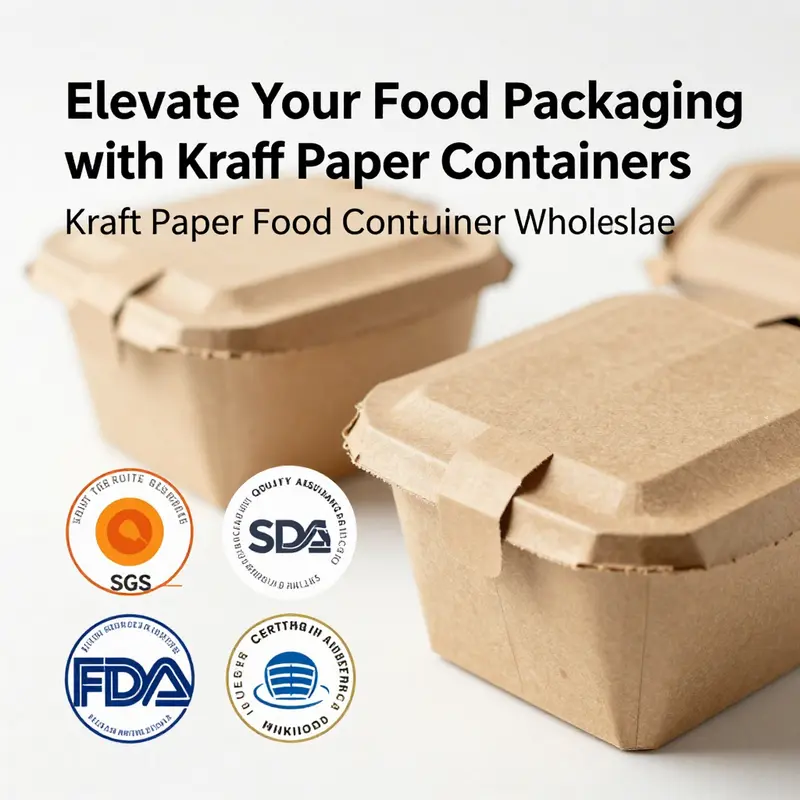
In wholesale sourcing for kraft paper food containers, certification is more than a checkbox on a vendor’s list. It functions as a living contract between manufacturer, distributor, and the end user, ensuring safety, regulatory alignment, and sustainable performance across markets. Buyers who move beyond price and aesthetics discover that robust certification programs do more than verify compliance; they reveal a supplier’s discipline in material origin, production controls, and traceability. When a factory demonstrates consistent adherence to multiple jurisdictions, it signals that its processes can withstand the operational pressures of large-scale distribution, from ocean freight to shelf-ready display. The result is not merely a container that holds food; it is a validated packaging solution that reduces risk, supports branding, and accelerates entry into new markets where regulatory expectations can vary widely. In this context, certification becomes a practical compass for navigating complex wholesale landscapes.
At the heart of many kraft paper containers lies a straightforward yet demanding material philosophy. The core is typically 100% virgin kraft derived from long-fiber cellulose, chosen for its strength, durability, and recyclability. The natural brown hue, often left unbleached, signals a commitment to minimizable processing and reduced chemical exposure. This choice aligns with growing consumer expectations for transparency in sourcing and environmental stewardship. The interior may feature a food-grade coating that enhances oil resistance and leakage control, enabling containers to perform reliably with salads, hot liquids, and greasy foods alike. Such coatings are increasingly formulated to be either greaseproof or water vapor barriers while maintaining a path toward recyclability. In practice, a well-designed container balances form and function: a structurally reinforced body that resists deformation under weight, a seam and junction system that stays intact during transport, and a surface finish that accepts branding without compromising food safety or consumer experience.
A critical aspect of wholesale readiness is how this material story translates into regulatory reality. Across CN, US, AU, and EU markets, manufacturers often publish a composite of certifications that attest to food-contact safety, environmental compliance, and social responsibility. Many suppliers report that a substantial share of their catalog—sometimes as much as 95%—carries multi-country certifications. For buyers, this pattern is meaningful because it narrows the risk associated with import compliance, labeling, and end-of-life disposal. It also gives importers confidence that the same product can be deployed in several regions with minimal modification to the supply chain. Yet certifications are not proclamations of perfection; they are the starting indicators of a deeper due diligence. Buyers should still request certificates that clearly reference the specific product family, invoice batch, and lot numbers, so that testing and traceability align precisely with purchase orders.
Beyond the certificates themselves, the field has converged on a practical standard of performance for high-quality containers. Comprehensive references in the industry emphasize the need for long-fiber kraft to deliver superior tensile strength and tear resistance. Natural, non-bleached kraft supports recyclability and compostability, which are increasingly central to environmental claims. The interior coating, if present, should be clearly identified as food-grade and compatible with the intended food type and temperature profile. A well-engineered container withstands the rigors of transport and handling without leaking or buckling. In this regard, a combination of mechanical joints, food-grade adhesives, and reinforced seams creates a reliable architecture that can hold liquids or heavy inclusions without failure. These technical features matter because they directly influence consumer satisfaction and brand reputation in a wholesale environment where margins are tight and returns are expensive.
For procurement teams, the quality narrative translates into a disciplined supplier evaluation routine. The most reliable suppliers present a transparent materials bill, a documented supply chain, and third-party test results. In addition to certifications, buyers should seek traceability records that map raw material origins to finished goods. This practice helps prevent the inadvertent use of non-conforming stock and supports maintenance of consistent product quality over time. Time-to-market considerations are also tied to the supplier’s ability to provide samples, run pilot tests, and adjust formulations quickly. In many cases, the minimum order quantity (MOQ) sits around a high threshold—commonly around 30,000 units—which reflects the scale of equipment, automation, and process standardization required to maintain price competitiveness. Some manufacturers, however, maintain more flexible terms for smaller buyers or for pilot runs, recognizing that a first order, if validated, can lead to longer-term partnerships and bulk opportunities.
A prudent procurement strategy couples certification with rigorous testing and clear service levels. Buyers who insist on sample testing before full production can minimize misalignment between visual specifications and real-world performance. The sampling phase should assess not only packaging appearance but also critical functionality: moisture barriers, leakage performance with various liquids, stacking strength, and heat tolerance in microwave or conventional reheating scenarios. While some coatings permit microwave use, others may restrict high-temperature applications or require specific venting considerations. Aligning the material choice with the intended usage scenario reduces post-purchase risk and protects margins. The process also includes validating branding options, such as color, surface finish, and logo placement. Customization is a natural extension of quality assurance because it tests the supplier’s capability to deliver consistent finishes across batches while maintaining gram-for-gram performance.
In this context, the role of branding becomes meaningful, even for wholesale purchases. The same container must carry regulatory compliance on its exterior and functional performance in interior use. The ability to print logos, select surface textures, or tailor color schemes should not undermine the container’s integrity or its compliance certificates. A mature supplier ecosystem supports such customization through controlled processes, standardized inks, and approved adhesives compatible with the food contact materials. This synergy between branding and safety is essential for retailers and foodservice providers that rely on consistent packaging to reinforce their value proposition. It also offers opportunities for tiered product lines, where premium finishes can accompany strong regulatory backing, enabling a brand to differentiate itself in crowded markets without compromising safety.
The sustainability dimension remains a pivotal driver in wholesale decisions. The natural, unbleached kraft base supports recyclability and, in some configurations, compostability. However, the final end-of-life outcome depends on the coating system and adhesive choices. Suppliers increasingly explore plant-based coatings and edge seals designed to minimize environmental impact while preserving grease resistance. Buyers should seek explicit declarations about recyclability streams, compostability certifications when applicable, and any residuals that could affect sorting in recycling facilities. Transparent environmental data—such as life-cycle assessments, processor certifications, and waste management commitments—helps buyers communicate value to customers who demand responsible packaging. In this regard, certification programs that link product safety to environmental performance become practical tools for market differentiation and long-term cost management.
A seasoned buyer’s approach also includes pragmatic risk-management practices. Platform-verified transactions, for instance, reduce financial exposure and enable dispute resolution with clear provenance data. Buyers should favor vendors that provide secure payment mechanisms, documented inspection rights, and order visibility from factory to door. In tandem, suppliers who offer testing protocols, batch-level traceability, and post-delivery support—such as replacement for non-conforming units—strengthen the trust profile of wholesale arrangements. The combination of multi-country certifications, transparent sourcing, robust design, and reliable after-sales service forms a comprehensive risk-control framework that supports scale without sacrificing quality. When these elements align, buyers gain not only compliance but also a measurable advantage in pricing, supply continuity, and customer satisfaction.
The narrative of certification and quality in wholesale kraft paper containers also intersects with practical design and procurement choices. For example, consider the potential for packaging lines that pair a reliable, certification-backed container with a branding option like a windowed cake box. Such a pairing demonstrates how thoughtful packaging design can enhance consumer appeal while preserving safety and sustainability. A real-world example of this concept is a product line featuring Pure Color Foldable Cake Boxes with Window, which illustrates how customization can coexist with strict quality controls. This kind of pairing—functional, compliant, and visually distinct—helps wholesalers offer a differentiated portfolio to foodservice operators, retailers, and brand owners. See more about this type of design approach at the linked product page: Pure Color Foldable Cake Boxes with Window.
In closing, the wholesale journey for kraft paper food containers is defined by the tight weave of certification, material science, and supply-chain discipline. The strongest partners are those who provide multi-jurisdictional validation, transparent origin stories, and a track record of performance under real-world conditions. They offer not only compliance documents but also practical reassurance in everyday operations—from bulk orders to high-volume distribution and branding integration. The pathway to reliable wholesale sourcing lies in combining rigorous testing, clear documentation, and a design philosophy that honors safety, recyclability, and consumer trust. For deeper technical context on standards and performance, reference materials in the industry detail how high-quality, eco-friendly kraft containers are expected to perform across use cases and markets. External readers can explore further here: https://www.rosspackaging.com/blog/eco-kraft-paper-food-container-round-standards-performance-best-practices.
Vendors at the Helm: Navigating the Kraft Paper Food Container Wholesale Landscape
The ascent of kraft paper food containers in wholesale markets rests on more than the lure of eco-friendly credentials. It marks a broader shift in how brands think about packaging as a strategic asset rather than a simple vessel for meals. In many regional markets, kraft-based solutions have become the default for quick-service restaurants, takeout chains, and retailers who seek reliable performance without compromising sustainability. The conversation around wholesale kraft paper packaging thus starts with two intertwined questions: can a supplier deliver scale, and can they do so in a way that supports clear branding and responsible material choices? The answer, in practice, hinges on a spectrum of vendor capabilities that range from ultra-large manufacturers with economies of scale to specialist producers who excel in niche formats and rigorous environmental controls. From a buyer’s perspective, understanding this spectrum helps align procurement priorities with the realities of production capacity, quality assurance, and regulatory compliance, all of which shape the true value of a packaging program beyond the ticket price per unit.
In the current global landscape, kraft paper containers—especially those used for salads, soups, sandwiches, and ready-to-eat meals—benefit from a material profile that balances strength, grease resistance, and end-of-life considerations. The core material, typically 100% virgin kraft fiber in many leading formats, is lauded for its natural strength and recyclability. Yet the interior coatings, if present, must strike a careful balance: they should enhance oil and moisture barriers without compromising food safety certification or the ability to recycle. Across the market, buyers increasingly expect packaging to be both food-safe and clearly labeled as compostable or recyclable where applicable. This trend has elevated the importance of third-party certifications and transparent material disclosures, which buyers use to validate claims about biodegradability, recyclability, and compliance with evolving regulatory standards in major markets such as the EU and North America.
Two archetypal supplier profiles consistently emerge in wholesale discussions. The first is the archetype with expansive production networks and high-volume output. This type of supplier offers tiered pricing tied to quantity and aggressive, scalable lead times. They can accommodate orders from tens of thousands up to millions of units, with a wide spectrum of sizes from compact 500 ml formats to large 2000 ml variants. The hallmark here is the ability to deliver standardized products at market-breaking unit costs when orders are large enough to amortize setup, tooling, and demand planning. The second archetype focuses on precision, customization, and sustainability. These producers may operate at somewhat smaller daily volumes but excel in engineered solutions such as bio-based coatings, clear labeling on-pack, and sophisticated surface finishes like matte or gloss lamination, foil stamping, or embossed textures. They often serve specialty segments such as sushi boxes, premium grab-and-go formats, or brands that insist on explicit ecological narratives—biodegradable coatings, compostable labeling, and third-party verification of environmental claims. Both profiles share core capabilities: robust quality control, traceable supply chains, and the ability to adapt to brand requirements without sacrificing performance.
From a price perspective, buyers typically navigate a tiered ladder. The ultra-competitive tier, available from large-scale producers, can yield remarkably low per-unit prices when volumes reach tens of thousands of pieces. In practical terms, per-piece costs can dip toward the micro-cent range at high quantities, inclusive of standard customization like color, logo placement, and surface treatment. For example, when interior oil-barrier requirements are straightforward and the product format is highly standardized, unit costs can fall around a few tenths of a cent. The next tier reflects the added value of specialized features: biodegradable coatings, FDA or EU food-safety certifications, or advanced surface finishes. In these cases, prices may rise to a few cents per unit, reflecting the additional materials engineering, testing, and documentation. A further tier exists for generic, non-specialized formats where the price per piece remains higher than the mass-market tier but still benefits from the economies of scale that wholesale channels provide. In practice, buyers often report price bands such as low-cost, mid-range, and premium, with the exact band depending on dimensions, coating, brand customization, and the degree of regulatory assurance required by the buyer’s target markets.
Beyond price, the minimum order quantity and production capacity are decisive. Where a buyer may want to test a new format or a new supplier, MOQs commonly sit around the 30,000-piece mark, though some manufacturers are able to accommodate smaller runs, particularly when the buyer is open to shared tooling or uses standard formats. Daily production capacity varies widely. The largest producers may turn out hundreds of thousands of pieces per day, ensuring rapid restocking for national chains and seasonal spikes. Niche players, while smaller, often offer more flexible scheduling, faster pre-production cycles, and a higher probability of allowing product sampling before full-scale manufacturing. The procurement decision frequently hinges on a combination of lead times, the reliability of a supplier’s flexible production plan, and the supplier’s willingness to align with the buyer’s logistics and import requirements. For brands expanding into new markets, this alignment can determine whether the packaging program can scale in step with demand or whether it becomes a bottleneck that slows growth.
Quality and compliance are inseparable from wholesale success. A respected supplier portfolio emphasizes a blend of third-party certifications and rigorous internal audits. The common baseline includes standards such as FDA, CE/EU, and SGS, with many factories also pursuing RoHS and ISO 9001 quality management systems. Such certifications are not merely bureaucratic hurdles; they are practical indicators of process discipline. A supplier with formal pre-production sample approval procedures and final prior-to-shipment inspections reduces the risk that a customer will encounter defects, misprints, or inconsistencies once a program is live. In addition to these, the growing importance of sustainability considerations cannot be overstated. Buyers want to know that packaging meets environmental expectations not just in policy but in practice. Coatings like PE/PLA, labeling that clearly communicates “biodegradable” or “compostable,” and a demonstrable track record of compliance with emerging international environmental standards help brand owners claim the high ground in a crowded marketplace. This is especially relevant as regulatory regimes such as single-use plastic directives and recycling mandates intensify globally.
The customization story, meanwhile, has moved from a fringe feature to a central differentiator. Brands increasingly demand precise control over dimensions, color fidelity, and surface engineering. The ability to deliver Pantone-matched colors, multi-foil embossing, matte or glossy finishes, and premium surface textures is now a standard expectation for many wholesale suppliers. The interior coating becomes a strategic decision, not a mere afterthought, because it directly affects grease resistance, heat retention, and the ability to withstand microwaving or cold storage conditions. When brands opt for printed interiors or branded exteriors, the supplier’s ability to handle file formats such as AI, PDF, or PSD with color management and proofing becomes essential. The supplier’s design support, including artwork setup, print-proofing, and quick iterations, reduces time-to-market and helps ensure that packaging aligns with marketing campaigns, seasonal menus, or co-branding initiatives.
Supply-chain resilience is another central axis. Buyers evaluate whether a supplier can guarantee continuity in the face of port congestion, currency fluctuations, and raw-material shortages. FOB, CIF, and DDP terms illustrate different risk allocations and cost structures, while payment flexibility—such as T/T, PayPal, or alternative arrangements—supports a range of buyer profiles, from global restaurant chains to regional distributors. The capacity to harmonize packaging programs with the buyer’s procurement calendar, seasonal demand, and rolling rebranding cycles is often what distinguishes a dependable supplier from a sporadic one. In practice, buyers may request a staged rollout, with an initial pilot in select locations followed by broader deployment, a process that requires steady communication and visible milestones across the supplier’s production, logistics, and quality teams.
A practical path for buyers is to test a supplier’s capabilities with a sample order before committing to a full-scale production run. The recommendation is to request samples that replicate the intended finish and coating, then evaluate performance under real-world conditions: oil resistance, moisture management, stacking strength, and performance after microwave heating if applicable. A pre-production sample review helps ensure that the final product will behave as expected in a fast-paced kitchen or retail setting. In this context, a transparent documentation package—certifications, material disclosures, and clear labeling—becomes as important as the samples themselves. The more a supplier can demonstrate consistent quality, traceability, and alignment with environmental claims, the more confident a buyer can be about placing larger orders.
For readers who want a concrete reference point on how a supplier might present its kraft paper packaging at scale, consider a widely accessible catalog page that showcases bulk, customizable kraft paper bowls and containers with lids. The page demonstrates how a supplier communicates dimensions, coating options, and branding capabilities in a single, accessible format. This example also illustrates how a buyer can translate product detail into a practical procurement decision, weighing price, MOQs, and delivery terms against brand requirements and sustainability goals. As with any major packaging program, the key is to blend an objective assessment of costs with a clear view of long-term value: packaging that performs reliably in-store and in transit, while supporting a compelling brand story and minimizing environmental impact.
Finally, a note on practical sourcing strategy. Buyers should prioritize suppliers that can provide not only standard formats but also flexibility in design and environmental labeling. The best partners are those who can integrate with a buyer’s marketing and procurement calendars, offer meaningful samples, and document their environmental claims with verifiable certifications. They should also be prepared to discuss packaging innovations, such as coatings that improve oil resistance without compromising recyclability, or surface finishes that maintain visual appeal through repeated uses and wash cycles. In a market where regulatory pressure and consumer expectations continue to rise, the ability to couple price with performance, sustainability, and brand support can determine whether a packaging program thrives or merely survives.
Internal link reference for further context on bulk packaging offerings: Disposable Kraft Paper Bowls Food Containers with Lids
External reference: https://www.alibaba.com/product-detail/Wholesale-Customized-Carton-Pizza-Salad1600544766871.html?spm=a2700.galleryofferlist.pc111111_1&productId=1600544766871&sourceType=gallery
从样品到下单:把握 Kraft Paper 食品容器批发的全链路与风险管理
外部参考资源:在食品包装材料的合规与安全方面,相关的行业指南与监管要求提供了宝贵的规范与实践要点。更多关于食品接触材料的合规信息,可以参考权威机构发布的公开资料,以确保你的包装在目标市场具备可追溯性与合规性。外部参考资源链接:https://www.fda.gov/food/packaging-labeling-food-contact-substances
Final thoughts
Kraft paper food containers represent an innovative solution to modern food packaging challenges. With the increasing demand for sustainable practices, understanding their unique features and market dynamics can give your business a competitive edge. By focusing on quality, supplier reliability, and smart purchasing strategies, you can enhance your brand’s reputation while meeting customer expectations. As we’ve explored, from core product characteristics to vital supplier insights, kraft paper containers can be a transformative addition to your food service operations.