
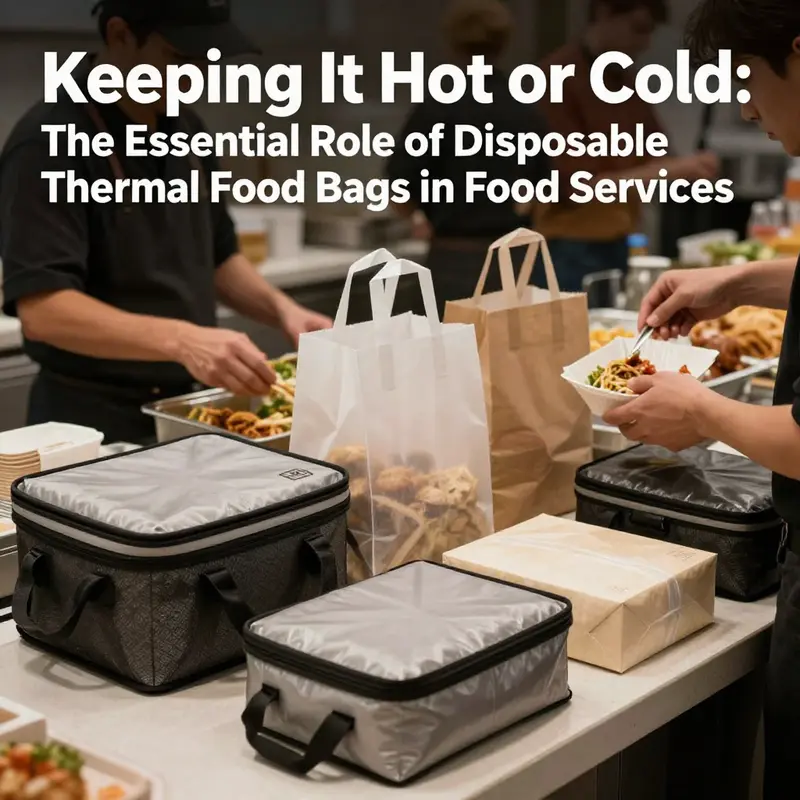
In the bustling world of food service, maintaining the ideal temperature of food and beverages during transport is critical to customer satisfaction and product integrity. Disposable thermal food bags serve as an indispensable tool for bubble tea shops, restaurants, food trucks, catering services, event planners, and corporate procurement teams. They combine efficient insulation with a lightweight design, addressing the specific needs of each segment while also providing a chance for eco-friendly packaging solutions. This article will delve into the insulation mechanism of these versatile bags, explore their economic implications for the food delivery industry, and highlight current sustainability trends that are shaping their production and use.
Layered Shields in Transit: The Thermal Bag Story
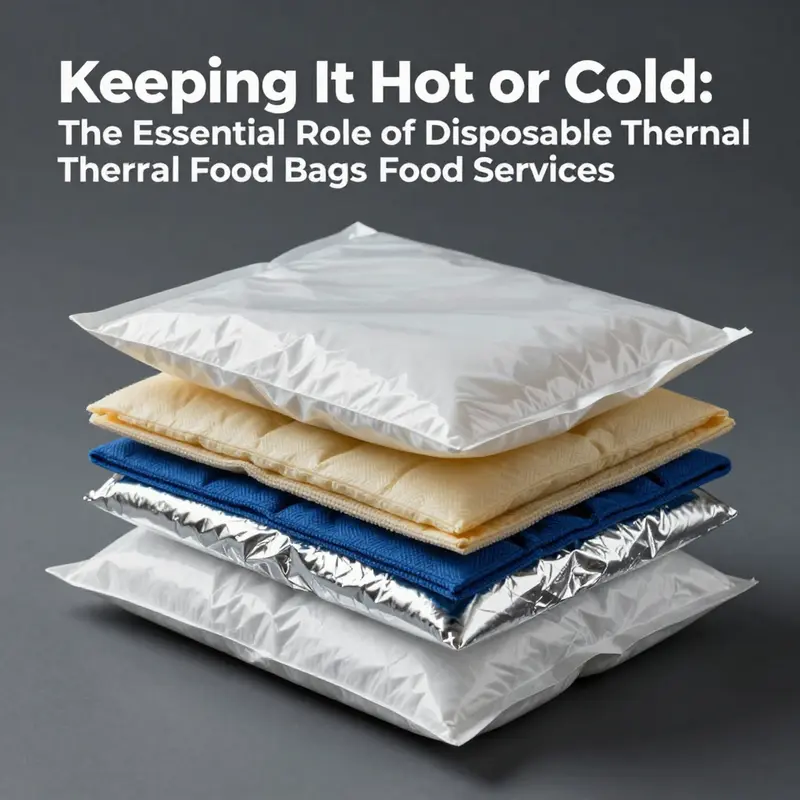
A meal left for delivery begins a journey where warmth or chill is tested. Disposable thermal bags act as microclimates that govern a small environment. The science rests on heat transfer: conduction, convection, and radiation. By layering a radiant-reflective outer face with an internal air-trap, a thin bag can slow temperature drift more than it seems possible for its weight and size.
The radiant barrier reflects much of the heat that would otherwise enter or leave the bag. The inner air pockets slow conduction by reducing contact and insulating the contents. Some designs pair the reflective outer with bubble or foam insulation to create a synergistic system that interrupts all paths of heat transfer without adding bulk.
In practice, the result is a practical tool for hot meals and cold items alike. It can reduce condensation, stabilize temperature during transit, and support a reliable customer experience. Businesses benefit from reduced temperature abuse, improved texture and aroma, and the potential for more efficient handling in busy delivery windows.
Sustainability considerations include recyclable or compostable materials, leak resistance, and durability. The design challenge is to balance performance with weight, cost, and environmental impact while maintaining hygiene and food safety standards.
The chapter closes by recognizing that the layered approach is more than a physical phenomenon; it is a system that supports the brand promise of freshness, reliability, and convenience in real-world logistics.
Pricing, Policy, and Performance: The Economic Trajectory of Disposable Thermal Food Bags in Food Delivery
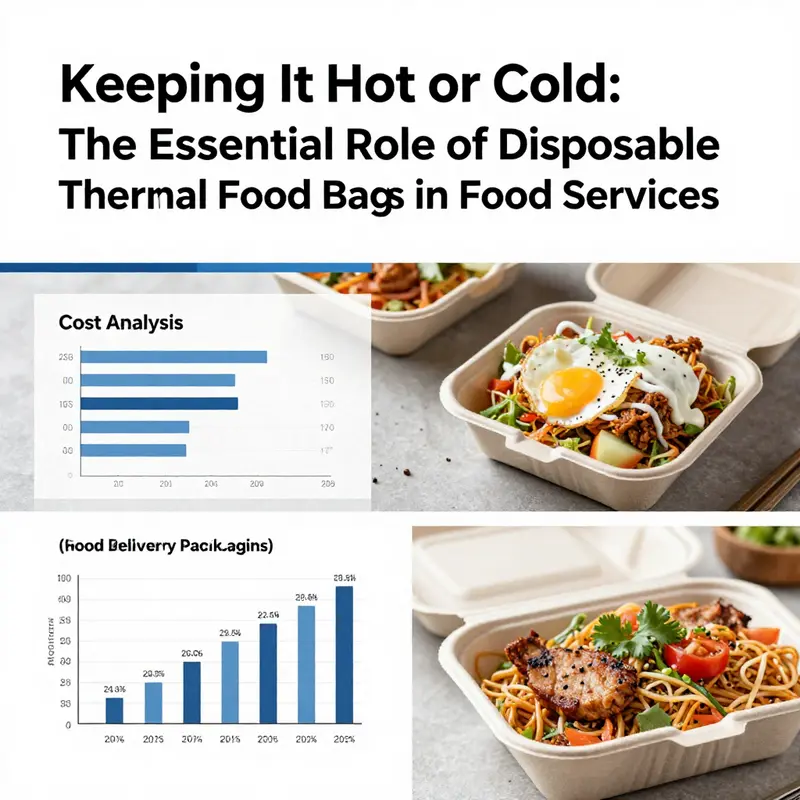
The rise of disposable thermal food bags in the delivery economy is a story not just about keeping meals warm or cool, but about how temperature-sensitive packaging reshapes cost structures, regulatory risk, and consumer expectations in a highly price-competitive landscape. As delivery platforms scale and consumer appetites for convenience grow, the packaging that wraps a meal becomes an economic lever as potent as the recipe itself. The most immediate economic intuition rests on unit costs: a lightweight bag is cheap, and the cheapest variants—often heat-retentive foil configurations or laminated pouches—offer a straightforward way to curb material costs when orders pile up. Industry observations, drawn from material trends through 2025, describe these bags as lightweight and cost-effective, enabling high-volume operations to preserve margins on meals that otherwise risk temperature abuse during transit. Yet the surface simplicity belies a more nuanced equation: the duration of insulation, the demand for speed, and the regulatory terrain all tilt the balance toward or away from certain packaging choices. In practice, this means a delivery business cannot lock in a single bag strategy without considering delivery velocity, route density, and the precise temperature window required by different cuisines and foods.
Direct cost is only the opening price of the conversation. The most economical bags—especially those designed for cold or chilled goods—often carry a per-unit cost in the range of a few tenths of a dollar when purchased in large quantities. For example, bespoke cold transport mailers can sell for roughly $0.40 a piece when ordered at scales around 100,000 units or more. That level of price point is compelling for pizza-delivery operations or other short-distance services that rely on cheap, fast packaging to maintain margins in an intensely competitive space. On the other end of the spectrum, customized insulated lunch bags can span from less than a dime to several dollars per unit depending on size, material choices, moisture resistance, waterproofing, branding, and even additional features such as solar charging panels or other branding embellishments. The observed spread in price highlights a fundamental tension: shoppers and operators want packaging that ships light, protects contents, and promotes the brand, but at a cost that does not erode the economics of low-margin food delivery.
The insulation window itself is a critical driver of labor and routing costs. The typical insulation duration for many disposable thermal bags hovers in the 30–60 minute range unless backed by additional ice packs or passive cooling strategies. That window aligns with many local delivery norms but complicates longer-range delivery and catering models. When a bag’s thermal performance is limited, operators may accelerate delivery timelines, optimize routes to minimize transit time, or invest in ice packs and higher-grade liners to extend the temperature envelope. Each of these choices has a cost consequence. Ice packs add material cost and, more importantly, require coordination with packing staff and drivers to ensure replenishment and correct usage. In a high-volume operation, even small frictions—such as having to adjust routes to accommodate incremental cooling needs or ensuring drivers return with bags for reuse—scale into meaningful labor and logistics expenses. The net effect is that the apparent savings from a low unit price can be offset by the added costs of faster deliveries or supplementary cooling assets if the business model is not designed with temperature maintenance in mind.
Beyond the balance sheet, regulatory and environmental considerations increasingly shape the economics of disposable thermal bags. As cities and regions tighten controls on single-use plastics and foam waste, the financial risk of noncompliance grows. Polystyrene foam containers, for example, have faced bans and fees in many urban markets, elevating disposal costs or penalties for non-compliance. This regulatory drift shifts the cost calculus in two ways: immediate compliance costs—such as replacing or upgrading packaging lines to meet waste regulations—and longer-term risk management, including potential fines and reputational costs when customers perceive a brand as contributing to environmental harm. For operators, the price of compliance is not merely a line item on a budget; it can influence strategic decisions about switching to more sustainable materials, redesigning packaging to meet regulatory requirements, and investing in end-of-life solutions that support recycling or composting streams.
In the eco-conscious turn of the market, the smart money often leans toward packaging choices that align with consumer expectations around sustainability. The economic argument for sustainable packaging rests on three pillars: reduced regulatory risk, enhanced brand perception, and potential cost savings from reusable or compostable options over time. While reusable systems require a different operating model—collection logistics, cleaning and sanitization, and inventory management—they can yield meaningful long-term cost savings. A brand that communicates responsibility around packaging can justify premium pricing or improved customer loyalty, offsetting the higher upfront costs of more sustainable designs. This is not a vague marketing assumption; it is a material shift in consumer behavior, with research noting a willingness to pay more for brands perceived as environmentally responsible. Such preferences do not always translate into immediate pricing power, but they do influence how retailers and delivery platforms structure contracts with suppliers, how they allocate packaging budgets, and how they measure the lifetime value of a bag as an asset that travels with every order.
To navigate this complex terrain, operators increasingly consider the lifecycle cost of packaging rather than the sticker price alone. Lifecycle analysis incorporates manufacturing, transport, use, disposal, and potential reuse. A disposable thermal bag carries not just a price tag but a travel history: the energy expended in production, the fuel consumed in transporting the bag to warehouses and suppliers, the wear and tear from repeated use in daily delivery rounds, and the end-of-life management costs. In markets moving away from foam and toward biodegradable or compostable options, the lifecycle equation often tilts in favor of new materials that, while pricier upfront, reduce waste-related liabilities and align with regulatory trajectories. The sustainability premium, then, is not merely a theoretical differentiator; it becomes a practical consideration in procurement negotiations, where suppliers pitch materials based on weight, barrier properties, leak resistance, and compatibility with FDA standards. In this context, the choice of packaging is a strategic lever that influences supplier contracts, waste-management partnerships, and even driver training programs that emphasize correct usage and disposal practices.
A practical implication of this economic framing is the opportunity for packaging to become a differentiator that touches both cost and customer experience. When a delivery experience consistently guarantees hot meals or chilled salads arrive without leakage or condensation, the perceived quality of service rises. Customers notice and remember such reliability, and the effect on brand equity can translate into repeat orders and higher order values over time. The packaging becomes a silent ambassador of service quality, not a mere container. For operators, this means investing in the right balance of insulation performance, moisture control, and branding opportunities. A bag that holds temperature well and resists moisture loss keeps the food appetizing, which, in turn, reduces the likelihood of negative reviews and returns. In the most mature markets, this dynamic feeds into a virtuous cycle: reliable packaging enhances customer trust, which sustains demand and supports favorable pricing or favorable terms with suppliers, reinforcing margins without sacrificing service standards.
The market for disposable thermal bags is also shaped by supply chain dynamics and scale effects. Global suppliers offer a spectrum of options, from lean, single-use designs intended for short-distance delivery to more sophisticated multi-layer systems suitable for longer trips or high-volume catering. Scale matters because the unit price tends to fall with volume, and the associated fixed costs of branding, customization, and compliance can be amortized over larger purchase quantities. Conversely, smaller operators face higher per-unit costs and greater relative exposure to fluctuations in raw material prices, which may shift with energy costs, availability of reflective foils, or new barrier materials. The balance between material performance and cost becomes a negotiation point in procurement. Operators may prioritize variants that minimize thickness or weight while delivering adequate insulation for the majority of their routes. They may also seek compatibility with standard ice-pack strategies, so that a few minutes saved in packing translate into meaningful gains in overall delivery time.
Brand perception also plays a nontrivial role in this economic narrative. Packaging is a visible symbol of a company’s values, and in the crowded delivery landscape, customers may assign importance to how a brand treats waste, disposability, and the end-of-life story of its packaging. In practice, this means a willingness to pay a slight premium for a service that aligns with sustainability goals or a perception of responsible packaging. The opportunity for a premium exists when brands couple durable packaging with credible messaging about recyclability, compostability, or reusable return programs. Yet translating this into tangible financial advantage requires careful operational design: ensuring return logistics for reusable bags, implementing cleaning cycles that meet sanitation standards, and measuring closed-loop performance so that the environmental benefits are not offset by logistical inefficiencies. The net effect is that packaging decisions can support or erode customer loyalty, which then feeds back into pricing power, billing terms, and long-term profitability.
Amid these considerations, a pragmatic path emerges for decision-makers. Start with a clear mapping of the temperature profiles required by core menu categories, and align packaging choices to those profiles rather than pursuing a one-size-fits-all solution. If cold foods predominate in a network, invest in bags with proven moisture barriers and stable insulation for typical route times. If hot meals carry the majority, ensure that the design minimizes heat loss and condensation while supporting branding opportunities. In mixed baskets, seek modular options that can accommodate both hot and cold items within the same order without compromising insulation or becoming unwieldy for drivers. This balanced approach helps avoid overpaying for features that do not contribute meaningfully to the operational realities of a given delivery footprint.
The internal economics of inputs extend beyond unit pricing. Logistics teams should examine the cost of disposal and waste management as part of total cost of ownership. Environmental compliance fees, extended producer responsibility schemes, and recycling program participation all influence net costs. A packaging strategy that reduces waste, or that channels waste into a streamlined recycling stream, can lessen these ongoing charges and create a more predictable expense profile. Conversely, if a company lags in waste management readiness, it risks unexpected charges and reputational risk that can ripple through pricing and customer trust.
To bring these threads together, consider the lifecycle as a continuum rather than a sequence of isolated costs. A disposal-focused frame highlights the per-piece price, but a sustainability-focused frame reveals hidden savings through risk mitigation and customer retention. The most resilient operators blend these lenses: they select materials with favorable regulatory risk profiles, adopt practical packaging in tune with route realities, and invest in branding that communicates responsibility without sacrificing performance. In doing so, they create a packaging narrative that supports margins, protects brand integrity, and contributes to a delivery system that can scale with demand while meeting evolving consumer and policy expectations.
From an external research vantage, these dynamics connect to broader industry standards and practical applications. For a detailed exploration of how thermal food bags impact delivery efficiency and cost structures, see the industry standards and applications in thermal bag technology. This resource anchors the discussion in a rigorous framework that translates temperature performance into process metrics, informing procurement, operations, and strategic planning across the delivery ecosystem. Moreover, for organizations exploring sustainable packaging options without sacrificing performance, a close look at compostable and biodegradable alternatives—designed to meet food-grade standards while resisting leakage—offers a path to long-term viability in a market where environmental compliance is increasingly non-negotiable. Within this context, the economic narrative of disposable thermal bags is not a static cost line but a living component of a company’s strategy for efficiency, resilience, and value creation.
Operationally, the economics of these bags must be considered alongside user experience and brand storytelling. The packaging design should enable straightforward packing and unloading, minimize condensation, and support a consistent customer experience across a broad range of deliveries. This means attention to details such as inner liners that resist moisture build-up, outer shells that resist tearing, and branding elements that align with a broader sustainability message. In the best-case scenarios, packaging becomes a seamless, silent partner to the food itself, reducing waste, supporting fast service, and reinforcing a perception of reliability that customers associate with professional, modern delivery platforms. A well-managed packaging strategy also buffers a business against price volatility in raw materials by locking in supplier terms through longer-term contracts or strategic partnerships that spread costs over time and across product lines. When these elements converge, the economic trajectory of disposable thermal bags moves from a simple cost consideration to a strategic lever that helps a delivery operation expand, maintain margins, and cultivate customer trust in a market that is as much about experience as it is about sustenance.
External reference: For a broader understanding of how thermal bag standards and practical applications influence operational efficiency and cost structures, see the external resource on thermal bag standards and applications. This material provides a rigorous basis for aligning packaging choices with performance targets, compliance requirements, and cost management strategies across the delivery ecosystem. Internal linking note: for a case study of sustainable, flexible packaging options that can support eco-friendly branding while maintaining performance, you can explore eco-friendly disposable takeout packaging options. This resource offers practical insights into materials, design, and lifecycle considerations that help bridge the gap between cost and value. External research note: a deeper dive into the economic implications and regulatory context is available at the referenced standard-and-applications resource.
Green Inside the Bag: Charting the Sustainability Shift in Disposable Thermal Food Packaging
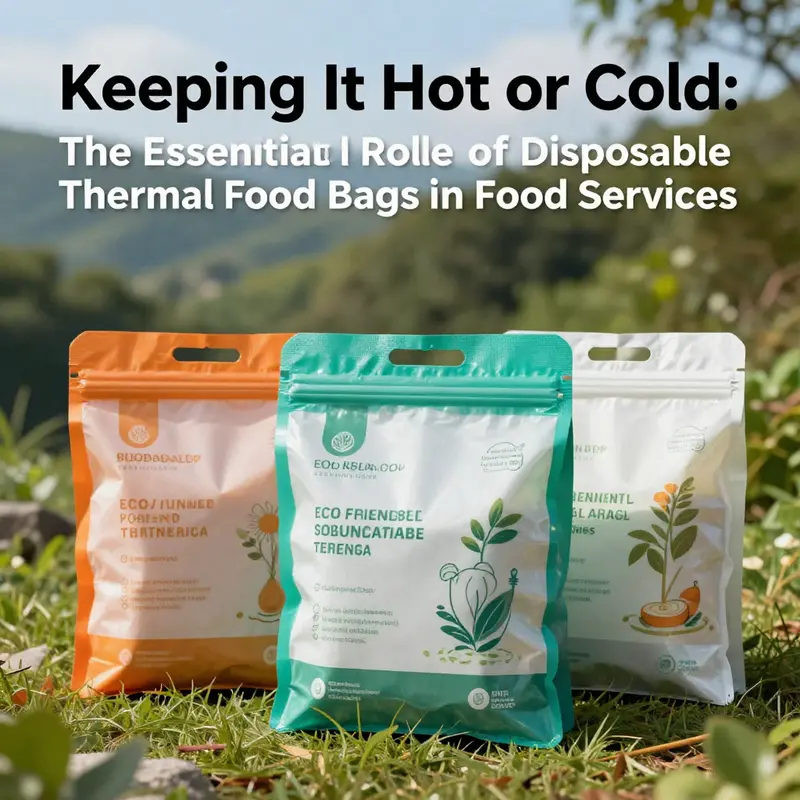
The evolution of disposable thermal food bags is unfolding in a way that few packaging categories have managed with such stubborn practicality and visible conscience. These bags, once celebrated mainly for their light weight and thermal reliability, are now increasingly judged by what they leave behind. The tension between keeping meals at safe temperatures during takeout or delivery and minimizing environmental impact is no longer a peripheral concern; it sits at the core of how manufacturers design, how restaurants select packaging, and how regulators evaluate material safety, end-of-life options, and overall lifecycle performance. What is emerging is not a single silver bullet but a set of converging trends that reframe disposable thermal bags as part of a larger system—one that integrates green materials, smarter design for end-of-life, and transparent credentials that customers can understand and trust. In this shifting landscape, sustainability becomes a feature not only of material choice but of system thinking: how a bag is made, how it functions in transit, what happens to it after use, and how it supports circular economies without compromising food safety or convenience.
At the core of this shift is the material story. Biodegradable and compostable options have moved from niche experiments to playable, scalable choices for everyday food service. PLA, derived from cornstarch or other plant feedstocks, embodies an ambition to substitute conventional petroleum-based plastics with bio-based alternatives. When paired with other sustainable fibers or with bio-based insulating foams, PLA-based structures can deliver acceptable thermal performance while aiming to reduce the net carbon footprint over the material’s life. Yet the narrative here is nuanced. Compostable does not automatically mean home-compostable, and composting facilities are not uniformly accessible in every city. The success of these materials depends on clear labeling, credible third-party certification, and the presence of municipal or industrial composting infrastructure that can handle multi-layered laminates without compromising separation and processing. In practice, the shift toward biodegradable and compostable materials also spurs a re-examination of the insulating layers. Traditional foams and metallized films, while excellent barriers, carry end-of-life baggage. The industry’s response has been to explore bio-based insulating foams or recycled-content foams that maintain thermal performance while offering a more favorable end-of-life profile. The challenge is not merely to replace a component but to preserve the integrity of the whole packaging system: moisture resistance, leak prevention, and the ability to keep hot foods hot or cold foods cold without generating a flood of composting confusion downstream.
Another thread in this sustainability tapestry is the push toward recyclable designs that emphasize mono-material construction. The rationale is simple in theory: when a bag is composed of a single material type or a clearly separable, non-adhesive laminate, end-of-life processing becomes more predictable. Mono-material strategies reduce the complexity of disassembly and avoid the entanglement of incompatible polymers that can render a packaging stream non-recyclable. The practical result is a shift in how products are engineered, with a preference for materials that can be recycled within standard streams or that are more easily designated for take-back and reuse programs. This shift does not happen in isolation. It relies on collaborations with waste-management stakeholders, clarity in labeling, and sometimes new business models that incentivize customers to return or recycle bags through take-back programs. In effect, the industry is reimagining the bag as a component of a broader recycling system rather than a single-use hazard to be managed post hoc.
The physical design of the bag is also evolving in parallel with these material choices. A remarkable feature of modern development is the drive to achieve lightweight yet durable construction. It is not about shaving grams for fashion; it is about lowering the carbon footprint of entire supply chains by reducing the weight of packaging that travels across borders, across cities, and between kitchens and customers. This means optimizing the insulating layers for high performance with less bulk. Thinner metallized films, advanced recycled foams, and high-performance reflective barriers contribute to a lighter bag without sacrificing its ability to prevent condensation, resist moisture, and limit heat exchange with the surrounding environment. It is a fine balance that requires precise engineering and rigorous testing to ensure that a bag remains leakproof and food-safe across a range of ambient temperatures, from brisk outdoor deliveries to hot, humid kitchens. The result is a packaging option that feels less like a disposable burden and more like a carefully engineered part of the meal experience.
Consumer demand for genuine eco-credentials is another powerful driver of change. Labels and certifications are increasingly expected, and they cannot be vague or easily counterfeited. Third-party standards such as compostability certifications, forest-management certifications for paper components, and materials-cycling certifications are being used to anchor sustainability claims in credible evidence. Even certification schemes must be understood by buyers, whether they are restaurant operators, meal-kit services, or caterers who want to communicate a responsible choice to customers. The industry’s answer is a growing portfolio of verifiable claims that help distinguish bags on the shelf or in online catalogs. Yet with credibility comes complexity: certifications have specific scopes, criteria, and geographical applicability. Buyers must interpret which claims reflect home compostability, industrial compostability, or recyclability, and how those claims translate into behavior in their own supply chains and customer communities. In practice, this means more transparent material disclosures, a clearer map of end-of-life possibilities, and a willingness to align product development with certification programs that prove performance in real-world settings.
The idea of a closed-loop system is not a distant ideal but an active pursuit. Closed-loop thinking asks, what happens after the bag has fulfilled its primary function? Can the used bag be recovered, recycled, or repurposed with minimal waste and maximum value retention? This question has given rise to take-back programs, deposit schemes, and partnerships with recyclers or composters that can process the specific materials used in disposable thermal bags. When effectively implemented, such programs reduce landfill burden, improve material recovery rates, and create a feedback loop that informs new design iterations. Brands increasingly consider end-of-life scenarios during the earliest stages of product development, designing connections to collectors and recyclers that minimize contamination and maximize material purity. The concept extends beyond physical recovery. It encompasses consumer education, clear instructions on disposal, and the integration of digital labeling or QR codes that guide users to local processing options. In an era where waste management infrastructure varies widely from one region to another, the push toward closed-loop thinking also emphasizes flexibility and adaptability in design. A bag may be optimized for recycling in one city but better suited for composting in another, and manufacturers, retailers, and cities alike are learning to coordinate around those realities without compromising safety or performance.
All of these material, design, and systemic shifts unfold within broader regulatory and policy contexts that shape what is feasible in practice. Governments and supranational bodies are increasingly attentive to the environmental impacts of packaging across its life cycle. Regulations that promote extended producer responsibility, recycling targets, and clear labeling standards influence how manufacturers select materials and how quickly they can bring new designs to market. In some markets, compostability standards are tightening, encouraging a more aggressive adoption of bio-based materials and easier-to-separate laminates. In others, the emphasis remains on recyclability and waste-stream compatibility, which can slow the adoption of certain bioplastics. This regulatory patchwork matters because it affects cost, supply chain resilience, and the speed with which new materials can be scaled to meet rising demand. The interplay between policy, market expectations, and technical feasibility is proving to be a catalyst for more thoughtful, more resilient packaging ecosystems that can sustain both food safety and environmental stewardship over time.
Consider the practical implications for different use contexts. In takeout and delivery, the emphasis is on maintaining temperature and preventing leaks while keeping costs reasonable for high-volume operators. In meal-kit services, where packaging may be opened multiple times and portions are individually sealed, end-of-life considerations become more complex, but the potential for integrated recycling or composting streams can be greater due to standardized packaging components and consistent processes. Catering and outdoor events add another layer of challenge, where environmental conditions are variable and waste streams may be less predictable. In all cases, sustainability is increasingly tied to reliability and clarity. Packaging that performs well under pressure, that communicates its disposal path clearly, and that aligns with local waste-management capabilities is more likely to be adopted and used correctly by end customers. The success of these approaches is not solely about the material or the device in hand; it is about how well the entire ecosystem—from supplier to disposer—works in harmony.
The literature on trends in disposable food packaging underscores a future polished with green credentials and practical mechanisms for waste reduction. The Sustainable Packaging Coalition’s 2025 trends report, for example, emphasizes closed-loop thinking, greener materials, and enhanced end-of-life management as the pillars of a sustainable path forward. While the exact outcomes depend on regional infrastructures and market readiness, the direction is clear: the bag that carries a meal must also carry a credible plan for its own afterlife. This means more than mere recycling or compostability. It means designing with the end in mind—selecting materials that can be reliably processed, creating packaging that can be easily separated and sorted, and aligning with programs that collect and recycle or compost in ways that minimize contamination and maximize material recovery. It also means recognizing the social dimension of sustainability. Consumers increasingly trust brands that demonstrate transparency, provide clear disposal guidance, and show how their packaging choices reduce environmental impact without compromising safety or convenience. The emotional and reputational value of a responsible choice matters as much as the measurable environmental benefits.
In practice, this shift toward sustainability reframes what a disposable thermal bag is and what it can become. It invites procurement teams to weigh not just the upfront cost and thermal performance but the lifecycle costs and environmental footprints of different materials. It invites designers to balance heat retention and condensation control with recyclability and compostability, often requiring clever material science, adhesives, and lamination strategies. It invites operators to think about waste streams, customer education, and the business models that support take-back or return schemes. None of these elements alone solves the puzzle; together they form a holistic approach in which the bag is a functional, temporary carrier and a responsible actor within a larger system. The ultimate question becomes not only how well a bag performs during transit but how gracefully it fits into a circular economy—the moment it leaves the kitchen, the journey it undertakes, and the destiny it meets at the end of its useful life.
As this chapter looks forward, the horizon is marked by innovation that respects both safety and sustainability. We can anticipate smarter material blends that deliver warmth or chill more efficiently with less material, moving toward fabrics and laminates that are easier to recycle or compost, or that are designed to be disassembled into recyclable components without losing performance. We can expect more robust labeling and consumer education that clarifies disposal paths and reduces contamination in recycling streams. We can also foresee broader adoption of standardized end-of-life infrastructure—municipal or private—that makes it practical for both restaurants and consumers to participate in closed-loop programs. And we may see design for branding becoming more sophisticated, with packaging that communicates environmental values through subtle cues rather than loud marketing claims, thereby earning trust rather than merely attracting attention. The sustainability shift in disposable thermal bags is not a single trend but a convergence of material science, circular-design principles, regulatory alignment, and consumer engagement. When these currents run together, the resulting packaging becomes a scaffold for responsible food delivery and catering that does not force a trade-off between convenience and care for the planet.
For readers seeking a practical touchpoint, there are emerging examples in the landscape of options that blend eco-conscious materials with functional performance. Some suppliers now offer options described as eco-friendly takeout boxes for food packaging, which illustrate how the packaging category can evolve toward more sustainable choices without compromising microwavability or leak resistance. These demonstrations of design intent help communicate to buyers that sustainable performance is not a trade-off but a pathway to better overall outcomes for brands, customers, and waste-management systems. As the conversation around sustainability deepens, it becomes clear that the most successful bags will be those that are clear about what they are, what they do, and what happens to them after use. They will be the ones whose materials, constructions, and end-of-life options are aligned with local waste practices, consumer expectations, and measurable environmental targets. In short, the green future of disposable thermal food bags lies in coherence: materials and performance that meet food-safety standards, a design that supports recyclability or compostability, and a transparent narrative that helps all stakeholders participate in a more responsible, efficient, and resilient food-delivery ecosystem.
External resource: https://www.sustainablepackaging.org/reports/disposable-food-packaging-trends-2025
Final thoughts
In conclusion, disposable thermal food bags hold significant importance for food service businesses, particularly in retaining the quality of food and beverages during delivery. By understanding the insulation mechanisms, recognizing the economic benefits, and embracing sustainability trends, businesses can enhance their product offerings while staying compliant with eco-conscious consumer demands. Investing in quality disposable thermal food bags not only improves operational efficiency but also elevates customer satisfaction, making them a critical component of a successful food delivery strategy.