
When it comes to storing baby food, particularly within the realm of commercial food services such as restaurants, catering services, and food trucks, the choice of containers matters significantly. The question arises: can Gerber’s plastic containers, commonly used for baby food, be safely frozen? This article explores the risks of freezing baby food in these containers, the implications on quality and safety, and alternatives that are better suited for this purpose. Furthermore, we provide insights from experts to guide food service professionals on best practices, ensuring that they maintain the integrity and safety of the baby food they serve.
The Freezing Question: Rethinking Baby Food Storage in Plastic Jars and Safer Alternatives
When parents ask whether they can freeze baby food in familiar plastic jars, the answer is nuanced. The short answer is no for most standard jars designed for refrigeration and immediate serving. The longer explanation lies in how the container’s material behaves under freezing temperatures, how seals endure freeze‑thaw stress, and how the texture and nutritional quality of the food respond to the abrupt changes in temperature. Understanding these details helps families make storage choices that protect safety and preserve nutrition, while also reducing waste and choosing packaging that truly supports long‑term freezing when needed.
Plastic containers marketed for baby foods are typically crafted for short storage, simple serving, and straightforward refrigeration. They often rely on thin walls and seals optimized for keeping contents at cool temperatures for a limited time, not for withstanding the demands of a freezer. When temperatures plummet to well below freezing, the physical properties of plastics can shift. Some plastics become more brittle as the internal molecular structure tightens, and with brittle material, the risk of cracks or micro‑leaks grows. A tiny crack might not be obvious at first, but once a user moves the container from the freezer to a warm kitchen or from a freezer partially filled with ice to a microwave or stove, the crack can widen. Even without obvious cracks, a compromised seal can permit air and moisture to enter, which can invite bacterial contamination or lead to freezer burn that affects flavor and texture. This is not a risk limited to any single brand but is a structural reality of single‑use, refrigeration‑oriented packaging.
Beyond the risk of physical damage, there is a direct food‑safety concern. If a container cracks or the seal loosens, the integrity of the closed environment is diminished. Bacteria present in the kitchen or introduced during handling can find their way inside. Freezing itself is not a sterilizing process; it slows microbial growth but does not eliminate all potential pathogens. When you thaw frozen contents and rewarm them, those microbes can multiply if the container has allowed external contaminants to enter or if the product has been mishandled during thawing. For items as delicate as infant foods, even small levels of contamination are not acceptable, and that is why the consensus among experts emphasizes avoiding freezing in containers not explicitly designed for freezer use.
Texture and quality are another consideration. Freezing can alter the structure of purees and blended foods. Some components separate or become grainy as ice crystals form. The mouthfeel that a caregiver seeks to deliver to a tiny palate can change, which sometimes makes the food less appealing to a baby who already has a sensitive sense of taste and texture. Thawing can further compound texture changes. A product that has separated or become watery may require additional mixing or reheating, which can further degrade the overall eating experience and potentially affect how much of the food the baby accepts. In short, even when freezing seems convenient, it often yields a result that isn’t ideal for nourishment, enjoyment, or feeding consistency.
So what is the safe path? The core guidance is simple: use the freezer only with containers explicitly designed for freezer storage. Transfer the portioned food from the original jar into freezer‑safe, airtight containers or freezer bags that are labeled for long‑term storage. The transfer step is crucial because it gives you a container whose materials and seals have been tested for repeated temperature fluctuations, expansion, contraction, and long‑term stability. Freezer‑safe options commonly include BPA‑free plastics labeled as freezer‑safe, or glass containers with airtight lids. These materials are engineered to maintain a stable structure under cold conditions and to minimize the risk of leaks or cracks.
When thinking about sustainability and packaging innovations, it is worth noting that there have been industry movements toward single‑material or more recyclable packaging in baby foods. In early 2026, a major industry update announced the launch of a single‑material pouch designed to be recyclable and easier to repurpose, developed in collaboration with a packaging supplier. This development reflects a broader aim to improve recyclability and reduce waste across the sector. Importantly, though, these pouches are designed for shelf stability and conventional refrigeration or room temperature storage, not for freezing. The new design showcases a commitment to safer materials and better end‑of‑life outcomes, but it does not change the freezing guidance for containers that were not specifically built for that purpose. The same caution still applies: if you need to freeze, choose a storage solution that is explicitly designated as freezer‑safe and airtight, and reserve the original jar or pouch for its intended purpose.
For families seeking to balance safety, texture, and convenience, the practical approach is clear. Opened baby foods should be consumed promptly or stored in the refrigerator for a few days at temperatures below 40°F (4°C). If there is a need to store portions for longer, the prudent route is to transfer them into freezer‑safe, airtight containers and freeze in small portions. Portioning is important because smaller portions freeze and thaw more quickly and evenly, which helps maintain texture and reduces the number of times a baby may be exposed to the thawing process. When you are ready to use, thaw slowly in the refrigerator rather than at room temperature, and reheat gently to a safe serving temperature. Never refreeze foods that have already been thawed; this precaution helps preserve safety and quality.
From a practical perspective, many caregivers also find it helpful to plan in advance. Creating a small freezer stash of labeled, clearly dated portions can reduce the temptation to reuse unfrozen leftovers from a previous day. Clear labeling with the date and the intended baby‑friendly portion size helps ensure that each thawed portion is fresh and within a safe window. It is also a good habit to keep a running inventory so you are not surprised by old contents lingering in the back of the freezer. The combination of careful transferring, appropriate containers, and mindful thawing practices reduces the risk of safety concerns while supporting consistent feeding routines for infants.
In terms of how this guidance relates to broader packaging trends, the shift toward safer, recyclable, and more durable packaging continues to evolve. It is encouraging to see new materials and designs aimed at improving recyclability and reducing environmental impact. Yet the freezing question remains a condition of the container’s intended use. A container that is optimized for shelf life and refrigerated serving is not automatically a container you can rely on for freezing cycles. When in doubt, choose the path that prioritizes safety: transfer to a proven freezer‑safe vessel, and reserve the original container for its primary purpose—refrigerated storage or immediate serving.
For readers who want to explore related packaging options and safety considerations beyond the freezer decision, one resource highlights the broader landscape of eco‑friendly takeout packaging solutions. This material provides a perspective on how packaging choices can align with safety, convenience, and sustainability goals while acknowledging practical limits in the context of freezing baby foods. See the linked resource for more on sustainable, freezer‑friendly packaging options: eco-friendly disposable packaging for takeout.
The overarching message remains consistent across reputable guidance: protect the integrity of the container, protect the food, and protect the infant. Freezing is a powerful tool for extending pantry life, but it only works as intended when you use packaging that is designed to withstand the stress of temperature fluctuations. The original containers from a brand’s line are excellent for short storage once opened or for refrigeration; they should not be tasked with enduring a freezer’s rigorous cycle. If you desire long‑term storage, prepare for freezing with containers that are clearly labeled as freezer‑safe and airtight, and use the freezer as a tool for preserving nutritional quality, portion control, and feeding consistency. The goal is an approach that keeps infants safe, reduces waste, preserves nutrients, and respects the practical realities of home storage. In this light, the answer to the freezing question is straightforward: use the right container for the job, and you safeguard your baby’s food today and tomorrow.
External reference: For an official update from the industry on a related packaging initiative, see the 2026 announcement discussed in the detailed results: https://www.gerber.com/news/gerber-announces-first-single-material-pouch
The Freeze-Effect: Quality, Safety, and Container Choices for Frozen Baby Food
When families start freezing homemade or store-bought baby foods, a question often tilts the balance of convenience and caution: can these foods be safely stored in the same plastic jars that come refrigerated and ready to serve? The short answer, based on current guidance and practical experience, is nuanced but clear. Plastic jars and squeeze pouches designed for refrigeration or immediate use are not universally suitable for freezing. Freezing can compromise the container’s integrity, especially if the plastic is soft or designed for short-term cold storage rather than long-term freezing. Leaks, cracks, or warped lids are more likely when temperatures swing far below the freezing point. Even when a jar seems intact, the freeze-thaw cycle can introduce microfractures or seal failures that invite contamination once the food thaws. For many families, this reality pushes the practice toward freezer-safe containers or specially designed freezer pouches that can withstand the stress of deep cold and rapid temperature changes. In other words, the container matters as much as the food itself.
Beyond the container’s sturdiness, freezing touches the food’s texture and sometimes its flavor and nutrition. Baby foods, especially those based on fruits and vegetables, depend on delicate cellular structures for their smoothness and mouthfeel. When water inside the cells forms ice crystals, those crystals can rupture cell walls and alter texture. The result is often a puree that looks less uniform, with graininess or a slight separation once thawed. For older infants transitioning to more textured foods, this change can alter the eating experience and may influence acceptance of the meal. For younger babies who rely on a consistent, spoonable puree, a noticeable texture shift can be discouraging, even if the nutritional content remains largely intact. Texture, after all, is part of the eating cue that helps babies learn to chew and swallow new foods. Texture changes can also influence viscosity, making a once-smooth blend feel a touch too thick or too watery after thawing.
Nutritional integrity is another piece of the freeze puzzle. In general, macronutrients—carbohydrates, fats, and proteins—are relatively stable under freezing, and minerals and many vitamins persist when foods are frozen promptly after preparation. Yet some water-soluble vitamins, particularly certain B vitamins and vitamin C, may decline with extended storage, though the losses are typically less dramatic than the shifts caused by prolonged exposure to heat or light. More important than a precise vitamin tally is the practical reality that repeated freeze-thaw cycles can magnify any nutrient loss. If a portion is thawed and not used entirely, refreezing can compound texture problems and may create opportunities for bacterial growth if thawing isn’t controlled properly. The key is to freeze promptly after cooking, label clearly with the date, and limit the number of times a single portion is thawed and reused. In a sense, the freeze-then-thaw cycle becomes a choreography: each step must be deliberate to protect safety and flavor.
From a safety standpoint, freezing does stall many spoilage organisms by locking water into ice and slowing enzymatic processes. It effectively pauses microbial growth, which is a big win for extending shelf life and for keeping meals available during busy weeks. However, freezing does not sterilize food. Bacteria and viruses that are already present can survive at subzero temperatures, and freezing can preserve those organisms in a dormant state. When food is thawed, those pathogens can regain activity if the food has not been handled properly. This is a crucial distinction that caregivers should internalize: freezing buys time, but it does not replace careful hygiene, rapid cooling after cooking, and strict temperature control during storage and thawing. For this reason, safe handling guidelines remain essential regardless of the container choice. Refrigeration during thaw, cold water baths, and avoidance of room-temperature thawing all play roles in minimizing risk.
Consider the practical implications for everyday use. If you invest in jars and lids designed for freezer-grade storage, you’ll usually find that they’re crafted to tolerate temperature shifts and to seal tightly, limiting the risk of leaks. These containers are typically BPA-free and free from other chemicals of concern, and they are shaped to resist cracking when pulled out of the freezer or immersed in cold water. Meanwhile, many standard plastic jars intended for refrigeration may become brittle when frozen, or the lid may pop open if the seal isn’t robust enough for long-term cold storage. The difference is not only about safety but also about the experience of feeding. A thawed product that remains cohesive, with a predictable texture, tends to be easier for a caregiver to spoon and for a baby to accept. The last thing a parent wants is food that thaws into puddles or separates into layers that require extra stirring, which can introduce air and noise into feeding, potentially unsettling a hungry infant.
In light of these considerations, many families opt for alternatives when freezing baby foods. Freezer-safe containers—often silicone trays, rigid plastic with secure seals, or glass jars designed to withstand freeze-thaw cycles—offer a predictable path to portioned meals that can be popped into the microwave or oven (where safe) or warmed gently in a water bath. Freezer pouches, especially those engineered to lie flat and stack efficiently, can maximize space while providing consistent portion sizes. These pouches typically feature strong, multi-layer construction and leak-resistant seals, designed to hold purees, fruit sauces, or blended vegetables without leaking. For someone juggling multiple meals and a busy schedule, the ability to portion food into uniform sizes and store them flat is a real advantage. Space efficiency matters in small kitchens or freezers that must hold the seasonal supply of vegetables, fruits, and home-cooked staples for several weeks.
An important caveat, though, is that even with freezer-ready containers, some foods respond differently to freezing and thawing. Water-rich fruits, certain vegetables, and sauces with high water content can separate, become grainy, or lose their mouthfeel after thawing. Complex soups or blends with starches may thicken or grainify as they reheat. Families who notice these changes often adjust by using a blend of frozen portions and immediate-use portions, or by pre-cooking ingredients in slightly different forms—say, roasting rather than boiling—to preserve a more stable texture after freezing. This approach helps meet the baby’s evolving palate while maintaining the logistical benefits that freezing can provide for busy households.
The conversation around container choice also touches the broader landscape of food packaging safety. Caregivers are increasingly mindful of what touches the baby’s food. The market offers a spectrum of options, from jars and pouches designed specifically for freezer use to versatile containers that can go from freezer to table. The central message remains consistent: avoid using containers not explicitly rated for freezing. In practice, this means selecting products labeled as freezer-safe, with seals proven to resist cracking under low temperatures and to withstand temperature fluctuations during thawing. The goal is to minimize the risk of leaks, spills, or compromised seals that might contaminate the food or confuse the baby’s senses with unexpected textures or odors. It’s not just about keeping the food cold; it’s about preserving the original flavor, the bright color, and the gentle aroma that a developing palate relies on to explore new foods.
To make this more concrete, caregivers should adopt high-contrast labeling for their freezer stock. Date and portion size are essential details. A quick label with the date and contents helps ensure that food is used within a safe window and that, over time, flavors and textures do not degrade due to prolonged storage. It’s also wise to store all baby foods away from raw meats or odorous items to avoid cross-contamination, even in the freezer. The packaging and storage strategy should align with the broader food-safety framework outlined by trusted authorities: keep the freezer consistently below -18°C (0°F), thaw safely in the refrigerator or in cold water, and discard any food that has an off odor, unusual texture, or questionable appearance after thawing. By integrating these practices, families can enjoy the benefits of freezing—speed, convenience, and reduced waste—without compromising safety or quality.
In the end, the question remains practical and personal: do you freeze baby food in the same plastic jars you use for refrigeration and serving? The practical answer is: not if you expect long-term storage, consistent texture, and robust safety across multiple meals. Choose freezer-safe containers or designated freezer pouches for long-term storage, and reserve standard jars for short-term use in the fridge or on the go. When in doubt, err on the side of containers that are explicitly built to endure the freeze-thaw cycle. If you’re curious about packaging options that extend beyond traditional home storage—especially those marketed as durable and microwave-safe for cold and hot food alike—you can explore options like eco-friendly takeout boxes for food packaging, which illustrate how modern packaging designs are testing the boundaries of storage versatility. This is not a recommendation to switch to disposable containers for every meal, but rather a reminder that thoughtful packaging choices can help maintain safety and quality while supporting a busy family’s routine. To learn more about packaging options in a broader food-safety context, see the practical guidance on freezer handling from established food-safety resources, which emphasize prompt freezing, stable temperatures, and careful thawing practices.
Internal resource note: for readers curious about packaging options that emphasize durability and safe cold storage, see this example: eco-friendly takeout boxes for food packaging. This isn’t a product endorsement for baby food storage, but it illustrates how some packaging solutions are designed to endure the stresses of temperature changes and repeated handling. It’s a reminder that container design is a crucial component of safe, convenient feeding and that what you choose can influence both safety and experience at the table. For a concrete safety reference on frozen foods, the U.S. Department of Agriculture’s guidance on frozen foods outlines the basics of safe handling, storage, and thawing practices that undergird responsible home preparation and storage. External reference: https://www.fsis.usda.gov/food-safety/safe-food-handling-and-preparation-for-you/food-safety-basics/frozen-foods
From Jars to Freezer-Safe: Choosing the Right Containers for Freezing Baby Food
When parents first start freezing homemade or leftover baby food, a common question surfaces at the kitchen counter: can I use the same jars or containers that hold prepackaged baby food? The instinct to reuse familiar packaging is understandable, but the answer in practice is often no. The jars and plastic containers commonly sold for refrigerated or serving purposes are not designed to withstand the stresses of freezing and thawing. Temperature fluctuations can cause materials to contract and expand, lids to loosen, seals to fail, and sometimes the contents to slip out or leak. The consequences extend beyond a messy freezer. Frozen plastic can crack or warp, and any breach in the container can introduce contamination or expose the food to freezer odors and dehydration. The texture and integrity of the puree itself can also suffer from repeated cycles of freezing and thawing. For these reasons, the best approach is to store frozen baby food in containers that are specifically designed for freezer use, or in pouches that are engineered to handle temperature shifts without compromising safety or quality.
Consider the practical ripple effects of container choice. Freezer-safe materials are engineered to maintain their structure when subjected to subzero temperatures and then to reheat safely, if reheating is appropriate for the food. In contrast, standard jars and many everyday plastics are not designed with long-term freezer performance in mind. Even if a container appears rigid and dependable in the fridge, the extremes of a frozen environment can cause microcracks, lids to pop, or seals to fail. This can invite freezer burn, air exposure, and contamination, all of which undermine both the safety and flavor of the purée. The end result is not just a storage concern but a reliability issue for feeding schedules, which many families rely on for consistent meals and snacks for their little ones.
Guidance for freezing baby food generally centers on two broad approaches: specialized freezer-safe containers and compact, portioned formats that speed up the freezing and thawing process. Each approach minimizes waste, supports safe handling, and reduces the risk of bacterial growth that can occur with improper storage. The overarching aim is simple: preserve the food’s nutritional value while preserving the texture as much as possible. With that in mind, it’s helpful to think about portion control, materials, and practical handling from the moment you cook or purée the fruit, vegetable, or meat base.
One time-tested method is to portion puree into small, freezer-friendly units using ice cube trays. The trays can be made of BPA-free silicone or sturdy plastic that is explicitly labeled as freezer-safe. Each cube is typically 1 to 2 tablespoons, a size that aligns with incremental feeding needs as a baby grows and develops. Once the cubes are fully frozen, they are popped out and transferred to airtight freezer bags or containers. Labeling with the date and contents ensures you can rotate stock and plan meals without guesswork. This approach offers a practical balance: it minimizes waste, keeps the baby’s portions consistent, and allows you to thaw only what you need without thawing a larger amount than planned.
Another highly effective option is to invest in glass or stainless steel storage containers that carry freezer-safe ratings. High-boron silicate glass, in particular, has a reputation for resilience across broad temperature ranges, making it suitable for freezing and reheating, provided the lids and seals are also designed for freezer use. Glass and metal storage solutions typically withstand temperature shocks better than many plastics and are less prone to imparting flavors or odors to the food. For families looking for durability and long-term reuse, these materials offer a reliable path forward. They tend to be easy to clean and less likely to harbor residual flavors, which is a nice plus when you rotate different puree varieties.
For parents who prefer a lightweight, flexible option, silicone storage bags or pouches designed for freezer storage can be a smart choice. Reusable silicone bags are often built to withstand heavy freezer use and are designed to be leak-proof when sealed properly. They come in sizes that fit neatly in a freezer drawer or stack easily in a deeper freezer. The key is to select bags that meet appropriate safety standards and are clearly labeled as freezer-safe. Silicone’s resilience to temperature changes makes it a strong candidate for repeated freezing and thawing cycles, with the added perk of being easier to squeeze out the last bit of purée as you feed or batch-clean.
Plastic containers labeled as freezer-safe, BPA-free, phthalate-free, and PVC-free can also be a workable option if chosen carefully. The safest plastic choices are those that explicitly carry a freezer-safe designation and incorporate reliable, tight-sealing lids to minimize the risk of freezer burn and contamination. When using plastic, look for straight-sided shapes that stack efficiently and allow removal of air, which can help protect the puree from quality loss during storage. It’s wise to avoid overfilling, as expansion during freezing is normal and can stress lids or seals if a container is packed to the brim.
Perhaps the most important rule across all these options is to avoid long-term reliance on repurposed jars that were never intended for freezing. While it’s possible to reuse clean, sterilized jars that once held baby food, doing so for freezer storage over an extended period increases the likelihood of glass breakage, lid corrosion, or seal fatigue. Jars designed for general canning or serving may not be constructed to tolerate repeated subzero cycles. A compact, purpose-built freezer container or a well-made silicone pouch is usually a safer bet for consistent quality and safety.
Beyond the container itself, the freezing process benefits from a thoughtful workflow. Start by cooling hot or warm purées to room temperature before packaging. Introducing heat into a cold environment can alter textures or encourage condensation that affects texture and consistency. Once the food is portioned, allow air to escape before sealing. For cube trays or bags, flat freezing can save space and reduce thaw times. Lining a tray with a small sheet of parchment or plastic wrap can help in releasing cubes cleanly later on. After freezing, transfer to the chosen storage method with the date clearly marked. A simple rotation schedule ensures you use older portions first, maintaining freshness and safety.
Thawing is another critical step where care matters. The preferred approach for most purées is a gradual thaw in the refrigerator overnight. This method preserves texture and minimizes microbial growth. If you need the food thawed more quickly, you can place sealed portions in a bowl of cool or warm water, changing the water as needed, or use a low-temperature run in the microwave if you’re confident in even heating and you’re reheating to a safe temperature. In all cases, once a portion has defrosted, feed or reheat only the amount you intend to use, and avoid refreezing thawed portions. Repeated freeze-thaw cycles are damaging to both safety and texture.
Labeling is a small yet powerful habit. Date the storage, and note the puree’s primary ingredients when possible. A brief identifier helps when you’re dealing with multiple varieties. Clear labeling supports quick meal planning and reduces the chance of mixing flavors or feeding a baby an unfamiliar combination. It’s as much about safeguarding the baby’s experience as it is about maintaining food quality.
Texture is a frequent concern with frozen purées. Some foods reheat smoothly, while others can separate or alter in mouthfeel after freezing. If you’re working with fruits, vegetables, or blends that tend to thicken, you may want to consider a quick re-blend with a touch of breast milk, formula, or water to restore a silky texture after thawing. For meats or protein-rich purées, gentle warming and a brief re-blend can help reintroduce cohesiveness. The goal is a smooth, spoonable consistency that your baby can handle comfortably at feeding time. If texture proves stubborn after thawing, adjust the recipe or consider a different freezer-friendly format that preserves the intended mouthfeel better.
An ongoing thread in these storage decisions is peace of mind. Parents want to know that the food remains safe, remains nutritious, and remains nearly as tasty as when it was first prepared. The best practices converge on a few core truths: use freezer-safe containers, portion appropriately, label clearly, thaw safely, and avoid refreezing. Each choice you make fingers into the next, shaping your baby’s meals for the week or the month. As you read labels on containers, you’ll notice how different materials handle temperature stresses. When in doubt, favor materials explicitly designed for freezer use, avoid overfilled containers, and plan portions in a way that aligns with your baby’s age and appetite.
In this moment of decision-making, it’s helpful to think about not just the safety of the storage vessel but the broader ecosystem of packaging choices that surround the home kitchen. If you’re curious about how different packaging options stack up in real-world settings—particularly those that prioritize leak-proof seals, microwave compatibility, and overall ease of use—you can explore a resource that discusses eco-friendly, user-friendly packaging choices for food storage. For example, you can learn more about options like freezer-safe containers and bags at this guide to packaging considerations: eco-friendly takeout boxes for food packaging.
Of course, safety standards are not merely about the containers themselves. They also involve how the food is handled before freezing and after thawing. Public health guidelines emphasize clean hands, clean surfaces, and clean utensils at every stage of the process. It’s essential to bring the same hygiene discipline to freezing that you apply to cooking: wash hands before handling ingredients, sanitize preparation surfaces, and ensure that any equipment that touches the food is properly cleaned and dried. When your kitchen routine reflects this careful approach, your frozen baby food is more likely to stay fresh, safe, and appealing when it’s time to feed.
Finally, it’s worth noting that national safety bodies provide practical, age-appropriate guidance that can help shape your storage decisions. The U.S. Food and Drug Administration offers general food storage recommendations that apply across many household scenarios, including how to handle infant foods safely. While the specifics of freezing baby food can vary by ingredient and preparation method, following reputable guidelines helps ensure your approach remains sound over time. For a broader safety reference, you can consult authoritative resources such as the FDA’s storage guidelines, which lay out practical steps for keeping foods safe from pantry to plate: https://www.fda.gov/.
If you’re weighing the options for your family, the key takeaway is clear. Do not rely on jars or containers that aren’t clearly labeled as freezer-safe for freezing baby food. Instead, choose formats that are explicitly designed to handle the cold, from compact ice-cube portions stored in freezer-safe trays to glass or stainless steel containers that tolerate both freezing and reheating. For a flexible, space-conscious approach, silicone bags can offer an excellent blend of practicality and durability. Each choice has its own benefits and trade-offs, but they all share a common goal: to preserve safety, flavor, and the baby’s comfort at mealtimes. In practice, a small investment in purpose-built storage options can yield meaningful returns in terms of convenience, consistency, and peace of mind when feeding your little one.
As you plan your freezer strategy, remember that the right container is more than a vessel. It is a partner in your baby’s nutrition journey, helping you maintain the quality of meals while fitting into your family’s routines. In this light, the question evolves from a simple yes or no about a single container to a broader conversation about how the entire storage system — from the first purée to the last thaw — supports healthy, joyful feeding experiences. That shift in perspective makes freezer planning less about temporary convenience and more about long-term confidence in the food you share with your child.
Expert Guidance on Freezing Baby Food in Plastic Jars: Safe Practices and Limits
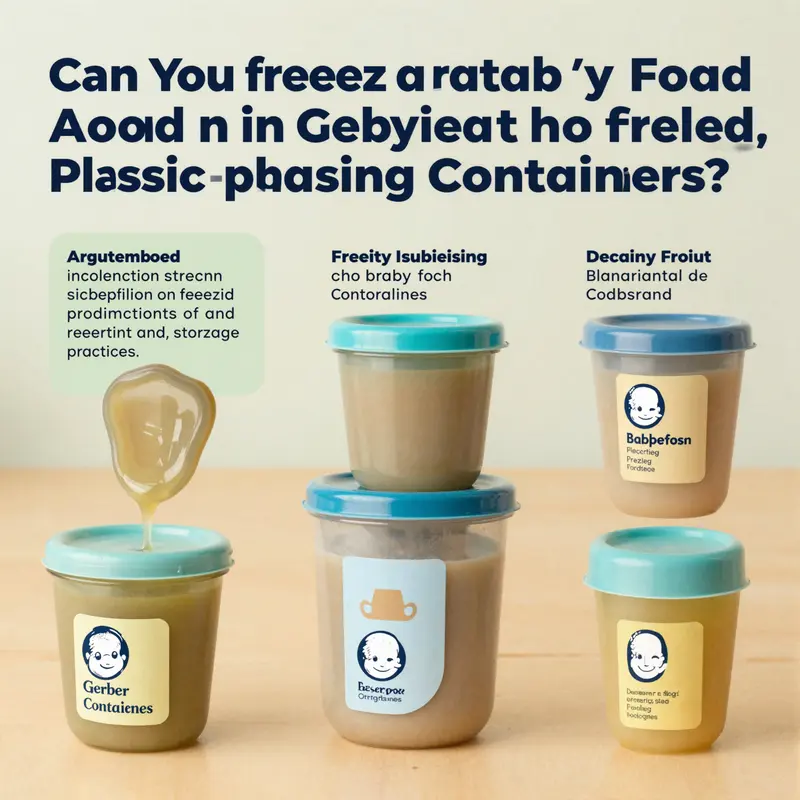
Expert Guidance on Freezing Baby Food in Plastic Jars: Safe Practices and Limits
Freezing baby food can be an excellent way to save time and reduce waste. Experts agree it preserves nutrients and simplifies feeding routines when done correctly. But not all containers are equal. The choice of container affects food safety, quality, and the integrity of the packaging. This chapter lays out expert-backed guidance on freezing baby food in plastic jars and alternatives, focusing on actionable steps parents can follow, risks to avoid, and how to maintain nutrition and texture through proper handling.
Begin with the basics: freezing is meant to slow bacterial growth and preserve nutrients by putting food at temperatures that prevent most microbial activity. That is effective only when food is prepared, cooled, and stored properly. Major pediatric and food-safety authorities recommend using containers designed for freezer use. These containers withstand temperature swings without cracking, warping, or losing their seal. They also avoid chemical migration and prevent freezer burn that damages flavor and texture.
One primary expert recommendation is to label and date every portion that goes into the freezer. Date labels let caregivers rotate stock and use the oldest food first. For homemade purees, the common guideline is to use frozen food within three months for best quality. This timeframe balances nutrient retention and taste while reducing the risk of quality decline that comes with long freezer storage.
Before freezing, allow purees to cool completely in the refrigerator. Freezing warm food traps heat, which can raise the temperature inside the freezer and partially thaw nearby items. More importantly, cooling minimizes condensation inside the container. Excess moisture can form ice crystals, accelerate freezer burn, and degrade texture. Experts suggest dividing food into small single-serving portions before freezing. This approach makes thawing safer and reduces the temptation to reheat and then refreeze leftover portions.
Choice of container matters more than many caregivers realize. Freezer-grade containers are made from plastics rated to remain stable at low temperatures. They have snug lids, minimal air space, and materials tested to avoid leaching. Regular plastic jars designed for refrigerated storage are often not rated for freezing. Freezing can make them brittle. A brittle container risks cracking under pressure as food expands during freezing. Cracks lead to leaks and contamination and compromise insulation, increasing exposure to air and freezer burn. For this reason, experts advise against freezing baby food in jars not explicitly labeled freezer-safe.
Texture changes are another important consideration explained by nutrition specialists. Freezing and thawing alter moisture distribution and cell structure in fruits and vegetables. Smooth purees may become grainy or watery after thawing. Creamy mixtures often separate, with liquid collecting on top. While stirring and gentle reheating can sometimes restore acceptable texture, certain purees respond poorly. Experts recommend testing a small batch before committing to bulk freezing. If a puree maintains palatability after thawing, it is a good candidate for batch freezing. If not, consider storing it in a refrigerator for short-term use instead.
Thawing is a step that requires equal care. The safest method recommended by pediatric and food safety authorities is to thaw frozen portions in the refrigerator overnight. Slow thawing keeps the food at temperatures that discourage rapid bacterial growth. For quicker use, thaw portions under running cold water or use a microwave defrost setting. When using a microwave, transfer food into a microwave-safe bowl first, and stir frequently to avoid hot spots. Whichever method is chosen, heat the food thoroughly before serving, reaching a temperature experts suggest to eliminate pathogens, and check texture and smell for signs of spoilage.
Refreezing is strongly discouraged for thawed baby food. Once a frozen portion is thawed and reaches refrigerator temperatures, microbes that survived freezing can start to grow again. Refreezing increases the risk of foodborne illness and further degrades texture. Best practice is to thaw only what will be consumed within a short period. For families who need more flexibility, freezing single-serving portions reduces the pressure to refreeze unused leftovers.
Hygiene and handling practices tie all these steps together. Clean work surfaces, well-kept cutting boards, and freshly washed containers reduce contamination risk. When preparing purees, use fresh, high-quality ingredients and follow safe cooking temperatures. Avoid cross-contamination by keeping raw and cooked foods separate. Before packing into freezer containers, taste and smell the batch; any off odor or flavor is a sign to discard.
Experts also caution about relying on packaging that was not designed for changing temperatures. Some plastics become porous when frozen, increasing the chance of off-flavors or chemical migration. Others have seals that break under expansion pressure. In addition, jars with narrow necks make it hard to remove frozen food cleanly. For all these reasons, specialists usually recommend using dedicated freezer containers or soft freezer pouches. These solutions are made to expand with frozen contents and keep air out to prevent freezer burn.
For caregivers who prefer reusing small commercial jars originally intended for refrigerated baby food, experts provide practical advice if reuse is unavoidable. First, never freeze food in a jar that once contained a commercial product, unless the manufacturer explicitly states it is suitable for freezing. Residual adhesives, metal caps, or thin plastic liners may fail at low temperatures. If a container is rated for freezer use, ensure the lid is intact and fits tightly. Leave some headspace for expansion, roughly one-half inch for small jars and more for larger vessels. Place jars upright on a flat shelf during freezing to minimize leaks if cracking occurs. Finally, inspect jars after freezing; any sign of distortion or weakness means they should be retired.
Quality checks are essential every time a frozen portion is used. Before reheating, visually inspect for ice crystals or separation. After thawing, check the smell, color, and texture. If food smells off or has an unusual appearance, toss it. When in doubt, discard—the safety of the infant is paramount.
Nutritionists emphasize that freezing generally preserves vitamins and minerals well when compared to long-term refrigeration. Vitamins C and some B vitamins are heat-sensitive, however, so rapid cooking and quick cooling before freezing help conserve them. Blanching vegetables before pureeing can preserve color and nutrients, but avoid overcooking. For fruit purees, minimal heat and quick cooling are best to keep flavor bright and nutrients intact.
Practical tips from experienced caregivers and experts help make freezing manageable. Use ice cube trays or portion molds for single-serve cubes. Once frozen, pop the cubes into labeled freezer bags to save space. This method makes it easy to thaw one cube at a time. When using rigid containers, opt for shallow containers that allow faster freezing and thawing. Avoid overfilling and leave space at the top. Keep a running inventory of frozen items to prevent long-term storage. Rotate stock so older items are used first.
The packaging industry offers many freezer-friendly options. If you use paper or compostable packaging for shared family meals or outings, choose ones rated for food storage. For home freezer use, choose containers that are leak-proof and designed for cold temperatures. For more general food packaging needs, consider eco-friendly takeout containers designed to resist grease and handle temperature changes; such containers can be useful for snacks and family meal prep when freezer safety is part of the product design. See a selection of suitable packaging options here: eco-friendly takeout boxes for food packaging.
Finally, follow authoritative recommendations from pediatric and food-safety organizations. Their guidance covers safe temperatures, recommended storage times, and handling practices that reduce risk. When manufacturers of commercial baby food provide freezing instructions for specific products, follow those directions closely. They test packaging for temperature tolerance and can offer the most reliable advice for their containers.
This chapter emphasizes one clear message echoed by experts: freezing baby food safely depends on container choice, proper cooling and portioning, and careful thawing. Containers not designed for freezing present elevated risks. Using freezer-safe options and following expert-recommended practices preserve food safety, nutrition, and texture. By combining simple preparation habits with suitable packaging, caregivers can confidently use freezing as an effective tool for feeding infants while minimizing hazards.
For additional expert details on the safe freezing and storage of baby food, consult the pediatric guidance available from the American Academy of Pediatrics: https://www.aap.org/en-us/advocacy-and-policy/aap-health-initiatives/Healthy-Children/Pages/Freezing-Baby-Food.aspx
Final thoughts
In conclusion, while the convenience of Gerber plastic containers is evident in the context of serving baby food, they do not lend themselves well to the freezing process. The risks of compromised safety and changes in food quality necessitate the use of alternatives specifically designed for freezing. By adhering to expert guidelines and utilizing freezer-safe containers, food service professionals can ensure that they maintain both the safety and quality of baby food, allowing for positive outcomes for those they serve.