
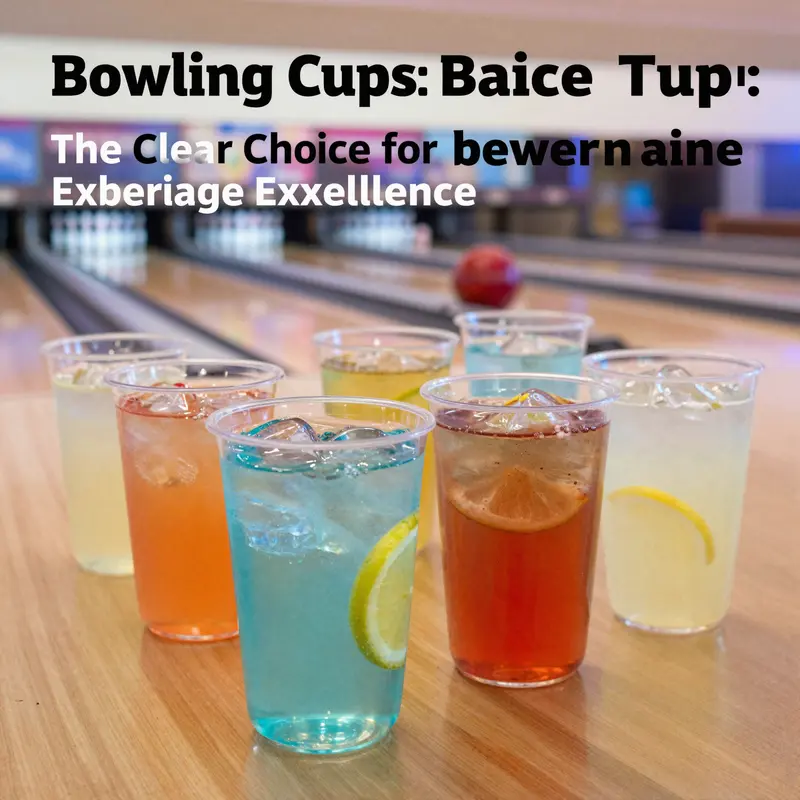
Clear plastic bowling cups are more than just containers; they are an integral component of the bowling experience and beverage service. As popular venues for casual gatherings and corporate events alike, the right cup can enhance presentation and customer satisfaction. This article delves into the material properties of these cups, their applications in bowling events, the environmental considerations surrounding their use, the latest market trends, and innovations in design that cater to modern consumer preferences. Each chapter builds a comprehensive understanding of why clear plastic bowling cups are essential for beverage chains, event planners, and food service professionals.
Chapter 1: Clarity and Compliance — Material Properties of Clear Plastic Cups for Bowling Settings
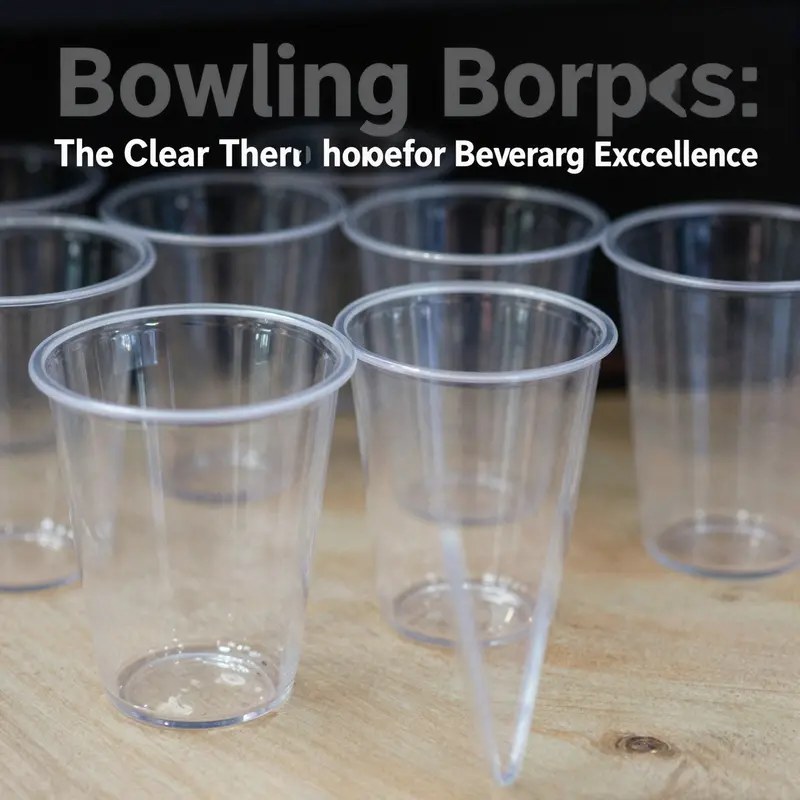
In the bustle of a modern bowling alley, the scene often unfolds around more than just pins and spares. Behind the lanes lies a practical ecosystem of beverages, service stations, and disposable wares that must perform with reliability under variable light, temperature, and handling. The phrase bowling cups plastic clear invites a closer look at what makes a transparent cup suitable for such settings. There is no singular bowling-specific specification for a clear cup, yet the material science that governs clear plastics—how they transmit light, endure handling, and resist staining—shapes every decision from service speed to guest experience. To begin, it helps to separate the broad family of clear cups from the narrower world of bowling equipment. Clear, single-use cups are commonly manufactured from thermoplastics such as polyethylene terephthalate, known as PET, or polypropylene, known as PP. These materials are chosen not for sport-specific reasons, but for properties that align with the realities of a busy, indoor entertainment venue. PET offers excellent clarity and a relatively high barrier to moisture, which matters when beverages travel from cooler to table. PP, while often less transparent than PET, can be formed into thinner walls with good fatigue resistance and higher heat tolerance. The choice between them is a balancing act between optical performance, wall thickness, and the expected life of the cup in a particular service scenario. Clarity is not merely cosmetic. In a bowling alley, the transparency of the cup allows staff and guests to quickly assess beverage levels, carbonization in a fizzy drink, or the presence of ice. That instant visual feedback reduces service friction and contributes to smoother lane-side operations. The optical clarity of a plastic cup rests on the molecular alignment and the absence of impurities. PET, when properly processed, yields an almost glass-like transparency. Yet even the best-clear PET can yellow with UV exposure or degrade if exposed to certain cleaners or high-heat contents over time. In bowling venues, where cups are often cleared from tables and placed into bins or coolers, such aging effects may be less pronounced, but they are not absent. A cup that clouded over in a few hours would undermine the guest experience and complicate inventory control. The surface properties of clear cups also influence how beverages interact with the interior wall. A smooth interior reduces the likelihood of droplets sticking and dripping, which matters when a server is juggling multiple lanes. It also helps beverages look their best, as condensation forms more neatly and uniformly. From a materials science perspective, the wall thickness or gauge of a clear cup is a primary driver of stiffness and rigidity. Thicker walls resist flexing when gripped, which reduces spill risk during busy moments when staff reach for refills or when a guest carries a cup across a slippery floor surface. Thicker walls also increase heat resistance and reduce the chance that a cup will deform when hot beverages are served. Yet thicker walls mean more plastic per cup and can affect the cost-per-unit equation for a large venue. This is where manufacturing choices become pivotal. PET cups are typically produced through standardized thermoforming or injection-molding processes that push a smooth, round profile with a thin lip and a stable base. The rim geometry, often airy and easy to drink from, must balance a comfortable feel with rigidity. A cup that surrenders its shape under the weight of ice or carbonation becomes a usability problem. The base design must prevent tipping and allow stable stacking during storage and transport. In a busy bowling center, cups are repeatedly stacked and unstacked, moved through service aisles, and subjected to temperature fluctuations. The ability to withstand this cycle without permanent deformation is a function of the polymer’s modulus and the wall thickness. A material with too low a modulus may creep or bulge after repeated contacts with hands or trays. Conversely, a material with excessive stiffness can feel brittle, increasing the risk of cracking if a cup is dropped or struck by a stray ball. Manufacturing engineers therefore optimize not just the material but the entire geometry of the cup. The lip, the shoulder, and the taper of the body are tuned to provide an intuitive grip and a predictable tearing or tearing-resistance profile when a lid is attached, if that option exists. While the bowling setting emphasizes convenience, it also foregrounds safety and hygiene. Clear cups need to resist staining from common beverage ingredients—cola acids, fruit syrups, coffee oils, and milks—so that the cup’s interior remains visually appealing across a service shift. Staining resistance is a function of polymer chemistry and the manufacturing surface finish. A smoother interior finish helps resist cling of beverage residues and reduces the likelihood of a cup looking tired after a few uses. It also matters for the cleaning cycle at the end of the night; a surface that resists residue simplifies sanitation and reduces the risk of harboring bacteria. In practice, facilities weigh the pros and cons of using PET versus PP, as well as the potential for recycled content. Recycled-content materials can offer environmental benefits but may introduce color tints or slight changes in clarity that managers must balance against guest expectations for a pristine, transparent cup. Clear cups also face chemical resistance considerations. The beverages commonly served in bowling venues can include carbonated drinks, sports drinks, fruit juices, teas, and coffee. Each type of liquid brings its own set of challenges: carbonation can cause foaming and pressure buildup if a cup is overfilled; acidic components can affect the polymer in long-term exposure; hot drinks may require higher heat resistance to prevent warping or release of odors from the container. The question of thermal performance extends beyond the cup walls. The rim and interior contact areas must remain comfortable to the lips and safe to the skin as guests pick up and drink. A well-designed cup manages heat transfer, avoiding a metallic or unpleasantly warm edge when hot beverages are served in cool climates or during crowded events. Condensation, a frequent companion of cold drinks, is another practical factor. Condensation can fog the interior surface of the cup and create a slick, slippery outer surface. A robust surface finish helps by offering less friction, enabling staff to handle cups with confidence even when hands are damp. It also contributes to the guest’s tactile experience, a small but meaningful detail that influences perceived quality and overall satisfaction. In this context, the plastics engineering community considers a blend of mechanical, chemical, and process-driven factors. The thickness of the cup walls, the orientation of polymer chains during forming, and even post-processing steps such as post-mold annealing can influence how the cup behaves under stress. An optimally engineered cup resists denting and cracking during stacking, shipping, and on-lane use, while maintaining clarity and optical integrity. Beyond pure performance, sustainability has become an integral part of the decision matrix. Many venues strive to minimize waste through recycling programs and by selecting materials with a higher recycled-content option. The compatibility of the chosen clear cup with local recycling streams matters; some facilities may be equipped to handle PET, while others may rely on PP or blends. Each material has its own recycling stream, and staff training is essential to ensure that cups are disposed of correctly rather than ending up in landfills. In practice, the decision about an appropriate clear cup for bowling settings rests on a blend of empirical testing, vendor specifications, and operational realities. Managers observe how different cups perform when subjected to the rhythm of a busy night: the pace of service, the variety of beverages, and the physical environment of the venue. They note how cups respond to a range of temperatures, how easily staff can grip and reuse them if needed, and how the cups appear to guests as they are held, carried, and consumed. These observations translate into policy: which materials to stock, what thickness to standardize across fleet cups, and how to train staff to reduce spill risk and breakage. One practical takeaway is the value of visual testing in the selection process. A short balance test—holding a cup at typical service temperatures, swishing a beverage to assess rim integrity, and simulating stacking and unstacking—can reveal a lot about how a given clear cup will perform in the field. The dialogue between material science and everyday operation is continuous. Even the color and finish of a lid, if used, or the way a label adheres to the cup, can influence the perceived cleanliness and aesthetic of the service. In bowling venues that emphasize a seamless guest experience, the cup is not an isolated item; it is part of a coordinated system with trays, utensils, and packaging. The materials chosen for cups interact with those other elements. A lid design, for instance, must fit snugly to prevent leaks during movement along the concourse. A clear cup that tolerates a tight lid without distorting its wall thickness or interfering with the lip is a small but meaningful contributor to overall satisfaction. The interplay of material properties with service design underscores why the concept of “clear plastic cup” cannot be reduced to a single specification. It is a system-level consideration that encompasses optics, mechanical behavior, chemical resistance, thermal stability, hygiene, and sustainability. For readers who want to explore concrete examples of how these principles manifest in real-world packaging contexts while keeping the focus away from specific product branding, a useful point of reference is the broader packaging literature that examines the roles of material grades, properties, and engineering applications in professional equipment design. For a practical, non-brand-specific glimpse into related concepts, see the external resource that surveys professional equipment principles and material performance. The discussion here also gestures toward a broader resource on bowling equipment grades and engineering, which can inform how container components might align with the same rigorous standards even when used in non-sport contexts. In a sense, the science of clear cups shares a lineage with the science that guides the materials used in other professional settings: an emphasis on reliability, predictability under stress, and compatibility with human use. The bowling alley, with its fast pace and high turnover, magnifies these concerns. The transparent cup must be legible, durable, and safe, with clear signaling to staff about beverage type and volume, while remaining cost-effective at scale. It must also be adaptable to a spectrum of service configurations—from quick-service lanes to full-service bars that may exist in entertainment complexes. This adaptability is where material selection and process engineering converge with operations management. The right clear cup becomes part of a smooth choreography: suppliers deliver cups in consistent dimensions, staff replenishment keeps lines moving, and the venue maintains a pleasant, predictable guest experience. As venues evolve toward more sustainable practices, the conversation about clear cups will increasingly incorporate recycled-content policy, compostability considerations for certain markets, and end-of-life management. Yet any shift toward sustainability must maintain the essential attributes that define a successful cup in a bowling context: optical clarity, mechanical integrity, resistance to staining and odors, safe handling, and compatibility with existing service workflows. The chapter thus centers on a simple, practical truth: material properties are not abstract. They translate directly into the way guests experience a night of bowling, how staff manage throughput, and how operators align with environmental and economic goals. The next chapters will build on this foundation by exploring how specific design criteria—such as wall thickness standards, interior finishes, and sealing methods—perform in the real-world settings of lanes, concourses, and event spaces. For readers seeking a concrete example of a clear, disposable cup page that reflects the practical realities of use in catering and event packaging, see this reference: disposable clear plastic cup page. External readers may also consult broader engineering discussions of professional equipment and material properties to deepen their understanding of how similar material choices function in high-demand environments. Together, these perspectives connect the everyday choice of a clear cup to a larger conversation about material resilience, user experience, and sustainable practice in the world where sport meets service. For a broader exploration of related topics in professional equipment and materials science, consult the external resource linked here: https://www.dylanhayes.com/professional-bowling-equipment-grades-properties-engineering
Seeing the Game: How Clear Plastic Transforms Bowling Events
Seeing the Game: How Clear Plastic Transforms Bowling Events
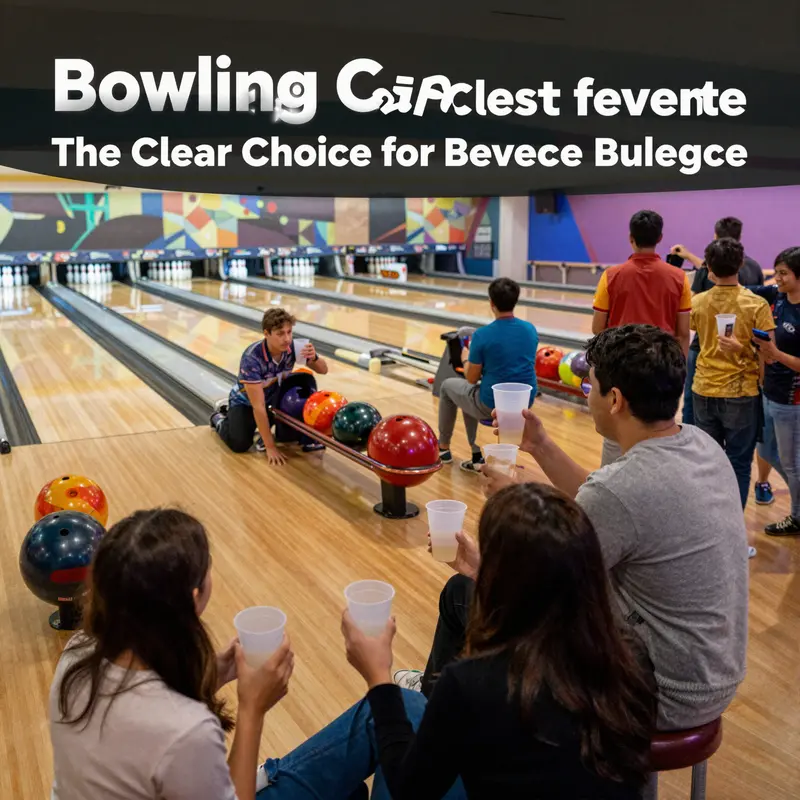
Clear plastic has moved beyond simple utility and into the realm of experience design for bowling events. When used thoughtfully, transparent materials reshape how participants perceive equipment, space, and spectacle. Whether deployed as luminous, custom balls that glow under blacklight, lightweight recreational sets for families, or transparent event kits that build anticipation, clear plastic offers a palette of visual and practical possibilities. This chapter traces those possibilities in a single, integrated narrative: material choices and their trade-offs, applications that enhance accessibility and safety, logistics for venues and rental operators, and the sensory opportunities that make events more memorable.
At the heart of many modern bowling experiences is the clear custom ball. Constructed from durable transparent polymers, these balls allow designers to embed elements—LED modules, confetti, color gels, or printed messages—inside the shell. The transparency serves both form and function. Visually, an illuminated or decorated core creates a focal point on the lane. Functionally, the rigid polymer shell protects internal components while maintaining balanced weight distribution. For special events, this design encourages creative storytelling: teams can be assigned balls with distinctive cores, sponsors can appear inside the ball as floating logos, and celebratory launches can feature confetti that swirls when the ball rolls. Importantly, these balls are typically engineered for recreational play rather than high-performance lanes. Their lack of advanced surface texture and reactive coverstock makes them predictable and safe for casual bowlers, especially children.
Clear plastic sets extend beyond balls to include pins, ramps, and accessories. For family-friendly centers, translucent pins and lightweight balls cut the intimidation factor. Pins made from impact-resistant clear polymers are less likely to chip than wood, and their transparency creates an appealing, futuristic aesthetic under colored lighting. Ramps and bumpers fashioned from clear materials offer the same advantage: they provide the necessary support for newcomers while visually blending with venue lighting and decor. This reduces visual clutter around the lanes and helps staff maintain a cohesive look for themed nights.
Safety and accessibility often drive the selection of clear plastic for event equipment. Lightweight balls reduce strain and lower the risk of injury for young players and older adults. Transparent ramps and guide tools help coaches and parents observe form and make adjustments without obstructing sightlines. For centers hosting adaptive bowling sessions, clear materials allow assistants to maintain visual contact and ensure proper placement. In short, transparent equipment supports inclusive play by making movements and interactions easier to monitor.
Operationally, clear plastic brings advantages for rental and event management. Rental fleets built with robust transparent polymers are easy to inspect for wear. Hairline cracks, embedded debris, or moisture intrusion inside a hollow component are visible at a glance, speeding maintenance checks and improving safety. Additionally, clear event kits—bags or boxes that display contents—simplify inventory management. Staff can confirm completeness without opening packages, and guests experience the thrill of seeing components before use. Transparent packaging also presents branding opportunities: printed inserts or colored liners shine through the material, allowing sponsors to be visible without costly custom molding.
Lighting is where clear plastic truly elevates atmosphere. Transparent balls with integrated LEDs or reflective inserts interact with blacklights and lane-side strobes to produce dynamic effects. During cosmic or glow nights, clear components refract and scatter colored light, creating trails that accentuate motion. Venue designers can shape these effects by choosing polymers with particular refractive indices or by adding micro-textures inside the shell. The cumulative result is a richer sensory environment: sound, light, and motion synchronize to transform routine play into spectacle.
Material selection is practical art. Transparent PVC has been popular for its clarity and toughness, but PET and polycarbonate each bring different advantages. PET offers excellent clarity and good chemical resistance; it is often used where food-contact safety or recyclable streams matter. Polycarbonate is highly impact-resistant and tolerates thermal stress, making it suitable for components that must endure sustained force. Choosing the right polymer requires balancing clarity, durability, weight, and environmental goals. Manufacturers also consider how additives—UV stabilizers, anti-scratch coatings, or flame retardants—affect both appearance and lifecycle.
Environmental and lifecycle considerations are unavoidable. Clear plastics can be recycled in many streams, but mixed materials and embedded electronics complicate this. For event operators committed to sustainability, selecting single-polymer designs or easily separable components reduces downstream waste. Reusable clear packaging and hard-shell event kits mitigate single-use waste while preserving the visual advantages of transparency. When disposable clear cups or food containers are needed for concessions, selecting recyclable PET or compostable alternatives reduces environmental impact without sacrificing the guest experience. Integrating a clear-material procurement policy with venue recycling infrastructure ensures that the aesthetic benefits do not come at an unacceptable ecological cost.
Cleaning and maintenance practices keep clear equipment attractive and functional. Transparent surfaces show fingerprints, smudges, and scuffs more readily than opaque finishes, so cleaning protocols must be frequent and effective. Non-abrasive cleaners preserve gloss and clarity; microfiber cloths prevent micro-scratches. For transparent balls with internal elements, sealing and humidity control are crucial to prevent fogging or internal corrosion of electronics. Storage solutions that protect against UV and heat preserve both clarity and component longevity.
From a marketing perspective, clear plastic items are versatile canvases. Event organizers can use them to stage reveal moments—transparent party bags that display the prize before the winner steps forward, or clear packaging that hints at a premium item inside. These reveal mechanics increase engagement and social sharing. Guests photograph illuminated balls and translucent pins, generating organic promotion. For centers that host corporate or branded events, transparency allows sponsor graphics or color schemes to be integrated seamlessly into the visual language of the evening.
Logistics around large-scale events require attention to storage and rotation. Clear items are photogenic, but stacking transparent shells without protective layers invites scuffs. Proper shelving, separators, and dust covers keep fleets in show-ready condition. Operators should consider modular storage that accommodates both inflated or hollow components and rigid shells. Labelling methods that do not obstruct transparency—such as adhesive tabs on non-visible edges—simplify inventory management while preserving the aesthetic.
Finally, the guest experience remains the ultimate measure of success. Clear plastic elevates the sensory cues that make an event memorable: the glow of a ball, the shimmer of a pin, the visible contents of a prize bag. It fosters inclusion by making tools intuitive and lightweight, and it streamlines operations by enabling rapid inspection and inventory control. When combined with careful material selection, sustainable practices, and smart lighting design, transparent elements become more than props; they become instruments that shape mood and behavior.
For a deeper look at engineered solutions and material grading in professional bowling equipment, consult this external resource: https://www.bowlingcenter.com/blog/clear-custom-bowling-ball-ultimate-guide-to-using-it. For practical event packaging ideas that use transparent windows to showcase contents, see this related supplier page on clear cake cups and dessert packaging: https://ecocupbowl.com/product/clear-cake-cups-transparent-cupcake-muffin-packaging-dessert-slice-container-for-weddings-birthdays-parties-bakery-dessert-bowl-for-fruit-pastries/.
Clear Choices at the Alley: Reimagining the Environmental Footprint of Plastic Bowling Cups
The alley, with its neon lanes and the constant clack of pins, is a theater of quick, short-lived rituals. Rounds begin with a ritual of choosing a drink, a cup that must be clear enough to show the color of the beverage, sturdy enough to be handed across the counter, and inexpensive enough to disappear after a few frames. Yet behind that familiar, almost banal moment lies a web of environmental choices, tradeoffs, and consequences that ripple far beyond the polished wood and the cheer of a struck spare. The topic of plastic bowling cups—the clear, disposable vessels that shuttle beverages from concession to customer—opens a broader conversation about materials, life cycles, and the systems that sustain or disrupt a circular economy in venues that host millions of games each year. In the discussion that follows, the focus stays anchored to the bowling environment while widening to include the chemistry of plastics, the energy and emissions embedded in production, and the logistical realities of recycling and reuse that shape actual environmental outcomes. The central tension is not simply about finding greener cups, but about aligning material choice, product design, consumer behavior, and institutional policy to reduce the total footprint of a cup—from resin to recycle bin or reuse rack in the alley kitchen.
Polypropylene (PP) and polystyrene (PS) are the usual suspects when we talk about single-use plastic cups in recreational and dining settings. PP cups are valued for their relatively high melting point and chemical resistance, which makes them resilient to hot beverages and the rough handling typical of a busy bowling center. PS cups, while often cheaper and offering excellent rigidity for a crisp, clear display, come under greater scrutiny for end-of-life handling. In both cases, the cups are designed for one pass, one spill, and one disposal, and then they vanish into a waste stream that is increasingly scrutinized by waste engineers, policymakers, and environmental advocates. The clarity of the cup—its transparency—adds a deceptive layer to the conversation. A clear cup conveys cleanliness, quality, and freshness; it invites consumer confidence. But transparency in material form does not automatically guarantee environmental transparency. A clear cup may be easy to recycle in some systems, yet challenging in others if it is contaminated with beverage residues or if the local infrastructure lacks the capacity to separate and process it from other plastics.
The environmental assessment of these cups begins with a straightforward but incomplete accounting: the resources required to polymerize the plastic, the energy consumed during molding, and the emissions released during manufacturing. It continues with the often overlooked end-of-life stage—whether the cup is diverted to recycling, sent to landfill, or incinerated. In practice, conventional plastic cups are frequently not recycled at scale. Food residues muddy the sorting streams, and in many places the infrastructure to manage post-consumer plastics is uneven or underfunded. The result is a substantial portion of the cups that do not contribute to a circular loop. They end up in landfills or incinerators. When mismanaged in the environment, they fragment into microplastics, becoming long-lived pollutants that move through soil, water, and biota. The circular logic—reuse, recycle, remanufacture—places its hopes on systems that must be coordinated across producers, distributors, venue operators, and households. In the bowling alley context, that coordination is not merely about the cup itself, but about the multipoint flow from vendor to patron to backroom to the washer, a flow that must remain efficient if a reuse or recycling approach is to be viable.
A 2025 study conducted in Germany on disposable cups made from polypropylene and polylactic acid (PLA) adds a cautioned nuance to the replacement equation. It found that PLA cups can reduce certain chemical migration risks but do not universally lower environmental impacts across all categories. The takeaway is not that PLA is a panacea, but that material substitution alone cannot guarantee sustainability. If a PLA cup carries a similar or greater energy burden in production, or if it fails to enter an established recycling loop, the environmental advantages erode. This insight resonates beyond the lab and into the lanes, where decision-makers must weigh how a different polymer interacts with the existing waste management ecosystem, the energy use of washing and transport in reusable systems, and the behavioral patterns of players who drink, discard, or return those cups.
Against this backdrop, the concept of circular cups—reusable systems with deposit-return mechanisms, centralized cleaning, and reverse logistics—emerges as a compelling path forward. A 2025 report by a prominent environmental organization, Free from Plastic, highlights that, when scaled, circular cup systems can reduce packaging-related carbon emissions by up to 70%. This is a staggering potential, not a guarantee, and it rests on rigorous implementation. Lifecycle thinking, extended to the microcosm of a bowling alley, requires careful design: durable, easy-to-clean cups; standardized washing cycles that minimize water and energy use; reliable deposit collection points; and a consumer interface that makes returning cups as frictionless as possible. The lifecycle assessment (LCA) lens is not about demonizing one material but about mapping the real-world tradeoffs of each option and steering efforts toward the configuration with the lowest net environmental cost across its entire life.
The broader literature on single-use plastics offers a parallel frame. The UNEP’s 2021 guidance on using LCA to address pollution from single-use plastics emphasizes that well-managed reusable cup systems—when integrated with robust logistics and consumption practices—tend to outperform single-use alternatives in aggregate environmental impact. The take-home message is not that single-use cups are inherently worse in every metric, but that the overall impact depends on how well the system is designed and operated. In bowling centers, where cups are a recurrent, predictable part of the guest experience, this systems approach becomes particularly actionable. It invites operators to map the flow of cups from supplier to sink, identify bottlenecks in cleaning or collection, and align cup design with the realities of their venue operations.
Practical transition strategies begin with a clear understanding of the venue’s capacity, throughput, and user patterns. If a center runs tournaments or leagues with high attendance and varied beverage orders, a hybrid model may be prudent: a primary reusable cup program supplemented by strategically deployed disposable alternatives for peak loads or outdoor events. The disposable option, in its simplest form, remains a pragmatic choice for many venues, particularly when space for washing and return logistics is constrained. For venues seeking immediate, low-cost options, the disposable clear plastic cup for parties and events can serve as a stopgap, though its environmental footprint remains a key driver of policy changes. disposable clear plastic cup for parties and events.
Operationalizing circular cups in a bowling environment demands an integrated design approach. The cup system must be compatible with standard dishwashing cycles, capable of withstanding repeated heat exposures, and resistant to wear that would complicate cleaning or identification. The bins, the returns desks, the staff training, and the customer messaging all become part of the same architecture. Digital tracking tools can play a pivotal role here. By recording deposits, returns, and wash cycles, centers can quantify participation, monitor loss rates, and adjust processes to minimize wasted energy and water. Consumer engagement is essential. Clear signage, friendly incentives, and a simple user experience reduce friction for players who choose to participate in a reusable system. When done well, these elements coalesce into a culture of responsibility that extends beyond the alleys and into the community that uses and supports the venue.
Policy support matters as well. The insights from the China-focused pilot programs, as well as international reports on reusable cup models, illustrate how governments, institutions, and businesses can collaborate to scale circular systems. The guiding documents emphasize standardized procedures, centralized cleaning, and efficient reverse logistics to keep the system lean and resilient. In practice, this means designing cups for durability, ensuring labeling and traceability, and aligning contract terms with the realities of a high-throughput service environment. The operational manuals, including those recently released to guide pilot practices for reusable cup models, place significant emphasis on minimizing user friction and maximizing participation. These guidelines underscore that success hinges on an end-to-end view of material choice, logistics, and human behavior, rather than on any single technology or policy instrument.
As centers weigh their options, it is useful to maintain a grounded perspective on the value of redesign over replacement. A new cup that costs more today may cut waste and energy use thousands of times over its lifetime if it enables higher reuse rates and more efficient washing cycles. Conversely, a cheaper disposable cup that is easier to ignore or mismanage can propagate the same waste problem across a season of tournaments and leagues. For bowling facilities, the path often lies in a staged approach: pilot programs in select locations, measurement of key performance indicators (throughput, water and energy use, material losses, and participant engagement), and iterative refinement to approach the optimal balance of cost, convenience, and environmental stewardship.
The environmental stakes extend beyond the alley and into the broader ecosystem. Disposable cups that escape proper management contribute to microplastic pollution, which has become an urgent global concern. In the terrestrial and aquatic environments, microplastics can persist for decades, subtly reentering the food chain and potentially impacting wildlife and human health. The lifecycle considerations—energy intensity, emissions from production, and the end-of-life disposition—need to be translated into concrete actions at the venue level. The opportunity, however, is not merely to reduce harm but to reimagine a service model that aligns with sustainable development principles. A circular approach to cups, if scaled, can help bowling centers demonstrate leadership in responsible consumption while preserving the social and economic vitality of the sport and its communities.
Looking forward, several research and practice opportunities remain. First, there is a need for more granular, venue-level LCAs that capture the specific energy and water footprints of local washing and transportation networks. Second, there is value in expanding impact categories to reflect terrestrial ecosystem damage more comprehensively, a gap identified in current assessments. Third, life-cycle data must be updated continually as new materials and technologies emerge, including innovations in safe-by-design plastics and compatible, low-energy cleaning technologies. Fourth, consumer education and behavioral nudges should be tested in the real-world bowling setting to determine which incentives most effectively increase participation in reusable systems. Finally, policy frameworks that encourage shared infrastructure for circular cups—such as centralized cleaning facilities, standardized cup IDs for traceability, and incentives for participation—could accelerate adoption without compromising the guest experience.
In sum, the traditional plastic bowling cup sits at a crossroads of convenience and consequence. Its future, however, need not be a choice between comfort and conscience. By embracing circular design principles, by aligning material selection with robust end-of-life infrastructure, and by cultivating a culture of reuse and responsibility within bowling communities, venues can tilt the balance toward a more sustainable game. The lane remains a place of rapid movement and social connection, but the cups that accompany it can become symbols of thoughtful stewardship rather than throwaway convenience. The challenge is real, but the upside—a cleaner environment, measurable reductions in waste, and a model for other sectors—offers a compelling hook for clubs, vendors, and policymakers alike as they chart the next frames of a more sustainable future. The next chapter turns to the design of materials and the role of innovation in shaping the consumer experience without compromising ecological health, extending the narrative from the alley to the wider landscape of plastics in daily life.
External resource for further reading: UNEP’s lifecycle assessment framework and its application to single-use plastics provide a rigorous context for interpreting the tradeoffs discussed here. Access the broader guidance at: https://www.unep.org/resources/report/using-life-cycle-assessment-address-pollution-single-use-plastics
Reading the Gaps: Market Reality and Adjacent Opportunities for Clear Plastic Bowling Cups
The phrase “bowling cups plastic clear” yields an unusual silence in established market records. There is no clear catalog of a specialized product called a clear plastic bowling cup tied directly to the sport’s equipment or to an established accessory category. That absence is itself informative: it suggests that demand, if it exists, is either niche and patchy, or is being satisfied by more general-purpose clear plastic drinkware and eventware. This chapter traces that market logic, maps adjacent product categories that supply the apparent need, and highlights commercial and design opportunities that arise when a specific label is missing but a functional gap remains.
The first point is straightforward. Market data and product registries show robust activity in clear disposable drinkware, food packaging with transparent lids, and reusable transparent cups used at events. These items are produced in standard materials such as PET and PP for clarity and food safety. Manufacturers and distributors typically group these items under generic categories: disposable clear cups, clear food containers, and transparent dessert cups. Where bowling events require beverage or servingware, organizers most commonly source from those categories. The lack of a named “bowling cup” implies buyers are repurposing general clear plastic cups rather than buying a bowling-branded specialty item, which keeps unit economics predictable and supply chains simple.
Second, the event and sports-hospitality markets show clear patterns that explain why a specialized bowling cup has limited traction. Venues, leagues, and party hosts prioritize cost, hygiene, and logistics. Disposable clear plastic cups are inexpensive, universally recognizable, and available in multiple sizes and shapes. They stack and nest efficiently for storage, are lightweight for transport, and are widely accepted by waste management systems, including recycling streams where facilities exist. Reusable clear cups are used where event organizers adopt a circular approach or provide branded keepsakes, but those are typically generic in form and not sport-specific.
Third, regulatory and material considerations shape product prevalence. Clear cups intended for food and drink must meet food-contact safety standards. PET is valued for clarity and barrier properties but has limitations with hot liquids. PP tolerates higher temperatures but sacrifices some optical clarity. Vendors that aim for large-scale event clients therefore standardize materials that meet common regulatory requirements while offering predictable performance. Creating a distinct subcategory—”bowling cups”—would require a compelling differentiator, such as a unique ergonomic profile, branding benefits, or sport-specific functionality that justifies segmentation and additional manufacturing complexity.
A productive way to read this landscape is to look at adjacent product innovations and business models. The event-servicing market has seen growth in two directions relevant to bowling venues. One direction emphasizes sustainability: reusable or recyclable clear drinkware that reduces single-use waste. Another direction emphasizes convenience and branding: custom-printed clear cups or transparent food containers with windows that carry logos and promotional content. Both directions are supplied by existing manufacturers and are affordable to mid-size venues. For bowling operators seeking to elevate guest experience, these adjacent options provide immediate, low-friction solutions. A custom-printed clear cup or a premium reusable transparent tumbler delivers the look of a specialized item without requiring a new manufacturing class.
Another adjacent trend is modular packaging and servingware that can function across food, beverage, and prize use cases. Clear dessert cups, small transparent sauce pots, and stackable portion cups are common in catering and bakery supply lines. These same items can be repurposed in bowling centers for food service, party trays, or novelty uses—serving dips, holding tokens, or acting as small trophies in children’s leagues. Their ubiquity means supply is reliable and cost per unit is low. Bowling operators who need a distinctive touch often layer branding or accessory elements—paper sleeves, lids with printed stickers, or colored bands—rather than commission an entirely new mold for a sport-specific cup.
There is also a logistics advantage to relying on generic clear plastic offerings. Inventory management becomes simpler when a single cup SKU fits multiple event types. Venues that host birthday parties, corporate events, and league nights prefer a versatile clear cup that meets diverse needs. Consolidating purchases reduces SKUs, shortens procurement cycles, and benefits from volume discounts. Conversely, a specialized “bowling cup” SKU could fragment purchasing and inflate costs unless demand scales significantly across operators and franchise networks.
From a product-design perspective, an opportunity exists if a vendor can identify functional features that matter in bowling contexts and can be produced without dramatically increasing costs. Consider stackability with tamper-evident lids for party packages, robust rims that resist chipping when used by children, or molds that accept slip-resistant silicone bands for better grip in dimly lit alleys. Each of these features can justify a premium and create a reason to adopt a named subcategory. Yet each also fits within the vocabulary of existing clear cup manufacturers. The faster route to market is therefore collaboration: venues and suppliers can co-develop variants of standard clear cups with small tooling adjustments or add-on accessories. This reduces lead time and minimizes minimum order quantities while delivering visible differentiation for customers.
Retail and e-commerce channels also shape how any niche product might succeed. Searching for a specialized item by sport tag will yield limited results unless suppliers intentionally list products with that tag. Sellers focused on hospitality supplies optimize metadata around use-case keywords like “party cup,” “dessert cup,” or “clear PET cup.” To create searchable demand for “bowling cups plastic clear,” operators or marketers would need to generate content and listings that link the term to existing SKUs. That means storytelling—package imagery showing cups in a bowling-party setting, blog content about party planning at bowling centers, and targeted advertising that ties clear cup designs to the bowling experience. If enough venues adopt and promote the term, market listings will follow, and a niche category could form organically.
Finally, sustainability narratives will influence demand trajectories. Many municipalities and large event partners limit single-use plastics. Where restrictions tighten, venues will either shift to recyclable clear materials, compostable alternatives with transparent windows, or to reusable solutions with deposit and wash systems. Vendors who want to serve bowling centers must therefore present compliant, cost-stable options. Clear PET cups with recycled content, transparent compostable lids paired with fiber containers, or durable polycarbonate tumblers for rental programs all respond to these pressures. The most successful offerings will combine clarity (visual appeal), compliance (material safety), and practicality (stack+store logistics) in a form factor that can be easily integrated into existing operations.
For those exploring product or market entry, two pragmatic steps create momentum. First, evaluate the broad array of clear cups used in catering and event supplies and identify two or three specific features that would matter most to bowling operators. Second, test those features with small runs or pilot programs rather than large upfront tooling investments. This approach leverages the existing clear cup supply chain and keeps risk low while collecting data to support any future category naming or branding decisions.
For further background on the engineering and materials context relevant to any specialized equipment brief, a useful resource is the analysis of professional bowling equipment materials and engineering approaches, which provides insight into how material choice affects performance and longevity: https://www.dylanhayes.com/professional-bowling-equipment-grades-properties-engineering
For practical sourcing of clear, event-ready cups that are commonly repurposed by bowling venues, a good supplier example is an existing line of disposable clear plastic cups for outdoor events and parties, available for straightforward procurement and immediate use: https://ecocupbowl.com/product/disposable-clear-plastic-cup-outdoor-picnic-pet-cup-drinking-cup-for-parties-birthdays-weddings-camping-utensils/
In summary, while there is no established market labeled “bowling cups plastic clear,” the demand is met by adjacent transparent drinkware and food containers. Opportunities for differentiation exist, but they are most viable when aligned with suppliers who already produce clear cups at scale. Small design tweaks, purposeful branding, and sustainability alignment create the conditions under which a specialized subcategory could emerge. Until then, the practical path for venues and planners is to treat clear plastic cups as a versatile, proven base to build a bowling-appropriate guest experience.
Clear Plastic Bowling Cups: Design Innovations for Function, Visibility, and Sustainability
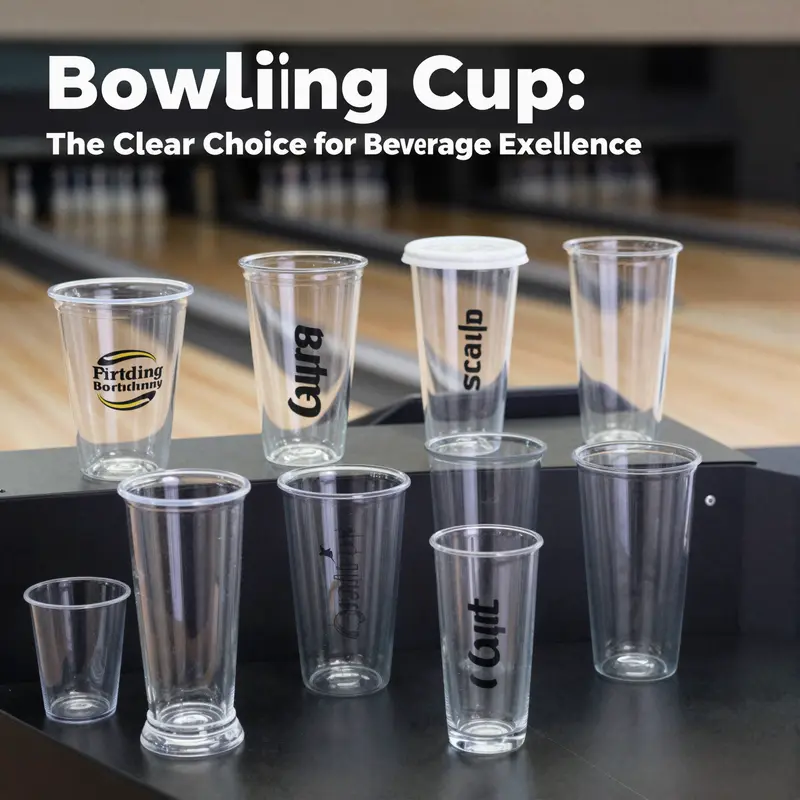
Clear plastic cups serve many functions at events. When adapted for bowling alleys, tournaments, and themed parties, they must meet a unique set of demands: quick handling, spill resistance, visual clarity, brandability, and environmental responsibility. Though there is limited direct research on a niche product labeled “bowling cups plastic clear,” design thinking and materials science principles behind beverage and food-service cups offer a useful blueprint. This chapter traces practical innovations that turn common clear cups into purpose-built items for bowling venues and events, blending usability, safety, and aesthetics into a coherent design language.
The primary challenge in adapting clear cups for bowling environments is balancing visibility with durability. Clear cups provide immediate visual feedback: players, staff, and cameras can see beverage levels, ice, or potential contamination without opening the cup. This transparency simplifies inventory and speeds service. Yet clarity often conflicts with toughness. Traditional thin-walled disposable cups excel at clarity but tear or deform when jostled. A durable solution uses slightly thicker walls and engineered polymers that resist impact while retaining optical clarity. Polymer blends and multiwall constructions can preserve a bright, glass-like appearance while adding structural resilience. Subtle ribbing or double-wall geometry increases stiffness without sacrificing the clean look.
Grip and handling are crucial. Bowling alleys are lively places where quick movement is normal. Cups designed for this context must be easy to pick up and carry, sometimes with one hand, and must resist slipping when players have chalky or sweaty hands. Textured bands, matte finger zones, or raised rings can be integrated into the cup’s geometry to improve grip. These features are typically minimal in profile so they do not interrupt the transparent field; they may be placed near the midsection so the cup retains a clear upper surface for visual appeal. Another effective tactic is a two-material approach: a transparent main body bonded to a thin, translucent or frosted grip sleeve. This sleeve can be made from a compostable polymer to enhance eco-credentials while remaining functional.
Spill prevention blends lid design, rim geometry, and weight distribution. Bowler-friendly lids should snap on securely and include a small drinking aperture that can be sealed or covered. For active environments, domed lids or shallow, vented domes prevent splashes when a cup is bumped. Lids with integrated straw ports that self-seal around straws reduce liquid escape. Rim geometry matters as well: a slightly flared rim guides liquid flow and reduces drips, while a reinforced lip prevents crushing during rapid set-downs. Weight distribution should favor a lower center of gravity, achieved by a thicker base or an inset base ring; this helps resist tipping under incidental forces.
Branding and event theming are opportunities where clear cups shine. Transparency allows layered visual effects. For example, a printed band placed on the interior of the cup preserves the outside smoothness while creating a vivid, stable graphic. Another technique is partial frosting or selective matte printing to frame a clear window that reveals contents, such as layered drinks or colorful slushes. This interplay of opaque and transparent surfaces enhances aesthetics while leaving room for sponsor logos and event information. Because bowling environments often incorporate dynamic lighting, designers can exploit reflective and refractive effects by adding subtle faceting or flutes to the cup wall. These create catching highlights under lane lights and make beverages look more appealing.
Customization must also consider information flow. Cups used in tournaments often need quick identifiers: player names, lane numbers, or beverage types. A writable panel or integrated label slot allows staff to mark cups with non-permanent ink. Alternatively, a detachable tag or clip system can secure paper or plastic tags without obstructing the cup’s body. These approaches help maintain hygiene by avoiding permanent markers that touch the liquid surface.
Sustainability remains central to modern design. Bowling alleys serve thousands of guests weekly, so specifying environmentally sound cups reduces long-term waste. Clear PET and PP remain common because they offer high clarity and recyclability. Increasingly, manufacturers use post-consumer recycled content to minimize virgin resin use. Biobased polymers such as polylactic acid (PLA) offer compostability in industrial facilities, but they can underperform in heat resistance and clarity compared with PET. Emerging feedstocks and blends aim to combine the best traits: crystal-clear appearance, heat tolerance, and a lower carbon footprint. Equally important is the lifecycle approach: designing cups for reuse in bowl-alley loyalty programs, or for easy recycling through standardized formats, increases the chance of responsible end-of-life handling.
Hygiene and safety drive material and surface choices. Antimicrobial surface treatments can reduce microbial transfer between uses. Smooth, seamless inner surfaces prevent residue buildup and simplify cleaning. Cup materials chosen for bowling events should resist leaching flavors or chemicals into beverages, especially when serving acidic drinks or high-proof cocktails. Industry testing standards—such as migration and food-safety assays—ensure materials remain inert under typical use conditions. For single-use designs, providing clear on-cup disposal cues—compostable or recyclable symbols—is a small but effective nudge toward correct disposal.
Manufacturing innovations enable many of these design features without excessive cost. Injection molding allows precise geometry, integrated ribs, and complex lid profiles. Thermoforming is efficient for thin-wall designs and large runs. Co-extrusion and lamination permit multi-material cups—clear bodies with integrated opaque bands—without post-assembly bonding. Advances in printing, especially UV-curable inks, enable vivid graphics that adhere to smooth plastic and resist abrasion. Laser etching and selective frosting techniques create permanent, high-resolution marks that survive wash cycles in reusable cup programs.
Operational considerations also shape design. Stackability saves storage space and speeds service lines. Slight tapering and anti-nesting rings prevent complete nesting that makes separation difficult. Alignment markers printed at the cup lip help staff quickly add lids during busy service. For venues that use automated dispensers, cup geometry must match dispenser specifications, including base diameter, rim strength, and material elasticity.
Accessibility and inclusivity inform final choices. Cups with clear measurement marks assist users with portion control and staff when counting servings for tickets. For guests with motor challenges, larger tabs or easy-open lids reduce frustration. Clear cups can also host tactile markers—small raised shapes near the top—to help visually impaired guests identify their drink type.
A field-friendly design merges these threads: a clear, recyclable body molded from durable PET with a slightly thicker base, a textured mid-band for grip, a snap-fit lid with a self-sealing straw port, and a writable panel near the rim. Optional features include a detachable clip for lane assignment tags and a printed window to highlight sponsors. For venues seeking greener options, a version with post-consumer recycled content and clear compost labeling offers a responsible alternative.
One practical source for clear plastic cup designs used in food-service contexts that can inform bowling-specific adaptations is a vendor page showcasing disposable clear plastic cups suitable for outdoor events and parties. This resource highlights common material choices, lid styles, and clarity options that translate well to bowling environments: https://ecocupbowl.com/product/disposable-clear-plastic-cup-outdoor-picnic-pet-cup-drinking-cup-for-parties-birthdays-weddings-camping-utensils/
Finally, engineering and testing guide final validation. Drop and tip tests simulate accidental impacts. Thermal cycling assesses performance with hot and cold beverages. Optical haze measurements ensure clarity standards are met. Combining performance data with user feedback from bowlers and staff results in iterative improvements that unite practicality with delight.
By borrowing innovations from beverage cup design and applying them to the bowling context, designers can produce clear plastic cups that look good, work well, and support venue sustainability goals. The key is an integrated approach that respects visibility, handling, branding, hygiene, and end-of-life considerations. For a deeper dive into materials science and the engineering applications relevant to specialized sporting equipment and accessories, see this external resource: https://www.dylanhayes.com/professional-bowling-equipment-grades-properties-engineering
Final thoughts
Clear plastic bowling cups play a pivotal role in enhancing beverage service for a variety of venues, from bowling alleys to catering events. By understanding their material properties, applications, environmental impacts, and market trends, businesses can make informed choices that not only elevate customer experience but also align with sustainability goals. With continuous innovations in design, these cups remain flexible and adaptable to meet the needs of diverse beverage services.