
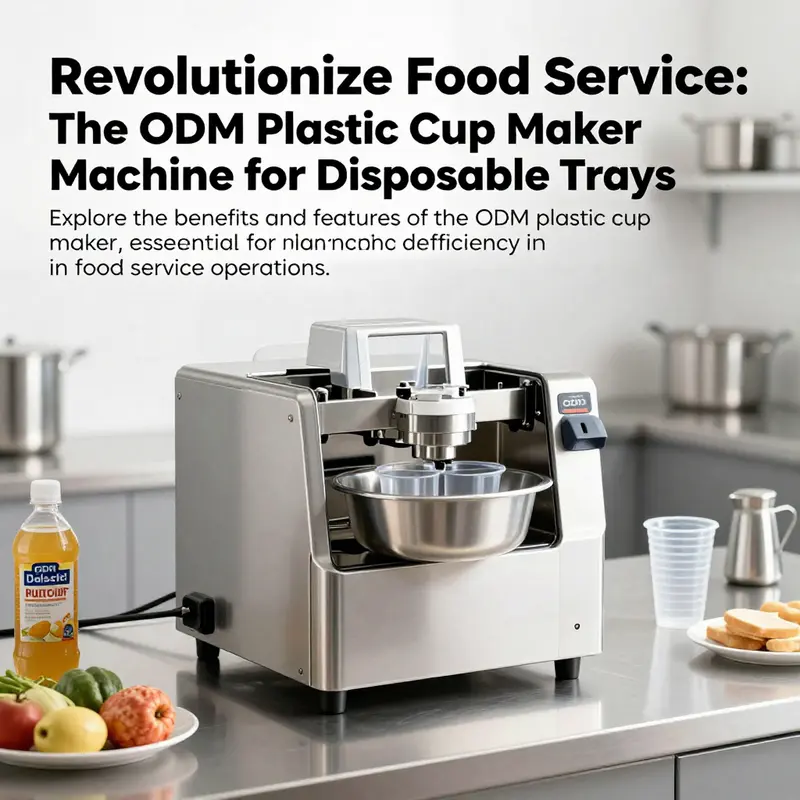
In an increasingly eco-conscious world, the demand for efficient and sustainable food packaging solutions has never been higher. The ODM plastic cup maker machine, specifically designed for disposable trays, meets these needs with impressive efficiency and versatility. Bubble tea shops, restaurants, food trucks, and catering services can significantly benefit from adopting this technology, boosting their production capabilities while aligning with sustainability goals. Each chapter of this article will delve into important attributes of these machines, including specifications, applications, market trends, industry standards, and future prospects, ultimately providing a holistic understanding crucial to making informed purchasing decisions.
null
null
High-Capacity Thermoforming: Capabilities and Uses of ODM Machines for Disposable Trays and Cups
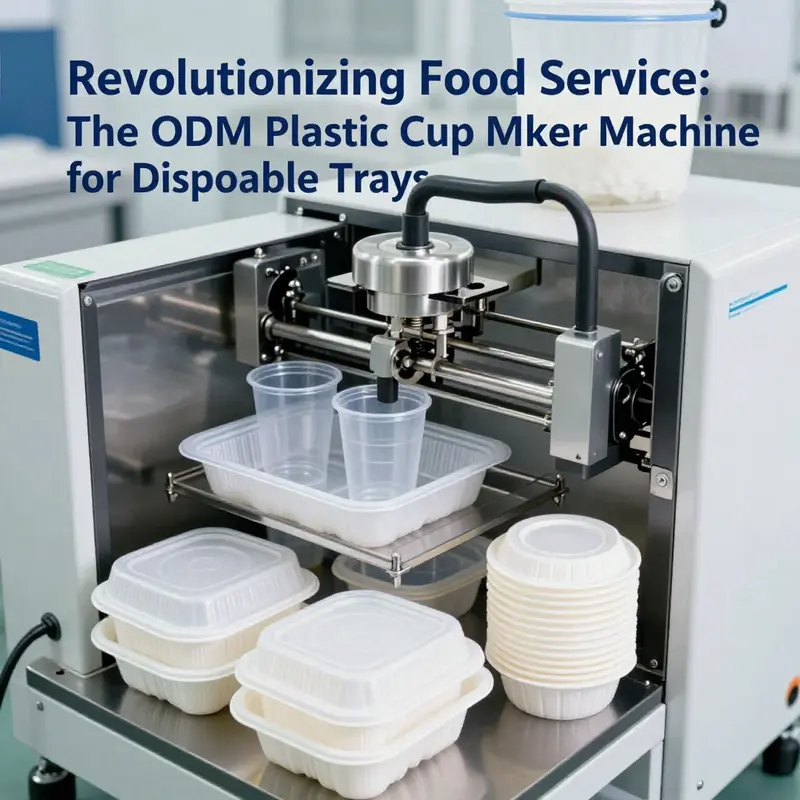
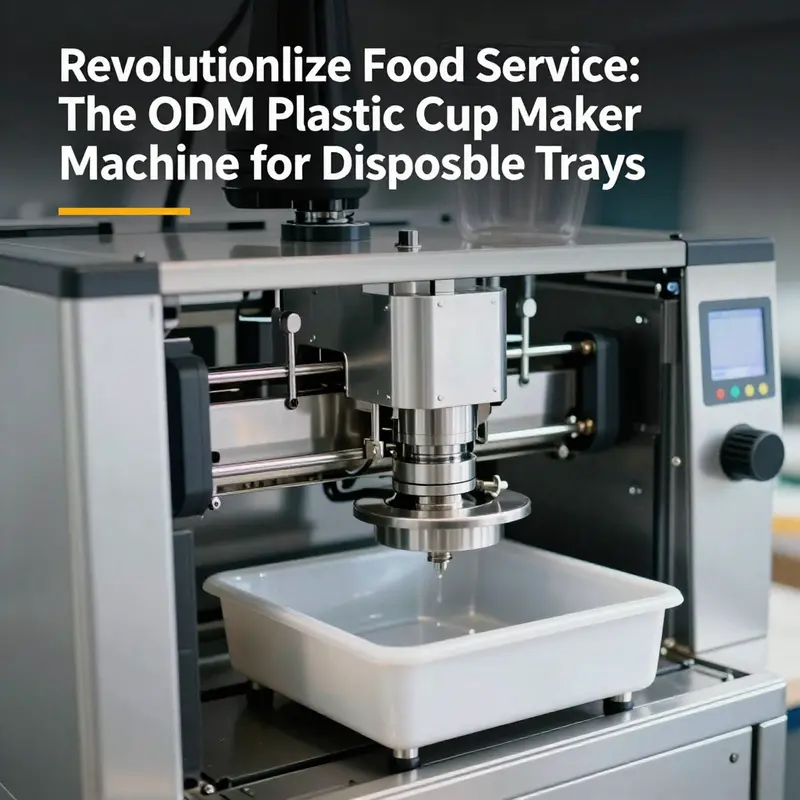
The modern ODM plastic cup and tray maker marries high-speed thermoforming with flexible material handling. These machines are built to produce vast quantities of disposable food containers while preserving consistent quality. A typical production line integrates sheet feeding, controlled heating, precise forming, and in-mold cutting, all orchestrated by PLC systems. The result is a continuous, largely unattended workflow that transforms rolls or sheets of polymer into finished lids, trays, bowls, and clamshells with low labor input and predictable output.
One core strength of these systems is material versatility. They accept a broad range of polymers, from PET and PVC to PS and HIPS, and they increasingly support biodegradable alternatives such as PLA. This flexibility matters because customers in the food sector demand both traditional clear plastic solutions and greener options. Changing from one material to another usually requires only adjustments in heating profiles and slight tooling changes. That keeps downtime minimal and lets manufacturers test new product ideas quickly. Because machines can form deep designs, they handle structural trays and nested bowls as easily as thin cup lids, expanding the product mix a single line can deliver.
Speed and throughput define commercial viability. High-capacity thermoformers operate with cycle times that translate to hundreds of thousands of pieces per day for small-format items like cup lids. Meanwhile, larger trays or deeper containers run at lower piece-per-minute rates but still deliver impressive daily totals due to continuous operation. Automation reduces manual transfer steps. Systems use synchronized servo drives and conveyors to move blanks from forming to cutting to stacking. Laser or die-cutting integrated into the line provides clean edges and precise breaks. For manufacturers focused on retail or food-service customers, that edge quality reduces returns and improves shelf presentation.
Precision control is another important capability. Modern lines rely on PLC control with human-machine interfaces that let operators tune parameters easily. Temperature zones are mapped across the heater bank to ensure uniform sheet conditioning. Forming stations maintain consistent vacuum and pressure levels to reproduce the same part dimensions thousands of times. Sensors monitor cycle performance and alert operators to anomalies. This data-driven approach reduces scrap and supports tighter quality control. For companies producing branded items, repeatability means logos, color matches, and fitment tolerances hold steady across production runs.
Customizability is built into the platform. Tooling can be designed for specific product geometries, from shallow lids to multi-compartment trays. Tool inserts and interchangeable molds let a single machine serve multiple SKUs with short changeover times. Color and surface texture are handled either by upstream material selection or downstream finishing. Manufacturers often pair thermoforming lines with printing or labeling stations for branding. For contract producers and ODM partners, the ability to deliver bespoke sizes, shapes, and packaging structures is a major selling point. It allows those partners to supply cafes, quick-service restaurants, catering firms, and retail chains with tailored packaging solutions.
Energy efficiency is a competitive advantage for high-volume operations. Advanced machines optimize heater zones and employ insulation to reduce energy losses. Efficient drives and smart controls limit idle consumption. In practice, this lowers the cost per part and improves the environmental footprint of production. When combined with the option to process biodegradable polymers, energy-efficient lines help manufacturers position their offerings as more responsible. That matters to buyers who must balance cost, performance, and sustainability.
Safety and compliance are non-negotiable in the food-packaging industry. Certified machines meet relevant international standards for electrical safety and quality management. They include safeguards such as interlocked doors, emergency stops, and guarded moving parts. Food-contact regulatory compliance is achieved through material choice and post-processing practices. For companies exporting product overseas, conformity to internationally recognized certifications streamlines market access and reduces regulatory friction.
Applications for these thermoforming lines span multiple sectors. Food service remains the primary market. Lightweight lids for beverages, hinged clamshells for sandwiches and salads, and multi-compartment trays for combo meals all fall within the machine’s scope. Retail packaging for fresh produce and prepared meals is another large segment. Clear lids and compartmented trays showcase product freshness and support portion control. Event catering and airline meal services favor compact, stackable trays that maximize storage efficiency. Beyond food, the same lines produce hygienic single-use items for medical or laboratory use when configured with appropriate tooling and materials.
Operational flexibility means manufacturers can pivot to seasonal or niche products without large capital outlay. A production line might run standard lids for nine months and switch to specialized festival trays for a holiday season. Quick tooling changeovers and programmable recipes for heating and forming allow such transitions in hours rather than days. This responsiveness helps ODM partners meet fluctuating demand and pursue short-run bespoke projects for clients.
Quality of finish makes a tangible difference in market acceptance. Integrating in-line cutting solutions yields smooth edges without weak points or visible scoring. Laser-based trimming provides clean, consistent rims that improve consumer perception and reduce leakage risks in fitted lids. When producing clear items, precise forming prevents optical distortion. For printed or decorated parts, consistent surface quality supports adhesion and true color reproduction. These finishing capabilities elevate disposable packaging from a purely functional item to part of the product experience.
Maintenance and uptime considerations shape long-term economics. Well-designed machines provide easy access to wear parts and quick-change components. Predictive maintenance, enabled by sensors and diagnostic software, reduces unexpected downtime. Consumables such as cutting blades and heater elements are modular, and replacements are straightforward. For manufacturers with multiple shifts, high uptime converts directly into return on investment, and straightforward spare-part logistics keep lines running smoothly.
Choosing the right machine for an ODM operation means balancing capacity, versatility, and budget. A line configured for high-speed small parts will differ from one optimized for deep-formed trays. Yet many suppliers provide scalable platforms that can be upgraded as demand grows. Financing and warranties also influence decisions; reputable suppliers offer service packages and training to ensure operators extract maximum value from the equipment.
Sustainability considerations increasingly influence machine selection and product design. Manufacturers who wish to market biodegradable or compostable trays must ensure process temperatures and forming conditions suit those materials. Optimized tooling and gentle forming cycles can preserve material integrity and appearance. When paired with efficient energy systems, these setups allow producers to offer more eco-conscious packaging without compromising throughput.
For teams evaluating thermoforming solutions, practical metrics matter: daily throughput, cycle speed range, maximum forming area, forming depth, and total power draw. These parameters determine whether a given line meets volume targets and fits within factory constraints. Equally important are support and warranty terms, and the availability of spare parts in the region of operation. Platforms with proven field performance and strong after-sales networks reduce risk and accelerate ramp-up.
Manufacturers that integrate high-capacity thermoforming lines into their operations gain a competitive edge. They can offer a wide array of packaging formats, respond quickly to customer requests, and scale production without sacrificing quality. With the right machine, an ODM partner can move beyond simple commodity parts and deliver tailored packaging solutions that meet modern demands for functionality and environmental responsibility. For product teams looking to expand their portfolio, focusing on a line that combines material versatility, automation, precision finishing, and energy efficiency yields the best long-term results.
For an example of the kind of product variants these machines support, see the range of eco-friendly 3-compartment food-grade packaging options.
External source: https://www.alibaba.com/product-detail/Plastic-Cup-Lid-Fruits-Box-Fresh-Food_1600524837688.html
Buying Signals and Price Dynamics for ODM Plastic Cup and Tray Machines: What to Expect and How to Decide
Market availability for plastic cup and disposable tray thermoforming machines has matured into a clear hierarchy of options that match different production ambitions. Buyers now choose from manual and semi-automatic systems for small runs, mid-range fully automatic thermoformers for steady local supply, and high-capacity industrial lines intended for export and contract packaging. Each tier follows predictable pricing patterns, but recent shifts in technology, materials, and certification demands have created new criteria that matter as much as the sticker price.
A practical way to read availability is to think in capability bands rather than single prices. Entry-level machines offer a low cost of entry and are appropriate for startups or makers testing the market. They deliver modest daily output and fewer automation features. Mid-tier automatic machines introduce integrated heating, forming, and cutting, and often include better temperature control and cooling systems for consistent results. High-volume systems are engineered for continuous operation, high throughput, and modular expansion. Understanding the band you need clarifies realistic budgets and supplier conversations.
Pricing reflects those capability bands. Lower-end thermoforming equipment can be acquired for a relatively small capital outlay, making them accessible to small businesses. Mid-range, fully automatic units typically command a higher price because they fold in automation, consistent cycle rates, and more robust components. Top-tier production lines escalate further, with costs that reflect their industrial design, redundancy for uptime, and advanced in-line finishing or trimming systems.
Beyond base cost, three economic realities influence the total investment: energy use, tooling, and material flexibility. Machines with superior energy efficiency lower operating costs, which becomes significant with high daily throughput. Tooling — molds and dies for different cup or tray shapes — is an upfront cost and can be nontrivial for businesses seeking many SKUs. Finally, machines that accept multiple polymers, including biodegradable options, provide resilience in procurement and market positioning. Choosing a platform that supports both traditional plastics and compostable resins reduces the risk tied to material price swings and changing regulations.
Certification and safety compliance are more than paperwork. Buyers seeking to export products or to supply major foodservice customers must prioritize equipment with internationally recognized certifications. Compliance streamlines customs clearance, reassures institutional buyers, and reduces time-to-market when launching new product lines. Look for machines from suppliers that provide clear documentation and can support the certification process when products are made for regulated markets.
Technology selection has a strong influence on final product quality and per-piece cost. Modern thermoforming lines rely on uniform temperature control, optimized cooling circuits, and precise forming pressure to achieve repeatable wall thickness and dimensional integrity. In-mold trimming or laser cutting systems deliver clean edges and reduce secondary operations. These features reduce scrap and manual finishing labor, improving effective throughput even when cycle speed is modest. When comparing models, quantify not just cycles per minute but finished pieces per hour after trimming, inspection, and packing.
Market dynamics today show a migration toward automated, high-capacity solutions that prioritize consistency over speed alone. Buyers are placing more value on systems designed for continuous production with easy maintenance access and modularity. Modular designs allow phased investments: a manufacturer can begin with a core thermoformer and add cutting, labelling, or stacking modules later. This staged approach lowers initial capital strain while preserving a path to scale.
Price transparency varies by channel. Trade platforms list competitive prices and provide a good starting point for specification comparison. However, final quotes often depend on optional features: heating power, control systems, material compatibility, tooling sets, and after-sales packages. For serious procurement, solicit detailed quotes that separate base machine cost from add-ons and shipping, and ask for total installed price estimates, including customs, local certification, and installation support.
Financing and warranty terms are practical levers. Many suppliers offer one-year warranties and options for extended coverage or service agreements. A warranty that covers critical electrical components and control systems is especially valuable. For larger purchases, consider financing structures that align payments with ramp-up revenue from new production capacity. Leasing or deferred payment options can reduce financial exposure while enabling rapid market entry.
Operational costs determine longer-term competitiveness. Consider energy consumption, spare parts availability, and maintenance needs. Machines with standardized components and broad supplier support typically reduce downtime and spare-parts lead times. Evaluate common wear parts — heaters, vacuum pumps, and cutting blades — for expected life and replacement cost. Plan inventory for critical spares to avoid production halts, and require basic training for in-house technicians to minimize service calls.
Supply chain resilience is now front and center. Sourcing tooling locally when possible shortens lead times for new cup or tray designs. When tooling must be imported, confirm lead times and quality assurance processes. Also verify that the chosen machine supports the polymers you intend to use, including emerging compostable materials. Machines that can switch between polymer types with minimal retooling simplify new product development and help capture short-lived market opportunities.
Return on investment hinges on three drivers: throughput, yield, and product mix margin. Calculate ROI using realistic assumptions for effective pieces per hour, estimated scrap rate, and the average margin per SKU. Machines with slightly lower cycle speeds may still deliver superior ROI if their yield and finished-piece rate are higher because of better trimming and fewer rejects. Model scenarios for peak-season demand and for steady baseline production to ensure the chosen system works across operating rhythms.
Aftermarket service and global parts support are often decisive for buyers outside manufacturing hubs. Seek suppliers or partners with established service networks or that can provide rapid remote diagnostics and parts shipping. A strong supplier relationship reduces the risk of extended downtime and supports smoother scale-up when production increases.
Sustainability considerations influence both equipment choice and product acceptance. Demand for items made from compostable resins or recycled feedstock is growing in segments of retail and catering. Machines that can process a range of materials, including biodegradable polymers, help manufacturers adapt to procurement trends and regulatory shifts. This flexibility also aids marketing; being able to label products as compatible with compostable materials opens doors to customers prioritizing environmental credentials. For producers planning to diversify into paper-based disposable items and eco-friendly alternatives, pairing plastic thermoforming capacity with complementary packaging lines creates a balanced product portfolio. For example, if you also sell clear plastic cups alongside eco paper containers, cross-promotional bundles can capture broader buyer segments. See a supplier of complementary clear cups for inspiration: disposable clear plastic cups.
When negotiating, focus on measurable performance guarantees: expected daily output, energy consumption per 1,000 pieces, and acceptable scrap rate. Insist on trial runs or samples produced on the buyer’s material and tooling profile. Such validation reduces uncertainty and reveals hidden costs early. Also verify logistics: heavy machinery requires careful handling, plus local installation support to commission the line and train staff.
Market signals indicate that automated, certified thermoforming solutions remain the preferred route for companies scaling disposable cup and tray production. Price bands are wide, but clarity about required throughput, material flexibility, and support needs narrows choices quickly. Buyers who evaluate total cost of ownership, not just purchase price, secure equipment that supports growth and protects margins.
For up-to-date supplier quotes and specification comparisons, consult trade platforms that aggregate current listings and allow direct inquiries to manufacturers. These platforms help match capability needs with realistic budgets and provide negotiation leverage when finalizing terms.
External reference: For more machine listings and current market pricing, see Alibaba’s collection of disposable plastic cup making machines: https://www.alibaba.com/showroom/disposable-plastic-cup-making-machine.html
Standards as the Backbone: Certifications and Compliance for ODM Plastic Cup and Tray Machines in a Global Takeout Economy
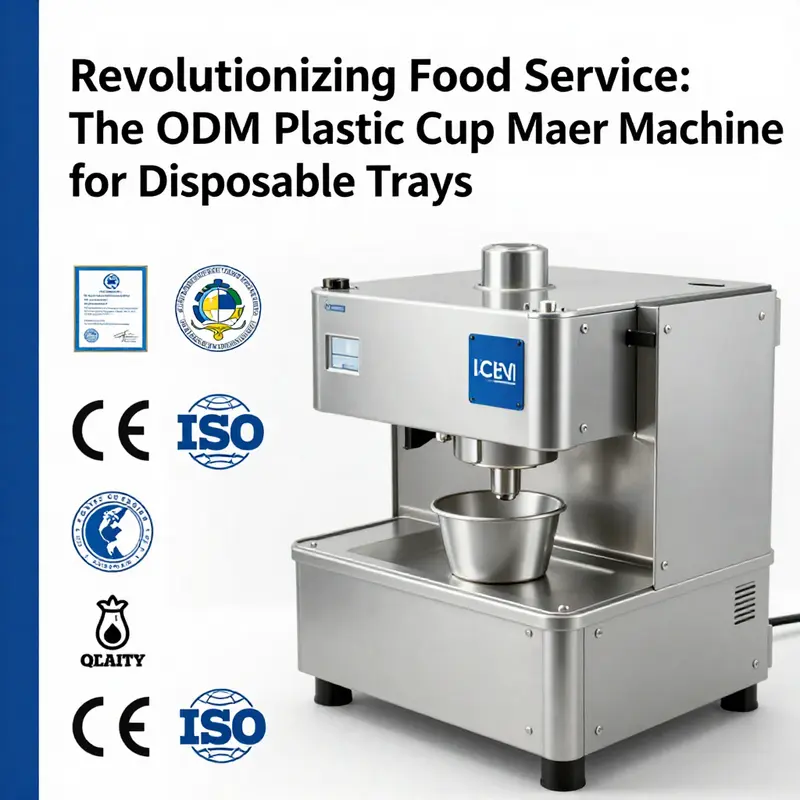
In the world of original design manufacturing for disposable food packaging, the machinery that shapes cups, lids, bowls, and trays sits at the center of a vast, interconnected supply chain. These machines do more than form plastic; they define safety, quality, and sustainability across continents. For ODM players aiming to scale production and meet the needs of diverse markets, certifications and standards are not afterthoughts but strategic foundations. They translate engineering prowess into verifiable trust, turning high-capacity capabilities into export-ready competence. When an ODM offers a system capable of high-volume production of PET, PVC, PS, or even PLA-based items, it must not only perform efficiently but also prove that it adheres to internationally recognized safety, quality, and environmental benchmarks. That proof becomes part of the product’s value proposition, a passport that eases cross-border sales and reduces the friction of procurement in a field saturated with competing capabilities and pricing pressures.
The first pillar for any ODM in this space is compliance with the European market’s expectations, often encapsulated in the CE marking. CE certification is not merely a sticker; it represents conformance with a constellation of EU directives designed to safeguard health, safety, and environmental responsibility. For machinery used to form, cut, and assemble disposable food packaging, the relevant directives typically include the Machinery Directive, which delineates essential health and safety requirements for machines; the Low Voltage Directive, which governs electrical safety for equipment operating at modest voltages; and the Electromagnetic Compatibility Directive, which ensures that electrical and electronic devices do not interfere with or suffer from unwanted electromagnetic disturbances. The practical effect for an ODM is a design discipline that anticipates risk, integrates guarding and interlocks, and demonstrates that a machine can operate reliably within a consumer-facing food ecosystem without compromising operator safety or product integrity. Today’s buyers increasingly expect a CE-certified platform as a baseline signal of reliability, and achieving this certification often requires a robust combination of design review, supplier qualification, rigorous testing, and transparent documentation.
Beyond Europe, ISO certifications function as global-style passports of quality and sustainability. ISO 9001, the standard for quality management systems, offers a framework for consistent process control, traceability, and continual improvement. For a high-capacity forming line, this translates into disciplined calibration of forming tools, standardized changeover procedures, and traceable maintenance logs. It means the ability to reproduce millions of cups, lids, and trays with consistent thickness, edge integrity, and dimensional stability, while knowing who did what, when, and with what results. ISO 14001, the environmental management standard, reinforces a different but equally essential commitment: reducing the environmental footprint of manufacturing operations. In an era when customers demand eco-conscious supply chains, an machine supplier that can demonstrate waste reduction, energy efficiency, and responsible handling of solvents and lubricants signals a readiness to align with circular economy goals. Together, these ISO certifications do more than confer prestige; they embed a management system mindset into every stage of product development, supplier collaboration, and after-sales service.
Interwoven with CE and ISO is RoHS compliance, a standard that originated in electronics but has broad implications for the components that animate modern forming machinery. RoHS restrictions limit certain hazardous substances in electrical and electronic equipment. In a machine that includes heating elements, sensors, drives, and control systems, RoHS compliance reduces the risk of contamination in the food packaging produced on the line and minimizes downstream regulatory exposure for customers who must meet product-safety and waste-handling requirements. RoHS, therefore, acts as a gatekeeper for component selection and supplier screening, nudging ODMs toward cleaner materials, safer assemblies, and long-term reliability in environments where moisture, heat, and repeated cycles are everyday realities.
In North American markets, safety certification via UL or ETL marks often accompanies the CE and ISO portfolio. UL (Underwriters Laboratories) and ETL (Intertek’s certification mark) are not mere stickers; they are statements that a machine meets stringent U.S. and Canadian safety standards. For an ODM producing high-speed forming lines with complex automation, this can involve electrical safety tests, mechanical guarding verifications, and clear labeling that supports safe operation, maintenance, and installation. While not every supplier emphasizes UL/ETL in every listing, many buyers in North America require such certification for procurement, installation contracts, or end-user commissioning. The result is a diversified certification strategy that addresses multiple regulatory landscapes while maintaining a unified quality and safety narrative across markets.
All these standards—CE, ISO 9001, ISO 14001, RoHS, and UL/ETL—shape the practical engineering choices an ODM makes. The form of a high-capacity plastic cup and tray system naturally demands a blend of speed, precision, and reliability. A system designed for rapid forming, cutting, and trimming must balance power consumption with output. For instance, a line with a substantial average cycle rate and robust forming area must be designed to handle repeated thermal cycles, aggressive edge finishing, and in-mold cutting technologies. The safety architecture must guard operators from hot surfaces and moving tooling while ensuring easy access for maintenance and cleaning in a food-contact environment. The energy profile matters not only for operating costs but also for environmental credentials that ISO 14001 can credibly demonstrate. In short, standards do not constrain innovation; they direct it toward safer, more sustainable, and globally navigable solutions.
A practical consequence for ODMs is that certification readiness becomes a design criterion from the earliest stages of development. It guides choices around guarding, interlocks, emergency stops, and ergonomic operator interfaces. It influences the selection of electrical components and their compliance status, their installation practices, and the clarity of the machine’s instructions for use and maintenance. It encourages robust supplier management, including the qualification of tool suppliers, heater elements, and control electronics so that the entire chain can be traced, verified, and audited. Certification pathways also drive documentation practices—from the declaration of conformity and test reports to risk assessments and user manuals written in clear, compliant language. A machine that meets CE and ISO standards arrives with a package of verifiable proofs, making it easier for OEMs to negotiate with packaging manufacturers who need to meet the strict procurement and quality assurance demands of food service operators.
When discussing material compatibility, ODMs often highlight the ability to form items from PET, PVC, PS, and increasingly PLA, a biodegradable option. Each material brings its own processing nuances and safety considerations. For example, PLA requires careful handling of heat to preserve dimensional stability, while PET demands precise control of channel temperatures to prevent deformation. From a standards perspective, compatibility with a range of materials must be documented and validated under controlled testing conditions aligned with quality management practices. The production environment must reflect good manufacturing practices (GMP) expectations, and internal controls must ensure that material transitions do not compromise safety or compliance. The certification story, therefore, becomes a narrative of versatility anchored by process discipline, not a mere claim of capability.
Documentation and audit readiness are central to sustaining a compliant, export-ready platform. An ODM should maintain comprehensive records of design reviews, process validations, and production traceability. This includes change control records, maintenance schedules, calibration certificates, and supplier qualification data. The goal is a transparent trail that can be presented during certification audits or customer due diligence. A well-documented system also facilitates continuous improvement, which is a core tenet of ISO 9001. Moreover, environmental stewardship—an explicit focus of ISO 14001—requires data on energy consumption, waste generation, and the management of process effluents or lubricants. Demonstrating improvements in energy efficiency, for instance, aligns with both environmental goals and the economic realities of running high-capacity lines. The operational reality behind these standards is that every kilowatt-hour saved and every gram of waste reduced strengthens the business case for global customers who demand reliability, safety, and sustainability from their suppliers.
For readers seeking a closer look at how packaging suppliers integrate these considerations into their offerings, consider exploring resources that discuss the broader packaging ecosystem and procurement practices in theme-based or event-driven contexts. For example, a detailed look at custom takeaway packaging and disposable tableware can provide practical context for how manufacturers align product capabilities with market expectations. See the discussion here: custom-takeaway-packaging-supplies-disposable-tableware-for-theme-party.
As markets evolve, the push toward more sustainable and compliant packaging technologies will only intensify. ODMs that standardize their certification readiness, maintain robust quality and environmental management systems, and implement rigorous supplier controls will have a distinct advantage. They will be better positioned to address the growing demand for biodegradable materials, cleaner manufacturing processes, and safer, more reliable equipment. In turn, packaging manufacturers and brand owners gain confidence that their equipment suppliers are not only capable of delivering volume but are also accountable stewards of safety, quality, and environmental responsibility. The resulting partnerships tend to be longer, more collaborative, and more resilient to the regulatory and market shifts that define today’s global food service landscape.
For further official guidance on CE marking and how it interfaces with other international standards, readers can consult authoritative resources such as the European Commission’s overview of CE marking. This site provides clarity on which directives are most relevant to machinery and how conformity assessments are typically conducted, offering a practical map for OEMs navigating multi-jurisdictional requirements: https://ec.europa.eu/growth/sectors/technical-standards/ce-marking_en
Edge of Automation: ODM Plastic Cup and Tray Making Machines
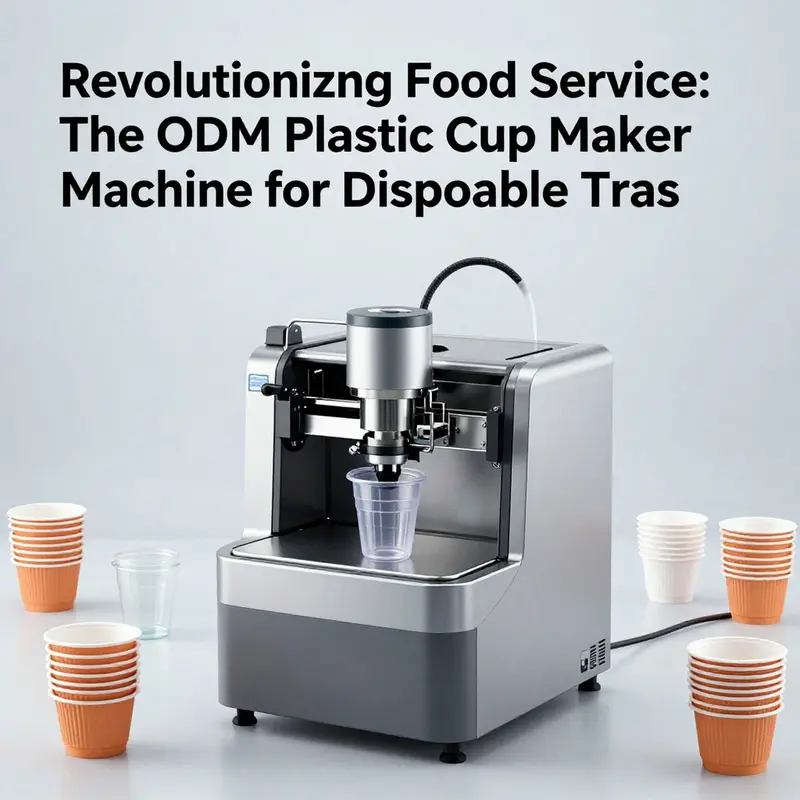
In the fast-moving world of food service and retail packaging, ODM plastic cup and tray making machines stand at a critical intersection of design freedom, production scale, and sustainability. They are not merely tools that press and cut plastic; they are systems that translate a concept into thousands of uniform items every day. This chapter treats these lines as living parts of an ecosystem: a bridge between idea and market, materials science and consumer expectation, local manufacturing and global supply chains. Instead of listing specifications, we examine how a single integrated line can reshape a brand’s ability to deliver consistent quality, tailored designs, and responsible packaging at scale.
At the core of these lines is precision engineering and intelligent automation. A modern forming and cutting system uses a large forming bed capable of handling diverse geometries while maintaining a process window that preserves edge integrity and material performance. It supports a spectrum of polymers from common petrochemical families to biodegradable options. PET, PS, PVC, and PLA each bring distinct melting temperatures, flow characteristics, and cooling profiles. The best systems couple robust servo-driven forming with careful material handling, controlled heating, regulated plenum pressures, and forming depth that allows sturdy walls. When done well, edges emerge with a clean finish that resists delamination during stacking, transport, and use.
The production cadence of these lines highlights the scale of modern packaging. A single line can sustain tens of thousands of cycles per day, producing lids, clamshells, plates, bowls, and even trays. The versatility comes from modular tooling and programmable cycle logic. A typical high-speed line uses a forming area that supports large layouts and a forming depth matched to target wall geometry. Cycle frequency translates into daily output when combined with a steady material feed and reliable cooling. Energy use is nontrivial, but advances in heat management and drives reduce power draw. A balanced system allocates heating to achieve uniform material flow while maintaining thermal stability and long-term reliability.
In-mold cutting, often accomplished with a laser knife, severs parts within the mold cavity. This minimizes post-processing, reduces waste, and yields geometrically precise edges. The result is a product whose edges sit flush with surrounding geometry and can be consistent across runs. The implications for brand differentiation are meaningful: crisp lid edges, precise tray rims, and clamshells that open flat without snagging. For manufacturers, laser-assisted in-mold cutting can lift first-pass yield and shorten time-to-market for new designs, particularly for limited editions or seasonal themes.
The material palette supported by these lines is broad. PET provides strength and recyclability, PS offers clarity and rigidity, PVC remains relevant for heat resistance in some regions, and PLA adds a sustainable option. A design team can test these materials in parallel, assessing edge integrity after sealing and performance in grease and moisture management. The ability to switch materials without sacrificing cycle time makes ODM lines true turnkey partners for brands seeking portfolio diversification.
Beyond hardware, governance and certification matter. In a global market, CE and ISO standards address safety, energy efficiency, and environmental impact. Certification facilitates exporting to diverse regulatory landscapes and building trust with customers who demand documentation of quality systems and process controls. A line that ships with robust warranty and after-sales support reduces downtime and risk in a capital-intensive environment. The commercial proposition of turnkey packages rests on design flexibility, process stability, operator training, and ongoing service that scales with demand.
From a strategic view, ODM lines balance capability and cost. Economics improve when considering daily output, labor savings, waste reduction, and speed to market. The ability to deploy new designs quickly and roll them into mass production helps brands differentiate themselves through customization without sacrificing throughput. Modern lines support customization at scale with interchangeable molds, modular tooling, and programmable controls that adjust to different tray depths or lid profiles without full retooling.
For sustainability, biodegradable and compostable materials are increasingly part of the mix. The line workflow must stay compatible with these polymers, including any material-specific processing needs. Adaptive process controls and material recipes enable operators to select the right settings with a few keystrokes, achieving regulatory compliance alongside consumer demand for greener choices.
As the market evolves, ODM providers expand beyond machine sales to design partnerships and production accelerators. Leaders offer complete solutions: equipment with tooling, operator training, process development support, and scalable expansion plans. They engage with trade platforms and distributors to connect manufacturers with buyers, helping align capability with market needs. Digital data streams from sensors enable real-time monitoring, proactive maintenance, and continuous improvement, strengthening resilience in the face of volatility.
The future will bring deeper automation and design flexibility, with energy efficiency and material stewardship leading the conversation. Smarter feeding, tighter optical alignment for multi-cavity molds, and adaptive control to handle material variability will become standard. Efficient hydraulic systems, where used, will be more common to minimize power use without compromising performance. Brands will push creative boundaries—curved edges for stacking stability, windowed lids for visibility, and textures that enhance consumer appeal while keeping manufacturability high. Regulatory expectations will continue to shape safer, more sustainable packaging, and ODM producers will supply compliant materials and documentation to support labeling, recyclability, and compostability across markets.
As the market grows, geographic diversification expands. Regions with rising disposable income and expanding food-service networks create new demand for turnkey lines. Export capability with integrated service models lowers barriers to entry for new markets, aided by online marketplaces and supplier networks. The ODM packaging machinery landscape becomes a system of capabilities—design, tooling, controls, and service—tuned to a customer’s market, product portfolio, and regulatory environment. The resulting resilient supply chain can absorb volatility while meeting evolving consumer expectations with speed and precision.
For readers seeking practical connections, consider the value of a supplier network offering the line plus ready-to-produce tooling designs, process development support, and regional compliance guidance. Such networks shorten time from concept to production and enable brands to test shapes, sizes, and materials with confidence. This is the ODM advantage: a bridge from design inspiration to large-scale, consistent, responsible packaging that resonates with consumers and retailers alike.
Final thoughts
The ODM plastic cup maker machine for disposable trays stands out as a remarkable solution for businesses looking to scale up their production capabilities while maintaining high standards of quality and sustainability. As the market grows and evolves, investing in such machines not only equips food service operators with the ability to meet consumer demands efficiently but also aligns with broader sustainability goals. By understanding the specifications, capabilities, market trends, industry standards, and future prospects discussed in this article, businesses can make informed decisions that enhance their operational efficiency and product offerings in the competitive food service landscape.