
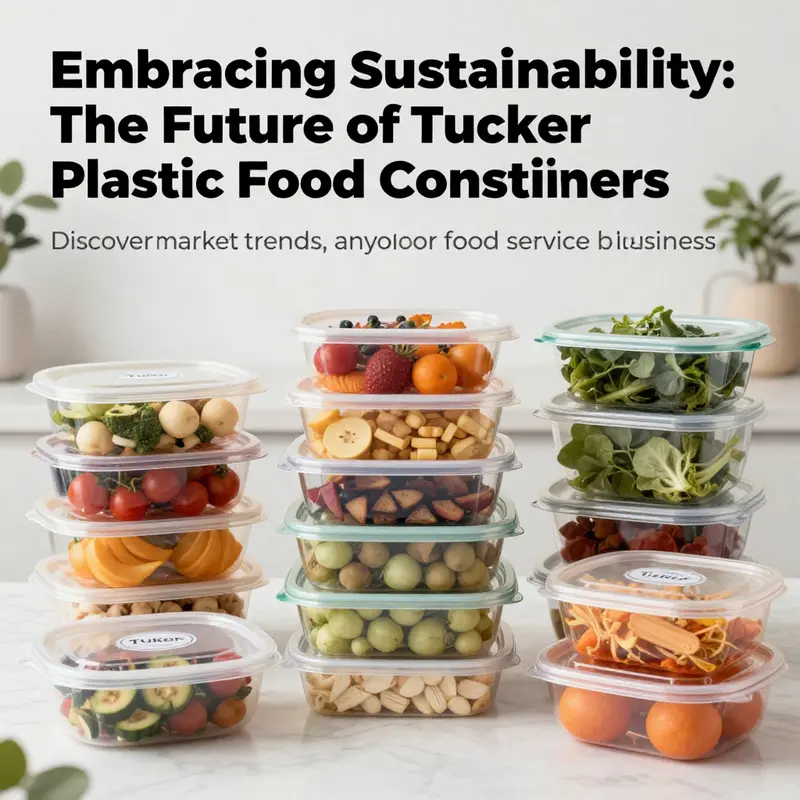
The food industry is experiencing a pivotal shift towards sustainable practices, particularly in packaging solutions. Tucker plastic food containers represent an important aspect of this transition, aligning with the growing demand for eco-friendly options among consumers and businesses alike. In this exploration, we will delve into how Tucker plastic food containers and their alternatives are rapidly evolving, addressing key topics such as market trends, environmental considerations, industry dynamics, consumer preferences, and potential future innovations. By understanding these facets, food service providers, from bubble tea shops to catering teams, can better navigate their choices in packaging and contribute positively to the environment.
Where Tucker Fits: Market Forces, Pricing Pressure, and the Shift to Sustainable Containers
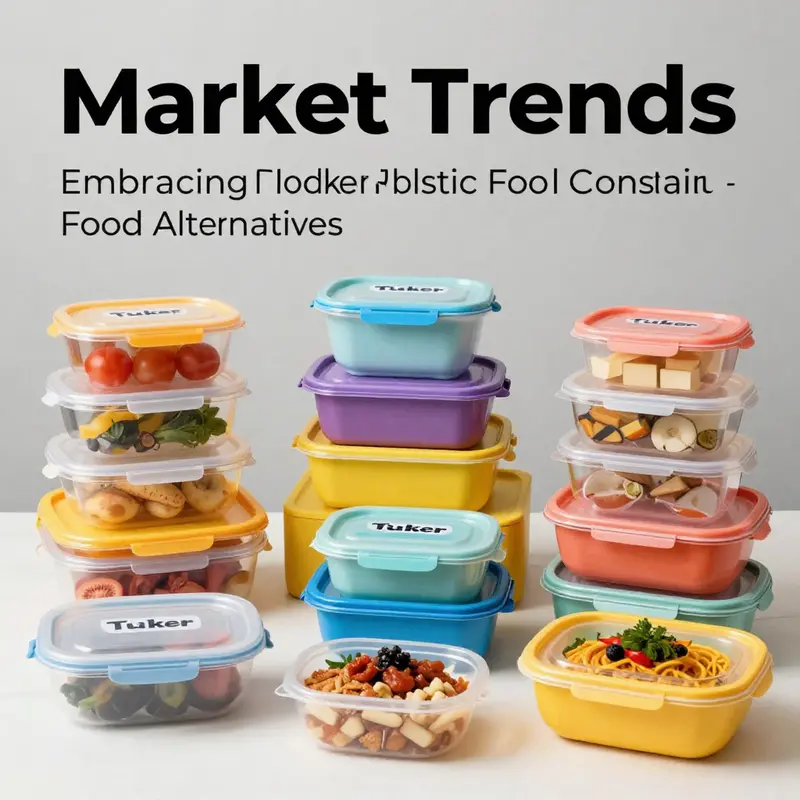
The market for Tucker plastic food containers sits at the intersection of convenience, cost sensitivity, and an accelerating push toward sustainability. For many buyers the decision to choose a plastic container is pragmatic: durability, stackability, and low unit cost matter. Tucker’s product mix reflects this reality, with most offerings positioned in a mid-tier price band that balances quality and affordability. That balance has helped the brand retain a meaningful share among budget-conscious households, small food service operators, and online retailers who need reliable packaging at scale.
Price distribution tells an important story about market positioning. When the majority of items fall within a common price range, it signals a deliberate strategy: appeal to the largest segment of everyday purchasers who prioritize value over premium materials. This strategy works well where urbanization and food delivery growth create steady demand for disposable and reusable containers alike. As commuters, office workers, and app-based delivery services generate predictable volume, manufacturers that can deliver standardized, cost-effective solutions find stable channels to market. Yet, steady demand does not mean stagnation; market dynamics and rising environmental awareness are reshaping buyer expectations and the competitive landscape.
Consumer attitudes have shifted. Where once the default was plastic for its economy and convenience, more buyers now weigh environmental impact alongside cost. This shift is gradual but consistent: many shoppers still choose plastic when it offers clear functional benefits, but they increasingly favor designs and manufacturers that reduce waste or use recycled content. For producers like Tucker this creates both risk and opportunity. The risk is losing share to brands that more loudly position themselves as eco-forward. The opportunity lies in re-engineering core products to meet evolving standards without abandoning the cost advantage that made them attractive in the first place.
Innovation pressure is now a decisive force. Companies face three intertwined demands: reduce environmental footprint, maintain price competitiveness, and preserve functional traits such as leak resistance, compartmentalization, and heat tolerance. Meeting all three requires investment in materials science, tooling, and supply-chain adjustments. Recycled resins, reduced-thickness designs that maintain strength, and better sealing mechanisms are practical paths forward. Some manufacturers add modularity—containers that nest for storage or include replaceable lids—to extend product life and reduce total lifetime waste. These design choices allow products to keep the practical advantages of plastic while addressing buyer concerns.
Regional dynamics complicate the picture. In markets with strict packaging regulations and active consumer advocacy, such as parts of North America and Europe, demand for reusable and recyclable solutions grows fastest. In those regions, brands are often judged on transparency: material sourcing, end-of-life recyclability, and certifications matter. Conversely, in rapidly urbanizing economies the immediate pressures are different. There, large segments of the population are gaining access to e-commerce and delivery services, and price remains the dominant consideration. The result is a fragmented global market: sustainability-forward innovations rise in some regions while practical, low-cost plastics remain the baseline in others. Manufacturers that can operate flexibly across these contexts—offering both greener options and core affordable lines—will be best positioned for growth.
The competitive landscape is likewise fragmented. Beyond global corporations, numerous local producers compete on price, customization, and speed to market. Domestic manufacturers in major production hubs leverage lower costs and proximity to regional customers to deliver competitively priced containers. At the same time, international players push innovation and branding around sustainability, nudging the whole sector forward. For a brand focused on the mid-tier segment, this fragmentation means careful channel management: direct-to-consumer offerings, partnerships with food-service operators, and bulk sales to marketplaces all require different product and marketing approaches.
Functionality remains a central differentiator. Consumers and businesses do not abandon features like compartmentalized trays, microwavability, or secure lids simply because sustainability is on the table. Products that combine improved environmental credentials with proven functionality capture the most attention. For instance, multi-compartment trays that keep sauces separate and handle a range of temperatures address real-use friction points. When such features are paired with recyclable or recycled materials, they appeal to both practical needs and growing environmental preferences.
Manufacturers also need to communicate clearly about trade-offs. Recycled plastics, for example, may have slight variations in appearance or texture compared with virgin resin, but the performance can be comparable if processing is managed properly. Buyers respond well to transparent claims supported by testing and third-party verification. Clear guidance on reuse, recycling, or composting at end-of-life reduces confusion and positions a brand as responsible. Packaging cues—such as minimal secondary packaging or clear labeling—reinforce claims and can be implemented with modest cost implications.
Another trend reshaping demand is the rise of customizable and branded packaging for food-service businesses. Restaurant operators and caterers increasingly view packaging as part of the customer experience. Mid-tier containers that allow logo printing, compartment customization, or tailored set sizes create value beyond the product itself. For companies selling at scale, offering flexible minimum order quantities and quick-turn customization is a competitive edge.
Operational efficiencies also matter. Supply-chain optimization, localized production, and improvements in molding techniques reduce costs and carbon intensity. Manufacturers that invest in energy-efficient factories, closed-loop recycling systems, or partnerships to source post-consumer plastic can lower long-term input costs while improving sustainability credentials. These investments are increasingly viewed not just as moral choices but as essential to managing regulatory risk and remaining competitive in markets where policies tighten.
Finally, the path forward for Tucker-style mid-market containers is likely to be hybrid rather than binary. Expect a continuing core of affordable plastic lines serving high-volume needs, complemented by greener alternatives and upgraded features for markets that demand them. Success will depend on nimble design, transparent communication, and targeted regional strategies that balance cost with environmental progress. For buyers, this means more meaningful choices: practical containers that meet daily needs, and variants that ease environmental impact. For producers, it means evolving the product portfolio to align convenience with responsible practice.
For an example of eco-conscious alternatives designed for multi-compartment convenience, see this eco-friendly disposable 3-compartment food-grade packaging box.
Source: https://www.yhresearch.com/report/global-plastic-food-container-market-size-and-growth-forecast-2026-2034/
Balancing Performance and Footprint: Environmental and Safety Perspectives on Tucker Plastic Food Containers
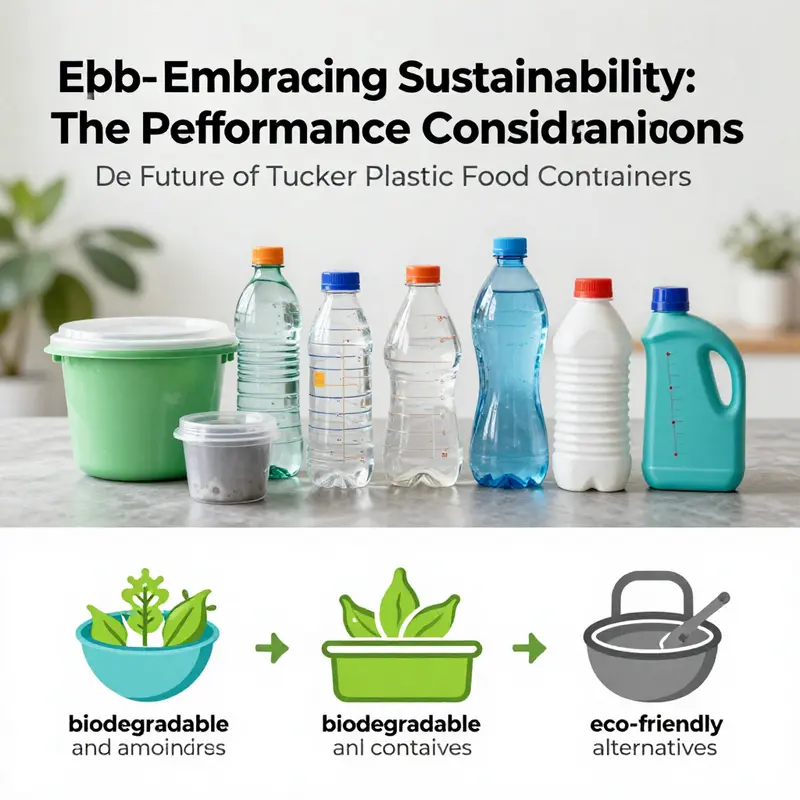
Understanding the environmental and performance trade-offs of Tucker plastic food containers requires looking at material choices, lifecycle outcomes, user safety, and design decisions together. The materials commonly used in durable food containers—polyethylene terephthalate (PET), polypropylene (PP), and high-density polyethylene (HDPE)—each bring strengths and limits. These polymers are lightweight and resilient. They offer chemical resistance, impact strength, and manufacturing flexibility. At the same time, their persistence in the environment and potential to shed microplastics demand careful product design and responsible end-of-life planning.
Polypropylene often emerges as a practical choice for consumer food containers. It resists heat and many chemicals. It tolerates repeated use and is well suited for hot foods and microwaving when formulated correctly. Polypropylene also tends to have a lower production carbon footprint than heavier alternatives such as aluminum. High-density polyethylene contributes high impact resistance and robustness, so it suits larger, more industrial uses. PET provides clarity and barrier properties that are useful for ready-to-eat items and retail packaging. Selecting the right polymer for a container should match functional needs, including thermal stability, barrier requirements, and the intended lifecycle of the product.
Design choices can improve both performance and environmental outcomes. Containers that stack efficiently and nest when empty reduce transportation volume and associated emissions. Multi-compartment designs help keep different food components separate without relying on additional packaging. A secure sealing system reduces leakage and food waste. Yet seals and multilayer constructions complicate recycling. Many modern product teams aim to simplify material composition—favoring single-polymer constructions or clearly labeled assemblies—to make recycling easier for waste handlers and end users. That approach promotes circularity while preserving the container’s practical features.
Circular economy principles play a central role in reducing long-term environmental impact. Incorporating post-consumer recycled (PCR) resin into container production reduces virgin material demand. Designing for disassembly, labeling resin types clearly, and avoiding permanent adhesives or mixed materials helps recycling streams. But there are trade-offs: PCR content can alter mechanical properties or color, and additional testing is needed to ensure food-contact safety. Balancing PCR usage with performance requires both formulation expertise and transparent supply chain practices. When well implemented, PCR integration can significantly lower cradle-to-gate emissions and support scalable recycling markets.
End-of-life management largely determines whether a plastic container’s environmental story ends positively or negatively. Recovery pathways include reuse, recycling, energy recovery, and landfilling. Reuse extends the useful life of a container and reduces per-use footprint. Reusable systems demand robust materials and sometimes take-back or deposit schemes to ensure return and cleaning. Recycling depends on local infrastructure and the container’s material purity. Contamination from food residues or mixed materials can undermine recyclability and push items toward incineration or landfill. Manufacturers and designers working with Tucker containers should therefore emphasize clear user guidance on cleaning, show how items fit local recycling streams, and favor single-resin formats where feasible.
Health and safety concerns remain an essential part of design and materials selection. Recent research highlights two pathways of concern: migration of additives and the release of micro- and nanoplastic particles. Additives such as plasticizers, stabilizers, and colorants enhance performance but may migrate into food under heat or prolonged contact. Microplastics can be shed during mechanical wear, washing, or when containers encounter hot, fatty, or acidic foods. These materials and particles have been linked in some studies to inflammatory responses and potential endocrine disruption when exposure is significant. To address these risks, manufacturers must prioritize materials that meet stringent food-contact standards and limit use of questionable additives.
Testing protocols should reflect real-world use. Standard migration tests under typical temperatures are necessary. They must be supplemented with stress tests that mimic repeated heating, freezing, and mechanical abrasion. Independent third-party certification offers additional assurance. Equally important is transparent communication to consumers. Clear labeling on temperature limits, cleaning methods, and recommended use cases reduces misuse. For example, specifying when containers are safe for reheating, and under what conditions, prevents unnecessary exposure to higher temperatures that can accelerate additive migration or material degradation.
Thermal performance also affects both safety and usability. A container that retains structural integrity at high temperatures reduces the risk of deformation and leakage. Insulation properties can keep food at safe temperatures during transport. But increased barrier and insulation often involve laminates or additional materials. While these features improve function, they may complicate recycling. The best designs balance thermal needs with material simplicity, focusing on single-material walls combined with improved sealing strategies.
Another emerging consideration is microplastic dispersal in the environment. Researchers trace how wind and water move microplastics across urban and rural landscapes, demonstrating broad distribution in lakes, soils, and sediments. This wider ecology of plastics shows that a product’s lifecycle does not end at disposal. Reducing fragmentation and designing for collection prevents small particles from entering natural systems. Choices such as thicker walls to resist wear, limiting sharp edges, and avoiding fragile coatings can reduce microplastic generation during use and handling.
Given these interconnected drivers, an effective strategy for Tucker plastic food containers should rest on four pillars: informed material selection, design for circularity, rigorous safety testing, and clear user guidance. Material selection emphasizes polymers that meet performance needs while allowing for PCR integration. Circular design reduces material complexity and supports recovery systems. Safety testing addresses both additive migration and particle shedding under realistic conditions. User guidance closes the loop by ensuring containers are cleaned, reused, and recycled correctly.
Practical steps companies can take include increasing PCR content where feasible, simplifying product assemblies, adopting clear recycling labels, and investing in certified testing. Collaboration with local waste management can improve collection and sorting of used containers. Where single-use remains necessary, shifting to compostable or readily recyclable alternatives for specific applications can lower environmental burden. For reusable lines, consider modular components and repair-friendly designs that extend service life.
Thoughtful innovation can preserve the practical benefits of plastic containers while reducing long-term harm. Prioritizing safety, clarity, and recoverability aligns product design with consumer expectations and regulatory trends. For a deeper comparison of material life-cycle impacts, consult the comprehensive life cycle assessment study in Environmental Science & Technology. For an example of alternative packaging solutions focused on eco-friendly takeout and compartmentalized designs, see this eco-friendly disposable 3-compartment food-grade packaging box.
How Market Forces and Sustainability Goals Shape Tucker Plastic Food Containers
Industry shifts are remapping the future of plastic food containers, and manufacturers must adapt. The market’s growth, evolving consumer expectations, and tightening environmental rules converge to create a landscape that rewards adaptability. For a company producing plastic food containers, this environment demands strategic decisions across design, materials, logistics, and brand positioning.
Demand for lightweight, durable, and affordable packaging continues to push volume in the plastic container sector. Cost-efficiency and performance advantages make plastic solutions attractive for food service, retail, and home use. At the same time, projections pointing to steady market expansion underscore persistent commercial opportunity. This growth creates revenue potential but also raises pressure to differentiate products beyond price and basic utility. Companies that simply replicate commodity offerings may capture short-term orders but will struggle as buyers prioritize value that aligns with sustainability and convenience.
Consumer expectations are shifting in two overlapping directions: convenience and conscience. Convenience drives features such as stackability, compartmentalization, microwave safety, and reliable seals. Consumers want containers that protect food integrity, minimize spills, and simplify storage. At the same time, conscience drives demand for lower-impact materials, clear recycling information, and visible commitments to circularity. Buyers increasingly expect packaging to solve functional needs without imposing long-term environmental costs. This dual demand forces designers to balance performance with material choices that signal responsibility.
Regionally, demand centers influence supply chains and innovation priorities. The Asia Pacific market remains a dominant force in production and consumption. Manufacturers serving that region must respond to intense volume demands while navigating diverse regulatory regimes and local preferences. Export-oriented suppliers also feel the ripple effects of regional standards, since major markets often set compliance benchmarks that suppliers worldwide must meet. For any producer selling into multiple geographies, harmonizing materials and designs to satisfy the most stringent markets is increasingly important.
Sustainability considerations are reshaping product roadmaps. Regulatory pressure, consumer activism, and scientific findings about persistent plastic pollution converge to shift buyer preferences. The industry is experimenting with several strategies at once: reducing virgin plastic use, increasing recycled content, designing for recyclability, and pursuing alternative substrates like glass or compostable polymers. Each option carries trade-offs. Recycled plastics lower carbon footprint but can complicate material properties and processing. Compostable polymers reduce persistence but need industrial composting to realize benefits. Glass and metal eliminate many plastic concerns but change product weight and cost dynamics.
A practical pathway for many manufacturers is incremental improvement: optimizing plastic formulations and product design to reduce material volume without compromising strength. Thin-wall engineering, multi-layer designs that use barrier coatings sparingly, and modular lids that work across several base sizes are examples. Such choices can reduce resource use and improve logistics efficiency. Another pragmatic move is to increase recycled content where supply chain reliability allows. Post-consumer recycled plastics can deliver meaningful lifecycle improvements if contamination and variability are managed.
Circular economy thinking is also influencing logistics and end-of-life strategies. Reverse logistics models, deposit-return systems, and takeback programs are gaining traction in food service sectors where containers return to centralized points. These models demand partnerships with restaurants, retailers, and waste managers to create collection streams and processing capacity. The benefit is more control over material recovery and a stronger sustainability narrative. For companies exploring this route, pilot programs that combine durable reusable containers with cleaning and redistribution infrastructure offer a middle path between single-use disposables and full reuse systems.
Innovation is not limited to materials. Functional design responses to consumer habits can differentiate offerings. Multi-compartment trays that limit flavor migration, stackable shapes that reduce transport volume, or lids engineered to vent steam for reheating are small changes with outsized user value. For suppliers, collaborating with foodservice operators to understand meal assembly and delivery mechanics produces better-fitting container solutions. In addition, clear labeling that indicates proper disposal or reuse options helps close the information gap that often leads good materials to be wasted.
Brand and regulatory risk management are now central to product strategy. Public perception of plastic packaging can quickly translate into reputational risk. Brands tied to single-use plastics face scrutiny from advocacy groups and regulators. Proactive disclosure of material composition, recyclability, and recycled content helps build trust. Certification schemes and participation in extended producer responsibility systems can also reduce risk exposure and align producers with evolving compliance norms.
Costs and manufacturing realities remain constraints. Transitioning to new materials or higher recycled content typically increases unit cost, at least initially. Process modifications, quality control for variable recycled feedstock, and certification costs add complexity. Yet these investments can unlock access to premium segments and institutional contracts that reward sustainability commitments. Strategic pricing and phased rollouts can mitigate short-term margin pressure while proving the viability of new offerings.
Partnerships will determine which suppliers succeed. Collaboration with material innovators, recycling intermediaries, logistics providers, and large food service customers shortens development cycles and spreads risk. These alliances can create closed-loop pilots, enable access to higher-quality recycled resins, or scale reuse systems across networks. For manufacturers, investing in partnerships and pilot programs is often more efficient than trying to internalize every capability.
Practical product pathways emerge from this mix of forces. One approach focuses on making conventional plastics less harmful: use more recycled content, design for recyclability, and optimize material volumes. Another emphasizes hybrid solutions: durable bases with replaceable lids, or a mix of reusable cores for dine-in and recyclable disposables for delivery. A third route prioritizes alternative substrates and supply chain transformation, though this requires more capital and time.
To navigate these choices, producers need clear metrics: lifecycle greenhouse gas emissions, end-of-life recovery rates, material cost delta, and consumer acceptance measures. Continual testing in real-world settings provides feedback on durability, stackability, and seals—factors that determine whether a new container succeeds with operators and consumers.
For companies competing in a rapidly changing market, the path forward combines practical product improvements with clearer environmental commitments. That means designing containers that meet functional demands, reducing material impact through recycled content and smart engineering, and exploring circular business models that recover value from used packaging. Suppliers who master these elements can convert market growth into durable advantage and resilient customer relationships. For further market context, see this detailed industry analysis from Grand View Research: https://www.grandviewresearch.com/industry-analysis/plastic-container-market.
For suppliers seeking inspiration in sustainable takeout design, a practical reference is an eco-friendly multi-compartment takeout box that balances function and recyclability: https://ecocupbowl.com/product/eco-friendly-disposable-3-compartment-food-grade-packaging-box-for-fast-food-high-quality-takeout-boxes-for-fried-chicken-french-fries-packaging/.
What Buyers Want: Function, Trust, and the Future of Tucker Plastic Food Containers
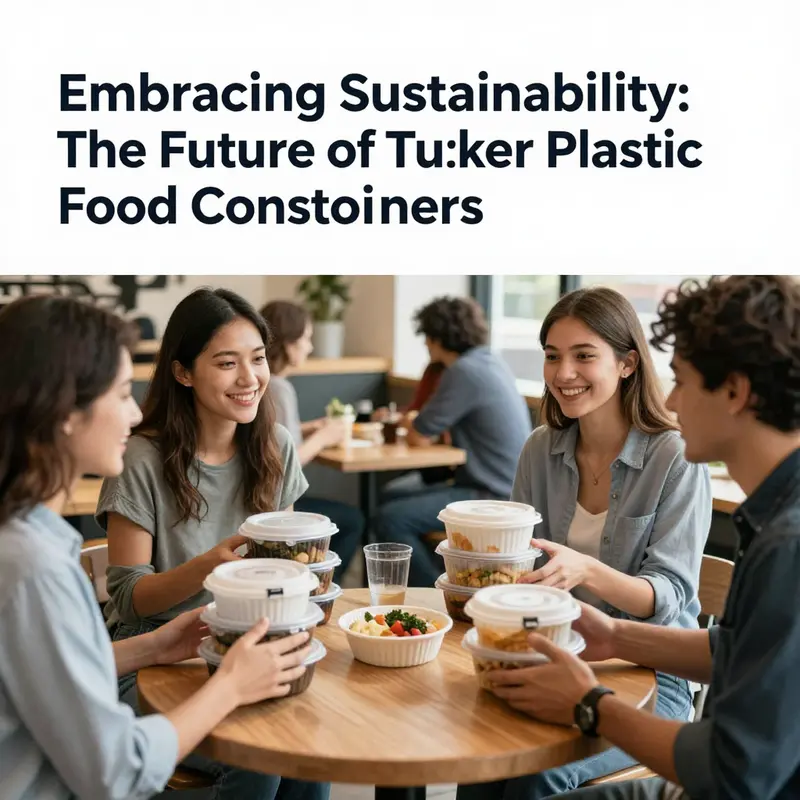
Consumers judge plastic food containers primarily by how well they protect food, and this pragmatic yardstick shapes preferences for Tucker plastic food containers. Safety, leak resistance, material performance and practical design rank ahead of abstract sustainability claims. Buyers want containers that keep food fresh, stack neatly, survive daily wear and tear, and perform predictably in everyday contexts such as school lunches, meal prep, fridge storage and takeout. This chapter unpacks those expectations and shows how meeting them builds trust while opening a pathway toward genuine sustainability.
Safety and reliability form the foundation of consumer choice. Households prioritize food-contact safety and durable seals. When a container reliably prevents spills, preserves texture, and resists staining, it becomes a repeat purchase. For perishable items — dairy, sauces, or dressings — consumers prefer rigid polymer containers with stable, secure lids because these combine barrier properties with ease of cleaning. They look for materials that withstand repeated washing, resist warping from heat, and do not leach odors or flavors into food. These concrete benefits translate into emotional assurance: the container is dependable, the meal is safe, and time saved on cleanup is tangible.
Design and usability follow closely. Shallow, deep, single-compartment and multi-compartment formats each address specific needs: single servings for commuters, larger rectangular trays for meal prep, and divided compartments for mixed dishes. Stackability and nesting are prized because they reduce storage clutter and simplify transportation. Consumers also value clear or semi-transparent walls so they can see contents at a glance. Lid ergonomics matter: clips or snap seals that provide audible confirmation of closure score highly in user testing. Lightweight containers that nevertheless feel robust create a perception of quality without adding burden. Small, thoughtful details — like rounded corners for easier cleaning, measurement markings, or compatible lids across sizes — compound into a superior product experience.
Perceived performance influences purchase decisions more than labels alone. Shoppers will pay a premium only when they trust that an eco-labelled container still meets core functional demands. If a green claim undermines perceived durability or sealing ability, many buyers revert to conventional choices. This tension means manufacturers and brand managers must avoid trading off essential function for sustainability messaging. Instead, they should demonstrate equivalence or superiority in the same dimensions consumers already care about: sealing, resistance to staining, heat tolerance and safe food contact.
Affordability and value perception also shape preferences. For some buyers, price sensitivity is decisive; for others, a convincing demonstration of longevity and multi-use capability justifies higher upfront cost. The perceived lifespan of a container — how many washes, how many years — often frames whether a buyer considers paying more for a greener material. Clear communication about expected lifespan and comparable performance helps bridge the gap between price and perceived value. Warranty-like assurances or transparent reuse guidance can improve willingness to pay.
Transparency builds trust, particularly around sustainability. Consumers express caution when sustainability claims are vague or unsupported. Broad terms like “eco” or “bioplastic” without context produce skepticism. Many buyers want to understand the lifecycle implications: where the material comes from, how it behaves at end-of-life, and whether the container’s production offsets its benefits. Brands that present clear, verifiable information on material composition, recyclability pathways, and third-party certifications reduce uncertainty and expand their appeal. Transparency also extends to safety certifications and manufacturing standards; visible compliance reassures risk-averse buyers buying food-contact products for families and children.
A pragmatic pathway forward combines respected functional standards with gradual material transition. Instead of asking consumers to sacrifice performance for sustainability, brands can phase in recycled content, improve recyclability, and refine seal and lid engineering. Hybrid approaches — such as maintaining a robust polymer base while designing for disassembly or introducing compostable components where appropriate — can satisfy both sets of requirements. Educating buyers about these incremental improvements, and about how to care for and dispose of containers correctly, increases adoption without alienating core users.
Packaging aesthetics and lifestyle fit still matter. Consumers often choose containers that align with their routines: compact sets for urban dwellers, durable family-size containers for households, and attractive clear options for food presentation. Color, finish and the option for modular sets influence perceived professionalism and suitability for gifting, meal delivery or catering. When functionality and appearance align, products move from mere utility to lifestyle accessories, strengthening brand loyalty.
An important subtext is the role of context: the expected use case changes priorities. For single-use or takeout contexts, buyers and food service operators may prioritize cost and barrier properties for short-term convenience. For reusable home storage, durability and longevity dominate. Manufacturers should reflect this in product lines and marketing: a robust reusable series optimized for home use, and a different, possibly compostable or recyclable range designed for one-time distribution. This segmentation acknowledges realistic consumer behavior and reduces the friction of adopting greener options.
Finally, communication and aftercare complete the consumer experience. Clear instructions on dishwasher and microwave safety, temperature limits, and recommended cleaning methods protect performance and extend life. Return, recycling or trade-in programs can convert functional loyalty into sustainable outcomes. When consumers see a closed-loop plan or a simple pathway for end-of-life handling, they are more likely to choose a product labeled as greener.
Brands that prioritize food safety, sealing performance, and user-centered design while progressively introducing verifiable sustainable materials will meet the widest set of consumer preferences for Tucker plastic food containers. The market reward goes to those who can prove that environmental improvements do not compromise the daily reliability people expect. Practical assurances, transparent claims, and clear end-of-life options turn cautious interest into confident purchases and create the conditions for a broad shift toward more sustainable food storage solutions.
For takeaway and food-service contexts where multi-compartment design and heat resistance matter, industry suppliers offer tailored recyclable and compostable alternatives that maintain functionality. A useful example of an eco-designed option for the foodservice market is available in a segment of compartmentalized, food-grade packaging that balances practical use with environmental intent: eco-friendly disposable 3-compartment food-grade packaging box for fast food.
Further reading on composition, safety standards, and buyer expectations in plastic food-contact containers can provide additional context for material choices and consumer trust-building strategies: https://www.supplychain247.com/understanding-plastic-yogurt-containers-wholesale-composition-standards-and-applications/
Designing the Next Generation of Tucker Plastic Food Containers: Materials, Intelligence, and Circularity
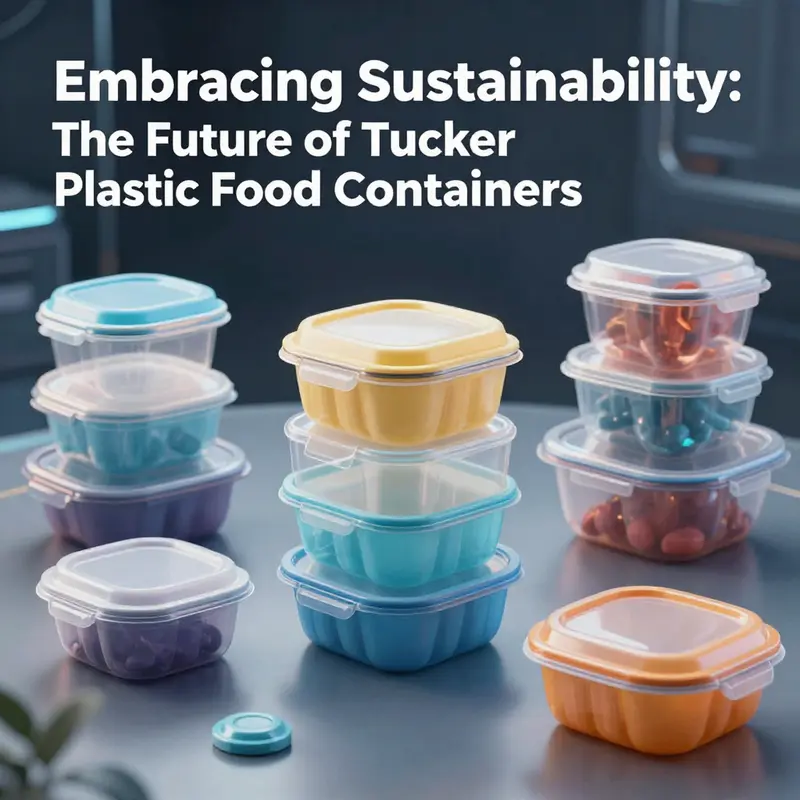
Designing the Next Generation of Tucker Plastic Food Containers: Materials, Intelligence, and Circularity
The next wave of innovation for Tucker plastic food containers will be defined by three integrated imperatives: replacing problematic materials, embedding useful intelligence, and designing for full lifecycle circularity. These aims are not separate efforts; they must converge in a single product vision if containers are to remain relevant to consumers, regulators, and waste systems. A container that performs well in the kitchen but fails at end-of-life management or food-safety verification will not satisfy modern expectations. Likewise, a recyclable design that ignores user convenience or thermochemical stability will see limited adoption. Successful future containers will balance material performance, user experience, and systems-level sustainability.
Materials innovation lies at the heart of this transformation. Conventional polymers remain attractive because they are lightweight, durable, and inexpensive. Yet concerns about microplastic release, persistent waste, and recycling contamination push designers to seek alternatives. Practical options include high-repurposed-content plastics that meet food-contact standards, engineered biodegradable polymers tailored to specific collection streams, and multi-material blends designed for easy separation. Key to any material choice is demonstrable compliance with food-safety guidelines, as well as validated limits on particle shedding and chemical migration under expected use conditions. Containers intended for hot foods, repeated microwaving, or acidic sauces must be tested for structural stability and non-migration of additives. Using stabilized polymers that resist degradation during service but are recoverable through established recycling processes can reduce environmental footprint and retain the day-to-day benefits users expect.
Beyond base polymers, surface engineering will play a critical role. Coatings that reduce grease adherence, resist staining, and limit bacterial adhesion extend usable life and reduce cleaning energy. These coatings should themselves be non-toxic and compatible with recycling or composting streams. Designers will increasingly favor mono-material constructions where possible; a single polymer across lid and body simplifies recycling and improves post-consumer sorting. When functional needs require multiple materials—for sealing, rigidity, or transparency—the pieces should be mechanically separable without tools, or designed so that emerging chemical recycling methods can handle mixed streams efficiently.
Smart functionality will elevate containers from passive vessels to active components in food management. Simple, low-cost indicators that change color when a product has been exposed to unsafe temperatures or when spoilage begins can reduce food waste and increase consumer confidence. Passive freshness indicators, based on safe pH or enzymatic reactions, provide visual cues for perishable meals. For higher-value applications, embedded tokens such as RFID or NFC tags can communicate storage histories to phones or supply-chain readers. These tags may track time-temperature exposure or verify authenticity in commercial settings. In pet-care contexts, containers can pair with feeders or scales to monitor portions and feeding schedules, enabling healthier habits without adding complexity for owners.
Importantly, the intelligence embedded in packaging should be privacy-forward and optional. Many consumers will appreciate automated reminders about expiration or portioning; others will resist tracking. Modular approaches—where sensors or tags are removable—allow users to choose their level of connectivity. Reusable containers can retain smart modules across product lifetimes, reducing electronic waste while delivering value.
Lifecycle thinking must shape every design choice. Full lifecycle sustainability means accounting for raw material extraction, manufacturing energy, transportation, use-phase impacts, and end-of-life outcomes. Designers should model typical reuse cycles and aim for durability that supports repeated washing and microwave use while keeping embodied-impact low. Built-in repairability and replaceable seals lengthen service life. Clear labeling that instructs consumers on proper cleaning, sorting, and local disposal options improves recovery rates. Packaging systems that tie into closed-loop programs—deposit-return schemes, take-back initiatives, or retailer collection—can dramatically increase material recapture and reduce landfill input.
Complementary to corporate programs, product design must anticipate regional waste infrastructure differences. A container that is compostable in industrial facilities may be worthless in regions lacking such systems. Similarly, a material that is technically recyclable may contaminate conventional streams if it looks like ordinary plastic but requires special processing. To avoid these pitfalls, designers should favor materials whose end-of-life pathways are well-established in key markets or invest in labeling and education to bridge infrastructure gaps.
Regulatory and certification landscapes will influence the pace and direction of innovation. Food-safety codes will continue to evolve, tightening requirements around migrant substances and hygiene in mass catering. Meeting these standards is non-negotiable for containers used in commercial kitchens and delivery platforms. At the same time, environmental regulations around single-use plastics and recycling responsibility are likely to strengthen. Designers and manufacturers must proactively align with emerging standards, using independent testing and transparent reporting to demonstrate compliance. Third-party certifications—covering recyclability, compostability, or low-emission manufacturing—help build consumer trust and simplify procurement decisions for institutions.
Operationalizing these advances requires new partnerships across the value chain. Material scientists, product designers, waste managers, and regulators must collaborate early. Pilot programs with municipal recyclers or retail partners can test real-world recovery rates. Co-designing packaging logistics with meal-delivery services or cafeterias yields insights into stackability, labeling, and seal integrity under heavy handling. For reusable systems, partnerships with laundry and sanitization services can define cleaning protocols that preserve both hygiene and material performance.
Cost remains an unavoidable consideration. Innovations must be commercially viable. A transition to higher-performance, lower-impact materials will reduce environmental costs but can raise manufacturing prices. Strategies to manage costs include designing for material efficiency, scaling production to reduce per-unit expense, and focusing smart features where they deliver clear value—such as premium product lines or institutional contracts. Communicating the total cost of ownership, including reduced food waste or longer product life, helps justify modest price premiums.
User experience must stay central. Containers should be intuitive: easy to open, seal tightly, clean without special tools, and stack efficiently. Visual cues about recyclability and cleaning instructions reduce improper disposal. For multi-compartment meals, secure separators and leak-resistant seals are essential. The look and feel should reflect durability and safety, reinforcing user trust in the product’s longevity and hygiene.
Creating the next generation of Tucker plastic food containers calls for a systems-level mindset: select materials that perform and are recoverable, add intelligence that reduces waste and supports health, and build business models that close the loop. When these elements are combined thoughtfully, containers can retain the convenience consumers expect while aligning with stronger environmental and regulatory demands. For designers seeking deeper insight into sustainable packaging approaches and material innovations, see this experimental research on sustainable packaging: https://www.sciencedirect.com/science/article/pii/S266675492300018X
For a practical example of eco-focused compartmentalized packaging that mirrors the shift toward greener takeaway solutions, consider an eco-friendly 3-compartment food-grade packaging box for fast food and takeout.
Final thoughts
As the landscape of food service continues to evolve, particularly in the realm of packaging, Tucker plastic food containers stand at a critical juncture. The integration of sustainability, responsiveness to consumer demand, and innovative materials can define the future for businesses in the food industry. Catering to both the need for practical and environmentally friendly solutions, Tucker plastic food containers are poised to play a significant role in shaping market trends and consumer preferences. Embracing these changes is not just beneficial for your business—it’s a step towards a more sustainable future for everyone involved.