
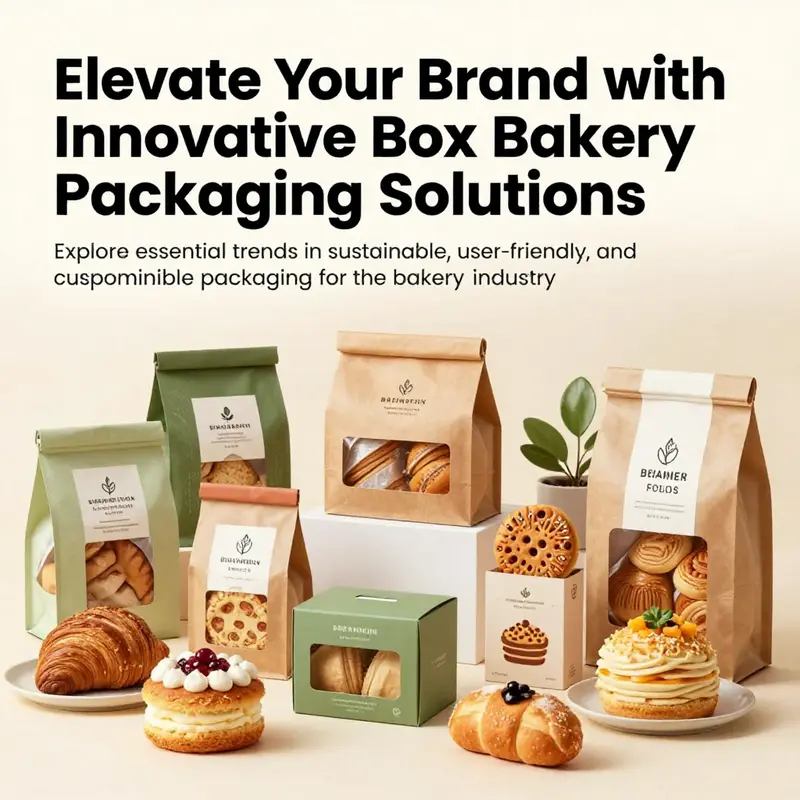
In a world prioritizing sustainability and functionality, box bakery packaging has become more than just a means of containment. It serves as an essential tool for food businesses that wish to present their products attractively while meeting environmental standards. Significant changes in material selection, ergonomic design, and customizable features have redefined what bakery packaging can achieve. This article unpacks four integral aspects of box bakery packaging that are critical for businesses like bubble tea shops, restaurants, food trucks, and event planners. From eco-friendly materials and functional designs to branding through customization and ensuring safety standards, each chapter sheds light on how to align your offerings with consumer expectations while staying compliant. Let’s dive deeper into these facets to show how modern box bakery packaging can enhance experiences and reinforce your brand’s commitment to quality.
null
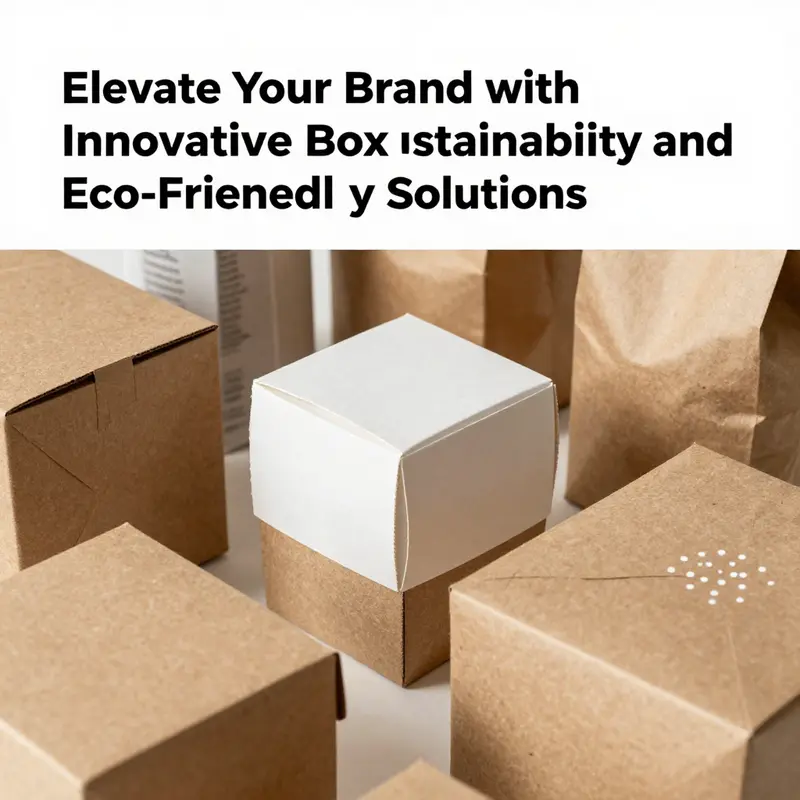
null
Seeing, Handling, and Savoring: Designing Box Bakery Packaging for Experience, Protection, and Purpose
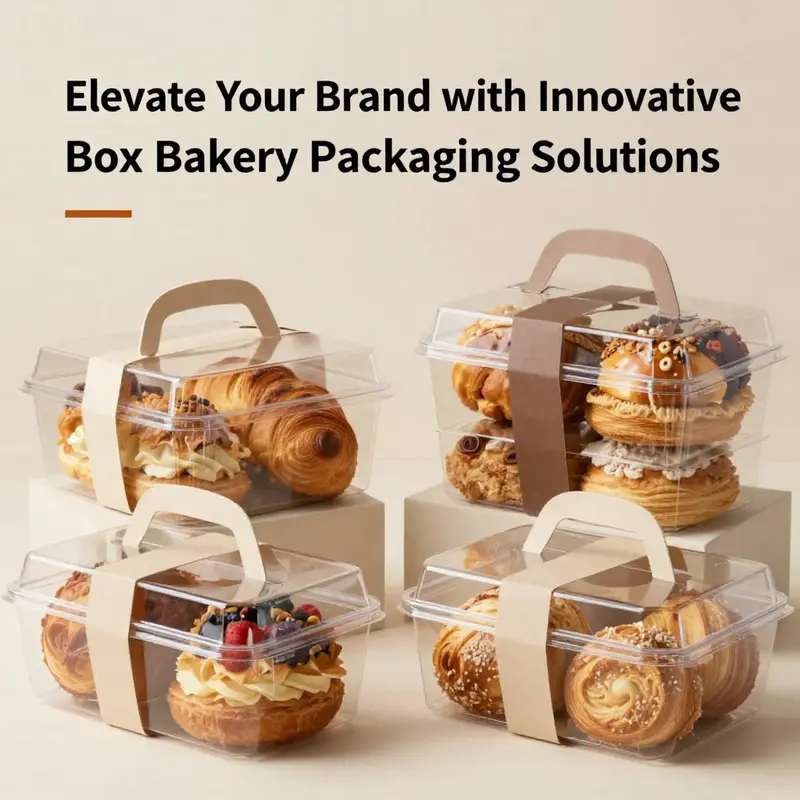
A bakery’s box is more than a lid and a sleeve; it is a carefully tuned instrument that speaks to the senses before the bite even arrives. The interaction between design and function shapes how customers perceive freshness, care, and value. When a box arrives at a customer’s doorstep or rests on a shop display, its story has already begun. Clean lines convey confidence, a restrained color palette signals sophistication, and typography carries the subtle weight of a brand’s promise. In a marketplace crowded with imagery and impulse, packaging that looks deliberate and feels trustworthy becomes a powerful differentiator. The most successful bakery packaging blends visual appeal with practical utility so that form follows function, and function amplifies emotion. A visually striking box may invite a curious glance, but it is the way it protects the pastry, facilitates transport, and communicates safety that sustains purchase intent and loyalty over time.
At the heart of this balance lies a philosophy: packaging should be immersive, not merely protective. A box that shows what’s inside through a clear window, for example, does more than reveal the product; it conveys transparency and confidence. It invites curiosity without requiring a tester to unwrap or handle the item aggressively. This principle extends to the ergonomics of opening and carrying. A hinge lid that stays aligned during delivery, a handle that’s comfortable in a crowded market, and a closure that resists accidental opening—all these details contribute to a frictionless user experience. When customers disengage the box easily and find the pastry intact and presentable, the unboxing becomes the first moment of delight in the overall brand experience. In this sense, packaging design is a prelude to taste, a conditioning of perception that can elevate a simple pastry into a memorable moment.
Functionality, however, is not merely about preventing damage; it is about preserving quality from the moment of packaging to the moment of consumption. Pastries are delicate, and their texture, moisture, and aroma can be easily compromised by rough handling or heat transfer. Thoughtful materials matter. A box that uses a sturdy wall construction and interior dividers can keep fragile items like mini pastries distinct, preventing crushing or shifting during transit. Internal compartments are more than organizational aids; they are protective features that guard the integrity of each piece, preserving appearance and texture so that the first bite matches the expectation set by the box’s exterior. For multi-item assortments—assorted donuts, cookies, or macarons—compartmentalization prevents cross-contamination of textures and flavors, ensuring that a glazed ring remains glossy and a delicate macaron stays pristine.
The opening experience is another crucial layer. Consumers often judge packaging by how easy it is to access the product. An intuitive tear strip or pull-tab that requires minimal effort but still feels deliberate can transform an ordinary unboxing into a small daily ritual. Consider the difference between a snap-lock design that requires fiddling with tabs and a hinged, user-friendly lid that glides open with a single motion. The latter not only feels premium but also reduces frustration, which translates into more positive associations with the brand. A packaging solution that facilitates a smooth handoff—from shelf to cart to counter—says that the bakery cares about its customers’ time and convenience.
Storage and transport optimization also deserve emphasis. Boxes that are compact and well-structured improve efficiency at every stage of the supply chain. When a box’s dimensions are thoughtfully calibrated—smaller footprints that still accommodate the pastry’s form—it becomes easier for retailers to stack, display, and ship. The ability to nest or stack without damage reduces breakage rates and waste, supporting sustainability goals while improving cost efficiency. A well-designed box with careful thickness and reinforcement can withstand domestic refrigeration, upright transport, and even stacking in a delivery bag without compromising its silhouette or integrity. In modern packaging, such practicalities are not afterthoughts; they are essential features that influence product quality from the bakery display case to the consumer’s kitchen.
Beyond raw utility, design communicates brand identity in a way that resonates with contemporary consumers. A thoughtful palette—perhaps a restrained combination of creamy neutrals and a brand-coordinated accent—promotes a perception of artisanal quality and modern taste. Typography, spacing, and the placement of essential information—ingredients, allergens, and usage instructions—should read clearly at a glance. Visual hierarchy helps customers digest critical details quickly, which is particularly important for on-the-go buyers who are scanning shelves or scrolling through an e-commerce storefront. These elements do not merely fulfill regulatory requirements; they reinforce trust and transparency, signaling that the brand stands behind its product with accountability and attention to detail.
Sustainability emerges as a non-negotiable design parameter rather than a standalone feature. Modern bakery packaging increasingly embraces recyclable or compostable materials, aligning with consumer values and circular economy principles. The trend toward recycled and responsibly sourced substrates, such as PET derived from post-consumer streams and kraft-based papers, reflects a broader shift in how brands think about end-of-life scenarios. Packaging that can be recycled or composted without compromising safety or performance reduces environmental impact and strengthens a brand’s credibility. Clear labeling about recyclability, compostability, and food safety contributes to an informed consumer journey and reduces uncertainty at the moment of choice. In practice, this means crafting boxes that are not only safe for direct contact with food but also easy to dispose of or repurpose. A box may carry the aroma of fresh pastry even as it aligns with sustainable practices, reinforcing the idea that enjoying a treat and respecting the planet can coexist harmoniously.
Technology and interactivity offer new dimensions to design without clutter. Some designs incorporate scannable codes that lead customers to recipes, behind-the-scenes content, or loyalty programs. This digital layer can deepen the brand connection, turning a one-off purchase into an ongoing relationship. The box becomes a doorway to a broader experience—an invitation to engage with the bakery beyond the counter. Such features must be implemented with restraint, ensuring they add value without compromising readability, safety, or recyclability. When done well, these elements extend the life of the packaging as a brand touchpoint and create opportunities for storytelling that resonates with modern shoppers who crave connection and meaning in their purchases.
Customization plays a pivotal role in translating brand identity into packaging reality. Bakeries increasingly demand options to introduce color, logo, and messaging that reflect seasonality, partnerships, or special occasions. A flexible printing approach—capable of handling CMYK or Pantone references with consistent color reproduction—enables brands to keep packaging aligned with evolving campaigns while maintaining quality across large-scale production. The ability to tailor packaging for diverse use cases—retail display, wholesale distribution, birthday gifts, baby showers, and holiday gifting—supports the notion that packaging should be as versatile as the products inside. When a box can be adapted to multiple occasions without sacrificing its integrity or look, the packaging system becomes an enduring asset rather than a disposable afterthought.
From a practical perspective, retailers and brands seek predictable lead times and reliable supply chains. The market for bakery packaging responds with scalable production, rapid customization, and dependable delivery. This stability is essential for brands that rely on consistent packaging performance to protect product quality. The capacity to deliver millions of units per month underpins the confidence that large bakeries place in their packaging suppliers, ensuring steady stock, consistent appearance, and ongoing compliance with safety standards. Such reliability sustains the relationship between brand and consumer, maintaining a high level of trust that starts the moment a shopper spots a familiar, well-presented box on the shelf.
Certifications and safety standards remain indispensable anchors in this landscape. Food-grade materials, validated through ISO, FDA, LFGB, and CE/EU certifications, provide assurance that packaging is suitable for direct contact with a range of foods. These certifications offer a framework for consistent quality across suppliers and geographies, giving brands a solid baseline for product safety and regulatory compliance. In a world where cross-border distribution is commonplace, demonstrating adherence to international standards becomes a competitive advantage. It signals that a bakery respects not only its customers but also the rigorous processes that ensure safe, reliable packaging from production line to consumer table.
The conversation about design and functionality is inseparable from the realities of cost and accessibility. Packaging must be affordable enough to enable sustainable practices without imposing prohibitive burdens on producers or retailers. The economics of materials, manufacturing, and logistics shape decisions about thickness, weight, and print runs. Transparent pricing structures from suppliers, such as bulk discounts for large orders, help bakeries forecast expenses and scale as demand grows. The balance between premium aesthetics and practical economics defines a sweet spot where packaging elevates product perception while remaining accessible to small and mid-sized bakers alike. In this way, packaging design mirrors the broader arc of the industry: it seeks beauty and responsibility in equal measure, threading form, function, and finance into a coherent whole.
In crafting a packaging system that embodies these principles, brands can lean into a cohesive narrative that travels with the product from window display to kitchen shelf. The layer of brand storytelling embedded in the box—through color, texture, and typographic rhythm—hints at the bakery’s craft and care. The materials chosen, whether a recycled PET alternative or a kraft paper substrate, reinforce that story through sustainability metrics and practical results. The result is not simply a container for bread and confections; it is a portable ambassador for quality, a conduit for trust, and a catalyst for memorable moments. A shopper who receives a pastry in a box that feels sturdy, opens with ease, and reveals a product that looks as good as it tastes is experiencing the essence of what contemporary box bakery packaging can achieve when design and functionality are in harmonious dialogue.
For bakers seeking concrete references to real-world execution, a representative example of functional design can be explored through the concept of a foldable cake box with a window—an idea that embodies visibility, accessibility, and adaptability. See the example described in this product-focused approach, which demonstrates how a single packaging concept can merge visibility with protection, all while enabling straightforward customization and efficient production. This approach aligns with the broader themes discussed here: clear product presentation, reliable performance, and end-to-end consideration of user experience, sustainability, and brand resonance. While the specific supplier details are part of market mechanics, the underlying principles remain universal and transferable across regions and product lines.
In sum, the evolution of box bakery packaging hinges on a synthesis of aesthetics, protection, and responsibility. The most impactful designs do more than hold pastries; they tell stories, safeguard quality, and invite customers to participate in a shared ritual of taste and care. By embracing thoughtful structure—compartmentalization and secure closures—while foregrounding sustainability, clarity, and brand personality, packaging becomes a strategic lever for growth. It invites customers to judge not only the pastry but the promise behind it, turning a simple box into a lasting impression that lingers beyond the last bite. And as the market continues to prioritize safety, recyclability, and consumer convenience, these design choices will keep evolving in tandem with technology, material science, and the ever-shifting rhythms of commerce.
Internal reference for example packaging concept: pure-color foldable cake boxes with window bakery boxes. This link illustrates how a single design philosophy—visibility, protection, and ease of use—can be realized through modular box architecture and scalable production, while still accommodating brand customization and sustainability goals. External resources offer deeper industry context on design trends and best practices; for further reading, see Packaging Digest for current insights into sustainable and functional packaging design: https://www.packagingdigest.com/.
Brand-Driven Bakery Box Packaging: Aligning Identity with Consumer Expectations
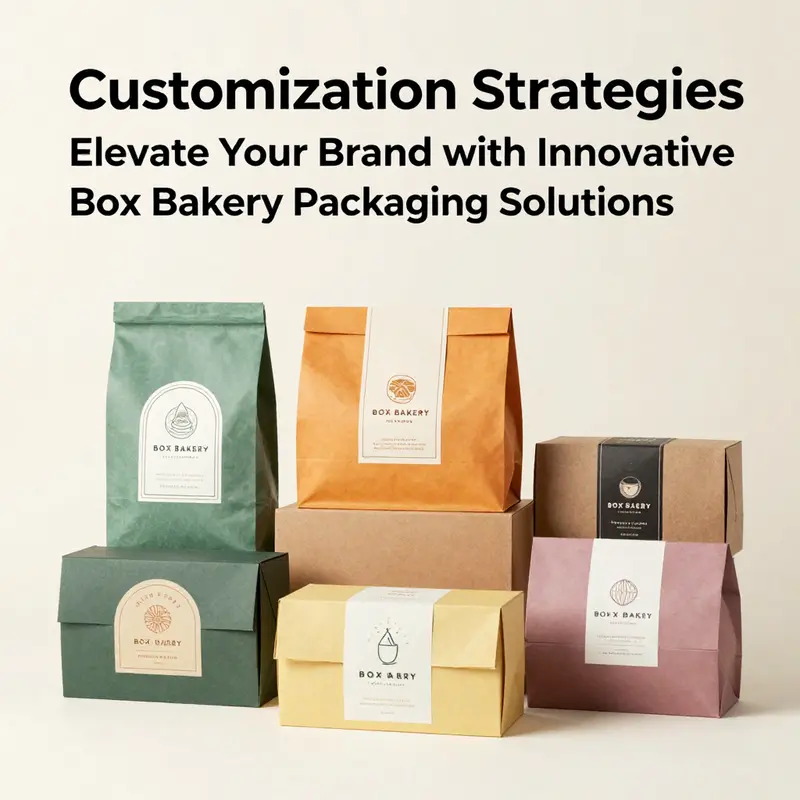
Customization in box bakery packaging has evolved from decorative detail to a strategic language through which a bakery communicates its values, quality, and story to shoppers. In markets where sustainability and experience converge, brands use packaging not just to protect a pastry but to convey trust, craft, and responsibility.
The core of modern customization is material strategy. Recycled PET, kraft paper, and FSC-certified stock are commonplace, balancing durability with recyclability and food safety. Certifications like FDA or ISO credentials signal safe, reliable packaging across the supply chain, reinforcing brand integrity.
Design language and usability go hand in hand. Color, typography, and imagery work with tactile finishes to create a multi-sensory experience. Practical details—hinged lids, sturdy handles, and interior dividers—translate premium aesthetics into everyday convenience.
Digital tooling accelerates decision-making: 3D renderings, proofs, and virtual samples let brands preview packaging long before production, reducing waste and shortening lead times. This enables fast responses to seasonal themes without sacrificing coherence in the brand system.
Sustainability and storytelling converge when packaging supports the brand narrative while protecting the product. A cohesive system of materials, finishes, and structure communicates care for people and the planet, encouraging trust and repeat purchases.
This chapter outlines how to define a core packaging system anchored in sustainability and brand logic, while allowing seasonal adaptations and digital tooling to keep the packaging fresh and relevant.
Guardrails of Good Taste: How Safety Standards and Certifications Shape Boxed Bakery Packaging
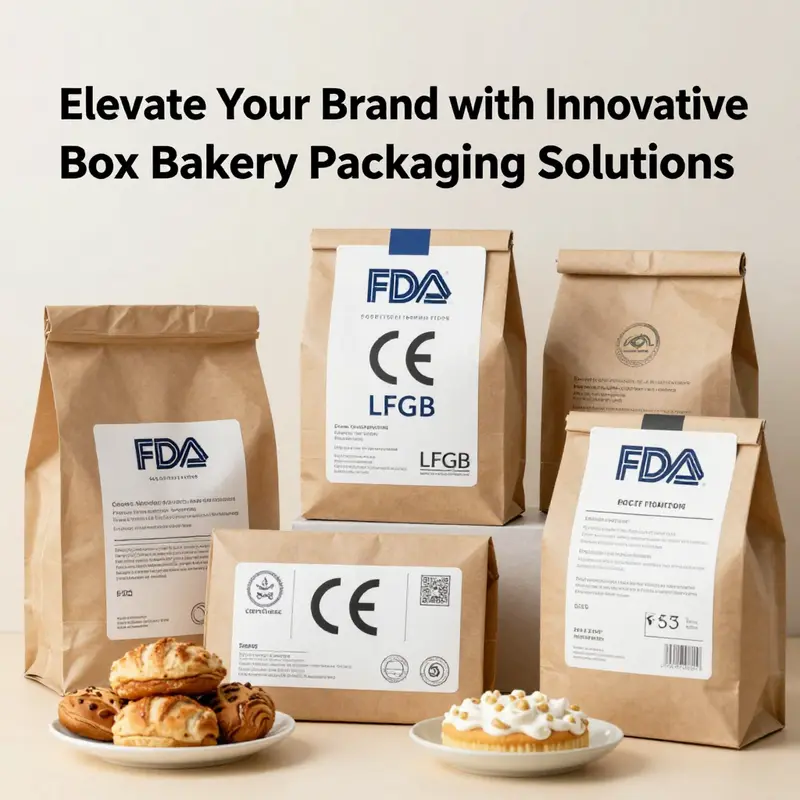
Every bakery’s boxed offering travels a careful path from kitchen to consumer, and safety standards act as the steady rails guiding that journey. In the modern landscape of box bakery packaging, what might seem like a simple container is, in truth, a complex system built to protect the product, reassure the buyer, and uphold a brand’s responsibility to the environment. The backbone of this system rests on clear, enforceable rules about what materials can touch food, how those materials behave under different conditions, and how a company proves its processes stay consistently reliable. When these elements align, packaging becomes more than a shield for a pastry or a loaf; it becomes a statement about quality, trust, and sustainability that customers can see and feel on the shelf.\n\nAt the core of safety are the regulations that govern food contact materials. In the United States, the FDA sets strict limits on what can migrate from packaging into food. These migration limits are designed to keep potentially harmful chemicals, such as plasticizers or residual monomers, from contaminating edible products. In Europe, the EFSA translates similar concerns into Regulation (EC) No 1935/2004, which requires that materials coming into contact with food do not transfer their constituents in amounts that would endanger health under normal or foreseeable use. Taken together, these frameworks form a mutual assurance that the packaging chosen by a bakery will not become a covert ingredient or a health risk. The alignment between major markets allows brands to think beyond local constraints and plan for broader distribution, a crucial consideration as consumer demand increasingly spans continents.\n\nYet regulations are not merely rules to comply with; they are also a vocabulary that communicates safety and reliability to consumers. Companies increasingly seek third-party validation to accompany their certifications, so the story of a packaging solution can be read in a standard, widely recognized shorthand. International testing and certification bodies such as TUV SUD and SGS offer food-grade certifications or recyclable-certifications that function as credible, independent attestations of a material’s performance and safety. For paper-based solutions, certifications like LFGB, CE/EU compliance, and the broader scope of FSC certification for forest stewardship provide additional layers of confidence. The FSC mark, in particular, has become a beacon for brands that want to claim environmental responsibility without sacrificing safety; it signals that the paper components come from responsibly managed forests, reinforcing a narrative that blends ethics with consumer protection. For a bakery that wants to balance presentation with trust, these marks translate into a tangible assurance for retailers and a meaningful signal to shoppers who care about the origins and safety of what they buy.\n\nThe chain of safety, however, extends well beyond the point of sale. Packaging safety begins in the raw materials themselves and travels through production, printing, and assembly. Materials intended for direct contact with food whether clear PET, coated papers, or compostable alternatives must be tested for safety, including potential migration of additives, coatings, and printing inks. Clear PET boxes, frequently chosen for their visibility and shelf appeal, must be designed with migration control in mind; the same is true for kraft paper and coated cardboard, where surface coatings and food-contact inks require careful evaluation. The goal is to preserve the sensory qualities of the product its aroma, texture, and appearance while ensuring that no unintended substances migrate into the food or compromise its safety. In practice, this often means standardized testing across multiple scenarios, including hot and cold storage, varying humidity, and mechanical stresses that can occur during shipping and handling. The result is a packaging system that maintains product quality from the moment it leaves the oven to the moment it reaches a consumer’s hand.\n\nThe design language of modern bakery packaging is inseparable from safety. Transparent or translucent materials let customers peek at the treat inside, building trust through visibility. Yet that same visibility demands that the materials meet higher standards of cleanliness, print durability, and barrier properties. Hinged-lid designs with ergonomic handles, for instance, have gained traction because they reduce the risk of accidental contamination during transport while improving user experience. Compartments and multi-item layouts, such as boxes engineered to separate donuts or cookies, must ensure that structural integrity is maintained even when the box is jostled in transit. Each design choice is a balancing act: aesthetics must harmonize with barrier performance, mechanical strength, and compliance with regulatory limits. In this balance, certification becomes the language of credibility; it signals to a bakery’s buyers that beauty and safety can coexist in a single, elegant package.\n\nQuality management frameworks further anchor safety and reliability in packaging production. ISO 22000, a globally recognized standard for food safety management systems, offers a structured approach to identifying and controlling food safety hazards across the entire packaging supply chain. It helps packaging manufacturers implement consistent risk controls, document corrective actions, and verify that protective measures function as intended. Complementing ISO 22000, ISO 9001 focuses on broad quality management, emphasizing process consistency, continuous improvement, and accountability. For a bakery, the fusion of these standards means that the packaging not only adheres to safety requirements but also benefits from predictable performance across orders, batches, and shipments. When a supplier can demonstrate ISO 22000 and ISO 9001 certification, a bakery gains a robust platform for reliability, a key ingredient in building enduring relationships with distributors and consumers alike.\n\nThe role of materials certification such as FSC for paper and LFGB or FDA for food-contact suitability merges with design to create a coherent brand message. Consumers increasingly expect that packaging does more than hold the product; they expect it to reflect a brand’s values. When a bakery communicates through its packaging that it prioritizes safety, responsible sourcing, and environmental stewardship, the packaging becomes part of the product’s narrative. This narrative is reinforced by testing data, independent labels, and traceability documentation that accompany shipments and retail points of sale. In a world where counterfeits and variability in supply chains pose real risks, traceability becomes a practical necessity. A packaging producer that can trace a batch to its raw materials, processing steps, and testing results offers a level of confidence that is hard to match with unverified alternatives. The consumer may not read every line of a certificate, but the presence of credible documentation through the supply chain is a silent, persuasive advocate for the product’s safety and integrity.\n\nThe global market dynamics of packaging also shape how safety standards are applied. Many suppliers now offer materials and designs validated across multiple jurisdictions, enabling bakeries to pursue cross-border distribution with fewer regulatory bottlenecks. This is where the convergence of sustainability and safety becomes decisive. Recycled materials such as post-consumer PET have gained traction for their lower environmental footprint, provided they meet migration limits and other safety criteria. Similarly, paper-based solutions with FSC certification offer a compelling story of responsible material sourcing while maintaining compliance with food-contact regulations. The ability to package a premium product say a delicate cake or a set of macarons in a container that is both visually appealing and certifiably safe can be a differentiator in crowded markets. It is not an exaggeration to say that safety standards, when properly implemented, unlock strategic opportunities by broadening distribution, elevating perceived value, and reducing risk across the supply chain.\n\nFor bakers choosing packaging partners, the decision often rests on a triad: regulatory compliance, credible certification, and practical design. The regulatory landscape provides the non-negotiables that prevent harmful exposures; certifications supply independent validation that the packaging supplier’s claims are reliable; and thoughtful design delivers tangible benefits in handling, display, and consumer experience. The strongest packaging solutions are those that align these three elements into a single offering. When a supplier can demonstrate adherence to food safety regulations, present recognized certifications, and present packaging that is both attractive and functional, a bakery can move with confidence into new markets. That confidence translates into fewer compliance headaches, smoother logistics, and a stronger brand narrative at the point of sale.\n\nIn practical terms, a bakery’s procurement conversations should include questions about migration testing results, batch traceability, and the presence or absence of substances of concern in coatings and inks. They should seek evidence of ISO 22000 and ISO 9001 certification, ensure that the supplier uses FSC-certified materials when applicable, and verify LFGB or FDA status for components in contact with food. They should also request a clear description of the packaging’s lifecycle, including end-of-life disposal or recyclability. This is where the theory of safety standards meets the daily realities of production, shelf life, and consumer perception. A well-documented certification portfolio, combined with packaging designs that perform in real-world conditions, becomes a practical guarantee that a product not only looks appealing but remains safe from bake to break.\n\nInternal link example: For those exploring packaging options that emphasize windowed visibility and sturdy construction, the Foldable Cake Boxes with Window category offers a clear reference to a practical application of these principles. See Foldable Cake Boxes with Window for a concrete illustration of how a box can balance visibility with safety, durability, and brand alignment on the shelf. Foldable Cake Boxes with Window\n\nAs the industry continues to fuse safety with sustainability, the choices bakeries make about packaging will increasingly reflect not only protective function but also performance in display, handling, and consumer trust. The most resilient brands will be those that treat safety standards and certifications not as hurdles to clear, but as strategic assets—proof points that can be communicated clearly to retailers and customers. In this sense, box bakery packaging becomes a living part of a bakery’s quality system, a portable assurance of safety, sustainability, and style that helps dishes travel from oven to opportunity with confidence and care. The conversation about packaging is, at its core, a conversation about responsibility: responsibility to consumers, responsibility to the environment, and responsibility to the craft that gives rise to the products inside the box.\n\nExternal resource: https://www.fda.gov/food/food-contact-substances
Final thoughts
Box bakery packaging has become critical in distinguishing your business in the competitive food service market. By focusing on sustainable materials, enhancing design functionality, implementing custom branding strategies, and adhering to rigorous safety standards, businesses can significantly improve their consumer interactions. This holistic approach not only elevates your packaging solutions but also aligns them with contemporary consumer values, ensuring your brand remains relevant in a rapidly changing industry. Embrace these trends to foster connections with your customers and assert your commitment to quality, sustainability, and innovation.