
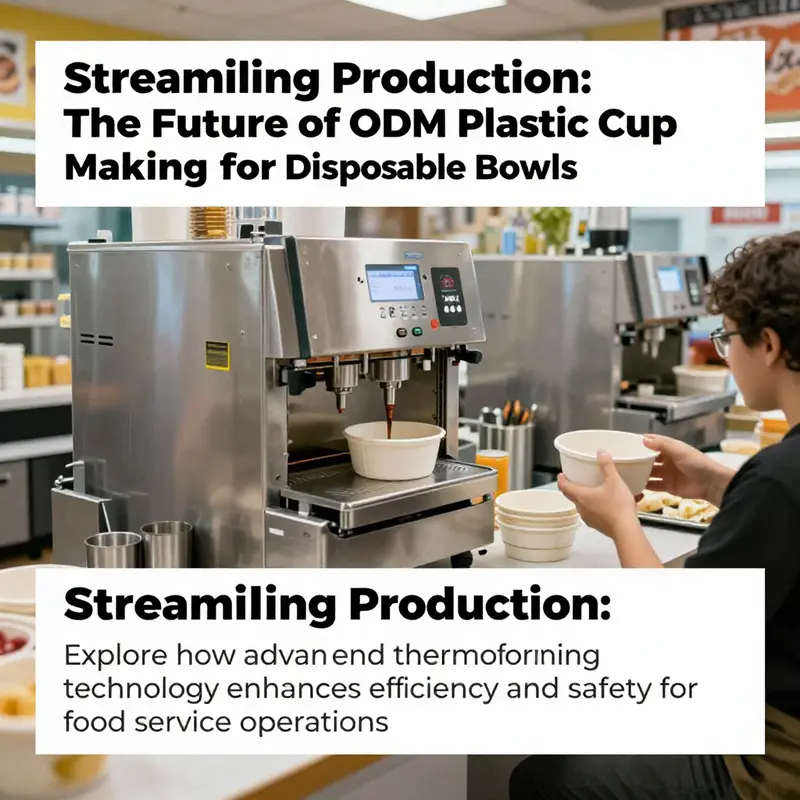
The food and beverage industry has seen a significant shift towards automated solutions, enabling faster and more efficient production of essential items like disposable cups and bowls. ODM plastic cup making machines specialize in meeting the demands of bubble tea shops, restaurants, food trucks, and catering services by providing custom solutions that cater to specific needs. In the following chapters, we will delve into how thermoforming technology revolutionizes the industry, the efficiencies gained through automation, and the importance of material versatility and safety innovations. These elements are vital for businesses looking to enhance their service offerings while maintaining compliance and quality.
Heat, Form, and Demand: Thermoforming in ODM Lines for Disposable Cups and Bowls
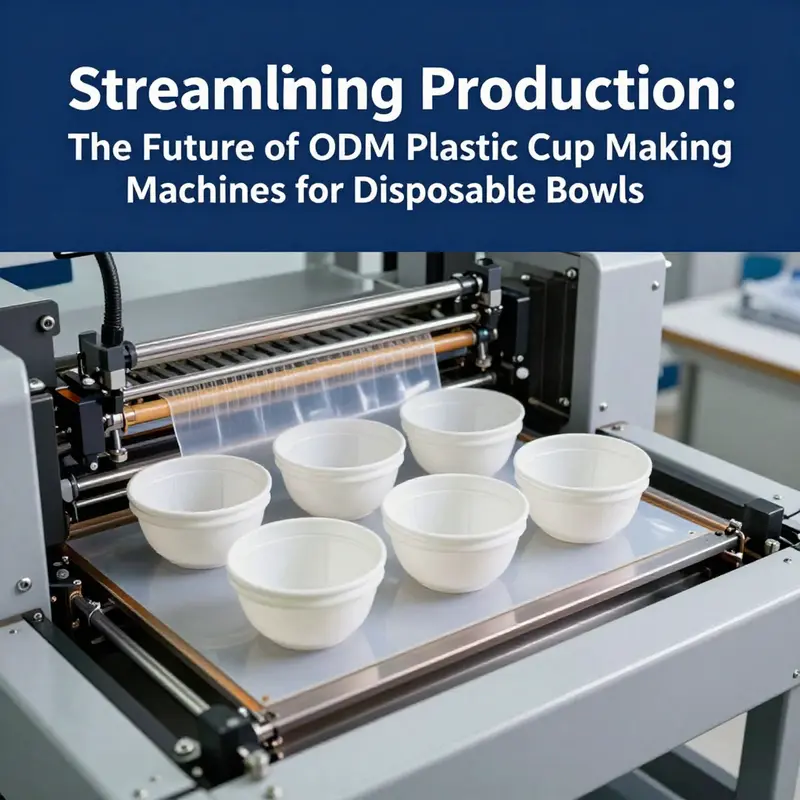
Thermoforming sits at a fascinating crossroads in the packaging industry. It is where heat meets precision, and where a flat sheet becomes a hollow vessel that carries food, drink, and sometimes a story about a brand. In the context of ODM—original design manufacturer—lines, thermoforming is not merely a forming technique. It is an enabling technology that translates client imagination into consistent, on‑demand production. The essence of these lines lies in their ability to maintain form while adapting to a spectrum of materials, sizes, and thicknesses. They must also align with the stringent safety and sanitation demands of food packaging, all while delivering high throughput and low labor costs. The resulting machines are not one‑note appliances; they are integrated systems that manage heating, forming, trimming, laminating, punching, and stacking in a tightly choreographed sequence. When read together with the broader context of ODM plastic cup making, thermoforming reveals itself as a mature, flexible, and increasingly intelligent manufacturing approach that underpins the supply of disposable bowls and cups to a global market hungry for customization and reliability.
At the heart of thermoforming is a simple, powerful principle: a thermoplastic sheet is heated to a pliable state, then forced into a mold by vacuum or positive pressure. Once the sheet conforms to the mold, it is cooled to preserve the shape. The beauty of this process in ODM environments is not just geometry, but the capacity to vary geometry quickly. A family of products—water cups, coffee cups, tea cups, jelly cups, and many other service ware shapes—can be produced by shifting tooling, adjusting heater temperature profiles, and fine‑tuning vacuum or pressure cycles. In today’s lines, the choice of material becomes a design decision with real consequences for cost, safety, and sustainability. PP, PET, HIPS, and PLA are the usual suspects, and each brings its own performance envelope. Polypropylene (PP) is the workhorse of food contact plastics; it offers a good balance of rigidity, heat resistance, and chemical inertness. PET brings clarity and barrier properties that support transparent cups and bowls. High‑impact polystyrene (HIPS) provides a toughness edge for more demanding shapes, while polylactic acid (PLA) opens the door to compostable options. In an ODM setting, being able to switch between these materials with a common platform can dramatically shorten lead times and reduce capital risk for clients who demand rapid responsiveness and diverse packaging formats.
What makes thermoforming particularly compatible with ODM business models is the way modern lines integrate design flexibility with automation. A typical ODM thermoforming system starts with a sheet handling subsystem that can feed material from one or more unwinders, sometimes using a two‑station configuration to maintain continuous operation. Advanced systems employ servo‑driven sheet feeding and plug assist to improve material draw and wall thickness uniformity, which is essential for deep bowls and complex shapes. In‑mold cutting is increasingly common, enhancing dimensional accuracy and reducing trim waste. The ability to perform trimming, punching, or perforation within the mold cycle can streamline downstream operations and minimize secondary processing. The control system—a programmable logic controller (PLC) backed by touch‑screen interfaces—coordinates heating, forming, cutting, and stacking with a reliability that becomes table stakes as lines scale up. Temperature control is often achieved with ceramic heaters and precise temperature modules, ensuring that heating is both rapid and uniform, which in turn reduces cycle times and maintains product consistency. The resulting system benefits from reduced noise levels, robust mold locking, and a sanitary architecture designed to minimize residual contamination, a non‑negotiable criterion for food contact applications.
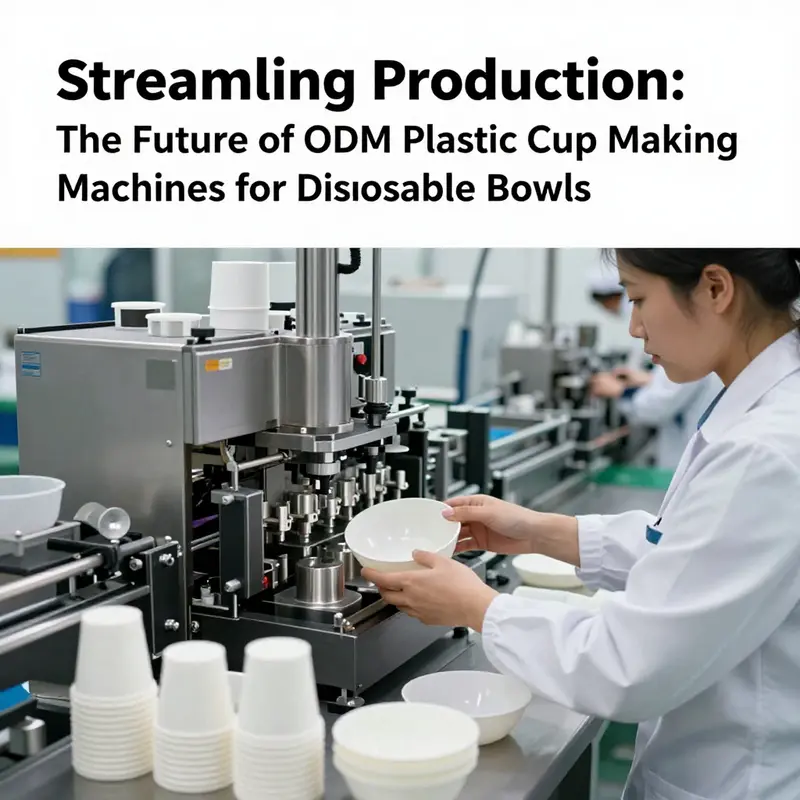
From an operational standpoint, these lines are designed around a continuous logic: heat the sheet to the right temperature, form with just enough vacuum or pressure to fill the mold, then cool and trim to shape. The cycle must be repeatable for tens or hundreds of thousands of units per day, so the geometry of the mold, the rigidity of the clamp, and the stability of the forming parameters all matter. The stacker configuration is also a critical piece of this puzzle. Some lines feature automatic stacking and demounting, with gravity or mechanical grippers placing finished pieces into a conveyor or into a secondary stack. The goal is to minimize manual handling, which not only lowers labor costs but also reduces the risk of human error and product damage. In ODM operations, where speed and accuracy must coexist with customization, a well‑designed thermoforming line becomes a strategic asset rather than a simple piece of equipment.
A core strength of modern ODM lines is their ability to run a wide material gamut without hardware changes that would slow down the operation. PP remains the default option for many containers, favored for its robust heat resistance and safety profile in food contact applications. PET is prized when clarity or barrier performance is needed, particularly for cups that reveal content or require a high gloss finish. HIPS offers durable performance for simpler, cost‑sensitive designs. PLA, while more challenging in some heat regimes, addresses consumer and regulatory pressure for compostable or plant‑based packaging. The selection of material does more than determine a visual or tactile quality; it influences process windows, heating profiles, and even the feasibility of in‑line lamination or coating steps. In a sophisticated ODM line, the heater system is tuned to deliver a uniform heat distribution across a wide area of the sheet. That uniformity is essential for achieving uniform wall thickness in deeply formed bowls, and for avoiding thinning around the lip or base that might compromise sealing or stacking stability. Temperature uniformity is also a key enabler of process repeatability as the line switches from one product family to another, a frequent requirement in ODM programs that demand both standard products and bespoke designs.
The sophistication of the thermoforming sequence is matched by the intelligence of the control architecture. A well‑designed ODM line uses feedback loops from temperature sensors and pressure transducers to adjust heat and vacuum in real time. The PLC with a touch screen provides operators with a clear map of cycle steps, error codes, and performance trends. A memory feature allows the machine to recall mold configurations and process recipes for a library of products, enabling fast changeovers with minimal manual intervention. In some implementations, servo motor stretching plays a particularly critical role. Adjusting the grip force and the motion profile of the stretching mechanism helps achieve deeper bowls and more complex geometries without introducing material thinning or warping. The servo drive also offers precise synchronization with the forming cycle, which translates into more uniform wall thickness and better control of the edge geometry.
In such lines, the sequence of manufacturing steps extends beyond forming. After the mold has imparted its shape, trimming and edge finishing are often integrated into the cycle. Lamination, when used, can occur either before forming or as a secondary process, depending on the liner materials and the intended barrier properties. This is especially relevant for multi‑layer or coated structures where the lamination bond must be robust enough to withstand downstream handling and consumer use. When lamination or multi‑layer structures are involved, the line may include a dedicated laminating unit that aligns the film with the sheet, followed by precise punching to create openings or vents as required by the product design. The efficiency of this flow is vital for ODM operations where every extra millimeter of material waste or every additional second of downtime translates into higher per‑unit costs and longer lead times for clients.
These systems do not stand alone; they live in an ecosystem that includes tooling, molds, coatings, and downstream automation. In an ODM context, the tooling strategy is often modular. Quick‑change devices and mold memory systems enable designers to shift from one product family to another with minimal downtime. The two‑station unwinder or alternative material handling configurations allow for near‑continuous production, which is essential when the demand shifts between standard size bowls and customized shapes. The ability to switch molds rapidly, while maintaining tight tolerances, is what makes ODM thermoforming lines align with the entrepreneurial nature of contract manufacturing: a factory can scale up or down according to client orders, while maintaining consistent quality and traceability across every batch.
The design philosophy behind these lines also emphasizes safety and sanitation. Hygienic design, dust control, and closed‑loop cooling are standard features that limit secondary pollution. The plumbing and air handling are designed to minimize crevices where residues could accumulate, and the materials used for contact surfaces are chosen for cleanability. The machines themselves are built to operate with minimal noise and vibration, not only for operator comfort but also to preserve shop floor integrity when multiple lines run in parallel. The emphasis on safe operation extends to the reliability of the drive systems and clamping mechanisms. Strong mold locking ensures that the finished parts meet tight tolerances even at high cycle rates, while integrated fault detection helps prevent cross‑contamination or product damage by catching anomalies early in the cycle.
From a strategic viewpoint, the ODM model relies on a balance between standardization and customization. A base thermoforming platform can deliver a high‑volume supply of standard shapes and sizes with proven process windows. At the same time, the platform can accommodate a range of accessory options: plug assist sets for different material draws, in‑mold cutting tools for precise trim lines, rapid mold changing devices for fast product changes, and memory systems that recall specific forming and trimming recipes. This balance means that clients can move quickly from a mass‑produced cup to a bespoke bowl for a promotional campaign, all within a single facility, and all without sacrificing throughput. In practice, the most successful ODM lines are those that have designed their processes around the product family and the supply chain realities of their customers. They anticipate common design variations—such as different rim profiles, wall thicknesses, or base geometries—and build these variations into a library that operators can access with minimal intervention.
The human element remains essential even as automation advances. Operators need to understand how to read process data, adjust heat levels, and interpret sensor feedback. A well‑trained crew can reduce changeover times, identify potential material inconsistencies early, and ensure that the line runs smoothly between sessions. For an ODM facility, this capability is particularly valuable because it supports a portfolio of clients with diverse requirements. The operator becomes a conductor who orchestrates the sequence, not merely a button presser who follows a fixed script. The ongoing collaboration between design teams, tooling specialists, and process engineers is what converts a thermoforming line into a flexible, dependable partner for brands seeking to bring new disposable packaging concepts to market.
The potential for innovation in thermoforming continues to grow as markets demand more sustainable packaging options. PLA and other bio‑based or compostable materials are driving new process considerations, including different heat transfer characteristics and deformation behavior. ODM lines must adapt to these materials without sacrificing cycle time or product integrity. This has sparked interest in new polymer blends, coating systems, and barrier layers that can maintain performance while reducing environmental impact. It has also encouraged exploration of end‑of‑life strategies, such as designing for easier recycling or composting, which in turn influences mold design, trim waste management, and even the layup of multi‑layer structures. In this evolving context, thermoforming remains a dynamic core technology—one that aligns designer intent with manufacturing discipline, determines the feasibility of bespoke packaging programs, and underpins the reliability that clients count on when they place business under an ODM umbrella.
The link between technological capability and market demands is clearest when considering the array of available product formats. In many ODM operations, a single forming line may switch rapidly from standard water cups to beverage cups with enhanced insulation, or from shallow bowls to deeper containers for side dishes. Deeply formed bowls often require more controlled stretching and more robust cooling cycles to prevent thinning at the rim. Conversely, shallow cups may benefit from tighter tolerances and faster cycle times. The ability to tailor the forming parameters to each design, without changing the fundamental machine architecture, is what makes thermoforming ideal for ODM contexts. It supports a flow of prototypes and a rapid scale‑up path from concept to mass production, all while maintaining the stringent consistency that brand owners expect from their packaging suppliers.
In sum, thermoforming technology in ODM plastic cup making lines embodies a practical synthesis of design flexibility, process control, and automation efficiency. It converts material science into geometric reality, then harmonizes that reality with the realities of mass production. The modern ODM line is not merely a machine; it is a fully integrated manufacturing system that can accommodate a spectrum of materials, implement complex forming and trimming sequences, and deliver reliable, repeatable results across a wide product family. It is an engine that drives the availability of disposable bowls and cups that meet diverse consumer needs while supporting brands’ commitments to safety, quality, and sustainability. For stakeholders across design, engineering, procurement, and operations, understanding thermoforming in this context reveals how a single line can adapt to shifting market demands without compromising the core values that define professional contract manufacturing: accuracy, efficiency, hygiene, and responsible stewardship of materials.
As ODM providers continue to evolve their lines, the path forward is likely to emphasize even tighter integration of process analytics, predictive maintenance, and flexible tooling ecosystems. Operators will interact with smarter interfaces that anticipate material behavior and adjust heating and forming cycles in real time. Materials science will offer more green options with reliable performance, broadening the decision space for packaging designers. And the broader ecosystem—spanning suppliers of films, coatings, and mold tooling—will become more collaborative, helping ODM manufacturers deliver a faster turnaround from concept to customer without sacrificing the quality that has become the hallmark of this industry. In this context, thermoforming is not merely about how to shape a sheet; it is about how to shape a successful business model around customization, speed, and responsible manufacturing.
Internal link for further context on product variety in disposable cup packaging: disposable-clear-plastic-cup-outdoor-picnic-pet-cup-drinking-cup-for-parties-birthdays-weddings-camping-utensils
External reference: https://www.alibaba.com/product-detail/PPBG-750-automatic-positive-negative-pressure_1600348497245.html
null
null
Materials, Safety, and the ODM Advantage: Crafting Disposable Bowls with Versatile Thermoforming Machines
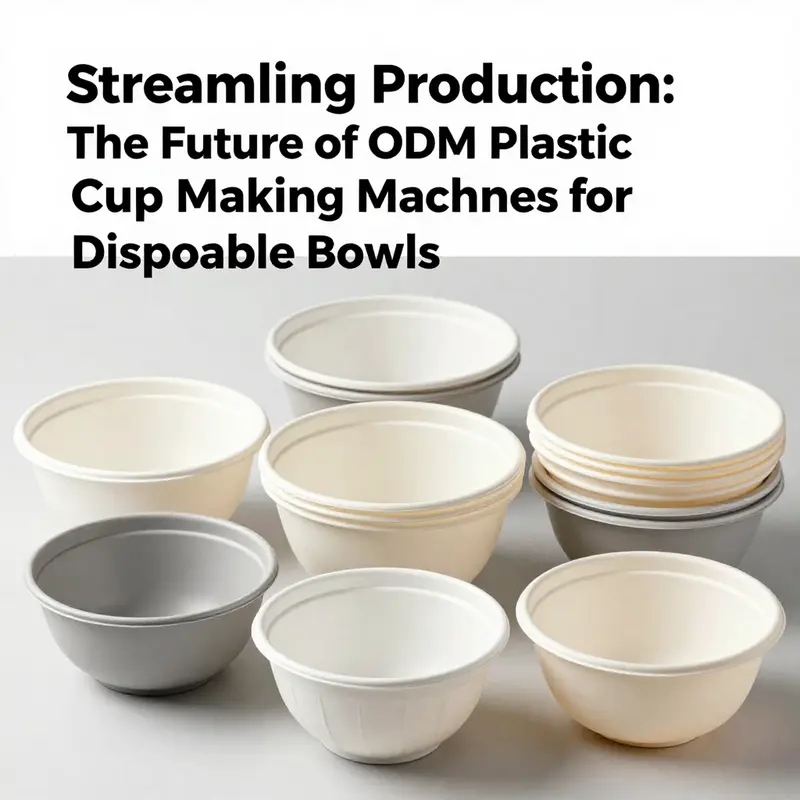
The landscape of ODM plastic cup making machines for disposable bowls unfolds as a study in adaptability and reliability, where material versatility and safety converge to meet a kaleidoscope of global demands. At the core of this evolution lies a family of automated thermoforming systems designed not merely to shape plastic but to shape opportunity. These machines are engineered to handle a broad spectrum of thermoplastics, a capability born from a careful synthesis of heating, forming, and material science that transcends a single use case. Polypropylene, polystyrene, PET, HIPS, PVC, and even biodegradable options like PLA all find a place in the same production line with only calibrated adjustments. This flexibility matters because it allows manufacturers to respond quickly to shifting consumer preferences, regulatory frameworks, and sustainability goals without overhauling the entire line. In practice, that means a factory can switch from a hot beverage cup set made of PP to a cold, clear PET or PLA-based bowl without sacrificing throughput or product integrity. The result is a more resilient supply chain, a key advantage in markets where demand swings with seasonal trends, regulatory changes, or evolving ecological expectations. The design philosophy behind these machines emphasizes not only the range of materials but also the quality cues that matter for food contact products. Food-grade safety sits at the top of the priority list, and it guides material selection, tooling, and process controls in equal measure. Certifications such as CE and ISO are not mere formalities; they signal to customers and regulators that the equipment and the resulting containers meet globally recognized standards for safety, hygiene, and performance. This emphasis on compliance resonates across the plant floor, from the choice of corrosion-resistant stainless steel in the wetted areas to the way the machine handles cleaning, rinse-down, and abrasion resistance in high-volume operation. The stainless steel framework and contact surfaces do more than resist corrosion; they help prevent contamination and minimize secondary pollution, a non-negotiable attribute when the end product directly touches hot beverages, soups, or other foods. The safety framework extends beyond materials to include intelligent automation that reduces human error and enhances traceability. Modern ODM lines integrate PLCs and servo-driven axes to monitor temperatures, pressures, dwell times, and forming forces with a precision that would have been difficult to achieve with older mechanically driven setups. This level of control manifests in consistent wall thickness, uniform shapes, and reliable separation from the mold, all of which translate into lower scrap rates and a more predictable quality profile. In turn, operators gain steadier cycles and reduced manual intervention, allowing skilled personnel to focus on set-up optimization, routine maintenance, and quality assurance rather than repetitive adjustment tasks. A key practical takeaway here is how the machine’s architecture supports material versatility without compromising the core virtues of speed, repeatability, and safety. Thermoforming in this class of equipment relies on a synchronized sequence of lamination heating, forming via vacuum or pressure, and precise mold locking. The lamination step—where a sheet is heated to a workable state—must be calibrated to the thermal characteristics of each plastic type. PP behaves differently from PS, and PET responds in its own way to heat profiles. The control system integrates feedback mechanisms to modulate heat and dwell times in real time, ensuring the sheet reaches an optimal viscosity for forming without scorching or splotching. Once heated, the sheet is drawn into the mold with a vacuum or positive pressure that defines the bowl’s geometry. For deeper bowls or more intricate profiles, servo motors provide the nuanced stretching needed to achieve depth and uniform wall thickness. This is the process milestone where the equipment truly earns its ODM designation: internal engineering teams can tailor the machine to produce a range of shapes and sizes, counting and stacking routines, and downstream handling that align with a client’s product family while staying within the same mechanical platform. The same servo-driven stretch control that shapes a tall, elegant cup can also adapt to a broader, shallower bowl when the market calls for it. The result is a platform that can transition between product families with minimal tool changes, a boon for manufacturers seeking to diversify portfolios without proliferating capital expenditure. In this sense, material versatility is not simply about material compatibility; it is about designing a production ecosystem that accommodates form, function, and finish in a highly integrated manner. A growing portion of the consumer packaging landscape values durability and heat resistance alongside safety and recyclability. PP remains a mainstay for hot-drink applications because of its resilience under thermal stress and its robust chemical resistance. But a modern ODM line must also be prepared to work with PLA for eco-conscious lines that emphasize compostability or compost-friendly end-of-life scenarios. Even when biodegradable materials introduce different processing challenges, the machine’s control architecture permits precise adjustments to heat, pressure, and dwell times, enabling a clean migration from conventional plastics to more sustainable options. The ability to switch materials without reconfiguring the entire process line is a strategic capability. It reduces downtime during changeovers, lowers the total cost of ownership, and supports just-in-time production models that respond quickly to shifting orders from foodservice chains, boutique cafes, or retailers prioritizing sustainable packaging. The safety dimension in this context is multifaceted. It begins with the material itself—ensuring that each polymer chosen for a given product is food-grade and non-toxic for direct contact with consumables. It continues with the tooling and mold design, where smooth finishes, rounded edges, and non-contaminating surface treatments minimize crevices where residues can accumulate. It extends to the machine’s throughput logic, where cycle times are balanced against washdown capabilities and maintenance windows so that sanitation regimes do not become an obstacle to uptime. In practice, this means lines are engineered to be washed and sterilized with predictable routines. Post-processing steps, such as film punching, lamination, and sheet handling, must be executed with hygienic design principles that are compatible with frequent cleaning and drying cycles. The end-to-end flow—from sheet to formed part to stacked, ready-to-pack bowls—embeds safety into every transition. It also means equipment suppliers and manufacturers must work within a service ecosystem that supports ongoing compliance and quality assurance. Warranty and after-sales support become more than a promise of parts; they become a guarantee that the line will continue to operate within the required safety and quality envelope. In markets where regulatory expectations are strict and consumer scrutiny is high, having a supplier network that can respond with engineering expertise, remote diagnostics, and on-site service is a meaningful differentiator. It also matters from an economic perspective. The capital expense of an ODM thermoforming line can be substantial, so the total cost of ownership hinges on uptime, ease of changeover, energy efficiency, and waste reduction. Modern lines balance these considerations through smart energy management, servo-driven acceleration and deceleration that minimize peak loads, and optimized scrap recovery strategies. Filtration, dust control, and noise attenuation are not mere conveniences; they are integral to maintaining a safe and comfortable working environment, particularly in continuous high-speed production settings. The conversation about safety also intersects with sustainability. Many of today’s materials and process configurations are evaluated for their environmental footprint across the product lifecycle. This includes emissions associated with heating, the recyclability of the final container, and the availability of end-of-life options in different regions. An ODM line that can accommodate multiple materials while maintaining a clean separation of process streams reduces cross-contamination risks and simplifies compliance with recycling stream regulations. In practice, this translates to thoughtful machine layout, dedicated zones for different polymers, and clear labeling that guides operators through changeovers. The ergonomic and hygienic design of the tooling, and the ease with which molds can be swapped or cleaned, contribute directly to safety outcomes. Another dimension of the safety story is the assurance of food-contact integrity. The standard-setting agencies and quality bodies around the world set rules for migration limits, surface cleanliness, and the avoidance of leaching substances. An ODM line that provides traceability—through serialized tooling, batch records, and machine parameter logging—enables manufacturers to demonstrate compliance with confidence. Traceability also supports recall readiness, a factor increasingly important to retailers and foodservice operators who demand rapid root-cause analysis when anomalies appear. Beyond the immediate operational and regulatory considerations, the material versatility and safety of ODM lines have strategic implications for product development. A single platform that handles PP for hot beverages, PET for clear presentation, and PLA for compostable options invites rapid prototyping and market testing. Brands can explore new formats, such as deeper bowls for ready-to-serve soups or layered desserts, while keeping the same basic forming architecture. In doing so, they can align packaging choices with evolving consumer expectations—whether it is a higher-end, visually striking container or a lighter, more eco-friendly option that still delivers on performance. The broader industrial ecosystem, including the partners supplying raw sheets, adhesives, and finishing films, reinforces this capability. Efficient collaboration between material suppliers, machine integrators, and packaging designers enables a more cohesive development process. The goal is not only to produce bowls and cups but to produce them with tight tolerances, consistent aesthetics, and reliable performance across multiple use cases. That is the essence of the ODM advantage: a design language that accommodates variety without fragmentation, a modular approach that preserves speed, and a commitment to safety that sustains consumer trust. For readers tracing the arc from raw material selection to final packaging, the chain is clearer when considered through the lens of process adaptability and quality assurance. A plant that can switch seamlessly between PP, PS, PET, and PLA demonstrates a maturity in both engineering and governance. It signals that the manufacturer understands how to manage risk—material risk, process risk, and regulatory risk—while still delivering on speed, cost efficiency, and product quality. The market is not only asking for more durable or more attractive containers; it is asking for systems that can be tuned for the right balance of performance and responsibility. ODM lines that embody that balance become attractive to customers who operate in diverse geographies with different packaging norms and waste management realities. To connect this discussion to real-world practice, consider how a line might be configured to support a broad portfolio of disposable bowls and cups without becoming a bespoke, single-use system for every client. The answer lies in design choices that emphasize adjustable heat profiles, variable forming pressure, and modular tooling that can be swapped with minimal downtime. In addition, servo-driven stretching provides the mechanical finesse needed to form deeper bowls or complex interior geometries without thinning the material excessively. This capability supports more robust containers that retain shape under load and temperature while preserving the visual appeal of the product. On the sustainability front, the industry increasingly values closed-loop thinking. An ODM line that can handle multiple materials allows a brand to align packaging choices with a region’s waste management infrastructure. For example, a plant using PP for hot drinks may target reuse or recycling streams in one market, while another region that favors PLA aligns with local composting programs. The operational reality is that this alignment reduces the risk of stranded inventory and accelerates time to market for differentiated products. In closing, the material versatility and safety features of ODM plastic cup making machines for disposable bowls are not isolated attributes. They are the pillars of a production system that can adapt to material shifts, regulatory expectations, and evolving consumer values without sacrificing speed or reliability. The machines’ capabilities—ranging from lamination heating to precise vacuum forming, from servo-driven stretch to wipe-clean hygiene, and from corrosion-resistant construction to traceable quality control—combine to create a robust platform. This platform supports not only current product lines but also the exploratory projects that drive the packaging industry forward. As markets increasingly demand both performance and responsibility, ODM lines that integrate flexible material handling with rigorous safety standards will be the ones that scale efficiently and sustain trust with customers, retailers, and end consumers alike. To illustrate the breadth of practical relevance, consider how these lines fit into the broader ecosystem of take-away packaging and foodservice supply chains. For instance, the range of take-away food packaging boxes demonstrates how a single line can interface with downstream packaging formats, enabling a coherent system from raw sheet to finished container and finally to finished goods ready for distribution. Take-away packaging demands a careful balance of barrier properties, thermal performance, and aesthetic finish, all of which can be guided by the same underlying thermoforming platform when designed with modularity in mind. This integrated approach is a reminder that the ODM machine is not just a single-purpose device; it is a gateway to an adaptable packaging architecture that can respond to a changing world. For readers seeking a concrete reference on how these lines operate in practice, a representative line shows how automated positive and negative pressure molding can complete the full cycle—from molding to stacking—in a single, coherent workflow. This kind of end-to-end capability embodies the ODM value proposition, enabling manufacturers to deliver consistent, safe, and market-ready disposable bowls and cups at scale. Take-away packaging is a natural extension of this capability, because the same principles that govern the forming and finishing of bowls also influence the broader packaging ecosystem, including lids, film, and outer cartons that accompany the primary container. In many facilities, the ability to adapt quickly to new designs without sacrificing throughput translates into faster response times to customer briefs and shorter time to market. It also supports design experimentation, where teams can test new shapes, thicknesses, and surface finishes while maintaining strict safety and quality standards. This synergy between versatility and safety underpins a sustainable approach to disposable packaging. By preserving material options, these lines reduce waste associated with material mismatches and allow production to remain efficient across the lifecycle of the product family. The result is not only a more resilient supply chain but also a more responsible one, where packaging choices reflect both performance needs and environmental considerations. For practitioners and strategists, the takeaway is clear: invest in ODM platforms that prioritize multi-material compatibility, food-grade assurances, and modular, hygienic design. Such platforms empower packaging programs to evolve in step with consumer preferences and regulatory expectations, without sacrificing the speed, precision, or cost controls that drive competitive advantage. As the chapter draws to a close, internal and external references to these ideas anchor the discussion in real-world practice. The internal link below offers a concrete example of how these principles translate into a functional packaging solution in the broader take-away context. Take-away food packaging boxes
Take-away food packaging boxes
External resource: PPBG-750 listing on Alibaba
Final thoughts
As the demand for disposable tableware continues to rise, investing in advanced ODM plastic cup making machines becomes crucial for bubble tea shops, restaurants, food trucks, and catering services. The integration of sophisticated thermoforming technology ensures high-quality production that is both efficient and safe. With automation streamlining operations and versatile materials enhancing product offerings, businesses can meet their customers’ needs while adhering to safety standards. Embracing these innovations will not only elevate service quality but also position companies as leaders in the competitive food and beverage landscape.