
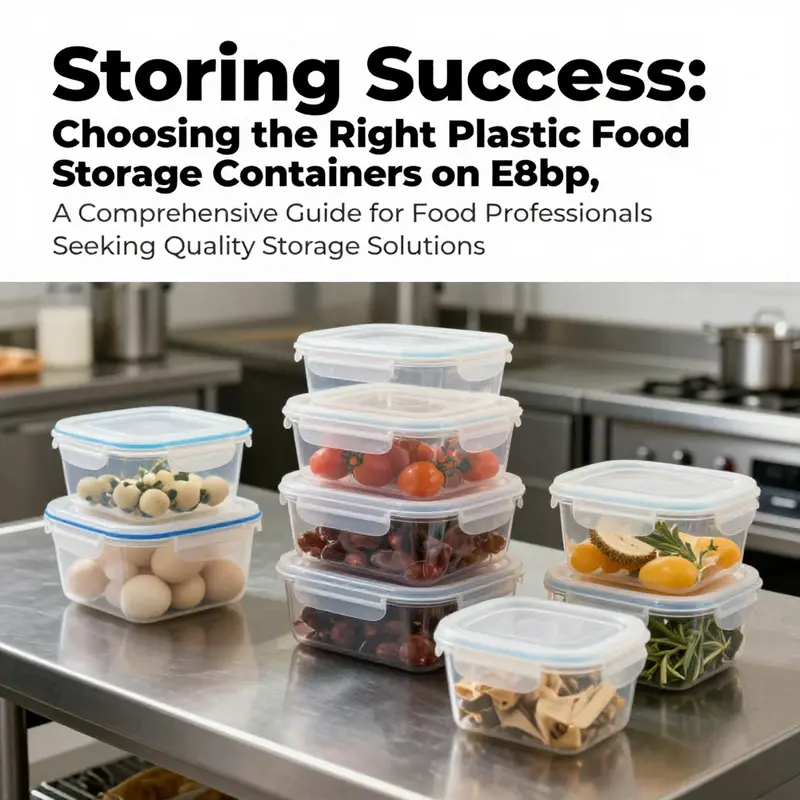
Effective food storage is crucial for businesses in the food and beverage industry. Plastic food storage containers with lids available on eBay offer a versatile and efficient solution for various needs, from keeping ingredients fresh in restaurants to organizing supplies in catering services. This guide explores the variety of options available, tips for navigating eBay effectively, as well as environmental and safety considerations that matter most to professionals. Whether you run a bubble tea shop or are involved in corporate procurement, this article will equip you with insights to make informed decisions about your storage solutions.
From Pantry to Picnic: Navigating Plastic Food Storage Containers with Lids on eBay
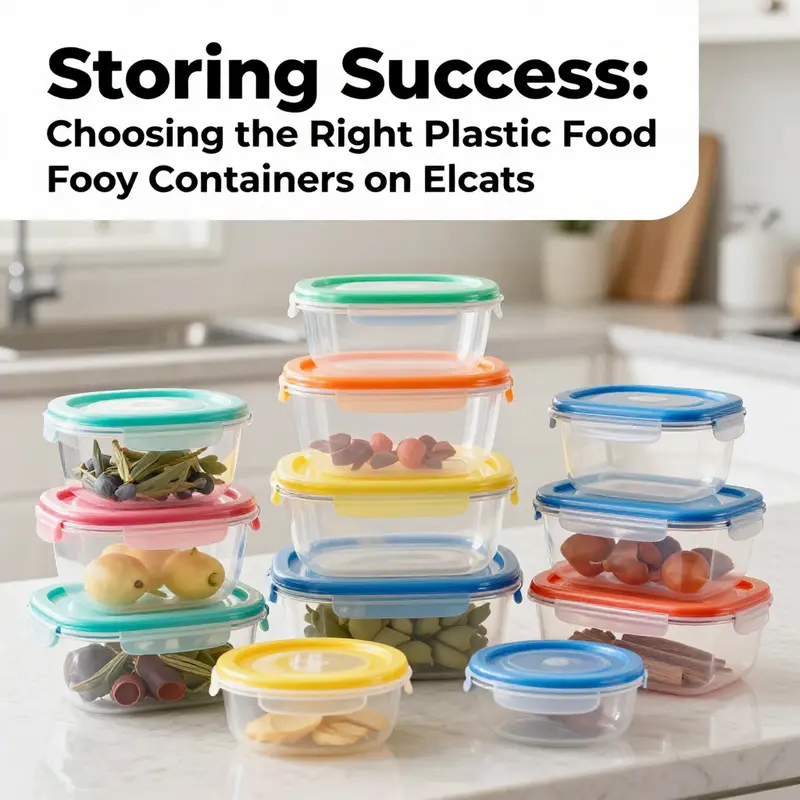
A marketplace as vast as eBay reveals a landscape of plastic food storage containers with lids that can seem overwhelming at first glance. Yet the breadth of choice is precisely what makes the platform valuable for households, home cooks, and even small food operations that need to optimize space, reduce waste, and keep foods fresh. The containers span a spectrum from tiny, portable rounds ideal for a single salad or a handful of snacks to large, heavy-duty vessels designed to store bulk grains, flour, sugar, and pet foods. They also cover a range of materials and features that matter when you translate a vague need into a concrete purchase: airtight seals, moisture barriers, pest prevention, stackability, labeling surfaces, and compatibility with common kitchen routines like microwaving, washing, and freezing. In this sense, the eBay catalog mirrors the larger shift toward practical, accessible storage that blends everyday convenience with commercial-grade durability, making it possible for a family kitchen to function with the same level of organization and hygiene once reserved for professional kitchens or warehouses.
The classification of these containers on a platform like eBay tends to fall into a few broad but meaningful categories. There are small, portable containers—often around 12 ounces in round or rectangular shapes—that are perfect for dividing meals, packing a quick lunch, or portioning snacks for travel or outdoor activities. These mini vessels are designed with simple, secure lids that minimize leaks and spills while remaining light enough to carry in a backpack or tote. They are also the kind of items that lend themselves to bundling and bulk pricing, which makes them a smart buy for families that meal-prep, students living in dorms, or caregivers who portion snacks for picky eaters.
Then there are mid-sized, home-use containers. Think two-gallon white food-grade buckets with screw-on lids or other similarly sized vessels intended for dry goods like flour, sugar, or grains. The larger volumes maximize storage efficiency in a pantry or garage storage area, while their robust lids and airtight seals help protect against humidity, odors, and pests. In many listings, this category is where you see the most practical value for households with frequent baking needs, bulk cooking, or long-term storage of pantry staples. The capacity and the seal work in tandem to maintain product quality over time, which is especially important for dry goods that can attract moisture or vermin if left unprotected.
Beyond the domestic scale, eBay also features high-spec, commercial-grade containers. These are the heavy-duty rounds or rectangular boxes designed for catering, food service, and food businesses. They are built to resist leaks, withstand higher temperatures or more aggressive handling during transport, and stack efficiently in commercial kitchens or delivery setups. Sets that include multiple sizes, lids, and sometimes labels are common in this tier, reflecting the organizational needs of restaurants, cafés, and event catering where speed, consistency, and traceability matter. The ability to buy a complete set at once—without the friction of negotiating with multiple suppliers—can translate into meaningful cost savings and a smoother workflow in a busy operation.
Across these categories, the common denominator is protection: protection from moisture, pests, and cross-contamination; protection of the contents’ flavor, aroma, and texture; and protection of the storage system itself from the wear that accompanies daily use. The typical listings on eBay emphasize features that directly address these concerns. Sealing lips and gasket designs promise tightness; the materials are frequently labeled as BPA-free or food-grade to reassure buyers about safety and compliance with general food-safety expectations. Many listings also highlight dishwasher, microwave, and freezer compatibility, though those claims should be verified against the specific product’s instructions rather than taken at face value. This is not merely about finding a container that fits a shelf; it is about selecting a solution that integrates cleanly with the user’s routines and with the broader ecosystem of kitchen tools and storage strategies.
Among the practical implications of this diversity is the possibility to tailor purchases to both budget and space. For an urban apartment with a small pantry, narrow rectangular containers that maximize vertical space can be more useful than round jars that leave awkward gaps. For a family that cooks in bulk, a combination of large, rugged containers and a set of smaller, easy-to-lift jars affords flexibility: you can portion a week’s worth of dry ingredients, batch-prepare meals for the week, or assemble ingredients for an event with minimal cross-contamination risk. And for those who occasionally rely on takeout or catering services, the carryover between home and small business use becomes even more relevant. The eBay ecosystem helps shoppers assemble multiple requirements into one shopping experience, sometimes pairing containers with lids that lock in freshness with those same sellers offering related packaging solutions such as labeling systems or stacking organizers.
The consistency across these listings is the emphasis on reliability. The real-world advantage of owning containers with lids is not merely about saving space; it is about the confidence that comes with knowing you can retrieve what you stored, when you stored it, and in a form that preserves its quality. This is particularly true for items intended for long-term storage of pantry staples. When a bag of rice sits in a well-sealed container, it is shielded from humidity and pests; the risk of infestation or mold decreases, and pantry organization improves through predictable labeling and stacking. For families that juggle multiple meals, keeping ingredients organized and easily accessible translates into less food waste and a smoother daily routine. The same logic extends to commercial kitchens where consistent packaging translates to consistent portioning and service reliability.
From a consumer perspective, the eBay marketplace also introduces a dynamic of pricing and availability that is harder to harness through any single retailer. New items may come at premium prices, especially when they incorporate the latest sealing technology or are marketed as “food-grade” with BPA-free assurances. Used or refurbished containers can offer substantial savings, but they warrant careful inspection for wear, scratches, or degraded seals that could compromise performance. The beauty of the platform lies in being able to compare prices, read seller feedback, and assess shipping terms in a way that may not be as transparent in a traditional store. Some listings bundle several containers in a set, which smooths the decision process for buyers who aim to refresh an entire cabinet rather than line items piecemeal. The trade-offs are clear: a slightly lower price may come with longer shipping times or varying degrees of wear, while a premium listing may guarantee newer materials or a more robust warranty. Each shopper must weigh these factors against their own needs, space constraints, and the frequency with which they anticipate using the containers.
A recurring theme in these decisions is safety. Many listings proudly advertise BPA-free plastics and food-grade certification, reflecting broader consumer concerns about chemical exposure and the potential leaching of substances into foods. In practice, this means looking for explicit notes about the plastic’s composition, and understanding what the label implies about heat exposure, acid content, and long-term storage. It also means recognizing that “BPA-free” is a widely used marketing phrase that does not automatically guarantee safety in every scenario. The context matters: a container intended for short-term refrigeration and dry storage differs from one repeatedly subjected to microwave heating or dishwashing at high temperatures. Buyers on eBay often rely on seller descriptions, photos, and user reviews to fill gaps left by product pages themselves. The best listings provide clear evidence of food-grade certification, test results, or reputable third-party assurances, while also detailing compatible temperature ranges and care instructions. Taken together, these factors help buyers avoid regret and ensure that their investment supports both quality and health standards in the kitchen.
Measuring the practicality of eBay’s offerings also means considering the realities of online shopping logistics. New items routinely come with standard warranties and straightforward return policies, but used or bulk lots may not. Shipping costs can be a meaningful factor, particularly for large, bulkier containers, where a modest price per unit can be offset by high delivery charges. Bundled sets sometimes reduce the per-item cost but require a larger upfront investment and more storage space. For those who want flexibility without committing to a single purchase, auctions and “best offer” options provide opportunities to negotiate, test the waters, and accumulate a mix of sizes that fit different storage needs. In all cases, the buyer benefits from a careful, methodical approach: verify dimensions and lid types, confirm whether the lids are stackable or interlocking, ensure compatibility with existing organizers, and assess the practicality of using the containers with typical kitchen routines—refrigeration, reheating, washing, and long-term storage.
One of the subtler but increasingly important aspects of choosing containers on eBay is how the set integrates with broader kitchen organization strategies. A pantry that is neatly organized around uniform, transparent containers with clearly labeled lids can dramatically improve meal planning and reduce waste. The transparency of clear plastics offers a quick visual scan of contents, while a consistent lid color or a consistent lid design can simplify stacking and retrieval. The possibility of purchasing matching labeling systems or compatible stacking organizers from the same seller adds another layer of coherence. In practice, buyers often curate a mix of sizes to fit their shelves: small rounds for herbs and spices, mid-sized jars for loose grains, and larger, leak-proof canisters for flour and sugar. When these pieces come from the same vendor or from vendors that offer compatible packaging accessories, the result is a coordinated storage solution that extends beyond mere containment to true kitchen efficiency.
From a culinary perspective, the value of well-chosen containers extends into the realm of meal preparation and carryout. For those who batch-cook, having containers that reliably seal and resist moisture means that you can portion healthy meals ahead of time and reheat them without sacrificing texture. For those who frequently transport foods for work, school, or picnics, leak-proof designs, rugged lids, and secure clamps or screw-on mechanisms help prevent spills and ensure that meals stay intact. In this sense, the eBay marketplace functions not simply as a store but as a facilitator of routines. A shopper can assemble a complete system—containers for dry goods, a set for soups or stews that are microwave-safe, and a stackable rack to maximize pantry space—without moving outside the platform’s ecosystem. The practical outcomes are tangible: better organized kitchens, reduced waste, and greater confidence in the integrity of stored foods.
An ongoing thread in this landscape is the balance between plastic safety, convenience, and durability. The conversation around plastics in food storage has evolved to emphasize material safety, recyclability, and long-term performance. Buyers often weigh the convenience of light, affordable plastics against the possible environmental impact of single-use or short-life items. The availability of BPA-free labels and food-grade assurances helps reassure shoppers that they can rely on these containers for daily use without compromising health or taste. At the same time, the decision to choose plastic versus alternative materials—glass, stainless steel, or composites—depends on individual priorities such as weight, breakage risk in households with children, ease of cleaning, and how often items will be transported. The eBay catalog accommodates this nuanced decision-making by offering a spectrum of options across the same category, making it feasible to select a solution that aligns with both personal habits and environmental considerations.
Beyond the practical and safety dimensions, the cultural and behavioral aspects of shopping for plastic storage on eBay deserve attention. Online marketplaces enable a particular kind of experimentation: a shopper can try out a new shape or size without a large upfront commitment, test a couple of different lid designs to see what seals best for their climate, or bundle multiple sizes into a single order to reduce shipping detours. This flexibility is especially valuable for households that experience seasonal changes in storage needs—holiday baking, harvests of dried goods, or shifts in pantry organization as families grow or shrink. Sellers who recognize this dynamic often offer bundled solutions or curated sets designed to ease the decision process. The upshot is a shopping experience that feels intimate and customized, even within the broad, impersonal expanse of a global online marketplace.
In closing, the spectrum of plastic food storage containers with lids on a platform like eBay reflects a practical philosophy: store better, use smarter, and adapt as needs evolve. The items span micro- and macro-scale needs, from snack-sized rounds to large commercial boxes, each with features that address the core concerns of freshness, safety, and organization. For bakers and home cooks who want packaging suggestions that complement their storage choices, consider a packaging option that pairs well with ready-to-pack items. For example, you can explore Pure Color Foldable Cake Boxes with Window, a packaging solution that aligns with the same aims of containment, protection, and presentation. This kind of pairing illustrates how the broader ecosystem of packaging and storage products on eBay can work together to support efficient kitchen operation, reduce waste, and simplify daily life. For readers who want to learn more about the safety frameworks that govern plastic food-contact materials, a broader safety context is available through established health authorities. For a broader safety context, see the FDA’s Frequently Asked Questions about BPA in food-contact substances. Pure Color Foldable Cake Boxes with Window.
As you navigate the listings, your approach to choosing plastic storage containers with lids on eBay becomes a process of aligning your storage needs with the product attributes that matter most: capacity, lid reliability, material safety, cleanability, and the ease with which a set can be integrated into your existing kitchen architecture. The best purchases are those that reduce friction in daily routines, prevent waste, and offer durable performance at a price that respects your budget. When these elements converge, eBay’s marketplace doesn’t just sell you a container; it equips you with a scalable system for pantry organization, meal prep, and on-the-go eating. It makes a practical promise: that the simple act of sealing a container can become a dependable habit that keeps food fresh, kitchens orderly, and lives a little less chaotic.
Internal resource for packaging inspiration: Pure Color Foldable Cake Boxes with Window provides a glimpse into how packaging and storage concepts can harmonize in professional and home contexts. This example demonstrates how well-designed lids and containers can extend not only the life of contents but also the presentation and convenience of storage solutions. By exploring related packaging options, buyers can envision a cohesive approach to storing and presenting foods, whether for daily meals, special gatherings, or commercial catering.
External resource for broader safety context: For a broader safety context, see the FDA’s Frequently Asked Questions about BPA in food-contact substances. https://www.fda.gov/food/packaging-food-contact-substances/frequently-asked-questions-bpa-bisphenol-a
Plastic Food Storage Containers with Lids on eBay: A Buyer’s Guide to Choice, Value, and Reliability
Plastic food storage containers with lids on eBay sit at the intersection of practicality and variety, offering a window into how households and small businesses manage ingredients, prepared meals, and leftovers with efficiency. The breadth of options on a single marketplace can be overwhelming, yet it also provides an honest lens into price competition, material quality, and design innovations that matter for everyday use. This chapter moves through the landscape with an eye toward discernment, showing how a careful reader can balance cost against performance, and how the right container system can transform kitchen routines, pantry organization, and even operational logistics for small-scale food ventures. What follows is less a catalog of products and more a narrative of how buyers assess a seemingly simple object—the ordinary plastic container with a lid—and turn it into a reliable tool for storage, safety, and convenience.
At first glance, the category appears straightforward: clear or opaque plastic boxes with snap-on or twist-off lids, sometimes equipped with silicone gaskets for airtight seals, and occasionally with stackable designs to maximize vertical space. Yet the real decision lives in the details. The material, the lid construction, the seal integrity, and even the labeling and sizing all converge to determine whether a container will perform well in the home kitchen, the pantry, or the back room of a cafe or catering operation. On eBay, the marketplace is populated with sellers of all scales—from individuals clearing pantry shelves to wholesalers offering bulk lots—and each listing frames a different value proposition. The challenge for buyers is to parse these signals: the material promises of BPA-free formulations, the claimed compatibility with microwaves or dishwashers, the dimensions that fit specific storage needs, and the long-term durability that prevents warping, staining, or odor retention after repeated use.
A central axis of evaluation concerns the seal. An airtight lid is not merely a convenience; it is a standard that preserves moisture levels, blocks pests, and helps keep flavors stable over time. On eBay, many listings emphasize airtightness through two elements: the lid’s design and any accompanying gasket. The lid may be a simple snap-on model, or it may incorporate a more robust locking mechanism or a silicone gasket that compresses against the container’s rim. The best configurations maintain a tight seal even after repeated snapping on and off, without leaving a plastic aftertaste or developing cracks around the rim. The seal’s reliability is further tested by temperature variables. Containers marketed as microwave- or dishwasher-safe must withstand heat without warping, losing their shape, or degrading the lid’s seal. Buyers often cross-check these claims against the material type—plastic formulations that avoid BPA and related compounds are a common selling point, and FDA or similar safety certifications are frequently highlighted.
Beyond sealing, the material profile itself shapes everyday use. BPA-free plastics remain a standard expectation for consumer storage products on reputable listings. Yet “BPA-free” covers a spectrum of resin types, each with its own strengths and limitations. Some plastics resist stains and odors better, others tolerate freezing temperatures without becoming brittle, and a few offer clarity that makes contents easy to identify without opening lids. The practical upshot is that buyers should look for explicit statements about microwave safety, dishwasher suitability, freezer resilience, and heat resistance. A listing may proudly note “microwave-safe” if the lid and container together tolerate brief reheating, though many sellers reserve that designation only for containers without metal components and with vented, vent-free options. The absence of a clear safety claim can also be informative; if a listing provides ambiguous language or lacks certifications, a cautious buyer may prefer to verify with the seller or choose items with verifiable documentation.
Size and shape are no less consequential. The kitchen often dictates a spectrum of container sizes: from petite 200–300 milliliter units ideal for sauces or snacks to large 2–3 liter sets that can accommodate bulk grains, flour, or leftover meals. In between lie mid-range options that fit snugly in pantries, cabinets, or drawers. On eBay, you will encounter sets that emphasize nestability and stackability, reducing footprint while increasing the number of usable containers in a given purchase. For households or businesses that anticipate frequent reorganization, a stackable design can be a real space saver, allowing shelves to hold more volumes without tipping or sliding. Buyers should, however, ensure that stackable lids remain easy to access and that the containers do not become top-heavy when filled, a practical risk that can contribute to spills during transport or in transit.
Labeling features can also influence long-term utility. Containers with integrated labeling areas or writable surfaces on the lid or side walls can simplify inventory management in a busy kitchen or a catering operation. For families, labeling can help distinguish different ingredients, meal preps, or portion sizes, reducing the chance of cross-contamination and waste. On eBay, such features are sometimes highlighted in product descriptions, and they can be a surprisingly decisive factor when you’re balancing a large collection of containers across various meals and weeks.
Price remains a defining factor because the platform’s competitive dynamics encourage sellers to compete on both price and value-added features. Listing prices often reflect a mix of batch sizes, material quality, and the presence or absence of extras such as labeling stickers, dividers, or transparent lids that aid visibility. For buyers, the challenge is to separate the wheat from the chaff: to identify listings that deliver tangible quality at a fair price rather than merely the lowest price without regard to performance. Some listings present bulk options that reduce per-unit costs, a tactic that appeals to families with long-term storage needs or to small coffee shops and meal-prep services that aim to standardize their storage system. In any case, the price signal should be interpreted in light of the container’s durability, the integrity of the seal, and the availability of compatible lids or replacement parts.
The marketplace’s breadth also invites a careful appraisal of seller reliability. Scoring, feedback history, and shipping terms collectively shape the buyer’s confidence. Clear communication about material safety, return windows, and handling times helps prevent misaligned expectations once an order is placed. When a seller emphasizes the terms of sale—such as free shipping, fast dispatch, or bundled deals for larger orders—it is not merely marketing; it is a practical signal about the post-purchase experience. Buyers who invest the time to read seller feedback, confirm return policies, and compare shipping estimates often end up with containers that meet expectations, with fewer surprises upon arrival. This broader shopping literacy—knowing how to read a listing, how to interpret a seller’s reliability, and how to anticipate delivery timelines—translates into more consistent outcomes when purchasing plastic storage containers with lids on eBay.
For those with specific storage challenges, customization options in bulk can transform a standard product into a branded, company-ready solution. Some sellers offer OEM/ODM services and logo printing for larger orders, enabling businesses or event organizers to present a cohesive, on-brand storage system. The practical upside is obvious: a consistent set of containers with the same lid design, the same closure time, and the same labeling schema can streamline workflow, from inventory tracking to quality control. The consideration, of course, is that bulk customization often requires higher minimum order quantities, longer lead times, and more intricate negotiation around color, lid features, and packaging. Buyers contemplating bulk purchases should approach these negotiations with a clear spec sheet: the exact interior dimensions, lid style, gasket material, maximum safe temperatures, and any regulatory certifications expected by their own operations or their customers.
The conversation about reliability naturally leads to certifications and compliance signals. In safety-sensitive contexts, listings that reference FDA compliance or LFGB standards provide a degree of assurance about food-grade suitability. While not all buyers require such certifications, for households that use containers for longer-term storage of diverse ingredients, or for small businesses that must meet customer expectations for safety and cleanliness, these markers help translate a listing’s claims into verifiable quality. It’s worth noting that certifications often appear in the form of logos, short statements, or a link to documentation. When such cues are present, a buyer can feel more confident about the product’s intended use, particularly in environments where the containers will be washed frequently, subjected to microwaving, or stacked in commercial settings.
The practical workflow of shopping on eBay also invites attention to logistics. Free shipping offers and transit times are not mere conveniences; they affect how quickly leftovers are reorganized, how quickly a kitchen regains its rhythm after a move, or how swiftly a catering operation restocks essential storage. Fast delivery becomes especially meaningful when reorganizing a kitchen after seasonal menu changes or when supplementing a pantry that supports a high-volume service. The listings frequently disclose typical delivery windows, which, in turn, helps buyers align expectations with their own planning cycles. For small businesses, the ability to predict when a new batch of containers will arrive can be as critical as the container’s leak resistance or its stackability.
To summarize the buying mindset, the right plastic storage containers with lids on eBay emerge from a balanced equation. You are weighing seal quality, material safety, temperature tolerance, and the practicality of the design against price, shipping speed, and seller reliability. The best choices tend to be those that combine transparent or clearly labeled contents with airtight lids that perform reliably under microwaving or dishwashing, depending on the user’s needs. They also tend to be offered in sets that align with typical kitchen workflows: a mix of small, medium, and large units that can accommodate different daily tasks, paired with lids that fit snugly and stay aligned even after repeated use.
In this landscape, a mindful buyer can also appreciate the nuanced differences between what might seem like duplicates. Some listings emphasize “stackable” as a feature in a way that genuinely improves shelving organization, while others use the same term to describe a design that yields only marginal gains in storage efficiency. The distinction often lies in the subtle engineering of the lid and rim: a slightly taller profile, a recessed lid to accommodate the height of another container beneath, or a gasket that compresses evenly across multiple cycles. While such differences might appear minor, they accumulate into a real-world impact on how a kitchen feels—less clutter, quicker access, and fewer misfilled containers.
Beyond the home kitchen, the eBay marketplace also reveals how plastic storage solutions intersect with broader packaging and logistics ecosystems. Some listings are part of larger bundles that include dividers, labels, and even external labeling stickers, which can be handy for organizational schemes and batch tracking. Others are positioned as space-saving, with nested designs that maximize efficiency in modest pantries or compact retail spaces. For small-scale food services, the ability to coordinate a whole system—containers, lids, labeling, and perhaps a shared color code—can translate into smoother service, faster meal assembly, and reduced waste. The consumer who learns to read between the lines of a listing gains not just a single container, but a pathway to a broader, more coherent storage strategy.
To bring these threads together, it helps to consider a concrete, practical path through a typical eBay search. Start by clarifying the core needs: what will be stored, how often the containers will be heated or washed, and how many units are realistically required for daily use. Then, scan listings for clear material disclosures, explicit temperature guidance, and visible testaments to seal integrity, such as notes about leak-proof performance or gasket durability. A quick sanity check is to verify whether the lid and container are designed for the same material family and whether the lid’s locking mechanism aligns with everyday handling. When a listing offers a set with multiple sizes, think about how the assortment will map onto your pantry or kitchen routines. The best sets often yield a natural workflow: you pull the right size for a given meal, stack the empties in a corner, and swap in fresh units as needed without disrupting the entire system.
For readers seeking a concrete bridge to related packaging options while remaining anchored in the plastic container theme, consider this resource for broader packaging options available online: disposable kraft paper soup containers with lids. This reference can illuminate how a packaging buyer might think about material differences, sealing challenges, and the tradeoffs between plastic and paper-based solutions, especially in situations where heat tolerance and moisture management are critical. The juxtaposition reveals a broader truth: the packaging ecosystem is a continuum, where plastic containers and paper containers each offer advantages in different contexts, and the right choice depends on the specific storage, transport, and display needs at hand.
In closing, the act of choosing plastic food storage containers with lids on eBay becomes a practice of discernment rather than a quest for a single perfect item. It is about cultivating a sense of how a given lid design, a specific kind of gasket, and a well-matched set of sizes can harmonize with a kitchen’s rhythm or a business’s throughput. It is about recognizing that the most reliable containers are those that resist the compromises of everyday use: they hold flavors in, they let odors out less easily, they withstand the daily cycles of washing and reheating, and they do so without sacrificing clarity of view or ease of labeling. The marketplace rewards those who approach the purchase with a plan—one that accounts for safety certifications, practical dimensions, and realistic expectations about shipping and return policies—because such an approach translates into fewer surprises, longer container lifespans, and a storage system that genuinely supports the food routines it is meant to serve.
Ultimately, the story of plastic storage containers with lids on eBay mirrors a broader lesson: the value of a well-chosen storage system lies not only in the product itself, but in how it integrates with daily life, how it endures the tests of time, and how it adapts to evolving needs—from snack packs and meal prep to bulk bulk storage in small operations. The right container becomes a quiet backbone of organization, enabling more consistent meal planning, less waste, and a kitchen that feels both orderly and welcoming. With careful attention to material safety, seal quality, size variety, and seller reliability, buyers can navigate the eBay landscape with confidence, turning a simple purchase into a lasting tool for efficiency, safety, and everyday clarity.
External resource for broader marketplace context: https://www.ebay.com/gp/help/seller/ebay-shopping-tips.jsp
From Listings to Lifecycles: Navigating Environmental Realities and Safety Standards in Plastic Food Storage Containers with Lids Sold on eBay
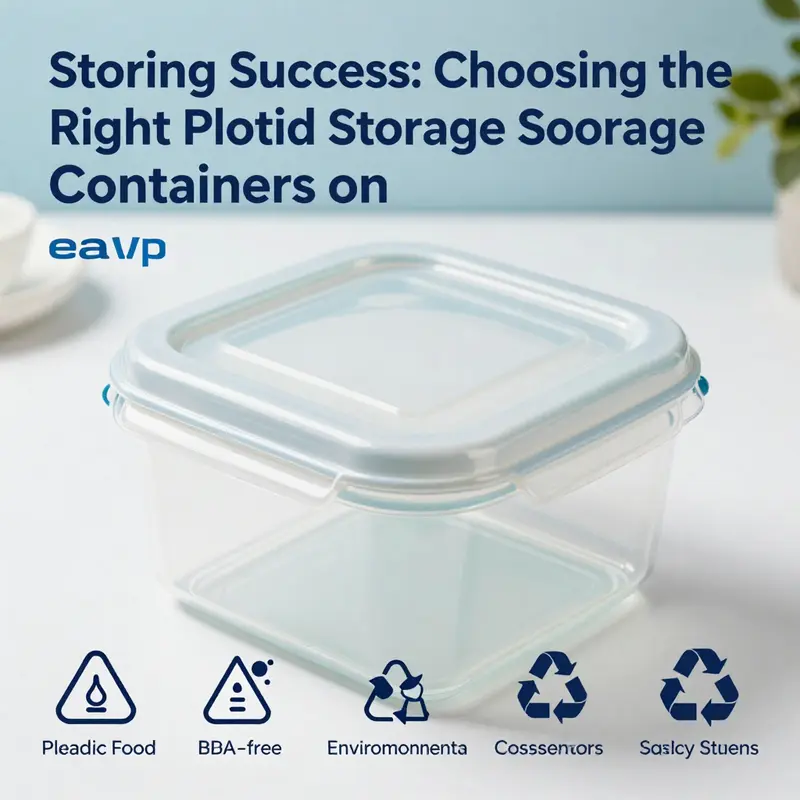
In the crowded marketplace of online shopping, eBay hosts a vast spectrum of plastic food storage containers with lids. They range from compact canisters ideal for pantry staples to taller, stackable sets that promise space efficiency in crowded kitchens. The appeal is practical: lids promise tight seals that guard against moisture and pests, and containers are designed for labeling and organization. Yet behind every listing a more complex web of environmental implications and safety considerations quietly unfolds. The same page that advertises airtightness and reuse often sits at the intersection of convenience and environmental consequence, and any thoughtful buyer should pause to weigh both sides before filling a cart. The conversation about plastic storage on this platform cannot be reduced to a single attribute like price or capacity; it must account for life cycles, material choices, and the chemistry of storage itself, all of which influence what happens long after the product is placed in the kitchen cabinet or tucked away in a storage closet.\n\nOn a practical level, these containers are typically made from common plastics such as polypropylene and polyethylene terephthalate. Each material carries its own set of trade-offs. Polypropylene tends to offer good heat resistance and is widely used for food-contact applications, making it a frequent choice for containers and lids that must withstand regular washing and occasional reheating. PET, meanwhile, is valued for clarity and lightweight strength, though its suitability for repeated contact with fatty or acidic foods, and for repeated heating, is more nuanced. The reliance on fossil fuels for the production of these plastics means that every box or jar is connected to a broader energy and resource system that drives greenhouse gas emissions at multiple stages: extraction, processing, transport, and end-of-life management. In a world that must increasingly account for carbon footprints, the journey of a simple storage container from factory floor to kitchen shelf becomes a reminder that many everyday objects contribute to a larger environmental narrative, whether shoppers intend them to or not.\n\nEnvironmental considerations extend beyond the question of how a container is made. The much discussed recycling landscape for plastics matters just as much. The broader data collected by national waste agencies show that the recycling rate for plastics remains painfully low. In the United States, for instance, a fraction of plastic waste is recycled commonly reported as a small portion of all plastic ever produced, while the rest tends toward landfills, incineration, or natural environments where it can persist for centuries. That persistence translates into what scientists call microplastics, tiny fragments that break off from larger items through weathering, abrasion, and cleaning cycles. Once released, these microplastics disperse through waterways and soils and have been detected in a range of ecosystems, from oceans to inland habitats. The implications are not merely ecological; there is an ongoing evolving conversation about how microplastics might influence human health through exposure pathways that include the air we breathe, the water we drink, and the food we eat.\n\nThese environmental realities intersect with safety standards in meaningful ways. Even if a container is labeled BPA-free, it does not automatically guarantee complete safety for every use scenario. Other chemical additives such as phthalates or other plasticizers may still be present or mobilized under particular conditions. The risk is especially salient when containers are exposed to heat or are used for storing fatty foods, where fats can act as solvents that facilitate leaching. In this context, the dialogue about safety moves beyond a single label and toward a more holistic view of material safety. Experts have underscored that plastic pollution is not just an environmental issue confined to oceans or distant ecosystems; it is a human health issue that intersects with everyday consumer products and practices. Microplastics have been detected in human blood, lungs, and even placentas in some studies, which intensifies concern about long term exposure, particularly for items designed to come into contact with food. While the science continues to evolve, the precautionary principle encourages buyers to consider the broader safety profile of any container they choose, rather than relying on a single claim such as BPA-free.\n\nWithin this safety frame, consumers on eBay should look beyond labels to seek verifiable assurances. Certifications and standards such as those associated with food-contact safety approvals and compliance with recognized testing regimes offer a more robust signal than marketing language alone. FDA compliance, for instance, is a baseline expectation for products intended for contact with food in the United States, while LFGB a German standard represents a rigorous European benchmark for consumer safety. These certifications are not universal guarantees of risk free use, but they do provide traders and buyers with a clearer framework for evaluating suitability, especially when containers are used for frequent reuse, heating, or long term storage. The nuanced reality is that even a compliant container can pose risks if used in ways that depart from manufacturer guidance. Heating plastic, for example, can alter its physical and chemical properties, potentially increasing the likelihood of leaching and affecting flavor, odor, or safety in some food contexts. A cautious approach together with sensible husbandry of containers helps to minimize these risks and makes eBay listings a starting point for a more deliberate decision rather than a blind impulse.\n\nThe lifecycle narrative also bears directly on how a buyer should interpret a listing. Durable, reusable containers may reduce the need to purchase disposable options, but even durable plastics have finite lifespans. Scratches, cloudy appearances, or compromised lids can indicate micro abrasions that may harbor bacteria or affect seal integrity. Discarding or repurposing damaged containers becomes part of the lifecycle calculation, influencing not just food safety but the environmental footprint associated with disposal. As buyers, we should visualize the full arc of a container’s life—from the raw materials that feed the factory line to the day it ends up in a recycling stream or a landfill. This lifecycle lens shifts the shopping decision from a single purchase to a stewardship choice: how the item is used, heated, cleaned, stored, and eventually disposed of shapes its overall impact.\n\nOnline marketplaces tend to make it easy to filter by price, size, stackability, and dishwasher compatibility, but those filters do not always reveal a container’s end-of-life prospects or its performance under diverse storage tasks. To navigate this landscape, shoppers should adopt a disciplined approach to verification. Read the product description with attention to material type, heat tolerance, and sealing performance. Check the details about lid design, such as whether the seal is truly tight against moisture or whether the lid includes a gasket that enhances leak resistance. Review cues about stacking stability and the availability of labels or measurement markings that aid organization. Crucially, scrutinize the stated material alongside any available safety certifications. The combination of material type, safety markings, and practical design features forms a triad of signals that can help a buyer avoid choosing solely on price or appearance.\n\nThis point about verification dovetails with broader shopping practices on a crowded platform. Because eBay hosts a spectrum of sellers—from individuals to small shops—the quality and claims of products can vary widely. A prudent buyer will weigh seller credibility, return policies, and the consistency of user feedback. The presence of consumer reviews and seller ratings can offer important context about the container’s real-world performance—how well the lid seals after repeated washing, whether the container maintains clarity after multiple cycles, or if the lid tends to warp in the dishwasher. The objective is not to cast doubt on every listing but to encourage a more reflective shopping habit. In this frame, environmental and safety considerations become part of the decision calculus rather than afterthoughts.\n\nFor readers who want to explore alternatives that minimize plastic dependency without sacrificing practicality, consider exploring eco-friendly packaging options that emphasize reuse and non-plastic materials. The literature on consumer packaging increasingly highlights options that rely on glass or silicone for lids as potential paths toward reduced environmental impact. Glass storage containers, in particular, are valued for longevity and inertness, while silicone lids offer flexible sealing that can withstand repeated cycles of heating and cooling. Such alternatives do not eliminate the need for careful handling, but they can reduce the potential for chemical exposure and environmental persistence over time. The trade-off often lies in weight, breakability, and price, which means buyers must weigh convenience against durability and lifecycle considerations. By situating this decision within a broader environmental and safety framework, buyers can approach eBay listings with a more nuanced expectation of what a storage container represents in their daily routines and in the wider world of plastic waste.\n\nTo bridge the practical shopping experience with a broader ecosystem of packaging choices, one avenue worth exploring is the availability of eco-friendly takeout packaging options that extend beyond traditional plastic containers. For readers seeking further context on alternate packaging formats and how they perform in everyday use, a helpful resource highlights a range of designs, materials, and use cases that prioritize safety, reuse, and end-of-life considerations. This insight emphasizes that the marketplace is not a binary choice between plastic or nothing; rather, it is a spectrum of options that includes recyclable, reusable, and compostable formats. By recognizing that spectrum, shoppers can better tailor their choices to their own cooking habits, storage needs, and environmental values. The goal is to move from a single-purpose mindset toward a more resilient approach to kitchen organization that respects both health and the planet. In this sense, the eBay shopping experience becomes a gateway to more thoughtful consumption rather than a routine impulse.\n\nAs a practical takeaway, buyers should approach each listing with a mental checklist that integrates material awareness, safety standards, lifecycle implications, and the promise of reliable performance. Start by identifying the plastic type and confirming food-contact safety certifications. Evaluate the lid design for secure sealing and ease of cleaning. Consider how the container fits into your routine: will it withstand daily washing and occasional microwaving, or is it better suited for dry storage and pantry organization? Reflect on the container’s reuse potential, the likelihood of end-of-life recycling, and any opportunities to substitute with non-plastic alternatives when feasible. This approach does not require perfection in every purchase, but it does demand a consistent effort to align each choice with both personal health considerations and environmental stewardship. It also invites a broader conversation about how online marketplaces can support smarter, safer, and more sustainable storage solutions.\n\nIn the end, the decisions we make about plastic storage containers on eBay are microcosms of a larger shift in consumer culture. They reveal how everyday objects connect to global systems of production, waste, and health. The challenge is not simply to avoid risk; it is to cultivate a mindset that recognizes the limits of single-use plastics, acknowledges the complexities of chemical safety, and seeks practical, durable solutions that respect both our kitchens and the environment. The more we integrate environmental considerations and safety standards into our online shopping, the more our meals, our homes, and our communities benefit. And alongside all of this, we remain mindful that the contents of any container, whether dry grains, spices, or kitchen staples, are as much a part of our environmental story as the plastic that holds them.\n\nFor readers who want a direct practical path to broader packaging options beyond plastic consider this resource that discusses a range of takeout packaging formats and their implications for reuse and end of life management. This external context complements the considerations above and helps situate the eBay experience within a wider conversation about sustainable packaging and consumer health. EPA Plastics Waste Management
Final thoughts
Choosing the right plastic food storage containers with lids from eBay can significantly enhance the organization and efficiency of your food business. By understanding the diverse varieties available, employing strategic shopping techniques, and recognizing the importance of environmental sustainability and safety, you can select containers that meet your operational needs while also supporting your brand’s commitment to quality and safety. The right containers not only preserve food freshness but also contribute to a streamlined workflow, helping your business thrive.