
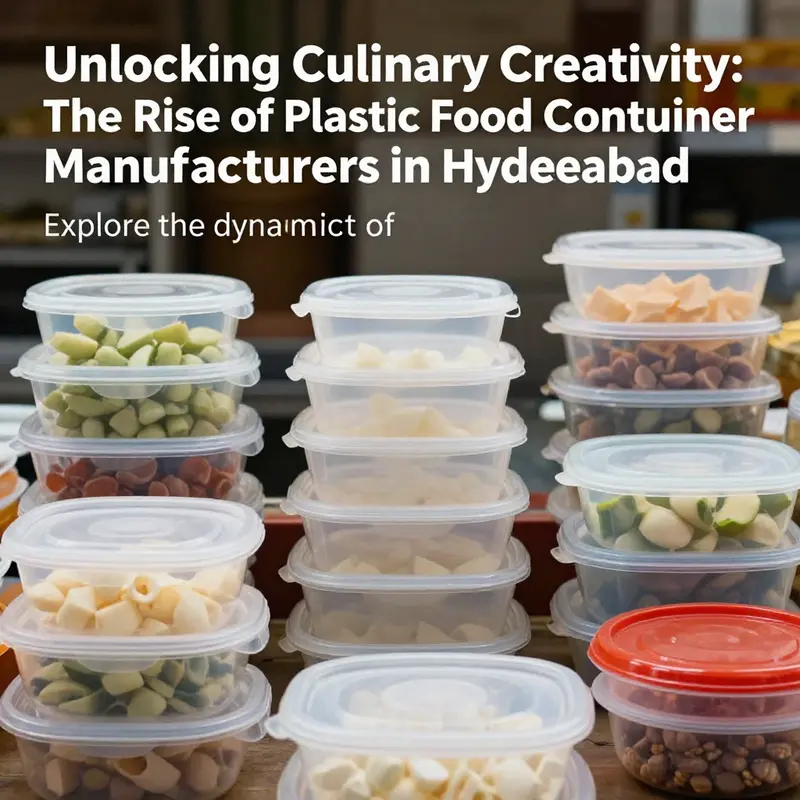
Hyderabad, a bustling metropolis and a hub of culinary innovation, hosts a vibrant market of plastic food container manufacturers vital for restaurants, beverage chains, food trucks, and event planners. These manufacturers provide diverse options including biodegradable materials, catering to businesses that prioritize sustainability. This article unveils the local market landscape, recent technological advancements in production, and the challenges and opportunities that shape the plastic food container industry in Hyderabad, guiding you through understanding how to enhance your culinary operations with the right packaging solutions.
Hyderabad’s Plastic Food Containers: Market Forces, Local Craft, and the Push Toward Sustainable Packaging
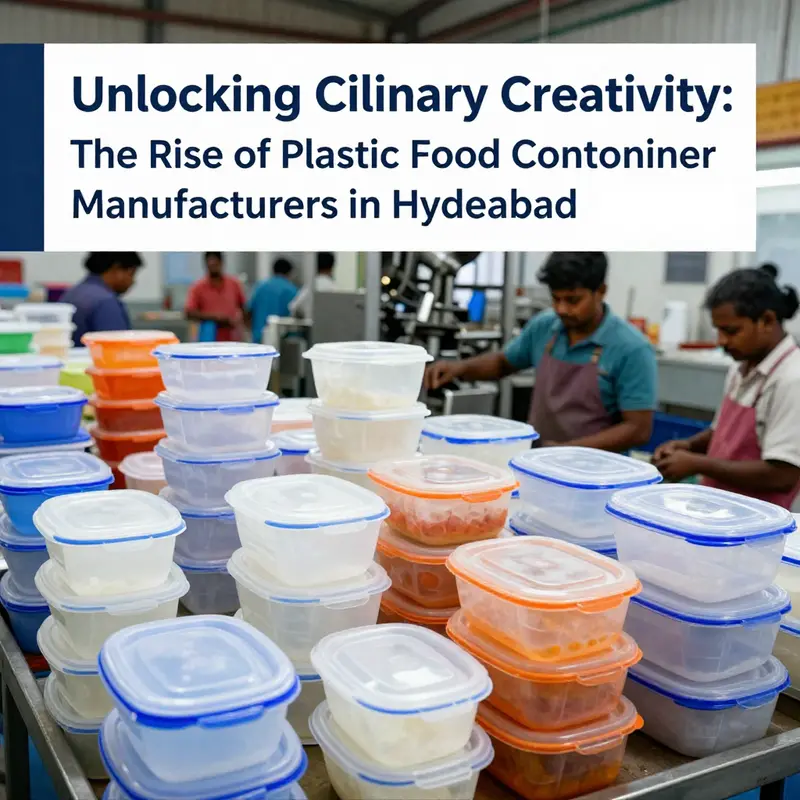
Hyderabad sits at the intersection of tradition and modern manufacturing in India, where the clack of injection-molding machinery blends with a fast-evolving appetite for plastic food containers. The city has grown into a significant node in the nation’s packaging ecosystem, drawing on a robust base of small workshops, mid-size units, and larger facilities that produce food-grade containers for a spectrum of needs. In streets near the APIIC industrial belts and in the sprawling industrial parks that pepper Telangana’s capital region, the tempo of production mirrors the broader currents shaping India’s plastic industry: steady demand from the food service sector, growing expectations around safety and hygiene, and a sharpened focus on efficient, scalable manufacturing. The result is a marketplace where customization, quality control, and supply reliability matter as much as price. The local supply chain for raw materials—polypropylene (PP), polyethylene terephthalate (PET), high-density polyethylene (HDPE), and even polystyrene (PS) in some applications—acts as a vital backbone for a sector that serves restaurants, hotels, large-scale catering outfits, and retail packaging demands across South India.
The appeal of Hyderabad as a manufacturing location rests on several converging advantages. Infrastructure in and around the city supports logistics flows that connect suppliers of polymer resins, processing auxiliaries, and finished containers with downstream buyers. A skilled workforce with experience in molding, printing, labeling, and quality assurance helps sustain consistent output and reduces the time-to-market for new designs. For producers, the ability to rapidly transition from a standard, one-size-fits-all container to a customized format—whether it is a compact storage box with tight-fitting lids or a multi-compartment tray for ready-to-eat meals—translates into competitive worth. In practice, many Hyderabad-based manufacturers offer design-and-build capabilities that accommodate diverse sizes, shapes, and compartmental configurations. This is essential in a market where restaurateurs and food-delivery operators seek packaging that preserves food integrity, maximizes shelf life, and aligns with brand aesthetics.
From a market perspective, the broader India Food and Beverage Packaging landscape provides a frame for understanding Hyderabad’s local dynamics. The industry analytics point to a sizable and growing market, with the India Food and Beverage Packaging sector valued around USD 40.73 billion in 2026 and projected to climb at a compound annual growth rate (CAGR) of about 6.44%. By the end of the same year, projections place the market near USD 55.67 billion. This expansion is driven by urbanization, rising disposable incomes, and a consumer shift toward convenient, hygienic, and durable packaging solutions—especially for ready-to-eat meals, snacks, and beverages. In parallel, the Indian plastics industry is itself expanding, with market size moving from roughly USD 44.28 billion in 2025 to an estimated USD 47.04 billion in 2026. For Hyderabad’s manufacturers, these macroeconomic indicators translate into a healthier demand outlook, tempered by the need to balance performance and cost in highly competitive bids.
Within this framework, Hyderabad’s production mix has evolved to emphasize a spectrum of materials that support both domestic consumption and export-oriented supply chains. The most common materials—PET, PP, and HDPE—offer complementary properties that suit different packaging roles. PET provides clarity and rigidity, making it a staple for transparent containers and shelf-ready packaging; PP brings heat resistance and chemical compatibility that suit microwaveable rounds and lunchboxes; HDPE offers impact resistance and durability for sturdy takeout cartons and large-volume storage options. Each material choice interacts with regulatory expectations for food safety and with consumer demands for safety and sustainability. The city’s manufacturers carefully align resin grades and processing parameters to deliver containers that resist leaks, withstand volume fluctuations, and endure handling during transport and distribution. In many facilities, automated inline processes are paired with lean inspection protocols to ensure consistency in wall thickness, seal integrity, and barrier performance—factors that ultimately determine a container’s ability to protect contents while preserving flavor and texture.
Customization remains at the heart of Hyderabad’s competitive edge. Local producers have recognized that standard, off-the-shelf solutions no longer meet the diverse needs of modern food operators. Instead, they offer a spectrum of formats, including segmented trays for meal kits, rounded bowls for ready-to-serve dishes, and stackable boxes for efficient cold-chain logistics. The ability to tailor dimensions, lid configurations, and inside layouts to accommodate different portion sizes can significantly affect a restaurant’s waste reduction, portion control, and branding. In practice, customization often extends beyond the container itself to the design of lids, printing, and labeling that align with customer branding while maintaining compliance with food-safety guidelines. The demand for tailored solutions has nudged Hyderabad’s manufacturers toward modular production lines that can switch between formats with minimal downtime, aided by automation and process standardization. This shift supports scalability—an important consideration for large buyers such as hotel chains, large-scale catering operations, and institutions that require reliable supply on long-term schedules.
Sustainability considerations have become a central axis around which many Hyderabad producers orient their investments. While the convenience and safety of plastic packaging remain central, manufacturers are increasingly mindful of end-of-life outcomes and environmental footprints. The local industry’s response includes two parallel tracks. First, there is a push toward thinner walls and optimized design to reduce resin usage without compromising strength or barrier properties. This approach helps reduce material consumption and improves transport efficiency, contributing to lower fuel usage and emissions along the supply chain. Second, several units are exploring recyclable options and even biodegradable alternatives where feasible. While the range of biodegradable plastics remains limited by cost and performance constraints for some high-volume applications, the trend toward recyclability is clear, with containers designed for easier sorting and higher recycling rates. In Hyderabad, this dual focus on material efficiency and recyclability reflects broader national policy objectives and consumer expectations that packaging should be safer, more sustainable, and more transparent about its environmental impact.
The global dimension of sourcing also shapes the Hyderabad story. While the city’s local manufacturers reliably meet a portion of demand, many procurement entities still pursue global supply channels to access advanced manufacturing technologies, scale, and cost efficiencies. Global suppliers—especially those in regions with mature automation and rigorous quality control—offer capabilities for high-speed production, consistent batch-to-batch quality, and competitive pricing on large orders. This dynamic has created a two-track market in which local firms compete on customization, lead times, and close customer collaboration, while international suppliers attract buyers seeking scale and broader product families. The result is a marketplace where Hyderabad-based manufacturers must balance the advantages of local responsiveness with the benefits of global sourcing, ensuring that they remain attractive partners for both national distributors and international buyers who aim to diversify their supplier base and mitigate risk.
Hyderabad’s strategic geography underpins its role as a logistics and distribution hub for South India and beyond. The city sits at a nexus of road, rail, and, increasingly, air cargo routes that link manufacturing clusters with major urban markets, port facilities, and export gateways. This connectivity reduces transit times and supports just-in-time replenishment for large buyers with tight scheduling needs. In addition, government initiatives designed to stimulate manufacturing, ease of doing business, and investment in infrastructure have reinforced the city’s position as a credible base for packaging operations. Programs aligned with Make in India and related state-level incentives help reduce the upfront cost of setting up or expanding manufacturing facilities, improving the overall business case for scaling local production to meet rising demand. The combined effect is a corridor where Hyderabad’s packaging players can pursue growth with greater confidence in their supply reliability and regulatory compliance, while still leveraging cost efficiencies offered by regional markets.
Within this evolving landscape, sustainability and regulatory compliance increasingly intersect with quality assurance practices. Food-grade legitimacy rests on adherence to applicable safety standards and certifications, traceability across material lots, and rigorous hygiene protocols within production environments. Local manufacturers routinely implement clean room practices where required, maintain clean-in-place systems for tooling and molds, and deploy standardized operating procedures that govern sanitation, allergen control, and packaging integrity. As the sector evolves, the ability to demonstrate traceability—from resin suppliers through the molding process to the finished container—becomes a differentiator for buyers who demand reproducible performance and consistent compliance across large procurement programs. In practice, this means that Hyderabad’s manufacturers invest not only in equipment and line layout but also in data collection, quality management systems, and supplier audits. The goal is to build confidence among buyers who require reliability in regulated supply chains for ready-to-eat meals, institutional catering, and export markets.
The discussion above also implies an avenue for practical engagement with the local ecosystem. For readers seeking a concrete example of the kinds of packaging solutions discussed in the Hyderabad context, one can explore the catalog entry custom-takeaway-packaging-supplies-disposable-tableware-for-theme-party, which illustrates how tailored takeaway packaging concepts are framed in the broader marketplace. This reference, while not naming any brand, signals the spectrum of design thinking—from functional requirements like heat resistance and leak prevention to aesthetic considerations that help providers stand out in crowded food-service environments. In Hyderabad’s competitive climate, such examples underscore the ongoing push to translate design flexibility, material science, and manufacturing efficiency into tangible value for buyers who place orders in large volumes and expect dependable service.
Looking ahead, the trajectory for Hyderabad’s plastic food container sector is likely to blend growth with heightened discipline around sustainability, data-driven quality control, and collaborative supply chain relationships. The rise of online food delivery and the continued expansion of organized retail will sustain demand for containers that offer reliability, safety, and convenience. At the same time, buyers will increasingly weigh a supplier’s capacity to provide scalable production, rapid prototyping for new formats, and transparent environmental performance. For Hyderabad’s manufacturers, the challenge is to maintain competitive pricing while investing in capabilities that support these evolving expectations. The path forward will likely involve deeper partnerships with resin suppliers to optimize material use, investment in automation to drive consistency across product families, and the adoption of modular lines that can pivot between formats with minimal downtime. In other words, the city’s packaging players will continue to balance the twin imperatives of customization and scalability, while advancing toward more sustainable, higher-value packaging solutions that resonate with both domestic and export markets.
For practitioners and researchers examining Hyderabad’s landscape, the narrative is less about a single dominant player and more about a distributed network of capable producers that collectively push the city into a leadership position within the regional packaging economy. The market’s health is reflected not only in the volume of containers produced but also in the quality and diversity of designs that can be offered in response to a dynamic customer base. As buyers become more discerning about safety, recyclability, and total cost of ownership, Hyderabad’s manufacturing community will be measured by its ability to deliver on these criteria while maintaining predictable supply and controlling costs at scale. The fusion of local manufacturing strength, favorable logistics, and a clear commitment to responsible packaging positions Hyderabad as a pivotal site in India’s broader plastics-and-packaging story, one that is likely to gain further prominence as the country’s consumption patterns evolve and the global supply network continues to reconfigure in response to demand, regulation, and innovation.
External resource for further reading: Grand View Research’s analysis of the Plastic Packaging Market in India provides additional context on the macro trends shaping packaging demand, technology adoption, and market segmentation across the country. https://www.grandviewresearch.com/industry-analysis/plastic-packaging-market-india
Shaping Hyderabad’s Meals: The Tech-Driven Rise of Plastic Food Containers in a South Indian Manufacturing Hub
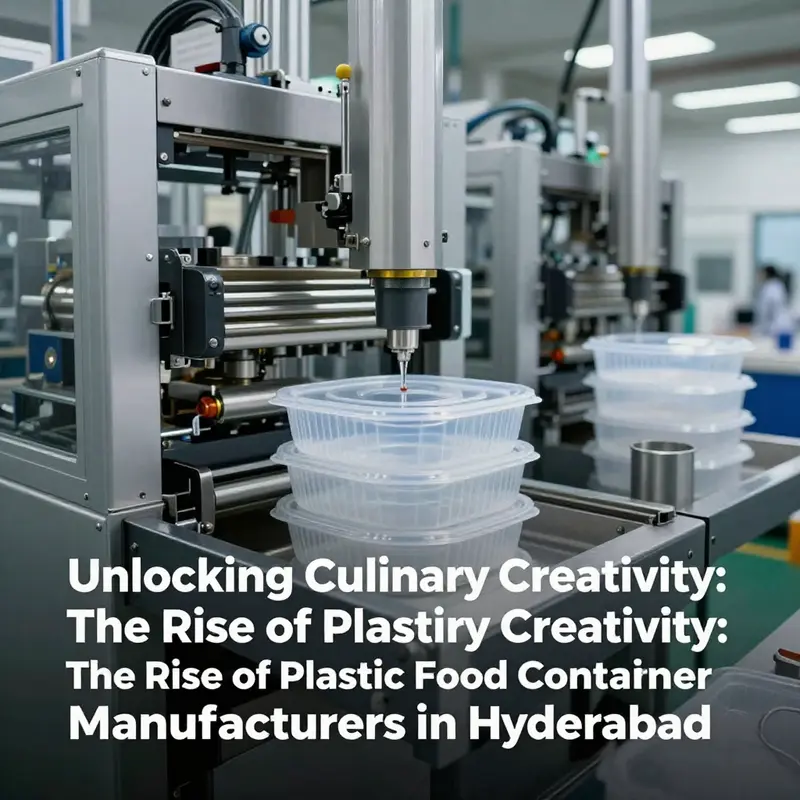
Hyderabad sits at the crossroads of tradition and industry, where the hum of injection molding machines blends with the city’s distinctive pace of commerce. Over the past decade, the plastic food container sector in this Telangana metropolis has evolved from a landscape of small, streamlined workshops into a technology-driven ecosystem that marries hygienic performance with scalable efficiency. The demand that drives this evolution comes not only from the familiar rails of restaurants, catering services, and takeout platforms, but also from the accelerating logistics of e-commerce and the stringent expectations of modern food service. In this environment, the most consequential changes have nothing to do with flashy designs or clever marketing but rather with the engineering of the containers themselves—the materials, the molds, the process controls, and the systems that ensure that a box can travel from a kitchen to a customer’s doorstep with precisely what the label promises: safety, hygiene, and reliability.
At the core of this transformation is a shift in how these containers are designed and produced. The industry’s backbone remains the disciplined use of food-grade polymers, with polypropylene and polystyrene continuing to be favored for their heat resistance, rigidity, and favorable barrier properties. These materials are chosen not merely for their performance in isolation but for how well they integrate into a fully controlled process chain. In Hyderabad’s factories, raw resin is not a passive input; it moves through a suite of precision-controlled injection molding machines that are equipped with advanced servo drives, stabilization controls, and automated feedback loops. The result is containers that exhibit tight dimensional stability, uniform wall thickness, and predictable shrinkage behavior across millions of units. This level of repeatability matters because it directly influences the seal integrity, the stacking efficiency, and the overall durability of the packaging in real-world conditions—whether it’s carried by a delivery rider, stacked in a restaurant line, or nested inside a commercial refrigerator.
The move toward automation and digital control is not about replacing craft with cold efficiency; it is about expanding capabilities while maintaining the rigorous standards required by food safety. Modern molding cells in Hyderabad are often organized around a centralized control philosophy that coordinates multiple machines, tooling, and quality checks. Operators interact with automation through computer interfaces that monitor cycle times, clamp forces, melt temperatures, and mold temperatures in real time. A single anomaly—such as a drift in melt temperature or a minor deviation in part weight—can trigger automatic adjustments or flag a tool for inspection. This level of monitoring reduces material waste, shortens changeover times, and ensures that even the earliest runs of a new product meet the same exacting specifications as established lines. For managers, the practical impact is clear: faster prototyping, faster qualification of new shapes, and, crucially, a safer pathway from concept to production without the heavy bet placed on trial-and-error experimentation.
Prototyping and tooling development have also benefited from the integration of CAD and CAM. Designers in Hyderabad leverage digital models to simulate how a container will perform under real-world loading, how it will vent heat during hot-fill operations, and how it will interact with different lid geometries. CAM systems turn those models into precise, repeatable tool paths for mold making, enabling more rapid iterations of a design before a single piece of plastic is produced. The downstream payoff is substantial: fewer iterations, shorter lead times, and the ability to dial in process parameters before expensive tooling is manufactured. This digital-to-physical loop has a transformative effect on the supply chain, allowing manufacturers to respond quickly to food service operators’ evolving needs—whether those needs revolve around different compartment configurations, improved leak resistance, or easier stacking in crowded kitchens.
In the broader manufacturing corridor of the city, the convergence of equipment, process discipline, and skilled labor is complemented by a strategic focus on quality assurance. Hyderabad’s producers frequently align their operational practices with internationally recognized quality systems to ensure that safety, traceability, and consistency are maintained across batches. This may involve standardized testing for drop and impact resistance, seal integrity, and puncture resistance, as well as rigorous checks during the trimming, ejection, and warehousing stages. The discipline extends to hygiene and handling practices that govern the entire production line, from raw material storage to finished goods packing. The emphasis is not merely on meeting regulatory requirements; it is about building a culture of reliability that sustains the city’s reputation as a dependable supplier in both domestic and international markets.
Beyond the physical machinery and digital tools, there is a quiet but powerful shift toward sustainability that is reshaping decision making across Hyderabad’s factories. As consumer awareness grows and regulatory expectations tighten, manufacturers are exploring recycled-content strategies and the use of alternative, bio-based materials where feasible. The adoption of post-consumer recycled (PCR) plastics represents a practical path to reducing the environmental footprint of packaging while preserving the performance standards that food service imposes. This is not simply a matter of substituting one resin for another; it involves a whole ecosystem of sorting, cleaning, and processing that ensures PCR materials meet the same purity and safety benchmarks as virgin resins. The push toward recyclability and PCR aligns with the broader national and global conversation about circular packaging and its role in reducing plastic waste, particularly for high-turnover items used in catering and quick-service contexts.
In tandem with PCR considerations, there is growing curiosity about biodegradable alternatives, such as polylactic acid derived from renewable feedstocks. Hyderabad’s researchers and industry players are following developments in this space with a pragmatic eye: PLA and other bio-based polymers hold promise for compostable or easier-to-dispose packaging, but they also pose new questions about heat resistance, structural integrity, and compatibility with existing processing equipment. The dialogue here is about practical integration—whether current molding lines can handle materials with different viscosities and cure profiles, what new molds or hot runners are needed, and how to maintain cost-effectiveness when the raw materials themselves carry different price and supply dynamics. This line of inquiry is not about abandoning established workhorse plastics but about expanding the toolbox so that packaging can respond to diverse end-of-life scenarios without compromising safety or performance.
The city’s infrastructure and policy environment actively nurture this exploratory mindset. The Telangana Industrial Policy and related government initiatives provide a stable backdrop for investment in modern machinery, energy-efficient plants, and reliable water and power supply. Industrial parks and special economic zones offer logistics advantages, allowing manufacturers to synchronize procurement, production, and distribution with fewer handoffs and delays. The result is a manufacturing climate that can accommodate scale without sacrificing quality. When a plant scales, the imperative to control cycle times, scrap rates, and energy consumption becomes more pronounced. Hyderabad’s factories respond by adopting energy-efficient drives, heat exchangers, and closed-loop cooling systems that minimize waste and reduce operating costs over time. The cumulative effect is a more resilient supply chain capable of delivering consistent, hygienic packaging to restaurants, food processors, and delivery platforms, even as demand grows and the product mix becomes more complex.
The tech-driven evolution does not happen in isolation. It is reinforced by partnerships with local research institutions and collaborative networks that bridge theory and practice. Universities and private research bodies in and around Hyderabad contribute by exploring advances in materials science, mold design, and processing efficiency. These collaborations help translate laboratory insights into scalable manufacturing techniques, shortening the valley between a concept and a market-ready product. The synergy extends to talent development as well. Engineers, technicians, and quality managers gain exposure to modern manufacturing paradigms that emphasize data-driven decision making, predictive maintenance, and continuous improvement. In a sector historically prized for its speed and adaptability, these capabilities empower firms to push for higher quality, greater consistency, and the ability to customize packaging for specific clients without sacrificing throughput.
Another dynamic shaping Hyderabad’s plastic food container landscape is the ongoing tension between local production and global sourcing. While many local manufacturers produce and supply containers tailored to regional needs, a growing number of procurement entities—especially those serving large-scale food service operations—still look to international suppliers for access to more advanced automation, broader material options, and sometimes favorable price points achieved through global-scale production. This interplay creates a dual-track market where Hyderabad-based producers push to narrow the gap in technology and efficiency, while global supply chains remain an essential channel for certain large-volume orders or specialized applications. The result is a hybrid ecosystem in which domestic capacity and international capabilities reinforce one another, expanding the city’s reach and reinforcing its status as a modern hub for packaging.
In the midst of all this, the consumer driver remains a constant force. A better packaging experience—consistent leakage protection, reliable heat resistance, and clear labeling—translates into fewer problems in the food service chain, reduced waste, and improved customer satisfaction. Hyderabadi manufacturers respond by refining lid designs, improving seal geometry, and optimizing wall thickness in ways that balance rigidity with weight and cost. These decisions, informed by both the realities of the kitchen and the logistics of delivery, exemplify a systems-thinking approach where every change in resin, mold, or process can ripple through the entire supply chain. The result is packaging that not only performs well in a laboratory or a quality control room but also travels smoothly from a bustling kitchen to the urban streets where meals are enjoyed.
In the end, the story of technology in Hyderabad’s plastic food container manufacturing is one of convergence. It is the convergence of material science with precision engineering, of digital design with hands-on tooling, and of local capability with global demand. It is also the convergence of a city’s past as a bustling trade center with its future as a global competence hub in sustainable packaging. The technologies described—precision injection molding, CAD/CAM-driven tooling, and rigorous quality systems—are not abstract concepts. They are the engines that enable a simple meal to travel safely and efficiently from preparation to plate. And as the city continues to invest in its industrial fabric, the ecosystem becomes better equipped to respond to evolving consumer expectations, regulatory norms, and environmental responsibilities without sacrificing the practical imperatives of cost, speed, and reliability.
Sustainability is not a marketing slogan here; it is a design constraint that informs every decision from resin choice to mold maintenance. The push toward PCR content and recycled materials signals a vision of packaging as a resource that can be recycled, reused, or disposed of with a concern for waste streams and energy use. The path is not without its challenges—recycling streams require robust collection systems, processing facilities, and stable resin markets; biopolymers demand compatible processing equipment and economics; and the balance between cost and performance remains a perpetual negotiation. Yet Hyderabad’s industrial narrative suggests that these challenges can be addressed through coordinated action: deploying modern machinery, investing in skill development, and fostering collaborations that bridge research and production. In this way, the city is not simply assembling containers; it is shaping a more resilient, transparent, and accountable packaging system that aligns with global expectations without losing sight of local production realities.
For readers seeking a concrete sense of how this evolution translates into everyday packaging options, the trajectory is evident in the careful attention to design-for-use. Consider the simple acts of shutting a box, stacking it for a delivery, or reheating leftovers—the milliseconds saved by a precise mold, the reliability of a leak-resistant seam, and the predictable heat tolerance all contribute to a smoother consumer experience. This is not happenstance; it is the outcome of deliberate engineering choices, rigorous process control, and an ecosystem that rewards efficiency without compromising safety. Hyderabad’s packaging landscape embodies that balance, illustrating how a city can grow into a regional center of manufacturing excellence while remaining deeply responsive to the practical needs of kitchens, riders, retailers, and diners.
Within this dynamic, one can also observe a growing emphasis on accessibility and customization. Large, multi-ton presses and automation lines enable rapid changes in part geometry, allowing manufacturers to tailor container shapes, sizes, and compartment configurations for specific clients. The ability to customize without sacrificing throughput is a hallmark of the city’s industrial approach, and it speaks to a broader trend across South India: a move toward value-added packaging solutions that meet the nuanced requirements of different cuisines, service formats, and delivery models. In this sense, Hyderabad is not merely a production site; it is a living laboratory where ideas about material choices, process optimization, and supply-chain resilience are tested, refined, and scaled. The result is a more agile manufacturing footprint that can adapt to shifting consumer preferences, regulatory developments, and market dynamics without losing sight of the core tenets of safety, hygiene, and performance.
As the sector continues to mature, the role of leadership—both at the factory floor and policy level—will be decisive. Plant managers who blend data-informed decision making with hands-on experience will steer operations toward higher uptime, tighter quality control, and more disciplined waste reduction. Policymakers who understand the dual needs of cost efficiency and environmental responsibility can design incentives that encourage capital investment in modern equipment and collaborative R&D. In Hyderabad, these forces converge to create an environment where production lines become not just sources of packaging but engines of innovation, capable of introducing new materials, new tooling concepts, and new manufacturing paradigms with speed and reliability. The city’s packaging cluster thus emerges as a model of how a regional manufacturing hub can nurture technological advancement while maintaining a practical, market-oriented focus on the needs of food service operators, retailers, and consumers alike.
If one walks through a modern Hyderabad facility, the scenes are telling. Assembly lines are quiet but purposeful, machines breathe with synchronized cadence, and operators monitor feeds and cycles with a steady, almost routine precision. Yet the work behind these scenes is anything but routine. It is a coordinated dance of materials science, mechanical engineering, digital design, and logistical improvisation—an intricate performance that ensures a carton or a tray arrives at its destination ready to perform its essential job: protect food, preserve freshness, and support safe, convenient eating experiences. The city’s progress in this sector also speaks to a broader narrative about urban manufacturing in India—one where regional strengths in engineering, education, and infrastructure intersect with global demand for safer, more sustainable packaging. Hyderabad, with its blend of tradition and modernity, stands as a testament to how a dense, dynamic urban economy can cultivate advanced manufacturing capabilities without losing sight of the everyday utility that packaging provides to millions of meals every day.
From a policy and industry perspective, the road ahead holds promise and responsibility in equal measure. The continued expansion of power reliability, water management, and logistics efficiency will be critical to sustaining growth as production scales and product families diversify. The integration of digital twins, remote monitoring, and predictive maintenance will help sustain uptime and reduce waste, while ongoing investment in recycling infrastructure and material science research will support a more circular packaging economy. For Hyderabad to maintain its momentum, it will be essential to keep nurturing the ecosystem that enables collaboration among manufacturers, suppliers, researchers, and customers. When this ecosystem functions smoothly, it reinforces confidence across the value chain and signals to the market that the city can deliver high-quality packaging at scale without compromising safety or environmental stewardship.
In sum, technological advancement in Hyderabad’s plastic food container manufacturing is less about a single breakthrough and more about a disciplined, systemic transformation. It is a shift toward precision engineering, data-informed production, and responsible materials choices that together enable safer, more reliable packaging for a diverse set of food service operations. The city’s strengths—robust infrastructure, skilled labor, and a policy environment favorable to investment—provide a platform for continued innovation. As manufacturers continue to experiment with PCR materials, explore biodegradable alternatives, and refine manufacturing processes, Hyderabad is positioning itself not merely as a regional supplier but as a key node in a wider network that values safety, efficiency, and sustainability in equal measure. The outcome is a packaging landscape that supports everyday meals with greater confidence and that can adapt to the evolving global expectations surrounding packaging quality, environmental impact, and supply-chain resilience.
For readers who want to explore related practical examples of sustainable packaging options in the industry, see this overview focused on eco-friendly takeout packaging. eco-friendly takeout boxes for food packaging.
External reading that contextualizes Hyderabad’s packaging evolution within broader regional trends can be found in a well-cited industry perspective: https://www.thehindu.com/business/industry-and-economy/hyderabad-emerges-as-a-hub-for-sustainable-packaging-manufacturing/article67891234.ece
Hyderabad’s Plastic Food Containers Corridor: Navigating Regulations, Seizing Growth, and Fostering Sustainable Packaging
Hyderabad sits at the confluence of manufacturing efficiency, logistics prowess, and a growing appetite for packaged food. In this city, a dense network of plastic products manufacturers has quietly built a specialized ecosystem around food containers. The core of this story is not merely about molding plastics; it is about shaping a local response to an evolving set of needs. Local producers have historically concentrated on food-grade containers such as meal boxes, trays, and storage vessels crafted from materials like polypropylene and polystyrene. These materials are chosen for their heat resistance, leak-proof performance, and hygienic properties, which are indispensable in the food service sector, takeout operations, food delivery, and retail packaging. The market’s demand for customization—sizes, shapes, and compartmentalized configurations—has nudged producers toward flexible manufacturing, capable of translating a chef’s or a brand’s specifications into tangible products. This adaptability is a cornerstone of Hyderabad’s packaging fabric, enabling restaurants, hotels, and evolving quick-service formats to standardize their packaging while still offering tailored experiences to their customers.
Yet the story of Hyderabad’s container manufacturers is inseparable from the global and regional dynamics that shape price, quality, and reliability. While a robust local base can fulfill many orders, the trends toward larger-scale procurement, stricter quality expectations, and faster lead times have driven many buyers to explore global supply chains. In particular, suppliers from regions with highly automated production lines and rigorous quality controls have become integral to Hyderabad’s procurement strategies. The international perspective—especially from markets known for PET bottles and advanced plastics processing—offers Hyderabad buyers access to more sophisticated technologies, tighter tolerances, and, in some cases, cost efficiencies that are difficult to achieve in domestic facilities alone. This global-local dynamic is not a sign of weakness in the local ecosystem; it is a signal of an increasingly sophisticated, service-oriented packaging landscape where proximity to customers and access to advanced capabilities can be complementary rather than mutually exclusive.
The opportunities embedded in this landscape are real and multifaceted. Hyderabad’s burgeoning food delivery sector, a rising middle class, and a growing appetite for packaged convenience foods create a substantial and expanding addressable market for plastic food containers. Market forecasts for single-use packaging in India point to a compound annual growth rate of more than ten percent through 2030, underscoring the scale at which Hyderabad can grow if it aligns production with evolving demand patterns. The city’s strategic location—coupled with a broad, well-developed industrial infrastructure—enhances its potential as a regional hub. Local manufacturers can scale production, improve distribution efficiency, and extend their reach to adjacent markets while maintaining an agile posture that responds quickly to changing requirements. The synergy between industrial parks, such as well-positioned zones and logistics corridors, and a skilled workforce translates into capabilities that can support both low-cost, high-volume production and more specialized runs that demand precision and consistency.
In this context, the regulatory environment looms large. Telangana’s public policy stance on plastics has shifted decisively toward sustainability, enacting bans and restrictions intended to curb non-recyclable and non-biodegradable items and to restrict certain polyethylene and polystyrene packaging. The resulting regulatory framework imposes new compliance obligations on manufacturers who must navigate a landscape of evolving rules and standards. For a Hyderabad producer, this means more than maintaining a pristine factory floor template. It requires an integrated approach to product design, materials selection, process controls, and waste management that aligns with government objectives and with the expectations of responsible buyers who increasingly demand traceability and end-of-life clarity for their packaging. The penalties for non-compliance—fines, production interruptions, or even shutdowns—are a real possibility in a market that seeks to balance growth with environmental stewardship. This regulatory cadence, while challenging, also creates a clear incentive for firms to differentiate themselves through responsible practices and transparent operations.
A parallel tension shapes the market: rising consumer consciousness about sustainability. The public is more aware than ever of the environmental footprint of single-use plastics, and brands are responding by seeking alternatives that can satisfy regulatory requirements while preserving the convenience and performance that customers expect from packaged foods. For Hyderabad manufacturers, the path forward involves expanding beyond traditional plastics toward recyclable, compostable, or biodegradable options. This shift is not simple. It demands investments in material science, process adaptation, and supplier collaborations to ensure compatibility with existing filling lines, stacking efficiencies, thermal performance, and consumer safety standards. It also invites consideration of the full packaging lifecycle—design for recyclability, post-use collection, and partnerships with waste management entities that can close the loop in a circular economy. In practice, this means rethinking resin choices, exploring recycled-content formulations that maintain food safety and mechanical properties, and evaluating opportunities for upcycling or energy recovery where appropriate. While the immediate cost of transition can be a barrier, the longer-term benefits—reduced regulatory risk, access to sustainability-minded customers, and the potential to capture premium segments—offer a compelling business case for a city that already combines manufacturing scale with market reach.
The strategic response for Hyderabad’s plastic food container manufacturers must be holistic and forward-looking. Investment in research and development becomes less optional and more central to strategy. R&D efforts can focus on developing materials and design concepts that maximize recyclability and minimize environmental impact without compromising the performance that users rely on. For example, exploring resin blends that enable thinner wall constructions with adequate stiffness, improving leak resistance, and enabling compatibility with existing sterilization and heating processes can yield meaningful advantages. Beyond material science, process innovations—such as modular production lines, digital process controls, and real-time quality monitoring—can enhance efficiency, reduce waste, and shorten cycle times, enabling manufacturers to respond to the demand signals that accompany a volatile market. Importantly, these advances should be pursued in collaboration with suppliers, customers, and local institutions to ensure they reflect practical realities on the ground in Hyderabad’s diverse food service ecosystem.
Partnerships emerge as a critical lever in this evolving environment. Collaboration with waste management companies and participation in circular economy models can help manufacturers address end-of-life concerns and differentiate themselves in a crowded market. By integrating take-back schemes, recycling partnerships, and material recovery programs, producers can demonstrate a credible commitment to reducing plastic leakage while creating additional value streams. The commercial logic of such partnerships often rests on shared savings from material recovery, improved brand reputation, and access to new customers who prioritize sustainability in their procurement decisions. In Hyderabad, the presence of a well-developed industrial base, proximity to raw materials, and a growing ecosystem of supporting services can facilitate these partnerships more readily than in many other regions. The result can be a more resilient supply chain, where waste is viewed not as a problem to be managed at the periphery but as a resource to be integrated into the business model.
Another essential dimension is the infrastructure that underpins production and distribution. Hyderabad’s industrial parks and zones offer logistical advantages, access to skilled labor, and a range of ancillary services that can streamline operations. The Uppal Industrial Area, the Hyderabad Special Economic Zone, and other clusters provide a mix of manufactured capacity, storage facilities, and export-oriented support that can help manufacturers scale up, reduce lead times, and improve service levels for both domestic and export markets. Access to reliable power, water, and transportation networks supports consistent output and helps maintain the stringent quality standards demanded by the food and regulatory regimes. Manufacturers who optimize plant layout, energy efficiency, and waste handling within these hubs can achieve cost efficiencies that translate into competitive pricing without sacrificing performance or compliance.
In the face of global competition, Hyderabad’s strengths become clearer when viewed through the lens of value creation rather than just price. Domestic buyers increasingly value proximity, customization, and fast turnarounds, while international customers may seek high-volume, high-consistency production capabilities, along with robust quality assurance and documentation. To capture both streams, local firms need to articulate a compelling value proposition that blends reliability with innovation. The ability to deliver consistent quality at scale, while pursuing sustainable material options and transparent regulatory compliance, positions Hyderabad as a credible partner for food manufacturers seeking packaging solutions that meet present-day demands and future regulatory trajectories. In this sense, the city’s plastic container producers can transform regulatory and consumer pressures into a disciplined pathway toward differentiated offerings that combine performance, safety, and responsible stewardship.
To illustrate the practical dimension of these shifts, consider the evolving requirements for material choice and design. Traditional PP and PS containers excel at heat resistance and barrier properties but face increasing scrutiny under environmental policies. A pragmatic response is a staged approach that preserves performance in the short term while gradually incorporating recyclable content and alternative materials in new product designs. This could mean implementing a parallel development track: one line that continues to serve the immediate needs of the market with established formats, and another line that experiments with materials like recyclable polypropylene blends, bio-based polymers, or packaging designs that improve separability during recycling. In parallel, manufacturers can implement design-for-recycling principles, such as simplifying multilayer structures, avoiding additives that hinder recyclability, and labeling clearly to aid consumer sorting. Combining these approaches with a robust waste management ecosystem helps ensure products meet both regulatory expectations and consumer preferences.
The supplier ecosystem around Hyderabad’s manufacturers also plays a central role. Access to resin suppliers, machinery vendors, and packaging converters who are aligned on sustainability goals can accelerate the adoption of greener practices. The collaboration is not limited to materials; it extends to process technologies that enable cleaner production, energy efficiency, and waste minimization. For instance, adopting automation to reduce scrap, implementing closed-loop cooling and filtration systems, and optimizing logistics to cut fuel usage all contribute to a lower environmental footprint and tighter cost control. Such improvements can also reduce the total cost of ownership for customers who value predictable performance, regulatory compliance, and a responsible supply chain.
From a market perspective, Hyderabad’s manufacturers must balance the pull of scale with the demand for customization. Large orders for hotels, cafeteria chains, grocery retailers, and food service providers require standardized processes and predictable lead times. Yet, the same buyers often demand bespoke packaging solutions that align with brand identity, product differentiation, and the specific handling or heating requirements of their foods. Achieving this balance calls for flexible manufacturing architectures, modular tooling, and capable project management that can translate a brand’s packaging concept into a finished product without delaying time-to-market. The ability to offer a spectrum of products—from standardized containers for bulk food service use to highly customized packaging for premium brands—can be a distinguishing feature for Hyderabad-based manufacturers in a market that increasingly values both efficiency and creativity.
The broader macroeconomic and policy context also matters. The trajectory of India’s plastic packaging market is tied to consumer behavior, urbanization, and regulatory modernization. The growth story is not a straight line; it is a convergence of urban growth, rising consumer expectations, policy shifts, and technological advancement. Within this evolving landscape, Hyderabad has the concurrent advantages of a diversified industrial base, proximity to major consumer markets, and a policy environment that incentivizes investment in capabilities that align with sustainability goals. Manufacturers who navigate this landscape by aligning product design with regulatory expectations, engaging in responsible material choices, and building strategic collaborations will be better positioned to sustain growth, weather regulatory disruptions, and capture new opportunities across the domestic and export fronts.
For brands seeking adaptable, customized takeaway packaging solutions, the market increasingly looks to flexible, scalable options that can accommodate a range of service formats—from single-use takeout to more durable, multi-use packaging designed for reuse or recycling. The practical takeaway for Hyderabad’s packaging ecosystem is clear: invest in capabilities that reduce environmental impact while maintaining or enhancing performance. This means embracing R&D, forming strategic partnerships, leveraging the city’s industrial framework, and cultivating a culture of compliance and continuous improvement. By doing so, Hyderabad’s plastic food container manufacturers can transform regulatory challenges and sustainability pressures into a distinctive path of growth that serves both local needs and broader market ambitions. custom takeaway packaging supplies stands as a representative example of how adaptable packaging concepts can be deployed within this ecosystem to address diverse customer requirements.
Looking ahead, the convergence of push factors—regulatory vigilance, consumer demand for greener packaging, and the efficiency and reliability of local manufacturing—suggests a future in which Hyderabad becomes a more integral node in India’s plastic packaging network. The city’s manufacturers will likely accelerate investments in sustainable materials, process automation, and end-of-life solutions, while continuing to offer the customization and service levels that have long defined their value to the food service and retail sectors. If the industry navigates the regulatory environment with disciplined design and operations, Hyderabad can translate regulatory constraints into competitive advantages, attracting brands that seek not only cost-effective packaging but also clear evidence of responsible practices and lifecycle thinking. In this sense, Hyderabad’s plastic food container manufacturers are poised to write a new chapter—one that harmonizes growth with sustainability, leverages the region’s logistical strengths, and reinforces the city’s reputation as a trusted partner in the evolving story of packaging for India’s dynamic food economy.
External context and market outlook align with these developments. For readers seeking a broader, external diagnostic of the sector’s growth trajectory, recent market analyses project continued expansion for plastic packaging in India, driven by rising consumption, urbanization, and the transition to more sustainable packaging configurations. This macro view supports a local focus on innovation, compliance, and ecosystem collaboration as the pillars of long-term competitiveness in Hyderabad’s plastic food container sector. https://www.growthstory.in/india-plastic-packaging-market-size-growth-forecast-2030
Final thoughts
Understanding the landscape of plastic food container manufacturing in Hyderabad reveals a dynamic environment that directly supports the food industry. With an increasing focus on sustainability, adapting to technological advancements, and navigating the challenges presented, manufacturers are positioned to meet the evolving demands of their customers. By making informed choices based on these insights, businesses within the culinary field can enhance their operational efficiency and customer satisfaction, ultimately driving growth in their respective markets.