
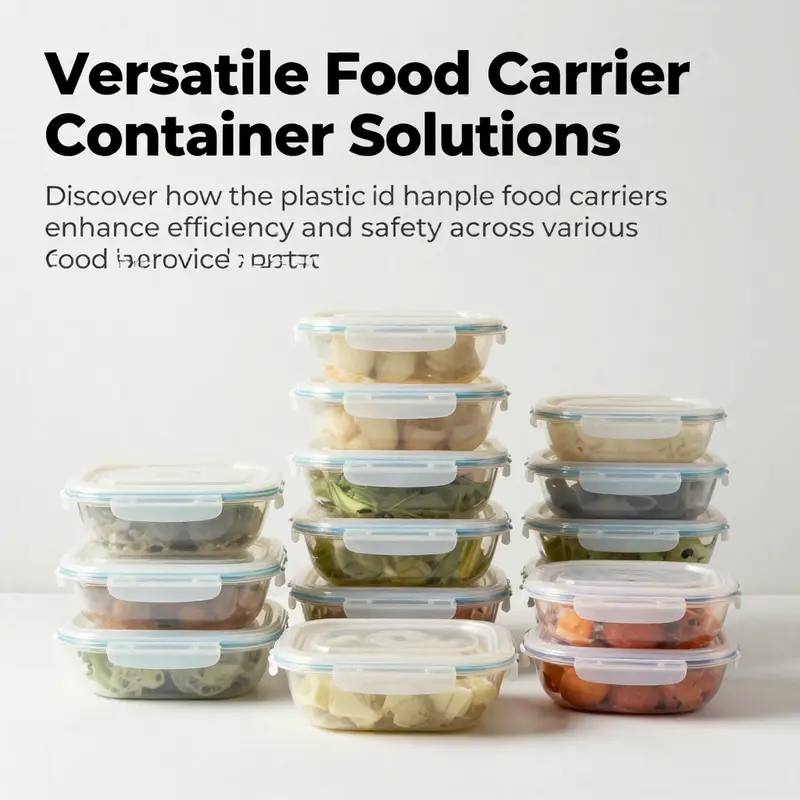
Food service operations are constantly seeking reliable and efficient storage solutions, especially in environments like bubble tea shops, restaurants, and catering services. One such solution that has emerged as a game changer is the food carrier container with a plastic lid handle. These containers offer a blend of durability and convenience, making them ideal for transporting beverages, meals, and ingredients safely. In this exploration, we will delve into the innovative design features and specifications of these containers, assess the current market demand and trends shaping their usage, and highlight their versatile applications across different settings. Each chapter contributes to a comprehensive understanding of how these containers can meet the specific needs of food service professionals.
null
null
Carrying Convenience: Market Demand, Design Trends, and the Future of Plastic Food Carrier Containers with Lids and Handles
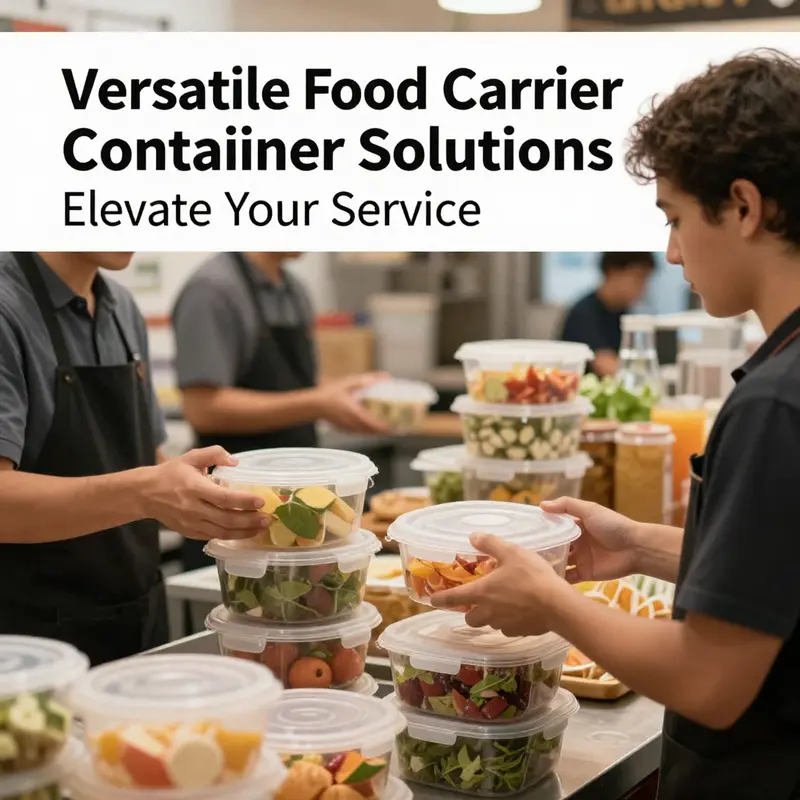
The modern kitchen and the bustling world of takeout share a common language of movement, reliability, and trust. In this language, plastic food carrier containers with lid handles and secure clip closures sit at a focal point. A set of four clear, food-grade boxes designed to withstand daily use embodies more than just a practical solution for storing leftovers or transporting meals. It signals a shift toward packaging that blends safety, durability, and user-centric design with the everyday rhythms of households, offices, and professional kitchens. The containers’ attributes—transparent bodies for easy content identification, rugged clip closures that lock in freshness, microwave compatibility for quick reheating, and dishwasher-safe convenience—collectively illustrate how a seemingly small product can address multiple, sometimes competing, needs at once. In this light, the four-box set becomes a lens through which to observe broader market dynamics, including how consumers evaluate storage quality, how professionals weigh transport reliability, and how manufacturers balance material choices with environmental and regulatory expectations. The practical harmony of these attributes mirrors a larger narrative about how modern food storage solutions must perform across a range of contexts while preserving the sensory and nutritional integrity of what is inside.
To begin with, the concept of a food carrier container with a lid handle is not merely about containment; it is about enabling a smoother flow of life. When families meal-prep on Sundays, they rely on containers that can be stacked neatly in a fridge, carried to a car, and then warmed in a microwave without the fear of leaks or awkward handling. When coworkers bring homemade lunches to the office, they search for boxes that look presentable, seal securely, and can be cleaned without fuss. In kitchen settings that serve dozens or hundreds of people, the same principles scale up: the containers must be durable, easy to audit for food safety, and compatible with common appliances and workflows. The presence of a handle adds a tactile dimension that reduces the awkward moment of fumbling with a lid or balancing a stack while on the move. A lid with a reliable clip closure provides assurance that the contents stay put during transit, minimizing spill risk and preserving temperature and moisture levels. These functional characteristics—visibility, secure closure, and ergonomic carry—converge to create packaging that does more than house food. It actively supports efficiency, reduces waste, and enhances the overall user experience from kitchen to consumption.
The market forces behind such containers extend beyond the kitchen table. Convenience foods—whether pre-packaged meals, ready-to-heat entrees, or portioned ingredients for meal-prep—have grown in prominence as modern life accelerates. Consumers seek solutions that simplify daily routines without sacrificing safety or quality. The containers’ ability to maintain quality during transport and storage addresses a key concern: the separation of food from its external environment and the preservation of temperature and texture. In urban contexts, where space is at a premium and households contend with apartment layouts, compact, stackable designs support efficient storage and quick retrieval. This practicality resonates with a broader consumer expectation: packaging that integrates seamlessly with busy schedules rather than complicating them. A kit of four clear containers, each with its own secure lid, becomes a portable system for meals, snacks, and a week’s worth of leftovers. It is no longer enough for packaging to exist; it must act as a facilitator of routine—a dependable partner in everyday life.
Another factor shaping demand is the rapid expansion of food delivery services and restaurant-to-home meal solutions. As delivery ecosystems mature, the need for containers that can travel well, protect contents, and be user-friendly at the moment of opening becomes more pronounced. The ideal carrier must resist leaks, resist temperature shifts that degrade taste, and survive the rigors of courier handoffs. While the delivery industry has often leaned on disposable packaging, there is a growing emphasis on durability and reusability where feasible. The four-box set’s reusable design, combined with its potential for dishwasher cleaning and microwave reheating, aligns with evolving expectations for packaging that supports both efficiency and sustainability within a single product family. Such alignment helps explain why suppliers and manufacturers invest in features that may appear incremental—clear visibility, ergonomic handles, robust latching systems—but in aggregate deliver meaningful value across multiple user journeys.
From a design perspective, the container family reflects several converging trends that shape modern storage and transport solutions. Insulated food carriers have gained traction because they deliver superior temperature retention, a quality particularly valued when meals are prepared ahead and consumed hours later. Even for non-insulated models, lid integrity and closure reliability remain central to keeping hot foods hot and cold foods cold. The round of innovations extends to stackability: containers that nest or compress into one another save space in kitchens that struggle with clutter and into refrigerators that rely on predictable, aligned stacking. The molded hand grips are more than cosmetic enhancements; they reduce strain during carrying, especially when containers are full or heavy. Ergonomics, once a niche concern, now inform everyday products, turning a simple carry handle into a meaningful contributor to user well-being. And then there is the securing mechanism itself. Nylon latches and other closure systems are not merely about keeping lids in place; they reflect a broader tension between ease of use and reliability. A latch that withstands repeated opening and closing cycles while resisting the dents and twists of travel creates a more predictable user experience. In aggregate, these design elements form a cohesive package that speaks to the realities of modern life—a life that requires speed, reliability, and a sense of control at every step of the food storage and transport chain.
Sustainability is not an afterthought but a continuous, defining thread in the conversation around plastic containers with lids and handles. Consumer demand for eco-friendliness has grown from a vague concern into a central purchasing criterion for many buyers. People want durable, reusable solutions that minimize waste and enable recycling at the end of a product’s life. Regulators are reinforcing these expectations, encouraging products that optimize material use, reduce environmental impact, and clearly communicate safety and sustainability attributes. In response, manufacturers pursue eco-friendly iterations that emphasize longevity, ease of cleaning, and compatibility with circular economy goals. Durable plastic containers that can survive repeated microwaving and dishwashing cycles without degrading offer a practical alternative to disposable options, aligning with both consumer preferences and regulatory guidance. Yet there remains a careful balance: the urge to create more sustainable products must be matched by real-world practicality, including cost considerations and the availability of suitable recycling streams. In this context, the four-box set represents a pragmatic response to the tension between convenience and stewardship, delivering a reusable, safe, and versatile storage solution that is not merely a consumer good but a small platform for sustainable practice in daily life.
The market outlook for plastic food containers with lids continues to expand, driven by evolving consumer needs and the globalization of food services. A growing body of data points to a steady rise in the adoption of durable, multi-purpose containers that can withstand a variety of environments, from home kitchens to professional catering operations. The scale of opportunity is illuminated by forecasts indicating robust growth across regions and applications, driven by the need for efficient packaging that supports fast service, reduces waste, and preserves food quality during transport and storage. In this environment, the four-box set exemplifies a practical archetype: a modular, visually accessible, and easy-to-clean solution that resonates with a broad audience—from busy families organizing weekly meals to caterers managing large-scale meal preparation and distribution. The convergence of convenience, safety, and sustainability appears to be a defining feature of the current market, and products designed with these priorities in mind are well-positioned to endure as consumer expectations continue to evolve.
As businesses and households alike seek to optimize operations without compromising safety or environmental responsibility, the plastic food carrier container with lid handles emerges as a foundational element in a broader packaging ecosystem. The capacity to withstand microwave use and dishwasher cycles, paired with secure closures and ergonomic handles, helps ensure that meals travel from point A to point B with confidence. This reliability reduces the risk of food loss and contamination, supports compliance with food-contact regulations, and simplifies workflows in kitchens and catering operations. In short, the design ethos embedded in these containers—clarity of content, secure closure, ease of handling, and durable performance—speaks to a future where packaging must do more than hold; it must actively enable, protect, and streamline human activity across diverse settings.
For practitioners seeking concrete options, one practical avenue is to explore packaging solutions that prioritize eco-friendly design while maintaining high performance. As a reference point, consider a packaging option described in industry literature as an eco-friendly disposable 3-compartment food-grade packaging box for fast food and takeout. This type of option demonstrates how multipart compartments can accommodate different food components within a single container, reducing the number of separate packages a consumer must manage. It also highlights how a well-segmented container supports portion control and waste reduction, aligning with both consumer preferences and operational needs in fast-casual environments. Such packaging choices illustrate the spectrum of design ideas that can complement the four-box set, offering paths for customization based on meal type, service model, and sustainability goals. When evaluating these products, buyers should weigh factors such as material composition, heat resistance, seal reliability, and compatibility with existing washing equipment in kitchens and catering facilities.
This chapter’s synthesis centers on a simple yet revealing truth: the enduring appeal of plastic food carrier containers with lids and handles lies in their ability to harmonize multiple priorities into a single, practical artifact. They are not just containers; they are transportation and service enablers. They help preserve taste and texture, aid in organization, and support efficient workflows in settings that range from busy households to high-volume caterers. They also reflect a broader shift toward packaging that can be reused, cleaned, and repurposed rather than discarded after a single use. In a market poised for continued growth, these containers stand as a practical embodiment of how design, safety, and sustainability can coexist in everyday objects. As consumer expectations evolve and the service landscape expands, the role of sturdy, well-designed containers will likely become more prominent, spurring innovation in materials, closure mechanisms, and ergonomic features that further enhance the carrying experience. For readers who want to deepen their understanding of market trajectories and the scale of opportunity, the field’s trajectory is well documented in industry analyses that project continued expansion of the plastic food container sector through the next decade and beyond. The numbers are not just about dollars; they reflect choices about how people eat, how they share meals, and how daily routines can be made simpler, safer, and more enjoyable. In this sense, the story of the four-box set and its peers is a microcosm of a larger movement toward smarter, more resilient packaging in a world where food travels farther, faster, and with greater variety than ever before. The conversation continues as manufacturers refine materials, enhance recyclability, and explore smarter, more sustainable solutions that still honor the practicality that users expect from their food storage containers. External resources that map these trends, such as the MarketsandMarkets report on plastic food containers, provide a broader frame for understanding how regional dynamics and policy developments shape the horizon for these indispensable everyday items. For further reading, see the external resource linked below.
Internal link reference for practical packaging options
For practitioners seeking concrete options, one practical avenue is to explore packaging solutions that prioritize eco-friendly design while maintaining high performance. A representative example of this category is the eco-friendly-disposable-3-compartment-food-grade-packaging-box-for-fast-food-high-quality-takeout-boxes-for-fried-chicken-french-fries-packaging option, which demonstrates how multipart compartments can accommodate different food components within a single container and support portion control and waste reduction while aligning with sustainability goals. This type of packaging can complement a four-box set by offering specialized configurations for diverse menu items, providing a framework for customization based on meal type, service model, and environmental considerations. See the linked resource for an illustrative case that mirrors the quality and utility discussed in this chapter. eco-friendly-disposable-3-compartment-food-grade-packaging-box-for-fast-food-high-quality-takeout-boxes-for-fried-chicken-french-fries-packaging
External reference for market scope
A comprehensive external perspective on market size and growth trajectories for plastic food containers is provided by a major industry analysis resource, which projects global market growth from USD 46.28 billion in 2026 to USD 69.6 billion by 2035. This forecast underscores the expanding role of durable, safe, and versatile packaging in a sector that increasingly values efficiency, reliability, and environmental responsibility. See the resource for broader context and sector-wide implications: https://www.marketsandmarkets.com/Market-Reports/plastic-food-containers-market-123456789.html
Grasping Freshness: The Portable Plastic-Lid Food Carrier Across Homes, Schools, and Beyond
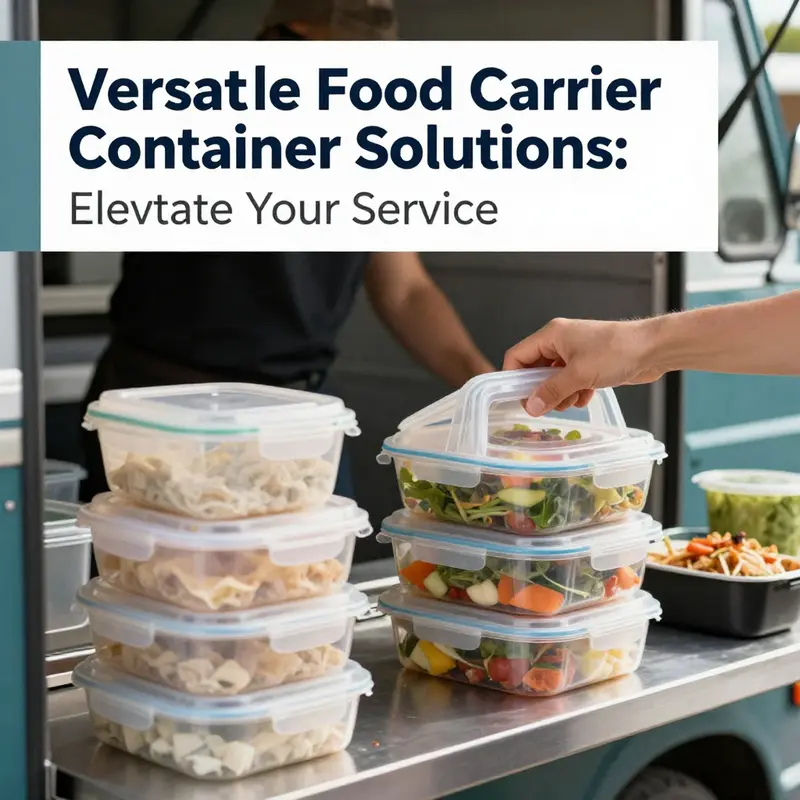
A hand grip on a container is more than an ergonomic flourish; it is a deliberate answer to the daily choreography of meals. The plastic-lid food carrier with a molded handle sits at the intersection of safety, convenience, and portability. Its design unfolds in a quiet but persistent conversation about how people move nourishment from one moment to the next. In homes, offices, schools, catering kitchens, and outdoor spaces, these containers do more than hold food. They organize, protect, and streamline the act of eating away from a fixed table or counter. The most enduring of these designs favors simplicity and reliability: a clear body that lets you recognize contents at a glance, a lid that snaps firmly into place to forestall leaks, and a handle that invites comfortable carrying even when the container is full or slightly awkward to manage. When these elements align, the container becomes a portable extension of the kitchen’s safeguards, a small system that keeps meals intact during transit and ready for immediate consumption upon arrival.
The material choice behind such containers—food-grade plastic—speaks to a core requirement of modern storage: safety. Food-grade plastics are selected for their inert behavior with moisture, oils, and acids, as well as their resistance to staining and odors. They are designed to minimize interactions with food, a principle not just of hygiene but of user trust. The implications extend beyond the kitchen. In daycare centers, clinics, and busy workplaces, the ability to reuse containers safely reduces waste while preserving the integrity of leftovers and prepared meals. This is particularly important for families that rely on batch meal prep to balance nutrition with time. The robust clip lid system—often featuring a secure snap or screw-top mechanism—works in tandem with the hand grip to guarantee that contents stay sealed during movement. Spills are minimized, a small but meaningful detail that reduces mess and the anxiety of transporting meals across parking lots, stairwells, or busy hallways. When a container is designed to prevent leaks, the practical advantage is immediate: fewer ruined lunches, fewer embarrassed moments, and more confidence in taking a meal on the go.
The transparency of the container is not a mere aesthetic choice; it serves a practical function. A clear body lets users identify items without opening each box, a feature that matters in homes with multiple meal options or in professional contexts where speed matters. Fast, visual recognition translates into efficiency in busy kitchens and school cafeterias. The lid, a seemingly simple cap, becomes a protective barrier against cross-contamination and environmental exposure. In the marketplace, this combination of clarity and closure reinforces a daily ritual: portion out what is needed, seal it, carry it, and reheat or refresh as required. The microwave and dishwasher compatibility notes added to many of these designs further extend their utility, turning a once-ephemeral leftover into a reliable, reusable component of the daily meal routine. The ability to microwave a prepped dish and then clean the container in a dishwasher reduces the friction between planning and execution, making healthy eating feasible even during the most demanding days. This is not mere convenience; it is a practical framework for consistent nourishment under real-world conditions.
In daily use, the practical benefits ripple through different environments. In a home kitchen, a family might lean on a stackable set to store portions of grains, roasted vegetables, or proteins that rehearse toward the week’s lunch lineup. The stackable structure is not a luxury but a space-saving necessity. In small apartments or dorm rooms, every inch counts, and a compact system that nests securely within the refrigerator shelves delivers tangible relief from clutter. The design’s ergonomic hand grips contribute to safety, particularly when containers are warm or when carrying a full lunchbox while juggling bags, laptops, or a backpack. The grip reduces the risk of accidental drops, a factor not to be underestimated in environments where surfaces are slick or floors are crowded with students rushing between classes. The combination of leak resistance, clear visibility, and ergonomic carry design makes these containers versatile across user groups. For families managing multiple meals, the clear view into each container each day supports better planning and reduces food waste as people re-allocate portions that may otherwise be forgotten in opaque storage options.
The scope of applications expands when we widen the lens beyond the home. In school or office settings, the portability and reliability of a meal-transport system change the rhythm of a day. Packed lunches often travel through crowded hallways, cafeterias, and transit—conditions that demand sturdy construction and predictable closure. A safe seal protects not only the contents but the user’s clothing and other belongings from unexpected leaks during transit. The ability to identify contents swiftly becomes especially valuable in schools where students need to locate their lunch quickly between classes. The transparent body also supports traceability for caregivers who pack meals for younger children, helping them check for correct accompaniments, portions, or dietary notes before the plate is opened. In a professional kitchen or catering operation, these containers serve as a practical solution for bulk packaging and the transport of ready-to-eat meals. A stackable design, combined with durable lids, enables efficient bulk storage and a streamlined workflow, reducing the time cooks and servers spend on logistics rather than on food preparation. The containers’ durability supports repeated use in busy service environments, offering a balance between performance and cost. All of these benefits align with the needs of modern food service where speed, hygiene, and reliability are inseparable goals.
Outdoor and travel settings reveal another layer of value. A lightweight container with a secure closure is well suited to picnics, hiking, or long car trips. In such contexts, a one-handed grip simplifies movement when one hand is occupied by a bag, a guidebook, or a child’s hand. The lid’s sealed structure reduces the risk of cross-contamination from dust and environmental factors at outdoor venues or on public transit. For travelers, this translates into fewer spills in backpacks and a lower likelihood of leakage in car cup holders or luggage compartments. The enduring appeal of these containers lies in their ability to adapt to fluctuating conditions—refrigerated storage at a campsite, hot meals that intermittently ride in a car, or leftovers that must be transported with minimal handling. The capacity to reheat and clean in a standard kitchen sequence—microwave, wash, reuse—transforms outdoor meals from a fragile situation into an orderly routine. Home storage, in turn, overlaps with these needs when people repurpose containers for dry goods or pantry organization. A clear body makes it easier to inventory staples, while the dependable closure guards against humidity and odor migration. The same design logic that supports meals on the road also anchors everyday organization at home, creating a cohesive ecosystem in which food storage is not a separate chore but a natural extension of daily life.
Material safety remains a constant through all these settings. The emphasis on BPA-free, food-grade plastics is not about fashion but about safeguarding health in a world where food touches a lot of surfaces and undergoes varied temperature cycles. Reusability, durability, and resistance to odor uptake are practical signals of quality that matter to both casual users and professionals. When a container resists staining and odor retention after repeated cycles, it reduces the mental load of cleaning and reusing. The capacity to withstand the washing cycle without degradation or leaking also plays a role in long-term safety, as compromised seals can trap bacteria or compromise hygiene standards. The modern design language often embraces recyclability, reflecting a growing awareness of environmental impact. A durable product that lasts through many cycles and is coded for proper recycling aligns with more sustainable consumption patterns. In practice, this means choosing materials and finishes that resist heat and moisture in a way that preserves their integrity over time, while also offering a clear pathway to responsible end-of-life disposal. These considerations matter not only to consumers but also to institutions that prioritize sustainability in procurement decisions.
The design narrative is also one of standards and trust. When discussing food-contact materials, it is essential to anchor products in established guidance that helps ensure safety across contexts—from household use to commercial operations. The plastic lid and container are part of a larger ecosystem of regulatory and industry guidelines that govern what qualifies as safe for direct food contact. A growing body of knowledge underlines the importance of material selection, surface treatment, and manufacturing processes that minimize the transfer of substances into food. For readers seeking authoritative context, the Plastics Industry Association provides guidelines that illuminate the framework for evaluating and selecting food-contact materials. While consumer choices often hinge on convenience and price, informed decision-making benefits from understanding how materials behave under typical kitchen conditions and transportation scenarios. This awareness reinforces a pragmatic approach to design: a product that performs reliably in peak moments—a late lunch, a road trip, a school day—while also preserving safety, ease of cleaning, and future recyclability. In short, the container becomes a practical instrument that supports healthier habits, more organized routines, and broader accessibility to safe, portable meals.
The chapter’s focal point—how a simple, clear container with a reliable lid and a comfortable grip can transform daily food management—also invites reflection on sustainability and future innovation. Reusability remains a cornerstone of responsible consumption. A well-designed container reduces waste by encouraging reuse rather than single-use alternatives. Yet the market continues to press for improvements: more robust seals that resist delamination, easier cleaning features that cut down on residue buildup, and lids that remain user-friendly after repeated cycles of freezing and reheating. The ergonomic grip can evolve toward even more secure handling in diverse conditions, including when hands are wet or when caregivers wear gloves. From a design perspective, material science can unlock new compositions that preserve rigidity and clarity while enhancing recyclability. The interplay between form and function is not merely an aesthetic exercise; it is about delivering dependable performance across a spectrum of environments and life stages. When a container can seamlessly transition from a frozen refrigerator to a heated microwave and into a dishwasher without compromising its integrity, it becomes a trusted partner in the meal corridor of daily life. That trust, in turn, underpins the broader culture of organized, prepared, and thoughtful eating that modern households aspire to achieve.
For readers who want to explore related packaging contexts, the following example provides a concrete, real-world reference that expands the discussion beyond plastic lidded containers. eco-friendly takeout boxes for food packaging offers a complementary look at how other materials and designs address similar challenges in portability, durability, and safety. This broader perspective helps underscore a central point: design is a response to a set of practical needs, not a solitary aesthetic choice. In the end, the plastic-lid food carrier with a hand grip succeeds when it respects the everyday demands of users—clarity, closure, carryability, and compatibility with the appliances that households already own. It stands as a small but meaningful piece of the food system, a device that supports nourishment as a portable, repeatable, and dependable experience across a wide array of settings and moments. As the next chapter builds on these notions, the discussion will move further into how these containers interact with evolving kitchen routines, consumer expectations, and broader sustainability goals, drawing connections between micro-scale design decisions and macro-scale food culture. External references provide additional discipline to this ongoing conversation, grounding practical observations in established guidance such as the materials-safety standards for food contact.
External reference: https://www.plasticsindustry.org/food-contact-materials
Final thoughts
Food carrier containers with plastic lid handles offer unparalleled versatility in the food service industry. Their thoughtful design caters to the needs of various operations, ensuring contents are stored securely and transported safely. With increasing market demand for effective and safe food storage solutions, these containers are becoming indispensable in bubble tea shops, restaurants, catering services, and more. By adopting this innovative storage solution, businesses can enhance their service delivery, ensure customer satisfaction, and stay competitive in a rapidly evolving market.