
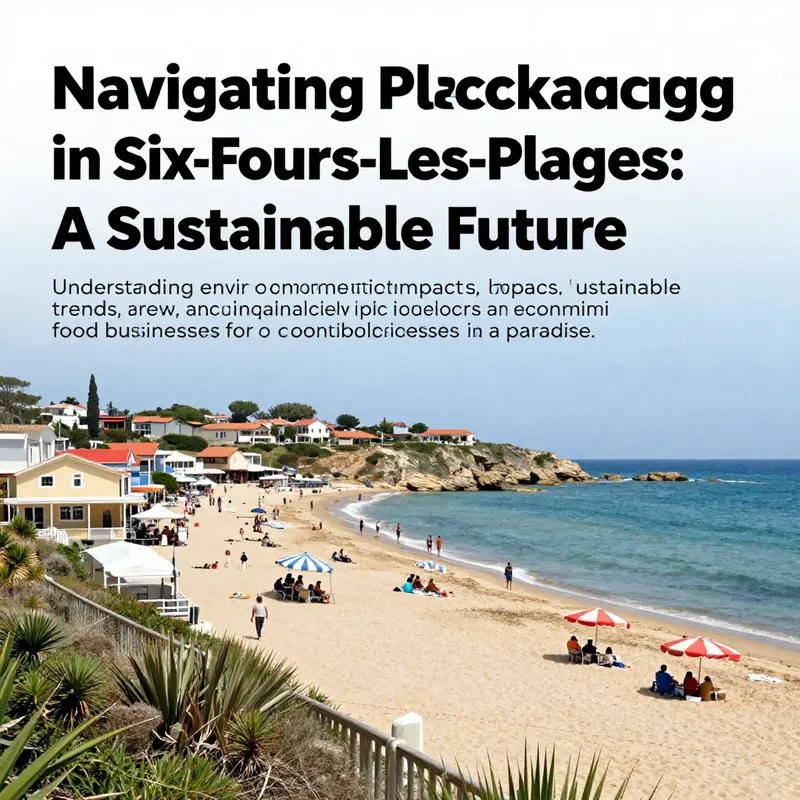
In the picturesque region of Six-Fours-les-Plages, France, the reliance on plastic packaging food containers is a double-edged sword. On one hand, these materials provide businesses, from bubble tea shops to catering services, with necessary convenience and efficiency. However, their environmental impact looms large, prompting both local authorities and consumers to seek alternatives. This article delves into the environmental repercussions associated with plastic packaging, explores emerging sustainable alternatives, and considers the economic ramifications for the food sector. Each chapter will build a comprehensive understanding of how businesses can align operational needs with sustainability goals in this vibrant coastal community.
Tides of Waste: Reimagining Plastic Food Packaging in Six-Fours-les-Plages, France
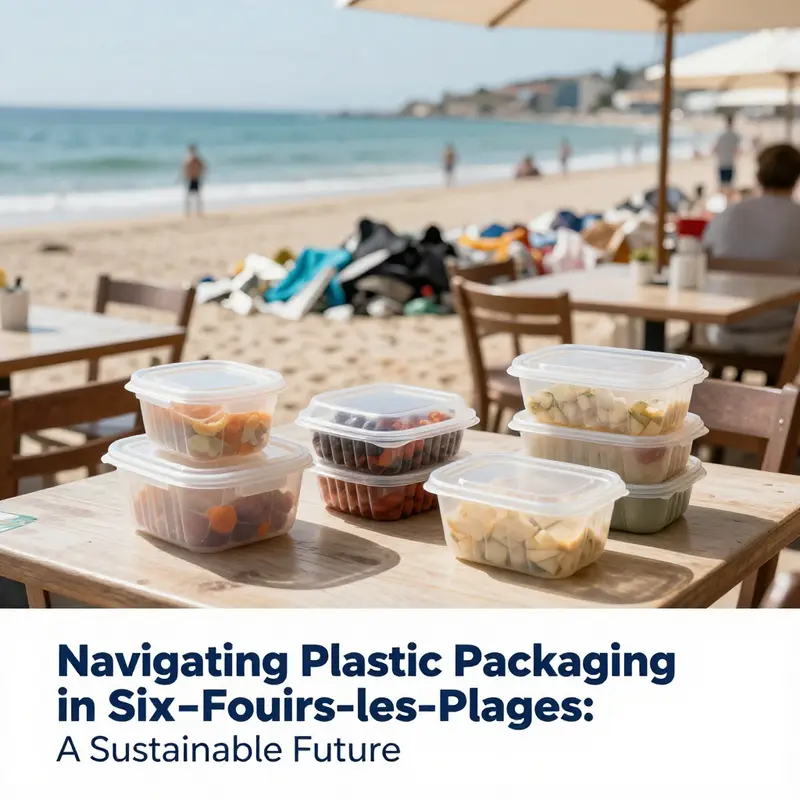
Six-Fours-les-Plages sits where the sea meets the shore of the Mediterranean coast, a town defined by its beaches, its hotels, and a steady stream of visitors who arrive seeking sun, sea, and casual meals on the run. In such a place, plastic packaging for food containers has become a familiar, almost invisible part of daily life. It is the kind of material that slips into the background when you order a coffee to go or pick up a takeaway after a day on the water. Yet it is precisely in these everyday choices that the environmental footprint of modern convenience becomes legible. The town’s physical geography—its lively coastal economy, its seasonal population flux, and its proximity to marine and terrestrial ecosystems—offers a microcosm of a larger global dynamic: the tension between usefulness and consequence, between short-term gains in convenience and longer-term costs to public health and natural environments. When we look at Six-Fours-les-Plages through this lens, we can begin to see not just a record of waste or a report on recycling rates, but the narrative of a community asking what kind of future its coastline should resemble and how the choices made in kitchens, hotels, and shops ripple outward to the water, the dunes, and the urban streams that carry litter to the shore.
The landscape of plastic packaging in Six-Fours-les-Plages mirrors broader patterns observed in many coastal tourist destinations. In hotels that host guests for weekend getaways or longer sojourns, and in the many restaurants that serve beachgoers, single-use containers and other plastic packaging offer remarkably convenient solutions. They simplify service in fast-paced settings, reduce the need for bulky cutlery or dishware, and create a predictable, disposable workflow for kitchens operating under variable demand. In the surrounding supermarkets and smaller shops, plastic bags and containers complete the chain from producer to consumer, enabling quick takeout, easy transport, and broad distribution of meals and snacks. The convenience is not arbitrary. It is part of an established system in which waste generation often expands with the speed and simplicity of modern retail and hospitality practices. The question for Six-Fours-les-Plages is not simply whether plastic packaging is present, but how deeply its life cycle—production, use, and end of life—maps onto the town’s environmental goals, its tourism economy, and its communal aspirations for a cleaner coastline.
If we peer into the life cycle of the most common forms of plastic food containers, the patterns become clearer. Polypropylene, a staple for many takeout boxes and food-safe containers, carries a high environmental burden in several categories. Scientific assessments have repeatedly shown that single-use polypropylene can rank among weaker performers in life cycle analyses, performing poorly in areas such as global warming potential, human toxicity, and resource depletion. The very advantages that make PP containers attractive to service providers—their light weight, versatility, and heat resistance—also translate into higher emissions and greater energy use when evaluated over the full life cycle. In contrast, extruded polystyrene (EPS) containers, which are often lighter and require less material to produce, show comparatively lower production-related impacts. Yet the story does not end there. EPS faces a stubborn drawback: limited recycling, persistent littering, and a high risk of marine pollution if mismanaged. These factors can transform a seemingly small choice about packaging into a significant driver of coastal contamination and environmental harm when litter is swept into the sea by wind or rain or carried by floodwaters.
In Six-Fours-les-Plages, as in many parts of France and the European Union, the environmental calculus extends beyond the factory floor and the supermarket aisle. The European Union’s 2025 waste packaging recycling policy represents a major leverage point. Projections from the policy landscape suggest that recycling targets and enhanced end-of-life infrastructure could reduce environmental burdens by more than 18 percent for EPS and by 20 percent or more for other materials such as PP and aluminum. Put differently, the same packaging item that may contribute significantly to greenhouse gas emissions or resource depletion today could become much less damaging if systems for collection, sorting, and recycling are strengthened. The implication is not only about the materials themselves but about the networks that connect households, retailers, and waste management facilities. If Six-Fours-les-Plages can align with these policy directions, its waste stream could shift from linear to circular, turning an everyday packaging choice into an opportunity to close the loop rather than merely pass the burden along the chain.
For a coastal town whose identity is inseparable from its beaches and marine life, the marine environment is an essential reference point. Litter and mismanaged waste do not merely spoil aesthetics; they threaten sea turtles, seabirds, fish, and the health of dunes that serve as natural barriers against storms. The presence of plastic containers in shoreline litter has been linked to persistent pollution problems in many coastal regions, where microplastics and degraded fragments find their way into the sediment and water column. In Six-Fours-les-Plages, the clear link between daily consumption patterns—takeout meals, packaged snacks, and convenience foods—and visible litter on streets and beaches is a reminder that waste management in a tourist town is not just a municipal concern; it is a community concern. The town’s environmental groups and local authorities have begun to push for reduced usage of single-use plastics, for alternatives that are more recyclable or compostable, and for behavioral changes that make it easier for residents and visitors to dispose of waste responsibly and to participate in reuse or recycling programs. These efforts reflect a broader shift in Western Europe toward more sustainable packaging, a shift that recognizes that the convenience of plastic carries a cost that accumulates most visibly where people congregate near water.
The complexity of this shift comes from balancing short-term service realities with long-term environmental responsibilities. In institutional settings—hotels, restaurants, and retail outlets—the drivers of change may include cost pressures, consumer demand, and regulatory compliance. The hotel sector, for instance, might be drawn to packaging that protects food quality and preserves safety during transport, while also seeking to minimize waste through reuse or recycling programs. Restaurants may experiment with containers that are easier to recycle, or that are made from alternative materials, while still maintaining the reliability required for efficient delivery and takeout service. Retailers, in turn, influence consumer behavior by providing packaging options that make recycling feasible and by promoting reusable bags and containers. In practice, these decisions converge in a local ecology of supply chains, waste collection routes, and consumer routines. Each intervention—whether it is a switch to a more recyclable material, a pilot program for reusable containers, or a campaign to educate the public about sorting—ripples through the municipal system and the coastline’s ecology.
One of the core challenges in translating global or national guidance into local action is the heterogeneity of local waste systems. Six-Fours-les-Plages is part of the Provence-Alpes-C Côte d’Azur region, where inter-mmunicipal partnerships and regional waste authorities shape how materials are collected, sorted, and processed. The efficiency and reliability of these networks profoundly affect the environmental performance of packaging. When a container is discarded, its fate depends on whether it reaches a recycling stream or enters a landfill, and whether the material can be recovered for reuse in a subsequent product. Waste streams that are not properly sorted risk contamination, reducing the value of recyclables and increasing the energy cost of processing. In coastal towns with high tourist turnover, the challenge is even more pronounced. Seasonal peaks can strain the waste system, leading to gaps in collection, delays in recycling, or higher rates of litter in beach zones. The upshot is that the environmental impact of plastic food containers in Six-Fours-les-Plages is not a fixed attribute of the material itself but a property of a system—how well households, businesses, and public agencies work together to close the loop.
The local response to this reality has included several practical shifts. Some restaurants and hotels have begun to experiment with alternatives that reduce waste or improve end-of-life outcomes. A few have explored degradable or compostable materials, while others have experimented with refillable and reusable service models. Public messaging and signage along the beachfronts and promenades emphasize sorting and responsible disposal, aiming to transform casual takeout into a more sustainable habit. There is also growing interest in promoting customers’ own containers, an approach that aligns with broader European campaigns encouraging reuse and reducing the demand for single-use packaging. Although these measures may seem modest in isolation, they have the potential to accumulate into meaningful reductions in waste generation when adopted across a critical mass of local eateries and accommodation providers.
The economic dimension of this transition cannot be ignored. Packaging choices are often a function of cost, convenience, and regulatory compliance. In a town whose economy relies on seasonal milestones, even a small increase in packaging costs can affect small businesses and service operations. Yet there is also a counter-narrative: investments in recycling infrastructure and reuse programs can yield long-term savings, especially when waste streams are well organized and when customers are willing to participate. The EU policy trajectory suggests that systematic improvements in recycling efficiency can reduce environmental impacts even when the appetite for disposable packaging remains high. For Six-Fours-les-Plages, this implies that the path forward is not simply about replacing one material with another; it is about reconfiguring the entire supply chain and consumer behavior to align with a circular economy model. The result would be a coastal town where meals on the go do not translate into a heavier burden on the shoreline but instead become a catalyst for responsible consumption, enhanced recycling, and cleaner public spaces.
To illustrate the broader context without losing sight of the local texture, it helps to consider how a linked set of patterns operates. The production stage consumes energy and materials, sometimes with heavy emissions in the case of PP, and comparatively lighter budgets in the case of EPS, though the latter suffers from end-of-life and litter-related costs. The use stage involves the consumer, whose choices determine whether a container is kept for reuse, disposed of, or recycled. The end-of-life stage depends on local waste facilities, sorting capacity, and the market for recovered materials. If Six-Fours-les-Plages can foster more reuse and more effective recycling, the town can reduce emissions, mitigate health risks associated with litter, and protect the coastal ecosystem that forms the backbone of its identity and economy. The key lies in making the circular economy visible and practical for ordinary residents and visitors—so that a takeaway box becomes not just a disposable item but a contained piece of a system that values resource stewardship as highly as convenience.
A practical path forward, grounded in both global evidence and local realities, involves several intersecting strands. First, strengthening the local recycling infrastructure and improving the reliability of collection routes to ensure that containers reach the appropriate facilities. Second, promoting reuse where possible, such as deposit schemes or neighborhood programs that encourage customers to bring their own containers, paired with restaurant incentives to participate. Third, increasing the availability and visibility of alternative materials—paper-based or compostable options that demonstrate comparable performance in safety and temperature resistance—while recognizing the importance of life cycle considerations in choosing between options. Fourth, building consumer awareness through targeted education campaigns that explain the environmental trade-offs of different packaging choices without resorting to fear or guilt, instead highlighting practical steps individuals can take to reduce their footprint. Fifth, coordinating with regional and national authorities to harmonize waste management expectations with EU 2025 targets, so that the town’s progress is part of a broader, measurable trajectory toward greater circularity.
Incorporating these elements into Six-Fours-les-Plages’ planning and everyday routines requires thoughtful collaboration among hotels, restaurants, retailers, waste managers, and citizens. It means designing service models that keep food safe and appealing while minimizing waste and enabling easy separation of materials for recycling. It means providing clear sorting instructions, convenient drop-off points, and visible incentives for reuse. It means creating spaces—both physical and social—where housekeepers, cooks, front desk staff, and beachgoers can align their routines with a shared environmental goal. It also requires acknowledging that the town’s coastal environment is a finite asset, one whose preservation supports tourism, livelihoods, and the well-being of both residents and visitors. The environmental cost of disposable plastic containers, though difficult to quantify with precision at a small town scale, becomes meaningful when traced through the whole system—from production and use to end-of-life outcomes and ecosystem health.
For those seeking a broader sense of how these dynamics translate into more concrete policy and practice, it is useful to consider the research that analyzes takeaway containers across different contexts. A comprehensive study published in a major scientific journal provides a lens on how single-use plastics fare in life cycle assessments and why European policy momentum matters. It highlights that although some materials may deliver lower production energy, their overall environmental profiles can still be unfavorable when recycling rates are low or when littering and marine pollution risks are high. The EU’s 2025 framework promises to tilt the balance toward better outcomes by encouraging higher recycling rates and more efficient waste management practices, especially for materials like EPS and PP, which are prevalent in many takeaway packaging systems. While Six-Fours-les-Plages cannot control every variable, it can choose to participate in this broader transformation by embracing reuse, improving recycling, and educating the community about the trade-offs embedded in packaging choices. The town’s experience could then contribute to a regional narrative about sustainable hospitality and responsible consumption that extends beyond its borders and strengthens the resilience of its coastal environment.
From a storytelling perspective, the local experience also enriches the global conversation about plastic packaging. It is not enough to cite numbers and policy targets; it is essential to listen to the voices of hotel managers who balance guest satisfaction with environmental commitments, to cooks who navigate the realities of service demand, and to residents who sort waste with varying levels of confidence. Each voice helps refine a practical pathway that respects the appeal of Six-Fours-les-Plages as a seaside destination while anchoring it in a responsibility toward future generations. As the town contends with the visible realities of plastic waste—the litter along the promenade, the bags fluttering in the dunes, the scraps collected after a busy weekend—there is also a quiet invitation. It invites the community to imagine the shoreline not as a place where waste accumulates but as a shared stage for sustainable practice, where every meal taken away can be connected to a longer, wiser story about resource use and environmental care.
To explore a tangible model of how packaging alternatives can look in practice, consider the concept of green takeout packaging that combines safety, functionality, and recyclability in a way that suits local logistics. This approach emphasizes durability, compostability where feasible, and a clear path for end-of-life processing. It is not a utopian promise but a practical target that aligns with the town’s needs. For a sense of how such options can take shape in the real world, see the discussion of eco-friendly takeout packaging options that are designed to be safe, microwaveable, and leak- and grease-resistant, while offering a viable route for disposal and potential reuse in the supply chain. This resource provides a useful reference point for local decision-makers and service providers who want to frame their packaging choices within a broader sustainability strategy while maintaining the performance standards essential to food service.
In sum, Six-Fours-les-Plages occupies a crucial position in the ongoing narrative about plastic packaging in food service. It is a place where tourism, coastal ecosystems, and everyday consumer behavior intersect in ways that illuminate both the challenges and opportunities of moving toward a more sustainable packaging system. The environmental impact of plastic containers is not simply a matter of which material is chosen at the point of sale. It is a question about who sorts, who recycles, how waste is handled, and whether the town can cultivate a culture of reuse and responsibility that protects its beaches, its marine life, and its economy. The path forward is not only about limiting damage; it is about reimagining a familiar routine—buying a meal, taking a box, and disposing of it—in a way that strengthens the town’s resilience, honors its natural heritage, and demonstrates that coastal communities can lead by example in the transition to a circular economy.
For readers who wish to connect this local narrative to a broader evidence base, a synthesis of life cycle analyses and policy implications offers a grounded perspective. It shows that while the material properties of plastics are important, the environmental outcomes hinge critically on how waste is managed after use. The experience of Six-Fours-les-Plages thus becomes a case study in translating global insights into local action, one that can inform future chapters of this article as it expands to other towns and regions grappling with similar choices about packaging, consumption, and ecological stewardship. The chapter ends not with a definitive verdict on plastics, but with a cautiously optimistic recognition that concerted local action, supported by coherent policy and informed by robust research, can steer coastal communities toward packaging systems that serve people today without compromising the health of the sea that so many depend on tomorrow.
Further reading: Environmental impacts of takeaway food containers. https://www.sciencedirect.com/science/article/pii/S0956053X18304755
Internal reference: For a practical example of reusable and eco-friendly takeaway packaging options, see the broader discussion on green takeout packaging that highlights designs aimed at safety, recyclability, and user-friendly disposal. https://ecocupbowl.com/product/eco-friendly-takeout-boxes-for-food-packaging-stylish-food-containers-safe-microwave-craft-paper-lunch-boxes-leak-grease-resistant/
Shore-to-Sustainability: Charting the Shift to Green Alternatives in Six-Fours-les-Plages’ Food Packaging
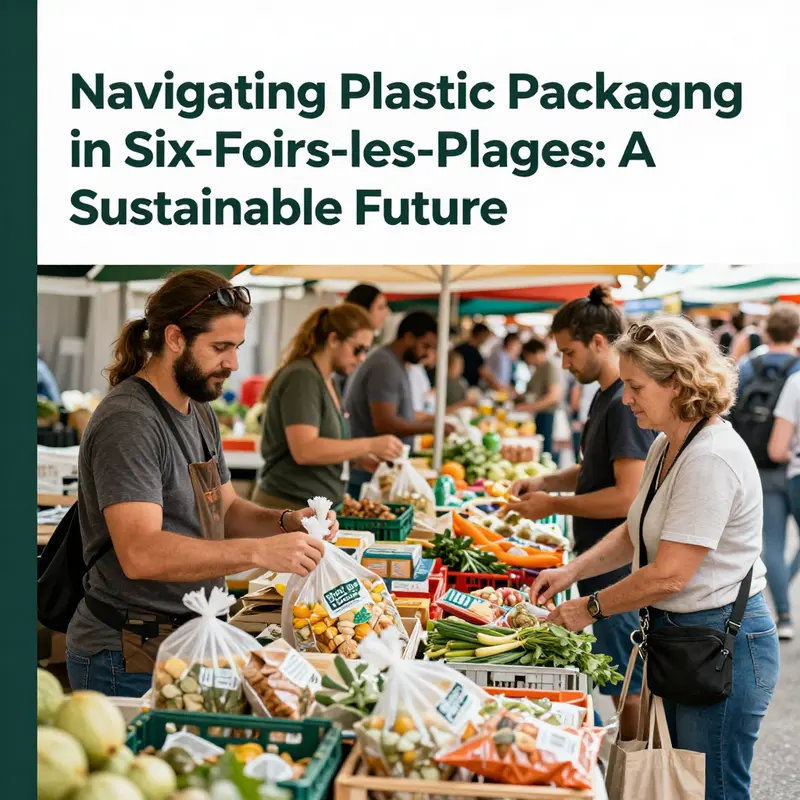
Six-Fours-les-Plages sits along the sunlit curves of the southern French coast, where tourism shapes a constant flow of meals, snacks, and gatherings. The town’s hotels, restaurants, and retail shops function as a living laboratory for how a seaside community negotiates the friction between convenience and care for the environment. In practice, plastic packaging remains a familiar companion for takeout meals, hotel buffets, and market purchases, a reflection of the practical demands of hospitality in a place that welcomes visitors year-round. Yet beneath the surface of everyday use lies a stronger current: a national and regional push toward packaging that can be reused, recycled, or composted, a policy trajectory that makes Six-Fours-les-Plages a microcosm of France’s broader ambition to transform the way society designs, uses, and finally disposes of food containers.
The transformation is not a retreat from convenience but a reconfiguration of it. France has asserted a clear policy horizon: by 2025, plastic packaging should be reusable, recyclable, or compostable, with a substantial portion—targeted at around seventy percent—of packaging able to be effectively recycled or composted. These aims do not exist in a vacuum; they cascade through the hospitality sector, the grocery networks that feed hotel guests, and the pop-up food stalls that animate the town’s summer streets. In Six-Fours-les-Plages, where the hustle of portside commerce and the steady rhythm of seasonal tourism converge, compliance with these norms means rethinking the very fiber of how food is packaged, transported, and presented to diners who expect both taste and responsibility.
To understand the trajectory, one need not rely on a single study focused on a single city. Instead, the shift can be traced through a layered synthesis of national regulations, European policy context, and the practical experiences of local service providers. The materials most often cited in this synthesis are the bio-based and compostable candidates that have emerged as the principal alternatives to conventional plastics: bagasse from sugarcane residues, bamboo fiber with its natural strength and antimicrobial tendencies, polylactic acid (PLA) derived from renewable sources, and paper-based packaging that embraces responsibly sourced cellulose and ink systems that minimize environmental impact. These materials are not merely fashionable substitutes; they embody a policy-driven answer to the problem of plastic waste, one that seeks to close the loop by making packaging easier to reuse or return to the soil through composting.
In practice, bagasse serves as a robust, grease-resistant material for takeout boxes and trays; bamboo fiber offers a similar performance profile with an added sense of natural aesthetics that appeals to coastal diners seeking an artisanal touch; PLA provides a biodegradable option for cold and room-temperature servings, particularly where the industrial composting infrastructure is available to process it under controlled conditions. Paper packaging, long a familiar sight in Europe, is now commonly enhanced with certifications that guarantee sustainable sourcing, along with coatings and inks designed to be friendlier to recycling streams. Taken together, these options reflect a strategic pivot: packaging that aligns with circular economy principles, even as the coastal hospitality ecosystem continues to lean on the operational efficiencies that plastic packaging historically afforded.
The move toward these alternatives is anchored in regulatory pressure, but it finds traction through a combination of consumer expectations, business models, and the evolving capabilities of the waste-management landscape. In a coastal town where marine pollution is a visible and emotionally charged concern, residents and visitors alike acknowledge that plastic waste can travel from street to sea with alarming ease. This awareness translates into support for packaging that can be easily separated and treated at end of life, rather than discarded into general waste streams. Yet the practical pull toward sustainable packaging is not without challenges. The cheapest solutions often remain plastic-based, at least in the short term. Costs can be higher for compostable or bio-based materials, and the quality of composting infrastructure varies by region and municipality. In Six-Fours-les-Plages, these factors shape decisions in kitchens, at bakery counters, and within the logistics networks that move meals from chefs to diners.
A crucial dimension of this narrative is the consumer’s evolving relationship with packaging. While many shoppers intuitively favor sustainability, willingness to pay for it is still nuanced. Research across Europe and France suggests a gap between ideals and behavior when costs rise or when convenience is perceived as compromised. In a tourist town on the sea, where the experiential appeal of fresh seafood, sun, and sea breeze drives demand, the tipping point often lies in the combination of policy mandate and visible environmental merit. When messages about reduced litter and cleaner beaches accompany the packaging transition, local residents and visitors can become co-protagonists in the shift rather than passive spectators.
From a logistical standpoint, the key to success lies in optimizing the packaging life cycle. Local actors—hotels, cafés, supermarkets, and informal food vendors—are experimenting with more durable, reusable containers for multi-day stays, and with return-and-refill schemes that minimize waste. Even when a hotel’s breakfast service relies on pre-packaged foods, there is a growing appetite for packaging that can be recycled or composted without requiring specialized disposal. The municipal and regional authorities are likewise investing in sorting infrastructure, labeling regimes, and public education campaigns that clarify the path that packaging material should follow after use. These measures help ensure that a sustainable choice does not become merely symbolic, but rather a practical, enforceable step toward a lower environmental footprint.
The shift toward sustainable packaging also interacts with a broader design philosophy that governs food-service interactions with customers. In a place where meals are often enjoyed in outdoor settings or taken to go during excursions to nearby islands or beaches, the packaging must balance functionality with a sense of place. Materials like bagasse and bamboo resonate aesthetically with a coastal landscape, evoking a sense of natural partnership with the environment. Yet it would be simplistic to frame the transition as a matter of replacing one material with another; rather, it is a systemic change that requires alignment across procurement, storage, kitchen workflows, and waste-handling practices. In Six-Fours-les-Plages, as in many parts of France, this alignment is being pursued through a combination of voluntary industry standards and formal regulatory expectations, with local authorities playing a pivotal role in harmonizing municipal waste streams with the broader European framework.
The interplay between regulation and practice is further complicated by the need to protect the sea and the beaches that define the town’s character. Coastal communities face heightened scrutiny because the consequences of packaging choices are most immediately visible there. Plastic fragments in water and on shorelines have become touchstones in public discourse, elevating the sense of urgency around shifting to more sustainable options. Public campaigns, community cleanups, and school programs contribute to a learned sentiment that packaging is not a neutral object but one that interacts with ecosystems over time. When citizens see the tangible benefits of reduced litter—cleaner shorelines, cleaner roadsides, and healthier marine life—they are more likely to support, or even demand, packaging solutions that facilitate recycling and composting.
The convergence of policy, consumer sentiment, and practical logistics is pushing Six-Fours-les-Plages toward a transitional path that feels both pragmatic and aspirational. The town serves as a micro-laboratory for how to translate national targets into day-to-day improvements in a hospitality economy that thrives on speed, cleanliness, and guest satisfaction. Operators are learning to balance the premium of sustainable materials with the realities of cost and supply. They are also exploring ways to standardize packaging across service channels to reduce confusion for consumers and to streamline the sorting process at the end of life. Some are piloting reusable containers for certain services, others are coordinating with suppliers to ensure that packaging recyclability is preserved through the supply chain, and a growing subset is initiating in-house composting trials or partnering with local compost facilities to handle post-consumer organic waste that accompanies many meals.
An illustrative thread in this narrative concerns the potential for targeted, high-impact changes within takeaway and catering contexts. Small, everyday decisions can accumulate into meaningful environmental gains when multiplied across dozens of outlets and thousands of meals. For instance, in bakery and patisserie settings—common in coastal towns that celebrate regional markets and celebrations—the choice of container can influence the overall sustainability footprint of a service line. A simple but telling example lies in selecting packaging that can be reliably composted in industrial facilities, reducing the likelihood that packaging ends up in a landfill. In settings where industrial composting infrastructure is accessible, PLA or bagasse-based options may be viable alternatives to conventional plastic trays or clamshells. Where composting is more limited, recyclable paper-based solutions, paired with robust sorting programs, may yield better end-of-life outcomes. Each decision contributes to a broader pattern of practice that, over time, recasts hospitality norms toward sustainability as standard operating procedure rather than an optional add-on.
The economic calculus of this transition also deserves careful attention. While the up-front costs for sustainable packaging can be higher, the longer-run savings may accrue through waste reduction, enhanced brand reputation, and potential efficiencies in waste management. For a tourism-driven economy, the willingness of guests to reward environmentally responsible practices can translate into competitive advantage. The challenge remains, however, to maintain affordability for local residents and small enterprises whose margins are often tightly constrained. Public and private partnerships can help bridge this gap by sharing investment in sorting infrastructure, promoting the use of recyclable and compostable materials at scale, and offering incentives for businesses that demonstrate measurable reductions in packaging waste. In the Six-Fours-les-Plages context, government-led guidance, coupled with industry collaboration and community engagement, provides a pathway for translating ambitious targets into tangible, near-term improvements that do not sacrifice the experience that makes the town distinctive.
The story of this coastal town also invites a more nuanced understanding of what it means to declare a packaging-free or packaging-light future. The ideal of a world free from waste is not being pursued in isolation; it is being pursued in concert with the realities of supply chains, consumer behavior, and the need for reliable, hygienic, and convenient food experiences. The introduction of bio-based and compostable materials does not automatically guarantee a perfect end-of-life narrative. The risk of “greenwashing” persists if products are marketed as compostable without access to appropriate industrial facilities or if recyclability is assumed where contamination renders the material unrecyclable. Therefore, the success of Six-Fours-les-Plages hinges on the integrity of the entire system—from material formulation and supplier commitments to municipal waste management and public education. The best-case scenario is one where the entire value chain aligns toward a circular model: materials designed for easy separation, facilities capable of processing them without releasing pollutants, and citizens who understand how to participate effectively in the system.
To realize this vision in a coastal economy, local actors are prioritizing several practical dimensions. Procurement practices are increasingly guided by sustainability criteria that favor bio-based and recycled content, materials that carry clear end-of-life instructions, and packaging that minimizes material use without compromising food safety or user experience. Training and capacity-building programs for restaurant staff and hotel kitchens are helping to shift routines toward closed-loop thinking. For example, vendors and caterers are exploring standardized packaging formats to reduce confusion among customers and to simplify downstream recycling or composting. This consistency matters, because the more uniform the packaging ecosystem, the higher the likelihood that recycling streams will remain uncontaminated and efficient.
The journey is not linear. It is iterative and context-dependent, shaped by the geography of a seaside town, the rhythms of tourism, and the evolving landscape of European environmental policy. Six-Fours-les-Plages thus becomes a case study in how local flavor and global responsibility can intersect. The coastal palate for seafood and Provençal-influenced cuisine can coexist with innovations that reduce plastic litter and preserve marine life. The journey requires not only new materials but also new workflows, new partnerships, and a culture that values transparency about end-of-life outcomes. When a customer chooses a meal in a reusable or compostable package, they are participating in a system whose success depends on a network of actors and a public that understands their role in the larger narrative of environmental stewardship.
For readers wandering through Six-Fours-les-Plages today, the signs of change are visible not just in grand policy documents but in the smaller, almost invisible decisions that frame a meal: the choice of an outer wrapper that can be composted, the sleeve that protects a container during transport, the way a café instructs guests on how to dispose of packaging after finishing their coffee and pastry. The texture of these decisions is the texture of everyday life, where sustainability becomes an ordinary feature rather than an exceptional policy. The shift is still underway, and it remains a work in progress, with victories and setbacks along the way. Yet the trajectory is clear: the town is moving toward a packaging ecosystem that respects the sea, honors the consumer’s desire for responsible choices, and aligns with a European-wide effort to turn packaging from a contaminant into a resource. The future may well depend on how effectively the region can scale these efforts without eroding the sense of place that makes Six-Fours-les-Plages unique.
As this chapter has sketched, the path from plastic packaging to sustainable alternatives in Six-Fours-les-Plages is neither accidental nor purely aspirational. It is a deliberate recalibration of how a coastal community defines convenience, responsibility, and resilience. It is the discipline of maintaining quality and safety in food service while embracing materials that can rejoin the life cycle rather than linger in landfills or oceans. It is a shared project across hotels, markets, and municipal bodies, threaded through with a growing cultural belief that what people use for a meal should not come at the expense of the place they love. In that sense, the town’s experience is not only about policy compliance; it is about cultivating a practical, enduring relationship with the environment that sustains both the community and the cuisine that draws people to its shores.
For readers seeking a broader policy and environmental context, the European Environment Agency provides comprehensive analyses of the impact of plastic packaging on the environment, which underpin many of the regulatory and market dynamics described here. This external resource offers a wider lens on the trends shaping not just France but the European Union as a whole, illuminating how regulations, materials, and waste-management practices converge to influence packaging choices across sectors. See https://www.eea.europa.eu/publications/assessing-the-impact-of-plastic-packaging-on-the-environment for additional context and evidence.
In the meantime, the practical takeaway for Six-Fours-les-Plages—and places like it—remains: packaging is not just a container but a design problem that spans hospitality, waste management, and everyday life. The shift toward bagasse, bamboo, PLA, and paper packaging is more than a substitution play; it is a reimagining of how a coastal town manages its resources, educates its residents and visitors, and sustains the very beauty that makes its shores a cherished destination. The journey requires patience, coordination, and continued commitment from all players, from procurement to disposal. It requires a willingness to invest in infrastructure, to experiment with new materials, and to communicate clearly about what happens after the meal is finished. Only then can the shift be durable, resilient, and truly aligned with the ocean’s long-term health, the local economy’s vitality, and the shared aspiration to leave behind a cleaner, brighter shore for generations to come.
The internal market dynamics—logistics, consumer behavior, and regulatory enforcement—will continue to push Six-Fours-les-Plages toward more sustainable packaging solutions. The town’s coastal identity can be an ally in this transition, reinforcing the idea that responsibility for the sea and shore is a shared obligation that begins with the simple act of choosing the right container. As the system matures, the aim is not only to comply with regulations but to cultivate habits that make sustainable packaging the default option, the everyday choice that people expect and the hospitality industry can deliver with confidence. The sea’s constant presence will remind everyone that the implications of today’s packaging decisions travel much farther than the plates they accompany, reaching into the future of Six-Fours-les-Plages and the health of the world it touches.
Riding the Tide of Change: Economic Implications of Plastic Packaging in Six-Fours-les-Plages’ Food Sector
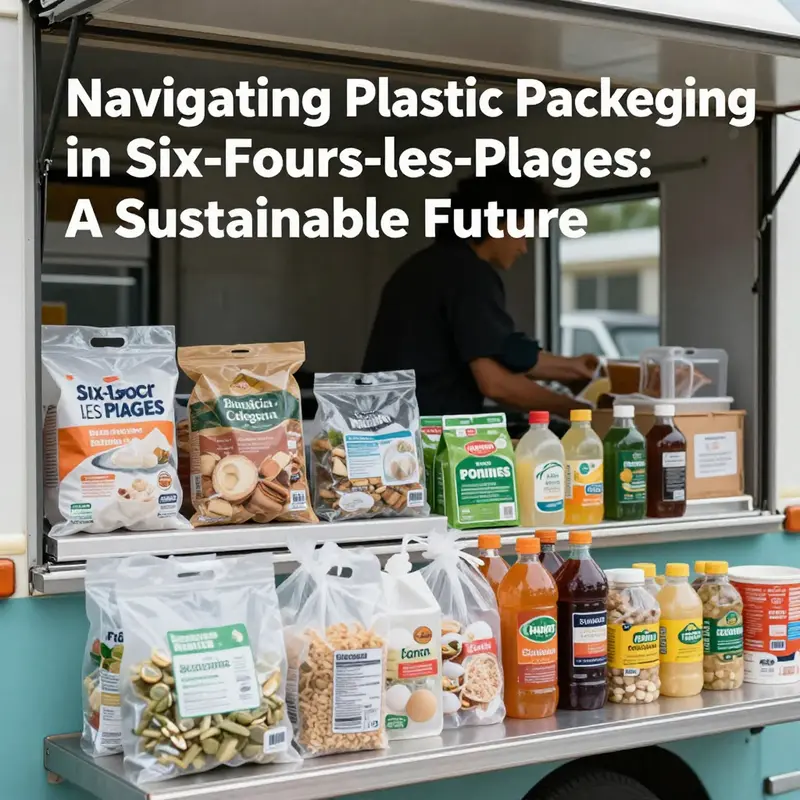
Six-Fours-les-Plages, perched along the sunny edge of the French Riviera, is a place where the rhythm of tourism shapes a daily economy. The town’s hotels, cafés, markets, and takeaway counters pulse with the needs of visitors who expect convenience as part of their coastal experience. In this setting, plastic packaging food containers have long offered a straightforward answer to the demands of speed, portion control, and portability. Yet beneath the surface, a more complex economic story is unfolding. It is a story about costs and incentives, compliance and opportunity, and the way a small resort town can become a microcosm for how European policy, consumer values, and local entrepreneurship collide and cooperate around packaging choices.
The economic logic of plastic packaging in Six-Fours-les-Plages is inseparable from the broader patterns that govern hospitality and food service along the French Riviera. Tourism is not merely an industry here; it is the lifeblood that funds hotel renovations, restaurant staffing, and seasonal events. In such an environment, the convenience and low unit cost of single-use plastic containers have long been a practical default for takeaways, hotel buffets, and snack displays. The hospitality sector, which includes hotels that deliver meals to rooms or provide packaged options for day-trippers, relies on packaging that is lightweight, durable, and easy to stack and transport. This is especially true during the peak season when turnover is rapid and margins can be tight. The economic incentives, at first glance, align with the availability and familiarity of plastic packaging: quick service, consistent product presentation, and predictable waste handling.
But the same setting is undergoing a quiet revolution. France has moved decisively to curb plastic waste, and the European Union has accelerated a transition toward a circular economy that prioritizes reusable and recyclable solutions over the simple expedient of convenience. In Six-Fours-les-Plages, these macro shifts interact directly with the town’s microeconomy. Local regulations—partly driven by national policy and partly shaped by EU directives—have begun to tilt the cost-benefit balance for food-service operators. The short-run economics of shifting away from conventional plastic packaging can be painful for small and medium-sized enterprises (SMEs). The price of compliant, eco-friendly packaging—biodegradable materials, compostable films, recyclable takeout boxes—tends to be higher than that of plain plastic. That premium, when added to fluctuating store and supplier margins, can squeeze already tight profits in a sector that often operates on slender margins and seasonal variation.
However, the calculus is not static. The long-term financial logic increasingly rewards businesses that anticipate policy trends and consumer preferences. In Six-Fours-les-Plages, early adoption of sustainable packaging can translate into tangible reputational advantages among tourists who value environmental responsibility as a marker of quality. In a resort town where visitors often plan multi-day stays and book experiences around sustainable practices, packaging choices can influence perceived value and willingness to pay. A café or restaurant that communicates clear commitment to reducing waste can turn a virtue into a competitive edge, fostering customer loyalty in a market where repeat visits and positive word-of-mouth are critical.
The transition is not merely about switching materials. It involves redefining the supply chain, rethinking menu packaging, and reconfiguring waste handling. For many operators, the first steps are modest but meaningful: substituting or supplementing traditional plastics with compostable or recyclable alternatives, offering customers the option to reuse containers, and exploring supplier partnerships that guarantee traceability and quality. The economic impact radiates outward, affecting distributors, waste collectors, and recycling facilities, and it also creates opportunities for local innovation. The EU’s emphasis on a circular economy has spurred a wave of research and investment into packaging that can be easily recovered, remanufactured, or repurposed. In a coastal town with a high seasonal workforce and a dynamic hospitality sector, such investments can stimulate job creation and new lines of business, from packaging design and logistics to waste-management services that are tuned to tourism cycles.
Within France, authorities have signaled that certain sectors, including public catering and events, should reduce single-use plastics. This governmental stance creates a layer of regulatory risk that businesses in Six-Fours-les-Plages must manage. Non-compliance can mean penalties and reputational harm, risks particularly acute for operators who rely on the perception of responsibility among both local residents and international visitors. Yet the same regulatory environment can push suppliers and entrepreneurs toward smarter, more efficient packaging ecosystems. When penalties loom, there is an incentive to lean into compliance through standardized, fit-for-purpose packaging solutions that align with broader environmental targets. In practice, this means that local food-service operators must weigh not just the upfront price of packaging, but the total cost of ownership, including disposal, possible return or reuse programs, and the long-run brand impact of sustainability choices.
The economic story of packaging in Six-Fours-les-Plages is also deeply connected to the broader policy horizon. The European Union’s circular economy agenda, and its ongoing efforts toward a binding Global Plastics Treaty, spur innovation and attract investment in alternatives to conventional plastics. For coastal towns that host seasonal festivals, markets, and dining corridors, these policy currents translate into a forward-looking demand for packaging solutions that combine safety, convenience, and environmental performance. Local businesses that align with these trajectories can access new revenue streams—whether through partnerships with packaging suppliers, participation in pilot programs for reusable systems, or collaborative efforts with waste-management entities to create end-to-end circular flows. The economic upside is not guaranteed, but the incentives point toward a future where packaging is not just a cost of doing business but a component of a resilient, differentiated value proposition.
In Six-Fours-les-Plages, the role of local suppliers becomes particularly salient. The proximity of the town to packaging manufacturers and distributors reduces transport costs and enhances supply security, two factors that matter when the seasonality of demand creates peaks that can strain logistics. Local retailers, hotels, and eateries benefit from a diversified supplier base that can provide more sustainable options without imposing prohibitive freight charges or long lead times. This clustering effect can nurture an ecosystem in which packaging innovations diffuse quickly from a few early adopters to a broader set of operators, amplifying the economic benefits through shared knowledge, collective purchasing power, and standardized waste-reduction practices. Yet this same proximity also raises questions about market power and pricing, especially for SMEs that may have limited negotiating leverage with larger suppliers. In this context, cooperative procurement or consortia can help small businesses access sustainable packaging at economies of scale, softening the transition’s financial bite and stabilizing the local market.
A closer look at consumer behavior reveals an important driver of the economic equation. Tourists, particularly those returning after multiple visits, increasingly expect destinations to model sustainable practices. They assess not only the quality of a meal but the stewardship surrounding its packaging. In Six-Fours-les-Plages, where eateries compete for discerning visitors, packaging quality and environmental performance can influence consumer choice as much as taste or ambience. Restaurants and takeaways that offer clear information about recyclability, compostability, or reuse programs may command higher perceived value and differentiate themselves in a crowded market. This consumer dimension interacts with price sensitivity. While some visitors may be willing to pay a premium for sustainability, others may prioritise affordability during a vacation. The balancing act—meeting budget constraints while signaling environmental responsibility—drives a nuanced pricing strategy and a portfolio of packaging options that can accommodate varying guest expectations.
The economic implications extend to branding and marketing as well. A commitment to reducing plastic waste can become a narrative that enhances a business’s identity. In a region where image matters as much as menu, a packaging story can be embedded in marketing materials, menus, and staff training. This storytelling can translate into loyalty programs, targeted promotions, and partnerships with local environmental initiatives. The result is not merely compliance or cost management; it is a pathway to stronger market differentiation and customer engagement. The potential downside is that if a business markets itself as green without delivering substantive practices, it risks accusations of greenwashing, which can erode trust and harm earnings. Therefore, the economic strategy must be grounded in real operational changes rather than superficial messaging.
One practical illustration of these dynamics lies in the design flexibility that modern packaging affords. Where once plastic was chosen for its simplicity and consistency, today’s packaging options offer a spectrum of performance characteristics. For a coastal town with a vibrant outdoor dining culture, selecting packaging that resists grease, preserves heat, and remains safe for microwaving can reduce repeat-service costs and waste. At the same time, the availability of reusable containers or durable, returnable systems can lower long-run per-use costs if the logistics are well organized. The economics of such arrangements depend on uptake rates, the effectiveness of cleaning and reuse streams, and consumer acceptance. Early movers who invest in reusable or returnable solutions can capture a segment of the market that values convenience and environmental stewardship, while gradually spreading these practices across more operators as the cost-benefit calculations improve with scale.
In guiding this transition, policy frameworks play a crucial role beyond the legal requirements. Subsidies, tax incentives, or grants for SMEs investing in sustainable packaging can tilt the economics in favor of eco-friendly options. Public procurement standards in local authorities and event organizers can also create demand signals that support investment in greener packaging solutions. When a town like Six-Fours-les-Plages aligns its public and private sectors around shared objectives—reducing waste, promoting recycling, encouraging reuse—economic benefits accrue not only through lower material costs but through improved efficiency, better waste segregation, and a calmer fiscal landscape as waste-related charges stabilize over time. In essence, a coordinated approach to packaging can reduce volatility and create a smoother path through the transition.
Amid these shifts, the packaging landscape in Six-Fours-les-Plages also reveals opportunities for experimentation. The push toward compostable and fully recyclable materials invites opportunities for local start-ups and design experiments. A small business might pilot a line of packaging that marries local materials with user-friendly design, while a restaurant group tests a depot-based reuse program that encourages guests to return containers for a discount. Such pilots can generate valuable data on customer acceptance, cleaning costs, and the environmental performance of different materials. They can also attract visits from researchers or policy makers who seek real-world insights into how circular economy principles operate in tourist hubs. Each successful pilot creates a ripple effect, encouraging other operators to rethink packaging, invest in staff training, and adjust menus or service models to reduce waste. The cumulative effect is a more resilient local economy where packaging decisions support sustainability goals without sacrificing service quality or profitability.
It is essential, however, to acknowledge the uncertainties that accompany this transition. The short-term financial burden of moving away from traditional single-use plastics is real for many Six-Fours-les-Plages operators. A higher per-unit cost for sustainable packaging, plus potential investments in reuse programs, can temporarily compress margins, especially during shoulder seasons when revenue is thinner. All of this can be compounded by supply chain disruptions or price volatility for raw materials. Yet the literature and policy discourse suggest that a strategic, collaborative approach can soften these shocks. Firms that diversify suppliers, invest in staff training, and participate in local networks stand a better chance of stabilizing costs and maintaining service levels during the transition. In the long run, as regulations standardize, demand for sustainable packaging grows, and recycling and reuse infrastructures mature, the economic rationale for responsible packaging becomes increasingly robust. Profitability can reemerge not as a return to the old plastic-dominated model but as a redefined value proposition rooted in efficiency, brand trust, and alignment with global sustainability trends.
The narrative in Six-Fours-les-Plages also intersects with the broader question of how communities adapt to policy-driven change. The town’s experience illustrates how environmental policy, consumer expectations, and local entrepreneurship co-evolve. It is a case study in turning regulatory pressure into a catalyst for product and process innovation, rather than merely a compliance cost. In such an environment, firms that cultivate three capabilities—clear communications with customers about packaging choices, agile procurement arrangements that can adapt to evolving standards, and cooperative relationships with waste-management providers—will be better positioned to navigate the economic terrain ahead. These capabilities do more than reduce risk; they unlock opportunities to improve operational efficiency, build trust with guests, and contribute to a coastal economy that remains vibrant while becoming more sustainable.
As Six-Fours-les-Plages continues to develop its packaging narrative, one can observe a gradual reallocation of value. The base cost of materials remains a consideration, but the broader business value—guest satisfaction, brand credibility, and resilience against regulatory shocks—becomes a more meaningful driver of profitability. In this sense, plastic packaging is not simply a line item on an income statement. It is a strategic lever that interacts with labor costs, supplier relationships, waste handling, and the overall guest experience. The town’s food sector can, with thoughtful planning and collaborative action, transform a potential constraint into a competitive advantage. The result may be a hospitality landscape where guests perceive packaging choices as part of a responsible, high-quality experience, where local businesses prosper through smarter procurement and waste-reduction practices, and where Six-Fours-les-Plages earns a reputation not only for its scenery but for how effectively it aligns economic vitality with environmental stewardship.
For practitioners seeking practical paths forward, the lesson is to view packaging decisions as integrated with the entire value chain. This means coordinating with suppliers to secure dependable access to sustainable materials, aligning menus with packaging’s performance characteristics, and designing customer-facing information that clearly communicates the rationale and benefits of chosen packaging solutions. It also means recognizing that the economic and environmental dimensions of packaging are interwoven with tourism dynamics. The peak season offers a testing ground for innovations in packaging, reuse, and waste reduction, while the off-season provides a window to refine supplier relationships, renegotiate terms, and prepare for the next cycle of demand. In a region that thrives on hospitality, the packaging decision is ultimately a decision about how to sustain that hospitality in a world where guests increasingly expect responsible practices as a core component of their travel experience.
To connect this narrative with concrete options, many operators are exploring a wide spectrum of packaging alternatives that can meet both the practical needs of fast service and the environmental expectations of modern visitors. The range includes durable, grease-resistant containers suitable for hot and cold foods, recyclable paper-based options, and even innovative designs that enable easy separation of compostable layers. The choice of packaging, however, should not be guided by fashion alone. It must be anchored in a careful assessment of cost, performance, end-of-life options, and consumer response. When executed thoughtfully, the shift away from traditional plastics can lower waste handling costs over time, reduce exposure to regulatory fines, strengthen brand reputation, and open doors to new partnerships with environmental initiatives, suppliers, and researchers who are eager to understand how best to operationalize circular economy principles in a coastal tourism economy.
In closing, the economic implications of plastic packaging in the food sector of Six-Fours-les-Plages are intensely situational yet broadly representative. The town’s reliance on tourism creates both pressure to deliver convenience and opportunity to differentiate through responsible practices. Policy developments at the national and EU levels provide a scaffold that supports transition but demand disciplined execution from local businesses. The challenge and the opportunity lie in integrating packaging decisions with procurement, operations, marketing, and waste management so that the entire hospitality ecosystem moves in concert toward a more sustainable and economically robust future. In this evolving landscape, packaging becomes less a fleeting cost and more a strategic investment in resilience, guest satisfaction, and the enduring appeal of a coastal destination that can balance the pleasures of the moment with the responsibilities of the future.
foldable cake boxes with window
External resource: https://www.europarl.europa.eu/Registre/ViewFr.aspx?lang=fr&Id=1798586
Final thoughts
As Six-Fours-les-Plages navigates the delicate balance between convenience and environmental responsibility, the role of plastic packaging food containers becomes increasingly complex. While they currently dominate, the momentum toward sustainable alternatives is palpable, fueled by consumer demand and ecological considerations. Businesses can no longer afford to overlook the environmental implications associated with their packaging choices, and looking forward, this coastal community stands poised to lead in creating a future where sustainability and economic viability go hand in hand. Embracing this shift not only protects the beautiful shores of Six-Fours-les-Plages but also opens new avenues for innovation and growth in the food sector.