
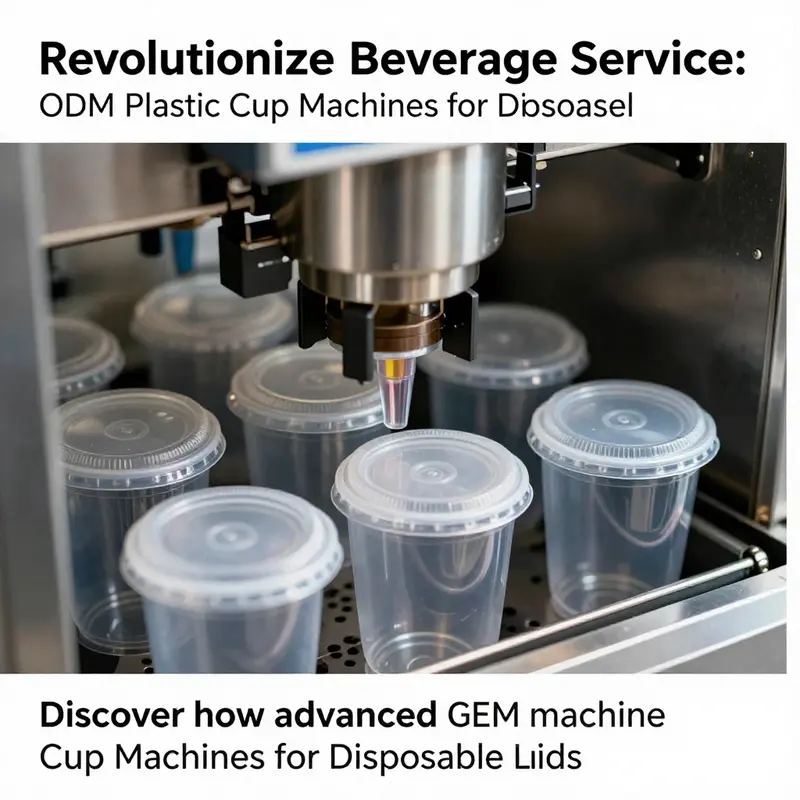
In the increasingly competitive food and beverage landscape, providing quality service with minimal waste is paramount. The OEM plastic cup machine for disposable lids plays a crucial role in achieving this goal. It revolutionizes manufacturing across various sectors, from bubble tea shops to large catering services. This article uncovers the technological innovations that elevate lid production, explores the economic ramifications for businesses investing in these machines, and discusses the societal and environmental considerations tied to their usage. Each chapter delves deeper into these interconnected topics to provide a holistic understanding of the advantages of leveraging OEM technology in disposable lid production.
Turning Every Lid into Throughput: The Integrated Evolution of OEM Plastic Cup Machines for Disposable Lids
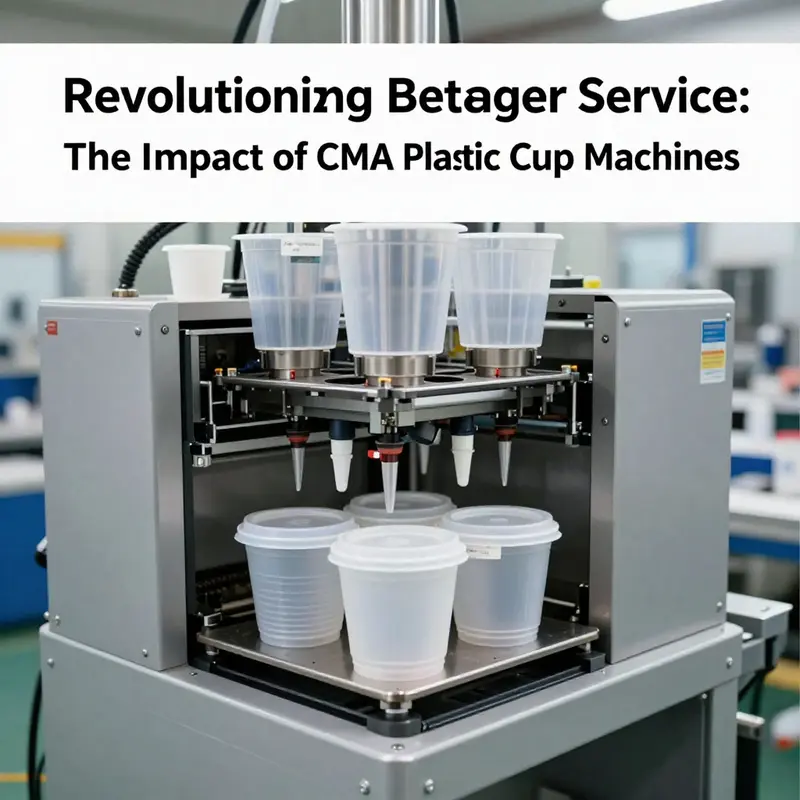
The production of disposable lids for plastic cups sits at a critical intersection of safety, speed, and adaptability. In modern beverage and food-service ecosystems, the lid is not merely a barrier against spills; it is a carefully engineered interface between product, consumer, and brand experience. OEM plastic cup machines dedicated to lid production have evolved from simple, repetitive tooling into highly integrated systems that synchronize material handling, thermoforming, cutting, and quality assurance into a continuous, automated rhythm. This evolution is not a single leap but a series of converging advances that redefine what a lid line can deliver: consistent seal integrity, rapid changeovers, material versatility, and compliance with rigorous global standards. The result is a manufacturing line capable of supporting a broad spectrum of cup formats, from compact single-serve beverages to larger food-containment lids, while maintaining the highest levels of hygiene and process control. The emphasis on automation, data-driven oversight, and modular design has become a defining feature of today’s OEM lid machines, enabling processors to meet fluctuating demand without sacrificing quality or safety.
A foundational shift in capabilities centers on thermoforming technology, the core process by which most rigid lid components are shaped. Contemporary OEM machines increasingly embrace advanced forming methods that tolerate a wider range of plastics, dramatically expanding the repertoire of materials that can be used for lids. Beyond the traditional polyolefins, activated by precise heat and friction, these systems are engineered to handle PET, HIPS, PVC, BOPP, PS, PP, and even more contemporary options such as biodegradable PLA. This multi-material compatibility is not a luxury; it is a strategic response to market pressures for sustainability, cost optimization, and consumer perception. When a plant can switch from one material family to another with minimal downtime, the agility gained translates directly into shorter time-to-market for new cup-and-lid combinations and reduced inventory risk. In practical terms, this means a lid line can accommodate a family of cup sizes or shapes without a full machine rebuild, simply by adopting new forming molds and adjusting forming parameters within a controlled window of setpoints.
The material latitude described above also carries implications for regulatory compliance and consumer safety. Food-contact compatibility is not a mere checkbox; it is a suite of properties that include barrier performance, heat resistance, chemical stability, and migrational safety. Modern machines are designed with this in mind from the outset. They rely on integrated material handling features—carefully designed hoppers, preform feeders, and resin-agnostic feed systems—that reduce contamination risk and ensure consistent resin flow. In the best-practice configurations, the entire forming envelope is built from sanitary-grade materials with smooth surfaces, rounded corners, and accessible cleaning paths. These design choices streamline sanitation, enabling CIP (clean-in-place) or easily detachable components for periodic maintenance without disassembly of the entire apparatus. Safety standards such as CE marking for European markets and FDA-related guidelines for food-contact materials are embedded in the hardware and software architecture, enabling manufacturers to demonstrate compliance with minimal procedural overhead.
Automation sits at the heart of modern lid manufacturing lines. The latest generations of OEM machines deploy fully automated control architectures with intuitive digital interfaces. Operators can monitor cycle timing, material usage, and defect rates in real time, and they can adjust process windows through touchscreens that present clear, actionable data. The reduction in manual intervention not only decreases the likelihood of human error but also boosts traceability. When every lid pathway—from raw resin to finished lid—passes through a single, auditable software record, manufacturers can rapidly diagnose deviations, implement corrective actions, and maintain consistent output quality. In practice, the throughput capabilities of these advanced systems vary with form factor and waveform complexity, but many models now comfortably exceed 50 cycles per minute, translating into outputs that surpass several hundred lids per hour on lines designed for mid- to high-volume production. Such speeds are particularly meaningful in a market where cafes and quick-serve restaurants depend on reliable, timed supply to keep their service windows intact.
Durability and uptime are not afterthoughts; they are prerequisites for a line intended to run around the clock. The chassis, frames, and critical components of top-tier lid machines are engineered to resist the corrosive and thermal stresses of continuous operation. Heavy-duty, corrosion-resistant metals form the backbone of the structure, while reinforced drive systems, precision bearings, and protective enclosures minimize the risk of mechanical failures. The emphasis on robust construction aligns with the demand for 24/7 operation in large-volume plants, where any unplanned downtime disrupts downstream packaging, cold chain integrity, and overall line efficiency. In practice, this durability is coupled with thoughtful accessibility—modular subassemblies that can be swapped with minimal tool downtime, quick-release fasteners, and cleanroom-compatible seals that facilitate rapid cleaning between batches. The result is a line that not only withstands long shifts but also maintains tight control over tolerances, ensuring lid dimensions remain within specification even as the line ages.
A key feature that distinguishes leading OEM lid machines is the seamless integration of compliance with global safety and environmental standards. CE certification is a common benchmark in many regions, signaling conformity with essential health, safety, and environmental requirements. For manufacturers seeking to supply both domestic and export markets, such compliance reduces the friction of market entry and enhances customer trust. The machines are designed to minimize potential contamination paths and to enable straightforward validation of critical process parameters. For instance, the capability to document sterilization cycles, monitor surface cleanliness, and validate seal integrity through non-destructive testing reinforces the consumer safety profile of the final product. The procurement philosophy behind these lines emphasizes not only the mechanism by which lids are produced, but also the non-negotiable commitment to material safety, traceability, and end-user protection.
Modularity is another strategic pillar of modern lid-line design. Recognizing that consumer preferences and packaging formats evolve, OEM machines now offer customizable mold configurations that support a spectrum of lid and cup sizes without a complete system overhaul. Quick-change molds, adjustable forming depths, and configurable impression patterns enable a producer to respond to a shifting portfolio with minimal downtime. This flexibility is particularly valuable in markets that demand limited-edition packaging or seasonal promotions, where the ability to pivot quickly can prevent missed opportunities and reduce carryover inventory of obsolete tooling. From a process engineering perspective, modular tooling demands precise mechanical interfaces and standardized communication of tool state to the control system. The resulting synergy ensures that changes in mold geometry or locking mechanisms are reflected instantly in cycle timing, quality checks, and traceability records.
The ecosystem surrounding lid production also reflects a maturation in supplier collaboration and technology access. Modern OEM lines rely on integrated supply chains that provide not only raw resin and molds but also diagnostic software, spare-part kits, and remote maintenance capabilities. A line can be augmented with sensing and data-collection modules that capture temperature, pressure, and cycle duration, offering a data-driven map of performance. With predictive maintenance, operators can anticipate wear on forming plates or drive belts before it leads to unplanned downtime. The overarching objective is a cohesive system in which each component—from resin to robotized pick-and-place subsystems, to the final sealing operation—contributes to stable output, reproducible quality, and a defensible record of compliance for audits and certifications.
In parallel with process innovations, there is an accelerating emphasis on material stewardship and environmental responsibility. The drive toward sustainable packaging has placed a premium on lid designs that optimize material usage and promote recyclability. PLA-based or otherwise bio-based materials are increasingly considered viable options when compatible with the upstream cup substrate and the intended application. Machines designed to handle these materials must accommodate different thermal profiles and shrinkage characteristics, while still delivering consistent seal strength and dimensional accuracy. This balancing act—between performance, cost, and environmental impact—requires careful process tuning and material testing. Operators benefit from closed-loop feedback that informs resin choice based on the final application, whether it is a hot beverage lid or a cold-dispense lid for a ready-to-serve product. In such contexts, the machine becomes not just a former and cutter, but a strategic decision-support tool that helps management align production with sustainability targets and regulatory expectations.
The shift toward adaptability extends to sanitation and sanitary design. Hooded enclosures, accessible drainage paths, and efficient air-flushing schemes reduce the risk of residue buildup and cross-contamination across shifts. Sanitation is simplified by design choices that minimize crevices and ruggedized components that withstand routine cleaning without degradation of tolerances. In addition, many lines incorporate automated surface inspection and defect-spotting systems that flag misforms, incomplete sealing, or material inconsistencies before the product exits the line. The combination of robust construction, thoughtful sanitation design, and real-time inspection yields a lid that not only performs its primary function—protecting contents and preserving hygiene—but also contributes to a holistic quality-management narrative across the manufacturing floor.
The conversation about lid production cannot ignore the downstream realities of packaging operations and line integration. Lids do not exist in isolation; they are part of a tightly choreographed sequence that includes cup forming, filling, capping, labeling, and palletization. OEM machines that specialize in disposable lids often feature interfaces that communicate with upstream cup-forming lines and downstream cartoning systems. This interoperability reduces manual handling, minimizes product damage, and improves overall line uptime. The control architecture can harmonize cycle times, adjust to upstream cup-die variations, and coordinate with downstream packaging to handle peak demand periods. As a result, the entire beverage or ready-to-eat product line achieves a smoother throughput curve, with fewer bottlenecks and tighter quality control at each juncture. In practice, this means that improving lid-line performance yields tangible improvements across the entire packaging ecosystem, reinforcing the strategic value of investing in advanced OEM machinery rather than piecemeal upgrades.
The market’s ongoing demand for faster, safer, and more versatile packaging solutions underscores why the development trajectory of these machines is so consequential. A modern OEM lid line is less a single device and more a manufacturing module that can be integrated into broader factory automation strategies. It represents a convergence of thermoforming science, materials engineering, robotics, sanitation engineering, and digital analytics. The best machines enable operators to pivot quickly between formats, verify performance through automated checks, and maintain a documented compliance trail that supports customer audits and regulatory reviews. All of these capabilities support a robust value proposition: higher throughput, lower waste, safer products, and a shorter cycle from concept to market. As consumer expectations evolve toward more sustainable, convenient packaging, the lid becomes a strategic asset that can influence brand preference just as strongly as the cup itself. In that sense, the modern OEM plastic cup lid machine is not merely a piece of equipment; it is a responsive, data-driven partner in product development and operational excellence.
For readers seeking concrete examples of how these principles translate into practice, consider the ways a plant might refine its lid production to align with market demand. The project often begins with a material assessment—identifying which resins reliably meet the performance requirements for the intended product and temperature exposure, and evaluating the recyclability profile of each option. The next step is a tooling assessment: can the current mold be adapted to support multiple lid geometries, or is a modular mold approach necessary to accommodate new cup formats? A third consideration centers on automation: what level of robotics and sensing is appropriate for the given throughput target, and how can data capture be standardized to feed into a broader plant-wide digital twin? The answers will vary by sector, but the guiding principle remains consistent: the most effective lid lines are those that balance agility with rigorous process control, delivering consistent, safe products at speed while maintaining cost discipline.
From a procurement perspective, embracing this evolution means prioritizing flexibility in the machine’s architecture and investing in tooling that can be reconfigured with minimal downtime. It also means embracing data-enabled maintenance regimes and supplier partnerships that offer rapid access to spare parts and firmware updates. In the broader landscape of packaging technology, these lines illustrate a practical blueprint for achieving resilience and efficiency in a context where consumer expectations are continually evolving and regulatory environments are tightening. When the lid line is aligned with the plant’s broader automation strategy, it can become a pivotal lever for productivity, quality, and sustainability across the entire operation.
As a closing reflection within this integrated narrative, it is evident that the OEM plastic cup lid machine has moved beyond its traditional role as a passive shaper of plastics. It now embodies a composite of engineering disciplines and strategic capabilities designed to support a dynamic packaging ecosystem. The combination of thermoforming versatility, automated control, durable build, and modular tooling creates a platform that is ready to meet today’s challenges and tomorrow’s opportunities. In this sense, the lid line becomes a microcosm of modern manufacturing—an intelligent, adaptable system that can be tuned to the market, audited for safety, and scaled to support continuous growth. For those seeking deeper engagement with the topic, the discussion about end-to-end packaging integration and sustainable materials offers a natural continuation, inviting engineers and operations leaders to imagine how the next generation of disposable lids might further advance both performance and planet-friendliness.
Internal reference for further context: when considering the broader packaging ecosystem, it can be helpful to explore related disposable packaging solutions that pair with lids in a cohesive system. For example, you can learn more about disposable sauce box with lids to understand how lid design interacts with ancillary containers and the importance of seal integrity across the value chain. Such cross-functional considerations underscore how lid machinery must integrate with upstream and downstream components to deliver end-to-end packaging performance.
External resource: https://www.alibaba.com/product-detail/Advanced-Plastic-Cup-Lid-Machine-for-Disposable_1600539888755.html?src=shop
From Investment to Impact: The Economic Dynamics of OEM Lid Machines in Disposable Cup Packaging
The economics of OEM plastic cup lid manufacturing sits at the intersection of capital stewardship, process engineering, and regulatory discipline. In markets driven by high turnover and strict food safety expectations, the choice to adopt fully automated lid-making lines is less about chasing novelty and more about locking in a durable platform for scale, quality, and resilience. When viewed through the lens of a modern food-and-beverage ecosystem, these machines are not just tools for locking lids onto cups; they are engines that translate raw material costs, energy usage, and labor into a predictable chain of value. They convert a once labor-intensive, error-prone process into a steady, continuous operation that aligns with 24/7 demand patterns and global distribution needs. In this chapter, the economic logic unfolds as a narrative of conversion: capital outlays yielding long-run savings, speed yielding revenue, and compliance turning risk into competitive advantage. The outcome is a manufacturing architecture that supports both small-scale entrepreneurship and large-scale production, all while elevating safety and consistency across every batch of lids that enters the market.
At the core of the cost-structure argument is automation, which reshapes labor dynamics in a business many other packaging segments would recognize as labor-intensive. Modern automation in lid production couples thermoforming and sealing with precision-controlled conveyors and in-line quality checks. The result is a dramatic reduction in manual intervention. Industry observations suggest labor requirements can drop by as much as half when moving from semi-automatic to fully automated lines. This is not merely a matter of cutting wages; it is about reallocating human capital toward tasks that add more strategic value—process optimization, maintenance, and supply-chain coordination—while preserving consistency at the point of manufacture. By minimizing the reliance on human operators for repetitive steps, manufacturers also reduce the margin of error that can lead to material waste, defective lids, or deviations in seal strength. In practice, the continuous operation mode of these lines ensures that a single shift can sustain an output sufficient to meet heightened demand from sectors such as quick-service restaurants and coffee chains, where a reliable supply of lids is as essential as the cups themselves.
Speed is the second pillar of economic impact. High-throughput capabilities make these lines attractive beyond the boundaries of a single plant. A lid-making system capable of producing up to 150 units per minute marks a meaningful improvement over conventional setups that struggle to maintain stable output when demand spikes. The 30 percent performance uplift is more than a statistic; it translates into tangible revenue potential. Faster production enables a business to enter and service new regional markets without proportionally increasing plant footprint or overhead. It also supports just-in-time inventory strategies for customers who prize freshness and minimal storage costs. The ability to sustain such rates in continuous operation is underpinned by the machine design’s robustness: corrosion-resistant frames, precision-fit forming tools, and reinforced drive systems designed for maximum uptime. The operational discipline required to sustain this speed—a combination of preventive maintenance, calibrated process windows, and responsive control software—also yields indirect financial benefits by reducing unexpected downtime, a costly drag on throughput and customer satisfaction.
Investment cost is the most visible of the financial levers. The typical price range for a complete lid-making line sits in a spectrum that reflects capacity, automation level, and the quality of components. For many manufacturers, the initial outlay is around sixty-three thousand to ninety thousand dollars per set. While this is a substantial upfront expense, the downstream cash-flow dynamics often justify the purchase. The long-term energy economics are particularly compelling. Modern injection-moulding and thermoforming configurations can consume up to seventy percent less power than earlier generations of equipment, a factor that compounds as production scales. Lower energy consumption reduces utility bills and lowers the environmental cost of manufacturing, which can sharpen competitive positioning in markets where customers increasingly benchmark packaging sustainability and cost. Moreover, the consistent use of food-grade materials, such as polypropylene, helps ensure regulatory compliance. This alignment with FDA and EU food-safety standards minimizes the risk of product recalls and associated penalties, a risk that can erode margins far faster than a few percentage points of capex. In practical terms, compliance becomes a strategic asset: it broadens market access and protects brand integrity, both of which support more predictable revenue streams and improved ROI projections over the machine’s lifespan.
The longevity of these systems is a function of their construction quality and the care with which operations are maintained. A robust frame, corrosion-resistant components, and modular tooling contribute to a longer service life and reduced maintenance frequency. This translates into a lower total cost of ownership (TCO) over time. When a line is designed with maintainability in mind, technicians can perform routine service with minimal disruption to production, and spare parts are easier to source. A predictable maintenance schedule reduces the risk of sudden failures that could halt a run or compromise lid integrity. For businesses operating around the clock, this reliability is a cornerstone of business continuity. The ability to run continuously means fewer start-stop cycles, less cycle variability, and tighter process control, all contributing to more uniform product quality and a more stable yield. The financial payoff is measured not just in immediate savings but in a broader ROI that accumulates through steady output, lower waste, and fewer costly quality excursions.
A crucial but often underappreciated dimension of economic impact is safety and compliance. The lid-making line operates within a tightly regulated space because the lids touch food contact surfaces. The material choice—food-grade PP—along with validated forming and sealing processes—reduces compliance risk and streamlines distribution to markets with strict documentation requirements. The consequence of non-compliance is not merely a regulatory penalty; it is a suppressed sales pipeline, product recalls, and damaged consumer trust. In contrast, an OEM solution that is designed and validated for safety and traceability unlocks greater market reach. This is not a theoretical advantage: it is a practical enabler of export and contract manufacturing opportunities that demand certified production processes. The economics of risk management, often quantified as the cost of quality or the cost of non-compliance, are significantly softened by a line that is engineered for safety and quality from the start. In such a regime, the premium paid for certified materials and validated processes yields a differential advantage that translates into more reliable contracts and better gross margins across higher-volume runs.
Beyond the lab and the showroom floor, the global logistics and supply chain footprint of lid machines matters to economic performance. OEM lines are typically designed for modularity and robustness, with output options that can be tailored to different lid geometries and sealing profiles. This flexibility is essential for manufacturers who must adapt to regional preferences, regulatory variations, or shifts in consumer demand. A line that can reconfigure from one lid size to another without a disabling overhaul reduces capital cycle times and supports more agile capital deployment. In practice, this means a manufacturer can respond quickly to a spike in demand for a particular lid style in a new market, or pivot away from an underperforming product with minimal downtime and cost. The export-readiness built into many of these systems also dovetails with the expectations of global customers who require consistent quality across geographies. Durable frames and predictable tool wear rates ensure that local service providers can keep equipment in top condition, removing a barrier to international expansion. This constellation of capabilities—modularity, reliability, and global serviceability—translates into a compelling ROI story that is felt as much in lessening financial risk as in driving top-line growth.
To illustrate how these economic dynamics connect to the broader packaging ecosystem, consider how lid production fits into a network of disposable packaging components. A reliable lid line complements a stream of molded cups, wrappers, and containers that require synchronized production schedules. When the lid line can deliver consistent output, it tightens the overall production plan, enabling manufacturers to optimize the use of downstream equipment. In the end, the entire system becomes more predictable, a trait that manufacturers prize when negotiating with retailers and large food-service distributors. The result is not only cost savings but also stronger supplier partnerships and more favorable terms in capacity planning. For readers who want a concrete sense of how lid systems integrate with other disposable packaging assets, a useful reference can be found in the broader ecosystem of disposable cup ecosystems, such as disposable-clear-plastic-cup-outdoor-picnic-pet-cup-drinking-cup-for-parties-birthdays-weddings-camping-utensils, which illustrates how lids and cups co-develop in demand-driven markets and how packaging lines are coordinated across product families. disposable-clear-plastic-cup-outdoor-picnic-pet-cup-drinking-cup-for-parties-birthdays-weddings-camping-utensils
In addition to the internal economics of labor, speed, and compliance, the global supply chain implications of OEM lid machines deserve attention. Customizable output and the ability to withstand continuous operation become critical when fulfilling international orders. The best lines are designed to accommodate fluctuations in demand, whether due to seasonal peaks, promotional campaigns, or regional health and safety standards that drive packaging changes. Durable construction and predictable maintenance requirements lower the risk premium on extended lead times, enabling manufacturers to commit to longer production contracts with confidence. The capacity to scale without a proportional increase in overhead is perhaps the most persuasive argument for investing in these systems. A plant can expand output by re-tuning process windows, adding parallel lines, or upgrading tool sets, all without rewriting the fundamental manufacturing model. In practice, this scalability translates to increased market share, as operators can serve new geographies with reliable timing and consistent quality. The economic payoff extends beyond the factory floor; it touches the distribution center, the retailer shelf, and the consumer table, where consistent lid performance under varied conditions supports a positive user experience and repeat purchases.
As demand for safe, convenient, and environmentally conscious packaging continues to rise, the strategic value of OEM lid machines becomes clearer. The economics are not limited to the immediate cost savings from automation or the marginal gains from higher throughput. They extend to a framework of risk management, market access, and long-run brand trust that sustains profitability in a crowded, price-sensitive landscape. When combined with responsible material choices and transparent process documentation, these lines help manufacturers demonstrate reliability and compliance to auditors, buyers, and end customers alike. In this sense, the investment is not only about producing more lids; it is about producing lids that enable better product experiences, safer handling, and more consistent performance across the supply chain. The result is a business that can compete on reliability and value rather than on cost alone, a distinction that matters in an era where packaging is as critical to consumer choice as the product inside.
External resource: https://www.alibaba.com/product-detail/Full-Automatic-Plastic-Cup-Lid-Making-Machine_1600608722534.html?spm=a2700.191866.0.0.5d1e5f1aYnXcJw
Rethinking the Circular Challenge: Environmental Realities and Societal Shifts in OEM Cup-Lid Production
The production of disposable cup lids, driven by high-speed OEM machines, sits at a critical juncture where the mechanics of manufacture meet the consequences of consumption. The machine lines that once promised only throughput and cost efficiency now surface questions about resource use, end-of-life management, and the social expectations shaping modern manufacturing. To understand the environmental and societal dimensions of using OEM plastic cup machines for disposable lids is to follow a chain that begins with raw resin and ends in the public sphere, where regulation, consumer attitudes, and corporate responsibility converge. The scale is vast: automated lines can push out hundreds of thousands of lids in a day, sustaining cafes, quick-service restaurants, and countless food-service points. Yet this very capability amplifies the gravity of decisions made at the design stage, the material selection stage, and the recycling stage. If the goal is to balance economic viability with environmental stewardship, leaders must examine not only how quickly lids can be produced, but how they fit into a system that values circularity as much as continuity of supply.
At the heart of the environmental discussion is the lifecycle of the lids themselves. Most disposable lids are molded from polypropylene (PP) or polystyrene (PS), both derived from fossil fuels and, in practice, integrated into products that are designed for single use. The feedstock extraction, polymer formation, molding, printing, and packaging all require energy and generate emissions. In many cases, even small improvements in energy efficiency at the machine level yield meaningful gains when multiplied across the volume produced by large factories. The environmental calculus thus begins with production intensity and extends into how lids are disposed of after service. The lightweight nature of these components, while advantageous for transport and convenience, also complicates post-consumer collection and processing. The recycled-material stream for such lids is noisy and fragmented: adhesives, labels, and occasional multi-material laminates can contaminate streams intended for standard PP or PS processing. In landfills, the lids break down slowly, and without robust collection systems or dedicated recycling facilities, they contribute to long-lived waste and potential microplastic release. The data point few would contest is stark: reducing reliance on single-use plastic in public spaces can ship substantial environmental dividends. A recent study highlighted that replacing some disposable-use patterns with reusable alternatives could cut waste by tens of thousands of units per year in a single public area. That figure underscores the magnitude of potential gains when consumption patterns align with better design and smarter policies.
Societal considerations frame the business case for OEM lid production as much as the environmental metrics do. A throwaway culture, reinforced by the convenience of single-use packaging, has created a regulatory and reputational environment where public trust becomes a strategic asset. Cities and nations are increasingly uncomfortable with the visual and tangible costs of litter and the hidden costs of waste management systems that strain municipal budgets. In response, bans or restrictions on certain single-use plastics have proliferated, forcing manufacturers to adapt quickly or face diminished market access. The pressure is not purely punitive; it is aspirational. Consumers, especially in urban centers, are growing more discerning about the origins of the products they use and the footprints those products leave behind. Brands aligned with environmental responsibility—through material choices, design for recyclability, and transparent reporting—often find it easier to maintain consumer goodwill and market access in a tightening regulatory landscape.
The societal shift extends beyond consumer choices into the workflows of manufacturers themselves. In regions with highly developed manufacturing ecosystems, such as major industrial hubs, the push toward sustainability is paired with an emphasis on efficiency and reliability. In places known for vertically integrated facilities and advanced automation, the challenge is to translate cleaner production practices into meaningful reductions in end-to-end environmental impact. Cleaner production environments, material-use optimization, and waste-reduction programs can lower the footprint without compromising output. Yet even as factories strive to minimize waste, the fundamental design of many disposable lids works against long-term environmental goals. If the objective is to move toward circularity, one might consider not only greener production lines but also alternative packaging paradigms. The most straightforward path is to rethink the system: encourage reusable cup systems that pair with return-and-refill models; promote materials that are truly recyclable or compostable in standard streams; and invest in design that makes separation and processing easier for recyclers. The future of this industry may lie less in incremental improvements and more in reimagining the lifecycle itself.
Within this context, some producers are anchoring their strategies around sustainability while maintaining the economies of scale that have defined the sector. A segment of the industry is exploring the integration of cleaner energy sources, waste-heat recovery, and smarter water use to reduce the overall environmental burden of lid production. Others are experimenting with material innovations designed to ease end-of-life processing. For example, there is growing curiosity about single-material designs that reduce the need for bonding agents or coatings that complicate recycling. But even with these advances, the shared constraint remains: the lifecycle of disposable lids is closely tied to fossil-fuel-derived polymers, and the post-use reality of many lids is still challenging for recycling systems to manage efficiently. This tension emphasizes that the best path forward is not a single technology or a one-off reform, but a coordinated approach that combines material science, industrial design, policy incentives, and consumer behavior.
The role of policy cannot be overstated in shaping how OEM machines are used and what kinds of lids are deemed acceptable. Regulations that promote recyclability, require clear labeling, or incentivize the use of recycled-content plastics can tilt industrial economies toward more responsible outcomes. Conversely, if regulatory frameworks lag behind the realities of waste streams, manufacturers can be left with compliance risks and reputational exposure. In this regulatory tug, the design choices made upstream—how a lid is formed, what materials are used, and how it is labeled for recycling—become critical levers. In this light, material selection must be a dialogue among engineers, sustainability teams, and policymakers. The dialogue should aim to minimize mixed-material interfaces, avoid adhesive strategies that hinder separation, and favor designs that can be processed within existing recycling infrastructures. Such alignment helps ensure that the capabilities of high-speed OEM machines do not outpace the society’s ability to manage the products they create.
The environmental and societal narrative around disposable lids is reciprocal. As regulators tighten rules, consumer expectations rise, and brands recalibrate, OEM machine builders gain new opportunities to differentiate through adaptive technologies. The machines themselves can be reconfigured to handle a broader suite of materials, or to switch between resins without long downtimes. They can be equipped with sensors and data analytics to optimize material usage, reduce scrap, and monitor energy consumption in real time. In regions where manufacturing clusters dominate, such as major industrial districts, the adoption of smarter, cleaner practices can have cascading effects on suppliers, waste-management networks, and even the behavior of end users. When factories demonstrate visible improvements—lower emissions, higher recyclability, clearer product labeling, and transparent reporting—stakeholders—from local communities to global customers—tend to respond with greater trust and willingness to participate in more sustainable systems.
Ultimately, the most durable solution may not lie solely in making the lids greener or the machines more efficient, but in rethinking the entire packaging ecosystem. The shift toward reusable cup ecosystems adds a lever of control that can drastically reduce the volume of disposable lids entering waste streams. Simultaneously, credible progress toward circularity may hinge on the development of alternative materials and end-of-life pathways that are truly compatible with existing infrastructure. For instance, the exploration of biodegradable or compostable options may be attractive, but it must be paired with careful assessment of composting facilities, contamination risks, and the realistic availability of appropriate processing streams. In practice, a pragmatic approach combines improvements in machine reliability and material science with intelligent policy design and consumer engagement. When these strands are braided together, the industry can move beyond the dichotomy of growth versus stewardship and toward a shared trajectory where production efficiency supports societal well-being without compromising the environment.
The ongoing conversation around OEM cup machines and disposable lids therefore sits at a crossroads. It is not solely about making more lids faster or cheaper; it is about aligning manufacturing capability with a world that increasingly demands responsibility, transparency, and resilience. The regional realities—like the focus on cleaner production in high-tech manufacturing hubs—illustrate that progress is possible when capital, expertise, and governance converge. The journey toward sustainability is iterative and collective, requiring ongoing collaboration among material suppliers, recyclers, engineers, and regulators. It also requires a willingness to experiment with new business models: licensing or sharing technologies that enable reuse, establishing deposit-return systems in consumer spaces, and investing in education that helps consumers participate more effectively in recycling and reuse programs. If the industry can cultivate this broader framework, the investments in automation and throughput can cohere with a future where packaging systems respect planetary boundaries while continuing to support the efficiency and reliability that customers expect. In that sense, the environmental and societal considerations of OEM cup machines for disposable lids reveal not a flaw in the system, but an opportunity to redesign the system itself for a more sustainable and equitable economy.
For readers seeking a practical bridge between production realities and packaging alternatives, consider exploring flexible packaging options that align with sustainable service models. A representative direction involves scalable, reusable, and return-oriented packaging that can complement or substitute disposable lids in appropriate contexts. This is where the concept of a circular supply chain becomes tangible: the machine can still drive high-volume production, but the product architecture and after-use pathways are designed to loop back into the economy instead of languishing as waste. Integrating such pathways requires coordination across disciplines and borders, and it asks a simple yet ambitious question: can the same OEM capability that delivers thousands of lids per minute be part of a system that reduces overall waste while preserving the convenience customers expect? The answer lies in a holistic design philosophy that treats the lid as one component of a larger, more adaptive packaging landscape. The potential payoff is not only environmental but competitive: brands that align with circular principles can differentiate themselves in markets increasingly driven by sustainability criteria and transparent supply chains.
In this space, the practical steps toward progress are incremental yet meaningful. Reassessing material choices—from standard PP to blends that complicate recycling to single-material systems—requires careful testing for compatibility with printing, sealing, and consumer safety standards. Device-level improvements—such as precision molding, reduced energy consumption, and better waste-collection integration—can yield measurable environmental benefits without sacrificing throughput. The goal is not a trade-off between efficiency and stewardship but a synthesis that enhances both. When manufacturers communicate their progress clearly and credibly, they help build trust with regulators and customers who are evaluating risk, resilience, and responsibility in equal measure. The road ahead is long, but the direction is clear: science, policy, and consumer culture must move in step to transform the environmental footprint of disposable lids into a story of responsible manufacturing and shared stewardship.
External Resource: To explore broader perspectives on plastic pollution and policy responses, see the following external resource: https://www.unep.org/resources/report/plastic-pollution-and-waste-management.
Final thoughts
As the beverage industry evolves, embracing the innovative capabilities of OEM plastic cup machines for disposable lids emerges as a prudent strategy. These machines not only offer enhanced production efficiency and quality but also contribute positively to economic growth and environmental sustainability. By adopting advanced technologies, businesses across the food service spectrum can streamline their operations, reinforce public trust through compliance with safety standards, and cater adeptly to increasing consumer demands. Ultimately, the wise integration of OEM machines into your establishment stands to bolster both operational success and community wellbeing.