
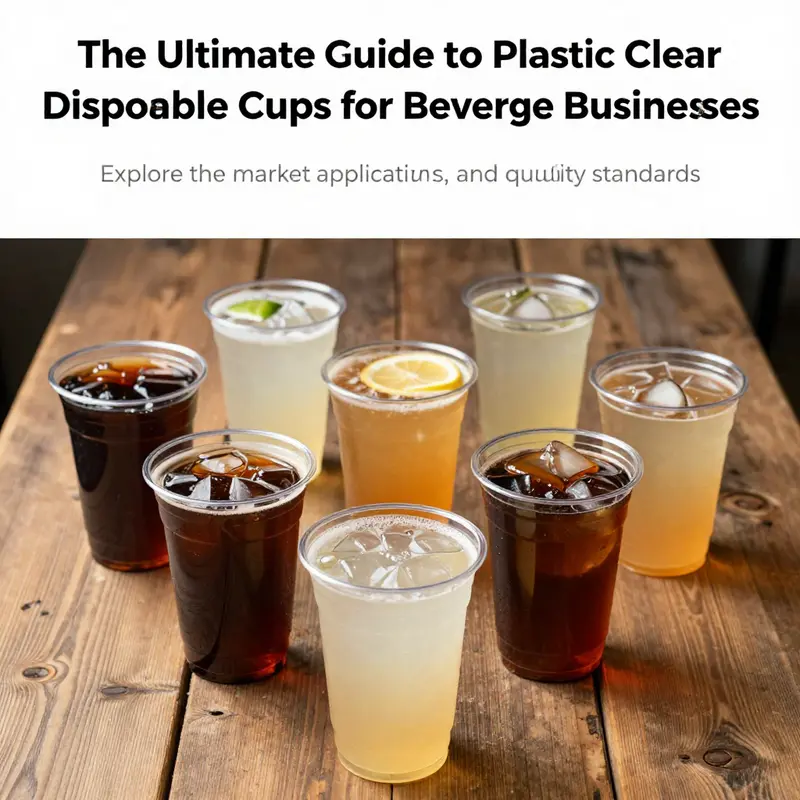
Plastic clear disposable cups are an essential component in the beverage industry, offering versatility for bubble tea shops, restaurants, and catering services. As the demand for convenient and visually appealing drinking solutions grows, understanding the market application, pricing strategies, and quality certifications become crucial for businesses. This guide delves into the specifications of these cups, their economic implications, and the latest quality standards, providing comprehensive insights tailored for event planners, corporate procurement teams, and food service providers. By the end, you’ll have the knowledge to select the best disposable cup options for your business needs.
null
null
Pricing, Production, and Procurement: The Economic Logic Behind Clear Disposable Cups
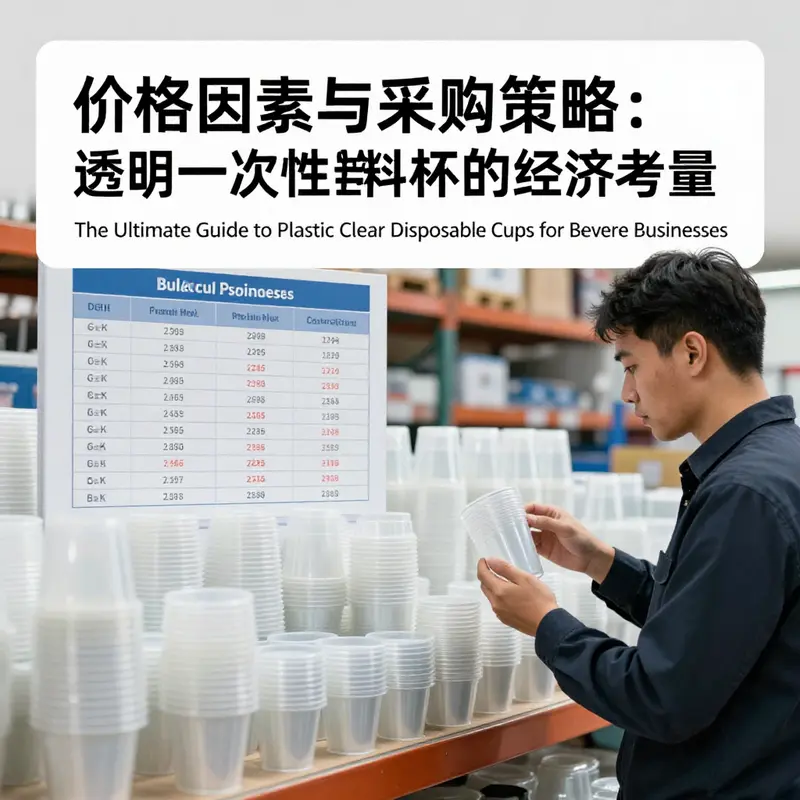
Clear disposable cups sit at a quiet intersection of material science, factory floors, and purchasing decisions. They are small, everyday items, yet the economics that govern their production ripple through supply chains, affect restaurant menus, cafe pricing, event planning, and even consumer waste. When a buyer considers these cups, they are not simply choosing a container; they are balancing a web of costs, timelines, and value-adds. This chapter threads together the core cost components, the production dynamics, and the procurement strategies that drive profitability and sustainability in the market for transparent, single-use cups. It is a narrative of how every gram of plastic and every minute of machine time translates into the final price seen by the consumer, and how savvy buyers can optimize margins without sacrificing safety, quality, or environmental responsibility. The objective is practical clarity: understand where the money goes, identify the levers that move margins, and align purchasing choices with broader business goals and compliance standards.
At the heart of pricing for clear disposable cups lies a relatively simple truth: raw materials dominate cost. In typical formulations, the raw material cost accounts for roughly 60 to 65 percent of the total manufacturing expense for a cup. The dominant feedstock is food-grade polypropylene, a resin chosen for its heat tolerance, chemical resistance, and recyclability. Market data points to polypropylene pricing around 9,000 to 12,000 yuan per ton. To translate that into cup-level terms, consider a common 180-milliliter, transparent cup that uses about 18 grams of material per piece. The raw material cost per cup then lands roughly in the 0.162 to 0.24 yuan range, a non-negligible baseline that sets the floor for any price discussion. When manufacturers employ higher-end formulations or additive masterbatches—perhaps to improve surface feel, stiffness, or print fidelity—the per-cup raw material cost can rise by about 0.02 yuan. That incremental cost, however, can underpin a noticeable uplift in perceived quality and retail price, potentially allowing a roughly 15 percent premium at the end of the chain if the market is receptive to upgraded aesthetics or strength. In practice, the raw material tier becomes the primary battleground for cost containment, with scale and supply security acting as the decisive modifiers.
This emphasis on raw materials is not merely a matter of choosing cheaper resin. It cascades into supplier selection, contract terms, and the hedging of price volatility. Large-scale buyers routinely benefit from long-term supply agreements that stabilize annual volumes, enabling mills to offer more favorable material costs through efficiency gains and reduced waste. For buyers, negotiating with a supplier that can guarantee consistent resin quality, stable supply, and traceable lot information minimizes the risk of deviations that would otherwise trigger downstream cost escalations. In addition, the environmental profile of the material—and the presence of recycled content or post-consumer recyclability—can influence both price and consumer perception. If a supplier offers a resin that complies with recycled content standards or a global recycled standard, the small extra cost can be offset by a value proposition that resonates with brand ethos and with increasingly sustainability-minded customers.
Beyond the raw resin, the operation’s production setup exerts a strong influence on unit costs. Modern injection-molding lines, especially those configured for high-volume, continuous operation, can deliver substantial per-unit savings through scale. A typical production line, running around the clock, can achieve daily outputs in the range of eighty thousand to a hundred twenty thousand cups. Depreciation of the equipment, allocated per cup, is a modest but meaningful factor in cost modeling—roughly 0.007 yuan per cup when spread across high utilization. Energy consumption—electricity, cooling, and auxiliary systems—falls in the vicinity of 0.03 yuan per cup. Labor costs, carried by a small, cyclical shift pattern, add about 0.01 yuan per cup. When you combine depreciation, energy, and labor, the production cost can converge toward a figure just under 0.04 yuan per unit. The magnitude of this figure is a function of line reliability, automation level, waste reduction programs, and the efficiency of the plant’s maintenance schedule. In other words, production efficiency is a lever, but it requires capital investment and meticulous process control to sustain.
To the extent that production costs are controlled, logistics and packaging become the next set of levers. Finished cups must traverse long distances from factory to distribution centers and onward to points of sale or use. Freight costs, typically calculated per ton per distance, can create non-linear effects on unit price as the distance increases. A conventional benchmark is about 120 yuan per ton for every thousand kilometers, and for a cup that weighs roughly 18 grams, this transport cost translates into a per-cup figure near 0.01 yuan when spread across large shipments. Add to that warehousing and handling costs, which may be priced per square meter per day (for example, about 0.5 yuan per square meter per day). If a business relies on centralized distribution rather than regional hubs, the per-cup storage cost can accumulate more quickly, particularly for high-turnover items that require fast replenishment cycles. The logistics math becomes especially important for clients who demand tight lead times or who operate in markets with thin margins. In such cases, regional suppliers who can reduce the average transport radius offer a tangible cost advantage, even if their unit price on the surface seems higher, because the total landed cost—price plus logistics—can be lower.
This is where procurement strategy becomes decisive. The economics of clear disposable cups move from a price-focused mindset to a value-focused posture. In mature markets, buyers are increasingly aware that the cheapest unit price does not automatically deliver the best overall value. The best cost outcomes emerge when procurement teams pursue a holistic view that includes reliability, certification, service levels, and supplier responsiveness. A mature procurement strategy recognizes that the benefits of a given supplier extend beyond the raw cup: access to stable raw-material supply, presence of quality management systems, traceability, and post-purchase support all reduce risk and unlock additional value. In practice, this means evaluating suppliers on a range of criteria—ISO 9001 and ISO 14001 for quality and environmental management, BRCGS or HACCP for food safety, and FSSC 22000 for food safety management—while also considering social responsibility standards such as SEDEX or BSCI. The presence of Global Recycled Standard (GRS) certification matters for cups that include recycled content and aims to reassure partners and end customers about sustainability credentials. It is essential to acknowledge, as some platforms warn, that such certificates are issued by independent third parties and require buyer diligence to verify supplier qualifications prior to committing to large orders. In other words, the procurement decision becomes a risk-management exercise as much as a price negotiation, with the aim of ensuring that cost savings do not come at the expense of safety or reputation.
The procurement mindset also evolves with channel strategy. Buyers can optimize costs by leveraging volume through group procurement or franchise-like arrangements that unlock bulk discounts on raw materials, process aids, and even packaging options. When manufacturers and distributors collaborate under a framework of shared resources—such as centralized imprinting capacities, standardized lid configurations, and common packaging solutions—the per-unit cost drops through economies of scale. A notable advantage arises when suppliers can service multiple channels—retail distribution, hospitality supply, e-commerce bundles, and event packaging—without compromising lead times or quality. The result is a more resilient supply chain, one that can absorb demand shocks without spinning up expensive last-minute orders or compromising production timelines. Moreover, environmental considerations continue to impress end-users and buyers alike. The market is gradually rewarding cups manufactured with environmentally friendlier materials or those that integrate recycled content with credible certifications. In many instances, such eco-conscious options command a modest premium, but the premium is often offset by enhanced brand alignment and consumer willingness to pay for sustainability, particularly at higher-end events or in brands that position themselves as eco-aware.
A practical thread running through the entire cost equation is product design and packaging. Clear cups vary in capacity—from small 2-ounce mini-forms to mainstream 8–12 ounce and 16–24 ounce sizes, with 32-ounce options for larger beverages or the home-use market. Each size carries its own material thickness, which influences both material cost and performance characteristics, such as crack resistance and clarity. Differences in lid design can affect cost as well: a transparent lid with a straw hole, a U-shaped lid suited for bubble-tea styles, or a double-wall configuration that improves insulation, each adds marginal cost but can increase perceived value and user experience. In a competitive market, investments in design can yield disproportionate returns. A cup with a precise seal, a neat straw port, and a smooth glossy surface can justify a higher sell-through price or improve consumer repeat purchase rates. That dynamic reinforces the principle that procurement and product development should be closely synchronized. When a purchaser plans for customization—logos, color accents, or textured finishes—the incremental cost rises, but the ability to differentiate can produce higher margins and improved customer loyalty. Here, the decision to pursue customization must weigh the likely lift in retail price and the expected demand against the incremental manufacturing complexity and minimum order quantities.
To illustrate the real-world implications of these dynamics, consider the path from raw material to finished product. At the raw-material stage, a stable, well-sourced resin stream minimizes price fluctuations and supply interruptions. In production, a highly automated line with robust maintenance reduces scrap and downtime, further lowering per-unit costs. In logistics, a lean distribution network minimizes freight and storage expenses while preserving lead times. In procurement, a disciplined, multi-criteria supplier evaluation reduces risk and unlocks value through bundled services, certifications, and sustainable options. When these elements are aligned, a typical wholesale price band for standard clear cups can be structured so that a baseline landed cost—factoring out marketing, packaging, and margin—sits in a narrow corridor. In this framework, the ideal outcome is achieving a cost-to-serve that enables both competitive pricing and meaningful margins, say a target gross margin in the double-digit range, while still offering room for value-added services such as branded imprinting, custom packaging, or enhanced insulation features that consumers associate with quality.
For readers seeking a tangible reference point to the kind of clear cup that embodies versatility and broad appeal, this product page offers a representative example of a PET-based clear disposable cup designed for cold beverages, fruit juices, and iced coffees. It demonstrates how a straightforward, transparent cup can balance clarity, rigidity, and user comfort while supporting varied use cases—from small tasting portions to larger cold drinks. The page also highlights how the platform positions such cups for different market segments, from home gatherings to professional beverage operations, underscoring the breadth of applicability that makes procurement decisions so consequential. disposable-clear-plastic-cup-outdoor-picnic-pet-cup-drinking-cup-for-parties-birthdays-weddings-camping-utensils
Another crucial layer lies in the category’s ongoing evolution toward sustainability. The environmental narrative increasingly intersects with cost because regulatory signals and consumer expectations push brands to adopt greener alternatives or incorporate recycled content where feasible. As noted in industry-level cost analyses, the market is moving toward an expanded use of biodegradable or recycled materials in some segments, with predicted uptake growth rates that can influence pricing strategies. For buyers, this means weighing the potential premium associated with environmentally friendlier cups against the stability of traditional, fully virgin-material cups. The sustainability premium is not universal; it varies by region, customer segment, and end-use scenario. At exhibitions, for example, an event that seeks to align with a green ethos may justify a higher per-unit investment in cups that feature recycled content, post-consumer certification, or compostable attributes. In contrast, many day-to-day operations prioritize reliability and cost containment, favoring conventional clear cups unless sustainability is a central brand promise. The practitioner’s balancing act is to forecast demand for higher-value features, secure supply chains for the chosen materials, and calibrate pricing strategies to reflect both the material costs and the perceived value those features deliver to customers.
The multipliers in this equation are not purely economic. They are also strategic. The procurement team’s rapport with suppliers, the clarity of quality control processes, and the transparency of labeling and traceability shape a product’s risk profile. A supplier that commits to ISO-certified quality management, environmental stewardship, and social-responsibility programs reduces risk for the buyer and for the downstream partners, including retailers and food-service operators. These factors, while not always reflected in sticker prices, are integral to long-term profitability. They reduce the likelihood of costly recalls, returns, or reputational damage that can erode margins well beyond what a price discount could recover. In this light, cost is not the sole metric; value, reliability, and trust are equally critical. A disciplined procurement approach thus becomes a strategic asset that helps a business weather price volatility, shifts in demand, and evolving consumer expectations without compromising safety or performance.
In sum, the economics of clear disposable cups hinge on a disciplined understanding of cost structure, production discipline, logistics efficiency, and strategic supplier relationships. The raw-material share sets the floor, while automation and scale push unit costs downward. Regionalized logistics and smart warehousing improve landed costs, and value-forward procurement unlocks margins through services, customization, and sustainability credentials. This integrated approach enables both small buyers and larger enterprises to secure the clear cups they need at predictable prices, while still reserving space for brand differentiation and responsible stewardship. As markets continue to evolve, the most successful purchasers will be those who translate these equations into actionable procurement playbooks—ones that optimize cost, quality, and value in a way that aligns with operational realities and long-term business objectives. For anyone navigating these choices, the guiding principle remains clear: price matters, but value, reliability, and alignment with sustainability goals matter just as much, if not more, in delivering durable profits and dependable beverage service.
External resource for broader industry benchmarking and cost analysis in this sector can be found here: https://www.clic.org.cn/industry/report/2024/plastic-cup-cost-analysis.html
质量认证与环保趋势:透明一次性塑料杯在全球市场中的行业标准演进
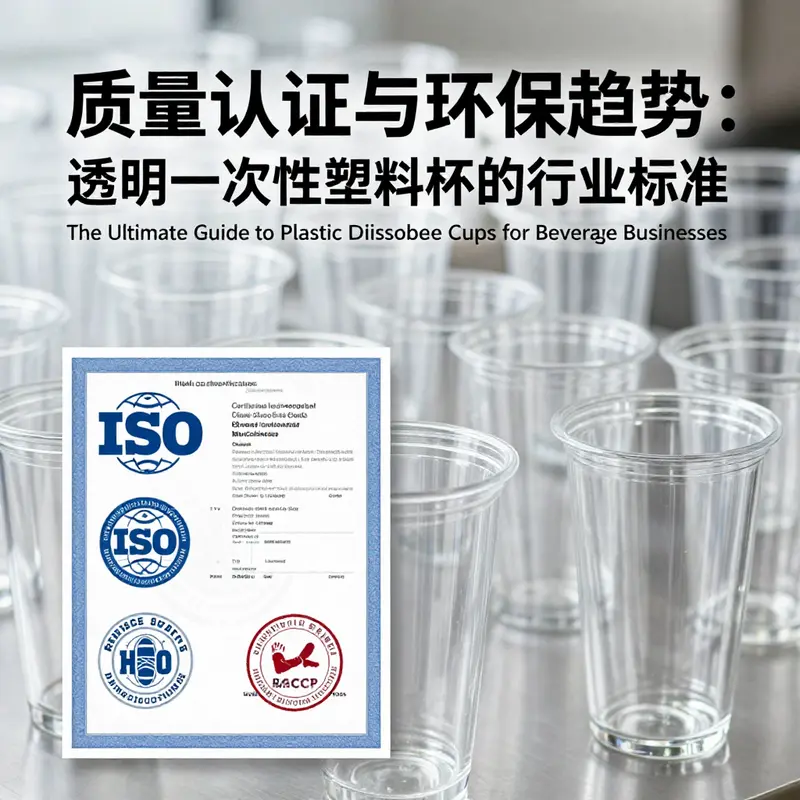
The drift toward a future where the clarity of a cup does more than just showcase a beverage begins with a set of converging priorities: rigorous quality, robust safety, and an urgent push for environmental responsibility. Transparent disposable cups occupy a unique position in consumer-facing packaging. Their visual appeal must be matched by predictable performance and transparent sustainability claims. In recent years, the regulatory landscape surrounding plastic food-contact products has shifted from a narrow concern with basic safety to a comprehensive framework that emphasizes heat tolerance, migration limits, and end-of-life stewardship. This evolution is not merely a compliance burden; it reshapes how manufacturers design, test, label, and recycle their cups. To understand where the industry stands, it helps to trace the path from traditional safety expectations to the current, more ambitious standard set that governs both everyday use and high-stakes applications in food service, retail, and hospitality.
At the heart of this transformation is a newly adopted framework that classifies transparent cups by their heat resistance. The latest national standard, GB/T 18006.1-2025, took effect in 2026 and replaces the older 2009 version. This update is foundational because it directly affects the usability of PP- and PET-based cups in hot and cold beverage contexts. Under the new regime, cups are grouped into “heat-resistant” and “non-heat-resistant” categories, a distinction with practical consequences. A heat-resistant cup, typically made from polypropylene, can safely accommodate hot liquids up to roughly 70–90 degrees Celsius, depending on thickness and construction. A non-heat-resistant cup, more commonly associated with PET or certain polystyrene variants, remains suitable for cold or ambient-temperature beverages. The implication for operators of cafes, beverage shops, and event caterers is straightforward: the labeling and the material choice must align with the expected service temperatures to avoid compromise of safety, integrity, or consumer experience.
The standard’s emphasis on performance is matched by a precise set of testing conditions designed to minimize cross-lab variability. Laboratories conducting conformity tests follow a controlled environment: (23±2) degrees Celsius and relative humidity of 50±10%. Samples undergo a dwell period of no less than four hours before testing to ensure that material properties reflect a stable state rather than transient processing conditions. These details may seem granular, yet they provide a reliable basis for comparing products from different suppliers. When a cup bears the label “heat resistant” in the marketplace, buyers should expect such testing to have been completed and documented in a format consistent with GB/T 18006.1-2025. In practical terms, this means that if a cup is used for hot coffee, tea, or hot chocolate, its cup wall should resist deformation, delamination, or surface cracking under specified heat exposure without compromising structural integrity.
Alongside heat performance, food safety remains a core criterion of quality. All cups designed for contact with food must meet the requirements of food-contact materials standards. The most widely cited framework in this respect is GB 4806.7-2023, the standard for plastic materials intended for use with foods and related products. This standard establishes the baseline for safety testing, including migration limits and the overall approach to evaluating substances that could transfer from packaging into beverages. The concept of total migration, which measures the cumulative amount of substances that can migrate from the cup into a simulant of food or beverage, is central to risk assessment. Under GB 4806.7-2023, the total migration limit is a key performance indicator that pulses through regulatory discussions and supplier qualifications alike. A typical target in many markets is a cap on total migration at 30 milligrams per square decimeter, depending on the testing protocol and the specific resin system used. This threshold is designed to limit exposure to a range of potential migrants that could affect flavor, odor, color, or safety over time.
In addition to total migration, specific migration testing targets particular substances that may migrate from the plastic into the beverage. For example, restrictions on substances such as bisphenol A (BPA) are well known in consumer markets, though the exact scope of regulated substances can vary by jurisdiction and by the specific resin type. The overarching principle is that materials intended for repeated contact with heat should not release harmful compounds in quantities that could pose a risk to health, even after prolonged exposure. Heavy metals, fluorescent whitening agents, and other additives are similarly scrutinized, with explicit limits and rigorous testing protocols to ensure compliance. The result is a layered safety envelope in which manufacturers must demonstrate not only that a cup is mechanically sound but also that its chemical profile remains within tightly bounded limits throughout its use and disposal. This holistic approach to safety reflects a broader shift toward more science-based decision-making in packaging.
The environmental dimension of the current standard framework expands beyond the immediate safety concerns to address end-of-life considerations. The industry now recognizes two major pathways for sustainability: recyclability and biodegradation, with a growing emphasis on single-material design that simplifies downstream processing. In practice, this means many suppliers are moving toward polymers and constructions that are easily recyclable in standard municipal streams, and some are exploring bio-based or compostable options that meet industrial composting criteria under relevant guidance. The literature associated with this trend points to parallel frameworks for biodegradability and recyclability. For instance, certain guidelines reference GB/T 38082-2019 and GB/T 19277.1-2023 in the context of biodegradable solutions under controlled composting conditions and the measurement of biological degradation under specified environments. The rationale is straightforward: if a cup can be recovered and reintegrated into a circular economy rather than ending up as litter, its material choice and design must facilitate that lifecycle.
Choosing between a recyclable, heat-tolerant PP cup and a transparent PET variant often comes down to product performance plus lifecycle outcomes. PP cups typically excel in heat tolerance and rigidity, making them a dependable choice for hot beverages and long service life in fast-paced service environments. PET cups, on the other hand, offer exceptional clarity and a lighter touch that can enhance visual appeal for cold drinks, but their heat resistance tends to be more limited, requiring careful alignment with intended use. Some manufacturers pursue a hybrid strategy—featuring heat-resistant PP bases or double-wall constructs with PET shells—to balance thermal performance with aesthetic transparency. When browsing options, buyers should verify not just the material designation, but the broader packaging story: how the cup is assembled, whether there are insulation features, and how the product is marketed in terms of recyclability or composting compatibility. In essence, the material choice should align with both intended beverage temperature profiles and the brand’s environmental commitments.
Standards for safety and performance are complemented by a suite of quality-management and social-responsibility certifications that buyers frequently use as signals of reliability. ISO 9001 and ISO 14001 certify quality management and environmental stewardship, respectively, while industry-specific standards such as BRCGS, HACCP, and FSSC 22000 speak to food-safety management systems within the broader supply chain. SEDEX or BSCI audits address labor and ethics across production facilities. For companies seeking to minimize risk in global sourcing, pursuing suppliers that hold these credentials—especially when combined with a robust audit trail and traceability data—is a prudent strategy. In the context of transparent cups, these certifications do more than reassure buyers about manufacturing discipline; they also indicate a supplier’s commitment to consistent product performance, responsible materials sourcing, and transparent reporting, all of which are crucial in a market where consumer expectations for safety and sustainability are perennially high.
Yet standards and certifications must be weighed against the realities of procurement on dynamic platforms. The Alibaba ecosystem, as outlined in market summaries, offers an expansive catalog of transparent cups, lids, and related accessories. The sheer breadth of options means buyers should approach sourcing with a structured plan: define the service scenario (hot vs cold, single-use vs reusable, retail display vs food-service use), confirm the required heat tolerance category, and then verify the supplier’s documentation. The presence of formal certificates is valuable, but it should be accompanied by practical due diligence—confirming the certification scope, the validity period, and the specific product tested. Independent verification remains a wise precaution, given that certificates can sometimes reflect a facility’s capabilities rather than every individual product batch.
The procurement narrative also includes the practical realities of pricing, sampling, and customization. For buyers who need to balance cost with performance, it is common to find a tiered structure in which base-clear cups are priced in the lower range while assembly options—such as cups with lids, straw holes, or double-wall insulation—sit at a premium. In this landscape, there is a compelling case for leveraging sampling programs to validate that a product truly meets the stated performance thresholds before committing to large-scale orders. Sample availability at favorable price points reduces market risk and enables brands to test fit with their beverages, branding ambitions, and event contexts. A concrete example in practice is obtaining a small lot of samples at a nominal cost to confirm that a heat-tolerant PP cup maintains its integrity after exposure to typical serving temperatures and beverage compositions. The resulting data then informs a more confident scale-up decision.
From a consumer-facing perspective, lifecycle considerations increasingly influence choice. Clear labeling that communicates the material (for instance, polypropylene or PET), the heat-resistance rating (such as “耐热70℃” or its international equivalent), and the intended use category helps minimize misuse and optimize the consumer experience. In a world where consumers are more aware of environmental implications, labels that point toward recyclability, the presence of recycled content, or composting compatibility—when applicable—are valued signals. This alignment of product performance with environmental messaging is not merely a marketing tactic; it reflects a broader societal shift toward responsible consumption and responsible production. While not every cup will be categorized as fully biodegradable, the industry is increasingly transparent about the end-of-life trajectory, enabling buyers to select options that harmonize with their sustainability objectives and local disposal infrastructure.
This broader ecosystem of standards, certifications, and environmental considerations has practical implications for the way cups are designed and marketed. Designers are incentivized to pursue simpler resin systems wherever possible to minimize the risk of unintended migration while maintaining clarity and strength. They also seek to minimize multi-material complexity that might hamper recyclability. Lids, straw slots, and insulation features are increasingly designed with standardization in mind, enabling easier stacking, safer transport, and more efficient warehousing. In turn, procurement professionals are empowered to demand specific documentation: demonstration of conformity to GB/T 18006.1-2025, details of the testing regime used to assess heat resistance and mechanical performance, and explicit migration testing results in line with GB 4806.7-2023. Collectively, these criteria form a robust evidence base that boosts confidence in both safety and quality when cups flow through supply chains and into cups, cafes, or catering menus.
To ground these insights in practical action, consider the following synthesis: when evaluating transparent disposable cups, prioritize products that are clearly labeled for heat exposure, and verify the exact temperature threshold and duration tested. Look for evidence of modern QA practices such as controlled temperature cycling, mechanical stress tests, and real-world usage trials. Confirm the presence of a complete set of safety documentation, including supplier certifications and a traceable batch history. Where environmental responsibility is a priority, ask about recyclability, post-consumer recycled content, and any applicable biodegradation or industrial composting certifications. While certifications themselves are informative, the combination of a reliable material choice, a proven heat-resistance profile, adherence to migration limits, and a transparent environmental narrative is what ultimately distinguishes cups that perform well in real-world settings from those that merely look right on store shelves. In the end, the question buyers should ask is not only “Can this cup hold hot liquid without deforming?” but also “What happens to this cup at the end of its life, and how does its design support a circular economy?”
In this broader frame, the role of suppliers who operate on platforms like the ones described in the market overview becomes more than a transactional convenience. A supplier who presents a full dossier—test reports, third-party audits, and clear labeling aligned with GB/T 18006.1-2025—serves as a strategic partner in reducing risk, enabling faster go-to-market timelines for restaurants, cafes, and event organizers seeking reliable packaging solutions with a clear environmental story. The result is a market where the cup’s clarity is matched by the clarity of its compliance and its commitment to the planet. And because the consumer experience turns on predictable performance as much as on visual appeal, this alignment between form, function, and responsibility is not optional; it is essential.
For buyers seeking to explore this landscape further, one practical entry point is the availability of a wide selection of clear cups designed for events and everyday use. These products, including those sourced from international suppliers, illustrate how the modern cup must deliver both aesthetic appeal and dependable safety. To illustrate a concrete example from the marketplace, see a representative product page that showcases a clear disposable cup designed for cold beverages and light use at gatherings. This item exemplifies how suppliers balance optical clarity with structural integrity, while also signaling available customization options and packaging configurations that brands often require for promotions or seasonal campaigns. For readers looking to see how a typical product is presented in a catalog-style listing, this link offers a useful snapshot of the current market standard for transparent cups and related accessories: clear disposable cups for events.
Looking ahead, the trajectory of the transparent cup market is likely to feature even greater emphasis on lifecycle data and supply-chain transparency. As regulators continue to refine migration testing, heat-resistance specifications, and labeling requirements, manufacturers will increasingly adopt integrated documentation packages that tie product performance directly to published standards. The envisaged result is a packaging ecosystem in which a consumer can observe, at a glance, the material, the heat tolerance, the migration profile, and the end-of-life pathway for a cup used in a given beverage context. For brands, this depth of information translates into more reliable product development cycles, reduced regulatory risk, and a stronger platform for communicating sustainability commitments to a discerning public.
In sum, the current moment for transparent disposable cups is defined by a triad: the structural clarity of the cup, the safety of the material in contact with food, and the environmental story embedded in its design. GB/T 18006.1-2025 anchors the first two axes by clarifying heat resistance and testing protocols, while GB 4806.7-2023 and related environmental standards guide the third. The interlocking nature of these standards means that success in today’s market hinges on more than meeting a safety threshold; it requires a holistic approach to product development, labeling, and end-of-life planning. As buyers and manufacturers navigate this landscape, they ought to pursue suppliers who can articulate a complete compliance and sustainability narrative—evidence-based, transparent, and aligned with the evolving expectations of regulators, retailers, and consumers alike.
External resource for further reading: https://www.fda.gov/food-packaging-food-contact-materials
Final thoughts
In conclusion, plastic clear disposable cups serve a vital role in the beverage industry, especially for bubble tea shops, restaurants, and event planners. By understanding their specifications and market applications, implementing effective pricing strategies, and ensuring compliance with quality certifications, businesses can enhance their service offerings while maintaining a focus on safety and sustainability. As the market continues to evolve, staying informed about trends and materials will empower you to make the best choices for your products and customers.