
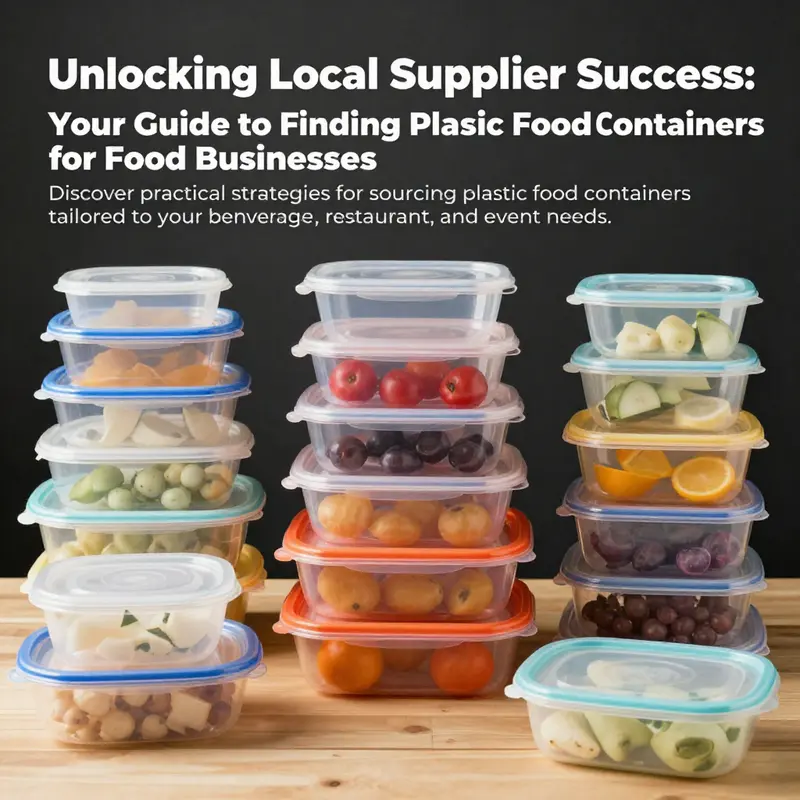
In the competitive world of food and beverage service, sourcing quality packaging materials is essential for maintaining product integrity and enhancing customer experience. For bubble tea shops, restaurants, food trucks, and catering services, finding reliable local suppliers for plastic food containers can seem daunting. However, with the right strategies, you can locate suppliers who meet your specific needs while ensuring product quality and customization options. This article will walk you through the steps to effectively find a local plastic food container supplier near you, covering essential mapping services, local directories, online platforms, understanding the supply chain, and evaluating quality and customization from suppliers.
Locating a Local Plastic Food Container Partner: A Mapping-Driven Path to Near-Home Sourcing
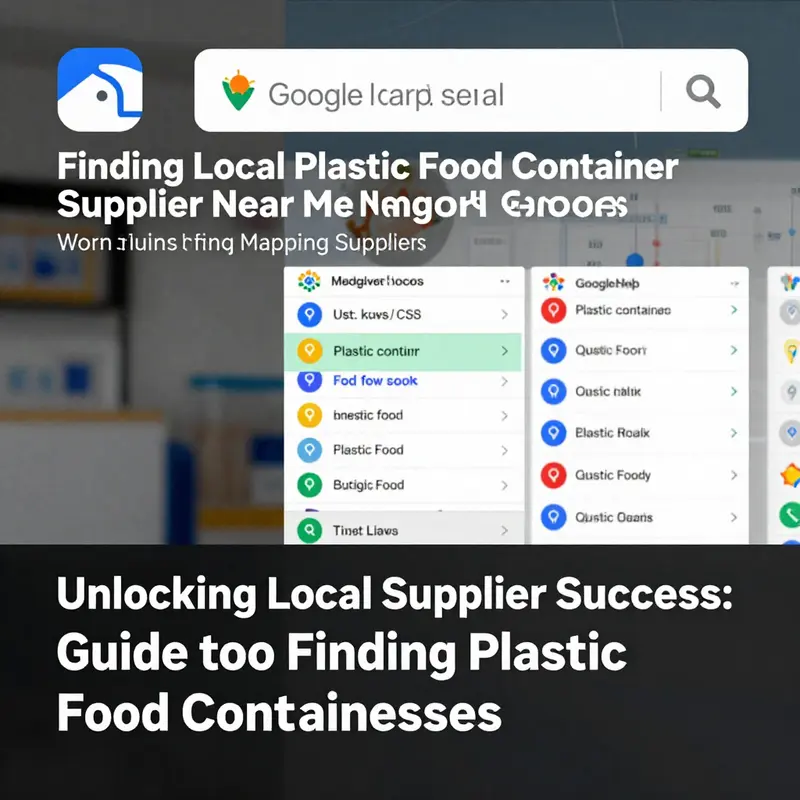
Locating a local plastic food container partner can feel like a scavenger hunt across a crowded landscape of suppliers, distributors, and manufacturers. Yet a mapping-based approach turns that labyrinth into a navigable route, where street addresses, hours, and real-world feedback become the compass. The core idea is simple: use mapping services to reveal nearby players who actively serve the food-packaging ecosystem, and then sift through the results with careful criteria that match your safety, quality, and logistics needs. In practice, this means starting with clear search phrases that blend location with product focus—phrases like plastic food container supplier near me, or food-grade plastic packaging suppliers in your city. The map will surface a spectrum of options, from factories tucked behind industrial parks to regional distributors who stock a broad range of containers, from takeaway boxes to reusable serviceware. What emerges is not a definitive list, but a curated roster that you can vet in person or over the phone, a first pass that reduces guesswork and accelerates decision-making in markets where timing and compliance matter just as much as price.
As you review results, you begin to see patterns. Many maps highlight companies that are technically within your metro area yet operate primarily as re-packagers or local distributors, rather than full-scale manufacturers. Others showcase well-established producers that have built regional networks, offering quick resupply and more predictable lead times than distant suppliers. This hybrid landscape matters because it directly affects your sourcing strategy. If you prioritize speed and local support, you may favor distributors who can provide responsive service and returns, while if you need custom specifications or large runs, you might gravitate toward nearby manufacturers who can tailor formulations and packaging designs with shorter freight corridors. The balance you strike will shape not only cost, but also risk, traceability, and the ease with which you can verify compliance.
A key advantage of the mapping approach is the ability to cross-check details that matter for food safety. Click into individual listings to confirm a company’s credentials: physical address, phone number, business hours, and, crucially, whether the listing points to a site with a food-grade portfolio, certifications, or documented quality processes. You’ll want to filter out options that lack visible criteria relevant to edible applications. For many buyers, the presence of an established quality management system, third-party certifications, or batch-tracking capabilities is a strong signal that a supplier can meet stringent requirements for shelf-stable and microwave-safe containers. If a listing mentions a specialization in disposable takeout boxes, multi-compartment meal containers, or child-safe packaging, that can be a practical indicator of experience with the specific challenges of food contact materials. These markers help you avoid suppliers who may be strong in plastics in general but lack the safety assurances your operation demands.
The step from discovery to decision is the step toward diligence. Local suppliers may differ markedly in minimum order quantities, price bands, and customization options. Some wholesalers can only offer standard formats with limited branding, while nearby manufacturers may accommodate custom colors, sizes, or labeling requirements with shorter cycles. The proximity advantage here is not only about faster delivery; it’s about more flexible negotiation and easier on-site collaboration. When evaluating a candidate, consider whether they can provide samples for testing—food-contact tests, seal integrity checks, and compatibility with your intended heat or cold processes. You should also probe for lead times, stock availability, and the reliability of shipments to your location. A good local partner can often offer emergency replenishment or on-demand production adjustments that international suppliers simply cannot match without significant coordination.
As you move from map view to conversations, you begin to translate map data into a practical sourcing plan. Reach out with a concise, professional inquiry that outlines your baseline needs: the types of containers (for example, small lunch boxes, multi-compartment meal boxes, or large takeaway containers), material family (polypropylene, PET, or other food-grade plastics), preferred certifications, and expected monthly volumes. Ask about minimum order quantities, pricing tiers, customization capabilities, and whether the supplier can support a trial order to test performance, sealing, and compatibility with your processes. In some cases, the conversation will reveal a local player who can tailor packaging to your brand while offering a quick turnaround, a combination that reduces the friction many buyers encounter when importing or coordinating with distant manufacturers. If your plan includes branding or labeling, this is the moment to confirm whether the supplier can provide on-site printing, labeling, or co-packing services, which often matter more for regional menus, meal kits, or promotional events.
A practical approach to narrowing the field is to prioritize a few non-negotiables that map-based discovery makes tangible. First, assess the food-safety credentials. A local supplier may be certified or able to provide documentation for food-contact compliance, whether through national standards or internationally recognized schemes. Second, evaluate material suitability for your use case. Are containers microwave-safe, leak-resistant, and compatible with your cleaning or sanitation workflows? Do they withstand your typical service temperatures and storage conditions? Third, confirm logistics practicality. Proximity reduces transit risk and enables easier returns, exchanges, and last-mile support if a batch issue occurs. Fourth, consider the supplier’s ability to support your growth. If you anticipate seasonal spikes or expanded product lines, does the partner have scalable capacity, even if it’s a mid-size facility or a regional plant? These filters help you distill a long list into a short list of credible contenders whose proximity translates into operational resilience.
To illustrate how local proximity can shape your choices, imagine a scenario where mapping reveals three probable partners within a 25-kilometer radius. The first is a small converter with a strong focus on customized shapes but higher MOQs. The second is a regional distributor with extensive stock and fast shipping but limited customization. The third is a medium-sized manufacturer with a broad product line and a track record of food-grade certifications, albeit with longer lead times during peak season. With this palette, you can plan a staged engagement: request samples from all three, compare performance against your quality benchmarks, and assess the practicalities of establishing a long-term agreement. The local partner who can blend customization with reasonable stock and reliable delivery often becomes the best strategic fit, even if their unit price is slightly higher than the big-volume importers. The key is a partnership that aligns with your service promises, whether that means same-day restocks for a busy campus cafe or consistent, predictable packaging for a growing meal-prep program.
Beyond the nuts and bolts of discovery and verification, you should also consider how mapping-based sourcing interacts with broader procurement practices. Local suppliers often provide better after-sales support, easier returns, and clearer channels for communication, all of which reduce the friction that can derail a packaging project. You may find that a near-by supplier is more willing to partner through a multi-year program, offer co-branding opportunities for seasonal menus, or collaborate on sustainable packaging initiatives that align with your environmental goals. In parallel, use local business directories and industry events to complement your map-driven search. Trade associations often maintain vetted lists of members with certifications and case studies, while regional packaging expos can offer live demonstrations of material performance, allowing you to observe seal integrity, dishwasher resistance, and microwave safety firsthand. These gatherings can turn a digital lead into a tangible, trustworthy supply relationship with verifiable track records.
As you weave together mapping results with direct outreach, it’s helpful to anchor your exploration to a single, credible example that demonstrates how local proximity translates into real advantages. In practice, you might identify a nearby supplier that not only carries a broad range of food-grade containers but also offers quick-turn samples, on-site visits, and a transparent certification dossier. This kind of partner can shorten the path from concept to store shelves, enabling you to test packaging configurations alongside your product workflow, verify compatibility with your labeling system, and adjust orders in response to demand without waiting weeks for import schedules. The outcome is not merely a single purchase but a collaborative relationship built on shared reliability, safety, and speed. The moving parts—certification, material choice, and logistics—become a cohesive system rather than a patchwork of disparate elements. And because the supplier sits in the same region, your team gains a more predictable cadence for quality checks, audits, and recalls, should they ever be necessary.
In this light, the mapping-based path to a local plastic food container supplier is less about finding the cheapest option and more about identifying a practical, scalable partner who can help you meet safety standards, protect brand integrity, and satisfy customer expectations with punctual deliveries. The exercise also reveals how local sourcing can reduce carbon footprints and strengthen local economies while still delivering the performance you require for takeout services, meal-prep programs, or hospitality operations. If you are just starting this journey, approach it with a plan that prioritizes safety, reliability, and serviceability as your core criteria. Reach out to a few shortlisted candidates, arrange for samples, and schedule brief site calls if possible. Document your findings in a simple scorecard that weighs certifications, lead times, MOQs, and the ability to support customization against your current and near-future needs. By keeping the process anchored in local proximity and practical requirements, you can avoid the friction of chasing global extremes and instead cultivate a dependable supply chain that keeps your products compliant, your customers satisfied, and your business moving forward.
For a concrete example within this landscape of sourcing, you can explore a nearby supplier network that emphasizes practical packaging solutions and branded options through a focused product catalog. If you’re curious about a potential partner that aligns with this approach, you can explore a catalog that includes a range of takeaway packaging and related disposable tableware, where the emphasis is on reliable performance and adaptable service. As you review the material, consider how such a local collaboration could evolve into a logistics-friendly, co-branded, or sustainability-focused program that scales with your needs. This kind of strategic alignment—rooted in mapping, validated by certification, and energized by local collaboration—can transform the search for a plastic food container supplier near you from a momentary task into a durable competitive advantage.
Internal link reference: when you’re ready to explore adaptable, locally supported packaging options, you can view a practical example of customizable takeaway packaging through a supplier catalog that emphasizes theme-party needs and branded presentation, which illustrates how local proximity can complement customization and branding strategies. custom takeaway packaging supplies.
External resource: for further context on eco-friendly packaging options and practical design considerations, see this external resource on packaging variety and performance: https://ecocupbowl.com/product/eco-friendly-disposable-3-compartment-food-grade-packaging-box-for-fast-food-high-quality-takeout-boxes-for-fried-chicken-french-fries-packaging/.
Tracing Local Supply Lines: Finding a Plastic Food Container Supplier Near Me Through Community Directories
Sourcing plastic food containers from a supplier who is truly nearby begins with a practical reframing of the search. Instead of casting a wide net across distant factories and global wholesalers, the most reliable path often lies in how a community’s business directories map local manufacturing and wholesale capability. When you start from the premise of proximity, you gain more than shorter lead times; you unlock opportunities for hands-on quality checks, quicker problem resolution, and a more flexible collaboration that can adapt to seasonal demand, menu changes, or regulatory shifts. The core idea is simple: local directories are not just lists; they are gateways to real companies with roots in your region, familiar supply chains, and a willingness to speak in person about packaging needs that match the exact context of your operation.
Begin with a disciplined approach to discovery. Fire up a mapping service and search for terms that describe your interest without overcomplicating the query. Instead of a highly specific product name, try phrases like “plastic food containers suppliers near me” or “wholesale plastic food containers in [your city or region].” The aim is to surface a cluster of nearby options that you can evaluate in person or through a short call. What makes this step powerful is the combination of location data with practical details—reviews, hours, and direct contact channels—that let you move quickly from curiosity to conversation. A nearby supplier who accommodates small to mid-size orders can be a decisive advantage when you need to scale up for a busy season or tailor packaging for a new line.
From there, broaden the lens to industry-specific directories and local business networks. In many regions, chamber of commerce listings, regional packaging associations, and local trade groups maintain searchable member directories. These sources are curated by commercial organizations that understand the packaging landscape, including the regulatory and safety considerations that govern food-contact materials. The value of these directories rests in their intent to connect buyers with credible manufacturers and distributors who are active in the community, maintain transparent business practices, and support local supply ecosystems. When you navigate these directories, you’re less likely to encounter opaque middlemen and more likely to engage directly with firms that stand behind their product specifications and quality assurances.
A practical way to leverage this ecosystem is to treat the directory as a map with layers. The first layer identifies potential suppliers within a reasonable radius. The second layer highlights those who explicitly list capabilities aligned with your needs—such as customizable sizes, material options, and compliance with food-safety standards. The third layer invites you to examine the firm’s capacity for OEM/ODM work, batch sizes, and lead times. Although the focus remains local, it’s important to recognize that not every local listing will be a perfect fit, and that is okay. The directory helps you sort through the landscape methodically so you can focus conversations on a handful of candidates who truly align with your operational tempo and product standards.
As you begin narrowing the field, direct outreach becomes your next decisive step. A well-crafted inquiry that reflects your context is more effective than a generic request for quotes. Introduce your business succinctly, describe your typical order size, and specify the packaging formats you’re considering—without assuming a particular product line. If you are open to variations in design, material, or customization, say so. Clarity at this stage reduces back-and-forth and accelerates the evaluation cycle. When vendors respond, you’ll see how well they understand the food-service packaging market in your area, how transparent they are about MOQs and pricing, and how agile they are in communicating production realities such as lead times, inventory status, and potential delays.
A critical aspect of local sourcing is the ability to verify quality and compliance without lengthy travel. The directory can point you to firms that offer on-site visits or enable remote audit options. Request samples or a small pilot batch to test mechanical strength, leak resistance, and suitability for the thermal demands of your menu. The testing you perform in-house—whether it’s microwaving, freezing, or dishwasher exposure—should reflect your actual service conditions. You may also want to verify that the containers are appropriate for your chosen storage and handling practices, including stacking stability for efficient shelf space management and uniformity in container walls to ensure consistent heat distribution and ease of labeling. This practical due diligence reduces risk and helps you choose a supplier who will be a stable partner as your business grows.
Another virtue of local directories is the opportunity for face-to-face engagement. An initial in-person meeting can yield insights that no remote conversation can十分 reveal. You can tour the facility, observe the cleanliness and organization of the production lines, and gauge whether the supplier’s capacity aligns with your peak demand periods. In a market that prizes responsiveness, a local presence often correlates with shorter feedback loops. When you can walk through the factory, you gain confidence that the supplier can deliver on time, with consistent quality, and with the flexibility to accommodate occasional demand spikes without compromising service levels. This level of assurance is especially valuable for businesses operating in regulated food-service environments where traceability and quality control are not optional but essential.
While proximity is appealing, it is also wise to maintain a balanced view of the broader supply landscape. Local directories can reveal gaps—the absence of a supplier who can meet your MOQs for a specific container style or the lack of capacity to support ongoing replenishment. If you encounter such gaps, you may decide to diversify by keeping a small, carefully vetted mix of local partners and regional or national suppliers who can step in when demand outstrips local capacity. The directory framework supports this strategy by helping you keep a reliable “local-first” pipeline while reserving back-up options to ensure continuity. The objective is not to close off the world but to anchor your main sourcing network in your own geography where it can deliver for you most reliably.
An important operational practice to embed as you build your local supplier map is a standing review cadence. Schedule periodic check-ins with your chosen partners to reassess lead times, price stability, and product developments in the packaging space. Packaging standards evolve with sustainability goals, new processing techniques, and changing regulatory expectations. Your local directory-informed network should be a living system, where you adapt your supplier mix as conditions shift—customer demand, shift in raw material costs, or new hygienic testing requirements. A thoughtful cadence helps you stay ahead, not just stay compliant.
The value of this approach also extends to cost management and supplier development. Local suppliers can offer shorter payment terms for nearby customers or co-create packaging solutions that reduce waste and optimize storage. As you mature your relationships, you may discover opportunities for co-packaging or joint packaging development that can lower total landed costs and simplify fulfillment. When you pursue these possibilities, ensure that any collaboration aligns with your brand’s values and your customers’ expectations for safety and convenience. The directory-driven process is not a one-off project but an ongoing investment in a robust local supply chain that supports consistent product quality and responsive service.
To bring these ideas together, it helps to keep a structured but flexible mentality. Begin by compiling a short list of nearby firms flagged in local directories as packaging or plastics manufacturers. Reach out with a concise, tailored inquiry and request samples and a clear understanding of MOQs, customization options, and lead times. Use a trial order to evaluate reliability and quality, and set specific acceptance criteria that reflect your product line and service standards. If a local partner proves strong, deepen the relationship with regular communication and shared performance metrics. If not, you’ll still have a concise, reality-checked map of nearby options to pivot to without sacrificing speed or quality.
For readers who want a concrete starting point in this path, a practical seed can be found in a widely used procurement resource that showcases how manufacturers in a given region present product data and business terms. While the directory itself is not a product catalog, it demonstrates the kind of structured information you should seek when evaluating local suppliers—clear product capabilities, transparent pricing, and straightforward MOQs. The example supplier page linked through one of the major platforms illustrates what to request from a local partner: detailed specifications, production capacities, and contact information that shortens the distance between interest and order. Access to verified supplier details on such platforms can help you validate local options quickly, while your own fieldwork—site visits, samples, and direct conversations—provides the real-world confirmation you need before committing.
In the end, the search for a plastic food container supplier near you is less about chasing a single perfect match and more about building a dependable local ecosystem. Directories are your initial map; on-the-ground engagement becomes your confirmation of fit. By combining proximity with practical diligence, you create a sourcing channel that is not only efficient but resilient in the face of demand variability and evolving packaging standards. This approach aligns closely with the broader objective of the article: to help buyers navigate the practical realities of securing reliable, compliant, and scalable plastic food container supply, with a local emphasis that strengthens community business ecosystems and shortens the distance between producer and plate.
Internal resource for further exploration: you can explore related packaging solutions and supplier profiles that illuminate how regional partners communicate capabilities and collaborate on custom packaging projects. For a deeper look at a practitioner-facing take on takeaway packaging and related containers, consider a detailed page dedicated to customized take-away packaging supplies. custom-takeaway-packaging-supplies-disposable-tableware-for-theme-party.
External resource: to anchor this chapter in a broader context of supplier directories and cross-border sourcing options, see the supplier directory overview that profiles regional manufacturing capabilities and provides a template for evaluating local firms. https://www.made-in-china.com/products/500168927837.html
From Local Needs to Global Platforms: How Online Marketplaces Help You Find a Plastic Food Container Supplier Near Me
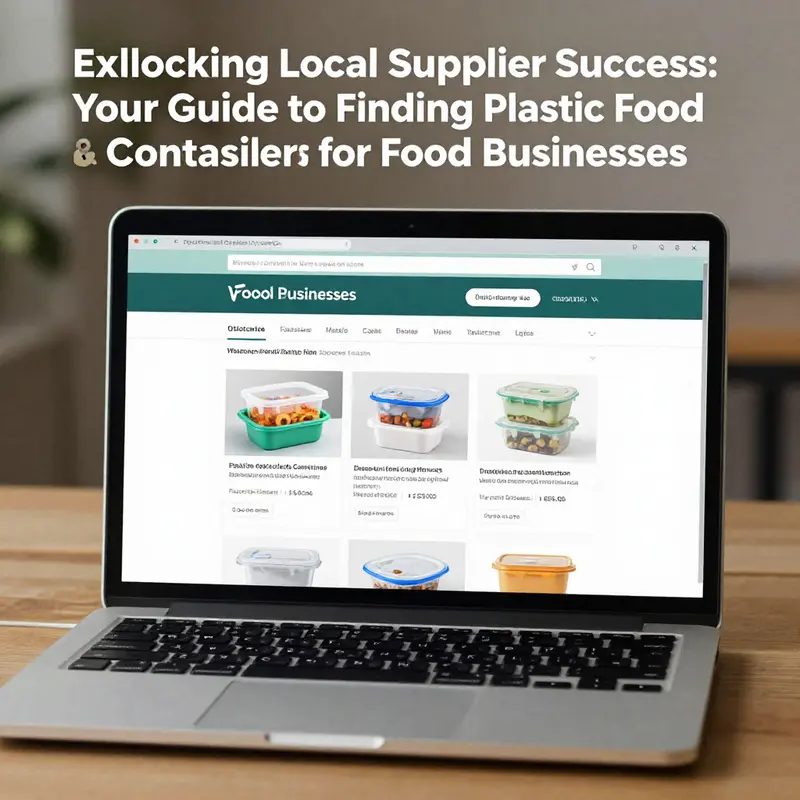
Finding a plastic food container supplier near me often requires more than a quick search for a brand or storefront. It demands a blend of local knowledge, supply-chain savvy, and the ability to navigate online platforms that connect buyers with manufacturers and distributors across regions. The landscape today is shaped by global marketplaces and regional directories that host thousands of suppliers, many of which operate from nearby manufacturing hubs. The key is to focus on capability proximity, not just geographic distance: can a supplier scale to your needs, meet lead times, and comply with safety and packaging standards. Online platforms, when used with a structured approach, can reveal local options even if a true nearby supplier is not immediately visible.
Online marketplaces offer broad catalogs and powerful filters. You can start with a global B2B marketplace and then narrow results by country, region, or city while filtering by container type, material, and customization options. A typical path is to identify suppliers who also maintain a regional distribution footprint or to locate a regional distributor who aggregates products from nearby factories and can provide localized service and faster delivery.
On platforms, product formats range from disposable trays to bakery boxes and specialized packaging. Pricing is often volume-based, with minimum order quantities that reflect tooling costs for customized items. Be aware that a more favorable price per unit may require larger orders, but many suppliers will entertain staged pilots or sample orders to validate fit before committing.
To translate online discovery into a local arrangement, use guardrails: verify production capacity and lead times, request documentation on material safety and compliance with local standards, and negotiate terms up front. Ask for samples and a clear timeline for delivery; treat every profile as a data point rather than a promise.
Practical steps include defining your container types and regulatory needs, using distance filters to prioritize nearby options, requesting samples, and scheduling virtual or on-site inspections when possible. Maintain a simple evaluation scorecard that compares lead times, MOQs, pricing, quality controls, and post-sale support. The payoff is a credible path to a local supplier who can meet your requirements while offering the reliability of a nearby presence.
Across platforms, the supplier profile should show manufacturing capability, quality practices, and a track record of reliable delivery. For recommended next actions, reach out with a staged ordering plan, ask for production samples, and explore regional fulfillment arrangements that can shorten lead times and simplify communication.
For ongoing sourcing, consider the broader ecosystem: packaging blogs and industry resources can provide context on design, sustainability, and best practices for various container formats. While online platforms enable breadth, the strongest local partnerships come from responsive suppliers who can align with your operations and seasonal demand.
null
null
Quality, Customization, and Local Footprint: Navigating Plastic Food Container Sourcing Near You
Sourcing plastic food containers from a supplier near you is more than a search result. It is a careful balance of safety, performance, and the ability to tailor packaging to the demands of your operation and your customers. In markets where local producers are scarce, the distance between intention and implementation often hinges on a few practical truths: material safety, the capacity to customize, and the supplier’s ability to respond quickly as needs shift with seasons, menus, or marketing campaigns. When you frame your evaluation around these pillars, the value of a local or nearby partner becomes clear, not merely because of proximity, but because proximity often translates into shorter lead times, easier communication, and tighter accountability across batches. The discussion you follow weaves these ideas into a cohesive approach you can apply whether you’re running a bustling cafe, a meal-prep service, a food truck, or a caterer gearing up for events.\n\nMaterial safety is nonnegotiable. Modern food contact regulations are clear: containers must be food-grade and free of substances that could migrate into food under typical conditions. A reliable supplier will provide transparent documentation showing that their plastics meet applicable standards and, ideally, third-party test results. In practice, this means you should look for BPA-free plastics and assurance that the materials comply with recognized frameworks such as FDA 21 CFR in the United States or corresponding EU regulations elsewhere. The value of this documentation goes beyond regulatory compliance. It creates a trail of accountability for every batch, something you can request in advance and reference during audits or quality reviews. When a supplier can share material sourcing details and testing outcomes, you gain confidence not just in the product’s safety, but in the integrity of the supply chain that stands behind it. It is reasonable to ask for a certificate of analysis or a material declaration that accompanies each production run. In many cases, a credible local producer will be able to provide scanned reports or a link to an online portal where you can verify material composition, additive packages, and any third-party lab results. This transparency is the backbone of trust that underpins ongoing partnership.\n\nBeyond safety, the performance characteristics of the containers matter just as much. Durability under typical handling, leakage resistance, and compatibility with dishwashers, microwaves, or freezers are daily considerations for anyone serving food. A local supplier who can demonstrate robust testing—such as seal integrity after repeated opening and closing, impact resistance, and resistance to cracking in cold temperatures—offers tangible value. If your operation involves freezing meals or transporting them under variable environmental conditions, look for packaging with features like pressure-equalizing vents or vented designs that balance moisture control with a secure seal. These features can prevent lid failure and product spillage during transit or long storage. If there is room for branding, think about how your containers will carry your label and marketing messages at the point of sale or during delivery. The ability to print logos, colors, or batch information directly on the lid or body of the container can elevate your brand and reduce the need for secondary packaging. When a local supplier can provide a short run of customized containers with your branding, you can test market responses without committing to large minimums or lengthy production cycles.\n\nCustomization flexibility is the second pillar, and it often defines the practical value of a nearby supplier. A capable local partner should accommodate a spectrum of customization—without forcing you into prohibitive costs or long lead times. This includes logo printing, but it also extends to shaping and sizing options, as well as specialized features that support your business model. For instance, containers with unique shapes or sizes aligned to specific menu items can streamline assembly lines and reduce waste in the kitchen. Specialized features such as vent holes designed for freezing or microwave-safe constructions can unlock new service models or cooking methods while preserving the integrity of the food. A forward-looking manufacturer may even offer more advanced customization like pressure-equalizing vents that prevent cracking during freezing while maintaining a tight seal. This level of sophistication matters for operators who rely on precise portioning, batch consistency, and a clean, professional appearance in every serve.\n\nIf your business leans on branding and customer experience, the ability to customize goes beyond just the container. It extends to packaging aesthetics and functional design that contribute to a seamless user experience. Local suppliers who understand the end-use context—whether you’re a food truck, a pop-up market, or a corporate catering service—can tailor features to reduce handling friction, improve stacking, and optimize space in storage and during transport. They can also advise on materials that balance sustainability with performance. For example, a supplier might offer compostable or recyclable options for certain lines while maintaining the same level of safety and durability. The key is not to settle for generic packaging when your brand story could be reinforced through design details on the containers themselves.\n\nHowever, customization must be weighed against production capacity and responsiveness. A supplier’s ability to meet bulk demands during peak seasons or promotional periods is a practical measure of reliability. Modern production typically relies on automation, injection molding, and streamlined assembly lines that deliver consistency at scale. Ask about their lead times, minimum order quantities, and the range of configurations they can support within those constraints. A local producer who integrates efficient tooling, quick-changeover capabilities, and a responsive design iteration process can shorten the path from concept to finished product. You should also inquire about quality control steps at different stages—from incoming raw materials to in-line inspection and finished goods testing. A transparent outline of QC procedures, along with a willingness to share batch-specific inspection data, signals a mature operation capable of sustaining performance across dozens or hundreds of batches.\n\nReliability rests on more than process and capacity. Certifications, audits, and customer feedback offer a triad of assurance that helps you validate a supplier’s claims. Certifications—whether they reference quality management systems, environmental stewardship, or occupational safety—indicate a structured approach to continuous improvement. While the exact designations vary by region, you should look for evidence of formal quality programs and industry-standard practices. In addition to formal credentials, solicit references or case studies from local clients with similar packaging needs. Seeing how a supplier has handled replacements, returns, or corrective actions in real world scenarios provides practical insight beyond glossy marketing statements. It is prudent to request samples before placing orders, particularly for new lines or customized solutions. Handling a few units first lets you test compatibility with your processes, verify printing fidelity, and assess perceived sturdiness under your usual handling conditions.\n\nThe geographic context adds another layer of value. Sourcing locally means closer proximity for communication, faster iterations, and easier on-site visits if needed. Local markets often come with a web of suppliers who understand the nuances of regional regulations, waste streams, and consumer expectations. Use mapping services to search for plastic container manufacturers in your city or nearby counties, and supplement with local business directories or industry associations. If a direct local option is hard to confirm, a nearby regional supplier who can meet your standards and respond promptly may still be a practical choice. It is useful to compare local options with near-shore or regional producers who share similar regulatory expectations. Filtering through regional platforms can narrow your field to candidates who can deliver within your required timeframes and who can maintain consistent communication during the production lifecycle.\n\nTo illustrate how these criteria translate into everyday decisions, consider the scenario of a business preparing for a seasonal surge in orders. A local supplier with reliable automation and a broad customization portfolio can adjust toolings and configurations to accommodate an uptick in packaging variants without sacrificing lead times. The ability to approve a small batch of customized containers with logo printing, a new lid design, or a different size before committing to a full production run can be a strategic advantage. In such cases, the supplier’s responsiveness matters almost as much as the final product’s physical properties. If a batch is delayed, the downstream consequences touch fulfillment accuracy, customer satisfaction, and the ability to scale marketing campaigns. This is why a pre-emptive supply strategy—mapping out contingency options, identifying backup vendors, and maintaining open channels for design feedback—pays off in the long run.\n\nThe chapter’s exploration of quality, customization, and reliability is not merely a checklist. It’s a holistic approach to choosing a local supplier who can grow with your business. It recognizes that packaging is not a one-size-fits-all commodity but a strategic tool that can reinforce safety, efficiency, and brand identity at every touchpoint. To translate these ideas into action, you can start by requesting a materials overview and a QC plan from two or three nearby producers. Compare their documentation, testing programs, and the breadth of customization options. Seek samples that reflect your intended use, and perform your own basic tests—seal tests, leak checks, and a simple microwave compatibility assessment if relevant. Evaluate how easy it is to communicate design changes and how quickly the supplier can respond with revised specifications or updated drawings. The more fluid your collaboration, the more reliable your packaging becomes as a lever for operational excellence.\n\nWhen you need a concrete path to practical sourcing, a few additional steps can help. First, use local search tools and industry directories to build a short list of candidates who claim to support food-grade, customizable packaging. Second, ask for third-party testing documentation or certifications that attest to material safety and process control. Third, request a small batch of samples to validate performance in your real-world environment. Fourth, explore the supplier’s capability in branding and design—confirm that your branding requirements can be fulfilled without prohibitive costs or long retooling times. Finally, weave in the supplier’s capacity for rapid response and flexible production planning, ensuring they can ride out demand spikes without sacrificing quality. These steps help you avoid scenarios where a promising supplier becomes a bottleneck due to misaligned capabilities or slow communication.\n\nFor those who want to see a practical example of how customization and packaging services are framed in the market, consider a provider that emphasizes themed, logo-ready takeaway packaging alongside standard containers. Such a portfolio demonstrates the breadth of options that a local partner may offer, from everyday containers to specialized packaging for events or promotions. This kind of capability matters when you’re trying to sustain a cohesive brand story across all touchpoints, from the kitchen to the pickup counter. It also highlights how a local supplier can be more than a vendor: a collaborator that helps you optimize processes, reduce waste, and deliver a consistent experience to your customers. If you’d like to explore a concrete supplier profile that showcases customizable takeaway packaging, you can review content like custom-takeaway-packaging-supplies-disposable-tableware-for-theme-party as a reference point for the kinds of features and services that a local producer might offer in practice.\n\nThroughout this chapter, the thread that binds safety, customization, and reliability is the end user experience. Packaging is a vehicle for safe, convenient, and aesthetically pleasing food delivery. When a local supplier meaningfully aligns with your operational realities—your menu rotation, your driving routes, your storage conditions, and your brand narrative—the packaging ceases to be a passive container and becomes an active partner in your business model. The result is not only compliance and performance but a packaging ecosystem that can adapt as your business evolves. As you navigate the search for a plastic food container supplier near you, keep your focus on the three essentials—material safety, customization capability, and reliable production capacity—and let proximity be a facilitative factor rather than a mere convenience. The chapter should flow into a broader discussion in subsequent sections, where other dimensions such as sustainability considerations, cost structures, and after-sales service will be explored in greater depth, always keeping the core idea in view: packaging that protects, performs, and reinforces your brand every time.\n\nExternal resource: For authoritative guidance on safety and material performance in food contact packaging, refer to the U.S. Food and Drug Administration’s overview of Food Contact Materials at https://www.fda.gov/food/food-contact-materials-labeling.\n
Final thoughts
Finding a reliable local supplier for plastic food containers is a critical step in ensuring that your food and beverage business thrives. By leveraging mapping services, local directories, and online platforms, you can effectively identify suppliers that meet your needs for quality, customization, and timely delivery. Understanding the supply chain can also provide insights into how to better negotiate and manage your relationships with suppliers, ensuring you get the best possible products for your business. Ultimately, investing time in the right supplier can significantly enhance your brand integrity and customer satisfaction.