
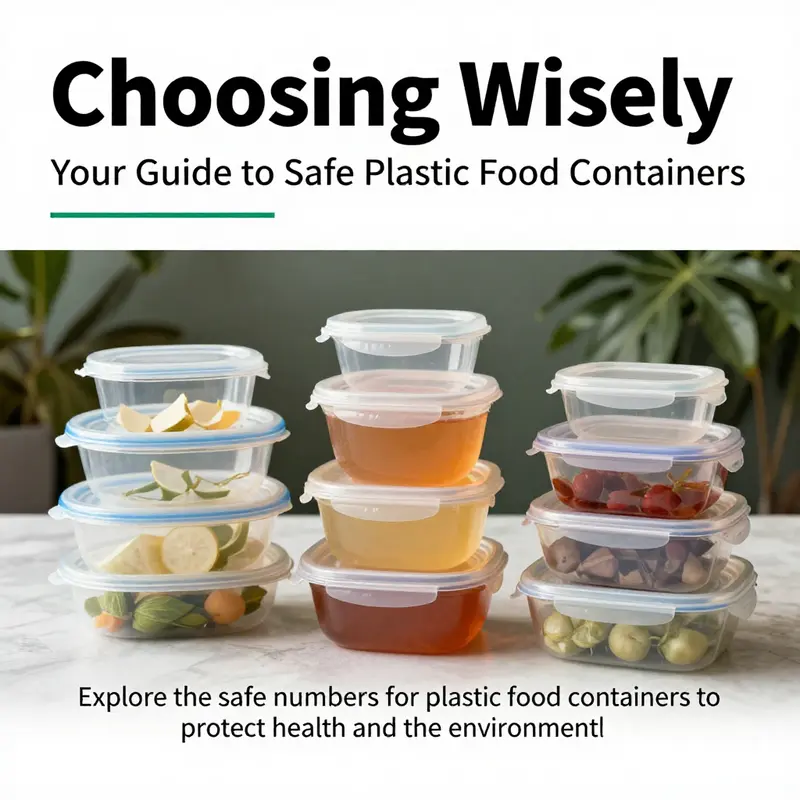
Navigating the world of plastic food containers can be overwhelming, especially for businesses in the food industry such as bubble tea shops, restaurants, and catering services. Understanding which containers are safe for food contact is crucial not only for public health but also for maintaining a sustainable business. This guide will demystify the safety numbers associated with plastic food containers, delve into health implications, assess environmental impacts, and review existing regulatory standards. Each chapter is designed to provide comprehensive insights that will empower you to make informed choices for your establishment.
Decoding the Safe Numbers: How Plastic Container Codes Shape Safety in Everyday Meals
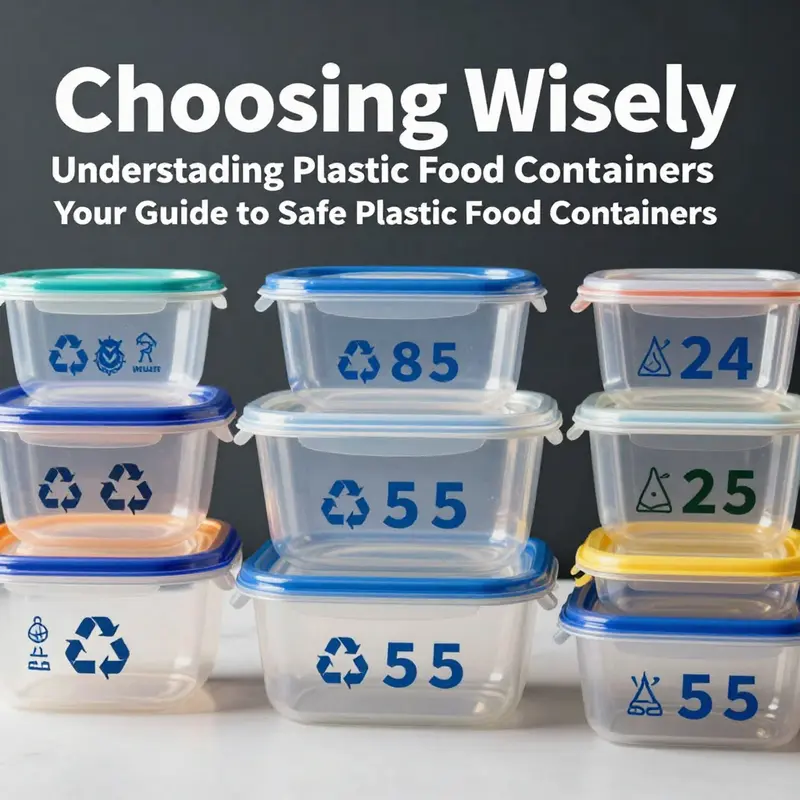
The numbers inside the recycling triangle are more than symbols on a label; they are a shorthand code for how a plastic container will behave with our food, heat, and daily routines. When families choose a container for leftovers, school lunches, or a quick microwave meal, that tiny digit can influence safety, durability, and even taste. The practical question is not just what the number stands for in a factory ledger, but what it means in a kitchen where meals are prepared, reheated, stored, and washed. The research summarizing these numbers offers a clear map: certain plastics are better suited for repeated use and heating, while others carry cautions that, if ignored, may lead to degraded containers and compromised food quality. As with any tool designed for daily life, the value lies in understanding how the material behaves, how to treat it, and how to pair it with the foods and temperatures we routinely handle. In that sense, the conversation about safe numbers moves from abstract chemistry to everyday prudence, from a list of identifiers to a set of habits that protect health and preserve flavor.
At first glance the digits 1 through 7 seem like arbitrary labels, yet each one marks a distinct polymer family with its own strengths and weaknesses. Among these, a few emerge as the most reliable companions for meals that travel—from the fridge, to the lunchbox, to the microwave, and back again. The safest and most recommended numbers are 5 (PP, polypropylene), with its heat resistance that holds steady up to roughly 130°C and even higher in some formulations. Polypropylene is the workhorse of many yogurt cups, microwaveable meal boxes, and reusable containers. It is the kind of plastic that tends to hold its shape, resist cracking after repeated use, and tolerate steady reheating without becoming a source of off-flavors or chemical migration when used appropriately. Then there are 2 (HDPE, high-density polyethylene) and 4 (LDPE, low-density polyethylene), both recognized as safe for food contact and suitable for repeated use under careful handling. HDPE is common in sturdier milk jugs and certain oil containers, a material known for chemical stability and resilience. LDPE, more flexible and pliable, finds its place in bags and squeeze bottles where a gentler touch is advantageous. These two numbers share a practical advantage: they tend to resist many chemicals and cleaners, and with proper cleaning they can serve as reliable containers for months or years of reuse.
The counseling about what to avoid is equally important. PET, the number 1, is designed for single-use contexts like bottled beverages. It can be safe initially, but its risk profile shifts if reused or subjected to heat or fatty foods. The potential for degradation increases with time and temperature, which can alter the container’s surface and encourage subtle leaching. PVC, the 3, is a warning flag for most food contexts because it can contain plasticizers that may migrate into foods, especially when heated or in contact with fats. While some PVC products exist with reduced additives, the broad consensus across guidelines is to minimize or avoid PVC for food contact. Then there is 7, the catch-all category that includes polycarbonate and other polymers; BPA has historically been associated with PC, and even as many brands remove BPA, the caution remains prudent, particularly for children and hot storage. The overarching message is practical: knowing the code helps prevent worst-case outcomes, especially when handling hot foods, oils, and repeated use.
The practical implications unfold further when we consider heating and reuse in real kitchens. The best choices for reuse and heating, based on the material science and safety testing summarized in the materials, are HDPE (2) and PP (5). HDPE offers a robust chemical resistance profile and stable performance across many common kitchen liquids, while PP handles higher temperatures without significant softening or breakdown. The protective takeaway is simple: if you plan to reuse a container, look for numbers 2 or 5 and confirm that the labeling explicitly states it is for food contact and that it is microwave-safe if you intend to heat in a microwave. The old adage about reading the label still holds: a container can be marked as microwave-safe or dishwasher-safe, but the absence of clear language should prompt caution. The guidelines emphasize that heating plastic is not universally safe; it depends on the polymer, the presence of any additives, and the conditions of use.
In practice, the path to safe use also hinges on how the container is maintained. Any material, even the most thermally robust polymer, begins to degrade when its surface becomes scratched, cloudy, or warped. These changes can alter how heat is distributed inside the container and may roughen the surface where food sits, potentially creating microenvironments that harbor residual moisture or bacteria. The advice is meticulous but accessible: wash with warm, soapy water after each use, avoid aggressive scrubbing that can scratch the surface, and inspect surfaces for signs of wear before each use. If a container shows scratches, cloudiness, or warping, it’s time to retire it. The risk of degradation is cumulative, and the goal is to keep the container performing as designed—to protect flavor, preserve nutrients, and minimize any risk of substances migrating into food.
The landscape of safety also invites a balanced approach to heating. While PP can withstand higher temperatures and is widely used for reheating leftovers, not all PP containers are created equal. Some PP packaging is labeled for microwave use, and some are designed to tolerate direct contact with hot foods and oils. The crucial difference lies in labeling and the conditions of use. If a container is not explicitly labeled as microwave-safe, treat it as unsuitable for heating in a microwave. Even with microwave-safe labeling, it remains prudent to avoid heating fatty or sugary foods in plastic unless the container is specifically designed to handle them. The tendency for fats to interact with certain plastics under heat means that, in practice, a simple reheating approach—reheating only in containers clearly marked as microwave-safe and avoiding high-fat foods in older or unclear plastics—will significantly reduce risk. This careful approach aligns with the clear safety philosophy that governs food-contact materials: use, heat, and reuse only when the container’s properties and labeling affirm suitability for the intended purpose.
From a consumer’s perspective, reading the “food contact safe” and “microwave safe” language is more than a regulatory checkbox; it is a practical habit that shapes how you store, reheat, and share meals. A well-informed choice can be as simple as selecting a container that is built to endure multiple cycles of washing and heating without the fear of leaching or structural failure. It also means recognizing that some plastics are well-suited to cold storage but not for heating, while others stand up to both. The front-line decision is to pair the right number with the right task: HDPE and polypropylene for longevity and safety in many reheating scenarios, while plastics such as PET and PVC warrant strict limits on reuse and heating. The goal is not to assign blanket rules to every situation but to understand the underlying tendencies of each polymer family and apply that knowledge to everyday decisions about what to store, how to reheat, and how to clean.
Within this framework, the social dimension of plastic use becomes clearer. Families, schools, and workplaces often rely on a mix of containers for lunches, takeout, and leftovers. The practice of reusing containers saves money and reduces waste, but it also increases the responsibility to monitor the compatibility of the container with the food and the heating method. A thoughtful routine might involve using HDPE or PP containers for most meals, reserving other plastics for cold storage or non-heated uses, and keeping a rotating stock that’s clearly labeled with the intended use. By developing such a routine, households can reduce the risk of unintended exposure while still benefiting from the convenience and efficiency that plastic packaging offers.
The story of these numbers is ultimately about alignment—alignment between the material’s properties, the user’s habits, and the conditions of storage and heating. It is a reminder that safety in everyday cooking does not hinge on one grand decision but on a series of well-informed choices made repeatedly. This is where the research materials converge with practical know-how. The core guidance remains straightforward: prioritize numbers 2 and 5 for repeated use and heating when the labeling confirms food-contact safety, exercise caution with numbers 1, 3, 6, and 7, and always verify the container’s heat tolerance before microwaving or reheating. Pairing this knowledge with careful cleaning, inspection, and labeling creates a robust shield against degradation and leaching, turning plastic packaging from a potential hazard into a reliable ally in the kitchen.
In this context, the design of packaging itself becomes relevant. The decisions manufacturers make about who buys their products, how they label them, and how they communicate safety to consumers shape everyday choices. Consumers benefit when packaging carries clear language about food contact safety and heating guidance, so that the subtle messages embedded in the numbers translate into tangible, safe actions. An example of thoughtful packaging design is visible in eco-conscious takeout boxes and other reusable formats that emphasize safety alongside practicality. For a broader look at how manufacturers approach container design and safety messaging, readers can explore examples of practical packaging solutions that emphasize heat resistance, grease resistance, and durability. These discussions reveal that the chain from polymer science to kitchen use is continuous and collaborative, pulling together researchers, designers, and end users into a shared goal: meals that are not only convenient but safe.
To connect this discussion with the world of packaging beyond the home kitchen, consider how the same principles apply to everyday takeout and meal-prep systems. The decision to use a particular container for a given purpose is not merely about convenience. It is about ensuring that the container’s chemistry aligns with the intended use—whether it is cold storage, hot food, or something in between. The best practice is to keep a simple rule set in view: choose 2 or 5 when you expect a container to be subjected to heat or repeated use; avoid relying on plastics labeled only for single-use or those with heavy additives that raise questions about long-term safety. This approach reduces the guesswork and enables a more confident approach to meal preparation and storage.
For readers who want to extend their understanding beyond the kitchen, a helpful, practical resource exists in the broader discourse on food-contact materials. It complements the everyday decisions described here by laying out the regulatory framework and scientific considerations that guide manufacturers, retailers, and health professionals in safeguarding food safety. The core message remains consistent: the label, the use, and the care of the container together determine safety. By staying alert to labeling, honoring heat tolerance, and maintaining containers in good condition, households can navigate the plastic landscape with greater assurance and fewer surprises. As you consider your next shopping trip or lunch packing routine, let the numbers behind the recycling triangle inform your choices, not overwhelm them. A small, informed adjustment—favoring PP and HDPE for reusable use and heating, and avoiding or carefully limiting other numbers—can translate into safer meals and a cleaner routine.
To reinforce a practical takeaway: remember that not all plastics are alike, and the way we treat them matters almost as much as their initial safety. With knowledge of which numbers align with heat tolerance and repeated use, and with habits that emphasize cleaning and inspection, the daily act of storing or reheating becomes a predictable, safer part of life. The journey from a number in a triangle to a confident, food-safe practice is one of mindful use, consistent care, and an ongoing attention to how materials behave when placed in contact with meals. And as modern kitchens continue to innovate with packaging that is both convenient and sustainable, the same principles apply—read the code, respect the label, and maintain the container with the care that keeps meals fresh, safe, and tasty over many cycles of use.
In this light, a practical note for readers seeking quick guidance within the broader article: always prioritize containers that explicitly state Food Contact Safe and Microwave Safe if you intend to heat foods. Use HDPE and PP as your default choices for reusable containers, particularly when you plan to reheat. Treat PET and PVC with caution and avoid heating or reusing them for hot foods. And remember that ongoing care—cleaning, inspecting, and discarding worn containers—serves as the safeguard that keeps the science of these numbers firmly in your kitchen routine. The codes aren’t just numbers; they are a living guide to safe food practices that translate science into everyday health, flavor, and peace of mind. To explore more about packaging design and consumer guidance in a broader context, you can visit resources and examples such as the eco-friendly takeout boxes designed for safe, microwave-ready use, which illustrate how modern packaging aligns with both safety and convenience. eco-friendly takeout boxes for food packaging.
For authoritative guidance, refer to the FDA standards on food-contact materials: https://www.fda.gov/food/food-contact-materials
Beyond the Code on the Bottom: How Safe Numbers Shape Health in Everyday Plastic Use
The numbers stamped on the bottom of plastic food containers are more than mere recycling marks; they are a shorthand for a complex chemistry that can influence health in subtle, cumulative ways. We are drawn to the convenience of ready-made meals, the tidy stacks of containers in the fridge, and the convenience of reheating in the same vessel. Yet the small numeral at the base carries with it a spectrum of risks associated with heat, fat content, acidity, and the lifetime of a reusable product. To understand how safe numbers translate into real-world health outcomes, we need to follow the thread from material science to eating habits, then to long-term wellness.
Polypropylene, marked as 5, earns its reputation as the most dependable option for hot foods and microwaving. PP is renowned for its heat resistance, with a tolerance that can reach up to around 130 C, and in some reports even higher under certain conditions. In practical terms, that means a container labeled 5 can be used for warmed leftovers, hot sauces, and the occasional microwaved meal without the fear of quick chemical migration that would surprise a consumer on a busy weekday. But even with polypropylene, the story is not absolutely simple. PP can degrade over time, especially when subjected to repeated high-heat cycles, aggressive detergents, or rough handling in the dishwasher. The plastic may become more brittle, its surface rougher, and its barrier properties weaker, which can create micro-scratches where tiny fragments and additives might accumulate. In other words, safety here is about prudent use as well as material strength.
Two other numbers, 2 and 4, are also generally considered safe for repeated use. HDPE, number 2, is widely used for sturdy, nonreactive containers like milk jugs and oil bottles. It tends to be chemically stable and resistant to many solvents and household cleaners, a key factor when you routinely wash containers in warm water with soap or run them through a dishwasher at lower temperatures. LDPE, number 4, shares similar stability and flexibility, making squeeze bottles and certain bread bags practical choices for long-term storage. Still, the safe label is not a blanket endorsement of unlimited reuse. Repeated bending, stretching, and exposure to sunlight can gradually alter the integrity of the polymer, change how it interacts with fats and acids, and influence how readily any residual additives migrate into food.
The chapter of caution begins with the numbers that should be avoided or treated with extra care. PET, number 1, was designed largely for single-use beverages. Reuse and repeated exposure to heat or fatty foods may increase the likelihood that substances migrate from the plastic into the food. The same warning applies to PVC, number 3, which contains phthalates used to increase flexibility. Phthalates have been linked to developmental issues in children and metabolic disturbances in adults, and their presence in packaging often in the absence of explicit labeling creates a fragile calculus for consumers who want clear safety assurances. Then there is PC, number 7, which has historically included BPA, an endocrine disruptor that can disrupt hormonal function in sensitive populations, including developing fetuses and young children. While many manufacturers have phased out BPA in PC, older products persist, especially in consumer goods that have been around the market for a decade or more. The risk here is not only about what is in the container today but what might accumulate over a lifetime of exposure with everyday habits.
Polystyrene, number 6, remains common in takeout love affairs with hot soups and fried foods. Its tendency to leach styrene, particularly when heated or used with fatty or acidic foods, has raised concerns about carcinogenic potential. The warning signs here remind readers that the safest choice among the avoidable plastics is not simply a label but a practice: minimize heating in these containers, do not reuse single-use PS, and consider alternatives whenever possible.
The health implications of plastic use in food storage extend far beyond the bottom mark. A growing body of research points to how the plastic matrix and its additives interact with meals under daily conditions. Bisphenol A, once a staple of polycarbonate plastics and the lining of some metal cans, has been shown to act as an endocrine disruptor. BPA exposure may influence reproductive health, development, and metabolism by interfering with hormone signaling. Even though many manufacturers have removed BPA from PC and replaced it with BPA-free formulations, substitutes such as BPS and BPF have emerged in the landscape. These substitutes are not inherently risk-free. Early observations suggest that BPS and BPF may carry endocrine-disrupting capabilities similar to BPA, though the precise health effects can vary with dose, exposure route, and individual susceptibility. The substitution problem underscores a broader truth: labeling a product as BPA-free does not automatically guarantee safety.
Phthalates, frequently associated with PVC, are another class of additives with a troubling profile. They serve to increase flexibility in plastics, but their leaching into food especially when heated has been linked to developmental challenges in children and metabolic disturbances in adults. The labeling around phthalates is often imperfect, leaving consumers to navigate a murky landscape where the presence of these chemicals is not always clearly declared. In the context of safe numbers, avoidance of PVC-containing products generally aligns with a protective stance against phthalates, and it reinforces a broader strategy of reducing exposure through informed choices about packaging materials and the foods they touch.
A line of evidence now converges on the reality that plastic containers do not stay static as we use them. Heat, fats, and acidity are not neutral conditions; they act as catalysts that can help additives migrate into food. Along with migration, there is the matter of microplastics. Under stress from repeated washing, microwaving, or harsh cleaners, plastic can shed microscopic fibers and fragments. Ingested microplastics have sparked concern about inflammatory responses and potential systemic effects, though the full scope of health consequences is still being mapped. A 2024 study published in a major biomedical database highlighted correlations between the body burden of certain phthalates and chronic diseases, including diabetes. Another 2024 study from a different team found that routine use of takeaway containers could contribute to intestinal stress and cytotoxic effects, likely linked to microplastics and leached additives. The practical takeaway is clear: everyday storage and reheating in plastics is a context-dependent risk, amplified by the cumulative impact of repeated use and household processing.
Against this uncertain backdrop, the guidance offered by the literature consistently points toward a strategy of cautious use balanced with practical alternatives. If you must rely on plastic for everyday storage, the safest path is to prioritize the numbers that offer better thermal stability and chemical resistance, namely 5 (PP) and to a lesser degree 2 (HDPE) and 4 (LDPE). Using 5 for hot meals, oils, and reheating is reasonable, provided the container is relatively new, free from deep scratches or cloudiness, and not subjected to aggressive cleaning routines or very high heat beyond the specified tolerance. Even within this safer category, it is prudent to avoid overheating labeled plastics directly in contact with fatty sauces and acidic foods, which can stress the polymer and facilitate leaching.
Equally important is the practice around cleaning and reuse. Reuse should be mindful of wear and tear; the container should be free of cracks, holes, or clouding that indicates polymer degradation. Dishwashers, especially with high heat and strong detergents, can accelerate material fatigue. Gentle washing by hand, using mild detergents, and air drying can reduce the pace of degradation. If a container begins to show signs of wear, replacing it is a wise health choice. This is not merely about avoiding a single chemical; it is about recognizing that safety is a function of time, use patterns, and consistent attention to the condition of the container.
The broader perspective invites a shift in how we think about packaging in daily life. The numbers are a starting point, not a final verdict. They guide us toward plastics that tolerate heat better and resist chemical migration. But the reality is that there is no single material that is perfectly inert in every possible scenario. Glass and stainless steel present compelling alternatives precisely because they are more inert, do not leach under typical cooking conditions, and are reusable for longer periods. Glass remains resistant to many chemicals and fats and does not degrade in the same way plastics do, making it a consistently safer option for leftovers, reheating, and acidic foods. Stainless steel offers durability and a nonreactive surface that does not easily release substances into food. The trade-off, of course, lies in weight, fragility in certain environments, and the logistics of storage and transport. However, for those who want to minimize long-term exposure to chemical additives and microplastics, these materials present clear advantages.
Within this framework, consumer choices extend beyond the chemical safety of a container to the way packaging contributes to a broader ecosystem of waste and resource use. A growing number of households are choosing reusable solutions and seeking packaging designs that favor portability, durability, and low chemical risk. The shift toward sustainable, reusable systems aligns with the safety calculus by reducing the volume of disposable plastics that cycle through the kitchen in a typical week. This does not imply abandoning all plastics, but it does encourage selecting higher-performance plastics where reuse is practical and pairing them with safer handling practices. When plastics do remain a central storage tool, the emphasis should be on the simplest, most robust options: choose containers with minimal scratches, reusing only when the container remains clean and structurally sound, and avoiding heating in containers that are not explicitly designed for high-heat use.
The topic is not only about personal health but about informed risk management. The numbers on a container bottom are a shorthand for a longer story about material science and human health. They remind us that everyday actions (what we heat, what we store, and how we wash) play a role in shaping our exposure profile over time. The more deliberate our choices, the better we can manage the balance between convenience and safety. For example, when a meal is packed for travel or when a school lunch box is chosen for a child, the weight of that decision becomes meaningful over weeks and months. A container that is easy to clean, resists staining, and keeps food temperatures stable is not a mere convenience; it is a component of a broader strategy to minimize chemical exposure while maintaining practical routines.
In translating this knowledge to daily life, the practical takeaway is anchored in a few guiding principles. First, when hot conditions or fatty foods are involved, lean toward PP 5, or consider glass or stainless steel for the hot components of the meal. Second, if you rely on HDPE 2 or LDPE 4, ensure the containers are in good condition and avoid aggressive heat while recognizing that these materials are not completely risk-free over time. Third, avoid plastics marked 1, 3, and 7 for hot storage or repeated heating, and minimize reliance on 6 for hot or fatty foods. Finally, embrace safer storage habits: use glass or stainless steel for leftovers that will be reheated, especially acidic or hot foods, and reserve plastics for dry or cool storage when possible. If the packaging choice is driven by convenience or cost, it is worth weighing the trade-offs between short-term ease and long-term health and environmental costs. The aim is not to prescribe a single solution but to empower readers to make choices consonant with their health priorities, cooking habits, and household routines.
Resourceful readers may also consider how packaging design can enable safer use without sacrificing practicality. The design of a container, its seal, its insulation, and its compatibility with common reheating methods shapes the likelihood of exposure to leached substances. Packaging that is robust, easy to clean, and does not degrade under typical dishwasher or microwave cycles is inherently safer. This is where the intersection between health science and product design becomes tangible. A packaging selection strategy that prioritizes materials with proven thermal stability, minimal leaching potential, and reuse-friendly construction can reduce risk over time while maintaining the daily rhythm of meals and snacks. It is a pragmatic balance, not a rigid prohibition of plastics, and it invites a thoughtful scrutiny of what is bought, how it is used, and how it is maintained.
For readers seeking a practical anchor in this landscape, a broader resource on plastic food container safety provides a comprehensive review of the risks associated with various materials including the role of phthalates, BPA, and their substitutes in chronic disease development. It also highlights how takeout packaging and consumer containers contribute to exposure under typical usage patterns. This synthesis of evidence offers a useful perspective for anyone who stores, warms, or packs food regularly, whether at home, in school, or in a workplace. See the external resource linked at the end of this chapter for a detailed, peer-reviewed exploration of these concerns. And for those exploring safer, eco-conscious packaging options in practice, a practical example of design-forward, sustainable packaging can be found in discussions about eco-friendly takeout boxes that balance safety, usability, and environmental responsibility. As you consider your own routines, remember that the numbers on the bottom are a starting point – one element in a broader, ongoing assessment of how materials, heat, and habit converge to shape health outcomes over time.
In sum, the safe-number framework offers a lens to interpret everyday storage and heating decisions. Polypropylene 5 remains the most reliable default for hot applications, with HDPE 2 and LDPE 4 as acceptable alternatives for repeated use within their heat guidelines. The cautions around 1 PET, 3 PVC, and 7 PC especially in hot or fatty contexts underscore the importance of discerning how plastic chemistry interacts with food. A health-forward approach couples mindful material selection with responsible handling: avoid heating in questionable plastics, minimize long-term reuse of damaged containers, and consider glass or stainless steel when feasible. By weaving these practices into daily routines, people can reduce their exposure to potentially harmful additives and microplastics while preserving the practical advantages of modern packaging.
External resources and further reading can deepen understanding for readers who want to explore the science in more depth. For a detailed, peer-reviewed overview of plastic food container safety and the roles of BPA, phthalates, and related compounds in chronic disease, see the NIH PMC article: https://www.ncbi.nlm.nih.gov/pmc/articles/PMC11300958/. If you are seeking inspiration for safer, more sustainable packaging designs in everyday settings, consider exploring eco-friendly takeout boxes that emphasize safety, durability, and reusability as a practical alternative to single-use plastics. These considerations form part of a broader movement toward packaging that protects both health and the environment, aligning with the growing preference for materials that offer reliability without compromising well-being.
Beyond the Label: The Environmental Truth Behind Plastic Food Container Safe Numbers
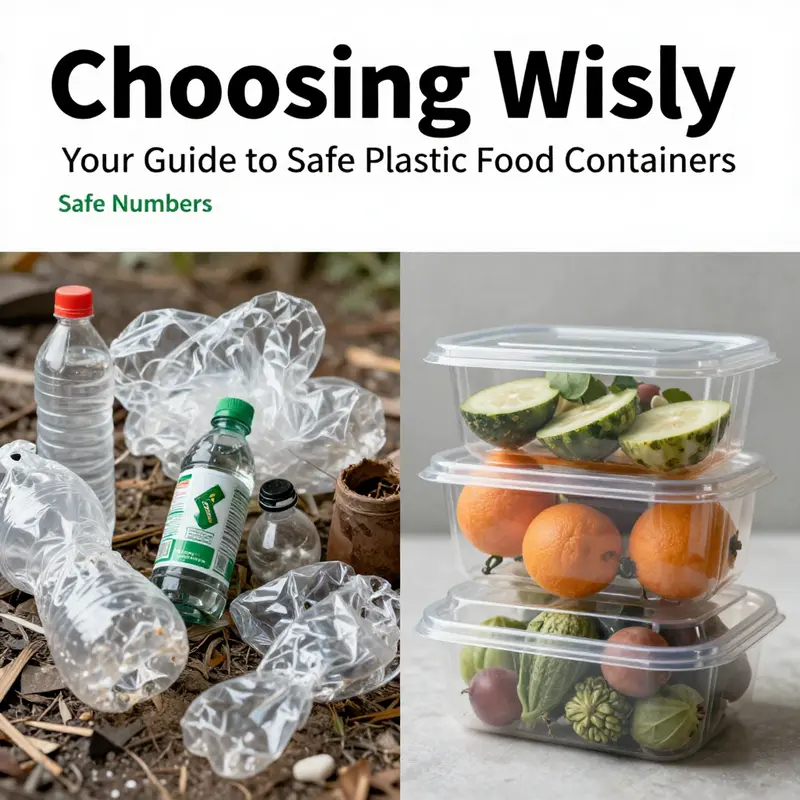
The numbers on the bottom of a plastic container are more than a label. They are a quick shorthand for what the material is, how it behaves when heated, and, increasingly, how it fits into a larger story about waste, recycling, and the health of ecosystems. In a world where consumers scrutinize both safety and sustainability, those digits carry a weight that stretches far beyond the kitchen counter. When we talk about plastic food containers, the topic threads together two questions that often seem at odds: which plastics are safe to use for the foods we eat, and which choices minimize harm to the environment over the long arc of production, use, and disposal. The safe-number framework is helpful, but it is only a piece of the puzzle. It is the lens through which we view the lifecycle of containers, from when the plastic resin is manufactured to the moment it returns to the earth as waste or is reclaimed as a resource.\n\nCertainty about safety has a practical core. The recommended number 5, which identifies polypropylene (PP), has earned a broad consensus as among the safest and most versatile for food contact. PP is durable and heat resistant, withstanding temperatures up to about 130°C and, in some variants, even higher. It handles hot foods, oils, and microwave use without immediate risk of deformation or leaching when used correctly. This makes 5 a preferred option for yogurt containers, many microwave meal boxes, and a wide range of reusable products that are designed for repeated use. Numbers 2 (HDPE) and 4 (LDPE) are also often considered safe for repeated use. HDPE, found in milk jugs and oil bottles, and LDPE, common in squeeze bottles and bread bags, tend to be chemically stable and resistant to many substances, making them reasonable choices for storage in everyday applications. The cautionary set, however, is not just about safety in isolation. It is also a signal about how materials interact with heat and fat, and how they are handled once they become waste.\n\nAt the same time, some materials carry strong environmental caveats that cannot be ignored. PET, denoted by 1, is widely used for single-use beverages and is not intended for reuse, especially with hot liquids or fatty foods. PVC, coded 3, is a material that can release phthalates and other additives into food when heated or when in contact with fats. The combination of heating and fat can drive leaching beyond comfortable limits for some individuals. PC, or 7, can contain BPA in older formulations, a chemical that has generated substantial concern for hormone disruption. Even though many manufacturers have eliminated BPA from newer PC products, older stock remains in the market, and the precautionary approach is to avoid these items for hot foods and for children. These numeric signs do not merely indicate safety for one use; they echo a broader responsibility about how we store, reuse, and dispose of packaging.\n\nThe environmental conversation surrounding these choices adds another layer of complexity. A pivotal 2018 lifecycle assessment compared single-use takeaway containers made from aluminum, polypropylene (PP), and expanded polystyrene (EPS), along with reusable PP containers. The study did not claim a simple winner; instead, it illustrated trade-offs that complicate a single travel-plan for sustainability. In a majority of the evaluated indicators—seven out of twelve—single-use PP containers performed worst, particularly in global warming potential. This finding is striking because it contradicts a common assumption that safety-first plastics must also be the greenest option. While PP’s heat resistance and versatility are undeniable in culinary contexts, its single-use form consumes energy and resources at a level that, in many scenarios, tilts the environmental balance toward other materials.\n\nAluminum containers, by contrast, showed advantages in several domains. They scored lowest in five indicators, including critical areas like ozone depletion and human toxicity. The aluminum option thus demonstrates that high recyclability and material longevity can translate into meaningful environmental benefits under certain system conditions. Yet even here, the story is nuanced. Aluminum extraction and production can be energy-intensive, and emission profiles depend heavily on the energy mix and recycling infrastructure available in a given region. The study’s broader takeaway is not to crown a universal environmental victor among single-use materials; it is to reveal that context matters. The performance of any material is inseparable from the systems that manufacture, collect, sort, recycle, and, when needed, dispose of it.\n\nEPS added another layer of complexity. Although EPS exhibited the lowest environmental impact on some manufacturing metrics, its end-of-life story is troubling. It is comparatively lightweight and easy to produce, which reduces some inputs during manufacturing; however, EPS is nearly non-recyclable in many places and is known to contribute to marine debris and wildlife harm. The stark contrast between a favorable manufacturing footprint and a problematic recycling profile demonstrates a central paradox in plastic use—what looks efficient in production can translate into outsized environmental damage if the waste management chain breaks or if materials are not captured for reuse.\n\nRecycling policies loom large in this narrative. The 2018 study suggested that aligning recycling programs with broader policy shifts could meaningfully reduce environmental impact. Specifically, if packaging waste policies in key regions, akin to Europe’s strides toward policy alignment by 2025, were enacted, researchers projected reductions of more than 18% in environmental impacts. The logic is straightforward: better collection, better sorting, and better processing turn more of the existing plastic into usable feedstock rather than waste. When recycling rates improve across all types of plastic containers, the potential for environmental benefits grows; the study estimated that improvements across polypropylene as well could yield more than a 20% reduction in impacts. The implication for consumers and manufacturers alike is that the value of safe numbers extends beyond the kitchen and into the design of systems that keep plastics in use longer and out of the environment.\n\nA particularly practical insight emerges from the discussion of reusable PP containers, which have long been a staple in households and professional kitchens alike. The environmental advantage of reusing PP depends significantly on how often the container is reused. To beat EPS in environmental performance, reusable PP containers would need to be used between roughly three and thirty-nine times, depending on the specific impact indicators considered. If used between sixteen and two hundred eight times, their environmental impact could be comparable to EPS, yet some indicators—terrestrial ecotoxicity in particular—may still tilt unfavorably relative to EPS in certain scenarios. The key takeaway is not to abandon reuse but to understand its limits. Reuse must be embedded in a robust system: reliable cleaning, appropriate end-of-life handling, and a culture of keeping containers in circulation long enough to offset the production toll. In this light, the broader conversation about safe numbers intersects with the economics of reuse and the realities of consumer behavior.\n\nThe chapter on safe numbers thus lands at a nuanced intersection. There is no singular “safest” plastic when we consider both human health and planetary health. The numbers on the bottom of a container tell part of the safety story, particularly about heat tolerance and chemical leaching under controlled conditions. The environmental story, however, depends on how those containers are used, how they are valued, and how systems collect and process them after use. It is in this convergence—safety, reuse, and responsible waste management—that the most meaningful progress occurs. When consumers opt for materials with lower environmental footprints and engage in reuse practices, they contribute to a cycle in which the advantages of heat resistance and food safety practices do not come at an escalating ecological cost. This perspective links directly to practical packaging decisions in the food service and consumer sectors. Packaging choices are not isolated from the broader logistics of waste management, and the numbers on the bottom are best read with an awareness of the waste stream into which those containers will enter.\n\nIn the spirit of progressing toward packaging solutions that honor both health and environment, practical options that blend safety and responsibility are increasingly visible in everyday use. For example, there are eco-friendly takeout boxes designed to be reusable and compact, crafted from materials that balance microwave safety with more favorable end-of-life characteristics. Such options embody a design philosophy that values durability, heat tolerance, and recyclability in tandem with a practical understanding that some materials perform better in the reuse loop than in a single-use cycle. To illustrate how this philosophy translates into real-world packaging choices, consider packaging options that emphasize both safety and sustainability—a trend that aligns with the broader aim of reducing waste, promoting reuse, and avoiding materials with problematic recycling profiles. For readers curious about concrete product choices that reflect this philosophy, a representative example is available through widely accessible packaging lines described as eco-friendly takeout boxes. You can explore one such option here: eco-friendly takeout boxes for food packaging.\n\nThe environmental narrative does not end with policy and product design. It extends to the responsibilities of individuals, businesses, and governments to keep plastics in use, minimize litter, and invest in robust recycling infrastructure. The European Union’s 2025 packaging waste policy, and the broader push toward improved recycling rates, illustrate how policy can magnify the benefits of safer materials by ensuring they do not escape the system as waste but are redirected into productive pathways. When a packaging system is designed with end-of-life in mind, the environmental contrasts between PP, HDPE, LDPE, PET, PVC, EPS, and aluminum become less about a binary choice and more about a spectrum of outcomes shaped by how people and institutions manage waste. This is precisely where the concept of safe numbers intersects with environmental stewardship: the digits guide safe handling, but the numbers we chase in policy and practice determine the planet we preserve.\n\nFor readers who want a deeper dive into the lifecycle comparison that informs these conclusions, a foundational study in the Journal of Cleaner Production provides a rigorous, data-driven exploration of single-use versus reusable options. It underscores the importance of system-level thinking—how production, use, cleaning, and end-of-life processes collectively shape environmental outcomes. The study’s nuanced conclusions stress that while reusable options can outperform some single-use options under certain reuse thresholds, no single material is universally superior across all environmental metrics. This complexity reinforces the need for integrated strategies that couple material selection with robust recycling, responsible disposal, and sustainable consumption patterns. For a detailed lifecycle assessment, see the following external resource: https://www.sciencedirect.com/science/article/pii/S0959652618314462.
From Codes to Kitchens: How Regulatory Standards Define Safe Numbers for Plastic Food Containers
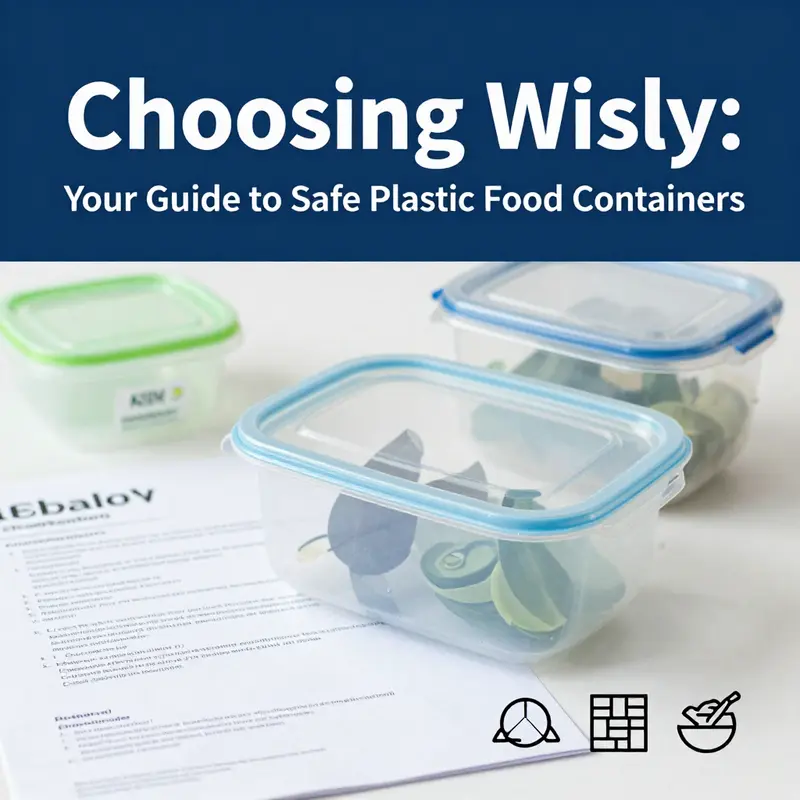
Plastic food containers are among the most familiar, yet most misunderstood, everyday objects in modern life. They come with numbers stamped on their surfaces—resin identification codes that many shoppers barely notice. The conversation around safety often centers on these digits, yet the real picture is more nuanced. The numbers tell you what type of plastic a container is made from, not a blanket promise of safety. They are tools for identification, recycling, and manufacturing guidance. When we ask which numbers are safest for food storage, the instinctive answer may be to pick the prettiest or the ones touted as most “reusable.” But safety, in the field of food-contact materials, emerges only when regulatory standards, material properties, and responsible handling intersect. The chapter that follows navigates that intersection, tying regulatory intent to practical decisions in kitchens, pantries, and takeout bags alike.
The resin identification codes most readers recognize are a simple sequence of numbers from 1 through 7. They were introduced as a way to identify the plastic family in use, not to rank safety. Yet this distinction matters in daily life because it shapes how people store, re-use, heat, and dispose of containers. The numbers most commonly considered safest for repeated food contact are 2, 4, and 5. Each corresponds to a different polymer family with distinct properties and typical uses. HDPE (2) is known for stability and chemical resistance; it is widely used for milk jugs and detergent bottles and can often endure repeated use with less degradation. LDPE (4) is more flexible and is found in some bags and wraps; it can be suitable for food contact and, in some contexts, for light storage. PP (5) is celebrated for heat resistance and durability; it is the workhorse of many reusable containers and microwave-safe options. In contrast, the numbers that trigger caution or outright avoidance reflect different concerns. PET (1) is intended primarily for single-use beverages and tends to degrade with reuse, making leaching more plausible as it wears. PVC (3) has historically carried phthalates and related plasticizers that can migrate into foods, particularly when heated or fatty. PS (6) can release styrene, especially under heat or mechanical stress. Finally, 7 denotes “other,” a catch-all category that includes polycarbonate, a material that has been scrutinized for BPA content. The practical takeaway is simple: the code itself is a clue about composition, but every container’s safety is shaped by how it is used, cleaned, and heated over time.
Regulatory systems, both in the United States and around the world, translate those material properties into protections for public health. In the United States, the Food and Drug Administration (FDA) governs food-contact materials, including plastics. The FDA’s framework is not a single numeric verdict about safety. Instead, it sets the rules for what substances can migrate into food, under what conditions, and at what levels. The resin identification codes function largely as a labeling and recycling aid; they help manufacturers and waste streams sort plastics properly. They are not safety stamps. This distinction matters because the same resin can behave very differently depending on the product’s design, the presence of additives, and how the container is used. Consider the difference between a PP yogurt cup intended for reheating and a PET bottle designed for a single use and then discarded. The code alone cannot answer all questions about safety; the context—how hot the contents get, how long they sit, whether the container is scratched or warped, and what the food’s acidity or fat content is—plays a decisive role.
A broader regulatory lens comes from the European Union, which operates under Regulation (EC) No 1935/2004 and its amendments. The EU framework emphasizes that food contact materials must not transfer constituents to food in quantities that could endanger health, alter the food’s composition, or affect its taste or odor. These rules reinforce the idea that safety emerges from a system rather than a single code. They also illustrate regional differences in how safety is approached. In practice, whether in the US or the EU, the governing principle remains consistent: migration of chemicals into food must be limited, predictable, and within established safety margins. Consumers should not rely on the resin code as a guarantee of safety; they should view it as one piece of a larger puzzle that includes heat exposure, storage time, and the container’s physical integrity.
A crucial part of translating regulations into everyday choices is understanding how real-world use affects safety. A container’s performance depends on temperature, acidity, and the duration of contact with food. It also depends on how well the container is maintained. Scratches, clouding, warping, or lingering odors are signs that a container’s barrier properties may have degraded. Micro-scratches can become pathways for substances to migrate more readily, especially under heat or with fatty or acidic foods. The general consumer guideline—avoid damaged or aged containers for food storage, particularly for hot liquids or prolonged contact—stems directly from this understanding. In other words, the code on the bottom is informative, but the container’s lived life tells the true story of safety.
From a practical standpoint, the chapter’s core message is that choosing safer plastics involves more than selecting a preferred number. It is about matching material properties to use scenarios. For hot foods, oils, and microwaves, PP (5) is repeatedly recommended for its heat resistance and stable performance. It can usually withstand temperatures that approach the kitchen’s hot routines. It is not immune to degradation, but with proper handling—no cracks, no warping, careful cleaning—PP-based containers are among the safer choices for frequent use. For repeated use with non-heated foods or soft storage, HDPE (2) and LDPE (4) are often considered acceptable, given their chemical resistance and mechanical resilience. They are common in items like milk jugs, squeeze bottles, and some wrap materials. These plastics can tolerate routine use, though heat exposure should still be limited, and containers should be replaced if wear or odors become evident.
Conversely, it is prudent to be skeptical of assumptions about “safety” tied to numbers when the context is hot liquids or fatty foods. PET (1) is best kept to single-use scenarios or cold storage, with an understanding that reuse or heating can introduce risks of degradation and potential leaching. PVC (3) is best avoided for food contact because of its history with plasticizers that can migrate into foods. The presence of these substances is a reason many manufacturers and regulators have pushed away from PVC in consumer food packaging. The PC (7) category often entails BPA concerns, even though some BPA-free variants exist. The risk assessment for PC hinges on BPA exposure, timing, and the specific product’s design. In sum, the resin code is a guide, not a guarantee, and it gains meaning only when viewed through the lens of intended use and regulatory compliance.
Understanding these dynamics invites a more nuanced consumer approach. If you need to store hot foods or reheat leftovers, prioritize containers made from PP (5) and ensure they are in good condition. If you aim for long-term, low-risk storage of non-heated foods, HDPE (2) and LDPE (4) can be appropriate, with attention to wear and tear. When heat is not involved and you are simply organizing pantry items or packing cold lunches, the code remains a helpful map, but you still need to monitor for wear and the potential for chemical migration under unusual circumstances. The overarching principle is consistent with regulatory intent: minimize risk by aligning container material with use, preserving the container’s integrity, and adhering to recommended care practices.
To translate theory into daily practice, consider how packaging choices reflect both safety and sustainability. For many households, the balance involves selecting containers and wraps that resist heat while maintaining durability and cleanability. In this regard, availability of safer options often aligns with packaging strategies that emphasize reuse, durability, and microwave safety. A practical example of such packaging is evident in options marketed for safe, microwave-friendly, and grease-resistant use in takeout contexts. For a practical example of such packaging, see this collection of eco-friendly takeout boxes for food packaging. The emphasis here is not merely on the code but on design and performance: a container that holds up under routine microwaving, resists leaks, and can be cleaned thoroughly between uses without compromising its integrity. This is the kind of packaging that embodies the regulatory emphasis on safeguarding health while supporting modern culinary habits—convenience without compromise.
The consumer takeaway, then, is clear but nuanced. Read the code with awareness of its limits. When you pick a container for hot food, look for 5 (PP) where possible, or 2 (HDPE) and 4 (LDPE) for non-heated or lightly heated uses. Inspect for signs of wear, avoid containers with deep scratches or clouding, and retire containers that show any signs of damage. Remember that repeated heating, exposure to fats, or prolonged contact can increase the likelihood of migration, even from seemingly safe materials. The regulatory landscape reinforces this prudence by setting migration limits and requiring that both the base material and any additives meet safety standards; it does not absolve users from exercising caution. The better the practice, the closer the everyday experience lines up with the protective intent of the laws intended to keep our meals safe.
In sum, the resin identification codes function as a navigational tool rather than a safety verdict. They tell you the plastic’s family, hint at its heat tolerance, and indicate what sort of reuse might be sensible. The conditions of use—temperature, duration, contact with fats or acids, and the physical condition of the container—are the decisive factors. Regulatory standards in the US and the EU establish the guardrails that govern what substances may migrate and in what quantities. But safety in the kitchen requires attention to both the material and its lifecycle: how it is produced, how it is used, how it is cleaned, and when it is retired. By integrating knowledge of resin codes with thoughtful usage, we can make informed decisions that protect health and support sustainable habits, turning a simple numbers game into a reliable framework for safer food storage.
External resources can deepen understanding for readers who want to explore the regulatory underpinnings further. For authoritative guidance on food-contact materials, see the FDA’s official page on food-contact materials: https://www.fda.gov/food/food-contact-materials
Final thoughts
In conclusion, understanding the safe numbers for plastic food containers is vital for ensuring the health of customers and the sustainability of the environment. By choosing containers that align with the safe numbers—namely 2, 4, and 5—you protect your patrons from harmful chemicals while also contributing to a more responsible use of materials. It’s imperative for food establishments and service providers to remain vigilant in their choices, committing to products that promote both safety and environmental stewardship. Your choices matter; they embody the values of health and sustainability that today’s consumers expect.