
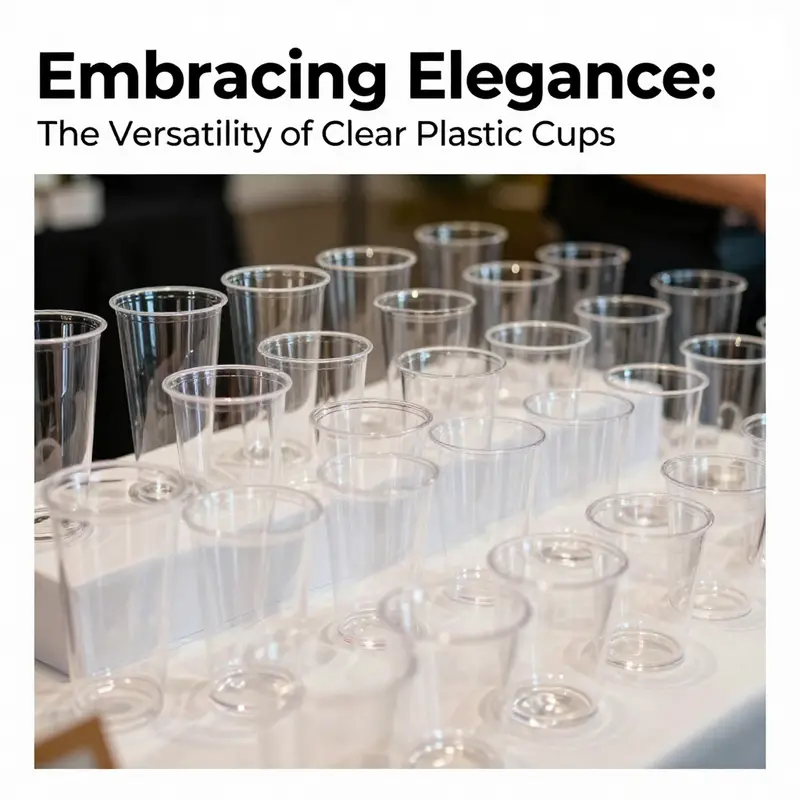
Elegant clear plastic cups offer a unique solution for beverage service that perfectly meets the demands of sophisticated environments. Their sleek design mimics the appearance of glassware, allowing for a refined presentation while remaining shatter-resistant and disposable. This versatility makes them ideal for bubble tea shops, restaurants, catering services, and corporate events alike. Throughout this article, we will delve into the unique design features that distinguish these cups, explore customization options for branding, assess current market trends, and discuss their practical applications in various event settings.
Crystal Clarity and Quiet Luxury: The Design Language Behind Elegant Clear Plastic Cups
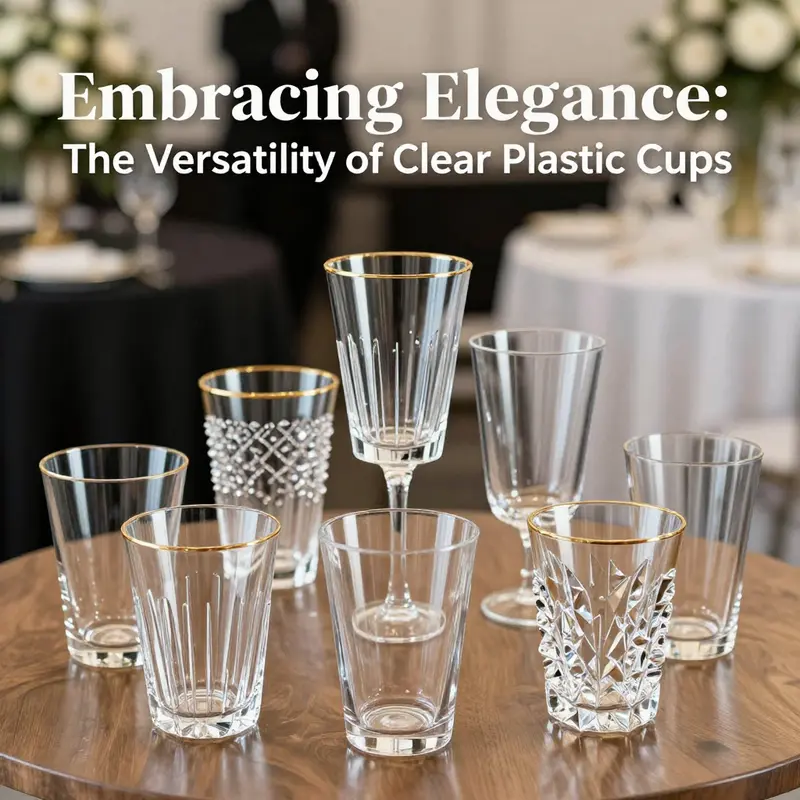
The modern banquet, the chic reception, the polished corporate gathering—these occasions demand more than just a reliable vessel for a beverage. They require a small, almost invisible stagecraft: a cup that disappears as a distraction while preserving the color, texture, and aroma of the drink it holds. Elegant clear plastic cups accomplish this with a design language that speaks in glass-like translucence, precise form, and purposeful details. They are not merely containers; they are visual amplifiers for the drink and the event, a choice that signals taste, sophistication, and mindful practicality. When one walks into a venue and notices a line of cups that shimmer with clarity, the moment feels curated—an understated nod to the artistry of hospitality. The essence of these cups lies not in novelty, but in the quiet confidence of design that respects both aesthetics and utility, a balance that makes them a staple in upscale celebrations, modern retail settings, and branding initiatives that aim to project refinement without fragility.
At the heart of their appeal lies crystal-clear transparency. The clarity of the material is not a mere visual trick; it is a deliberate design decision rooted in material science. Most elegant clear plastic cups are molded from food-grade PET or similar high-clarity polymers, chosen for their ability to retain a pristine, glass-like appearance under a range of temperatures. This transparency does more than simply showcase the beverage’s color; it allows the presentation to be part of the sensory experience. A well-lit table will reveal the shift of light through a cocktail’s amber, a smoothie’s emerald, or a wine’s ruby hues, turning the cup into a transparent stage for color and texture. The result is a display of simplicity that enhances perceived value—the kind of nuance guests notice without someone having to point it out. The choice of clarity also carries practical implications: it minimizes visual distractions, creates a sense of openness, and aligns with contemporary preferences for clean, minimalist tableware where the drink is the star rather than the vessel.
But crystal clarity is just the prelude. The real conversation begins with precision engineering. A cup that is uniform from rim to base may seem mundane, but it is a cornerstone of reliable hospitality practice. A perfectly even, smooth rim is essential for pour stability, stacking efficiency, and guest comfort. Pouring becomes a seamless action when the rim bears no nicks or irregularities, and the sipping experience is improved when the lip feels comfortable against the mouth. In the design language of elegant clear cups, that smoothness is not an afterthought; it is engineered into every mold. The precision extends beyond the rim to the uniformity of wall thickness, the symmetry of the cylindrical profile, and the consistency of the base. Such consistency translates into predictable stacking, efficient handling by catering staff, and a sense of professional polish that guests subconsciously recognize as quality.
The ergonomic considerations echo the same philosophy: form should support function without drawing attention to itself. An ergonomic shape, often a slight taper or a pure cylindrical silhouette, balances grip comfort with stability. A wide top opening is more than a convenience; it accommodates a range of beverage textures and toppings. Thick beverages with toppings, like certain smoothies or dessert-infused drinks, benefit from a generous mouth, which reduces spillage and makes accessibility easier for guests as they maneuver a straw or a spoon. This design choice also supports the practicality of self-serve stations at events, where guests may need to lift, sip, refill, and move on with minimal effort. The shape, then, is a deliberately staged choreography where the drink, the mouth, and the hand align to create a frictionless experience that still carries a sense of luxury.
Aesthetics in these cups extend beyond their transparency and form. Metallic rims—subtle golds or silvers—provide a refined accent that elevates the cup’s appearance without introducing fragility. Rim details act like jewelry for the glass aesthetic: they draw the eye, signaling a higher tier of presentation while preserving the durability and disposability essential to modern events. The use of restrained metallic rims allows the cup to harmonize with other tableware, from crystal centerpieces to linen napkins, without clashing with them. Importantly, these accents are designed to be reproducible at scale, ensuring that even in large venues, the cups retain a cohesive and luxurious look. The result is a visual harmony that reads as expensive in image, yet remains practical in use and disposal. In the grand scheme of event design, such subtleties matter because they communicate a thoughtful, curated experience to guests, even in a world where disposability can feel contradictory to elegance.
The potential for customization further enriches the design language. Elegant clear plastic cups are often compatible with high-quality printing and branding techniques such as silk screening or UV printing. This capability transforms a simple vessel into a canvas for logos, monograms, or seasonal motifs, enabling brands and venues to weave identity into the very fabric of the glassy look. The effect is not merely promotional; it also signals care and attention to detail. For weddings, a monogram at the rim or a soft pattern along the side can carry sentimental meaning without overpowering the drink’s presentation. For corporate events, printed cups evoke a cohesive brand story, reinforcing recognition as guests move from station to station or boardroom to lounge. Even when used as wedding favors or branding gifts, these cups carry a personal touch that extends beyond the beverage. In practice, the ability to print and customize becomes a strategic design lever, unlocking opportunities for memorable experiences that are elegant, practical, and scalable.
Durability and durability-related design express another facet of the design language. In busy environments—weddings with long hours, corporate conferences, outdoor festivals—cups must withstand the pace of service and the occasional jostling. Here, the evolution of the material and structure comes into play. Some elegant clear cups employ reinforced transparent construction, employing multi-layer designs or strengthened polymers that preserve clarity while enhancing impact resistance. This multi-layer approach counters the fragility associated with traditional glass, offering shatter resistance that reduces breakage risk in crowded spaces. It also improves reliability for outdoor settings where wind, uneven surfaces, or accidental bumps can otherwise lead to messy incidents. The result is a cup that feels premium in weight and performance, even when it is disposed of after use. The combination of a robust core and a crystal-clear outer shell is a striking demonstration that durability and elegance can coexist without compromise.
An equally important aspect of design is sustainability, a thread that runs through contemporary event planning and consumer expectations. The cups are increasingly crafted from food-grade, environmentally conscious materials, including biodegradable options such as polylactic acid (PLA) derived from plant sources. PLA, when used correctly, can offer the same glass-like clarity and performance while aligning with eco-conscious branding and procurement strategies. It is essential to acknowledge that the environmental footprint of these cups depends on the end-of-life infrastructure available to the user. PLA products often require industrial composting facilities to fully realize their biodegradation potential. In contexts where such facilities are accessible, the ecological benefits can be meaningful, especially for premium events that aim to project sustainability as a core value. The design language, therefore, embraces not only beauty and practicality but also responsibility. When brands select eco-friendly variants, they signal alignment with guests who value stewardship of materials and a lighter environmental trace, which enhances the overall perception of the event as thoughtful and forward-thinking.
Lids and spill resistance constitute another layer of design sophistication. Many elegant clear cups are adaptable to flat lids, designed with or without a straw hole, to minimize leakage during transport while preserving a sleek silhouette. The precision in lid design is not merely about keeping beverages secure; it is about preserving the visual continuity that makes the cup look like a refined stemware alternative. The fit must be snug, the seal should prevent splashes, and the lid should not distort the cup’s crystal-clear profile. When these elements come together, the user experiences a seamless combination of elegance and practicality: the drink appears unblemished, the cup remains visually transparent, and the risk of spills at an outdoor wedding or a crowded conference is noticeably reduced. The lid, in this sense, becomes a functional extension of the cup’s design language rather than a separate add-on.
Beyond the individual cup, the broader design system—how cups relate to other serveware, signage, and branding—reinforces the sense of curated elegance. The cups are often selected to align with the event’s color palette, lighting design, and table layout. A glass-like cup can harmonize with metallic flatware and crystal goblets, or it can offer a lighter, more modern contrast against matte or natural textures. The result is a cohesive tableau in which each element supports a shared aesthetic, and the cup’s role is to disappear as a vessel while the drink remains the focal point. For planners and brands, the implication is clear: choose a cup that communicates clarity, consistency, and confidence, so the overall presentation reads as intentional, not incidental. The cup thereby becomes an unassuming contributor to a larger narrative about taste, quality, and hospitality that guests remember long after the event ends.
For readers seeking practical guidance on selection and application, the design features discussed here translate into a few actionable considerations. First, assess the clarity and rim quality by handling a sample to gauge uniformity and comfort. Second, evaluate the shape with real beverages in mind; if your event features thick drinks or toppings, a wider opening can dramatically improve user experience. Third, consider branding needs—whether you will print logos or decorative motifs—and confirm printing compatibility with the chosen material and production process. Fourth, weigh durability against budget and logistics. A cup with reinforced construction may incur a higher upfront cost, but it can reduce breakage and waste in high-traffic environments. Finally, reflect on sustainability goals and local waste-stream infrastructure. If you can access industrial composting for PLA or similar materials, you may be able to present a truly responsible solution that aligns with premium branding while demonstrating environmental awareness.
In practice, these design decisions create a seamless blend of form and function that supports a sophisticated event experience. The crystal-clear appearance invites appreciation of color and presentation, while the ergonomic, uniform profile ensures comfort and reliability across service lanes. Subtle metallic rims or tasteful branding accents elevate the aesthetic without dominating it, and the option to add flat lids preserves the sleek silhouette while offering practical spill resistance. Reinforced construction, when used, provides resilience to busy settings, and eco-friendly materials offer a path to sustainable storytelling for brands and hosts who want their events to speak to responsible consumption. In the end, what makes elegant clear plastic cups compelling is not a single feature but the way a constellation of features works in harmony. Clarity, form, tactility, durability, branding potential, and sustainability converge to create a vessel that complements, rather than competes with, the drink it cradles. They are designed to be almost invisible in the eye yet unmistakable in their contribution to a refined event atmosphere.
For a practical glimpse into how these cups perform in real-world contexts, consider the wider world of disposable tableware where clarity and durability are prized in equal measure. When used thoughtfully, these cups serve as a bridge between the elegance of glass and the pragmatism of disposability. They enable hosts to present beverages with dignity, while also embracing the convenience of quick setup, efficient cleanup, and scalable production. In modern hospitality, that balance is not a compromise but a strategic advantage. The cups allow bartenders and caterers to deliver refined presentation at scale, supporting a guest experience that feels curated and memorable without imposing logistical friction or excessive costs. The result is a design system that respects taste and efficiency in equal measure, a rare blend that makes the humble cup a meaningful participant in the choreography of celebration.
To connect this chapter with longer-term considerations, the ongoing evolution of materials, finishes, and customization options will continue to shape how elegant clear plastic cups are used in future events and retail environments. The interplay between clarity, durability, and sustainability will likely drive innovations in multi-layer constructions, improved barrier properties to preserve beverage integrity, and even more nuanced branding opportunities that do not compromise the cup’s clean, glass-like aesthetic. As venues grow more conscious of waste, suppliers will increasingly highlight end-of-life pathways, from recycling compatibility to industrial composting where feasible, reinforcing a narrative that elegance and responsibility can coexist. Meanwhile, the design community will keep refining rims, opening geometries, and lid integrations to deliver the most seamless user experience possible, ensuring that every sip is accompanied by a sense of refined simplicity rather than a display of disposable ease.
For readers who want to explore a practical example that aligns with the chapter’s themes, a representative disposable clear plastic cup designed for events offers a useful reference point. It showcases how clarity is preserved across use cases and how a simple feature—such as a uniform rim—can translate into a superior pouring, drinking, and handling experience. Such a reference point helps event organizers, brand managers, and product designers alike to evaluate options with an eye for how design decisions ripple across guest experience, brand perception, and sustainability outcomes. If you’d like a concrete case that demonstrates these principles in action, you can explore a practical example of a disposable clear plastic cup for parties, which illustrates how a well-crafted cup supports both aesthetics and logistics in a real-world setting.
External resource: https://www.alibaba.com/product-detail/16oz-PLA-Clear-Plastic-Disposable-Cold_1600243589782.html
Crystal Branding: Customizing Elegant Clear Plastic Cups for Style, Story, and Success
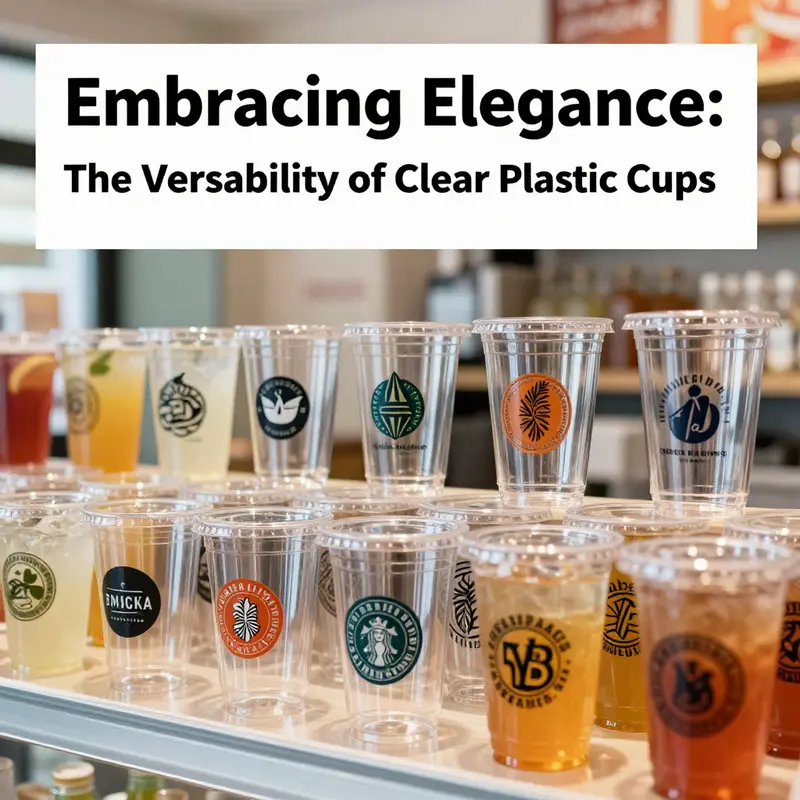
The most effective branding often starts with the small, almost invisible moments where a guest notices detail rather than spectacle. Elegant clear plastic cups provide a rare canvas in those moments. They look like glass, yet they carry the practical advantages of plastic: light weight, shatter resistance, and disposal simplicity. Their transparency is more than a neutral base; it is a stage that allows the color and composition of a beverage to take center stage. A well-presented cocktail, smoothie, or even a simple iced tea can become a story told in color, texture, and light. When the cup itself is minimal, the drink becomes the hero, and that hero is easy to brand because the cup does not compete with the beverage. In this way, the cups function as a portable, convertible advertisement at events of all kinds. The elegance comes not from ostentation, but from a refined surface that communicates quality through purity of sight. This is the magic of a crystal-clear cup: its ability to preserve the visual integrity of a drink while lending a timeless, modern silhouette to the setting around it.
Customization and branding emerge from that foundation with surprising depth. The cups can be printed with company logos, event monograms, or color graphics using advanced methods that ensure visibility without compromising the clear, glassy appearance. Silkscreen and UV printing are common approaches; they provide durable, high-contrast results on a surface that remains, first and foremost, a transparent medium. The advantage is twofold. On one hand, the printing allows a brand to enter the guest’s peripheral awareness with subtlety and precision. On the other, it preserves the integrity of the beverage itself, revealing the drink’s hue and layers rather than competing with them. The result is a polished, professional presentation that communicates care, consistency, and a commitment to aesthetic quality.
It is important, however, to think strategically about how prints will be used. Repeated washing or aggressive cleaning can cause designs to fade or scratch over time. For this reason, many campaigns maximize impact through one-time or limited-use distributions. Trade shows, product launches, or milestone events often provide the ideal context for a strong, high-visibility imprint. A set designed for a single audience—where the cups are part of the experiential packaging rather than a reusable asset—tends to retain the intended visual impact longer and with less risk of wear. This does not mean branding should be reckless; rather, it underscores a practical approach to design and distribution that aligns with the material’s strengths. The same principles guide broader marketing analyses that emphasize branding outcomes built around moments of first contact and the memory those moments create. A 2025 analysis, for instance, highlights the value of elegant clear cups in marketing campaigns, customer appreciation events, and community outreach efforts. In these contexts, the cups become a living extension of brand identity, a wearable banner of color and clarity that travels with the guest through the event space and into conversations that linger beyond the last toast.
The visual language of these cups extends beyond logos and typography. Brand color, when integrated with the beverage color, can produce harmonious or striking effects that elevate the overall presentation. A deep red wine, a luminous citrus cocktail, or a pale mineral water taken in a crystal-clear cup can become more than a drink; they become a vignette in the brand’s narrative. This synergy is especially effective at events that celebrate collaboration, achievement, or wellness. For instance, a fitness event or a corporate wellness program can benefit from a clean, modern cup that reinforces a message of clarity, focus, and discipline. The cups offer a refined elegance that aligns with contemporary values—simplicity, quality, and sustainability—without sacrificing convenience or cost efficiency.
To support these goals, many organizers and suppliers emphasize a few core design considerations. One is the rim treatment. A refined gold or silver rim adds an instant note of luxury, elevating the perceived value of the beverages inside. The rim can be a subtle metallic accent or a more pronounced gilded edge, but either approach should remain visually balanced with the content within. The goal is not to overwhelm the drink but to frame it with a delicate, luminous line. Another consideration is the overall silhouette and thickness of the cup. A slightly thicker wall can convey sturdiness and durability, which is especially important for outdoor events or high-traffic environments. Yet the cups must stay within the weight and balance that keep handling enjoyable and spill-free. When these elements work in concert, the result is a package that communicates premium branding at a glance, even before the guest takes the first sip.
For those who want the branding story to extend beyond the party and into the brand’s broader messaging, clear plastic cups can be integrated into broader campaigns as tangible reminders of a brand’s promise. The transparency of the cup mirrors a commitment to honesty and openness, values that many organizations aspire to project. In practice, that means thoughtful color palettes, consistent typography, and a message that remains legible when scaled up for signage or down for a personal gift. Printed cups can also function as collectible items—monogrammed keepsakes from special events or limited-edition campaigns—adding a sense of exclusivity to the everyday. In this way, a simple disposable cup becomes a conduit for brand sentiment, a small but meaningful artifact that guests can take with them and recall in social media posts, photographs, or conversations long after the event ends.
The customization potential extends beyond the print itself. Some suppliers offer multi-layer or reinforced polymer options that preserve clarity while imparting greater durability. These variants are particularly beneficial for high-volume venues or outdoor settings where breakage is a concern and where a consistent, premium look is critical. The reinforced construction supports hot beverages without clouding the cup or causing warping in the event’s fluctuating temperatures. This combination of clarity and resilience makes reinforced options appealing for large conferences, charity galas held outdoors, and festivals that require all-day beverage service. While the pure, glass-like appearance remains a hallmark, the improved strength ensures that the branding stays intact from first guest to the last. In environments with a longer service timeline, durability complements design, enabling a stable canvas for branding that does not degrade with time or handling.
Beyond aesthetics and durability, sustainability continues to influence how brands approach clear plastic cups. For venues with eco-conscious goals, reusable versions pair well with modern branding programs. Reusable cups offer long-term branding value—logos and colorways become a repeatable touchpoint at future events. Yet reusable cups demand careful cleaning to prevent cloudiness or surface scratching, which can diminish the cup’s clarity and, by extension, the visual quality of the brand presentation. The balance between reusability and convenience remains central to strategy: reusable options support a longer lifespan for brand assets, while single-use or limited-use approaches can maximize immediate impact for launch events and campaigns with tight timelines. In both cases, a clear, well-printed cup communicates a brand’s dedication to quality and attention to detail. It signals that the company respects the guest’s experience and the environment by choosing materials and processes that align with contemporary expectations around aesthetics and responsibility.
From a practical standpoint, the customization process itself can be designed to optimize both impact and efficiency. Lead times, minimum order quantities, and proofing cycles are essential considerations. Brands often begin with a digital mockup and a physical sample to verify color accuracy, print fidelity, and the cup’s overall fit with the event’s theme. A refined workflow includes a proof approval stage, a pre-production run, and a final quality check. When these steps are managed carefully, the end product delivers a dependable, high-quality experience for guests. The result is a cohesive brand moment that remains legible and impactful even under bright lighting or in busy photo moments.
For marketers and event planners, the cup thus becomes not just a vessel but a strategic instrument. Its appearance can cue a brand’s tone—minimalist luxury for corporate gatherings, playful shimmer for celebrations, or restrained elegance for wellness-focused events. The cups can support an event’s broader storytelling through color harmonies, typography, and print motifs that echo across other touchpoints, such as signage, packaging, and social media collateral. When attendees share images of their drinks, the branded cups appear as a visible extension of the brand’s narrative, multiplying the exposure of the design choices beyond the immediate venue. In this sense, the choice of an elegant clear plastic cup is a decision about whether a brand wants to fade gracefully into the backdrop or to leave a lasting, highly visual imprint on guests’ memories.
Readers seeking a tangible glimpse of how these ideas translate into real-world product offerings can explore a practical example of these cups in action. See this product page for a disposable clear plastic cup designed for outdoor events and casual gatherings: disposable-clear-plastic-cup-outdoor-picnic-pet-cup-drinking-cup-for-parties-birthdays-weddings-camping-utensils. The page illustrates how a simple drinking vessel can be customized with logos, colors, and branding elements while maintaining the essential clarity and user-friendly experience that guests expect at diverse events.
As brands continue to navigate the balance between beauty, utility, and sustainability, the elegant clear plastic cup emerges as a versatile instrument for storytelling. It provides a refined backdrop for beverages and a flexible platform for branding strategies that want to marry visual appeal with practical execution. The interplay between print quality, rim design, and material durability shapes the guest experience in ways that are subtle yet enduring. By embracing a disciplined approach to customization—one that respects the limits of the print process, the lifecycle of the cup, and the event’s branding goals—organizations can create moments of elegance that travel from the glass to the guest’s memory and into future conversations about the brand.
In this light, customization is less about imposing a logo on a cup and more about crafting an integrated experience. The cup’s transparency invites the brand to be seen rather than shouted at. The rim embellishments and print accents provide just enough sparkle to signal premium quality without compromising the drink’s visual dominance. The choice to use reinforced cups in certain settings further reinforces the message that the brand cares about performance and reliability, not just aesthetics. The sustainability conversation ultimately enhances credibility, aligning branding with broader values and enabling brands to speak to both taste and responsibility. When designed thoughtfully, these cups translate a brand’s narrative into a tactile, shareable experience that guests can physically carry away—sometimes literally, in the form of a keepsake or a social media moment—and that memory can become a component of the brand’s longer-term resonance.
External resources can deepen understanding of the principles at play. For readers who want a broader map of customization options, material choices, and the latest guidance on clear plastic cups, the following external resource offers a comprehensive overview: https://www.plasticcupguide.com/custom-clear-plastic-cups-guide.
Crystal Clarity, Growing Demand: The Economic Trajectory of Elegant Clear Plastic Cups
The market for elegant clear plastic cups has shifted in a way that mirrors broader changes in how people think about disposable tableware. What once lived in the margins of event planning as a practical, glass-mimicking option has moved toward center stage as a premium, performance-driven category. This transformation sits at the intersection of aesthetics and utility. Guests still expect drinks to look inviting, to show their color, to be served in a vessel that feels substantial, yet the decision makers who supply and buy these cups want more than looks. They want durability, temperature resilience, predictable supply, and the ability to customize. In other words, the market is no longer satisfied with merely passing off a transparent container; it seeks a refined experience that aligns with the ambitions of modern hospitality and branding. The resulting trajectory is a blend of design refinement, advanced materials, and strategic positioning that together reshape both the economics of manufacturing and the budgeting calculus of venues and brands.
This evolution is grounded in rising demand for premium disposable tableware. Event planners and hospitality operators increasingly insist on products that mimic the elegance of glass while delivering the safety and convenience of plastic. The visual impact of clear, pristine cups—whether catching the light of a chandelier during a wedding reception or highlighting the gradient of a cocktail, a smoothie, or a fine wine—plays a decisive role in guests’ perception of quality. The emphasis on presentation matters as much as the beverage itself. A crystal-clear cup provides no distraction from color, layering, or aroma; it frames the drink and, by extension, the event experience. In countless venues, the choice of cup becomes a small but telling detail that communicates professionalism, investment in guest experience, and a respect for the occasion. The economic implication is straightforward: suppliers who offer premium-looking, reliable disposables can command higher margins and win more long-term contracts with large operators who value consistency and a polished image.
The pace of growth in this segment is not a niche phenomenon. Industry analyses project that the global disposable tableware market will expand at a rate exceeding 5% annually through the end of the decade, with the premium slices growing even faster. That trajectory reflects not only growing appetite for upscale events but also the increasing share of discretionary spending in hospitality. As venues aspire to host more sophisticated experiences, they look for a disposable option that does not force a trade-off between aesthetics and practicality. The ability to disassemble and reset a space quickly, without compromising on style, becomes an essential capability for planners who balance guest flow with branding moments and sensory storytelling. This premiumization creates opportunities for manufacturers to introduce subtle, design-forward features that elevate the perceived value of a disposable option—things like refined rims, enhanced clarity, and ergonomic shapes that feel comfortable in hand and in service.
Technology plays a central role in delivering these outcomes. Modern manufacturing processes, including automated injection molding and the development of high-clarity, heat-resistant PET formulations, enable the production of cups that perform across a spectrum of uses. Clear cups can now withstand hot coffee, tea, or cocktails without warping, without compromising clarity, and without becoming brittle under pressure. These advancements reduce breakage risk, which in turn lowers waste and freight losses for operators. The result is a product that behaves like premium glass in appearance, but with the resilience of plastic and the cost efficiency of disposables. The improved reliability translates into meaningful economic benefits: higher throughput for foodservice teams, lower replacement costs during events, and stronger confidence among planners who must manage large guest counts with predictable inventory.
Beyond core performance, manufacturers have integrated design features that broaden the reach of these products. Leak-proof lids, ergonomic handles, and stackable bases are no longer novelties; they are standard expectations for cups used in mobile catering, healthcare settings, and automotive or on-the-go service scenarios. Each feature expands the range of environments in which elegant clear plastic cups can function effectively. For example, a stackable profile simplifies transport and storage in busy venues, while a leak-safe lid supports outdoor events or services where spill risk is higher. In hospital cafeterias, clinics, or airline lounges, the combination of clarity and reliability helps maintain a clean, professional impression even in high-volume contexts. These small but crucial innovations collectively broaden the market by making disposables practical in settings that previously required more traditional glassware or more expensive alternatives.
A further layer in the market’s evolution is customization. Brands and event planners increasingly view cups as a canvas for branding and messaging. Multiple techniques, including silk screen and UV printing, enable logos, monograms, or seasonal motifs to be applied with durability that holds up under ice, heat, or frequent handling. The ability to personalize disposables supports brand storytelling, allows for cohesive event themes, and even facilitates sponsorship or partnership programs tied to a specific occasion or venue. For organizers, customized cups become a tangible extension of the event’s identity, reinforcing recognition long after guests have left the room. This confluence of aesthetic value and practical branding is one of the key drivers of the market’s premiumization, and it has a measurable impact on procurement strategies and supplier selection.
From a supply-chain perspective, the premium, customizable segment benefits from scale and efficiency. As orders for upscale disposables grow, producers invest in automation, precision tooling, and streamlined color and finish capabilities. The result is a more consistent product with tighter tolerances and better yield. For buyers, that translates into reliable lead times, predictable pricing, and fewer last-minute substitutions during peak seasons. The economics of scale also support broader adoption across mid-market venues that previously faced budget constraints. When a cup line can deliver both high clarity and dependable performance at a reasonable unit cost, more operators view disposables as a viable long-term solution rather than a stopgap for occasional events. In this way, the market moves toward a standard where premium appearance and robust performance coexist with cost control and operational efficiency.
Sustainability remains a pivotal thread in this story, shaping both product development and market expectations. Environmental concerns have evolved from a general critique of plastics to a nuanced debate about material choices, end-of-life options, and circular economy models. While conventional petroleum-based plastics remain prevalent, there is a growing push toward renewable or compostable alternatives, such as polylactic acid (PLA) and polyhydroxyalkanoates (PHA). The appeal of these materials lies in their potential to align with regulatory trends and consumer preferences for eco-friendly packaging. Yet cost and performance trade-offs persist. In many cases, sustainable materials demand higher upfront costs and may require different handling for recycling or composting programs. This creates a dilemma for buyers who must balance a desire for sustainability with the practical realities of event budgets and waste-management logistics. Nevertheless, proactive brands and suppliers that embrace eco-conscious design—from materials selection to end-of-life strategies—are better positioned to capture future market share, particularly in regions where regulatory regimes incentivize or require sustainable packaging.
Regulatory pressures have an outsized impact on the pace and direction of this market. Several regions have introduced or intensified restrictions on single-use plastics, prompting manufacturers to innovate and adapt more quickly. For some buyers, the incentive to transition to more sustainable formulations is driven by compliance risk as much as by corporate social responsibility. The market thus experiences a dual impetus: to maintain the look and feel of premium disposables while exploring alternatives that meet stricter environmental standards. This dual impetus also nudges the ecosystem toward packaging solutions that combine recyclability with curb appeal. The challenge lies in navigating higher material costs, ensuring compatibility with existing filling lines, and aligning with local waste-management infrastructure. Yet the opportunities are substantial: equity with regulators as a responsible supplier, clearer brand positioning for sustainability-minded customers, and the potential to participate in emerging circular economy programs that emphasize reuse, returnable systems, or compostable packaging.
The regional dynamics of the market reflect a spectrum of regulatory environments, consumer expectations, and logistical realities. In many developed markets, Europe and North America lead in premium disposable adoption, driven by sophisticated event industries and a strong focus on branding. These regions often prioritize sustainability and quality control, shaping demand for products that deliver both elegance and performance while remaining within approved waste-management frameworks. In contrast, Asia-Pacific markets display rapid growth driven by expanding hospitality sectors and a burgeoning middle class that seeks affordable luxury. In these regions, manufacturers and buyers are keen to capitalize on scale, local manufacturing capabilities, and the ability to tailor products to culturally specific service styles and festival calendars. The net effect is a global market that, while unified in its pursuit of aesthetic excellence and practical reliability, adapts to local constraints and opportunities with nuanced, location-specific offerings.
The competitive landscape reflects a dynamic balance between specialization and integration. A broad spectrum of suppliers—from tool-and-die shops to integrated packaging houses—competes to offer clarity, strength, and finish that meet the premium expectations of today’s buyers. Many players differentiate themselves through customization options, consistency in supply, and the breadth of services they can bundle with the core product. As the market matures, there is increasing interest in value-added solutions, such as design consulting for event branding, or bundled packaging systems that pair cups with compatible lids, sleeves, or display packaging. The economics of this environment reward those who can deliver reliable quality at scale, while also providing the flexibility to meet evolving consumer tastes and regulatory requirements. In this sense, the sector resembles a living ecosystem where material science, design aesthetics, logistics, and sustainability considerations co-evolve.
Looking ahead, several forces are likely to shape the next wave of growth. Continued premiumization will push manufacturers to refine both material and finish, exploring multi-layer constructions or strengthened polymers that preserve clarity under stress. The demand for temperature versatility will sustain investments in heat-resistant formulations, expanding the range of beverages that can be served in elegant clear cups. Customization will intensify, with brands seeking not only logos but experiential designs that tell a story at the point of service. At the same time, sustainability-oriented strategies will become more deeply embedded in product development and procurement. This may include closer collaborations with suppliers of renewable materials, more ambitious recycling and composting programs, and the exploration of reusable, deposit-based models for high-volume venues. The convergence of these trends suggests a marketplace that is not merely about disposables but about refined, responsible, and scalable solutions that align with the evolving priorities of guests, operators, and policymakers.
Within this evolving landscape, it is essential for buyers to consider not just the unit price but the total cost of ownership. A premium-looking cup that resists cracking, maintains clarity after repeated handling, and integrates smoothly with branding initiatives can offer greater long-term value than a cheaper option that fails under pressure or looks dull after a single use. The economic logic extends to waste and labor: higher-performing cups reduce breakage, lower cleanup time, and shorten service cycles, all of which contribute to higher throughput and improved guest satisfaction. In addition, the ability to source cups that align with sustainability goals—and to do so at scale—reduces regulatory risk and strengthens supplier partnerships. These factors compound over time, shifting the market from a focus on price to a broader assessment of quality, reliability, and strategic value.
For brands and venues that want to explore opportunities in this space, a practical approach begins with clarity about event needs, beverage profiles, and audience expectations. It means asking questions about the kinds of beverages most often served, the typical service tempo, and the preferred brand narrative. It also means considering logistics: storage capacity, lead times, and the ability to meet spikes in demand during peak seasons. The ability to balance style with durability, and to translate branding ideas into tangible packaging solutions, becomes a core competency. This alignment—between product performance, aesthetics, and brand storytelling—underpins the competitive advantage of players who can deliver a compelling combination of beauty, reliability, and responsibility. The result is not just a more elegant cup, but a more resilient business model that can weather regulatory shifts, supply-chain disruptions, and changing consumer tastes.
To illustrate how these shifts connect to tangible sourcing decisions, consider the role of customization and packaging in a broader supply strategy. For brands seeking to capitalize on premiumization while maintaining efficient procurement, scalable customization through printed branding and tailor-made packaging is essential, such as the offerings in the internal reference section dedicated to custom takeaway packaging supplies. This strategic pairing helps ensure that the cup itself carries the story the brand wants to tell, from the first glance to the final sip. It makes disposables not merely functional vessels but components of a cohesive brand experience that can be replicated across multiple events and markets. In a world where guests notice and remember small details, the combination of clear, elegant cups and purposeful branding can become a differentiator that drives loyalty and repeat business.
External resource: for additional context on current consumer-facing product availability and market demonstrations in the disposable clearware space, readers may consult external industry references such as this Walmart product listing: https://www.walmart.com/ip/Exquisite-Clear-Plastic-Martini-Glasses-5-oz-Disposable-Cocktail-Cups-30-Count/1234567890. This link provides a concrete sense of how premium-looking disposables are positioned and presented in retail channels, complementing the broader strategic discussion about market trends and economic considerations in elegant clear plastic cups.
In summary, the story of elegant clear plastic cups is one of premiumization, technology-driven performance, and sustainability-forward thinking. The category has evolved from a simple, functional option into a sophisticated product that supports branding, guest experience, and operational efficiency. As the market continues to grow, driven by evolving consumer preferences and supportive, if complex, regulatory environments, manufacturers and buyers alike will need to balance aesthetics with resilience, cost with value, and immediacy with responsibility. The economic arc suggests that cups which deliver clarity, reliability, and a clear story stand to gain in both market share and brand equity, shaping a future where disposables are not merely convenient afterthoughts but integral elements of a curated, memorable experience for every guest.
Clear Perfection: How Elegant Plastic Cups Elevate Presentations at Modern Events

The choice of vessels for drinks at an event often speaks as loudly as the guests who arrive. Elegant clear plastic cups offer a rare combination of visual refinement and practical resilience that makes them a natural fit for contemporary celebrations. Their crystal-clear finish mimics glass, allowing the hue and texture of a cocktail, a sparkling wine, or a fruit-forward mocktail to captivate the eye before the first sip is taken. The material—food-grade PET or a similarly transparent polymer—delivers clarity that remains steady from the first pour to the last drop, while the rigid yet lightweight construction reduces the risk of mishaps in bustling rooms, outdoor spaces, or evening receptions. For planners and hosts, this pairing of aesthetics and reliability translates into fewer glass-related concerns and more attention to the social rhythms of the event itself. The cups’ disposability adds another layer of practicality, turning post-party cleanup into a simpler, faster process that keeps the focus on guest experience rather than on logistics.
The design language of these cups matters as much as their function. Beyond mere transparency, many elegant clear plastic variants incorporate refined decorative elements that elevate the service setting without imposing the fragility or cost of real glass. Subtle accents, such as metallic rims in gold or silver, catch the light as guests raise a toast, lending a sense of occasion without requiring the fragility associated with traditional crystalware. The effect is especially potent in venues with ambient lighting—the warm glow of chandeliers, candles, or fairy lights is reflected in the cups, amplifying the event’s atmosphere while keeping the service steady and efficient. These details matter because the visual narrative of a celebration is carried not only by decor and attire but also by the way beverages are presented and consumed. A guest who sees a drink presented in a cup with careful detailing will perceive the entire table setting as more cohesive and thoughtfully designed, even before the first sip.
From a practical standpoint, the materials chosen for these cups are designed to handle both hot and cold beverages with safety and comfort in mind. Food-grade PET and similar plastics are formulated to resist shattering, a consideration that becomes particularly important in busy venues, outdoor settings, or events where guests may move between spaces. The heat tolerance of these cups can vary, so hosts commonly select options that specify suitability for cold drinks and, where appropriate, light heat exposure. The upshot is a service that feels premium—clear enough to showcase the color and texture of the drink, yet sturdy enough to withstand the rhythms of a long evening. The rigidity of the cup also contributes to a more stable pouring experience, helping bartenders and servers maintain control during high-volume service and minimizing spills as guests mingle, network, or dance.
Wedding days, with their carefully choreographed sequences and delicate aesthetic cues, are a primary setting where these cups shine. The beverage service becomes part of the wedding design, not merely a utility function. Clear cups with gold or silver rims align with formal palettes, echoing the metallic elements found in tableware, invitations, and lighting accents. The result is a cohesive visual story: the drink not only tastes delightful but also presents with an unmistakable air of refinement. In receptions, where champagne flutes might feel impractical for long toasts and heavy guest traffic, a well-chosen clear cup offers similar elegance without the risk of breakage. The transparency also preserves the celebratory color play of layered cocktails, sangrias, or sparkling wines, inviting guests to appreciate the craft of the beverage as a central feature of the moment.
In broader party contexts—holiday gatherings, milestone birthdays, corporate mixers—the same principles apply, though the emphasis shifts slightly toward practicality and scalability. Outdoor events, in particular, benefit from the durable, weather-resistant qualities of clear plastic cups. In light and breezy environments, a glass-like clarity remains impressive, yet the cups’ sturdy construction stands up to gusts, wind-blown toppers, and a higher turnover of guests. Their stackability and uniform rims streamline service and inventory management; servers can carry multiple trays with confidence, and event coordinators can standardize glassware across venues and shifts. The result is a seamless guest experience, where the focus remains on conversation, music, and the moment rather than on the fragility of vessels. In seasonal celebrations and themed parties, designers often lean into the possibility of playful enhancements—glitter accents, subtle textures, or color-tinted variants—that preserve the overall elegance while nodding to the party’s theme. Even small design cues can significantly shift a space’s perception, underscoring how the right cup becomes an instrument in the larger orchestration of an event.
Durability remains a central consideration as events grow in scale and complexity. Reinforced clear cups, engineered with multi-layer constructions or strengthened polymers, provide improved impact resistance without sacrificing clarity. Such innovations respond to real-world needs: high-volume service at large conferences, festival-style gatherings, or outdoor venues where breakage risk is higher. The buffer between form and function is narrower in these designs, making them a practical investment for planners who want the luxury look of glass but require the resilience of disposables. Even with enhanced durability, these cups retain their elegant appearance, allowing a consistent aesthetic across service stations, buffet lines, and drink stations. This combination of sophistication and practicality resonates with modern expectations for events that aspire to be both premium and efficient.
The domestic and global supply context also matters for planners who must balance style with budget, timing, and sustainability goals. Clear plastic cups have become a flexible choice in bulk orders, enabling brands and venues to flex quantities according to guest counts and space constraints. The ability to customize—whether through printed monograms for weddings or branded messages for corporate events—adds a layer of personalization that strengthens guest experience and post-event recall. Customization methods, including silk-screen printing and UV printing, open a spectrum of design possibilities without compromising the cups’ clarity or structural integrity. This opens doors for branding initiatives, wedding favors, or thoughtful acknowledgments that guests can reuse or treasure after the event. Importantly, customization is often paired with practical considerations such as MOQs and lead times, which event organizers must manage alongside headcounts and guest RSVP dynamics. In other words, choosing the right cup is not only about how it looks on the table but how it fits into the broader planning timeline and waste-management strategy.
Sustainability, once perceived as an afterthought, now threads through every decision about elegant clear plastic cups. Many options are now available in recyclable or reusable formats, aligning with eco-conscious practices that many hosts and venues strive to uphold. For events with long horizons or high aftercare standards, durable variants that resist chipping and cracking can be reused across multiple gatherings, or repurposed in workplace or community settings. The environmental calculus is nuanced: while single-use disposables remove the need for washing infrastructure at large events, the best long-term solutions emphasize recyclability, responsible disposal, and, where feasible, reusability. Clear cups with reinforced layers can contribute to this balance by extending service life in high-traffic environments, potentially reducing the overall volume of waste and the resources required for replacements. The evolving materials science behind these cups—clear, strong, and recyclable—lets event professionals reconcile elegance with accountability, a combination that resonates with participants who value both aesthetics and stewardship.
The customization and branding aspect deserves particular attention, because it often becomes a focal point of guest memory. When a beverage is served in a cup that carries a monogram, a company logo, or a seasonal motif, the cup becomes a visual artifact that extends beyond the liquid inside. In weddings, this can translate into a cohesive narrative across reception tables, drink stations, and gift displays. In corporate events, branded cups connect the guest experience to the organization’s identity in a subtle, tactile way. The simple act of picking up a glass becomes an opportunity for brand visibility without resorting to overpowering signage. The ability to print on clear cups with high fidelity ensures that color and detail remain crisp, preserving the drink’s visual appeal while embedding the moment in tangible memory. For planners who want to strike a balance between elegance and practicality, this fusion of presentation and personalization often proves decisive in delivering a refined, memorable experience.
Operationally, these cups contribute to smoother service flows. Their consistent rim design and uniform height support more predictable stacking, refrigeration, and restocking. Servers appreciate uniformity: it reduces hand fatigue, speeds up line management, and minimizes errors during busy service windows. When paired with coordinating tableware and glassware selections, the cups help create a cohesive table-scape that reads as polished and intentional, even in spaces where space is at a premium or guest turnover is rapid. The minimal maintenance footprint—no washing of fault-prone glassware in busy hours, paired with straightforward post-event disposal—translates into tangible savings in labor and time. In high-stakes settings, such as gala dinners or milestone celebrations, these efficiencies matter as much as the cups’ aesthetic appeal, ensuring that the focus remains on guest enjoyment and the event’s key moments rather than on chores.
To connect these threads back to practical decision-making, it helps to consider the broader narrative of an event’s drink service. The choice of cup is a design move as much as a logistical one. It signals the level of care the hosts have invested in the guest experience and demonstrates a sensitivity to safety, cost, and environmental impact. The right clear cup strips away unnecessary constraints, leaving space for creativity in drink presentation, menu design, and hospitality choreography. It allows servers to pour with confidence, guests to savor the look of their beverages, and planners to maintain a consistent tone across all touchpoints—from invitations and venue lighting to the final toast. In this light, these cups become an understated yet indispensable element of sophisticated events, helping to translate a table setting into a complete, elegant experience that guests remember long after the last glass is cleared.
For those who want to explore the practical side of customization and supply, consider the option of linking to a supplier that offers bulk options and design flexibility. This approach aligns with the need to manage event budgets while preserving presentation quality. It also reflects a growing understanding that the most effective event design is not about choosing a single, perfect element but about coordinating a family of elements that together deliver a refined, cohesive user experience. The cups’ potential to be printed with logos, monograms, or messages means they can serve as memorable keepsakes or meaningful branding extensions, especially when paired with coordinated packaging or takeaway materials. The synergy between drink presentation, table design, and guest experience forms a thread that runs through weddings, corporate gatherings, and seasonal parties alike, demonstrating how a single product category—elegant clear plastic cups—can anchor a wide range of occasions with elegance and efficiency.
In closing, or more accurately in continuing the narrative of modern event design, these cups embody a delicate balance between aesthetics, practicality, and sustainability. They provide the transparency needed to showcase the drink’s color and craft, while their refined rims and durable construction convey a sense of ceremony and care. They support a streamlined service model that can scale from intimate gatherings to large plated events without compromising style. And they offer a platform for personalization that can elevate guest engagement, branding, and memory without overshadowing the beverages themselves. When planners and hosts consider the full arc of an event—from invitation to afterglow—elegant clear plastic cups emerge as a quietly powerful element. They are not merely vessels; they are instruments of ambiance, efficiency, and thoughtful hospitality that help ensure every toast lands with clarity, class, and a touch of lasting sparkle.
If you’re curious about how these options can fit into an overarching theme of custom packaging and disposable tableware for theme parties, you can explore more through a bulk-supply, customization-focused source. custom takeaway packaging and disposable tableware for theme parties. For a broader perspective on the durability and safety of transparent beverage vessels, see this external resource: https://www.amazon.com/Hioasis-Disposable-Plastic-Cups-Gold/dp/B0C3XJW7QG
Final thoughts
Elegant clear plastic cups have become essential in delivering both style and functionality across various industries. Their exquisite designs, coupled with customizable branding options, cater to the needs of today’s discerning customers. As businesses adapt to evolving market trends, these cups not only meet practical requirements but also elevate the overall experience for guests. Incorporating elegant clear plastic cups into your beverage offerings can enhance presentation and contribute to successful brand visibility, making them a wise choice for any event or business setting.