

In the world of beverages, choosing the right disposable cup size impacts customer satisfaction and service efficiency.\nThis guide outlines typical heights, diameters, and capacities to help cafes, bubble tea shops, and caterers select cups that fit their service style.\nBy understanding these dimensions, you can optimize both presentation and handling across your menu.
The Height of Convenience: How Tall Disposable Plastic Cups Shape Use, Stacking, and Waste
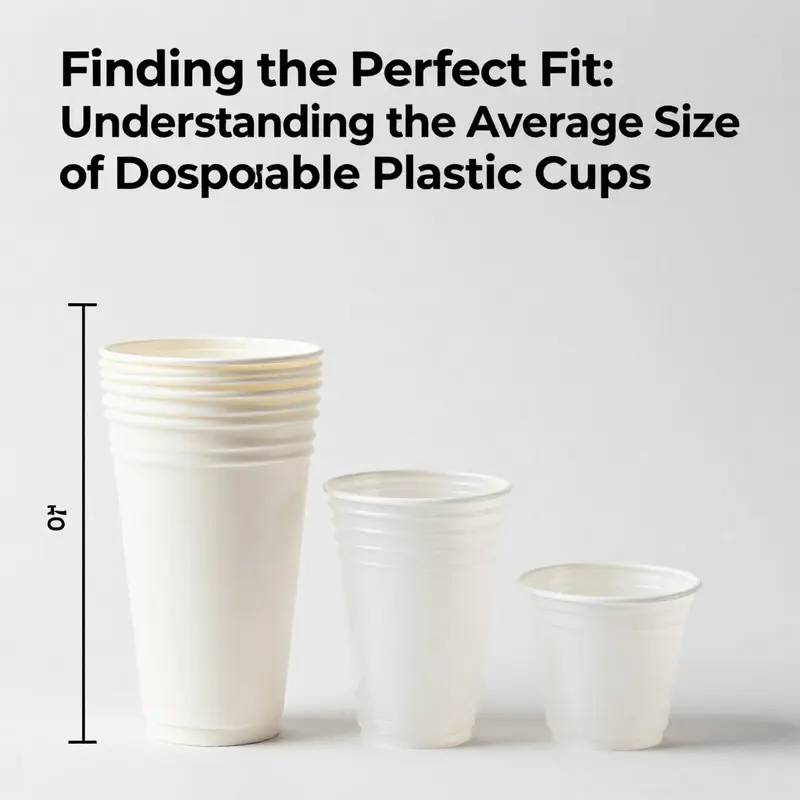
Height is a deceptively simple dimension when we think of disposable plastic cups. It is easy to take for granted, yet it governs practical decisions across design, production, service, and end-of-life outcomes. In the steady rhythm of cafes, catering events, and grab-and-go stations, the height of a cup become a silent constraint and a quiet amplifier. It governs how many beverages can be carried at once, how easily a drink can be sipped, and how efficiently a stockroom can be organized for a week’s worth of service. The height of a cup is not just a matter of inches; it is a design choice that interacts with capacity, ergonomics, lid compatibility, stacking behavior, and even the perception of value. When we look closely at the height spectrum of disposable cups, a story emerges about standardization versus variation, about how manufacturing choices ripple outward to affect waste streams and consumer experience, and about the subtle compromises that managers and designers navigate every day.
From the outset, height is inseparable from capacity. The common sizes used for beverages—the small, the medium, and the large—are defined as much by what the consumer expects as by what fits on a shelf or in a cabinet of supplies. For instances of 8 ounces, the height tends to hover around 3 ¾ inches, or about 95 millimeters. This short silhouette is more than a compact footprint; it has a direct relationship to the way a cup rests in a hand, the ease with which a lid seals, and the rate at which a beverage can be loaded into a tray or a disposable sleeve. The short cup makes it possible to stack many units in a gravity-fed dispenser or to place more cups in a standard carrier without tilting the balance. In practice, that height correlates with a design ethos that prioritizes pace and portability over long, lingering enjoyment. It is the cup you grab when you want a quick coffee, a fast sample, or a small cold drink on a hot day.
As the volume expands into the 12–16 ounce range, height grows to about 4 to 5 inches, or roughly 100 to 127 millimeters. A cup in this band is the everyday workhorse of many beverage environments. It strikes a balance between compactness and presence: tall enough to feel substantial in the hand, yet not so tall that it topples easily when placed on a crowded counter. In practical terms, the height allows a comfortable grip for adults with a range of hand sizes, while the rim remains within easy reach of the lips without forcing the drinker to tilt the head awkwardly. A standard 16-ounce cup, commonly around 127 millimeters tall, often represents the default size in many cafes for a classic coffee or a juice blend. The height also provides room for a lid to fit snugly, specifically designed to prevent spills during a brisk walk or a crowded line. The subtle relationship between height and mouth diameter—often in the 6.5 to 11 centimeter range—ensures the lid can seal without requiring an extra clamp or a tight twist. This functional harmony between height, diameter, and bottom stability is what makes these mid-range cups so versatile in daily operations.
Beyond the mid-size range, the landscape shifts again as cups reach 20 to 32 ounces in capacity. These larger cups may reach 6 to 7 inches in height, or about 150 to 180 millimeters, bringing with them a different set of engineering and logistical considerations. Taller cups invite a different kind of beverage. They are favored for milkshakes, thick smoothies, and slushies, where the drink’s viscosity and temperature demand more space at the top to accommodate sturdy straws and wide lids. Height in this band interacts with lid geometry and straw compatibility; the more generous the height, the more crucial it becomes to design a lid that seals effectively while still leaving room for a straw and a comfortable sipping angle. Taller cups can present stacking challenges in storage and transport, yet they can also optimize the way beverages are loaded into display coolers or bundled into take-away orders. A longer height, when paired with a tapered bottom, can aid stability on a curved surface and reduce the risk of tipping after a spill.
The dimensional choreography of height does not occur in isolation. The top diameter, bottom diameter, and overall taper of the cup together determine how a vessel sits in a sleeve or carrier, how easily it nests with other cups for shipping, and how many units can be stacked without crushing or deforming the rim. The industry standard heights of 95 mm for small cups, 100 to 127 mm for mids, and 150 to 180 mm for large cups are not arbitrary. They reflect a long-standing negotiation among material economics, ergonomics, and consumer expectations. The mouth diameter—commonly between about 6.5 cm and 11 cm—and the bottom diameter, typically in the 5 to 7 cm range, interact with the height to create a conical geometry that balances stability with ease of use. A cup’s height often correlates with its volume, but the same height can appear quite different depending on the taper and the ratio of top to bottom diameter. In a practical sense, a cup that is taller but has a narrower mouth can feel more delicate and less conducive to robust sipping; conversely, a shorter cup with a wide mouth can feel sturdy but may invite faster consumption and potential spills if not paired with an appropriately designed lid.
The precise height of a cup also carries implications for manufacturing and packaging. Thermoforming and injection-molding processes must maintain tight tolerances to ensure that lids and sleeves fit consistently across a batch. Small deviations in height, even by a few millimeters, can cause misalignment with lids or damage to stacking frames in a warehouse. In the supply chain, uniform height improves pallet packing, reduces breakage, and speeds up the counting and repackaging process. Height differentials can complicate the way cups nest in shipping sleeves or stack in display towers, and they can alter the way a beverage station replenishes its inventory during a peak hour. The height spectrum thus becomes a practical constraint that informs the choice between a standard, modular system and a more customized approach for events or venues with unique service needs.
The ergonomic dimension of height is not incidental. A cup must feel comfortable in a hand, and height plays a crucial role in how a drink is perceived as manageable. For smaller-handed customers, a tall, narrow cup can feel slightly unwieldy, while a shorter, stout cup offers a more secure grip. The design language of height influences grip texture, wall thickness, and even the tactile feedback of the cup’s surface. A curved or gently tapered wall can guide fingers to a natural resting point, reducing the likelihood of slipping. The base diameter contributes to this stability as well. A larger bottom relative to the top can make a tall cup feel more anchored, while a very narrow base on a tall cup can render it more prone to tipping if placed on an uneven surface. In service flows, these physical cues translate into the speed and confidence with which a barista or server can hand a drink to a customer. A well-calibrated height, in harmony with lip reach and lid fit, makes the exchange feel effortless—one reason why height is a constant, though often unspoken, collaborator in guest satisfaction.
From a consumer psychology perspective, height can subtly communicate value. Taller cups can convey a sense of abundance; shorter cups may seem more modest, even when volumes are similar due to the bowl or the mouth’s geometry. The perception of height—paired with the color, translucence, and branding of the cup—becomes a small but meaningful cue in the overall product experience. In contexts where cup color or transparency is used to signal flavor or temperature, height can reinforce that signal without the consumer even thinking about it. In a crowded cafe setting, the height that customers are exposed to first—before they notice the logo or the lid—helps shape expectations about what the drink will feel like to drink, how long it will last, and how much enjoyment it will deliver within the constraints of the given cup’s design.
The practical realities of height extend beyond the point of purchase and into waste and disposal. Taller cups, if made from thicker wall material to preserve temperature or hold a larger straw, can weigh more and contribute more material to the waste stream per unit than shorter cups. Yet, height can also enable material efficiency through improved stacking and reduced breakage during transport and handling. The net environmental impact is not a simple function of height alone; it emerges from a balance among material usage, stacking density, and the end-of-life pathways that a venue or consumer follows after use. This is why many manufacturers emphasize packaging efficiency, and why some operations trade off a marginal gain in height for a more favorable stacking density in their warehouse or a more reliable lid-to-cup seal in high-humidity environments. The interplay between height and sustainability grows clearer the moment we recognize that the life of a cup begins at formation and ends, ideally, with recycling or reuse, rather than as waste that lingers in landfills.
In reflecting on the specific heights and their practical implications, it is helpful to connect these dimensions to the realities of service. A small 8-ounce cup, at about 95 millimeters tall, is often paired with a tight lid and a narrow straw for sipping on the go. In many venues, this pairing is designed for speed and turnover; the cup’s height ensures it fits compactly into a standard condiment station or a coaster cradle, while the lid’s geometry protects against minor spills during a brisk walk. A mid-sized cup, around 100 to 127 millimeters tall, aligns with a broader range of beverages—from lightly sweetened coffees to fruit-forward drinks. The height allows a comfortable sip while enabling a larger mouth area that can accommodate thicker liquids or a wider straw. A tall, large cup—150 to 180 millimeters in height—often shifts the service equation toward longer-consumption beverages: milkshakes, smoothies, or specialty cold drinks. Here the height invites a slower, more relaxed experience, reinforced by a lid that can handle a broader straw and a robust seal to resist spill during transport on busy streets or crowded event venues.
In practical terms, height also interacts with the way a cup nests inside a sleeve or a carry tray. The top diameter, typically 6.5 to 11 centimeters, and the bottom diameter, usually 5 to 7 centimeters, determine the slope of the interior sides and how the cup sits within a protective sleeve. A well-matched height and taper reduce the risk of tipping when sliding the cup onto a tray or into a carrier, an everyday hazard in bustling service environments. When a cup’s height is mismatched with its top and bottom diameters, the result can be a wobble that slows service, increases spill risk, and invites customer dissatisfaction. This is why the industry leans toward standardized height bands that can accommodate lids, sleeves, and stacking systems without requiring bespoke solutions for every size variation.
The conversation about height would be incomplete without acknowledging how this dimension affects the broader packaging ecosystem. For events and catering, height determines how many cups fit into a given crate or box, how many can be stacked on a single shelf, and how readily a restocking team can replenish a station without cross-contamination or mix-ups. It also shapes the choice between a modular, universally compatible line and a more diverse set of products that can address niche demands—for example, cups designed to hold ice for extended periods or those that accommodate thick, foamy beverages when paired with the right straw geometry. In these decisions, height acts as a compass, guiding choices that influence labor efficiency, waste, and guest experience. The balance between height, volume, and lid compatibility informs whether a venue can lean into a rapid, high-turnover model or must adopt a more varied approach to meet the needs of different drinks and customer preferences.
To ground this exploration in a concrete context, consider the potential for a single internal reference point that captures the practical realities of height in everyday use. In many service settings, a standard clear cup—designed to be versatile for a wide range of beverages and events—often serves as a workhorse. Its height, together with its diameter and taper, is crafted to support a quick, confident drink exchange. For a demonstration of how such a cup is designed to interact with lids, sleeves, and stacking systems, you can explore a representative example here: disposable-clear-plastic-cup-outdoor-picnic-pet-cup-drinking-cup-for-parties-birthdays-weddings-camping-utensils. This link provides a sense of the practical considerations—how height complements the other dimensions to deliver a reliable service experience across a broad set of venues and occasions.
As we look to the horizon of future developments, height is likely to remain a stable axis around which other innovations revolve. The ongoing push toward lighter materials and more precise molding could shrink wall thickness without compromising the perceived sturdiness of taller cups, thereby altering the weight and feel of different height categories. Improvements in lid design, anti-spill features, and stackable configurations could further optimize how height interacts with the rest of the cup’s geometry, enabling even more efficient storage, transport, and use. In that sense, height is not a static constant but a dynamic parameter that reflects evolving manufacturing capabilities, consumer expectations, and environmental considerations. The cups we rely on daily embody a compact synergy of engineering, design, and behavior—a testament to how a seemingly simple measure can ripple through the entire system that moves beverages from cup to customer to waste stream.
In wrapping this chapter, the height of disposable plastic cups emerges as a multi-faceted driver of practicality and experience. It is a dimension that informs how cups are held, how they seal, how they stack, and how they communicate value to the user. It shapes the rhythm of service and the efficiency of a kitchen or event team. It interacts with capacity to deliver a satisfying sensory experience while remaining compatible with standard lids and sleeves. It even whispers about the environmental footprint of a product designed to be used once and disposed of, prompting ongoing consideration of material choices, recycling pathways, and responsible consumption.
In sum, height is a subtle but powerful determinant of how a disposable cup fulfills its purpose. From the compact exuberance of an 8-ounce cup at 95 millimeters to the commanding presence of a 32-ounce behemoth at around 180 millimeters, height frames the dance between form and function. It influences the feel of the cup in a hand, the reliability of the lid, the ease of stacking in a storage bin, and the discipline of waste management after use. By understanding height as more than a number, designers, manufacturers, and service professionals can craft better, more efficient, and more sustainable beverage experiences for a wide range of environments.
External resource for further technical context: https://www.supplychainview.com/2026/01/05/180ml-disposable-plastic-coffee-cup-explained/
Reading the Ring: How Diameter Defines the Average Size and Everyday Use of Disposable Plastic Cups
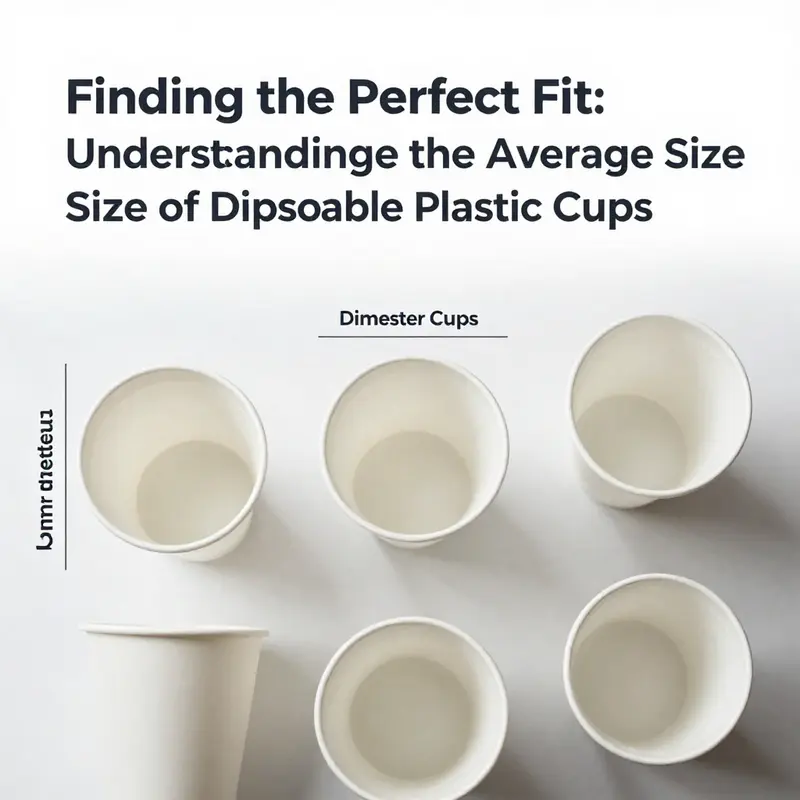
Diameter measurements are more than just round numbers on a spec sheet. In the world of disposable plastic cups, the diameter at the rim, the diameter at the bottom, and the height together sketch a cup that can balance stability, stackability, and user comfort. When we talk about the average size of a disposable plastic cup, we are really describing a family of shapes that share a common purpose: to hold a beverage safely, to fit into cup holders and service equipment, and to be easy to handle from first pour to final sip. The diameter talk begins at the rim and trickles down through the body of the cup to guide both manufacturing decisions and consumer expectations. Size is never accidental; it is a design compromise rooted in physics, logistics, and the varied contexts in which these cups are used, from a quick coffee run to a large event, from a home office break room to a hospital corridor where quick, hygienic service matters most.
Start with the rim. The top diameter, or rim diameter, is the most visually apparent measurement and often the first cue a user reads when selecting a cup. For the smallest end of the disposable spectrum, a 3 oz cup—often used for mouthwash or sample servings—has a top diameter around 1.99 inches, which is about 5.05 cm. This modest opening is a deliberate choice: it constrains the volume, supports a manageable balance of thickness and rigidity, and reduces spillage risk when used for very small portions. Slight variations among brands can push this diameter a little larger or smaller, but the principle remains: compact rims suit small servings and minimize waste while maintaining grip and stability.
As the volume grows toward regular beverage sizes, the rim diameter widens. In cold beverage cups that range from 300 ml to 700 ml, the rim diameter typically sits between about 2.5 inches and 3.5 inches, or roughly 6.35 cm to 8.89 cm. Many designs use a U-shaped profile that nests when not in use. This nesting feature, often called a taper or a conical shape, helps with storage efficiency in a café or event setup and is a direct consequence of the rim diameter being larger than the bottom yet not so wide that it compromises stacking integrity. For the larger 700 ml cups, the rim diameter can approach 4 inches or more, which translates to around 10.16 cm. That widening communicates a different consumer experience: a bigger sip, a more generous mouthfeel, and a cup that feels substantial in the hand while still designed for stability on flat surfaces and inside cup holders designed for hot or cold beverages.
The height of the cup also influences how the diameter feels in practice. Standard disposable cups sit in a vertical corridor from roughly 10 to 18 cm tall. Shorter cups, with rims in the mid-6 to 7 cm range, feel more compact and are often favored for shorter consumption windows, such as a quick coffee or juice that can be consumed within about 20 to 30 minutes. Taller cups allow more liquid and a longer drinking window, yet they challenge balance and usher in a different dynamic in cup holders, car cup holders, and event service stations. The interplay between rim diameter and height is a reminder that average size is not a single fixed value but a spectrum shaped by intended use and handling needs. In practice, a typical 180 ml disposable coffee cup sits with a rim diameter near 7 cm and a height around 7 cm as a compact, ergonomic solution designed to balance stability, heat containment, and ease of handling for a short session.
Bottom diameters tell the rest of the story. The bottom is almost always smaller than the rim, which helps the cup stand on a variety of surfaces and improves stacking efficiency. For many standard cups, bottom diameters fall in the 5 to 7 cm range, corresponding to a taper that keeps the sides relatively straight rather than flaring out dramatically. The geometry matters for several reasons. A narrower base lowers the center of gravity, potentially improving stability on crowded tables or during transport. It also influences how the cup can rest within a rack or a sleeve, and how efficiently it nests inside a larger pile for storage. In the design language of disposable cups, the bottom diameter is a subtle but crucial companion to the rim diameter. Together, they define the fit for cup holders, dispensers, and the overall user experience.
This measured assembly is not a one-size-fits-all story. The 180 ml coffee cup, for example, commonly features a rim diameter around 7 cm, with a height that hovers near 7 cm as well. Those dimensions are chosen to balance quick hand-to-mouth pacing with the ability to hold a modest amount of hot liquid without excessive heat transfer to the fingers. When the same family expands to cold beverage cups between 300 ml and 500 ml, you will see a broader top diameter, often between 6.35 cm and 8.89 cm, and a height that scales with volume to preserve proportion and stability. Cup designers frequently employ a nested arrangement where the top diameter is intentionally larger than the bottom diameter to facilitate stacking. This nested, tapered geometry reduces storage space while keeping the cups within easy reach during service.
Of course, the precise figures differ by brand, material, and intended service context. The practical takeaway is that the diameter at the top establishes how much liquid can be poured without risking overflow, but it also sets the template for how the cup interacts with the environment. For example, an especially wide rim can encourage a more forgiving drinking experience, enabling a larger mouth opening for quicker sipping, while a narrower rim can slow consumption or accommodate a different beverage texture. The bottom diameter reinforces the base of stability, a factor that influences whether the cup remains upright when placed on a gently vibrating surface or when set down in a busy queue where people are moving quickly with trays and plates.
When practitioners in cafes and catering operations plan their inventories, they balance volume, weight, and diameter. A 150 ml to 200 ml cup is often used for a smaller beverage or sample service, while 300 ml to 350 ml cups are the workhorse for most hot drinks like coffee or tea, with a rim diameter typically in the 6.5 to 7.5 cm neighborhood. In many markets, the more popular 200 ml to 350 ml range becomes the default size for coffee or juice in casual dining, precisely because the rim diameter supports a comfortable sip while the height and wall thickness enforce a reliable grip. A 500 ml cup, with a top diameter near 10 cm and a height around 17 to 18 cm in some designs, marks a pivot toward larger servings for robust beverages or for use in events where guests anticipate a greater volume per serving. In this space, a 500 ml cup may approach a mouth diameter of 10.7 cm, a spec that translates to a perception of fullness and a practical challenge for cup holders, transport, and stacking.
All of these measurements live within a broader design ecosystem. Variations exist across brands and materials, including differences in wall thickness, rigidity, and the precision of molding processes. The practical effect is that the numbers we cite—rim diameter in centimeters or inches, bottom diameter, and height—are guidelines rather than unyielding rules. When buyers consult manufacturers, they are urged to check the technical specifications for exact measurements because minor deviations occur with different resin formulations, manufacturing tolerances, and molding equipment. The critical objective, however, remains consistent: deliver a cup that is easy to hold, easy to pour into, and easy to dispose of after the drink is finished. These ambitions are encoded in diameter, height, and the tapered geometry that supports efficient stacking and reliable use in a variety of service contexts.
The functional implications of diameter extend beyond human factors. The size of the rim relates to the human act of sipping, the way beverages are poured, and the manner in which the cup interacts with beverage dispensing systems, including cup dispensers and cold- or hot-drink machines. A rim that is too wide can complicate swallowing hot liquids safely, while a rim that is too narrow might impede the aroma or mouthfeel of certain beverages. The bottom diameter in turn affects whether the cup can stand steadily on a crowded tray or in a busy service station. It also matters for nesting efficiency during storage and for packaging strategies that aim to optimize space on shelves and in transport. When all these considerations come together, diameter becomes a tangible proxy for the balance between practical service requirements, user comfort, and logistical efficiency.
A quick inventory of dimensions across typical sizes helps connect these ideas. A small 3 oz cup with a rim around 5 cm, a short 180 ml coffee cup with a rim near 7 cm, a midrange 300 ml cup with a rim between 6.5 and 8 cm, and a larger 500 ml cup with a rim around 10 cm or more all illustrate a continuum driven by purpose. Even within this continuum, the shape remains important. The taper ensures the bottom remains narrow enough for stable placement while the rim remains wide enough to invite comfortable sipping. The height, while not as immediately perceptible as the rim diameter, contributes to the overall proportion of the cup and to its compatibility with cup holders, sleeve designs, and storage racks. In short, diameter measurements are the most visible part of a larger conversation about how a disposable cup performs in real life, in real time, with real beverages.
For readers seeking a concrete sense of how these numbers translate to actual products, the practical takeaway is to observe the range rather than fixate on a single value. The 3 oz and 180 ml categories demonstrate how even small changes in rim diameter can alter the pour and the grip. The 300 ml to 500 ml family shows how modest increases in top diameter expand capacity and consumer convenience without compromising handling. The top diameter near 10 cm for a 500 ml cup signals a design that aims to deliver a satisfying volume while maintaining stable handling and efficient storage. In each case, the diameter is not an abstract spec; it is a tool that shapes the speed, rhythm, and ease of bevvy service in places where cups are handled thousands of times a day.
Beyond the numbers, professionals in the field weigh the broader implications of diameter when choosing cups for specific settings. A café that prioritizes speed and comfort may favor slightly wider rims to ease sipping and reduce the risk of spills as customers retreat to their tables with steaming beverages. An event-focused operation might opt for trunks of nested cups with uniform diameters to maximize storage efficiency and minimize the time spent restocking service lines. The bottom diameter, meanwhile, can be a deciding factor for compatibility with universal cup holders and dispensing machines, ensuring a smooth transfer from machine to hand. In this sense, diameter measurements do not merely catalog sizes; they forecast performance, safety, and the overall guest experience.
From a consumer perspective, understanding diameter helps in choosing the right cup for the right moment. A shorter, narrower cup can feel more intimate, quick, and manageable, while a taller, wider cup can convey abundance and confidence in a serving. The average size emerges as a synthesis of these tendencies, a practical midpoint that accommodates routine hot drinks, chilled beverages, and a wide variety of service contexts. The takeaway is not a single universal standard but a pattern of sizes that reflects how people drink, how settings are organized, and how manufacturers translate those habits into tangible, stackable, disposable vessels. When you bite into the specifics—5 cm top diameters for the smallest sample cups, 6.3 to 7 cm for many coffee cups, 8 to 10 cm for midrange cold beverage cups, and around 10.7 cm for larger 500 ml offerings—you see a coherent story. A story that, at its core, is about making a cup that fits a moment, not just a container that holds liquid.
For readers who want to see this in context with broader packaging and cupware ecosystems, a practical exploration of a well-known reference on cup dimensions can be illuminating. disposable paper cups offers a perspective on how paper cup sizing translates into everyday service and consumer expectations. While the focus here has been on the diameters of plastic cups, the same principles of rim sizing, nesting potential, and bottom stability apply across materials, reinforcing that diameter is a universal language for cup design and use. In the end, the diameter measurements that define the rim, the body, and the base help determine how a cup feels in the hand, how it performs on a crowded table, and how efficiently a service operation can move beverages from machine to mouth to disposal.
For readers who want a deeper dive into the technical underpinnings of cup dimensions, the broader literature offers a detailed technical guide that covers how diameter relates to capacity, wall thickness, and performance under different beverage temperatures. An external resource provides a rigorous treatment of 180 ml style disposable coffee cups, including specifications and performance insights that illuminate how tiny numerical differences translate into measurable user experiences and operational outcomes. This external reference is a valuable companion to the practical observations outlined here, helping to connect the day to day reality of serving beverages with the precise engineering behind the cups we handle every day.
Sizing Convenience: How the Typical Capacities of Disposable Plastic Cups Shape Service, Waste, and Experience

The everyday practicalities of serving beverages in a disposable world begin with a surprisingly deliberate element: the cup. When a server hands you a cup, you may not notice the careful arithmetic behind its size, but the diameter of the rim, the height of the wall, and the taper from lip to base all work in concert to influence everything from the speed of service to the volume of waste produced. The average size of a disposable plastic cup is not a single fixed measurement, but a spectrum that centers around a few well-worn capacities. These standard capacities—their corresponding forms, and the contexts in which they are favored—define the choreography of most beverage service environments. In practice, the most commonly used sizes sit within a familiar band, roughly from 150 milliliters to 500 milliliters, with the 200 to 350 milliliter range particularly prevalent for coffee, juice, and casual, day-to-day consumption. This range reflects a balance between user comfort, perceived value, and operational efficiency. It is also a practical response to the physical realities of the cup itself: the way it sits in a hand, how quickly it can be filled and poured, how it stacks for space-saving storage, and how it travels from counter to customer without tipping or leaking.
To understand why these sizes have become so staple, one can look to the physical dimensions that underlie them. A cup’s height varies broadly but typically lands in a range from about 10 to 18 centimeters, or roughly 4 to 7 inches. The mouth—the diameter at the top—tends to range from 6.5 to 11 centimeters (around 2.5 to 4.3 inches). The bottom of the cup is narrower, often between 5 and 7 centimeters (approximately 2 to 3 inches). When you visualize those measurements, the classic disposable cup presents a gentle frustum shape: a mouth-wide opening that narrows as it rises toward a smaller base. This geometry is not merely aesthetic; it supports stacking, pouring accuracy, and stability when the cup rests on a saucer or a flat surface. A cup designed for hot liquids, for instance, might emphasize a slightly taller profile and a more generous lip to encourage a comfortable sip, while a cold-drink cup might prioritize a broader mouth to facilitate fast filling and easy access for ice.
Within this continuum of sizes, several capacities stand out as the workhorses of the sector. A standard pint cup, for example, carries about 568 milliliters, which is 20 ounces in common parlance. This size is a versatile workhorse across restaurants, bars, events, and catering services. It is sturdy enough for both hot and cold beverages and flexible enough to serve coffee, soda, water, juice, or even cocktails in many casual and semi-formal contexts. Its presence signals a need for an option that feels substantial without tipping into impractical bulk. Meanwhile, the 16-ounce cup, or 473 milliliters, is widely seen in fast-food chains and convenience stores. It is the go-to choice for poured beverages like soda, iced tea, and smoothies, blending quick service with a familiar, comfortable grip. For individual servings of more modest beverages, 12-ounce (355 milliliters) and 8-ounce (237 milliliters) cups are common, found in retail packaging and event settings where single servings are essential. These smaller sizes align with the expectation of portability and portion control, particularly in settings where customers are choosing a single drink rather than refilling at will.
Even smaller serving cups, ranging from 2 to 6 ounces (60 to 180 milliliters), serve a different function. They are specialized tools for chutneys, sauces, or sauces and dips at buffets, food stalls, and dine-in restaurants. In contexts where multiple stalls or stations converge, these tiny cups support a tidy, controlled experience, ensuring guests can accessorize their meals without over-portioning or waste. The diversity of sizes, then, is not accidental but a reflection of how beverage and food service has evolved to align with the spectrum of consumer desires, service formats, and operational constraints. Every cup size carries a purpose: a capacity tuned to the type of drink, its presentation, and the moment in which it is consumed.
The decision to choose a particular cup size is rarely made in isolation. It sits at the intersection of the drink’s nature, the setting, and the intended experience. For hot beverages, the cup must retain heat long enough for enjoyment while remaining comfortable to hold; for cold beverages, a cup should invite rapid sipping and easy handling, particularly in high-traffic environments. The likelihood of waste also informs the choice: larger sizes may tempt overpouring in some contexts, while smaller sizes can lead to more frequent refills. In events and catering, the perceived scale of the cup influences how a guest experiences service. A 20-ounce pint cup, with its clean, generous silhouette, often communicates a sense of abundance and ease, which can be desirable for casual gatherings, weddings, or corporate events. Conversely, a 12-ounce cup might align with quick-service venues or kiosks where turnover is constant and the emphasis is on efficiency rather than ceremony.
Inherent to these sizes is a practical relationship to the materials and manufacturing realities behind the cups themselves. The mouth diameter is not only about capacity; it affects how the beverage is poured, how easily a straw or lid can be inserted, and how robust the rim feels during use. The height, in turn, contributes to the cup’s overall ergonomic profile. A taller cup may be slightly more prone to tipping if it is too slender, while a shorter cup can be easier to grip but may limit volume or the sense of value a customer perceives in the size. The bottom diameter, usually smaller than the top, is critical for stability when cups are stacked and stored and for ensuring a predictable fit for lids and sleeves. The precise wall thickness also matters, balancing cost with insulation properties and structural integrity. A cup designed for hot liquids often features a slightly thicker wall or a double-wall construction to limit heat transfer to the hand, a consideration that interacts with the lip’s thickness and comfort.
The practical consequences of these design decisions ripple through the entire lifecycle of a disposable cup. For operators, the choice of capacity affects inventory planning, warehousing space, and waste management. A standard lineup that includes a pint cup, a 16-ounce cup, and one or two smaller sizes enables a venue to cover a broad range of beverages without overcommitting storage or forcing guests to settle for an awkward alternative. The economic calculus is not trivial: larger cups can strain budgets, given the material costs and the potential for spill-related losses, but they can also reduce the need for frequent refills and improve guest satisfaction in certain contexts. In many settings, the most popular sizes are those that deliver a seamless experience for the guest while preserving operational speed and accuracy behind the counter. The 200 to 350 milliliter range—roughly 7 to 12 ounces in typical U.S. sizing—often emerges as the sweet spot for coffee and juice in many cafes and casual eateries, where quick service and consistent portioning are valued.
The appeal of these mid-range sizes also ties to consumer expectations. Many customers have become accustomed to a standard set of cup capacities across multiple venues, a pattern reinforced by signage, lid designs, and even biodegradable or compostable cup options that advertise the same volumes. The familiarity of a 16-ounce cup, for example, can reduce decision fatigue for a customer who is choosing a drink by volume, while the slightly larger 20-ounce cup communicates abundance for a beverage that is meant to be sipped slowly in a relaxed setting. For operators, this consistency simplifies training, order accuracy, and the assembly of a coherent beverage program. It also facilitates the integration of cup lids, sleeves, and other accessories that must accommodate a given diameter and height, ensuring a predictable fit that minimizes leaks and misfits.
It is also worth considering the ecological and logistical dimensions that accompany these sizes. The proliferation of disposable cups has coincided with a rising emphasis on waste reduction and sustainability. The most common capacities reflect a balance between consumer desire for convenient portability and the industry’s push toward more efficient packaging and end-of-life solutions. In many contexts, cup manufacturers offer a range of materials and constructions—from single-use polystyrene to more environmentally considerate alternatives like molded fiber or plant-based polymers—that align with the intended use and desired disposal pathway. The structural fundamentals of the cup—the mouth diameter, height, and bottom width—continue to guide how these materials perform. A cup designed for hot coffee must resist deformation under heat, while a cold drink cup must maintain clarity and stiffness when filled with ice and liquid. In these respects, the average size of a disposable plastic cup is not merely a matter of capacity but a nexus of ergonomics, efficiency, consumer experience, and environmental responsibility.
From a practical standpoint, the decision to stock specific cup sizes can also reflect the broader patterns observed in beverage service across cafes, catering operations, and event venues. In many everyday settings, the 200 to 350 milliliter band serves as the dependable core for hot beverages like coffee and tea as well as for juice and light refreshments. The 500 milliliter range often sits on the edge of practicality for some outlets, offering a larger option for customers who want a longer-lasting serving without reaching for a refill. For events or venues that emphasize a quick, no-fuss service flow, the smaller 150 to 180 milliliter options may exist primarily for samples, sauces, or small portions rather than full beverages. These considerations reveal how a seemingly simple element—the cup size—carries the weight of service design, consumption patterns, and waste management strategies.
The story of cup sizes is also a story about how form follows function in a world that moves quickly from counter to customer and back again. A well-chosen capacity supports the barista or server’s rhythm, enabling a smooth pour, a reliable lid fit, and a comfortable handhold. It also shapes how a customer experiences the beverage: a cup that feels appropriately sized invites confident consumption and reduces the sense of scarcity that can accompany a too-small vessel. Conversely, a cup that is too generous in capacity may tempt over-filling, leading to spills or longer consumption times, while a too-small cup can undermine perceived value and satisfaction. Each size has its place depending on the beverage type, the pace of service, and the ambience the venue seeks to cultivate. The collective effect of these choices—size, shape, material, and finish—creates a practical choreography that underpins a seamless beverage experience, even as it leaves a trace in the waste stream that follows.
For practitioners looking to optimize their offerings, a mindful approach to cup selection begins with an honest assessment of beverage types, portion expectations, and the daily tempo of operations. It is not solely about picking a largest option to avoid refills; it is about calibrating a set of capacities that aligns with the way guests drink, the speed at which service must move, and the environmental targets a venue aspires to meet. A balanced lineup, typically anchored by cups in the 200 to 350 milliliter range for everyday beverages and supplemented by larger cups for certain occasions, can deliver both operational efficiency and guest satisfaction. When designing a beverage program, operators can also consider how cup sizes interact with lids, sleeves, and other accessory systems. The diameter at the top must be compatible with standard lids and seals, while the height should harmonize with cup sleeves that protect hands and improve grip in busy service environments.
In the end, the average size of a disposable plastic cup is less about a single specification and more about the role the cup plays in everyday life. It is a compact embodiment of how modern foodservice negotiates speed, reliability, and experience in a world that values convenience. The dimensions—the height, the rim diameter, and the taper toward the base—create a practical instrument that allows beverages to be poured, carried, and consumed with ease. They support the variety of drinks that people enjoy, the ways they choose to drink them, and the venues in which they do so. As trends evolve toward sustainability and smarter packaging, the fundamental task of sizing remains: to offer the right amount of liquid in a form that is easy to use, economical to produce, and responsible to dispose of. The chapter on common capacities and usage thus returns us to a simple, enduring idea: the average cup is not average by accident. It is a carefully chosen tool, designed to fit a broad range of drinks, contexts, and rhythms of daily life.
For readers who want a more technical dive into how specific capacities translate into performance specifications, a detailed guide on the 180 ml disposable coffee cup explains the technical specifications, performance insights, and best practices that accompany this common size. This resource provides deeper context on how a seemingly small vessel can balance insulation, pourability, and waste considerations in real-world settings. External reference: 180ml disposable plastic coffee cup explained.
Internal link note: In practice, many operators refer to the practical use and availability of a clear plastic cup designed for outdoor and casual events as a common, accessible option for everyday service. For a concrete example of such a cup in a retail setting, see the product listing for disposable clear plastic cups used in outdoor and casual environments. disposable clear plastic cup product.
These perspectives remind us that the size of a disposable cup—so often taken for granted—embeds a broader logic about how we consume, how we move through spaces, and how the systems of packaging, dispensing, and waste management are designed to keep pace with ever-shifting rhythms of daily life. The standard capacities we rely on are a toolkit, enabling operators to match beverages to moments, ensure consistent service, and uphold the practicalities that keep a busy cafe or event running smoothly. As the industry continues to refine these tools, the core concept remains clear: the shapes and volumes of disposable cups are foundational to the craft of serving, and they carry with them implications that extend far beyond the moment a drink is handed over the counter.
External reference for further technical depth: https://www.supplychainview.com/2026/01/05/180ml-disposable-plastic-coffee-cup-explained/
Final thoughts
Understanding cup dimensions helps ensure customers receive consistent portions and teams can streamline service.\nBy aligning height, diameter, and capacity with your menu, you can improve presentation and efficiency.