
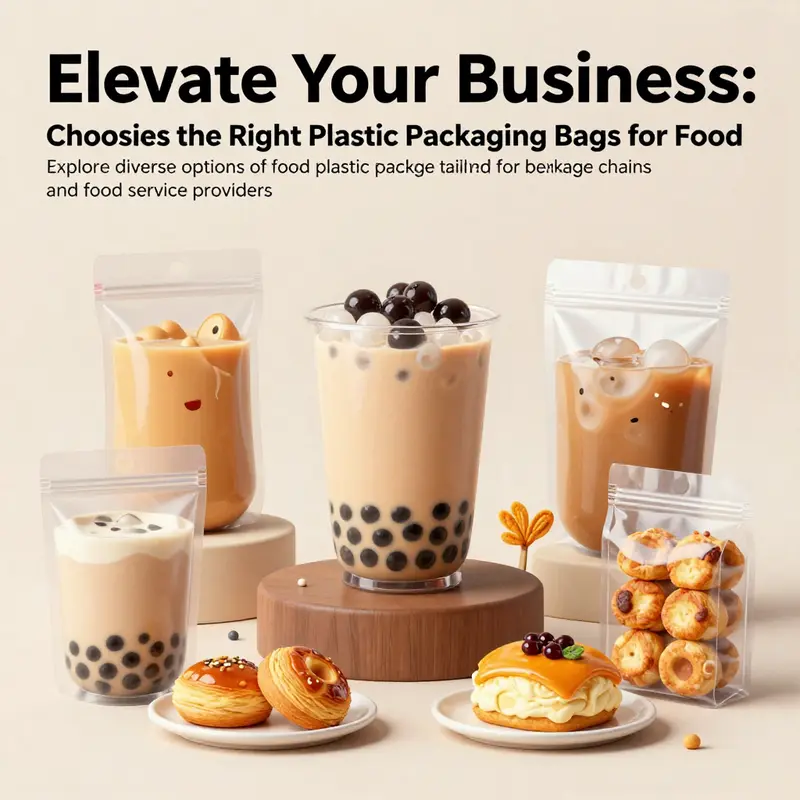
In an era where presentation meets functionality, the choice of food plastic packaging bags plays a pivotal role in the dining experience of customers. Whether you’re managing a bubble tea shop, operating a bustling restaurant, or organizing corporate events, understanding the various types of packaging available can directly impact your product quality and customer satisfaction. This comprehensive guide will delve into the different types of plastic packaging bags for food, categorized by material, function, and application. The importance of sustainability in packaging will also be explored as consumer preferences evolve toward environmentally-friendly options. Join us as we unpack these essential insights to optimize your business offerings.
Material Matters: Choosing the Right Plastic Bag for Every Food Packaging Need
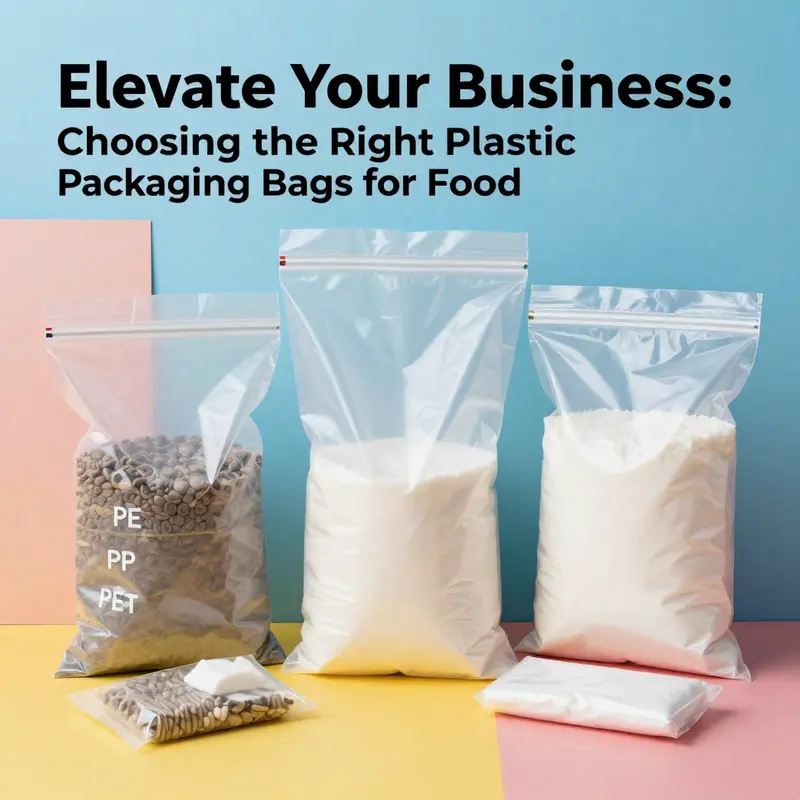
Polyethylene, polypropylene, PVC, metallized films, specialty co-polymers and biodegradable resins—each material offers a distinct balance of strength, barrier performance, flexibility and cost. Choosing the right plastic packaging bag for food starts with understanding what each material brings to the table and how those properties match a product’s shelf-life, storage, handling and end-of-life expectations.
Polyethylene (PE) is the workhorse of food bag packaging. Its popularity stems from a rare combination of safety, processability and low cost. PE is essentially tasteless and non-toxic, resists acids and alkalis, and seals reliably. These attributes make it ideal for a broad set of bag formats: ordinary sealed pouches, vacuum bags, freezer bags, and resealable zip-lock styles. Within the PE family, Low-Density Polyethylene (LDPE) is soft and flexible, allowing easy opening and forgiving seals—a good fit for bags that must be handled repeatedly or tucked into display racks. High-Density Polyethylene (HDPE) is stiffer and more puncture-resistant, commonly found in heavier-duty sacks or industrial-style food liners. Linear Low-Density Polyethylene (LLDPE) blends toughness with flexibility and excels when tensile strength and puncture resistance are critical, such as in thicker vacuum pouches or bags used for bulky frozen goods.
Polypropylene (PP) occupies a different niche. Its rigidity, clarity and higher melting point make PP suitable where presentation and heat resistance matter. You see PP in microwave-safe bags, in films for dry goods that benefit from a crisp appearance, and in multilayer laminates where a stiffer outer layer improves machinability on filling lines. PP’s inherent grease resistance and heat tolerance are useful for ready-meals that undergo thermal processing. In applications where transparency is a selling point—think snack windows or clear film over bakery trays—PP often outperforms PE on clarity, while still offering safe direct food contact.
Polyvinyl Chloride (PVC) has historically been used in some food contact applications because of its versatility. Yet PVC warrants caution. Certain additives, notably phthalates used as plasticizers, have raised health concerns and complicated regulatory acceptance for direct food contact in many markets. When PVC is used, manufacturers must control formulations tightly to prevent migration of harmful components and to ensure safe processing conditions. For this reason, PVC is less common in modern mainstream food bagging than PE or PP, and many brands avoid it entirely for consumer-facing products.
For products requiring superior light, oxygen and moisture protection, aluminum-containing laminates and metallized films are indispensable. Metallized films—plastic films coated with a thin layer of aluminum—combine the processing advantages of polymer films with a near-reflective barrier. They block light and reduce oxygen and moisture transmission far beyond single-layer plastics. Pure aluminum foil laminated between polymer layers delivers an even stronger barrier and is often used for coffee, high-fat snacks, dried nuts and spices where aroma retention and shelf stability are priorities. These materials are commonly the base for stand-up pouches or pillow bags used in retail snack packaging.
Barrier performance can also be achieved with specialty polymer layers. Polyvinylidene chloride (PVDC) coatings or films have long been valued for exceptional gas and moisture barriers and for retaining aroma. Although PVDC is effective, environmental and processing considerations have prompted development of alternatives. Nylon, exemplified by specialty grades like MXD6, brings outstanding oxygen barrier properties that remain reliable at higher humidity. This makes nylon an excellent choice inside complex laminates for cured meats, cheese slices and other oxygen-sensitive foods where humidity in the package could otherwise degrade performance.
Multilayer structures are the practical response to the idea that no single polymer meets all needs. Combining layers—an inner heat-sealable PE layer for food contact, a middle barrier layer like nylon or PVDC for oxygen control, and an outer PP or polyester layer for strength and printability—lets converters tailor each bag to a product’s demands. These composite bags may be used for vacuum packaging, modified atmosphere packaging (MAP), or cook-in applications. The engineering trade-off is complexity: multilayer bags are more costly and can be harder to recycle unless designed for compatibility and clear end-of-life pathways.
Specialty functional films extend the capabilities of basic polymers. Vacuum packaging bags often use co-extruded or laminated films with multiple layers to withstand mechanical stress and maintain vacuum without permeation. MAP bags are engineered to limit oxygen ingress and hold inert gas mixtures; they often depend on high-barrier materials plus precise sealing quality. Cooking and heat-resistant bags are manufactured from PA (polyamide), PET, or specially formulated PP that tolerate steaming, boiling or microwave heating without releasing undesirable compounds or losing structural integrity. Freezer bags incorporate modifiers to resist cold-crack and maintain flexibility at low temperatures.
Resealable options, such as zip-lock closures or self-adhesive strips, are frequently produced from PE because of its sealing behavior and flexibility. These features matter in household and retail settings: snacks, dried fruits, spices and bulk powders often require a bag that a consumer can close repeatedly without specialized equipment. Resealability extends convenience and preserves freshness between uses.
Safety and regulatory compliance are essential threads through material choice. Food contact approvals differ by jurisdiction and by polymer formulation. Additives, printing inks, adhesives and barrier coatings each introduce potential for migration. Manufacturers and packagers must verify compliance with relevant food contact regulations and maintain traceable documentation for raw materials. This is particularly important for steam-cooking or microwaveable bags, where thermal exposure can increase the risk of migration from non-food-contact layers.
The environmental dimension is reshaping material selection. Biodegradable plastics—such as polylactic acid (PLA) and various polyhydroxyalkanoates (PHAs)—offer a pathway toward reduced environmental persistence. These materials, often derived from renewable feedstocks, can decompose more readily under industrial composting conditions. New regulatory pushes in several countries are accelerating adoption of such materials in single-use food packaging. However, biodegradable plastics come with caveats: they may not perform like conventional PE or PP under all conditions, and their compostability depends on access to appropriate facilities. Designing bags to be recyclable, compostable, or made from recycled content requires careful attention to the full lifecycle so that environmental claims reflect real end-of-life outcomes.
Cost and supply-chain realities also play a role. PE and PP remain the most economical and widely available options. Metallized and aluminum laminates carry higher material costs but can significantly extend shelf life and protect premium products. Specialty nylons and PVDC raise price points further and are typically reserved for products where incremental performance justifies the expense.
Beyond material chemistry, practical considerations influence the final bag format. Machine compatibility—how a film runs on form-fill-seal equipment—matters for high-speed production. Printability affects brand presentation and barrier lamination choices. Puncture resistance, seal strength and transparency all influence consumer perception and logistical performance. For businesses seeking sustainable alternatives, there are hybrid approaches: paper-based boxes with clear windows, compostable liners, and combined paper-plastic structures engineered for easier separation and recycling. One example of eco-minded packaging choices for prepared foods and takeout can be found in discussions of eco-friendly takeout boxes.
Choosing the right material for a food packaging bag is an exercise in matching properties to product needs: whether the goal is flexible resealability for snacks, the highest oxygen barrier for cured meats, clarity and heat resistance for microwave meals, or superior light and moisture protection for roasted nuts. The decision also must factor in regulatory approval, consumer convenience and environmental impact. Performance, cost and sustainability do not always align, but advances in film technology and regulatory frameworks are expanding the options for responsible, high-performance packaging.
As materials evolve, so do design strategies. Carefully engineered multilayer films and laminate systems let designers combine the best features of each polymer while mitigating downsides. Recyclable mono-material solutions are gaining attention as industry programs seek to improve collection and processing. Biodegradables are entering the market where infrastructure supports composting. In every case, understanding the strengths and limits of each material—PE, PP, PVC, metallized films, PVDC, specialty nylons and biodegradable resins—remains the cornerstone of effective food bag packaging design.
For product teams and packagers, the key takeaway is to align material selection with a realistic view of product shelf-life, processing and end-of-life. By doing so, a packaging decision becomes not just a containment choice but a strategy for safety, quality, brand experience and environmental responsibility.
External reference: For more on biodegradable plastics, see https://en.wikipedia.org/wiki/Biodegradable_plastic
Explore eco-friendly takeout boxes
How Function and Form Shape Food-Grade Plastic Bags: From Vacuum Seals to Stand-Up Pouches
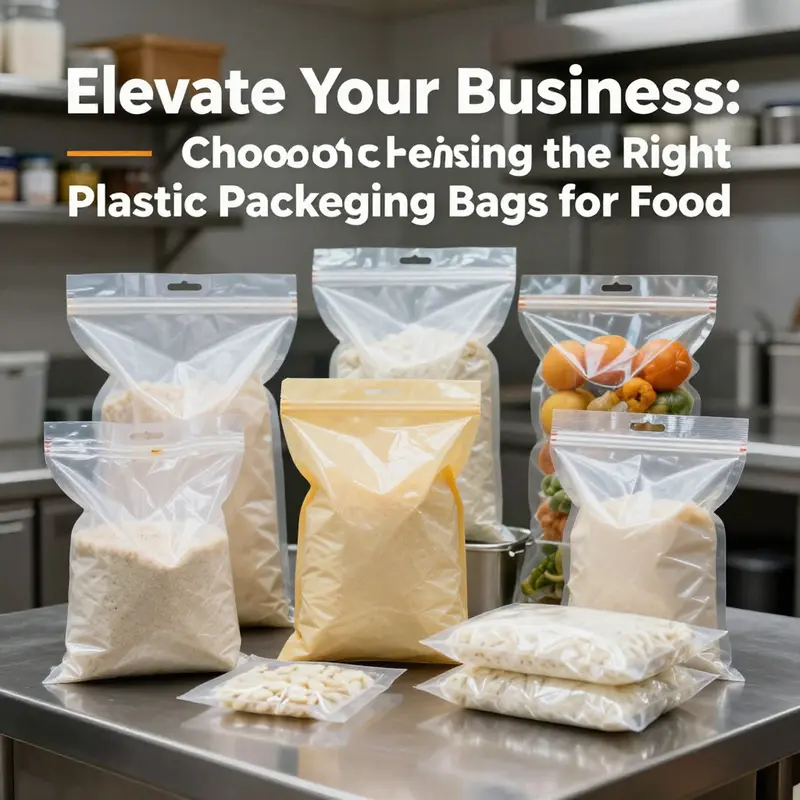
Understanding the role of function and structure transforms how we choose plastic packaging for food. A bag is not just a container; it is an engineered environment that protects flavor, texture, nutrition, and safety from production to the moment food reaches the table. Different functional requirements—barrier protection, heat resistance, reclosability, or the need to endure freezing—drive material selection and structural design. This chapter walks through the principal functional classes of food plastic bags and the structural shapes that make them practical on shelf and in the kitchen, explaining why each combination matters for producers, retailers, and consumers.
Vacuum packaging is one of the clearest examples of function dictating design. These bags are built to exclude air and form a tight interface with the food surface. Removing oxygen slows oxidation, inhibits aerobic microbial growth, and significantly extends shelf life. To accomplish this, vacuum bags are typically multi-layer laminates combining a tough, puncture-resistant outer layer with an inner sealant layer that bonds securely under heat. The outer layers provide mechanical strength to resist the stresses of handling and transport, while the inner layer must heat-seal consistently to maintain a durable vacuum. The result is a pliable yet robust pouch that conforms to the product, limiting headspace and keeping fragile items protected. For high-fat products or sharp-edged foods, manufacturers often add a nylon (polyamide) layer for puncture resistance and a high-barrier EVOH (ethylene vinyl alcohol) layer to reduce gas transmission.
Gas-flush or modified atmosphere packaging (MAP) bags demonstrate another function-driven approach. Rather than removing all gases, these systems replace the air with an inert mixture—commonly nitrogen or carbon dioxide blends—tailored to the product. This technique preserves color, texture, and flavor by displacing oxygen that would otherwise enable spoilage and rancidity. MAP bags share structural similarities with vacuum bags: they are often multi-layer laminates with high-barrier layers. However, their seal integrity must allow precise gas exchange during production while maintaining the chosen internal atmosphere for the product’s intended shelf life. MAP is particularly valuable for fresh meats, bakery items, and some ready-to-eat meals where oxygen-sensitive changes occur rapidly.
Cooking-in-bag and boil-in-bag packaging shift the design priorities toward thermal performance and food safety. These bags must tolerate direct exposure to hot water, steam, or microwave energy without leaching undesirable substances or failing structurally. Materials such as high-temperature-resistant polypropylene (PP), certain polyamides, and specialized laminates are used. The bag must seal reliably, resist swelling or rupture, and permit even heat transfer for consistent cooking. Beyond the material choice, the bag’s structure may include venting features or engineered seams to handle internal pressure during heating. Retort pouches, a cousin of heat-resistant bags, go further: they undergo high-temperature, high-pressure sterilization. Retort pouches combine strong barrier films with an outer armor layer to survive processing while delivering shelf-stable ready meals that do not require refrigeration.
Freezer-grade bags address cold-performance challenges. At subzero temperatures, some plastics become brittle and crack, compromising seal integrity and letting air in. Freezer bags are formulated to remain flexible at low temperatures and resist freezer burn by providing a moisture barrier that prevents ice crystal formation on the food surface. Low-temperature toughness is typically achieved with specialized polyethylene blends, often incorporating linear low-density polyethylene (LLDPE) or modified LDPE formulations. The structure usually emphasizes thicker gauge films and reinforced seals to resist punctures from ice crystals or rough handling in frozen storage.
Functional packaging is a broader category that brings barrier science and convenience features together. These bags can include metallized films or aluminum foil layers to block light, moisture, and oxygen—essential for light-sensitive snacks, coffee, and oils. They may also incorporate aroma-lock layers for products where fragrance is a quality cue. Beyond barriers, functional features include tamper-evident seals, tear notches, printing for portion guidance, or reclosure mechanisms. The layered construction is a careful balance: each layer adds performance but also weight and complexity, so designers tailor laminates to the product’s vulnerability and the brand’s sustainability goals.
Structure and shape are as important as material when it comes to usability, merchandising, and logistics. Flat, non-expandable bags—three-side and four-side seal formats—have long served the industry for single-portion, low-volume items. A three-side seal bag is formed by sealing three edges after filling and is cost-effective for small snacks, candies, and single-serve powders. Four-side seal bags, sealed around the entire perimeter, offer greater stiffness and strength. They stack well and resist bulging, making them suitable for denser contents or situations where presentation and shelf stability matter.
Gusseted bags add volume without sacrificing footprint. By introducing pleats—either at the sides or the bottom—gusseted designs expand when filled, creating a stable base and greater capacity. This structural choice is popular for coffee, pet foods, and bulk dry goods because it improves shelf presence and supports easy dispensing. Stand-up pouches leverage bottom gussets and engineered sealing to allow flexible packaging to stand upright. This shape combines the shelf appeal of rigid packaging with the material efficiency of films. Stand-up pouches often include features such as resealable zippers, spouts for pouring liquids, or tear strips for single-use convenience.
Reclosability is a consumer-driven structural feature that extends the functionality of a bag beyond its primary preservation role. Zipper or slider closures permit multiple openings while maintaining a controlled interior environment. They are particularly useful for pantry products—nuts, dried fruit, cereals—where the consumer will access the content repeatedly. Zippers are integrated into the pouch design and must align with the seal integrity of the rest of the bag. Self-sealing adhesive strips provide a lower-cost alternative for temporary closure, suitable for deli items or in-store packaging where short-term reseal is sufficient.
The interaction between function and structure is evident in hybrid designs. A frozen meal may use a freezer-grade stand-up pouch with a resealable zip and a metallized barrier to protect flavor. A premium coffee brand may choose a gusseted bag with a one-way degassing valve and a metallized laminate to allow aroma release while blocking oxygen. Producers juggle processing constraints, barrier requirements, display needs, and consumer convenience to arrive at a bag design that meets all demands.
Regulatory and environmental considerations increasingly shape both function and structure. New standards encouraging compostable or rapidly biodegradable materials push designers to rethink laminates and zippers. Compostable films often lack the high barrier performance of traditional laminates, forcing innovations such as compostable barrier coatings or mono-material constructions that can be recycled more easily. Function-driven features like degassing valves or composite laminates can complicate end-of-life handling, so many brands now weigh recyclability and composting compatibility against shelf-life expectations.
Choosing the right bag thus becomes a balancing act between technical performance and practical constraints. Key decision factors include the food’s sensitivity to oxygen, moisture, and light; expected shelf life; required processing temperatures; storage conditions; distribution stresses; and end-user behavior. A technical buyer will consider oxygen transmission rates, water vapor transmission rates, seal strength, puncture resistance, and thermal tolerance. A packaging designer will also consider on-shelf appearance, printing quality, and how the bag integrates with filling machinery and supply chain logistics.
To help bridge these practical needs with sustainable choices, manufacturers are exploring mono-material constructions that allow easier recycling while retaining key functions. Advances in barrier coatings, laser scoring for controlled opening, and heat-seal innovations permit simpler structures without sacrificing vital performance. At the same time, smart packaging trends—integrating indicators for freshness or simplified portioning—add consumer-facing functionality that complements preservation goals.
For food businesses and product developers, understanding the interplay between function and structure unlocks value across the product lifecycle. Properly matched bags reduce waste by extending shelf life, improve consumer satisfaction through convenience features, and optimize supply chain efficiency through design choices that lower breakage and enhance stackability. As material science evolves and regulations push for greener solutions, the next generation of bags will increasingly reflect an integrated approach: high function, smart structure, and clearer pathways to sustainable end-of-life outcomes.
For brands seeking practical alternatives to rigid takeout containers while maintaining food safety and convenience, a range of eco-friendly options exists that mirror these functional and structural benefits. For an example of sustainable container choices that complement flexible packaging strategies, see this resource on eco-friendly takeout boxes: eco-friendly takeout boxes.
External reference: For a technical overview of barrier film performance and applications in food packaging, consult industry guidance on barrier laminates and material selection.
Choosing the Right Plastic Packaging Bags for Food: Practical Uses, Performance, and Application-driven Choices
Types by Application and How to Choose Them
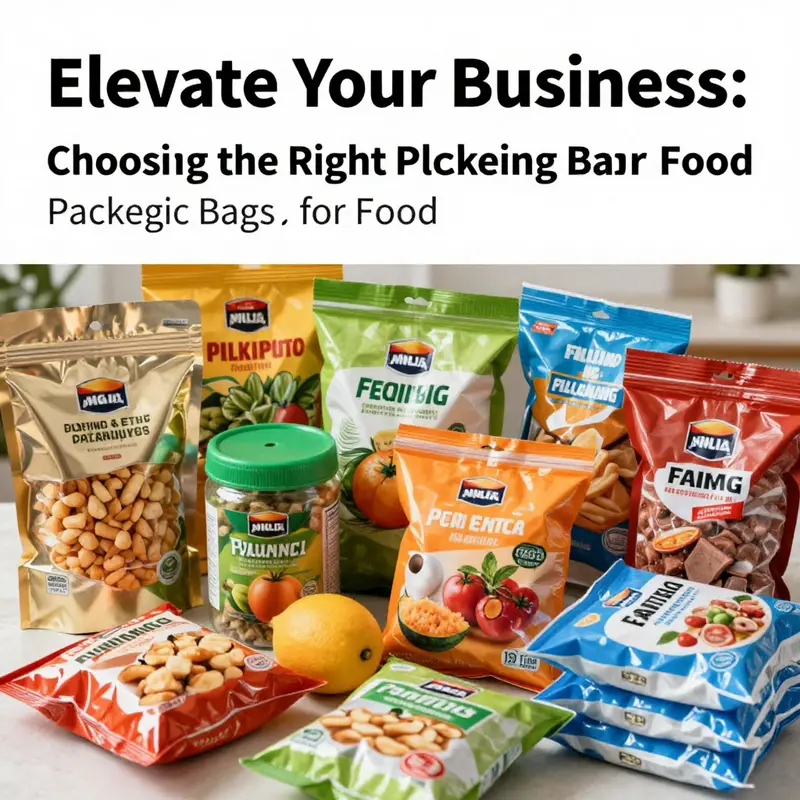
Food packaging needs vary from farm to fork. The demands placed on a bag—barrier protection, heat resistance, breathability, resealability, and durability—are dictated by the food inside, how it will be handled, and how long it must remain acceptable to consumers. Understanding the common application-driven types of plastic packaging bags makes it easier to match material properties and structure to real-world needs. This chapter walks through the principal application categories, explains what each does well, and clarifies trade-offs you should expect when selecting a bag for a specific food use.
General food packaging bags serve as the baseline solution for a wide range of non-specialized requirements. These are the workhorses used for encapsulation, short-term transport, and in-store display of dry goods, produce, and prepared items. Materials such as LDPE and HDPE dominate here because they are food-safe, flexible, and cost-effective. LDPE offers softness and conformability—useful for bread bags or resealable snack pouches—while HDPE brings stiffness and puncture resistance, making it appropriate for heavier loads or where stacking and abrasion resistance matter. For most general uses, the key properties are moisture resistance, tear strength, and clarity when product visibility supports sales. Laminated films can be introduced when an improved barrier to oil or aroma is needed, but for many retail- and consumer-facing applications, a single-material polyolefin bag is the simplest, most recyclable option.
Vacuum packaging bags are engineered to remove air and form a tight seal around the product. By eliminating oxygen, vacuum packs slow oxidative rancidity and inhibit many aerobic spoilage organisms, markedly extending refrigerated and ambient shelf life. These bags are usually made from multi-layer composites: an outer structural layer such as PET or oriented polypropylene for strength and printability, an intermediate barrier like EVOH or metalized PET when oxygen transmission must be minimized, and an inner heat-seal layer often composed of PE or PA. The composite structure delivers puncture resistance, a robust vacuum hold, and dependable seals that withstand handling. Vacuum pouches are ideal for cured meats, cheeses, vacuum-sealed fresh fish, and sous-vide-ready meals. When assessing vacuum bags, prioritize barrier performance and seal integrity; poor sealing negates the advantages of vacuuming. Also consider machinability: bags must be compatible with the vacuum chamber or roll-sealer equipment in use.
Gas-flush or modified atmosphere packaging (MAP) bags take preservation a step further by replacing the bag atmosphere with a controlled mix—commonly nitrogen, carbon dioxide, or oxygen blends depending on the product. MAP slows microbial growth and enzymatic activity while often preserving color and texture. The bags are made from materials that provide stable gas retention over the intended shelf life—high-performance laminates with low gas transmission rates. For fresh-cut fruits and vegetables, too much oxygen speeds browning and spoilage, so a nitrogen-rich mix helps. For red meat, a controlled oxygen level maintains the desired color. MAP requires precise process control; bag permeability must match the chosen gas mix and storage conditions. Users choosing MAP bags should coordinate packaging design with gas-flush equipment and define target headspace composition for each SKU.
Boilable or water-boil bags are formulated to tolerate immersion in boiling water without deformation, leaching, or seal failure. These are typically used for single-portion boil-in-bag meals, ready-to-heat grains, and some seafood preparations. Materials capable of withstanding 100°C without softening—such as certain high-temperature nylons (PA) and specialized polypropylenes—are paired with robust heat seals. The inner sealant layer must fuse reliably at the selected sealing temperature while remaining safe for food contact. Aesthetic considerations aside, the critical metrics are thermal stability, seal tensile strength at elevated temperatures, and migration limits under heat. Choose boilable bags when the consumer experience requires a straightforward, no-transfers heating step that leaves food contained and juices captured.
Cooking bags designed for steam or pressure-cooker environments are constructed to survive higher temperatures and sometimes higher mechanical stresses. These bags are used for oven roasting, pressure-cooking, and steam-cooking applications, where temperatures can exceed boiling and internal pressures rise. Materials like PA/PE laminates or specially formulated PP are common, as they offer the right balance of heat resistance and flexibility. For pressure cooking, the bag must maintain dimensional stability and a reliable seal under internal pressure differentials. Permeability to steam is also a design factor—some cooking bags intentionally vent or are perforated to control internal pressure and moisture release. When specifying cooking bags, confirm the maximum working temperature, whether the bag is microwave-safe, and whether it is suitable for direct contact with fats and acids present in many recipes.
Functional packaging bags is a broad category that groups bags built for targeted technical needs: heat resistance, freezer performance, and light-blocking properties. Heat-resistant bags overlap with cooking and boilable bags but can also refer to bags intended for reheating in consumer microwaves or commercial ovens. These must meet thermal and migration tests relevant to their heating method. Freezer-grade bags incorporate formulations that resist embrittlement and cracking at sub-zero temperatures. They usually have improved flexibility and lower glass transition temperatures so that frozen contents do not puncture the film during expansion or handling. For long-term frozen storage, barrier performance against moisture loss and freezer burn is also essential.
Light-blocking bags are a specialized solution when photodegradation threatens product quality. Oils, pigments, vitamins, and some flavors can degrade when exposed to light. Metallized films or aluminum foil laminates offer near-total light exclusion and excellent barrier properties against oxygen and moisture. These are the choice for snacks, coffee, and sensitive condiments where light, oxygen, and moisture together would shorten shelf life. The trade-off is that metallized or foil-laminated structures are more difficult to recycle through conventional streams, so balancing shelf-life needs with end-of-life considerations is crucial.
Across all application types there are shared considerations that determine success. Sealing technology and seam integrity matter as much as the film chemistry; even the best barrier behaves poorly if seals split under stress. Resealability can add consumer convenience: a zipper or press-seal feature transforms a single-use package into a multi-use storage solution for dry goods, extending perceived freshness. For perishable foods, compatibility with labeling, portioning, and supply-chain handling is essential—bags must withstand automated filling, conveyor abuse, and retail shelving without failure.
Sustainability is an increasingly central selection parameter. Where possible, opt for mono-material constructions that maintain required properties but simplify recycling. If multi-layer laminates are unavoidable for performance, investigate solutions offering industrial compostability or certified biodegradable formulations that meet regional standards. New regulations and voluntary commitments are shifting formulations toward materials that break down in industrial composting conditions within defined timeframes. Selecting the right balance between barrier function and environmental impact means auditing the entire lifecycle: source materials, recyclability, potential for reuse, and end-of-life options.
Regulatory and safety requirements must always be respected. Food-contact plastics must meet migration limits and be approved for the intended use by relevant authorities. High-heat applications require evidence that the package will not release harmful substances when heated. For canned or retort-like conditions, materials and adhesives must be validated for high temperatures and pressures. When choosing specialized bags for vacuum, MAP, boil-in-bag, or cooking applications, verify documentation: material declarations, migration test results, and temperature/pressure ratings.
Practical guidance for selecting an application-driven bag begins with a clear statement of product goals. Ask what quality attributes need preservation—moisture, aroma, color, texture—and for how long. Consider the cold chain: is the product frozen, refrigerated, or ambient? Determine heating requirements: will consumers heat the product in the package? Evaluate whether the package must be opaque to light. Match these needs to the functional categories above, and then specify performance metrics: oxygen transmission rate, water vapor transmission rate, puncture resistance, seal strength, and temperature limits. Consider the supply chain: can the bag be filled and sealed on existing machinery? Finally, weigh sustainability options and verify compliance documentation before committing to a design.
For retail or foodservice operators seeking eco-friendlier choices that still meet application demands, many alternatives exist. Paper-based cartons and coated papers can serve in some contexts; however, where moisture and oxygen barriers are critical, high-performance polyolefins and laminates remain necessary. Combining responsible material choices with packaging optimization—right-sizing, portioning, and eliminating unnecessary layers—often yields the biggest environmental wins without sacrificing food safety.
When consumers interact with packaged food, clarity of instructions and functional cues improve satisfaction and reduce waste. Labels that specify whether a bag is boilable, microwave-safe, or should be kept frozen prevent misuse. Incorporating resealable features, easy-open notches, and clear transparency windows where appropriate enhances usability.
Matching bag type to application is not just a technical decision: it shapes product quality, consumer experience, and environmental impact. Thoughtful selection—guided by product sensitivity, processing steps, handling conditions, and end-of-life goals—results in packaging that protects food effectively, reduces waste, and aligns with regulatory obligations. If you are evaluating solutions for takeaway or reheatable meals, you may also want to consider eco-conscious takeout container options that complement chosen bag types and support a consistent sustainability story for your brand: eco-friendly takeout boxes for food packaging.
From Barrier to Biodegradable: The Next Wave of Food Plastic Packaging Bags and a Sustainable Path

The evolution of plastic packaging bags for food is arriving at a crossroads where protection, convenience, and responsibility converge. For decades, the primary focus centered on performance: shielding food from moisture, oxygen, and light; preserving texture, aroma, and safety; and enabling efficient distribution from processing plants to retail shelves and kitchens. Yet as consumer awareness, regulatory expectations, and waste-management infrastructure shift, the waterline between using plastic bags and safeguarding the planet is being redrawn. The next chapter in the story of packaging bags is not simply about choosing a new material. It is about reimagining the entire lifecycle of a bag—how it is made, how it performs, and how it ends its life. The direction is unmistakably toward materials that originate from renewable sources, that can decompose when appropriate, and that still deliver the barrier, mechanical strength, and heat tolerance essential for modern food systems. At the same time, this transition is being inflected by advances in barrier technology and by smarter designs that accommodate recycling, composting, and reuse. The result is a tapestry in which bio-based and biodegradable polymers, conventional polymers optimized for recyclability, and reimagined structures cohabit and compete, each offering advantages in particular applications and life-cycle contexts.
A central driver of this trajectory is the shift from conventional petroleum-based plastics toward biodegradable and bio-based alternatives. Polylactic acid (PLA) and corn-starch blends stand out as emblematic examples. They derive from renewable plant sources and are engineered to decompose under industrial composting conditions. The promise is clear: a marked reduction in net plastic accumulation when end-of-life management aligns with composting infrastructure. This is not a universal panacea, however. Home composting remains inconsistent, labeling may vary, and the industrial composting facilities themselves require adequate capacity and compatibility with the specific polymer matrix. Yet the regulatory and market signals are pushing the industry to design for end-of-life as a core consideration, not an afterthought. In practice, this means not only selecting a compostable polymer but incorporating certifications, compatible packaging architectures, and clear consumer guidance that makes industrial composting feasible and effective.
The relevance of these innovations to food packaging is not uniform, but it is increasingly pronounced in higher-value or highly sensitive applications. Meat packaging, rice packages, and fresh produce bags now see a growing uptake of compostable polymers because brands want to align with sustainability goals without conceding shelf life and safety. In some cases, the compostable option can be a direct substitute for conventional films; in others, it functions as part of a mixed strategy that uses compostable components where feasible and recyclable components where that path is clearer in a given waste stream. The nuance matters. Compostable polymers require appropriate processing and collection streams to ensure that their environmental benefits are realized. Without that alignment, the benefits can be diminished. The industry is increasingly addressing this through standardized labeling, third-party certification, and partnerships across supply chains that direct materials to the most suitable end-of-life channel.
Beyond the material itself, the performance requirements for food bags continue to evolve. The modern deli counter or bakery section often relies on flat, flexible bags with robust barrier properties to keep oxygen and moisture at bay while also supporting consumer transparency and convenience. Here, the interface of sustainability and performance becomes a dynamic design space. Inorganic or metallized components have historically delivered excellent barrier properties; contemporary research, however, is expanding options with bio-based and multi-layer films that maintain or even improve barrier performance. The aim is to deliver oxygen and moisture barriers strong enough to extend shelf life, while ensuring that the entire package remains compatible with recycling streams or industrial composting facilities. In some cases, this translates into laminates that combine a bio-based layer with a conventional polymer layer in a way that preserves barrier integrity and simplifies sorting and recycling downstream.
The conversation on performance cannot ignore modified atmosphere packaging (MAP) and vacuum sealing, which have become indispensable for many fresh and prepared foods. MAP and vacuum packaging extend shelf life by removing or modifying the gas composition inside packages, reducing oxidation and slowing microbial growth. The challenge for sustainable packaging is to implement these technologies without compromising recyclability or compostability. Recent advances show that multi-layer, high-barrier structures can be engineered to support MAP and vacuum processes while being designed for end-of-life sorting and recovery. For example, some new designs emphasize easier separation of layers or use of materials that are compatible with existing recycling streams. The implication for end users is subtle but profound: longer shelf life, lower food waste, and a packaging system that remains tractable for waste collectors and processors.
In the marketplace, there is also a visible shift toward reusability and breathability as a means of reducing single-use waste. Mesh bags for farmers’ markets and organic stores illustrate a practical movement toward reusable, breathable packaging that can carry produce and dry goods with minimal environmental footprint. These bags often rely on natural or recycled fibers and light, durable constructions that can withstand repeated use while offering adequate permeability for fresh products. The return to reusable bag concepts does not replace the need for barrier films in all applications; rather, it adds a complementary option where reusability, consumer engagement, and local supply chains make sense. The broader implication is a shift in consumer psychology and retail operations toward a blended economy in which single-use bags coexist with durable, reusable options that fit different shopping contexts.
The push toward sustainability also elevates the role of design for recyclability. A key insight from recent studies is that the path to a circular economy cannot rely on a single technology or material. It requires a portfolio approach that considers the entire system: feedstock origins, manufacturing steps, transport and consumer use, and end-of-life processing. In practical terms, that means forming packaging that can be sorted accurately by curbside programs, that minimizes the admixture of plastics with other waste streams, and that encourages consumer participation in proper disposal. The more packaging is designed with sorting and recycling in mind, the more effective the recovery systems will be. This is not a minor improvement trick but a fundamental shift in how the packaging industry conceptualizes value, waste, and responsibility.
End-of-life management is where the dialogue becomes most complex. Even as biodegradable polymers gain traction, many packaging ecosystems still rely heavily on traditional recycling streams. The challenge is to harmonize these pathways so that a given bag can contribute to a circular flow rather than an isolated waste. That balance often requires materials that are either fully recyclable or fully compostable, plus clear labeling and consumer education. Industry players are responding with innovations in chemical recycling technologies, which promise to break down plastics into their base monomers for re-polymerization. While chemical recycling remains subject to debate regarding energy use and scalability, it represents a potential bridge between current recycling systems and the more ambitious goal of closed-loop material streams. The broader strategy is to pursue a holistic vision in which the packaging bag is not simply discarded but routed to the most appropriate recovery route, depending on local infrastructure and product type.
A particularly important regulatory impulse comes from regional standards that explicitly favor biodegradable options and explicit end-of-life pathways. The reference to new national standards in major markets, effective around 2026, signals a demand for packaging that decomposes within defined industrial composting conditions, with clear performance criteria for barrier properties, heat tolerance, and mechanical integrity. Those standards are more than regulatory hurdles; they are catalysts for material science and supply-chain collaboration. They encourage designers to optimize for both performance and recoverability, guiding manufacturers to select materials that align with available composting or recycling facilities, labeling conventions, and consumer behavior. In short, regulations, when well designed, push the ecosystem toward packaging solutions that perform in real-world conditions while offering viable routes for ending their life in a controlled, less-polluting manner.
The overarching message is that the future of plastic packaging bags for food will be defined by a layered strategy. On one layer, there will be a continued use of proven polymers that deliver reliability at a reasonable cost and compatibility with existing processing lines. On another layer, there will be a growing menu of bio-based and biodegradable materials whose environmental advantages are often strongest when matched with the right end-of-life pathway. On yet another layer, there will be a reconfiguration of packaging structures and features to support longer shelf life, safer handling, and consumer convenience without creating waste that is a burden to recover. The most successful approaches will not privilege one path over others but will harmonize them in contexts where each path offers real benefits. In practice, this means more selective use of PET for clarity and strength in rigid containers, LDPE/HDPE and LLDPE for films designed with space-saving and moisture resistance in mind, and PLA or starch-based alternatives in components and formats appropriate for composting with the right facilities.
Crucially, the transition requires not only material science breakthroughs but also careful system design. End users—retailers, food service operations, and households—must be guided by clear information about what to do with each type of bag at the end of its life. Education initiatives, standardized labeling, and accessible collection infrastructure are essential complements to material innovation. The industry’s pursuit of a circular economy is not a metaphor but a practical program, aligning product development with real-world waste-management capabilities. When products are designed to be sorted, processed, and returned into the economy, the environmental advantages of new materials are realized more fully and more consistently across different regions and waste streams.
In sum, the future of plastic food packaging bags is not a single technology change but a reimagining of the entire packaging ecosystem. It entails a mix of bio-based and biodegradable materials that can decompose under appropriate conditions, complemented by robust barrier technologies and smarter packaging structures. It also embraces reusability where appropriate and prioritizes end-of-life management through improved recycling, more effective composting, and the development of chemical recycling options. The goal is not merely to reduce plastic use but to ensure that the plastic used for food remains valuable, recoverable, and capable of returning to the economy rather than accumulating in the environment. This holistic approach aligns with the broader objective of a truly sustainable food supply chain, one that safeguards the integrity of food, respects the health of ecosystems, and meets the expectations of an increasingly discerning public.
For readers interested in concrete illustrations of how these principles play out in real-world packaging ecosystems, consider examining the broader landscape of everyday packaging choices. There are practical bridges between recyclability and compostability in everyday packaging options, such as the eco-friendly-takeout-boxes-for-food-packaging-stylish-food-containers-safe-microwave-craft-paper-lunch-boxes-leak-grease-resistant line, which highlights how a single design philosophy can balance performance with end-of-life considerations. This kind of integrated thinking—where materials, structures, and disposal pathways are designed in concert—will characterize successful packaging strategies in the years ahead.
External resource: For a broader scholarly perspective on the evolution and future trajectory of food packaging bags, see https://www.sciencedirect.com/science/article/pii/S095671352500487X.
Final thoughts
Navigating the world of food plastic packaging bags offers both challenges and opportunities for businesses in the food service industry. By understanding the various types—whether by material, function, or application—you can enhance product quality and customer satisfaction. Moreover, with an increasing emphasis on sustainability, embracing eco-friendly packaging will not only benefit the environment but also align your business with consumer expectations. As you plan for the future, let these insights guide your choices in packaging to ultimately elevate your service and appeal in today’s competitive market.