
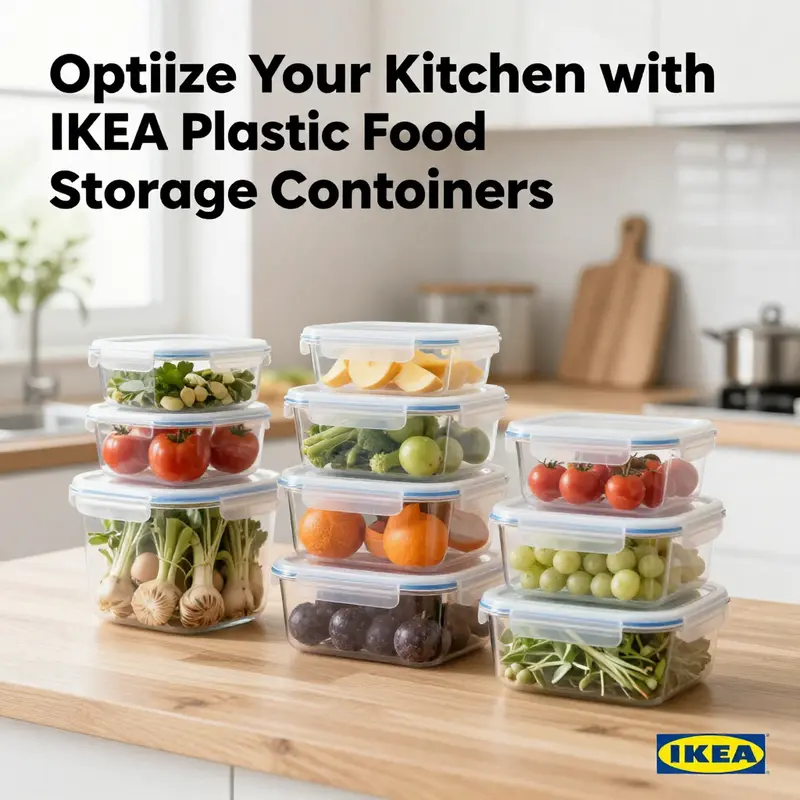
IKEA’s plastic food storage containers are tailored for professional food service environments, addressing the unique demands of businesses like bubble tea shops, restaurants, food trucks, and catering services. With a focus on effective food storage, these containers not only streamline kitchen operations but also contribute to sustainability efforts. Over the next few chapters, we’ll delve into product design and functionality, sustainability aspects, the economic impact on modern kitchens, and current consumer preferences—demonstrating how IKEA’s offerings can enhance your food storage solutions.
Smart Design and Everyday Function: How Plastic Food Storage Containers Earn Their Place in the Kitchen

Plastic food storage containers often get dismissed as ordinary. Yet when a design balances durability, versatility and everyday convenience, these tools reshape how a kitchen runs. This chapter examines the design choices and practical functions that make modern plastic containers essential. It focuses on features that reduce waste, save space and simplify meal routines without sacrificing safety or usability.
A core idea behind successful containers is material selection. Durable, food-grade polymers offer a lightweight, impact-resistant option for daily use. They hold shape under pressure, resist chips and survive drops that would shatter glass. Importantly, contemporary containers are produced without certain additives of concern, meeting safety standards that reassure users about food storage. When a container feels solid yet light, it signals a thoughtful balance between resilience and convenience.
Equally important is the seal. An airtight, leakproof lid does more than keep a fridge tidy; it protects food from oxygen and moisture that accelerate spoilage. A well-executed snap-lock or press-fit mechanism forms a reliable barrier to air exchange. That barrier extends the life of leftovers and raw ingredients, which means fewer trips to the trash and more efficient meal planning. A lid that locks with a clear, satisfying click gives users instant feedback that contents are secure, and reduces the mental load of second-guessing whether a dish will remain fresh on the commute home.
Visibility plays a big role in everyday kitchen organization. Clear construction enables quick inventory checks. When contents are visible, cooks spend less time opening multiple containers. This visibility also supports portion management: seeing a precise amount encourages timely consumption and reduces overreliance on memory. For pantries and refrigerators that serve busy households, clear containers reduce the friction of food management and improve flow from storage to table.
Stackability and nesting are subtle design aspects with outsized impact. Containers that stack securely use vertical space, turning crowded shelves into organized stores. Nesting, where empty units fit into one another, frees up cabinet or drawer space when containers are not in use. Together, these two qualities make storage predictable and compact. Thoughtful footprint dimensions—where rectangular shapes maximize shelf efficiency—further optimize limited spaces and align with common appliance dimensions.
Versatility across appliances increases a container’s utility. Microwave-safe construction allows reheating without transferring food to a second dish. Freezer-safe materials tolerate low temperatures and reduce freezer burn when paired with airtight lids. Dishwasher-safe durability simplifies cleanup and shortens the chore cycle. This cross-appliance compatibility means a single container can handle storage, freezing and reheating, which saves time, reduces the number of dishes used and supports batch cooking and meal prep.
Interchangeable lids enhance flexibility. A standard lid profile that fits multiple shapes lets users mix and match containers by content and size. That interchangeability boosts adaptability: one lid can cover a shallow tray of leftovers, while another secures a tall container of grains. This reduces the need to store numerous unique lids and minimizes clutter. When lids are intuitive to align and fasten, the user experience becomes smooth and almost automatic.
Capacity range matters. Offering several sizes—from single-serve portions to multi-liter bins—means the same product family can address snacks, leftovers, long-term dry goods and meal-prep batches. Small containers are perfect for dips and sauces, medium units handle portions for lunches or side dishes, and larger boxes are suited to bulk rice, flour or large salads. A coherent size progression helps users standardize their storage approach and plan meals more effectively.
Another advantage is the ability to combine containers for customized systems. Pairing smaller units inside larger ones for travel, or aligning similarly sized boxes side-by-side in a pantry creates modular storage that adapts to changing needs. Labels or clear lids help track contents, but even without labels, a consistent container language makes it easier to find and rotate food. This modularity supports a habit of organized cooking that saves both time and money.
Health and safety considerations are foundational. Food-contact materials should be free of problematic chemicals and able to withstand intended temperature ranges. Containers that carry clear guidance for first use, cleaning and appliance limits reduce misuse and prolong their safe life. Wash-before-use advice is a simple step that prevents manufacturing residues from entering food. Similarly, clear temperature and cleaning instructions prevent warping or premature wear.
Design also touches the micro-experience: edges that are easy to grasp, lids that open without excessive force, and corners that clean easily. Rounded interior corners prevent crumbs from hiding and make hand washing or automated cleaning more effective. Non-slip bases reduce toppling when stacked or carried. Small ergonomic decisions compound into a better daily experience, smoothing the friction around meal routines.
Sustainability presents both a challenge and an opportunity. Lightweight plastics reduce transport emissions, and durable construction extends product life, offsetting initial material costs. Recyclability and avoiding unnecessary composite materials simplify end-of-life options. For households that use containers repeatedly for years, longevity is a major sustainability win. Choosing containers that support repeated use and that are easy to clean aligns with the aim of reducing single-use waste.
Finally, cost and availability shape how widely these containers are adopted. Affordability combined with reliable performance makes them accessible to many households. When a design prioritizes function over flash, the result is a dependable product that solves routine problems without demanding frequent replacement. Clear return or satisfaction policies from sellers also signal confidence in durability and functionality, which helps consumers commit to a storage system.
Taken together, these design and functional choices produce containers that feel indispensable. They extend freshness, streamline reheating and cleaning, maximize storage space and reduce waste through visibility and airtight seals. The best systems are simple to understand, easy to use and flexible enough to handle lunchboxes, pantries and freezers alike.
If you want to expand a household’s storage options with complementary products, consider sauce containers that pair well for packed meals and portioning. For a convenient option to handle dressings and dips, see disposable sauce cups that fit into meal prep kits and takeout setups.
For further technical details on materials, dimensions and appliance compatibility referenced in this chapter, consult the manufacturer’s product page linked here: https://www.ikea.com/us/en/p/365-food-container-rectangular-plastic-10-l-90378817/.
Designing for Longevity: How Plastic Food Containers Drive Sustainable Kitchens

A product built to be used again and again can change how a household consumes. Plastic food containers designed for durability and safe food contact make it easier to keep food fresh, reduce waste, and simplify daily routines. When their materials, shape, and serviceability are considered together, these containers move beyond mere storage. They become tools in a practical circular approach that prioritizes reuse, repair, and efficient logistics.
The choice of material matters. Polypropylene is a common food-safe plastic that is free from certain harmful additives. Because it resists cracking and deformation, it stands up to repeated use. It also tolerates temperature changes found in refrigerators, freezers, and microwaves. These properties extend a container’s usable life and reduce the likelihood that it will be replaced after a single incident. Choosing plastics certified as free from problematic chemicals reduces health concerns during everyday use. That matters for families that reheat meals, store infant food, or portion ingredients for later use.
Preservation is central to sustainability. Airtight, leak-resistant lids slow oxidation and moisture loss. When food is kept at the right humidity and sealed from odors, it stays safe and appetizing longer. This simple effect tackles a major environmental issue: household food waste. A container that truly seals means leftovers can be eaten on another day rather than discarded. Over time, that small behavioral change prevents greenhouse gas emissions associated with food decomposition and decreases the demand for new food production.
Durability reduces demand for replacements. Robust plastic resists chips and warping, so a container that survives being jostled in a bag or stacked in a cupboard can be in service for years. Repeated cleaning cycles in a dishwasher are part of everyday life, so materials must endure that stress. When consumers can rely on a container to perform after many uses, they are less likely to buy single-use alternatives. This supports a simple circular economy principle: use items longer to lower material throughput.
Smart form factors contribute to efficiency in both the home and the supply chain. Stackable boxes maximize shelf and fridge space, which makes it easier to organize food logically. Nestable designs shrink in volume when empty, which reduces the space needed for storage at home. Those same features reduce transport volume when products move from manufacturers to warehouses and from warehouses to stores. Lower transport volume means fewer shipments and lower emissions per unit during distribution. Thoughtful geometry, therefore, improves sustainability at multiple stages of a product’s life.
Repairability is often overlooked. Components that can be replaced separately extend lifetime. When a lid is sold separately from its base, a cracked cap need not condemn the whole unit. This small design decision reduces waste and encourages maintenance over disposal. It also gives consumers a low-cost way to keep a set in use, which further displaces single-use packaging.
A multiuse container that tolerates the freezer, microwave, and dishwasher eliminates the need for disposable trays and single-use reheating wraps. Reheating in the same container used for storage reduces transfer steps and the chance of spills. It also reduces reliance on single-use alternatives for takeout or packed lunches. Over time, families who adopt reusable storage see tangible reductions in their household waste streams.
However, reuse is only part of the story. End-of-life choices matter too. Many durable food containers are made from plastics that can technically be recycled. But real-world recycling depends on local systems and consumer behavior. Rigid polypropylene is recyclable in many facilities, yet it must be clean and correctly sorted. Contamination or confusion about recycling rules can keep materials out of the system. Clear labeling and consumer guidance help. Advising users to rinse containers and separate lids when required increases the chance of successful recycling. Retail and product designers can also support take-back or refill programs to close loops more effectively.
Using containers well amplifies their sustainability benefits. Simple habits lengthen product life and save food. Store food in appropriately sized containers to avoid excess air. Label contents and dates to reduce guesswork about freshness. Cool hot food before sealing to avoid pressure build-up. Avoid abrasive cleaners that scratch surfaces and trap stains. When stains occur, soaking in a gentle solution often restores appearance. These small practices keep containers functional longer and reduce replacement frequency.
Durability and multi-functionality do not eliminate the need to minimize plastic use overall, but they do offer a practical path forward. For meals that will be eaten immediately, reusable containers may be unnecessary. For storage, portioning, freezing, and reheating, a long-lived container reduces the need for throwaway options. Choosing the right container shape and size for common tasks makes reuse easier. For example, medium-sized square containers are often better than oversized bowls because they reduce leftover airspace and are more stackable.
The role of designers and manufacturers is also crucial. Selecting materials with low embodied carbon and long lifespan delivers better outcomes than choosing the cheapest option. Providing spare parts and encouraging repair prevents premature disposal. Packaging that ships products compactly lowers distribution emissions. Clear communication about proper care and the product’s material attributes empowers consumers to make sustainable choices.
Beyond product design, service models can multiply impact. Selling lids separately, offering replacement parts, and providing take-back options all support circularity. Retailers and brands that extend warranties or make repairs affordable encourage retention. Subscription or refill services for certain consumables can also reduce the total number of containers needed, by enabling centralized cleaning or redistribution programs.
Comparing reusable containers to single-use alternatives highlights the cumulative effect of good design. A durable container used daily for years displaces hundreds or thousands of disposable items. Each avoided disposable plate, film, or bag represents a small saving. Over time, those savings aggregate into meaningful reductions in material use and waste generation. The environmental payoff increases with frequency of use and with users’ commitment to care and repair.
There are practical limits. Not all plastics are recycled everywhere, and contamination can lower recyclate quality. Users who prefer glass for its inertness still gain the organizational benefits of lightweight, shatter-resistant options, especially for outdoor use or travel. Strategic choices—using the most suitable material for each use case—deliver the best outcomes.
To get the most sustainability value from food containers, aim to treat them as durable household tools rather than disposable accessories. Match sizes to typical meals. Keep lids and seals in good condition and replace them when needed. Favor stackable, nestable geometry for space and transport efficiency. Follow care instructions to preserve material integrity. Finally, when a container reaches its end of life, clean it and check local recycling guidelines or return programs to maximize material recovery.
For those interested in alternatives for single-use packaging in events or takeout, consider exploring suppliers that focus on compostable or recyclable disposable solutions. One relevant resource on eco-friendly single-use options is a line of sustainable takeout boxes available here: eco-friendly takeout boxes for food packaging.
For a broader view on manufacturer sustainability commitments and product material information, visit the official company website for detailed policies and material specifications: https://www.ikea.com
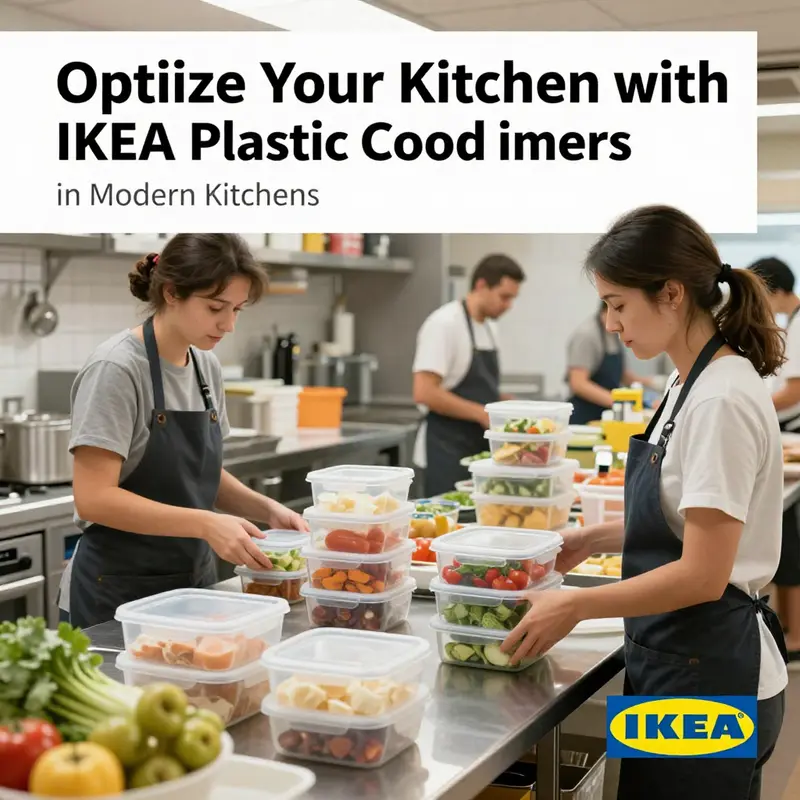
Everyday Savings: How Affordable Plastic Food Containers Reshape Kitchen Economics
Everyday Savings: How Affordable Plastic Food Containers Reshape Kitchen Economics
Plastic food storage containers from a well-known affordable home goods retailer have quietly changed how households manage food, space and spending. Their low prices, practical features, and durable materials make them more than mere boxes for leftovers; they act as small but steady levers that reduce recurring household costs, lower waste, and simplify daily routines. This chapter follows a single thread: how accessible, well-designed plastic containers translate into measurable economic benefits for modern kitchens.
At the most basic level, the cost of a container matters. When storage solutions are affordable, more households adopt them, and individual families can outfit an entire kitchen without a large upfront outlay. Entry-level packs priced in the single digits mean many buyers can purchase multiple sizes to cover different needs—leftovers, bulk staples, meal prep—without sacrificing quality. Because these containers are inexpensive, consumers are more willing to replace lost lids or expand their set as needs change. That flexibility reduces short-term friction: small investments are easier to justify than one expensive, multi-function alternative, and the aggregate effect is wide uptake across varied budgets.
Price alone is not the story. Value arrives when affordability is paired with capability. Containers designed with airtight, snap-lock lids extend the usable life of cooked and fresh foods by limiting air and moisture exposure. Less exposure means slower spoilage. With household food waste responsible for a large portion of wasted food budget, even modest reductions in spoilage add up. Storing leftover meals safely means fewer mid-week takeout orders and less last-minute grocery shopping. Families who plan and portion with reliable containers find it easier to turn bulk purchases and cooking sessions into multiple meals. The economic ripple is simple: fewer wasted groceries and fewer convenience purchases equal direct savings on the household ledger.
Space optimization is another economic driver embedded in container design. Stackable, nestable containers exploit vertical space in refrigerators, freezers and cabinets. Efficient stacking allows larger volumes of food to be stored in the same footprint, meaning consumers can buy in bulk when prices are favorable and store more of their pantry and prepared food at home. Buying staple items—rice, beans, flour—in larger quantities often produces per-unit savings. When those bulk items can be portioned and sealed in airtight containers, households avoid spoilage and pests, preserving the cost advantage of bulk buys. This reduces frequent low-volume shopping that often carries a higher unit price and can lead to impulse purchases.
Versatility multiplies the economic case. Containers that are safe for microwave reheating, freezer storage and dishwashers eliminate the need for single-use plastics and for multiple specialized vessels. A single container that can be used to cook, store and reheat a meal saves on both storage space and replacement costs. It also reduces the time burden associated with meal prep and cleanup, translating indirectly into economic value: less time spent managing meals frees up time for paid work or for other productive activities. When families use one set of containers for a range of tasks, the per-use cost of each item drops sharply over its lifetime, improving overall return on investment.
Durability further extends value. Containers made from resilient polypropylene resist cracking and retain sealing function through repeated cycles of heating, cooling and washing. A durable container doesn’t need to be replaced as often, cutting long-term spending. When the cost per year of using a durable container is compared to the recurring cost of disposable options, the savings become clear. For households that favor sustainability, this durability is a win-win: it lowers recurring purchasing costs and reduces the volume of waste sent to landfills.
There is also an indirect economic benefit in behavior change. When food is easy to find and access—transparent walls let users identify contents without opening lids—mealtime decisions become faster and less wasteful. Clear visibility prevents forgotten items from languishing at the back of a fridge until they spoil. Organized storage supports meal planning: knowing what is available helps shoppers avoid duplicate purchases. Over time, these behavioral shifts reduce monthly grocery bills and the frequency of emergency food purchases.
Accessibility influences equity. Affordable, multipurpose containers make it feasible for lower-income households to practice efficient food management. For families on tighter budgets, the ability to store and reuse food safely can be the difference between consistently preparing meals at home and frequent reliance on more expensive convenience options. In communities where food insecurity is a concern, small, affordable storage items help extend the reach of limited food resources, allowing food to be preserved and allocated more thoughtfully.
On the supply side, economies of scale and standardized materials keep prices low. Lightweight polypropylene is cost-effective to produce and transport, allowing manufacturers to offer bulk prices attractive to consumers. Standardized lid and base dimensions that work across sizes further reduce manufacturing complexity and encourage modular purchasing. Retailers that balance quality with low margins enable households to access reliable storage solutions without a premium price. That dynamic accelerates adoption and embeds these containers in everyday household systems.
The environmental economics should be acknowledged. While plastic has a complex environmental footprint, the extended use of durable containers can reduce demand for single-use plastics. When a household replaces disposable storage alternatives with long-lasting containers that are dishwasher-safe and microwave-safe, the lifecycle impact per meal decreases. Reduced disposal costs and less frequent repurchasing are two economic benefits intertwined with lower waste generation.
Macro-level effects emerge when many households shift practices. Reduced household food waste eases pressure on municipal waste systems and can lower community-level disposal costs. Fewer emergency grocery trips mean lower fuel consumption and less time spent commuting for purchases. If a large number of households move toward bulk buying and efficient storage, retail demand patterns may shift, affecting supply chains and pricing structures across food categories. While these macro shifts are gradual, they begin with the simple decision to store food smarter at home.
Finally, consider the psychological economics. Small, visible savings—fewer wasted items, a fridge that looks orderly, the ease of reheating leftovers—reinforce positive habits. Those habits sustain cost-conscious behaviors. The initial affordable purchase of a set of containers thus triggers a cascade: better organization, reduced waste, smarter shopping, and ongoing savings. The small upfront cost keeps barriers low, and the everyday benefits keep users engaged.
One relevant resource that complements storage solutions for prepared foods and sauces is a line of disposable sauce containers, which can be convenient for portion control or for safely transporting condiments when needed. For those situations, disposable sauce containers provide a targeted, low-cost option for single-use needs.
For readers seeking product specifics, the retailer’s official product page offers current pricing and feature details for commonly purchased container sizes. (External source: https://www.ikea.com/us/en/p/365-food-container-rectangular-plastic-34-oz-60452174/)
Together, these elements explain why affordable plastic food containers are more than a household convenience. They are practical financial tools. By marrying low cost with functionality—airtight seals, stackability, microwave and freezer safety, and durable materials—these containers help households reduce waste, optimize space, and stretch grocery dollars. Small purchases accumulate into meaningful savings, and that cumulative impact is what makes these containers an economically smart addition to modern kitchens.
Stack, Seal, Savor: Consumer Perspectives on Durable, Clear Plastic Food Storage Solutions from a Leading Home Brand

Behind every neatly labeled set of plastic food storage containers lies a set of unspoken consumer expectations that shape not just what appears on shelves, but how households cook, store, and reuse leftovers. The chapter examines these expectations through the lens of a popular line designed for efficiency, durability, and daily practicality. The goal is not to convince readers to purchase a single brand but to illuminate the values and tradeoffs that drive decisions in modern kitchens, where space is precious and time is scarce. In this context, the containers in question are crafted from a sturdy, food-safe plastic and marketed as an aid to reducing waste, organizing the fridge, and simplifying meal prep. They embody a philosophy that everyday storage should be reliable, affordable, and easy to integrate into routine cooking and cleanup.
One of the clearest signals from shoppers is a strong demand for space efficiency. Cabinets, drawers, and tote bags can quickly become a jumble of mismatched lids and awkwardly shaped boxes. What resonates with many users is a design that nests or stacks neatly inside one another. The appeal is not just aesthetic; it is functional. When containers nest, they reclaim wasted space, making it easier to store a week’s worth of meals, batch-cooked items, or day-to-day ingredients without feeling overwhelmed by clutter. The practical payoff is tangible: a more streamlined kitchen workflow, quicker access to what is needed, and less time spent reorganizing—the kind of efficiency that adds up over a busy week. Consumers repeatedly highlight stacking and nesting as the most valued feature, a preference that underscores a broader trend toward thoughtful, space-conscious design in everyday kitchenware.
Durability sits close to the top of the list as well. The containers are described as robust enough to withstand routine transfers between homes, cars, backpacks, or lunches on the go. In real-world use, these products often encounter pressure during transport or squishing when packed alongside other items in a bag. Shoppers emphasize that the plastic holds its shape and doesn’t warp easily, a quality linked to a sense of reliability that extends far beyond a single purchase. The material profile—rigid yet lightweight poly(propylene)—provides a reassuring balance between sturdiness and practicality. The result is a container that can be relied on not to crack, buckle, or leak under normal daily handling, a cornerstone of trust that reviewers frequently cite when describing value for money.
Affordability emerges as a critical driver of choice in this category. Price sensitivity coexists with a desire for quality, and consumers respond to price points that feel accessible without sacrificing essential features. The small-to-midrange options frequently fall in the range of a few dollars, while larger, higher-capacity models command higher but still reasonable prices. This pricing structure reinforces a perception of value: buyers feel they are getting durable, versatile containers at costs that are competitive with other brands. Reviews often frame the purchase as a smart, budget-friendly move that supports long-term food storage and waste reduction. In short, consumers are not simply buying a container; they are investing in a modular, long-lasting system that aligns with practical budgeting and everyday routines.
Another defining attribute is visibility. A clear or translucent design helps users quickly identify contents without opening every lid. This ease of recognition is not a cosmetic preference; it translates into tangible time savings and a reduction in rummaging through the fridge. When someone is rushing to plate a meal or check what’s left for a lunch, a container that reveals its contents at a glance reduces the cognitive load of meal planning. The preference for a transparent or semi-transparent form is echoed in consumer commentary, where the ability to see what’s inside is repeatedly linked to organization, efficiency, and a sense of control over one’s kitchen environment.
Beyond visibility and space, functional versatility matters. These containers are commonly described as dishwasher-safe, freezer-safe, and microwave-safe for certain configurations. The microwave-safe aspect, in particular, supports a seamless transition from storage to reheating, which is a frequent daily demand. A practical tip often discussed in reviews is to vent steam during reheating—leaving the lid ajar just enough to let heat escape safely—that captures a user-driven nuance of real-world use. This tiny adjustment illustrates how consumers value thoughtful design that anticipates the realities of cooking, reheating, and cleanup. The willingness to adapt or share practical tips signals a broader openness to product learning and a reliance on user communities to maximize the benefits of a storage system.
The literature surrounding consumer behavior in this space also points to a broader market trend: growing interest in branded products as markers of quality and reliability. When shoppers encounter familiar brands with consistent design language and standardized safety features, they are more inclined to trust performance across multiple household tasks. Brand familiarity reduces perceived risk, particularly for families juggling multiple groceries, leftovers, and meal plans. In practice, this translates to repeat purchases, broader adoption across households, and a willingness to invest in a cohesive storage system that can scale from single-serve portions to bulk dry goods. The perception of quality tied to branding complements tangible attributes like durability, stackability, and clarity, creating an overall value proposition that resonates with busy, budget-conscious consumers who want durable solutions that simplify daily routines.
A fundamental assurance for many buyers is safety. In this category of containers, the absence of bisphenol-A (BPA-free) is frequently highlighted as a criterion, reinforcing a cautious approach to materials and food contact. Consumers want to be confident that the containers won’t impart flavors or migrate unsafe chemicals into foods, especially when reheating or freezing. The BPA-free designation becomes a baseline expectation for many shoppers, shaping their willingness to choose among competing options. In this way, safety becomes a foundational layer that interacts with other attributes: it reinforces the trust necessary to invest in a durable, reusable storage system that promises long-term value and reuse across meals, weeks, and even seasons.
The social and cultural context of home meal practices also shapes preferences. For many households, the fridge is a small, shared workspace. Clear labeling, consistent shapes, and uniform lid styles contribute to a calmer, more predictable environment. When everyone in the household can quickly locate the correct container, the routine of packing lunches or distributing leftovers becomes smoother, reducing friction and the often-frustrating dynamics that accompany meal prep during busy mornings. The design language that supports these routines—clear materials, consistent dimensions, and compatible lids—appeals to families, roommates, and individuals who value coordination and predictability as part of their daily life. The consumer stories that surface in reviews emphasize these soft but powerful benefits, showing that a simple storage system can influence mood, cooperation, and the overall pace of a household’s day.
All of these threads—the stacking capability, the form retention under pressure, the balance of affordability and durability, the emphasis on visibility, the practical reheating tips, and the safety assurances—converge into a cohesive picture of how people like to store, retrieve, and reuse food. They reflect a broader shift toward modular, reusable kitchen systems rather than one-off, disposable solutions. In this context, a well-designed set of containers is not merely a product; it is a small architecture for daily life that supports healthier eating, less waste, and a calmer, more organized home environment. The appeal lies not in flashiness but in reliability, predictability, and the quiet confidence that comes from knowing your lunch will stay fresh, your pantry will stay organized, and your kitchen will function smoothly under the pressures of modern life.
To anchor the discussion in concrete consumer behavior, it’s helpful to consider how one design element can carry multiple benefits. A large rectangular container with a clear, transparent body, for example, does more than reveal its contents. It reduces the number of times a user must open boxes to check inventory, lends itself to easy stacking in any orientation, and harmonizes with other shapes in a set through a common modular logic. This creates a visual and functional harmony in the kitchen, a subtle but meaningful improvement in daily logistics. When combined with a secure, well-fitted seal, such designs guard against leaks and spills during transport, a feature routinely praised by those who move prepared meals to school or work. The cumulative effect is a storage system that feels coherent, predictable, and endlessly adaptable to changing meal patterns and family rhythms.
For readers who want to explore related design considerations beyond a single brand, the literature and product ecosystem offer a spectrum of options. Some designs emphasize ultra-lightweight bodies for compound travel, others prioritize ultra-wide lids for quick access to bulk ingredients, while still others offer modular partitions for separating dry goods. Each of these variants speaks to a fundamental human preference: to bring order to the act of feeding ourselves and others. In the end, the most persuasive choices are those that align with real-life workflows—how a household shops, cooks, stores, and cleans up after meals. When a storage solution echoes and supports those workflows, it earns a place in daily routines and becomes less of a purchase and more of a kitchen partner.
In sum, consumer preferences around plastic food storage containers from a leading home-brand line converge on a few reliable truths. People want space-efficient, durable, and affordable options that keep their food fresh and identifiable at a glance. They value safety and the practical benefits of being able to heat, wash, and freeze without trouble. They appreciate the reassurance that comes with a trusted brand, even as they seek designs that minimize waste and maximize organization. And they desire a user experience that feels seamless—from opening the pantry to packing lunch to reheating a leftover dish. When these elements come together in a cohesive design language, the result is not merely a container but a dependable system that supports healthier eating, less waste, and a calmer kitchen life.
As a practical note for readers pursuing deeper understanding or potential implementation, consider how visibility and stackability interact with your own space constraints. If your kitchen is short on shelves, a nestable set can dramatically increase usable cabinet real estate. If you transport meals regularly, a robust, leak-proof design matters more than a glossy finish. If you want to reduce waste through portion control, a system that includes a range of sizes—from small portions to larger bulk containers—can help you map meal plans more accurately. And if you value safety and peace of mind, look for BPA-free certifications and consistent performance across the dishwasher, freezer, and microwave environments. These are not just product features; they are practical enablers of a more organized, efficient, and mindful approach to food and daily life.
For readers who want to learn more about related packaging and kitchen-storage discussions, one relevant resource explores designs that emphasize clear visibility and easy access in a broader range of containers. See the example here: paper-sandwich-box-square-food-box-with-transparent-lid-square-white-bread-box-cookie-paper-boxes-cake-roll-packaging-boxes.
External reference for further context and product safety standards can be found on the official product page of a well-known retailer’s storage container line. For readers seeking direct information from a recognized retailer, this page provides detailed specifications, safety certifications, and usage guidance: https://www.ikea.com/us/en/p/ikea-365-food-container-large-rectangular-plastic-10393064/.
Final thoughts
IKEA plastic food storage containers stand out by blending advanced design, sustainability, and economic benefits tailored for food service businesses. As professionals seek innovative storage solutions that optimize kitchen efficiency and reduce environmental impact, these containers emerge as a preferred option. Their practicality, safety features, and commitment to sustainability make them an ideal choice for diverse culinary settings—from bustling restaurants to on-the-go food trucks. Adopting these containers not only ensures freshness and quality but also aligns with modern consumer demands for sustainability and functionality, offering a strategic advantage in a competitive market.