
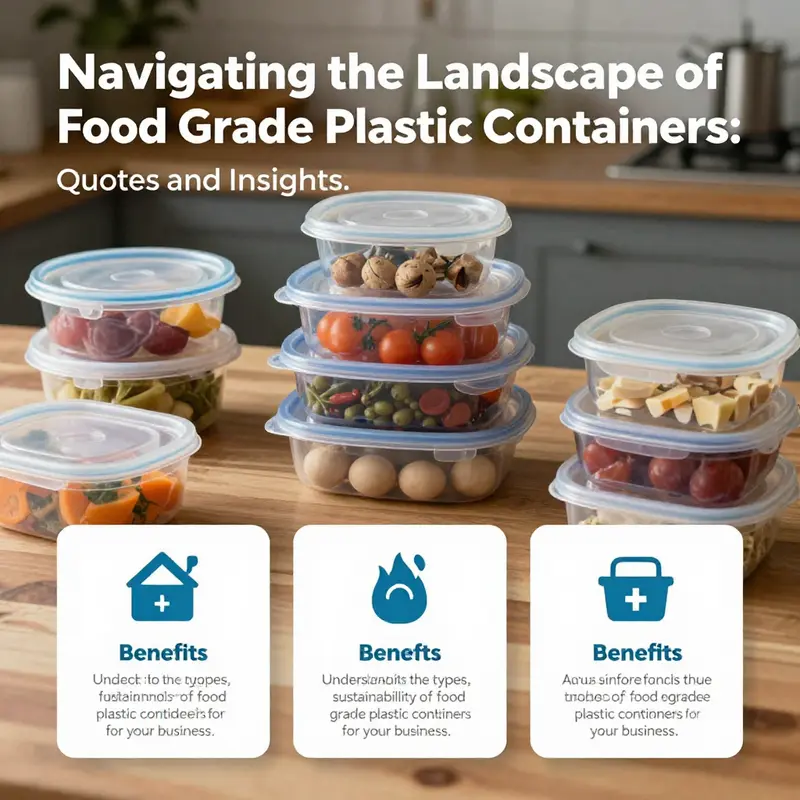
Food grade plastic containers are essential for businesses in the food and beverage industry, from bubble tea shops to catering services. These containers not only ensure safety and compliance but also shape the customer experience and operational efficiency. In exploring food grade plastic containers, we will delve into various types and specifications available on the market, analyze current pricing trends, and discuss sustainability practices, especially concerning BPA-free materials. By the end of this article, you will have a comprehensive understanding to guide your purchasing decisions and align them with your business values.
From Quote to Compliance: Reading Quotes for Food-Grade Plastic Containers
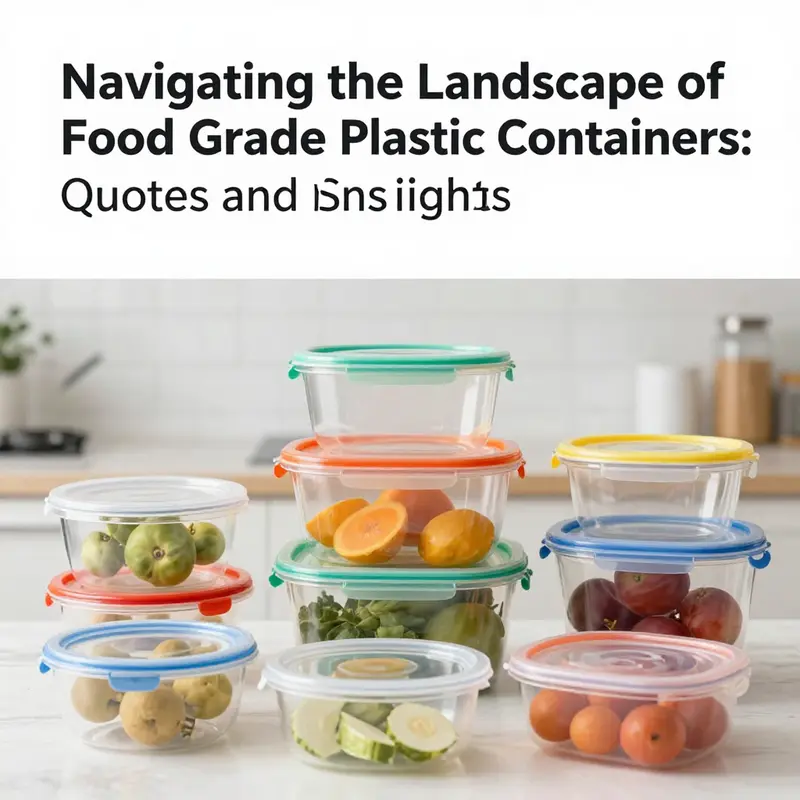
Quotes for food grade plastic containers encode more than the unit price. They carry material choices, processing methods, and the terms that affect safety, performance, and supply reliability. A prudent buyer reads data sheets, migration tests, and certifications alongside the price. Regulatory frameworks such as CFR Title 21 and EU equivalents shape what is acceptable for food contact, and the quote may reference these standards or third party audits. The choice of polymer family PET, HDPE, LDPE, PP, or PS signals different performance envelopes and risk profiles. Material data, temperature tolerance, chemical resistance, and clarity help determine suitability for specific foods and storage conditions. Lead times, MOQs, tooling costs, and branding options appear in the fine print and influence total cost of ownership. For a buyer, the goal is to translate a quote into a predictable supply chain, stable timelines, and compliant packaging. A higher unit price may deliver lower risk through better process control, faster delivery, and clearer labeling. Conversely, the cheapest option might expose the project to delays, regulatory gaps, or quality issues. Ultimately, quotes are a bridge between engineering detail and business practicality, guiding decisions that protect safety and support operations. Practical steps include requesting full material specifications, confirming regulatory declarations, and piloting with samples before committing to a large order.
null
null
Beyond BPA-Free: Tracing the True Sustainability of Food-Grade Plastic Containers
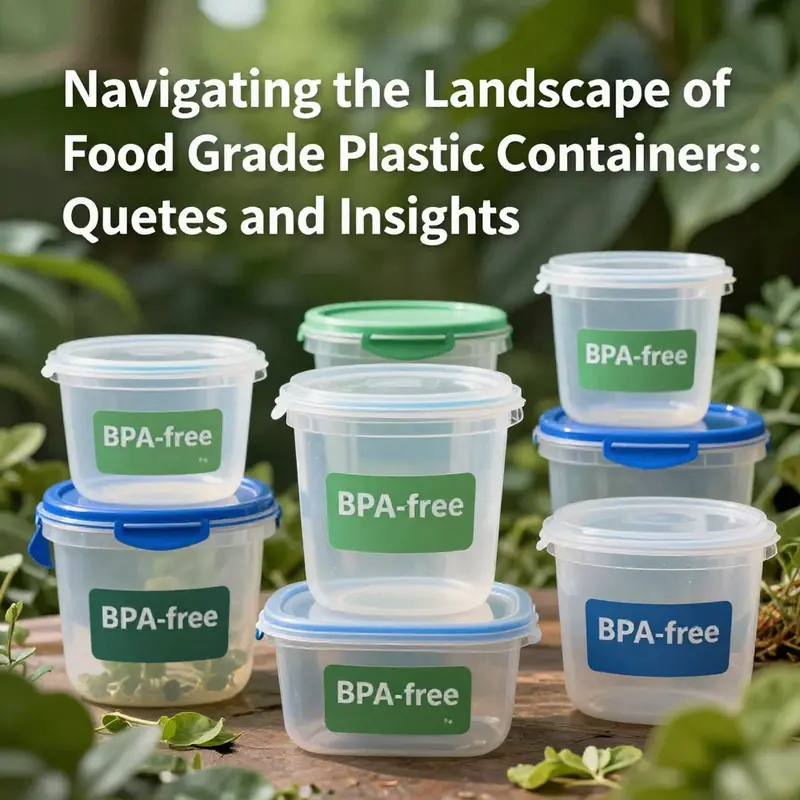
The rise of BPA-free labeling on food-grade plastic containers signals a shift in consumer awareness and regulatory scrutiny. Yet safety is only one dimension of the broader question: what is the true environmental cost of these containers from cradle to grave? This chapter follows the thread of real-time quotes and material realities to argue that a comprehensive view of sustainability must account for production footprints, end-of-life outcomes, and the societal systems that connect them. When one reads price signals—such as the minimal per-piece costs for simple plastics on large-quantity orders—the temptation to treat packaging as a trivial footprint item grows. But the same data sources that surface the affordability of basic, supposedly safe containers also illuminate the scale of systemic impact. If a single item can be produced at fractions of a cent and sold in bulk, the cumulative effect on energy use, emissions, and waste is not a niche concern; it is a defining feature of modern consumption. The question then becomes not only whether a container is BPA-free, but how its life cycle aligns with a broader agenda of reducing plastic pollution, curbing fossil fuel dependence, and strengthening the resilience of recycling ecosystems. In this sense, the chapter operates at the intersection of consumer safety, industrial practice, and planetary health, insisting that quotes and certainties must be read through the same lens as climate forecasts and waste-management strategies.
To begin with, BPA-free is a meaningful value proposition for human health, particularly for groups with vulnerable exposure pathways such as infants and pregnant individuals. The concern is endocrine disruption, and removing BPA from packaging addresses those specific risks. However, health protection is a dimension of sustainability only if the packaging system that delivers that protection does not replace one hazard with another. In other words, the absence of BPA does not automatically guarantee a reduced environmental footprint. The broader sustainability calculus has to consider how materials are sourced, how they are manufactured, and what happens to them after use. This is not merely a theoretical exercise. Real-time quotes from authoritative e-commerce platforms reveal a market that moves quickly on price and customization while underscoring the sheer scale of plastic container production for food storage, transport, and distribution. The same data set that shows a wide range of sizes, options, and colors also hints at the tension between design flexibility and material efficiency. Customizable, multi-purpose trays and containers may offer convenience and reuse opportunities, but they also amplify the demand for resins, energy, and water in the production process. In this sense, BPA-free labeling should be read as a health-driven quality signal, not a universal sustainability stamp.
Understanding the environmental footprint of food-grade plastics requires stepping through the lifecycle of these containers. Design shapes behavior, and behavior shapes waste. The lifecycle begins with feedstock extraction and polymerization, where virgin plastics rely heavily on fossil fuels. This link between plastic production and fossil energy is the core reason why plastics policy and packaging design must be couched within broader energy-transition ambitions. If current trends persist, projections from international environmental law and climate research indicate the plastic sector could claim a sizable share of global oil consumption by mid-century. Such a projection is not merely an abstract estimate; it reframes consumer packaging choices as climate-relevant decisions. It also highlights why improvements in material choice, recycling infrastructure, and end-of-life management are not optional add-ons but essential components of any credible sustainability strategy.
Recycling, in particular, remains a pivotal determinant of the lifecycle outcomes for food-grade plastics. In the United States, the Environmental Protection Agency has historically estimated overall recycling rates for plastic waste to be modest—often cited around single digits despite decades of recycling programs. A rate near 9% for all plastic waste signals a global gap between recovery ambitions and on-the-ground results. When a container is designed for single-use convenience but marketed as safe and convenient for longer-term storage, the mismatch between intended and actual outcomes can be stark. Even BPA-free variants frequently rely on alternative additives to achieve performance criteria. Bisphenol S and certain phthalates have appeared as substitutes in some formulations, raising questions about persistence, leachability, and toxicological profiles that are not entirely dissimilar from BPA. In short, removing one chemical hazard can, in some cases, simply repackage another risk into a different molecular form. The environmental implications of such substitutions are a reminder that safety labeling must be paired with transparent disclosure about the full chemical landscape inside a given material.
The environmental footprint of virgin plastic production is not the only concern. Even when a container is recyclable in principle, the actual recycling rate and the post-consumer supply chain determine how much material re-enters circulation. Recycling is a bottleneck, and the bottleneck is systemic. The lifecycle analysis of plastic packaging repeatedly shows that the benefits of recycling accrue only when collection, sorting, cleaning, and remanufacturing systems operate efficiently and at scale. When those systems falter, the same material contributes to landfills, incineration, or environmental leakage. This is not a failure of will but a structural challenge: many recycling streams are contaminated or mixed, which complicates processing and raises costs. The result is a persistent gap between the theoretical recyclability of a material and its practical recyclability in most real-world settings. The consequence for consumers is simple: even BPA-free plastics can end up as waste rather than as a feedstock for new products if the downstream infrastructure does not support closed-loop material flows.
On the bright side, some manufacturers are beginning to pivot toward recycled food-grade plastics—such as recycled PET and recycled polypropylene—in new containers. Studies and industry analyses suggest that incorporating recycled content can dramatically reduce the carbon footprint of new containers, with some estimates pointing to emissions reductions on the order of 50% to 75% compared to virgin material, depending on process efficiency and the energy mix of the region. These gains depend on robust recycling streams and the successful integration of recycled content into food-contact applications, which themselves require rigorous contaminant control and compliance with safety standards. The potential for a lower environmental footprint exists, but realizing it requires investment in both upstream feedstock quality and downstream processing capacity. It also requires a broad policy and market framework that incentivizes recycled-content products and penalizes landfilling or low-value disposal.
Another promising avenue in the sustainability conversation is the development of biodegradable alternatives and compostable plastics. Polymers derived from renewable feedstocks—such as polylactic acid (PLA)—offer biodegradability that could, in principle, reduce long-lived waste. However, the practical challenges are substantial. PLA and similar materials typically require industrial composting facilities with controlled temperatures and specific moisture conditions to achieve meaningful degradation. In many locales, such infrastructure is either underdeveloped or absent, which means that PLA-based products may end up in landfills where anaerobic conditions slow decomposition or in recycling streams where they contaminate PET and other plastics. In other words, biodegradable options are not a universal fix and can even complicate waste management if not paired with appropriate disposal pathways. This reality underscores the central tenet of sustainable packaging: material choice must align with the available waste-management infrastructure to enable actual environmental benefit, not just theoretical promise.
The sustainability discourse around food-grade plastics thus becomes a conversation about system design as much as material science. A truly sustainable packaging regime balances safety with lifecycle performance. It favors designs that minimize single-use waste, encourages the use of recycled-content resins where feasible, and strengthens the end-of-life network to capture value from post-consumer streams. It also prompts a recalibration of consumer expectations—toward reusability, durability, and responsible disposal—without sacrificing food safety or convenience. In practice, this means embracing packaging architectures that support reuse and repair, coupled with robust return and cleaning programs, rather than assuming that one-off containers can forever meet an endless demand for convenience. It means adopting labeling that clearly communicates both safety credentials and end-of-life guidance, enabling shoppers to make informed decisions that align with local recycling capabilities. It means recognizing that the quotes and price points observed on e-commerce platforms are not just numbers; they reflect a broader market that is negotiating between safety requirements, cost containment, and the need to minimize environmental consequences.
One practical takeaway from the lifecycle lens is to consider how container design can influence recyclability. Simpler compositions, fewer multilayer films, and standard resin types improve the odds that a container can be reclaimed and remanufactured. In contrast, complex blends or coatings designed for specific performance attributes can entrench disposability and degrade recyclability. This tension helps explain why some sustainability advocates push for standardized materials in food-contact packaging and stronger labeling about recyclability. It also clarifies why price alone cannot capture a container’s true value; the long-term costs and benefits—environmental, economic, and social—often lie beyond the immediate purchase price and transport costs.
In the same breath, it is essential to acknowledge the role of policy, governance, and consumer behavior. Market signals alone cannot rectify systemic waste if collection and processing fail to keep pace with supply. Public policy that expands access to recycling, funds advanced sorting technologies, and harmonizes safety standards across jurisdictions can shift the economics of recycling from a niche ambition to a mainstream capability. Likewise, consumer behavior matters. By choosing reusable over single-use options where feasible, participating in take-back programs, and properly sorting materials for recycling, individuals can contribute to system-level improvements. The interaction between policy, industry, and consumer practice is the engine that moves sustainability from an aspirational goal to an everyday reality.
Amid these considerations, we must not shrink the scope to a single metric like BPA-free labels or price per unit. A holistic perspective requires connecting the dots between chemical safety and material logic, between waste fate and energy use, and between the promise of recycled content and the practical realities of contamination and chain-of-custody. When we look at the real-world data, including the range of packaging options, customization capabilities, and the nuanced distinctions among materials, we see a picture that is neither all risk nor all reward. Instead, it is a complex, dynamic landscape in which safety assurances must ride alongside stronger commitments to circular economy principles. This is the essence of sustainable food packaging in an era of climate urgency and resource constraints: a move from isolated safety fixes toward system-wide improvements that reduce harm while preserving the essential functions of packaging—safety, convenience, and efficient distribution.
For readers seeking a concrete example of how these ideas translate into practice, consider the broader packaging ecosystem that accommodates takeout, prepared foods, and grocery distribution. While many discussions focus on plastic alone, the sustainability challenges and opportunities extend to all packaging formats. In some cases, paper-based and compostable solutions present compelling alternatives when disposal infrastructure supports industrial composting or advanced curbside collection. In others, a hybrid approach—combining durable, recyclable plastics with strong recovery programs and recycled-content inputs—might offer a more realistic path to lower overall footprints. The key is to align material choices with end-of-life capabilities, local waste-management realities, and the overarching climate objectives that define contemporary environmental policy.
Ultimately, the story of BPA-free and food-grade plastics is a story about trade-offs, governance, and responsibility. It is about recognizing that a safety label does not absolve manufacturers or consumers from considering environmental consequences. It is about building a packaging system that is not only safe at the point of contact with food but also safe for people, ecosystems, and future generations when products become waste. It is about embracing data—real-time quotes, lifecycle analyses, and regulatory insights—as a compass that points toward better design, smarter recycling, and more thoughtful consumption. It is about cultivating a discourse that privileges durability, recyclability, and clear disposal guidance as integral features of product performance, not afterthought add-ons. And it is about acknowledging that every container represents a set of choices: about energy use, about the sources of materials, about how waste is managed, and about the kind of world we want to leave for the next generation.
In mapping these connections, one useful bridge between health values and environmental outcomes lies in the public-facing materials that accompany packaging. Labels and certifications that convey safety should be complemented by information about recyclability, end-of-life pathways, and the availability of recycled-content options. This holistic communication supports consumer autonomy while nudging markets toward more sustainable configurations of supply and demand. It also helps suppliers and retailers to articulate a coherent sustainability narrative that aligns with climate targets, waste-reduction goals, and the practical realities of the markets they serve.
From a practical perspective, the sustainability conversation does not require abandoning the benefits of BPA-free containers. Rather, it requires integrating health assurances with a rigorous assessment of lifecycle impacts, improved recycling performance, and a commitment to exploring alternative materials with lower systemic footprints. It invites designers to rethink packaging architecture, to reduce material complexity, and to design for reuse wherever possible. It invites policymakers to create conditions that reward recyclability, support infrastructure development, and encourage transparent reporting on environmental performance. It invites researchers to continue refining assessments of chemical substitutes and to illuminate the trade-offs between safety, performance, and environmental persistence. And it invites consumers to weigh safety with responsibility, recognizing that daily packaging choices contribute to aggregate outcomes that shape the health of people and planets over time.
As with any complex system, progress occurs through incremental improvements that accumulate into meaningful change. The quotes that surface from major e-commerce platforms, while revealing price and customization flexibility, should be read alongside the broader evidence about plastic lifecycles, recycling rates, and environmental footprints. When analyzed together, these data points illuminate a path forward: prioritize designs that maximize recyclability, increase the use of recycled content, and invest in waste-management systems that can close the loop. Embrace alternatives only when they are compatible with local disposal capabilities and do not simply displace one environmental problem with another. In short, safety, sustainability, and practicality must coexist, each reinforcing the others in a continuous, iterative process of improvement.
For readers who want to explore related packaging options and how sustainability considerations translate into concrete product choices, a representative resource on eco-friendly takeout packaging offers a useful case study. The linked page demonstrates how paper-based, microwave-safe, grease-resistant containers can meet practical needs while aligning with circular-economy objectives. It exemplifies how packaging systems can be designed for reuse or efficient recycling and how suppliers communicate these capabilities to customers in a market that increasingly values responsible sourcing as part of brand integrity. Accessing such materials provides a tangible sense of how sustainability concepts discussed here translate into real-world packaging decisions and market offerings: eco-friendly takeout boxes for food packaging.
In sum, the sustainability of food-grade plastic containers—especially those marketed with BPA-free assurances—rests on more than chemical safety. It rests on a chain of decisions spanning feedstock selection, production efficiency, design for recyclability, post-consumer collection, and the policy environment that shapes all of these elements. The right combination of materials, processes, and systems can dramatically reduce environmental harm without compromising safety or convenience. The wrong combination, however, can lock in a wasteful path that undercuts climate objectives, strains waste-management infrastructure, and leaves communities with contaminated streams and polluted environments. The quotes we observe in the marketplace are thus political and ecological signals as much as they are economic indicators. To translate them into lasting improvements, stakeholders across the packaging value chain must read them in concert, align incentives, and commit to a shared, evidence-based vision for sustainable food packaging.
External perspective can sharpen this alignment. The United Nations Environment Programme’s assessment of plastic pollution underscores that the global challenge requires coordinated action across production, consumption, and disposal. It emphasizes that reducing plastic waste, improving recycling, and rethinking material choices are essential to halting pollution and protecting ecosystems. This broader frame helps anchor the discussion of BPA-free safety and the environmental footprint of food-grade plastics within a coherent strategy for sustainable development. For readers seeking further context on global challenges and policy pathways, see the UNEP resource: https://www.unep.org/resources/report/plastic-pollution-global-challenge
Final thoughts
Understanding the landscape of food grade plastic containers is pivotal for businesses in the food industry. By acknowledging the various types available, staying aware of market trends, and embracing sustainability, you position your business for success. The growing demand for environmentally friendly practices and quality products reinforces the significance of making informed decisions about food grade plastic containers. Your choices today will not only impact your operations but also reflect your commitment to safety, quality, and responsibility in the food service sector.