
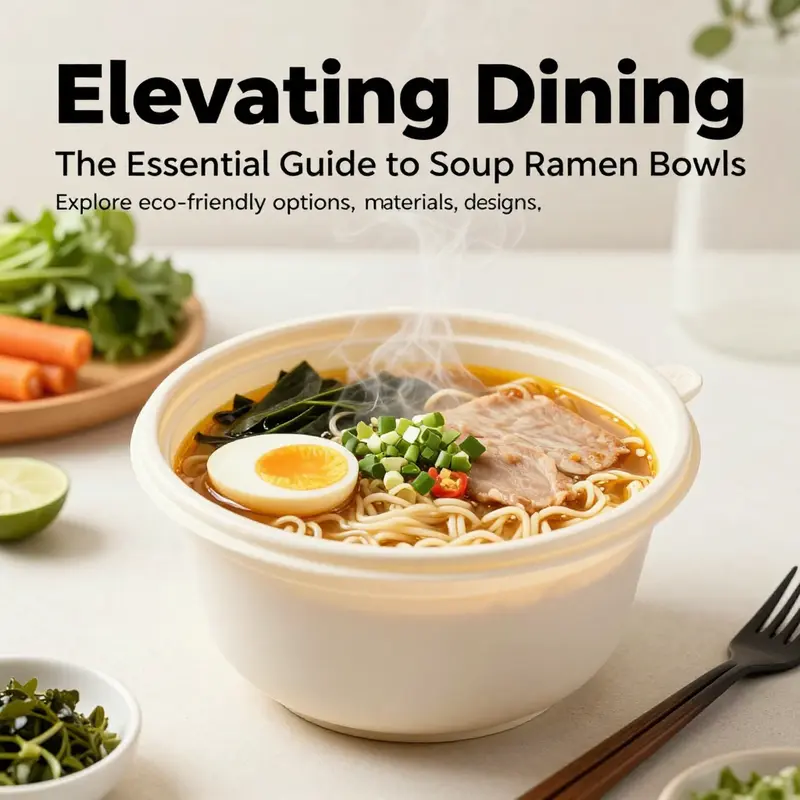
In today’s competitive food and beverage industry, the importance of a quality dining experience cannot be overstated, extending beyond taste to include presentation and convenience. For bubble tea shops, restaurants, food trucks, catering services, and event planners, having the right disposable soup and ramen bowls is crucial not only for efficiency but also for enhancing the customer experience. This guide provides an insightful look into eco-friendly and sustainable options, explores material varieties and performance criteria, delves into design and functionality essentials, and highlights trusted suppliers. Each chapter equips you with the knowledge needed to select the best disposable soup ramen bowls that align with your brand’s identity and sustainability goals.
Greener Bowls, Richer Broths: Sustainable Paths for Disposable Soup and Ramen Bowls in Restaurant Supply
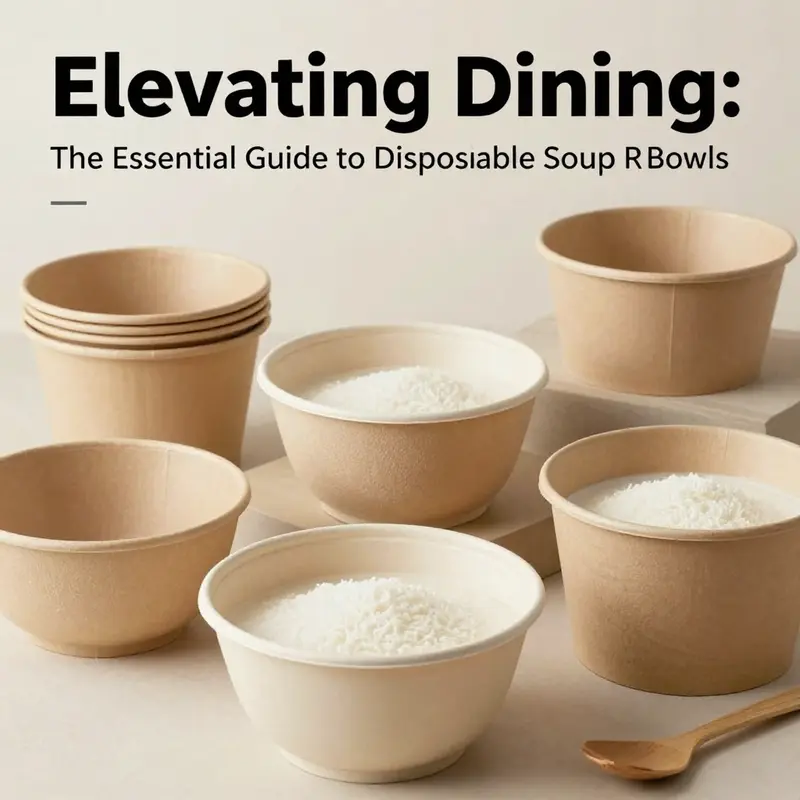
In kitchens where the scent of broth and the shimmer of noodle steam mingle with the bustle of service, the choice of servingware often feels like a small, practical detail. Yet the bowls that hold the first mouthful and the last sip can shape waste streams, brand stories, and even the economics of a menu. As operators seek to balance taste, efficiency, and responsibility, the eco-friendly options for disposable soup and ramen bowls have moved from niche curios to core components of a modern supply chain. The shift is not merely a trend; it is a calculated response to mounting environmental expectations, evolving waste-management infrastructure, and the realities of high-volume service. The result is a layered landscape where material science, design, and logistics converge to redefine what it means to serve a hearty bowl of broth in a way that honors both the customer and the planet.
Among the most compelling directions is the rise of molded pulp bowls. These are the workhorse of sustainable disposables, born from natural plant fibers such as bagasse, bamboo, or recycled paper. The high-pressure molding process yields a bowl with substantial heat resistance and structural integrity. A broth-heavy dish, poured with gusto, remains contained without leaking, a critical capability when noodles slosh and steam escapes with each bite. The ecological advantage is twofold: the raw materials are often byproducts of other industries, and the finished product is designed for industrial composting under appropriate conditions. In practice, this means that kitchens can offer a sturdy, microwave-safe vessel while steering waste toward a closed-loop system rather than a landfill. The appeal for operators is clear—the look and feel of a traditional disposable, paired with a clear pathway to end-of-life alignment. There is a quiet confidence in knowing that the outside of the bowl preserves heat closely enough to keep the broth at a comforting temperature, while the interior surface rejects grease and liquid with minimal seepage, an attribute that reduces plate-washing stress at the pass and preserves the dining-room presentation.
Beyond molded pulp, the category is expanding with edible bowls, recycled-paper options, and compostable bioplastics. Each of these represents a different philosophy and a different practical pathway for a restaurant. Edible bowls push the envelope of waste minimization, aiming for a full-cycle solution where the bowl itself becomes a feature of the dining experience. In practice, edible bowls are most at home in brands or menus that celebrate bold, health-forward narratives. They carry an aroma of novelty and a promise of zero waste, but they also carry cost and production considerations that keep them closer to a strategic showcase than to a daily operational staple. For establishments considering this route, the decision hinges on audience fit, pricing flexibility, and the availability of reliable supply when demand spikes.
Recycled-paper bowls sit in the middle ground between inert disposables and forward-looking packaging myths. They leverage post-consumer or post-industrial waste streams, reducing reliance on virgin fibers and offering a lower-carbon footprint than many traditional options. The technical challenge lies in coatings. If a bowl relies on wax, polyethylene, or certain biodegradable coatings to resist moisture and grease, recyclability can become compromised. The industry response has been to focus on coatings that align with recycling and industrial composting streams, paired with clear labeling that guides end-of-life processing. For operators, the advantage is a familiar user experience—quiet, sturdy, and with a surface that can support branding through minimal ornamentation—while still telling a sustainability story that resonates with eco-conscious guests.
Compostable bioplastics, often derived from polylactic acid (PLA) or similar biobased polymers, offer a compelling narrative: a product born from renewable resources that can break down under controlled industrial composting conditions. Yet the real-world impact depends on the infrastructure in place. In many markets, industrial composting facilities are the backbone of success for these materials. If bowls are discarded in regular municipal waste or in natural environments, the expected breakdown may not occur, or it may take longer than anticipated. This caveat has shifted the focus from a simple “green” badge to a broader systems approach. Operators who adopt bioplastic options commonly implement explicit waste-sorting programs, staff training, and customer education to maximize the likelihood that bowls flow into the correct stream. The potential payoff—a dramatic reduction in landfill volume and a cleaner separation of organics from residual waste—remains strong when coupled with robust facility partnerships and clear consumer guidance.
An often-underappreciated factor in choosing sustainable bowls is the interplay between material performance and kitchen workflows. The best option must sit comfortably in the tremor of a busy service window: it should be deep enough to cradle generous portions of broth and noodles, wide enough to offer easy spoon access, and stable enough to resist tipping during a grab-and-go moment. It should also stand up to the realities of a fast-casual environment, where takeout orders surge during peak hours and the lid or top edge needs to fit snugly to prevent leaks. This is not merely about aesthetics; it is about the practical experience that informs guest satisfaction. The bowl must also be compatible with common reheating practices in a restaurant setting, whether that means microwave safety for quick reheat or resilience to high-temperature broth without warping. In short, sustainability cannot come at the expense of reliability or guest delight.
The supply chain dimension of sustainability deserves equal attention. The path from raw material to final use includes harvest or sourcing, manufacturing, packaging, distribution, and end-of-life processing. Each link in the chain carries its own footprint and its own set of risk factors. Sugarcane bagasse, for instance, emphasizes byproduct value from the sugar industry, aligning with circular economy principles. It also tends to deliver robust performance for hot soups and broths, with natural grease resistance. Corn starch-based bowls add the dimension of near-complete compostability but require careful handling to ensure they meet industrial composting criteria and do not end up in regular waste streams where their environmental benefits may be limited. Paper-based options, including kraft and recycled-paper variants, offer a balance of familiarity and environmental impact, with the potential to minimize virgin-wood usage. Each choice invites a deeper conversation about vendor capabilities, certification standards, and compatibility with existing waste-management infrastructure.
From a procurement perspective, the decision is rarely binary. Most operators navigate a portfolio approach that blends several technologies to fit different menu formats, service styles, and geographic realities. For example, a ramen-focused concept with long-simmered broths might lean toward molded pulp or sugarcane bagasse for hot, grease-heavy servings, while a fast-casual bowl concept could mix recycled-paper options for everyday takeout with occasional bioplastic cups for specialty items. In practice, this means building supplier relationships that can scale across volumes and support varied product specifications—durability, heat tolerance, leak resistance, and even branding potential. It also means developing an informed waste plan with staff and customers in mind. Clear labeling about compostability, recycling, or biodegradability can empower guests to participate in responsible disposal, converting a simple meal into a moment that reflects a restaurant’s broader commitments.
Education is a powerful component of the sustainable-bowl equation. When guests understand why a bowl is chosen for its environmental attributes—whether it uses agricultural byproducts, reduces virgin-forest demand, or supports a controlled compost stream—they are more likely to treat it as part of a shared responsibility. This is not about lecturing diners but about storytelling. The bowl becomes a tangible extension of the menu’s ethos. It can reinforce a brand narrative that emphasizes care for the community, for workers in supply chains, and for future generations who will inherit the waste streams we shape today. In turn, this narrative can reinforce loyalty to a concept that treats every element of the dining experience as a point of connection between flavor and responsibility.
To translate these concepts into practice, operators should engage in a structured evaluation of options. Start with a clear brief that describes the expected service context: broth viscosity, noodle width, typical portion size, whether orders are dine-in, takeout, or delivery, and the available waste-management pathway in the community. Then compare material classes along a few essential axes: heat resistance, leak protection, stacking and storage efficiency, shelf life, and total cost of ownership when considering procurement price, storage space, and waste-management fees. This approach helps reveal the hidden costs and benefits that can influence the bottom line over months of operation. It also clarifies the trade-offs between immediate price and long-term sustainability gains, a calculation increasingly valued by investors, lenders, and customers who prize environmental stewardship as part of brand integrity.
On the topic of practical sourcing, wholesalers and online marketplaces have evolved to meet the demand for bulk, reliable supply. The availability of moldable pulp, sugarcane bagasse, corn-starch, and paper-based bowls in wholesale quantities supports fast-moving menus without compromising environmental goals. While some suppliers emphasize bulk orders and rapid fulfillment, others highlight certifications—industrial compostability, home compostability, or recyclability—that align with local waste facilities and regulatory expectations. For operators, the key is to partner with vendors who can provide consistent quality, clear usage instructions, and transparent documentation about end-of-life processing. This clarity helps ensure that sustainability claims translate into real-world outcomes, rather than becoming ambiguous marketing language.
The broader conversation about eco-friendly bowls is inseparable from the larger shift toward responsible packaging throughout the food-service sector. The science behind these materials is well-supported, and the industry is increasingly aligned with standards that help restaurants demonstrate accountability. For example, some of the most credible research highlights the efficiency of molded-pulp technology in reducing plastic waste and its compatibility with industrial composting streams. It also cautions about coating choices and the need for accurate labeling to avoid contaminating recycling or composting processes. The takeaway is that informed decisions—rooted in material science, waste-system realities, and guest expectations—produce the best overall outcomes for both the operation and the environment.
To connect practice with guidance, consider exploring a practical entry point that foregrounds a familiar category while keeping an eye on sustainability. For example, many operators begin with disposable Kraft paper soup containers with lids. These vessels offer a comfortable baseline in terms of thermal performance and user experience, while enabling easy upgrades to more advanced sustainability options as supply chains stabilize and waste infrastructure expands. The choice is not a one-step transformation but a staged evolution that allows kitchens to measure impact, adjust workflows, and balance costs over time. This incremental approach is particularly valuable for venues that operate across multiple formats or geographies, where a single solution may not fit every context. It also preserves the ability to respond to guest feedback and evolving environmental standards without sacrificing service quality.
In closing, the evolution of disposable soup and ramen bowls is less about achieving a singular holy-grail material than about building a robust, adaptive ecosystem. Molded pulp stands as a current anchor for the sector, delivering heat resistance, grease rejection, and compostable potential in a practical package. Edible bowls, recycled-paper variants, and bioplastics extend the range of choices, shaping possibilities for brand storytelling and waste-stream leadership. The path forward invites a deliberate blend of materials, informed procurement, and consumer education. It calls for partnerships with suppliers who understand both culinary needs and end-of-life realities. It asks operators to view every bowl as a symbol of stewardship, a chance to connect a great bowl of ramen with a responsible future. And it invites readers to consider how their supply choices echo through the city’s waste systems, recycling streams, and the increasingly sophisticated networks that determine whether a bowl truly returns to the earth or simply ends up as part of a landfill.
For teams exploring this landscape, a practical starting point is to examine molded-pulp and bagasse-based bowls as core options, paired with transparent communications about end-of-life processing. In parallel, keep an open trial door for recycled-paper or PLA-based alternatives, ensuring you have clear guidelines to separate waste streams and staff training that reinforces best practices. The culinary experience remains the center—flavor, temperature, and presentation—while the vessel becomes a steward of sustainability. By embracing a holistic view that treats the bowl as an extension of the menu’s values, operators can offer guests a comforting, satisfying meal with a quieter footprint on the world around them.
Internal link reference: For a practical entry point into our current range of packaging, you can explore disposable Kraft paper soup containers with lids. This option provides a familiar baseline while enabling upgrades to more advanced sustainable materials as your program evolves. disposable Kraft paper soup containers with lids
External resource for further reading: The National Renewable Energy Laboratory’s research on biobased packaging and compostable materials offers foundational insights into how these options perform in industrial composting streams and the importance of end-of-life infrastructure. https://www.nrel.gov/docs/fy25osti/96785.pdf
From Bagasse to Bioplastics: Material Variety and Real-World Performance in Disposable Ramen Bowls for Restaurants
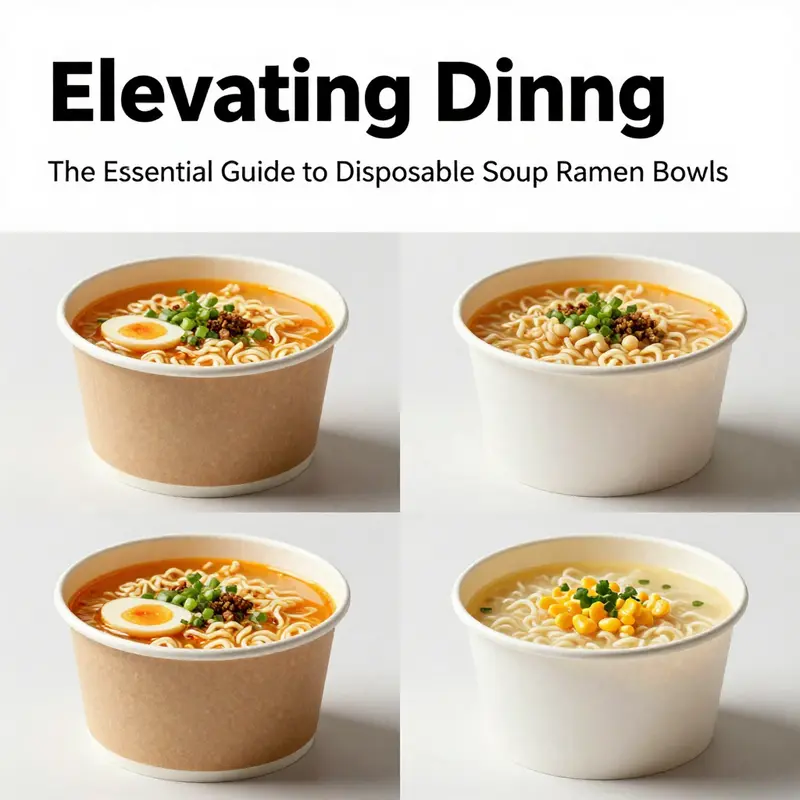
Material variety and real-world performance shape how a bowl supports a moment of comfort, not just a meal. In the realm of disposable soup and ramen bowls for restaurant supply, material choices determine how guests experience warmth, texture, and reliability, while also signaling a restaurant’s values. The shift from traditional foolproof disposables to more sustainable, customer-friendly solutions has sharpened the focus on how a bowl performs under the heat of broth, the pressure of peak service, and the scrutiny of waste streams. The practical question for operators is not only what a bowl can hold, but how it behaves when it carries a steaming kettle of broth, a tangle of noodles, and a scoop of toppings from kitchen to table. The answer emerges most clearly by looking at material families side by side, while keeping an eye on the realities of kitchen workflows and end-of-life outcomes.
A paper-based family remains a reliable baseline for many operations. These bowls typically use a food-grade paperboard core with a water-resistant lining that can be PLA, a biodegradable plastic derived from corn, or a wax coating. The lining is not cosmetic; it is the critical barrier that limits leakage and preserves heat. In practice, a well-designed paper bowl provides solid thermal insulation, helping broth stay warm during short rides and longer dine-in experiences alike. The surface resists soaking long enough for a dine-in or takeout window, and the exterior remains manageable for handling with gloved hands or a paper sleeve. For a busy service, the lightness of paper reduces fatigue for staff carrying multiple bowls at once, and the inherent stiffness helps with stacking and storage.
Beyond paper, one sees the rise of bagasse and other plant-based fibers. Sugarcane bagasse bowls, in particular, offer notable durability and grease resistance. They handle broth-heavy dishes with ease because their structure is less prone to collapse when hot liquid is involved. These bowls are commonly microwave-safe, an important consideration for trays that might be reheated or kept warm in front-of-house drops. Their natural grease resistance helps minimize seepage into sleeves or lids, improving the customer experience and reducing the mess in drive-thru and dine-in settings. The eco story here is strong, as bagasse is a byproduct of sugar production and the material is typically certified compostable under appropriate conditions. In practical terms, bagasse bowls suit so-called “hot-and-fast” ramen service, where speed and reliability matter as much as presentation.
Plant-based bioplastics, particularly PLA, add another layer to the portfolio. PLA bowls are designed to be compostable under industrial conditions, broadening the options for restaurants that want a credible end-of-life story without compromising performance. In terms of heat resistance and structural integrity, PLA performs well for single-use applications with standard serving temperatures. The caveat lies in extreme heat or prolonged exposure to moisture. If a bowl is left under a lamp or in a crowded takeout bag for longer than expected, there may be some softening or deformation. For menus featuring spicy broths or very high-temperature applications, operators may pair PLA with robust interior designs or specify shorter hold times to maintain shape and presentation. The environmental advantage is attractive to guests who value sustainability, and the increase in industrial composting capacity in many markets makes PLA a practical option when aligned with local waste infrastructure.
A broader plastic family—PP and PS—still appears in some segments, chiefly where durability and tight tolerances matter. These plastics can resist higher temperatures and impacts, which translates into dependable performance during busy service periods. The downside is not merely the environmental footprint; recyclability for PS, in particular, is limited in many jurisdictions, and there is growing public concern about microplastics and long-term pollution. Cities and regions are increasingly scrutinizing or banning certain single-use plastics, a trend that pushes operators to balance operational needs with regulatory risk and consumer expectations. In a well-managed system, PP or PS bowls may be reserved for cold or mildly warm offerings, or used in contexts where the durability dividend helps maintain food integrity across longer delivery timelines. Yet the sustainability narrative surrounding these materials requires transparent communication with guests, clear labeling, and a plan for end-of-life disposal.
The bioplastic family has expanded to include other formulations as well, with improvements aimed at better heat resistance and improved compostability. Some bowls use a blend of plant-based polymers that strive to combine performance with environmental benefits. The reality in the field is that performance and composting compatibility can vary with the exact formulation and the conditions of the composting stream. Restaurants exploring these options often engage in pilot programs to assess how well bowls hold up in their specific kitchen workflows, how they perform during peak service, and how guests respond to the disposal instructions at the point of sale. A key takeaway is that material choice should align with the restaurant’s service model, waste program, and guest expectations, rather than relying on a single metric like heat retention or strength in isolation.
In this landscape, design and form become more than mere aesthetics. A good disposable ramen bowl is deep and wide enough to cradle broth and noodles without spilling. The curvature of the sides influences spoon access and the way steam circulates during the last few bites. A well-considered bowl also supports the serving temperature by minimizing thermal losses and reducing surface area that can dissipate heat too quickly. The shape can impact presentation: a broad, generous interior can showcase ingredients more vividly, while a tall, narrow profile may make it harder to reach the last bite without slurping or sloshing. The best designs strike a balance between capacity, heat retention, and ease of handling, while still presenting a curated, restaurant-like appearance.
In real-world procurement, the material decision process must coordinate with supply chain realities. Operators look for reliable, scalable sources that can meet daily demand without compromising quality. Bulk suppliers and restaurant supply houses offer a range of options, but the choices extend beyond price. Lead times, consistency in thickness, and the uniformity of the interior coating are all practical considerations that affect service levels. A paper-based option might be favored for its lightness and print surface, enabling branding through logos during takeout. Bagasse might be preferred when grease resistance and compostable credentials are prioritized, especially in eateries that emphasize sustainable storytelling. PLA-based choices can be appealing when a certified composting pathway is clearly available and communicated to guests. In contrast, in markets with limited end-of-life infrastructure, restaurants may opt for simpler, more recyclable options even if they sacrifice some heat retention.
An important design and operational detail involves the compatibility of bowls with kitchen equipment and front-of-house workflows. Many disposables are designed to tolerate microwaving, letting operators reheat held portions or keep food warm for a brief window in the dining area. Microwave compatibility tends to accompany specific interior linings and edge design that minimize warping or leakage. For kitchens with rapid turnover, a bowl’s defense against spills and leaks during transport is crucial. A spill-resistant rim, a reinforced lip, and a curved interior that guides noodles toward the center of the bowl can reduce clogs and mess on serving lines. In busy environments, the staff experience matters as well; a bowl that is easy to grip with gloves or a sleeve reduces the risk of accidental drops, which in turn reduces waste and safety incidents.
The lifecycle and end-of-life story for disposable bowls is a growing driver of choice. Paperboard and bagasse options often lead to a compostability narrative, provided the facility has access to industrial composting. The conditions required—adequate moisture, aeration, and a controlled heat profile—mean that guests must follow disposal instructions for maximum environmental benefit. In restaurants that emphasize sustainability as part of the customer proposition, clear signage and even on-pack disposal guidance can transform how guests perceive the plateware. For some operators, the environmental narrative may be the deciding factor, especially where a brand aims to distinguish itself to eco-conscious diners. Others may prioritize a more straightforward disposal solution, choosing materials that align with the region’s waste management capabilities, even if that means negotiating a different balance of heat retention and leakage performance.
In sum, material variety yields a spectrum of performance profiles that restaurant operators can leverage to align with service style, guest expectations, and waste goals. Paper-based bowls deliver robust, practical performance with a favorable eco footprint for many outlets. Bagasse adds grease resistance and heat tolerance with a compostable advantage when waste streams support industrial or home composting. PLA and other bioplastics push the sustainability envelope but require attention to end-of-life conditions and temperature limits. Traditional plastics like PP and PS remain relevant where durability and low cost outweigh recyclability concerns, particularly in high-volume venues where the margin of error in handling is small. Divided bowls and other specialized designs provide practical options for portion control and meal composition, helping operators manage nutrition and presentation in a single vessel.
For those navigating this material landscape, a practical approach involves mapping service scenarios to material characteristics. Consider the typical menu and customer flow: a ramen-focused concept with high broth volume and quick turnover may benefit from bagasse’s grease resistance and heat stability, paired with clear composting guidance. A fast-curious QSR with limited waste processing might favor paper with a PLA lining for its balance of heat retention and visibility into environmental impact. A brunch or casual-dining concept expanding into takeaway may opt for PLA or another bioplastic where an industrial composting stream is available, ensuring alignment with the brand’s sustainability promise. A high-volume takeaway operation under regulatory pressure to minimize plastic use may choose paper or bagasse as the baseline and reserve PP or PS for specialty applications where long-term durability outweighs end-of-life concerns.
In the end, the choice is not a single-material decision but a coordination of performance, guest experience, and waste strategy. The same noodle bowl must keep broth hot, resist leakage, and present well on the table, while the packaging ecosystem supports a humane and practical disposal pathway. The evolving market offers a richer set of options than ever before, enabling operators to tailor their choices to their unique service model without sacrificing reliability. The story of disposable ramen bowls, then, is a story of material design that honors both function and responsibility, ensuring that comfort and care travel with the meal from kitchen to customer.
For practitioners seeking a tangible example within the paper-based family, see the range of paper-based, grease-resistant options available in disposable kraft paper soup containers with lids, which illustrate the practical balance of insulation, leak resistance, and branding potential while keeping an eye on waste pathways. disposable kraft paper soup containers with lids.
In addition, for researchers and operators who want a broader, standards-informed reference, the field is documented in technical overviews that discuss material standards and manufacturing practices. This external resource offers deeper context on how different materials behave under real kitchen conditions and across end-of-life streams: https://www.supplychaininsider.com/2025/12/23/a-complete-overview-of-disposable-ramen-bowls-types-standards-and-how-they-are-applied-in-manufacturing/.
Heat in Hand: The Design Logic and Experience of Disposable Ramen Bowls in Modern Restaurant Supply
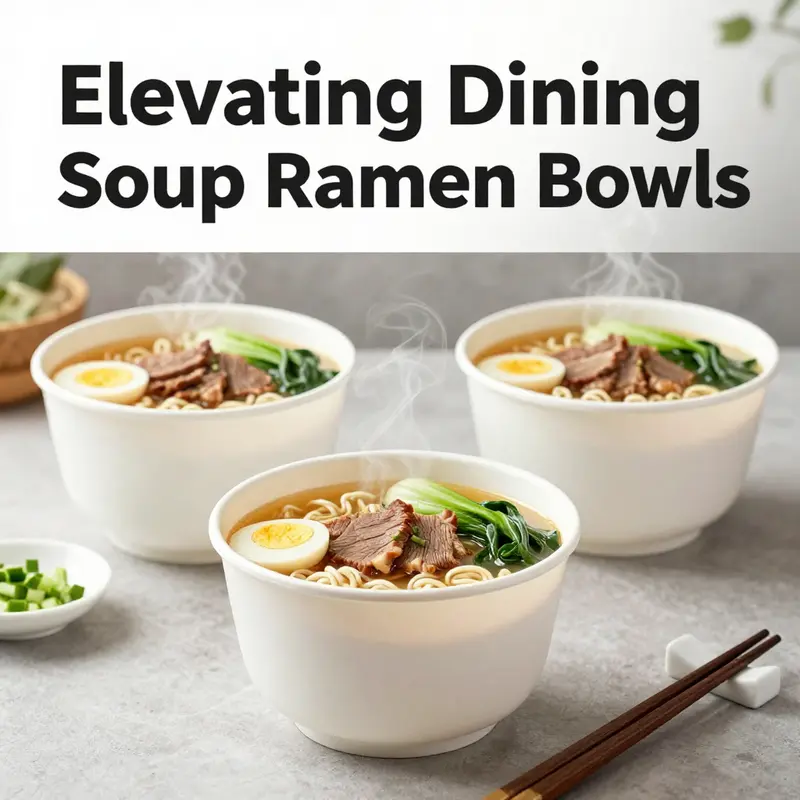
Designing a disposable soup or ramen bowl for restaurant supply is as much about crafting a sensory experience as it is about engineering a reliable, scalable container. In contemporary operations, the bowl is not a mere receptacle; it is a crucial touchpoint where heat, aroma, texture, and even presentation converge. A well-conceived bowl supports the cook’s intent, preserves broth integrity, and communicates a brand’s commitment to sustainability without compromising efficiency. The chapter that follows explores how design choices—material selection, shape, lining, and compatibility with lids and microwaves—tie together to create a product that performs in a busy kitchen, delights guests, and aligns with evolving environmental expectations. This is the practical anatomy of a modern disposable ramen bowl, seen through the twin lenses of functionality and sustainability that define today’s restaurant supply chains.
Material choices anchor every other design decision. The spectrum ranges from traditional food-grade paper to more modern, compostable formats such as sugarcane bagasse and corn starch. Paper bowls, often crafted from Kraft or similar grades, bring sturdiness and heat tolerance at a modest cost. They pair well with water-resistant linings, typically made from biodegradable materials like PLA or wax, which prevent soggy edges and keep broth from seeping through the wall of the cup. In high-volume settings, where meals may be transported and consumed over a short window, the reliability of these linings matters as much as the structural integrity of the outer wall. Yet cost and performance are balanced by environmental considerations. Sugarcane bagasse bowls have emerged as a leading eco-friendly option, prized for their strength, grease resistance, and heat tolerance. Derived from sugarcane processing byproducts, they offer a robust shell that can hold hot broth without softening or leaking. For operators aiming to minimize landfill impact, bagasse presents a compelling option because it is compostable in a commercial setting, aligning with local waste streams that encourage organics recovery.
Corn-starch–based bowls add another layer to the sustainability equation. These bowls rely on renewable feedstocks and are fully compostable under suitable conditions. They also tend to exhibit strong resistance to leaks, even when facing the heat of steaming broths and dense noodle dishes. The trade-off often centers on price and processing requirements; facilities that can manage composting workflows reap the most benefit from adopting corn-starch solutions. Across these materials, a common thread is the desire for a water- and grease-resistant barrier that preserves the bowl’s integrity while remaining compatible with reheating and serving protocols. The internal lining, often PLA-based or wax-infused, serves as a crucial barrier between liquid and the bowl material, ensuring that broth remains contained and the surface texture remains pleasant to the touch. While the performance specifics can vary, the overarching objective remains consistent: deliver a bowl that performs in a fast-paced kitchen without compromising safety or user experience.
The geometry of the bowl is more than a matter of aesthetics. The inward taper near the rim is a purposeful feature that does several jobs at once. First, it helps trap heat and aroma within the broth, concentrating the sensory cues that define a comforting ramen experience. The shape also aids handling. When servers, drivers, or guests lift the bowl, a well-balanced profile reduces the chance of spills, especially when the bowl is full of broth and noodles. This inward taper works in concert with sufficient depth to permit a generous portion of noodles and broth, which is essential for customer satisfaction in both dine-in and takeout contexts. A bowl designed with the right depth also supports spoon access—an important factor for soups where the first few bites define the meal’s impression. The ergonomics extend to stacking and transport as well. A bowl that nests well with its lid and side-by-side with similar containers reduces space needs, streamlining kitchen organization and delivery handoffs.
Functionality hinges on durability and convenience. The single-use design must withstand frequent handling, transfers, and short delays without compromising the meal’s temperature or integrity. Microwave safety is a commonly requested attribute, enabling customers to reheat at home or in-office environments without transferring contents to other vessels. The ability to reheat directly in the container enhances convenience for takeout and delivery services and can also influence how a restaurant markets its packaging as a value-add. In many cases, the layering and thickness of the bowl walls are engineered to resist deformation under heat while remaining light enough to be cost-effective for bulk orders. The result is a container that feels sturdy in the hand yet economical in mass production, a paradox that good design resolves through careful material science and process control.
Beyond heat retention and handling is the practical matter of leakage resistance. Brimming broth, whether spicy miso or a heavy tonkotsu, can hinge on the performance of the wall material and lining. A reliable liner prevents seepage that would otherwise dim the dining experience or make a mess during transit. This is particularly important for ramen, which is notoriously broth-rich. The right combination of outer material and inner barrier ensures that customers can enjoy a generous portion without fear of leakage, even when the container is tipped or jostled.
From a supply-chain perspective, these bowls must be scalable and consistent. Sizes are typically standardized to accommodate common portion expectations, with diameters commonly offered in 7, 8, or 9 inches. This standardization supports efficient packing, easy stacking, and predictable weight distribution for delivery fleets. Customizable options are common, allowing operators to align bowl dimensions with their menu’s typical serving size and with the lids that seal in heat and moisture. Standardized packaging, such as inner boxes and master cases, streamlines warehousing and logistics, enabling restaurants to forecast inventory needs accurately and reduce waste. The ability to pair a bowl with a compatible lid is more than a convenience; it’s a reliability issue that affects presentation and temperature retention during transit.
Quality assurance travels hand in hand with design. Reputable manufacturers often uphold safety and quality standards such as FDA compliance, CE/EU recognition, and ISO 9001 certifications. These certifications help ensure that the materials used in the bowl and its lining are food-grade and safe for hot liquids, with consistent performance across production lots. For restaurant operators, such assurances translate into predictable performance in high-volume environments, reducing risk during peak service times. A bowl that fails to meet safety and performance benchmarks can disrupt service, increase waste, and erode guest trust. By contrast, a well-engineered container supports a restaurant’s operational tempo while sustaining a positive guest experience.
Sustainability emerges as a guiding thread that informs every other design choice. The market increasingly rewards solutions that balance functionality with environmental responsibility. Sugarcane bagasse, in particular, has gained traction because it leverages agricultural byproducts to create a durable, heat-tolerant vessel that can be composted in appropriate waste streams. Corn starch bowls push that message further, offering a fully renewable, compostable end-of-life option. The challenge for operators is to align disposal capabilities with consumer expectations. In communities with robust organics programs, compostable bowls can contribute to a truly circular system. In markets with limited composting infrastructure, however, operators must work with waste-handling partners to ensure their packaging is disposed of in the intended stream. The design phase, therefore, cannot ignore the end-of-life narrative; it must anticipate how a bowl will be handled after the last bite is taken.
These packaging choices also tie into branding and the dining experience. A bowl’s surface, color, and surface printing can reinforce a restaurant’s aesthetic while remaining within the limits of the material’s printed area and heat tolerance. Some operators pursue subtle branding through embossed textures or restrained ink use, while others opt for more expressive colors and graphics where the material supports it. The goal is to deliver a cohesive guest experience from kitchen to curbside. When customers see a bowl that communicates care for the environment and attention to detail in the food’s presentation, it reinforces the restaurant’s overall narrative about quality and responsibility. Even the unboxing moment—how easily a lid opens, how cleanly the lid seats, how neatly the bowl stacks with others—contributes to the perceived value of the meal.
Supply-chain considerations extend to the ability to customize—an important feature for large operators and special events. In practice, many suppliers offer customizable options for sizes, shapes, and even branding elements. The challenge is to maintain efficiency and cost control while delivering a product that meets the restaurant’s exact serving needs and sustainability targets. Operators must balance the allure of customization with the realities of bulk manufacturing, forecasting, and seasonal demand fluctuations. The best solutions enable easy reordering, maintain consistent performance across batches, and minimize waste through precise portion control and packaging optimization. A well-conceived disposable ramen bowl is therefore not just a static object; it is a calibrated component of a broader supply-chain strategy designed to maximize throughput, minimize waste, and elevate the guest experience.
Operationally, it is also essential to consider compatibility with a broader ecosystem of disposables. Bowls that are microwavable, grease-resistant, and compatible with various lid designs reduce friction at the point of sale and in the kitchen. A streamlined packaging system that harmonizes bowls, lids, and compatible sleeve or wrap products enables faster assembly and more predictable packaging costs. For restaurants that operate in a delivery-heavy model, the ability to seal in heat and moisture while protecting the contents during transit is a crucial differentiator. It translates into fewer complaints about soggy noodles or cold broth and contributes to higher overall customer satisfaction. In this sense, the bowl becomes a reliability benchmark for a restaurant’s takeout program, a silent partner in the delivery promise.
From an experiential perspective, the bowl’s function and form shape the ritual of eating ramen, even when the dining occurs outside a traditional restaurant setting. The aroma, the steam, and the visual of a generous portion all contribute to a sense of comfort and care. A well-designed bowl can enhance those moments by ensuring the first bite is exactly as the chef intended: hot, flavorful, and visually appealing. The sensory satisfaction extends beyond taste and smell to include tactile and thermal cues—the way the surface feels, the way steam rises, and the way the broth maintains its temperature as it reaches the mouth. In this way, the disposable bowl becomes a co-creator of the ramen experience, enabling guests to savor the dish without distraction or concern about containment or mess.
To tie these threads together, consider how a modern ramen program relies on a packaging system that respects both the guest and the planet. The choice of sugarcane bagasse or corn starch reflects a strategic stance toward sustainability, while the bowl’s shape, lining, and wall thickness reflect a commitment to performance and reliability. The internal taper, depth, and heat management capabilities align with expectations for a comforting, convenient dining experience. The ability to scale production, meet safety standards, and coordinate with lids and related disposables keeps the operation efficient and predictable. And the branding potential—subtle texture, restrained print, or aligned color schemes—lets the packaging participate in the restaurant’s overall image without compromising the functional goals.
For operators seeking to explore these dimensions further, an accessible point of reference lies in the broader ecosystem of eco-friendly takeout and packaging solutions. These resources illustrate how a single design detail—such as a grease-resistant lining or a compatible lid—can influence both cost and guest perception. Linking to a practical example of an all-encompassing packaging approach can help restaurant leaders imagine how their own bowls fit into a larger system of sustainability, efficiency, and guest delight. See for yourself the broader family of packaging options and how they align with kitchen workflows and consumer expectations by exploring a representative resource focused on eco-friendly takeout boxes for food packaging. eco-friendly takeout boxes for food packaging.
As this chapter closes, the design and functionality of disposable soup and ramen bowls reveal themselves as a microcosm of modern restaurant supply. It is a field where material science meets service design, where sustainability intersects with scale, and where the guest’s moment of warmth is guarded by a carefully engineered vessel. The bowl is more than a container; it is a catalyst for efficiency, a signal of values, and a bridge between kitchen craft and curbside convenience. In the chapters that follow, we will extend this foundation to examine how vendors and operators translate these design principles into procurement strategies, assess performance in real-world settings, and measure the impact of packaging choices on waste streams and guest satisfaction. The chapter invites readers to see packaging not as an afterthought but as an integral element of the dining experience and the restaurant’s broader mission.
External resource: https://www.alibaba.com/product-detail/Eco-Friendly-Disposable-Ramen-Bowls-Supplier_1600542734572.html
From Factory Floors to Front-of-House: Navigating Suppliers and Availability of Disposable Soup and Ramen Bowls for Restaurants
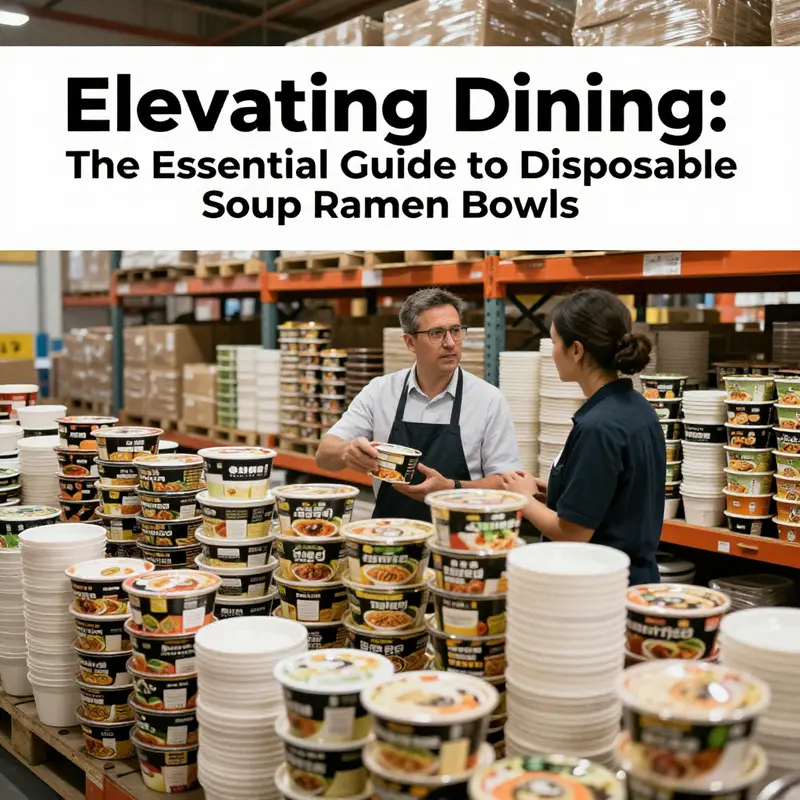
The bowl is more than a vessel; it is a critical link in the restaurant’s chain of experience, from the moment broth is ladled to the moment a customer returns the empty dish. In today’s market, the availability and reliability of disposable soup and ramen bowls shape menu design, pricing, and sustainability commitments as surely as the broth’s recipe does. The sourcing journey begins long before a plate leaves the pass, with factory floors, wholesale channels, and regional distributions that determine whether a kitchen can keep pace with demand, seasonality, and evolving consumer expectations. The landscape has grown more intricate as operators increasingly favor compostable and biodegradable options. Materials such as bagasse, corn starch, and bamboo fiber offer credible pathways to reducing plastic dependence while still delivering the durability, heat resistance, and leak protection required by hot soups and brothy ramen. But the path from concept to countertop involves carefully balancing supply chain resilience with environmental promises, a balancing act that underpins every strategic decision about disposables in a modern restaurant.
Major suppliers and manufacturers form the backbone of this ecosystem. In practice, the bulk of scalable production sits with manufacturers operating through large wholesale platforms that connect buyers with factories capable of producing hundreds of thousands of units daily. This arrangement makes sense for operators who must secure consistent supply across multiple locations or prepare for peak events and promotions. For restaurants pursuing volume, the ability to negotiate on lead times, customization, and packaging configurations becomes a decisive factor in choosing a supplier partner. In parallel, suppliers dedicated to eco-friendly materials are expanding rapidly. These firms focus on biodegradable and compostable bowls made from bagasse, corn starch, or bamboo fiber, aiming to close the loop on waste and to align with the growing preference among diners for sustainable packaging. The emphasis on environmentally responsible materials is not merely a marketing hook; it reflects changing regulatory expectations and the realities of waste management in different markets.
The diversity of product types mirrors the variety of restaurant concepts. Bagasse bowls offer a natural, sturdy option with intrinsic grease and liquid resistance and a warm, rustic appearance that fits casual and health-conscious eateries. Corn starch bowls emphasize compostability within a defined system, typically requiring industrial composting conditions to break down within a predictable time frame. Bamboo fiber bowls bring a more refined look that pairs well with lighter or Japanese-inspired menus, while still delivering microwave safety and robust performance. Paper bowls, including kraft and recycled options, balance cost with adequate heat resistance and leak protection when properly coated. Each material has its own strengths and caveats, and the choice often hinges on a restaurant’s balance between cost per unit, environmental goals, and the expected life cycle of the product within its waste-handling ecosystem.
A practical frame for evaluating availability begins with explicit specifications. Temperature resistance, load-bearing capacity, and the integrity of the bowl’s structure under broth-heavy load are all non-negotiables. Suppliers typically validate these attributes through standardized tests, such as soaking a bowl in boiling water for a defined period or simulating typical serving conditions to ensure the form does not fail under heat or pressure. Certifications also matter for market access. In many regions, products intended for food contact must meet regulatory standards and obtain certifications such as FDA in the United States, EU food-contact material regulations, and national safety standards in other countries. These certifications are not mere paperwork; they signal that a bowl has been designed with food safety in mind and tested to withstand practical kitchen conditions without compromising consumer health.
Availability channels shape when and how a restaurant can source these bowls. Online wholesale platforms are a primary channel for large or chains seeking fixed pricing and scalable ordering. They enable trial orders, bulk purchases, and a path from pilot testing to full rollout. For small to mid-sized operators, online retailers and local distributors offer swifter procurement with shorter lead times and more predictable shipping. Local distributors, in particular, can provide the added benefit of hands-on support, quick replenishment, and the ability to negotiate packaging, labeling, or regional customization tailored to a specific market. The trade-off for these advantages is often the reduction in scale flexibility and sometimes higher unit costs, which operators balance against the reliability of supply and the convenience of faster restocking.
For a restaurant brand planning a nationwide rollout or a multi-site expansion, direct engagement with manufacturers through wholesale platforms can yield long-term cost efficiency. These engagements typically enable customization—such as branded packaging, specific dimensions, or unique coating options—that aligns with a chain’s visual identity and service standards. The scale afforded by such relationships often translates into favorable per-unit costs, more predictable lead times, and, crucially, tighter control over supply risk. Yet large-scale sourcing must also address logistics, including transit times, import duties, and regional distribution. A robust supply plan will incorporate safety stock, contingency sourcing, and a diversified supplier base to mitigate disruptions ranging from port congestion to raw material shortages. In this space, risk management becomes as important as price negotiation, and the most successful operators treat supply as a strategic asset rather than a purely transactional purchase.
Availability is also closely tied to the production ecosystem surrounding these materials. Bagasse and corn starch are produced from agricultural byproducts or crops that require careful supply planning, weather considerations, and seasonal demand alignment. The market has responded by expanding capacity and diversifying the supplier base, reducing single-source risk and enabling more stable pricing even as the broader plastics ban accelerates. Bamboo fiber bowls add another dimension, offering a combination of strength, aesthetic appeal, and renewable fiber content that resonates with both premium and casual dining concepts. For operators who want a more economical route, kraft paper bowls—often recycled or partially recycled—provide a low-cost option that remains serviceable for many hot soups and lighter noodle dishes, provided the coating and sealant are appropriate for their specific waste-management system.
To translate these options into actionable purchasing decisions, many operators weigh three core questions: Which material best aligns with our sustainability commitments? Which channel offers the most reliable supply for our footprint and growth trajectory? And how do we balance cost with performance and compliance? The answers are rarely one-size-fits-all. A large chain might prioritize consistent supply, strict adherence to certifications, and the ability to customize packaging for all outlets, even at a higher per-unit cost. A boutique ramen shop or casual noodle bar might accept a lower volume with more flexible lead times if the product offers a superior eating experience and aligns with a composting program locally. A café that serves light soups or broths as a small segment of its menu may favor a cost-conscious, fast-turnover solution that can withstand the daily rhythms of a busy service.
Within this decision framework, one practical consideration is the extent to which a restaurant can participate in the end-to-end sustainability story. For many operators, participating in a closed-loop or farm-to-compost cycle is a compelling differentiator. This typically involves selecting a material that can break down in industrial composting systems and that aligns with local waste infrastructure. Bagasse and corn starch stand out in this regard, with bagasse offering a natural, robust performance and corn starch presenting a clear compostability promise in the right facilities. In regions where composting infrastructure is limited, the decision may tilt toward a coated paper option that remains compatible with local waste streams, while still meeting food safety standards and keeping waste diversion reasonable. The trade-offs are nuanced, and the best choices emerge from a conscious alignment of product performance with the restaurant’s operational realities and community waste-management capabilities.
From the purchasing standpoint, the availability picture is also shaped by the breadth of distribution options. Online wholesale platforms deliver volume and customization, but they require careful diligence around quality assurance and certification visibility. It is essential to request documentation that confirms compliance with the relevant food-contact standards. In practice, many buyers request certificates or declarations indicating the product meets FDA, EU, or national standards, and they verify that the material is suitable for contact with hot liquids and for the intended shelf life. This documentation reduces risk for culinary teams and operations managers who rely on predictable performance, especially during high-volume service. In addition, the labelling and packaging of bowls—whether for a self-serve station, a to-go counter, or a dine-in presentation—should be considered as part of the overall consumer experience. A bowl that communicates environmental stewardship through its design and packaging can reinforce a brand’s sustainability narrative, while also ensuring practical usability for servers and guests alike.
The procurement process also benefits from a staged approach. Operators often start with a small batch to validate performance in actual service conditions, then scale to larger volumes as confidence builds. This phased approach helps avoid waste and ensures a smoother transition as the menu, service style, and guest expectations evolve. In addition, working with suppliers that offer clear minimum order quantities, scalable packaging options, and flexible terms can ease the administrative burden of restocking for multiple locations. The capacity to switch between materials or adjust sizes without a major redesign of the supply chain can be a meaningful source of resilience during market volatility or seasonal shifts in demand.
The modern supplier ecosystem also recognizes the importance of transparency and education. Detailed product specifications, sample testing opportunities, and access to sustainability data help operators compare options on a like-for-like basis. For example, a vendor may provide comparisons of heat resistance, leakage tests, and barrier properties that matter for broths, oils, and sauces. They may also share lifecycle assessments that illuminate the environmental impact of each option, from production to end-of-life disposal. This information empowers restaurant owners to tell a credible sustainability story to guests and investors alike, which in turn supports brand differentiation in a crowded market.
For readers who are mapping their own sourcing pathways, a practical route is to explore a spectrum of channels, balancing risk and reward. Large chains may favor direct engagement with manufacturers on a regional or global scale, leveraging the bargaining power of volume and the ability to coordinate across multiple sites. Mid-sized operators might blend platforms with regional distributors to secure reliable stock while maintaining some degree of customization. Independent operators and pop-ups often benefit from more nimble sourcing through e-commerce retailers and local suppliers, which enables rapid prototyping and adjustment to evolving consumer tastes without committing to long lead times.
In all cases, the choice of supplier and the availability of disposable bowls should be coordinated with a restaurant’s broader packaging and waste strategy. Aligning product choice with waste-management capabilities, local composting options, and regulatory requirements creates a harmonized approach to sustainability. The result is not only a more responsible footprint but also a more confident service model where staff can operate with predictability and pride. The supply chain thus becomes part of the restaurant’s narrative—how it minimizes waste, supports local or regional economies, and communicates a thoughtful approach to guests who increasingly view packaging as part of the dining experience rather than as an afterthought.
To illustrate how these considerations play out in practice, consider the following scenario. A regional noodle concept plans a growth phase and looks to expand from three to nine locations over a year. The operations team maps three core suppliers with complementary strengths: one supplier of bagasse bowls optimized for high-volume takeout, another offering corn starch options designed for a fully compostable program, and a third providing bamboo fiber bowls with a premium presentation for dine-in settings. They negotiate a tiered pricing model tied to monthly forecasted volumes, with specifications for heat resistance and leak prevention clearly documented. They also secure documentation for food-contact compliance and arrange for rapid reordering through a regional distributor who can ship to each site within a 24-to-48-hour window. This approach reduces stockouts, supports uniform guest experiences, and keeps the sustainability pledge front and center across all outlets.
As these operational dynamics unfold, it is helpful to anchor decisions in concrete consumer expectations and regulatory realities. Diners increasingly favor options that minimize plastic use and support responsible disposal. Public sentiment, in combination with legislative trends restricting single-use plastics, elevates the importance of disposables that can integrate into composting streams or recycling programs where feasible. Operators who anticipate these shifts by selecting materials with credible end-of-life pathways position themselves to meet evolving standards, maintain cost control, and sustain customer trust. The procurement narrative, therefore, is not a one-off decision but a continuous process of evaluating new materials, monitoring supplier performance, and adjusting the mix to balance cost, performance, and environmental responsibility.
For readers seeking a concrete pointer into packaging options that align with this line of thinking, consider exploring a practical example of a kraft paper soup container with a lid. This option demonstrates how packaging choices can combine economical production with reliable performance for hot, brothy servings. It reflects a pragmatic balance between affordability and functional requirements, while still fitting into a broader sustainability strategy when used in the right waste-management context. Wherever you are in the supply chain—from the first vendor conversation to the final dish pulled from the pass—alignment across product performance, regulatory compliance, and environmental goals is essential to move from concept to customer satisfaction.
Internal link for further reference: For readers exploring compliant packaging options, one practical example is kraft paper soup containers with lids. This option can serve as a tangible starting point for evaluating how a given material behaves under typical kitchen conditions and how it integrates with a restaurant’s waste program. See the detailed product page for more information: kraft paper soup containers with lids.
In sum, the supplier landscape for disposable soup and ramen bowls is characterized by a blend of scale, material science, and regulatory alignment. Large platforms enable access to factories capable of high-volume production and customization, while eco-friendly material producers push the market toward more sustainable choices. Availability channels—whether through online wholesale channels, e-commerce retailers, or local distributors—offer varying speeds, costs, and support levels. The most successful operators approach sourcing as a strategic function, integrating performance testing, certification verification, and waste-management planning into the purchasing process. This integrated approach ensures that the bowls not only perform well in the kitchen but also reinforce the restaurant’s commitments to quality, safety, and environmental stewardship. By maintaining a flexible, well-documented, and supplier-aware procurement mindset, restaurants can navigate the evolving landscape with confidence, delivering reliable service and an authentic guest experience that resonates long after the final slurp of broth.
External resource: https://www.amazon.com/dp/B0CQJZKX7W
Final thoughts
Selecting the right disposable soup and ramen bowls is not just about functionality; it is also about aligning with your brand’s commitment to sustainability and customer satisfaction. By considering eco-friendly options, understanding material performance, prioritizing thoughtful design, and choosing reliable suppliers, businesses can elevate their dining experience while supporting environmental initiatives. As we move forward in a world increasingly focused on sustainability, adopting practices that incorporate quality, effectiveness, and responsible sourcing will not only benefit the environment but also enhance your brand’s reputation and customer loyalty.