
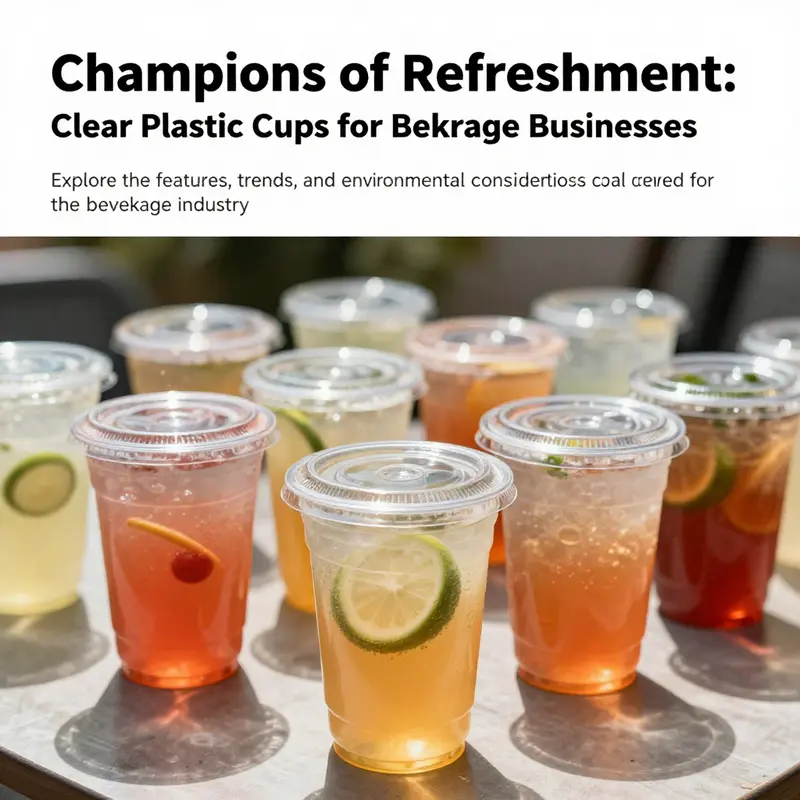
Clear plastic cups have become an essential item in the beverage industry, celebrated for their versatility, affordability, and visual appeal. As beverage chains, bubble tea shops, restaurants, food trucks, and catering services navigate the varying demands of their clientele, understanding the landscape of clear plastic cups is crucial. This guide will explore the diverse types and sizes of these cups, highlighting the materials used and their applications. We will then examine the latest market trends, including pricing structures and customization options to help brands stand out. Finally, we will delve into the environmental impact of clear plastic cups and best practices for recycling, ensuring a balance between convenience and eco-friendliness.
Crystal Clarity in Every Sip: Exploring Materials and Sizing for Clear Plastic Cups
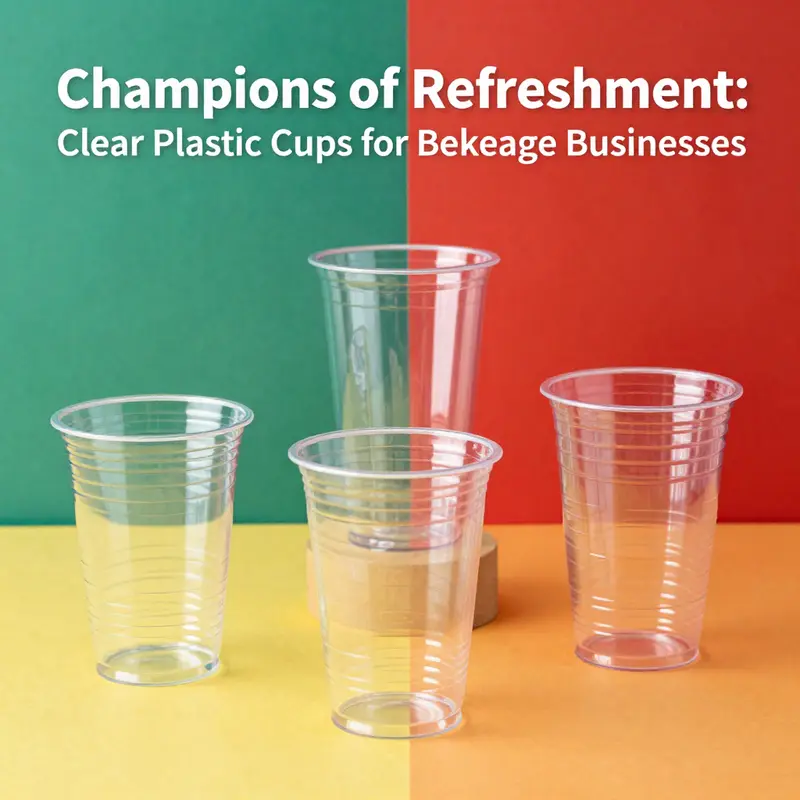
Clear plastic cups do more than contain a beverage. They act as a window into color, texture, and freshness. When a barista pours a layered iced coffee or a student mixes a fruit smoothie, the cup becomes a stage for the drink’s visual appeal. Clarity, strength, and size converge to shape the customer experience. This chapter follows those convergences through the science of materials and the practical realities of sizing, lids, branding, and disposal. It treats clear cups not as mere disposables but as carefully chosen tools that influence perception, performance, and sustainability across food service, events, and retail settings. The choices made in material and size ripple outward, affecting not just the cup’s function but the business’s efficiency, its environmental footprint, and even the storytelling around the brand.
The most common material used for clear cups is a family of plastics that balance transparency with practical performance. PET, or polyethylene terephthalate, stands out for its optical clarity. The surface has a high gloss, and light travels through with minimal distortion, so the drink inside appears vivid and true to its color. Clarity is not merely cosmetic here; it supports accurate visual assessment. When a customer sees a fruit smoothie’s gradient, a shimmering layer of milk tea, or a bright citrus juice, the impression is enhanced by the cup’s transparency. PET cups are also prized for durability. They resist shattering if dropped, an important consideration in high-traffic venues like cafes, catering events, or bustling takeaway stations. The combination of light weight and strength keeps operating costs down, which is a practical matter for anyone ordering in bulk. PET’s food-grade safety is another pillar of trust. When a cup reliably meets regulatory expectations, it allows a business to minimize risk while maintaining consistency in the front-of-house experience. These advantages explain why 16-ounce PET cups have become a staple in modern beverage service. They are large enough for generous servings yet compact enough to fit in standard takeaway configurations, stacking neatly for storage and reducing handling time during peak service.
But PET is not the only option in the realm of clear cups. PLA, or polylactic acid, has carved out a niche for brands prioritizing sustainability. PLA is derived from renewable resources, such as cornstarch or sugarcane, which gives it a different narrative arc than fossil-based plastics. In markets favoring eco-friendly messaging, PLA cups enable a transparent story about compostability. The theory is appealing: a cup that can break down in a disposal stream aligned with industrial composting facilities can reduce long-term waste. In practice, however, the composting infrastructure matters. PLA cups require facilities that explicitly accept PLA for industrial composting to achieve the intended end-of-life outcome. Without those facilities, the ecological benefit can be muted. For events that emphasize sustainability, the PLA option communicates a commitment to greener practices, even if end-of-life outcomes depend on local waste-management capabilities.
A third material worth noting is PP, polypropylene. It brings heat resistance into the conversation. While fully clear PP cups exist, they are more commonly associated with hot beverages and situations where a beverage may move from a hot setup to a cooler environment. PP’s resilience to heat helps prevent deformation when hot drinks are served or transported. The material behaves well under temperature stress, which is crucial for coffee or tea served at a moment of transition, such as a drive-through or a catered event. In some cases, clear PP cups offer a compromise between the extreme clarity of PET and the practical heat resistance of the polymer family. For hot beverage service, a cup with a clear PP formulation can provide the needed transparency while minimizing risk of warping or odor migration that might occur with other materials.
The choice among PET, PLA, and PP is rarely about a single attribute. It is a calculus that weighs clarity, safety, temperature exposure, disposal realities, and brand messaging. A cafe that emphasizes pristine visuals and quick turnover may lean toward PET for its renowned clarity and shatter resistance. An event organizer seeking to showcase environmental stewardship might favor PLA, provided the venue can support industrial composting or a clearly defined recycling plan. A vendor focused on hot drinks and robust handling in mobile service might prefer PP for its heat tolerance and structural integrity under vigorous service conditions. In all cases, the choice of material interacts with sizing and lid design to determine performance in real-world conditions. The material’s properties influence how a cup feels in the hand, how it holds up during transport, and how it appears in marketing imagery that drives orders.
Sizing is the second axis in this analysis. Clear cups come in a spectrum from small tasting portions to large, festival-friendly servings. The most common sizes begin with compact options around 50 to 60 milliliters for samples. These tiny vessels are essential for tastings, flight-style beverages, or portion-controlled desserts. They serve as a practical way to introduce new flavors without committing guests to full servings. Moving up, the 16-ounce (approximately 473 milliliters) cup represents a blend of practicality and appetite. It is large enough for a substantial cold drink like a smoothie or iced tea, yet compact enough to remain manageable in a crowded cafe line. This size is particularly versatile for to-go orders, where staff can stack, peel, and hand off quickly while maintaining the visual appeal of the drink’s layers and color separation.
Beyond the standard daily-use sizes, the market accommodates larger capacities that meet the demands of bubble tea, iced beverages with generous fillings, or festive standbys at festivals and kiosks. Cups in the 200 to 1000 milliliter range are commonly used for bubble milk tea, which often features a visually distinctive mix of tea, milk, and toppings. In these applications, the cup must be tall enough to display swirling color while remaining sturdy and spill-resistant. As sizes increase, the physical demands on the cup rise as well. Thicker walls, reinforced rims, and well-designed closures become more important to minimize cracking, leaks, and user dissatisfaction. The dialogue between size and material is a practical reminder that what makes a beverage look appealing is not just its color but how the container supports the drink’s characteristics—from viscosity to temperature to the density of toppings.
For beverages that rely on a color gradient or layered presentation, the ability to see through the cup is not purely cosmetic. It directly affects consumer perception of quality. In a cafe lineup, the first impression of a drink is filtered through the transparent cup—the way light plays off the surface, the way condensation beads on the outside, and the clarity with which the layers within are visible. A well-chosen cup material and size can enhance perceived freshness, portion integrity, and brand confidence. It is not unusual for a brand to pair specific cup sizes with signature drinks, creating a cohesive visual identity. The 16-ounce format, for instance, often becomes the default for a standard cold beverage, while the 24-ounce or 32-ounce variants support higher-volume sales or show-off occasions like specialty milk teas or fruit-forward drinks. When a business aligns cup geometry with drink composition, it also aligns its operational rhythms with the way beverages are prepared, poured, and served.
In practice, the decision between materials and sizes extends to the practicalities of supply and cost. Suppliers frequently present bulk pricing tiers that reward larger purchases, a reality that shapes procurement strategies in hospitality and catering. It is common to see per-unit costs decrease as order quantities rise, with additional incentives such as free samples or no minimum order quantities for stocked items. Lead times are a practical consideration for events and seasonal menus. A typical supplier may offer lead times around two weeks for standard lines, with longer windows for bespoke or high-volume runs. In the modern marketplace, supplier credibility matters as much as price. Platforms that aggregate manufacturers often flag suppliers with high ratings, membership status indicating a degree of vetting, and certifications such as ISO. These signals help buyers reduce risk in complex sourcing scenarios where material choice intersects with regulatory expectations for food contact and consumer safety.
From the perspective of the consumer, the shopping journey for clear cups can be surprisingly nuanced. Online retailers present a range of pack configurations to fit different budgets and usage patterns. For home or small business use, bundles of smaller counts with a mix of sizes offer flexibility to experiment with beverages and desserts. For mid- to large-scale operations, bulk purchases with predictable packaging and fast delivery times translate into reliable service at scale. The decision calculus often includes not just price, but also reliability of supply, the ease of sourcing compatible lids, and the ability to customize with branding. Customization adds another layer of complexity. Many manufacturers offer printing options, often using UV or screen printing methods to apply logos or decorative motifs. Care must be taken to ensure any decorative process is compatible with food safety standards and does not compromise the cup’s clarity or integrity. In the best cases, a cup communicates brand identity both through the beverage inside and the visual language of the container itself. A well-executed design can turn a simple takeout cup into a portable advertisement, a touch of theater in the service experience, and a reminder of the brand’s attention to detail.
The narrative around sustainability also threads through sizing decisions. Smaller cups naturally generate less material per serving, but the bigger picture depends on the total number of servings and the end-of-life reality. PET offers strong recyclability where local systems exist, which makes recycling a straightforward option in many communities. PLA, while offering a compostable narrative, relies on industrial facilities to achieve the intended outcome. The effectiveness of that outcome varies by region, so clear communication with customers about disposal expectations becomes important. An informed consumer can participate in responsible waste management when provided with clear guidance on whether a given facility can handle PLA or PET containers. For brands that emphasize environmental stewardship, communicating these nuances is part of the product story and customer education. In a sense, the cup becomes a conduit for larger conversations about consumption, waste, and planetary health, which can strengthen customer loyalty when handled with transparency and practical options.
Branding and customization extend the conversation beyond the drink. When a business considers printing on sip-through lids or on the sidewall of the cup itself, it must weigh the aesthetic benefits against potential risks. Ink migration, potential flavor impact, and the integrity of the food-contact surface all become factors. Modern printing techniques have advanced to minimize risk, but due diligence remains essential. The result is a cup that not only shows the beverage to best advantage but upholds the brand’s integrity under real-world conditions of ice, condensation, and transport. A successful approach blends material selection, sizing, and branding into a cohesive user experience rather than treating each element as a separate decision. It is this integration that differentiates a generic disposable from a thoughtfully engineered component of the customer journey.
As a practical illustration of how these choices come together, imagine a cafe setting where a customer orders a layered iced drink in a 16-ounce PET cup. The crystal-clear PET showcases the drink’s gradient, inviting the customer to preview the color story before the lid is engaged. The cup’s weight and rigidity help keep the drink upright for a short walk or a quick dash down a crowded corridor. If the same drink is served in a PLA cup for an eco-conscious event, the retailer emphasizes responsible disposal in signage and staff guidance, reinforcing a commitment to sustainability even as other variables such as temperature and serving time remain constant. In a hot beverage scenario, a clear PP cup can offer a more forgiving performance under heat, preserving structural integrity as the drink cools and the user handles the cup after a hot pour. In all cases, the cup functions as a tool that supports the beverage’s appearance, temperature, and practical transport, while also providing a surface for brand expression.
The interplay of material and size creates a nuanced decision space. The designer, the supplier, and the end-user each influence the final choice. For businesses that want to align every touchpoint with a clear value proposition, understanding these materials and their implications becomes essential. It is not enough to say a cup is clear; it matters which clarity, which temperature resistance, which end-of-life option, and which display potential the cup provides. When these elements are harmonized, the result is a more reliable supply chain, a more satisfying customer experience, and a more coherent brand story that can travel from a storefront to an event, and finally to the consumer’s memory.
To connect this discussion with practical sourcing and long-term planning, consider how a brand might approach a mixed lineup of cups. A tiered strategy could pair PET cups for everyday cold drinks in the standard 16-ounce size with PLA options in event settings highlighting sustainability. For hot drinks, a carefully chosen clear PP cup might reduce risk while preserving the visual appeal of a freshly poured beverage. In addition, the packaging ecosystem—lids, sleeves, and labeling—must be coordinated to ensure compatibility and efficiency in service. The cost dynamics follow a familiar arc: material choice affects both unit price and waste management costs, while size affects throughput and inventory complexity. In a well-structured operation, the procurement plan for clear cups becomes a balance sheet friend rather than a standalone expense, supporting throughput targets, waste reduction goals, and a marketing narrative that can travel with the drink itself.
For readers seeking a concrete example of how material composition and size interact with real-world packaging needs, a broad landscape of manufacturers supports a range of specifications. One practical reminder is the availability of clear cake cups that extend the concept beyond beverages to desserts and snack servings. These containers illustrate how the same principles of clarity and capacity translate across product types, enabling cohesive packaging strategies for a cafe, bakery, or catering operation. See this example of clear cake cups for dessert packaging to appreciate how transparency and form can elevate presentation in a multi-item display. clear cake cups for dessert packaging
In sum, the chapter on materials and sizes for clear plastic cups is not merely a catalog of options. It is a framework for making informed choices that align performance with perception, efficiency with sustainability, and branding with everyday utility. The material sets the stage for how a drink is seen and handled. The size determines how much content can be offered and how easily customers can manage their purchases. The combination is what makes a cup more than a disposable and turns it into a reliable instrument in the service chain. As markets evolve and waste reduction becomes more central to business strategy, the conversation around clear cups will increasingly foreground not only how they look and feel, but how responsibly they can be integrated into a circular economy. The cup, in this light, is less a single-use item and more a small but significant node in a system designed to deliver quality, efficiency, and transparency in every sip.
External resource: https://www.alibaba.com/product-detail/PLA-Cold-Clear-16oz-Disposable-Plastic_1600488215337.html
Seeing Through Value: Pricing Dynamics, Branding, and the Rise of Custom Clear Plastic Cups
Clear plastic cups sit at a curious crossroads between utility and spectacle. On the surface, they are simple, transparent vessels that reveal the color of a drink and the level within. Yet beneath that clarity lies a market shaped by pricing pressure, design choices, and branding strategies that turn a mass produced item into a subtle amplifier of experience. The story of clear cups is not about novelty; it is about how a universal format absorbs shifts in manufacturing efficiency, consumer expectations for convenience, and the growing demand for visual storytelling in everyday moments. When you consider a cold beverage served in a transparent cup, you are also considering the economics of the container, the choreography of its use, and the way a brand can ride the surface of a simple object to communicate value without shouting. In this chapter, the threads of price, customization, and practicality weave together to reveal a market that is less about identity and more about context, timing, and perception. The cup becomes a mirror for how people choose to eat, drink, celebrate, and share moments, all while navigating the realities of production and supply.\n\nPricing in this sector follows a paradoxical pattern. The most visible price signals come from bulk purchases that reward scale, but the true cost picture hides in the details of materials, tooling, and the finishing touches that make a cup ready for use. PET and PP, the two materials most common in clear cups, offer a clean, glossy clarity that showcases the contents and resists shattering in ordinary handling. Their recyclability adds a postconsumer value that many buyers consider, even if the end of life is not the primary driver at the point of purchase. In manufacturing terms, economies of scale are the steady drumbeat. When production volumes rise into tens of thousands or hundreds of thousands, the per unit cost can drop substantially, creating a pricing corridor that makes clear cups attractive for households, offices, and hospitality venues alike. Yet this price advantage is not universal. Geography matters, as the cost of labor, energy, and logistics can widen or narrow margins. Regions with advanced plastics ecosystems often deliver quicker lead times and more consistent quality, factors that buyers weigh alongside unit price. For buyers planning events or expanding a takeaway program, the decision to source in bulk is as much about reliability as it is about price. A supplier network that can guarantee steady supply, consistent rims, and compatible lids reduces risk and, in effect, adds value beyond the sticker price. The result is a market where price remains competitive, but the easiest choice is no longer merely the cheapest option; it is the option that promises predictability and speed, a crucial combination for operations that run on tight schedules or high guest turnover.\n\nEven as price threads the conversation, there is a countervailing pressure that pushes buyers toward customization. Customization does not merely decorate a cup; it transforms it into a moving surface for storytelling and brand recognition. The most common customization modalities—stickers, branded labels, and printed logos—are straightforward yet powerful. A sticker or label can carry a logo, a color palette, or a seasonal motif, turning a standard cup into a mini outdoor billboard for a limited time. Printed logos on the cup body or lid elevate the perceived value, signaling investment and attention to detail. For events such as weddings or themed parties, customization becomes a strategic design choice. The same cup used for a casual coffee run can become part of a coordinated visual language across a venue, from signage to napkins to the beverage station. The psychology is simple: when the cup aligns with the theme, the drink feels more intentional, and the consumer perceives brag-worthy value even if the price remains the same. This is a level of branding that relies on visibility and consistency, not on glamour or novelty, and it ticks two boxes at once. It preserves the clarity of the drink while elevating the occasion through thoughtful presentation. In practice, the customization conversation often begins with a branding brief and ends with a practical consensus about print quality, adhesion, and durability under cold-drink conditions. The result is a continuum where small, well-executed branding touches can deliver outsized impact, a fact that many operators have learned to value as a differentiator in crowded markets.\n\nThe design language of clear cups also reveals broader trends in consumer behavior. The choice to serve a drink in a transparent vessel is not neutral; it communicates a preference for visibility and immediacy. The color and texture of the beverage are on display, inviting consumers to judge freshness, sweetness, or caffeine content at a glance. This visibility is particularly potent for beverages whose aesthetic appeal is part of the product experience, such as layered iced coffees, fruit-forward smoothies, or bubble teas with vividly colored toppings. The cup becomes an instrument that shapes mood and expectation. In addition, the lid and straw ecosystem surrounding the cup has matured into a more integrated user experience. Lids designed for spill resistance, easier stacking, and compatibility with standard straws turn a simple cup into a dependable, ready-to-go solution for busy environments. This integration matters because it reduces friction at the point of use, encouraging on-the-go consumption and enabling services that emphasize speed and convenience. The result is a feedback loop: as consumers demand more convenient, aesthetically consistent experiences, producers respond with better rims, more reliable labeling, and a wider array of sizes and configurations that keep the cup aligned with the needs of different beverages and venues.\n\nWithin this ecosystem, specialized applications have emerged that push the boundaries of what a clear cup can accomplish. Smoothies, bubble tea, and slushies require a cup design that can handle viscosity, layering, and chilling without warping or leaking. Designers have responded with tall, slender variants that maximize drink height while maintaining a sturdy base. These skinny cups, often paired with durable lids and straws, reflect a product strategy that values durability and ease of use in high-traffic settings. They also reveal a cultural shift toward ready-to-serve packaging that supports quick service while preserving the drink’s integrity. The end result is a packaging system that looks simple but is engineered for reliability under demanding conditions: vibrational stability during transport, resistance to condensation on a hot day, and predictable stacking that minimizes space in transport and on shelves. These functional improvements are often taken for granted, but they represent meaningful progress in how a disposable cup can perform in the real world, reducing waste, increasing throughput, and preserving the consumer’s sensory experience from first glance to last sip.\n\nFrom a supply-chain perspective, the market benefits from access to a broad set of suppliers who can deliver on both price and performance. The appeal of a global sourcing model lies in the ability to negotiate bulk pricing while maintaining consistent quality across shipments. The complexity, of course, lies in balancing lead times, minimum order quantities, and the risk of supply disruption. Reputable suppliers frequently offer early samples and flexible terms, enabling buyers to validate product durability and compatibility with existing equipment before committing to larger orders. In hospitality and events, where timing is everything, the reliability of the supply chain translates directly into the ability to meet service level expectations. A delay in cups or a mismatch in lid compatibility can cascade into service bottlenecks, affecting guest satisfaction and operational flow. As a result, buyers invest in relationships with suppliers that can deliver not only on price but also on predictability and after-sales support. This combination of cost efficiency and reliability creates a durable value proposition, one that helps explain why clear cups remain a staple across a wide spectrum of settings, from home gatherings to large-scale catering.\n\nBranding and packaging science intersect in interesting ways as well. The clarity of the cup is a canvas, yet the value of that canvas grows when the beverage’s color and texture are accentuated rather than masked. The most effective branded cups do not overpower the drink; they complement it by providing a coherent visual frame. The choice of color palettes, logo placement, and even the weight and feel of the cup in the hand can influence perceived quality. In this sense, customization becomes a form of design language that communicates a brand’s identity with subtlety and fidelity. The best executions balance legibility with aesthetics, ensuring that logos do not obscure clarity or distort the view of the liquid inside. For occasion-based events, a temporary decoration can transform a common product into a keepsake or a memory marker. The interplay between brand storytelling and functional clarity is a reminder that packaging can be a dialogue with the consumer rather than a one-way signal. It is this dialogue, nurtured by careful print quality, reliable adhesives, and well-matched lids, that yields cups that feel premium without demanding premium pricing, a balance that many buyers seek when they plan recurring purchases or seasonal campaigns.\n\nThe environmental dimension of clear cups adds another layer to the pricing and customization calculus. Recyclability and the overall life cycle of plastic cups are increasingly prominent in buying decisions. While PET and PP are widely recyclable in many systems, the actual recovery rate depends on local infrastructure, collection practices, and consumer participation. Some buyers interpret recyclability as an environmental dividend that can offset the perception of disposability, while others see it as a separate challenge that requires careful handling at the point of reuse or disposal. In the context of events where cups may be used once and discarded, the question of sustainability often narrows to waste management choices, proportion of reusable servingware for high-volume venues, and the potential for a more circular approach through take-back programs or post-event recycling drives. Vendors and buyers alike increasingly weigh these considerations alongside price and customization options, recognizing that responsible procurement can coexist with efficiency and branding. The net effect is a market that does not pretend to solve every environmental challenge, but rather strives to improve the packaging system in pragmatic, verifiable ways that align with broader sustainability goals.\n\nAs the market evolves, practical readers can expect several enduring patterns to anchor decision making. First, pricing remains a function of volume, but not a singular metric; buyers must also assess reliability, lead times, and the capacity for customization to fit event timelines and brand programs. Second, customization is not a luxury; it is a strategic tool that can elevate a common product into a brand touchpoint, provided it is executed with quality control that preserves clarity and user convenience. Third, the design and material choices matter as much for user experience as for cost; even small improvements in rim uniformity or lid compatibility can translate into smoother pouring, fewer spills, and more efficient service during busy periods. Fourth, the sustainability conversation, though complex, will increasingly drive procurement decisions, nudging buyers toward suppliers with transparent practices and solutions that minimize waste without compromising performance. Taken together, these elements create a market that is less a single category and more a system of choices, where the value of a clear cup emerges from the alignment of price, design, and purpose.\n\nTo illustrate how these ideas translate into real-world practice, consider the way a venue might approach stocking clear cups for a season of events. It begins with a baseline assessment of volume requirements, then maps out the most cost-effective sizes and configurations for its menu. A practical approach favors a subset of core sizes, ensuring operators can reuse stock across different beverage formats. It then explores customization options that can deliver branding payoff with modest print runs and careful color choices that echo seasonality or venue identity. The decisions around lids, straws, and stacking efficiency complete the operational picture, reducing waste and facilitating rapid service during peak hours. In this way, the cup ceases to be merely a container and becomes an integrated element of the guest experience. A well-chosen set of clear cups supports consistent drink presentation, supports branding goals, and contributes to a smoother, more efficient service model. This kind of integrated thinking is why the market continues to grow, even as it remains sensitive to raw material costs and global logistics. It is a testament to the enduring appeal of a transparent vessel that can be both practical and expressive, a simple tool that can, when used thoughtfully, elevate the ordinary act of drinking into something more deliberate and memorable.\n\nFor readers who want to explore more about how large-scale buying and procurement dynamics shape price and availability, one can find extensive insights on supplier guides that detail bulk pricing structures, minimum quantities, and procurement timelines. These resources can help buyers balance volume with quality, and ensure that the economics of a large order align with operational needs. As with any commodity that travels through multiple hands from factory floor to final table, having a clear view of the price, the customization options, and the reliability of supply is essential. The most successful programs marry predictable costs with the flexibility to adapt prints, colors, and configurations to changing needs, while maintaining the core functional advantages that make clear cups an enduring choice for cold beverages and food service alike. The lesson is simple: the importance of the cup lies not only in what you can see through it, but in how well you can manage the invisible factors that keep it affordable, branded, and dependable across the many hands of a busy service ecosystem. In this light, the chapter has traced a path from price to perception, and from customization to capacity, underscoring how a modest object becomes a focal point for supply chain discipline, design thinking, and consumer satisfaction.\n\nFor those seeking a tangible starting point in this landscape, imagine a straightforward option with a broad compatibility profile and a scope for modest branding. A cup that can be used across different beverage formats, with a lid that seals reliably and a rim that remains comfortable to grip, embodies the practical ideal that buyers often chase. The ability to select a few sizes, combine them with lids and straws, and then lean into a branded label or sticker for seasonal campaigns provides a practical template for both small businesses and large-volume operators. In markets where events and catering dominate, this approach enables a rapid rotation of designs while maintaining stock efficiency and cost control. The resulting system is not merely a procurement solution but a strategic tool that helps businesses execute seasonal programs with consistency and clarity. It supports the broader aim of offering a cohesive beverage experience that feels deliberate and crafted, even as it remains anchored in the everyday realities of supply and price. When viewed through this lens, the allure of clear cups extends beyond their transparency. It rests in their capacity to be easily branded, reliably produced, and economically rational for a wide range of buyers. The cup thus becomes a quiet backbone of hospitality and consumption, a dependable vessel that does not demand attention yet consistently underpins the moments that people remember.\n\nExternal reference for further reading and market context: https://www.alibaba.com/product-detail/Bulk-Clear-Cups-with-Lids-Supplier_1600549484221.html
Clear Cups, Clouded Footprints: Environmental Realities and Recycling Paths for Disposable Drinkware
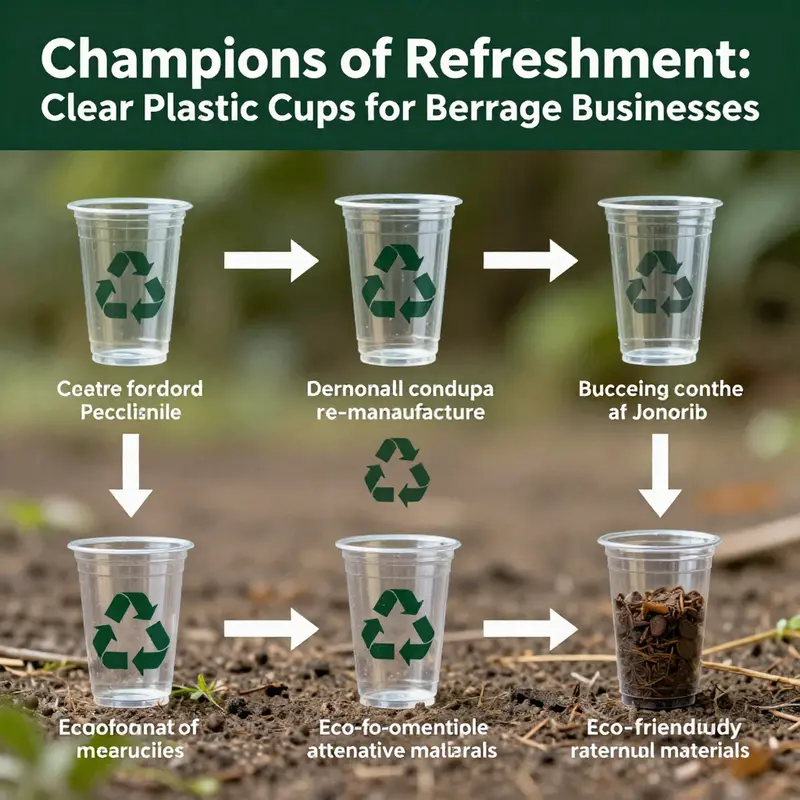
Clear plastic cups have become a ubiquitous sight in everyday life, prized for their transparency, lightweight feel, and ability to keep beverages visible and appealing from pour to sip. Their utility is undeniable in busy cafes, bustling events, and casual gatherings where quick service and on the go consumption matter. Yet beneath the bright, glassy surface lies a more complex story about materials, energy use, and the environmental footprints that accompany convenience. This chapter looks at the full life cycle of these cups, tracing the journey from raw resin to disposal, and it asks what it means to choose a product that is designed for single use in a world that increasingly seeks to minimize waste. It is not a simple tale of good or bad, but a nuanced exploration of how material choices, manufacturing practices, consumer habits, and local infrastructure intersect to shape outcomes far beyond the moment of purchase. As the discussion unfolds, it becomes clear that the seemingly small decision to use a clear disposable cup is embedded in larger questions about circularity, responsibility, and the kinds of communities we want to build around everyday plastic use.
From the outset, the material composition of clear cups anchors the environmental conversation. Most widely used clear cups rely on PET or PS. PET, or polyethylene terephthalate, offers clarity and resilience, and it can be recycled into new products when properly processed. Polystyrene, on the other hand, is cheaper and provides excellent rigidity for certain designs, but its recycling value is considerably lower and the economics are more challenging to navigate in many places. The materials themselves reflect a trade off between performance and end of life. PET can be invigorated into new packaging or even textile fibers if the input stream is clean and the facilities are capable. PS recyclability exists in theory, but the practical, widespread recovery of PS is rarer, often because the market value is low and the costs of processing are high. When we look at production, the image broadens further. The factories that produce clear cups typically run on fossil fuel energy, and the processes involved in creating the polymers, molding the cups, and applying finishes require substantial energy input. This energy use translates into greenhouse gas emissions, a burden that travels along the supply chain and into the atmosphere. In addition, the production process can generate wastewater that carries residual chemicals and microplastics from the polymerization and manufacturing stages into nearby water bodies. The consequences for aquatic ecosystems can be severe, and the downstream implications for food chains and human exposure increasingly concern researchers, policymakers, and industry alike. The environmental cost of making something as simple as a clear cup thus emerges as a reflection of the broader industrial system that feeds demand for single use plastics and the fossil fuel infrastructure that undergirds it.
The post consumption phase often reveals another set of realities that are easy to overlook in the moment of picking up a cold drink. A large portion of used clear cups ends up not being recycled, and the reasons are multifaceted. Contamination with trace amounts of food or beverage residues, the variability of local recycling streams, and the absence of robust infrastructure in many regions all contribute to a large fraction ending up in landfills or the natural environment. In urban centers with strong recycling programs, the cups may well be diverted to processing streams designed to handle plastics, but even there the fate of a clear cup depends on the ability of residents to separate materials correctly and on the readiness of facilities to accept and process PET or PS in a way that preserves value. The littering problem is not merely a local nuisance; it travels with wind and water, and it can accumulate in waterways, soils, and landscapes where it persists for years. The visibility of plastic in the environment remains a critical public concern, capturing attention and driving calls for better design, better collection methods, and better consumer choices. The environmental burden is not just about what happens after the cup is used; it is about the system that creates, distributes, and consumes single use drinkware in the first place.
Recycling presents a path that is technically feasible in many places yet practically fraught with challenges. PET cups have the potential to be recycled into new products, including fibers for textiles or packaging materials, if they enter the proper recycling stream free of excessive contamination. This potential hinges on a chain of requirements: clean input, separate collection, efficient sorting, and facilities capable of processing PET efficiently and extracting value from the material. When these conditions are met, recycling PET can close the loop to some extent, turning a single use cup into something useful again rather than letting it accumulate in landfills. PS cups, by contrast, often face a less favorable recycling economics. The market value for PS input is comparatively low, and the processing costs tend to be higher relative to the value recovered. This mismatch between input value and processing cost makes widespread PS recycling less attractive in many jurisdictions, which is one reason why PS cups are rarely recovered.
Best practices for recycling start with something deceptively simple: ensure that cups are empty and clean before disposal. A quick rinse can make a meaningful difference, reducing the risk of contamination that can hamper recycling streams. Yet cleaning alone cannot bridge every gap. Recycling success depends on robust local programs that explicitly accept PET and PS cups and on residents and businesses that participate consistently. In places where programs do exist, clear labeling and accessible drop off points help guide behavior and reduce the confusion that often leads to misrouting of plastics. The concept of a circular economy hinges on these small daily actions, and while individual responsibility is not a substitute for systemic improvement, it is a crucial element in spurring demand for better recycling, better processing, and better design across the industry. The conversation around recycling is thus a conversation about both behavior and infrastructure, and effective progress requires alignment between manufacturers, municipalities, and consumers.
In the search for more sustainable pathways, many people imagine a future where the single use cup is replaced by reusable options. Reusable glass, metal, and certain types of durable plastics offer a compelling alternative in settings that can support washing and redistribution. The adoption of reusable systems in events, workplaces, and even some consumer settings can dramatically reduce the volume of single use cups entering waste streams. Yet the shift to reuse requires careful consideration of hygiene, lifecycle energy use, and the practical realities of supply and demand in different contexts. A reusable system is not a panacea; it requires attention to logistics, cleaning, and infrastructure to be genuinely effective. Still, the potential impact is substantial: if a community can organize reliable return, cleaning, and redistribution cycles, the environmental savings can be meaningful and enduring.
Design for recyclability and circularity is another promising lever. For manufacturers, choosing materials with higher recyclability, simpler recycling streams, and clearer labeling can improve end of life outcomes. Design choices influence how easily a cup can be separated from lids, sleeves, or straws and how readily it can enter a local recycling system. Clear cups made from PET or PP with minimal additives can be more efficiently recycled, provided that the rest of the packaging ecosystem supports it. For retailers and event organizers, offering clear messages about proper disposal, shelf life, and recycling options can mobilize behavior that aligns with environmental goals. The marketing of these cups often emphasizes their practicality and cost performance, yet there is a growing expectation that cups should be designed with end of life in mind, with compatibility across recycling streams and reduced reliance on materials that are rarely recovered. In practice, this means embracing materials and designs that travel well through existing waste management systems and investing in education that helps communities understand how to participate effectively.
The broader policy and industry landscape also matters. Extended producer responsibility schemes, municipal waste management improvements, and standards that distinguish between easily recyclable materials and those that are less recoverable can steer both suppliers and buyers toward better choices. In the supply chain, bulk pricing, fast lead times, and easy access to samples can influence procurement decisions, nudging buyers toward products that fit a circular model when possible. While these dynamics exist in the background, they shape the everyday experience of using clear cups in tangible ways. They influence which materials are favored, how labeling appears on the cups themselves, and how readily a cup can be incorporated into a city or region’s recycling program. The interplay between economic incentives and environmental responsibility is subtle but powerful, and understanding it helps illuminate why some products move more quickly toward recyclability than others.
For individuals planning an event or updating a business practice, there are practical steps that can reduce the environmental impact of using clear cups without sacrificing practicality. First, assess the actual need for single use versus reuse in your context. If a one time use is unavoidable, choose cups made from materials with the best available recycling pathways in your community. Prioritize suppliers who provide clear labeling about material composition and end of life options, and consider whether the cups can be integrated into a local recycling stream or a take back program. In catering and food service, consolidating orders to reduce packaging waste, combining cups with lids that are compatible with recycling programs, and avoiding extraneous accessories can lower the environmental footprint. When possible, establish a system that allows guests to return cups for reuse, or explore partnerships with facilities that can accept and process PET or PS cups in a way that preserves value and minimizes leakage to landfills. The cumulative impact of such decisions can be meaningful over time, especially in settings where cups are used frequently and at scale.
As we navigate these considerations, it helps to anchor our thinking in concrete references and real world examples. For those seeking a representative product page that reflects typical clear cup designs and their practical use in different settings, consider the disposable clear plastic cup page, which offers a snapshot of options in terms of size, lid compatibility, and the kinds of features often highlighted by suppliers. This touch point can illuminate how design choices intersect with practical needs while illustrating the balance between performance and end of life considerations. The page demonstrates how even everyday items carry a suite of design decisions that influence recyclability, durability, and consumer experience. It is a reminder that product selection, supply chain choices, and consumer habits all intertwine to shape environmental outcomes in the most ordinary of moments. See the following link for a representative example: disposable clear plastic cup page.
Ultimately, embracing environmental responsibility around clear cups requires a holistic view. It is about recognizing the limits of recycling in the face of dispersed, small format packaging and about supporting systems that make recycling more practical and profitable. It means pushing for design that reduces complexity, such as choosing materials that can be recovered in common streams, and encouraging community programs that collect and process cups in bulk rather than letting them disperse as litter. It also means acknowledging the role of consumer behavior in this equation. While it is tempting to imagine a single magical solution, the most effective path combines better materials, smarter design, stronger infrastructure, and more mindful consumption. In this integrated view, clear cups are not merely disposable items; they become a lens through which we examine how society values forms of convenience relative to the health of ecosystems and the resilience of waste management systems. By stepping back to consider lifecycle implications, governance structures, and everyday choices, we create space for moves that reduce harm while preserving the benefits that clear cups provide in a fast paced, connected world.
External information and additional perspectives can further illuminate this topic. For readers seeking a broader, policy oriented overview of the environmental impacts of plastic cups, an external resource provides a comprehensive synthesis of lifecycle stages, recycling challenges, and potential pathways toward reduction and reuse. This context helps anchor the discussion in a wider conversation about material stewardship and the choices individuals and organizations can make to move toward a more sustainable beverage ecosystem. For more information, see the external resource referenced here: https://www.dongsu.com/blog/environmental-impacts-of-plastic-cups
Final thoughts
Choosing the right clear plastic cups is more than just a decision about aesthetics or cost; it’s about aligning product offerings with business values, consumer preferences, and environmental responsibility. With a variety of options available, from durable materials to customizable designs, businesses can find the ideal match for their needs while promoting a sustainable future. By staying informed of market trends and making informed choices about the lifecycle of these products, beverage retailers can ensure not just satisfaction for their customers, but also a lasting positive impact on the environment.