
In today’s competitive food and beverage landscape, the design and functionality of disposable tableware can greatly influence customer satisfaction and brand perception. Fancy disposable soup bowls combine elegance with convenience, presenting an excellent choice for bubble tea shops, restaurants, food trucks, catering services, and event planners. As consumer preferences shift towards aesthetically pleasing options, understanding the importance of design, material durability, and current market trends is essential. This article explores each of these aspects, showcasing how fancy disposable soup bowls can enhance your service offerings while meeting the practical needs of your business.
From Petal Shape to Polished Presence: The Visual Narrative of Fancy Disposable Soup Bowls
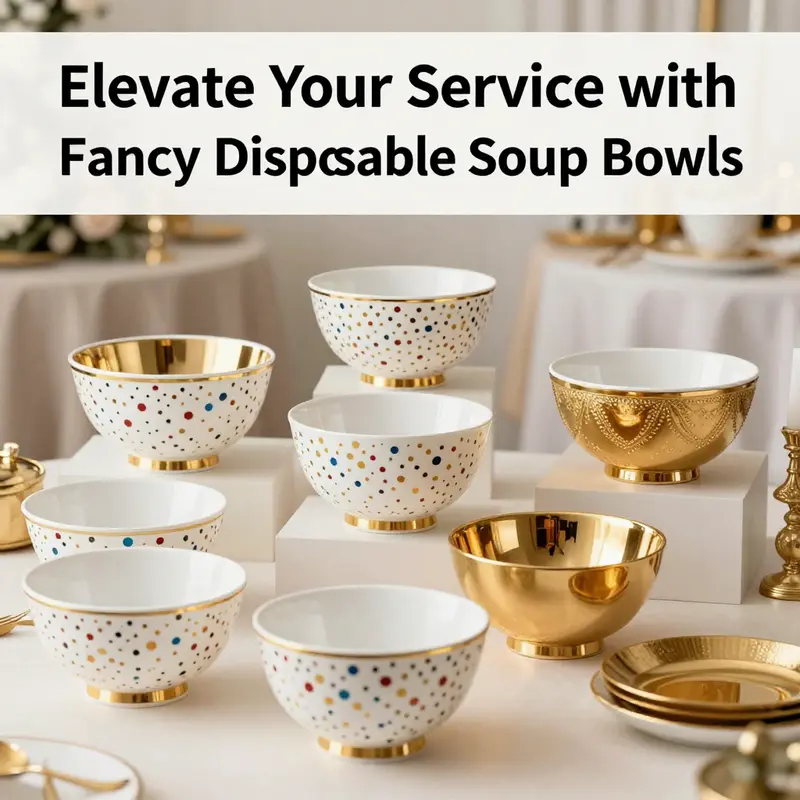
In the space between practical dining and ceremonial presentation, fancy disposable soup bowls emerge as more than vessels. They are visual signals that set the tone for an occasion, guiding guests toward a shared sense of occasion without demanding the burden of fragile china. The chapter of design that these bowls inhabit blends form, material choice, color, and finishing touches into a coherent language. It is a language that speaks of hospitality, intention, and memory, because a bowl carries more than soup; it carries mood. When a host looks for a way to elevate a casual gathering or a formal reception without sacrificing convenience, the choice of a bowl becomes a quiet protagonist in the evening’s story. The most compelling designs strike a balance: they are unmistakably refined yet resilient, elegant in silhouette yet forgiving in use, and they accommodate both the practical realities of service and the aspirational moments guests will remember long after the last spoonful.
Designers who work at the intersection of aesthetics and utility draw inspiration from the natural world and from high-end tableware. One of the most striking directions in fancy disposable soup bowls is the flower-shaped form, reminiscent of the lotus or other multi-petal blooms. This shape does more than look attractive; it governs the experience of nourishment and the perception of portion. The petals provide subtle guides to the eye, directing the gaze toward the center of the bowl where the steam and color of the soup rise in a small, confident crown. The lotus-inspired geometry also influences how the bowl sits on a linen cloth or a disposable placemat, creating a sense of symmetry and ease that translates well in photographs and in person. Guests perceive a level of care that resonates with the moments a wedding, gala, or corporate banquet seeks to capture: the feeling that every detail has been considered, from the invitation to the last toast.
Color is a powerful driver of mood in these pieces. A minimalist palette—black with a gold outer outline, for example—uses contrasts that feel contemporary and luxurious at once. The contrast elevates the simple act of soup service into a moment of ceremony. The black interior absorbs heat and hides minor smudges, while a gleaming outer line catches the eye and reflects the room’s light, giving the table a shimmer without the fragility of metal or ceramic. In practice, such a two-tone approach reads as modern and prestigious, especially when paired with a uniform cutlery layout, matching napkins, and a curated centerpiece. The effect is not just visual; it is a sociable punctuation mark in the evening’s rhythm, signaling to guests that this gathering values polish and thoughtful presentation.
The aesthetics of fancy disposable soup bowls extend beyond silhouette and tone to the quality of surface and finish. Premium finishes—metallic rims, sheen coatings, and precise edge work—convey a sense of luxury without the hazards of porcelain or the maintenance of glassware. The rims, often rendered in gold or silver, function as both decorative accent and tactile cue. When a guest dips a spoon, the rim’s smoothness complements the motion, and the metallic shimmer can catch reflections from chandeliers or candles, amplifying the bowl’s presence on the table. These finishes are achieved through controlled coating techniques on durable plastics or high-grade polystyrene. The goal is to maintain the shimmer under practical conditions: hot steam, brief contact with lids, and repeated handling by guests and servers alike. The ability to retain this glow without chipping or dulling is a crucial measure of a product’s quality and its suitability for events where first impressions matter.
Inside the same sentence, material choice governs both appearance and practicality. Plastic options deliver a glossy, glass-like impression with reliable stiffness and the capacity to hold a generous soup portion while retaining heat. Paper-based alternatives lean toward an eco-conscious narrative, offering a rustic or kraft-inspired allure that feels closer to sustainable dining than to disposable convention. Coatings play a pivotal role here as well. Paper bowls often feature a food-grade barrier coating to resist leaks and grease, enabling vibrant printing and intricate designs on the exterior without sacrificing function. The paper route can also align with specific event themes, from barnyard rustic to art-deco chic, because it accepts embossing, color, and texture more readily than some plastics. In both material families, the pairing of design and function remains the core objective: to present soup in a way that invites savoring while ensuring ease of disposal when the moment has passed.
Customization widens the expressive scope even further. Brands and event planners seek the ability to imprint logos, patterns, or thematic motifs on the bowl’s surface. Printing in CMYK or Pantone colors enables precise brand alignment and color fidelity, which is essential when these bowls become ambassadors for a program, product launch, or charitable gala. The graphics can echo the event’s invitations, table linens, or stage design, turning each bowl into a micro-brand touchpoint. The result is a cohesive aesthetic story that guests experience in real time and carry in their memories later. Customization also serves practical marketing aims: branded disposables extend visibility beyond the event space itself, creating a continuity of experience in social feeds, photos, and word of mouth. Yet designers must balance complexity and cost, ensuring that the added graphic language does not compromise the bowl’s form, strength, or heat resistance.
Aesthetics are inseparable from practicality. The most successful fancy disposable soup bowls do not merely look striking; they work well in the choreography of service. They should be stackable for easy transport and quick restocking, robust enough to withstand the rigors of hot liquids, and compatible with lids when a portion of the meal will be served in a self-contained package. Lids add a layer of convenience during outdoor receptions or buffet lines, preserving warmth and preventing spills during transit. In settings that demand a mixture of sophistication and spontaneity—think outdoor weddings, charity galas, or conference lunches—the ability to keep contents secure while preserving the vessel’s elegance becomes a differentiator. The shape, finish, and material all converge to determine a bowl’s performance under heat, travel, and stacking. A lotus-inspired profile may be striking on a tabletop, but it must still feel sturdy in hand and comfortable to eat from, with a rim that supports a smooth, confident spoonful rather than catching on an edge or tearing napkins.
Design also negotiates the tension between eco-responsibility and elegance. For many event planners, there is a growing expectation that fancy disposables align with environmental values. Paper-based bowls with durable coatings can offer a compostable or recyclable path, presenting a more sustainable narrative without sacrificing the refined look. Even within plastic lines, designers explore lighter weights and alternative formulations that reduce material usage while preserving rigidity and gloss. The aesthetic choice, in this context, becomes a statement about stewardship as well as style. The finish, the color, and the motif work together to deliver not merely a pretty plate but a responsible choice that respects guests and the event’s broader footprint. This is the subtle shift driving the premium disposable category from novelty to necessity in many high-end contexts.
The practicalities of service further shape the final impression. A bowl’s interior surface must be non-stick enough to prevent clinging of sauces yet smooth enough to cleanly scoop the last mouthful. The exterior finish must resist scuffing from tableware and shoes of passersby while maintaining its pristine look under bright lighting and photographic flash. The design language—whether the bowl carries an intricate gold rim or a barely-there matte glaze—contributes to how images captured during a reception translate into social media shares and printed memories. In the better moments, guests reflect on the harmony of table setting and the ease with which they can enjoy the meal. The bowl’s aesthetic becomes part of a comfortable ritual rather than a distraction from the moment. This is where the trade-offs between eco-friendliness, cost, and appearance are optimized through informed material choices and thoughtful finishes.
Function, form, and branding coalesce in the contemporary practice of limited-edition runs for special events. A designer might develop a seasonal palette—deep jewel tones for a winter gala or warm amber hues for a harvest celebration—and couple these colors with a subtle embossed motif that hints at the event’s theme. The result is not merely a container for soup but a canvas that carries the event’s narrative across tables, channels, and guest experiences. The bowls become, in effect, a shared punctuation mark—small but meaningful—in a larger story of hospitality. As events become more immersive, the demand for disposable tableware that can credibly stand in for more durable options grows. The aim is to offer the tactile satisfaction of a curated dinner while retaining the convenience of disposability, enabling hosts to deliver hospitality at scale without compromise.
In contemplating the design and aesthetics of fancy disposable soup bowls, it is useful to consider how the bowls function within the broader ecosystem of event production. They sit at the interface between kitchen and banquet hall, between the chef’s intent and the guest’s moment of savor. They respond to lighting, table layout, and the choreography of service. They also respond to the evolving expectations of guests, who increasingly notice and appreciate the care given to even the smallest details. In this sense, the bowls are not merely practical tools; they are instruments of atmosphere, capable of transforming a simple bowl of soup into an experience of color, texture, and light. For planners looking to achieve a posh setting that is accessible to a broad audience, the ideal design language is one of controlled restraint: a shape that flatters, a color that communicates quality, a finish that gleams under ambient and staged lighting, and a surface that supports both the act of eating and the act of photographing the moment for memory keeping. And because these bowls are disposable, the best among them still acknowledge the practical and environmental realities of modern events by offering meaningful options for disposal and waste management, aligning elegance with responsibility.
For teams seeking a practical path to theme and branding, there is a clear opportunity to leverage the integration of custom graphics with the functional reliability of premium disposables. By pairing a flower-inspired silhouette with a refined metallic rim and a neutral or bold color field, designers can craft a consistent aesthetic that travels from invitation to after-party, reinforcing the event’s identity with each course served. The interplay of light, surface texture, and color produces a stage on which conversations unfold and memories crystallize. In this sense, fancy disposable soup bowls act as micro-environments of culture: small, recyclable stages that host big moments. They are, in short, design objects that make the everyday act of eating soup feel like part of a celebration rather than a routine, and they do so without demanding that guests behave as if they were at a formal dinner when the setting is, in fact, casual or semi-formal.
For those who plan and execute large-scale gatherings, the choice of bowls becomes a strategic decision. The design must support efficiency in service lines, compatibility with a range of soups, and compatibility with a variety of identically styled gravities of heat. It must also offer an approachable price point for bulk orders, ensuring that the upscale aesthetic does not become prohibitively expensive for large guest counts. In practice, this means selecting bowls whose shapes encourage quick, comfortable handling, whose rims manage heat without warping, and whose surfaces can carry branding without distortion. The best options feel intuitive to serve from, easy to stack, and visually expansive enough to command attention even in a crowded room. When orchestrated well, these bowls contribute to a cohesive, confident dining environment where only the menu requires deeper attention, while the tableware quietly supports the overall vision. The result is a sophisticated, coherent experience that respects both form and function as equally important partners on the table.
For readers who are thinking about applying these principles in their own event design or venue operations, a practical note follows: the most impactful choices are often the ones that honor a theme with minimal disruption to workflow. A simple but well-executed black bowl with a gold rim can ally with metallics and black-tabriced linens to anchor a formal environment, while a flower-shaped, kraft-look bowl can harmonize with rustic-chic or garden-party aesthetics. The decision matrix expands when you add customization. Logos and patterns tailored to a brand or a cause can carry through the entire event—from welcome signage to menu cards and napkin holders—creating a consistent, immersive mood that guests intuit as high quality. In this way, the aesthetics of fancy disposable soup bowls extend beyond the plate and into the fabric of the event itself, becoming a strategic element in experience design rather than a mere finishing touch.
To connect these observations with practical sourcing and implementation, many event programs now consider a spectrum of options, from fully metallic-accents on sturdy plastics to warm-toned, kraft-inspired paper bowls that echo a sustainable ethos. The choice hinges on the event’s character, the expected guest experience, and the logistics of the venue. For the planner who prioritizes simplicity and elegance, the ideal bowl feels almost invisible in use—like a well-tailored suit: it suits the moment without shouting about itself. For others, the bowl is allowed to steal the show, with bold lines, dramatic rims, and color stories that mirror the season or a product’s narrative. Either path, when executed with attention to proportion, finish, and print clarity, creates a dining moment that is as memorable as the menu itself. And because the bowl is disposability with intention, it frees hosts to imagine a broader, more imaginative celebration while preserving the dignity of the service and the guests’ comfort. As this design language continues to mature, it will likely expand into more environmentally thoughtful solutions that do not force a compromise between aesthetics and responsibility, ensuring that elegance can be both sophisticated and sustainable as events grow larger and more ambitious.
Internal reference for event theme adaptation: custom-takeaway-packaging-supplies-disposable-tableware-for-theme-party. This pathway reflects how a design-minded approach to disposables can support branding, theme coherence, and practical service in a single, coherent package. By aligning bowl design with a broader tableware and packaging strategy, planners can create a streamlined aesthetic that travels across spaces, from reception to dining to gift or take-home moments, ensuring that guests leave with a lasting impression of thoughtfulness and style rather than the remnants of a single dish.
In sum, the design and aesthetics of fancy disposable soup bowls rest on a productive triad: shape that hints at nature and refinement, surface and rim that convey luxury without fragility, and customization that lets brands and events tell their stories with clarity. Materials—plastic and paper—offer different tactile appeals and ecological narratives, yet both can achieve a polished appearance through careful finishing. The best bowls perform as quiet ambassadors of hospitality, supporting the meal, the mood, and the memory without becoming a distraction. They invite guests to savor the moment, to photograph the table with intent, and to remember that elegance can arrive on a plate, in a rim, and in a simple, disposable vessel that respects people, place, and planet alike. For designers and planners, this is an invitation to design with restraint and to curate experiences that honor both appetite and atmosphere, letting the moment of soup become a small, luminous sign of good taste that endures beyond the last course.
External resource for further reading: https://www.alibaba.com/product-detail/Colorful-Eco-Friendly-Disposable-Soup-Bowls_1600347582988.html
Material Truths and Lasting Impressions: The Durability and Design of Fancy Disposable Soup Bowls

Fancy disposable soup bowls sit at a curious intersection of practicality and ceremony. They promise the convenience of single-use life with the illusion, at least for the moment, of a dining experience that merits a table setting. In this sense, the material choices behind these bowls do more than keep soup contained; they set the tone for how a guest perceives an event, a caterer, and the host’s regard for hospitality. The chapter that follows treats the bowls not as mere vessels, but as expressions of intention—how strength, texture, and finish converge with disposal needs to create a coherent moment of dining that is both elegant and efficient. It is a story told in layers: the core of the bowl’s construction, the outer appearance that communicates sophistication, and the ecological promise or trade-off that accompanies any single-use purchase. When we look closely at the material spectrum—from paper to plastic to biodegradable alternatives—we see a careful calibration designed to preserve liquid integrity, support heat, resist mishandling during transport, and still project a sense of ceremony that guests remember long after the last spoonful.
The most common starting point in this material journey is the traditional paper bowl. These vessels are typically made with a food-grade coating that acts as a barrier to liquids, most often a polyethylene layer that seals the porous surface just enough to prevent leakage and to sustain hot liquids for a reasonable duration. A practical example exists in the category of large, disposable paper soup bowls, whose capacity sfits a comfortable, everyday serving while avoiding a brittle, cardboard-like feel. The coating, while essential for performance, is also a limiting factor: when exposed to heat for too long or when soaked through by excess moisture, the structural integrity can diminish. The consequence is not merely a soggy bowl but a compromised dining moment—an intolerance for delay or mishandling that could disrupt service at a busy event. This is not a fatal flaw in the design, but it is a reminder that the interplay between liquid retention and time is a governing variable in paper-based options.
From there, the spectrum broadens into plastic options, where two widely used polymers—polyethylene terephthalate (PET) and polypropylene (PP)—play different but complementary roles. PET brings impressive rigidity and clarity, traits that elevate the appearance of a bowl when transparency or light-catching finishes are desired. PP, meanwhile, offers notable heat resistance and resilience, which is invaluable when soups arrive steaming and guests expect to handle a bowl without fear of cracks or deformities. A widely observed advantage of these plastic variants is their ability to withstand abrupt temperature changes; they maintain form when soups are hot and keep their shape when carriers jostle them during service. In practice, this durability translates to fewer breakages in transit, lower risk of leaks, and a more reliable experience for banquet staff who manage large volumes in the rush of an event environment. The durability also extends to the edges and rims; a well-designed plastic bowl will feature a reinforced lip that resists cracking and offers a comfortable grip for guests who want to lift and sip with confidence. It is this combination of rigidity, heat tolerance, and reinforced rims that makes plastic bowls especially attractive for upscale settings where performance cannot be sacrificed for appearance alone.
Biodegradable options, increasingly prominent in contemporary disposableware, add another dimension to the durability conversation. These bowls often rely on polylactic acid (PLA), derived from renewable sources like cornstarch, to deliver a compostable solution that aligns with sustainability goals. The engineering challenge for this category is ensuring sufficient strength and heat tolerance for single-use scenarios, while still enabling effective industrial composting after disposal. PLA-based designs have matured to the point where they can hold up to typical hot soups without immediate sagging or leakage, but they often carry a caveat: their optimal degradation performance is typically achieved under controlled industrial composting conditions rather than in standard home composting or in a municipal waste stream. The practical takeaway for event planners and consumers is not that biodegradable bowls are a flawless substitute for conventional options, but that their strengths and limitations must be aligned with the waste-management realities of the hosting venue. The latest craft in this space is to combine durability with a lighter, more elegant feel—bowls whose silhouettes or finishes evoke porcelain or metal, yet still remain unmistakably disposable. These designs are a testament to how far single-use tableware has traveled from utilitarian stiffness toward a refined aesthetic that can stand on its own in a formal setting.
Aesthetics, in fact, is not merely a layer of decoration atop the material base. Fancy disposables often integrate finishes that visually elevate the bowl while preserving the structural logic of a single-use format. Some bowls feature finishes that mimic the delicate sheen of porcelain, while others are finished in metallic tones or speckled patterns that catch the light and contribute to a festive mood. In this way, the material choice—paper, plastic, or biodegradable—does not dictate a fixed look but rather guides the potential for design expression. A 12-ounce option with a classic speckled finish, for instance, can convey whimsy and modernity at once, making it suitable for casual gatherings that still call for a touch of charm. On the other end of the spectrum, a larger, heavier-weight plastic bowl with a solid gold finish can announce an upscale affair, where guests expect elegance and durability in equal measure. The balance is delicate: the finish must survive handling and transport, yet remain consistent with the broad event theme so the table becomes a coherent stage rather than a mismatched assortment of vessels.
Sourcing and specifications for fancy disposable bowls reveal a spectrum of choices that cater to different priorities. Suppliers frequently provide detailed breakdowns of material layers, coatings, and strength tests to help buyers gauge performance under common scenarios. For instance, a typical supply chain may list a paper bowl with a barrier coating designed to resist oil and moisture, with a stated capacity such as 850 milliliters, suitable for short-term hot-liquid usage. But it is important to understand that paper options are most robust when used for shorter durations and without prolonged exposure to high heat. In contrast, plastic options—often marketed for their breakage resistance and temperature tolerance—present a different set of trade-offs. They are not only more durable in transit but also easier to produce in a wide range of finishes, from clear to metallics, which can be leveraged to elevate the ceremony without sacrificing practicality. Biodegradable choices carry their own supply complexities—industrial compostability certification, shelf life in packaging, and compatibility with common municipal waste streams—factors that must be weighed when a planner aims to align disposal logistics with sustainability claims.
In this larger context, the role of the bowl’s design extends beyond the mere containment of soup. A well-executed bowl supports a comfortable dining gesture: easy gripping, stable balance on the lap or a tray, and a mouth-friendly rim that invites sipping without dripping. The rim design, in particular, is a subtle but critical detail that interacts with both user experience and the bowl’s durability. A rounded, reinforced lip can resist chipping and cracking, while a broader rim provides a satisfying touchpoint for fingers, reducing the chance of heat transfer discomfort during hot-soup service. The interior geometry matters too; a gentle curve helps keep the soup from stalling in one corner, improving the sipping experience and reducing the likelihood of spills when the bowl is angled for a taste. Aesthetics and ergonomics thus converge in a single, well-crafted form that communicates sophistication at a glance while remaining friendly to the hands that hold it.
Sight and scent are inseparable from how a bowl is perceived, and this is where the emotional resonance of material choice shows up. A translucent PET bowl can project a pristine, almost crystal-like clarity that makes the contents look more vibrant, which can enhance perceived quality in a formal setting. A gold-finished plastic bowl, by contrast, does not merely hide after the service; it asserts a moment of indulgence, signaling to guests that the occasion deserves careful attention to detail. Even speckled designs—whether silver on a white base or a more understated tonal variation—create a sense of playfulness or nostalgia, reminding guests of childhood parties or family gatherings while still playing within a refined, modern palette. The designer’s challenge is to ensure that these visual cues do not clash with the functional realities of single-use ware—the need for reliable heat retention, the ease of stacking and transport, and the clean-up workflow that follows the event. In other words, material and finish must harmonize with the broader logistical ecosystem that makes fancy disposable tableware viable in the first place.
Sourcing for these bowls also implicates sustainability narratives and the logistics of end-of-life. Paper-based cups and bowls with polymer coatings are, by their nature, not easily recycled in standard municipal streams, where certifications and local capabilities vary widely. This is not a universal impediment but a reality that requires clear communication from hosts and caterers about disposal expectations. Plastic bowls, particularly those that are opaque and finished in metallic tones, add a different dimension to end-of-life planning. Some blends may be recyclable in certain programs, while others may require dedicated streams or be designated as single-use. Biodegradable bowls, especially those made from PLA, promise compostability but rely on industrial facilities to achieve that outcome. Without appropriate infrastructure, their environmental advantages can be undermined. In the real world, the most responsible choice often involves a careful mapping of event location, available waste streams, and the willingness of guests to adhere to disposal instructions. This is where the design intention and logistical reality meet, and where the material story of fancy disposable bowls reveals its practical logic: choose the material and finish that best aligns with the event’s tone, the host’s sustainability commitments, and the waste-handling capabilities of the venue.
The larger takeaway is that durability in fancy disposable soup bowls is never a single attribute; it is an interwoven system. The base material dictates how long the bowl maintains its form, how well it resists leakage, and how it holds up under heat. The finish and the interior geometry influence both aesthetics and sip-ability. The barrier layers and coatings determine moisture resistance and potential interactions with oils or fats in the soup. The shape and weight distribution influence handling and transport stability. And finally, the end-of-life story—whether the bowl is destined for recycling, composting, or landfilling—frames the ethical and environmental narrative that many hosts now seek to tell about their events. This integrated view helps planners evaluate options not in isolation but as a family of choices that must work together to deliver a coherent, satisfying experience for guests while honoring the practical demands of service and the realities of disposal.
To connect these design principles to a practical sourcing mindset, consider a scenario in which a planner must pair a single type of bowl with a selected beverage lineup and a themed event aesthetic. If the theme calls for a refined, gold-toned presentation, a heavier-weight plastic option with a metallic finish can deliver both the visual cue and the resilience demanded by a busy service line. If the theme leans toward a playful, contemporary vibe, a speckled or softly patterned 12-ounce paper bowl might strike the right balance between charm and convenience. For a sustainability-forward event, a PLA-based biodegradable bowl could align with a messaging strategy about responsible consumption, provided the disposal plan is clear and executable. Each choice carries its own communication plan, to ensure guests understand how to treat the plateware after the celebration ends. The decision is no longer a matter of picking a pretty vessel but of crafting a complete experience where material performance, design language, and environmental considerations converge into a seamless dining moment.
In this light, the practical implications for event professionals expand beyond the moment of service. Staff training becomes a factor as workers learn which options are best suited for stackability, which finishes resist chipping during transport, and how to communicate disposal instructions to guests without interrupting the flow of service. The same attention to durability that makes a bowl reliable at the edge of a banquet table also makes it a critical component of a well-orchestrated service model. When staff can rely on a consistent performance from the bowls—whether hot soups remain heat-retaining and structurally stable in a crowded line, or whether a decorative finish maintains its luster through a rapid turnover—the entire operation feels more cohesive. This is the practical value of material knowledge: it translates into fewer service interruptions, clearer guest experiences, and a stronger alignment between the event’s aesthetic goals and its operational realities.
A final note on the relationship between material selection and guest experience: the bowls set a benchmark for the event’s perceived quality. A guest may not articulate it, but the moment they lift a bowl and feel the weight, balance, and rim’s comfort, their impression of the host’s attention to detail is formed. When the bowl’s surface gleams with a finish that catches the light as if it were real porcelain, or when the bowl’s color and shape echo the venue’s design language, that moment of recognition reinforces the event’s narrative. The material choice thus becomes a storytelling device, quietly guiding expectations and shaping memories. This is the essence of fancy disposable soup bowls: not merely vessels for soup, but instruments for delivering a curated moment of hospitality that respects both the guest’s experience and the practical rhythms of modern hosting.
For those who want a tangible point of reference for how a supplier might present these options in a catalog or a product page, one can find a spectrum of barrier-coated paper bowls described in supply literature, alongside PET and PP-based plastic options that illustrate a range of finishes and capacities. The important takeaway is to read the material specification as a promise about performance, then to align it with the event’s tempo, the host’s sustainable ambitions, and the venue’s waste-management capabilities. In practice, this means asking vendors not only about price and appearance but also about heat tolerance, leak resistance, stacking height, and the feasibility of end-of-life options in the local context. When all these factors are considered in concert, the seemingly simple choice of a fancy disposable soup bowl becomes a thoughtful, strategic element of event design rather than a peripheral afterthought.
Internal link for further considerations: for insights into how disposable tableware can be integrated with themed packaging and takeout concepts, you can explore the catalog at this relevant page: custom takeaway packaging supplies for theme party.
External reference: for a practical sourcing example of a paper soup bowl with barrier protection and standard capacity, see https://www.alibaba.com/product-detail/Disposable-Paper-Soup-Bowl-with-850ml1600934973938.html?spm=a2700.1.wap6770020.1.5a7c4d97jVnIwL
Graceful Sustainability: How Eco-Conscious Design Shapes the Market for Fancy Disposable Soup Bowls
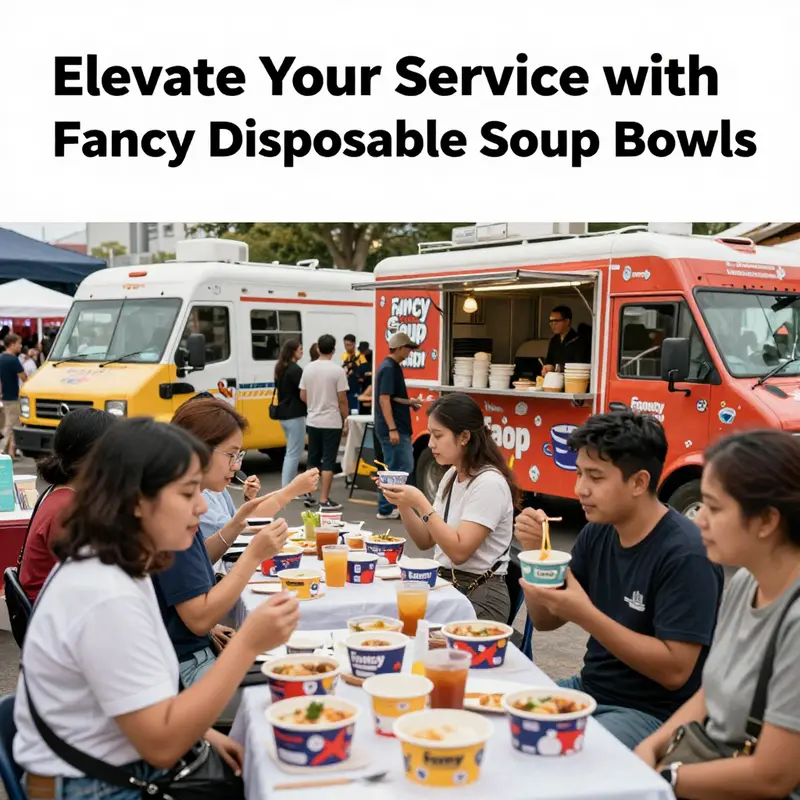
In the evolving tapestry of hospitality and modern events, fancy disposable soup bowls have emerged as more than mere vessels. They sit at the intersection of aesthetics and responsibility, offering a canvas where the mood of a gathering is conveyed through shape, texture, and finish, while also signaling a commitment to sustainable practice. The shift is not simply about swapping one material for another; it is about reimagining what a disposable item can be when design quality, performance, and environmental considerations align. As guests increasingly notice small details—whether a delicate rim, a glossy lacquer, or a warm, earth-toned hue—the disposable bowl becomes a tactile ambassador for the entire experience. The market responds in kind, evolving both in composition and in the stories it tells, from production floor to the table and beyond toward how waste is managed after the event has ended.
To understand this transformation, it helps to first sketch the broader market context. The global disposable tableware market is on a trajectory that suggests substantial expansion in the coming years. Projections indicate a global value approaching the hundred-plus-billion mark by the mid-2030s, with a compound annual growth rate that, while modest in some sectors, remains persistent in this space. This growth is not evenly distributed, but there is a clear pattern: premium and fancy segments are not shrinking; they are refining their appeal. In key markets, the demand for high-quality, upscale disposable options coexists with a strong preference for materials that align with environmental goals. The trajectory is particularly pronounced in regions where disposable solutions are commonplace for both high-end dining and large-scale events, underscoring that the category is not a fringe marketplace but a core component of modern foodservice and celebration culture.
Sustainability sits at the heart of this evolution. A broad shift toward responsible materials reflects public policy, corporate responsibility, and consumer expectations. In several influential markets, policy initiatives target reductions in non-degradable plastic use, with explicit goals to curb environmental impact by specific percentages within defined timelines. Those regulatory cues are more than compliance prompts; they are market signals that reconfigure what “premium” can mean in disposable dinnerware. Biodegradable and compostable materials—such as plant-based polymers, bamboo fibers, and wood pulp—are no longer niche options; they are central to product development. The narrative moves from simply avoiding plastic to actively showcasing a better end-of-life story, which is increasingly part of the value proposition of fancy disposable bowls.
Consumer preferences further coalesce around a dual demand: environmental stewardship and elevated aesthetics. People want products that enable elegant presentations and memorable dining moments without compromising on environmental responsibility. The demand for bowls that deliver a refined appearance—think smooth curves, sophisticated textures, and finishes that mimic ceramic or porcelain—has surged alongside the acceptance of materials that can perform under heat, resist leakage, and stand up to the rigors of service. In the fancy disposable category, the emphasis has shifted from merely being gorgeous to being genuinely durable, reliably food-safe, and responsibly sourced. Brands are responding by blending premium design cues with sustainable inputs, crafting solutions that feel luxurious while remaining accessible in the disposable segment.
This momentum is reflected in the market share dynamics of biodegradable products. In recent years, the portion of biodegradable disposable tableware has risen measurably, signaling not only consumer interest but supplier investment in greener lines. The 2024 data point, showing a notable expansion in share, illustrates how quickly demand can shift when the offering delivers both form and function. The premium segment of fancy disposables—where sophistication, weight, and finish compete with a ceramic look and feel—has been a particularly active arena for material innovation. The implication for event organizers and foodservice operators is clear: sustainability is not a trade-off with elegance; it is a prerequisite for contemporary appeal.
Product applications illuminate where fancy disposable bowls are making the most impact. High-end restaurants seeking to maintain a polished service style during tasting menus and post-evening receptions find value in bowls that carry a refined silhouette and a stable base. Gourmet delivery services, too, rely on containers that preserve presentation and temperature while projecting an upscale brand image. In event catering, the bowls serve both practical and perceptual roles: they manage portions efficiently, withstand transport and handling, and contribute to the overall impression of the celebration. The trend is toward a holistic experience where the choice of bowl informs the narrative of the meal—from moment of service to unwrapping and even disposal, if the end-of-life story is clearly understood and responsibly executed.
Design and material selection remain central to this narrative. The vocabulary of fancy disposable bowls has grown to include finishes that recall metal and ceramics, textures that offer tactile interest, and profiles that hold the eye without feeling heavy or disposable in the pejorative sense. A common theme is the use of premium plastics with enhanced thickness and weight that convey durability, paired with surface treatments that elevate appearance—glossy, matte, or metallic touches that provide the shimmer of more expensive wares. Yet, material choice now carries a heavier responsibility. The industry leans into plant-based or recycled content, with finishes designed to communicate a sustainability story to the consumer without compromising performance. These choices influence not only how a bowl looks, but how it behaves in service: heat tolerance, resistance to staining or warping, and the ability to resist leakage when filled with soups, stews, or broths that require careful containment.
End-user experience is enriched when a bowl supports the broader service design. For example, a bowl engineered with a robust lip and a well-defined sidewall enhances spoon access and dipping, while a shallow interior promotes better visual assessment of the soup’s color and texture. Those ergonomic and aesthetic considerations are never isolated from environmental realities. Many designers optimize for compostability or recyclable content, taking into account the entire lifecycle of the product—from sourcing and manufacturing to disposal and potential reuse in compost streams. The end user, often a host or event planner, benefits from clear signage or labeling that communicates the bowl’s end-of-life option, reducing confusion and increasing the likelihood that the product will be disposed of correctly. A well-executed lifecycle story strengthens trust in the brand and reinforces the perception that style and responsibility can coexist in one elegant package.
Technology is quietly changing the way these bowls are produced and perceived. Digital innovations streamline production, enabling brands to scale while maintaining consistent quality and reducing waste. Some efforts explore traceability that can verify the materials’ origin and the sustainability claims offered to the consumer. For the conscientious buyer, the possibility of digital provenance creates credibility; for operators, it supports inventory control and waste management planning. Although the conversations around blockchain and supply chain transparency may seem abstract to the casual diner, they filter down to practical benefits: more reliable sourcing, more accurate forecasting, and more responsible disposal recommendations that align with local composting or recycling infrastructure. The resulting confidence helps elevate consumer trust in premium disposables and supports continued growth in the category.
As this market unfolds, the future points toward a more nuanced balancing act between aesthetics and sustainability. Designers will continue to blur the line between disposable and durable by creating bowls with the textures, weights, and finishes that evoke ceramic experiences, while optimizing for end-of-life practicality. The consumer—an increasingly discerning individual who values both beauty and responsibility—will drive adoption of materials with lower environmental footprints, such as PLA-based formulations, bamboo, and responsibly sourced wood pulp. The regulatory landscape will likely tighten further in some regions, pushing manufacturers to innovate not only in materials but also in the efficiency of manufacturing and the clarity of product labeling. In this dynamic, the fancy disposable soup bowl becomes a case study in contemporary design thinking: how to honor the moment of hospitality with an object that respects the planet as much as the guest.
From a practical standpoint, hosts and operators increasingly approach the selection of fancy disposable bowls with a holistic mindset. They weigh the desired ambience of the event against operational realities: the expected guest count, the duration of service, the temperature profile of the menu, and the available waste infrastructure. A 12-ounce option with a delicate speckled finish might suit casual gatherings and children’s celebrations where whimsy and approachability matter most, while a heavier-weight 15-ounce bowl with a solid gold finish could be reserved for upscale events where a more formal impression is desired, and where the budget aligns with a more immersive table presentation. In both cases, the objectives extend beyond immediate use; they include ensuring that the packaging tells a story of care—from sustainable material choices to practical disposability—without sacrificing the emotional resonance of the dining moment.
The user experience thus becomes a dialogue between form and function and between aspiration and responsibility. When guests encounter a bowl that looks substantial and feels substantial, their expectations rise accordingly. The bowl becomes a stage where the food’s color, aroma, and temperature can be appreciated, and where the memory of the event is shaped by small, coherent cues. In this sense, fancy disposable bowls are not a concession to convenience; they are a strategic design choice that signals quality, attention to detail, and environmental mindfulness. This is why, in today’s market, the value proposition of premium disposables rests on more than appearance. It rests on credible performance—whether in heat retention, structural integrity under load, or reliable compostability—and on a story that consumers can trust to align with their own values.
One practical implication for designers and manufacturers is the need for clear communication about materials and end-of-life options. Brands increasingly align product claims with standardized labeling and certifications that help customers understand how to dispose of or recycle the bowls. This reduces confusion at the point of use and improves post-consumer outcomes. For event planners and operators, the choice of a fancy disposable soup bowl thus becomes part of a broader sustainability and guest-experience strategy. It is not merely about selecting a pretty container but about curating a coherent ecosystem of service that supports sustainability goals, aligns with brand values, and delivers a memorable dining moment.
For readers seeking a broader market perspective, resources that map the growth and drivers of the disposable tableware sector offer valuable context. An industry report from a leading market analyst highlights how the share of biodegradable products has expanded as manufacturers and policymakers collaborate to reduce environmental impact, and how digital supply chains are enabling scalable, quality-conscious production. The report underscores the acceleration of green innovations within the premium disposable space and emphasizes that the trend toward stylish, eco-conscious options is likely to continue shaping product development and consumer expectations across regions.
As with many evolving categories, the journey toward fully sustainable elegance is not linear. It requires ongoing refinement of materials, finishes, and manufacturing practices; it also invites ongoing dialogue with customers about preferences and end-of-life considerations. The opportunity lies in designing bowls that satisfy a refined aesthetic while delivering reliable performance and a credible environmental story. When done well, fancy disposable soup bowls become emblematic of a modern dining culture that treats hospitality as a thoughtful, responsible act—one that can be celebrated in the moment of service and remembered long after the last spoonful has been savored. For designers, suppliers, and hosts alike, that is the ultimate measure of value: a product that elevates experience, honors the guest, and respects the planet.
Internal resource: eco-friendly-disposable-3-compartment-food-grade-packaging-box-for-fast-food-high-quality-takeout-boxes offers a glimpse into how contemporary packaging ecosystems are integrating sustainability and premium presentation, illustrating how a cohesive narrative can extend from bowl to box and beyond. External research provides complementary market context and confirms that the momentum toward eco-conscious premium disposables remains strong and compelling. For readers seeking a broader industry-wide lens, consider consulting the following external resource: https://www.grandviewresearch.com/industry-analysis/disposable-cutlery-market.
Final thoughts
Fancy disposable soup bowls are not just a trend; they represent a shift in how food and beverage businesses cater to their customers’ aesthetic and practical needs. By selecting beautifully designed, durable options that align with current market trends, you can significantly enhance your customers’ dining experiences. As consumer preferences continue to evolve, investing in quality disposable tableware will ensure you remain competitive and appealing in your chosen market.