

In the dynamic landscape of food and beverage services, the significance of presentation and practicality cannot be overstated. 2 oz clear plastic cups have emerged as the go-to choice for many establishments ranging from bubble tea shops to catering services. Their versatility and decorative potential cater to various uses, from serving small beverages to branded tasting samples. Each chapter of this article will delve deeper into the product specifications, available major brands, material implications, and packaging options, creating a holistic understanding of how these cups can enhance service and customer satisfaction.
Clarity in a Tiny Vessel: The Practical Science and Subtle Sophistication of 2-Ounce Clear Plastic Cups
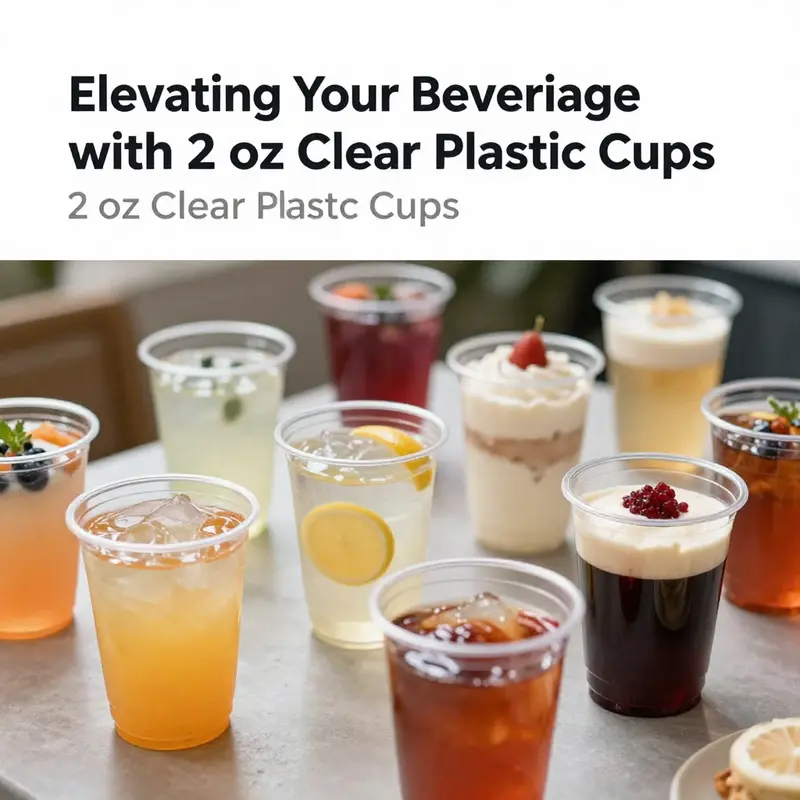
The smallest choices often carry the most weight in the choreography of events, and the 2-ounce clear plastic cup is a perfect example. It is not merely a vessel for a sip or a sample; it is a carefully calibrated instrument whose size, material, and design shape how a moment is perceived, tasted, and remembered. In the rooms where catering meets hospitality, where a tasting session invites curiosity and dainty portions, these cups do more than hold liquid or sauce. They set a tempo for service, a rhythm for presentation, and a promise of convenience that hosts expect in a world of high-speed turnover and elevated experiences. When one contemplates the 2-ounce cup, it is helpful to imagine it as a compact stage prop, chosen not for showmanship alone but for how its proportions influence the flow of a gathering, the visibility of color, and the ease with which guests can evaluate a sample without surrendering their place in line or their appetite for more.
At the heart of the 2-ounce cup is capacity. Roughly 59 milliliters, this size is ideal for small beverages, sample portions, or bite-sized desserts. It thrives in scenarios where a guest might want to explore a variety of flavors or textures without committing to a larger serving. For cocktail tastings, it enables a quick rotation, allowing a host to present a spectrum of ingredients—from citrus-forward sours to herbaceous infusions—without the clutter of bulky containers. In culinary demonstrations, it functions as a bite-sized canvas for sauces, dressings, or dips, letting participants experiment with dips, reductions, and dressings in a controlled, measured way. The cup’s diminutive footprint encourages experimentation and sampling in environments from intimate backstage kitchens to bustling festival booths, where speed and clarity matter as much as taste.
The visual purity of a clear plastic cup amplifies the role of color as a component of flavor perception. Transparent walls reveal the hues and textures of the contents, enabling observers to gauge freshness, concentration, and viscosity at a glance. This is not merely about aesthetics; it is about sensory information. The sunlit amber of a whiskey-tinted dram, the pale translucence of a delicate jelly, the ruby sheen of a berry coulis—each shade informs expectation and, in many cases, the consumer’s confidence in the product. In tasting contexts, where evaluation depends on appearance as much as aroma and palate, the clarity of the cup becomes a silent co-host, contributing to the narrative of the drink or sauce before the first sip is taken.
Materials and safety are the next layer in the cup’s quiet sophistication. Two common families of plastic—polypropylene (PP) and polystyrene (PS)—appear in the production of these tiny vessels. Each offers a distinct balance of clarity, rigidity, and cost. PP cups are sturdy, with good chemical resistance, and can often handle a broader range of temperatures, while PS cups are renowned for their crystal clarity and crisp edges. In both cases, food-contact safety standards undergird the product. The modern consumer expects that these cups will not impart off-flavors or contaminants to the contents, and suppliers often emphasize certifications that reassure users about safety under typical serving conditions. While some marketing narratives may claim eco-friendliness, the broader truth rests on responsible disposal—recycling where possible, and minimizing waste through sensible portioning and valued reuse of lids that enable portability. The conversation around safety and sustainability is not a paradox; it is a continuum that links the cup’s material choices to the broader practices of waste management and consumer education.
Design details matter as well, even in a simple, transparent geometry. The height and diameter of a 2-ounce cup are chosen to balance grip, stackability, and stability. A stable stack reduces the risk of tipping in crowded service lines, while a consistent lip and rim ensure a comfortable drink or tasting might flow from cup to guest without awkward spills. The lid, when included, adds a layer of portability and containment that is crucial in catering to outdoor settings, festivals, or long lines where chatter and movement are constant. The inclusion of a lid can transform a passing sample into a take-away memory, a small gust of flavor that travels with a guest’s day and becomes part of their social moment. Even the packaging—bulk bags or boxes of 50 to 240 units—speaks to a philosophy of efficiency, reducing handling time and enabling a smoother setup for staff who must balance speed with décor and presentation.
The environmental dimension is not an afterthought but a shaping influence on how these cups are chosen and used. Many cups highlight being BPA-free and recyclable, aligning with a broader consumer demand for products designed with health and environmental awareness in mind. Yet the reality of plastics in waste streams remains nuanced. Recycling capacity, local stream availability, and consumer participation all determine whether a 2-ounce cup truly cycles back into new products or ultimately becomes landfill. This tension between convenience and responsibility has driven innovations in labeling, standardized plastics, and take-back programs in some settings. In practice, event planners and retailers increasingly integrate cup-return or reuse strategies as part of a sustainability plan, even when the cups are designed for single use. Small acts—placing clearly marked receptacles, communicating simple disposal instructions, and offering incentives for proper recycling—can multiply the environmental benefits of a seemingly modest choice.
Purchasing options for the 2-ounce cup reflect the realities of modern retail. These cups are typically sold in bulk, from modest packs to substantial bulk lots, to support both home entertaining and commercial operations. The magnet for organizers is not only the per-unit price but the overall efficiency the purchase enables. Lids often accompany the cups, adding to the turnkey convenience. The ability to pair a lid with the cup means shorter service times at events where guests want to carry a sample to a seat or into an outdoor space. The logistics of bulk buying extend beyond the purchase: the responsibility to store, protect, and rotate stock becomes part of the event planning discipline. A well-organized stock room or kitchen can turn a container of 240 cups into a wellspring of seamless service, reducing last-minute scrambles and enabling staff to focus on the guest experience rather than on procurement minutiae.
In settings that hinge on branding and presentation, even a small cup can be a canvas for branding messages, colors, or branding-through-simplicity. While a clear cup is, by design, mostly transparent, the surrounding ambiance, signage, napkins, and lids create a cohesive visual story. For tastings, the color of a drink—whether a pale lime, a deep amethyst, or a sunlit amber—emerges with clarity, guiding guests toward the flavors they are meant to explore. For sauces and dressings, the gloss of the liquid and the subtle hue can contribute to perceived quality and appetite. The cup’s neutrality thus becomes its strength: it does not compete with the product it holds; instead, it frames it. When used in wedding or corporate settings, the choice of cup becomes part of the overall design language, aligning with tableware and service logistics in ways that feel purposeful rather than incidental. In this sense, the 2-ounce clear cup is a quiet facilitator—neither flashy centerpiece nor hidden utility, but an essential element of the experience architecture.
For those seeking concrete guidance on how to choose and use these cups, consider the practical example of how a party or tasting event might unfold. A host who wants to maximize flavor sampling without clutter might deploy two-ounce cups for a flight of juices, cordials, or sauces. Guests can move between stations with minimal disruption, guided by clearly labeled stations and the simple act of drinking from transparent vessels that reveal the content’s color and consistency. The cups’ compatibility with lids enhances mobility, enabling guests to transition from tasting to take-away sips while maintaining safety and cleanliness. In more formal settings, the same cups can be arranged in a lined display on a dessert table, each cup showcasing a petite portion of a mousse, custard, or gel-based treat. The use-case diversity is a testament to how a modest capacity can democratize access to flavors, textures, and culinary ideas, turning sampling into an approachable, repeatable, and enjoyable ritual.
In reviewing the broader landscape of disposable, clear plastic serving ware, it is evident that the 2-ounce cup occupies a distinct niche. It is not intended for long-duration drinking or for servings that demand significant volume. Yet its clarity, portability, and ease of use make it indispensable for sampling, dipping, and small-desert presentations. The decision to deploy these cups rests on balancing guest experience with practical considerations: speed of service, waste management, and the physical environment of the event. The cups’ simple geometry belies a sophisticated choreography of storage, transport, and presentation—an understated tool that, when used thoughtfully, contributes to a polished and memorable experience.
To connect this reflection to a tangible reference for readers who want to see how these cups are presented and marketed in real-world product pages, consider this internal example: disposable-clear-plastic-cup-outdoor-picnic-pet-cup-drinking-cup-for-parties-birthdays-weddings-camping-utensils. The page illustrates the practical packaging, the emphasis on clarity, and the portability that make these cups a staple for casual gatherings and semi-formal events alike. For readers who want a deeper dive into material and production considerations, an external resource offers robust specifications and certifications that underpin many of these products: https://www.alibaba.com/product-detail/Custom-logo-Frappe-Cup-Disposable-PET_1600849116145.html. These references complement the chapter’s exploration of how a seemingly simple item can carry influence across taste, presentation, logistics, and sustainability.
In sum, the 2-ounce clear plastic cup is more than a container. It is a carefully engineered, cost-conscious, and visually neutral medium that supports flavor, safety, and guest experience in equal measure. Its small size invites experimentation while its clear walls invite appreciation. It is, in essence, a microcosm of modern serving philosophy: efficient yet expressive, practical yet purposeful, adaptable enough to serve a child’s cupcake topping as gracefully as a sommelier’s tasting notes. The next time a host counts cups and counts on seamless service, they may not notice the cup at first glance, but they will certainly notice the smooth flow of guests, the clarity of the beverages, and the quiet confidence that comes from choosing a vessel that respects both moment and memory.
Tiny Vessels, Broad Reach: How 2-Ounce Clear Plastic Cups Shape Markets, Moments, and Mindset
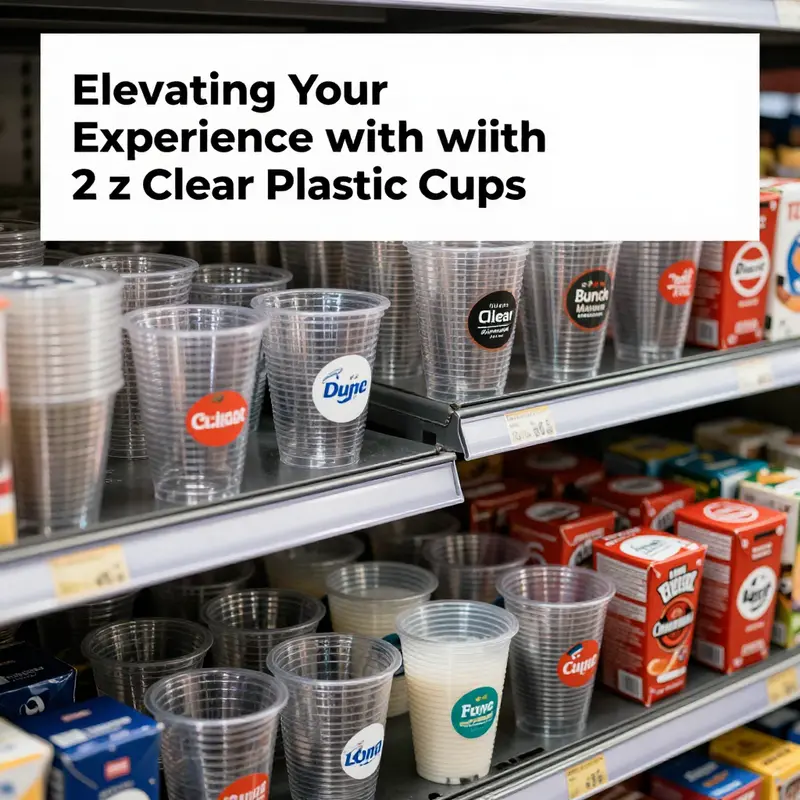
The 2-ounce clear plastic cup sits at the intersection of everyday practicality and global supply chains. It is small by any measure, yet it travels widely—from tasting sessions to events, home kitchens to bars, and local shops to wholesalers. Its transparency is its personality: a clean, unobtrusive vessel that allows color, texture, and aroma to take center stage without competing with the contents. In that simplicity lies a powerful narrative about how a modest item can knit consumer desire, logistical efficiency, and environmental concern into a single experience.
Across the landscape of supply, cups are produced by a spectrum of manufacturers. The base materials are polypropylene and polystyrene, chosen for clarity, rigidity, and low cost. Some products claim BPA-free status and recyclability, reflecting a market that fuses convenience with environmental awareness. The environmental equation is nuanced: recyclability often depends on local facilities and consumer disposal habits. Where a cup ends up— curbside, recycling stream, or landfill—shapes its true footprint. The sustainability conversation becomes a practical guide for buyers: choose materials that align with local facilities, confirm whether lids are recyclable with the same stream, and communicate disposal guidance to guests.
For buyers, the market presents a familiar pattern: bulk packaging designed for cost efficiency. Cups are sold in packages ranging from small bundles to large cases, with lids either included or offered as add-ons. This approach makes sense for event planners, caterers, restaurants, and home hosts. The option to customize with logos or embossing can turn a simple cup into a branded part of a presentation. The form factor should enable quick, clean service while remaining compatible with existing service ware and equipment.
The marketplace channels illuminate a broader ecosystem of consumption. Online marketplaces offer a range of options—from basic disposables to lid-equipped sets intended for immediate use at events. The convenience of bulk online purchasing makes it possible for diverse buyers to access consistent quality, though discernment is essential: not all cups share the same clarity, rigidity, or heat tolerance, and not all lids seal reliably or stack neatly for transport. Buyers weigh questions like required clarity, preferred shape (round or square), and whether a lid is needed for transport or containment.
Two threads repeatedly shape purchasing: convenience and customization. Convenience includes pre-lidded sets that reduce moving parts, secure lids that prevent spills, and compatibility with accessories. Customization covers branding options, from printed logos to subtle color variations. Even at the 2-ounce scale, small design touches can elevate a guest’s perception of quality and care.
The market is a balance of price, availability, and perceived quality. Buyers plan around minimum order quantities, lead times, and total cost of ownership. Some suppliers accommodate small gatherings with modest MOQs; others target large-scale operations with wholesale programs. The result is a market that rewards reliability, clarity, temperature tolerance, and responsible end-of-life handling. The small choice of cup can influence service flow and guest memory, while continuing to evolve with new materials, lid mechanisms, and packaging configurations.
In practice, product listings on major platforms describe capacity (2 ounces), material (PP or PS, sometimes PET), transparency, pack sizes, lid options, and branding opportunities. The 2-ounce cup is used for samples, tasting flights, or small portions of sauces and desserts, enabling precise portions without overwhelming guests. Across settings, it remains a flexible tool for service speed, presentation, and guest experience.
This market, at its core, is pragmatic and aspirational: pragmatic in its focus on cost, reliability, and compatibility; aspirational in its willingness to offer customization and eco-conscious options. The consumer landscape is shaped by marketplaces that enable easy comparison, by manufacturers balancing performance with sustainability, and by event professionals who know that small choices can shape a larger experience.
From Clarity to Footprint: The Material Realities of 2-Ounce Clear Plastic Cups
The 2-ounce, clear disposable cup lies at a curious intersection of practicality and environmental consequence. Its compact size makes it a versatile vessel for small servings, samples, and single-portion indulgences. In events and venues where quick service, precise portions, and portable convenience matter, these cups play a quiet but persistent role. They are the kind of tool that disappears into the backdrop of a crowded party or a busy bar, doing their job with minimal fuss and maximum clarity. The 2-ounce format is especially popular for tasting portions, sauces, dressings, gelatin-based desserts, and the curious swirl of a bartender’s sampling menu. The cups’ transparency is more than cosmetic; it communicates cleanliness, portion integrity, and a sense of trust in the consumer—that what is inside is what appears to be inside, uncolored by the vessel’s own hue. In that sense, the appeal of these cups rests not only on their small size, but on the confidence they convey through unambiguous presentation. Yet, beneath their simple exterior lies a web of material choices, manufacturing realities, and end-of-life pathways that determine how far the clarity can travel before it leaves a footprint behind.
Most 2-ounce clear cups are made from one of a few common plastics, chosen for a balance of clarity, rigidity, and cost. Polypropylene, a sturdy, heat-resistant polymer, is frequently used for disposable portions sized around two ounces. Its properties help secure a tight lid or seal when the cups are sold in bundles for take-home use, and its durability makes it forgiving under handling during service. Polystyrene is another frequent option; it offers high clarity and a crisp edge that many find appealing for presentation, particularly in layered desserts or sample cups that demand a neat, clean look. Each material brings its own set of trade-offs. Polypropylene can be more resilient and slightly more forgiving with hot ingredients, whereas polystyrene’s high gloss and stiffness can elevate the perception of quality for cold items or delicate garnishes. In practice, the choice between these materials often reflects a supplier’s emphasis on cost-effectiveness, compatibility with lids, and sustainability claims as they present to customers.
The environmental conversation around these cups has grown since the broader discourse around single-use plastics shifted from utility to responsibility. The most common materials in the family of small clear cups—polypropylene and polystyrene—share a foundational dependence on fossil fuels, and neither is readily biodegradable in natural conditions. Their environmental profiles diverge in production energy, recyclability, and end-of-life behavior. PET, another widely discussed plastic in the broader category of clear cups, is valued for clarity and recycling potential but is less typical for the two-ounce class in many commercial lines, where the geometry and lid compatibility often steer manufacturers toward PP or PS. Each material’s footprint, measured across extraction, manufacturing, transportation, and disposal, compounds into a narrative about how a simple, seemingly innocuous cup can influence the faster pace of consumption and waste in modern life.
Recycling and end-of-life outcomes become the practical hinge on this narrative. Recycling rates for small clear cups can be disappointingly low, not because the cups themselves are inherently non-recyclable, but because the stream of beverage cups is easily contaminated by food residues and by the complexities of separate collection systems. Contamination reduces curbside recyclability, and the small size of a two-ounce cup can complicate sorting and processing when it enters a mixed recycling stream. The result is a paradox: a highly recyclable design in principle may still contribute to landfill waste if the local infrastructure is not aligned to capture and process it efficiently. This is where the materials’ distinction becomes meaningful. If a cup is made from a polymer that is widely collected and mechanically recycled in a given region, its journey can extend beyond a single event and into a circular loop. If, on the other hand, the region lacks robust recycling options or the cup’s design includes coatings or additives that complicate recycling, the same cup could contribute to long-lived residual waste rather than a true material loop.
A growing line of discussion centers on bio-based and compostable alternatives, such as polylactic acid (PLA) cups, which are marketed as more sustainable due to their renewable feedstocks and potential for compostability. PLA can lower the carbon footprint of production relative to petroleum-derived plastics and, under industrial composting conditions, may degrade more rapidly than conventional plastics. The caveat is essential: industrial composting facilities with appropriate temperature and moisture conditions are not universally accessible, and home composting rarely achieves the necessary conditions for PLA deconstruction. Without the proper infrastructure, PLA cups may behave more like conventional plastics in the environment, delaying meaningful benefits. In other words, the environmental advantage of PLA is heavily contingent on the local waste management ecosystem meeting specific criteria for compostability. In turn, this emphasizes that sustainability claims—such as “eco-friendly” or “recyclable”—must be anchored in verifiable outcomes rather than branding or hopeful marketing language. The most credible assessments consider the entire lifecycle, from material extraction to end-of-life management, and they demand attention to where and how a cup is used and disposed.
In practice, the decision matrix for a 2-ounce clear cup includes more than material composition. It encompasses how the cups are packaged, how they are distributed, and how end users are guided to dispose of them. Many cups are sold in bulk quantities, often in packs ranging from fifty to a few hundred units, with lids included for convenience and portability. This bulk packaging supports efficient service in events and retail environments but can also swell the total volume of waste unless it is designed for recyclability in the destination system. The lids, often molded in the same or a compatible polymer, add to the overall material load but also to the seal quality that preserves product integrity during transport and handling. The packaging, the cups, and the lids each contribute to a package-to-wink-to-waste equation that is easy to overlook in the moment of quick service. When a server pours a small sample or places a dessert into a clear cup, the experience of clarity carries with it an implicit invitation to reuse, to recycle, or to dispose thoughtfully. The language of reuse is practical only where the cups are designed for repeated use or where a robust take-back system is in place. In most consumer and hospitality contexts, single-use remains the default, which is precisely why the material choices and disposal pathways deserve careful scrutiny.
The ecological reality of 2-ounce clear cups therefore rests on how well they fit into established waste ecosystems and on how users are educated about proper disposal. It is not enough to claim a cup is recyclable; it is essential to know whether local facilities actually process these cups and whether contamination is a common barrier. It is not enough to claim a cup is BPA-free; it is crucial to know whether the entire lifecycle—from resin production to post-use handling—embeds safer, healthier outcomes for communities and ecosystems. In this sense, the small, clear cup becomes a mirror of broader systems: a reflection of material science choices, manufacturing scale, consumer behavior, and municipal or regional waste infrastructure. The simplification of a two-ounce cup’s use belies a deeper complexity, one that invites designers, manufacturers, and users to consider not only what they pour into the cup but what happens to the cup after the celebration ends.
Within the context of practical use at events and venues, a cup’s fate is often sealed not by its exemplary clarity but by the clarity of its disposal instructions and the availability of appropriate collection streams. To imagine a more circular path, one could envision a model where cups are designed for straightforward collection and recycling, with labeling that clearly communicates its recyclability and separation requirements. A design that minimizes coatings or additives that hinder recyclability could further support material recovery. Yet even with such design improvements, the success of a more sustainable trajectory still hinges on infrastructure and public participation. The 2-ounce cup thus stands at a crossroad: it is a tiny instrument whose impact scales with how systems respond to the waste it generates, and with how much effort is invested in education, infrastructure, and governance that shape beverage culture and consumption practices.
For readers looking to connect theory with practice, consider how these cups function in the broader economy of tasting, sampling, and dessert presentation. They are a practical solution for portion control, visual appeal, and easy handling, enabling hosts to offer small experiences without heavy commitments to larger portions. The trade-off, however, is a reminder that even small devices in a disposable stream contribute to a larger environmental narrative. This is especially true as consumer expectations shift toward transparent sustainability, where a product’s benefits must be weighed against its end-of-life implications. As a result, the conversation around 2-ounce clear cups is not merely about keeping drinks cold or desserts pristine; it is about embracing a disciplined approach to material selection, waste management, and the shared responsibility of manufacturers, retailers, and consumers to facilitate responsible disposal and, where possible, true material recovery.
In this light, practical guidance for users becomes part of the design ethos. If a venue prioritizes low-waste strategies, it can opt for cups that align with the nearest available recycling stream, or it can invest in education about compostable alternatives and where to drop them off. If a supplier emphasizes sustainability, it can disclose the full lifecycle attributes of its cup offerings, including whether PLA options are industrially composted, how lids are treated in the waste stream, and what labeling indicates about recyclability. The aim is not to demonize a familiar, utilitarian object but to illuminate its lifecycle and to encourage decisions that optimize both user experience and environmental outcomes. In the end, this balance between clarity and responsibility shapes how the two-ounce cup participates in the broader story of modern consumption—one that values the precise, clean presentation of a small serving and the intelligent stewardship of the resources that make it possible.
For readers who want to explore a practical example of the kinds of cups described here and to see how a generic, clear, small-volume cup can be integrated into eventware with consideration for disposal pathways, a representative example of disposable clear plastic cups used in party and service settings can be reviewed in context on industry resources that discuss their role in catering and events. clear plastic cups for events.
As the conversation about disposable cups grows broader, it becomes clear that the path forward is not a single solution but a spectrum of choices. Designs may favor durability and reusability where feasible, or they may emphasize recyclability and compostability where infrastructure supports them. The almost unnoticeable two-ounce cup, when examined through this lens, reveals how small design decisions can ripple through supply chains, waste streams, and even consumer habits. The result is not a simple equation of material type versus disposal method but a dynamic interplay among product design, waste management realities, and cultural expectations around consumption. In that sense, the two-ounce clear cup embodies the ongoing evolution of everyday objects: ordinary in use, but potentially transformative in consequence when aligned with a thoughtful lifecycle perspective.
External resources: For a broader policy and practice context regarding plastic waste, see the U.S. Environmental Protection Agency’s guidelines on plastic waste and sustainable management practices: https://www.epa.gov/sustainable-management-plastics
From Bulk to Brand: The 12-Ounce Clear Cup in Packaging, Purchasing, and Practice

Twelve-ounce clear plastic cups sit at an intersection of practicality, logistics, and presentation. They are small enough to be disposable after a tasting, yet sturdy enough to carry a beverage, a sauce, or a dessert through a party, a festival, or a service counter without compromising the experience. The chapter that follows threads together the realities of packaging options, the pathways to purchase, and the considerations that turn a simple cup into a reliable tool for operations, marketing, and memory-making. It is not a catalog of products but a map of choices—how design, packaging, and purchasing align to deliver efficiency, safety, and value in environments as diverse as a backyard gathering and a busy catering kitchen. In doing so, it centers on the logic of scale, the craft of storage, and the art of branding that these cups enable, rather than on any single model of cup itself.
When we think about the journey from factory floor to event table, packaging options emerge as the first critical decision points. Bulk packaging, stacking efficiency, and protective structures are not mere conveniences; they shape how a business plans inventory, forecasts demand, and schedules labor. For large-scale use, suppliers typically offer cups in high-volume cartons, for example, thousand-unit cases that optimize both the cadence of delivery and the rhythm of restocking. The advantage of such bulk packaging is twofold: it reduces unit cost and minimizes handling complexity. Instead of managing hundreds of small packages, staff can rely on a few pallets moving through the warehouse, through the loading dock, and into the storage area. The design of these bulk options often centers on stability and space efficiency. Some cartons are engineered so each cup nests with others in a way that reduces bulk without compromising the cup’s integrity. Others emphasize a stackable geometry that enables higher density storage in racks or on shelves, a feature that translates into meaningful savings when space is at a premium. In practice, stacking efficiency can cut storage needs by a significant margin, sometimes as much as half, depending on the exact geometry and packaging configuration. This is not simply about reducing square footage; it is about enabling lean inventory, faster retrieval, and fewer damaged units during transit. For operators who move from a single event to a multi-week schedule of tastings or catering services, these storage savings become part of the planning calculus for every job.
Protective packaging plays a parallel role to bulk packaging. The safest transportation chain often combines a layered approach: a sturdy primary carton, reinforced corners or edge protection, and outer wrapping that prevents shifting and moisture exposure. In some systems, cups are placed on pallets with slip sheets and shrink film to keep rows aligned during shipping. The idea is to minimize movement and vibration, which can cause micro-cracks or chips that degrade usability and customer perception. For a business that prides itself on consistency—from the first pour at a trade show to the last bite at a wedding reception—the reliability of the packaging becomes part of the brand promise. It signals a commitment not only to hygiene and safety but to the overall experience, because a damaged cup can disrupt service, slow down lines, and invite complaints that ripple outward from a single event.
From a purchasing perspective, the packaging conversation naturally leads to considerations about procurement channels and supplier qualifications. In the wholesale space, online marketplaces and bulk suppliers serve as the primary conduits for stocking 12-ounce clear cups in large quantities. These platforms enable buyers to compare options across quantities, lid compatibility, and finish, while also providing critical details about food safety standards and recyclability. The practical takeaway is that buyers should translate the packaging features into operational benefits: can the cartons be handled by our existing forklift fleet? Do the cups fit under our current lids and sealing equipment? Will the stacking system align with our warehouse racking? How easy is it to forecast reorders, given our event calendar and anticipated demand? These questions guide the selection process toward suppliers who can offer not only the cups themselves but also a coherent packaging and delivery ecosystem that fits into the business’s broader supply chain.
A core area of focus in any purchasing decision is the alignment of material and safety certifications with the intended use. Cups intended for food and beverage service must be designed to withstand the temperatures and handling they will encounter. The materials most commonly used for these disposable cups fall into two families: polypropylene and polystyrene. Each brings its own balance of clarity, strength, and heat tolerance, along with considerations of recyclability and end-of-life impact. The conversation about environmental responsibility remains central. Even as many cups advertise BPA-free formulations and recyclability, the environmental footprint of disposable plastics remains a matter of ongoing attention. Recyclability depends not just on the cup itself but on whether the local recycling stream accepts the material and whether the cups are clean and uncontaminated before disposal. In this light, buyers increasingly weigh options that offer clear signals about end-of-life handling and responsible manufacturing practices. The procurement moment thus becomes a negotiation between functionality, safety, and environmental stewardship, with the ultimate aim of delivering a reliable product that respects both consumer expectations and local waste management realities.
A broader purchasing strategy also considers the option to customize. Many suppliers recognize the value of branding and can accommodate logo or pattern printing on cups or lids. Customization helps transform a standard service item into a portable marketing surface, reinforcing brand recognition at events, tastings, and in-store experiences. The choice to customize is, in effect, a decision to invest in the customer journey. It is the difference between a neutral, functional cup and a memorable moment that guests associate with a specific event or retailer. When customization is paired with scalable packaging—such as large-volume cartons and standardized lid kits—the result is a streamlined supply chain that can service both small gatherings and large productions with consistent quality. The practical virtue of this approach is predictability: a business buys once and plans the subsequent orders around demand, sample programs, or seasonal promotions, while the supplier manages the production, labeling, and packaging workflow in a way that reduces touchpoints and speeds up fulfillment.
In this context, a careful buyer will examine certifications, not just the cup’s compositional details. Food-safety documentation, such as FDA compliance statements in the relevant jurisdiction, and third-party certifications affirm the product’s suitability for direct contact with food and beverages. Buyers also seek assurances about recyclability and any claims about eco-friendly attributes. While the marketing language can be aspirational, the procurement screen should demand concrete evidence and verifiable documentation. It is not enough to know that a cup is clear and sturdy; the buyer should verify that the cup meets the applicable regulations and that the supplier can provide ongoing support for compliance questions, instrumental to audits or inspections that may arise in the course of business.
In shaping a procurement plan, the capacity to tailor the packaging and ordering cadence to real-world use is essential. Events calendars, seasonal peaks, and consumer demand influence how many cartons a business should keep on hand and how quickly it should restock. A reliable supplier will offer lead times that align with production schedules, whether these are standard shipments or just-in-time replenishments. The ability to adjust carton sizes, mix and match with lid options, and even offer different stacking configurations can reduce waste and avoid stockouts. A set of practical questions emerges: How flexible is the supplier about changing carton configurations mid-cycle? Can the order be split across multiple shipments to different locations? Are there minimums that still preserve economic viability when demand fluctuates? Answering these questions with a partner who communicates clearly can dramatically improve operational resilience, especially in industries that swing between high-traffic events and quiet periods.
For readers who want to connect theory with concrete choices, the path forward lies in translating the packaging and purchasing considerations into a straightforward decision framework. Start by mapping the demand profile: forecasted event counts, daily service requirements, and any tasting programs that call for small portions. Next, quantify the storage footprint: determine how many cartons, how many pallets, and the warehouse layout needed to accommodate both current and near-future demand. Then, assess the supplier ecosystem: identify those that offer bulk packaging, stackable designs, and protective transport features, coupled with food-safety credentials and environmental statements. Finally, evaluate the branding opportunity: does the supplier offer customization that aligns with the brand’s color palette, logo, and messaging? If the answer to these questions is affirmative, a procurement strategy emerges that combines efficiency, safety, and identity in a single, scalable system.
To illustrate the topic more tangibly, consider the practical implications of choosing a cup that comes in bulk cartons with a stackable design and protective packaging. The combined effect is a smoother receiving process, faster unloading, easier inventory checks, and fewer damaged units—factors that cut labor costs and reduce the risk of glitchy service during peak times. The resulting gain is measurable not only in unit price but in the time and effort saved at every stage from warehousing to the service line. It is the difference between scrambling to locate a few dozen cups in a cluttered aisle and a well-orchestrated supply chain that delivers a calm, efficient experience to staff and guests alike. In the end, the cup itself is a utility, but it becomes a lever for improvement when the packaging design and purchasing pathway are aligned with the business’s logistical realities and experiential goals.
For readers seeking additional context on procurement channels and practical options, one resource highlights the scalable, bulk-oriented approach to 12-ounce clear cups and related packaging configurations. A dedicated wholesale listing emphasizes carton-based quantities, the option for customization, and the importance of safety certifications in the purchasing decision. This external reference provides a concrete example of how a supplier package can be structured to optimize logistics and support branding efforts without compromising on safety or quality. External resource: https://www.alibaba.com/product-detail/FULING-1000pcs-ctn-12-oz-PET-plastic_1600548799408.html
Within a broader content ecosystem, there is value in linking to vocational and practical pages that discuss related takeout and eventware needs. For readers who want to explore a range of disposable solutions that complement clear cups, a representative page on a related site offers a catalog of disposable clear plastic cups suitable for a variety of settings, including outdoor, party, and event contexts. The link provides a sense of how a single cup can fit into a broader suite of disposable tableware, illustrating how choices in one category influence choices in others and how a cohesive assortment supports consistent service across channels. Internal link: https://ecocupbowl.com/product/disposable-clear-plastic-cup-outdoor-picnic-pet-cup-drinking-cup-for-parties-birthdays-weddings-camping-utensils/
In sum, the practical journey from packaging to purchase for 12-ounce clear cups rests on a few core pillars: bulk and stackable packaging that optimizes storage and transport; robust protective packaging to guard against transport-induced damage; a purchasing ecosystem that supports predictable lead times and flexible carton configurations; and safety and environmental credentials that align with responsible business practice. By aligning these elements, a business can achieve a seamless flow from procurement to service, turning a simple cup into a reliable instrument of efficiency, safety, and brand storytelling. The result is not merely cost savings but a more resilient, responsive operation that can adapt to the ebb and flow of events, tastings, and everyday service. The cup becomes a quiet backbone of the customer experience, enabling staff to focus on hospitality and guests to enjoy a moment of clarity and comfort in a simple, well-executed delivery.
Final thoughts
The wide-ranging utility and appeal of 2 oz clear plastic cups make them an indispensable asset for any beverage-oriented service. From bubble tea shops to event planning, their lightweight durability combined with aesthetic presentation ensures they meet both functional and branding needs. As you navigate through beverage service enhancements, choosing the right packaging can substantially impact your customers’ experiences. Therefore, integrating quality cups into your service offerings not only elevates your product presentation but also aligns with modern sustainability standards.