
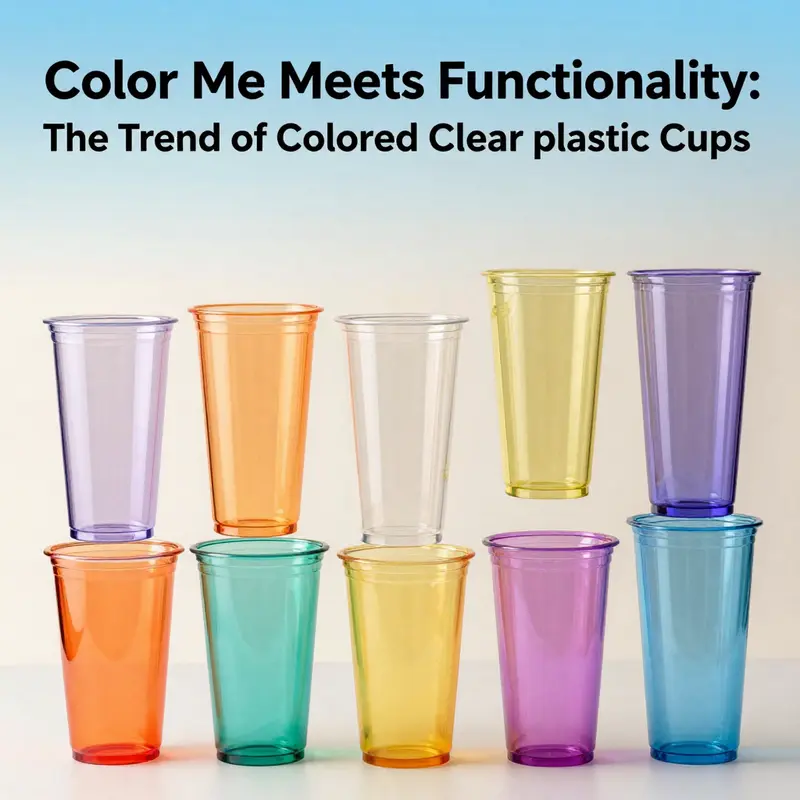
Colored clear plastic cups are becoming essential in various sectors like bubble tea shops, restaurants, and event planning due to their aesthetic appeal and functional benefits. These cups not only enhance the visual presentation of beverages but also serve as effective branding tools. In this article, we will explore the material composition of these cups, their diverse applications at events, the environmental considerations associated with their use, and the current market trends that influence consumer preferences. Together, these insights will demonstrate the integral role of colored clear plastic cups in elevating the customer experience while aligning with business objectives.
Color and Clarity: Unpacking the Material Science Behind Colored Clear Plastic Cups
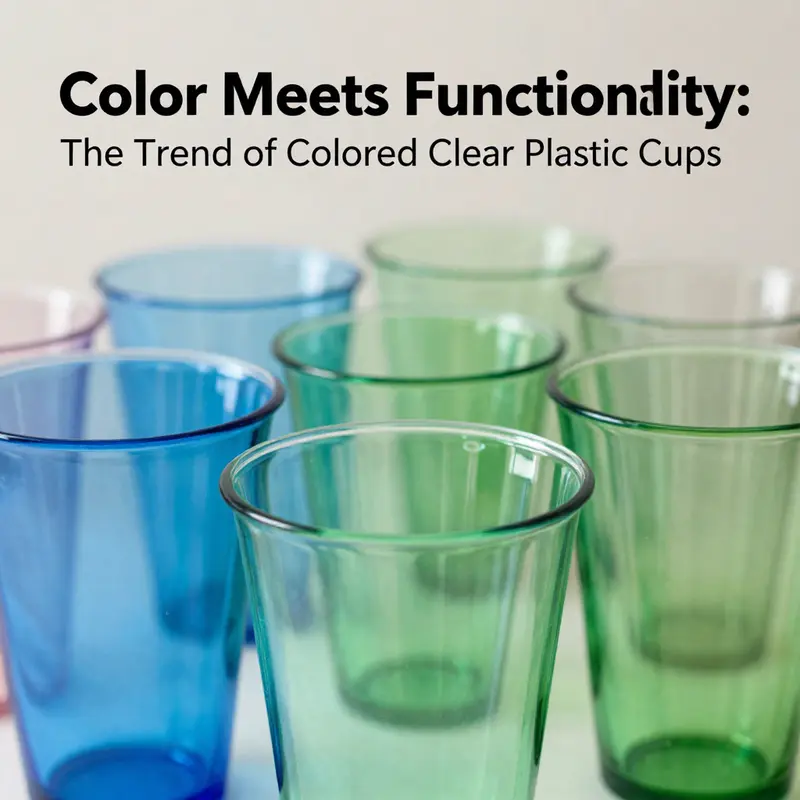
Colored clear plastic cups occupy a curious niche in disposable drinkware. They are designed to be more than vessels for beverages; they are visual instruments that reveal a drink’s color through a tinted yet transparent wall. The chemistry behind this effect is a careful blend of polymers, pigments, and processing, where the base resin, colorant package, and shaping methods determine how the cup looks, performs, and endures everyday use. In colored clear cups, the core materials are thermoplastics such as polypropylene (PP) and polycarbonate (PC). PP offers stiffness, chemical resistance, and heat tolerance for hot beverages, while PC provides exceptional clarity and gloss. Many designs use a blend or selectively choose one polymer to meet the service scenario, balancing transparency with color.
Color and clarity are achieved with pigment systems that disperse within the polymer without blocking light too much. The tint is typically transparent or translucent, enough to register a hue like blue, green, or amber while still letting the drink remain visible. The interaction of pigment with the polymer matrix during processing can influence haze, color bleed, and storage stability. Proper formulation ensures the color remains even across large batches and under varying lighting.
In practice, the choice of material also affects safety and regulatory compliance. PP is widely regarded as food contact compatible, with strong heat resistance for hot beverages. PC has faced scrutiny over bisphenol A in the past, leading many manufacturers to offer BPA-free PC or alternative polymers such as PET or Tritan. The decision between these materials depends on temperature range, mechanical demands, transparency needs, and regulatory requirements. For colored clear cups, manufacturers must ensure the pigment system is compatible with the base resin and that any additives do not migrate into beverages at typical use temperatures.
From a production standpoint, colored clear cups are usually made by injection molding, which supports uniform wall thickness and reliable dimensional accuracy. Color can be added by introducing pigment into the polymer melt or by surface coating. Surface tinting can produce vivid accents without compromising optical clarity. The result is a cup that looks vibrant yet allows the beverage to be seen clearly, a balance that supports branding and presentation in events, catering, and retail displays.
Beyond appearance, the practical advantages of colored clear cups include branding flexibility, mood setting through color, and compatibility with lighting schemes. Color can influence perceived temperature and appetite, so the tint must be chosen with care to avoid misleading cues about the drink. Similarly, the translucence and surface finish contribute to grip, stacking, and durability. For hot liquids, thickness and polymer choice matter; for cold beverages, color stability and scratching resistance become priorities. In all cases, certifications and clear labeling help consumers understand safe usage and disposal options.
Environmental and lifecycle considerations add nuance to the conversation. Colorants can complicate recycling streams if they are not compatible with the base resin or if the color package includes multiple additives. Recyclability depends on the polymer type and the local infrastructure. PET and BPA-free options are commonly marketed for their clarity and recyclability, while Tritan-like materials offer BPA-free profiles with good toughness. Transparent cups in any color should carry documentation that confirms their materials and end-of-life options to support responsible disposal.
The intake of regulatory guidance is essential for designers, buyers, and operators who need to balance aesthetics with safety. Standards and guidelines for food-contact plastics cover labeling, testing, and composition controls that help ensure colorants do not pose health risks and that cups meet performance expectations. When evaluating options, it is important to check official certifications and to verify the exact formulation with the manufacturer to avoid misinterpretation of marketing claims about eco-friendliness.
In summary, the material science of colored clear cups is a story of how formulation, processing, and policy converge. The same basic decisions that influence clarity and tint also govern heat resistance, durability, and recyclability. As markets continue to demand color with confidence, colored clear cups illustrate how modern plastics science translates into everyday experiences, delivering both aesthetics and reliability in a single disposable vessel.
How Colored Clear Plastic Cups Transform Events: Uses, Styling, and Practical Tips
How colored clear plastic cups transform events
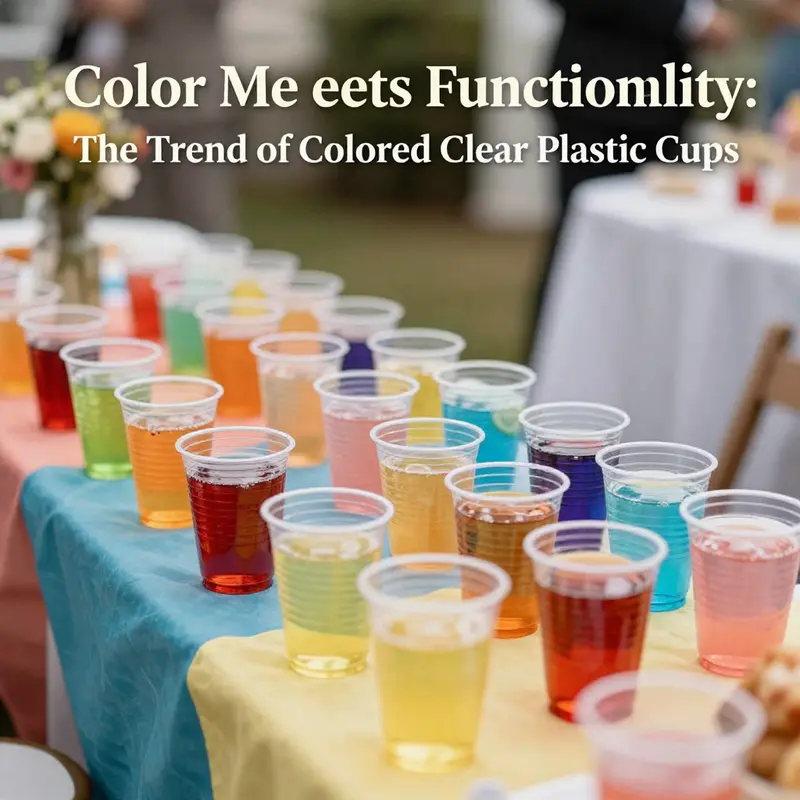
Colored clear plastic cups offer more than a vessel for beverages; they shape atmosphere, simplify service, and extend branding in subtle but powerful ways. Their translucent tint preserves the visual clarity of the drink while adding a deliberate color accent. This combination makes them uniquely suited to a wide range of events where appearance and function matter equally. The following narrative explores how these cups are used across settings, how planners and hosts can exploit their advantages, and what practical decisions influence their success.
Within corporate and promotional settings, colored clear cups act as portable brand touchpoints. They allow corporate colors to appear on tables and in guest hands without obscuring drinks. The translucent hue picks up on ambient lighting and helps photographed moments feel cohesive. Event teams use them to create visual continuity across food stations, bars, and lounges. Because the contents remain visible, they also support product demonstrations and beverage sampling. For example, when a beverage is central to a launch, these cups present the drink attractively while keeping the brand palette visible. Their disposable nature reduces the need for glass collection at high-traffic venues and speeds turnover between sessions.
Caterers and wedding planners appreciate that colored clear cups bridge elegance and practicality. They offer the sheen of glass without the fragility. At outdoor weddings, where wind, grass, and uneven surfaces create risk, these cups keep drink presentations refined but resilient. Pale tints complement pastel palettes; deeper hues emphasize contrast on white linens or wooden tables. Because cups come in many sizes, they accommodate cocktail pours, signature drinks, and non-alcoholic options with consistent style. They also lower costs and logistical complexity: fewer breakages, less staff time for glass management, and simpler cleanup. For formal plated meals, colored clear cups can appear at cocktail hours or dessert stations to introduce a color motif that ties the event together.
In festival and sports environments, the visual punch of colored clear cups matters most. With thousands of guests, drinks become moving decorations. Organizers use different colors to designate beverage types, age-restricted drinks, or reusable deposit tiers. The translucency of the cup helps staff confirm contents at a glance, while the color maintains theme continuity across booths and stages. Lightweight cups reduce transport costs and physical strain for vendors. When crowds are large, single-use options often remain the safest and most practical choice; colored clear versions elevate the look without adding significant expense.
Private celebrations, like birthday parties and baby showers, benefit from the playful versatility of these cups. Pastel tints create a soft, celebratory backdrop for desserts and mocktails. Neon and jewel tones offer high-energy contrast for dance-floor events. Parents and hosts value the combination of fun aesthetics and practical safety. For children’s events, shatterproof drinkware is essential, and the transparency keeps caregivers confident about what children are drinking. At adult gatherings, colored clear cups can signal cocktail stations or signature drinks and serve as a visual guide without needing labels.
Beyond aesthetics, customization makes colored clear cups powerful promotional tools. Logos, slogans, and minimal graphics print cleanly on tinted plastic, offering contrast that keeps branding legible while preserving translucency. For take-home moments, cups printed with a subtle mark become keepsakes that reinforce an experience. When campaigns emphasize sustainability, these cups pair well with messages about recycling or deposit-return programs. The lightweight design also reduces carbon footprint during transport compared with heavier alternatives.
Styling with colored clear cups requires attention to scale, color harmony, and lighting. Small gatherings benefit from coordinating cup hues with centerpieces or napkins. In larger venues, alternating cup colors can create pattern that reads well from a distance. Lighting dramatically affects how tints appear: warm lighting intensifies amber and red hues, while cool lighting brings out blues and greens. For night events, add LED cocktail coasters or under-bar lighting to let the cups catch and refract light. Because the drink remains visible, color contrasts between liquid and cup can be used as an additional design layer. A bright juice will pop in a cool-tinted cup, while a dark soda looks richer in a warm-tinted one.
Operationally, event teams weigh several practical considerations when choosing colored clear plastic cups. Material choice affects clarity, rigidity, and temperature tolerance. Cups made from certain polymers preserve transparency and resist cracking under cold or slightly warm conditions, making them suitable for chilled cocktails, smoothies, and some hot beverages. Lid compatibility matters for takeaway service and festivals. Stackability and nesting determine storage efficiency and shipping costs. For high-volume events, bulk packaging and pre-stacked service can reduce setup time.
Sustainability is a frequent decision point. Colored clear cups can be produced in recyclable formulations and without harmful additives. Whether a cup is recycled depends on local infrastructure and the resin used, so event planners often align material choices with local recycling practices. For events with strong sustainability goals, combine colored clear cups with visible recycling stations and clear signage. Offering a deposit system for returns encourages reuse of sturdy, reusable variants. Communicating the disposal or return plan to guests helps reduce contamination in recycling streams and increases the cups’ net environmental benefit.
Accessibility and safety are practical advantages that should not be overlooked. The transparency allows servers and guests to verify drink contents for allergy considerations and dietary restrictions. For beverage stations with multiple syrups, mixers, or alcohol levels, the visible layering or color of drinks reduces mistakes. The lightweight, shatterproof design also lowers injury risk from broken glass in active spaces like dance floors or crowded festival grounds.
When planning inventory, estimate consumption per guest according to event type and duration. Cocktail-heavy evenings demand larger cup counts than brief networking events. For events with refillable stations or water carafes, smaller cup sizes reduce waste. For takeaway or to-go drinks, prioritize lid compatibility and spill-resistance. Clear communication with suppliers about color consistency is essential; variations between production batches can disrupt a curated palette. Request color swatches when possible and consider ordering slightly more than the projected minimum to allow for surprise guests or last-minute changes.
Creative activation ideas make these cups more than functional tools. Use colored clear cups as part of a layered dessert display, filling them with parfaits or fruit to add visual rhythm down a buffet line. In cocktail competitions, assign cup colors to each contestant so judges can track submissions easily. At family events, set up a mocktail station with labeled color lanes that guide kids to safe options. For brand activations, combine cups with interactive stamping or sticker stations so attendees personalize their cup. Personalization not only heightens engagement but also reduces cross-contamination when guests keep their own cup during an event.
Finally, consider the guest experience. A cup should feel comfortable in hand and be easy to grip when guests are standing. Rim quality affects sipping comfort, and reinforced rims reduce the chance of warping. Strawless sip lids can provide a spill-resistant option while preserving the visual of the drink through the cup’s tint. For long events, provide hydration stations and clearly marked waste streams to keep service flowing and to minimize litter.
For planners and hosts who want accessories that match the aesthetic and practical needs of events, there are complementary disposable items designed to coordinate with colored clear cups. Items such as clear dessert cups, wooden stirrers, and eco-friendly food containers maintain a consistent visual language while attending to sustainability and functionality. For an example of coordinating disposable drinkware intended for outdoor events, see this product page about clear plastic cups for outdoor use.
External reference for specifications and broader context can be found in industry guides that explain material properties, sizing, and applications in greater detail: https://www.plasticcupguide.com/disposable-plastic-pint-cups-guide
By blending form, function, and logistics, colored clear plastic cups enable event designers to craft cohesive visual experiences while keeping service practical. Thoughtful selection and use of these cups enhance presentation, protect guests, and support operational efficiency across corporate functions, celebrations, and large-scale public events.
Seeing Through Color: The Environmental Footprint and Sustainable Pathways of Colored Clear Plastic Cups
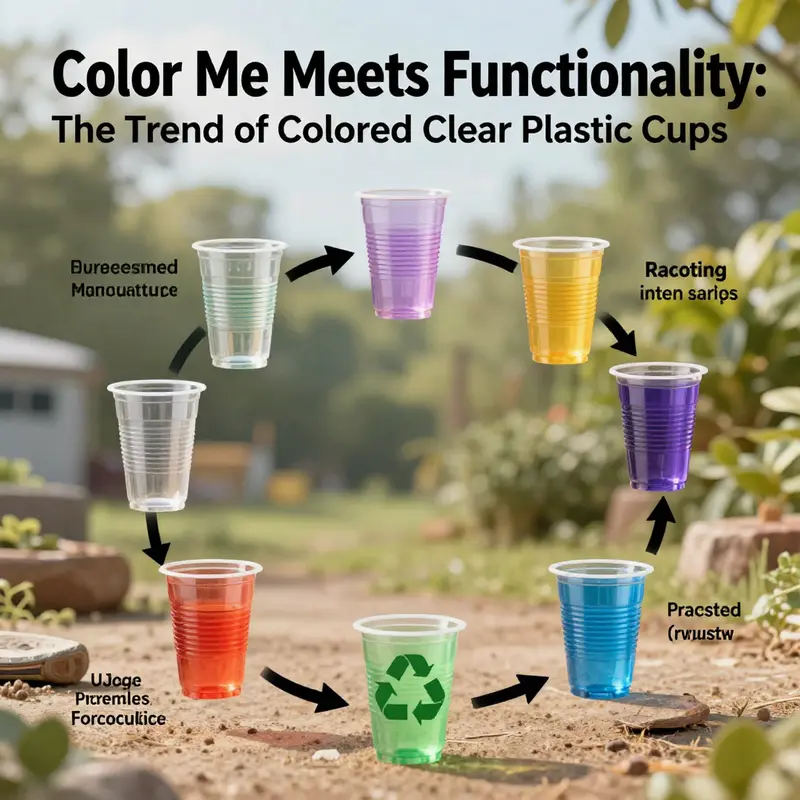
Colored clear plastic cups stand at a curious intersection of aesthetics and utility. Their translucent bodies carry hints of hue while preserving the crisp visibility of the drink within. That visual appeal makes them a popular choice for events, cafés, and quick-service settings, where color can coordinate with a theme or branding while the contents remain easily identifiable. Yet behind the surface, a less visible story unfolds—one about materials, end-of-life pathways, and the ongoing search for balance between convenience and planetary health. This chapter threads together what is known about the environmental impact of colored clear cups and examines the routes that might lead to more sustainable practice, from production choices to disposal realities, from the promise and limitations of compostable options to the growing case for reuse. It is a story not only of what these cups are made of, but of what they permit us to do in a world where resources are finite and waste streams demand greater care.
Most colored clear cups are manufactured from petroleum-derived polymers, most commonly polystyrene (PS) or polyethylene terephthalate (PET). These materials offer notable clarity, rigidity, and resistance to temperature changes, which makes them appealing for both hot and cold beverages. The color tint—often a gentle blue, green, yellow, or purple—achieves the “colored clear” effect by introducing dyes or masterbatch additives that alter light transmission without sacrificing transparency. The result is a cup that looks vivid on a shelf or a table, yet when light passes through, the liquid remains clearly visible to the consumer. From a design perspective, that combination of color and clarity can enhance the perception of value and elevate the guest experience without concealing the drink’s contents. But this same combination creates a complex life cycle that matters for the environment.
The environmental challenges begin with materials and end with end-of-life outcomes. PS and PET are not biodegradable in any meaningful sense under ordinary conditions, and both are derived from fossil fuels. The introduction of color complicates recycling streams because colored plastics are often separated from their clear or natural counterparts to optimize the efficiency and quality of recycled material. In practice, this separation is not always achievable, especially in regions with limited recycling infrastructure. When recycling rates are low, colored cups frequently end up in landfills or as litter, where they persist for decades. The result is a twofold burden: they occupy landfill space and, if not properly managed, contribute to mismanaged waste that can escape into the environment. The visual cue of color, rather than easing disposal, can, in some systems, add a layer of sorting complexity that reduces the likelihood of successful recycling.
Marine pollution looms as one of the most consequential concerns associated with these cups. Once discarded or lost, lightweight cups can travel far from their original setting and become marine debris. In ocean habitats, small plastic fragments are mistaken for food by wildlife, leading to ingestion that can harm or kill animals. Even when cups are too large to be ingested, they contribute to the broader problem of plastic pollution, persisting in the water and on shores, where they can fragment into microplastics that enter food chains and affect ecosystems. This reality underscores a core truth: even seemingly minor consumer choices can ripple outward through waste systems and natural environments, especially when the volumes associated with events and high-traffic venues are considered.
Recycling and waste management present a further frontier of concern. Recycling rates for colored plastics are generally lower than for their colorless counterparts, in part because the dye spectrum can complicate sorting and the final quality of recycled pellets. The economics of recycling—where the cost of collection, sorting, and processing must be weighed against the value of the recovered material—also weighs heavily. In settings where a large number of cups are used for a single event or service period, the cumulative impact can be meaningful. Landfills, meanwhile, face the challenge of volume and the potential for these cups to persist over long timescales, occupying space that could be redirected toward more sustainable uses.
On the production side, life-cycle considerations extend beyond raw material extraction to energy use, water consumption, and manufacturing waste. Modern processes such as injection molding and other shaping technologies underpin the efficiency and uniformity of cup production. However, the energy intensity of plastic manufacturing, the need for additives to achieve color and clarity, and the management of process waste all contribute to a broader environmental footprint. The BPA-free framing often used in consumer marketing speaks to a safety narrative, but it does not eliminate the upstream environmental considerations associated with the base polymers themselves or the dyes used to color them. In the context of a sustainability dialogue, the takeaway is not a simple binary of good or bad, but a complex calculus that weighs convenience and performance against end-of-life realities.
A growing segment of the market has begun to explore alternatives and improvements that could alter the environmental equation. Compostable options—typically based on polylactic acid (PLA), derived from renewable resources like corn starch—offer an appealing narrative: a renewable base material paired with end-of-life pathways that reduce long-term persistence in the environment. Yet the reality is nuanced. Compostable cups require industrial composting facilities to reach the temperatures and residence times needed to decompose. In many regions, such infrastructure is limited or unevenly distributed, which means that compostable cups may not realize their intended environmental benefits in practice. Moreover, the cost differential between conventional PS or PET cups and compostable versions remains a barrier for some operators, especially those managing tight margins or high-volume turnover.
Against these constraints, there is a compelling argument for rethinking the flow of colored clear cups within a more sustainable frame. If the full benefits of compostable alternatives are to be realized, policy and infrastructure must align with consumer behavior and producer design. Certification schemes that verify end-of-life pathways can help buyers distinguish products that truly perform as promised in real-world waste streams. At the same time, there is a persuasive case for reducing reliance on single-use plastics altogether in favor of reusable cup systems. Reuse not only cuts recurring material demand but also strengthens brand experiences when managed with care. Reusable systems require robust cleaning and logistics, but they can dramatically lower per-use environmental impact over the lifetime of the cup, particularly in venues with regular footfall such as schools, offices, or long-running events.
The ethical and practical questions that accompany these options are not about perfection at every step but about progress across the entire chain—from material selection to consumer habits, from producer responsibility to municipal waste management. In this sense, the environmental value of colored clear cups depends as much on how they fit into a broader system as on the properties of the cups themselves. The push toward recyclability can be reinforced by design choices that simplify sorting and processing, such as minimizing color variety or adopting materials with higher recyclability. At the same time, color can be leveraged to signal proper disposal or to support take-back programs that prioritize reuse where feasible. In practical terms, that means event planners, retailers, and food-service operators can adopt a more deliberate approach to cup usage: selecting materials that align with local waste streams, coordinating with waste processors on color separation capabilities, and investing in reusable solutions where there is dependable intake. When color design is part of a holistic waste-management plan, it becomes less a mere aesthetic feature and more a signal of responsible system design.
To date, one of the clearest routes toward measurable environmental improvement lies in the combination of better material choices and better end-of-life pathways. This means encouraging broader adoption of certified compostable options where infrastructure exists, while simultaneously expanding the reach and reliability of recycling streams to accommodate colored plastics. It also means recognizing the value of reuse, which, in practical terms, requires a shift in logistics, cleaning, and sanitation practices but yields meaningful reductions in material throughput over time. An informed decision is not about rejecting color or glamour but about ensuring that color does not come at the expense of the environments we rely on. In other words, beauty can coexist with stewardship when supply chains, policies, and consumer behavior move in concert toward sustainable outcomes.
For organizations that want to take tangible steps, a starting point is to examine end-of-life pathways in their own locale. If local recycling streams struggle with color separation, it might be wiser to opt for clearer, more commonly recycled plastics or to favor reusable systems where volume and logistics permit. If composting facilities exist for PLA-based products, operators can time purchases to align with those facilities’ capacity and local composting guidelines. Meanwhile, consumer education remains essential. Clear labeling that indicates whether an item is suitable for recycling or composting, along with visible disposal instructions, can reduce contamination and improve the odds that cups follow an appropriate paths through the waste system.
Within this broader narrative, there is also a practical, near-term takeaway for decision-makers and designers. The environmental impact of colored clear cups is not solely a function of material choice; it is the product of a broader system’s capacity to manage those materials responsibly. In that sense, the cups’ color is not inconsequential; it can be a facilitator of better sorting, a cue for end-of-life decisions, or a reminder of the need for more robust post-consumer programs. The balance between aesthetics and sustainability is not a fixed constraint but a dynamic space that changes as technology, policy, and consumer expectations evolve. This is why ongoing attention to the upstream and downstream consequences of cup design remains essential for anyone who wants to host events, operate dining spaces, or sell beverages in a way that respects both customers’ delight and the planet’s limits.
For readers who wish to explore practical examples and supplier information that illustrate how colored clear cups fit into broader packaging ecosystems, a representative resource on the topic can be found here: disposable-clear-plastic-cup-outdoor-picnic-pet-cup-drinking-cup-for-parties-birthdays-weddings-camping-utensils. While this chapter refrains from endorsing any single product line, it serves to highlight how such items can be embedded in end-of-life discussions, take-back schemes, or reuse programs that aim to close the loop on single-use plastics. The chapter’s broader point remains: color and clarity can enhance user experience and brand value, but they should travel within a system that makes recycling, composting, or reuse feasible and effective in real-world contexts.
In the end, the environmental assessment of colored clear plastic cups is not about vilifying a particular material or hue. It is about recognizing the full lifecycle implications and choosing paths that reduce harm while preserving the experiences that color can bring to everyday enjoyment. The path forward lies in thoughtful material selection, in advancing and supporting end-of-life infrastructure, and in embracing reuse wherever it makes sense for the setting and the scale involved. When those elements align, the visual appeal of colored clear cups becomes not only a momentary aesthetic but a signal of responsible design and conscientious consumption. The conversation continues to evolve as technologies improve and as communities, policymakers, and businesses coordinate to turn a vibrant, translucent cup into a symbol of sustainable practice rather than a footnote in the landscape of plastic waste. For further reading on the broader landscape of plastic waste and sustainability, see the authoritative resources compiled by environmental agencies that track the trajectory of materials from production to disposal and beyond.
External resource for deeper reading: EPA Report on Plastic Waste.
Seeing Color, Sensing Value: Market Trends and Consumer Preferences in Colored Clear Plastic Cups
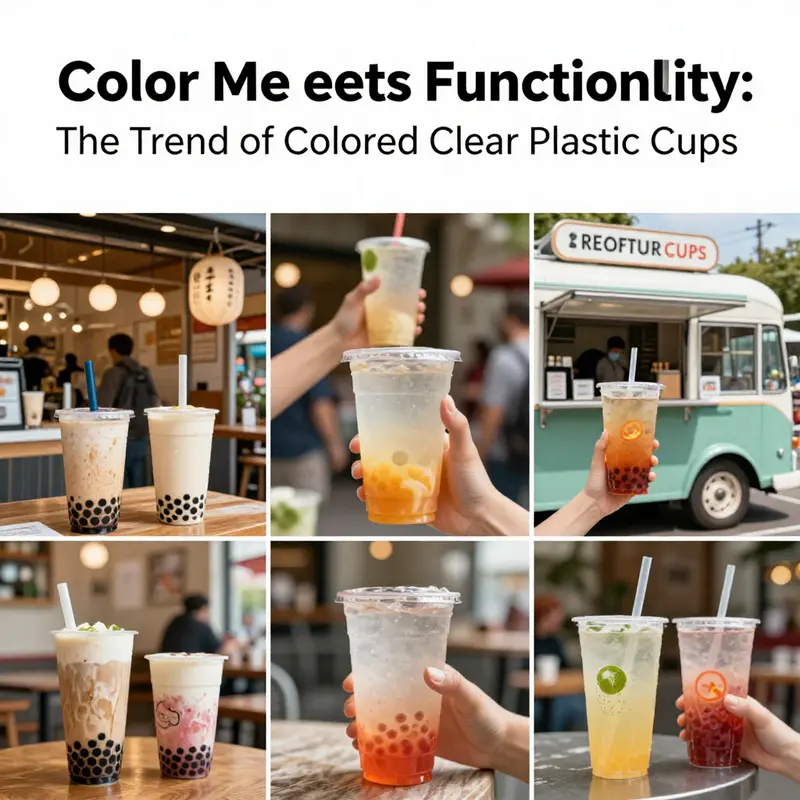
The visual appeal of colored clear plastic cups sits at an intriguing crossroads between transparency and tint. On the surface, these vessels read as simple, functional drinkware, but they carry a deeper story about how consumers experience food and beverage moments in environments that demand both clarity and character. The market for colored clear cups is evolving not merely because consumers crave brighter hues, but because they want their beverages to be part of a broader experience—one that is shareable, brand-consistent, and mindful of sustainability. In this light, the trend is less about a single color choice and more about a dynamic balance: cups that let the drink show through while adding a contemporary, sometimes seasonal, personality to the table. This balance is changing purchasing behavior across sectors, from casual gatherings to premium beverage settings, and it is shaping how producers approach design, material choice, and production efficiency.
Consumer preference in this space has shifted from a simple “colorful cup” to what might be called a color-informed practicality. People want products that elevate the appearance of drinks—so a bright blue or gentle amber tint can make a bright citrus, a berry smoothie, or a turmeric tea seem more vibrant on camera or in person. Yet the cup must also demonstrate reliability: it should resist temperature variations, hold up during transport, and maintain clarity where it matters most—the portion of the cup visible around the liquid and the drink’s color itself. This dual demand—visible content and durable form—drives a preference for cups produced with advanced materials and precision manufacturing. In practical terms, the consumer values a cup that reads as high quality, integrates cleanly with decor or branding, and still feels comfortable to use during a lively event or a busy service period. The result is a category that sits at the intersection of aesthetics and utility, with beauty enhancing function rather than replacing it.
Within the broader beverage world, colored clear cups are finding traction in premium and specialty segments. Craft sodas, smoothies, and high-end teas become more visually compelling when their containers echo the beverage’s own personality. The growing importance of social media has amplified this effect: a photograph of a shimmering drink inside a translucent, tinted cup can become part of a brand’s story in minutes, helping venues convey mood, seasonality, and product narratives without relying on printed signage alone. This visibility aspect is not incidental. For many buyers, especially younger consumers and event organizers, the cup is part of the brand experience, a passive ambassador that travels from venue to venue and appears in online feeds just as much as in person. Customization has thus become a strategic lever. Branded designs, seasonal colorways, and limited-edition collaborations invite customers to participate in the moment, to share, and to remember the occasion. The result is a broader demand for colored clear cups that are not only visually engaging but also highly customizable and easy to deploy at scale across multiple locations.
Sustainability enters the discussion as a non-negotiable attribute in many markets. Consumers today are more judgmental about environmental impact than in the past, and while the cup itself is not generally biodegradable, there is a clear push toward recyclable or compostable formulations and toward production practices that minimize waste and carbon footprint. In regions with strong circular economy policies, manufacturers are pursuing closed-loop recycling systems, using recyclable resins, or adopting bio-based or compostable alternatives where regulations permit. The conversation often centers on two levers: material choice and end-of-life management. On the material side, there is growing interest in formulations that enable easier recycling and that may enable compostability where feasible, such as polylactic acid (PLA) or polybutylene adipate terephthalate (PBAT) blends. On the end-of-life side, brands and manufacturers are experimenting with take-back programs and recycling partnerships to ensure cups do not simply disappear after a single use but re-enter the manufacturing cycle.
Regional dynamics play a substantial role in shaping which sustainability and customization strategies gain traction. In Europe and North America, regulatory signals such as directives and bans on certain single-use plastics have underscored the move toward recyclable and compostable materials, even in the context of color-tinted cups. The European market, often more risk-averse in terms of supply chain stability, tends to favor transparent pathways for recycling and clear labeling on colored products, helping users dispose of items correctly. In North America, the emphasis is often on reducing overall waste and improving end-of-life outcomes through better recycling streams, even as demand remains robust for visually striking cup designs in hospitality and events. Asia-Pacific markets present a more nuanced picture. The rapid pace of urbanization, the growth of delivery services, and the expanding footprint of social and experiential commerce have created strong demand for durable, lightweight, and visually engaging cups. Within China, policy measures aiming at measurable reductions in single-use plastics are accelerating the adoption of greener alternatives and responsible manufacturing practices, even as the appetite for color and clarity remains high. In markets where consumer awareness is rising, there is also a tendency to perceive colored clear cups as premium or value-added packaging that elevates the overall guest experience, rather than as disposable décor.
From a manufacturing perspective, the trend toward colored clear cups has benefited from advancements in production techniques. Injection molding remains a core process, but it is increasingly complemented by digital printing and multi-layer design approaches that preserve clarity while delivering intricate color patterns. For example, embedded pigments or thin color layers can create the subtle, translucent hues that modern consumers find appealing, without sacrificing the transparency of the cup body where it matters—the section that reveals the beverage. Micro-foam technology has emerged as a notable development, enabling thinner-walled cups that retain rigidity and heat resistance, thereby reducing material use and environmental impact. These technical strides support a broader objective: to deliver cups that feel premium in hand, display vivid color, and degrade more responsibly at end of life. In parallel, supply chains are optimizing for customization at scale. Shorter run lengths, faster color changes, and modular tooling allow brands to experiment with seasonal palettes or event-specific campaigns without sacrificing efficiency or consistency.
Branding and consumer engagement also shape demand in meaningful ways. As more venues move toward branded experiences, colored clear cups act as a canvas that reinforces identity without overshadowing the drink itself. Custom logos, color-matched accents, and even temperature-sensitive indicators integrated into the cup boundary can create a sense of novelty while conveying practical information, such as drink temperature or freshness cues. The aesthetic impact extends beyond the drink; it influences table arrangements, marketing collateral, and the way guests photograph and share moments. Accordingly, buyers—from event planners to restaurant owners and beverage producers—weight color, clarity, and branding potential as a combined value proposition. They want cups that harmonize with interior decoration and brand colors, while also performing reliably in a fast-paced service context and surviving the rigors of transport and storage.
The future trajectory for colored clear cups is likely to be driven by several converging forces. First, smart materials and packaging innovations hold promise for integrating dynamic color changes, temperature indicators, or simple data-collection features into the cup without compromising clarity. Second, continued investment in recyclability and carbon accounting—driven by consumer demand and regulatory scrutiny—will push producers to disclose manufacturing footprints and to pursue traceable supply chains. Third, expansion into non-traditional applications will broaden the market beyond beverages at social events. Whether in medical diagnostics, where transparency can support fluid level monitoring, or in automotive interiors and smart packaging, where colors can play a functional and branding role, colored clear cups may become part of broader packaging ecosystems. Each of these directions emphasizes a central insight: consumers increasingly expect products that deliver both aesthetic satisfaction and measurable value in terms of usability and sustainability.
The internal dynamics of consumer choice also reveal that color strategy is becoming more nuanced. Rather than opting for a single trend color, many buyers favor a palette that can be coordinated with seasonal themes, event types, or regional preferences. The most successful offerings deliver a spectrum of hues that complement the drink while staying compatible with standard serviceware. Importantly, this preference does not dilute the importance of clarity. Even with added color, the ability to see the drink remains a key driver of consumer trust and appetite. The delight comes from watching a drink glow through a tinted wall, from noticing how the color enhances the perceived temperature, and from recognizing that the vessel is designed to handle the demands of a busy moment. The result is a category that thrives on thoughtful design, pragmatic functionality, and responsible production practices, with consumer preference balancing the scales between beauty and responsibility.
As retailers and manufacturers respond to these trends, they increasingly view colored clear cups as more than disposable items. They are components of branding, storytelling, and experience design. They sit at the intersection of sensory appeal and operational efficiency, where the color is not merely decoration but a signal of quality and intention. This perspective helps explain why the market for colored clear cups remains dynamic: it is not simply about selling more cups, but about enabling a richer, more engaging beverage experience that can be celebrated in person and shared online. The fusion of design, sustainability, and practical performance continues to redefine what customers expect from disposable tableware, and colored clear cups are well positioned to meet those evolving expectations without compromising on clarity, durability, or environmental responsibility.
For readers seeking a broader, data-driven view of how regional dynamics and policy frameworks influence this category, a detailed market study of China’s transparent cup market offers a window into scale, growth rates, and material shifts that ripple into other regions. This external resource provides context for the rapid evolution seen in Asia-Pacific and the global shift toward circular economy practices, helping readers connect consumer preferences with the economics of production and the logistics of modern distribution. See the external reference for a deeper dive into market size, growth projections, and material transitions across major manufacturing bases.
Internal link note: to explore a practical example of how colored clear cups are positioned in event-driven packaging and menu design, you can review a product-focused overview that highlights the blend of aesthetics and utility in disposable tableware. disposable clear plastic cup for parties and events.
External resource: For region-specific market intelligence and forecasts that illuminate the interplay between consumer demand, regulatory drivers, and material innovation, see the China plastic transparent cup market report referenced in industry analyses: https://www.yjyreport.com/research/2025-china-plastic-transparent-cup-market-research-report.html
Final thoughts
Colored clear plastic cups are not just practical but are also essential tools in enhancing the visual and functional aspects of various beverages across industries. Their vibrant colors, versatility, and ability to seamlessly blend with event themes or brand identities make them a valuable addition for food vendors, beverage chains, and event planners alike. As consumers increasingly seek aesthetically pleasing and environmentally responsible options, colored clear plastic cups will continue to play a pivotal role in shaping the beverage service experience.