
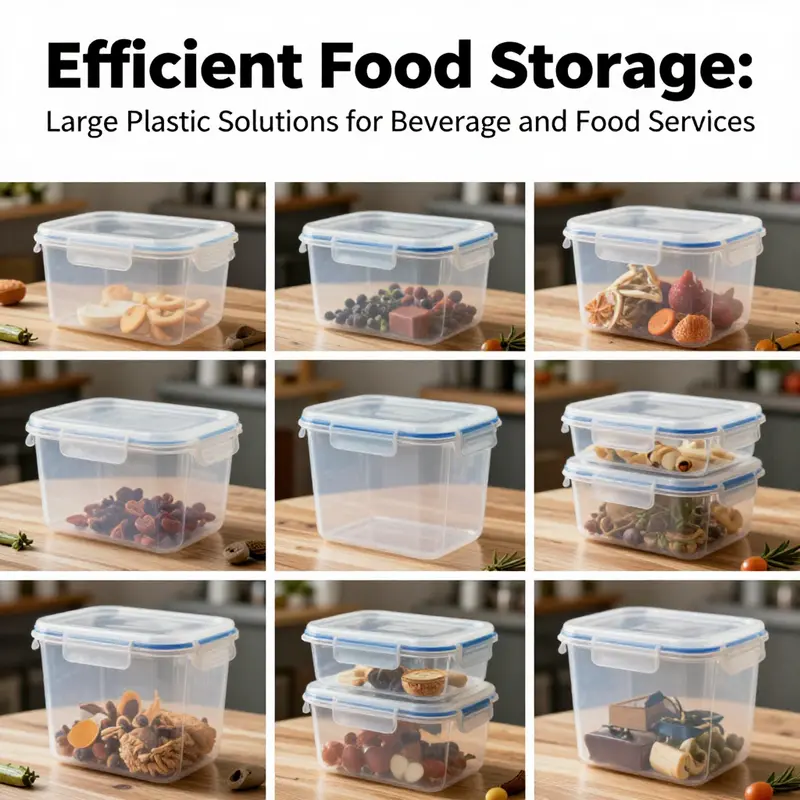
In the vibrant realm of food service—whether it’s a bustling bubble tea shop, a gourmet restaurant, or a mobile food truck—efficient storage solutions are crucial. Large plastic storage containers not only provide a means to organize ingredients and prepared meals but also ensure food safety and quality. This article delves into the significance of these containers across multiple segments of the food industry. Each chapter will explore essential aspects such as the different types and shapes suited to various needs, the materials and safety standards that keep food secure, innovative design features that enhance usability, and the latest market trends in bulk purchasing, ensuring your operation remains efficient and effective.
A Geometry of Freshness: Navigating the Types and Shapes of Large Plastic Food Storage Containers
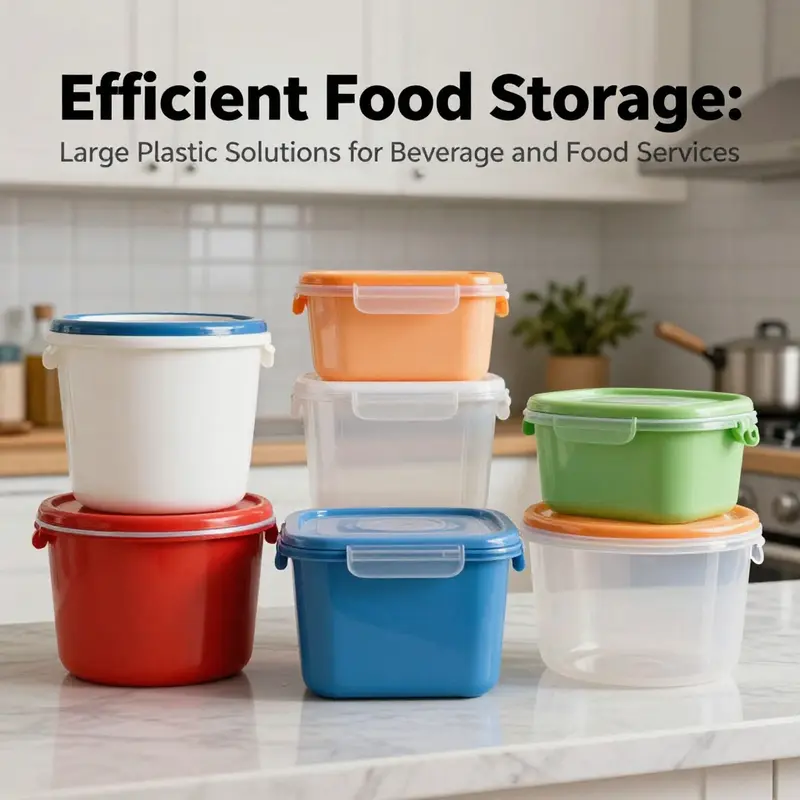
In modern kitchens, large plastic storage containers function as more than mere receptacles. They are the quiet workhorses that shape how we plan, prepare, and preserve, turning chaotic pantries and busy prep lines into orderly systems. The most visible difference among these containers is not just size, but form. Shape governs how well a container fits on a shelf, whether it stacks securely with a lid on, and how efficiently it drums up a batch of leftovers or a bulk ingredient. The spectrum runs from the robust, seamless interiors of rotomolded tanks to the modular, space-conscious dimensions of rectangular bins. Across this landscape, manufacturers balance durability, lightness, chemical safety, and ease of cleaning, aiming for designs that survive the rigors of daily use while keeping food safe and uncontaminated. The choice of shape and type, then, is not cosmetic. It is a fundamental driver of storage efficiency, hygiene, and workflow across kitchens, food service operations, and industrial facilities that handle ingredients at scale.
Rotomolded polyethylene tanks illustrate the high end of durability in the large-container family. These tanks are created by a rotational molding process that yields a single, seamless structure. There are HDPE and LLDPE variants, and the result is a container with remarkable impact resistance and no welds or seams that could leak. When a food-grade version is specified, it is designed to meet safety standards for storing consumable liquids such as water, juice, syrups, and dairy products. The strength of this form lies in its ability to withstand rough handling, which is common in bulk storage areas, liquid transfer rooms, and beverage production lines. Because the interior is typically smooth and non-porous, it’s easier to clean and less prone to harbor residues that could affect taste or safety. The trade-off, for some operations, is that rotomolded tanks tend to be large and bulky; their cylindrical profile can be space-efficient in certain layouts but may demand heavier equipment for movement when full.
A parallel track in the same landscape is occupied by Intermediate Bulk Containers, or IBC totes. These systems are designed for high-volume storage and transport of liquids and viscous ingredients. An IBC tote pairs a flexible, food-safe inner liner—usually HDPE—with a rigid outer frame that can be plastic or metal. The inner liner is the contact surface for the product, while the outer frame provides structural integrity and enables forklift handling. Typical capacities hover around 1,000 liters, roughly 264 gallons, which makes IBC totes a staple in supply chains that shuttle large quantities between suppliers, manufacturers, and distributors. The inner liner is often certified for food contact, ensuring compatibility with edible oils, syrups, sauces, and concentrated ingredients. When movement and containment are priorities, IBC totes demonstrate how a functional shape—the tall, rectangular silhouette with reinforced corners and a defined pallet footprint—supports both efficient storage and confident transport. In a coordinating system, these totes can be nested within racks or stacked with appropriate accessories, maximizing vertical space in warehouses and processing facilities.
For the storage of dry goods and viscous liquids in a kitchen or a bakery or a small-scale processing plant, stackable drums and buckets fill an essential niche. Cylindrical or slightly tapered, these containers come in standard sizes such as 5-gallon, 20-gallon, and 55-gallon formats. They are typically made from HDPE or PP and designed with reinforced rims, ergonomic handles, and features that aid stacking. The plastic chosen is a balance between impact resistance and chemical neutrality, assuring that the container does not impart flavors or aromas to stored foods. Food-grade variants are clearly marked to distinguish them from non-food-contact versions, a distinction that matters in settings ranging from commissaries to catering operations. These drums and buckets are especially valuable for dry goods like flour, sugar, or grains, but they also handle viscous liquids such as molasses, honey, and cooking oils when the seasons demand bulk quantities. The cylindrical form offers strength under vertical load and makes rolling or rolling-ahead movement feasible in larger kitchens, yet it can demand more storage depth than a rectangular bin when space is limited.
Beyond the walls of large-volume storage, plastic food storage bins and trays cater to the daily rhythms of food preparation and organization. These are usually rectangular or square, with flat bottoms and vertical sides designed to maximize stacking and to fit neatly on shelves, racks, or under work counters. Made from HDPE or similar food-safe plastics, they are rugged enough to withstand frequent handling and repeated washing, and many come with lids that protect contents from dust, moisture, and cross-contamination. In commercial kitchens, these bins are the quiet backbone of mise en place, allowing cooks to pre-portion and organize chopped vegetables, sauces, or portions of bulk ingredients. In processing plants, they support line-side storage of components, ensuring that ingredients move smoothly from storage to prep to product assembly. The flat-sided, rectangular geometry is particularly advantageous for tight layouts, enabling precise packing. The lids, often interlocking or snap-on, help preserve freshness and hygiene as items are transferred between stations or sent to cold storage.
When we talk about shapes, several configurations emerge as common and practical. Cylindrical drums and IBC totes excel in liquid storage and transport, leveraging curved surfaces to distribute pressure evenly and to resist sloshing. Rectangular and square bins maximize floor and shelf space, offering predictable packing and easy alignment with warehouse racking systems. An oval or reinforced-oval cross-section can provide a hybrid advantage, delivering stability on shelves while still enabling efficient stacking and interface with other shapes in a modular system. Meanwhile, custom or non-standard shapes appear when facilities confront unique workflow constraints or the need to fit into irregular equipment footprints. Custom injection or rotational molds can tailor a container to a particular piece of machinery or a specific packaging line, optimizing space usage and minimizing wasted volume.
Material choice remains a central axis along which shape and function align. Food-grade safety is non-negotiable for containers that come into direct contact with consumables. The most common materials are HDPE and PP, sometimes PET in lighter-weight roles, and occasionally LLDPE for flexible liners. Each material brings a different balance of rigidity, clarity, chemical resistance, and ease of cleaning. For example, PET that is about 0.3 millimeters thick can offer a compelling combination of lightness and structural integrity, making it a practical option for certain containers that do not require the heft of HDPE. Yet the safety and compliance framework often render HDPE and PP as the workhorses for bulk and long-term storage, thanks to their robust chemical resistance and proven performance in food-contact applications. Across materials, certifications such as FDA food-contact standards provide assurance that leaching and contamination risks are minimized, while compliance marks like RoHS and related standards help ensure that containers meet broader environmental and safety expectations.
The practical implications of these shapes and materials surface in everyday decisions about what to store and where. For leftovers and batch-prepped meals, rectangular containers with airtight, snap-on, or locking lids offer easy stacking in refrigerators and freezers, while their clear or translucent bodies help quickly identify contents. For bulk ingredients, IBC totes and rotomolded tanks supply the scales needed for efficient operations; their design supports both safe storage of liquids and straightforward handling with standard warehouse equipment. In kitchen prep areas, durable bins and trays with integrated lids enable rapid organization and quick access to prepped components, which reduces back-and-forth between stations and keeps workflow moving. The selection process, therefore, involves assessing not only the volume and type of food but also how the container will be handled, cleaned, and cycled through different temperatures and processes.
The quest for the right container is also a test of planning versus improvisation. A batch cook with a week-long menu may benefit from modular, stackable bins that fit tightly on a shelf and on a commercial refrigerator rack. A beverage facility handling large volumes of juice or dairy products will lean toward rotomolded tanks or IBC totes designed to maintain hygiene while supporting efficient cleaning regimes. A bakery or production line dealing with powders and dry goods will prioritize large-capacity drums and sturdy, easy-to-seal drums that can be moved with standard carts or forklifts. In every case, the goal is a symbiotic relationship between form and function: the container shape supports the product, and the product, in turn, validates the container’s geometry.
In the broader ecosystem of container design, labeling and content identification also play a role. Some models include labeling systems or compatibility with dry-erase markers and pens, enabling operators to annotate contents, dates, and batch numbers directly on the container or its lid. This capability complements the physical design by reducing the cognitive load required to track inventory across multiple storage zones. A comprehensive approach to storage design considers not only the container’s capacity and seal integrity but also how quickly a worker can recognize what is inside, how it should be handled, and when it should be rotated out of storage. These practical considerations are what ultimately determine workflow efficiency, hygiene standards, and the ability to maintain product quality during storage and transport.
For readers exploring this topic from a procurement or facilities management perspective, it is helpful to see how modern packaging solutions are marketed and designed in relation to user needs. A representative example can illuminate how a packaging system balances safety, microwave or dishwasher compatibility, and grease or stain resistance within a single, cohesive form. eco-friendly takeout boxes for food packaging provide a window into the broader design approach toward practical, reliable containment. They demonstrate how a container can be tailored to specific usage scenarios while preserving essential attributes such as strength, cleanliness, and ease of use. eco-friendly takeout boxes for food packaging. This reference highlights how suppliers conceive packaging for real-world applications, underscoring the principle that form and function must align to support efficient storage and transport.
When considering the spectrum of options, it is also useful to acknowledge the wider market context. Large plastic storage solutions for food come in a range of capacities—from modest domestic units to industrial-scale totes—and are offered with varying degrees of customization, including color, labeling, and even lid mechanisms designed to interlock for secure stacking. Bulk buyers and businesses often work with suppliers who provide sets that cover multiple sizes, enabling a coherent storage system that scales with demand. The practicality of these choices is grounded in safety and regulatory compliance; food-grade certifications and material certifications reassure users that the containers are suitable for contact with consumables and that they meet environmental and health standards. In any case, the selection process remains anchored in the specifics of what will be stored, where it will be stored, and how it will be moved through storage, prep, and service cycles. The geometry of storage, then, is not merely a matter of aesthetics; it is the architecture of a kitchen or facility’s efficiency, hygiene, and resilience.
External resource: https://www.alibaba.com/product-detail/High-Quality-Food-Grade-Plastic-Storage-Tank_1600871192675.html
Guardians of Freshness: Materials, Safety Standards, and the Trusted Role of Large Plastic Food Storage Containers
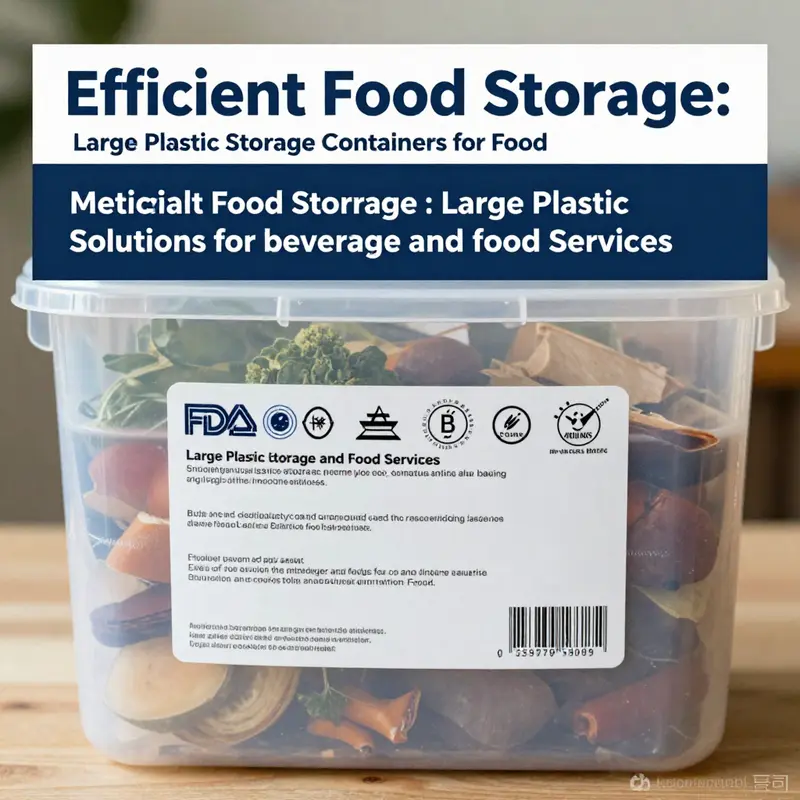
In kitchens, large plastic storage containers perform as guardians of freshness, balancing material science and safety norms. They do more than hold leftovers; they shape today and tomorrow of food safety, waste reduction, and convenient handling. The choices behind their construction—from foundational polymers to seals and coatings—affect how long food stays safe, how easily contents are visible, and how containers travel from refrigerator to freezer, pantry to prep area, and back again. The safety frameworks that govern use are part of the story, not aesthetics or price alone.
Common materials include forms of polyethylene and related polymers. PET offers optical clarity and rigidity; HDPE provides stiffness, chemical resistance and high impact tolerance; PETG blends clarity with enhanced impact resistance and a softer feel. PETG helps in stacking and transport where bumps occur but integrity must be preserved.
What makes these materials suitable for food contact is their interaction with food. The safety framework aims to prevent harmful leaching under normal use. Materials with food-contact approvals are manufactured to minimize residual monomers, additives, and contaminants, and to be suitable for repeated contact with consumables. Many containers are labeled BPA-free and aligned with recognized guidelines. Even when storing dry grains for months or thawing sauces, the material should not migrate into the food under typical temperatures and durations.
Seals, gaskets, and joining methods contribute to safety as much as the polymer. A robust seal reduces moisture ingress and oxygen exposure that can accelerate spoilage or promote microbial growth. Interior finishes are chosen to minimize staining and chemical transfer while easing cleaning. Smooth interiors and compatibility with cleaning methods help maintain sanitary storage.
Silicone components, including platinum-cured variants, often accompany storage solutions. Platinum-cured silicone is known for inertness and stability across wide temperature ranges, but not all silicone products are platinum-cured. If silicone parts are present, their formulation and curing method should be clear to ensure food safety under intended use.
Regulatory frameworks, such as FDA guidance and LFGB standards in some regions, guide how containers are produced, labeled, and marketed. Compliance is shown through certifications or explicit standards covering migration testing and environmental considerations. Manufacturers validate performance under repetitive use and clearly indicate safe use parameters on the product, such as temperature limits and dishwasher compatibility.
In practice, container design adapts to the stored contents. Dry goods favor tight seals and stackable shapes to minimize air exposure. Liquids or semi solids require leak-proof performance and robust barrier properties. Some configurations use multi-layer films or rigid walls that resist puncture while staying lightweight for safe transport.
Limitations exist. Stacking can waste space if shapes are mismatched. Pigmentation from foods may stain labeling. UV exposure can weaken certain polymers over time. Rotating stock and avoiding prolonged sun exposure helps maintain performance. For high-fat foods, barrier properties and stain resistance matter, as does easy interior cleaning.
Good safety practice includes selecting polymers with established food-contact approvals, validating performance under repeated use, and clearly indicating safe use parameters on the product. The goal is predictable behavior across a wide range of conditions—from humid pantries to deep-freeze and occasional reheating.
Ultimately, the strength of large plastic storage containers lies in material choice, sealing technology, and regulatory alignment. They should be food safe, leak resistant, and clearly documented for safe use. When these elements come together, a simple box becomes a durable tool for organization, safety, and efficiency in homes and professional kitchens.
Design DNA for Freshness: The Invisible Engineering Behind Large Plastic Food Storage Containers
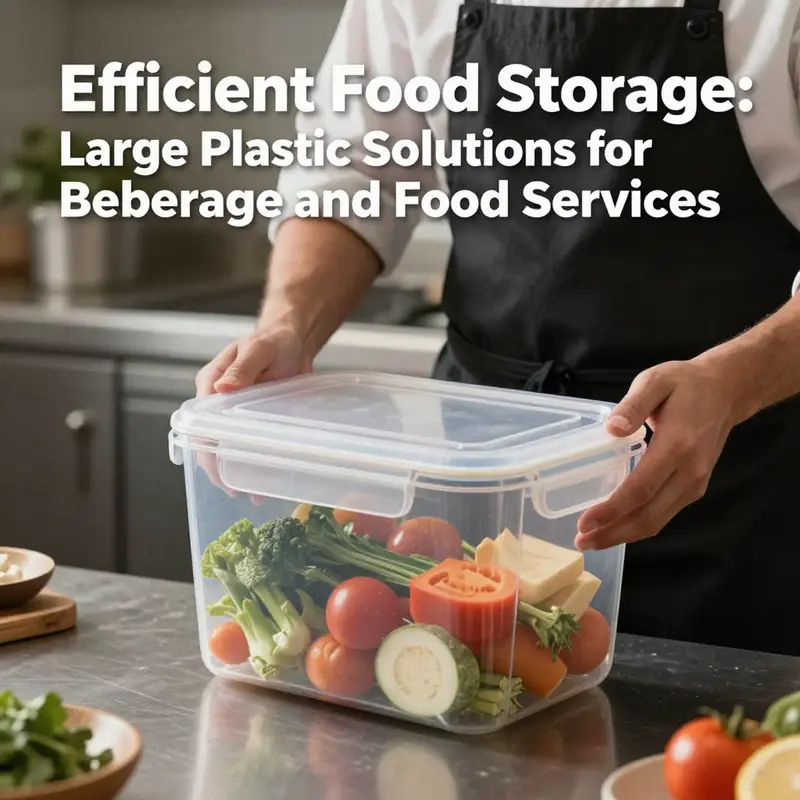
Every kitchen story about storage begins with design. It is not the flash of a glossy lid or the lure of a bold color that carries the day; it is the quiet, exacting engineering behind the container’s walls, seals, and geometry. When large plastic storage containers are chosen for food, what matters most is a converging set of priorities: safety, hygiene, durability, and space efficiency. These priorities create a design DNA that threads through every decision—from the material selected to the way a container stacks in a crowded pantry. In both home kitchens and commercial environments, the best designs translate into fewer spoiled ingredients, less waste, and a smoother workflow that keeps staff focused on food quality rather than on logistics. The features described here are not prop features for popularity; they are practical, tested choices that enable real-world performance in the life that food storage must live, day after day, in the fridge, the freezer, or the prep bench.\n\nMaterial choice anchors this entire design philosophy. The most trusted large storage containers rely on food-grade plastics, with high-density polyethylene (HDPE) and other certified polymers taking center stage. These materials are selected for their resistance to leaching, their non-toxic and odorless profiles, and their stability when in contact with a wide range of foods. The ideal material resists the chemical migration that could compromise flavor or safety, yet remains light enough to be handled easily, even when full. In many discussions about safety and performance, the emphasis is on avoiding substances that could migrate into food; the best options are BPA-free and conform to widely recognized standards such as FDA recommendations, ensuring compliance with food-contact safety requirements without sacrificing clarity or strength. The practical upshot is a container that feels sturdy in hand yet remains portable enough to move through kitchen workflows without fatigue. Some discussions highlight the use of PET or PP in conjunction with HDPE components to optimize transparency, rigidity, and chemical resistance, especially for containers that are expected to endure frequent opening and closing, or that must survive the cycles of a busy kitchen.\n\nAirtight, sealed lids are another pillar in this design language. The lid system is more than a cap; it is a carefully engineered interface that creates a dependable barrier against moisture, dust, and other contaminants while still enabling easy, one-handed operation when hands are wet or full. The seals themselves are chosen for longevity and resilience, maintaining their integrity through repeated snap-locks and unseals. The seal is essential not only for preserving the texture of stored items—flour, grains, dried beans, or chopped vegetables—but also for maintaining the safety and freshness of prepared foods kept in refrigeration. A well-sealed lid reduces the risk of cross-contamination and protects contents from spurious odors that can migrate from one item to another during long storage. In many designs, the interplay between lid geometry and the container’s walls also supports gas exchange control, a nuance that helps keep produce or ready-to-eat dishes from developing off-flavors while stored for extended periods.\n\nSpace efficiency and organization flow from another core decision: the stackable form. Rectangular shapes are favored in this regard because they align neatly with shelves, refrigerators, and pantry corners, making the most of vertical space and minimizing wasted area. The stacking logic is not accidental; it is engineered into the base, the lid edge, and the sidewalls to prevent wobble and to keep a vertical column stable when multiple units are stacked. A good design anticipates the loads of the stack, reinforcing the base and walls, so that the container remains rigid during transport and when full. In busy settings, the confidence that a stack will remain secure encourages organizers to tighten up inventories and plan meals or bulk storage with greater precision. The aim is a clean, orderly stack that reduces the likelihood of slippage, tipping, or accidental spills.\n\nHygiene is inseparable from storage design. Rounded corners and smooth, seamless interiors are deliberate choices to minimize crevices where crumbs, bacteria, or moisture can linger. Sharp edges are avoided not merely for ease of cleaning but to promote sustainable, repeatable sanitation cycles. The interior geometry—a gentle curvature at corners, a smooth, wipeable surface—allows rapid cleaning with standard commercial or household sanitizers. This is especially important for containers used to store chopped vegetables, grains, or leftovers; in these cases, the risk of residue buildup can compromise both flavor and safety over time. The surface treatment extends to the exterior as well, where smooth finishes resist scuffing from frequent handling and maintain a breathable, hygienic appearance that signals cleanliness to users who rely on visual cues during busy service.\n\nTransparency, both literal and functional, is another design detail that supports efficient use. Many large storage containers feature transparent or semi-transparent walls. The visual access they provide reduces the time spent opening containers to check contents, which in turn minimizes temperature fluctuations and exposure to air that can degrade quality. This visibility is complemented by labeling systems—whether integrated on the lid or easily applied to the side—with space for content names, dates, and batch information. The combination of clear walls and clear labeling accelerates inventory checks, simplifies rotation practices, and helps users distinguish similar items without breaking the seal or introducing contamination risks.\n\nErgonomics and handling are woven into the design through integrated handles and grip-friendly textures. Lifting a full 7- to 20-liter container requires leverage and control. Side-handles or top grips provide secure, comfortable points of contact, even when the container is heavy or when the user’s hands are wet or oily. The handle design often balances weight distribution with ease of rack access, enabling a quick grab or cavity slide without needing to tilt or tilt awkwardly. Ergonomic considerations extend to lid operation as well; a well-fitted lid that snaps closed with a confident, tactile click reduces the risk of accidental openings during transport. A container that feels secure in the hand is more likely to be used properly, which in turn protects the contents and extends the product’s lifespan.\n\nDurability under load is a practical reality of large storage containers. Even lightweight plastics can withstand substantial pressure when properly reinforced. Designers strengthen walls and bases to resist deformation under the weight of stored foods and under the stress of repeated stacking. The reinforced structure is the quiet workhorse behind long service lifespans, ensuring that containers survive daily use, frequent cycles through freezers or dishwashers, and the occasional unexpected drop without cracking or warping. The reinforcement does not add unnecessary bulk; it is a matter of optimizing wall thickness, ribbing, and geometry so that durability grows without sacrificing weight or cost efficiency.\n\nVersatility across kitchen activities is part of the design DNA as well. Some models are conceived to be microwave-safe, freezer-safe, or dishwasher-safe, offering a level of flexibility that extends beyond simple cold storage. The trade-offs here are nuanced: while full microwave compatibility is desirable in some contexts, it may require specific wall thicknesses or venting strategies to prevent heat buildup or material degradation. Freezer safety demands a different balance, favoring formulations and seams that resist becoming brittle at low temperatures. Dishwasher compatibility often implies a coating or treatment that withstands high heat and caustic detergents without clouding or delaminating. When these capabilities align, a container becomes a single tool that streamlines food preparation and storage across stages—from bulk cooking to chilling, reheating, and serving.\n\nThe labeling and organization features sometimes extend beyond simple text fields. Many designs support color-coding schemes or insertable content labels to help teams identify contents at a glance. A well-planned labeling system reduces the need to open containers for verification, preserving the integrity of the seal and maintaining consistent storage temperatures. For home cooks, these features enable efficient meal-prep routines and predictable pantry organization. For restaurant staff or caterers, such systems translate into faster service, reduced cross-contact risks, and more reliable inventory management.\n\nIn practice, the value of these design choices becomes clear when you consider the lifecycle of a large storage container. A well-designed unit may serve for years, enduring countless fills and cleans, while maintaining rigidity, seal integrity, and clarity. The cost of ownership—the combination of purchase price, durability, and the frequency of replacement—moves in favor of higher-quality designs that emphasize safety and hygiene. This is not merely about meeting a regulatory checkbox; it is about supporting daily routines, from batch cooking to portion control, that rely on predictable, repeatable storage performance. In bulk contexts, where sets range from a few liters to well over a dozen liters, a well-engineered system makes the math of inventory, rotation, and waste reduction more favorable, which matters for kitchens that must balance efficiency with strict food-safety standards.\n\nFor readers seeking a real-world touchstone that illustrates how these design features translate into practice, consider how a practical large storage system can support bulk organization and batch-prep operations. A rectangular, stackable container with an airtight lid and a robust base will slot into rows of shelving, allowing teams to pre-portion meals, freeze components, and easily retrieve them for service. The ability to see inside at a glance, aided by a clear wall and an informative labeling approach, means fewer misplacements and less time spent hunting for ingredients. The ergonomic handles invite safe lifting, even when the bin is loaded with frozen vegetables or dry goods. And the reinforced structure keeps it resilient through daily wear and tear, washing cycles, and the occasional accidental bump that would otherwise lead to costly replacements.\n\nOne aspect of the broader discussion that is worth noting is how these design features intersect with global supply chains and procurement practices. In bulk purchases, sets often span a range of capacities—from two liters up to thirty-one liters—so kitchens can tailor their stock to different storage needs. The design emphasis remains consistent across sizes: secure sealing, predictable stacking, hygienic interiors, and appliance compatibility where appropriate. While suppliers in global markets offer various configurations, the core principles of safety, usability, and space optimization remain constant. This coherence across sizes helps institutions standardize inventory practices, reduce training time for staff, and simplify maintenance and replacements over long product lifecycles.\n\nTo connect the discussion to a broader resource, you can explore a practical example that demonstrates the kind of packaging design features discussed here. eco-friendly disposable 3-compartment food-grade packaging box for fast food. While this reference focuses on a takeout context, the underlying ideas about material safety, seal reliability, and ease of handling illuminate why the same design ethos matters for large home or commercial storage containers. And for those who want to dig deeper into safety standards and guidelines governing food-contact materials, accessible external resources such as the FDA’s guidance on food-contact materials provide a rigorous framework for evaluating the performance of these containers in real-world use. External readers can review contemporary standards to appreciate how manufacturers translate policy into practical design decisions that affect everyday food storage. See for instance the FDA’s food-contact materials guidelines for a deeper, regulatory perspective on safety and compliance.
Rising Volumes, Smarter Sourcing: Market Trends and Bulk Buying of Large Plastic Food Storage Containers
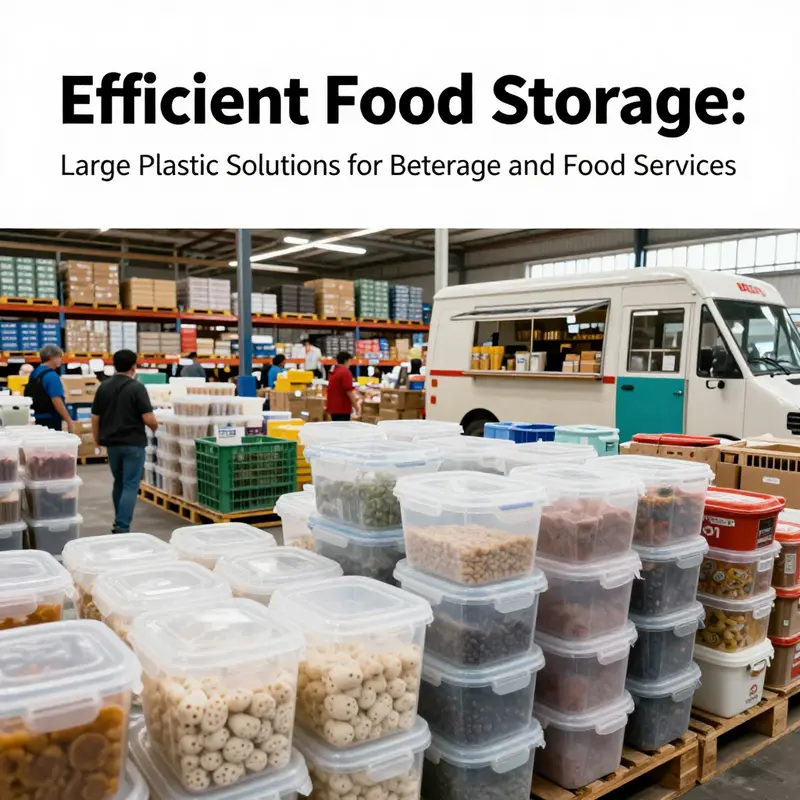
Large plastic storage containers for food sit at the intersection of everyday practicality and strategic procurement. They are not mere vessels; they are a logistical backbone for kitchens that want to move quickly, keep foods safe, and minimize waste. In recent years, the market for these containers has shifted from a purely functional add-on to a platform for efficiency, sustainability, and scale. This shift is driven by two forces that rarely align perfectly in other packaging categories: the accelerating pace of consumer demand and the evolving rigor of regulatory and safety standards. In tandem, manufacturers have advanced materials, designs, and supply chains that enable bulk buyers—whether in large households, professional kitchens, or food-service operations—to squeeze more value from each container without sacrificing safety or durability. The result is a market that rewards not only capacity and seal performance but also lifecycle thinking, environmental responsibility, and predictable supply.
In China, the plastic packaging and container sector is undergoing sustained expansion, with expectations that the 2026 market size will reach a substantial level in RMB terms. Growth is described as steady, supported by rapid e-commerce development and upgrades in domestic consumption. These forces elevate the demand for storage solutions that are both reliable and easy to move through a high-volume supply chain. A key indicator cited in industry analyses is the year-on-year increase in procurement volume of plastic packaging boxes and containers on major e-commerce platforms, signaling that bulk ordering is best viewed not as an occasional purchase but as a core business process. While exact figures are often presented as placeholders in market briefs, the trajectory is unmistakable: more containers, more varied sizes, and more attention to total cost of ownership over the product’s life cycle. The Chinese market’s appetite for efficient, safe, and scalable storage aligns with global growth patterns for plastic containers, reinforcing the idea that bulk purchasing is a strategic capability, not merely a cost-center activity.
Sustainability has moved from a buzzword to a market driver. Consumers and institutions are increasingly choosing lightweight, recyclable, and biodegradable packaging options when the trade-off with durability and price is acceptable. The premium segment—containers that combine eco-friendly materials with long service life and obvious end-of-life clarity—grows faster than standard offerings. Industry projections point to a rising share of premium, green containers reaching and perhaps exceeding a substantial percentage of total sales in 2026, up from a prior baseline. This shift is echoed by broad consumer behavior changes, such as preferences for products that outlast disposable cycles and align with corporate sustainability goals. In practice, this means more laboratories and quality-control teams are weighing not just the initial cost but the environmental footprint, the ease of recycling, and the energy expended during production and transportation. The net effect is a market where sustainability and performance are not mutually exclusive but mutually reinforcing, especially for buyers who gear procurement toward long-term cost efficiency and reputational value.
One of the most telling signals of market maturity is how durability is tested and quantified. Third-party testing from 2025 highlights a multi-criterion approach that weighs material performance at 25 percent, structural design at 20 percent, application suitability at 15 percent, and, most importantly, durability at 40 percent. In plain terms, a container must survive repeated cycles of loading, sealing, and temperature fluctuations while preserving its seal and resisting deformation. The emphasis on durability reflects real-world usage in commercial kitchens, where containers face frequent handling, rough transport, and long storage periods. Merchants’ feedback—gathered from more than a thousand points of sale and distribution networks—consistently underscores that a robust container is not merely a good idea; it is a prerequisite for reliable stock control, hygiene, and food safety. The message for buyers is clear: invest in core design integrity and you reduce leakage, spoilage, and replacement costs, which in turn supports more aggressive bulk purchasing programs.
The size range that bulk buyers encounter is intentionally broad, spanning from about 2 liters up to 31 liters, with common configurations including 4.5, 7.5, 12, 20, and 31 liters. This spread is not accidental. It mirrors the varied needs of batch cooking, meal prep, pantry organization, and industrial storage. A typical large operation might standardize on a handful of sizes that fit neatly on shelves and in coolers, enabling predictable stacking, labeling, and retrieval. The practical implications for procurement are significant. Suppliers offer sets and bundles designed to maximize space efficiency, with stackable designs and interlocking lids that minimize space in transit and in storage. For bulk buyers, the appeal is not merely in the unit cost but in the total value delivered by a coordinated set of containers that complements the workflow, reduces spoilage, and lowers the risk of mislabeling during busy service periods. The market’s competitive dynamics—intense competition and new entrants—drive ongoing improvements in both price and performance, while buyers sharpen their criteria around lifecycle cost, material quality, and regulatory compliance.
The broader market context for bulk purchasing is instructive. While the global plastic container market aspires toward a multi-hundred-billion-dollar valuation with a healthy CAGR, the Chinese segment demonstrates accelerated growth fueled by domestic consumption and a robust logistics ecosystem. A substantial share of the Chinese market is still dominated by high-volume production, with polypropylene-based containers (PP) serving a large portion of industrial applications and packaging lines. Yet the trend toward advanced polymers and polymer blends—balanced for strength, chemical resistance, and lighter weight—persists. This is not merely about weight for transport. Lighter containers reduce energy use in warehousing and distribution, contribute to lower packaging costs per unit, and make the case for bulk purchasing even more attractive in high-demand periods. The preference for materials that withstand chemical leaching, while staying BPA-free and compliant with standards such as FDA 21 CFR 177.1630 and RoHS, remains a non-negotiable baseline for food-contact containers. In a supply chain that stretches across borders, such compliance anchors buyer confidence and supports sustained bulk buying cycles.
For those tasked with sourcing at scale, the total lifecycle cost becomes a central lens. Price alone does not tell the full story. A container’s initial cost must be weighed against its service life, resistance to cracking or yellowing, ease of cleaning, and the potential for reuse across different temperature ranges in freezers, refrigerators, microwaves, and dishwashers. The lifecycle calculus also includes storage density. Because rectangular shapes align efficiently on shelves and in racks, they often offer better space utilization than round designs in many settings. When evaluating suppliers, buyers increasingly prioritize those who can demonstrate consistent material quality across production lots, reliable lead times, and a track record in regulated industries. The ability to customize sets—varying capacities from 2 to 31 liters, adding labeling aids, or bundling with compatible lids—becomes a strategic advantage. In markets where MOQs are a constraint, buyers may negotiate tiered pricing or flexible MOQ terms that reflect seasonal demand or large contract commitments. The overarching aim is to build a dependable supply chain that supports ongoing bulk purchasing, reduces stockouts, and aligns with safety and sustainability targets.
Design details matter more than ever. Ergonomic handles, secure snap-on or locking lids, and interlocking mechanisms are not cosmetic features; they are essential for safe handling when containers are full and when they are stacked high in a pantry or transport rack. Many models are engineered to handle multiple cycles in a commercial dishwasher or a commercial freezer, with materials chosen for chemical resistance and temperature stability. Labeling systems—pens and labels included with sets—address the practical need to organize contents, dates, and batch information, a feature that proves valuable during large-scale meal prep and bulk distribution. The best designs also consider microwave compatibility and easy-to-clean interiors, minimizing food residue and simplifying sanitation in busy environments. Buyers increasingly expect containers to be certified for food safety, backed by robust documentation of the materials, manufacturing processes, and end-of-life options. In other words, the best bulk buys deliver not just productivity gains but also trust that the containers will perform as required in demanding food storage contexts.
The procurement conversation, then, threads together regulatory compliance, material science, and operational efficiency. It is a conversation about risk management as much as it is about reducing purchase costs. Suppliers who can articulate a clear value proposition—combining durable construction, lightweight design, and a transparent supply chain—emerge as preferable partners in the bulk market. For buyers who want to anticipate future shifts, watching for signs of continued investment in green materials and recyclability is prudent. The industry’s trajectory suggests that the path of least resistance for bulk purchasing will be paved by containers that balance performance with environmental responsibility, backed by dependable supply, clear safety certifications, and compatibility with the workflows that kitchens rely on every day. This is why the next phase of market development is less about a single “best container” and more about a portfolio approach: selecting a core set of sizes and features that optimize space, safety, and cost across the entire storage continuum.
The practical takeaway for readers managing food storage at scale is straightforward: align procurement with workflow, safety, and sustainability goals, and push for visibility across the entire lifecycle of the containers. Start with the core sizes that fit your shelving, plan for high-rotation items with clearly labeled contents, and ensure lids seal reliably in both cold storage and warm service environments. Prioritize materials that meet or exceed safety standards and favor suppliers who can demonstrate consistent quality across production lots and time. In this framework, the shopping list becomes a strategic tool rather than a simple checklist. It becomes a lever that can raise throughput, reduce waste, and reinforce a brand’s commitment to safe, responsible food storage practices. The result is a more resilient supply chain, capable of meeting the pressures of modern kitchens and the evolving expectations of customers who value both performance and provenance.
For readers seeking a concrete reference on how market dynamics translate into product choices, consider how a representative line of eco-friendly packaging options might inform a bulk purchasing decision. eco-friendly disposable 3-compartment packaging box provides a tangible example of how packaging advances can influence the broader storage ecosystem. The emphasis on environmental attributes, while maintaining robust performance, mirrors the expectations buyers bring to large plastic storage containers for food. Such examples illuminate how innovation in one segment—disposable, multi-compartment boxes—can parallel improvements in long-term storage solutions, reinforcing the value of a holistic approach to bulk procurement that integrates materials science, safety, and sustainability. In the end, the market rewards those who connect the dots between storage efficiency, product integrity, and responsible sourcing.
External research and market analyses underscore the scale of opportunity and the strategic value of durable, safe, and eco-conscious containers. For a broader, data-driven perspective on the trajectory of the plastics container landscape, see Global Plastic Containers Market Forecast to 2030. https://www.globalenvironmentalresearch.com/global-plastic-containers-market-forecast-to-2030
Final thoughts
Large plastic storage containers emerge as indispensable assets in the food service industry. Their diverse shapes and designs facilitate optimal organization, while compliant materials ensure that food remains safe and fresh. Understanding market trends and bulk purchasing can further enhance your operations, aiding not only efficiency but also profitability. As your business flourishes, investing in high-quality storage solutions is a proactive step toward success.