
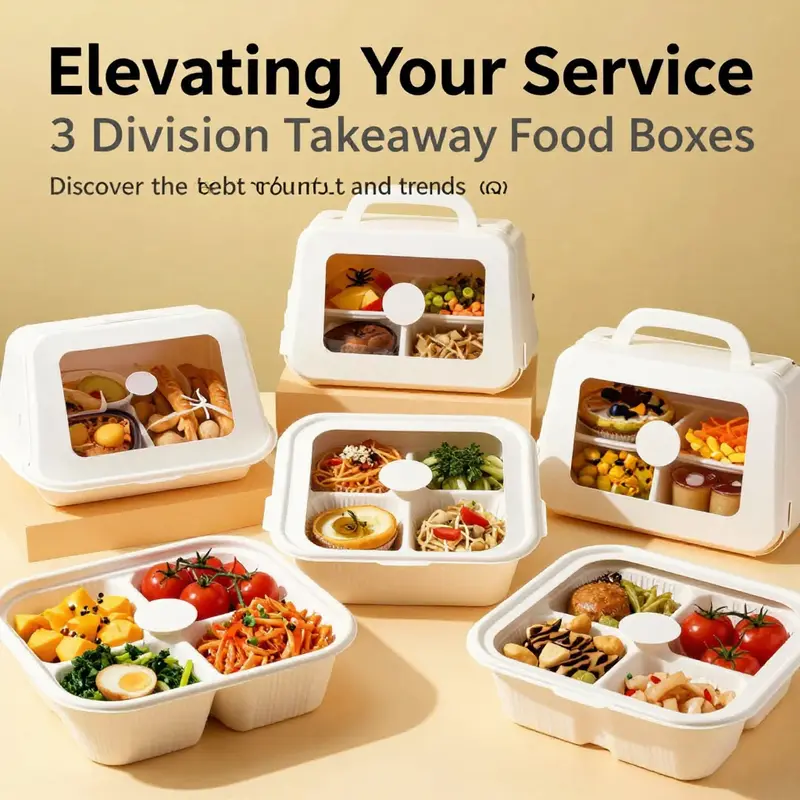
In today’s competitive food service landscape, presentation and functionality matter more than ever, especially when it comes to takeaway packaging. The 3 division takeaway food box with a window stands out as an essential solution, offering a way to showcase food appealingly while providing practicality for various dining scenarios. This article dives into the key manufacturers leading the charge in producing these versatile boxes, effective sourcing channels to connect with them, and the latest innovations and market trends that are shaping the future of takeaway packaging. Each chapter aims to provide an in-depth understanding to empower Bubble Tea Shops, Restaurants, Food Trucks, Catering Services, Event Planners, and Corporate Procurement Teams to make informed purchasing decisions.
null
null
Windowed Pathways: Sourcing 3-Compartment Takeaway Boxes with Windows for Brand-Driven Takeout
Windowed 3-compartment takeaway boxes are more than containers; they are design touchpoints that mingle brand and customer perception through a visible window and precise partitioning. For operators, this packaging signals value and reliability, while for brands it becomes a stage to present portion control, temperature maintenance, and branding. The journey from concept to shelf or doorstep involves material science, regional manufacturing ecosystems, and procurement strategies aligned with sustainability and speed to market. China sits at the heart of disposable food packaging supply, with hubs and networks that support consistent sourcing, customization, and lead-time predictability. Regions like Shandong and Fujian have specialized capabilities in sustainable packaging, offering grease and moisture barriers, printing, and die-cutting precision. These hubs enable green substrates and window technologies that meet environmental goals while preserving visibility and barrier performance. Material choices range from kraft paper boxes with window films to fully plastic window boxes. Hybrid solutions that pair kraft bases with clear windows also exist, enabling compostable end-of-life while keeping on-brand presentation. The window geometry must ensure seal integrity, moisture barriers, and microwave safety when needed. Labeling and coatings must resist water and abrasion during transit. Procurement relies on B2B marketplaces and supplier ecosystems; certifications such as FSC or ISO and MOQs and lead times shape decisions. Alibaba is a key channel for direct procurement and vetting. Branding opportunities arise from color and imagery on the exterior, coordinated with the windowed graphic language, while the window can frame and guide attention to the most appetizing elements. Sustainability has moved to baseline expectations, with recyclable and compostable substrates and practices that reduce plastic usage. Regional hubs in Shandong and Fujian illustrate that eco-friendly concepts can scale without sacrificing performance. A disciplined approach to packaging optimization includes rapid prototyping, window size and film thickness iterations, and validation for microwave safety and seal integrity under stacked packaging. Consumer-facing implications include a perception of freshness and trust, and the window offers a glimpse into quality while preserving heat and preventing leaks. The windowed box thus becomes a strategic asset for brands seeking to balance operation efficiency, brand storytelling, and sustainability. For practical development, brands can explore supplier guides and product listings that discuss materials, window configurations, and customization capabilities. A practical reference path is to review resources and case studies from suppliers that highlight windowed formats and bakery packaging concepts, which can inform three-compartment configurations for more complex meals. Finally, the supply chain benefits from combining global scale with regional agility, rapid prototyping, and a packaging program that can scale with business growth and evolving menus. An example resource is a supplier directory and content that outlines regional differences, certifications, and production capacity, helping teams optimize cost, lead time, and customization. External links and supplier guides can complement direct collaboration with manufacturers and help anticipate challenges in multi-region sourcing.
Seeing Through the Box: Design, Sustainability, and Market Momentum in 3-Compartment Takeaway Boxes with Windows
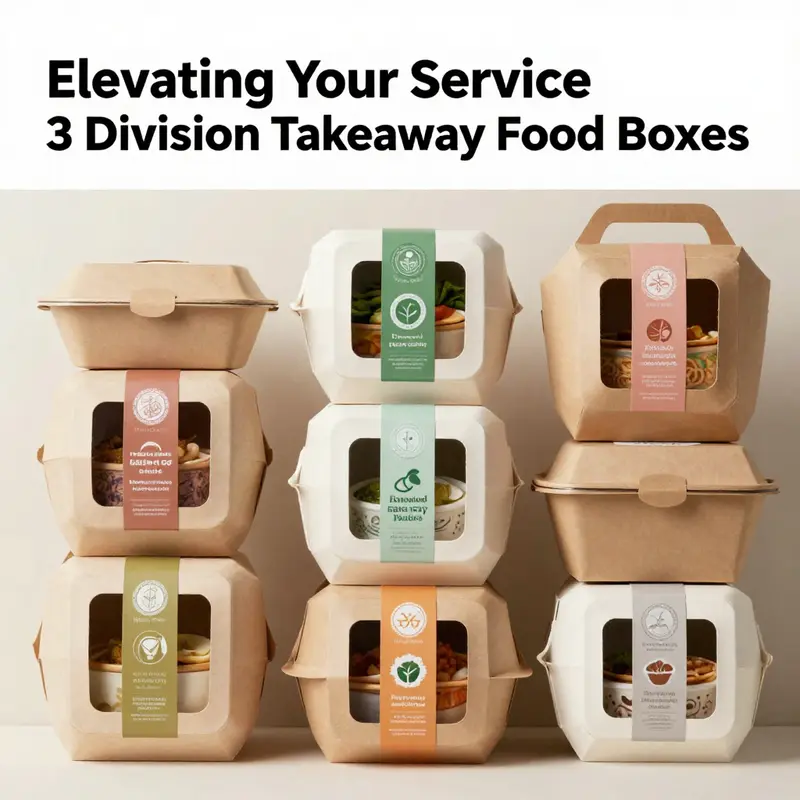
The evolution of the 3-compartment takeaway box with a window is less about a single clever feature and more about a confluence of design intuition, sustainable material science, and a logistics ecosystem that prizes speed and reliability. In markets where fast food, casual dining, and grab-and-go snacks compete for attention in an overstuffed display of choices, a package that reveals its contents while protecting the food inside becomes a powerful instrument of trust and efficiency. The windowed 3-compartment box offers a quiet, persuasive promise: you can see what you are about to eat, and the container will keep it intact through the last bite. This isn’t just about transparency; it is about reducing ambiguity at the moment of purchase and reducing friction at the point of pickup. Brands, manufacturers, and packaging engineers have learned to translate that moment into a package that travels well through bustling kitchens, crowded streets, and the tight timelines of delivery before the last mile. The story of this packaging format is thus a story of three intertwined forces: material futures, design sophistication, and a manufacturing landscape that has become a global backbone for takeout culture.
At the core of the current wave is a shift toward eco-friendly materials. The push from consumers toward sustainability has become more than a moral preference; it is an operational imperative that reshapes what counts as a viable window box. In key production provinces along the eastern and southern coasts of China—areas long associated with rapid prototyping and high-volume assembly—the question is not merely how to create a clear window but how to do so without compromising the integrity of compostable or recyclable substrates. Kraft-paper-based substrates with clear windows are increasingly common, yielding a composite that signals environmental responsibility while still delivering the visual appeal that the window provides. Shandong and Fujian, in particular, have emerged as important hubs for green packaging innovation, leveraging local expertise in paper science, coating technologies, and process engineering to bring new materials from concept to scalable production. These regional strengths translate into shorter lead times for prototypes and faster iteration cycles—an advantage for startups testing novel concepts or brands seeking to differentiate themselves in crowded markets.
This material evolution matters not only for sustainability but for the economics of mass takeout. Paper-based substrates, especially those with transparent windows, can be engineered to behave like plastics in terms of moisture resistance and grease handling, while remaining far more recyclable. The challenge has always been balancing barrier properties with visibility; the clear window must not become a weak point in the box’s structural integrity, nor should it promote condensation that fogs the view and spoils the consumer’s impression. Advances in coatings and lamination bring improved grease resistance and print quality to the surface, enabling logos, branding, and even menu graphics to remain legible in the window area. The trend toward self-locking lids and die-cut windows on the top or side panels reflects a broader push to reduce assembly steps at the point of packaging, which is a practical response to the high-volume throughput typical of fast-food counters and delivery kitchens. In such environments, ease of use becomes a competitive differentiator; the ability to close securely without tape or adhesive preserves speed and reduces labor costs, while maintaining a compact, stackable footprint for delivery fleets. The consequence is a packaging ecosystem where the window is not a decorative flourish but a reliability feature that aligns with the pace of modern takeout.
From a design standpoint, windowed 3-compartment boxes have become a canvas for functional aesthetics. The compartments themselves can be tuned for a range of food items—hot-and-crispy chicken, soft wraps, salads with dressing on the side, or layered sandwiches—each requiring a precise balance of moisture management, aroma retention, and separation. The geometry of the die-cut window is a subtle yet essential element. A window placed on the top panel provides an unobstructed view at the moment of purchase, while a window on a side panel can be paired with a lever-like fold or a small flap that helps users peek at the contents without exposing the entire surface to air. The three compartments demand a disciplined approach to internal dividers: the walls must prevent cross-contact, resist deformation under gravity, and remain robust during stacking—which means the die lines and fold patterns are crafted with both strength and efficiency in mind. Self-locking mechanisms and hinge lids add another layer of sophistication. They are designed to snap shut with a confident click, eliminating the need for tape or glue in many configurations. The result is a packaging system that feels reliable in the hand, like a well-engineered tool, rather than a disposable afterthought. In the hands of a skilled operator, such a box becomes a tool for speed and accuracy: the same lid that protects the contents during transit also communicates care and quality to the consumer.
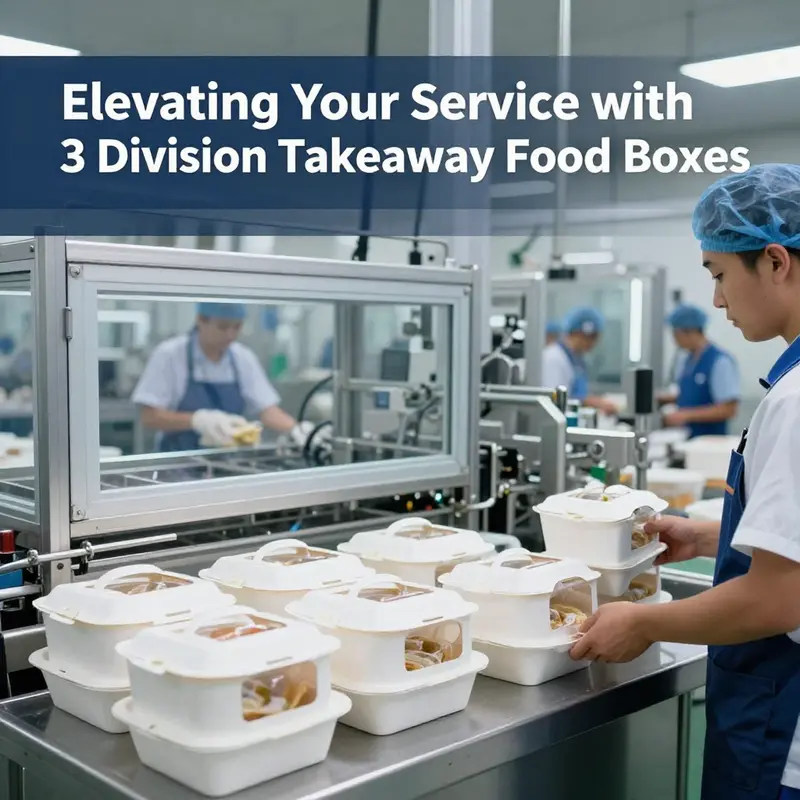
The manufacturing landscape that underpins these capabilities is dominated by a global epicenter of plastics and fiber-based packaging, with China continuing to play a pivotal role. The country remains a leading producer of disposable food containers overall, with a substantial share of the world’s output. Three provinces—Guangdong, Shandong, and Zhejiang—stand out for their deep supply chains, advanced automation, and skilled labor pools. Guangdong’s cluster of packaging firms is renowned for precision tooling, die-cutting capabilities, and the ability to scale from pilot runs to full production with minimal disruption. Shandong, with its long history in green packaging research and a strong emphasis on sustainable substrates, serves as a hub for material innovation and rapid prototyping. Zhejiang, facing the crossroads of fashion and function, brings a mix of packaging design expertise and manufacturing efficiency that helps translate clever concepts into cost-effective reality. The geographic concentration of know-how matters. It shortens the distance between a packaging idea and the factory floor where it can be tested and refined, allowing faster feedback loops and a more responsive supply chain.
Within this landscape, a growing segment of buyers favors suppliers who can demonstrate reliability alongside customization. The modern buyer doesn’t simply want a box that looks good; they want a supplier who can deliver on time, scale with demand, and tailor the product to specific regulatory or brand requirements. This means verified suppliers with track records for on-time delivery, clear quality control processes, and the ability to accommodate changes in material thickness, window size, and lid geometry without derailing the schedule. For startups operating on lean budgets and tight go-to-market timelines, the ability to prototype quickly and iterate toward a production-ready design is as valuable as any technical specification. In this context, the box with a window becomes a platform for experimentation, a way for brands to communicate quality in a single glance while maintaining the flexibility to adapt as menus evolve or as consumer preferences shift.
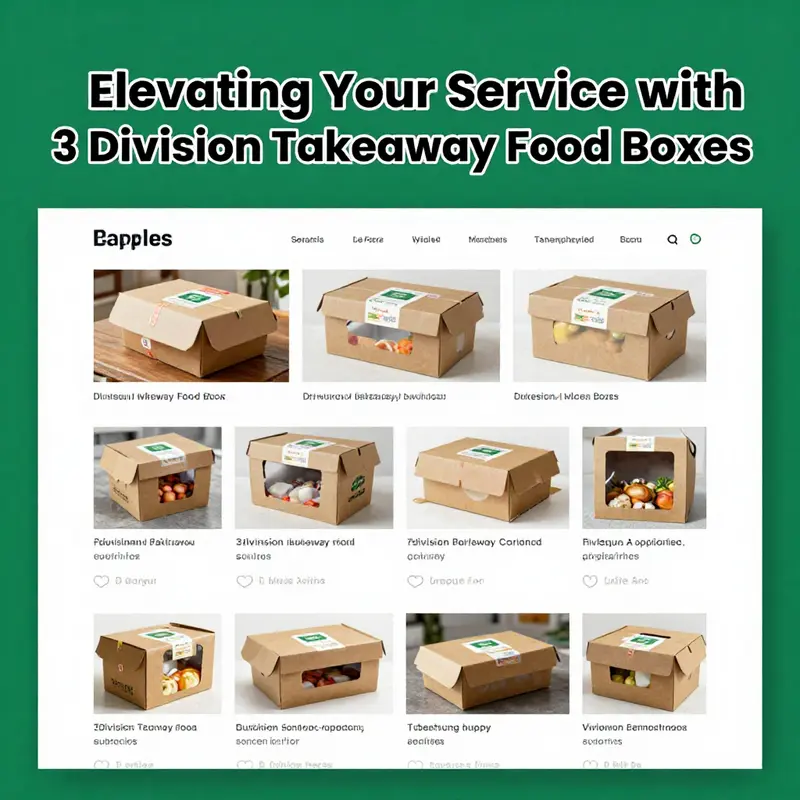
The sourcing journey for these boxes often unfolds on a major B2B marketplace that aggregates manufacturers from across these regions. Buyers navigate a landscape of suppliers, each presenting its own strengths—material offerings, customization options, minimum order quantities, and delivery capabilities. The marketplace acts as a bridge between concept and production, enabling a brand to compare options side by side, request samples, and negotiate terms with confidence. It is not unusual for a brand to begin with a concept sketch, solicit several prototypes, and then converge on a supplier who can deliver a preferred combination of window geometry, lid style, and internal divider configuration. This pace—ideation, rapid prototyping, validation, and scale—has become the defining rhythm of modern packaging development. It is a rhythm that fits neatly with the needs of quick-service brands and emerging concepts that seek to test market acceptance before committing to long-run tooling investments.
The broader market dynamic also includes an ongoing tension between traditional, cost-focused production and the rising demand for sustainability. If the cost of a windowed box with a paper-based window is modestly higher than a PET-windowed alternative, buyers often justify the premium through enhanced consumer perception and improved recycling outcomes. Market research from across the industry shows that consumers are increasingly paying attention to packaging narratives—where the box comes from, what it is made of, and how easy it is to recycle after use. In practice, this means brands may choose a compostable or recyclable substrate for the box body while maintaining a clear window that showcases the food. The window, in this sense, is not merely a visibility feature; it becomes a symbol of responsible stewardship, signaling to consumers that the brand is mindful of its environmental footprint. For brands with longer-term commitments to sustainability, the shift to eco-friendly windows is rarely a one-off decision. It is part of a broader packaging strategy that includes supply chain partnerships, waste reduction initiatives, and a design language that aligns with corporate environmental goals.
The conversation about these boxes cannot ignore the practical realities of packaging performance. A window is a potential vulnerability if not properly engineered. The window must resist tearing under the pressures of busy kitchens, forklift handling, and the rough-and-tumble of last-mile delivery. This is where advanced die-cutting and precise adhesive engineering come into play. The pattern of the cut, the location of the window, the finish on the window pane (whether it is a laminated or a coated surface), and the type of seal on the lid all contribute to integrity at the points where the box is most stressed. A well-executed design minimizes the risk of leakage or moisture damage, even when the contents are warm or steam-laden. It also reduces the chance that the window will fog up in transit, a problem that can erode the consumer’s confidence in the product inside. The thickening of inner dividers, combined with robust outer folds and reinforced corner radii, ensures a stable, stackable structure that holds its shape in large batches. These are not cosmetic concerns; they are the backbone of a packaging system that is expected to perform reliably in high-volume environments.
In thinking about brands and the people who bring these boxes to market, the emphasis often settles on three outcomes: clarity, efficiency, and responsibility. Clarity comes from the visible food through the window, a marketing asset as much as a practical feature. For a busy shopper, that visibility can accelerate decision-making and reduce the cognitive load of evaluating options. Efficiency is realized through designs that simplify assembly, enable quick closing without tape, and minimize wasted space in delivery parcels. A well-designed 3-compartment box with a window can reduce the number of separate containers needed for a meal, which in turn lowers packaging waste and simplifies the logistics of packing multiple items. Responsibility manifests in the materials and processes chosen—whether the substrate is readily recyclable, whether the window laminate is free from problematic plastics, or whether the production methods minimize emissions and waste. Together, these factors shape a market that rewards suppliers who can balance performance with sustainability, and buyers who can recognize the long-term value of such a balance.
One practical consequence of these developments is a growing emphasis on supplier verification and collaboration. In a marketplace where quality control and on-time delivery are daily requirements, buyers increasingly look for partners who can demonstrate robust assurance practices. This might include documented quality management systems, traceable material sources, and transparent logistics data that show how quickly a box can move from design to production to distribution. The capability to customize—whether for a specific window size, a unique lid mechanism, or a branded finish—also matters, particularly for brands seeking to maintain a cohesive brand experience across packaging and food presentation. All of these considerations influence the path from concept to consumer. For many brands, the optimal route is a carefully curated supplier relationship that can offer iterative prototyping, fast feedback loops, and the capacity to scale to meet surges in demand without sacrificing quality. In this sense, the box with a window becomes a collaborative artifact—an outcome of dialogue between brand, designer, and production partner rather than a static commodity.
The story of this packaging category is also a reminder of the broader realities of global manufacturing. While the boxes themselves are simple in concept, their business context is complex—spanning trade policies, material availability, and evolving consumer expectations. The dominance of a particular region does not erase the importance of innovation from elsewhere; rather, it frames a collaborative ecosystem where regional strengths—green materials research in one province, advanced die-cutting in another, and sophisticated logistics networks in a major city—combine to produce a reliable and appealing product. For brands that want to stay ahead, it is essential to understand these regional dynamics, not as abstract trends but as practical levers—where to source, how to test, and when to scale. The modern packaging journey thus becomes a blend of local engineering and global reach, a hybrid model that leverages the efficiency of China’s manufacturing footprint while embracing the growing demand for sustainable materials and responsible packaging narratives.
To illustrate how these ideas play out in practice, imagine a brand preparing to introduce a new sandwich-and-fries option in a market that prizes transparency and sustainability. The team begins by sketching a 3-compartment layout that isolates the fries from the sandwich while allowing a dressing container to sit in an adjacent pocket, all beneath a window that reveals the contents without exposing them to the air. They then seek a supplier with a track record of rapid prototyping and the capacity to adapt window sizes and lid geometries to the evolving recipe. The supplier presents a few material options—kraft-based substrates with clear windows, coated papers that resist moisture, and a few different adhesives that balance seal strength with recyclability. In a few weeks, a first set of prototypes arrives. The team tests them in kitchen conditions, checking for moisture migration, fragrance retention, and the ease with which the lid can be opened and re-sealed. They compare the performance of a box whose glassy window remains pristine after a dozen uses against one whose window shows micro-scratches that could suggest fatigue. The results inform a decision to move toward a thicker window laminate and a slightly redesigned lid that improves seal integrity. This is the practical heartbeat of the industry: a continuous loop of testing, learning, and refining that keeps a box from becoming an obstacle to service and branding.
The chapter on innovation and market trends in windowed 3-compartment takeaway boxes would be incomplete without acknowledging the role of consumer perception. The window is not merely a functional feature; it is a merchandising tool that can influence how customers judge the quality and value of their meal before they even bite. When a window showcases a neatly arranged sandwich with crisp textures and a side that looks fresh, it sets expectations for the overall dining experience. Conversely, if the window displays condensation or staining, it can undermine confidence in the product. Designers and brand teams thus pay careful attention to how the visible portion behaves under typical consumer scenarios: a hot meal in cool, air-conditioned interiors; a hot product transferred to a car’s trunk and then parked in the sun; a delivery courier stacking multiple orders and rushing to a destination. The packaging must perform in all those conditions while also delivering a clean aesthetic that aligns with the brand’s visual identity. The end result is a packaging piece that does more than contain food; it communicates a brand narrative through texture, color, and the subtle gleam of a well-cut window.
In closing the loop on these themes, the chapter emphasizes that the windowed 3-compartment box is a product of thoughtful convergence. It is a component that carries a narrative about sustainability without sacrificing performance. It is a tool for brand differentiation in a crowded market, made possible by manufacturing ecosystems that reward rapid iteration and disciplined quality control. It is also a practical solution for the operational realities of modern food service, where speed, reliability, and a strong per-item profit can hinge on packaging that is both smart and responsible. The window, then, is more than a viewing pane; it is a lens through which brands view opportunity—an opportunity to connect with consumers in a glance, to reassure them with clear visibility, and to demonstrate an ongoing commitment to better packaging that respects the environment and the end user alike.
For readers seeking deeper supplier perspectives and real-world sourcing pathways, it is useful to consider how the industry translates these principles into concrete choices. A brand exploring the market would do well to examine a practical example of a supply chain that emphasizes sustainability, rapid prototyping, and customization. The route often begins with a search on a leading B2B marketplace to identify verified manufacturers in key provinces known for green packaging capabilities. The conversation then shifts to material options, with attention to the trade-offs between plastic-based windows and paper-based substrates that maintain visibility while supporting recyclability. The final decisions hinge on a balance of cost, lead time, and the supplier’s ability to deliver consistent quality at scale. This is the essential dynamic that underpins today’s windowed 3-compartment boxes: the ability to turn a design concept into a dependable, sustainable product that supports a brand’s promise and a consumer’s experience in equal measure.
As the industry continues to iterate, the windowed three-compartment model will likely evolve in tandem with advances in coating technology, material science, and intelligent packaging design. Yet the core appeal remains: a simple, transparent, and highly functional packaging solution that aligns with the expectations of modern consumers who value both sight and stewardship. The box with a window is, in a sense, a microcosm of the broader packaging revolution—a quiet reaffirmation that good design, practiced at scale, can make a meaningful difference in the day-to-day lives of diners and the environmental footprint of the food service sector. For brands that want to stay ahead, the path is clear: invest in materials that respect the planet, pursue designs that maximize clarity and speed, and partner with suppliers who can translate ambition into reliable production.
Internal link note: To explore a practical example of eco-friendly, windowed 3-compartment packaging options that align with the themes discussed here, see the following resource: eco-friendly 3-compartment packaging box for fast food.
External resource: For industry-context on verified Chinese manufacturers and global supply dynamics, see the detailed supplier landscape on a leading B2B marketplace. https://www.alibaba.com/product-detail/3-Compartment-Takeaway-Food-Boxes-with_1600589484778.html
Final thoughts
As we conclude our exploration of the 3 division takeaway food box with window brands, it’s clear that these products are not only functional but also vital in creating visually appealing and sustainable dining experiences. By understanding the key manufacturers, exploring effective sourcing channels, and staying abreast of the latest innovations, businesses can elevate their offerings and enhance customer satisfaction. Investing in quality packaging is investing in your brand’s reputation, encouraging customers to return time and again. Make the choice today to upgrade your takeaway service with quality solutions that resonate with both practicality and presentation.