
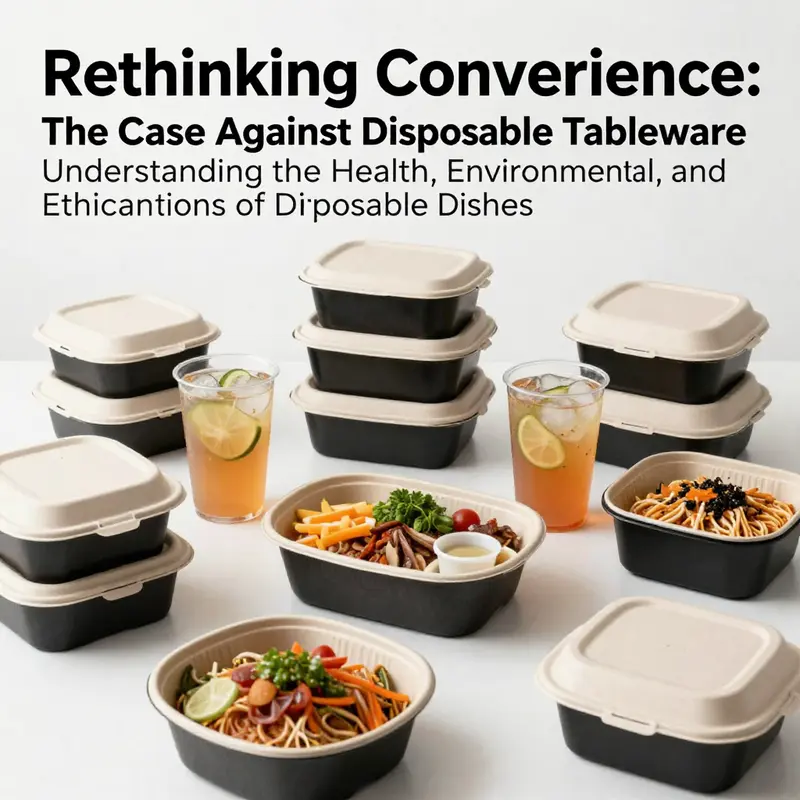
In the food and beverage industry, convenience often reigns supreme—especially when it comes to serving beverages and food. However, this convenience comes at a hidden cost, particularly with disposable plates, dishes, cups, and paper napkins. For bubble tea shops, restaurants, food trucks, catering services, and corporate procurement teams, integrating sustainable practices is no longer just an option; it’s a necessity. This article explores the critical health risks, environmental impact, ethical considerations, and practical alternatives related to disposable tableware, providing insights to help your business shift towards a more responsible and sustainable paradigm.
Hidden Health Hazards and Hidden Costs: The Health Risks of Single-Use Plates, Dishes, Cups, and Paper Napkins
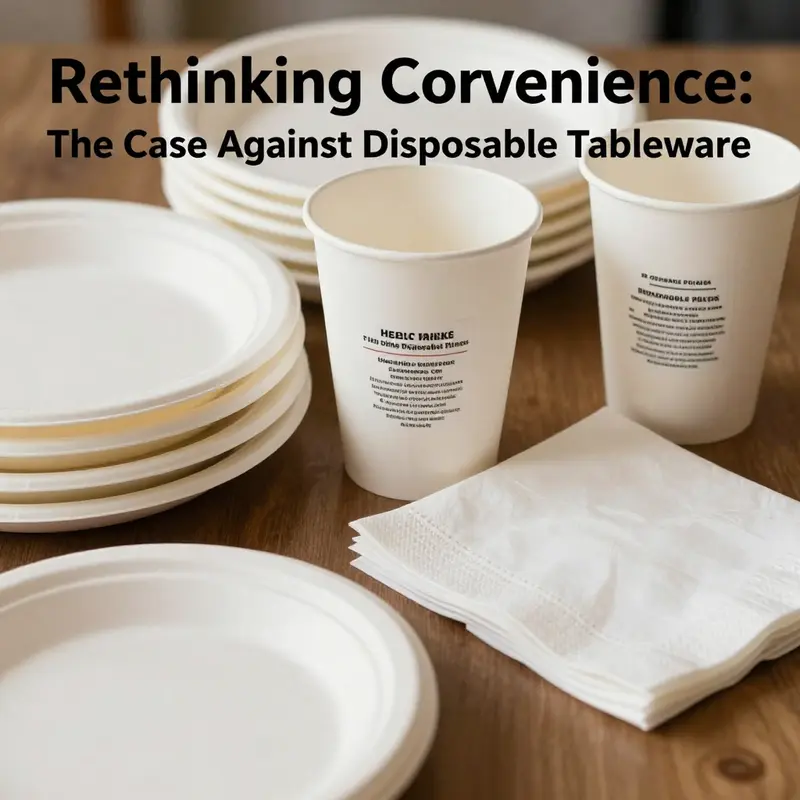
The appeal of disposable tableware is undeniable in moments of crowded kitchens, rapid service, and events where washing up feels like an afterthought. Yet the convenience comes with a health narrative that too often remains unspoken. When a meal is served on a single-use plate or in a throwaway cup, the risk pattern is not merely about waste; it is about what leaches into food, what residually clings to a surface, and what can be inhaled as steam rises from a hot, packaged bite. The science behind these risks is not a dramatic outlier; it is a compilation of everyday processes that unfold from the moment materials are sourced, through the factory, into your hands, and finally into your body. Understanding this chain helps illuminate why health risks associated with disposable plates, dishes, cups, and paper napkins deserve more than a dismissive shrug in favor of convenience.
One of the clearest threads in this health story is chemical contamination. Plastic and foam containers, especially those made from polystyrene and other petroleum-derived materials, are designed to be lightweight, inexpensive, and effective at keeping foods from leaking. But heat dramatically changes the way these materials behave. When hot foods or drinks meet these containers, certain chemicals, including those historically labeled as endocrine disruptors, can migrate into the food or liquid. Among the most discussed is BPA, a chemical linked to hormonal changes that can disrupt development and reproduction. Phthalates, used to make plastics more flexible, have also been connected to shifts in hormone signaling. The risk is not solely theoretical: long-term, low-level exposure to these substances has been associated with obesity, diabetes, and cardiovascular concerns in population studies. Even when exposure is modest, the cumulative effect of daily use can become meaningful over years, particularly for vulnerable groups such as children, pregnant individuals, and those with already stressed metabolic systems.
Adding to the concern is the reality that some disposable plasticware harbors a broader spectrum of contaminants. In certain low-cost products, cycling through manufacturing stages or batches can introduce a mix of additives and byproducts. Reports referencing up to a dozen or more toxins in some items during heating have raised warnings about what heat can mobilize from the plastic matrix. The everyday act of reheating, a common practice in many households and workplaces, can thus become a facilitator of chemical migration rather than a mere convenience. This is not a scare tactic but a reminder of how context matters: the same material that protects a cold salad can release more chemicals into a hot beverage or soup.
Paper cups, though often perceived as safer, carry their own set of risks. A common practice in the packaging world is to line interior surfaces with wax, polyethylene, or other coatings to prevent leakage. These linings, if they degrade, can mingle with the beverage or food they touch. In addition, some manufacturers add whitening agents to maintain a bright appearance, a factor that introduces fluorescent whitening agents into the equation. While these agents do not always prompt immediate symptoms, their long-term effects are not fully understood, and concerns persist about organ exposure and potential cumulative impacts on health. Moreover, the very convenience of lighter, seemingly eco-friendly coatings can obscure the fact that these materials may persist in the body for years, particularly when ingestion occurs with repeatedly heated or fatty foods.
Another angle in the health risk landscape concerns the sanitary quality of production and storage. Logistics for disposable items, especially when produced in high-volume, often involve facilities where hygiene controls vary. In some settings, residual chemicals used during manufacturing or fumigation methods to whiten or sanitize wood-based products can linger. For instance, certain disposal-grade wooden chopsticks have been treated with fumigants or bleaching agents to achieve whiteness. When these substances volatilize upon exposure to heat, they can irritate the airways or mucous membranes, potentially triggering coughing or asthma-like reactions in sensitive individuals. The risk is not universal but real enough to demand attention in settings where these products are stored openly or used in bulk for quick-service contexts.
Beyond chemical exposure, microbial and biological concerns deserve sober consideration. Disposable items are not inherently sterile when opened from bulk packaging or displayed in open markets. Bacteria such as E. coli, Salmonella, or Staphylococcus aureus can thrive on improperly stored goods, particularly in damp environments or if packaging has been compromised. The risk becomes more acute when items are reused or mishandled, such as when someone uses a disposable utensil more than once or stores them in unsanitary conditions. In some cases, even items marketed as single-use may carry fungal or mold traces. Aflatoxin-producing molds, which can inhabit wood-based products if moisture exposure occurs, pose a different kind of threat because their toxins can accumulate with repeated exposure. While these scenarios are not universal, they highlight a need for cautious handling and sensible storage in environments that depend on disposables.
Together, these threads point to a broader, long-term picture: chronic exposure to a mix of contaminants—heavy metals, plasticizers, and carcinogenic molds—could contribute to a spectrum of health effects. The most vulnerable among us—pregnant people, infants, and children—exhibit particular sensitivity during developmental windows, where hormonal signaling and organ formation are especially susceptible to disruption. It is not just about acute illness; it is about how daily choices can ripple through years of life and into the next generation. Asking whether health risk is worth the convenience becomes a question of risk tolerance, context, and the availability of better options rather than a binary yes or no.
In these discussions, it is important to connect the dots between chemical exposure and broader life patterns. Disposable tableware does not exist in a vacuum. It sits at the intersection of consumer culture, industrial practices, and social norms around waste. The health implications are thus inseparable from ecological and ethical considerations. When we acknowledge that the same packaging that enables a fast meal also contributes to microplastic pollution and deforestation, we begin to see how intertwined these problems are. This is not merely about avoiding a particular toxin in isolation; it is about recognizing the cumulative burden carried by individuals and communities when disposables become a default, rather than a choice made with full information and intention.
What, then, can be done to reduce these risks without sacrificing the practical advantages that many people rely on daily? The path forward is not about perfection in every moment but about deliberate, scalable shifts. First, reducing reliance on single-use items by embracing durable, reusable tableware significantly cuts exposure to the kinds of chemicals discussed here. Durable options made from materials such as stainless steel, glass, or high-quality silicone are designed for repeated washing and heating, lowering the chance that a consumer daily encounters the release of chemicals from packaging. Second, for food service contexts that still depend on disposables, choosing products with transparent safety certifications, clear labeling, and better manufacturing controls matters. Look for reputable markings, documented safety standards, and boxes or cups that indicate appropriate use with hot foods, rather than simply a bright visual appeal or a blue-green eco badge that may mask other risks.
Part of the risk management strategy involves how we use disposables in practice. Do not microwave or heat food directly in plastic or foam containers. If you must serve hot items from disposables, transfer to a glass or ceramic dish for reheating and consumption. While this adds a step, it is a simple way to avoid at least some of the heat-related migration issues. In addition, it is prudent to inspect packaging when receiving items in bulk. A strong chemical odor, unusual surface discoloration, or irregular coatings can be early warning signs of quality problems. In such cases, opting for safer alternatives or requesting better-controlled products can reduce exposure.
As we rethink risk management, it becomes clear that information and standards matter. The public health conversation benefits from accessible, evidence-based guidance that clarifies what is safe and what requires caution. Consumers, schools, workplaces, and event organizers all have a role in shaping norms around disposables. Encouraging policies that support reuse, improving waste management infrastructure, and investing in safer manufacturing practices are not abstract calls; they translate into healthier environments and more resilient communities. The shift toward responsible consumption is not about shaming short-term choices but about building a culture that values health alongside convenience.
For those seeking practical, safety-oriented pathways to reduce dependence on disposable plates and cups, there are tangible options that do not require a drastic lifestyle overhaul. One approach is to explore durable, portable tableware designed for frequent use. Lightweight yet sturdy sets can withstand frequent washing and travel, keeping the experience of dining out or at events aligned with health goals. In contexts where disposables seem unavoidable, consider alternatives that emphasize safe materials, proper coatings, and better end-of-life options. An example of a safer, forward-looking packaging approach is the use of eco-friendly takeout boxes for food packaging that balance portability, sealing capability, and resistance to grease, while maintaining a commitment to safety in heating and reuse. When exploring these options, it can be helpful to review practical guides that distill safety considerations for disposable packaging and present actionable comparisons. For readers seeking guidance on safer, reusable or robust single-use alternatives, a detailed overview of eco-friendly takeout boxes is available here: eco-friendly takeout boxes for food packaging.
Conversations about health risks and disposable tableware often circle back to broader questions of safety culture and environmental justice. The people most affected by careless waste management and low-cost production practices are frequently workers in supply chains and residents of communities already bearing disproportionate environmental burdens. The ethical dimension is not secondary; it is central. If we can cultivate safer production standards, reduce the exposure pathways that harm communities, and reframe the narrative from convenience at any cost to health and dignity at every meal, the social outcomes become as important as the personal health benefits. This is not a simple replacement of one product with another; it is a reimagining of how institutions, businesses, and households approach dining and waste.
In the end, the science is not a verdict that condemns every disposable item. It is a call for smarter choices, clearer labeling, and stronger commitments to health and sustainability. The realities of chemical migration, coating degradation, and microbial concerns are reminders that what we put on our plates shapes more than the taste of our meals. The story of disposable tableware is still being written, and each decision—about heating, storage, handling, and ultimately replacement—adds a line to that story. The health costs of convenience should inspire a thoughtful approach to how we feed ourselves, how we care for each other, and how we steward the material world that sustains us. In pursuing safer, more sustainable dining practices, we align daily actions with a longer-term vision of well-being for people and the planet.
External resource: Consumer Reports – Disposable Tableware Safety Guide (Updated February 2026): https://www.consumerreports.org/disposable-tableware-safety/
The Hidden Weight of Convenience: The Environmental Footprint of Disposable Plates, Dishes, Cups, and Paper Napkins
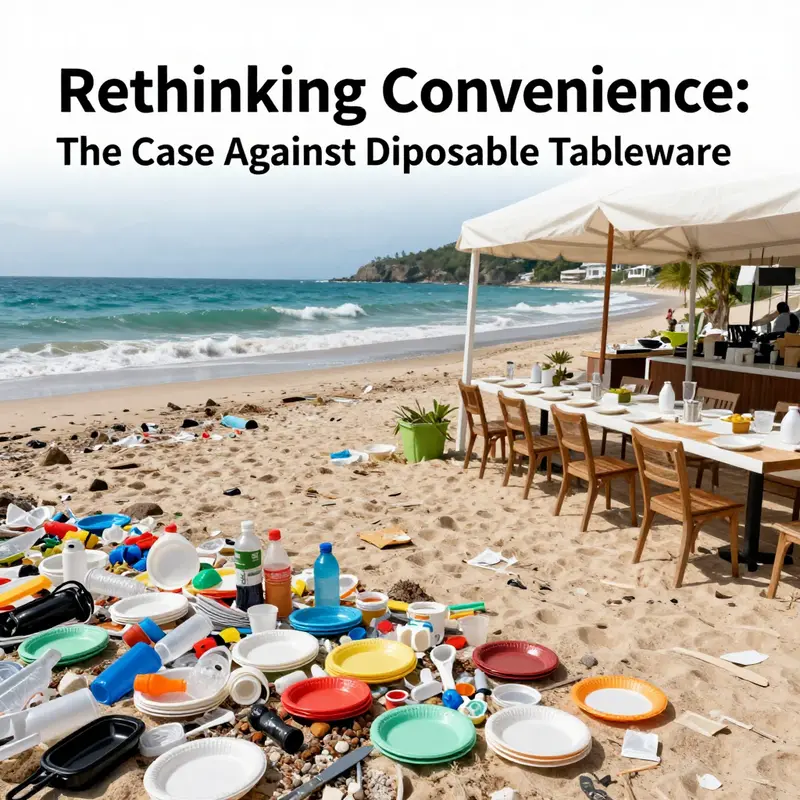
The allure of disposable tableware rests on a simple premise: it makes gatherings easier, messes smaller, and cleanup faster. It offers a clean slate after every meal, a guarantee that nothing from yesterday will haunt today. Yet the convenience hides a stubborn accumulation of ecological costs that accumulate across oceans, forests, and communities. When we look beyond the instant satisfaction of tossing a plate into the bin, we glimpse a system built on virgin materials, energy-intensive manufacturing, and waste streams that stubbornly outpace our recycling and composting capabilities. The environmental footprint of disposable plates, dishes, cups, and paper napkins is not a single line in a life cycle; it is a network of pressures that ripple through forests, rivers, air, and climate, shaping the health and resilience of ecosystems long after the party ends.
At the core of this footprint is the heavy reliance on virgin materials. Disposable paper products, including plates and napkins, are often rooted in wood pulp drawn from forests that store carbon, support biodiversity, and stabilize soils. When demand for these products is high, the pressure to harvest increases. It’s not just about the number of trees felled; it’s about the cascade of effects that follows—habitat loss, fragmentation of ecosystems, and shifts in local microclimates. The scale matters here: estimates suggest that billions of disposable paper products require vast amounts of raw material. The transformation of wood into pulp and, ultimately, into consumer-ready plates and napkins consumes substantial energy and water, two resources that societies increasingly need to manage with greater care. Even small per-item costs accumulate when multiplied by millions of units flowing through households, schools, offices, and events.
Deforestation is a visible consequence, but the hidden costs of producing disposable paper products are equally consequential. In many regions, the pulp-and-paper industry relies on processes that require large volumes of water not only for pulping but for subsequent chemical processing, bleaching, and washing. The energy footprint follows closely behind. Electricity and thermal energy are expended at multiple stages: driving heavy machinery to harvest wood, transport logs to mills, power pumps and furnaces in pulping plants, and run kilns for drying and finishing. This energy intensity translates into greenhouse gas emissions unless offset by renewable energy or cleaner production practices, a dynamic that varies widely by jurisdiction and by producer. The result is a lifecycle that begins with forest resources and ends in waste streams that persist far longer than the few minutes it takes to use the product.
A further layer of impact arises from the materials used to waterproof, reinforce, or treat disposable tableware. Coatings and additives—often waxes, fluorinated compounds, or chlorine-based bleaches—serve practical purposes in resisting moisture and grease. These coatings can complicate recycling, sometimes rendering items unrecyclable in standard facilities. They also introduce trace contaminants into the waste stream. PFAS, a family of fluorinated compounds, exemplify the enduring challenges of modern packaging. Known for their resistance to heat and chemicals, PFAS can migrate into food and eventually enter the broader environment. While consumer labeling may suggest safety, the reality is that many products labeled as non-toxic or eco-friendly may still carry residues or release compounds under certain conditions, particularly when heated or exposed to acidic or fatty foods. The lifecycle then extends into the environment, where these substances may persist for years, accumulate in soils and water, and challenge remediation efforts.
Equally critical is the question of end-of-life. A central paradox of disposable tableware is that many items appear to be biodegradable or compostable in principle, but in practice rarely reach appropriate facilities. Industrial composting requires specific conditions—controlled temperatures, adequate aeration, and consistent moisture—that are not universally available in waste-management networks. In ordinary landfills, even biodegradable plastics and paper products decompose slowly. They can release methane, a potent greenhouse gas, as microbes-work through the anaerobic environment. In practice, the majority of disposable tableware ends up in landfills or incinerators rather than in composting streams or recycling bins. The result is a long-term burden: plastics that persist for centuries, and paper-based products that gradually shed fibers and contaminants while occupying space that could be used for other purposes.
Recycling is a related, complex thread. The coatings applied to many disposable plates and cups—plastic films, wax coatings, or multilayer laminates—pose significant hurdles for standard recycling streams. Many facilities are designed to process single-material items, or items with predictable composite structures, not the diverse and multilayered products that now flood the system. The consequence is a paradox: even when a disposable item seems recyclable in principle, its actual recyclability depends on local infrastructure, the presence of cleaning and sorting systems, and the willingness of facilities to accept more complex materials. In practice, a large share of disposable tableware is diverted to landfills or incinerators, not because it is inherently non-recyclable everywhere, but because the local system lacks the capacity or incentives to capture it.
The environmental calculus extends beyond carbon accounting to include broader ecological and social dimensions. The production and disposal of disposable tableware consume water and energy that could otherwise support clean drinking water, sanitation, or food security. The extraction of raw materials also has direct and indirect social costs: labor conditions in some manufacturing contexts, exposure to hazardous substances in workplaces, and the displacement of communities when forests are cleared for pulp or timber. In places where waste management is uneven, the burden falls more heavily on communities already grappling with environmental injustice. The same land that bears the weight of landfills can become a source of air and water pollution that affects local health and quality of life. These effects are not abstract when they translate into respiratory problems, contaminated groundwater, or reduced soil fertility in agricultural zones near large disposal sites.
The scope of the problem is vast enough to merit a closer look at the broader systems that feed it. One key driver is pure volume: the sheer number of disposable items produced and consumed in daily life. Annual production of disposable tableware, in many regions, runs into the hundreds of millions or billions of units. That scale translates into a steady demand for raw materials, energy, and transportation. Each link in the chain—from logging or pulp extraction to trucking, milling, coating, packaging, and retail distribution—carries an environmental cost. When aggregated, these costs press on climate targets and on the capacity of ecosystems to absorb carbon and regenerate natural resources. The second driver is the difficulty of modifying consumer behavior and business practices in a way that matches environmental imperatives. Convenience and cost juxtapose against long-term ecological risk, and the latter often loses out in public discourse and policy-making. This tension is not merely about personal choice; it is about designing systems that reward reuse, repair, and responsibility rather than one-off convenience.
There is also a structural dimension to consider. The packaging and hospitality sectors have built business models around the predictability and speed of disposable tableware. For events, catering, and takeout, the incentive is to minimize cleanup time and maximize throughput. This is not simply a matter of people being careless; it reflects how systems are organized, how waste streams are financed, and how regulations shape what gets produced and how it is disposed of. In places where regulations promote reuse, provide incentives for accepting reusable options, or support investments in composting and recycling infrastructure, the calculus shifts. Where regulations lag or fail to align with environmental aims, the default remains single-use products that feel convenient in the moment but carry consequences long after the celebration ends.
A practical way to frame the problem is to think in terms of lifecycle stages: sourcing, manufacturing, distribution, use, and end-of-life. In sourcing, the choice of raw materials determines the downstream footprint: wood pulp versus recycled fibers, or the energy mix used in mills. In manufacturing, the energy intensity and chemical inputs shape emissions and waste. Distribution introduces transport emissions and packaging waste. Use might appear minimal per item, but the accumulation across countless events makes it material. End-of-life determines how much of the product can be redirected back into the economy through recycling, composting, or repurposing, versus how much ends up in a landfill or incinerator. Each stage is an opportunity for intervention, but also a reminder that a purely transactional approach to consumption—buy more of what’s easy to discard—perpetuates the cycle.
To push the narrative from problem to possibility, it helps to acknowledge the recent shifts in thinking about sustainable dining. Some communities are experimenting with better-designed packaging that reduces resource use, integrates with existing waste-management infrastructure, and supports so-called circular economies. Others are scaling up reuse programs, from washable, restaurant-grade systems to portable kits for events and workplaces. Yet even as innovation accelerates, the overarching theme remains clear: the environmental burden of disposable tableware is a function of both material choices and system design. If the end-of-life path is uncertain or hazardous, the environmental payoff of disposable products rapidly declines. Conversely, when packaging is thoughtfully engineered to be recyclable, compostable, or reusable, and when waste streams are properly funded and organized, the long-term costs of disposables become more manageable—though not always negligible.
Voices from the field often emphasize a straightforward lesson: reduce, replace, and redesign. Reducing reliance on disposables is not only about skipping products at a party; it is about reimagining routines in homes, schools, offices, and venues. Replacing disposables with reusables can be as simple as choosing plates and cups made from durable materials designed for repeated use, or as transformative as shifting toward service models that deliver meals in reusable containers and require customers to return the items for cleaning and reuse. Redesign involves rethinking product design, supply chains, and consumer interfaces so that reuse and responsible disposal are the norm rather than the exception. This holistic approach recognizes that the environmental cost of disposables is a systems problem, not solely a personal habit, and it invites policymakers, manufacturers, businesses, and consumers to work together to forge a path toward less wasteful habits without sacrificing sanitation, convenience, or dignity.
To illustrate the practical implications of these shifts, consider the realm of takeout and catering. A single event can generate thousands of disposable units, many coated for moisture resistance and grease resistance. The cumulative impact of these items is not merely the sum of their material contents; it is the burden placed on local waste facilities and the longer-term pressure on ecosystems. Even in places where recycling programs exist, the rate of recovery for coated or multilayer products remains stubbornly low. The incompatibility of many coatings with standard recycling streams means that even well-intentioned households might see a large portion of disposables end up in landfills. In some regions, the gap between potential recycling capacity and actual practice is widening as consumer demand outpaces the ability of facilities to process the growing diversity of packaging materials.
This imbalance has profound implications for biodiversity and climate resilience. Forests cleared for pulp production contribute to habitat loss, while the energy and water embedded in manufacturing translate into emissions and water usage that stress both urban and rural environments. The methane emissions from landfills add a climate dimension that cannot be ignored when calculating the true cost of disposables. The health of nearby communities, from air quality to groundwater, can also be affected by improper disposal and leakage of chemicals from coatings. In short, the environmental footprint of disposable tableware is not a distant abstract; it is a tangible influence on land, air, and water quality that shapes the health and livelihoods of people and ecosystems alike.
If we are to respect the interconnectedness of health, environment, and ethics, the path forward demands both awareness and action. Awareness can begin with recognizing that the convenience of disposables carries costs that extend far beyond the moment of use. Action involves practical choices—prioritizing reusable options, supporting packaging innovations that minimize resource use, and advocating for waste-management improvements that make recycling and composting more feasible for everyday products. As individuals, we can choose to stock reusable cups and plates, reduce reliance on single-use items in events, and support venues that implement return-and-refill or buy-back programs. As communities, we can invest in centralized composting facilities, encourage suppliers to adopt packaging designed for easy recycling, and develop clearer labeling that helps consumers understand how to dispose of items properly. As policymakers, we can shape incentives and regulatory frameworks that reward reuse and responsible end-of-life management, thereby tilting the balance away from throwaway culture toward a more circular economy.
For readers seeking a concrete hinge between theory and practice, there are practical options that blend convenience with responsibility. Some businesses are adopting well-designed, reusable packaging that can be collected, cleaned, and reused without sacrificing service standards. Others are embracing compostable materials that truly fit within local waste-management networks, provided those networks exist and are accessible to the consumer. In the spirit of collective progress, it is worth exploring packages designed for takeout that balance functionality with end-of-life clarity, ensuring that customers understand whether a given item is intended for recycling, composting, or return for reuse. To offer a concrete example without naming brands, one can envision eco-friendly takeout boxes that are designed to be easily cleaned and collected for a shared reuse stream, reducing the volume of waste that ends up in landfills. For readers curious about this direction, a representative approach can be found at the following resource, which discusses eco-friendly takeout boxes designed for safe reuse and manageable disposal: eco-friendly takeout boxes for food packaging.
If there is one enduring takeaway, it is this: the environmental impact of disposable tableware is not only about the materials in a single item; it is about the system that treats disposables as the default solution. The more consistently we challenge that default—by rethinking packaging, by expanding reuse options, and by strengthening waste-management infrastructure—the more we can bend the curve toward a future where convenience and responsibility coexist. The weight of convenience becomes lighter when the entire lifecycle of a product is considered, when the incentives are aligned to minimize waste, and when communities, industries, and individuals act with a shared sense of stewardship. The challenge is not merely to reduce waste in a vacuum but to reimagine consumption in a way that sustains forests, waters, and the health of all living systems that rely on them. In this reimagining, disposable plates, dishes, cups, and napkins lose their default advantage, not because we cannot use them, but because we choose to design and live differently—together.
External resource for deeper understanding: Environmental Health Perspectives on how chemical leachates from packaging can influence health outcomes, even at low exposures, is a reminder that packaging choices intersect with public health in meaningful ways. For those who want a scientific context that informs policy and consumer decision-making, this resource offers a rigorous, peer-reviewed perspective on the potential long-term effects of certain chemicals used in packaging materials: https://ehp.niehs.nih.gov/doi/10.1289/ehp.1307586
Beyond Convenience: The Moral Economy and Hidden Costs of Disposable Tableware
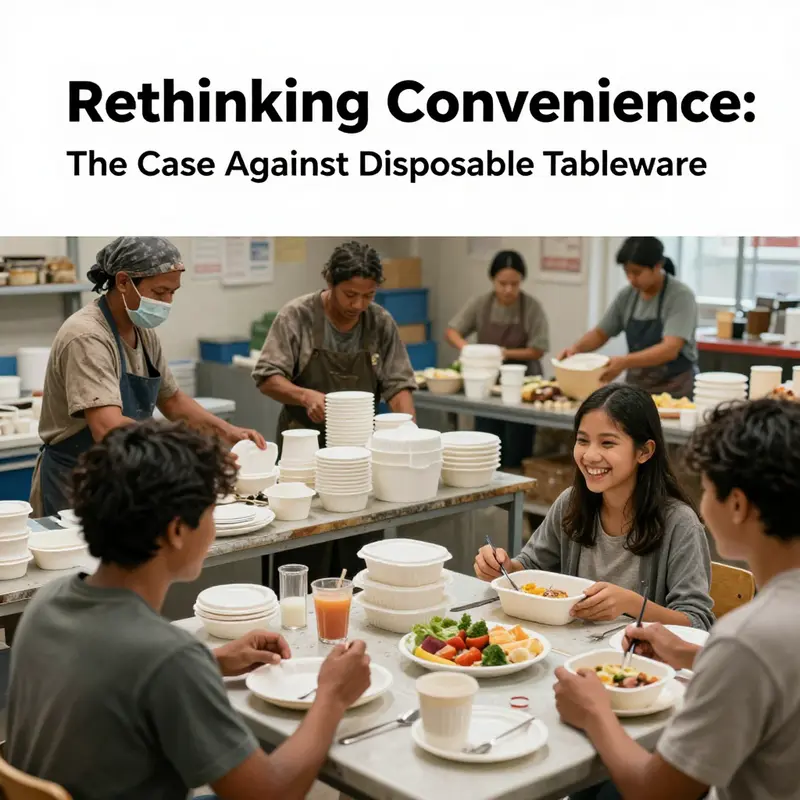
In gatherings that prize speed and ease, disposable plates, cups, and napkins often appear as quiet heroes. They arrive in stacks, demand no washing, and vanish after a single use. Yet the ease is a mirror held up to a broader system in which convenience is valued above all else, even when it exacts a cost that is not immediately visible. This chapter treats disposables not as mere products but as reflexes of a developmental arc that intertwines health, environment, and ethics. It invites readers to see the full arc: from the cradle of production to the end of life, where decisions made in kitchens, catering halls, and offices ripple outward into communities and ecosystems. The core message is not a sermon against convenience but a call to align everyday choices with a more just and sustainable logic that recognizes limits, responsibilities, and interdependencies.
First, consider health as a relational phenomenon rather than a set of isolated risks. The safety of disposable tableware has always depended on the integrity of manufacturing processes and the conditions under which these items are used. Plastics and polystyrene, staples of single-use formats, rely on petroleum-based chemistries that can migrate into foods and beverages, especially when heat or acidity is involved. Endocrine disruptors such as BPA and phthalates have been the subject of ongoing scientific scrutiny, with long trajectories of exposure tied to metabolic and developmental concerns in vulnerable populations. The implications go beyond acute poisoning or immediate irritation. They accumulate as cumulative, low-level exposure across daily routines—meals, snacks, and beverages—over months and years. A growing body of research suggests that even small, repeated exposures can be linked to larger health outcomes, such as obesity, insulin resistance, and cardiovascular risk, particularly when compounded by other lifestyle factors. This is not an abstract warning; it translates into everyday choices about the containers we trust with our most ordinary foods and drinks.
But the health conversation is only part of the larger ethical landscape. Paper products may feel more benign than plastics, yet the coatings and additives used to improve moisture resistance or shelf life often carry their own risks. Fluorinated compounds, commonly grouped under PFAS, have a reputation for persistence and bioaccumulation. They can migrate into greasy or hot foods, and their effects on liver function, immune response, and fertility have raised questions about acceptable exposure levels for consumers who encounter them regularly. Even when products are marketed as “eco-friendly” or “non-toxic,” independent testing sometimes reveals residues that merit scrutiny. The ethical question then becomes how to balance comfort and practicality with precaution and transparency. Consumers deserve confidence that the packaging and tableware intensify health protection rather than introduce an unseen layer of risk into meals designed to nourish.
Equally important is the end-of-life story of disposable tableware. The waste stream that accompanies single-use items is not a neutral backdrop; it is a living system that shapes how communities manage resources, waste, and pollution. Plastic remnants and microplastics infiltrate water supplies, soils, and, sometimes, the food chain. The scale of global plastic production—hundreds of millions of tons annually—means that even responsible disposal practices struggle to keep pace. When disposal is framed as a consumer problem alone, it obscures the systemic responsibility to design products that fit within existing and viable waste-management infrastructures, or better yet, to reduce waste altogether through reuse and redesign. The lifecycle narrative cannot end at a landfill; it must include the upstream logistics of raw materials and manufacturing and the downstream fate of products in the environment. A life-cycle perspective reveals the ethical dimension of stewardship: choices in sourcing, production, and end-of-life management should be guided by the principle that resources are finite and planetary health is non-negotiable.
The environmental dimension of this issue is not simply about what ends up in landfills. It is about the upstream demands that each disposable item imposes on forests, waters, and energy systems. Paper-based products appear to derive from a renewable source, yet the scale of demand for disposable paper goods translates into substantial wood harvesting, often in regions where biodiversity is already fragile. Deforestation, habitat loss, and reduced carbon sequestration capacity are not abstract side effects; they are concrete costs born by communities, including Indigenous groups and rural workers who depend on intact ecosystems for livelihoods. Even when forestry practices are certified, the broader supply chain still consumes water, energy, and chemical inputs at rates that challenge the capacity of local environments to recover. The ethical concern is not merely about the trees; it is about whether the current pattern of production respects ecological limits and the rights of communities who bear the consequences of environmental change.
In addition to ecological costs, the social dimensions of disposable tableware deserve careful attention. The global supply chains behind these products often span disparate geographies and labor contexts. Workers in production facilities may face exposure to hazardous chemicals, irregular wages, and precarious working conditions. The health and safety of individuals who process raw materials into finished goods are entangled with the choices consumers make about what to purchase and how often. The ethical equation thus includes a question of justice: who bears the burdens of wasteful consumption, and who reaps the benefits of convenience? When waste ends up disproportionately near marginalized communities, questions of environmental justice move from policy debates to moral imperatives. The distribution of risk versus reward in disposable tableware is rarely even; it tends to reflect broader social inequities that require explicit attention from policymakers, business leaders, and civil society alike.
This is not simply a critique of a product category; it is a critique of a cultural habit that treats disposable items as disposable people. The cultural logic of “use and throw” can erode habits that strengthen communal resilience: shared kitchens, robust reuse networks, and local repair cultures. The more society normalizes disposables as the default, the more it marginalizes alternatives that require investment, coordination, and collective action. Reuse is not a novel luxury; it is a proven method for maintaining high standards of hygiene and safety while lowering long-term environmental footprints. Yet building a robust reuse economy requires structural changes: accessible laundries, durable materials, standardized cleaning protocols, and incentives for institutions to adopt reusable systems. Without these adjustments, the appeal of disposables remains a default setting, while the ethical costs accumulate in ways that many people feel but few openly address.
One of the clearest ethical challenges is consumer choice and corporate accountability. Businesses that produce, market, or promote disposable tableware hold a responsibility to disclose material sources, manufacturing practices, and end-of-life options. Labels and marketing claims should reflect truthfulness and assist consumers in making informed decisions that align with their values. The same holds for policy makers: if the goal is to minimize unnecessary waste, regulations should prioritize transparency, prevent greenwashing, and create a level playing field where reusable systems can compete with single-use products on price and convenience. In practice, this means supporting certifications that verify compostability and recyclability, and recognizing the differences between compostable, biodegradable, and recyclable materials. It also means acknowledging that compostability is highly dependent on local waste streams; a product labeled as compostable may fail in a system that lacks industrial composting facilities. Consumers respond to clarity; when they cannot tell what happens after disposal, they are left with confusion and risk.
With this ethical lens, practical pathways emerge. The most straightforward approach is to reframe consumption from a singular focus on convenience to a broader accountability that includes health, environment, and social well-being. Choosing reusable tableware reduces the material input per use by distributing the impact across many events. It is a shift from quick convenience to enduring stewardship. For those who must rely on takeout or event catering, the state of the supply chain matters: opting for durable, repairable, and reusable options wherever feasible, and selecting vendors who commit to clear recycling or composting pathways, can transform a供应 chain from a linear take-make-waste model into a circular one. Even small changes—using personal cutlery, carrying a cloth napkin, or requesting no utensils when they are not needed—can accumulate into meaningful reductions in waste and, more importantly, in the cultural normalization of wasteful practices.
The practical alternatives deserve careful attention because they anchor this ethical argument in everyday life. Reusable tableware built from durable, food-grade materials can be light enough for daily use yet rugged enough for frequent cleaning. Portable kits that fit into bags or purses make it feasible to bring your own set to work, school, or social events. Restaurants and offices can support these shifts by offering discounts for customers who bring containers or cutlery, and by designing spaces that make washing and reuse convenient rather than burdensome. Even in the realm of takeout and catering, a growing class of packaging is designed to be reused or collected for cleaning and redistribution, rather than discarded after a single use. The design challenge is to harmonize user experience with sustainable behavior; the payoff is a measurable reduction in resource consumption and a shift in social norms toward responsibility.
A broader systemic transition also requires policy and civic engagement. Effective policy can set clear expectations about material sourcing, lifecycle impact, and end-of-life management. It can facilitate the adoption of reusable systems through incentives, infrastructure investments, and public procurement standards that favor durability and repairability. Standards governing compostability or recyclability—such as certifications that distinguish truly compostable materials from those that merely degrade under ideal conditions—help prevent greenwashing and guide consumer trust. Moreover, as communities build more robust waste-management networks, education becomes a powerful instrument. When people understand how to sort waste correctly and why certain materials behave differently in their local systems, they participate more thoughtfully in the economy of waste. This is not about restricting choice; it is about expanding the spectrum of viable choices so that sustainability becomes a shared competency rather than a niche preference.
As we consider the ethical landscape, the role of individuals cannot be overstated. Personal habits set a tone for organizational cultures. A single user choosing to decline a disposable cup or to carry a personal utensil can ripple through a workplace or school, signaling that sustainability is part of a shared code of conduct. When communities celebrate demonstrations of reuse, repair, and responsibility, they create social incentives that reinforce constructive behavior. The ethical calculus thus blends personal discipline with collective systems design. The result is a more resilient, healthier society—in which the costs and benefits of consumption are balanced against the responsibility to protect the health of neighbors, workers, and ecosystems for generations to come.
One practical hinge is the way products are marketed and discussed in public discourse. When media and brands foreground the health risks, environmental footprints, and social costs of disposable tableware, they empower consumers to demand better options and to participate in governance that slows the pace of wasteful production. This is not an argument against all disposables everywhere; rather, it is a call to align product design, supply chains, and consumer behavior with long-term well-being. It is about recognizing that every choice has a price and that the most ethical options are those that reduce harm while preserving the capacity of communities to thrive. In this sense, the ethical critique of disposable tableware becomes a framework for evaluating many other everyday products that shape our living conditions, our health, and the future of our shared environment.
For readers seeking concrete routes to act, one path is to explore the availability of durable, reusable alternatives and to advocate for their use in institutions that frequently rely on disposables. A notable strategy is to curate a simple, reliable kit that travels with you: a compact, durable set of utensils, a cloth napkin, and a personal mug or cup for beverages. Such a kit reduces the demand for single-use items while providing a reliable, hygienic option for meals on the go. It is a practical practice that also carries symbolic weight: it signals a commitment to stewardship that others can observe and mirror. In workplaces, schools, and civic events, organizers can normalize these behaviors by providing infrastructure that makes reuse easy and appealing. Over time, the cumulative effect of widespread adoption could shift the market dynamics, encouraging manufacturers to invest in more sustainable materials, longer product lifespans, and more efficient end-of-life solutions.
Within this vision, the role of design is critical. Designers can innovate to reduce resource use without compromising safety or user experience. They can create products that are easier to clean, more durable, and more compatible with existing cleaning systems. They can also design for disassembly, so that components can be recovered and reused or recycled at the end of their life. The ethical emphasis becomes a design brief: to minimize harm, maximize reuse, and ensure that materials can be recovered with minimal energy and waste. When design aligns with waste reduction, the protective perimeter around ecosystems expands. The chain of responsibility—from material selection through manufacturing to consumer use—becomes clearer and easier to enforce.
To sustain momentum, readers can turn to credible sources of evidence and policy guidance. The literature on sustainable consumption emphasizes that systemic change requires both behavior change and structural reform. For those who want to see the bigger picture, a deeper dive into recent analyses of global plastic pollution and the life-cycle costs of disposables can be illuminating. The perspectives from environmental health research, waste-management practice, and sustainability policy intersect in ways that illuminate pathways toward a circular economy. While the challenge is substantial, the potential gains—in cleaner environments, healthier communities, and more resilient economies—are commensurately large. The ethical imperative is straightforward: extend responsibility beyond the momentary convenience and toward shared, enduring well-being.
As you close this chapter, consider the choices you make at your next meal, event, or purchase. The decision to avoid disposable plates, dishes, cups, and napkins is not simply a personal preference; it is a stance that supports healthier households, cleaner ecosystems, and fairer labor practices. It is a stance that asks business leaders to justify a model built on throwaway culture and invites policymakers to design incentives that favor reuse and responsible packaging. It is a stance that recognizes that health, environment, and ethics are not separate domains but strands of one continuous fabric. When this fabric is woven with care, the result is a society that treats resources as finite, communities as interconnected, and waste as a problem that can be solved—not ignored. The chapter thus returns to its initial premise: real convenience is not the ability to discard, but the power to choose better, together, again and again.
For readers who want to explore further, a concrete example of how industry is responding to these concerns can be found in the broader landscape of reusable and compostable packaging options. One example is an eco-friendly disposable option designed for fast-food and takeout contexts that emphasizes both safety and reuse potential, illustrating how the market can adapt to demand for responsible packaging. If you want to see a practical, real-world instance of such a shift, you can review material on these durable, reusable concepts and consider how they could integrate into your own workflows and events: eco-friendly-disposable-3-compartment-food-grade-packaging-box-for-fast-food-high-quality-takeout-boxes-for-fried-chicken-french-fries-packaging.
External Resource: to gain a broader understanding of the environmental consequences of plastic and disposable packaging at a global scale, consider the UNEP Global Plastic Pollution Outlook 2025, which provides a comprehensive assessment of current trajectories, policy options, and long-term projections for plastic pollution and waste management. https://www.unep.org/resources/report/global-plastic-pollution-outlook-2025
Timeless, Portable Integrity: Practical Alternatives to Disposable Tableware for Health, Habitat, and Habit
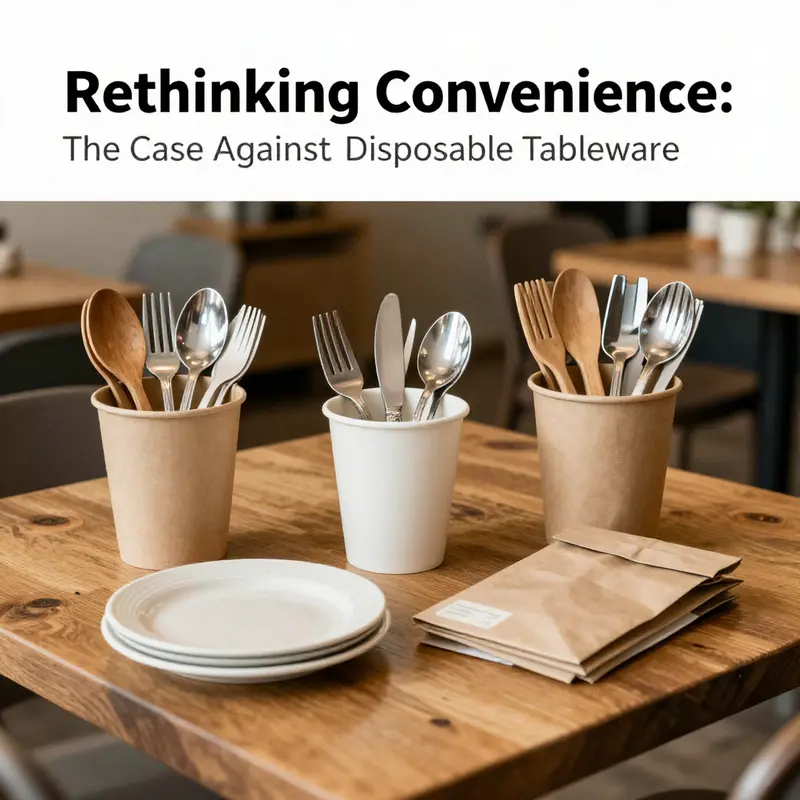
Every decision to reach for a disposable plate or cup leaves a trace that goes beyond a single meal. The ease of a quick, throwaway solution can obscure longer stories about health, ecosystems, and the social systems that keep communities functioning. This chapter continues the thread from the broader guide by turning attention toward practical, durable, reusable options that fit real lives—homes, offices, schools, markets, and events alike. The aim is not to demonize convenience but to reframe it as a choice with consequences and alternatives that are affordable, reliable, and dignified in their material stewardship. In practice, choosing reusable tableware means rethinking how we store, transport, clean, and maintain the things we use to eat and drink. It also means reimagining the rituals of hospitality so they center care for people and places rather than the easy aftertaste of waste. The core idea is simple: replace disposables with durable, safe, and culturally considerate tools that withstand repeated use while preserving cleanliness, taste, and joy in shared meals.
Durable tableware begins with materials that are both inert in everyday use and resilient over time. Opting for stainless steel, ceramic, or tempered glass plates and bowls provides a broad range of aesthetics, from the warm glow of ceramic to the sleek practicality of metal. These options stay with you for years when cared for properly, resisting the micro-arc of disposal culture that pushes products toward the curb before their first sign of wear. For travel, picnics, or field work, lighter, resilient alternatives like silicone bowls and high-grade, BPA-free plastic containers can be appropriate, provided they are handled with care and kept clean. The goal is to minimize energy and waste while maximizing reuse, durability, and comfort. When selecting these items, assess how they balance weight, breakability, heat resistance, and dishwasher safety. A set of sturdy plates, bowls, and cups can ride in your car or shed, ready for impromptu meals or community gatherings without the worry that a single drop or scrape will ruin them. The reasoning is practical: durable items reduce the ongoing cost of replacements and the constant churn of trash that would otherwise fill a landfill or a local incinerator.
A practical framework helps many people adopt these habits without feeling overwhelmed. Build a small ecosystem around your daily routines—what some call a go kit. Keep a foldable utensil set, a couple of collapsible dishes, and a compact cloth or microfiber napkin in a bag or car console. A micro-kit like this eliminates the friction of forgetting, turning a potential lapse into a reliable habit. The kit should be easy to sanitize and quick to dry, with components that dry quickly after washing. The objective is not perfection but persistence: ongoing, repeatable actions that reduce waste incrementally while still honoring the tempo of daily life. Incorporating this kit into work routines also pays dividends. Some workplaces and campuses offer discounts for customers who bring their own containers or utensils, a gentle nudge toward a culture that values reuse as a standard rather than an exception. Embracing such a culture requires clear expectations and supportive policies. Employers can model best practices by provisioning storage spaces for reusable sets, offering splash-proof containers that can be stowed in lockers or backpacks, and sharing simple guidance about cleaning and maintenance.
The tableware you choose should complement the way you cook and the kinds of meals you serve. When meals are self-contained, glass or stainless steel containers with airtight lids are superior to thin plastic alternatives that compromise flavor, heat, and safety. Glass is nonreactive, easy to clean, and compatible with most reheating methods when the lid is removed. Stainless steel is remarkably durable and often lighter than it looks, with the added benefit of being compatible with hot and cold foods. Ceramics offer aesthetic appeal and tactile warmth, which can transform everyday dinners into moments of care. For those who enjoy meals on the move, lighter silicone options can substitute for fragile ceramic, offering flexibility without sacrificing cleanliness or durability. The key is to choose pieces that are easy to wash, dry, and store, with a standardized set that minimizes clutter and confusion. A simple rule of thumb helps: if an item is tough enough to survive a busy kitchen and a family’s daily rhythm, it is likely a good candidate for ongoing reuse. A single well-chosen set can replace dozens of disposable items, and its presence in your routine reinforces the broader ethic of care for people and planet.
Beyond plates and bowls, cups and mugs deserve equal attention. Paper or foam cups dissolve into the waste stream almost instantly, but metal, ceramic, or glass mugs preserve flavor and maintain temperature with greater efficiency. An insulated metal mug can keep coffee hot for hours and beverages cool in warm weather, reducing the temptation to discard a disposable cup for the sake of convenience. If you often work in shared spaces, a personal mug with a simple lid can prevent spills and make reuse second nature. The practice of bringing your own cup has a secondary benefit: it invites others to reflect on their own consumption. When colleagues see a familiar vessel in frequent use, it becomes part of a shared culture rather than an isolated habit. Cafes and offices that encourage BYO cups are not merely offering a discount; they are reinforcing a collective identity focused on resourcefulness and health. You can extend this same logic to hot beverages on the go by employing a thermally insulated mug or a sturdy glass bottle for cold drinks. In all cases, ensure cleaning is straightforward and the materials are food-safe, non-porous, and easy to sanitize.
The readiness to replace disposables with reusable plates, cups, and cutlery also hinges on how we handle wraps and storage. The habit of wrapping leftovers in plastic wrap or storing them in cling film is in tension with environmental and health concerns raised by persistent chemicals. Beaded with beeps of modern packaging, the kitchen can instead be outfitted with beewax wraps, or washable silicone covers that seal bowls without the need for disposable film or foil. Beewax wraps are resilient, reusable, and breathable, which helps preserve the texture of foods without trapping moisture in ways that encourage spoilage. Silicone covers fit various sizes of bowls and containers, offering an airtight seal that reduces odors and leaks while staying dishwasher-safe. Combined with glass or stainless steel containers for leftovers, these wraps create a closed loop that keeps food safe, tasty, and ready for another round of meals. In addition to wraps, durable storage containers become central to sustainable routines. Stainless steel or glass containers with tight-sealing lids provide a non-toxic alternative to plastic bags or foil. They are more durable and can be used repeatedly for microwaving, freezing, and transporting meals. The practical payoff is straightforward: a well-organized fridge with clearly labeled containers lowers the chance of wasted food and saved money over time.
A few behavioral shifts support these tangible changes. Start with the logistics of transport and cleaning. Wipe down dishes quickly after meals and stack them in a centralized area to streamline washing. A small routine can prevent the accumulation of dirty dishes and the temptation to revert to disposables. If you live with others, share the responsibilities and create a rotating schedule for washing, drying, and storing the kit. The shared commitment strengthens communal norms and reduces the likelihood that the reusable system collapses under pressure. In retail contexts, businesses can play a crucial role by offering customers incentives to use reusable tableware. Instead of a one-off encouragement, a sustained program that recognizes frequent participants builds a sense of participation and belonging. Even small measures—like clearly labeled bins for different materials, quick-clean stations near the entrance, and visible reminders about the benefits of reusables—can nudge behavior more effectively than lectures about waste.
The social and ethical dimensions of disposable tableware deserve thoughtful attention. Marginalized communities often bear a disproportionate share of the waste burden when disposal infrastructure is inadequate or poorly designed. By choosing durable options, individuals help reduce the volume of waste and, in turn, lessen the demand on overwhelmed waste management systems. Ethical considerations extend to supply chains as well. The production of disposable items frequently involves work in challenging conditions, with environmental costs borne by communities far from the final consumer. Supporting systems that prioritize fair labor practices and responsible sourcing for durable goods helps shift economic incentives toward higher-quality products that last longer and require fewer replacements. This is not a call for pristine perfection but a push toward a more just and resilient economy that values human health and ecological integrity alongside convenience.
To connect these practices with the larger shift away from a disposable culture, consider how packaging and takeout infrastructure can evolve. One practical pathway is to favor packaging and containers that are designed for repeated use and easy recycling at end of life. For takeout meals, explore options that emphasize durability, safety, and clean reuse rather than throwaway convenience. The market increasingly offers eco-friendly alternatives that balance compatibility with microwaves, grease resistance, and reusability. For example, a growing field of packaging provides stylish, microwave-safe containers designed for long-term use, which can be integrated into daily routines at work, school, or home. This is not just a matter of choosing a container but of shaping the context in which food is consumed. When a neighborhood or workplace adopts a shared standard for reusable foodware, the cumulative effect reduces the daily waste stream, mitigates environmental harm, and signals a cultural value that places health and care at the center of dining experiences. Within this shift lies an invitation to reframe hospitality. The aim is to welcome guests with warmth and generosity while preserving the dignity of resources and the integrity of the local environment. It is possible to host gatherings that feel abundant without producing unnecessary waste. A centerpiece can be the efficient, well-deployed reuse system rather than the bulk of disposable dishes.
Changing habits around disposables also involves practical, world-aware decision making during meals away from home. When you order takeout, ask about reusable containers or a policy that encourages customers to bring their own storage solutions. Such questions may seem small, but they contribute to a broader demand for responsible packaging and know-how that communities can build on. In some settings, organizers and educators create opportunities to practice these skills by hosting community meals with a shared kit that participants borrow or contribute to. This fosters social learning and mutual accountability. It is also worth noting a readily accessible repository of practical packaging ideas that can guide everyday choices. For readers seeking concrete examples, consider the option of eco-friendly takeout boxes for food packaging—stylish containers that are safe for microwave use and grease-resistant. This resource demonstrates how a well-considered design can support repeated use while maintaining hygiene and ease of use. The link appears here as an example of how accessible alternatives anchor new routines and encourage broader adoption. In addition to internal innovations, staying informed through credible sources about health and environmental impacts helps keep choices grounded. The health implications of contact with certain materials, the durability of alternatives, and the ethics of production are all part of the long conversation about what we eat and how we eat it.
Finally, the move away from disposable tableware invites a broader social shift toward a circular mindset. The best alternatives are not only physically robust but also culturally legible. They tell a story about care, responsibility, and shared stewardship of the planet. By integrating reusable tableware into daily life, by equipping ourselves with practical storage and cleaning routines, and by fostering supportive workplaces and schools, we participate in a sustainable loop that strengthens health, biodiversity, and community resilience. The chapter thus closes not with a hard rule but with an invitation: to choose thoughtfully, prepare mindfully, and act consistently. The small acts of choosing a durable plate, carrying a personal cutlery set, and wrapping food with reusable covers accumulate into a cultural shift that respects human health and the health of ecosystems. As communities adopt these practices, the bar for what counts as responsible consumption rises, and the challenge becomes an opportunity to prove that everyday meals can be both convenient and virtuous. The ongoing narrative is one of practical empowerment—where durable tools, mindful routines, and collective commitment converge to redefine what it means to eat well in a world already crowded with disposables.
For those who want a concrete, web-accessible example of packaging options that align with this shift, consider eco-friendly takeout boxes for food packaging—stylish containers that are safe for microwave use and grease-resistant. This example demonstrates how design and material choice can support reuse without sacrificing convenience or safety. Such resources are not mere references; they are building blocks for a broader culture that values durable solutions over single-use convenience. As you read, imagine your next meal not as a disposable moment but as a potential turning point in your daily life. Small, repeatable choices add up, transforming kitchens, offices, schools, and homes into spaces that honor health, respect the environment, and acknowledge the social realities of production and consumption. The final measure of success lies not in perfection but in persistence—carrying a compact kit, washing and reusing thoughtfully, and gradually expanding the circle of people engaged in this healthier, more sustainable way of dining. The chapter thus invites you to begin where you are, with what you have, and with the intention to keep going.
External resource for further reading: https://www.unep.org/resources/report/global-plastic-pollution-outlook-2025
Final thoughts
Transitioning away from disposable plates, dishes, cups, and paper napkins is vital for restaurants, bubble tea shops, food trucks, and catering services aiming for a sustainable future. By understanding the associated health risks, recognizing the environmental impacts, and addressing ethical issues, businesses can make informed decisions that benefit both their operational integrity and the planet. Choosing practical alternatives not only enhances customer satisfaction but also positions your brand as a leader in sustainable practices. Moving forward, the commitment to sustainable practices can rejuvenate businesses and foster a healthier relationship with the community and environment.