
As beverage establishments continue to expand their offerings—from bubble tea shops to corporate events—the demand for efficient, high-quality disposable plastic cup making machines grows stronger. These machines have become essential for maintaining service quality and operational efficiency in a fast-paced market. Understanding their specifications, production capabilities, and pricing dynamics equips businesses to make informed purchasing decisions, ensuring that they meet customer demands while managing costs effectively. Each chapter dives deep into these facets, providing a comprehensive view of the wholesale disposable plastic cup making machine landscape.
From Molds to Market: Navigating the Wholesale Landscape of Disposable Plastic Cup Making Machines
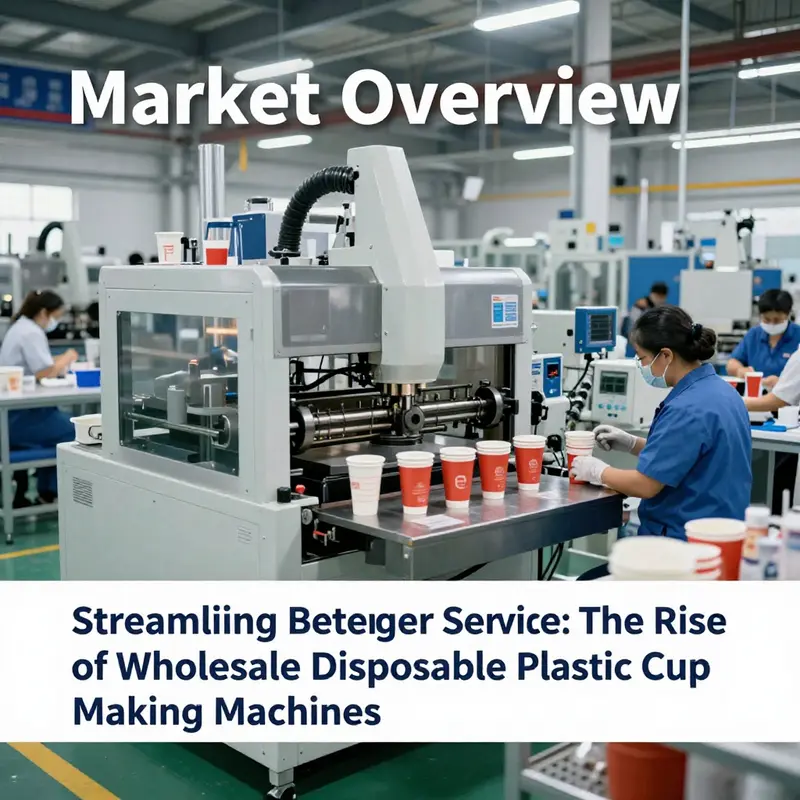
The wholesale market for disposable plastic cup making machines sits at a critical crossroads where engineering precision meets the realities of global demand. It is a market shaped by the simplest biomechanics of manufacturing—repeatable, high-quality molds and reliable, automated handling—yet it is driven by complex macro forces: urbanization, changing consumer habits, and the relentless push for cost efficiency across supply chains. In regions with mature plastics industries, particularly along the coastlines and industrial belts of Asia, manufacturers have built ecosystems that move from manual, labor-intensive setups to sophisticated, servo-driven lines that can produce thousands of cups per hour with minimal variability. The story is not merely one of machines; it is a narrative about how manufacturers, suppliers, and buyers coordinate to convert raw materials into a steady stream of single-use packaging that touches kitchens, streetside stands, event venues, and corporate cafeterias around the world.
The core capabilities of these machines—material compatibility, automation level, and output capacity—define the buying decision in ways that feel both technical and strategic. Material compatibility remains central because cups are produced from a spectrum of polymers that differ in cost, clarity, rigidity, and barrier properties. PET, PP, and biodegradable plastics each demand distinct processing windows, mold designs, and cooling profiles. A line that handles PET gracefully must manage crystallization tendencies and color control; a PP-capable system must balance cycle time with mold temperature and expansion behavior. Biodegradable options, while increasingly attractive for sustainability goals, introduce additional considerations in processing stability and compostability requirements. Buyers must balance the allure of greener materials with the realities of yield, uniform wall thickness, and downstream recycling or waste management—factors that ultimately influence total cost of ownership and long-term viability.
Automation levels in the market span a broad spectrum. From semi-automatic hydraulic setups to fully automatic servo-driven systems, the pendulum is clearly swinging toward higher degrees of automation as factories chase consistency and throughput. Fully automatic configurations often feature tilting molds or advanced mold clamping and cooling sequences, integrated with programmable controls that optimize cycle times and reduce human error. The most capable lines are engineered to minimize downtime through inline quality checks, automated stackers, and precision pick-and-place modules that handle the cups from forming to stacking, ready for carton loading. Yet even as automation climbs, the price-performance equation remains a decisive factor for many buyers. A spectrum of price points exists to accommodate different business scales: entry-level or smaller units can be surprisingly affordable, while high-capacity, fully automatic systems command premium investments. The pricing landscape reflects this diversity, with low-cost units aimed at startups or small shops and high-end lines designed for large manufacturers seeking to maximize output and minimize labor costs.
Capacity is the most tangible measure of a line’s value, but it is not a standalone metric. It is the interplay of cycle time, mold design, material handling, and downstream integration that determines the actual hourly or daily output. Modern lines can deliver hundreds of cups per hour on the smaller end, scaling to thousands per hour on industrial-scale systems. The capacity figure, however, must be interpreted in light of material type, cup size, and product type. A line optimized for standard 4-ounce PET cups used in beverages will not be equally effective for large, reinforced cups used in catering or for specialized products like eco-branded cups. The choice of line thus becomes a decision about what markets you intend to serve and how you plan to adapt to evolving demand. The wholesale market reflects this reality: suppliers emphasize modularity and scalability, enabling buyers to start with a lean, semi-automatic setup and later expand to a fully automatic, high-capacity line as volumes grow.
The regional dynamics of this market also shape what buyers can expect in terms of price, service, and lead times. China remains a central hub, with Guangdong and Zhejiang provinces housing a dense network of manufacturers who offer a full range of equipment—from compact, labor-light machines to expansive, fully automated production lines. The value proposition in these hubs combines favorable tooling ecosystems, access to a broad supply of spare parts, and a robust base of engineering talent accustomed to rapid customization. Supply chains benefit from geographic clustering: mold makers, auxiliary equipment suppliers, and control system integrators can be coordinated to deliver turnkey solutions with relatively fast turnarounds. For buyers outside Asia, the global reach of these suppliers matters as much as the engineering polish of the machines themselves. International shipping, documentation, and after-sales support are all integral components of the purchase decision, and many suppliers promote a kind of service guarantee culture—an extended factory inspection, a seven-day replacement window, and dispatch within 72 hours are often highlighted as assurances of reliability in a highly price-competitive market.
The price ranges documented in recent listings reflect the breadth of this market. High-end, fully automatic, high-capacity configurations can push into well over $200,000 USD, a figure that corresponds to lines designed to support large-scale beverage service or catering operations. Mid-range, fully automatic servo-based systems commonly fall between roughly $70,000 and $100,000 USD per set, representing a balance of capability, automation, and total cost of ownership. Entry-level or smaller units can be found at a fraction of that price—often in the low thousands to mid-hundreds of dollars—appealing to startups or small shops exploring the transition to automation. There are also specialized machines in the market designed for particular products, including lids or containers of different shapes, with prices that diverge accordingly. The consolidation of these price bands illustrates a market that is accessible to a wide range of buyers, while still offering premium engineering for those pursuing scale and reliability. In practice, buyers often evaluate a matrix of factors beyond price: compatibility with existing equipment, availability of spare parts, and the supplier’s ability to support mold development and customization.
From the buyer’s perspective, the decision is seldom about a single feature in isolation. It is about total cost of ownership, including energy efficiency, maintenance, downtime, and the ability to sustain quality across large runs. A modern line is marketed for its energy efficiency, a feature that resonates more and more with corporate sustainability goals and the rising cost of energy. Efficient designs reduce thermal losses, optimize motor loads, and streamline cooling cycles, translating into meaningful savings over the life of a machine. The market has seen a steady emphasis on automation as a path to lower labor costs and higher repeatability. When a line operates with a synchronized servo drive, integrated mold tilting, and an intelligent control system, operators can achieve tighter tolerances, shorter cycle times, and more consistent cup geometry. The alignment between automation and energy-conscious engineering yields a compelling value proposition for buyers aiming to scale provisioning for events, foodservice, and retail environments where disposable cups are a staple.
Technological advancement in this space is not limited to raw speed. It encompasses the broader envelope of digital controls, process analytics, and compatibility with diverse materials. A line that can handle PET, PP, and biodegradable polymers is inherently more adaptable to market shifts, enabling manufacturers to respond quickly to consumer trends without committing to a single material stream. The integration of embedded sensors and process feedback also plays a role in reducing waste and ensuring consistent wall thickness, which is essential for cup strength and user experience. Importantly, while the market rewards advanced control systems, it does not ignore the practicalities of maintenance and downtime. The most effective supplier ecosystems provide not only high-tech machines but also robust start-up support, mold development assistance, and post-purchase training. In markets where competition is intense, suppliers often highlight their “deep factory inspection” and rapid dispatch capabilities as differentiators that help buyers shorten their time-to-volume and protect uptime.
The economic equation for buyers in this wholesale market remains nuanced. On one hand, there is a compelling argument to invest in high-capacity, automated lines to realize labor savings, optimize cycle times, and deliver consistent quality at scale. On the other hand, buyers must consider the total product lifecycle, including mold costs, maintenance, and the need for spare parts that can affect uptime. The marketplace responds with modular designs and scalable configurations that allow firms to begin with a compact, cost-efficient setup and progressively upgrade as demand intensifies. The result is a market that supports both the entrepreneur seeking a foothold in disposable packaging and the multinational manufacturer pursuing continuous, high-volume production.
The market analysis also points to the strategic value of testing and validation in the procurement process. Suppliers frequently offer sample runs or free samples with shipping costs covered as part of the sales process, enabling buyers to evaluate throughput, cup integrity, and material behavior under projected production conditions. For buyers planning to customize cups with branding, logos, or special shapes, the option of collaborative mold development is a practical, value-adding feature. Mold customization can be particularly important for events, venues, or retailers who want distinct branding aligned with campaigns or product lines. The capacity to develop and integrate custom molds complements the versatility of multi-material and multi-product lines, reinforcing the idea that today’s plastic cup manufacturing equipment is not a single-purpose, monolithic machine but a flexible platform that can adapt to changing market demands.
A broader reading of the market shows an ecosystem that is increasingly global in reach. While the heart of production remains concentrated in Asia, buyers worldwide now expect suppliers to provide international shipping, on-site installation support, and training for operators and maintenance teams. The global reach of suppliers also means access to a broader pool of components, control software options, and engineering practices that help firms optimize their lines for energy efficiency and minimum downtime. In this context, the wholesale market for disposable cup making machines is less about a singular device and more about a network of capabilities—supply, service, and support—that together enable reliable, scalable production of single-use cups across diverse markets.
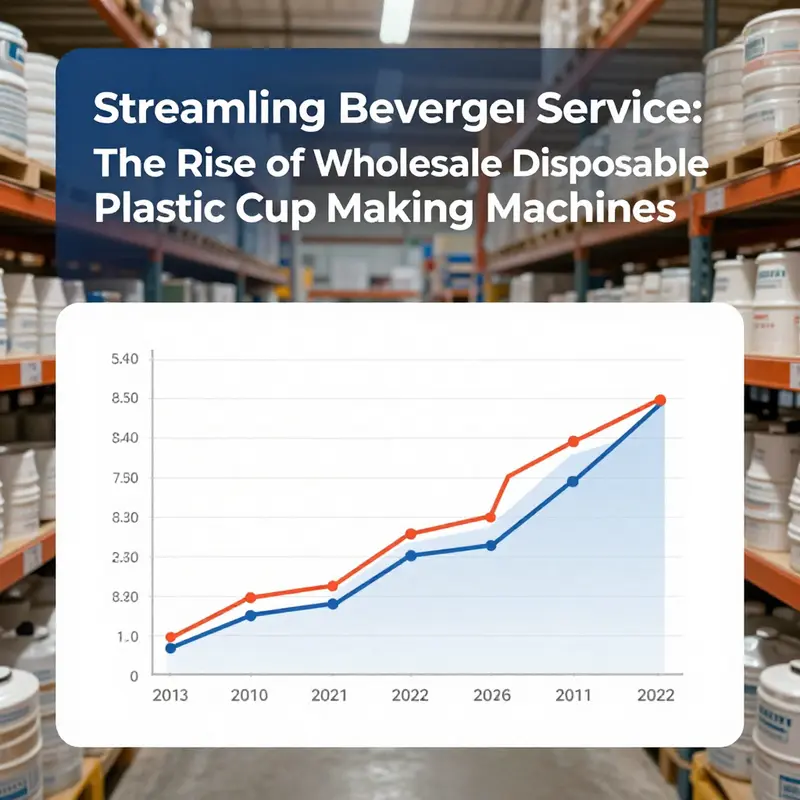
From an economic perspective, the empirical projection of growth in this market underscores a steady expansion in value and volume. The global Plastic Cup Making Machines Market is projected to grow from about USD 1.2 billion in 2024 to roughly USD 2.1 billion by 2033, reflecting a robust compound annual growth rate. This forecast aligns with the macro drivers discussed earlier: urbanization drawing more people into consumption-rich environments, the fast-food culture accelerating demand for convenient packaging, and the ongoing drive for cost-effective production strategies that allow producers to compete on price and reliability at scale. In this framework, the technology arc—automation, energy efficiency, and modern injection blow molding capabilities—appears as a necessary enabler of the market’s upward trajectory. The integration of new energy-efficient processes, coupled with streamlined automation and smarter controls, is what allows producers to translate rising demand into sustainable margins. For buyers, this means that the investment calculus is progressively more favorable when the line incorporates not only throughput and material versatility, but also energy-conscious design, predictive maintenance, and modular expansion paths.
Within this evolving landscape, the supplier ecosystem continues to emphasize certain value propositions. Free samples with shipping costs covered, mold development support, and secure trade platforms that verify supplier credibility have become standard elements in procurement discussions. Buyers seek assurances that they will receive reliable equipment, backed by well-established service networks, training resources, and transparent compliance with international shipping and installation standards. The market’s maturity is evident in the balance it strikes between cost competitiveness and the quality expectations of large-scale buyers. This balance is what makes the wholesale market for disposable cup making machines both accessible to smaller operations and indispensable to incumbents seeking to optimize and modernize their production lines. In short, the market embodies a convergence of engineering excellence and practical business pragmatism, where the best outcomes come from lines that combine robust automation, versatile material handling, and a durable pathway to scale.
For readers who want to explore specific product examples and real-world configurations, a practical step is to review sample offerings and compare them against a set of criteria that reflect strategic priorities. Consider capacity targets for the initial phase, potential growth trajectories, the breadth of materials you intend to use, and the level of automation that balances upfront investment with long-run savings. Another important consideration is the support ecosystem: mold development assistance, after-sales service, spare-parts availability, and the speed with which a supplier can respond to maintenance needs or emergencies. These factors can have outsized effects on uptime, product quality, and the ability to meet tight production schedules common in catering, events, and retail promotions.
In closing, the wholesale disposable plastic cup making machine market is not simply about machines; it is about the orchestration of technology, material science, and logistics to deliver reliable, scalable packaging solutions. As urban centers grow and consumer preferences for convenience continue to shape the packaging landscape, the demand for high-performance, adaptable, and energy-efficient manufacturing lines will persist. Buyers who approach procurement with a clear view of capacity, material compatibility, automation level, and lifecycle costs will position themselves to navigate market volatility, capitalize on shifting demand, and unlock consistent, high-quality production that serves a broad spectrum of customers—from street vendors to large-scale event organizers. The interplay between regional production hubs, global supply networks, and the evolving needs of end users will continue to define the market’s trajectory, pushing manufacturers to innovate not just for speed, but for sustainability, resilience, and value across every cup that leaves the mold.
For readers seeking concrete examples of the kind of product lines that populate this market, it is worth noting that the broader packaging ecosystem also includes equipment aimed at related items such as cup lids and other containers. The availability of multi-product lines underscores the strategic advantage of suppliers who offer integrated solutions, enabling buyers to streamline procurement and reduce integration risk. The capability to scale from a modest, semi-automatic setup to a comprehensive, high-capacity line is appealing to businesses with ambitious growth plans or those operating in markets with fluctuating demand. The wholesale market, with its diverse price points and configurable options, thus becomes a platform not only for acquiring a machine but for anchoring a longer-term manufacturing strategy that can adapt to the evolving contours of disposable packaging.
If you are evaluating options and need a tangible reference point for what a mature, consumer-oriented instantiation of this technology looks like, consider the broader ecosystem of disposable packaging that surrounds a cup. The same families of machines that form cups often connect to downstream processes such as lid formation, labeling, and secondary packaging. The efficiency gains realized in one segment can ripple across the entire line, reinforcing the value of a cohesive, multi-product approach to manufacturing. Buyers who plan for this kind of integration—where the cup, lid, and secondary packaging are produced in a synchronized sequence—tend to achieve smoother production runs and better overall equipment utilization. The market remains receptive to innovation that reduces material waste, enhances energy efficiency, and provides adaptable automation capabilities that can shift as demand patterns change. In that sense, the wholesale disposable cup making machine market is less a static catalog of devices than a dynamic platform for strategic manufacturing, inviting operators to invest in lines that can grow, adapt, and endure as the packaging needs of a diverse world continue to evolve.
For readers seeking practical guidance on where to start, one navigational approach is to assess the material family you intend to work with, the typical cup size for your target customers, and the level of automation that aligns with your labor resources and budget. In addition, you should evaluate the supplier’s track record for reliability, their capacity to support mold development, and the logistics of international shipments if you plan to operate across borders. While the market offers a broad spectrum of options, the most successful buyers are those who integrate technical due diligence with a clear business case for scale, reliability, and sustainable cost of ownership. In that synthesis lies the path to a manufacturing operation that can meet rising demand while delivering consistent quality and responsible packaging choices for a world that increasingly values efficiency and accountability in every bottle and cup that leaves the line.
Internal resource for further exploration: a comprehensive and tangible example of the end-product category can be found at one of the supplier pages that showcases disposable clear plastic cups designed for events and gatherings. This resource helps align production capability with market expectations for clarity, strength, and user experience, illustrating how machine capability translates into market-ready products. disposable clear plastic cup for events.
External reading to contextualize market projections and broader industry dynamics can be found in the MarketsandMarkets study on plastic cup making machines, which provides a detailed outlook on market drivers, pricing trends, and supplier considerations. For a detailed and up-to-date overview, see the MarketsandMarkets Plastic Cup Making Machines Market Report: https://www.marketsandmarkets.com/Market-Reports/plastic-cup-making-machines-market-29728715.html
From Mold to Market: How Specifications and Production Capabilities Shape Wholesale Disposable Plastic Cup Machines
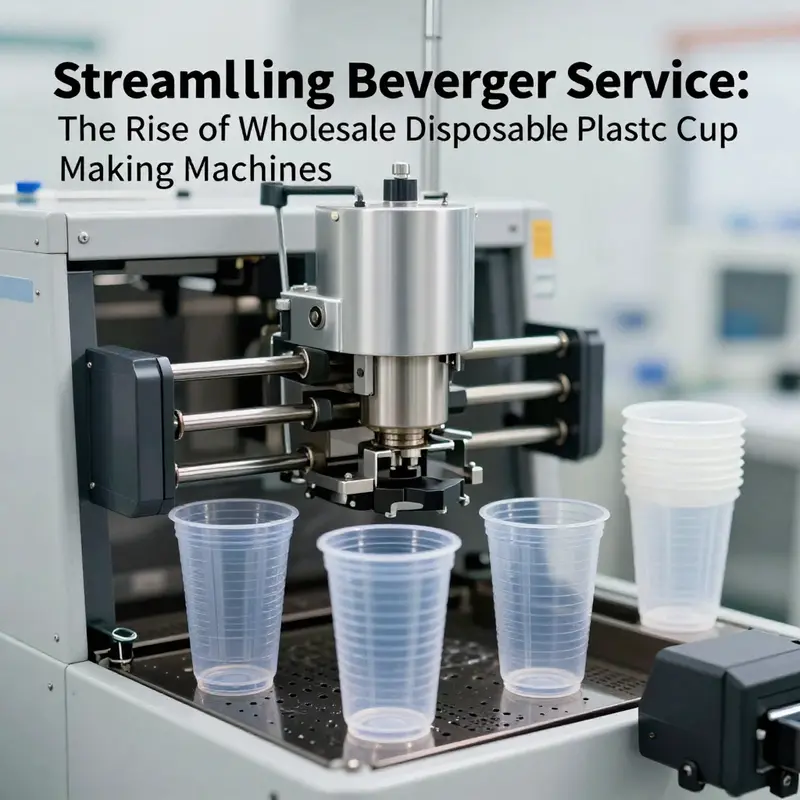
Wholesale disposable plastic cup making machines sit at a critical juncture between material science, automated manufacturing, and the evolving demands of global packaging. The machinery that underpins bulk cup production is not a single device but a configurable family of lines and modules designed to transform raw resin into reliable, standardized cups at scale. The contemporary market, while diverse in its offering, converges on a few core truths: machines must accommodate a spectrum of plastics, operate with precision and speed, and adapt to shifting demand without sacrificing consistency or safety. The story of these machines is thus a story of options aligned with purpose, where the right specification set unlocks both the economy of large runs and the agility needed for branded, hot- or cold-beverage applications. In the broader sense, the machines are the bridge between raw polymer and the consumer experience, a bridge that relies on engineering decisions as much as on the raw materials themselves.
At the heart of production capability is material versatility. A modern wholesale cup machine is engineered to handle a variety of plastics, extending beyond the familiar PET and PP to include PS and high-impact variants such as HIPS, with room for PVC and other specialty polymers where regulatory or performance needs permit. This broad compatibility matters because cups destined for different markets and uses carry distinct requirements. Cups for hot beverages demand heat resistance and structural integrity; those for cold drinks require clarity, rigidity, and a surface that accepts labeling and branding without warping. Biodegradable plastics have joined the spectrum in response to sustainability goals, introducing additional considerations for process stability, cycle timing, and end-of-life implications. Each material type has its own viscosity, forming behavior, and trimming characteristics, and thus the machine’s feeder design, mold configuration, and cycle timing must accommodate these differences without sacrificing throughput. The ultimate outcome is a line that can reconfigure for a new material or a new cup size with minimal downtime, a capability that matters as private-label programs expand and retailers demand flexible packaging for seasonal campaigns or promotional events.
The production capabilities of these lines reflect the push toward higher output while preserving quality. A family of machines can achieve impressive rates, illustrating a range that starts with rapid but specialized cycles and extends to continuous, fully automated operations. In some high-performance configurations, cycles can run as fast as thirty per minute, which translates to around 1,800 cups per hour under optimal conditions. This speed is a benchmark for large-volume production, where even small gains in cycle time compound into meaningful capacity. Yet not all processes can sustain such tempo across every material and cup dimension. Full automatic thermoforming systems, while extremely capable, may reach around 500 cups per hour in typical setups, with performance varying by cup geometry, material thickness, and the presence of features like reinforcements or embossed branding. The contrast underscores a practical truth about wholesale cup manufacturing: the fastest paths are not universal but are tuned to intended product families, line configuration, and the business model of the operation. For a facility that alternates between standard beverage cups and seasonal, branded cups, a line that blends high-speed forming with flexible tooling can deliver both the mass appeal of uniform runs and the customization needed for time-limited campaigns.
To operate at these scales, modern cup machines lean heavily on automation and intelligent control. A typical cell will feature a programmable logic controller (PLC) that orchestrates every stage of the cycle—from resin feed to formed cup ejection and stacking. Servo motor feeding provides precise motion control, ensuring that sheet material or preforms advance with exact positioning and timing. This precision is essential not only for achieving tight tolerances on cup rims and base dimensions but also for maintaining consistent wall thickness, which influences heat resistance, stacking stability, and downstream packaging. Operators interact with intuitive touch-screen interfaces that display real-time process parameters, alarms, and production statistics. The hum of a line becomes a symphony of synchronized movements: material advances, molds open and tilt, sections trim excess, and cups slide into nests or conveyors with repeatable reliability. The human role shifts from manual control to supervision and optimization, focusing on throughput, quality, and maintenance rather than rote, per-item handling.
Certification and safety form another axis of capability. Reputable manufacturers pursue CE and ISO certifications to demonstrate compliance with international safety, health, and environmental standards. For buyers, these credentials reduce risk when scaling production for export or when integrating lines into facilities that must meet stringent regulatory requirements. Certifications also speak to the robustness of the engineering approach—reliability, traceability, and a commitment to standards that support consistent performance across batches and shifts. In practical terms, this translates into predictable production windows, clearer maintenance plans, and the confidence to run long production campaigns with minimal unplanned downtime. Flexibility remains a cornerstone of the value proposition. A modern line is not a one-size-fits-all device but a platform designed to accommodate rapid switching between high-speed commercial output and smaller, more customized runs. Such adaptability is particularly valuable for contract manufacturers and beverage brand owners who must align packaging with seasonal demand, promotional partnerships, or new product launches without sacrificing efficiency.
Behind the curtain of speed and flexibility lies the logic of process design. The thermoforming process—so central to cup forming—requires precise control of heating, forming pressure, and mold geometry. The molds themselves often employ tilting or shifting configurations to optimize material flow and to facilitate clean release from the forming surface. The orientation and tilting mechanism, when present, contribute to shorter cycle times by enabling more efficient material accommodation and quicker demolding. Even seemingly modest enhancements, such as mold surface treatments or integrated cooling channels, can reduce warping and improve surface quality, which in turn minimizes post-form trimming and rework. In turn, trimming and post-form operations must be tightly integrated with the forming stage. Automated trimming reduces waste and keeps cycle times tight, while automated stacking and packaging lines streamline downstream logistics. The integration of these steps matters because any misalignment between forming, trimming, and stacking tends to cascade into quality variability or downtime, which erodes the economic attractiveness of high-volume production.
The ability to switch between different production modes—high-speed runs and smaller, branded runs—depends not only on hardware but on software. The control software must manage a matrix of process parameters, including cycle speed, heating profiles, mold temperatures, and material handling settings. Real-time monitoring supports rapid decision-making: if a material batch shows a tendency for dimpling or cracking, the system can adjust heat or pressure throughout the run rather than waiting for a batch to fail. Operators benefit from dashboards that translate raw sensor data into actionable insights, enabling proactive maintenance and reduced scrap. This capability aligns with a broader shift toward data-driven manufacturing, where yield optimization and predictive maintenance are integral to maintaining profit margins at scale. The interplay between hardware and software is where the promise of modern wholesale cup production becomes tangible: machines that do not merely perform tasks but learn to perform them more efficiently as they accumulate factory-floor experience.
From a procurement perspective, the economics of these machines reflect a spectrum of investment and capability. Market pricing as of early 2026 demonstrates a tiered landscape. High-end, fully automatic, high-capacity lines can command substantial price points, sometimes reaching six figures and beyond. Mid-range automated systems typically anchor the market with more accessible price points that still deliver robust reliability and productivity. Entry-level and smaller units open the door to startup operations or smaller distribution centers seeking annual volumes that justify automation without a prohibitive upfront cost. In addition to base price, buyers must weigh ancillary costs such as installation, training, spare parts, and service commitments. Many suppliers emphasize post-purchase guarantees, including deep factory inspection processes, short replacement windows, and rapid dispatch timelines, reflecting a comfort with international customers who demand both uptime and responsive support. While price ranges are informative, the broader value proposition rests on the total cost of ownership: the combination of machine efficiency, material yield, labor savings, and the ability to pivot between products as market conditions evolve.
The practical implications of these specifications extend beyond the plant floor. For a business contemplating scale, the choice of line directly influences product strategy. A line that tolerates rapid material changes and accommodates a broad range of cup geometries becomes a strategic asset in markets with diverse consumer preferences or regulatory constraints. The same line may be employed to produce standard cold-drink cups in one quarter and hot-drink, insulated cups in the next, with only minimal downtime for tool changes and mold adjustments. This kind of operational versatility supports market responsiveness and helps manufacturers avoid the bottlenecks that accompany inflexible equipment portfolios. It also aids in risk management, since capacity can be scaled or restructured across shifts to meet demand without resorting to costly capital expansions.
Contextualizing the technical and economic realities mentioned above requires acknowledging supplier ecosystems. The wholesale market for cup-making machinery has deep roots in regions with established plastics sectors, where suppliers offer a continuum of equipment—from semi-automatic hydraulic models to fully automated servo-driven lines. Prospective buyers benefit from direct access to platform-level information and from supplier assurances such as global shipping, on-site testing, and comprehensive aftersales support. The reliability story you hear from vendors often centers on meticulous factory inspections, seven-day replacement guarantees, and rapid dispatch windows. These assurances matter when a plant runs near full capacity and downtime translates directly into lost throughput and unmet commitments to downstream customers. The combination of robust specifications, disciplined production capabilities, and supportive service ecosystems forms the backbone of a viable pathway to scale for any business pursuing wholesale disposable plastic cup production.
To connect these ideas with tangible product options in the field, consider how a potential buyer might explore the family of machines as a whole. A modern line is often marketed as a modular platform rather than a single machine. The core module may be the forming unit, with add-ons for trimming, stacking, or labeling that can be appended as needed. For someone building a compact but efficient operation, a semi-automatic hydraulic system might offer a gentler entry point, delivering reliable performance at a lower up-front cost while providing room to grow. For a company aiming to lead in low-waste operations, a fully automatic servo-driven line with a PLC and a touch-screen interface becomes attractive, because it minimizes labor, reduces scrap, and supports rapid line changeovers. The decision is rarely about chasing the fastest possible cycle; it is about aligning cycle speed with product variety, demand volatility, and total operating costs over the life of the equipment. In the end, the harmony between machine capabilities and business strategy determines the true value of a wholesale cup-making investment.
For readers who want a concrete sense of the product landscape without naming specific vendors, it helps to visualize a representative range of options and their implications. A line capable of handling multiple resin types with integrated control logic can deliver both the standard cups used in mass beverage service and the specialized cups required for curated, brand-focused campaigns. The mold system, with its tilting or conventional configuration, governs how quickly a cup is formed and released, while the trimming station governs the cleanliness of the finished edge and the consistency of cup remnants. The stacking system then places each cup into a transport stream that minimizes vibration and maintains orientation for downstream packaging. This integrated flow—material handling, forming, trimming, stacking, and packaging—defines the production capability of wholesale disposable plastic cup machines. The emphasis on reliability is not ancillary; it is central to achieving the advertised cycle times and maintaining product specifications across hundreds or thousands of cycles per hour.
In closing, the specifications and production capabilities of wholesale disposable plastic cup making machines encode the practical realities of modern plastics manufacturing. They reflect a balance of material science, mechanical precision, and intelligent control that enables mass production without sacrificing quality or adaptability. The most compelling lines for a given business are those that best align with its product mix, demand trajectory, and service commitments. A facility that prioritizes speed must still manage waste and quality; a facility that emphasizes customization must not surrender efficiency. The ideal machine portfolio, therefore, is one that offers high-throughput potential, broad material compatibility, robust automation, and the flexibility to reconfigure for new cup designs and market demands with minimal downtime. This is the essence of value in the wholesale disposable cup sector: a manufacturing platform that converts raw polymer into reliable, branded experiences at scale, while remaining responsive to the evolving needs of consumer packaging and sustainability imperatives.
For readers seeking further context on a specific example of equipment capabilities in this domain, consult a representative product page that highlights the practical mechanics and performance metrics of these lines. See for instance the disposable clear plastic cup options page, which provides a concise window into the kind of cups that fit within the described technical envelopes and market expectations. disposable clear plastic cup options.
External resources can also illuminate the broader landscape of manufacturing capability. For a detailed look at a commercially available machine and its operating specifications, see an external reference that surveys the production speeds and control architectures common in this sector. https://www.alibaba.com/product-detail/LITAI-Disposable-Plastic-Cup-Making-Machine1600748297788.html?src=product-list&spm=a2700.productlist.0.0.1a4e6b8dVQJjWZ
null
null
Final thoughts
Wholesale disposable plastic cup making machines represent an essential investment for beverage and food service businesses aiming to enhance efficiency and meet growing consumer demands. By understanding market trends, specifications, and pricing strategies, businesses can make choices that align with their operational goals. The ongoing development of these machines ensures that establishments can continually adapt to new challenges and thrive in a competitive landscape. In today’s world, making an informed decision about equipment procurement can significantly impact service quality and business success.