
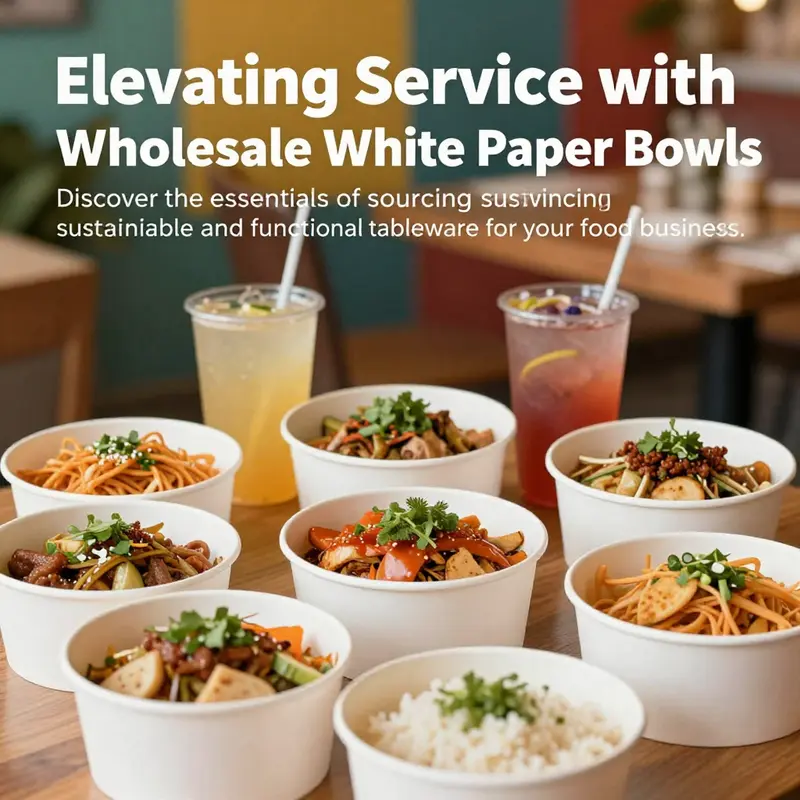
In today’s food service landscape, the demand for quality packaging solutions is more critical than ever. White paper bowls are increasingly popular among bubble tea shops, restaurants, food trucks, catering services, event planners, and corporate procurement teams. These bowls offer a versatile way to present a range of dishes, from salads to desserts, while aligning with consumer preferences for sustainable packaging. In this comprehensive examination, we’ll explore the market dynamics, manufacturing processes, economic factors influencing pricing, and sustainability trends related to wholesale white paper bowls. Each chapter will provide valuable insights that can help decision-makers choose the best products for their business.
Rising Currents: A Comprehensive Market View of White Paper Bowl Wholesale
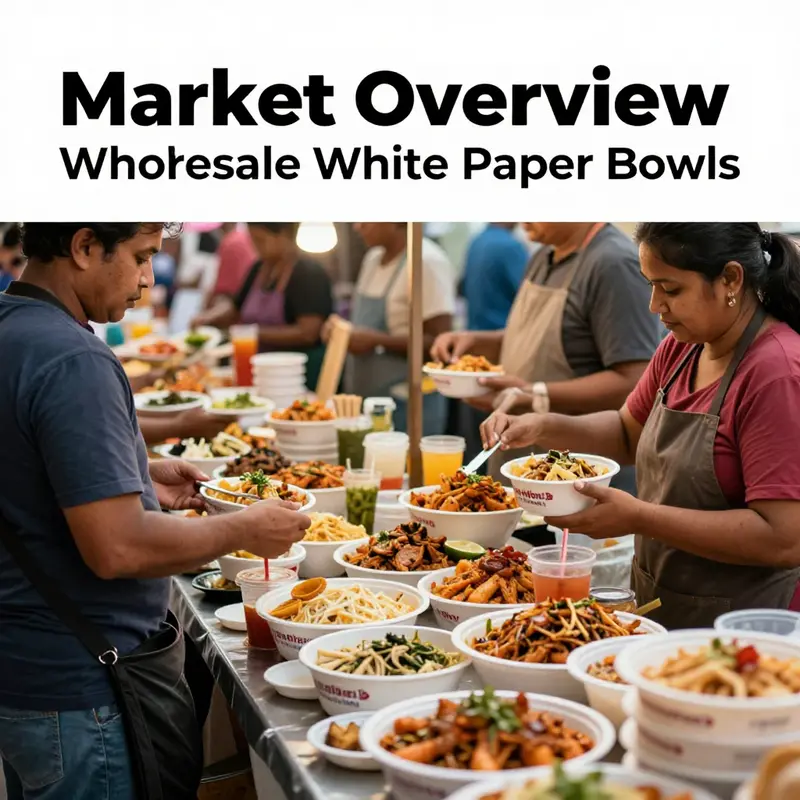
The wholesale market for white paper bowls has emerged from the margins of convenience into a core component of modern food service. In a landscape defined by rapid service, evolving consumer expectations, and persistent sustainability concerns, these disposable vessels have become less a single-use asset and more a strategic element of brand presentation, cost management, and regulatory alignment. The narrative around wholesale white paper bowls weaves together efficiency, environmental responsibility, and the maturing logistics of large-scale procurement. It is, at heart, a story of how a simple serving vessel can amplify a restaurant’s or retailer’s ability to deliver consistent quality, maintain product safety, and communicate a message of care for the planet, all while preserving margins in a highly competitive market. Across foodservice, hospitality, and retail settings, the pull toward durable, cost-effective, and increasingly responsible packaging solutions continues to shape demand and supplier strategy alike.
At the center of this market is the unglamorous but essential requirement for moisture resistance and structural integrity. White paper bowls, typically crafted from high-quality food-safe paper with a thin inner coating, address a practical need: they must stand up to moisture, sauces, and light liquids without leaking or collapsing. The interior coating—traditionally a polyethylene (PE) lining—provides critical leak resistance that protects both the food and the service environment. This coating enables bowls to handle salads, fruits, desserts, or cold dishes with confidence, and it supports the full spectrum of service styles from quick-service counters to catered events. The white exterior is more than a neutral backdrop; it offers a clean canvas that enhances food presentation, making the colors and textures of the dish pop for photographs, menus, and in-store displays. In a market where presentation matters as much as practicality, white bowls often win on both aesthetic and functional fronts.
Yet the market’s forward motion is increasingly anchored in sustainability. The push toward eco-friendly alternatives, including recyclable and compostable options, is not a trend but a shift in consumer and business expectations. Buyers are prioritizing packaging that aligns with environmental standards, reduces waste, and supports responsible end-of-life outcomes. This has spurred a wave of development around alternative coatings and materials, such as PLA (polylactic acid) or other compostable linings, and has encouraged manufacturers to explore post-consumer recycled content and compostable sourcing where feasible. The implications for wholesale buyers are meaningful: the choice of coating and material can affect not only cost and lead time but also eligibility for curbside recycling programs, local composting infrastructure, and brand stewardship initiatives. With regulators tightening guidelines around packaging sustainability, suppliers that can demonstrate credible certification, traceability, and environmental performance are increasingly favored by buyers who must balance price, performance, and responsibility.
Demand dynamics drive a market that is both expansive and nuanced. On the one hand, the health of the wholesale white paper bowl market is tied to the growth of foodservice volumes—from casual dining and quick-service concepts to prepared-meal retailers and institutional kitchens. On the other hand, the market is shaped by the evolving preferences of end consumers who seek convenience without compromising environmental values. The result is a bifurcated but converging demand pattern: durability and reliability at scale, coupled with a transparent sustainability story. In wholesale terms, this translates into a steady appetite for mid- to large-size orders, a readiness to adopt standard formats for predictable service flow, and a willingness to tolerate longer lead times only when the supplier can guarantee consistent quality and environmental compliance. Price remains a critical variable, but it is increasingly evaluated alongside total cost of ownership, including waste disposal considerations, packaging recovery, and the potential for branding and customization that differentiates a business in a crowded market.
Price and scale are the practical lingua franca of wholesale markets. The data points that often anchor procurement conversations illustrate a broad spectrum: for custom disposables with branding, buyers may encounter starting price ranges that reflect both the economies of scale and the complexity of design. For instance, larger custom orders with logos and lids can be positioned in a price band that incentivizes bulk purchases while maintaining a minimum order quantity (MOQ) that supports efficient production planning. Conversely, for smaller operations or periodic promotional needs, smaller size variants with simpler configurations can be sourced at more modest unit costs, enabling flexibility in event-based or seasonal demand. These pricing dynamics underscore a market that rewards suppliers who can deliver not only on unit economics but also on reliability, consistency, and the ability to meet evolving packaging requirements. Strategic sourcing becomes essential, as buyers must evaluate price competitiveness, adherence to international food-safety standards, environmental impact, and production consistency across a multi-angled supply chain.
Competitive dynamics in this space are heavily influenced by manufacturing ecosystems in a global context. A number of regions have established themselves as production hubs capable of delivering scale, reliability, and responsiveness to demand surges. In particular, manufacturing regions known for high-volume, automated production lines for disposable tableware have become integral to the supply chain. The ability to offer a full spectrum of sizes, varied capacities, and packaging formats is critical for wholesalers seeking to serve diverse customer segments—from cafés that favor compact 8-ounce bowls for desserts to large beverage or meal-service operators that require 32-ounce or larger formats with secure lids. The market’s capacity to innovate is correlated with these hubs’ investment in process optimization, material science, and lean manufacturing practices. Innovations in sealing technologies, heat resistance, and stackability further differentiate suppliers who can deliver reliable performance across a wide range of conditions, from refrigerated transport to hot serving in self-serve counters.
To navigate this landscape, buyers increasingly lean on online sourcing platforms that aggregate supplier data, performance metrics, and certification details. Such platforms enable procurement teams to compare options, request samples, and gather real-time feedback from other buyers. A cornerstone of this approach is the ability to customize by size and capacity—whether a business needs a 750ml or 1000ml bowl, or specific packaging configurations like a detachable lid. The digital sourcing environment also supports richer due diligence: performance data on leakage resistance, heat tolerance, and moisture management; certifications for food safety and environmental compliance; and supplier evaluations that reflect reliability and consistency. The streamlined access to information reduces lead times and improves the odds of selecting suppliers who can scale with demand while maintaining quality.
From a strategic standpoint, the emphasis on reliability and sustainability translates into procurement practices that favor suppliers who invest in end-to-end quality control. Buyers are increasingly evaluating not only unit price but also the supplier’s ability to maintain consistent supply across multiple production lines, manage raw material variability, and provide transparent traceability. In a market where the total cost of ownership matters, the savings from a lower unit price can be offset by higher freight costs, longer lead times, or greater risk of supply disruption. The most successful wholesale programs align supplier capabilities with the customer’s service model and sustainability commitments, creating a partnership rather than a transactional relationship. This alignment is particularly meaningful for operators who want to project a consistent brand image across multiple locations while meeting corporate responsibility goals.
Beyond the immediate economics, an ongoing area of exploration for the wholesale market is alternative coatings and materials that push the boundary on compostability and recyclability without compromising performance. The push toward plant-based or biodegradable alternatives challenges traditional production lines but opens opportunities for suppliers to differentiate with credible environmental credentials. In practice, this often means balancing moisture resistance and rigidity with compostable or recyclable end-of-life outcomes. For buyers, it means asking the right questions about how a given coating behaves in industrial composting streams, whether it can be recycled with standard paper streams, and what kind of certifications accompany such claims. The industry’s trajectory suggests that more suppliers will publish lifecycle and environmental impact data, reinforcing trust and enabling more informed purchasing decisions.
An integrated view of the market also considers regional manufacturing ecosystems and their influence on cost, quality, and delivery speed. While the core supply chain may be anchored by major production centers that enjoy scale advantages, regional logistics realities shape lead times and service levels. Efficient distribution networks, reliable warehousing, and responsive customer service are not optional add-ons; they are essential components of competitive wholesale programs. The pairing of strong production capability with efficient logistics creates a value proposition that appeals to a broad customer base—from high-volume foodservice operators that require predictable, frequent replenishment to event organizers who demand flexible delivery windows and dependable branding options.
In this evolving environment, the market’s growth trajectory remains positive, buoyed by the convergence of sustainability commitments, design innovations, and the expansion of online sourcing. Even as some buyers chase the lowest unit price, many recognize the strategic value of sustainability, brand consistency, and end-of-life considerations. The long-term evolution points toward suppliers who can demonstrate credible environmental stewardship, robust production stability, and transparent, data-backed claims about performance. Such a combination supports not only price competitiveness but also the reputational and regulatory advantages that modern operators seek.
For readers who want to explore practical sourcing pathways, the chapter’s implications are clear. The wholesale white paper bowl market rewards those who partner with suppliers capable of delivering scale without compromising safety or environmental standards. It rewards the ability to provide a wide range of sizes, secure and leak-resistant designs, and packaging options that align with a business’s service model and sustainability commitments. It also rewards buyers who leverage digital platforms to access a broad supplier pool, verify certifications, and request samples to test performance before committing to large orders. In the broader context of disposable tableware, these trends mirror a shift toward more deliberate, responsibility-driven procurement practices that recognize the importance of packaging beyond its immediate function as a serving vessel. The result is a market that is not merely about supply, but about alignment across product design, operations, and environmental accountability.
From Pulp to Portable Serveware: The Precision Craft Behind Wholesale White Paper Bowls
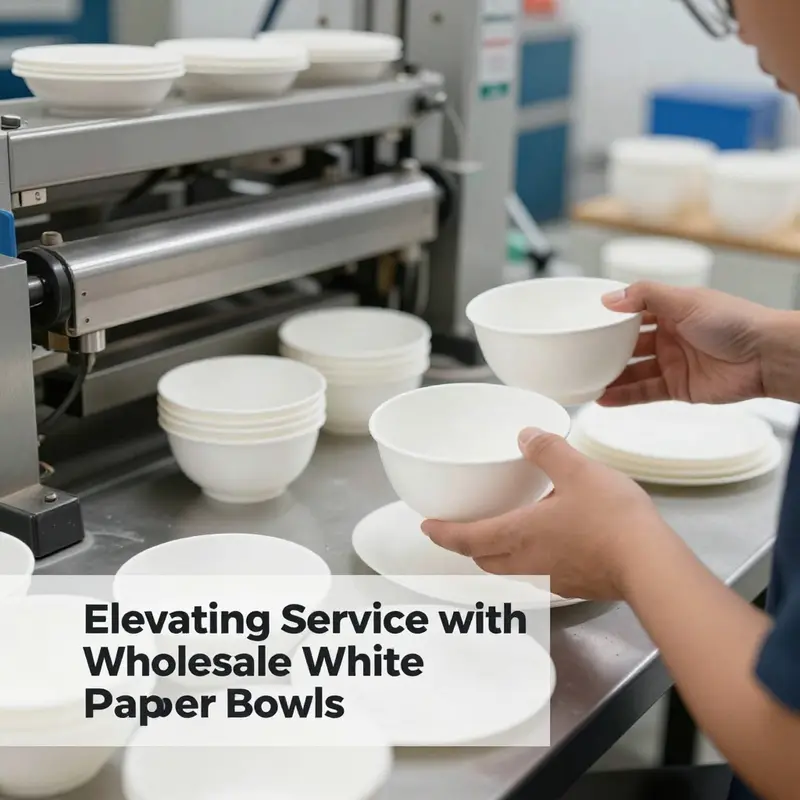
Every wholesale order of white paper bowls hides a sequence of precise decisions that begins long before the first sheet is ever pressed into a cup. In a market defined by hygiene, convenience, and environmental responsibility, the journey from raw pulp to a stack of glossy, food-safe bowls is a careful synthesis of material science, engineered forming, controlled drying, and relentless quality control. When a kitchen places a bulk order, it is not merely acquiring a disposable vessel; it is securing a predictable performance envelope—a consistent barrier between food and the environment that travels from prep stations to plate. The manufacturing story of white paper bowls, therefore, reads like a meticulous orchestration of sustainability, cost efficiency, and food safety, all calibrated to meet the demands of large-volume foodservice operations without compromising on presentation or integrity.
The foundation of the bowl rests on raw material choices. Modern white paper bowls rely on food-grade paper sourced from sustainable fibers. The base sheet can be bleached wood pulp, or it might incorporate non-wood fibers such as bagasse or bamboo, depending on the supplier’s emphasis on renewable resources and compostability. These fibers are formed into a slurry in water, a stage that may employ hydro-turbine refiners to achieve a uniform consistency. Into this mix, food-safe additives are introduced to create a moisture barrier that hugs the inner surface of the upcoming cup. The core aim at this stage is straightforward: render a sheet that can become a stable, leak-resistant container while remaining compatible with a range of foods, from salads and snacks to soups and fruit desserts. The coatings chosen for this work are equally deliberate. A thin inner layer of polyethylene is commonly applied to resist moisture and oil, protecting the structure against ingress and maintaining form when the bowl is cradled in hot hands or exposed to moist mixtures. In parallel, there is a growing family of plant-based or compostable coatings targeted at buyers who prioritize sustainability. Even as the market evolves, the fundamental requirement remains intact: the coating must be food-safe, resist liquids, and preserve the clean white aesthetics that make food presentation more appealing.
Once the pulp sheet is prepared, the forming and molding stage begins. The prepared slurry is dispensed onto a metal mold, and a vacuum forms the shape, which enables rapid moisture removal—often at a rate that yields a semi-dry cup shape in a matter of minutes. This stage is critical; it establishes the geometry, the wall thickness, and the base’s stability, all of which determine how the bowl will hold up during assembly, packing, and service. The molded blank then moves to a dewatering and pressing step, where specialized equipment compresses the pulp fibers further and removes additional moisture. The goal is to consolidate the structure so it can withstand handling and stacking without deformation, while also reducing the energy and time required in later drying phases. The interplay between forming precision and pressing intensity is a delicate balance: too little consolidation can lead to brittle walls or warping, while excessive pressure can force fiber fiberization and create weak points. In a well-run operation, operators monitor cycle times, vacuum strength, and mold temperatures to ensure a consistent outcome across tens of thousands of pieces per shift.
Drying and finishing comprise the thermal heart of the process. The semi-formed cups are moved into a drying zone where heated molds apply both heat and pressure. This thermal treatment serves multiple roles: it evaporates remaining moisture, sterilizes surfaces to meet food-safety expectations, and helps produce a smooth, consistent surface finish that accepts embossing or other surface features for packaging compatibility. The surface work matters not only for aesthetics but for stackability and reliability in automated packing lines. After drying, trimming and edge smoothing remove any excess material and blunt edges, ensuring that each rim is uniform and safe to handle. In some facilities, surface embossing is used to introduce subtle lines or fold cues that align with downstream packaging systems, facilitating stable stacking and avoid jamming in automated conveyors. The result is a clean, cylinder-like cup with predictable dimensions and a reliable seal when a lid or membrane is applied later in the chain.
Quality control in this stage is methodical but continuous. Modern plants employ multiple sensors and automated checks to confirm that each batch meets stringent criteria for moisture content, thickness, and surface uniformity. If a fault is detected—be it a pinch in the wall, an uneven rim, or a coating inconsistency—the line can halt or reroute to a dedicated batch, preventing compromised units from progressing. Automation often includes feed systems and thermal sealing steps to ensure alignment with the final packaging phase. The aim is not only to deliver bowls that are technically sound but to reduce variability across large production runs, a factor that bulk buyers weigh heavily when evaluating supplier reliability.
The equipment landscape for wholesale white paper bowls emphasizes versatility and efficiency. Across the industry, facilities commonly use automated feeding systems, precision sealing arrangements, and integrated detection to minimize human error. Operators prefer machines that accommodate a spectrum of sizes, with molds that can be adjusted to produce bowls in a range—from smaller, snack-sized portions to larger serving sizes. The ability to switch quickly between sizes reduces downtime between orders and supports just-in-time delivery for customers with tight fulfillment windows. The overall energy footprint is a practical concern as well. Efficient heat transfer, optimized cycle times, and streamlined ventilation all contribute to lower operating costs and a smaller environmental footprint, a consideration that increasingly matters to wholesale buyers who seek sustainable packaging solutions.
In theory and practice, the material stack of a white paper bowl is often described in three layers. The outer surface provides a crisp white appearance that is visually appealing and capable of withstanding exposure to light and air without yellowing. The interior, which carries most of the moisture, is where the protective coating resides, typically PE-based for robust moisture resistance, and increasingly plant-based for compostability claims. The core is the bulk pulp sheet that provides stiffness and form. The thickness of these layers, the uniformity of the coating, and the adhesion between layers are all subjects of rigorous control. Slippage between layers or delamination would spell trouble not just for the integrity of a single bowl but for entire lots destined for large events or high-volume takeout operations. For buyers who insist on certain sustainability benchmarks, many manufacturers now offer options that emphasize renewable content and compostability, even if those options can entail different performance characteristics or cost implications. In wholesale terms, this translates into a spectrum of products—some designed for high-heat or high-moisture environments, and others optimized for cold serving and long display times.
The conversation around materials is incomplete without acknowledging ongoing research into alternative coatings and substrates. While traditional PE-coated papers have been reliable workhorses, a subset of suppliers experiments with PLA-based or other bio-based coatings that aspire to deliver fully compostable solutions. The challenge is to maintain moisture resistance and food safety while aligning with end-of-life strategies. For wholesale buyers, the decision often hinges on the balance of performance, cost, and environmental goals. The ability to offer labeling, branding, and customization adds another layer of value for large orders. Custom logos, color schemes, and branding elements can transform a simple disposable container into a portable extension of a restaurant’s identity, which is why some buyers seek partners capable of integrating branding directly onto the bowls or in the packaging they accompany them with. In this sense, the production line becomes not only a valve for efficiency but a canvas for brand alignment, where the shape, color, and finish communicate a restaurant’s ethos as readily as a menu card.
In terms of production speed and capacity, the numbers illustrate the scale at which the wholesale market operates. High-capacity plants can exceed tens of thousands of bowls per hour, with throughput governed by the efficiency of the forming, drying, and trimming stations. Production speed depends on the complexity of the bowl size and the sophistication of the molds in use. For example, forming cycles, drying times, and the synchronization of trimming with the conveyor system all determine overall line output. A modern facility may claim speeds that range into the dozens of units per minute per line, with automation handling the bulk of routine tasks, leaving operators to oversee quality checks and routine maintenance. The practical outcome for buyers is consistency: a fixed price point, reliable lead times, and predictable performance across large shipments, all of which are critical when planning menus, events, or remote catering operations where supply chain disruptions can ripple into significant service gaps.
From a commercial perspective, the wholesale landscape reflects a spectrum of sourcing options, price bands, and service levels. Raw material costs, energy, and labor are the primary levers that suppliers adjust to meet bulk demand. The cost per unit declines as order quantity increases, while lead times can shorten with pre-approved supplier agreements and streamlined logistics. Buyers frequently evaluate suppliers on a set of core criteria: material quality, coating performance, regulatory compliance, and the ability to deliver on time at scale. Some buyers also weigh supplier certifications related to food safety and environmental stewardship, which can influence supplier selection when bids are evaluated for large contracts. It is common to see a negotiation around minimum order quantities, packaging formats, and the possibility of mixed-size pallets to optimize warehouse space and transport cost.
For those navigating this market, the options are broad and the decisions nuanced. Buying wholesale white paper bowls is not just about price per unit; it is about the reliability of supply, the compatibility of the product with a restaurant’s operational tempo, and the alignment of packaging materials with the institution’s sustainability commitments. The manufacturing chain speaks to a broader ecosystem in which paper suppliers, coating specialists, machine operators, and logistics partners collaborate to deliver a consistent, safe, and appealing end product. Buyers who seek customization—logos, branding, or specific dimensions—tend to favor producers who can integrate branding into the production line without sacrificing throughput. The ability to attach branding or to provide packaging that complements branding, as well as the option to offer ready-to-ship packaging kits, can add meaningful value in competitive procurement scenarios.
To illustrate how this synthesis translates into real-world choices, consider the link between manufacturing capability and market demand. A plant that can adjust mold configurations to produce multiple sizes without significant downtime offers a distinct advantage. It becomes possible to serve a range of customer needs—from compact 8-ounce bowls for desserts and samples to larger 32-ounce configurations for salads or ready-to-go meals. This versatility matters in wholesale, where customers may place large orders that require a mix of sizes. It also supports seasonal shifts and menu-driven promotions, where a single supplier can cover consistent demand without forcing customers to partner with multiple manufacturers. The outcome is a smoother procurement experience, better inventory planning, and a stronger relationship between supplier and buyer built on predictability and trust.
For readers seeking to deepen their engagement with the supply side, there are avenues beyond direct factory conversations. Wholesale buyers often leverage platforms that connect them with vetted suppliers who provide documentation, testing results, and samples prior to commitment. Acknowledging the value of such validation, some buyers request sample runs to assess coating integrity, print quality, and heat resistance before placing a bulk order. The ability to test a subset of bowls helps mitigate risk when venturing into new materials or coatings, especially for brands that must meet specific regional regulations or sustainability claims. The broader lesson is that manufacturing excellence—when paired with transparent supplier relationships and rigorous quality checks—serves as a foundation for scalable, reliable service in the wholesale sector. Stakeholders who understand this dynamic are better positioned to negotiate favorable terms, secure steady supply, and deliver consistently on menu and event timelines.
Within this context, practical partnerships can be strengthened through thoughtful linkages to related packaging solutions. For teams aiming to harmonize their disposable ware with branding and takeout packaging, there is value in sourcing complementary materials that share a common design language and performance profile. For instance, a collective approach that couples wholesale bowls with matching takeaway packaging can reduce vendor fragmentation and ensure consistent aesthetic and functional outcomes across service channels. A doorway into this integrated approach can be found in resources that discuss customization and packaging philosophy in greater depth. See custom takeaway packaging supplies for examples of how brands align their disposables with event styling and color schemes, creating a cohesive guest experience that travels from kitchen to curbside. This kind of synergy is increasingly valuable as operators seek to present a unified packaging story while maintaining operational efficiency.
As with any manufacturing-focused chapter, there is also a practical, ground-level takeaway: the importance of clear communication with suppliers. Buyers should articulate their needs in terms of performance benchmarks, regulatory compliance, and end-of-life goals. They should specify acceptable tolerances for dimensions, moisture content, and coating integrity, and they should demand consistent batch-level documentation that can be audited for quality and sustainability claims. In turn, manufacturers benefit from structured feedback loops that help optimize processes, reduce waste, and accelerate cycle times. When both sides share a commitment to quality and transparency, the wholesale channel becomes a reliable conduit for delivering an essential serving vessel that upholds safety, presentation, and environmental responsibility across tens of thousands of events, takeout orders, and catering sessions.
External resource for further technical depth and supplier dynamics can be found here: https://www.alibaba.com/product-detail/White-Paper-Bowls-Wholesale-Food-Grade_1600712237085.html. This reference offers a broader view of the market landscape, including specification sheets, safety testing protocols, and capacity outlines that underpin wholesale interchange. While the specifics of coatings and fiber choices will vary by manufacturer, the overarching framework—a disciplined approach to pulping, forming, drying, and finishing—remains constant. The wholesale white paper bowl, in its seemingly simple form, embodies a careful balance of material science, engineering discipline, and logistical finesse. It is a product whose value is inseparable from the reliability of the manufacturing system behind it, a system that translates plant-derived fibers into a disposable vessel capable of carrying flavor, color, aroma, and memory across countless meals and moments.
Pricing Under Pressure: The Economic Forces Shaping Wholesale White Paper Bowls
The wholesale market for white paper bowls functions like a living ecosystem, where price is rarely a fixed number and more often a moving balance sheet of input costs, production realities, and market expectations. For buyers and suppliers alike, the price that lands on a pallet in a warehouse is the culmination of a sequence of choices made far upstream and stretched across oceans, ports, and production lines. In this setting, a clean white exterior does more than present food attractively; it also masks a complex algebra of which raw materials, factory efficiency, and logistical friction are the true variables. Understanding what drives wholesale pricing helps buyers calibrate budgeting, selection, and timing, and helps suppliers communicate value in a market where margins tighten with every shift in external conditions.
At the core of cost structure is the raw material itself. Kraft pulp remains the primary feedstock for most disposable white paper bowls, and the price of that pulp is subject to a tapestry of influence: forestry policy regimes that affect harvest quotas, fluctuations in freight rates that make distant supply lines more expensive, and tariff regimes that can abruptly alter landed costs. When pulp markets are tight, the unit cost of a simple bowl climbs, and the ripple effects touch every downstream factor. In practical terms, this means that even a seemingly small uptick in pulp pricing can translate into a noticeably higher wholesale price if a supplier cannot entirely absorb the change or if a customer requires large MOQ commitments. Conversely, when pulp is abundant and transport costs are stable, price relief can appear in the form of lower minimums or more favorable per-piece pricing for bulk orders. A widely cited example from factory-direct wholesale channels shows the kind of baseline prices buyers may encounter in the market: prices can drift into the very low single digits per piece for substantial quantities, with the caveat that such figures hinge on volume, lead times, and the exact construction of the bowl (thickness, coating, and coating type). This nuance is essential; discounts and MOQs are not mere afterthoughts but active levers that buyers and suppliers negotiate as part of a longer-term relationship.
Beyond the pulp itself, the coating that sits between paper and food is a second critical cost driver. A thin inner layer of polyethylene (PE) lining provides moisture resistance that makes these bowls functional for anything from salads to soups or desserts. While PE has established performance advantages, there is growing attention on alternative coatings, including PLA-based solutions, which aim to offer compostability and a more favorable environmental profile. The broader industry conversation about coatings is not just about sustainability; it is also about cost. PLA or other bio-based coatings can carry a price premium or require different manufacturing setups, and those differences typically show up in wholesale quotes. The result is a pricing environment where environmental considerations pull demand toward more sustainable options, but price discipline depends on scale, supplier flexibility, and local regulations that may favor compostable solutions over conventional PE-coated bowls.
Production efficiency is the next major determinant. In high-volume settings, even small improvements in yield, waste reduction, and process uptime can meaningfully shift per-unit costs. Automation, lean manufacturing practices, and sophisticated quality-control regimes allow producers to minimize rework and scrap, translating into more predictable pricing signals for buyers who commit to longer lead times and larger orders. Conversely, facilities that operate with tight labor markets, older equipment, or intermittent demand can see unit costs rise quickly when a single malfunction or delay disrupts batch runs. The pricing narrative, therefore, is not just the headline price per piece but the reliability and consistency of supply. For buyers, this underscores the value of understanding supplier production profiles and historical performance when evaluating quotes.
Global supply chain dynamics add another layer of complexity. The year-by-year, even month-by-month, volatility in transportation costs, port congestion, and cross-border duties can push wholesale prices in unpredictable directions. A container that would once move smoothly through a port can suddenly face delays, increasing warehousing and demurrage costs and compressing the flexibility that buyers expect from bulk procurement. In the current climate, buyers who rely on extended supply chains must account for potential spikes in freight costs and longer lead times as part of their pricing strategy. This means that a quoted price today may carry a risk premium or a contingency attached to it if a supplier anticipates potential disruption in the near term.
Market demand fluctuations shape the timing and intensity of price changes. Inflationary pressures and currency exchange dynamics are not abstract numbers; they translate into real differences in the price buyers pay, especially for those sourcing across borders. Seasonal peaks—tied to holidays, events, or seasonal menu cycles—often bring temporary price elevations as volumes rise and competition for capacity intensifies. In slower times, excess supply and softer consumer spending can push prices downward, or at least make suppliers more willing to entertain aggressive MOQs or longer-term contracts to lock in production slots. Smart buyers watch for these seasonal arcs and align procurement with anticipated demand patterns, using longer terms or staggered orders to smooth cost exposure.
Environmental regulations also steer the economics of white paper bowls. There is a growing preference for eco-friendly packaging options that leverage biodegradable or compostable coatings, recyclable substrates, and designs that reduce waste. While such regulations can raise production costs slightly, they also create a long-tail market advantage for suppliers who invest early in sustainable capabilities. The tradeoff is nuanced: the long-term demand for greener packaging tends to grow, but price discipline in the short term hinges on capacity to produce at scale and the availability of compliant materials. Some manufacturers are piloting PLA-based coatings or other bio-based layers that maintain performance while aligning with circular economy goals. For buyers, the key is to quantify the total cost of ownership, including disposal or recycling considerations, rather than focusing solely on upfront price per piece. This broader perspective helps determine whether a higher price today yields savings tomorrow through lower waste, easier disposal, or enhanced brand alignment with sustainability expectations.
In terms of buyer decision-making, several practical factors influence the final wholesale price and the willingness of a supplier to negotiate. Lead time, shipping costs, and supplier reliability enter the calculation as fixed or variable components depending on how a buyer structures a deal. A longer lead time may unlock price concessions if the supplier can plan production capacity with certainty, whereas shorter lead times may command a premium to secure immediate production slots. Shipping costs—whether domestic freight or cross-border logistics—can dwarf the unit price when orders scale into tens or hundreds of thousands of pieces. Buyers should therefore consider not only the per-piece price but the all-in landed cost, including packaging, palletizing, freight, duties, and potential insurance.
Conversations with buyers often reveal a preference for flexibility in customization coupled with price discipline. The market increasingly accommodates custom disposables with branded logos or tailored dimensions, but such customization comes at a cost. The price per piece may rise when additional features are added, and the supplier’s ability to meet a specific MOQs or lead time becomes a critical variable. A practical way to manage this is to focus on flexible specifications first—standard sizes, common coating choices, and basic form factors—before layering on branding or packaging customization. For bulk buyers, blending standard items with a limited set of tailored options often yields the most cost-effective pathway to scale. In this context, a representative bulk option exists for those seeking practical, economical forms of disposal that can be integrated into a take-away program: disposable-kraft-paper-bowls-food-containers-with-lids-bulk-500ml-to-1000ml-rectangular-bowls-for-takeaway.
The pricing equation also hinges on the reliability of the supply network. Buyers must assess supplier stability, which includes financial solvency, access to raw materials, and the ability to maintain quality across large runs. Platforms that facilitate bulk purchases often provide secure payment options, order sampling, and clear return policies, all of which contribute to reducing risk in high-volume procurement. From a strategic perspective, it is prudent to establish relationships with multiple suppliers who can serve as backups in case of disruption. This approach not only buffers against price spikes but also enhances negotiating power, since buyers are not locked into a single supplier’s capacity window or cost structure. A diversified supplier strategy also supports better lead-time management, as different factories may operate on different calendars, enabling a more resilient procurement plan that aligns with demand forecasts.
From a macroeconomic standpoint, the wholesale price of white paper bowls is a reflection of an intricate interplay between material inputs, manufacturing efficiency, logistics, regulatory pressures, and consumer expectations. The raw material cycle — pulp prices and their drivers — sets the baseline. Efficiency improvements compress unit costs, but external frictions in the supply chain can push them back up. Demand dynamics inject volatility that can inflate or deflate pricing around peak periods. Environmental considerations add both cost and strategic value, nudging buyers toward sustainable choices that may also align with corporate social responsibility goals. For buyers who must balance cost with presentation and performance, the objective is not to chase the lowest price but to secure a stable, predictable, and scalable supply at a fair-quality standard.
In practice, this means adopting a holistic view of cost and value. Buyers should quantify lead times, confirm MOQs, and request samples to verify coating performance and moisture resistance under their specific menu conditions. They should assess the total landed cost, including freight, duties, and disposal implications, to avoid price-per-piece illusions that fail to capture end-to-end expenses. It also means recognizing the market signs of changing costs: a surge in raw-material indices, rising freight rates, or regulatory shifts toward compostability, which may necessitate a strategic re-pricing or a supplier-switch decision in the near term. The pricing conversation, in other words, is less about a single price and more about a price trajectory that aligns with a buyer’s operational calendar and growth trajectory.
For those navigating this landscape, the ability to test and compare remains valuable. Sample ordering, secure payment, and transparent specifications—features often provided by wholesale marketplaces—allow buyers to validate quality before committing to bulk commitments. The broader market continues to evolve toward sustainability, customization, and efficiency, which means price scenarios will vary by region, by material mix, and by the coatings selected. Keeping a close eye on raw-material cycles while maintaining flexibility in packaging configurations will position buyers to capture favorable terms when the market cools and endure through periods of volatility when demand surges or materials tighten.
External reference for a broader industry snapshot can be found here: https://www.alibaba.com/product-detail/Disposable-Degradable-Kraft-Paper-White-Round_1600573443825.html. This listing illustrates the range of factory-direct options that exist in the global market and provides context for the kind of material, construction, and supply-chain considerations that shape wholesale pricing. For practitioners seeking a concrete example of bulk options within the practical realm of disposable bowls, consider this supplier resource that highlights bulk kraft-paper bowls with lids designed for take-away use. It exemplifies how standard forms are packaged, priced, and delivered at scale, offering a useful proxy when weighing quotes from multiple vendors and planning inventory levels across a busy season.
Rethinking the Wrapper: Sustainability Trends Reshaping White Paper Bowls in Wholesale Markets

The humble white paper bowl sits at a surprising crossroads of practicality and responsibility. In the wholesale landscape, these containers are chosen not only for their ability to hold salads, snacks, and cold dishes, but for the speed and predictability they bring to busy kitchens and catering operations. As the market evolves, a quiet but persistent shift is unfolding: sustainability is not a marketing afterthought but a core driver of product design, supplier selection, and long-term procurement strategy. The eye is fixed on a future where moisture resistance, food safety, and end-of-life considerations coexist with lower environmental footprints. This shift is reshaping how wholesale buyers evaluate value, how suppliers frame their offerings, and how regulations, consumer expectations, and corporate goals intersect in decision-making around white paper bowls.
At the heart of the current transformation is an emphasis on materials and coatings that can deliver reliable performance while aligning with eco-conscious ambitions. Traditional white paper bowls often rely on a thin inner layer of polyethylene (PE) to provide moisture resistance. That lining is essential for concrete use cases, where liquids or moist foods—such as soups, smoothies, or dessert toppings—must be contained without seepage or weakening of the structure. Yet, the PE barrier complicates end-of-life outcomes, drawing attention from retailers and consumers who want packaging that fits within recycling streams or composting programs. The sustainability conversation, therefore, begins with a practical assessment: how can the same bowl offer dependable functionality and still reduce environmental impact across its lifecycle?
The most consequential trend is the shift toward biodegradable and compostable materials. Paper bowls are increasingly positioned as preferable alternatives to single-use plastics because of their natural fiber base and the potential for framing them as part of a circular economy. The transition toward biodegradable alternatives is not simply a material swap; it is a holistic rethinking of how packaging behaves in real-world scenarios. PLA (polylactic acid) coatings and other bio-based barrier technologies are becoming more common as options that can support compostability without sacrificing the essential barrier properties that keep food fresh and prevent leaks. This evolution is not uniform, and it involves careful trade-offs. PLA-based barriers can deliver compostability in theory, but they must be compatible with industrial or home composting streams. In some cases, performance trade-offs may affect heat tolerance or shelf life, necessitating nuanced testing and calibration for different food formats and service environments. The wholesale market responds by offering a spectrum of coated paper bowls, each balanced to meet the expected moisture barrier while opening pathways to end-of-life solutions that align with sustainability goals.
In parallel, the European market is expanding rapidly under a combination of supportive policies, rising consumer awareness, and greater willingness among foodservice operators to adopt greener packaging. Europe has emerged as a hotbed of experimentation with compostable coatings, recycling-friendly designs, and clear labeling that helps consumers understand disposal options. The expansion is not merely geographic; it reflects a broader shift toward a circular economy mindset where packaging is designed with its next life in mind. Buyers in this region often seek suppliers who can demonstrate credible sustainability claims through third-party certifications, lifecycle assessments, and transparent sourcing narratives. For wholesale buyers across borders, this means not only negotiating price and lead times but also validating alignment with regional recycling infrastructure and composting networks. The result is a more sophisticated procurement calculus, where environmental claims must be verifiable, and supply chains must be resilient to evolving regulatory landscapes.
Corporate social responsibility (CSR) considerations are increasingly intertwined with supply decisions in the white paper bowl space. The adoption of sustainable packaging is no longer seen as a niche or cosmetic improvement; it is a strategic choice that can influence brand reputation, customer perception, and stakeholder trust. Businesses are increasingly asking themselves how their packaging choices reflect their values and commitments. A company that communicates a clear, measurable sustainability program can use packaging choices as a visible expression of that program. Consumers and business partners alike are more attuned to packaging narratives that connect product performance with broader environmental and social outcomes. In practice, this translates into packaging strategies that emphasize recycled content, compostable coatings, and end-of-life guidance, alongside assurances about food safety and performance. The resulting alignment between CSR objectives and packaging design can yield qualitative benefits in brand equity, supplier partnerships, and even pricing power in markets where sustainability resonates with buyers.
Industry analysis underscores that a broader imperative to reduce environmental footprints is accelerating demand for white paper bowls. Global buyers are seeking products with credible environmental profiles that do not compromise safety, hygiene, or operational efficiency. The adoption curve shows that early-adopter brands, particularly those with visible CSR commitments, are increasingly favoring paper-based solutions or bio-based barriers as part of their broader packaging portfolios. This does not happen in a vacuum. It is reinforced by evolving consumer expectations for recyclability, compostability, and responsible packaging narratives. In response, manufacturers are evolving their product development pipelines, investing in process innovations, and expanding the range of coatings that can deliver effective moisture barriers before, during, and after use. The net effect is a market where sustainability is not a fringe criterion but a central axis around which product lines, pricing, and supplier relationships rotate.
To understand the dynamics at play, it helps to consider practical dimensions that wholesale buyers must negotiate. Lead times can be a function of the chosen material system, coating process, and the supplier’s capacity to scale, especially when customizations are involved. Customization—logos, brand colors, or specific lid configurations—remains a valued feature for many buyers, yet it brings additional lead-time considerations and MOQ implications. In this environment, a supplier that can demonstrate reliability across sustainability claims, performance tests, and production milestones becomes especially valuable. The lifecycle story extends beyond production to include waste management and end-of-life options. If a bowl uses a compostable coating, buyers should confirm the disposal stream it is compatible with and any certifications it carries. If a PE-coated option remains the most reliable for certain operations, suppliers can still offer a pathway to enhanced sustainability by pairing it with recycled content in the carton, optimized logistics to minimize fuel consumption, or a takeback program to reclaim and reuse standards-compliant components where feasible.
The market reality is nuanced. While the shift toward biodegradable and compostable coatings is clear, it is not an either/or equation. Many buyers will still rely on PE-lined options for high-heat or long-shelf-life needs, while simultaneously piloting compostable alternatives for segments with shorter use cycles or a strong emphasis on end-of-life performance. What changes most is the emphasis on due diligence. Buyers are increasingly requesting documentation that substantiates compostability claims, including third-party certifications, end-of-life processing options, and evidence of good performance under typical service conditions. In practice, this means that suppliers who can offer transparent testing data, consistent performance across sizes, and clear guidance on disposal will stand out in a crowded market. As with any wholesale decision, the ultimate balance among performance, cost, and environmental impact will depend on the specific context: the type of food served, the service setting, the customer’s CSR targets, and the available recycling or composting infrastructure in the end markets.
Among the practical implications for procurement teams is how to evaluate the total cost of ownership when sustainability attributes come into play. The cheapest option may not always yield the best lifecycle value if it impose higher waste management costs or if it fails to meet end-of-life expectations. Conversely, a higher upfront price for a compostable or recycled-content option may be offset by downstream savings in waste handling, improved brand alignment with CSR goals, and potential access to markets that favor sustainable packaging credentials. Smart buyers increasingly adopt a package-wide perspective, weighing material choices, coating technologies, and supplier capabilities in an integrated assessment rather than judging each attribute in isolation. In this sense, the wholesale market for white paper bowls becomes a laboratory for practical sustainability, translating high-level environmental goals into tangible packaging decisions that support hygiene, performance, and responsible disposal.
The conversation also extends to the ecosystem of related packaging categories that share similar sustainability trajectories. An integrated approach recognizes that bowls do not exist in isolation; their success often depends on compatible lids, sleeves, and takeout boxes that together form a coherent sustainability story. For example, options such as the eco-friendly disposable 3-compartment takeout packaging boxes represent a broader shift toward packaging systems designed for easier separation, recycling, and composting. These system-level choices influence how operators present their menus, how waste streams are managed, and how branding is perceived in the market. An integrated packaging suite can help operators meet multiple goals at once: food safety, customer experience, and environmental stewardship. For readers looking to explore related packaging categories while remaining within the realm of sustainable white paper serving ware, this broader view provides a complementary perspective on how materials and designs interact across a portfolio of disposable items. eco-friendly disposable 3-compartment takeout packaging boxes
As the sustainability narrative evolves, the importance of credible external benchmarks cannot be overstated. Buyers often rely on third-party assessments to validate claims about compostability, recyclability, and overall environmental footprint. Independent verifications help ensure that what is promised to customers aligns with what actually happens in practice, particularly in diverse regulatory landscapes and waste-management infrastructures. In addition to certifications, lifecycle thinking—measuring energy use, water consumption, and emissions across the product’s journey from raw material to end-of-life—becomes a cornerstone of responsible purchasing. This kind of rigor is not only a compliance exercise; it is a way to differentiate products in a competitive market where many suppliers offer seemingly similar features. The market’s graduate-level logic—balancing material science, waste management realities, and consumer expectations—drives a more mature, nuanced conversation about white paper bowls and their role in sustainable packaging strategies.
For readers seeking a structured lens to evaluate market dynamics and best practices in sustainable packaging, a recent external synthesis provides a valuable companion. It surveys consumer demand, regulatory developments, and industry responses, offering a broader framework for interpreting the shifts described here. External researchers highlight that the push toward biodegradable and compostable packaging is accelerating, but success depends on robust supply chains, dependable performance, and clear end-of-life pathways. This literature emphasizes that the wholesale market is not simply adopting a new coating or material; it is reconfiguring procurement logic, supplier relationships, and the metrics used to measure success. As buyer priorities continue to tilt toward environmental responsibility, the supplier community will need to deliver more transparent, verifiable, and flexible solutions that can adapt to regional waste ecosystems while preserving the safety and practicality that food service demands.
In sum, sustainability trends in the white paper bowl wholesale space reflect a convergence of material science, policy signals, corporate strategy, and consumer expectations. The shift to biodegradable and compostable barriers—especially in Europe—illustrates how policy and culture can accelerate innovation. At the same time, CSR imperatives encourage brands to align their packaging choices with broader social and environmental commitments, reinforcing the value of investing in credible sustainability narratives. The industry’s forward path will likely favor suppliers who can offer transparent performance data, scalable production, and versatile coating solutions that meet diverse end-of-life realities. As new standards emerge and waste-management networks mature, the wholesale market for white paper bowls will continue to evolve—balancing the demand for reliability with the aspiration for a more sustainable future. For practitioners, this means staying attuned to evolving certifications, collaborating with partners who can demonstrate lifecycle thinking, and integrating packaging choices into a holistic sustainability strategy that resonates with customers, regulators, and the communities they serve. External resource: https://www.greenpackaginginsights.com/2026/01/27/sustainability-trends-in-white-paper-bowl-wholesale/
Final thoughts
As the food service industry evolves, understanding the nuances of white paper bowl wholesale—from market insights to manufacturing processes and sustainability trends—becomes pivotal. Reliable suppliers can provide a vast selection of high-quality products that meet both consumer and environmental expectations. By choosing the right wholesale options, your business can not only enhance its service delivery but also align with the growing demand for sustainable practices. Ultimately, the right disposable tableware not only serves its function but also showcases your commitment to quality and responsibility.