
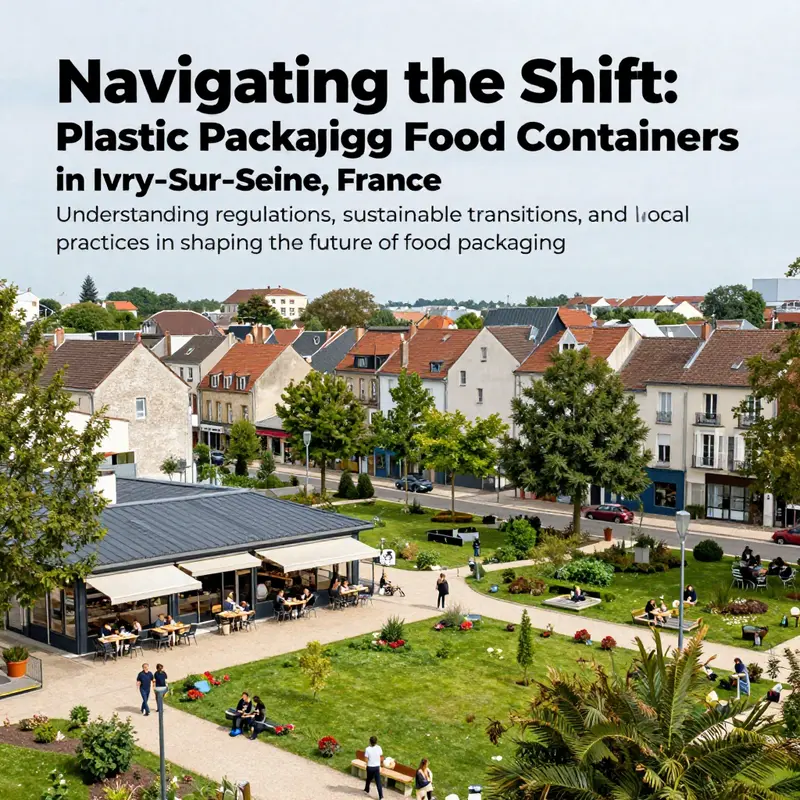
In recent years, Ivry-sur-Seine has emerged as a pivotal location for understanding the implications of plastic packaging in the food industry, particularly under the stringent regulations imposed by the European Union and French government. The growing awareness of environmental concerns has led businesses, from bubble tea shops to catering services, to reevaluate their packaging strategies. This article delves into the regulatory landscape surrounding plastic food containers, the transition towards sustainable alternatives, and local business practices alongside consumer attitudes. By examining these interconnected themes, we can better understand the future of food packaging in Ivry-sur-Seine and pave the way for greener practices.
Shaping the Pantry: How France’s Green Regulations Transform Plastic Food Packaging in Ivry-sur-Seine
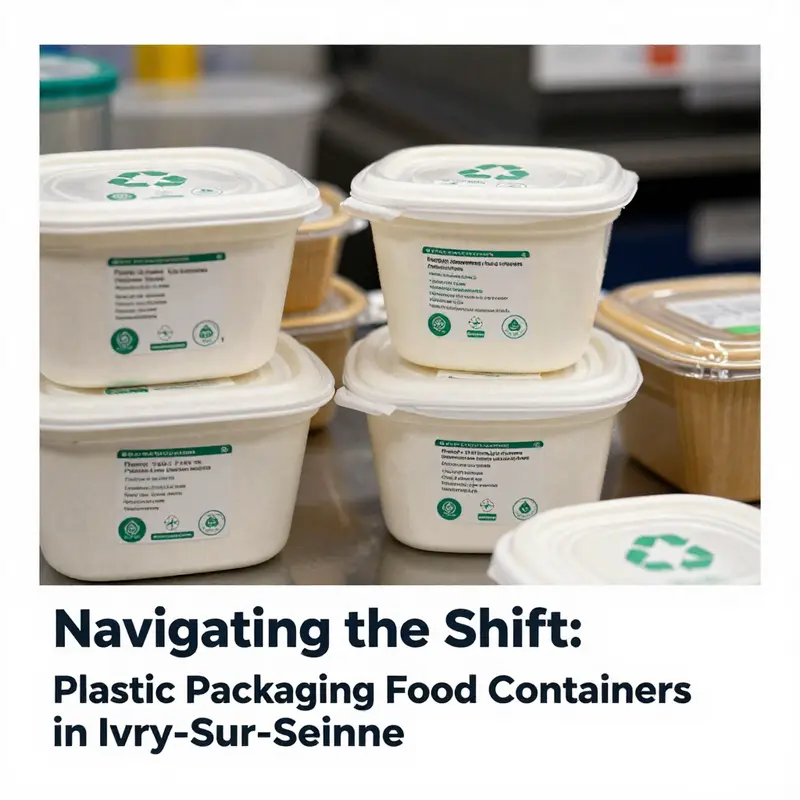
Ivry-sur-Seine sits on the southern edge of the Île-de-France region, not far from the bustle of Paris yet distinct in its own urban rhythm. The city’s everyday life—its markets, its cafés, its takeout windows, and the steady flow of residents who commute to nearby hubs—forms a useful lens for understanding how national and European environmental policy filters down to the sleeves of an urban fabric. In Ivry, as in much of France, the discourse around plastic packaging for food containers has shifted from a question of convenience to one of responsibility. The transformation is not a single dramatic act but a long, visible process of aligning business practices with a legal framework that treats packaging as a resource rather than a disposable afterthought. The chapter that follows traces how these regulations shape choices in packaging, influence operations in local eateries, and influence the relationship between businesses and residents who now gaze at their takeout boxes a little differently than before.
To begin, the regulatory landscape in Ivry-sur-Seine is framed by France’s broader commitment to reducing plastic waste and by European Union directives designed to standardize and elevate recycling and reuse across member states. France’s anti-waste policy, often referred to by its French acronym AGEC, has been a catalyst for change since it began to bite at the turn of the decade. The law, which gained momentum in 2020 and became more expansive through 2024, targets several categories of single-use plastics and sets clear milestones for the packaging system. The goal is ambitious: by 2025, all food packaging must be recyclable or reusable, and by 2030, the country aims to reduce plastic usage by half compared with 2020 levels. These targets do not operate in a vacuum. They echo the European Union’s Single-Use Plastics Directive (SUPD), which bans or restricts items such as cutlery, plates, and straws that cannot be easily recycled or reused. The EU directive puts teeth into the national policy, creating a shared baseline for packaging design, materials selection, and end-of-life processing across France and its neighboring jurisdictions.
In Ivry-sur-Seine, the practical implications of this policy alignment appear in the everyday decisions of restaurant owners, market vendors, and school canteens. There are no city-specific laws in Ivry that diverge from the national or EU directives; instead, local authorities administer and enforce the same rules, leveraging inspections and, when necessary, penalties to ensure compliance. This does not render Ivry a passive landscape. On the contrary, the city has taken an active stance in promoting sustainability through public outreach, municipal procurement choices, and partnerships that aim to demonstrate viable paths toward compliance. The municipal impulse is to encourage a transition toward packaging made from paper, cardboard, or bio-based materials when possible, and to emphasize the recyclability and compostability of the packaging used by food-service businesses. The message is clear: the town supports a systemic shift, not just a token adjustment, and that shift aligns with broader regional and national ambitions to reduce plastic pollution and to foster a more circular economy.
In the day-to-day operation of Ivry’s food service ecosystem, the regulatory framework translates into concrete changes. The legal requirements are tempered by practical considerations—costs, supply chains, consumer expectations, and the realities of urban life. One recurring theme is the tension between achieving environmental objectives and maintaining the affordability and reliability that consumers expect from takeout and quick-service venues. The AGEC law imposes a framework that, in essence, asks businesses to redesign packaging toward recyclability or reusability. This pushes operators to rethink container materials, adhesives, coatings, and even the dimensions of the boxes they use for hot meals, cold salads, soups, and desserts. It is common to see a shift from traditional polystyrene or other non-recyclable plastics to alternatives such as paper-based containers, molded fiber, and other compostable options that promise easier end-of-life processing. The shift is sometimes gradual and involves trial-and-error with various suppliers and coatings to ensure that the new packaging meets functional criteria—grease resistance, heat tolerance, and stackability—without compromising the consumer experience.
A central mechanism that underpins this transition is the principle of extended producer responsibility (EPR). In France and across the EU, producers and importers of packaging bear a portion of the environmental costs associated with their products. The financial incentives embedded in EPR schemes encourage brands and manufacturers to innovate toward lighter, more recyclable, and more reusable packaging. While Ivry’s local businesses may not directly administer EPR programs, they are the downstream beneficiaries of a system that nudges the market toward better packaging choices. The ripple effect is felt in vendors who start to favor suppliers that offer recyclable or compostable options, as those choices become more cost-effective within the context of a national framework that privileges those materials. In practical terms, the EPR regime influences procurement decisions, supplier relationships, and even branding strategies as restaurants communicate their commitment to sustainability in a way that resonates with an attentive clientele.
The legal scaffolding is complemented by a robust information environment. The European Commission’s resources on the SUPD provide a picture of the ambitious targets that member states must meet, while the French government’s public-facing materials offer guidance on how to interpret and implement these rules in daily operations. Ivry’s business community often looks to official channels and professional associations for practical guidelines on labeling, disposal, and the correct sorting of packaging. This is important in a city that takes waste sorting seriously and where municipal campaigns encourage residents to separate plastics from other recyclables. The interplay between regulation and public participation creates a coherent ecosystem in which packaging choices become part of a larger conversation about resource stewardship, urban cleanliness, and the health of the local environment.
As a result, Ivry-sur-Seine is experiencing a notable shift in packaging norms across the food sector. In the past, many small eateries and takeout vendors relied on convenience plastics that were quick to deploy but difficult to recycle. Today, a growing number of operators are adopting containers made from paper, kraft materials, or molded pulp that can be recycled more easily or composted, depending on local facilities. Even in places where the supply chain faces occasional delays or higher costs, business owners recognize the long-term benefits of aligning with regulatory expectations. The shift is reinforced by consumer demand for environmentally responsible options, particularly among younger customers who are attentive to the environmental footprint of their meals and who appreciate transparent disclosures about packaging regimens and disposal guidance.
It is common to encounter a layered signaling system in Ivry: a restaurant may advertise that its boxes are recyclable, or that they are compostable within municipal facilities, while simultaneously offering guidance on how to dispose of them properly. The community benefits from such transparency because it helps residents and visitors understand that packaging choices are not merely cosmetic but part of a broader plan to reduce waste and increase reuse. In practice, this means clear on-site messaging, informational literature at dine-in and takeout points, and social media posts that help customers sort their waste correctly after a meal. While the city’s governance does not impose a uniform aesthetic standard for every packaging choice, it does cultivate a shared understanding about what constitutes responsible packaging and appropriate disposal pathways. The effect is a more predictable market where operators know what customers expect and what the waste management system can realistically handle.
Retail and food-service operators in Ivry often reference a common set of criteria when selecting packaging. They look for materials that are recyclable in standard municipal streams, or that align with emerging composting infrastructure where available. They evaluate the grease resistance of paper-based boxes, the integrity of lids, and the sealed performance under hot holding conditions. They assess the life cycle implications of using different materials, including whether a given option can be produced locally or regionally without excessive carbon costs. They also consider consumer experience: the feel of the container, its stackability for efficient counter service, and its capacity to hold multiple items without leakage or sogginess. These practical considerations illustrate how the regulatory axis—the requirement for recyclable or reusable packaging—manifests in tangible product features and service design. In Ivry, the dance between policy and practice becomes visible in the way menus are rewritten to accommodate new packaging choices and in the way staff are trained to handle, present, and explain those choices to customers.
One notable facet of Ivry’s packaging transition is the emphasis on design coherence. While the regulatory imperative is about end-of-life outcomes, operators increasingly recognize the value of packaging that performs well in daily use while remaining compatible with recycling streams. This has spurred collaboration between restaurants, environmental programs, and suppliers who specialize in sustainable packaging. In practice, this means lighter but sturdy materials that resist grease and moisture, lids that seal reliably, and printing that remains legible after washing or disposal. The design challenges are not trivial. The packaging must be resistant to heat while avoiding the use of coatings or inks that complicate recycling. In some instances, operators have found that a well-chosen container can reduce the overall amount of packaging needed, thereby trimming costs and waste in parallel. The outcome is a packaging ecosystem that rewards thoughtful selection, supplier reliability, and clear communication with customers about how to dispose of or recycle each item after use.
The community dimension of Ivry’s packaging transition cannot be overstated. Local residents observe and interpret packaging choices as signals about the city’s values. The municipal push for sustainability translates into public education campaigns, school programs, and community workshops about waste reduction and recycling. These efforts create a social contract: individuals accept a possibly higher upfront cost or a small inconvenience when they choose packaging aligned with environmental goals, because they know the payoff is a cleaner neighborhood, less litter, and a robust recycling infrastructure that can process more materials efficiently. In this way, policy, business practice, and everyday life reinforce one another. The city’s leadership openly supports research and pilot projects that test novel packaging approaches, shared waste-collection arrangements, and educational initiatives that help people understand the lifecycle of a packet of ramen or a box of pastries from the moment it leaves the kitchen to the moment it re-enters the circular economy. Ivry’s residents become stakeholders in the regulatory project, not merely observers or passive recipients of new rules.
It should be noted that the shift toward sustainable packaging in Ivry does not erase all of the complexities embedded in the food-service economy. There remain practical challenges that businesses must navigate. Some operators, especially smaller venues, face higher upfront costs when adopting recyclable or compostable packaging. Supply chain constraints can create delays or variability in the availability of certain materials, prompting a need for flexibility and careful supplier selection. Training staff to handle new containers, to advise customers on disposal, and to manage inventory with an eye toward waste reduction adds another layer of operational overhead. Yet these costs are increasingly outweighed by longer-term gains: better compliance with regulations, improved waste diversion rates, and a favorable public perception that translates into loyal customers and potential incentives through local sustainability programs. In addition, the broader regional economy benefits from a market for sustainable packaging that continues to mature, reducing dependence on single-use plastics and supporting a more resilient urban ecosystem.
Technological and logistical innovations also play a role in Ivry’s transition. The push toward recyclability and reuse intersects with investments in sorting facilities, better labeling practices, and standardized packaging definitions across suppliers. For example, a standardized set of recyclable packaging materials reduces confusion among consumers and waste-management crews alike, streamlining sorting and increasing the likelihood that containers will enter the correct recycling path. Businesses frequently engage with waste-management stakeholders to ensure their packaging is compatible with the local infrastructure, to understand any regional differences in what constitutes recyclable material, and to stay updated on evolving guidelines from national authorities. This collaborative dynamic helps ensure that the packaging choices businesses make today are robust enough to endure regulatory updates tomorrow, minimizing the risk of stranded assets and the need for rapid pivots that could disrupt service.
From a consumer perspective, the regulatory environment has begun to alter expectations about what a meal should look like when it leaves a shop. People in Ivry are more likely to ask questions about packaging—whether a box is recyclable, whether it can be composted in municipal facilities, how to dispose of it properly in the local system, and whether it carries any certifications that attest to its compostability or recyclability. This trend toward informed consumer choices aligns with broader European and national strategies that emphasize transparency and accountability. In some ways, Ivry serves as a microcosm of how a city can convert policy into everyday practice: through a combination of normative guidance, market adjustments, consumer education, and steady collaboration among local government, industry, and residents.
The trajectory in Ivry is not a straight line, but a path shaped by iteration and adaptation. Restaurants and other food-service operations continue to experiment with new packaging formats as they appear on the market, while local officials and waste-management agencies monitor outcomes and refine guidance accordingly. The aim is not merely to meet regulatory minimums but to cultivate a cultural shift in how the city approaches material use, waste, and the circular economy. The regulatory frame—AGEC, SUPD, and EPR—provides the backbone, but the living, breathing story is in the decisions made at the counter, in the kitchen, and on the street where a customer picks up a steaming box and a napkin. In Ivry, packaging is not an afterthought; it is an integrated element of service design, environmental stewardship, and civic pride.
To illustrate how these dynamics operate in concrete terms, consider the path from policy to product. A restaurant that previously relied on conventional plastic takeout containers may begin to pilot a line of paper-based boxes with grease-resistant interiors. The supplier’s catalog, influenced by national directives, offers variants designed to hold hot foods without leaking. The restaurant tests the boxes for performance during delivery and for storage in the kitchen—whether the grease barrier holds after a drive through rain or a long walk to a customer’s home, whether the lid seals securely under pressure, whether the container remains sturdy enough to carry a full meal without collapsing. Simultaneously, the operation considers disposal guidance for customers: advance notices about recycling, clear labeling on the packaging, and reference to local collection schedules. These practical steps reduce ambiguity for customers and simplify post-consumption processing, which in turn supports higher recycling rates and reduces the contamination that can undermine the value of packaging streams.
At the same time, local campaigns encourage families and individuals to bring a reusable container where feasible or to select packaging with reusable potential. The communication strategy emphasizes a realistic mix of actions: reuse when possible, recycling when available, and careful disposal when neither option is feasible. The emphasis is not on punitive enforcement but on building an ecosystem where each party understands its role—the consumer as a partner, the business as a co-architect of sustainability, and the municipality as steward and guide. The result is a city that does not simply implement rules but lives by them in everyday practice. Ivry’s streets, markets, and eateries become laboratories for sustainable packaging, where a shift in material choices reflects a broader commitment to resource stewardship that transcends local boundaries while contributing to a continent-wide movement toward a circular economy.
For readers considering similar transitions in cities beyond Ivry, a few guiding principles emerge from the Ivry experience. First, regulatory alignment matters: when national and EU policies articulate clear expectations about recyclability and reuse, local actors can plan with greater confidence. Second, supplier diversity and innovation matter: the market responds to demand for packaging that meets environmental criteria, and early adopters can help establish preferred standards that ripple across the supply chain. Third, consumer education is essential: transparent messaging about disposal helps residents participate effectively in recycling and composting programs, which strengthens the performance of the entire system. Fourth, collaboration is the engine of progress: continuous dialogue among restaurants, waste-management services, municipal agencies, and residents yields practical improvements that no single stakeholder could achieve alone. Finally, visible progress breeds momentum. When Ivry residents see improvements—fewer plastic waste items in streets, cleaner neighborhoods, more recyclable packaging in daily life—public support for ongoing measures strengthens, legitimizing further investments in sustainable packaging and waste-management infrastructure.
The chapter’s final thread returns to the sense in which these changes matter beyond Ivry. The packaging transformations discussed here echo across France and the EU. They demonstrate how ambitious regulatory aims can be translated into meaningful changes in the daily routines of urban life. They reveal how businesses can adapt without sacrificing service quality, and how citizens can engage as informed participants in a transition they can see and feel. Ivry-sur-Seine is not simply abiding by rules. It is participating in a broader urban experiment—one that seeks to reduce plastic waste while maintaining the convenience and joy of sharing meals with family and friends. In that sense, the municipality’s embrace of sustainable packaging is an expression of a national vision enacted on the local stage: a future in which food packaging works in harmony with the environment, rather than against it, and where the everyday choices of a neighborhood contribute to a healthier planet.
For researchers, policy-makers, and practitioners following Ivry’s example, the key takeaway is not a single policy; it is a framework for thoughtful, incremental change that respects local realities while aligning with global ambitions. The path from policy to practice requires attention to detailed packaging choices, to supply-chain arrangements, to consumer education, and to the subtle choreography by which a city, its businesses, and its residents cooperate to keep streets clean and materials in productive circulation. Ivry-sur-Seine shows that this choreography is possible in a dense urban context and that it can be scaled or adapted to other cities with similar regulatory environments.
Internal link reference: A practical glimpse into ongoing packaging innovations in the sector can be found in coverage of eco-friendly takeout boxes that emphasize recyclability and user-friendly design. This resource offers concrete examples of the kinds of containers that Ivry-based operators might consider as they comply with AGEC and SUPD guidelines: eco-friendly-takeout-boxes-for-food-packaging-stylish-food-containers-safe-microwave-craft-paper-lunch-boxes-leak-grease-resistant.
As Ivry continues to evolve, the dialogue around plastic packaging in food service will likely incorporate new materials, new disposal methods, and possibly new configurations of reuse programs. The regulatory backbone provides clarity, but the hope rests with the people who serve meals, manage waste streams, and participate in community life. They are the keepers of the transition, translating high-level policy into everyday practice and shaping a city where sustainability is the steady rhythm of daily life rather than a distant aspiration. With that understanding, Ivry-sur-Seine can be viewed not merely as a location on a map with a set of rules, but as a living laboratory where regulatory ambition meets practical ingenuity, and where the future of food packaging is actively being written into the fabric of the city.
External reference: https://ec.europa.eu/environment/waste/plastic_waste.htm
From Plastic to Green: Reimagining Food Packaging in Ivry-sur-Seine, France

Ivry-sur-Seine sits on the doorstep of Paris, a municipality where the drive toward a circular economy is not merely a policy phrase but a lived program. In recent years, Ivry has become a microcosm of France’s broader push to rethink how food gets packaged, carried, and finally disposed of. The transition is not only regulatory but cultural, shaped by a mix of national directives, regional support, and the everyday choices of residents who want cleaner streets, healthier ecosystems, and a food system that doesn’t treat packaging as disposable after a single use. In Ivry, the story of plastic packaging for food unfolds within a framework that blends European ambitions with local pragmatism, where rules meet pilots, and where a growing chorus of producers, retailers, and citizens push toward materials that can be reclaimed, reused, or returned to the earth without leaving a lasting scar on the landscape.
At the national level, France has positioned itself near the forefront of a Europe-wide pivot away from single-use plastics. The environmental policy posture—anchored in the Loi Anti-Gaspillage et pour une économie circulaire (Anti-Waste Law) and reinforced by the broader climate and resilience legislation—has established a clear trajectory: reduce dependence on non-reusable packaging, encourage alternatives, and build waste-management systems that can handle new materials without overwhelming municipal infrastructure. Ivry’s city government has aligned with this trajectory, translating it into local initiatives that connect regulation with everyday practice. The city’s approach does not rest solely on compliance; it seeks to foster a culture of design thinking, where packaging is treated not as a throwaway but as a material with multiple lives. When a resident chooses a ready-to-eat meal in a container designed to withstand heat and humidity, the packaging is simultaneously a product, a signal to the supply chain, and a potential feedstock for composting or recycling. This holistic view is essential in a city where streets double as social spaces and where curbside waste collection systems depend on clear, feasible end-of-life pathways.
Ivry’s progress is also anchored in the growing awareness that the environmental imperative dovetails with consumer preferences. Across Ivry’s neighborhoods, shoppers and diners increasingly ask for transparency about packaging choices. They want to know whether a container is compostable, whether it can be recycled through existing streams, and whether the packaging aligns with the city’s own posted commitments to reduce plastic waste. This shift in demand has become a powerful signal to retailers and food service operators: packaging matters, not only for the immediate experience of a meal but for the overall footprint of the business and the city’s long-term cleanliness. A sustained, incremental shift is visible in the rise of alternatives to conventional plastics—materials that look and behave like traditional packaging but are derived from plants or designed to break down in industrial composting facilities; or, in some cases, materials that can be reused many times over before they return to the supplier for refurbishment.
The city’s embrace of such alternatives is supported by a network of public-private partnerships and regional innovation hubs that help turn ideas into scalable practices. Ivry benefits from a broader policy ecosystem that emphasizes end-of-life management, material performance, and cost-effectiveness. Local pilots are designed with the Le Plan de Transformation Écologique (the ecological transition plan) in mind, aligning packaging choices with waste-separation capabilities, the availability of composting facilities, and the logistical capacity of local waste-management providers. This is not a simple substitution of one material for another. It is a reconfiguration of the entire packaging lifecycle, from the design phase through manufacturing, distribution, consumer use, and, ultimately, disposal or reuse. The aim is to ensure that each packaging decision supports the city’s broader climate and resource-use targets while delivering functional benefits to businesses and convenience to residents.
A central thread in Ivry’s narrative is the spectrum of materials being explored as replacements for traditional plastics. Plant-based polymers such as polylactic acid (PLA), derived from corn starch, appear frequently in discussions of compostable packaging because their chemical composition enables biodegradation under appropriate conditions. Yet materials science is never purely technical; it is deeply contextual and logistical. PLA’s environmental advantage is contingent on the existence of industrial composting streams capable of processing it efficiently. In Ivry, as in many French municipalities, the nuance matters: a material that is industrially compostable may not yield the intended ecological benefit if it ends up in a mixed-waste stream or in a facility that cannot handle it. For this reason, Ivry’s local authorities and their partners emphasize accurate labeling, clear consumer guidance, and robust waste-separation practices to maximize the odds that compostable packaging actually reaches the composting stream rather than the landfill. The same logic applies to edible films made from starch or seaweed, which offer innovative zero-waste possibilities but require careful control of supply chains, regulatory clarity, and consumer education to realize their benefits.
The practical reality of Ivry’s packaging transition can be seen in the everyday settings of takeaway counters, grocery stores, and community events. In many restaurants and food shops, the move away from conventional plastic is visible in the shift toward paper-based wraps, bagasse-derived containers, and carton-based clamshells. Reusable options—such as systems that encourage customers to bring their own containers or participate in return-and-refill programs—have begun to appear, especially in scenarios where the scale of operation and the cadence of orders support such logistics. Yet the path is not uniform. Small, family-run eateries or convenience stores in Ivry sometimes still rely on a mixed approach, using recyclable or compostable alternatives when feasible but continuing to employ conventional plastics where supply, timing, and cost considerations are pressing. In these contexts, the community’s governance, vendor engagement, and waste-management infrastructure play decisive roles. The regulatory pressure to phase out single-use plastics is complemented by practical incentives—reduced waste pickup costs for certain streams, public recognition for green practices, and access to technical support for packaging redesign—that collectively nudge businesses toward more sustainable choices.
The design of packaging itself has become a focal point in Ivry’s transition. The move toward compostable, plant-based, or even edible options raises questions about performance and reliability. Containers must keep foods safe and intact during transit, resist leaks, and tolerate heat while still breaking down as intended after use. Ivry’s pilots address these requirements through iterative testing, often in collaboration with regional innovation hubs that specialize in sustainable packaging design and end-of-life management. These hubs bring together designers, manufacturers, waste-experts, and municipal representatives to test new materials under real-world conditions, gather data on performance, and refine packaging specs to balance functionality with environmental outcomes. The emphasis is on material properties that align with the city’s waste streams, ensuring that packaging can be handled by the existing or developing processing infrastructure without creating new bottlenecks.
In Ivry, the conversation about materials is inseparable from the conversation about end-of-life management. The city recognizes that the most sustainable packaging is the one that can complete a loop: it returns to the soil, to a recycling facility, or to a reprocessor that can extend its life. The practical path to this loop often begins with thoughtful product design—packaging that uses less material, that can withstand handling and temperature variations, and that clearly communicates how to dispose of or return it. Local businesses are learning to design for recovery, selecting materials that align with available municipal programs and private sector partners who specialize in composting, recycling, or refurbishment. This is not a theoretical exercise; it is a daily adaptation of supply chains to fit civic infrastructure, a process that gradually reduces the community’s plastic footprint while preserving the reliability and convenience customers expect from food packaging.
Within this evolving landscape, one can observe a spectrum of substitutes that Ivry’s retailers and producers are exploring. Compostable alternatives based on plant-derived polymers offer an attractive path forward, especially for take-away containers and wrapping. Paper-based options, often enhanced with grease resistance and heat stability, are increasingly used for a broad range of applications, from wraps for fresh produce to carton-based containers for ready meals. Edible films, while still experimental in some markets, hint at a future where packaging can be consumed along with its contents, leaving no waste stream beyond the edible layer itself. The common thread across these materials is that their value is magnified when paired with clear consumer guidance, robust labeling, and a well-defined end-of-life pathway. Ivry’s municipal and stakeholder ecosystems actively promote this alignment, seeking to reduce ambiguity for consumers and to streamline the processing of post-consumer packaging.
A pivotal aspect of Ivry’s approach is the emphasis on education and transparency. Residents are encouraged to understand not just what their packaging is made from, but how it should be disposed of and whether it will be composted locally or needs to be sent to another facility. Public communication channels—municipal websites, community workshops, and local retailers’ environmental statements—are increasingly used to explain the rationale behind packaging changes, the differences between compostable and recyclable materials, and the steps households can take to participate effectively in the circular economy. This educational thread is essential. Without it, even the best-designed packaging can fail to deliver its environmental promise if consumers misplace it in the wrong stream. Ivry’s approach, therefore, blends technical innovation with practical outreach, ensuring that the move away from plastics is not just a policy, but a shared habit among city dwellers.
Economic considerations inevitably accompany the transition. For local businesses, adopting new packaging technologies and materials means weighing up-front costs, supply reliability, and long-term savings from reduced waste and improved brand perception. In many Ivry-based pilot projects, the cost-structure is deliberate: higher-cost materials may be offset by subsidies from regional innovation programs, reduced waste-management charges, or incentives tied to recycling and composting performance. The return on investment is not only measured in dollars saved but also in the value of a cleaner street, happier customers, and a city that embodies a modern, sustainable identity. Food producers and retailers are learning to assess life-cycle impacts, comparing the environmental footprint of different packaging approaches—from raw material extraction through manufacturing, distribution, use, and end-of-life processing. The aim is not to chase the cheapest option but to identify the most responsible choice that also offers a viable business case in Ivry’s local context.
One consequence of Ivry’s policy environment is a growing appetite for design that minimizes material waste while maximizing functionality. This design mindset encourages modular packaging—containers that can be nested, stacked efficiently, and reused across multiple meals or service lines. It also favors packaging that is easy to decontaminate during reuse cycles or straightforward to separate for recycling or composting, depending on the stream. The practical effect is a packaging ecosystem that is more adaptable to shifts in demand, whether that demand comes from changing consumer tastes, seasonal events, or the evolving international market for sustainable packaging technologies. As Ivry negotiates these shifts, it remains connected to broader European trends toward standardization, labeling, and harmonization of compostable materials, while preserving the flexibility required to tailor solutions to local circumstances.
A key question in Ivry concerns the balance between aspiration and practicality. The city’s landscape of pilots and partnerships reveals a nuanced answer: ambition must be grounded in supply-chain realities, waste-management capabilities, and consumer readiness. For instance, the push toward home-compostable materials is compelling in theory but may not translate into immediate benefits if households lack composting infrastructure or if the local waste stream cannot accommodate such materials. Conversely, reliance on traditional plastics might deliver short-term convenience but contribute to longer-term environmental costs. Ivry’s strategy, therefore, is to cultivate a portfolio of options—some materials that are compostable in industrial facilities, others that are recyclable in existing streams, and a subset of reusable systems where feasible—while building the logistical scaffolding that makes each option viable. This approach avoids an all-or-nothing stance and respects the diversity of actors within Ivry’s urban fabric, from large grocers to small delis, from school canteens to neighborhood cafés.
From a governance perspective, Ivry’s path illustrates how municipal leadership can catalyze a broader regional transition. City officials have shown themselves willing to experiment with procurement policies, public-space partnerships, and educational programs that foster a culture of sustainability without compromising the city’s livability or economic vitality. The municipal portal and related communications emphasize opportunities for citizens to participate, whether by choosing reusable options, supporting local packaging producers, or attending community workshops that unpack the science and policy behind these materials. In this ecosystem, suppliers—whether regional manufacturers or distributors—find a natural audience for packaging innovations that align with Ivry’s goals, thus accelerating adoption beyond what a single policy could achieve on its own. The collaboration among city hall, regional innovation networks, educational institutions, and private companies is a hallmark of Ivry’s strategy, one that recognizes packaging as a shared responsibility and a shared opportunity to redefine what sustainability looks like in a dense urban setting.
The practical takeaway for residents and visitors is straightforward: every packaging choice can be a small act with a larger consequence. When pushing a cart through a local market, choosing a container that is labeled as compostable in the right stream, or selecting a product that comes in a recyclable packaging, contributes to a larger system in Ivry that values resource efficiency and waste reduction. It is not merely about compliance; it is about participating in a community that treats packaging as a resource rather than as an end product. The city’s emphasis on end-of-life clarity helps prevent missteps—such as placing compostable packaging in a general landfill stream—and reinforces the concept that responsibility for packaging extends beyond the checkout counter to the household doorstep.
The narrative in Ivry is thus a story of alignment and experimentation. Alignment occurs when regulatory intent, municipal support, and consumer expectations converge on the same objective: to reduce the volume and toxicity of plastic waste while maintaining the convenience and safety that modern food service demands. Experimentation occurs in the pilots and partnerships that test new materials, test new disposal pathways, and test new consumer behaviors. The results are not merely technical findings; they are social and economic signals about what it takes to scale sustainable packaging in a medium-sized city near a major metropolitan center. Ivry’s experience suggests that success hinges on three pillars: credible end-of-life pathways, transparent communication with the public, and flexible design that acknowledges the realities of local supply chains. When these pillars are in place, the transition from plastic to sustainable packaging is not an abrupt replacement; it is a gradual, measured evolution that preserves the city’s vitality while advancing its environmental objectives.
For researchers and policymakers, Ivry offers a laboratory of lessons that extend beyond its borders. The municipality shows how regional hubs can support the translation of global technologies into local practice, how consumer education can reduce waste through everyday choices, and how partnerships between public agencies and private firms can accelerate the development of materials and systems that are truly fit for purpose. The Ivry case also highlights the importance of clear labeling, robust waste streams, and feedback loops that help fine-tune interventions as the city learns what works best in its particular social and physical environment. In many respects, Ivry’s packaging transition is a blueprint for other municipalities navigating similar shifts: it foregrounds the need for practical, scalable solutions that respect local context while aligning with European ambitions for a circular economy.
As Ivry continues this journey, residents and visitors alike can look to a future in which packaging choices are integrated with broader environmental strategies, where materials are designed with their afterlife in mind, and where waste reduction is treated as a shared civic project rather than an afterthought. The transformation is not simply about replacing one material with another; it is about rethinking the entire system that delivers food to the table. It is about reimagining packaging as a strategic asset—one that can protect freshness, enable efficient logistics, and contribute to a cleaner, healthier city. In Ivry, the transition from plastic to sustainable alternatives in food packaging is thus an ongoing process, marked by incremental gains, informed risk-taking, and the daily practices of a community that refuses to view packaging as mere waste.
For those seeking deeper context on sustainable packaging technologies that underpin Ivry’s efforts, broader research outlines a landscape where compostable, plant-based, and edible materials are shaping the next generation of food packaging. An accessible synthesis of these technologies can be found in the broader discussion of a sustainable revolution in packaging, a resource that connects the local initiatives in Ivry to continental-scale developments and industry-wide shifts. See: Exploring Alternatives to Plastic Packaging for Food: A Sustainable Revolution. This external source provides a comprehensive overview of the technology options, design considerations, and end-of-life pathways that influence decisions in Ivry and similar communities, illustrating how the city’s choices fit into a larger movement toward sustainable materials and circular systems. [External resource: https://www.cas-solutions.com/research/alternatives-to-plastic-food-packaging/]
Within Ivry’s evolving packaging ecosystem, a striking development is the increasing visibility of reusable and refillable concepts alongside single-use alternatives. The city recognizes that reducing waste is not solely about choosing the right material; it is about enabling behavior that reduces the total number of packaging units that ever leave a business. In practice, this means pilots that explore deposit-return schemes for certain containers, incentives for customers who bring their own jars or boxes, and partnerships with local facilities to clean and repurpose containers for multiple cycles. It also means designing packaging that is easier to sterilize and reuse without compromising safety or food quality. In this sense, Ivry’s transition resembles a carefully choreographed dance, where design, policy, supply-chain dynamics, and consumer behavior move in step toward a shared final pose: a city that packages food with care for the planet, without sacrificing the simplicity and convenience that define contemporary urban life.
The story of Ivry-sur-Seine’s packaging transition is not a linear march from plastic to perfect. It is a nuanced trajectory that embraces learning, adaptation, and collaboration. It acknowledges that some measures will work better in certain neighborhoods than in others and that the pace of change must reflect realities of production, distribution, and waste processing. It also recognizes the power of local leadership in shaping a regional pattern that can inspire neighboring municipalities and contribute to larger European goals. As Ivry continues to experiment with materials, designs, and workflows, it offers a practical demonstration of how a mid-sized city can integrate cutting-edge sustainability concepts into the daily rhythms of street markets, schools, cafeterias, and homes. The overarching message—embedded in policy, practice, and public engagement—is that sustainable packaging is not a distant ideal but a living practice that improves the quality of life for residents while strengthening the resilience of the local economy and environment.
For readers who want a tangible starting point in Ivry, consider how this city’s experience translates to actions at the neighborhood level. Businesses can begin with a materials audit of their current packaging, identify feasible substitutes that meet both performance and disposal criteria, and partner with local recyclers or composters to ensure proper post-use processing. Residents can educate themselves on local waste streams, participate in community events that showcase sustainable packaging solutions, and advocate for clear labeling and better access to recycling and composting services. The synergy between policy, practice, and public participation is what makes Ivry’s transition more than a set of isolated innovations; it makes the city a living laboratory where ideas become everyday realities. In this way, Ivry’s journey offers both a map and a motivation for other communities seeking to reconcile the demands of modern food service with the imperatives of a sustainable, low-waste future.
Internal link reference for further practical examples in packaging design and procurement can be found through local supplier catalogs that illustrate the range of durable, compostable, and reusable packaging options now circulating in regional markets. For a concrete example of the kinds of packaging configurations that are being piloted in contexts similar to Ivry, see the following internal resource: eco-friendly-disposable-3-compartment-food-grade-packaging-box-for-fast-food-high-quality-takeout-boxes-for-fried-chicken-french-fries-packaging. This link provides a window into design flexibility, capacity for multi-compartment meals, and the adaptability of packaging forms to diverse food-service needs, all within a broader sustainability framework. The goal is to illuminate how design choices in Ivry can be guided by practical examples from supplier ecosystems while remaining aligned with city-level waste-management capabilities and environmental ambitions.
In sum, Ivry-sur-Seine’s transition from plastic to sustainable alternatives in food packaging exemplifies a thoughtful, integrated approach to urban sustainability. It is a story told in everyday choices, supported by policy and partnerships, and reinforced by a public that increasingly understands packaging as a shared resource rather than a disposable nuisance. The city’s progress demonstrates that meaningful change happens when regulatory clarity, design innovation, and community engagement converge, producing packaging systems that protect food quality, support local commerce, and respect the limits of the natural world. As Ivry continues to refine its models and expand its partnerships, it will likely serve as a reference point for other municipalities seeking to translate European green ambitions into tangible improvements on the ground.
Between Policy and Plate: Local Practices and Public Attitudes Toward Plastic Food Containers in Ivry-sur-Seine
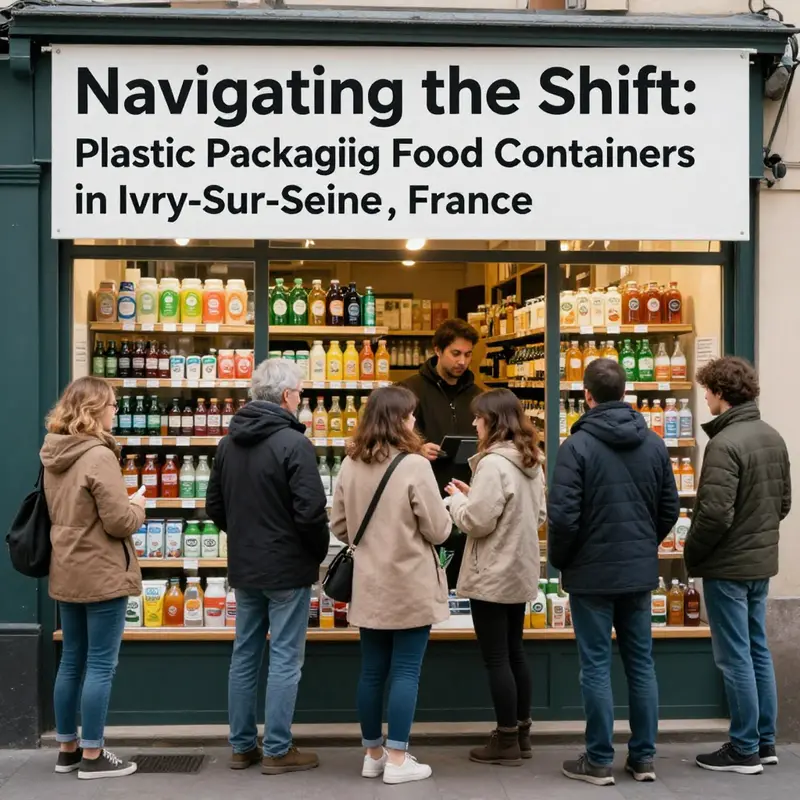
Ivry-sur-Seine sits across the Seine from central Paris, a compact urban mosaic of flats, markets, and family-run eateries. Its rhythm is urban but intimate—bakeries scent mornings, cafés draw commuters, and street vendors serve quick meals to a diverse mix of residents and students. In this setting, packaging for food is a practical link between policy, economics, and daily life. The city has implemented the national push to curb single-use plastics, encouraging reusable containers, paper or bio-based materials, or clearly recyclable options. In Ivry-sur-Seine, few businesses rely solely on plain plastic takeout boxes anymore; most have shifted toward paper-based or compostable options, while some test reusable schemes and invest in customer education to minimize contamination of recycling streams.
National and European policies aimed at reducing single-use plastics have shaped local practice. Since the early 2020s, many municipalities around Paris have translated these directives into local procurement rules, supplier contracts, and shop-floor choices, favoring reusable containers, paper or bio-based materials, or clearly marked recyclability. In Ivry-sur-Seine, the transition is visible across bakeries, cafés, and small eateries that now offer compostable or recyclable takeout packaging and that stress proper disposal in local sorting streams. Public messaging emphasizes the practical benefits: cleaner streets, less plastic leakage, and a more visible commitment to sustainability without sacrificing service speed or reliability.
Local enforcement and messaging sit on a toolkit of signage, sorting guidance, and public campaigns. The city emphasizes waste sorting, provides information on alternative packaging, and works with small businesses to balance cost, performance, and speed of service. For a bakery that bakes daily or a street vendor with tight turnover, the question is not whether to switch but when and to what packaging that still protects food quality and customer experience.
Consumer attitudes in Ivry-sur-Seine reflect broader urban France: concern about plastic waste coexists with the realities of fast-paced city life. Surveys show a large share of the public views reducing single-use plastics as important, and many people favor recyclable or compostable packaging when cost and convenience are similar to conventional plastics. Yet convenience often dominates daily choices; customers prefer packaging that is familiar, easy to handle, and reliable in the transfer from shop to home or office.
From a business perspective, the shift represents both opportunity and challenge. Many operators have moved away from polystyrene and opaque plastics toward paper-based or compostable options that meet evolving customer expectations and regulatory incentives. For some, adopting greener packaging is a way to differentiate a brand and attract environmentally minded customers; for others, it raises costs, requires new supplier relationships, and demands proofs of grease resistance, heat tolerance, and shelf life.
Supply chains are adapting as well. The market now includes a wider range of compostable and reusable products, but the transition is not a simple substitution; packaging must perform under grease and moisture, survive transport, and meet safety standards. Local vendors and retailers test options, negotiate with suppliers, and seek dependable procurement partners to minimize disruption to service while reducing plastic waste.
A key distinction in daily life is between recyclable and compostable packaging. Recyclable claims matter only if the municipal stream can actually process the material; compostable packaging requires industrial facilities to have impact. Ivry-sur-Seine has been refining sorting guidance and expanding accessible streams, while also educating residents about proper disposal. Clear labeling and consistent messaging help residents separate materials correctly, boosting the efficiency of the waste system and supporting small businesses that switch to new formats.
Local initiatives include pilots and partnerships that encourage reuse of containers and cups. Some cafés invite customers to bring their own containers or participate in reusable schemes, while others offer incentives for choosing compostable or recyclable packaging. The goal is to reduce single-use plastics without compromising speed or service quality.
Across Europe, cities that couple policy signals with tangible alternatives tend to see greater public support and better waste outcomes. Ivry-sur-Seine offers a microcosm of this pattern: clear guidance from authorities, reliable packaging options from suppliers, and a consumer base ready to adapt when the benefits are visible in daily life. The experience underscores that policy legitimacy grows when it aligns with local needs and when business partners can deliver practical, affordable options. The packaging question in Ivry-sur-Seine thus becomes part of a broader urban project: to sustain daily life while advancing environmental goals, turning packaging from an afterthought into a deliberate design choice.
Final thoughts
As Ivry-sur-Seine navigates the intricate landscape of food packaging, it stands as a model for municipalities grappling with similar challenges. The dual focus on regulatory compliance and sustainable practices reflects a community that is making significant strides towards a greener future. Business owners, from bubble tea shops to large catering services, have the opportunity to adopt innovative packaging solutions that not only align with laws but also resonate with the growing consumer demand for sustainability. The journey in Ivry-sur-Seine illustrates that change is possible, fostering a balance between operational needs and environmental responsibility.