
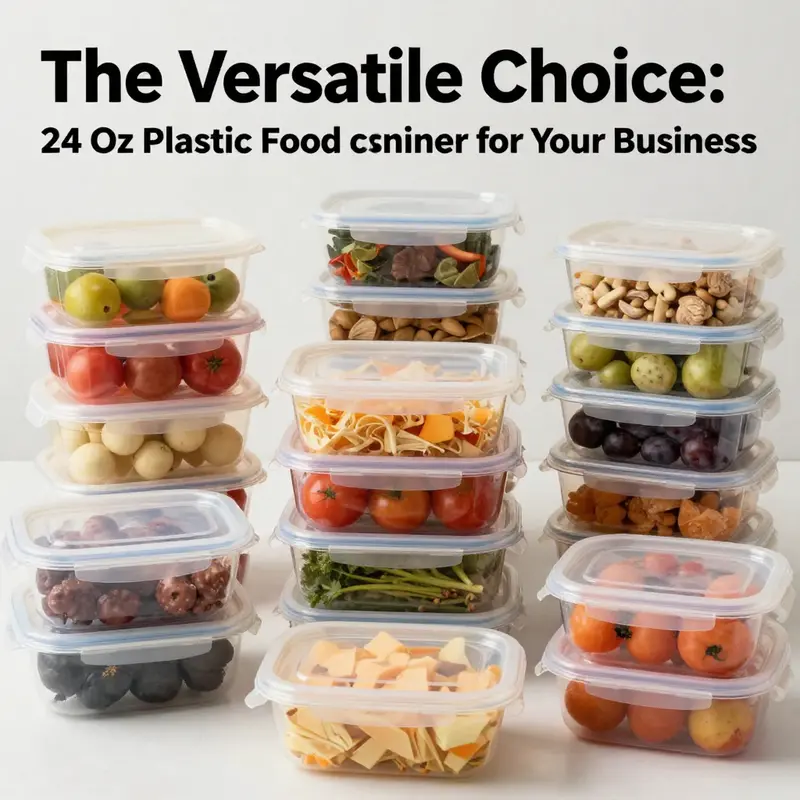
24 oz plastic food containers are becoming an essential asset for businesses in the food and beverage industry, including bubble tea shops, restaurants, food trucks, catering services, event planners, and corporate procurement teams. These containers offer the perfect balance of convenience, durability, and versatility, making them ideal for various food storage needs. This article will delve into the various types and features of 24 oz plastic food containers, explore the materials used in their manufacturing, analyze the latest market trends, and examine the numerous applications and benefits they provide for businesses. Understanding these components will empower you to choose the right packaging solutions to enhance your service capabilities and meet customer demands.
null
null
Materials at the Core: How 24 oz Plastic Food Containers Shape Safety, Performance, and Waste
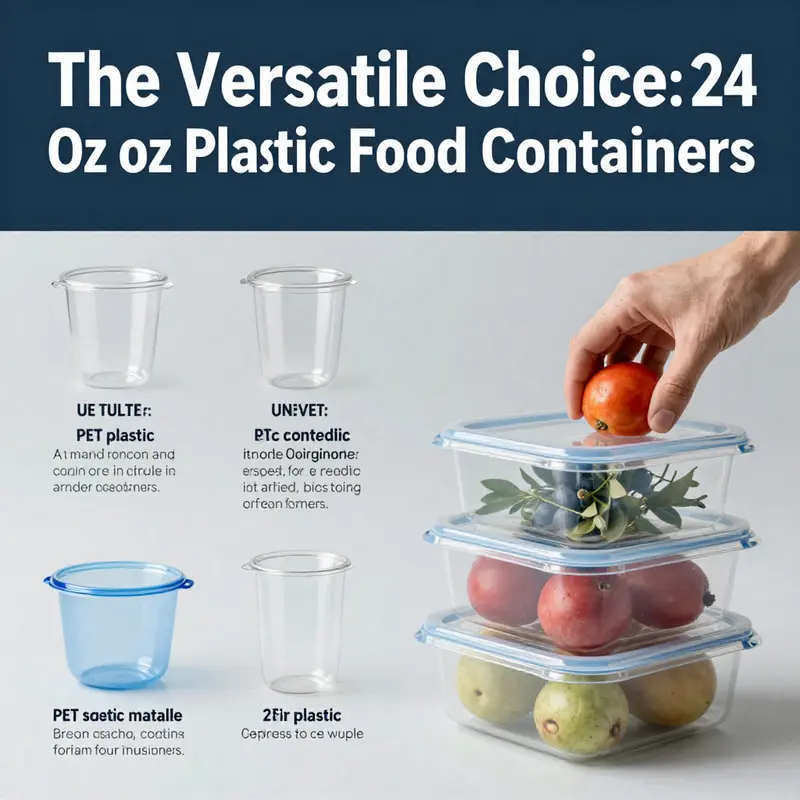
Every 24 oz plastic food container is a small engineered system, a three-dimensional decision about safety, performance, and how meals travel from kitchen to consumer without compromising either the food or the planet. The material inside that clear or subtly tinted shell is more than a passive wrapper; it dictates how well a dish reheats, how long leftovers stay fresh, how easily the container stacks in a crowded fridge, and what kind of footprint it leaves on the waste stream. To grasp the chapter’s focus is to understand that the choice of resin — polypropylene, polystyrene, or PLA among the most common — is not a cosmetic one. It is a carefully balanced equation of heat tolerance, clarity, durability, and regulatory compliance that feeds into everyday decision-making for home cooks, meal-prep artisans, and food-service operations alike. In the 24 oz category, these decisions are often framed by a few practical realities: the container must handle hot or cold foods, resist leaks during transport, be convenient to store, and, ideally, offer a clear view of the contents so buyers can assess portions without opening every lid.
Polypropylene, widely seen in the 24 oz landscape, represents one of the most reliable workhorses for disposable food containers. Its appeal rests on a combination of food-grade safety, robust heat tolerance, and a favorable balance of rigidity and lightness. When listings emphasize “Food-Grade PP material,” they are signaling a material that has been evaluated for direct contact with foods and is designed to withstand the rigors of typical kitchen-to-table use. PP often carries the practical promise of microwave safety, a feature that resonates with anyone who has prepped a meal, zapped it briefly to reheat, and served it in the same container. The ability to reheat without transferring to a separate dish is not merely a convenience; it reduces the risk of spill during transport and simplifies cleanup. Yet even within PP’s favorable heat profile, there are boundaries. While many PP formulations tolerate temperatures near the upper limits of typical home microwaves, prolonged exposure to high heat can still degrade the polymer’s structure and marginally affect the food’s flavor or texture. For this reason, manufacturers typically provide explicit guidance on whether a given PP container is microwave-safe and under what conditions.
Polystyrene, another staple in the 24 oz category, offers different strengths. Its clarity and lightness make it a favorite for takeout and display-worthy presentations, where the contents can be easily seen through the walls. The crisp transparency is appealing for soups, salads, and noodle dishes where visual appeal matters. However, PS has a distinct heat resistance profile that often makes it less suitable for microwave use. In practice, PS-based containers are more commonly recommended for cold or room-temperature storage or for short-term reheating methods outside the microwave. The material’s performance in direct heating can pose risks, including potential chemical leaching when overheated. This is not an indictment of PS across the board, but rather a reminder that the intended use case must align with the material’s thermal realities. For users who routinely reheat meals in their takeout packaging, the choice between PS and PP becomes less about one being universally superior and more about selecting the resin that matches the meal’s heating profile and the user’s safety expectations.
PLA, the biodegradable contender grown from renewable sources such as cornstarch, enters the discussion as a nod to sustainability. In the 24 oz space, PLA is increasingly presented as an eco-friendly option for cold storage and short-term use. Its compostability is a central selling point, but it comes with practical caveats. PLA is typically not microwave-safe, and its performance can falter under freezing or long-duration exposure to heat. In many settings, PLA is intended for industrial composting rather than home composting, and its end-of-life pathway depends on the local waste infrastructure. This caveat matters not to diminish its appeal, but to set realistic expectations about the containers’ lifecycle. If a user’s priority is a low-carbon, renewables-based material, PLA offers a meaningful alternative to petroleum-based polymers, provided the labeling and disposal instructions are followed. In practice, the PLA option’s appeal lies in its balance of cold storage performance and its potential to signal environmental responsibility, even as it requires appropriate disposal facilities to fulfill that promise.
Beyond these primary resins, the regulatory framework and industry standards anchor every material choice. The U.S. Food and Drug Administration’s regulations governing food-contact materials set the baseline for safety, with standards such as 21 CFR 177.1520 guiding what can be used in direct contact with food. When a container is described as meeting FDA guidelines, it is indicating that its material and any additives have been evaluated to minimize risks of migration into food under typical use. This certification is especially important for containers designed to hold salads, soups, noodles, and other prepared meals that will be transported or stored for short periods before consumption. The interplay between FDA compliance and material selection helps ensure that, as a consumer, you are choosing products that are designed with food safety in mind, not merely with convenience in mind.
The chain of safety does not end with the resin choice. Lids, seals, and rims play a critical role in how a 24 oz container performs in real-world conditions. An airtight seal is not simply a marketing attribute; it is a functional feature that preserves freshness, minimizes moisture loss, and prevents leaks during transit. This is particularly crucial for soups and sauces, where any gap between lid and container could mean a spill on the way from kitchen to office desk or home refrigerator. The gasket material, the fit between lid and body, and the method by which the lid is secured all contribute to a package’s overall integrity. The more robust the seal, the more confidently a user can shake, carry, or stack several containers without worrying about a tide of contents escaping on the way.
Yet the reality of daily use also forces designers to make trade-offs. A lighter container may score in the grab-and-go tests but risk deformation if slammed into a bag or dropped from a cabinet shelf. A crystal-clear wall may help customers see portions, yet some resin systems traded for clarity can be more brittle at cold temperatures. The most successful 24 oz designs balance these competing demands: a container that feels sturdy in a crowded cooler, that maintains its shape through multiple reheats and refrigerations, and that remains visually appealing enough for display in a deli or pre-packaged meal scenario. In practice, this balance is achieved through carefully engineered material blends, optimized wall thickness, and thoughtful design features such as ribbing to boost stiffness and bumpers or rounded corners to improve durability during stacking. When you pick up a 24 oz container, you are feeling the result of countless design iterations aimed at guaranteeing performance, not just appearance.
In the context of sustainability, the material choice also informs end-of-life options. Polypropylene and PET are widely recyclable in many municipal programs, though the specifics depend on local facilities and market demand for recycled resin. PS, while recyclable in some areas, often faces more limited access or lower recycling rates due to the economic and logistical realities of sorting and processing. PLA’s story is different still: its compostability is a strength in systems that accept industrial composting, but that pathway is not universal. For consumers and businesses aiming to minimize waste, understanding these distinctions matters as much as knowing the container’s heat tolerance or leak-resistance. The literature and labeling surrounding these products frequently remind buyers that “eco-friendly” or “biodegradable” labels require careful interpretation. Without the proper disposal infrastructure, some options may not yield the intended environmental benefits. The takeaway is not to reject all disposables as inherently harmful but to recognize that the material choice and the local disposal context together determine whether a container truly aligns with sustainability goals.
This nuanced understanding helps explain why bulk buyers, including caterers and food-service operations, often weigh several factors before selecting a 24 oz container for a given menu. In addition to material performance, buyers consider certifications, food-contact compliance, and the practical realities of storage, transport, and customer experience. Customization options—ranging from lid configurations to labeling and even color or shape variations—can further influence the material decision by enabling branding and shelf-appeal while preserving the core functionality of the container. The economics of these choices also enter the conversation. Materials with strong heat resistance and durable seals may command a premium, but they can yield savings in reduced spill-related waste, fewer returns, and a more confident customer experience in takeout and meal-prep contexts. Conversely, cheaper materials may carry hidden costs in longer-term storage, higher breakage rates in transit, or greater sensitivity to heating and cooling cycles.
A broader, ethical dimension underscores this material-centered narrative. As the demand for convenient, ready-to-eat meals continues to rise, the packaging choices we make determine how many meals can travel safely and how much waste will be generated along the way. Materials that support safe reheating and extended freshness contribute to less food waste, a factor that, in turn, has environmental implications beyond the container itself. Simultaneously, the push toward renewable or industrially compostable options invites a broader conversation about waste management infrastructure, consumer behavior, and policy incentives. The chapter’s materials comparison is not an abstract technical debate; it is a practical reckoning with how food, packaging, and disposal systems intertwine in modern life.
When readers encounter the term “food-grade” in relation to 24 oz containers, they are stepping into a landscape where regulatory clarity matters. The FDA’s framework for food-contact materials helps ensure that the chosen resin and additives do not introduce unexpected hazards into meals. This is why product listings often reference both material type and safety certifications. For meal-prep enthusiasts, it means a container that can withstand the reheating process without compromising the food’s safety profile, provided the user adheres to recommended heating instructions. For small-business operators, it translates into a reliable standard that supports consistent product quality across thousands of units. The material, then, is a foundation, but the real value emerges from how that foundation supports consistent performance: a consistent seal, a stable shape through cycles of use, and a predictable end-of-life story.
As one considers the practicalities of selecting a 24 oz container, it is useful to reflect on the lifecycle and the user’s day-to-day needs. A home cook who batch-preps meals for the week will value containers that are microwave-safe, leak-resistant, and stackable in a crowded refrigerator. A small café or catering operation may prioritize durability, consistent lid fit, and clear labeling options to convey contents and temperatures at a glance. A bulk supplier or distributor will assess material availability, MOQs, and the capacity to customize packaging to meet spec sheets and client branding. Across these scenarios, the material choice remains central but never isolated from the other design and process choices—the fit, the finish, and the finish line where disposal or recycling takes place.
One practical takeaway for readers navigating these choices is to read the label with a precise eye. Look for explicit statements about microwave safety, freezer compatibility, and dishwasher or oven suitability if relevant to your use case. Check for FDA-approval indicators or food-grade designations. Consider whether the container’s design supports your typical meals — a hearty soup, a savory pasta, or a delicate salad — and whether the lid and seal are designed to prevent leaks during transport in a bag or backpack. If environmental considerations are a factor, understand what the philosophy behind the container is and how it translates into end-of-life options in your local waste system. In this sense, the material is not just a chemical or a plastic type, but a narrative about how a meal travels from kitchen to consumer, how it remains safe and appetizing, and how the packaging ultimately returns to the cycle of reuse or responsible disposal.
For readers curious about greener packaging alternatives within the realm of takeout and food containers, this resource explores eco-friendly options that balance functionality with sustainability: eco-friendly takeout boxes for food packaging. This perspective is not an indictment of plastic alone but a broader view that packaging decisions sit within a larger system of materials science, consumer expectations, and waste management capabilities. And for those seeking more formal regulatory context, the U.S. FDA provides comprehensive guidance on food-contact materials that informs how these products are designed, tested, and certified. Detailed regulatory information is available at the FDA’s food-contact materials regulations page, which helps clarify what is considered safe for direct food contact and how compliance is demonstrated in practice:
External resource:
- FDA Food-Contact Materials Regulations: https://www.fda.gov/food/food-contact-materials/food-contact-materials-regulations
In sum, the materials chosen for 24 oz plastic food containers are designed to harmonize several priorities: safety, performance, recyclability, and the evolving expectations of a society that wants convenient meals without compromising health or the planet. The next chapters will continue this journey, moving from what sits inside the shell to how the shell meets the needs of kitchens, cafes, and households around the world.
Portion-Size Economy: How 24 oz Plastic Food Containers Shape Modern Meal Prep and Market Dynamics
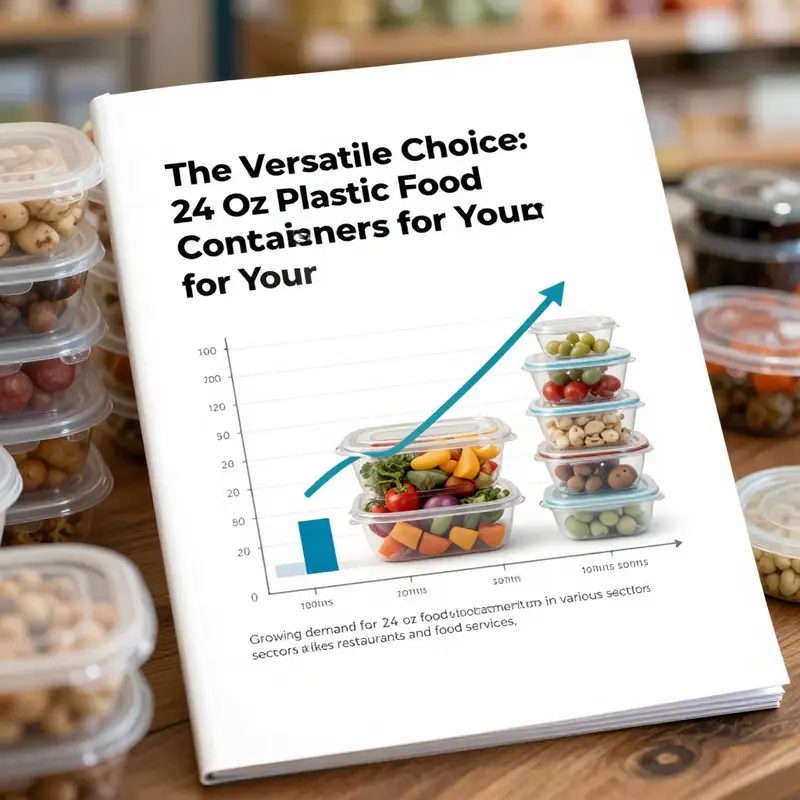
The landscape around 24 oz plastic food containers has shifted from a simple packaging choice to a nuanced ecosystem of supply chains, regulatory compliance, and consumer behavior. These containers, sized for single- or multi-portion meals, sit at the intersection of convenience, safety, and efficiency. They are not merely receptacles for food; they are the completed link in a chain that begins with raw polymer science and ends with the consumer tossing a ready-to-eat or ready-to-reheat meal into a refrigerator, a lunch bag, or a vending machine. In this sense, the chapter that follows is less a catalog of features and more a narrative about how a specific class of packaging has become a barometer for broader trends in manufacturing, sustainability, and consumer expectations. The story of the 24 oz container is inseparable from the growth of meal prepping, the rise of takeout culture, and the persistent demand for products that can perform across environments—from home microwaves to commercial freezers—without compromising safety or quality. A clear thread runs through the current market: size matters, but the implications of that size reverberate through cost structures, regulatory compliance, and end-user experience. The global plastic food container market, as it stands in the mid-2020s, shows a robust trajectory. Valued around the mid-40s of billions of USD in the middle of the decade, it is projected to push past 60 or 70 billion by the mid-2030s as consumer appetite for ready-to-eat and easy-to-store meals continues to expand. The 24 oz segment—long favored by meal preppers and small food-service operators for its balance between portion control and portability—plays a meaningful role in that growth. It is not merely a niche option; it is a scalable solution that supports batch preparation, bulk retail presentation, and efficient in-store merchandising. In homes and professional kitchens alike, these containers enable precise portioning, which translates into reduced waste, improved inventory control, and more predictable revenue streams for caterers, cafés, and home-based food businesses. If one vector can claim primacy in shaping 24 oz container dynamics, it is the manufacturing footprint that delivers both quantity and reliability. China remains a dominant force in the production of these containers, with concentrated industrial clusters that lace together polymer sourcing, injection-molding prowess, and streamlined export logistics. Guangdong’s polycentric ecosystems and Qingdao’s port infrastructure, among others, knit together a supply matrix that reduces lead times and lowers landed costs for buyers around the world. The logistical advantage—lead times that can be 15% faster in some corridors—translates into tighter inventory planning for importers and retailers. It also creates a competitive environment where price competition hinges not only on raw material costs but on the efficiency of the entire chain—from resin procurement to finished goods shipment. For buyers, that means an ongoing calculus: how to balance the economics of mass production with the need for robust, defect-free packaging that preserves product integrity during transit and in the consumer’s hands. Material choice has become a focal point of the conversation about safety, regulatory compliance, and consumer trust. The modern 24 oz container often leans on food-grade polymers that are BPA-free and certified for direct contact with food under standards such as FDA 21 CFR. In different regional markets, additional regulatory regimes—EU 1935/2004 and related regulations—shape permissible materials and testing regimes. The dominant material families include PET for clarity and rigidity, polypropylene (PP) for heat tolerance and durability, and Tritan for a combination of toughness and transparency. Each material offers a distinct set of performance advantages: PET’s lightness and clarity suit display and portioning; PP’s heat resistance makes it a strong candidate for microwave and freezer use; Tritan’s toughness supports repeated use and resistance to cracks during stacking and transport. The shift toward safer materials aligns with growing consumer expectations that packaging will not introduce harmful substances into food, even under the rigors of long storage, repeated reheating, or rough handling in transit. In the function-and-form equation of these containers, airtight seals have emerged as a critical differentiator. Hermetic or near-hermetic lids dramatically extend shelf life by limiting oxygen exposure and preventing odor transfer. This feature is especially valuable for perishables—salads, soups, pastas, and protein-rich dishes—where freshness is a key selling point. The practical payoff is tangible: longer shelf stability translates into less waste, more predictable supply chains, and improved consumer confidence in product quality after a weekend in the fridge or a week on a store shelf. Equally important is the commitment to multi-use capabilities. The modern 24 oz container is commonly designed to withstand microwave reheating, dishwasher cycles, and freezer storage. This triad of compatibility reduces the friction of meal prep and post-purchase use, encouraging consumers to re-use containers rather than discard them after a single service. For restaurants and retailers, such reliability reduces the risk of heat-related warping, cracking, or seal failures that could compromise safety or lead to spillages during delivery or home use. The demand landscape for these containers is not monolithic but is shaped by three major sectors: meal prep and home cooking, retail and grocery, and a surprising yet meaningful segment where these containers accommodate DIY and craft applications such as storage of craft supplies, cosmetics, and household components. This broadened usage widens the addressable market and demonstrates the potential for diversification beyond food alone. Equally important is the shape of the supply ecosystem that supports these containers. MOQs have evolved from rigid minimums into more flexible thresholds that empower startups and small businesses to prototype and scale more responsibly. Some suppliers now accommodate modest orders, enabling new brands to test acceptance and refine product specifications without locking in large upfront commitments. This flexibility mirrors a larger trend in manufacturing toward scalable automation and lean production that can switch rapidly between runs, delivering efficiency gains and price stability even in volatile markets. The economics of scale remain compelling, with automated lines capable of producing hundreds of thousands to millions of units monthly. Yet the real value for buyers comes from a harmonized system that aligns material science, tooling, and logistics so that price per unit falls as volumes rise, without sacrificing the crucial properties that keep food safe and intact during handling and storage. The sustainability conversation shadows every decision in this space. Plastic remains the dominant material, largely because it delivers the right balance of cost, performance, and comparative lightness at scale. However, a growing cohort of manufacturers is exploring recyclable or biodegradable alternatives, along with innovations in design that reduce material use while preserving strength and sealing performance. There is a palpable tension between the convenience of single-use packaging and the environmental imperative to reduce waste. This tension motivates ongoing research into recycling streams, clearer labeling for end-of-life options, and innovations in cap design or wall thickness that maintain integrity while decreasing material consumption. Even as plastic remains prevalent, the field is moving toward more responsible waste management and better end-of-life options, with manufacturers experimenting with materials that can be recycled in common municipal streams and with more transparent communication about disposal and reuse. From the buyer’s perspective, the evolving market offers both opportunity and risk. The opportunity lies in selecting containers that align with product safety goals, consumer expectations, and operational needs. An airtight seal reduces spoilage; compatibility with microwave reheating expedites service; and stackability saves valuable cold-storage space in kitchens and retail backrooms. The risk, conversely, centers on regulatory drift and supply chain disruptions. Keeping pace with safety standards requires vigilance about material certifications, testing protocols, and traceability. It also means staying aware of the trade-offs involved in substitutions. When a supplier pivots from one polymer family to another to optimize cost, the mechanical and thermal properties may shift in subtle ways that affect heat tolerance, seal integrity, or chemical resistance. For brands that rely on precise portioning, even small deviations can alter performance expectations. Consequently, demand planning must incorporate a robust supplier qualification process, periodic revalidation of material specs, and contingency options for alternate suppliers who meet equivalent standards. A notable and practical implication of market dynamics is supplier flexibility in order quantities. The enabling trend is that manufacturers are increasingly comfortable accommodating smaller test orders while still offering the manufacturing efficiency needed for scale. This flexibility supports new entrants who want to validate a concept before committing to large inventories. It also encourages diversification in product lines, enabling buyers to explore variations in lid design, sealing mechanisms, or clarity, without incurring prohibitive acquisition costs. As the packaging ecosystem becomes more capable of supporting rapid prototyping and adaptive production, buyers can pursue more dynamic merchandising strategies such as seasonal promotions, limited edition colorways, or special packaging for new product lines, without sacrificing the reliability that customers expect from a trusted container. In a market where margins can hinge on efficient storage and distribution, the total cost of ownership incorporating resin cost, tooling, packaging, logistics, and end of life handling grows more complex but also more controllable when suppliers operate with transparent data, stable processes, and scalable production lines. In parallel with these manufacturing and regulatory developments, the narrative of 24 oz plastic containers connects to a broader storytelling arc about how people eat and how businesses respond to evolving routines. The rise of meal prepping, for example, is more than a trend in convenience; it is a response to nutritional planning, cost management, and time efficiency. The container’s role in that story is to deliver predictable portioning, preserve quality, and enable recipes to be scaled for families, offices, or food-service settings. When combined with an airtight seal and a material that can withstand the rigors of heating and cooling, the container becomes a reliable tool for encouraging healthier eating patterns and reducing food waste. At the same time, retailers see value in packaging that communicates safety and quality at a glance—clear, clean plastics that showcase the product while signaling compliance with safety standards. The container thus acts as a translator: it explains to the consumer that the food inside is protected, maintained, and prepared with care, while also signaling to the supply chain that the product can travel efficiently from depot to doorstep or storefront to fridge. For readers who want a hands-on sense of how these dynamics show up in the marketplace, consider the practical implications of choice. When a retailer or small business selects a 24 oz container, the decision is shaped by a matrix: cost per unit, lead time, regulatory compliance, compatibility with heating and cleaning processes, and end-of-life messaging. The material choice and lid design influence not only the cost but also the user experience. A reliable seal reduces leakage and odors, which in turn preserves the quality and reputation of the product inside. The correct balance of clarity and thickness can make packaging more attractive on-shelf and more functional for home use. Each decision cascades through the business affecting storage costs, waste streams, and consumer trust. An integrated approach to sourcing and design is increasingly important. The industry’s trajectory suggests that buyers should seek suppliers who provide transparent certifications, rigorous testing data, and clear traceability from resin to finished container. In this environment, a strong supplier relationship is not simply about price; it is about a shared commitment to safety, reliability, and sustainability. The knowledge that a partner can deliver consistent quality at scale, while offering flexibility for smaller orders and rapid reconfigurations, is the kind of value that sustains growth across multiple cycles of demand. For those who want to explore deeper industry insights and strategic sourcing considerations, a broader perspective on supplier insights and market trends can be found in industry analyses that synthesize data across regions, materials, and end-markets. eco-friendly takeout boxes for food packaging. This internal link offers a concrete example of how packaging design and sustainability narratives intersect with consumer expectations, even as the conversation about plastic remains central to efficiency and cost. Ultimately, the 24 oz plastic food container is more than a disposable shell; it is a critical enabler of modern eating patterns and modern business models. It sits at the crossroads where technology meets taste, where safety standards meet convenience, and where scale meets flexibility. For manufacturers and buyers, understanding the market trends, regulatory context, and supplier dynamics is essential to making choices that align with both short-term performance and long-term strategic goals. The next chapters will continue to unpack these interdependencies, offering practical guidance on selecting containers that balance safety, cost, and sustainability while supporting the evolving routines of consumers and the operational realities of food businesses. External resources for deeper context: for a broader, external analysis of sourcing strategies, supplier insights, and market trends in the plastic container industry, including China’s pivotal role and compliance standards, see the following external resource: https://www.linkedin.com/pulse/strategic-sourcing-plastic-containers-supplier-insights-trends-2025/.
Versatility in a Standard: How 24 oz Plastic Food Containers Shape Modern Food Storage, Service, and Safety
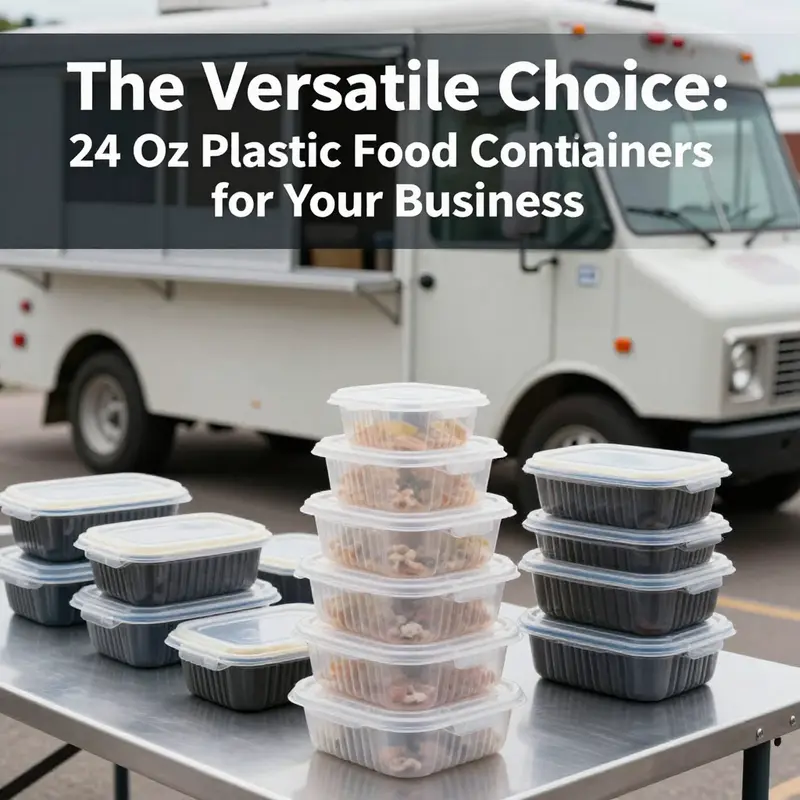
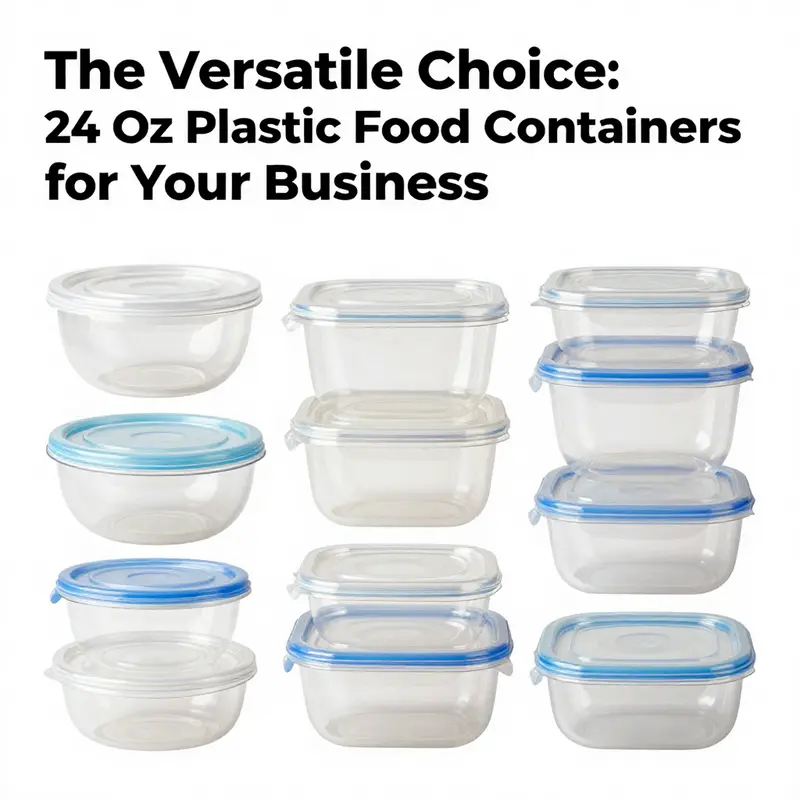
The 24 oz plastic food container sits at a quiet crossroads of everyday practicality and professional efficiency. Its familiar capacity makes it a reliable choice for meal prep, takeout, and storage, while its dependable design supports a wide range of foods and environments. The size is large enough to hold substantial portions—think salads, pastas, noodle bowls, soups, and multi-component meals—yet compact enough to fit in most refrigerators, lunch bags, and delivery totes. Because these containers come in both round and rectangular profiles, they offer flexible solutions for different spaces and workflows. The result is a workhorse category that underpins both home routines and the fast-paced logic of commercial kitchens and food service operations. In imagining how these containers perform across settings, it helps to glimpse the day-to-day realities they enable: pre-portioned meals that stay intact during transit, takeout boxes that keep sauces in check, and storage keepsakes that reveal at a glance what’s inside without opening a lid. The value is both practical and perceptible, a blend of design and discipline that translates into less waste, smoother service, and better quality control.
The practical reach of 24 oz containers becomes especially clear when considering meal prep services and home cooking. For individuals who aim to manage portion sizes, these containers offer a reliable framework for batch-cooking and weekly planning. A single container can hold a balanced combination—protein, grain, and vegetables—with enough space for a light sauce or dressing on the side. The transparent design is not merely aesthetic; it is a functional feature that saves time in busy kitchens and households. Without needing to label every item, cooks and eaters can identify contents at a glance, speeding up the process of reheating and consuming meals during a hectic workday or a weekend rush. This visual clarity couples with sturdy construction, ensuring that food remains fresh and secure during transport, even when a container travels in a crowded bag or a packed lunchbox. It also supports precise portioning, which is increasingly important as many people monitor calories, macros, or specialized dietary plans.
In the commercial and catering sector, the same container becomes a cornerstone of consistency and reliability. Restaurants, cafes, and delivery services rely on these vessels for reliable takeaway packaging that can withstand the rigors of transit and rough handling. The rectangular variants maximize space efficiency, both in kitchen storage and within delivery bags, while round versions offer ergonomics that suit certain menu items and presentation styles. A good lid—airtight and compatible with a microwave or freezer—anchors the container’s utility, allowing customers to reheat hot meals directly in the vessel when appropriate. The ability to reheat in-container, when approved, reduces dishwashing steps for customers and accelerates service cycles for operators. In this context, the 24 oz container functions as a modular element of a broader system: it is one piece that can be stacked under a stackable lid, nested with other containers, and integrated into bulk packaging strategies that help minimize waste and optimize refrigerator or freezer space. The result is a reliable workflow from kitchen line to consumer hands, with fewer spills and more predictable outcomes in both flavor and texture after storage or transport.
Material composition anchors many of these advantages, with polypropylene (PP) and PETE (PET) standing out as the most common choices for these 24 oz formats. Polypropylene brings heat resistance, chemical stability, and robust performance with hot and cold foods alike. It tolerates mild oils and acids and remains suitable for use in microwaves and freezers when properly rated. PETE, meanwhile, contributes clarity and lightweight strength, ensuring the contents are visible and the packaging remains manageable during handling and shipping. Clarity is more than cosmetic in these applications; it supports food safety by allowing quick inspection for spoilage, separation, or leaks without opening the lid. In many markets, these materials are recognized as food-grade and are subjected to regulatory scrutiny to ensure direct contact safety. An important regulatory touchstone in this regard is the FDA’s framework for food-contact materials, which sets expectations for safety, composition, and labeling. In practice, this means that 24 oz containers—whether PP or PETE-based—are designed to meet established safety standards for everyday use, including resistance to leachables under typical consumer conditions and compatibility with standard reheating or freezing practices when the product labeling allows.
Of course, the practical benefits extend beyond the material itself. The design concepts behind these containers—airtight seals, leakproof lids, and a robust, stackable geometry—translate into tangible improvements in freshness, portability, and waste reduction. An airtight seal protects against moisture loss and odor migration, which is crucial for items like salads with dressings, soups, or layered dishes. Leakage prevention is not simply a convenience; it guards against product loss and the potential mess that could arise during transit, ensuring that a customer receives a meal in a condition that matches expectations. Odor and stain resistance, when paired with proper cleaning practices, helps maintain the container’s appearance and performance over multiple uses, enhancing perceived value and extending the life cycle of the packaging. While many containers marketed in this size may be labeled as single-use in some contexts, the ability to reuse them multiple times—especially in a controlled, food-service setting or by careful home users—offers a meaningful economic and environmental incentive when managed responsibly.
Bulk procurement adds another layer to the conversation. For businesses seeking to scale, suppliers often provide customizable packaging options and minimum order quantities that can be substantial, reflecting the needs of larger kitchens, hospitals, cafeterias, or catering fleets. The economics of bulk purchasing can be compelling: the unit cost drops as volumes increase, and standardized 24 oz formats support consistent handling, labeling, and inventory management across a facility. The standardization also simplifies training and procedure development for staff, since workers encounter a familiar size, lid type, and stacking pattern across the various menu applications. Yet even as these containers prove economical, it remains essential to factor in end-of-life considerations and the environmental profile of the packaging. Some models are promoted as eco-friendly alternatives, often highlighting recyclability or compostability. The reality, however, is nuanced: most plastic containers are single-use unless they are explicitly labeled as recyclable or compostable and collected through appropriate recycling or composting streams. Understanding these labels and the local waste infrastructure is essential for planners who aim to minimize environmental impact while maintaining service-level performance.
From a consumer’s perspective, the everyday advantages resonate in a straightforward way. The 24 oz container supports portability, enabling meals to be prepared in advance and carried to school, work, or outdoor activities without fear of spillage. The lids—designed to be secure—help ensure that sauces do not leak into bags or car seats, a practical matter for anyone who relies on grab-and-go meals during busy days. When these containers are microwave-safe, they empower quick reheating, which is a double-edged benefit: it can streamline mealtime and reduce the need for extra dishes, yet it also creates a decision point about reheating safety and the suitability of the specific model for in-container heating. Consumers are advised to check labeling for heat limits and dish compatibility, especially for items with delicate sauces, delicate vegetables, or layered textures that may suffer changes in texture if reheated improperly. The transparent or lightly tinted materials also provide a psychological cue: seeing the food inside can encourage healthier, more mindful choices, as visibility fosters accountability and reduces the likelihood of forgetting forgotten or abandoned leftovers.”
Final thoughts
In summary, 24 oz plastic food containers represent a pivotal choice for businesses in the food and beverage industry. With their diverse types and features, made from high-quality materials like PET, they provide the durability, safety, and versatility needed for effective food storage and service. As market trends lean towards sustainable and convenient packaging options, investing in these containers can enhance your operational efficiency and customer satisfaction. By understanding their applications and benefits, professionals in the catering, restaurant, and food truck sectors can optimize their offerings and elevate their brand presence in a competitive landscape.