
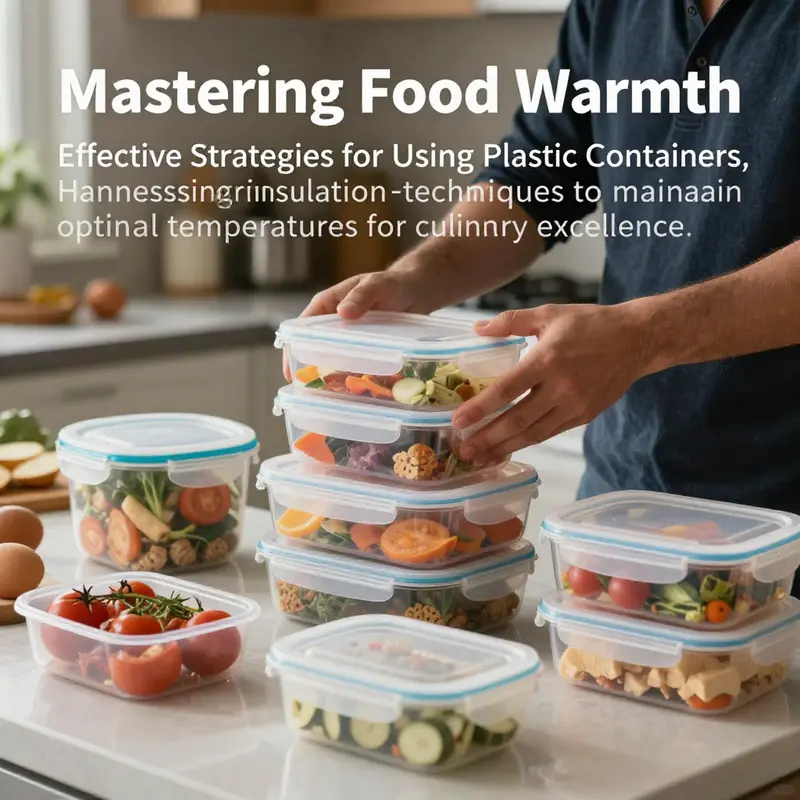
Maintaining optimal food temperature is vital for any food service business, particularly for shops focusing on beverages such as bubble tea, as well as restaurants and food trucks that serve hot dishes. This article explores how to keep food warm in plastic containers efficiently, with practical methods tailored for beverage chains, catering services, and event planners. The strategies presented will not only ensure food safety and quality but also enhance customer satisfaction. We’ll dive into insulation techniques, controlled environments, and safety considerations for using the appropriate materials, equipping professionals with the knowledge they need for successful food service.
Steady Warmth, Safe Choices: Insulation Tactics for Keeping Food at 30°C in Plastic Packaging
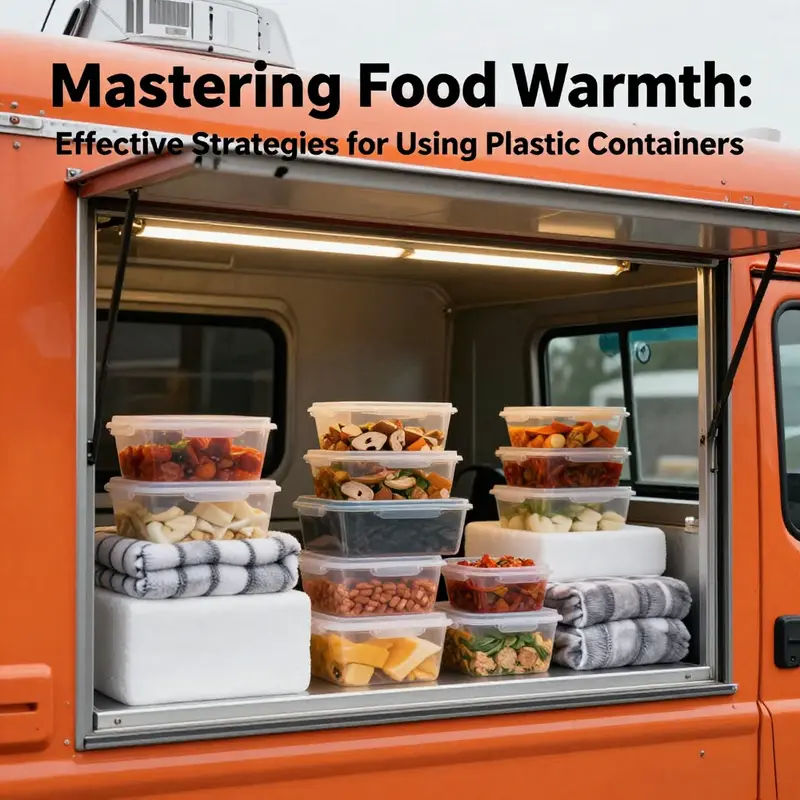
Imagine a container of soup or a probiotic solution sitting on a kitchen shelf, its contents starting near 40°C. The goal is to maintain a precise, gentle temperature of about 30°C for a full week. This requirement is most common in controlled settings—experimental protocols, sensitive samples, or transport scenarios—where a slow, steady temperature is essential. The challenge is that warmth must be preserved for days, which demands more than a single container; it requires thoughtful heat management, safe materials, and an environment that minimizes heat loss. Insulation becomes the central tool: a well-insulated outer shell, such as a thick foam enclosure or reflective wraps, can dramatically slow heat flow. Layering towels or fabrics can add buffering, while a tight seal on the lid reduces air exchange and moisture loss. Radiant heat sources and direct sunlight should be avoided to reduce heat gain.
But insulation has limits. A week-long hold at 30°C typically benefits from a controlled environment: a temperature-controlled box or incubator set to 30°C helps maintain stability and reduces ambient fluctuations. In practice, the container should be placed inside a food-safe plastic vessel that is compatible with moderate heat, with polypropylene (PP) #5 commonly preferred for long exposure. If possible, consider transferring to glass or stainless steel for longer-term storage to minimize chemical interactions and migration. Plastic remains useful for transport and short-term storage, but it should not carry the entire burden for a week without a stable climate.
The practical path forward emphasizes safety first, then insulation, then environmental control. Choose an inner container made of food-safe PP #5, nest it inside a robust insulated outer shell, and seal it securely. Use a climate-controlled environment when precision matters, and ensure the surroundings stay as steady as possible by positioning away from drafts, direct heat, and sunlit windows. If you must reuse plastic, plan to move contents to glass or stainless steel after a few days to reduce risk. The overall recipe is a layered system: insulation to slow heat loss, a stable or controlled environment to hold the temperature, and a safe container material that withstands heat. This approach delivers a more reliable hold at 30°C for a week than relying on plastic alone.
For readers seeking ready-made guidance, look for insulated packaging solutions designed for heat retention and safe food contact, and pair them with a climate box or incubator when precision is critical. The overarching message is practical: safety first, then insulation, then environmental stability. When used together, these elements enable a confident, week-long hold at 30°C in a plastic-anchored system, with glass or stainless offering a longer-term alternative when feasible.
Warmth Without Risk: Designing Safe, Stable Microclimates for Food in Plastic Containers
Keeping food warm in plastic containers involves balancing practicality and safety. For a week-long hold near 30°C, insulation and environmental control matter more than aggressive heating. Plastic can soften, leak additives, or migrate compounds into food when temperatures rise, so material choice is critical. Favor food-safe plastics if used, with explicit heat tolerance labeling. PP (polypropylene) type 5 offers higher heat resistance and is commonly used for food contact, but inspect containers for damage and wear and avoid repeated heat exposure. When long-term warmth is needed, consider transferring to glass or stainless steel, which offer greater inertness and easier sanitization. A well-sealed, well-insulated container can reduce heat loss, but a dedicated climate-controlled enclosure provides reliable temperature stability. If you must use plastic, ensure it is microwave-safe or heat-resistant, avoid recycled-content plastics, and monitor for clouding, odor, or deformation. In practice, design a microclimate: insulation first, then safe container materials, and transfer to safer vessels as the holding window lengthens. Use packaging choices that support warmth without sacrificing safety, such as eco-friendly boxes with good barrier properties, while recognizing that heat drives migration and degradation risks. Always follow regulatory guidance on food-contact materials and be prepared to adjust the plan if any sign of material failure occurs.
Warm Without the Risk: Mastering Insulation, Safety, and Temperature Control for Plastic Food Containers
Keeping food warm in plastic containers is more than a matter of cranking up heat or sliding a lid onto a bowl. It is an exercise in restraint, materials literacy, and environmental control. For meals that travel, for patient or probiotic samples, or for any situation where a precise, steady temperature matters, the choice of container and the way you manage heat can determine both safety and flavor. The instinct to preserve warmth is universal, but plastic, while convenient, brings a set of cautions that demand thoughtful planning. The material science behind everyday food storage is often invisible to the eye, yet it governs what your food might exchange with its container over hours, days, or even a week. The key questions are simple in theory but intricate in practice: which plastic is safe to heat or hold hot foods in, how can you minimize heat exchange without compromising container integrity, and when is it wiser to abandon plastic for glass or stainless steel, especially for long durations or sensitive contents?
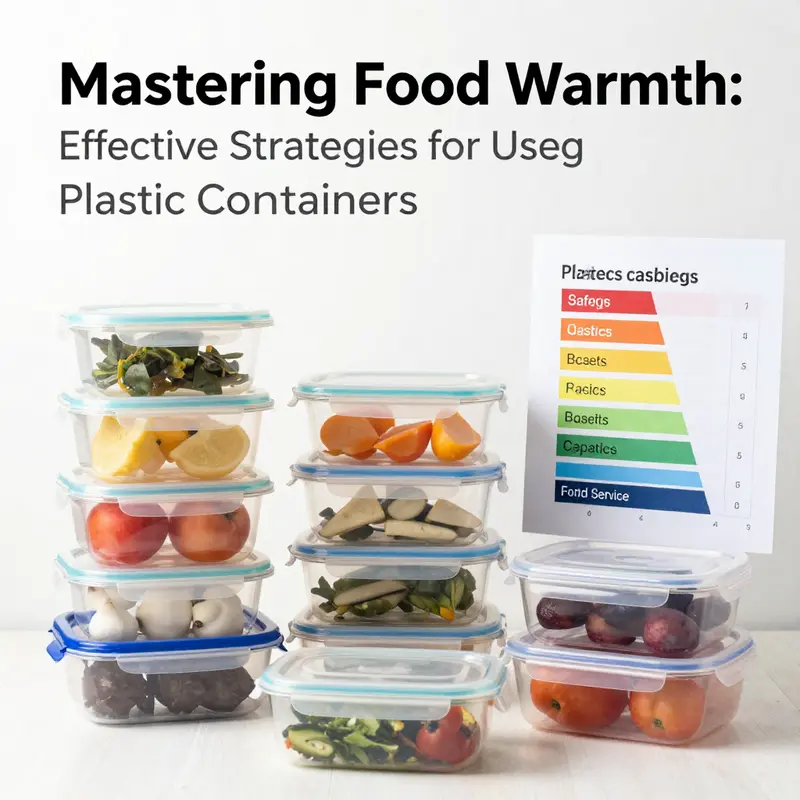
The first line of reasoning centers on safety. Not all plastics tolerate heat the same way, and not all are appropriate for long-term storage of warm or hot foods. Even when a plastic looks familiar, its composition matters. Food contact materials carry a recycling code—numbers inside the triangle that many households recognize—that hints at what the polymer is and what it can endure. Among common codes, polypropylene, labeled as PP or #5, is frequently cited as a safer option for warming or repeated heat exposure. Polypropylene has a relatively high melting point, around 160°C (320°F), and modern formulations are designed for steamy, microwave-like conditions. When you see a container labeled “microwave-safe” or reinforced for heat, there is a reasonable probability that it is PP or another heat-tolerant material, though the label alone is not a universal guarantee. By contrast, other codes carry greater risk when heated. PET (#1) may tolerate warm conditions briefly, but its practical temperature ceiling is around 70°C (158°F) and it can degrade in contact with hot foods, releasing trace chemicals. PS (#6) is commonly used for disposable takeout and foam cups, but heated PS can emit styrene, a substance with potential health concerns. PVC (#3) and PC (#7) bring more troubling leachables, especially with fatty or acidic foods and long exposure times, with BPA concerns still a talking point in many kitchens and laboratories alike. These truths are not about alarmism but about a cautious, informed approach to what sits next to your dinner or your specimen jar for extended periods.
The second core idea is temperature stability. A week-long hold at a precise temperature, even a relatively modest one like 30°C, requires a controlled environment more than brute force. If the goal is to maintain warmth, you will often be fighting heat loss rather than generating heat. Insulation becomes the primary ally, while active warming devices become unnecessary or even counterproductive in an uncontrolled setting. Insulation slows the rate at which heat escapes, preserving the initial temperature longer and reducing the risk of rapid cooling that could slip into unsafe zones or lead to food quality degradation. In many everyday circumstances, a well-insulated container paired with a stable ambient temperature can keep contents within an acceptable range without the need for constant power input. The practical implication is counterintuitive: to keep something warm for days, your emphasis should be on slowing cooling rather than on continuous heating. This is especially important when the content is a liquid or a matrix that could be sensitive to temperature fluctuations, such as broth, soups, or probiotic suspensions where activity hinges on maintaining a narrow thermal band.
Insulation strategies begin with a proper container and a layered approach to packaging. A well-sealed plastic container is essential, but it is only part of the solution. You can think of insulation as a system: the outer wrap, the inner container, and the surrounding environment must work in harmony. Foam boxes, such as a Styrofoam-style cooler, provide a notable reduction in heat transfer. Layering insulation around the container—beginning with an inner seal that minimizes air exchange and moisture loss, followed by a secondary barrier like a reflective wrap or a thick towel—can dramatically slow the decline in temperature. It is important to ensure that the seals remain intact and that there are no gaps through which warm air can escape or cold air can intrude. This approach is particularly practical for transport or occasional storage where a fully climate-controlled chamber is not available. For liquids or semi-solid contents, securing the container with a tight cap and a secondary wrap around the lid can prevent both heat loss and accidental spills, which would complicate temperature management and compromise food safety.
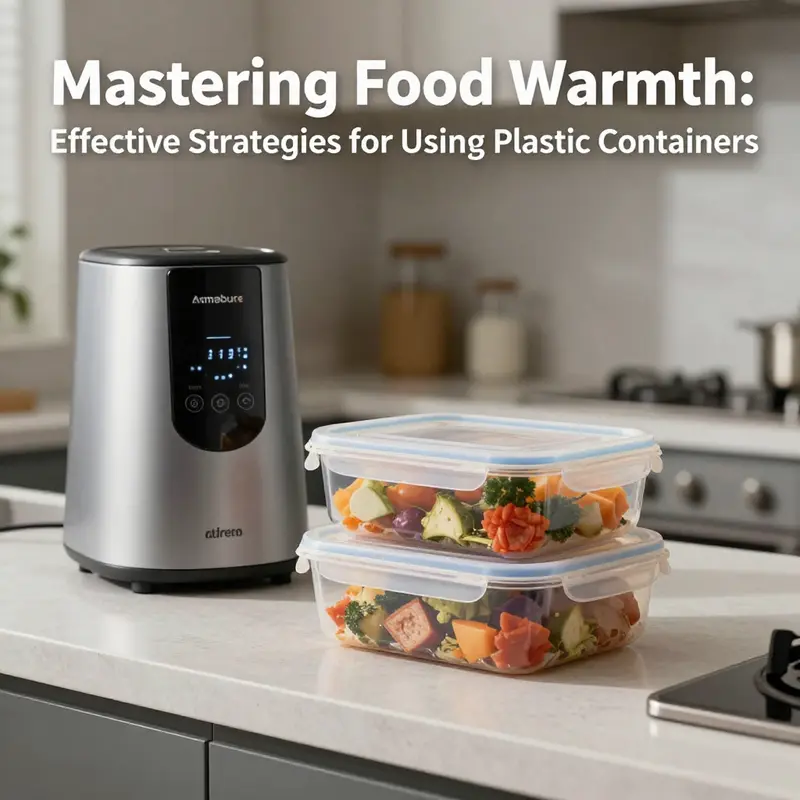
When a more controlled environment is required, the options become more specialized. A temperature-controlled box, whether a lab-grade incubator or a compact climate chamber, provides a reliable way to hold a precise temperature over an extended period. Such devices are designed to minimize fluctuations, offering uniform heating or cooling as required. In this context, the choice of container remains important: it should be food-safe and non-reactive, and it should not degrade under prolonged exposure to the chamber’s environment. Polypropylene remains a strong general-purpose option, but if your application demands minimal interaction between the container and its contents, moving toward glass or stainless steel may be the wiser course for long-term storage or where safety standards are stringent. When using any temperature-controlled setup, monitor carefully for signs of container strain—warping, lid leakage, or clouding that might indicate microscopic damage—and plan for regular transfers to safer containers such as glass or stainless steel if the contents are to be held for extended durations.
There is also a practical, safety-first principle that resonates across all use cases: avoid heating or reheating in most plastics unless the container is explicitly designed for it. The advice from health and safety authorities emphasizes that plastics not approved for food contact or heat exposure should not be used for warming foods. Even with heat-approved plastics, high-fat or acidic foods can accelerate chemical migration, particularly as temperatures rise. Thus, a conservative rule of thumb is to avoid direct heat in non-microwave-safe plastics. If warming is necessary, either choose a container explicitly labeled as microwave-safe, designed for multiple uses, and made from PP, or consider transferring the hot contents to a safer container after an initial warm-up in a controlled manner. If the content starts hot, give it a moment to cool slightly before transferring to a plastic container for storage, as this reduces the thermal and chemical stress on the plastic, extending its usable life and preserving safety margins.
The final dimension of this discussion is ongoing monitoring and prudent replacement. Plastic does not stay pristine forever. Even the safest material can degrade with repeated uses, ultraviolet exposure, or contact with certain foods. When a container shows cloudiness, off-odors, cracking, discoloration, or measurable changes in texture, its barrier properties and mechanical integrity may be compromised. In a week-long storage scenario, that risk compounds. The prudent approach is to schedule a transfer to safer containers at the end of the storage period, especially if the contents will be consumed later. For longer-term storage or repeated use, glass and stainless steel emerge as safer, more stable alternatives that do not carry the same risk of leaching under heat. This is not mere sentiment; it reflects a growing consensus among food safety guidelines and material science literature that emphasizes inertness and stability for extended storage of warm or hot foods.
Taken together, the overarching strategy for keeping food warm in plastic containers over a long duration blends insulation, cautious temperature management, and strict material selection. Start with a well-sealed, food-safe container, preferably PP #5, and package it within a robust insulation system that minimizes heat loss. If you can operate within a controlled environment, a small temperature-controlled enclosure that holds a stable 30°C, or any target relevant to your application, can significantly improve consistency. If you must use plastic in a warming context, avoid non-food-grade plastics and never rely on plastic alone to maintain warmth. Use insulation and environmental control as your primary tools, and reserve heating elements or direct heat for when the materials and their labeling explicitly permit it.
The subtle but important takeaway is that a safe, effective, and predictable approach to keeping food warm in plastic containers does not rely on sheer temperature or sheer volume of insulation alone. It rests on a tripod of informed material choices, intelligent preservation of warmth through insulation, and thoughtful, proactive management of the container’s integrity. In many everyday scenarios, a modest investment in a better-insulated setup and a careful transfer to glass or stainless steel after a short interval yields safer, more reliable results than pushing a plastic container to its heat limits. When the goal is to sustain warmth for a week, this combination becomes not only practical but essential for safety and quality alike.
To connect these principles with practical choices beyond raw theory, consider how packaging design intersects with the needs of real-world use. Some takeaway and storage systems are engineered to combine insulation with sealed plastics that are engineered to minimize heat exchange while resisting moisture ingress. For readers seeking a broader perspective on safer, more sustainable packaging options that still accommodate warming and transport, a resource focusing on eco-friendly takeout boxes and microwave-safe design offers valuable context. This resource outlines how modern packaging solutions balance usability with safety, showing how materials and design choices influence heat retention, spill prevention, and overall user experience. For more context, explore this reference: eco-friendly takeout boxes for food packaging. eco-friendly takeout boxes for food packaging.
In addition to packaging considerations, it is important to stay anchored in established guidelines from recognized safety authorities. The guidance highlights the importance of keeping hot foods out of the danger zone, preventing contamination during transport, and using containers that do not introduce new hazards through leaching or degradation. When a documentary view of the science is desired, the recommended practices are consistent: select materials designed for heat exposure, minimize direct high-temperature contact with plastics not meant for that purpose, and favor glass or stainless steel for long-term storage of warm or hot items. In this sense, the practical recommendations from safety authorities align with the material considerations discussed above, reinforcing the idea that safety and practicality must converge in any strategy to keep food warm in plastic containers.
To close the loop on decision-making, consider how your specific context shapes the path forward. If you are transporting warm meals for a short trip, a well-insulated container envelope with a sturdy lid may suffice, particularly if ambient temperatures are moderate. If you are conducting a controlled experiment, storing biological samples, or maintaining probiotic cultures, a temperature-controlled unit with a precise setpoint can be indispensable. If you are cooking for daily use or storage over several days, the safest route involves limiting direct heat exposure to plastics, validating the container’s food-safe labeling, and planning a transfer to glass or stainless steel when long-term storage is anticipated. In all cases, your choices should be guided by the principle that insulation, rather than aggressive heating, is your first tool, and that material safety should remain non-negotiable.
External resource: https://www.fsis.usda.gov/food-safety/safe-food-handling-and-preparation-tips/keep-food-warm
Final thoughts
In conclusion, keeping food warm in plastic containers is a crucial practice for any food service business, ensuring customer satisfaction and food safety. By employing insulation techniques, creating controlled environments, and carefully considering materials, businesses can offer high-quality, safe, and delicious meals. These best practices help maintain the integrity of the food and enhance the reputation of your establishment among discerning customers. Proper investment in materials and methods will pay off by ensuring that every bite is as delightful as intended.