
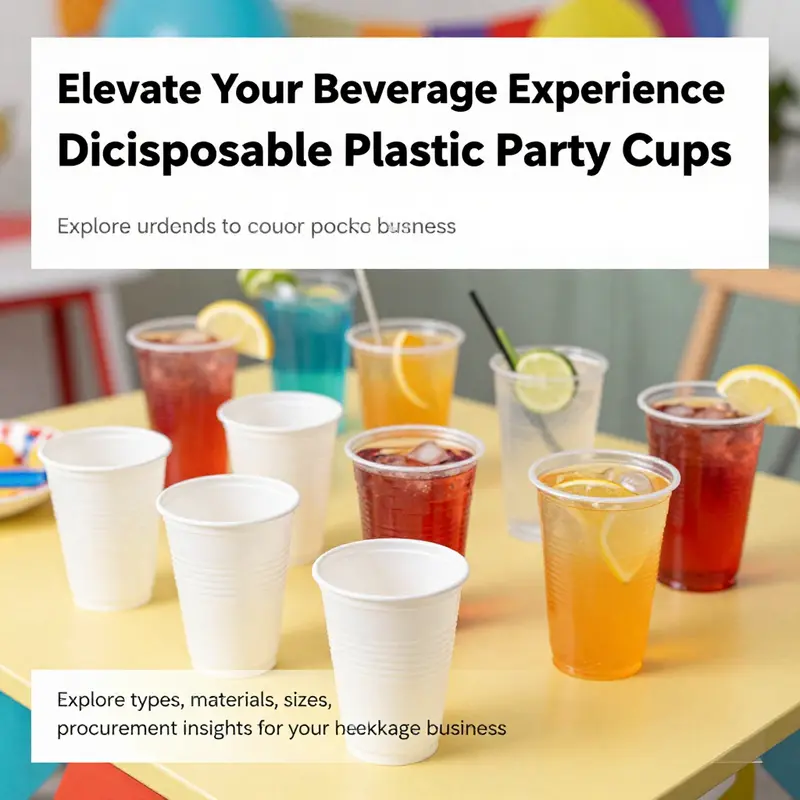
In today’s dynamic beverage industry, especially for bubble tea shops, restaurants, and event planners, disposable plastic party cups offer practical solutions that blend versatility and style. These cups are not only functional but also a canvas for branding and customer engagement. This article dives into the variety of designs, materials, sizes, and scenarios in which these cups shine, providing you with the knowledge to choose the best products that enhance your offerings while considering procurement strategies. Each chapter will equip you with comprehensive insights, enabling smarter decisions in your procurement process, perfectly catering to both customer satisfaction and operational efficiency.
Design in a Disposable Moment: How Color, Material, and Convenience Shape Plastic Party Cups
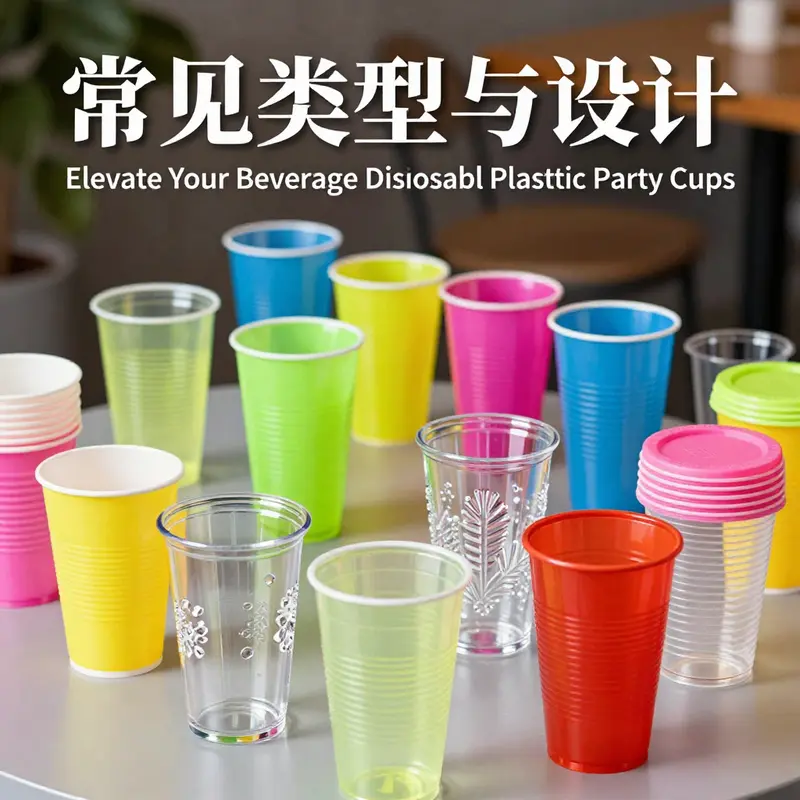
The rise of disposable plastic party cups has everything to do with quick decisions, practical economies, and the small rituals that color a celebration. These cups are not just vessels; they are design elements that translate mood, service speed, and even environmental values into a single, disposable gesture. In a single night, a table can become a composition of color and clarity, a subtle stage for toasts and desserts, and a practical system for serving guests with minimal fuss. When you pause to study them, you see a quiet language of design that blends aesthetics with function, and that language evolves with the occasions they are meant to serve. This chapter traces that language across three threads: color and visual language, material and safety considerations, and the everyday realities of use, procurement, and sustainability. It is not a catalog of products but a study of how a seemingly simple object carries a surprising amount of meaning for hosts, guests, and the logistics people who keep events moving smoothly.
Color is one of the most immediate ways cups convey tone. A party that leans festive or whimsical often leans into bright neon or candy-like hues. A wedding or formal gathering may invite a more restrained, crystal-like transparency or a gentle metallic sheen to catch light without shouting. The spectrum can be further refined by finishes such as gold or rose-gold rims, holographic speckles, or matte pastels that coordinate with table linens and flower arrangements without overpowering the overall decor. The most successful color strategies do not compete with the ambiance but complement it. They provide a quick visual cue for guests—this is a place to gather, toast, refresh, and mingle—while preserving the ease of use that makes disposables appealing in the first place. The color story, in other words, extends the design language of the event into a simple, affordable accessory that guests handle dozens of times without a second thought.
Beyond color, the form and clarity of the cup speak to the kind of drink it is meant to carry and the impression the host wishes to make. Transparent or crystal-clear cups are favored when display matters: a pour of vibrant lemonade, a layered cocktail, or a dessert served in a cup benefits from the clean sightline that reveals the drink’s colors and textures. This transparency pairs with shapes that range from slender, stemmed interpretations to sturdy, straight-sided forms that feel practical in hand and easy to stack for storage. In more casual or family-friendly settings, simple cylindrical shapes with a comfortable grip and a wide lip transition smoothly from cocktail hour to dessert, from juice to iced coffee. The eye notices a cup’s edge—whether it is smooth and rounded for sipping ease, or slightly flared to accommodate a thicker straw—and the perception of quality shifts accordingly. Cup designers, therefore, must attend to micro-details that travelers through a table will barely notice but that collectively influence the experience: grip texture for a secure hold, a lip shape that invites a comfortable drink, and a rim that feels refined rather than utilitarian.
The choice of material anchors the cups in a broader conversation about safety, durability, and environmental responsibility. Most common disposable cups are made from two plastics: polystyrene (PS) and polypropylene (PP). PS cups deliver excellent clarity and a crisp, premium feel; they tend to excel in cold or room-temperature applications where visual appeal matters most. However, PS is less forgiving with heat, and its recyclability can be more complicated in many places. PP cups, in contrast, offer greater resistance to heat and bending, making them suitable for hot drinks and busy service lines. They are also typically BPA-free, aligning with safety expectations for food contact materials. The trade-off is that PP’s clarity may be slightly less pristine than PS, though advances in polymer technology have narrowed that gap significantly. In both cases, cups bear the mark of compliance and safety standards that customers may not actively seek but will expect to be there when they read the fine print. A core standard in many markets emphasizes that food-contact plastics must meet strict safety criteria, restricting the use of certain older plastic types and prohibiting unsafe reuse. This is not about policing a chic or practical vibe; it is about ensuring that a simple cup does not introduce risk to a guest’s experience.
A parallel thread in the material conversation is the growing presence of compostable or otherwise eco-conscious options. The industry now offers cups that carry marks or certifications indicating compostability, which reflects a broader shift toward sustainability without sacrificing convenience or price competitiveness. For some hosts, compostable cups are a nod to the event’s ethos, especially for outdoor gatherings or celebrations in venues that emphasize waste reduction. The choice here often hinges on a balance: compostable designs may carry a premium, yet they align with a narrative of responsibility and care for the venue and guests. In any case, whether one selects PS, PP, or compostable materials, the key is clarity about what the product can and cannot do—how it handles heat, how it holds its shape, and how it should be disposed of after the last toast. Safety standards, such as those governing food-contact plastics, provide guardrails that help hosts choose options that meet expectations for both performance and health.
Alongside material and color, the design system for disposable cups has evolved with practical touches that address the realities of serving guests efficiently. One such touch is the lid, which transitions a drink from a social setting to a mobile one. Lids help prevent spills during crowded rounds, outdoor breezes, or the inevitable dash from bar to table. They are a reminder that convenience and presentation are not mutually exclusive; a well-designed lid can preserve drink integrity while maintaining a clean table aesthetic. Rim design and wall thickness also matter. A slightly thicker base reduces tipping, while a well-formed lip can alleviate drips and encourage a pleasant sipping experience. Some cups incorporate texture around the body for a more secure grip, a small but meaningful feature when hands are wet or when guests are juggling plates, napkins, and conversation. The more a cup’s design embraces the realities of a bustling party—speed, cleanliness, and comfort—the more it earns the quiet appreciation of hosts and guests alike.
Another layer of design is the capacity range itself. From tiny 2-ounce servings used for tasting portions or dessert samples to large 16- or 24-ounce cups for iced beverages or even dessert scoops, each size communicates a purpose. The selection reflects a host’s expectations about consumption patterns and service flow. A wedding or banquet may favor mid-sized options that balance appearance and practicality, while a casual backyard barbecue might lean toward larger cups to minimize refills and simplify cleanup. The spectrum of capacities also dovetails with how often a cup is repurposed within an event—some guests may take a second or third cup for multiple beverages, while others will stick to a single, well-contained choice. The design and size decisions feed into the event’s overall tempo: how quickly guests can be refreshed, how the display reads from across a room, and how the bar or buffet lines glide along without bottlenecks.
All of these design choices—color, clarity, grip, lip, lid, and size—also interact with procurement realities and economic considerations. For large-scale gatherings, hosts and event organizers often pursue bulk purchasing with a focus on consistent quality and predictable pricing. A cost-conscious strategy may involve engaging with manufacturing partners capable of customization in color or print, especially when there is a desire to echo a brand, theme, or event name across tableware. In regions with robust manufacturing ecosystems, it is common to arrange for some degree of customization that can include color options, printed patterns, and simple branding. This approach supports a cohesive aesthetic while preserving the advantages of disposables: speed of setup, ease of cleanup, and the ability to scale to thousands of servings with relative ease. On the other hand, for those who prize convenience and a ready-made look, shopping from established retailers at predictable price points remains appealing. The decision often hinges on the event’s scale, the desired visual impact, and the logistical capacity to coordinate orders, shipments, and storage.
The environmental dimension of this choice cannot be separated from the other considerations. Many hosts are driven by a desire to minimize waste, even while embracing the practical benefits of disposable tableware. In this context, the availability of compostable options, BPA-free formulations, and clear indications of end-of-life disposal becomes a meaningful part of the decision process. The market response is a spectrum of offerings that attempt to balance cost, performance, and environmental goals. Those who prioritize sustainability may favor products labeled as compostable or those designed to be recyclable within local systems. Yet the end-of-life story remains complex and highly dependent on local waste infrastructure, making awareness of disposal realities essential for responsible event planning. In short, the very convenience that makes disposable cups attractive also invites hosts to think ahead about how to align use with local recycling or composting capabilities.
For readers seeking practical paths to align design choices with real-world needs, consider the following approach. First, define the event’s tone and guest expectations. If color and display are important, select cups with clear optics and a palette that harmonizes with decor. If the aim is speed and throughput, prioritize grip comfort, lid compatibility, and a robust stackable form. Second, assess the heat exposure and beverage types expected. Hot drinks demand materials with higher heat resistance, while cold beverages allow for higher clarity and a lighter touch. Third, weigh sustainability against budget and disposal logistics. Compostable options may fit well with outdoor venues and venues that support waste diversion, while recyclable PS or PP options may suit environments with robust recycling programs. Finally, anchor the decision in practical procurement realities: compute the total guest count, estimate the number of servings per cup, and plan for some extra capacity to absorb spillage or miscounts. The math is straightforward, but the payoff is a smoother flow of service and a cleaner, more cohesive party experience.
To connect this design-focused perspective with hands-on choices, consider a practical example of how to pair cup design with a guest experience. A color-forward outdoor celebration might employ neon cups that glow under blacklight, creating a playful atmosphere without sacrificing clarity of the beverage inside. A formal reception may favor crystal-clear cups with a subtle metallic rim that catches the light during toasts and keeps the table setting feeling refined. A family-oriented picnic could lean toward sturdy, larger cups with ergonomic grips for children and adults alike, paired with lids to prevent spills on the move. In all cases, the cup serves as a micro-stage for the social ritual: the moment you lift your cup, clink with others, and begin a shared sip that marks a memory. The design language embedded in this small object helps shape how guests perceive the event, how staff operate, and how memories of the gathering settle in the mind.
Internal link for further guidance: clear disposable plastic cups for parties. This resource offers a practical sense of how a clear, reliable option can support both service efficiency and aesthetic coherence in event settings, while illustrating how a single product category can adapt across contexts. It also underscores the broader point that even small items—cups, colors, finishes—are part of a larger design system that hosts manage in the service of comfort, mood, and smooth operation.
As the chapter closes, it’s useful to keep in mind that the simplest object on the table can carry layers of intent. The disposable plastic party cup embodies a blend of design sensibility and logistical necessity. It can be a statement of style, a tool for rapid service, and a responsible choice when aligned with the event’s values and the local waste ecosystem. The choices made about color, material, shape, and capacity ripple through the party experience in ways guests notice and notice not. That quiet resonance—between appearance, function, and responsibility—defines the true story of disposable cups. For researchers and practitioners alike, it is a reminder that even the most ordinary object can serve as a window into how people design, celebrate, and move through social spaces with efficiency and care.
External resource: https://www.alibaba.com/product-detail/20-Pieces-2-Ounce-Disposable-Plastic-Mini_1600593734744.html
Material Matters and Environmental Footprints: Reconsidering Disposable Plastic Party Cups
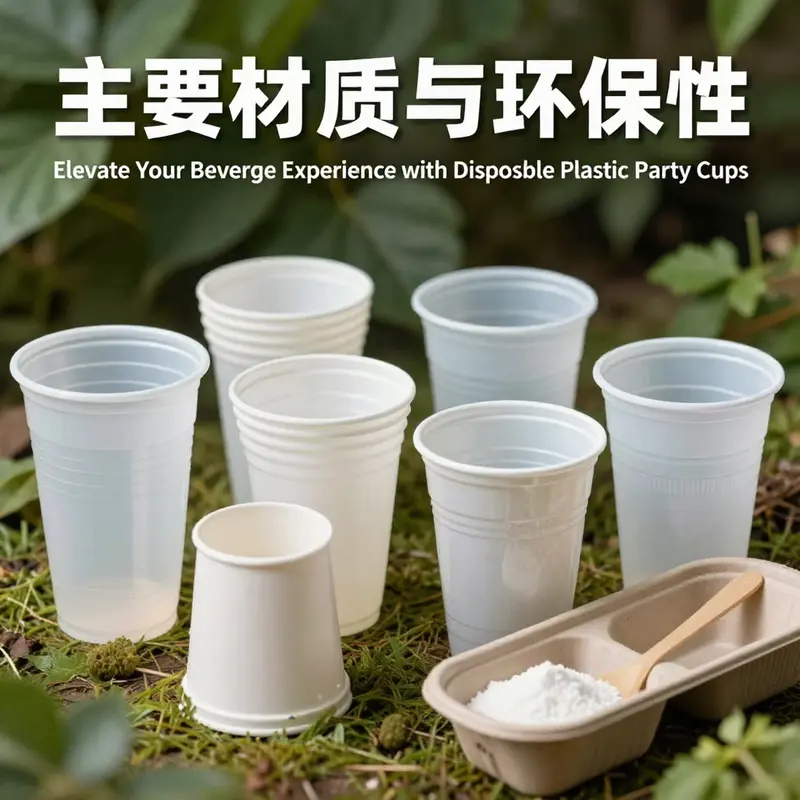
Disposable plastic party cups sit at the intersection of convenience and responsibility. They promise quick service, easy cleanup, and a cohesive party aesthetic. Yet beneath the shimmer of neon colors and crystal-clear finishes lies a chain of decisions about material, production, disposal, and the unseen costs those choices impose on ecosystems and public health. This chapter traces the material logic of these cups, the environmental arithmetic of production and waste, and the pathways that could tilt the balance toward less harm without sacrificing practicality for gatherings large and small.
In most cases, these cups are molded from thermoplastics such as polypropylene or polystyrene. Polypropylene is prized for its heat tolerance and durability; it can hold hot beverages and resist cracking when dropped, attributes that matter at outdoor events and long receptions. Polystyrene, by comparison, can be molded with exceptional clarity and at a lower unit cost, making it the common choice for cold drinks and certain decorative designs. Neither material is biodegradable in any meaningful sense, and both rely on fossil resources for their creation. Their end-of-life story often ends in landfills, incinerators, or the litter of streets and waterways, rather than in a closed loop of reuse or recycling.
The environmental profile of these cups becomes clearer when we move from material properties to lifecycle consequences. The energy and raw materials required to produce a mass of cups are tied to the broader petroleum-based plastics supply chain. Each cup embodies a fragment of that chain, and the cumulative impact scales with the volume used at events, festivals, and venues. The problem does not disappear simply because a cup is labeled as recyclable. Recycling rates for plastic products at the global scale remain stubbornly low, and the systems in place often fail to reclaim these fragile items efficiently. The recognition that a cup may be technically recyclable does not guarantee that it will be collected, sorted, and processed in a way that yields a meaningful material recovery. After collection, contamination, sorting complexities, and the economics of recycling can derail the best intentions of consumers and venues alike.
The UK Environment Agency’s 2023 review underscores this tension with stark numbers. It notes that worldwide plastic waste entering the environment reaches about 150 million tonnes each year, with disposable plastics accounting for more than a third of that flow. Recycling, where it happens, is frequently incomplete or temporary; the global average recycling rate hovers near or below 10 percent. These figures are not just abstract statistics; they translate into real-world pressure on marine life, soil, and air, as microplastics erode into ecosystems and eventually re-enter food chains. For people planning parties, this calculus should not be paralyzed by guilt but guided by practical options that reduce waste, improve end-of-life outcomes, and preserve the social value of gatherings.
The environmental costs of disposable cups do not end at disposal. They begin with manufacturing footprints—energy use, emissions, and the extraction of raw materials—then pass through the design choices that determine how cups are used, transported, and discarded. The design can influence not only user experience but the likelihood of reuse or recycling. Lids, stackability, and leak resistance may seem like conveniences, but they also affect how long a cup gets kept in circulation and how easily it can be sorted after a party. For example, cups designed for hot liquids must withstand higher temperatures, a trait more common in polypropylene formulations, while those intended for cold beverages can be produced in polystyrene. The choice between a design that emphasizes elegance and a design that emphasizes practicality is rarely neutral; it shapes consumer behavior and, in turn, environmental outcomes.
For event organizers and households alike, the decision matrix becomes a balancing act. Budget constraints and guest expectations push toward lower per-unit costs and a broader range of colors, sizes, and decorative options. In high-volume settings, the mathematics of procurement matters: the more cups you order, the lower the unit price, up to the limits of storage, spoilage, and demand forecasting. Some producers provide heavily discounted pricing at very large scales, which can be attractive for corporate events or municipalities planning large gatherings. Yet the apparent savings must be weighed against post-use consequences, including whether the cups will actually be recovered and processed as intended. If the recycling stream that would accept these cups is weak, discounts on the front end do little to offset environmental costs on the back end.
One practical implication for planners is to scrutinize end-of-life pathways rather than assume end-of-life inevitability. If a venue or household lacks robust recycling streams or industrial composting capabilities, the option with the least waste impact may be a reduction in volume, a shift toward reusable alternatives where feasible, or a preference for materials that align with existing waste management infrastructure. In some contexts, providers label certain cups as compostable, but the real-world viability depends on whether industrial composting facilities are accessible and whether the cup is truly compatible with compostability standards. The promise of compostability can be meaningful, but it is only as strong as the system that accepts the product after use. Consumers should seek clarity about certifications and local processing capabilities rather than rely on marketing labels alone.
The choice between polypropylene and polystyrene also carries implications for safety and health perceptions. Polypropylene is generally recognized as a food-grade material with a favorable safety profile, and it is more amenable to higher temperature use. Polystyrene, while commonly used for cold drinks, raises concerns about fragility, chemical additives, and the possibility of microcracking under certain conditions. Although most cups marketed for beverages meet food-contact safety standards, the broader environmental burden is independent of any single cup’s safety. It concerns the cumulative effect of disposable products on landscapes, oceans, and wildlife. When cups are discarded carelessly, they entrust a portion of their fate to the mercy of wind, water, and mismanaged waste systems. The distorting effect of volume-based convenience becomes especially acute at outdoor festivals and markets, where litter control depends on staffing, signage, and the availability of receptacles.
To translate these concerns into actionable choices, planners increasingly consider procurement strategies that integrate branding with responsibility. If the aim is a cohesive, visually appealing party atmosphere without compromising environmental goals, the path often lies in a combination of design literacy and logistical planning. Visual appeal matters; clear or colored cups can be used effectively with lighting, signage, and thematic decor to achieve a sophisticated effect. At the same time, the packaging and accessory ecosystem surrounding disposable cups can shift the balance toward more sustainable outcomes. The use of lids for spill control is practical in certain settings, but it also can complicate sorting for recycling if the entire assembly is not accepted by local facilities. Because waste streams differ by region, it pays to align cup choice with local guidance and the available processing networks rather than chasing universal formulas.
For those who want to preserve a sense of elegance in celebratory settings while reducing environmental impacts, there is a spectrum of options beyond raw material selection. One approach is to prioritize designs that maximize reuse where feasible. Even simple reuse strategies—such as encouraging guests to return used cups to centralized stations or providing sturdy, clearly labeled reuse cups for certain events—can dramatically reduce the volume of waste. In cases where reuse is impractical, choosing materials that can be easily recycled within established municipal streams becomes a priority. In this regard, clear communication with guests about disposal expectations helps ensure that the chosen approach is actualized rather than merely promised. Clear labeling and accessible collection points can turn a party’s waste management into a cooperative effort that yields tangible environmental dividends.
Finally, the decision to pursue a particular material and disposal pathway should be framed within the broader context of sustainable event design. The environmental calculus of disposable cups intersects with other consumer choices—tableware, utensils, napkins, and packaging—that collectively shape an event’s resource footprint. In practice, a campus fair, a wedding reception, or a family reunion will benefit from a unified waste-management plan that coordinates procurement, decorating, and cleanup. The small sea-change of choosing a different cup—one that aligns with available disposal infrastructure, local recycling metrics, and consumer education—can accumulate into meaningful reductions in plastic waste over the course of a season or year.
Within this lifecycle perspective, the decision to use disposable cups becomes an opportunity for action rather than a default. It invites designers, vendors, and hosts to integrate material literacy with logistics, to seek out options that reduce emissions and litter, and to communicate clearly with guests about how to dispose of items after use. It also invites a modest moment of reflection about the other choices that accompany party planning: glassware rented for formality, service ware made from renewable materials, and packaging that can be composted or returned for reuse. The goal is not to condemn convenience but to improve it—by recognizing where it comes from, how it travels, and where it ends.
There remains a place for pragmatic compromises, especially when considering the realities of event scale, budget, and cultural expectations. For organizers who must balance speed, appearance, and practicality, the answer often lies in transparent decision-making, careful supplier evaluation, and a willingness to invest time in the post-event recovery process. If a single event cannot alter the broader system, it can still demonstrate a model for responsible practice: specifying materials that align with local facilities, arranging for proper post-event collection, and coordinating with suppliers that share a commitment to minimizing environmental damage. In this light, the chapter’s focus on material choice becomes a blueprint for responsible event design rather than a sermon about abstinence from disposable goods.
For readers seeking further guidance on aligning supply choices with regional infrastructure and environmental goals, consider exploring tailored options for theme-party tableware through dedicated providers that offer customizable, bulk-ready packaging solutions. This is a natural extension of understanding the material story—the way a product design can be harmonized with waste management realities to deliver both functional satisfaction and environmental accountability. For those who want to examine the intersection of design, logistics, and sustainability more closely, a concrete step is to engage with suppliers that can align branding with responsible packaging and disposal practices. An example pathway is to explore customizable takeaway packaging and disposable tableware for theme parties, which is accessible through specialized suppliers.
External references and further reading can deepen this understanding. For instance, the UK Environment Agency’s 2023 review provides a global context for the scale of plastic waste and the limits of current recycling systems, reinforcing why material choice matters for every event. External resource: UK Environment Agency report
Sizing the Celebration: How Cup Capacities Shape Flavor, Flow, and Footprint in Disposable Plastic Party Cups
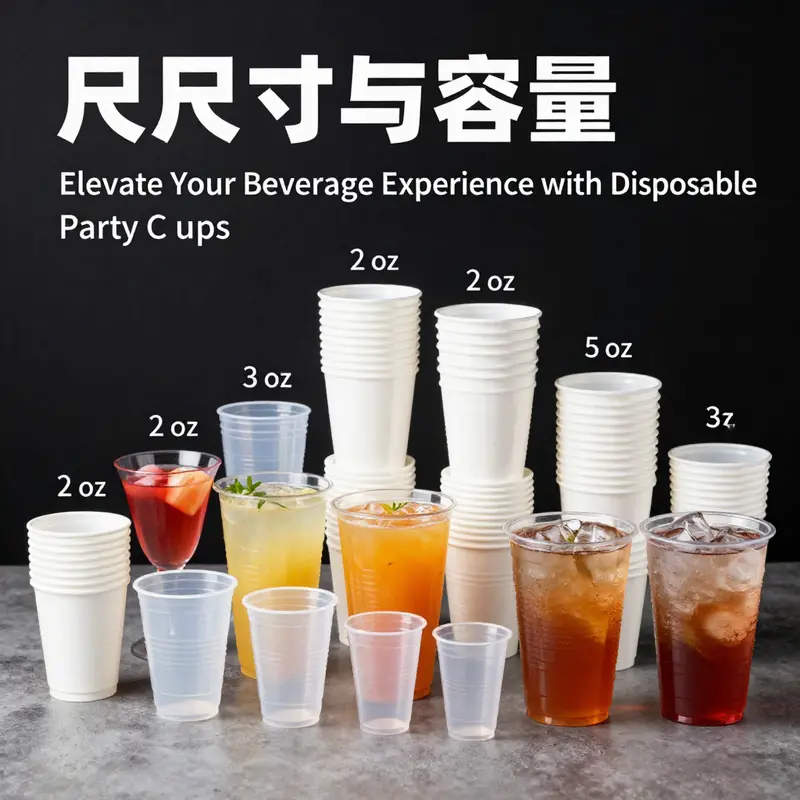
The party begins with a table set for possibility. A row of cups waits not just as vessels for drinks but as silent organizers of tempo, taste, and footprint. The size and capacity of disposable plastic party cups are more than numbers; they shape how guests move and how the event breathes. On the surface choosing a cup might seem trivial, a matter of how much you pour or how easy it is to hold. But the size spectrum reveals a deeper logic: the way beverages circulate, the ease of service, and the alignment with sustainability goals.
Consider the smallest end of the spectrum, the tiny cups that hold a mere sip or two. These cups function as tasting moments during a reception or as game pieces in social rituals that rely on quick, repeated turns. Their compact capacity around 58 milliliters keeps the pace brisk. They encourage guests to sample, swap, or participate in activities without committing a full drink. In themed events their color and finish can become micro signals of mood, a splash of color when the music shifts, a cue for a game, or a discreet way to offer a ceremonial toast with a measured portion. Yet the trade off is clear: limited volume means more frequent refills or more waste when guests move quickly from one activity to the next. For organizers who want to spark interaction without bloating the beverage count these small cups can be a clever instrument, a way to pace a moment and then gracefully move the crowd onward.
Moving up the scale, the 12-ounce cups occupy a universal middle ground. They are the workhorse of many gatherings, especially where beverages range from fruit juices and iced teas to standard beers and soft drinks. At roughly 355 milliliters, these cups strike a balance between serving enough liquid to satisfy a casual drinker and keeping refills manageable for service staff or self-serve stations. The form often integrates well with standard ice and a modest layer of foam on a poured drink, letting color and translucence play across the tabletop. In terms of design, 12-ounce cups offer enough surface area for simple branding or event themed designs while staying light enough to be carried in a crowd. They can support practical features—clear visibility of contents, easy stacking for quick restocking, and compatibility with various lids in situations where spill resistance is essential, such as outdoor events or high energy games. The 12-ounce cup thus stands at the intersection of reliability and flexibility, making it a reliable choice when the event calls for versatility without sacrificing speed or comfort.
For many celebrations, the 16-ounce cups become the default choice. With a capacity near 480 milliliters, these cups accommodate larger servings of drafts, iced coffees, or generous fruit based beverages. They also serve well for dessert accompaniments that blend drink and treat, such as frozen drinks or layered refreshments that might double as mini desserts at a casual party. The larger diameter and height offer more room for ice, which can extend the drink experience in warm weather or at outdoor venues. The sturdier profile of a 16-ounce cup translates to improved grip and a lower sense of fragility when handed across a crowded table. From a logistics perspective, these cups simplify inventory planning: fewer varieties to stock, fewer SKUs to manage, and more consistent pour quality across the service line. Aesthetically, they present a canvas for color coordination and theme driven accents, whether the event leans toward metallic gleam, electric neon, or crystal clear simplicity. The 16-ounce cup often becomes the most satisfying compromise between generous hydration and practical handling, a balance that resonates with guests who want to savor a moment without surrendering control of the activity around them.
Beyond the standard sizes, the larger end of the spectrum—cups in the 401 to 500 milliliter range—exists to support specific party games, shared beverages, or ice cream style presentations in a single, convenient vessel. These are the cups you see at lively social games, where the goal is to minimize interruption while maintaining a common drinking experience. In such contexts, the cup is less about individual consumption and more about participation, a shared ritual that invites collective engagement. The capacity here reduces the friction of frequent refills in a game setting and accommodates larger ice cubes or thicker mixtures that a smaller cup would struggle to hold. The trade-off is visible: bulkier cups require sturdier stacking, more careful handling to avoid tipping, and a greater emphasis on leak resistance if lids are used. For events that aim to blend socializing with competitive play, these larger cups can be the practical glue that keeps energy high and interruptions to a minimum.
The choice of capacity cannot be decoupled from the material story that accompanies it. In materials science and product design, two broad families dominate the disposable cup landscape: polystyrene (PS) and polypropylene (PP). Each brings a distinct personality to the party. PS cups offer excellent clarity and a crisp, glass like appearance that can elevate a birthday celebration, wedding, or formal gathering when the cups are used without lids and displayed as part of a décor scheme. They excel at presenting beverages in a pristine, transparent form, where color and light play across the liquid surface, inviting guests to savor the visual aspect of the drink as much as the flavor. Yet PS typically carries environmental drawbacks, including limited recyclability in many municipal streams and lower resilience to heat and impact in outdoor conditions. In contrast, PP cups tend to be more durable and resistant to heat, making them versatile for hot beverages or mixed drinks at outdoor venues where the risk of crumple or spill is higher. PP reviews resilience as especially valuable for large events where guests are moving, mingling, and juggling plates, napkins, and other tableware. The trade off here is not simply about temperature tolerance but about the broader lifecycle: a choice between a product that highlights visual clarity in a controlled indoor environment and a material that emphasizes durability and reusability when the party extends into rougher conditions.
A growing thread in this landscape is the rise of compostable and green labeling. A segment of cups now claims compostability or biodegradability, aligned with a broader push toward sustainability. However, compostability is not a universal guarantee of end of life success. Some compostable cups require industrial composting facilities to achieve proper breakdown, and home composting often cannot achieve the same results. This nuance matters for planners who want to minimize their environmental footprint without inadvertently outsourcing waste to facilities that cannot process it. The conversation around materials also intersects with health and safety considerations. For example, many consumers seek BPA free products and those free from phthalates, especially for children events or where drinks are served hot. Food grade certification and inert packaging become crucial signals that reassure guests that the beverage is safe to consume, even as the same cup is chosen to match a party aesthetic. In practice, this means the event team must balance safety, cost, and appearance across the size spectrum, recognizing that some combinations will deliver premium presentation while others favor practicality and speed.
The social dynamics of cup size unfold in the rhythm of service and the flow of guests. At a wedding reception or a corporate celebration, a delicate, crystal clear cup can contribute to a refined ambiance when used for a curated beverage station. In contrast, a backyard barbecue or a charity bake sale often benefits from the earthier charm of colored cups and the sheer efficiency of larger, more robust cups that withstand rough handling and high guest counts. The interplay between capacity and usability extends to lid compatibility, stacking efficiency, and the ease with which cups can be printed with logos or event branding. Even the border between decoration and function matters: in color coordinated events, the palette of cup colors can reinforce the overall theme, guiding guests toward different beverage zones or signaling distinct drink lines. The design language of size, shape, and color thus becomes part of the event choreography, a silent conductor that helps guests navigate the space with less deliberation and more enjoyment.
From a procurement standpoint, the economics of cup sizing reflect the realities of scale and usage. Bulk purchases reduce unit costs, but the total number of cups needed is a function of serving size, event duration, and guest count. Short events with light beverage demand might favor the restraint of smaller capacities, while long or highly social gatherings may justify larger cups to reduce restocking intervals. The tiered approach often yields the best balance between cost efficiency and guest satisfaction. For organizers managing multiple venues or shifts, consistency in cup sizing simplifies training and reduces the chance of service errors. It also helps inventory planning: knowing that a certain percentage of the order will be 12 ounce cups and another portion 16 ounce cups, for example, prevents bottlenecks at the beverage stations and ensures a smoother guest experience.
In this landscape of sizes, considerations of customization and branding are not mere embellishments but strategic tools. A table dressed in theme appropriate cups can mirror the event s color scheme, reinforce branding at a trade show, or contribute to a wedding s visual storytelling without requiring additional tableware decoration. If branding is a priority, the cups can feature logos, initials, or decorative motifs that become photo worthy props in a social setting. The practicalities of customization saving minimum order quantities, lead times, and print area must be weighed against the event s scale and timeline. For organizers seeking customization, one path is to explore custom takeaway packaging supplies for theme party. This route can align the cups with other disposable tableware and packaging, creating a cohesive look and a single sourcing convenience that streamlines procurement in high volume events.
Despite the allure of sameness across the spectrum, the real value emerges when size is treated as a flexible instrument rather than a rigid rule. A well planned mix of small, standard, and large cups supports a dynamic program that can accommodate sampling, main beverages, and indulgent treats alike. A thoughtful approach to sizing also invites guests to participate in experiences that are more about social connection than about quenching thirst alone. In outdoor settings, choosing the right capacity can influence comfort and safety—adequate volume without frequent trips to refill, fewer opportunities for spills, and better hand hold stability when guests are engaged in conversations or activities. In more intimate indoor settings, smaller or mid sized cups paired with elegant presentation can elevate the perception of quality and care, signaling attention to detail that resonates with guests and hosts alike.
The interplay between size, material, and environmental considerations will continue to shape how these cups are used in the years ahead. Even as new materials emerge and recycling streams expand, the core logic remains: capacity defines use, and use, in turn, defines the flow of an event. As planners and hosts weigh options, they are balancing taste, tempo, and footprint opening a path to give guests just enough to savor the moment while keeping the rest of the evening lightweight in waste and effort. This is not merely about choosing a cup; it is about shaping an experience through capacity decisions that align with safety, aesthetics, and sustainability goals. The size spectrum, when navigated with purpose, becomes a quiet advocate for smarter hospitality. It enables better guest experiences, smoother operations, and a more deliberate conversation about consumption and care—an essential dimension of modern celebrations that increasingly respects both people and planet.
External resource: For a concise overview of safety considerations related to food contact materials, see the FDA guidance on food contact substances.
Versatility in a Grab-and-Go Vessel: Navigating the Many Scenes of Disposable Plastic Party Cups
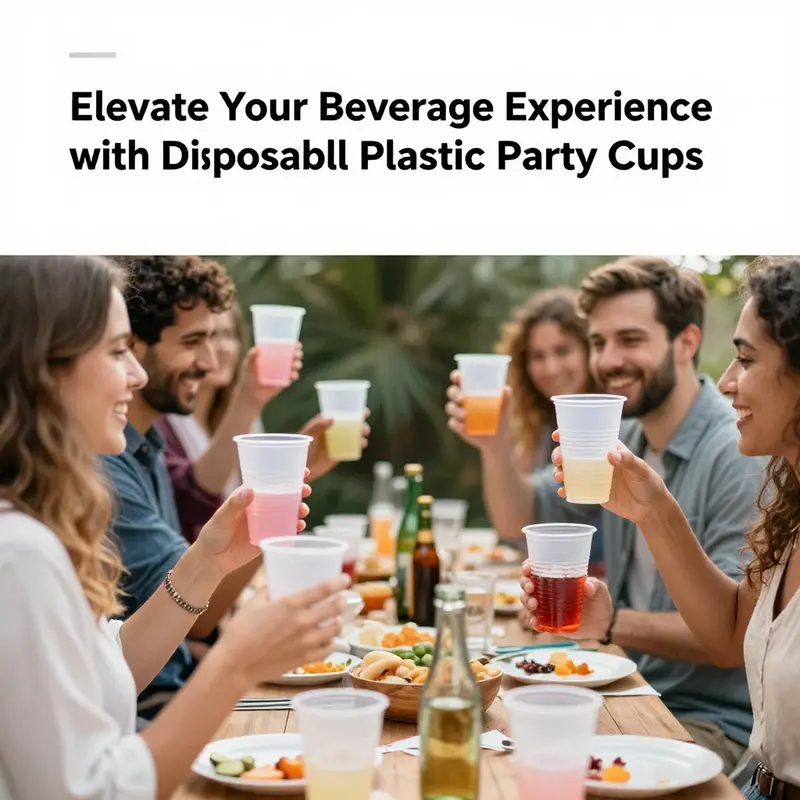
Disposable plastic party cups sit at a quiet crossroads in events and daily life. They are not just simple vessels; they are flexible tools that adapt to hospitality pressures, design desires, and environmental considerations. The scene is not only about what people drink, but how the cup helps shape a moment: the quick turnover of beverages at a family picnic, the subtle display of color and light at a wedding reception, the clean, unbroken rhythm of service in a busy cafe or outdoor festival. When you look closely, the cup becomes a reflection of the event’s pace and mood. It carries the drink, the mood, and the storyteller’s intent—from a neon glow at a night-time gathering to the understated elegance of a transparent crystal-style cup that allows the color of the beverage to take center stage. Its true value emerges when one considers the varied contexts in which it can perform without demanding extra labor or expense from organizers.
The most immediate driver behind the choice of disposable cups is practicality. For family gatherings, the goal is to minimize cleanup while maximizing guest comfort. A cup that resists cracking and is easy to grip reduces the chance of spills during games or conversations, especially when children or seniors are involved. In these settings, color can play a surprising role. A household might choose bright hues to match a birthday theme or to cue a certain atmosphere—like a warm amber for a cozy autumn dinner or a neon accent for a teenagers’ party. The same cup, simply by its color, can signal a mood shift without any additional decoration or setup. Yet even with the most vivid coloration, many hosts still favor clear or crystal-like cups for everyday gatherings because their transparency showcases the beverage inside, allowing the drink to contribute to the overall visual design of the table setting.
As celebrations scale from intimate to expansive, so too does the cup’s role in ensuring smooth service. In weddings or larger ceremonies, the chosen cup needs to balance aesthetics with reliability. A clear, high-clarity cup can mimic the feel of a glass while preserving the convenience and safety of a disposable product. This balance—between perceived elegance and practical assurance—helps hosts craft moments that feel premium without imposing heavy costs or labor on the event team. For outdoor affairs, where wind, dust, or uneven surfaces pose challenges, a sturdy cup with a secure lip and a resilient wall becomes more than a preference; it becomes a prerequisite for maintaining the flow of service. In these environments, options that offer spill resistance, such as cups with slightly thicker walls or lids for hot or cold beverages, become invaluable. The ability to keep beverages warm or cool without constant handholding encourages guests to relax and linger, turning a simple drink into a social enhancer rather than a logistical obstacle.
A crucial aspect of choosing a cup remains the material itself. The most common options span a spectrum from polystyrene to polypropylene, each with its own advantages and trade-offs. Polystyrene cups often provide excellent clarity, which can elevate the drink’s appearance and the party’s overall atmosphere. They are inexpensive in large quantities and widely available, making them appealing for bulk events where the primary objective is to minimize cost while avoiding the burden of washing dishes. However, the environmental footprint of PS is a growing concern, and its recycling rate tends to be lower than some alternatives.
Polypropylene, by contrast, offers a different set of benefits. PP cups tend to be more durable and heat resistant, making them suitable for mixed beverages that include warm components or for use in environments where guests might handle their cups a little longer. They’re often marketed as food-grade and free from substances such as BPA and certain plasticizers, aligning with growing consumer expectations for safer, more reliable materials. The trade-off can be a higher unit cost, especially in the same volume of production, but for organizers prioritizing resilience and perceived safety, PP can be a wise choice. In addition to these standard plastics, there are increasingly available compostable options that respond to sustainability concerns. For events with a strong emphasis on eco-friendliness or where industrial composting facilities are accessible, compostable cups offer a path to reduce landfill impact. The message here is not that one material is universally better; rather, it is that the choice should align with the event’s goals, the venue’s capabilities, and the guests’ expectations.
The dimensions of a cup—from 2-ounce mini vessels to 32-ounce oversized cups—also shape its suitability for particular beverages and moments. Small cups are ideal for sampling, tasting flights, or desserts that require portion control and easy sharing. Mid-sized cups in the 9- to 12-ounce range are widely used for juice, iced tea, and beer servings at casual gatherings or quick-service settings. Larger 16- to 24-ounce cups appear in coffee bars, outdoor venues, and snack-alley environments where larger servings help reduce refills and speed up service. Even the largest cups have a practical place: when a party includes sundae stations, ice cream cups in generous sizes can double as dessert vessels, blending utility with a touch of indulgence. The choice of size cannot be divorced from the context of the beverage program, because it subtly influences how guests interact with the spread, how staff manage the flow of service, and how the event feels to attendees.
Beyond the pragmatic and the aesthetic, there is a clashing tension that every planner must navigate: the environmental impact and the expectations of sustainability-minded guests. The dialogue around disposables has evolved from simply “are they convenient?” to “do they align with our values?” A growing subset of cups bears compostable labeling or BPA-free assurances, signaling a shift toward responsible consumption. For many hosts, this is not enough to drive a change, but it does influence supplier selection and the framing of the event in guest communications. The practical implications of choosing a compostable or recyclable option depend on location and waste-management infrastructure. Where industrial composting is available, compostable cups can reduce the event’s long-tail footprint. In places with robust recycling systems, PP cups may be the better balance of recyclability and durability. Either choice should be paired with clear labeling to guide guests in proper disposal, a small but meaningful step toward reducing confusion and contamination in waste streams.
The procurement thread—from bulk wholesale to custom designs—begins with a clear sense of scale and purpose. For organizers planning large-scale gatherings, the economics of bulk purchases come into play. When quantities reach tens of thousands or more, the unit price can drop sharply, creating a cost envelope that makes disposables competitive with more durable alternatives while delivering the speed and hygiene benefits that modern events demand. Yet even with favorable pricing, the practicalities of supply matter. Lead times, packaging formats, and compatibility with lids or different beverage types require careful coordination with suppliers. For instance, some events demand cups with lids to prevent spills during transport or to accommodate hot drinks delivered in on-the-go contexts. Others benefit from a simple, sealed unit that reduces the risk of spills while guests mingle. Considerations of color, finish, and potential branding also influence the decision-making matrix. A color palette that aligns with a brand or theme can elevate the visual cohesion of an event, while transparent cups can act as canvases for light and color effects—especially at nighttime celebrations where lighting design becomes part of the performance.
The experience of choosing disposable cups, then, is less about selecting a single best option and more about building a coherent system. A well-considered system matches the event’s pace, its aesthetic ambitions, and its logistical realities. It acknowledges that a cup is a tool in a larger toolkit: it supports the flow of service, enhances the guest experience, and communicates values through material and design choices. For those seeking to integrate cups with broader theme packaging and tableware, there are opportunities to align the entire table setting with a consistent look and feel. One useful resource for this is a provider that offers custom takeaway packaging and disposable tableware for theme parties, which can help ensure that the cups, plates, utensils, and packaging all speak to the same design language. custom takeaway packaging and disposable tableware for theme parties. This kind of alignment can reduce the cognitive load on guests and staff alike, making the event feel more curated and intentional without compromising the ease of cleanup that makes disposables attractive in the first place.
In sum, the adaptable nature of disposable plastic party cups—their material diversity, their range of sizes, and their capacity to elevate or simplify a moment—makes them a durable choice across an astonishing variety of settings. They are the everyday instrument that, when selected with care, can support hospitality goals, reflect values, and empower hosts to focus on what truly matters: connecting with people. The cup’s reach extends beyond the drink it contains; it shapes how guests move through spaces, how conversations unfold, and how memories are formed. Whether the venue is a cozy home kitchen, a sunlit park, or a grand ballroom, the right cup helps to ensure that experiences proceed with ease, warmth, and a hint of purposeful style. For guests, it is a familiar prop; for hosts, it is a dependable partner. The challenge, always, is to balance the moment’s needs with the event’s longer-term aims—an endeavor that the humble disposable cup, in its many forms, is uniquely equipped to support.
External resource: https://www.foodsafety.gov
null

null
Final thoughts
Choosing the right disposable plastic party cups can significantly enhance your beverage service or event planning capabilities. By understanding the different types, materials, sizes, and practical applications covered throughout this article, you can make informed decisions that align with your branding and operational needs. Whether for a bubble tea shop, catering service, or restaurant, the right cup not only elevates the drink experience for your customers but also reflects your commitment to quality and sustainability. Leverage the insights gained to choose the best options that facilitate efficiency and style for your business.