
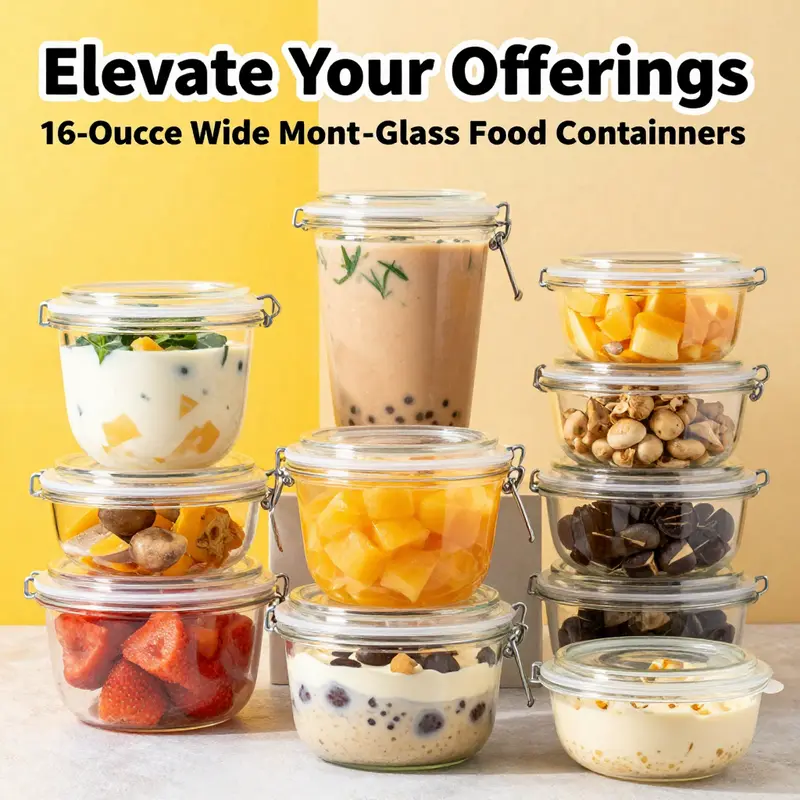
In today’s eco-conscious market, the demand for durable and sustainable food storage solutions has seen a significant rise, particularly among bubble tea shops, beverage chains, restaurants, food trucks, catering services, event planners, and corporate procurement teams. This focus on sustainability extends to 16-ounce wide mouth glass food containers, which not only provide secure food storage but also enhance presentation and safety. As we explore the multifaceted benefits of these glass containers, you will gain insights into their market significance, features, pricing strategies, sustainability impact, and diverse applications tailored for various businesses. Each chapter will equip you with the knowledge to make informed purchasing decisions in alignment with the growing trend of environmentally-friendly practices.
Bulk 16-Ounce Wide-Mouth Glass Jars: Market Dynamics, Sustainability, and the Wholesale Pipeline
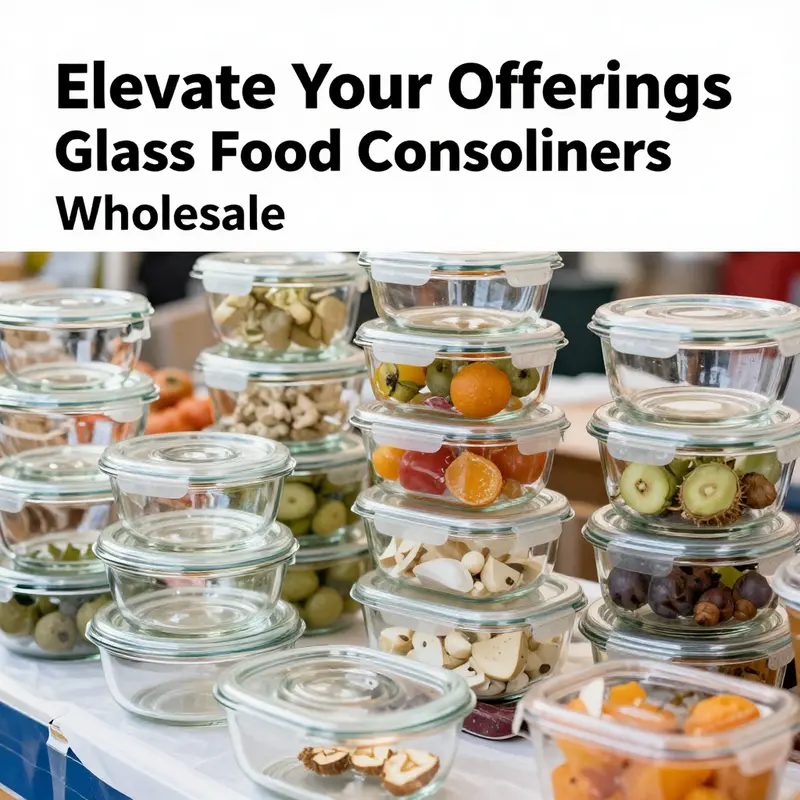
The wholesale market for 16-ounce wide-mouth glass jars sits at a quiet yet powerful crossroads where practicality, sustainability, and scale converge. These containers play a pivotal role in food storage, home canning, and a growing range of DIY lifestyle products. They are valued not just for their capacity but for the integrity they offer: a stable, nonreactive surface that preserves flavor, aroma, and texture without leaching chemicals or imparting unwanted tastes. In commercial kitchens, stores, and home pantries, the 16-ounce wide-mouth jar has become a versatile workhorse. Its wide mouth facilitates filling and emptying, reduces spill risk, and supports easy inspection of contents. The glass material resists staining and odors, and it can endure repeated cycles of washing and reusing, which aligns with an increasingly eco-conscious consumer mindset. When viewed through the lens of wholesale supply, these jars also embody a balance of durability, cost efficiency, and customization—factors that matter to retailers, food producers, and caterers managing tight margins and varying volumes.
The market’s backbone is the procurement channel. Large online platforms function as global marketplaces that connect buyers with manufacturing hubs across regions. In the case of 16-ounce wide-mouth jars, a central node emerges in the form of suppliers who offer a spectrum of variants tailored to different applications and branding strategies. Transparent jars provide a clean, classic look that works across pantry staples and gift sets. Amber or brown-tinted jars address light sensitivity, protecting products such as spices, oils, and certain infusions. Beyond color and capacity, manufacturers increasingly offer specialized lids and accoutrements that enhance usability and shelf appeal. Built-in handles, wooden or bamboo lids, and customized seals are not merely cosmetic features; they influence handling, transport, and perceived value. For producers aiming to build a recognizable line, these options translate into opportunities for brand differentiation without changing the fundamental glass format.
From a pricing and terms perspective, wholesale dynamics are driven by volume, lead times, and customization levels. Typical minimum order quantities tend to cluster around the 500 to 1,000 piece range, a scale that supports cost efficiency for the supplier while remaining achievable for small manufacturers expanding into canned or jarred product lines. It is common to encounter lower MOQs in certain circumstances, sometimes as low as 100 or even 50 pieces, particularly when the supplier is trying to accommodate new customers or promote a limited variant. Price per unit tends to reflect bulk economics: the most basic jars with standard lids can fall into a broad band, often between a few tenths of a dollar to under half a dollar per unit, depending on glass quality, lid material, and finish. When lids, seals, and lids–and–bands are included, or when special treatments and packaging are requested, the unit price adjusts accordingly. In markets saturated with competition, the price signal becomes a conversation about value, reliability, and service—factors that wholesalers must balance against the desire for lower upfront costs.
The supply landscape is not just about bare jars. There is a clear and growing niche for specialty containers designed to meet specific consumer demands. Customization is moving beyond color and labeling into functional innovations such as built-in handles for easier grip, sealed tamper-evident bands for product security, and fermentation-ready variants that accommodate processes like kraut or kombucha fermentation. Some suppliers offer jars with integrated features for branding campaigns, including built-in measurement marks or custom-printed exterior finishes. The higher price points for these specialized containers are offset by advantages in product differentiation, consumer perception of quality, and the ability to command premium lines in retail spaces or gift sets. As more retailers and brands embrace story-driven packaging, the value of a 16-ounce wide-mouth jar becomes less about basic storage and more about an integrated packaging solution that communicates sustainability, craftsmanship, and culinary versatility.
The ecosystem around these jars also reflects a shift in how households and businesses approach storage and canning. Consumers are increasingly drawn to glass not merely as a functional container but as a statement about environmental responsibility. Glass is inert, recyclable, and inherently reusab le, making it a compelling alternative to plastics, especially in contexts where food safety and purity are paramount. The absence of chemical leaching, resistance to staining, and the ability to withstand repeated temperature changes make these jars attractive for a wide range of uses—from dry goods like coffee beans, nuts, and oats to spices, jams, and sauces. The wholesale market, in turn, aligns supply with demand by offering jars in various finishes and with label-friendly surfaces. This synergy helps retailers maintain inventory that can scale with both seasonal surges in canning activity and ongoing demand for pantry storage solutions.
A typical wholesale conversation also revolves around packaging logistics and the practical realities of distribution. Glass, while durable, requires mindful handling and robust packaging to survive transit from factory to warehouse to storefront. Suppliers often mitigate risk with reinforced inner packaging, protective dividers, and sometimes foam or paper wrap designed to cushion the contents. For buyers, this translates into a planning horizon that accounts for breakage risk, replacement costs, and optimal ordering cycles. The economics of shipping weight and packaging integrity must be weighed against the savings achieved through bulk pricing. In many supply chains, the decision to purchase sixteen-ounce wide-mouth jars wholesale is as much about the assurance of a steady supply and predictable lead times as it is about unit price. Lead times, factory capacity, and minimum order quantities can become deciding factors for brands that operate with just-in-time inventory or that need to scale rapidly during peak seasons.
The wholesale market’s breadth is also reflected in the range of accessible product variants. A steady stream of basic jars, with standard lids and clear glass, stands beside more nuanced offerings: amber glass for light-sensitive contents; jars with practical features such as built-in handles, tamper-evident seals, or compatibility with specialized lids for fermentation or vacuum sealing. Each variant opens a distinct pathway for market entry. For smaller brands or retailers, the lower end of the spectrum provides a reliable, cost-effective baseline from which to grow. For established producers seeking to expand or refresh lines, the specialized variants offer a route to higher perceived value and customer loyalty. In short, wholesale buyers can construct a diversified portfolio of jars that address a broad spectrum of consumer needs while maintaining the flexibility to adapt to new product concepts quickly.
As this market expands, the significance of dependable quality cannot be overstated. Food safety compliance, accurate documentation, and consistent dimensional tolerances are essential. Buyers expect products that meet recognized standards for food contact materials, that withstand dishwasher cycles and pasteurization or sterilization processes, and that retain their clarity and gloss after repeated use. In this context, the technical performance of glass—its resistance to thermal shock, impact durability, and chemical inertness—emerges as a practical differentiator. It directly informs the reliability of the jar across household kitchens, professional kitchens, and retail displays. The conversation with suppliers often centers on the specifics: the composition of the glass, the thickness of walls, the quality of rims for smooth sealing, and the compatibility of lids with seals that preserve freshness without compromising safety. When these factors align, wholesale glass jars offer a resilient, long-term solution for products that value clean labeling, straightforward storage, and minimal environmental impact.
The broader narrative surrounding these jars is inseparable from the platforms that connect buyers to producers. A dominant marketplace pattern is the ability to compare a breadth of offerings from verified suppliers, access detailed product specifications, and secure logistics support that streamlines import processes and domestic distribution. For many retailers and manufacturers, this connectivity reduces friction, enabling quicker decision-making and faster time-to-market for new product lines. The ability to source translucent or amber jars, choose from several lid configurations, and tailor packaging aesthetics to seasonal themes creates a dynamic where wholesale procurement is not merely a cost-saving exercise but a strategic branding lever. In this light, the 16-ounce wide-mouth jar becomes more than a container; it is a scalable platform for product storytelling and culinary creativity.
For readers exploring the wholesale landscape, a practical takeaway is the centrality of reliability and supplier transparency. The best partners provide clear product specifications, reasonable MOQs that align with their own production capacities, and accessible logistics options that accommodate varying shipping volumes. They maintain consistent quality across batches and offer support for labeling and branding needs. In a market as competitive as this, the lowest price often belongs to the provider who can guarantee continuity of supply, prompt resolution of issues, and predictable post-purchase service. This is why many buyers gravitate toward established hubs that showcase a range of jar variants, as such platforms reduce risk and simplify supplier evaluation. As consumer preferences evolve toward sustainability and simplicity, wholesale buyers who prioritize quality, durability, and responsible packaging will find that the 16-ounce wide-mouth glass jar remains an enduring asset in both commercial and domestic contexts, capable of supporting everything from bulk canning projects to elegant gift sets.
Internal reference for further packaging considerations can be found in practical packaging guides that explore how glass containers integrate with gift-ready and food-service packaging concepts. For example, a resource focusing on square, transparent packaging with windowed presentation offers a glimpse into how retailers might extend the jar concept into complete display-worthy solutions. See the discussion on paper-sandwich-box square food boxes with transparent lids for packaging ideas that complement glass storage with branded, consumer-facing packaging. paper-sandwich-box-square-food-box-with-transparent-lid-square-white-bread-box-cookie-paper-boxes-cake-roll-packaging-boxes
External resource for broader market context: Wholesale wide-mouth canning jars 16 oz on a major global marketplace, which highlights supplier diversity, SKUs, and logistical considerations. https://www.alibaba.com/product-detail/Wholesale-wide-mouth-canning-jars-16-oz_1600279844755.html
Clear, Wide-Mouthed 16-Ounce Glass Jars: A Wholesale Lens on Design, Safety, and Sustainability
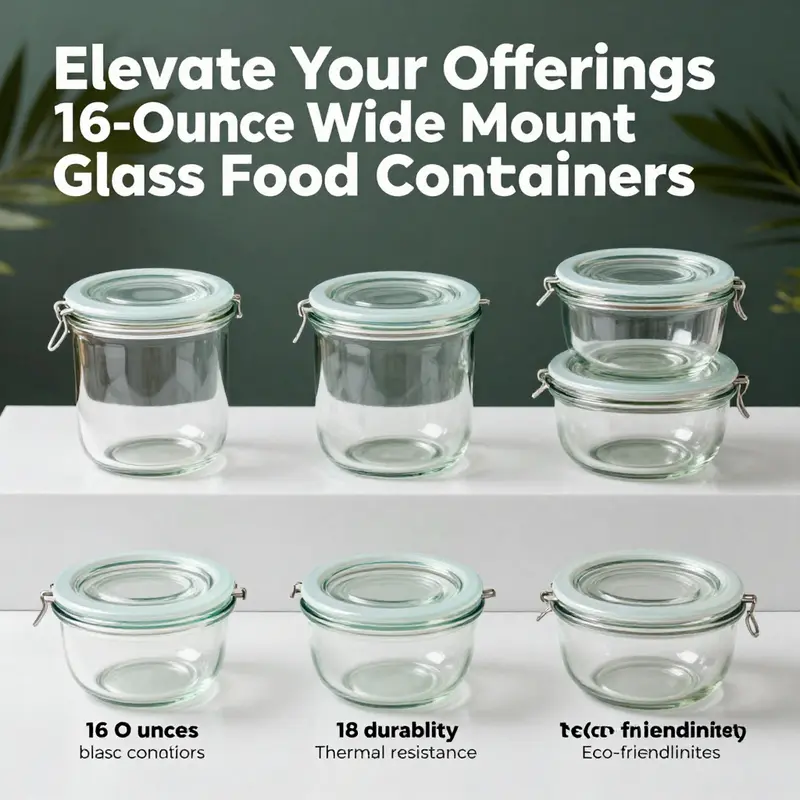
A 16-ounce wide-mouth glass jar stands at an intersection of practicality and principle for buyers who move goods in bulk and households that value simplicity and safety. In wholesale markets, these jars are not merely containers; they are a standard that aligns with evolving expectations about durability, purity, and environmental responsibility. The glass itself—usually soda-lime in commercial supply chains—offers a non-toxic, corrosion-resistant home for a wide array of foods. It resists staining and degradation over time, maintaining transparency that invites trust. When suppliers emphasize global food-safety standards, CE-like certifications often accompany the product or are highlighted in supplier documentation, signaling that the jar is suitable for long-term storage of dry goods, spices, pantry staples, or even canning projects when used with appropriate lids. This clarity matters in a wholesale setting, where buyers must balance price, performance, and compliance across large orders. The material choice matters less for the end consumer than for the business that must guarantee safe storage to meet both local health codes and international export requirements.
The wide mouth is a defining feature that transcends aesthetics. It is not a design flourish but a functional choice with meaningful consequences for productivity and cleanliness. The opening enables straightforward filling and efficient scooping, whether a cook fills the jar with oats, nuts, dried fruit, or bulk spices. In a canning or preserving workflow, the same opening reduces the friction that can accompany batch processing and recipe testing. In a café or meal-prep service, it speeds up portioning and reduces staff fatigue during busy service periods. When the jar becomes part of a display, the visibility offered by the clean, uninterrupted glass further reinforces perceived quality—an advantage in both retail spaces and professional kitchens where countertop space is at a premium.
A reliable seal is essential to translate that mouthful of convenience into preserved freshness. The lid, typically a metal screw cap or a food-grade polypropylene cap, forms an airtight barrier that minimizes exposure to air, moisture, and contaminants. This airtightness is a critical differentiator; it often outperforms non-sealing containers in preserving aroma, texture, and flavor, especially for products like nuts, honey, jam, dried fruit, and spices. For wholesale buyers, the lid choice matters not only for performance but for compatibility with existing equipment and packaging lines. A metal screw cap might pair well with metal ring bands in some markets or with plastic lids designed for stacking efficiency. Either way, a tight seal translates into longer shelf life and reduced spoilage, two outcomes that resonate with buyers who manage inventories across multiple locations or run large-scale catering operations.
The 16-ounce jar is typically cylindrical, with a height around five inches and a top diameter near two and a half inches. Its capacity—approximately four hundred seventy-three milliliters—strikes a balance between compact storage and accessible portioning. From a logistics perspective, this standard size offers predictability in warehousing, shipping, and retail display. The weight of glass is a consideration for transport costs, but wholesale buyers often accept the trade-off because glass preserves product integrity and yields a premium consumer perception. The jar’s durability is reinforced by the glass’s resistance to staining and corrosion, and by the durability of the lids, which protect contents through the supply chain and during household use. In practice, this combination creates a resilient solution that stands up to the rigors of bulk distribution while remaining simple enough for end users to handle without specialized equipment.
Stackability is another practical virtue. Many jars are designed to nest or stack in a stable, space-efficient column—often up to five units high when stored or displayed. This capability reduces warehouse footprint and helps retailers present a tidy, uniform shelf. Space efficiency is not merely a logistical nicety; it translates into cost savings and a faster restocking cycle for wholesalers who move thousands of jars at a time. Even with stacking advantages, the jars retain clear visibility of contents through the glass, a factor that supports quick product identification in fast-paced environments such as cafeterias and bulk-food retailers.
Beyond storage and display, these jars prove their versatility across the market. Their applications span from everyday pantry organization to more specialized uses in home canning, DIY crafts, and even wedding or event favors when paired with decorative lids or labeling. The glass format accommodates a broad spectrum of products, including snacks, dried fruits, nuts, herbs, spices, honey, and jam, as well as bulk ingredients for meal preparation. The ability to reclose and reuse aligns with consumer demand for reusable packaging and long product lifecycles. For businesses that emphasize sustainability, glass is a compelling option because it is recyclable and supports repeated reuse—an important counterpoint to single-use plastics.
From a sustainability lens, glass offers a clear advantage. It is both recyclable and reusable, enabling a circular approach to packaging that resonates with eco-conscious consumers. This environmental profile complements the practical benefits of wide-mouth glass jars, especially in a wholesale context where buyers are tasked with balancing performance and sustainability across numerous SKUs. The fact that glass does not leach chemicals into food—unlike some plastics—adds a trusted layer of safety for sensitive ingredients and for products destined for storage over longer periods. In a market that increasingly rewards transparency, the glass jar communicates a promise: durable storage that maintains the integrity of the contents while supporting a lower-waste packaging system over time.
Specifications and procurement realities further shape how buyers engage with wholesale glass jars. Each jar typically features a capacity of 16 ounces, or roughly 473 milliliters, with round, cylindrical geometry. The lid types—metal screw caps or food-grade PP plastic lids—are not merely accessories; they define performance, compatibility with existing closures, and potential branding opportunities. Wholesale discussions often address minimum order quantities, which commonly begin at around one hundred pieces, though suppliers may offer lower or higher MOQs depending on customization options and packaging requirements. Price per unit on generic wholesale channels can vary, with ranges commonly observed in the lower dollar figures per unit, reflecting the scale and efficiency of mass production. Lead times, freight considerations, and quality-control processes are integral parts of the procurement dialogue, as wholesalers must ensure consistent supply to retailers, restaurants, and service providers who rely on steady inventory.
Customization is another lever in the wholesale market. Some variants offer lid customization, allowing brands to apply logos, colors, or labeling to reinforce identity. Custom labeling on glass jars helps retailers establish product lines and differentiate offerings on crowded shelves. The ability to brand lids or to provide tamper-evident seals is particularly valuable for canning outfits, bakers, or gourmet food producers seeking a premium appearance. However, customization adds cost and extends lead times, so buyers weigh the benefits against the functional and cost implications. In practice, many wholesale buyers choose standard jars for broad lines and reserve customization for flagship products or limited-edition runs, where the branding impact justifies the extra effort and expense.
For buyers exploring the full spectrum of packaging options, it is worth noting that glass jars occupy a central, durable niche while other formats—like eco-friendly takeout boxes and craft packaging—present complementary choices for different segments of the market. A practical way to view this is to consider glass jars as the backbone of long-term storage and portion control, paired with packaging solutions that accommodate on-the-go consumption or gift packaging. For those exploring these broader packaging ecosystems, one can explore ready-to-use alternatives such as eco-friendly takeout boxes for food packaging, which offer lightweight, compostable, or recyclable options that can harmonize with glass in a cohesive product strategy. Eco-friendly takeout boxes for food packaging
In the wholesale workflow, the jar’s performance aligns with the expectations of cafes, caterers, home canners, and bulk retailers. Cafés may use the jars for bulk pantry storage, meal-prep components, or as part of display cases that emphasize the artisan aesthetic. Caterers and food-service operations rely on the jars for organized ingredient storage, portion control, and easy access during prep and service. Home canners benefit from the jars’ stability and compatibility with standard lids, whether preserving seasonal harvests or preparing jars for gifting. The jars’ multipurpose character also invites creative uses beyond food, including DIY crafts and decorative applications, which broadens their appeal in both domestic and commercial settings. The wholesale market thus rewards products that combine reliability, ease of use, and a clear environmental narrative, all of which are embodied in the 16-ounce wide-mouth glass jar.
The supply ecosystem supporting these jars is as important as the jar itself. Wholesale buyers assess not only the jar but the supplier’s capacity to deliver on time and in consistent quality. This includes evaluating packaging for transit safety to minimize breakage, confirming adherence to food-safety standards, and understanding minimum order quantities and customization options. In practice, successful procurement hinges on a clear dialogue between supplier and buyer about lead times, stock availability, and the flexibility to adjust orders as demand shifts. The resulting relationship is one of reliability and predictability, a cornerstone of wholesale success that helps both sides plan inventory, pricing, and promotions with confidence.
Ultimately, the 16-ounce wide-mouth glass jar embodies a balanced proposition for wholesale and consumer markets. It delivers practical performance—easy filling, reliable sealing, stackable storage, and broad applicability—while anchoring a broader narrative about safer, more sustainable packaging. As brands seek a durable, reusable container that resonates with contemporary values, glass remains a compelling option. The steady demand in wholesale channels reflects not only existing needs but also a forward-looking commitment to packaging that supports a lower-waste future. The jar, in its unassuming clarity, becomes a potent instrument in a larger system of storage, processing, and presentation that aligns with evolving standards of quality, safety, and responsibility.
External resource: https://www.fda.gov/food-safety
Glass in Bulk: Mastering Wholesale Pricing and Minimum Orders for 16-Ounce Wide-Mouth Glass Containers

The wholesale market for 16-ounce wide-mouth glass containers sits at the intersection of cost efficiency, reliability, and growing demand for safe, reusable storage options. Buyers in food service and home canning view jars as more than a container; they are a commitment to food quality and a step toward reducing plastic use. As with any bulk commodity, economics depend on supplier, glass quality, cap style, lid material, and level of customization. Typical unit prices for standard clear wide-mouth jars with screw caps range roughly from 0.19 to 0.35 USD per piece. This spread reflects basic configurations that appeal to commercial buyers and hobby canners who need predictable performance at scale. In many wholesale channels, prices can dip to lower cents per unit when orders are large or when product mixes differ in cap type, rim finish, or labeling options. Yet even at the higher end, the total landed cost is often justified by long service life, heat tolerance, and non reactive storage. Price is thus a function of quantity, quality, and the freight and duties that may apply.
A fundamental driver is the minimum order quantity, or MOQ. For 16-ounce wide-mouth jars with lids, 100 pieces is a common MOQ. This threshold often unlocks wholesale pricing accessible to small businesses and local canners. MOQs can expand dramatically beyond 100 units, with some suppliers listing 2,000, 5,000, or 10,000 units for certain configurations. Larger MOQs align with production runs and the packing of lids and seals for efficient shipping. For buyers testing the market, a 100 piece MOQ provides a practical gateway to assess fit, reliability, and supplier responsiveness before larger commitments.
The price-quantity relationship rewards careful forecasting. When a supplier quotes mid to upper tenths of a dollar per jar, it typically reflects glass thickness, mouth uniformity, and lid seal quality. Thicker walls or heavier rims add cost per jar but can extend life when jars are exposed to boiling water canning or hot fill processes. Lower unit prices are often the result of standardization, reduced customization, or higher volume production. For buyers who forecast demand over months or a year, tiered MOQs and price breaks can produce meaningful savings, especially when combined with bundled packaging or favorable shipping terms.
A practical procurement path starts with a clear picture of your needs. Check glass quality and thermal tolerance if boiling or pasteurization is in scope, and verify lid compatibility with your cap material. The right jar supports food safety, flavor and texture preservation, and minimized leaks during transit. Durable lids, seals, and gaskets are essential; a cap that resists rust and maintains a tight seal influences waste and returns in bulk buying.
Sourcing decisions also depend on the broader packaging ecosystem. Some suppliers offer complete kits that bundle jars with lids and labeling, while others enable modular purchases that mix jar sizes, cap finishes, and labeling styles. Bundled configurations can reduce variability and simplify inventory, while modular approaches offer flexibility to adapt to changing demand. Landed cost considerations include freight, handling, and duties, so asking for samples and testing shipment integrity helps prevent costly revisions after mass production begins.
Finally, consider the environment and regulatory context. Glass is inert, reusable, and recyclable, and many buyers emphasize food contact compliance, testing results, and documentation. A supplier who can provide clear certifications can support pricing discussions, offsetting higher unit costs with stronger perceived value. In practice, treat the jar as part of an integrated packaging strategy rather than a stand-alone buy. The goal is a resilient procurement plan that balances demand credibility, supplier competition, and reliable lead times, yielding a predictable, efficient path from factory to consumer.
Beyond Glass and Grains: The 16-Ounce Wide-Mouth Glass Container as a Wholesale Benchmark for Sustainability, Safety, and Service

Every time a chef pulls a lid from a 16-ounce wide-mouth glass jar in a bustling kitchen, or a home canner lines up a row of these containers on a pantry shelf, something more than storage is at play. The wholesale market for these wide-mouth glass vessels has evolved into a case study in how material choice, design, and supply dynamics intersect to deliver safety, efficiency, and environmental responsibility. The chapter that follows threads these ideas into a single, continuous narrative. It traces why borosilicate and soda-lime glasses are not just durable glassware but strategic assets in a market increasingly oriented toward sustainability, traceability, and long-term value. In practice, wholesalers must balance performance characteristics with cost, packaging integrity, regulatory compliance, and the evolving expectations of buyers who want packaging that respects both people and the planet. The result is a product category that stands as a reliable alternative to single-use plastics and even some compostable options when the total lifecycle impact is considered. In this context, the 16-ounce wide-mouth form is particularly compelling. Its size is large enough to handle recipes, leftovers, and creative preserves, yet compact enough to fit a standardized canning cycle, a catering service’s portioning needs, or a retail display that communicates quality at a glance. The transparency of glass plays a crucial role here: it allows visible inventory management for kitchens and retailers alike, reducing mis-tossed items and spoilage. This is not just about aesthetics; it is about operational discipline, where a clear container becomes a reliable dashboard for freshness, portion control, and compliance with storage guidelines. The wholesale narrative also hinges on stability under heat and cold, resistances to impact, and the confidence that glass will not degrade into surface films or leach substances into food. As concerns about microplastics, chemical additives, and long-term exposure to heat grow louder among consumers, glass—especially borosilicate variants designed to weather thermal shocks—offers a defensible path toward safer storage. This is the backbone of the argument made by wholesalers who are seeking sustainable differentiation, not just sustainable rhetoric. The wholesale market recognizes that the best packaging is often the simplest: a jar, a lid, a seal, and a plan for reuse rather than discard. And this is where the 16-ounce wide-mouth format shines. The lids—whether clamp-style or screw-on—provide airtight seals that minimize oxidation and cross-contamination, a critical feature for batch cooking, meal prep services, and home canning. The seal quality is not a luxury; it is a gatekeeper for shelf stability, nutrient retention, and customer trust. When a consumer purchases a product in a glass container, they are buying not only a container but also a signal about quality and responsibility. The wholesale sector reads this signal clearly, and it shapes sourcing criteria around durability, breakage rates, and the predictability of supply chains. In a market that values circular economies and zero-waste initiatives, glass containers offer a near-ideal end-to-end story. They are not disposable; they are reusable and infinitely recyclable. Glass does not degrade in quality through recycling, unlike many plastics, which lose performance with each cycle. This attribute translates into meaningful environmental credits for suppliers and buyers alike, especially as municipalities and large retailers push for packaging that reduces landfill burden and promotes reuse. The lifecycle advantage is not a single point of pride but a composite advantage. From the raw material quarry through melting, forming, and finishing, to consumer use, washing, and recycling, each phase contributes to a total energy and waste profile that, while not free of footprint, tends toward sustainability when managed with care and volume. The wholesale context amplifies these advantages. In larger orders, the economies of scale reduce the per-unit environmental impact and the per-unit cost of disposal or return programs. The long lifespan of glass containers means fewer replacements, lower long-term waste, and the potential for reuse programs that resonate with foodservice operators seeking to build reputations around responsible packaging. It is here that the design details matter as much as the material itself. The wide-mouth opening enables straightforward filling and cleaning, enabling a seamless transition for users who migrate from plastic to glass and who want to maintain hygiene without sacrificing speed. Tight-fitting lids with gaskets help preserve aromas and prevent leaks, a crucial feature for catering services and takeout operations that rely on consistent performance. The clarity of glass helps with quality-control checks, making it easier to spot residue, staining, or compromised seals during routine inspections. These functional advantages translate into real-world benefits: reduced food waste because products stay fresh longer; easier inventory management for retailers; and greater consumer confidence when visible contents are appealing and safe. In wholesale catalogs, these benefits are often framed alongside practical considerations such as minimum order quantities, packaging, and compliance with food-safety standards. The story is not merely about an attractive container but about a system that supports efficiency and accountability across the supply chain. When wholesalers evaluate the total cost of ownership, the initial price of glass must be weighed against lifetime reuse, reliability in busy kitchens, and the potential for reuse or recycling programs that align with corporate sustainability goals. The environmental impact of a glass container is not a static figure; it evolves with consumer behavior and municipal capabilities. In some markets, the emphasis is on designing for reuse and return, paired with robust cleaning protocols that maintain clarity and seal integrity after repeated cycles. In others, the emphasis shifts toward closed-loop recycling streams where glass can be remelted and formed anew without loss of quality. Such a framework reinforces the claim that 16-ounce wide-mouth glass containers are more than a product category; they are a mechanism for sustainable operation in wholesale foodservice and household markets. This alignment with broader trends toward circular economies and waste reduction makes these containers a natural fit for brands and distributors seeking to differentiate themselves through responsible packaging. The internal ecosystem—comprising manufacturers, wholesalers, retailers, and end-users—benefits from a shared language of durability, non-toxicity, and recyclability. Buyers often look for certifications and compliance markers that reassure food safety authorities, and wholesalers respond with offerings designed to meet those criteria while staying mindful of the total lifecycle cost. In this context, a single container becomes a vehicle for operational excellence and environmental stewardship. For those who need a tangible nudge toward greener choices in wholesale decisions, one can consider how a glass container complements other sustainable packaging categories in a product suite. A practical example is a line of eco-conscious takeaway packaging that emphasizes durability and ease of use without sacrificing compostability in specialized facilities. While compostability is not the default strength of glass, the overall packaging ecosystem benefits when glass is paired with other durable, recyclable options in a complementary portfolio. This strategic pairing supports a broader aim: to minimize single-use plastics, reduce microplastic risks, and promote a culture of reuse across kitchens, cafés, and grocery channels. The wholesale conversation around 16-ounce wide-mouth glass containers thus centers on a balance of safety, performance, and environmental accountability. It is a narrative of clarity—literally and figuratively—that prioritizes food safety, efficient operations, and the long arc of sustainability. When buyers weigh the practical realities of storage, shipping, glass handling, and breakage risk, they recognize that a well-designed glass container can reduce the frequency of replacements and the volume of waste generated by disposable alternatives. The result is not simply a more responsible choice but a more resilient supply chain that remains functional under pressure and adaptable to evolving regulations and consumer expectations. For those who wish to explore related packaging categories in a practical, wholesale context, the broader ecosystem offers options that share a commitment to sustainability, durability, and performance. eco-friendly takeout boxes for food packaging. This linkage highlights how containers across a spectrum of materials can contribute to a coherent sustainability strategy while maintaining the retail and catering demands that drive wholesale markets forward. External reference: https://www.amazon.com/dp/B0CZ4KQ2XG
Clear, Resilient, and Wholesale-Ready: The Many Roles of 16-Ounce Wide-Mouth Glass Food Jars
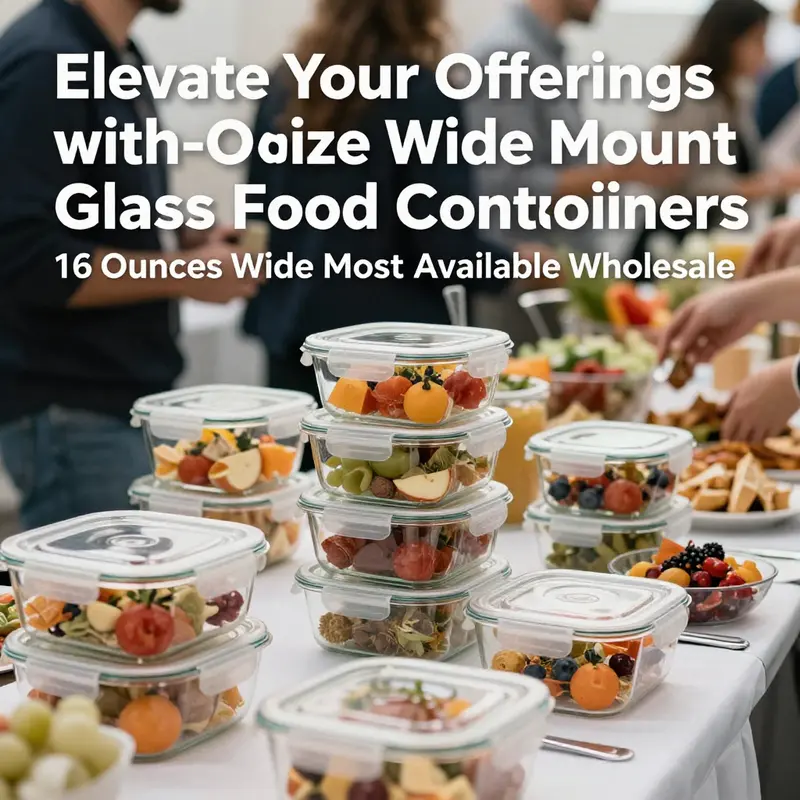
The 16-ounce wide-mouth glass food jar sits at a curious intersection of domestic routine and commercial practicality. Its utility is not bound to one narrow task but extends across home kitchens, small-scale canning projects, and the display shelves that populate food-service environments. What makes this form especially compelling is not only its clarity and durability but also its wholesale availability, which unlocks economies of scale for cooks, caterers, and small manufacturers who rely on consistent, dependable storage and presentation. In the broader arc of sustainable packaging, these jars embody a material class that emphasizes longevity and reuse, standing in contrast to single-use plastics while offering a transparent view into contents that fosters trust, both in households and in storefronts. This chapter follows the thread of how a seemingly simple container can support a spectrum of needs, map to a growing consumer preference for durable, non-porous materials, and align with the logistics and purchasing realities of wholesale channels.
In daily kitchen use, the wide mouth is a practical feature that redefines the ease of interaction with dry goods and prepared foods. For pantry organization, these jars become more than receptacles; they become a system. The broad opening enables clean scooping, quick refills, and simple decanting of items such as flour, oats, rice, beans, or various spices without the spill risk that smaller-mouth jars often incur. The transparent glass acts as a visual inventory system, allowing cooks to gauge quantities at a glance. When filled with layered ingredients for meal prep, the jars contribute to a calm, orderly counter or cabinet aesthetic. They also support a shift toward batch cooking because the wide mouth tolerates straightforward transfer of components from bags or bulk bins, reducing both waste and mess during the transfer process.
Beyond the kitchen, the same form meets the demands of home canning and preserving with uncommon efficiency. The wide mouth is a facilitator for filling and removing large or irregularly shaped produce such as sippers of pickles, chunky salsas, or fruit preserves. The design often pairs with a metal lid that seals reliably in water-bath or pressure-canning contexts, depending on the preserve’s acidity and processing method. In this setting, the glass itself is inert, resisting interaction with acids and sugars that might otherwise degrade plastic containers over time. This inertness is not merely a chemical curiosity; it translates into stability for flavors, aromas, and textures that can otherwise be affected by container materials. The ability to reuse jars after a successful canning run adds another layer of value in wholesale settings where consistency and repeatability are prized. While it is common to sanitize jars between uses, the long-term durability of glass—paired with dependable lids—supports multiple canning seasons, a critical consideration for small businesses and home canners who plan ahead for peak harvest times.
The beverage and fermentation applications of 16-ounce wide-mouth jars extend the versatility even further. Homemade ferments such as kombucha or kefir can be housed in these jars without concern for leaching or odor retention that sometimes accompanies other materials. The clear glass introduces a simple, effective way to monitor fermentation visually—the growth of bubbles, layer separation, or sediment can be observed without opening the container. For individuals who prefer beverage storage for daily use, these jars offer a reusable, dishwasher-safe option that stands up to repeated cleaning cycles while preserving the integrity of the liquid content. In a wholesale context, cafes or catering outfits can standardize their beverage storage across menus and prep stations, reducing variation and simplifying supply chains. The jar’s aesthetic appeal—clean lines, visible contents, and a timeless silhouette—also enhances display in retail settings, where customers respond to glass containers that convey purity and quality at a glance.
Organization and DIY applications widen the jar’s appeal beyond food alone. In busy kitchens and studios alike, the clear glass becomes a flexible storage solution for non-edible items such as craft supplies, stored toiletries, or even hardware components in a workshop. The wide mouth makes retrieval and replacement intuitive, a feature that reduces friction for staff in high-volume environments. When used as part of gift sets or decorative arrivals for celebrations, the jars become vessels for cookies, bath salts, or mini-treat assortments. The stability of glass matters here too: a sturdy, weighty jar with a reliable seal reads as premium and durable, enhancing perceived value both in consumer-facing displays and in professional packaging presentations.
For the wholesale and commercial segment, the advantages compound. Retailers, cafés, bakeries, and specialty stores rely on consistent product presentation and dependable performance. The 16-ounce wide-mouth jar offers a standard size that aligns with bulk purchasing logic, enabling straightforward inventory planning, shelf allocation, and branding opportunities. The clear surface is an invitation for labeling, allowing brands to wrap the jar in messages about freshness, origin, or dietary notes. This branding potential is a practical incentive in wholesale programs, where the combination of durability, clarity, and customization capability can lower total cost of ownership for businesses that need to maintain a uniform look across dozens or hundreds of units. When these containers are offered wholesale, buyers gain predictable pricing, simplified ordering, and the reassurance that the same performance will be available during repeated replenishment cycles. In scenarios where display and accessibility drive consumer behavior—think bulk spices, condiments, or preserved goods—the visual certainty provided by glass is a strategic advantage that plastic alternatives often struggle to match.
The discussion of wholesale viability would be incomplete without acknowledging practical considerations that shape purchasing decisions. Minimum order quantities, packaging configurations, and the handling requirements of glass all influence the total cost and ease of use for buyers. Wholesale suppliers typically bucket jars in stackable, secure packaging that minimizes breakage during transit while maximizing space efficiency in storage facilities. The robust nature of glass reduces the likelihood of micro leach or scent absorption, a concern for long-term storage of aromatic ingredients or intense syrups. Yet, glass remains susceptible to breakage, especially during shipment or when stacked imprudently. This risk underscores the importance of careful packaging design, corner protection, and appropriate palletization. For end users, the decision to choose glass over plastic often hinges on lifecycle costs: the initial purchase price, ongoing durability, cleaning rigor, and the potential for re-use across seasons. In wholesale markets, these factors translate into more predictable maintenance budgets and longer replacement cycles, which in turn support more stable product presentation in stores and more reliable kitchen workflows in institutions.
An element that researchers highlight is the relationship between glass properties and food safety standards. Food-grade glass does not interact with contents, ensuring that flavors, colors, and nutrients remain unaltered over time. Temperature resilience is another focal point. While glass handles a wide range of temperatures, it can be vulnerable to rapid thermal shifts that lead to stress fractures if hot and cold elements are introduced abruptly. This nuance matters in both home canning and restaurant service. Practitioners recommend temperate handling—allowing jars to cool gradually after processing and avoiding sudden temperature changes. In the wholesale chain, this guidance informs packaging and handling protocols that minimize breakage risk during distribution and storage. It also intersects with consumer expectations around sustainability. Glass’s recyclability is a well-known asset, and wholesalers can position the 16-ounce wide-mouth jar within broader sustainability narratives that emphasize long life cycles, reusability, and the absence of chemical leaching compared with many plastics.
The environmental stance around glass storage containers also intersects with consumer behavior. As shoppers increasingly seek products that align with eco-conscious values, the wholesale availability of sturdy, reusable jars supports communities aiming to reduce single-use packaging. The long-term utility of these jars—ranging from pantry organization to professional canning to display in-store—helps justify the initial investment by offering a wide array of use cases across households and businesses. Of course, the environmental calculus must balance weight and shipping intensity; glass is heavier than plastic, which can affect freight costs and emissions when scaling to very large orders. Smart packaging, careful routing, and standardized SKUs can mitigate some of these concerns, preserving glass’s environmental benefits while maintaining logistical efficiency.
In sum, the 16-ounce wide-mouth glass jar blends clarity, durability, and versatility into a single container that serves both intimate domestic needs and larger wholesale requirements. Its capacity supports standard meal-prep portions, pantry organization, and canning projects that preserve seasonal harvests with minimal risk of chemical interaction. For beverage and fermentation tasks, the jar offers a reliable home for cultures and brews, tracing flavors without interference. In commercial contexts, it enhances product presentation and branding while enabling efficient inventory and display strategies. The wholesale dimension amplifies these advantages by delivering consistent pricing, packaging, and supply reliability that businesses depend on to maintain smooth operations. The result is a container that does more than store; it protects, showcases, and extends the life cycle of both food and ideas. For readers seeking a practical, durable, and scalable storage solution, the 16-ounce wide-mouth glass jar continues to prove its value across kitchens and storefronts alike.
Internal link note: As packaging ecosystems evolve, many buyers also explore alternative packaging materials for comparison and contrast. For a discussion of broader packaging options and sustainable design considerations, see eco-friendly takeout boxes for food packaging, which provide a complementary perspective on how different materials meet various performance, cost, and environmental priorities. eco-friendly takeout boxes for food packaging.
External reference: https://www.alibaba.com/product-detail/Wholesale-wide-mouth-canning-jars-16-oz_1600183798955.html
Final thoughts
The 16-ounce wide mouth glass food containers are an invaluable asset to various sectors including bubble tea shops, restaurants, catering services, and beyond. Their strength, design, and eco-friendly characteristics not only enhance food safety but also align with the evolving preferences of environmentally conscious consumers. Understanding the market dynamics, key features, pricing strategies, and practical applications of these containers can empower businesses to thrive in a competitive landscape. As sustainability becomes a central tenet of food service, investing in glass food containers is not just a wise choice but a necessary step towards a healthier planet.