
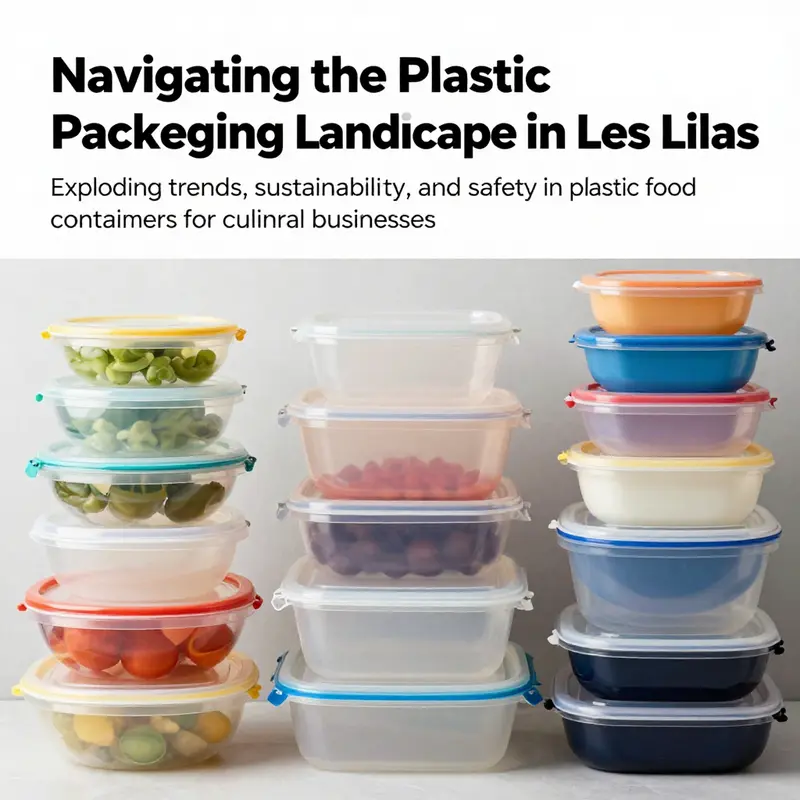
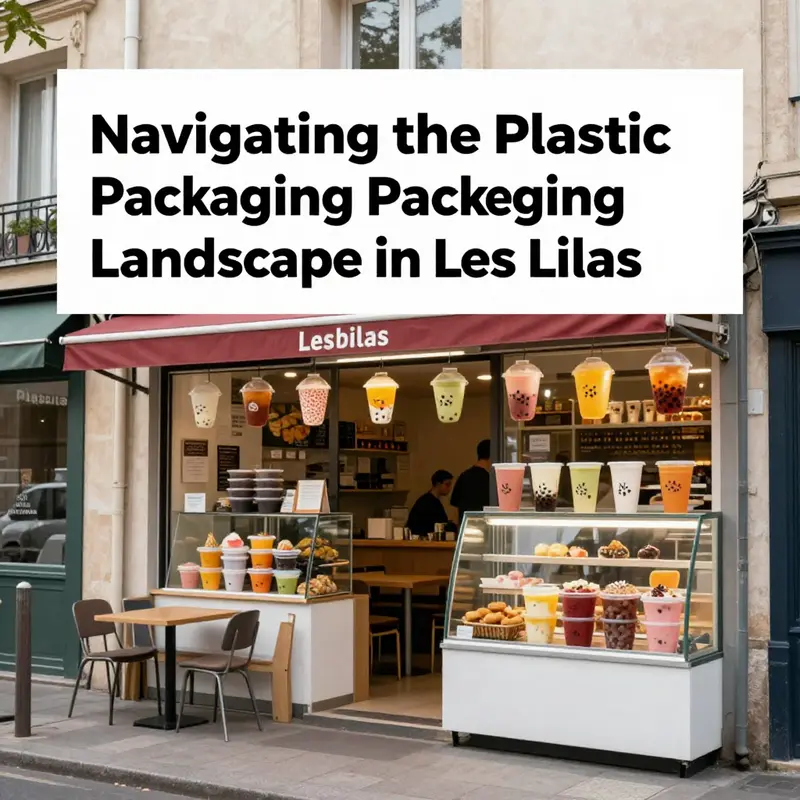
In the vibrant culinary scene of Les Lilas, France, plastic food packaging containers play a vital role in enhancing the efficiency and presentation of dishes. With numerous bubble tea shops, restaurants, food trucks, and catering services, the demand for functional and aesthetically pleasing packaging has surged. This article delves into the current market trends shaping the industry, examines innovative sustainable alternatives, and highlights the regulatory standards that govern food safety. By understanding these facets, businesses can make informed decisions when selecting their packaging solutions.
null
null
From Single-Use to Soil: How Les Lilas Is Redesigning Plastic Food Containers for a Circular Future
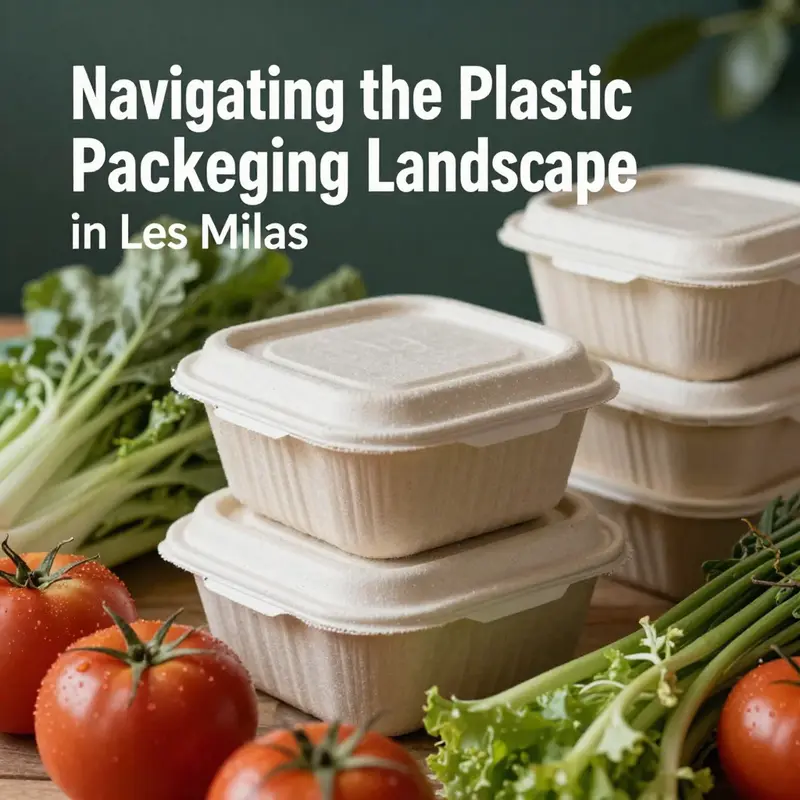
Les Lilas sits within a national momentum that reshapes how food packaging is designed, used and returned to the biosphere. Local restaurants, school canteens and municipal services now face both regulatory pressure and public expectation to reduce plastic waste. That pressure has accelerated experimentation with compostable serviceware, plant-based bioplastics, paper and molded-fiber containers. The shift here is practical and systemic. It begins in kitchens, runs through waste collection routes, and ends in regional composting facilities where packaging becomes soil amendment. The transition in Les Lilas is not about trading one material for another. It is about redesigning the entire path from production to end-of-life so packaging supports a circular economy rather than clogging landfills and waterways.
Policy has been the primary catalyst. Recent national mandates require that single-use food serviceware used in public institutions and many commercial settings be either compostable or reusable. That legal framework forces buyers and suppliers to prioritize certified materials that meet European compostability standards. In response, local suppliers in and around Les Lilas now stock products made from polylactic acid (PLA), sugarcane bagasse, molded fiber and kraft paper. These materials are chosen for their potential to return to compost streams, and for the lower greenhouse gas footprint they typically bring when compared to fossil-derived plastics. Yet material selection is only one piece of the puzzle. Compostability matters differently depending on context. Some bioplastics need industrial composting conditions. Others can break down in home composts. Municipal collection systems must therefore be aligned with the physical properties of the chosen packaging, or else the environmental benefit evaporates.
Practical logistics determine outcomes. Local councils and waste management partners in Les Lilas have started coordinating with producers and food service operators. This coordination takes the form of collection pilots, adapted bin signage and scheduled pickups that separate compostable packaging from general waste. For such systems to work, restaurants must adapt their procurement, training and menu planning. Kitchens change suppliers, test leak-resistant compostable bowls and experiment with compartmentalized molded-fiber trays that keep hot sauces from mixing with salads. Staff must understand where to place each item after use and how to communicate that to customers. Consumer behaviour matters too. Eco-cooperatives and neighbourhood associations in Les Lilas now run awareness campaigns. They show residents how to recognise certified compostable symbols, how to remove contaminants, and why napkins and food scraps enhance composting value when sorted correctly.
Design innovation has been practical and creative. Engineers and designers focus on barrier solutions, leak resistance and stackability while keeping materials compostable. That often means combining layers or coatings that remain compostable under industrial conditions. Packaging designers also craft lids that snap closed securely, and compartments that prevent cross-contamination of wet and dry foods. These features matter for takeaway pizza, noodle boxes, and salad bowls that travel. Thoughtful design reduces food loss during transport and reassures vendors worried about customer complaints. At the same time, many local businesses in Les Lilas prefer packaging with a clean, tactile feel that signals sustainability. Kraft paper textures, uncoated windows and muted colours align with local consumer preferences while keeping the packaging more recyclable or compostable.
Standards and certifications anchor trust. European norms define what counts as compostable and under what conditions. Packaging that claims compostability must meet lab tests for disintegration and biodegradation. Local buyers in Les Lilas expect documentation and proof. Certifications serve two roles: they protect municipal composting facilities from non-compliant inputs, and they reduce confusion for consumers. Still, certification alone is not a guarantee of positive environmental outcomes. The system must manage contamination from non-compostable plastic and from food residues with heavy oils or inorganic materials. To reduce risk, some food service operators favour single-material or minimally coated options, even if that means slightly higher per-unit costs. Many find the tradeoff acceptable when the whole system — procurement, collection and composting — is tightly coordinated.
Economics remains central but evolving. Initially, many compostable alternatives carried a price premium. Over time, growing demand and regional procurement hubs helped lower costs. Local collective purchasing by restaurant associations, schools and municipalities in the Greater Paris area has improved bargaining power. Shorter supply chains, where possible, reduce freight emissions and support local jobs. Vendors serving Les Lilas increasingly source from regional manufacturers and wholesalers, rather than relying solely on distant imports. Online marketplaces also allow small operators to access a wider range of compostable containers and accessories. That flexibility helps smaller kitchens trial a variety of materials without large upfront commitments.
Waste infrastructure must match the materials in circulation. Compostability is meaningful only when the used packaging reaches a facility capable of processing it. Les Lilas benefits from proximity to industrial composting plants in Île-de-France. Local authorities have formalised partnerships that accept certified compostable serviceware. Collection logistics vary. Some establishments place used compostable containers in food-waste streams alongside kitchen scraps. Others use separate bins labelled for compostable disposables. For buildings with limited space, compactors and scheduled pickups offer solutions. The overarching goal is to keep materials clean and dry enough to be composted efficiently. Contamination rates remain a challenge, but community education, clearer bin design and front-of-house signage have reduced improper disposal.
Environmental health concerns also influence choices. Research has highlighted microplastic contamination in food and drink, which raises consumer concerns about conventional plastics. That evidence has nudged many businesses towards alternatives perceived as lower risk. Yet alternatives are not risk-free. Some bioplastics degrade into smaller fragments if mishandled. The technical distinction between biodegradable, compostable and biobased can confuse buyers. Biobased plastic may still require industrial composting or can be chemically equivalent to fossil plastics. To avoid unintended consequences, municipal procurement teams in Les Lilas emphasise certified compostability and partner with labs to verify material properties when necessary.
Behavioural dynamics shape the transition as much as technology. For reuse to scale, food service operators must adapt operations to support durable containers. Reusable systems require logistics for cleaning, return and sanitisation. Local pilot programs have tried deposit-return systems for coffee cups and lunch boxes. Some neighbourhood cafés in Les Lilas have experimented with in-store reusable containers that customers bring back on return visits. These pilots uncover real barriers: customers forget to return containers, collection points can be scarce, and cleaning logistics are costly. Nonetheless, where reuse is practical, it dramatically reduces waste. A pragmatic mix emerges: reuse where feasible, compostable disposables where reuse is impractical, and recycled packaging for other product categories.
Community initiatives bridge policy and practice. Grassroots organisations in Les Lilas play an important role. They host workshops on compost sorting and run pop-up collection events. They also collaborate with schools to teach children about the life cycle of packaging. Such initiatives reduce contamination and build social norms around sustainable packaging. They also create demand signals. When consumers actively prefer compostable or reusable options, businesses respond. That market feedback loop accelerates supplier offerings and normalises environmentally preferable products in everyday commerce.
Technical and operational innovation continues at the supplier level. Packaging manufacturers respond to feedback from Les Lilas operators by refining designs to improve durability and reduce material use. Innovations include thinner yet stronger molded-fiber trays, bio-based barrier layers suitable for hot and greasy foods, and improved sealing systems that maintain leak resistance without petroleum-based coatings. Manufacturers also optimise production to produce less waste and to use renewable energy. Lifecycle assessments guide material choices and help local buyers understand tradeoffs between different options.
Education and clear labelling remain essential. Customers often ask whether a box is recyclable or compostable. Ambiguous labelling erodes trust and increases contamination. Les Lilas has invested in straightforward symbols and multilingual instructions that explain disposal routes. Kitchen staff are trained to remove non-compostable stickers and to advise customers on correct disposal. These small operational changes yield measurable improvements in compost quality and in the acceptance of compostable materials by processing plants.
The story in Les Lilas is not a finished one. Challenges persist. Industrial composters must expand capacity as compostable serviceware volumes grow. Local budgets must balance the upfront cost of shifting supply chains with longer-term environmental gains. And designers must continue to solve technical problems, like creating effective grease barriers that still disintegrate under composting conditions. However, the integrated approach in Les Lilas — policy, procurement, community education and supplier innovation — demonstrates a scalable pathway. It shows that municipal action, combined with smart design and consumer engagement, can meaningfully reduce dependence on single-use fossil-derived plastics.
Small choices compound into systemic change. When a school canteen switches to compostable bowls and a nearby neighbourhood café adopts a deposit-return cup system, the cumulative impact becomes visible in the volume of diverted waste. When suppliers respond with improved, affordable packaging solutions, more food service operators join the shift. Les Lilas exemplifies how local action, supported by national policy, can remake the everyday objects used for eating and carrying food. The transition prioritises materials that can return safely to soil, reliable collection systems that prevent contamination, and design principles that respect the realities of food service operations.
For anyone looking to source sustainable packaging in Les Lilas, practical options exist. Local procurement strategies benefit from evaluating the entire system: material certification, compatibility with regional composting infrastructure, supplier reliability, and clear communication strategies for staff and customers. One readily available option for businesses seeking compostable, compartmentalised solutions is to explore eco-friendly takeout boxes for food packaging designed for leak resistance and microwave safety. Such products can help operators balance convenience with environmental responsibility.
The movement toward sustainable food packaging in Les Lilas is ongoing. It is driven by law, enabled by local infrastructure, and sustained by community engagement. Designers, suppliers and public services continue to iterate. The result is a more resilient local food system that reduces plastic pollution while supporting circular resource flows. For further context on the policy drivers that helped catalyse these local efforts, see the national overview of compostable packaging mandates and how communities adapt: https://www.euronews.com/green/2023/10/15/france-sets-new-rules-for-compostable-packaging-in-public-institutions.
Regulatory Realities and Safety Imperatives for Plastic Food Packaging in Les Lilas, France
In the suburb of Les Lilas, near Paris, the safety of plastic packaging for food is embedded in a dense framework of European and French rules designed to protect health, environment, and consumer trust. The chapter explains how policy, science, and market demand converge to shape what is allowed to touch food, how it is tested, and how it is sourced in a local context. It is a practical guide to navigating compliance, risk management, and responsible procurement in a city that values both safety and sustainability.\n\nAt the core, materials intended to contact food must be safe from manufacture through end use. The standard requires food-grade materials, freedom from hazardous substances, and the ability to endure normal handling without contaminating the food. For plastic containers, this translates into prohibitions and performance criteria that focus on migration limits, traceability, and clean production. Importers, manufacturers, and distributors must verify the absence of harmful additives and demonstrate conformity with legal migration limits, with increasingly transparent documentation and testing practices rewarded in the market.\n\nKey prohibitions include substances like BPA, certain heavy metals, and specific plasticizers that could migrate into food. Practically, this drives suppliers to provide independent test results, certificates, or declarations of conformity and to maintain rigorous control of the supply chain from raw materials to finished packaging. The result is a market that favors materials with low migration potential and clear provenance, while encouraging innovations in safe polymer chemistry.\n\nEqually important are the physical performance tests that simulate real-world stresses. A drop test from 0.8 meters checks integrity of seals to prevent leaks and contamination. Packaging must withstand heat exposure—around 100 degrees Celsius, with a tolerance of a few degrees—without deformation or delamination, supporting safe transport and service. Microwave compatibility claims require evidence that heating does not produce sparking or odors and that the container remains safe under typical domestic use. Hygiene criteria are strict: total aerobic microflora should not exceed 10 colony forming units per item, and overall chemical migration should not exceed 10 milligrams per square decimeter, with color migration also monitored to avoid perceptual nonconformities.\n\nThese tests sit within a broader EU framework for harmonized rules on plastics in contact with food, implemented by French authorities through labeling requirements, post-market surveillance, and supplier verification. Audits—whether announced or surprise—can occur to verify ongoing compliance, and suppliers must provide documentation that is readily accessible to purchasers in Les Lilas and beyond. The policy environment creates a shared incentive to maintain safety, traceability, and continuous improvement throughout the supply chain.\n\nA notable policy shift concerns the use of plastics in fresh produce packaging. France is moving toward reduced plastic use for certain fresh items, which pushes operators to plan for alternatives such as glass, metal, or bio-based materials that still meet safety and performance needs. In Les Lilas, this means integrating flexibility into packaging strategies and supporting a transition that preserves food safety, supply chain resilience, and consumer expectations.\n\nFrom a sourcing perspective, local operators balance regional supply options with national and EU markets. Documentation demonstrating conformity with EU and French standards—especially no BPA, lead, or phthalates in base materials or additives—becomes a baseline for supplier evaluations. A robust due diligence process combines testing data, supplier certifications, and traceability records to minimize risk and support business continuity.\n\nBeyond compliance, presentation and handling matter. Packaging should present uniform color, smooth textures, and intact surfaces, as aesthetics influence consumer confidence and perceived safety. Operational practices—cleaning, sanitizing, and appropriate use of detergents and heat—must be aligned with material tolerances. Staff training and clear labeling about material composition, migration results, and end-of-life options reinforce trust with customers and regulators.\n\nFor readers seeking a broader perspective, external analyses discuss the challenges and lessons learned from policy shifts toward sustainable packaging in France and beyond. Such resources provide practical context for anticipating market and regulatory changes in Les Lilas and similar urban environments. https://www.example.com/france-plastic-packaging-sustainability-insights\n\nIn closing, the Les Lilas regulatory landscape invites operators to view packaging as a system of safety and sustainability. By developing a clear materials policy, maintaining rigorous supplier vetting, documenting conformity, and piloting sustainable alternatives, local businesses can protect health, satisfy customers, and support a resilient local economy.
Final thoughts
In conclusion, plastic packaging in Les Lilas, France, is evolving through distinctive trends that cater to noise and sustainability while ensuring safety compliance. With a growing awareness of sustainability and health concerns, businesses must focus on sourcing containers that not only meet practical needs but also align with their values. By understanding current market trends, exploring innovative alternatives, and adhering to regulatory standards, food-related businesses can effectively enhance their service offerings while contributing positively to the environment.